Showing posts with label Beauty. Show all posts

Wednesday, June 10, 2015

A New Idea: Bathing for Health and Beauty

by Maria Grace

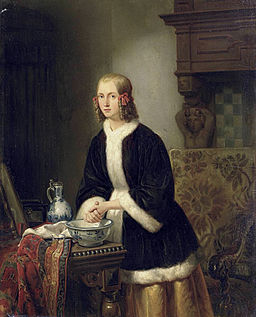
Victor Kühnen (attr) Dame bei der ToiletteDuring the long 18th century, the prevailing European attitude toward bathing was largely negative. Plunging oneself into water for the purpose of cleansing was inconvenient, expensive and according to many actually unhealthy. Consequently, what washing that was done focused on the hands and face, utilizing an ubiquitous wash stand found in nearly every bedroom.

238 Waschgarnitur Ludwigsburg c1805-1816 02These attitudes were so ingrained in British society that even as attitudes toward bathing began to change at the turn of the 19th century, English society was well known for their lack of cleanliness. Upper class English women were particularly known for their lack of attention to personal hygiene. The Handbook of Bathing (1841) notes

In sad and sober earnest, the English themselves are much less cleanly about their persons than either the French, the Italians, or even the Russians whom they place almost out of the pale of civilization (sic). The English are habitually well dressed; and every Englishman, above the operative classes, generally appears with a clean face, clean hands, and the finger-nails carefully cleaned. The other parts of his body … seldom, if ever, feel the comfort of ablution. The bodies of the generality of Englishmen are never washed, but are covered with epidermal incrustations of years' duration. Even those who seek recreation in swimming … become not a whit the cleaner for such immersion, because cold water cannot sufficiently act in so short a time upon the accumulation of coagulated perspiration and epidermal scales. Friction is seldom applied, or, if it be used, it consists only of a gentle wiping with a towel.


Stamnos women bath Staatliche Antikensammlungen 2411While it would not be until the Victorian era that bathing became a moral imperative, attitudes definitely began to shift during the years of the Regency. During thus era, classical Greek and Roman influences impacted fashion and scholarship. The prevalence of bathing on both societies was not lost among scholars of the era. The Book of Health and Beauty (1837) notes:

The use of the bath was general among the Greeks and Romans; and to this salutary habit the Physician Baglivi ascribes the long and vigorous lives of the ancients. If we compare the manner of living among the Romans with that of our own at the present day, it will be seen how much nearer the former approached to nature, and how much more favourable it was to health. … everyone has tended to the bath; and no person could neglect this practice without incurring the charge of shameful negligence of health and decency. … Bathing may also be considered as an excellent specific for alleviating both mental and bodily afflictions, it is not merely a cleanser of the skin, enlivening and rendering it more fit for performing its offices; but it also refreshens the mind, and spreads over the whole system a sensation of ease, activity, and agreeableness.

Doctors and men of science began to suggest rather than be unhealthful, bathing was in fact, essential to health, particularly for the skin.

The condition of the skin is the truest indication of health. By neglecting to and healthy condition, which in almost every case depends upon bodily cleanliness, many loathsome diseases are engendered ... The skin is the most sensitive and excitable part of the human frame; for it is the indicator of sensation from without to every other part of the body. … In the cities and towns of France, cutaneous diseases arising from want of general bodily ablution, are much less common than with us  (English), because the poorest of the operatives enjoy, from time to time, the luxury of warm bathing.

How did bathing act to improve health so greatly? Doctors noted,

free perspiration, sensible and insensible, is so necessary to the human physical condition, that without it, fever headache, and inflammation, ensue. Also, that the skin itself, by a disordered state of the exhalant vessels or their extremities, forming the pores or outlets, becomes unhealthy, and by being so, disturbs the action of the stomach and alimentary canal, whereby the functions of digestion are impeded, the frame debilitated, and the whole animal economy thrown into confusion. Now, if for want of bathing and friction, a crust of epidermal scales is allowed to form upon the skin, instead of being constantly removed, some of the perspiratory pores are closed, whilst a portion of the aqueous fluid perspired remains coagulated at their orifices under the crust, and … an extremely offensive fermentation soon takes place. … If one tenth of the persevering attention and labour bestowed to so much purpose in rubbing down and currying the skins of horses, were bestowed by the human race in keeping themselves in good condition, and a little attention were paid to diet and clothing,—colds, nervous diseases, and stomach complaints, would cease to form so large an item of the catalogue of human miseries.(Combe, 1836)

This attitude represented a significant change from earlier days when bathing was thought to cause colds. ‘Modern doctors’ of the Regency began to recognize that
scantiness of clothing, aided by the absence of body washing and skin-rubbing, bring "colds" and "consumption" to the females of [England … As it is, colds attend their footsteps, ever ready to place them within the deadly embrace of consumption, because they omit keeping their skin in a condition to resist the changes that daily occur in our atmosphere… Now, as they are neglected by the great majority of the British population, there is among that population a tendency to "catch cold," erroneously attributed to the climate ; whilst in countries possessing even a less benignant clime, but where the use of warm-bathing and friction is adopted by the inhabitants, this facility of catching cold does not exist.
(The Handbook of the Toilette, 1841)

Though science and scholarship might argue for bathing, changes in public opinion spread more rapidly as social leaders demonstrated new ways. Both Beau Brummell and the Prince Regent were known for their distinct bathing habits. Brummell bathed daily in hot water and  exfoliated his body with a coarse-hair brush.  He purchased expensive soap, brushes and razors from Renard's of St. James's, along with toothbrushes, nail brushes, combs and soap.

Public policy followed after these social changes as demonstrated by the 1814 Thames Bathing Bill. The act corrected the most injurious encroachment on the comfort of the lower classes set forth in the Thames Police act. The later deprived commoners the right to bathe in the Thames during daylight hours. It levied a fine on those who dared defy the order.
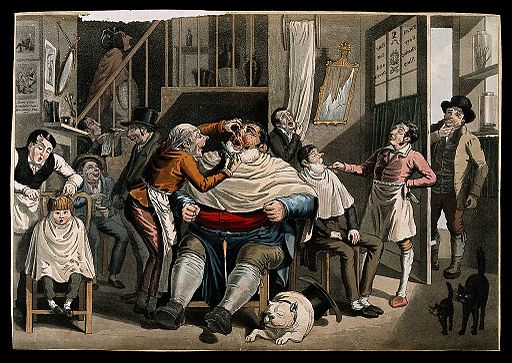
A barber cuts a man's face whilst shaving him; a second barb Wellcome V0019676As bathing and cleanliness became increasingly important to both people of fashion and society at large, merchants capitalized upon the trend. Shaving became increasingly important, with many men shaving themselves during their regular ablutions, rather than visiting barbers. The fine razors made in Sheffield, England became greatly prized. Scented soaps and toilet waters also became popular, both for purchase and to be made at home.

Moreover authors and other purveyors of advice offered a myriad of suggestions on how to bath (cold, warm, hot…) and with what preparations to bath. The next part of this article will examine recommendations on how to bath during Regency era.

Bibliography

A Lady of Distinction. Regency Etiquette: The Mirror of Graces (1811). Enl. ed. Mendocino, CA: R.L. Shep ;, 1997.

Buc'hoz, Pierre-Joseph. The Toilet of Flora Or, a Collection of the Most Simple and Approved Methods of Preparing Baths, Essences, Pomatums, Powders, Perfumes, Sweet-Scented Waters, and Opiates for Preserving and Whitening the Teeth, &c. &c. With Receipts for Cosmetics of Every Kind, That Can Smooth and Brighten the Skin, Give Force to Beauty, and Take off the Appearance of Old Age and Decay. For the Use of the Ladies. Improved from the French of M. Buchoz, M.D. London: Printed for J. Murray, Mo 12 Fleet-street and W. Nicoll, No. 51, in St. Paul's Church Yard, 1784.

Combe, Andrew M.D. The Principles of Physiology applied to the Preservation of Health, and to the Improvement of Mental and Physical Education. Fifth Edition. Edinburgh: Maclachlan and Stewart. London: Simpkin, Marshall, and Co. 1836.

Corbould, H. The Art of Beauty, Or, The Best Methods of Improving and Preserving the Shape, Carriage, and Complexion ; Together with the Theory of Beauty. London: Printed for Knight and Lacey ... and Westley and Tyrrell, Dublin, 1825.

Currie, James (1805). "Medical Reports, on the Effects of Water, Cold and Warm, as a remedy in Fever and Other Diseases, Whether applied to the Surface of the Body, or used Internally". Including an Inquiry into the Circumstances that render Cold Drink, or the Cold Bath, Dangerous in Health, to which are added; Observations on the Nature of Fever; and on the effects of Opium, Alcohol, and Inanition. Vol.1 (4th, Corrected and Enlarged ed.). London: T. Cadell and W. Davies. p. ii. Retrieved 2 December 2009. Full text at Internet Archive (archive.org)

Davidoff, Leonore, and Catherine Hall. Family Fortunes: Men and Women of the English Middle Class, 1780-1850. Repr. ed. London: Routledge, 2002.

Gatrell, Vic. City of London: Sex and Satire in Eighteenth-century London. New York: Walker &, 2006.

Kane, Kathryn. "Soap in the Regency — Bar or Barrel?" The Regency Redingote. April 23, 2010. Accessed June 5, 2015.

Kelly, Ian. Beau Brummell: The Ultimate Man of Style. New York: Free Press, 2006.

Murray, Venetia, and Venetia Murray. An Elegant Madness: High Society in Regency England. New York: Penguin Books, 2000.

Radcliffe, M. A Modern System of Domestic Cookery Or, The Housekeeper's Guide, Arranged on the Most Economical Plan for Private Families ... : A Complete Family Physician, and Instructions to Female Servants in Every Situation, Showing the Best Methods of Performing Their Various Duties ... to Which Are Added, as an Appendix, Some Valuable Instructions on the Management of the Kitchen and Fruit Gardens. Manchester: J. Gleave, 1823.

Snively, John H. A Treatise on the Manufacture of Perfumes and Kindred Toilet Articles. Nashville: C.W. Smith, 1877.

Stone, Lawrence. The Family, Sex and Marriage in England, 1500-1800. Abridged ed. New York: Harper & Row, 1979.

The Art of Preserving the Hair on Philosophical Principles. By the Author of The Art of Improving the Voice. London: Printed for Septimus Prowett, Old Bond Street, 1825.

The Book Of Health & Beauty, Or The Toilette Of Rank And Fashion: Embracing the economy of the beard eye-brows gums nails breath eye-lashes hands skin complexion feet lips teeth eyes hair mouth tongue, 8::- 81c. with recipes, and directions for use, of safe and salutary cosmetics— perfumes—essences-simple waters—depilatories, etc. and a variety “ select recipes for the dressing room of both sexes. 2nd ed. London: Joseph Thomas, 1, Finch Lane, Cornhill, 1837.

The Book of Health; a Compendium of Domestic Medicine, Deduced from the Experience of the Most Eminent Modern Practitioners: Including the Mode of Treatment for Diseases in General; a Plan for the Management of Infants and Children; Rules for the Preserva. London: Vizetelly, Branston, 1828.

The Hand-book of Bathing. London: W.S. Orr, 1841.

The Hand-book of the Toilette. 2nd ed. London: W.s. Orr and, 1841.

The New London Toilet: Or, a Compleat Collection of the Most Simple and Useful Receipts for Preserving and Improving Beauty, Either by Outward Application or Internal Use. With Many Other Valuable Secrets in Elegant and Ornamental Arts. Containing near Four Hundred Receipts under the following General Heads. Perfumes Fine Waters Baths Cosmetics Conserves Confectionary Snuffs Pastes Wash Balls Scented Powders Pomatums Fine Syrups Jellys Preserved Fruits, &c. With Every Species of Cosmetic That May Be Useful in Improving Beauty, or Concealing the Ravages of Time and Sickness. To Which Is Added a Treatise on the Art of Managing, Improving, and Dressing the Hair on the Most Improved Principles of That Art. London: Printed for Richardson and Urquhart, under the Royal-Exchange, 1778.

The Toilette of Health, Beauty, and Fashion: Embracing the Economy of the Beard, Breath, Complexion, Ears, Eyes, Eye-brows, Eye Lashes, Feet, Forehead, Gums, Hair, Head, Hands, Lips, Mouth, Mustachios, Nails of the Toes, Nails of the Fingers, Nose, Skin, Teeth, Tongue, Etc., Etc., : Including the Comforts of Dress and the Decorations of the Neck ... with Directions for the Use of Most Safe and Salutary Cosmetics ... and a Variety of Selected Recipes for the Dressing Room of Both Sexes. Boston: Allen and Ticknor, 1833.

Walton, Geri. "18th and 19th Century: Baths for Medicinal Purposes." 18th and 19th Century: Baths for Medicinal Purposes. February 12, 2014. Accessed June 5, 2015. http://18thcand19thc.blogspot.com/2014/02/baths-for-medicinal-purposes.html

Walton, Geri. "18th and 19th Century: Health Remedies, Preventatives, and Cures in the 1700 and 1800s." 18th and 19th Century: Health Remedies, Preventatives, and Cures in the 1700 and 1800s. February 20, 2014. Accessed June 5, 2015. http://18thcand19thc.blogspot.com/2014/02/health-remedies-preventatives-and-cures.html

Wilcox, R. Turner. The Mode in Hats and Headdress: A Historical Survey with 198 Plates. Mineola, N.Y.: Dover, 2008.

~~~~~~~~~~~~

 Maria Grace is the author of Darcy's Decision,  The Future Mrs. Darcy, All the Appearance of Goodness, and Twelfth Night at Longbourn and Remember the PastClick here to find her books on Amazon. For more on her writing and other Random Bits of Fascination, visit her website. You can also like her on Facebook, follow on Twitter or email her.

Tuesday, March 24, 2015

Beauty and Georgian Society

by Grace Elliot

What is beauty?

In the 18th century, according to the Morning Post, a true beauty not only had good looks and a pleasing figure, but wit, grace, sensibility, elegance, good sense, expression, and principle. (Note: Modesty is absent from the list, but perhaps this falls under good sense or principles.) Indeed, in October 1776, the paper published a ‘Scale of Bon Ton’ that listed 12 of society’s most fashionable women as ranked by a point-scoring scheme.

Georgiana Cavendish, Duchess of Devonshire
1787

In case you are wondering, the Duchess of Devonshire topped the list, hotly followed by the Duchess or Gordon, then the Countess of Derby.  Ranking beauties against one another was very popular, and only the month before the London Chronicle had published its own ‘Scale of Beauties’ – again with the Duchess of Devonshire ahead of the rest.

There’s no denying that the majority of these women were indeed attractive, but more than that, it was difficult for a woman not of noble blood to be a beauty in the fullest Georgian sense of the word, because they simply didn’t have the breeding. The concept of beauty was closely tied to ideas of behaviour and manners such that someone with good looks but lacking the correct social niceties  was left sadly short of that vital ‘something’ that made her acceptable as a society beauty.

All of which is as good as any yard stick to base the concept of ‘beauty’ on, since it is such a subjective thing. Even at the time, people debated (as they have done since time immemorial) the essence of beauty. A poem, written in 1733, titled ‘Beauty and Proportion’ extolled the virtue of symmetry with ‘a roman nose, high turn’d forehead and well-set eye.’

But someone with a good appreciation of beauty, the artist William Hogarth, writing in the mid-18th century, argued that disorderly style in the form of curved lines and uneven structures was a greater delight to the eye.

From the Harlot's Progress, by William Hogarth
Hogarth was well known for his cutting observations on social manners

A little later in 1795, the Dictionary of Love catalogued beauty in 28 points or of which the foremost was ‘Youth’. Understandable then, that some women turned to cosmetics to cheat the clock and make them appear younger. But this too was frowned upon, not least because makeup could be purchased by anyone to create the illusion of beauty and thus cheat the viewer.

Part of the problem with makeup was that it was so thick that it obscured many blemishes and imperfections. Whilst a noble lady was cossetted and often protected from some of the diseases that could devastate a complexion, a lady of lower birth was not. Therefore a perfect skin was a badge, a mark of superior rank. However, the use of makeup blurred this boundary and made it less clear for all to see.

It was argued that titled women should avoid ‘paint’ because it lowered them to the level of ‘inferiors’. This is all very well, for many young women in society who needed to make a good marriage but with average looks, the clever use of makeup seemed a Godsend to make them more attractive.

Maria, Countess of Coventry
1751

At the time, much makeup contained lead, so perhaps there was wisdom (but for a different reason) behind avoiding artificial props. Perhaps one the most famous cautionary tales is that of Maria, Countess of Coventry, who rose to fame because of her stunning looks, but died because of lead poisoning from her makeup. Such was the pressure to maintain her status as a beauty that the means of maintaining an outward appearance of loveliness was ultimately her end. A salient lesson indeed.

 ~~~~~~~~~~~~~ 

Grace Elliot is a veterinarian and writer.  
To find out more, visit her blog:


Tuesday, March 10, 2015

Improving upon Nature: Beauty Training in the Regency Era

by Maria Grace

With so much at stake, success in the marriage mart not the least consideration, suggestions abounded as to how a young woman might improve her natural beauty. Recommendations were not dissimilar to those we see today, including medicinal options, diet, exercise and cosmeseutical preparations.

Medicinal Preparations


The digestive system was seen as the source of a great many ills. Those seeking a beautiful form were cautioned to attend carefully to the “stomach and bowels, as the prevalence of acidity or of costiveness will render all…other exertions useless.” (Corbould,1825) Laxative pills, acidity remedies, and even ‘spinal’ pills were suggested, with popular remedies offered for the improvement of health and spinal distortions.

One such recipe, Dr. Jarrold's Spinal Pills, recommended taking one drachm of burnt sponge, fifty grains of carbonate of soda to be mixed and divided into twenty pills; three to be taken for a dose twice a day, and the bowels kept open by laxatives for six weeks or two months. (Corbould,1825)

Beauty training


For those who sought more than pills and other nostrums could offer, beauty training might provide desired results. The process, which promised to ‘restore at least five or ten years of vanished charms’ and insure an addition ten years began with clearing the stomach and bowels with emetics and purgatives—reminiscent of today’s ‘healthful cleanses’.

Once the system was adequately purified, beauty seekers were enjoined to rise early at five or six in the morning. Before breakfast they should take a brisk walk from half a mile and up to three, depending on one’s strength. A similar walk or active pastime was recommended for after breakfast as well.

If one perspired or became damp during the exertion, one should attend to their clothing and skin before breakfast. The face and hands should be washed in cool water and the skin, particularly of the torso, should be brushed with a skin brush or rubbed with a soft cloth for ten to fifteen minutes using hair powder or friction oil to prevent irritation to the skin, if necessary, prior to donning dry clothes.

Another hour's active exercise was recommended before going to bed followed by a foot bath with tepid water and another session with a skin brush or nibbed cotton cloth. One should go to bed no later than ten in the evening.

Diet


Naturally, these recommendations also included dietary guidelines.

Breakfast: should be eaten early in the day, no later than eight o’clock, consisting of a plain biscuit (not bread), broiled (underdone and stripped of fat) beef steaks or mutton chops, and half a pint of mild bottled ale, though a small cup of black coffee or tea might be substituted for the ale that then would be taken three hours after breakfast.

Dinner: the midday meal was eaten at two o’clock and greatly resembled breakfast. Chicken or turkey might be substituted and a little rice or potato added. No vegetables were permitted, though.

Supper: the evening meal should be taken at seven or eight o’clock with tea or coffee if none was taken at breakfast, otherwise half a pint of mild ale. The meal should consist of cold fowl, or cold roast mutton or beef, but no fat, and occasionally an egg with a biscuit. Dairy products and fish were strictly prohibited

Interestingly, beauty seekers were encouraged to eat heartily at meals, but forbidden anything to drink between meals. (Corbould,1825)

Exercises


In place of the braces and other contrivances of earlier days, mechanical exercises were put forth to “train up the youthful and delicate bodies of our daughters into elegance of shape and figure.” (Corbould,1825) Some of the suggestions were unique to the day, but others resemble modern equipment, both that which might be found in a proper gym and that which might be purchased through late night infomercials.

Carrying weights on the head


After noting the erect postures of those who carried weights on their heads, like those who wore heavy turbans or whose employment had them carrying burdens like milk pails that way, experts recommended those who wanted perfect posture do the same.

Some suggested exercising the muscles of the neck and back by balancing a small weight, like a powder-box on the front part of the head. Others believed the spine would instinctively straighten to support itself if a more substantial weight were used. Some suggested "a small footstool, covered with a flat cushion, being inverted, may be placed on the patient's head; the hollow between the feet of the stool will allow” a weight to be placed there, four to ten pounds being the most desirable amount. Once the weight was on the head, the person should then walk in a straight line for ten minutes at a time, several times a day. 

Weight training


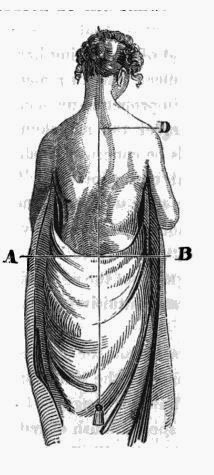
Others suggested that posture might be improved by strengthening the muscles of the neck and trunk by the drawing of weights. Proponent suggested a machine of weights and pulleys that strongly resembles machines found in gyms today. A strap would be fastened around the patient’s head and attached to weights via a cord through a pulley. The weight would be raised and lowered by lifting and lowering the torso, not unlike a modern sit up.

Exercise couches functioned similarly, adding weights and pulleys to bed frames and couches to allow the exercise of the shoulders, arms, back and neck.

The chest dilator was a more formidable piece of equipment built upon a wooden chair with a convex back. The patient would sit in the chair, place her hands on the overhead bar, and draw a weight down and in front of her and thus strengthen the chest and shoulders. 


Hall exercise


Another approach to exercise encouraged otherwise indolent patients to engage in novel activities. A hall exercise mechanism that involved rolling balls down an upper ramp to a partner who would catch them and return them to her partner via a lower ramp provided one such novel activity. By such means patients who might otherwise be reluctant would be encouraged to stretch their muscles and improve their health. (Corbould, H. , 1825)

Posture Couch


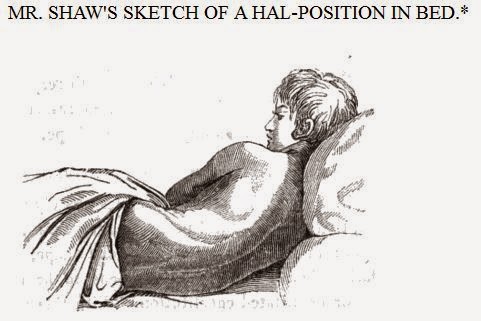
After such exercise, the use of a posture couch might be used that the spinal muscles could be relaxed and the patient enjoy a change of position. The patient would lie upon their back and her position adjusted by the rollers on the frame. At night, the contraption might be converted into a regular bed for convenience. 

Bathing


Surprisingly, bathing, along with friction to the skin, was considered an essential element of beauty-training, necessary for removing impurities and improving the flow of blood in the skin. However, beauty seekers were cautioned to remember the dangers of indiscriminate cold bathing, especially for those who were of a nervous or weak constitution. Warm baths were thought to stave off the effects of aging and be of particular benefits to the skin, especially when aromatic herbs or substances such as borax were added to the water. For those for whom bathing was not practical or possible, sponging and the use of the ‘flesh brush’ might provide an adequate substitute.

Recipe books replete with recipes for soaps, washes, waters, potums, salves and the like were available for who sought chemical assistance in their pursuit of beauty. The next part of this series will examine the much debated issue of bathing in the Regency era.

References


Buc'hoz, Pierre-Joseph. The Toilet of Flora Or, a Collection of the Most Simple and Approved Methods of Preparing Baths, Essences, Pomatums, Powders, Perfumes, Sweet-Scented Waters, and Opiates for Preserving and Whitening the Teeth, &c. &c. With Receipts for Cosmetics of Every Kind, That Can Smooth and Brighten the Skin, Give Force to Beauty, and Take off the Appearance of Old Age and Decay. For the Use of the Ladies. Improved from the French of M. Buchoz, M.D. London: Printed for J. Murray, Mo 12 Fleet-street and W. Nicoll, No. 51, in St. Paul's Church Yard, 1784.
Corbould, H. The Art of Beauty, Or, The Best Methods of Improving and Preserving the Shape, Carriage, and Complexion ; Together with the Theory of Beauty. London: Printed for Knight and Lacey ... and Westley and Tyrrell, Dublin, 1825.
Duties of a Lady's Maid with Direction for Conduct and Numerous Receipts for the Toilette. London: James Bulock, 1825.
Snively, John H. A Treatise on the Manufacture of Perfumes and Kindred Toilet Articles. Nashville: C.W. Smith, 1877.
The Art of Preserving the Hair on Philosophical Principles. By the Author of The Art of Improving the Voice. London: Printed for Septimus Prowett, Old Bond Street, 1825.
The book of health & beauty, or the toilette of rank and fashion: embracing the economy of the economy of the beard eye-brovs gums nails breath eye-lashes hands skin complexion feet ips teeth eyes hair mouth tongue, 8::- 81c. With recipes, and directions for use, of safe and salutary cosmetics— perfumes—essences-simple ‘vaters—depilatories, etc. And a variety “ select recipes for the dressing room of both sexes. 2nd ed. London: Joseph Thomas, 1, Finch Lane, Cornhill, 1837.
The Hand-book of Bathing. London: W.S. Orr, 1841.
The Hand-book of the Toilette. 2nd ed. London: W.s. Orr and, 1841.
The New London Toilet: Or, a Compleat Collection of the Most Simple and Useful Receipts for Preserving and Improving Beauty, Either by Outward Application or Internal Use. With Many Other Valuable Secrets in Elegant and Ornamental Arts. Containing near Four Hundred Receipts under the following General Heads. Perfumes Fine Waters Baths Cosmetics Conserves Confectionary Snuffs Pastes Wash Balls Scented Powders Pomatums Fine Syrups Jellys Preserved Fruits, &c. With Every Species of Cosmetic That May Be Useful in Improving Beauty, or Concealing the Ravages of Time and Sickness. To Which Is Added a Treatise on the Art of Managing, Improving, and Dressing the Hair on the Most Improved Principles of That Art. London: Printed for Richardson and Urquhart, under the Royal-Exchange, 1778.
The Toilette of Health, Beauty, and Fashion: Embracing the Economy of the Beard, Breath, Complexion, Ears, Eyes, Eye-brows, Eye Lashes, Feet, Forehead, Gums, Hair, Head, Hands, Lips, Mouth, Mustachios, Nails of the Toes, Nails of the Fingers, Nose, Skin, Teeth, Tongue, Etc., Etc., : Including the Comforts of Dress and the Decorations of the Neck ... with Directions for the Use of Most Safe and Salutary Cosmetics ... and a Variety of Selected Recipes for the Dressing Room of Both Sexes. Boston: Allen and Ticknor, 1833.

~~~~~~~~~~~~

 Maria Grace is the author of Darcy's Decision,  The Future Mrs. Darcy, All the Appearance of Goodness, and Twelfth Night at Longbourn and Remember the PastClick here to find her books on Amazon. For more on her writing and other Random Bits of Fascination, visit her website. You can also like her on Facebook, follow on Twitter or email her.

Tuesday, February 10, 2015

The 'Natural Beauty' Ideal of the Regency

by Maria Grace

As the nineteenth century dawned popular views of beauty also shifted. Garments, particularly for women, changed from highly structured garments that relied on rigid undergarments to hold both the body and the garments in the desired shape, to flowing, easy gowns influenced by classical designs of the ancient world. ‘Naturalness’ of the female form was highly prized, whether attained by natural means or not.

Move toward Naturalness

Perhaps related to the political climate of the era, fears of artifice and the romanticism of the ‘natural’ state moved to the forefront of people’s minds. People feared duplicity, particularly that of women whose artful embellishments might lure unsuspecting men into marriage without truly recognizing the condition of their bride. Artist Thomas Rowlandson satirized this fear in his print ‘Six Stages of Mending a Face’. While this may appear shallow to the modern mind, in the era, deficiencies of the body were often seen to correspond to deficiencies of moral character, a serious matter indeed.

(Ancient) Greek influence, which was free of ‘unnatural straps’, braces and other ‘wicked inventions’, permeated period beauty ideals. The Book of Health and Beauty notes: “The Greeks, then, conceived that beauty was necessary to inspire love; but that the power of Venus was fleeting and transitory, unless she was attired and accompanied by the Graces, that is, unless ease and affability, gentleness and spirit, good humor, modesty, ingenuousness and candor engaged the admirers that beauty attracted.”

These ‘decent Graces' “join hand in hand, to show that cheerfulness, vivacity, and youth, should be united with sincerity, candor, and decorum: and to assure the beholder, that unless he or she possess all these qualities he cannot boast of being a favorite with the Graces. They are in motion, because without motion there can be no grace. Their movements, you will see, are animated and soft; and the decided character of the whole group is a noble simplicity, and an unaffected modesty.” Thus, the ability to move and hold one’s body properly became an integral component in the definition of beauty. (The Book of Health and Beauty)

Movement and Posture


The Toilette of Health, Beauty, and Fashion explains, “All grace consists in motion. The great secret of it is to marry two apparent contradictions,-—to unite, in the same movement, quickness and softness, vivacity and mildness, gentleness and spirit…The union of those two requisites is necessary in dancing, walking, bowing, talking, carving, presenting or receiving any thing, and, if we may venture to add, in smiling. Ease is the essence of grace: but all motions, quick and smooth, will necessarily be easy and free.”

Grace in all areas had to be entirely natural for any affectation would destroy the effect, as was often the case in stage performers. To be considered graceful every motion needed to be free from confusion or hurry while being lively and animated. Not only did all the motions of the legs, hands and arms need to be graceful, but the head, neck and even speech had to display grace as well. The epitome of grace in speech required the unity of vivacity with softness in the voice and simplicity of speech. Needless to say, the development of grace required practice, so lessons in deportment began early.

Ladies began such practice in childhood as they learned to move properly in the long skirts fashion and decorum required. Small steps that pushed skirts out of the way allowed a young lady to appear to glide as she moved. Steps would be made from the knee, rather the hips, as swaying the hips as one walked was indecorous. Turns were made with the whole body allowing garments to turn elegantly and gracefully. When sitting, ladies kept their knees spread, rather than crossing their legs, in order to keep their skirts neat. Arms were kept gracefully at ones sides, emphasizing the long elegant column of their classically inspired, empire-waist gowns. If they had to cross their arms, it was done at the high waist line, so as not to spoil the line of their gowns.

Grace was expected, even required of men as well as women. Unlike women, they were not taught deportment, however, training in fencing sufficed for the purpose. Not only did fencing give men well shaped legs—which were shown off constantly in skin tight pantaloons and breeches—it trained them in balance and graceful movement. The same effortless, elegant motions that carried them through a fencing bout were equally welcome on the dance floor.

Above all, perfectly erect and graceful posture was essential. Sitting, standing, walking or dancing, the spine was held straight and the head perfectly balanced atop a supple neck. To slouch was to risk deformity of the spine and to demonstrate disrespect and weakness of character.

For men, imperfect posture also risked chaffing and irritation from their fashionable garments. The cut of their coats, with armholes cut mostly in the back of the garment, rather than evenly distributed front to back as they are in modern garments, pulled shoulders back and opened the chest. High, stiff coat collars that often came up to their ears would irritate the back of the neck and even ears, if the spine was not straight and head held high, while a drooping chin could crush and soil a carefully tied cravat.

For all that ‘natural’ beauty was emphasized, ladies and gentlemen worked very hard to attain the standard of beauty. For those whose natural state was farther from the ideal, recommendations abounded on how to improve on what nature graced one with. The next part of this series will look a how one might improve upon nature’s gifts.

References

Andry, Nicolas. Orthopaedia: Or, the Art of Correcting and Preventing Deformities in Children . Vol. 1. London, 1743.
Buc'hoz, Pierre-Joseph. The Toilet of Flora Or, a Collection of the Most Simple and Approved Methods of Preparing Baths, Essences, Pomatums, Powders, Perfumes, Sweet-Scented Waters, and Opiates for Preserving and Whitening the Teeth, &c. &c. With Receipts for Cosmetics of Every Kind, That Can Smooth and Brighten the Skin, Give Force to Beauty, and Take off the Appearance of Old Age and Decay. For the Use of the Ladies. Improved from the French of M. Buchoz, M.D. London: Printed for J. Murray, Mo 12 Fleet-street and W. Nicoll, No. 51, in St. Paul's Church Yard, 1784.
Corbould, H. The Art of Beauty, Or, The Best Methods of Improving and Preserving the Shape, Carriage, and Complexion ; Together with the Theory of Beauty. London: Printed for Knight and Lacey ... and Westley and Tyrrell, Dublin, 1825.
Duties of a Lady's Maid with Direction for Conduct and Numerous Receipts for the Toilette. London: James Bulock, 1825.
Green, Ruth M., The Wearing of Costume:   The Changing Techniques of Wearing Clothes and How to Move in Them, from Roman Britain to the Second World War. New York:   Drama Publishers, 1995.
Jeamson, Thomas. 1665. Artificiall embellishments. Or Arts best directions how to preserve beauty or procure it. Oxford: Printed by William Hall, amm. D.
Sanford, Victoria. "Public Reaction to Rising Waists During the Late 18th Century: Regency Fashion." Jane Austens World. June 2, 2010. Accessed January 9, 2015. https://janeaustensworld.wordpress.com/2010/06/03/public-reaction-to-rising-waists-during-the-late-18th-century-regency-fashion/.

Sheldrake, Timothy. An Essay on the Various Causes and Effects of the Distorted Spine ; on the Improper Methods Usually Practised to Remove That Distortion ; In Which That Recommended by Mr. Pott Is Considered, and the Bad Effects of Vacher's (commonly Called Jones's) Spinal Machine Are Pointed Out: With the Description of an Instrument That Is Better Calculated to Remove Those Distortions than Any Hitherto Made Use Of, and That Will Not Be Productive of the Pernicious Consequences That Have Been Caused by Most of the Other Machines. To Which Are Added, Some Observations on the Treatment of Ruptures ; Intended to Shew the Impracticability of Curing That Disorder by Any Other Means than the Use of Proper Truffes, and the Superior Utility of the Improved Elastic Truffes with Flexible Pads, Made by T. Sheldrake, Jun. London: Printed for C. Dilly, in the Poultry ;, 1783.

Snively, John H. A Treatise on the Manufacture of Perfumes and Kindred Toilet Articles. Nashville: C.W. Smith, 1877.
The Art of Preserving the Hair on Philosophical Principles. By the Author of The Art of Improving the Voice. London: Printed for Septimus Prowett, Old Bond Street, 1825.
The book of health & beauty, or the toilette of rank and fashion: embracing the economy of the economy of the beard eye-brovs gums nails breath eye-lashes hands skin complexion feet ips teeth eyes hair mouth tongue, 8::- 81c. With recipes, and directions for use, of safe and salutary cosmetics— perfumes—essences-simple ‘vaters—depilatories, etc. And a variety “ select recipes for the dressing room of both sexes. 2nd ed. London: Joseph Thomas, 1, Finch Lane, Cornhill, 1837.
The Hand-book of Bathing. London: W.S. Orr, 1841.
The Hand-book of the Toilette. 2nd ed. London: W.s. Orr and, 1841.
The New London Toilet: Or, a Compleat Collection of the Most Simple and Useful Receipts for Preserving and Improving Beauty, Either by Outward Application or Internal Use. With Many Other Valuable Secrets in Elegant and Ornamental Arts. Containing near Four Hundred Receipts under the following General Heads. Perfumes Fine Waters Baths Cosmetics Conserves Confectionary Snuffs Pastes Wash Balls Scented Powders Pomatums Fine Syrups Jellys Preserved Fruits, &c. With Every Species of Cosmetic That May Be Useful in Improving Beauty, or Concealing the Ravages of Time and Sickness. To Which Is Added a Treatise on the Art of Managing, Improving, and Dressing the Hair on the Most Improved Principles of That Art. London: Printed for Richardson and Urquhart, under the Royal-Exchange, 1778.
The Toilette of Health, Beauty, and Fashion: Embracing the Economy of the Beard, Breath, Complexion, Ears, Eyes, Eye-brows, Eye Lashes, Feet, Forehead, Gums, Hair, Head, Hands, Lips, Mouth, Mustachios, Nails of the Toes, Nails of the Fingers, Nose, Skin, Teeth, Tongue, Etc., Etc., : Including the Comforts of Dress and the Decorations of the Neck ... with Directions for the Use of Most Safe and Salutary Cosmetics ... and a Variety of Selected Recipes for the Dressing Room of Both Sexes. Boston: Allen and Ticknor, 1833.
Turner, David M. Disability in Eighteenth-century England: Imagining Physical Impairment. New York: Routledge, 2012.
Turner, D. M. and Withey, A. (2014), Technologies of the Body: Polite Consumption and the Correction of Deformity in Eighteenth‐Century England. History, 99: 775–796. doi:10.1111/1468-229X.12087
 Withey, Alun. "(Dis)ability? Living with Impairment in Early Modern Britain." Dr Alun Withey. September 28, 2012. Accessed January 9, 2015. https://dralun.wordpress.com/2012/09/28/disability-living-with-impairment-in-early-modern-britain/.
 Withey, Alun. "Sit up Straight! Bad Posture and the 'Neck Swing' in the 18th Century." Dr Alun Withey. January 15, 2014. Accessed January 9, 2015. https://dralun.wordpress.com/2014/01/15/sit-up-straight-bad-posture-and-the-neck-swing-in-the-18th-century/.
 Withey, Alun. "Steel and the Body in the Enlightenment:." Dr Alun Withey. June 7, 2012. Accessed January 9, 2015. https://dralun.wordpress.com/2012/06/07/steel-and-the-body-in-the-enlightenment/.

~~~~~~~~~~~~

 Maria Grace is the author of Darcy's Decision,  The Future Mrs. Darcy, All the Appearance of Goodness, and Twelfth Night at Longbourn and Remember the PastClick here to find her books on Amazon. For more on her writing and other Random Bits of Fascination, visit her website. You can also like her on Facebook, follow on Twitter or email her.

Saturday, January 10, 2015

The Shape of Georgian Beauty

by Maria Grace

Life in early modern societies was rife with bodily threats often resulting in bodily deformities. Nutritional deficits, disease and accidents all resulted in sometimes horrific alterations to the human form. Skin conditions, tumors, both benign and cancerous, and conditions like gout marked individuals in all walks of life. Moneyed and poor alike were subject to the debilitating effects to daily life.

Improvements in medical science focused on the prevention and correction of disfigurements. Progress in infant health and nutrition helped prevent many conditions and assistive technologies such as wooden legs and rupture trusses improved the productivity and general quality of life for many of those injured.

Assistive technologies quickly crossed the line from improving function to merely improving aesthetics. Though some argued whether it was acceptable to attempt to improve upon God’s creation by artificial means, even the Puritans came to accept man-made means to improve upon nature’s imperfections.

Deformity

By the eighteenth century, with the developing culture of politeness, the ‘deformed’ or ‘defective’ body presented a quandary for polite society. While some emphasized the moral virtue that developed as a result of bearing with bodily disfigurement, others registered concern for the lack of social ease evident when those bearing obvious ‘defects’ were present. Etiquette required that polite individuals avoided anything which would draw attention to another’s ‘weakness’. However, it was also recognized that a crooked body prevented one’s acceptance in polite society, being more prison than palace for the individual. The imperfect body was often referred to as dismal and miserable and jarring the sensibilities and discomposing the cheerfulness of mind, stealing pleasure from an otherwise pleasant experience.

Straightening a child's posture
Nicolas Andry (1743) suggested that polite society should shun anything ‘shocking’ like visible impairments which might threaten virtuous interactions. Moreover, individuals who permitted, by their neglect, their bodies to become ‘ugly’ offended both society and God’s intentions. Thus, ‘orthopaedic’ intervention to restore the proper aesthetics to the body was an act of social and moral responsibility.

Causes and prevention of deformity

Experts concluded that preventing deformity was preferable (and easier) than curing it. Many suggested ignorant management in childhood was at the heart of many disfigurements and as such, more ‘scientific’ management might be applied to remedy them.

Towards the end of the Georgian era, malformations were classified by their causes including:

Those produced before birth

The result of tight lacing of long corsets, thought to impede the mother’s digestion, breathing, circulation and to even displace the womb itself. This practice was thought to impede the proper growth of a child resulting in dwarfism or other deformities of shape. Teaching mothers not to wear tight garments during pregnancy offered a simple remedy to this malady.

Those produced by ignorant nursing

In this case nursing referred to the care of the child in infancy. Infant bones were considered soft and unfinished, and the joints susceptible to injury by rough handling. Caregivers were directed to handle the infant as little as possible, allowing them to lie on mats and cushions without restrictions, and prevented from sitting and standing too soon.

Those produced by clothing in infancy

The practice of tight swaddling was still practiced in the Georgian era. However, toward the end of the period, the practice fell out of favor. The tight constriction of the infant was thought not only to be painful, but to restrict blood flow and to impede normal growth, forcing limbs and spine into unnatural shapes. Nurses were advised to adopt a looser mode of dress, but not so loose as to fail to support ‘feeble’ infant muscles, and to avoid dressing an infant too warmly and causing sweats in the night.

Those produced by dress in youth

Putting pressure on muscles was thought to weaken them. So the use of corsets, tight sleeves or garters was advised against; they might result in twisting the body out of natural position. Children’s clothing should be comfortable and allow the blood to flow freely and the body to move easily.

Those produced by position

Sleeping on the same side of the bed every night, sitting on the same side of the window or fire every night or in any way that twists the body was to be scrupulously avoided. While reading, writing, sewing or practicing music, young ladies must maintain perfectly erect posture to avoid permanent deformation of the spine.

Correcting deformity

Once deformity occurred, Sheldrake argued that the amelioration of such irregularities was imperative as "not only their appearance is disagreeable, but by impeding the function of viscera, they will in time destroy that balance of the constitution which is so necessary to health and longevity.”

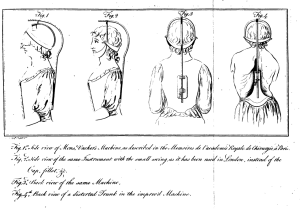
Stay makers and truss makers of the mid to late eighteenth century flooded the market with a cornucopia of devices to train young people’s bodies—particularly those of young women—as one trained young plants to grow strong and straight, often using braces and other contraptions made of newly available cast steel.

Braces and other devices

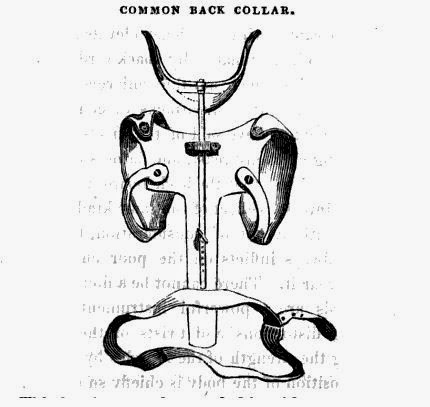
Devices to improve posture and keep and individual ‘straight’ were as varied as the manufacturers who made them. Large pieces of metal called backirons were hidden at the back of clothing and prevented slouching. Steel collars forced wearers to obey mothers’ and governesses’ injunctions to keep heads up, sometimes assisted by shoulder braces which pulled shoulders back. Neck swings stretched the spine by suspending the ‘patient’ in a block and tackle type device so that only their toes touched the ground.

Education chairs which forced the ‘patient’ to balance in a small hard seat without a support to lean against while windlass contraptions and stretching chairs performed similarly to neck swing. Despite the discomfort and pain these devices caused, they were widely sold throughout the eighteenth century.

As the century drew to a close and the nineteenth century dawned, a shift of perspective occurred leaning toward a more natural beauty, unencumbered by the rigorous management and training of the previous generations. The second part of this article will examine these changing conceptions of beauty and how to achieve it in the Regency era.

Bibliography

Andry, Nicolas. Orthopaedia: Or, the Art of Correcting and Preventing Deformities in Children . Vol. 1. London, 1743.

Buc'hoz, Pierre-Joseph. The Toilet of Flora Or, a Collection of the Most Simple and Approved Methods of Preparing Baths, Essences, Pomatums, Powders, Perfumes, Sweet-Scented Waters, and Opiates for Preserving and Whitening the Teeth, &c. &c. With Receipts for Cosmetics of Every Kind, That Can Smooth and Brighten the Skin, Give Force to Beauty, and Take off the Appearance of Old Age and Decay. For the Use of the Ladies. Improved from the French of M. Buchoz, M.D. London: Printed for J. Murray, Mo 12 Fleet-street and W. Nicoll, No. 51, in St. Paul's Church Yard, 1784.

Corbould, H. The Art of Beauty, Or, The Best Methods of Improving and Preserving the Shape, Carriage, and Complexion ; Together with the Theory of Beauty. London: Printed for Knight and Lacey ... and Westley and Tyrrell, Dublin, 1825.

Duties of a Lady's Maid with Direction for Conduct and Numerous Receipts for the Toilette. London: James Bulock, 1825.

Jeamson, Thomas. 1665. Artificiall embellishments. Or Arts best directions how to preserve beauty or procure it. Oxford: Printed by William Hall, amm. D.

Sanford, Victoria. "Public Reaction to Rising Waists During the Late 18th Century: Regency Fashion." Jane Austens World. June 2, 2010. Accessed January 9, 2015. https://janeaustensworld.wordpress.com/2010/06/03/public-reaction-to-rising-waists-during-the-late-18th-century-regency-fashion/.

Sheldrake, Timothy. An Essay on the Various Causes and Effects of the Distorted Spine ; on the Improper Methods Usually Practised to Remove That Distortion ; In Which That Recommended by Mr. Pott Is Considered, and the Bad Effects of Vacher's (commonly Called Jones's) Spinal Machine Are Pointed Out: With the Description of an Instrument That Is Better Calculated to Remove Those Distortions than Any Hitherto Made Use Of, and That Will Not Be Productive of the Pernicious Consequences That Have Been Caused by Most of the Other Machines. To Which Are Added, Some Observations on the Treatment of Ruptures ; Intended to Shew the Impracticability of Curing That Disorder by Any Other Means than the Use of Proper Truffes, and the Superior Utility of the Improved Elastic Truffes with Flexible Pads, Made by T. Sheldrake, Jun. London: Printed for C. Dilly, in the Poultry ;, 1783.

Snively, John H. A Treatise on the Manufacture of Perfumes and Kindred Toilet Articles. Nashville: C.W. Smith, 1877.

The Art of Preserving the Hair on Philosophical Principles. By the Author of The Art of Improving the Voice. London: Printed for Septimus Prowett, Old Bond Street, 1825.

The book of health & beauty, or the toilette of rank and fashion: embracing the economy of the economy of the beard eye-brovs gums nails breath eye-lashes hands skin complexion feet ips teeth eyes hair mouth tongue, 8::- 81c. With recipes, and directions for use, of safe and salutary cosmetics— perfumes—essences-simple ‘vaters—depilatories, etc. And a variety “ select recipes for the dressing room of both sexes. 2nd ed. London: Joseph Thomas, 1, Finch Lane, Cornhill, 1837.

The Hand-book of Bathing. London: W.S. Orr, 1841.

The Hand-book of the Toilette. 2nd ed. London: W.s. Orr and, 1841.

The New London Toilet: Or, a Compleat Collection of the Most Simple and Useful Receipts for Preserving and Improving Beauty, Either by Outward Application or Internal Use. With Many Other Valuable Secrets in Elegant and Ornamental Arts. Containing near Four Hundred Receipts under the following General Heads. Perfumes Fine Waters Baths Cosmetics Conserves Confectionary Snuffs Pastes Wash Balls Scented Powders Pomatums Fine Syrups Jellys Preserved Fruits, &c. With Every Species of Cosmetic That May Be Useful in Improving Beauty, or Concealing the Ravages of Time and Sickness. To Which Is Added a Treatise on the Art of Managing, Improving, and Dressing the Hair on the Most Improved Principles of That Art. London: Printed for Richardson and Urquhart, under the Royal-Exchange, 1778.

The Toilette of Health, Beauty, and Fashion: Embracing the Economy of the Beard, Breath, Complexion, Ears, Eyes, Eye-brows, Eye Lashes, Feet, Forehead, Gums, Hair, Head, Hands, Lips, Mouth, Mustachios, Nails of the Toes, Nails of the Fingers, Nose, Skin, Teeth, Tongue, Etc., Etc., : Including the Comforts of Dress and the Decorations of the Neck ... with Directions for the Use of Most Safe and Salutary Cosmetics ... and a Variety of Selected Recipes for the Dressing Room of Both Sexes. Boston: Allen and Ticknor, 1833.

Turner, David M. Disability in Eighteenth-century England: Imagining Physical Impairment. New York: Routledge, 2012.

Turner, D. M. and Withey, A. (2014), Technologies of the Body: Polite Consumption and the Correction of Deformity in Eighteenth‐Century England. History, 99: 775–796. doi:10.1111/1468-229X.12087

Withey, Alun. "(Dis)ability? Living with Impairment in Early Modern Britain." Dr Alun Withey. September 28, 2012. Accessed January 9, 2015. https://dralun.wordpress.com/2012/09/28/disability-living-with-impairment-in-early-modern-britain/.

Withey, Alun. "Sit up Straight! Bad Posture and the 'Neck Swing' in the 18th Century." Dr Alun Withey. January 15, 2014. Accessed January 9, 2015. https://dralun.wordpress.com/2014/01/15/sit-up-straight-bad-posture-and-the-neck-swing-in-the-18th-century/.

Withey, Alun. "Steel and the Body in the Enlightenment:." Dr Alun Withey. June 7, 2012. Accessed January 9, 2015. https://dralun.wordpress.com/2012/06/07/steel-and-the-body-in-the-enlightenment/.

~~~~~~~~~~~~

 Maria Grace is the author of Darcy's Decision,  The Future Mrs. Darcy, All the Appearance of Goodness, and Twelfth Night at Longbourn and Remember the Past, and A Jane Austen Christmas, Click here to find her books on Amazon. For more on her writing and other Random Bits of Fascination, visit her website. You can also like her on Facebook, follow on Twitter or email her.

Monday, December 9, 2013

Giveaway of The Gilded Lily

The Giveaway this week is The Gilded Lily by Deborah Swift, very christmassy read with lots of snow - open worldwide. Please leave a comment here to enter. You can read a more detailed description of the book here.

Tuesday, August 27, 2013

My New Clothes

by Anne Barnhill


I'm as excited as a school girl!  Why?  Because my Tudor dress, the outer garment, is finished.  Well, almost finished.  The miraculous seamstress, my dear friend from high school, Becky Thacker, must make sure the length is right.  My skirts will not be quite as long as the pattern indicated because I don't want to fall and break a hip while giving readings in my ensemble.  Besides, if I tripped, I might ruin the dress!

When my first book came out in January 2012, (At the Mercy of the Queen) Becky had completed the undergarments and I wore those to promote the book.  It was like that nightmare where you appear in front of people in just your skivvies--let's just say I lived the dream.

Here I am in shift, petticoat, bum roll:


After putting all that stuff on, I definitely see why one might need a lady-in-waiting.  I asked the lucky bookstore person to help (assuming this was a female) if Ms. Thacker couldn't attend me.  Often, there was great entertainment in the 'dressing room' as we struggled to get everything in place.

I expect the dress with be just as challenging.  Plus, I'll have all that underwear on, too. 

Thus far, I have not tried the dress on, but over a year ago, I fell in love with the materials Becky, her sewing advisor, Lisa, and I selected.  I had no idea the dress would be heavy, but I'm told the sleeves alone weigh a ton.

While the outer dress may not be as spot-on, historically speaking, as re-enactors might wish, it will serve my purposes well.  I want to bring listeners back to the 16th century and I believe visual aids help.  I've devised a little talk about the importance of clothing at Court; how, in those days, clothes really did 'make the man.'  Courtiers invested in silks and satins to impress the monarch, the way we might invest in real estate in the hopes of filling our portfolios.  If a courtier could catch the king's (or queen's) eye, establish a relationship and come into royal favor, that courtier would find his purse growing fatter and his future looking brighter.

I'm convinced my new dress would definitely be met with approval.  I used a color chart from The Tudor Tailor by Ninya Mikhaila and Jane Malcolm-Davies to select my cloth and tried to get materials that would have been used in the 1500's by a noblewoman.  I also took into consideration the extremely hot North Carolina summer: no heavy velvets or damasks for me. 

When my second novel, Queen Elizabeth's Daughter, is released next March, I hope to keep cool over the summer, dress and all.

Here's the final product:


I can't wait to try it on!

Monday, April 29, 2013

For the May Day Is the Great Day...

May Day by Kate Greenaway


by Lauren Gilbert

When I was a child, I read of May baskets In Louisa May Alcott’s writing (Jack and Jill has a whole chapter about the making and hanging of May baskets).  With May Day as a spring celebration, May baskets, dancing around May poles and other activities seemed like so much fun.  In the 1970’s, Songs from the Wood by Jethro Tull reminded me of the pre-Christian ceremonies associated with the day.  May Day has also acquired other connotations with the Workers Movements.   Although not as widely celebrated as it once was, it is still a bank holiday in Great Britain.  May Day has significance on many levels and its traditions endure.  A few of the old traditions are discussed here today.

The first of May has been celebrated as a spring festival in western countries for centuries.  The ancient Gaelic festival of Beltane celebrating the return of the sun at the beginning of summer was held at the time when the sun was half-way between the spring equinox and the summer solstice.   It fell roughly at the equivalent of May 7th, varying from year to year.  Fires were set to help the sun, and it was thought to be good luck to pass through the smoke.   

Supposedly, Beltane was one of the two great celebrations of the Druids.  The ancient Romans also held a spring celebration, a five-day festival called Floralia in honor of the goddess of flowers, named Flora.  This fell roughly at about the same time as Beltane, and, of course, the Romans brought it with them to England.  Over time, the Roman customs blended with the Gaelic traditions.  These traditions celebrated the beginning of the growing season.  Gathering flowers (“bringing home the May”), making garlands, giving flowers to friends and neighbors have their roots in these spring celebrations.
In time, another tradition came to be associated with May Day: the selection of a May Queen, who may also be known as the Maiden.   The earliest references go back to medieval times, but the tradition could go back even further.  The May Queen might have symbolized the goddess of flowers, purity, strength and new growth.  This may be derived at least in part from the Roman goddess of spring (named  Maia).    Once the May Queen was selected, the dancing began, sometimes around the Maiden, sometimes around a May Pole.  

During medieval times, a May Day association with the Virgin Mary began, which included special altar decorations dedicated to her.  Traditionally, Mary is specially venerated in May.   (Being selected May Queen seems rather similar to the honor of being selected to play the Virgin Mary in Nativity pageants.)
The ancient May Pole custom is shared by England, Germany and Sweden, and countries neighboring them.   A tall pole, decorated with flowers and greenery, with long ribbons fastened on the top, was set into the ground.  Dancers, each holding a ribbon, dance around the pole, weaving the ribbons into a braid or net, depending on the pattern in which they dance.  Traditionally made of hawthorn or birch, the pole evokes a pagan past , possibly connected to Germanic myths of fertility, and the Norse myth of the tree that links the heavens to the underworld.   May poles still make an appearance today.   While in England it is linked primarily with May Day, in other areas it is also featured at mid-summer and other festivals as well.  Morris dancing has also been a long tradition at the May Day celebration.
Yet another interesting May Day custom involves washing one’s face in May dew.  There was a belief that dew gathered early on the first day of May would make one’s complexion beautiful, so girls and women would go out and rub their faces with dew, hoping to heal pimples and remove freckles.   
As with so many fun things, May Day celebrations were squashed by Cromwell and the Puritans.  After the Restoration, Charles II restored the festival with an enormous May Pole but it never really revived completely.   It was (and still is) celebrated on a local level in England with the traditions mentioned here and others, but had lost some of its significance by Victorian times.
Then, late in the 19th century, the first of May of 1890, May Day, became the international labor movement’s day, a day of celebration for, and of, the worker.  Demonstrations and strikes were held that year, and in subsequent years.   It also became heavily associated with Communism.  Interestingly in 1955, the Catholic Church dedicated May 1st to St. Joseph the Worker.  This holiday celebrating the international labor movement is still celebrated in many countries.   In the United Kingdom, it is a bank holiday and protests still occur, even while the traditional May Day celebrations are still held in different areas.
Interestingly, however, interest in the ancient May Day traditions has been renewed, possibly due to increased interest in history or a revival of interest in pagan celebrations.   At any rate, more spring celebrations of May Day are appearing. I think May baskets would be lovely.  Here is a site that offers detailed instructions (click  here http://oldfashionedliving.com/holidays/maybaskets.html) and they sound delightful!  Shall we try it?

Sources include:
“Traditions and Customs of May Day.”  http://www.netglimse.com/holidays/may_day/traditions_and_customs_of_may_day.shtml
The Holiday Spot website.  “HISTORY OF MAY DAY History and Origin.”  http://www.theholidayspot.com/mayday/history.htm
Historic UK.com.  “May Day Celebrations.”  http://www.historic-uk.com/CultureUK/May-Day-Celebrations
History Today.  "May Days and After" by Chris Wrigley.  Vol. 40 Issue 6 1990.  On line at http://www.historytoday.com/chris-wrigley/may-days-and-after 
Hillman’s Hyperlinked and Searchable CHAMBERS’ BOOK OF DAYS.  “May 1st.”  http://www.thebookofdays.com/months/may/1.htm
Title is a quote from “Cup of Wonder” on SONGS FROM THE WOOD by Jethro Tull.
Image from Wikimedia Commons.   http://upload.wikimedia.org/wikipedia/commons/1/11/Kate_Greenaway_-_May_day.jpg

~~~~~~~~~~~~

Lauren Gilbert is the author of HEYERWOOD: A Novel,lives in Florida.  Her website is http://www.lauren-gilbert.com