Showing posts with label 16th century England. Show all posts

Monday, February 6, 2023

Sleeve Puffs, Lace Ruffs, and The Queen's Wardrobe

by Sandra Byrd


"Queen Elizabeth was so fond of her clothes that she would never part with any of them, and it is said that at her death there were three thousand dresses and 'head attires' in her wardrobe." So claims Herbert Norris in his tome, Tudor Costume and Fashion.

Elizabeth actually was known to give away some of her clothing—to her ladies, to maids of honor, and to other less well-off nobles. But there is no doubt that the woman, like her mother and father before her, was a clothes horse.

Queen Elizabeth I Coronation Robes
Her coronation robes, according to Norris, "consisted of a dress with a long train of gold tissue lined with white sarcenet and bordered with ermine, and worn over the Spanish farthingale." Of interest is the fact that, of course, ermine, the winter white fur of the English stoat, is common among the robes of state, sometimes being powdered (as was the queen's visage) to make it even whiter.

Although both Queen Anne Boleyn and her daughter were particular to French fashion, the queen retained a fondness for the Spanish hoop and  underskirt fashion nearly all of her reign. But how did the queen, and others of the age, know what was fashionable in France, or anywhere else?

Portraits of ladies and nobles in other lands were available through diplomatic channels, and they provided insight into continental fashion. Queen Elizabeth tried, in vain, to bring over a French seamstress at least once during her reign.

More interesting, though, were the fashion dolls that were sent from land to land. Helena von Snakenborg, Marchioness of Northampton, sent such a doll to her Swedish sister, Karin Bonde, in 1604. Helena's letter to her sister says, "As regards the doll, which, dearest sister, you have mention in your letter, we have sent our servant up to London, to have it dressed in the best and latest fashion of the season. When it is ready it shall be sent to you as you desire." According to Janet Arnold's Queen Elizabeth's Wardrobe Unlock'd, there is just such a little doll preserved at a museum in Stockholm, dating from the late 16th century. Click here to see the doll.

Helena  (Elin) von Snakenborg,
Marchioness of Northampton

There are two fashion accessories for both men and women that are particularly noted to the Elizabethan era: the ruff and gloves. Norris teaches that the ruff started out as "a cutwork or lace edging on the neckbands of gentlemen's shirts" before the reign of Elizabeth's brother, Edward VI. But they continued to grow until, as John Davis writes in Life in Elizabethan Days, "ruffs a foot deep are very usual and a gallant's head sticking out of them looks (as a courtier remarked) 'like John the Baptist's head upon a platter.'"

The ruffs were often lace or linen, and were formed and curled on hot irons. Norris states that, "Starch, called by the Puritans as 'the Devil's liquor'" was brought over from the Netherlands, and that a Dutch woman whose husband was Elizabeth's coachman "monopolized in England the knowledge of clear starching."

The queen was famously vain of her long white fingers, and rightly so. To protect them, and to show them to their best advantage, she often wore gloves. Gloves were most often made of soft kid, and were embroidered and embossed, or had delicate ruffs of their own sewn on. Norris says that perfumed gloves were not common until later in Elizabeth's reign, when they became very popular indeed. The queen received a dozen pair of them as gifts for the New Year, 1599.

The queen was famous, like her father, for an abhorrence to "evil smells."  This made perfumed gloves very popular,  but also an easy vehicle for those who would like to poison her through inhalants. In 2012, the London department store Selfridges sponsored an exhibition of gloves to mark the Diamond Jubilee of Queen Elizabeth II. The centerpiece of the exhibit? The gloves worn by Queen Elizabeth I at her 1559 coronation.  You can view the entire collection here: Selfridge's Diamond Jubilee Glove Exhibit.

James I
According to Lace: A History, by Santina Levey, in today's money, Queen Elizabeth I averaged £9535 4 wardrobe each of the last four years of her reign; James I (That's King James of the King James Bible) averaged £36,377 per year during the first five years of his.  In today's money, that's roughly £1,191,875 ($1,883,163) per year for Elizabeth or £4,547,125 ($7,184,458) for James. So perhaps the Stuarts were the biggest clothes horses of all!

~~~~~~~~~~~~


The author of more than fifty books, Sandra’s work has received many awards, nominations, and accolades, including a starred review from Publisher’s Weekly and multiple starred reviews and Best Book selections from Library Journal. Other awards include the Historical Novel Society’s Editor’s Choice award, two Christy Awards finalists, a Bookpage Top Pick for Romance, and inclusion on Booklist’s Top Ten Inspirational Books of the Year list.

As an editor and an in-demand writing coach, Sandra is passionate about helping writers develop their talents and has mentored hundreds of writers at all stages of their writing careers. 

A dedicated foodie, Sandra cooks through the topic and location of every book she writes. In addition, she collects vintage glass and serve ware in her free time, loves long walks with her husband, and Sunday Suppers with her growing family. 


Find the Tudor Ladies in Waiting series here.

Friday, August 24, 2018

Bifrons House: The Beginning

By Lauren Gilbert

I was reading an interesting article by Syrie James in which she discussed the Taylor family of Bifrons. This was a property with which I was unfamiliar, and the name struck me as unusual. When I researched it, I discovered just how unusual it was. The first meaning I came to was Bifrons, or Janus Bifrons, the two-faced god of the Romans, one of the earliest gods of the Roman pantheon. He was the gatekeeper who looked both ways and was the god of beginnings and endings, and of special significance to soldiers.

Sebastian Janus’ Cosmographia
The doors of Janus Bifrons’ shrines were never closed in times of war. Bifrons House, near the village of Patricksbourne (also shown as Patrixbourne) in Kent, is in an area not terribly far from where the Romans are thought to have landed in Richbourne, Kent c 43 AD (roughly 11 miles). It is not beyond the realms of possibility that the cult of Janus Bifrons existed in the general vicinity. Certainly, Janus was known in English early enough, as a view of Janus appears in an English edition (c 1550) of Sebastian Janus’ Cosmographia, as shown below. This was one of the most popular books of the 16th century.

(It is also worth considering that the name might be derived from two Latin terms: bi=double and frons=fronted.)

After the Romans withdrew and their influence waned, the Saxons moved in. This included the area in Kent in which Bifrons House is located. As it happens, a significant Saxon cemetery was discovered on a hill known as Patrixbourne Hill within Bifrons Park. The location of the cemetery is close to a Roman road to Dover, which road makes it clear that the Romans had been in the vicinity. The Domesday Survey shows that a church existed in this area in 1068, manorial lords (the Says, the Cheneys and the Patricks) were here from the 12th to the 15th centuries, and the church was served by a few canons from Beaulieu Priory. In 1254, an aid was granted to Henry III by William de Say and the canons of Patrikkesbourne (the roots of the modern name of the village).

The history of Bifrons House itself actually begins about 1607, when John Bargrave (also shown as Bargar), of a prosperous family which lived in the neighbouring parish of Bridge, began construction of the known house. (There may have been an earlier house, demolished to make way for this one.) The family, yeoman farmers and tanners, had long been established in Bridge parish, and had apparently recently become gentry. John was the oldest son of Robert Bargrave (or Bargar) and Jane Gilbert Bargrave, born September 13, 1571 in Bridge. There are indications that Robert Bargrave, who died in 1600, had been a soldier. John himself had been a soldier, serving about 10 years, attaining the rank of captain, and had fought the Spanish. John had multiple brothers and sisters including a younger brother Isaac Bargrave who was in the church, ultimately to become dean of Canterbury.

About 1597, John married Jane Crouch, the daughter and heiress of Giles Crouch of London, a wealthy haberdasher who supplied the funds for building. Indeed, it seems probable that Jane’s fortune was a serious boon to the family. John was also interested investing, being an early investor in the Virginia Colony, and may have established a private plantation in Virginia. It is known, however, that after Robert Bargrave died in 1600, John did not inherit the tannery in Bridge. The house, a Jacobean house of brick with stone details, was completed approximately 1611. A view painted between 1695 and 1705 by Jan Wyck is shown below:


John and Jane had multiple children, including their oldest son Robert, born c 1598 in Patrixbourne, Kent and their sixth son John born c 1610 in Nonington, Kent. During this period, life seems to have been more or less peaceful. John had a grant of arms in September 1611 from Camden Garter, which are visible in this small painting from 1650. However, there are indications that John’s investments were not successful as there are documents of a conflict between John and Sir Thomas Smythe indicating that John was not getting the return he should have and blamed Sir John Smythe, appealing for redress concerning cargoes that were not properly sold (or for which he was not paid), as shown by a petition filed with the Privy Council 1622. Somewhere after this date, it appears there was some kind of crisis, possibly loss of funds, as reminiscences of his son John (John the younger), who was in school at the King’s School in Canterbury around 1623-1624, indicated that he visited his aunt and uncle (John’s sister Angela married John Boys, who was dean of Canterbury Cathedral until his death in 1625) instead of returning to Bifrons which was nearby. The visit to his aunt and uncle could have been his preference, but it could also be argued that the house was closed or the family in straitened circumstances. John the younger studied at St. Peter’s College, Cambridge where he became a librarian then a fellow before becoming a clergyman himself.  Few records mention the family at Bifrons or their circumstances in this period.

It is important to note that this era was a time of unrest. Queen Elizabeth had died in 1603, leading to the succession of James I/VI and the joint rule of Scotland with England. James I was an extravagant king who was not particularly content to be restricted by Parliament. In 1625, James’ son Charles I inherited the throne and had a desire to formally unite England and Scotland as one kingdom, an idea not popular with Parliament. He also believed in the divine right of kings to rule unchecked. Also in 1625, Charles married Henrietta Maria, a Catholic French princess.

John Bargrave died sometime in 1625. It is not known when Jane died. Both were buried in Patrixbourne Church of St. Mary, where their remains were supposedly buried beneath the floor of the south chapel.

John’s oldest son Robert survived to adulthood. Robert was royalist as were his uncle Isaac and younger brother. It is easy to assume that, as the oldest son, Robert inherited Bifrons House and continued to reside there with his remaining family after his father’s death. However, at least in the sources I found, details about this Robert Bargrave are sketchy; not even the date of his death is known. It is interesting to note that he seemed to have inherited the estate at age 27 but did not marry until age 37. During the interim, he was apparently a soldier, and state papers of 1627 indicate Captain Robert Bargrave was involved with provisioning and transporting soldiers to fight the French. He married Elizabeth Peyton in 1635. They had children, the oldest being a son John who was the last Bargrave of Bifrons. Elizabeth’s father was Sir Samuel Peyton, MP, 1st Baronet of Knowlton and his wife Mary Aston. It seems probable that Elizabeth came with a significant dowry, as well as prominent connections. Data indicates that, by 1641, Robert was a Justice of the Peace. As tensions increased and the political situation worsened, Robert seems to have maintained his military connection as data indicates he served for the king and participated in the Kentish uprising in August 1648. I have found no mention of him after that, so it seems possible that he was killed or died shortly after this.

In the meantime, Robert's uncle Isaac (dean of Canterbury from 1625-1643) and younger brother John (fellow at St Peter’s College in Cambridge) had already paid for their royalist sentiments: Isaac was imprisoned in August of 1642; although he was released in a few months, he died shortly after that in January of 1643. John the younger was stripped of his fellowship in 1644, and subsequently fled abroad. He did not return until after the restoration. Among other appointments, he became a canon at Canterbury in 1662. He married a wealthy widow named Frances Osborne in 1665. He died in Canterbury May 11, 1680. In the meantime, his nephew John (Robert’s oldest son, hereafter called John the youngest) seems to have kept ownership of Bifrons House through the Civil War, Parliamentary rule and the Restoration, but could not hold it. In 1662, John the youngest sold the property to Sir Arthur Slingsby. In 1663, he raised memorial stones on the graves of his parents and grandparents in the Bifrons Chapel of the Church of St Mary in Patrixbourne, on which he indicated that his family had been destroyed by the Civil War. (This seems to be true of his most immediate family; the Bargrave family was far from extinct.) And yet, despite the Bargrave family’s Royalist sympathies and activities, the house seems to have stayed with the family throughout the period. I found no indication of destruction or confiscation so I can’t help but wonder how John the youngest's loyalty may have fallen. The house his grandfather built survived...

Stone of John and Jane Bargrave
St Mary, Patrixbourne, Kent - Ledger slab
by John Salmon, CC BY-SA 2.0,
https://commons.wikimedia.org/w/index.php?curid=13508584

The story of Bifrons to be continued...

Sources include:

Archive.org. “Captain John Bargrave’s Charges Against the Former Government of Virginia.” The Virginia Magazine of History and Biography, Vol. 6 No. 3, January 1899, PP. 225-228. HERE;
THE FULL TEXT OF THE OXINDEN LETTERS 1607-1642, 1641, CXCIII (Draft) Henry Oxinden to Robert Bargrave [MS 28,000, F359] September 23, 1641. HERE; Full Text of Calendar of State Papers, Domestic Series of the Reign of Charles I, 1627-1628. Edited by John Bruce, Esquire VPSA. London: Longman, Brown, Green, Longmans & Roberts, 1848. Vol LXXIX 1627: Sept 1 #5, Sept 24 #22. HERE

Bifrons and Beyond. “Bifrons: Owners and Tenants,” posted August 28, 2016. HERE

British History Online. “Parishes: Patricksbourne.” Edward Hasted, 'Parishes: Patrixborne', in The History and Topographical Survey of the County of Kent: Volume 9 (Canterbury, 1800), pp. 277-286. British History Online HERE; Calendar of State Papers Colonial, East Indies, China and Persia, Vol. 6, 1625-1629. East Indies: September 1627, Sept. 24. Cowes, aboard the Loyalty. 508. Capt. Robert Bargrave to Edward Nicholas. HERE

Canterbury-Cathedral.org. “The Bargrave Collection.”HERE

Geni.com. “John Bargrave of Patricksbourne, 1st of Bifrons,” by Erica Howland, last updated June 19, 2015. HERE

History of Parliament online. “Peyton, Sir Samuel, 1st Bt. (c1591-1623), of Knowlton, Kent” by Peter LeFevre and Andrew Thrush. HERE

GoogleBooks.com Ashton, Robert. COUNTER-REVOLUTION: The Second Civil War and Its Origins, 1646-8. Yale University Press, 1994. P. 440 HERE; Hastead, Edward. THE HISTORY AND TOPOGRAPHICAL SURVEY OF THE COUNTY OF KENT VOL. 4. Canterbury: 1799. “The Family of Bargrave”, p. 217. HERE; Bann, Stephen. UNDER THE SIGN: John Bargrave as Collector, Traveller and Witness. PP. 46-48. HERE

KentArchaeology.org. “A History of Bifrons Mansion House” by B. M. Thomas. Archaeologia Cantiana, Vol. 110, 1992. HERE; “Patricksbourne Church and Bifrons” by the Rev. W. A. Scott Robertson. Archaeologia Cantiana, Vol. 14, 1882. HERE; “RESEARCHES AND DISCOVERIES IN KENT – The Builder of Bifrons” by Philip H. Blake. Archaeologia Cantiana, Vol. 108, 1990, p. 270. HERE

Nonington.org. “Nonington and the Kentish Rebellion and the Second English Civil War of 1648.” (post undated.) HERE ; “Colonel Francis and Robert Hammon-Updated Biographies.” January 29, 2013. HERE

USArchive.org. THE VISITATION OF KENT, Taken in the Years 1619-1621 by John Philipot, Rouge Dragon, Marshal and Deputy to William Camden, Clarenceux. Edited by Robert Hovenden, FSA. London: 1898. [From The Publications of The Harleian Sociaty established AD MDCCCLXIX, Volume XLII for the Year MDCCCXCVIII] , P. 6. HERE

Images are public domain except where noted.
~~~~~~~~~~~~
An avid reader, Lauren Gilbert was introduced to English authors early in life. Lauren has a bachelor of arts degree in liberal arts English with a minor in Art History. A long-time member of JASNA, she has presented various programs at the South Florida Region, and a breakout session at the the Annual General Meeting in Ft. Worth, TX. She lives in Florida with her husband. Her first book HEYERWOOD: A Novel is available. She is finishing a second novel, A RATIONAL ATTACHMENT. For more information, visit her website - http://www.lauren-gilbert.com/.

Thursday, August 3, 2017

The Evidence Against Elizabeth

by Samantha Wilcoxson

Elizabeth I: The Coronation Portrait
Queen Elizabeth I has become fabulously more popular in our time than she was in her own, and she is often held up as a shining example of feminism or listed as one of England's greatest monarchs. Whether she was or not is an interesting subject for debate, but we would not be able to have it if Elizabeth's sister, Queen Mary I, had not refused to execute the girl for treason.

What evidence was there against the Lady Elizabeth? More than you might think and certainly more than had doomed many others.

When Mary became queen, many influential people, Bishop Steven Gardiner and Spanish ambassador Simon Renard chief among them, discouraged Queen Mary's naive trust in her younger sister. Mary did not completely ignore their advice, not keeping a close guard on Elizabeth but also not giving her the type of court position enjoyed by others, such as Margaret Douglas and Jane Dormer. Elizabeth was her heir after all, though Mary hoped to soon remedy that situation by having a child of her own.

Elizabeth was in greater danger of losing her position due to charges of treason than by being replaced by a young niece or nephew.

The strongest evidence against Lady Elizabeth was Wyatt's Rebellion. In December 1553, Elizabeth requested to leave her sister's court, and that permission was granted, though many advised Mary to keep Elizabeth close enough to monitor her activity. By January, information about the multi-pronged rebellion were being quickly uncovered. Edward Courtenay was involved in the plot with the goal of stopping Queen Mary's marriage to Prince Philip at minimum, with a higher goal of placing himself on the throne as Elizabeth's husband.

Entry of Queen Mary I with Princess Elizabeth
into London in 1553
by John Byam Liston Shaw, 1910
When Elizabeth was summoned to return to court and give testimony regarding her knowledge and possible involvement in the plot, she claimed poor health made it impossible for her to travel. To make matters worse for Elizabeth, a copy of a letter she had written to the queen was found in the possession of a French spy just as Nicholas Carew, a leader in the rebellion, fled to France to avoid arrest.

The truth of Elizabeth's involvement in Wyatt's Rebellion is one of history's great mysteries, but there is little doubt that she had knowledge that she did not share with her sister, the queen. For her part, Mary rallied the people of London to stand in her defense against the rebels in a speech that proved she was her father's daughter. It was a resounding success, and Wyatt's forces found that their entrance to the city was denied.

The rebellion quelled, several executions took place, including that of Wyatt himself along with Henry Grey and his daughter the 'nine day queen', but Mary hesitated to take such a severe step against her sister and heir. Elizabeth continued to ignore summons to London, and Wyatt testified that he had communicated with Elizabeth through servant William St Loe, though he admitted that Elizabeth's reply had been characteristically noncommittal. Elizabeth denied any connection with Wyatt or the French, but Mary sent an escort to put an end to her sister's excuses to avoid court.

When questioned, Elizabeth gave the sort of evasive and clever responses she has become well known for, at one point even claiming she could not recall if she owned a certain estate. Yet, more concrete evidence of her involvement could not be established, and Mary could not be persuaded to bring charges against her without greater certainty. Mary would not continue the sorts of executions that her predecessors had signed off on against the likes of Edward of Warwick, Edward Stafford, and Margaret Pole. Instead, Elizabeth was left in gilded captivity for two months before being moved to house arrest at Woodstock until she was brought to Hampton Court to wait upon the queen in April 1555.

Mary I of England
by Hans Eworth, 1554
In 1556, Elizabeth's name was tied to rebellion once again. This time, it was Sir Henry Dudley who led the scheming to place Elizabeth and Edward Courtenay on the throne in Mary's place. The conspiracy was found out before it could come to fruition, and servants of Elizabeth were arrested for having knowledge of it. But did Elizabeth herself know of the plot and support it? Once again, Mary could not be convinced with certainty, so Elizabeth remained free though the relationship between the sisters was more strained than ever.

Not only could Elizabeth easily have been charged with treason, she also left herself open to conviction for heresy. In Henry VIII's England, the two crimes were closely tied, but Mary chose to have patience with her sister in this arena as well. Hoping that Elizabeth could be converted to the Catholic faith, the queen brought her sister to mass only to hear her "complain loudly all the way" and make no commitments beyond exploring the faith to determine "if her conscience could allow her to be persuaded" to convert.

Any one of these incidents would have been enough for charges of treason to be brought up against a subject of King Henry VIII. Therefore, we have the mercy of Queen Mary to thank for the reign of Queen Elizabeth.

Additional Reading
Mary Tudor: Princess, Bastard, Queen by Anna Whitelock
The First Queen of England by Linda Porter
The Children of Henry VIII by Alison Weir

All images in the public domain through Wikimedia Commons
~~~~~~~~~~

Samantha Wilcoxson is the author of the Plantagenet Embers Trilogy featuring women of Tudor England.

An incurable bibliophile and sufferer of wanderlust, Samantha lives in Michigan with her husband and three teenagers. You can connect with her on her blog or on Facebook, Twitter, Instagram, and Goodreads.

Thursday, July 6, 2017

Barnstaple and John Delbridge

by Lauren Gilbert

A view of Barnstaple and its setting at low tide
Some years ago, I surprised my husband with a fishing trip in northwest Devon. We got off the train in Umberleigh, checked into a delightful hotel (with an equally delightful pub), and discovered...there was no fishing due to an unprecedented heat wave. Nothing daunted, we proceeded to explore the area. At dusk one evening, we witnessed the water rushing into a river at high tide, followed by a family of wild swans. The next day, we hopped back on the train and went on to Barnstaple. It was a fascinating town which we enjoyed exploring. My current work in process includes a gentleman who inherits a small estate in the vicinity of Barnstaple, so I decided to read up on its history.

Afred the Great
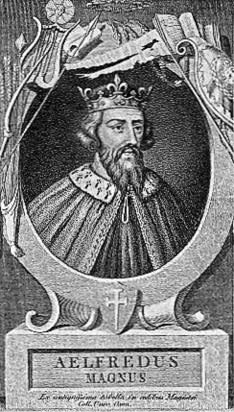
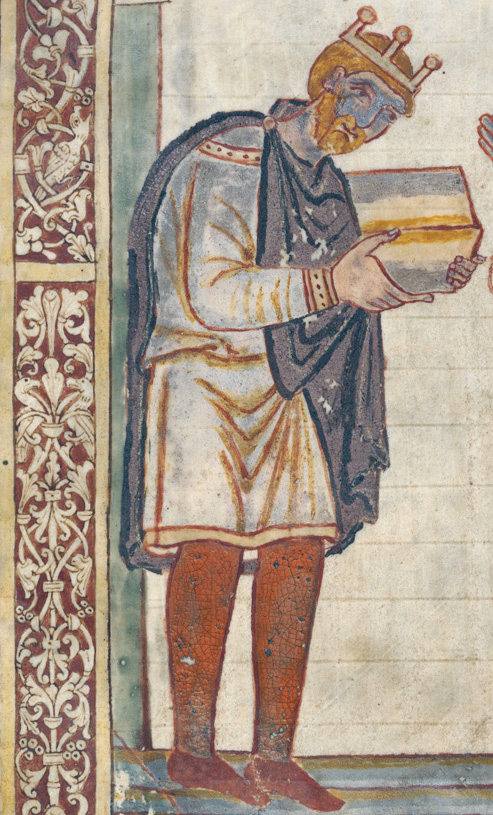
Barnstaple is what may be the oldest borough in England. The town was known in the 900’s, a typical Saxon stronghold. Known to the Romans as “Tunge abertawe” and to the Saxons as “Beardenstaple,” it was referred to as “Barum”, the Latin contraction, in documents of the era. It was created a burg (borough) by King Alfred. A mint was established, possibly by King Athelstan who also supposedly granted a charter with rights to hold a market and fair (If there were a charter, it has been lost-a charter dated 930 was proven a forgery and no other has ever been found). The earliest known coin was minted during King Eadwig’s reign (between 955-59). The mint was not a particularly active and ceased production in the 13th century.

King Athelstan I
It fell to the Normans about 1068, and the fall is discussed in the Domesday Book. It is believed that an original castle was built by King Athelstan, and strengthened after the Conquest. This may be the site of the known castle, built in wood in the 11th century by Geoffrey de Mowbray, Bishop of Coutances. Stone walls were erected subsequently, probably by Henry de Tracey. By 1326, castle was a ruin; only the motte remains as a mound. It was the only port in the southwest of England, and by 1290, an important trade center located on River Taw; trading with Europe, Ireland and New World. Imports included tobacco, wine, spices. Barnstaple was licensed to export wool from the 14th century and was a member of the early merchant Guild of St Nicholas. Exports included woolen material and pottery.

Other industries included lace making, fishing, and ship building. Barnstaple was the 3rd richest town in Devon in the 14th century (behind Exeter and Plymouth). Its importance as a port grew during the 14th to 16th centuries, and the city was represented in the Naval Council. There was a petition to Mary I to build a quay and merchants' exchange on the river in 1555. Barnstaple was a “privileged port” as a member of the Spanish Company (authorized to trade in Spain and Portugal) in 1577. There were 12 merchants in Barnstaple listed in the charter.

Trade with America was also very important in the 16th and 17th centuries. Barnstaple had a rather exciting military past as well. In 1588, 3-5 outfitted ships, manned by locals, sailed to join Sir Francis Drake to help defend against Spanish Armada. In 1642, when the English Civil War erupted, Barnstaple was originally pro-Parliamentarian, but changed sides four times. Seriously damaged after the war, the city eventually resumed its normal business and trading activities.

Queen Anne's Walk
Queen Anne’s Walk was built in 1708 (a rebuilding of the original Merchants' Walk built in Tudor times) and completed in 1713, as a merchant exchange on the river with its own quay for loading and unloading ships. A statue of Queen Anne was placed on the colonnade. In the 18th Century, the wool trade ended and Barnstaple began to import Irish wool which was sent on for manufacture. The harbour silted up (a process which began as early as the 17th century) and trade gradually moved to Bideford although there was local shipping (agricultural) until the 20th century. However, the town still maintained its importance as a market town. It has been represented in Parliament continuously since 1295 (it had 2 representatives until 1885 when representation was reduced to one member). It remains an important business and shopping site and the main town in North Devon.

Delbridge Arms

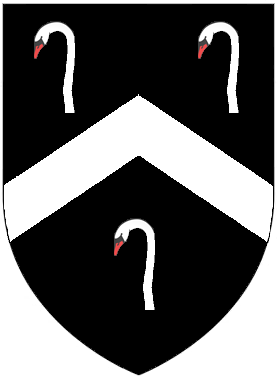
A name that recurred in the history of the town during the 16th century was John Delbridge. Who was John Delbridge? He was born in Barnstaple. His exact date of birth is unknown; however, he was baptized July 9, 1564. John was the 2nd son of Richard Delbridge, a merchant of Barnstaple, and his wife Alice. 

John was a Puritan, and was educated at Emmanuel College Cambridge (he enrolled July 3, 1604 as a paying student or commoner, not as a scholar), and later entered the Middle Temple in London May 10, 1606. He was married to Agnes Downe of Barnstable on January 10th, 1585. Agnes was the niece of Bishop Jewel, Bishop of Salisbury. They had five sons and three daughters, but only one son and daughter survived John. He became a successful cloth merchant, importing and exporting goods by 1591. He was involved in the Newfoundland fishing trade and was a member of the East India Company (1611-21), the French Company (1611), the Virginia. Company (from 1612 to at least 1623), the North West Passage Company (1612), and the Somers Island Company (from 1615 to at least 1622). He was also a member of the Council for Virginia (1621). Clearly, he was a man of great influence with fingers in many pies.

John was involved in the American colonies, including providing passage for colonists to Virginia and Bermuda. His ship The Swan took 70 new settlers to Virginia in 1620 and all survived the voyage (he was apparently known for well supplied ships, and few deaths). He was an active trader particularly in imported tobacco. Clearly successful, John acquired property in Virginia as well as in England. He owned a house in Barnstaple and by 1632 had an estate at West Buckland (a manor which included an advowson (right to appoint a clergyman to serve that area)) about eight miles from Barnstaple. He also had an estate at Bishop’s Tawton. John became active in politics. His political career includes: working under Robert Cecil (Elizabeth I’s chief minister) in 1602-1606 (dates approximate); serving as Mayor of Barnstaple three times (1600-1, 1615-16, 1633-4). He was elected Member of Parliament for Barnstaple six times (elections in 1614, 1621, 1624, 1625, 1626 and 1628), in which capacity he served on various committees (with his known expertise in trade matters) and was very vocal on a wide range of bills at least occasionally in open defiance of the king’s wishes. (He served with Pentecost Dodderidge, a fellow merchant, at least three times, and Alexander St. John, Knight as well).

Agnes died in May of 1639, and was buried May 15th of 1639. John made his will on May 27th and died June 24, 1639 at his home at Bishop's Tawton, leaving the bulk of his estate to his surviving son Richard, with bequests to other relatives and to the poor. 

Unrest was brewing, leading to the Civil War which erupted in 1642. The events involving the war and its aftermath left John Delbridge in obscurity. I couldn't help but wonder if his Puritan faith and service in Parliament steered the loyalty of his city to the Parliamentary side of the conflict, at least at the start.

This is not by any means a comprehensive history of Barnstaple or of John Delbridge; it does, however, serve to tickle one's fancy to look further into that fascinating town and its people.

Sources:

Holton, Denise and Hammett, Elizabeth. BARNSTAPLE THROUGH TIME. Stroud: Amberley Publishing, 2013. (Kindle Version); SECRET BARNSTAPLE. Stroud: Amberley Publishing, 2015. (Kindle Version)

The History of Parliament on-line. “Delbridge, John (1564-1639) of Barnstaple and Bishop’s Tawton, Devon.” HERE

GoogleBooks. Willis, Browne. NOTITIA PARLIAMENTARIA: Or A History of the Counties, Cities and Boroughs in England and Wales. 2nd Edition with Annotations. London: Robert Gosling, 1730. HERE ; Tudor and Stuart Devon: The Common Estate and Government : Essays Presented to Joyce Youngs. Edited by Todd Gray, Margery M. Rowe, and Audrey M. Erskine. Exeter: University of Exeter Press, 1992. HERE

Barnstaple Town Centre on-line. “History.” HERE

A Vision of Britain. “Descriptive Gazetteer Entry for Barnstaple” by John Marious Wilson in IMPERIAL GAZETTEER OF ENGLAND AND WALES (1870-72). HERE

Cambridge Alumni Database. “Delbridge, John.” HERE

View of Barnstaple taken by Lauren Gilbert (c) Lauren Gilbert


Images from Wikimedia Commons

Alfred the Great HERE

Athelstan HERE

Queen Anne's Walk HERE

Delbridge Arms HERE

~~~~~~~~~~
Lauren Gilbert, author of HEYERWOOD: A Novel, is working on her second novel set in Regency England, A RATIONAL ATTACHMENT. She lives in Florida with her husband. Please visit her website HERE.


Saturday, February 18, 2017

The Unpopular Tudor

by Samantha Wilcoxson

On February 18, 1516, the Tudor court celebrated the birth of Princess Mary. After struggling to give her husband an heir, Katherine of Aragon was thrilled with the healthy baby regardless of her gender. King Henry VIII was pleased to have evidence of their ability to procreate, even if he would never grow comfortable with the idea of this little girl as a future queen. While Mary is at best ignored and at worst villainized in modern discussions of the Tudor era, she was looked upon more favorably during her own lifetime.

Mary's early childhood was charmed. She was beloved by both parents and praised by those visiting her father's court for her beauty and precociousness. Henry may not have wished for Mary to inherit his kingdom, but he understood her value as a potential wife. He was proud of his daughter and ensured that she received an exceptional education.

Henry VIII's Great Matter and Queen Katherine's fall from favor is often offered as a reason for Mary's actions during her reign. However, this reasoning fails to demonstrate a comprehensive understanding of Mary Tudor. Rather than vengeance, she was motivated by her belief that it was her duty to shepherd her people in the faith.

Queen Mary I has become known as Bloody Mary, and one cannot deny that almost 300 Protestants were burned for heresy during her reign. But there is so much more to this devout woman who endured much hardship and heartbreak during her brief life. She is remembered much less positively than her sister, Elizabeth I, who also executed and imprisoned people over disagreements on faith. Others suffered simply because they had not pleased Elizabeth. Their father ruled in much the same way. Why then has Mary become the unpopular Tudor?

Mary may have struggled to have her father recognize her as legitimate once he had set aside her mother, but her more serious issues began on the accession of her brother, Edward VI. Henry's Church of England had, by and large, been Catholicism with Henry at its head rather than the Pope. Those who advised the young Edward had something rather different in mind. Mary held as steadfastly to her faith as one might expect of the daughter of Katherine of Aragon, causing some to call for her arrest. The most bold encouraged Edward to have her executed, whether for treason or heresy made little difference.

Edward VI's Devise for the Succession
The young King Edward refused to go that far. As his once close relationship with his eldest sister disintegrated, he badgered her about the mass being held on her estates and imprisoned some members of her household, but he would not take legal action against Mary herself. The most significant step he took against her was his Devise for the Succession, written when he suspected that he was dying.

Edward had never taken the step of legitimizing either of his half-sisters. Therefore, Mary and Elizabeth were still legally bastards throughout his reign, though still his heirs based upon the Act of Succession made law by their father's Parliament. Had Edward lived longer, he likely would have had this rescinded with the succession altered to fit his own desires, but when he died in July 1553 only his will had been updated.

Bypassing both sisters and his cousin, Frances Grey, who were the next three in line according to the Act of Succession, Edward attempted to leave his crown to Lady Jane Grey, Frances' daughter. Neither Edward nor his council foresaw the popular support that went to Mary instead. There was little love for Queen Jane, for few knew her. However, many remembered the widely celebrated Princess Mary and saw her as the true heir of her father and brother.

Mary quickly and effectively took the throne with little resistance. Once John Dudley, Duke of Northumberland, left London to lead Queen Jane's forces, support fell away as if a dam had collapsed. The people would have Mary as their queen, and many of the older generation among them also welcomed the return to traditional faith and worship. The immediate concern upon Mary's accession was not her religion but her marriage plans.

Many betrothals had been proposed over the years, but Mary remained single at age 37. As queen, the bearing of an heir was paramount, but everyone remembered her mother's sad childbearing history. Mary needed to be married quickly but to the proper spouse. In a country that had never before been ruled by a woman, Mary's choice of husband was a scary prospect. Any English subject she chose to marry raised his family up astronomically, but marriage to a foreign prince could be even worse.

Despite much encouragement for her to accept the suit of Edward Courtenay and the York blood flowing through his veins, Mary chose a cousin from her mother's side of the family, Philip of Spain. Philip's father, Charles V, had long been a great supporter of Mary and her mother, and Mary trusted him more than almost any other. When he offered his son, she quickly accepted, but the rest of the country feared that England would become part of the Holy Roman Empire of which Charles was king.

This outcry against Philip became fused with the younger generation's reluctance to accept the old faith. Had Mary better understood her subjects, she may have made a different decision, for she was as dedicated to serving her country as her sister would later be credited for. Her misjudgment was severe, causing Protestant uprisings against Philip and all he stood for.

It was in the name of ensuring her people's salvation and rescuing them from heresy that Mary reinstituted burnings in 1555. In the 16th century, salvation was not a private issue as it is today. Monarchs saw it as their duty to care for their subjects on this earth and to provide them with worship that gave them the hope of heaven. All across Europe, leaders were struggling with what this meant in the face of the Reformation. Mary was determined that reformist heresy would not damn her people to hell, and her hope was that, by punishing a few, she would save the masses.

Burning as a punishment is horrific to the modern mind. To the 16th century mind, it was a foretaste of the fires of hell that encouraged the sufferer to repent and therefore be saved from the eternal fires. Those punished might be saved at the last minute, and those who witnessed would be forced to reconsider their beliefs. Mary believed that she was doing her duty to her people and her God in her attempts to end heresy.

Her contemporaries, by and large, agreed with her. Some became enraged when local authorities in charge of fulfilling Mary's commands used their power to punish rivals rather than heretics, but Mary's actions were widely accepted. Were it not for the biased writing of John Foxe and efforts of her own sister after Mary's death, the Marian burnings would scarcely be a notable historic event. In truth, fewer were executed by Mary than her fellow Tudor monarchs.

The rejection of Catholicism in England has become connected with the negative view of Queen Mary, so that, even today, people remember her more as Bloody Mary than the first Queen Regnant of England. The lack of sympathy with which she is viewed and misunderstandings of her abound, but Elizabeth significantly benefited from her sister's example.

Lesser known than the persecution of heretics and false pregnancies of Mary's reign are her acts of mercy and ability to inspire loyalty of her people. During Wyatt's Rebellion in 1554, an uprising determined to stop Mary's marriage to Philip, Mary refused to leave London and gave a rousing speech to the people of the city, encouraging them to stand by her and oppose the rebels. They did.

In her speech, Mary used words that would later be employed by her sister.
What I am loving subjects, ye know your Queen, to whom, at my coronation, ye promised allegiance and obedience, I was then wedded to the realm, and to the laws of the same, the spousal ring whereof I wear here on my finger, and it never has and never shall be left off.
I cannot tell how naturally a mother loveth her children, for I never had any, but if the subjects may be loved as a mother doth her child, then assure yourselves that I, your sovereign lady and your Queen, do earnestly love and favour you. I cannot but think you love me in return; and thus, bound in concord, we shall be able, I doubt not, to give these rebels a speedy overthrow.
I am neither so desirous of wedding, nor so precisely wedded to my will, that I needs must have a husband. Hitherto I have lived a virgin, and I doubt not, with God's grace, to live still. But if, as my ancestors have done, it might please God that I should leave you a successor to be your governor, I trust you would rejoice thereat; also, I know it would be to your comfort.

The rebellion failed, but Mary found herself tested. She had thus far shown mercy to Lady Jane, despite the usurpation, but her father had been involved in the rebellion. The Duke of Suffolk was beyond saving, but Mary did not concede to sign Jane's death warrant until she was convinced that Philip would not come until known traitors were dealt with. In a eerie replay of Edward of Warwick's execution to clear the way for Mary's mother, Jane went to her death to please the Spanish. To soothe her conscience and demonstrate mercy where she could, Mary forgave 400 rebels who had been sentenced to hanging.

While this one act of mercy saved more men than all those who had died for heresy, it is not acts such as this that Mary is remembered for. Neither is she given credit for demonstrating to her younger sister that a woman could indeed rule. Elizabeth learned from Mary's mistakes and made many of her own, leading to the end of the Tudor dynasty. She ensured her own reputation as Gloriana, in part by blackening the name of the sister who preceded her. Mary may be the unpopular Tudor, but her story is one that inspired her sister to greater glory and might deserve to be more sympathetically remembered today.

Additional Reading
Catholic England under Mary Tudor by Eamon Duffy
Mary Tudor: Princess, Bastard, Queen by Anna Whitelock
The First Queen of England by Linda Porter
Edward VI: The Lost King of England by Chris Skidmore

All images in the public domain through Wikimedia Commons
~~~~~~~~~~

Samantha Wilcoxson is the author of the Plantagenet Embers Trilogy. A incurable bibliophile and sufferer of wanderlust, she lives in Michigan with her husband and three teenagers. You can connect with Samantha on her blog or on Facebook, Twitter, and Goodreads. 

Thursday, November 17, 2016

The End of an Era: The Deaths of Queen Mary and Cardinal Pole

by Samantha Wilcoxson

On this day, many will celebrate the beginning of the Elizabethan age with the accession of Queen Elizabeth I. Few will mourn the passing of her sister, the less politically savvy and much misunderstood Queen Mary I.

Queen Mary I
That she is often referred to as 'Bloody Mary' is a testament to just how little is known of the older daughter of Henry VIII. This nickname is one that was applied to her long after her death, after decades of Elizabethan propaganda had painted their chosen image of Mary. In truth, Mary was welcomed with open arms by her subjects after the death of her brother, Edward VI. When Mary died on November 17, 1558, her dream of an England restored to Rome died with her. 

Mary's greatest partner in reviving Catholicism in England had been her cousin, Cardinal Reginald Pole. He, severely ailing himself, heard the news that his queen had died in the morning and lay dead himself before the end of the day. These two pillars of the counter-reformation fell as one and left the faith crumbling under Elizabeth's rule.

Both Mary and Reginald had faced challenges for most of their lives, and largely due to the same person, Mary's father King Henry VIII. His favor had been showered upon each of them in their early years but revoked when it no longer suited the tempestuous king. Each learned that standing up to Henry VIII led to years of heartache, and, in Reginald's case, required one to evade assassination attempts.

Mary had spent a charmed childhood as the only child of Katherine of Aragon. Queen Katherine's many attempts to give Henry another child failed, and she was content to make Mary his heir in a way that Henry was never completely comfortable with. Still, Mary was raised as if she might become queen, while Henry was alert to better options.

Henry's quest sent him on his infamous course through six wives and resulting in only one young son before he died. Mary was content that her brother should be the one to rule, despite his youth. She was a conservative woman with traditional beliefs, and did not consider that her right to rule might trump Edward's. However, when Edward died tragically young, she did not feel the same way about her cousin Lady Jane Grey.

Mary remembered her mother's dream for her (and the Act of Supremacy) when Jane attempted to usurp her throne. Thousands rallied to Mary's side, and she was declared queen with little bloodshed within a fortnight of her brother's death. Mary had been born a princess, made a bastard, and enthroned as the Queen of England. Her primary work as queen would be to restore England to Rome and rid her kingdom of heretics. To help her in this, she called upon her cousin, Cardinal Reginald Pole.

Reginald was the son of Mary's former governess, Margaret Pole Countess of Salisbury. He had been recognized as a child with great academic abilities, and Henry VIII had been happy to support him in his education. When Mary's trouble began, so did Reginald's. Instead of garnering support for Henry's plans to set aside Katherine and free himself to marry another, Reginald wrote De Unititate denouncing the king's actions and encouraging him to reconsider his responsibilities as God's anointed. Henry never did take constructive criticism well.

By 1541, Henry had ordered the executions of Reginald's mother and oldest brother, Henry Pole Baron Montague. Assassins had been sent to rid the king of Reginald as well, but those efforts proved unsuccessful. With Mary's accession, Reginald was finally free to return to his homeland, but he found it much changed by Edwardian reforms.

Together, Mary and Reginald hoped to repeal those reforms and secure the salvation of Mary's subjects by returning England to what they believed was the true faith.

Mary had already seen the mass restored as soon as she gained her crown in 1553. When Cardinal Pole arrived near the end of 1554, it was the restoration or removal of heretics that was left to deal with. Many Englishmen had been content to take up the mass and faith that they remembered from their younger days. However, younger people had only known the Church of England and were not as certain that they desired change. Both Mary and Reginald believed that these Protestants would embrace Catholicism once they had heard preaching of the truth.

Reality was not quite so simple. In 1555 the burning of heretics began in the hope that those who faced such punishment might repent and those who witnessed it would wish to be saved. It was a widely held belief at the time that even those who burned were given a foretaste of hell in the flames that they might repent before death and avoid the eternal fires. It is difficult to wrap the modern mind around this concept, but the focus was on the eternal and salvation considered one's primary concern.

Burning of Latimer and Ridley
The intent was to select heretics whose work it was to lead others astray for this punishment. Vociferous and well-known Protestants, such as Bishops Latimer, Ridley and Cranmer, were chosen in the hope that their deaths or recantations would most effectively turn others to Catholicism. No one expected many burnings to occur, and many who recanted were spared.

While some counselled Mary to increase punishments and others encouraged her to put an end to them, the public outcry became a blend of those who believed in the religious reforms and those who were horrified by Mary's choice of a husband. Philip of Spain was widely unpopular in England because people assumed that England would eventually be made one more kingdom held under the Holy Roman Emperor when Philip's father, Charles V, died. People were still uncertain about a woman's ability to rule in her own name, and it was suspected that Philip would have his way with Mary and England. The two complaints became joined in many minds, and a protest against Philip was a refusal of Catholicism.

Added to Mary's problems were her own poor health and lack of heir. She had believed herself to be pregnant twice, but both proved false. It is likely that Mary was truly suffering the symptoms of uterine cancer, for shortly after her second phantom pregnancy, she died.

On the morning of November 17, 1558, an ailing Cardinal Pole received the news that his cousin, his queen, his partner in the counter-reformation had passed away peacefully in her sleep shortly after happily stating that she saw little children singing to her. This seems to have been more than Reginald could bear. He died about 12 hours later, bringing an end to England's reconciliation with Rome.

Elizabeth's Entry into London
Mary's sister, Elizabeth, quickly took charge with the determination of one who has been simply biding their time until they could do so. She, along with John Foxe, ensured that Mary became remembered as 'Bloody Mary' for the 280 burnings that had occurred during her reign. Despite known inaccuracies, the pictures painted by Foxe, such as Latimer allegedly saying to Ridley as their fires were lit, 'Be of good comfort, Master Ridley, and play the man; we shall this day light such a candle by God's grace in England as shall never be put out', continue to serve their purpose in blackening Mary's name.

Elizabeth refused to fulfil Mary's last wishes that her debts be paid and that money be given for the establishment of a soldiers' hospital in London. Mary had also requested that her mother's remains be placed next to her own, which Elizabeth also refused. Instead, in 1603, it was Elizabeth who shared Mary's tomb. The sisters would likely both be disappointed with this arrangement.

Mary had survived adversity and hardship, endured a self-serving father and loveless marriage, yet succeeded where no woman before her had. As England's first Queen, she rose above the ambitions and manipulations that many in the Tudor court were obsessed with. Her first and foremost concern was the salvation of her subjects. She bravely pursued this goal, and, even if she did not succeed in restoring England to Rome, she did leave to her sister a kingdom which she had proven could be ruled by a woman.

As are many who live at the end of an era, Mary has been greatly misunderstood and unfairly maligned by those who followed her and did not share her beliefs. By her contemporaries, she was well loved, as is evinced in this lament written for her funeral.

How many noble men restored and other states also
Well showed her princely liberal heart, which gave both friend and foe. 

As princely was her birth, so princely was her life, 
Constant, courtise, modest and mild; a chaste and chosen wife. 

Of mirror of all womanhood! Oh Queen of virtues pure!
Oh constant Marie! filled with grace no age can thee obscure.

Additional Reading

The First Queen of England by Linda Porter
Mary Tudor: Princess, Bastard, Queen by Anna Whitelock
Fires of Faith: Catholic England under Mary Tudor by Eamon Duffy
Reginald Pole: Prince and Prophet by Thomas Mayer

Photo Credits

Mary I: Cassell's History of England
Reginald Pole: National Portrait Gallery, London
Latimer and Ridley: Foxe's Book of Martyrs
Elizabeth's Entry into London: Cassell's History of England

~~~~~~~~~~

Samantha Wilcoxson is a first generation American with British roots. She is passionate about reading, writing, and history, especially the Plantagenet and Tudor dynasties. Her novel, Plantagenet Princess, Tudor Queen: The Story of Elizabeth of York has been recognized as a Historical Novel Society Editor's Choice. The Plantagenet Embers series continues with Faithful Traitor: The Story of Margaret Pole and will conclude with Queen of Martyrs: The Story of Mary I in 2017.

Samantha has also published two middle grade novels, No Such Thing as Perfect and Over the Deep: A Titanic Adventure.

When not reading or writing, Samantha enjoys traveling and spending time at the lake with her husband and three children. You can connect with Samantha on her blog, Twitter, Goodreads, Booklikes, and Amazon.


Monday, August 22, 2016

Coat of Arms Tell a Story

by Samantha Wilcoxson

The medieval coat of arms was a source of pride for its owner, not only identifying them with its unique design but telling a story of their achievements and ancestry. The differentiations added with each generation and family member who used a coat of arms increased its complexity and put their individual touch upon the family story. The example of Margaret Pole’s coat of arms is an excellent study in the intricacies of heraldry.

Margaret Pole, Countess of Salisbury
Coat of Arms
As you can see, Margaret had good reason to be proud of her heritage and her own position as Countess of Salisbury. Each color, line, and image within this breathtaking coat of arms has a particular meaning. By looking at each element we can learn much about the lady herself.

Let’s start by looking at the top left quarter of Margaret’s shield. This undoubtedly is familiar as the quartered Plantagenet lions and French fleur-de-lis had been used since the reign of Edward III, the monarch whose many descendants would cause the Wars of the Roses that created so much upheaval for Margaret and countless others. He was the first to take England’s three lions and combine them with the banner of the French throne.  Each of the monarchs since Edward III’s time had included this in their coat of arms, and Margaret’s children kept this intact in their own shields.

George Plantagenet, Duke of Clarence
Coat of Arms
The field of red, or gules as it is referred to in heraldry, indicates the status of a warrior or one who is eager to serve, while France’s azure (blue) represents loyalty and strength. Lions were common features on royal shields, these are in a position of passant guardant with three feet on the ground and head facing the observer. A differentiation on Margaret’s family’s version of the royal arms is the white label, or tournament collar, charged with canton gules (the red marks) which designates it as the shield of the Duke of Clarence, Margaret’s father.

Moving clockwise, we begin to see the many elements that Margaret’s shield takes from her Neville ancestors, who were earls of Warwick, Montagu, Westmoreland, and Salisbury. The gules field is repeated in the square included from the Nevilles of Middleham. From the late 13th century, this shield was in place for this noble family when it was first used by Ralph Neville, 1st Baron de Raby. 
The label charged with canton azure was added by Richard Neville, earl of Salisbury, to differentiate between family branches. Salisbury passed on this element to his son, the infamous Earl of Warwick, later known as the kingmaker. It is found on the coat of arms of Margaret Pole because her mother was Warwick’s daughter. She also was restored her great-grandfather’s title to the earldom of Salisbury by Henry VIII.

Richard Neville, Earl of Warwick
Coat of Arms
Many other elements of Margaret’s shield also come from that of her grandfather, which combines several items from his family’s various earldoms. The Howorth crosslets and field of chequed gold and azure with the chevron of ermine are evidence of his inheritance from his father-in-law. Richard de Beauchamp passed along the Warwick earldom to Richard Neville through the former’s daughter and latter’s wife, Anne Beauchamp. This portion of the shield finds its roots in de Clare family arms, ancestors of the Beauchamps. They were added by Warwick to the eagle and series of three red fusils that were featured on Warwick’s father’s shield, combining key features of the many noble names and titles he could lay claim to.

The final eighth of Margaret’s coat of arms is taken directly from her grandfather’s lower right quarter. The red chevronels on gold quartered with gold fret on red indicate Despenser family heritage, also through Warwick’s wife, Anne Beauchamp.

Henry Pole, Lord Montagu
Coat of Arms
A brief analysis of Margaret Pole’s coat of arms makes clear how quickly family connections and titles cause the evolution of a shield. Each person who passed on a particular element to be marshalled into Margaret’s shield had very particular reasons for choosing the colors and images that may simply seem eye-catching and romantic to us.

The Warwick chequed azure and gold would have been chosen due to a deep respect for virtue and loyalty. The white chevron over top of this field charged with ermine indicated a vow to protect and status as a noble family. In the same manner, each of the Montagu fusils were a proud statement of honesty, constancy, and noble birth. When Margaret gazed upon her coat of arms, she would have a resounding sense of the past and all that her family had accomplished before her time. The upper left quarter of her shield especially would have been a constant reminder of her family’s former royal status.

Cardinal Reginald Pole
Coat of Arms

Margaret’s sons carried on their family’s heritage with pride, though theirs did not repeat the complexity of Margaret’s shield.  They took the dukedom of Clarence arms of their mother’s shield quartered with the gold and sable saltire of their father, Sir Richard Pole. The lower half included the Neville saltire and the Warwick crosslets. Henry and Reginald’s coats of arms were identical but crested with indications of their status as an earl and a cardinal.


Sources:
Boutell's Heraldry by CW Scott-Giles & JP Brooke-Little
A Complete Guide to Heraldry by AC Fox-Davies
http://www.europeanheraldry.org/
http://www.familytreesandcrests.com/

All images are in the public domain.

Samantha Wilcoxson is the author of the Plantagenet Embers series, which features the stories of the Plantagenet remnant in Tudor times. The first novel in the series, Plantagenet Princess, Tudor Queen, tells the story of Elizabeth of York, who became the mother of the Tudor dynasty. This book was named an Editor's Choice by the Historical Novel Society and is a Kindle biographical fiction bestseller. Faithful Traitor, also a Kindle bestseller, is the second installment in the series and features the story of Margaret Pole. The final book of the trilogy, Queen of Martyrs: The Story of Mary I will be released in Spring 2017.

Plantagenet Princess, Tudor Queen and Faithful Traitor are available worldwide on Amazon.

Connect with Samantha on her blog or on Twitter.