Showing posts with label Oliver Cromwell. Show all posts

Monday, October 28, 2019

Stuart London - A Time and Place for Discovery

By Michael Ward

Maybe it’s the journalist in me, but I’m often attracted to historical research that produces surprises.

Discovering that Isaac Newton, the father of modern physics, had a deep interest in alchemy certainly raised an eyebrow. As did finding out that people used to believe swallows hibernated in mud, rather than migrated, over winter.

But why wouldn’t they? The idea that such a small bird could fly as far as southern Africa would have seemed far-fetched indeed to someone in the 1600s, assuming they had any notion where southern Africa was.

Over time I’ve come to realise that my research ‘revelations’ have said more about me and my 21st century assumptions, than the people of the period I was studying.

Nowhere has this been truer than my examination of England in the mid 17th century. Of course I knew about the civil war, Cromwell’s Commonwealth and the Great Fire but I still expected to learn much on my voyage of discovery. However, I had no inkling of just how many ‘oh really?’ moments I would encounter along the way, such as burrowing birds and Newton’s alchemy.

My first surprise was that so much change was compressed into such a short period. In just over 25 years, the country experienced civil war, regicide, a republic, and a restoration of the monarchy.

Any one of these would have produced sufficient shock waves to reverberate for a decade. But to have experienced each in rapid succession, followed by 1666, a hellish year of fire and plague, meant that, for Londoners in particular, it must have been both a formative and terrifying time to be alive.

Consider experiencing the politically divisive furore of five or six consecutive Brexits between now and 2040 plus a conflict that accounted for proportionally more of the country’s population than World War One, followed by a pandemic that wiped out a quarter of the people in London and a blaze that consumed much of city. Then take away the ability to know what was happening and why, and you begin to get an inkling.

As my research continued, I realised this period also witnessed fundamental changes in science, medicine and commerce, as well as politics and religion. Beliefs firmly held for centuries were now being challenged, almost on a daily basis, by a constant stream of newly discovered, empirically driven knowledge, forced to the surface by an unquenchable spirit of enquiry.

Public Domain image of the type of printing presses
which would help transform 17th-century England

There was a swathe of new thinking. I’ve already mentioned Newton, the ‘father of modern physics’. Historians have enjoyed using such titles, with many paternity suits still argued on behalf of the sciences in particular. Nevertheless, the 17th century had more than its fair share of claimants: Galileo –the father of modern science (according to Einstein, no less), Francis Bacon - scientific method, Francesco Redi – experimental biology, Robert Boyle – modern chemistry, Marcello Malpigi – microscopic anatomy, and so on, leaving supporters of Rene Descartes and Pierre de Fermat to fight over analytical geometry.

My third realisation was that the key players of this period did not always behave to type. Several of the grandest lords in the kingdom, such as Essex and Warwick, were early and powerful advocates of the Parliamentary cause, as were a number of leading merchants, including some within the more conservative Merchant Adventurers. Equally, kings were seen as guardians of the status quo yet radical thinkers in science and medicine benefitted from their patronage.

William Harvey is a case in point. At the start of the 17th century, the views of Galen, a Greek physician born in 210 AD, still dominated medical practice throughout Europe, and his anatomical theories, including the body’s circulatory system, were largely uncontested. In 1628, William Harvey published ‘De Motu Cordis’ demonstrating that people had a single blood system which circulated continuously throughout their bodies. This flatly contradicted the accepted Galean doctrine that organs consumed blood which had to be replenished by either the liver of the heart, and each had their own circulatory networks.

William Harvey, demonstrating his theory of circulation
of Wellcome. Click HERE for image attribution

Harvey expected a storm of opposition and he wasn’t disappointed. Yet it only took 30 years for his ideas to become more widely accepted, and Galen’s 1,400 year grip on medicine to be broken, such was the iconoclastic spirit of the age.

Yet it was King James I who supported Harvey’s research by allowing him to join his court when hunting game, so that Harvey could dissect fallen animals immediately, in situ, and observe their blood flow. (However, James’ son Charles 1 later extracted a favour in return, requiring the eminent physician to dodge the musket fire at the Battle of Edgehill where, as the King’s ‘Physician in Ordinary’, he is said to have looked after the two royal princes while tending the wounded.)

As I delved deeper into the plethora of 17th century discoveries and developments, I began to notice a form of symbiotic relationship between some, despite being in different fields. I would often pull at, then follow, a thread of research in, say, scientific advances, only to discover its impact on something completely different, such as religious belief. In the 17th century, it seems one new way of interpreting the universe often led to another.

So, from Galileo onwards, many of the advances in astrology were driven by the fervent search for improved navigational tools by the expanding merchant sector. Improvements in printing technology led to a proliferation of unlicensed printing presses in London which came to have a major impact on political discourse and the spread of radical ideas, before and during the civil war. Again it is notable how quickly this development was understood and seized upon, this time by political activists including the King’s supporters, in this age of experimentation.

Another example can be found in the dramatic population shifts of this period. In just 15 years, from the late 1620s to the early 1640s, some 80,000 people sailed from England’s shores, with up to 60,000 of them crossing the Atlantic, an enormous figure for that time. A significant number of these were Puritans, wishing to found a New World where they could practise their religion freely.

Puritans left England in large numbers to set up colonies in the New World to practise their religion.
This Public Domain image shows Puritans burning a book they deemed to be heretical in Massachusetts Bay. 

One would expect such a rapid depopulation to have a concentrated impact in London, by far England’s largest city, especially when combined with its high mortality rate. Yet simultaneous advances in commerce meant that London’s growth did not stall. It actually increased, the rising economy driven in no small part by the expansion of merchant trade to all points of the globe including the Caribbean and the Americas. Each week hundreds would arrive from the surrounding counties, eager to share in the city’s new found wealth.

This more than compensated for the mass emigration partly fuelled by religious change. However, many of the new arrivals soon discovered the streets of London to be paved with something far less pleasant than gold. The city’s existing housing stock and barely rudimentary sanitation were overwhelmed by the needs of newcomers and much of London descended into a disease-ridden squalor.

This, of course, added more fuel to the political unrest, and so interlocking cycles of change and challenge continued to drive the English 17th century into the uncharted depths of civil strife, setting brother against brother and father against son.


Further reading

Adamson, J. (2009). The Nobel Revolt. London. Phoenix.

Brenner, R. (2003). Merchants and Revolution. London. Verso.

Evans, J. (2018). Emigrants. London. Orion.

Rees, J. (2016). The Leveller Revolution. London. Verso.


~~~~~~~~~~

Michael Ward is a former BBC journalist and academic. His debut novel “Rags of Time” is set in 1639, with England sliding into civil war. Spice trader Thomas Tallant returns from India to find the overcrowded streets of London seething with sedition. Soon he is sucked into the city’s turbulence, accused of murder.

The book follows his desperate attempts to find the real killer and clear his name, helped by the enigmatic Elizabeth Seymour, astrologer and mathematician whose thirst for knowledge is only matched by her addiction to tobacco and the gaming tables. Can Elizabeth untangle the web of deceit threatening to pull Tom under?

Early reviews of ‘Rags of Time’ have described it as “a wonderful debut” with an “outstanding story”, noting that “…the author has clearly done all the hard work by researching the period and manages to impart that knowledge without any big information dumps.”

The sequel is now under development.

Connect with Michael: Amazon page Rags of Time

Amazon US 

GoodReads book page

Author’s email: mike@mikewardmedia.com


Saturday, February 6, 2016

The Battle of Upton-Upon-Severn

By Cryssa Bazos

In the pre-dawn hours of 28 August 1651, eighteen Parliamentary soldiers inched along a narrow board, which was stretched across a broken bridge, while the high waters of the Severn swirled below them. Their mission: to surprise the Royalist forces holding Upton-upon-Severn on the opposite shore and open the way to Worcester where the King’s army was garrisoned. Fourteen months of a Cromwell-the-Cat and Charles-the-Mouse game were finally coming to a head.

The Taking of Upon Bridge by Emily M. Lawson
[Public Domain] Wikimedia Commons

Background

Following the execution of King Charles I by Parliament in 1649, the Prince of Wales, Charles Stuart, sought allies to reclaim the throne and found in Scotland a willing partner. Parliament was not pleased.

Charles II by Phillipe de Champaigne
 [Public Domaine] via Wikimedia Commons

After Charles landed in Scotland around Midsummer’s Day 1650, Parliament sent their Commander-In-Chief, Oliver Cromwell, to encourage a change in Scottish policy–leading a force of about 12,000. While Cromwell secured an initial toe-hold from Dunbar to Edinburgh, the King’s forces held Stirling and the north of the Firth of Forth in a year long stalemate.

The chessboard changed in the early hours of 20 July 1651 when Cromwell launched a surprise attack and won the harbour of Inverkeithing (along the Firth of Forth). Stirling and the north were now vulnerable.

Charles had two options: to be herded west, until he was eventually squeezed out of Scotland, or take a bold step and march his troops south toward England. He went for the latter. On August 6th, Charles and 14,000 Scottish and Royalist troops crossed into England.

Charles reached Worcester on August 22nd, and with Parliament closing in on all sides, he decided to consolidate his position there. By defending the river crossings to the south, the Royalists had a chance to hold off the advancing Parliamentary forces. Charles sent Major-General Edward Massey with his regiment of three hundred to guard the southern crossing at Upton. It would have worked, had the sentry not decided to go to the pub.

Church Street, Upton-Upon-Severn

Fight at the Church

The waters of the Severn were high and the bridge linking the southern village of Ryall with Upton on the north shore had been destroyed.

John Lambert by Robert Walker
National Portrait Gallery NPG 252

In Ryall, Cromwell’s 2nd in command, Major-General Lambert waited with approximately 500 soldiers. Lambert decided to send a few brave men across the river to secure a position and cover the rest of his troops as they forded the Severn. It was a dangerous job–the most they could manage was to string a board across the pilings and hope they didn’t lose their balance and fall into the river where they would have drowned. Incredibly, all eighteen made it across. The forlorn hope headed toward town, but as they approached a church, they were spotted by Massey’s sentries. Lambert’s men raced to the building and barricade themselves inside just as the Royalists set upon them.

The fighting at the church became intense. The Parliamentary soldiers kept up a steady barrage of musket fire to keep the Royalists at bay while the Royalists set fire to the building to force out the defenders.

And no one noticed that Lambert had started fording his troops across the river.


The turning of the tide

Lambert didn’t give up on his men who were trapped and under attack in the church. The river was still high, but he found a place downstream where the waters were more manageable, and he sent across a vanguard to their aid.

The Royalists suddenly realized that they were caught between a burning church and Lambert’s approaching forces. They abandoned their siege on the church and attempted to drive Lambert back into the river. Their initial charge succeeded, and Parliament lost ground, but ultimately, the tides had turned against the Royalists. The water levels were dropping, and the rest of Lambert’s men were now able to cross safely and join in the fray.


Edward Massey

Outnumbered, Massey had no choice than to order his men to fall back to the earthworks where he hoped to regroup and hold off the advancing enemy. The retreat became a rout. Massey was shot in the leg, then a second round killed his horse from under him.

Massey’s men rallied around their wounded commander, and before Lambert could overrun them, they managed to bear Massey safely away. The Royalists returned to Worcester carrying the ill news of their loss at Upton.

The King had lost his only hope in defending Worcester, and it was only a matter of days before the enemy gathered at the gates. On the 3rd of September 1651, Charles Stuart met Oliver Cromwell outside Worcester to fight the last desperate battle of the English Civil War.

~~~~~~~~~~~~~
Media attributions:

Church Street: Bob Embleton [CC BY-SA 2.0 (http://creativecommons.org/licenses/by-sa/2.0)%5D, via Wikimedia Commons

“Edward Massie” by Unknown – http://www.livinggloucester.co.uk/resources/image/LG00027c.jpg. Licensed under Public Domain via Commons – https://commons.wikimedia.org/wiki/File:Edward_Massie.jpg#/media/File:Edward_Massie.jpg About these ads

~~~~~~~~~~~~~
Cryssa Bazos is a historical fiction writer and 17th Century enthusiast with a particular interest in the English Civil War (ECW). For more stories about the English Civil War and the 17th Century, visit her blog.

Friday, October 16, 2015

The Problem of How to Kill Cromwell

by Alison Stuart

My latest release, The King's Man, is set in the year 1654 – bang in the middle of the Interregnum. Charles I has been dead five years and his son is drifting around in exile on the Continent.

Oliver Cromwell
For the loyal supporters of the King, it is quite possibly the blackest time of all. What is left of their estates has been confiscated or subjected to crippling fines, Cromwell is at the height of his power, and there is no likelihood of a restoration of the monarchy by peaceful means any time soon. It is no surprise that at this time little nests of royalists began to foment plots to overthrow Cromwell and restore the King.

John Thurloe
None were successful as John Thurloe, Cromwell’s Secretary of State, had a highly efficient and organised spy ring within the royalist circles, and no one sneezed without Thurloe knowing about it.

Charles II himself appeared to be ambivalent to much of the plotting. He did not believe that the assassination of Cromwell would necessarily result in his return to the throne, and in that he was probably correct. At that time Cromwell had able and loyal Lieutenants who would have stepped into his place.

Richard Willys
The most significant grouping of Royalists was formed toward the end of 1653 comprising Lords Bellasis and Loughborough, Sir William Compton, Colonels Russell and Villiers and Sir Richard Willys. This group would later form the basis of The Sealed Knot and be the only group to have the King’s official commission to operate. But the fate of The Sealed Knot is a post for another day.

In February of 1654, a small group of disaffected royalists were meeting regularly in the Ship Tavern in the Old Bailey, hatching a plot to seize Whitehall, St. James and the Tower and the guards about the city. A Captain Dutton was dispatched to garner support from known Royalists in the country, and it was decided Colonel Whiteley should go to France to get the support of the King in exile. An argument about payment of his expenses ensued with none of his co-conspirators willing to pay a farthing! Inevitably the plot was betrayed to Thurloe (by a Roger Cotes) and the conspirators were arrested at the Ship Inn. None of those concerned were ever brought to trial.

However it was during the course of examining these conspirators that the existence of The Sealed Knot came to light, and Thurloe’s interest was piqued.

In May of 1654 another plot headed by John Gerard was hatched. The plan was to seize Cromwell as he travelled between Whitehall and Hampton Court. Fortunately for Cromwell, Thurloe once again foiled the plot (it is believed in this case Thurloe’s agents may have been Thomas Henshaw and John Wildman). On the day planned for the execution of the plot (13 May), Cromwell took the water route. The annoyed conspirators set the 21 May for a surprise attack on the Whitehall chapel, but by then they had been betrayed and were in the Tower.

The plot was notable for its audacity. The conspirators planned to seize all horses in and around London, assassinate Cromwell and seize the guards at the Mews, St. James and Whitehall. Cromwell’s second in Command, John Lambert and Thurloe himself were possibly also on the assassination list.

Implicated in "Gerard's Plot" (as it came to be known) was an absurd character, a French emissary sent by Cardinal Mazarin to aid the French Ambassador, Bordeaux, in diplomatic negotiations with the English. De Baas was a Gascon whose brother Charles adopted his mother's name D'Artagnan and was the prototype of Dumas' hero (yes really!). De Baas was brash and overconfident and, with little understanding of the English, decided that Cromwell's regime was of no importance and could easily be overthrown. His arrogance was manifest in his refusal to uncover his head in the presence of the Lord Protector and his assertion that the soldiers who supported the regime were "feeble and dissipated". His grounds for this assertion? The sentinels on duty wore "nightcaps under their hats".

On the discovery of the plot the arrogant Frenchman was given three days to leave the country.

Gerard and a school teacher named Vowells were executed on 10 July; three other conspirators were sent to Barbados. Oddly, Wildman and Henshaw escaped.

There was a further scare toward the end of 1654, and The Sealed Knot was behind the failed uprisings in 1655, but it was these two idiotic plots (‘The Ship Inn’ Plot and ‘Gerard’s Plot’) that form the basis of The King’s Man. As an author I could not have made up a more inept and useless bunch of plotters and I had great fun writing the real life characters such as Thurloe, Willys, Gerard, Wildman and Henshaw, DeBaas, Bordeaux (and his English mistress) and the rest into the story.

Principal Sources: Antonia Fraser Cromwell Our Chief of Men, Philip Aubrey Mr. Secretary Thurloe and S.R. Gardiner History of the Commonwealth and Protectorate Vol 3.

~~~~~~~~~~~~~

About The King's Man

The second in a tantalising trilogy from award-winning author Alison Stuart, about warriors, the wounds they carry, and the women that help them heal.

London 1654: Kit Lovell is one of the King’s men, a disillusioned Royalist who passes his time cheating at cards, living off his wealthy and attractive mistress, and plotting the death of Oliver Cromwell.
Penniless and friendless, Thamsine Granville has lost everything. Terrified, in pain, and alone, she hurls a piece of brick at the coach of Oliver Cromwell and earns herself an immediate death sentence. Only the quick thinking of a stranger saves her.
Far from the bored, benevolent rescuer that he seems, Kit plunges Thamsine into his world of espionage and betrayal – a world that has no room for falling in love.
Torn between Thamsine and loyalty to his master and King, Kit’s carefully constructed web of lies begins to unravel. He must make one last desperate gamble – the cost of which might be his life.

Buy The King's Man: AmazoniBooks, and where all good eBooks are sold (see Escape Publishing for the full list)


To celebrate the launch of The King's Man, Alison is giving away a Kindle ereader to a lucky reader. Click HERE to enter the Rafflecopter contest.

Award winning Australian author, Alison Stuart learned her passion from history from her father. She has been writing stories since her teenage years, but it was not until 2007 that her first full length novel was published. Alison has now published 6 full length historical romances and a collection of her short stories. Her disposition for writing about soldier heroes may come from her varied career as a lawyer in the military and fire services. These days when she is not writing she is travelling and routinely drags her long suffering husband around battlefields and castles.

Connect with Alison at her website, Facebook, Twitter and Goodreads.

Friday, October 2, 2015

Who Wants to Kill a King?

by Anthony Anglorus

How did the English come to execute their king? This is a question which many with an interest in history ask, and there is never a clear answer, despite the fact that the evidence is clearly available and well documented.

In reality, only a very small handful of people sought his death. The general populace simply wanted life to return to normal so that they could ply their various trades in peace. If asked, some might have wanted him to be brought down a peg or two, but most simply wanted to live their (usually miserable) lives without interference. Those of Royalist persuasion obviously wanted him back on the throne and even the majority of Parliamentarians only sought that he be deposed or his powers curbed.

But within the ranks of the Parliamentarians, there was a small coven of individuals who wanted him dead. Amongst these was the firebrand General Henry Ireton, who also happened to be Oliver Cromwell’s son-in-law.

Oliver Cromwell himself was in the group who sought simply to curb the powers of the King. Indeed, he put considerable effort into trying to persuade Charles to accept a reduction of powers. But at some point, he gave up trying. One can only surmise, but the logical answer as to why this happened is that after a particularly difficult session with the King, he spent some time with Ireton - perhaps at a family dinner - who persuaded him that the King could never be trusted to honour an agreement even if one was possible. However it happened, Cromwell suddenly became one of those determined to see the King executed.

But what was Cromwell like? He was something of a chameleon; at times almost kindly, at other times downright vicious. The Irish remember him mostly for his later brutality at Drogheda, where he ordered the butchery of every soldier and most civilians - and even some soldiers who had surrendered and been promised safe passage. The English have a soft spot for him, tending to overlook his shortcomings but highlight the fact that he was instrumental in putting in place the modern system of a parliamentary democracy with a Royal head of state. But most of all, in reality, he was the consummate politician as we know them today.

In contrast, Sir Thomas Fairfax was an utterly lamentable politician. Contrary to popular belief, Cromwell was not head of the New Model Army at this time; it was General Sir Thomas Fairfax. Fairfax was in fact the most successful of the Parliamentarian Generals during the Civil War and was a determinedly honourable man. His wife was an outspoken Royalist who later twice disrupted the King’s trial and was ejected forcibly from the chamber. He was himself of the opinion that the King needed to be brought down a peg or two but was strongly opposed to the concept of rule without a King and certainly not in favour of his execution.

Charles was an arrogant man who truly believed that he had a God-given right and duty to rule. Given that this was an extremely religious time, the phrase ‘God-given’ carried more weight then than it would today. His father, James I, had been possibly more arrogant still so it is easy to see where it came from. As a ruler, he was not particularly effective, probably even poor, but he certainly was not an evil man. Devious in many ways, he was also sometimes extremely rigidly honourable, as in when he refused an opportunity to escape captivity because he had given his parole to the senior officer guarding him that he would not seek to escape.

In November 1648, Cromwell was campaigning in North-East England, mopping up the last shreds of Royalist opposition when he was ordered by Parliament to return to London. For reasons forever lost in the mists of time, he obeyed this order, but deliberately prevaricated. He moved south slowly, even taking the time to take his army across England to visit Pontefract, where another general was engaged in a long siege. All was under control there, no interventions were sought, needed or given, but he spent a couple of days there before resuming his slow journey south.

Meanwhile, in London his son-in-law had either forged or tricked Fairfax into signing an order for Parliament to be blockaded, and it was enacted on 6th December in an action immortalised as ‘Pride’s Purge’, named after the Colonel who had the task of standing with Lord Grey in the House of Commons doorway.
.
Lord Grey had drawn up a list of members of Parliament separating out those who would probably vote for a bill to place the King on trial, those who would not and those who would be so opposed to it that they would represent a danger even from outside. As the Members arrived at the doorway, admission was refused to those who would oppose, granted to those who might vote for the bill and those who represented a danger were arrested.

Inside the House, once there was a quorum the debate began, and the bill ultimately passed.

Under English Law, a bill passed by the House of Commons must then be passed by the House of Lords, and only then does it go to the Monarch for final ratification and signature - a system in place then for centuries and still in place today. As the King was under arrest, a bill was also passed removing the need for the King’s signature.

When the bill reached the Lords, they firmly voted against it, and then, fearing physical reprisals, they declared a holiday for themselves and rapidly dispersed.

Meanwhile, by an amazing coincidence (or perhaps not), Cromwell had finally arrived in London the day after Pride’s Purge, claiming no prior knowledge of the violation of democracy that it represented but also announcing that he approved of the outcome.

Once the Commons learned that their bill had been rejected by the Lords, they reacted by passing a further bill that the House of Lords were no longer necessary for the passage of Laws in England, and that the Commons alone were the source of governance. It was then easy to pass the laws they wanted to bring the King to trial.

One should note at this point that under English Law at that time, there was no provision in Law for the Monarch to be brought to account; the Monarch was the source of all law and therefore could not be brought to account under the law. Subsequently this was changed, although Parliament has not interfered with the Monarch in recent times.

It took several weeks to prepare for the trial. The hall had to be completely refurbished and a suitable judge appointed. All of the senior legal minds knew that the trial was illegal under English Law, and to a man they went away on holiday. Finally, they appointed John Bradshaw, a junior lawyer who himself refused at first, but was eventually persuaded - and was extraordinarily enthusiastic in his post thereafter.

Come the day of the opening of the trial, Bradshaw turned up with body armour beneath his robes and surrounded by numerous bodyguards. Troops lined the courtroom, all facing the public gallery. A roll call of the selected commissioners was made, and when Fairfax’s name was called, there was no reply - he was absent. From the public gallery came a cry ‘Aye, he hath too much wit to be here!’. The heckler was hustled from the gallery, but not before she had been identified as Lady Fairfax.

The trial continued over several days. The King contested the legality of the trial, but Bradshaw overruled him and carefully avoided giving the King any opportunity to defend himself. At one point, the King requested the right to address the House of Commons and Lords together, but Bradshaw denied it, causing John Downes, one of the commissioners, to leap to his feet and question the morality of such a denial. Cromwell ordered him to sit down and shut up, but he persisted, causing a temporary adjournment of the proceedings while the commissioners talked in private. When they emerged, the protesting commissioner was missing along with several others. The predetermined outcome was reached with the predetermined sentence laid down ‘in the name of the people of England’, at which point a voice rang out from the Gallery.

“This is not for the people of England, nay, barely any would condone this."

Again, the heckler was hustled from the gallery, this time at gunpoint, and again was identified as Lady Fairfax.

Sentence was to be carried out a few days later on January 30th, 1649, and the King was held in a nearby apartment.

At his London home, Fairfax (who was, remember, Cromwell’s superior officer) was receiving pleas and protests from the City Fathers (London) and numerous foreign embassies, all pleading for a remission of sentence. On the morning of the execution, once he had seen the last of the ambassadors, Fairfax went to the site of the execution with the intent of forcing a deferral of sentence. The actual execution had been delayed while Parliament passed a law making it illegal to declare Charles’ son (also named Charles) as King once the execution took place. As Fairfax arrived, Cromwell had just returned with the new law, which was being read out to the assembled crowd.

Guessing Fairfax’s intentions, Cromwell gave the nod to the officer responsible for overseeing the execution, then took Fairfax into the chapel "for some peace and quiet". Whilst discussing matters, a huge groan was heard from outside - a witness to the execution described the sound as one "I have never heard before and wish never to hear again." This occurred at the moment the executioner’s assistant held up the King’s severed head for all to see, announcing "behold, the head of a traitor".

The King was dead.

~~~~~~~~~~~~~

Whilst the execution is not directly the story I have written, it is a pivotal point in both British History and also my novel, which is about a Royalist highwayman who was active at that time and indeed had become a folk hero. There is more detail there than here, and if you want to know more you should read The Prince of Prigs published by Bygone Era Books and available in paperback ($17.95) and e-book ($4.99). The sterling price fluctuates with the rate of exchange but is around £11.95 and £3.33.

My working life was spent far from both History and Literature initially. But I did enjoy reading, and as I tired of Science Fiction, I started reading Historical Fiction - and I was hooked.

From then onwards, I would enjoy the history of the world wherever I travelled, indeed I avoided anywhere lacking historical content.

I had been ‘guided’ towards accountancy, and this was my career from around age In 2000, I moved my office to Leicestershire and it was here that I learned about one George Davenport, ill-fated highwayman of the late 18th Century.

Once I reached the first stage of my retirement in 2009, I found myself with more time on my hands, and I decided to research this character. As I delved, a fascinating story emerged, and I resolved to write his story, a task which eventually became “The Other Robin Hood”, available from Smashwords and Amazon.

This was my first real attempt at writing a book, and it showed; I made numerous mistakes. But I knew what they were, and resolved that the next book would be free of them. I decided to stick within the ‘highwayman’ genre, and did extensive research on the history of highwaymen. Eventually I alighted upon Captain James Hind.

I tell the real-life story of the Captain on my webpage, but for the novel, I wrote his story from age around 32. This was because there is little to catch the eye in a rebellious teenager, which was how he started. I decided to weave in a bit about events surrounding him, then I wove in another highwayman and before I knew it, I had the elements in place to write a satisfying conclusion to the book.

Numerous rejections later, I had enough comments to reorganise the opening chapters, and once that was done, I immediately got interest from two publishers. Bygone Era Books responded first, I liked the contract, and so I was suddenly a Published Author! The Prince of Prigs was released on 6th July, 2015.

As I am now in my sixties, retirement beckons. But I shall continue writing until my last breath, and we are currently creating a writing room in our retirement home in rural France.

At the point of writing this, I have just started writing the sequel. Whilst there was enough material in the true story to mean that much of The Prince of Prigs is simply a dramatisation of the truth, the absence of subsequent information gives me a blank canvas, one which I hope to fill with a book at least as good as the opener.

Watch This Space!


Saturday, June 27, 2015

Lady Protectress: Elizabeth Bourchier Cromwell

by Lauren Gilbert

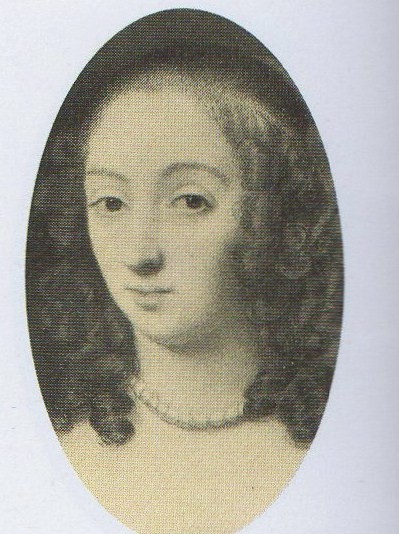
Elizabeth Bourchier
by Samuel Cooper

Even her date of birth is unclear.  Very little is actually known about the wife of Oliver Cromwell.  Her name was Elizabeth, and she was the daughter of Sir James Bourchier and Frances Crane.  Sir James was a successful London merchant in the fur and leather trades.  He was knighted in July of 1603 by James I and given a grant of arms in 1610.  Elizabeth was born in Felsted, Essex, apparently sometime in 1598, and was one of eleven children, possibly the oldest.  She is believed to have some education.  However, nothing is known of her childhood or girlhood.  For all intents and purposes, she came to life on August 22, 1620 when she married Oliver Cromwell.

There is no indication of when or how they met.  The Bourchiers and the Cromwells were both established in Essex.  There was also a family connection in that Elizabeth’s Aunt Eluzai Crane married Oliver’s Uncle Henry Cromwell.  While it seems likely that they may have met as children (being close to the same age, Oliver born April 25, 1599), it is equally possible that they met in London.  At any rate, they were married in London at St. Giles Cripplegate.  It is known that she had a dowry of 1500 pounds, but not whether their marriage was arranged or an affair of the heart.  The marriage was definitely an advantage for Cromwell, as his father-in-law’s connections in the London merchant community were politically valuable.  

Elizabeth and Oliver began their married life in Huntingdon and began having children.  However their marriage began, it appears that they developed a sincere affection for each other.  At some point later in the 1620’s, Oliver went through a period of depression and illness from which he emerged a devout  and radical Puritan. By 1628, he was Member of Parliament for Huntingdon, a position he held 1628-1629.  King Charles dissolved this Parliament and Parliament did not meet again for 11 years.

Unfortunately, the Cromwells were not successful in Huntingdon.  In 1631, Oliver ended up selling what property he had left in Huntingdon, and he and Elizabeth relocated to St. Ives. There, he rented a farm and supported his wife and children by farming, a significant reduction in status.  The farm produced chickens and sheep, generating eggs and wool which Oliver and his brother sold.  Being a small farmer’s wife cannot have been easy for Elizabeth, especially as the mother of six children (the oldest about ten). 

 This state of affairs lasted for five years, when in 1636 he inherited a house and other significant advantages (including a job as a tithe collector) in Ely from his mother’s brother. At this point, Oliver and Elizabeth had had seven children, five boys and two girls.  The youngest son, Robert, had been born and died in 1632.  Apparently, during this difficult period prior to the inheritance, no more children were born.  It is not known if there were unsuccessful pregnancies, or if there were other causes for the break in the births of children.  At any rate, Oliver and Elizabeth had two more children, both daughters in 1637 and 1638 respectively and, by the end of the 1630’s, the Cromwells had regained their position as gentry.

In 1640, the family was living in Ely.  King Charles called another Parliament and Oliver was returned to Parliament as the member for Cambridge, and the family moved to London.   This particular Parliament became known as the Short Parliament as it lasted only three weeks before the King dissolved it.  However, Parliament was called again later in the year, and Oliver was returned as member for Cambridge.  During this period, Oliver became linked to a group of members of the Houses of Lords and of Commons with a strong reform agenda.  There is no indication that Elizabeth took any sort of active role outside of the positions of wife and mother.  She was very concerned about domestic affairs, and was apparently known throughout her life for her frugality, which I would think had been hard-learned during her family’s years on the farm.

In 1642, the English Civil Wars began.  Oliver raised a troop, had success at Marston Moor, and the rest is history.  He rose to general of Parliament’s army, and seemed to have had an instinct for command despite his lack of military background.  During the war years, He wrote to Elizabeth and she to him.  Two of his letters and one of hers survive, and show their loving relationship and mutual affection.  

King Charles was captured, but would not compromise with the Parliamentarians.  King Charles escape led to the second Civil War, which resulted in his being recaptured, tried and convicted of treason.  King Charles was ultimately executed in 1649 by the Rump Parliament, an act for which Oliver bears significant responsibility (he was a dominant member of the Rump Parliament and signed the warrant).   After the execution, he led the Rump Parliament and exercised power over the short-lived Commonwealth.  Disillusioned with Parliament, he dismissed it April 20, 1653 and ultimately became Lord Protector December 16, 1653.

  As Cromwell rose in power, the family moved to different quarters, reflecting their changing status.  From lodgings adjoining Whitehall Palace, they moved into apartments in the Palace itself in the spring of 1654.  Elizabeth seems to have exercised great discretion, and stayed out of the limelight as much as possible.  There is no record that any member of her family received preferment, and comments about her simplicity and frugality as Lady Protectress would appear to indicate that she did not attempt to appear to shine in a court-like setting.   Personal taste for a simpler life and long habit could have been factors; she may also have wished to avoid any comparison to Charles I’s queen Henrietta Maria.  She did help entertain at state dinners and with the wives and daughters of various dignitaries, but apparently had no formalized role in the Protectorate.

Elizabeth Bourchier Cromwell, 
Lady Protectress of England, Scotland and Ireland 
by Robert Walker, c. 1653

The portrait of Elizabeth as Lady Protectress shows her in a formal black velvet gown with orange lining, and pearls, looking very elegant.  Her important status is clearly shown.  (It must be remembered that black was a stylish colour at the time.)   However, to my mind, it also shows a certain discretion.  There is no diadem, crown or other elaborate ornament on her head, and her hands and wrists are not overloaded with jewels.  Although no longer a simple housewife, this portrait shows Elizabeth as a woman of wealth and rank but not necessarily royalty.  I believe it is an accurate reflection of her position in England at the time: the wife of a powerful, important man who was not a king, in its way a statement as much about her husband’s position as her own.

There was great sadness following the death of daughter Elizabeth Claypole in August of 1658, which exacerbated things.  Oliver died September 3, 1658 at the age of 59 in Whitehall. He apparently suffered from malaria and urinary tract problems. He was buried with great ceremony (based on the burial of James I) at Westminster Abbey.  His daughter had been buried in Westminster Abbey already.  There is no record of how this double blow affected Elizabeth or if she attended his funeral.  She was offered an annuity and lodging in St. James’ House, and son Richard took on the Protectorate.  However, the army refused to follow Richard and his protectorate fell in the spring of 1659.  The army did propose a generous pension for Elizabeth.
 
Charles II was invited to return as King.  In April of 1660, just before the Restoration, Elizabeth left London.  She was accused of stealing jewels and other possessions belonging to the crown, charges she vigorously denied.  Her whereabouts during this time are not known; however, it appears that her letter to Charles II denying the thefts was written from Wales.  She denied having taken part in Oliver’s regime and promised her obedience as Charles’ subject.   Elizabeth was allowed to take up residence with her widowed son-in-law John Claypole at Northborough Manor in Northamptonshire.

Being out of London meant Elizabeth missed the posthumous trial of her husband, the exhumation of his body (and those of others although daughter Elizabeth’s still remains in Westminster Abbey) and the “execution” which resulted in Oliver’s mummified remains being dragged to Typburn when they hung for the day of Charles I’s death.   Elizabeth lived with her son-in-law until her death.  Like so much else about Elizabeth Bourchier Cromell, the date of her death is not clear.  She supposedly died in November of 1665, and was buried in Northborough Church November 19, 1665.  However, there is an indication that this death date is a blind, put about protect Elizabeth, and an alternative date in October of 1672 is suggested.  There is a memorial tablet at St. Andrew’s Parish Church at Northborough that shows she died in 1665.  As with so many other details of her life, the correct date of her death may never be known.

Sources include:
Find A Grave.  “Elizabeth Bourchier Cromwell.”  http://www.findagrave.com/cgi-bin/fg.cgi?page=gr&GRid=44873970

Good Gentlewoman blog.  “Elizabeth Bourchier-Mrs. Oliver Cromwell” posted 6/9/2012. https://goodgentlewoman.wordpress.com/2012/06/09/elizabeth-bourchier-mrs-oliver-cromwell

The Cromwell Association website.  “Cromwell’s Family.”  (c) 2001-2005.  (No author or post date.)  http://www.olivercromwell.org/faqs6.htm .  The letters of Oliver and Elizabeth Cromwell mentioned in this post can also be found on the Cromwell Association site.

Westminster Abbey.  “Oliver Cromwell and Family.”  No author or post date.  http://www.westminster-abbey.org/our-history/people/oliver-cromwell

Wikipedia.  “Elizabeth Cromwell.”  Last modified 6/23/2015.  https://en.wikipedia.org/wiki/Elizabeth_Cromwell

THE SECRET LIVES OF ROYAL WOMEN True Stories of Queens and Princesses, from the Tudors to the Windsors.  Editors of BBC HISTORY Magazine.  “Elizabeth Cromwell’s Shadowy Queen” by Simon Guerrier.  PP. 82-85.   (c) Immediate Media Company Bristol Limited, 2015.

Elizabeth Bourchier image from Wikimedia Commons: https://upload.wikimedia.org/wikipedia/commons/5/55/Elizabeth_Bourchier.jpg

Elizabeth Bourchier Cromwell image from Wikimedia Commons: https://upload.wikimedia.org/wikipedia/commons/thumb/0/0d/Elizabeth_Cromwell%2C_Her_Highness_the_Protectoress.jpg/480px-Elizabeth_Cromwell%2C_Her_Highness_the_Protectoress.jpg


~~~~~~~~~~~

Lauren Gilbert has always been an avid reader of fiction and non-fiction with a particular interest in English literature and history.  She earned a BA in English Literature and is a member of the Jane Austen Society of North America.  Her first book, HEYERWOOD: A Novel was published in 2011.  Her second, A Rational Attachment, is expected to be released later in 2015.  She lives in Florida with her husband.  Visit her website at www.lauren-gilbert.com


Wednesday, February 4, 2015

The Aristocracy in England

by Evelyn Tidman

While researching my new seventeenth century novel (as yet unnamed) which is a sequel to For The King, I was surprised to discover that events were governed largely by the aristocracy and ‘gentry’ as Roger L’Estrange refers to them, he being a member of that class himself. He uses phrases such as ". . . Rochester, more particularly prepared, by the prudence and example of the gentry there engaged . . ." and " . . . your soldiery was so zealous and your gentry so cautious . . ."

So what, exactly was the role of aristocrats in England during the seventeenth century?

Today, in a largely ‘classless’ society, the term ‘aristocracy’ or ‘nobility’ has little meaning. Dukes, lords and knights have little to do with the lives of ordinary people. Indeed, many view the aristocracy as a privileged class who have inherited wealth, land and titles without working for it. Many see it as an unfair system, dating back to the mists of history. However, during the first world war, and also to some extent in the second, many of the officers in the armed forces were from the nobility.

To us it may seem archaic. Why should someone born to privilege be considered capable of commanding a battalion when a member of the lower orders were not? Are they more knowledgeable than the rest of us mere mortals? More intelligent? Today, education has become the great leveller, putting university education within the theoretical reach of all, but it was not always the case.

The word ‘aristocracy’ comes from the Greek, the product of the thinking of philosophers Plato and Aristotle. It literally means ‘rule of the few best’ that is, the morally and intellectually superior governing the interests of the entire population.

Gainsborough Old Hall, medieval manor house,
built by Sir Thomas Burgh 1460-1480

In England during the Middle Ages, the king owned the whole country. However, as one man, he could not govern the whole lot on his own. So he conferred land, or ‘manors’ on certain ones known as ‘barons’ or lords. Hence the term ‘lord of the manor’. Each baron had to swear allegiance to the king, to fight for him, raise an army for him, and also pay him rent for his manor. He also gave the king advice, thus helping him to govern.

In their turn, the barons had knights and fiefs and gave them manors. The knights supported and served the lords and fought for them for between forty and sixty days a year. Beneath the knights were the serfs or villeins, the ordinary people, who served the knights, worked the land, paid rent in money and kind to the knights, and the men of which served as soldiers when required. In turn the peasants were allowed land to live on and work and were given firewood and grazing rights on the common.

The landowner was responsible for his people, particularly for law and order and the dispensing of justice. In times of famine, the landowner should see that his people survived. He was also the justice of the peace. It was a practical system which seemed to work when the lord was a fair and just man. If he were not, then, of course, it was open to abuse.

This system of government continued throughout the centuries, and the king continued to grant lands and new titles to men who had assisted him. By the time of the seventeenth century, the system had evolved into the government of Britain, the aristocracy having the right to sit in the House of Lords in Parliament. The gentry, often descended from younger sons of the aristocracy, could sit in the House of Commons. However, just as formerly, each lord was responsible for his people.

In my English Civil War novel For The King, when Sir Hamon L’Estrange was arrested on the count of treason and paraded before the people of King’s Lynn for them to choose whether to send him to stand trial, they said: "What be you thinking, Tom Gurlin? Send Sir ’Ammon to Wisbech? Sir ’Ammon who succoured us in distress, fed our children when we lacked bread? We hin’t that lacking in gratitude. Our little’uns hin’t going to blush with shame in remembrance of this day!" Whilst the speech (Norfolk dialect) is fictional, the sentiments are recorded history. It shows how ordinary people viewed their lords and the responsibilities of those lords.

Hunstanton Hall, home of Sir Hamon L’Estrange.
The original medieval hall burnt down in 1850.
The gate house is 15th century, and the wings are 1623.

In times of war, the common people looked to their lords for direction and protection. During the English Civil War, when the New Model Army under Cromwell used violence to keep people in order, the people looked to their lords to solve the problem. They trusted them to lead them into battle and viewed them as men educated for that very task. In turn their lord directed them, called on them to fight with him, but also fed, armed and clothed them and paid them wages out of their own pockets for the duration of their military service, compensating them for their loss of earnings while on the campaign.

Where the common people did not have the contacts nor the understanding of the political goings on at the top, the aristocracy did. They were at the forefront of policies and law-making. Importantly, they knew each other. A network of the nobility stretched across the land strengthened by marriage ties. Common people accepted that they did not have the education, nor the contacts, to understand politics or laws. They left that to the nobility. That was their job, and they were educated accordingly. It is why schools like Eton and Harrow came into existence and why only the sons of the aristocracy could get into university. One of the favoured subjects of education was Law. The aristocracy knew how the system worked.

Of course, no society is perfect, and the nobility under the feudal system were far from perfect. But when decent men acted honourably towards their people, the system worked.

However, the English Civil War challenged the old order. With the murder of King Charles I, England changed forever and began the march to the political system in existence today. When a jumped-up commoner called Oliver Cromwell became Lord Protector and ruled the country instead of the King, it changed the role of the monarchy and therefore the aristocracy. Today, the lord of the manor no longer has any control over the common people unless they be in his direct employment.

Unless, of course, he happens to be a member of the government.

~~~~~~~~~~~~~

Evelyn Tidman is the author of For the King: Roger L’Estrange and the Siege of King’s Lynn, One Small Candle: The Story of William Bradford and the Pilgrim Fathers, and Gentleman of Fortune: The Adventures of Bartholomew Roberts, Pirate, available on Amazon.

www.evelyntidmanauthor.com


Monday, April 29, 2013

For the May Day Is the Great Day...

May Day by Kate Greenaway


by Lauren Gilbert

When I was a child, I read of May baskets In Louisa May Alcott’s writing (Jack and Jill has a whole chapter about the making and hanging of May baskets).  With May Day as a spring celebration, May baskets, dancing around May poles and other activities seemed like so much fun.  In the 1970’s, Songs from the Wood by Jethro Tull reminded me of the pre-Christian ceremonies associated with the day.  May Day has also acquired other connotations with the Workers Movements.   Although not as widely celebrated as it once was, it is still a bank holiday in Great Britain.  May Day has significance on many levels and its traditions endure.  A few of the old traditions are discussed here today.

The first of May has been celebrated as a spring festival in western countries for centuries.  The ancient Gaelic festival of Beltane celebrating the return of the sun at the beginning of summer was held at the time when the sun was half-way between the spring equinox and the summer solstice.   It fell roughly at the equivalent of May 7th, varying from year to year.  Fires were set to help the sun, and it was thought to be good luck to pass through the smoke.   

Supposedly, Beltane was one of the two great celebrations of the Druids.  The ancient Romans also held a spring celebration, a five-day festival called Floralia in honor of the goddess of flowers, named Flora.  This fell roughly at about the same time as Beltane, and, of course, the Romans brought it with them to England.  Over time, the Roman customs blended with the Gaelic traditions.  These traditions celebrated the beginning of the growing season.  Gathering flowers (“bringing home the May”), making garlands, giving flowers to friends and neighbors have their roots in these spring celebrations.
In time, another tradition came to be associated with May Day: the selection of a May Queen, who may also be known as the Maiden.   The earliest references go back to medieval times, but the tradition could go back even further.  The May Queen might have symbolized the goddess of flowers, purity, strength and new growth.  This may be derived at least in part from the Roman goddess of spring (named  Maia).    Once the May Queen was selected, the dancing began, sometimes around the Maiden, sometimes around a May Pole.  

During medieval times, a May Day association with the Virgin Mary began, which included special altar decorations dedicated to her.  Traditionally, Mary is specially venerated in May.   (Being selected May Queen seems rather similar to the honor of being selected to play the Virgin Mary in Nativity pageants.)
The ancient May Pole custom is shared by England, Germany and Sweden, and countries neighboring them.   A tall pole, decorated with flowers and greenery, with long ribbons fastened on the top, was set into the ground.  Dancers, each holding a ribbon, dance around the pole, weaving the ribbons into a braid or net, depending on the pattern in which they dance.  Traditionally made of hawthorn or birch, the pole evokes a pagan past , possibly connected to Germanic myths of fertility, and the Norse myth of the tree that links the heavens to the underworld.   May poles still make an appearance today.   While in England it is linked primarily with May Day, in other areas it is also featured at mid-summer and other festivals as well.  Morris dancing has also been a long tradition at the May Day celebration.
Yet another interesting May Day custom involves washing one’s face in May dew.  There was a belief that dew gathered early on the first day of May would make one’s complexion beautiful, so girls and women would go out and rub their faces with dew, hoping to heal pimples and remove freckles.   
As with so many fun things, May Day celebrations were squashed by Cromwell and the Puritans.  After the Restoration, Charles II restored the festival with an enormous May Pole but it never really revived completely.   It was (and still is) celebrated on a local level in England with the traditions mentioned here and others, but had lost some of its significance by Victorian times.
Then, late in the 19th century, the first of May of 1890, May Day, became the international labor movement’s day, a day of celebration for, and of, the worker.  Demonstrations and strikes were held that year, and in subsequent years.   It also became heavily associated with Communism.  Interestingly in 1955, the Catholic Church dedicated May 1st to St. Joseph the Worker.  This holiday celebrating the international labor movement is still celebrated in many countries.   In the United Kingdom, it is a bank holiday and protests still occur, even while the traditional May Day celebrations are still held in different areas.
Interestingly, however, interest in the ancient May Day traditions has been renewed, possibly due to increased interest in history or a revival of interest in pagan celebrations.   At any rate, more spring celebrations of May Day are appearing. I think May baskets would be lovely.  Here is a site that offers detailed instructions (click  here http://oldfashionedliving.com/holidays/maybaskets.html) and they sound delightful!  Shall we try it?

Sources include:
“Traditions and Customs of May Day.”  http://www.netglimse.com/holidays/may_day/traditions_and_customs_of_may_day.shtml
The Holiday Spot website.  “HISTORY OF MAY DAY History and Origin.”  http://www.theholidayspot.com/mayday/history.htm
Historic UK.com.  “May Day Celebrations.”  http://www.historic-uk.com/CultureUK/May-Day-Celebrations
History Today.  "May Days and After" by Chris Wrigley.  Vol. 40 Issue 6 1990.  On line at http://www.historytoday.com/chris-wrigley/may-days-and-after 
Hillman’s Hyperlinked and Searchable CHAMBERS’ BOOK OF DAYS.  “May 1st.”  http://www.thebookofdays.com/months/may/1.htm
Title is a quote from “Cup of Wonder” on SONGS FROM THE WOOD by Jethro Tull.
Image from Wikimedia Commons.   http://upload.wikimedia.org/wikipedia/commons/1/11/Kate_Greenaway_-_May_day.jpg

~~~~~~~~~~~~

Lauren Gilbert is the author of HEYERWOOD: A Novel,lives in Florida.  Her website is http://www.lauren-gilbert.com

Saturday, January 14, 2012

General George Monck and the Siege of Dundee


In the late summer of 1651, Scotland's fortunes were at a very low ebb indeed. Her field army had suffered a decisive defeat at the hands of English Commonwealth forces at the the battle of Dunbar (3 September 1650) and the nearest thing she had to a Government, the Committee of Estates, had been captured at Alyth in Perthshire during the night of 27/28 August by Colonel Alured at the head of a party of 8,000 English horse. King Charles II had led his army out of Scotland and into England at the end of July and only a few scattered garrisons remained to defend the country.

Although Oliver Cromwell had led the bulk of the Commonwealth forces in Scotland south in early August in pursuit of Charles II, a substantial English army remained behind under the command of General George Monck. These men did not stand idle after the capture of the Committee of Estates, but set about reducing the remaining strongholds that were still held by the Scots in the name of Charles II.

Stirling Castle fell on August 14, surrendering on terms after a brief siege. By August 23 Monck was at Perth, where his troops received supplies of cheese, biscuits and other essentials sent by ship from England. On 26 August Monck formally 'summoned' Dundee, in other words he invited the defenders to capitulate on terms. However, the Royalist Governor, Sir Robert Lumsdaine, not only refused by suggested that instead Monck and his army should lay down their arms and accept the King's grace. (It must be remembered that Charles II was still in the field in England at this time, and his comprehensive defeat at Worcester (3 September 1651) was still a thing of the future.)

Dundee was a well-fortified, walled town, which had previously seen off an attack by the Marquis of Montrose. The Governor's confidence is therefore understandable.

The rules of war at this time were harsh, and were to remain unchanged well into the 19th Century. If a garrison surrendered immediately on summons, it could usually expect generous terms. If it resisted for a time and then yielded, it might still receive reasonable terms. However, if it resisted and was eventually taken by storm, any mercy shown was purely at the discretion of the victor. Men taken in arms might lawfully be shot or put to the sword, and although civilians were nominally protected it was the usual custom to allow the victorious troops to loot and rape to their hearts' content for at least twenty-four hours. Obviously if a civilian male picked up a weapon to defend his family he was likely to be killed without question. In an age when uniforms were by no means standardised, even where they existed at all, it was not always straightforward to distinguish between a soldier and a civilian anyway.

This may seem barbarous, but the intention was to encourage garrisons to yield before a 'practicable breach' had been made in their defences. The storming of a fortification was an horrendous business for the attackers as well as the defenders. Many of them would inevitably be killed or badly wounded and it was necessary to provide them with 'incentives'. Some might hope to be promoted, but for the majority the prospect of several hours looting a town without restraint was reward enough.

By 29 August siege guns, including mortar pieces were in place and the following night, amid wet and stormy weather, they were 'played upon the town'.

Late on 31 August Monck was reinforced by two regiments of horse who had been out on patrol (and defeated 400 Scottish cavalry while they were about it) and was now in a position to storm the town. Next day began with a heavy exchange of artillery fire, lasting some two or three hours until large breaches were made in the fortifications. At 11 o'clock the English, with their field cry 'God with us' broke into the town in two separate places. Hand-to-hand fighting continued for half-an-hour, when some of the Scots retreated into the church. They were overtaken by the English and at least five hundred soldiers and townsmen were killed, including the Governor, against around twenty English killed. The large disparity strongly suggests that many, perhaps even the great majority, were cut down in the rout. When the English reached the market-place, quarter was given to another five hundred Scots.

One source I came across claimed that 2,000 were killed, including 200 women and children - it is hard to be definitive about such matters at this date, when the losing side inevitably magnified casualties for propaganda purposes. The 500 dead can perhaps be taken as a minimum.

Although the English soldiers were given an 'official' twenty-four hours to plunder the town, attacks on inhabitants and their possessions went on for a further fortnight despite Monck's attempts to stop them. Given that the New Model Army was one of the most professional and disciplined armed forces in Europe this was completely inexcusable, even by the standards of the time.

I have a long-standing interest in the Civil War in the Three Kingdoms, but until very recently I had never heard of the massacre of Dundee, which is very odd when the whole world, his wife and his cat knows about the similar events at Drogheda for which Oliver Cromwell is held responsible. I have difficulty in accounting for this discrepancy, except to point out that in 1660 General George Monck was instrumental in restoring Charles II to his throne, after which nothing bad could be said about him. Whereas after 1660, nothing was too bad to say about Cromwell.

For anyone who would like to know more about events in Scotland at this time I strongly recommend Cromwellian Scotland by Frances Dow, the book which first brought the sad events at Dundee to my notice.

Brian Wainwright is the author of Within the Fetterlock a novel about the life of Constance of York, the cousin of Richard II and Henry IV and The Adventures of Alianore Audley a light-hearted novel about a Yorkist intelligence agent which is really a parody of the genre. The Open Fetterlock, published in Kindle format only, is not a novel as such but contains extracts from several abandoned or indefinitely postponed manuscripts. He is currently working (very slowly) on a number of projects.