Showing posts with label ghosts. Show all posts

Monday, October 31, 2016

From Samhain to Hallowe'en

by Elaine Moxon


In ancient times it wasn’t possible to keep whole herds through winter, so minimum livestock was retained and the rest were slaughtered and salted. The killing and preserving was done at ‘Samhain’ (summer’s end), which marked the start of the Celtic New Year. The last crops also had to be harvested by the last day of October (or its equivalent date of the era), Samhain-Eve. The festival of Samhain would last for three days from 31st October until 2nd November, thus crossing the border between the Old Year and into the New Year. Hence, Samhain is a time of change and transition.

To welcome friendly visiting ancestral ghosts, candles were lit on shrines in the west of the home to honour lost loved ones who had passed to the ‘Summerlands’. At the customary feast, a place setting would be set for those absent, and food and drink left for the ‘guest’ at the front door. The door would remain unlocked to allow the dead to enter. For spirits with no family to visit, additional offerings would be left on window sills and doorsteps. To keep away those with malevolent intentions, turnips or mangelwurzels were carved into ‘death’ heads with ghoulish expressions and left outside with a candle glowing inside. This has been replaced in many places with the pumpkin heads we see in abundance at Hallowe’en.


Samonios - October-November in the Celtic calendar, meaning ‘seed fall’
Samhuinn - beginning of winter: OBOD (pronounced ‘sow’ as in cow – ‘inn’)
Samhain - November, Irish Gaelic
Samhuin - All Hallows, Scottish Gaelic

By the 7th Century the three days of the festival were Christianised as follows:
  • All-Hallows Day, 31st October
  • All-Saints Day, 1st November
  • All-Souls Day, 2nd November
However, the traditions of the festival continued despite the Christianisation of the feast days, as this was thought to be a dangerous time. The ‘veil’ between the world of the living and the ‘Otherworld’ or land of the dead lifted, allowing communion with those who had already passed on into what was sometimes known as the ‘wilder life’. Ancestral ghosts and otherworldly creatures were thought to be abroad. These spectres came in benevolent as well as malevolent forms and ancient traditions abound with rituals that have endured into the modern day. The Celts, as noted by Caesar, were self-proclaimed ‘sons of the god of night’ and counted the seasons by the number of nights, not days. Therefore, ritual celebration was observed on the eve of a special date, hence why we have Hallowe’en, All Hallows Eve on 31st October, the night preceding Samhain.

Nationwide [Britain]

The ‘Wild Hunt’ swept through the skies at Samhain, with one of several figures at its head depending on the belief system of those at ground level: 
  • In the north, Odin
  • In Germania, Woden
  • In Wales, Gwynn ap Nudd, King of the Fairies
  • In England, Herne the Hunter or King Arthur
  • In Scotland, ghostly hunters with hawks on their hands, followed by packs of hounds known as Gabriel’s Ratchets.
Those out late at night carried black-handled knives or a steel needle threaded through their coat sleeve, so they would not be ‘taken’ by these sky-riding spirits. There is a hint here to the modern-day ‘witch on a broomstick’!

Scotland

Folk traditions attempted to obliterate this otherworldly connection through ritual and pranks (today’s trick-or-treat). Young men impersonated spirits with masks and veiled or blackened faces. The boundary between the sexes was blurred too with girls and boys wearing clothes of the opposite sex. Ploughs and carts were driven away and gates moved or tossed into ponds and ditches. Horses were led away and left in other people’s fields.


Ireland

The ‘Feast of Tara’ was a great assembly held at Samhain when renewal of kingships and kingdoms took place. Offerings were thrown to the gods into a sacred fire, in thanks for the year’s harvest and prayers were said for the forthcoming year. Ideally, four provincial kings and their kinfolk would sit in a square around the High King who sat at the centre; a symbolic assertion of the order and stability of the people. This was important to establish at such an unstable time of year, when the growing forces of darkness and chaos threatened with the long hours of darkness outside.

Fire kept away cold, discomfort and wild animals, as well as evil spirits. As recent as the 19th Century in Britain and Ireland, people would light brands from a large bonfire and run around fields and hedges of homes, surrounding parish boundaries with a magic circle of light. The ashes from the fire were later sprinkled over the fields to protect them from evil during the winter months (improving the soil at the same time!).

Here, too, young men would create hullabaloo throughout the countryside, marching in large groups blowing horns and wearing white sheets and horse’s heads. On hearing the horns, housewives would offer cakes to the approaching marauders as to deny them offerings would result in trickery. Once again we see here the underlying mischief, born of more serious ritual, that today is performed by countless children knocking doors for sweets.


Wales

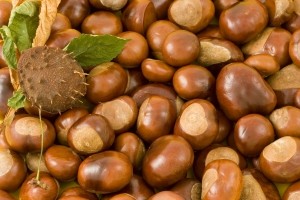
At Samhain, a large fire would be lit in the hearth and families would gather to consume warm, sweetened ale from a ‘wassail’ bowl. Roasted apples and nuts were used in divination games to foretell the fortunes of the following year. Here we find a source for the apple bobbing and games of conkers that are so popular among children and adults alike! Apples have long been associated with immortality and can be found in numerous myths and legends from around the world. The Goddess Idun of Norse mythology was the keeper of the apples of immortality that were fed upon by the gods of Asgard to retain their immortality. Likewise, in Greek mythology the Goddess Hera owned a sacred apple tree, attended by three sisters known as the Hesperides. In Celtic myth the famous isle of apples, or ‘Avalon’ was an otherworldly paradise to which King Arthur was taken by three fairy queens (one of whom was Morgan Le Fay, fay meaning ‘fate’). Apples also link to the triple goddess that abounds in Celtic and Pagan religions and is where we find the symbol of the pentacle or five-pointed star/star of knowledge – when the fruit is cut horizontally.

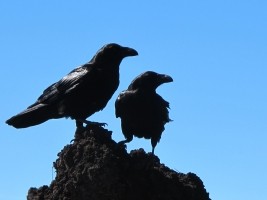
A harvest supper known as the ‘Hag’s Feast’ would be shared at Samhain, in honour of the winter hag or crone, who rules between Samhain and Imbolc (1st February). This ‘dark goddess’ ruled the inner tides of human emotion, the ‘womb’ of the ocean and the realm of dreams. The darkness of the womb gives birth to human life, as the dark of night and winter gives birth to day and springtime. Thus this figure and her time of year were about restoring and regenerating spirit, inner strength and hope. She has now been transposed into solely her darkest aspect, as the witch riding through the land on a wolf (or broomstick!) striking down signs of life with her wand of winter. The sign of the dark goddess is the black feather and her birds are carrion and so here we find the crows and ravens of Hallowe’en. It is also worth noting the two ravens belonging to Odin from Norse mythology.

Modern Pagans use this time to also connect with loved ones who have departed and for introspection. Feasting and familial gathering form part of a remembrance service where worries can be released onto paper and burned in the ‘Samhuinn fire’, which can be as elaborate as a large communal bonfire or as intimate as a single candle flame in ones home.

As you choose your costume and prepare to embark on a night of chaos and ghoulish fun, consider the ancient rituals you will be sharing with our ancestors!
BIBLIOGRAPHY:
OBOD – Samhuinn & Alban Elued [Autumn Equinoxe]
Hamlyn History - ‘Myths Retold’ by Diana Ferguson
‘Visions of the Cailleach’ by Sonita d’Este & David Rankine
‘Pagan Feasts’ by Anna Franklin & Sue Phillips
ALL IMAGES: courtesy of  Visualhunt.com

~~~~~~~~~~

Elaine writes historical fiction as ‘E S Moxon’. Her debut 'Wulfsuna' was published January 21st, 2015 and is the first in her Wolf Spear Saga series of Saxon adventures, where a Seer and one named ‘Wolf Spear’ are destined to meet. She is currently writing her second novel, set once again in the Dark Ages of 5th Century Britain. You can find out more about Book 2 from Elaine’s website where she has a video diary charting her writing progress. She also runs a blog. Elaine lives in the Midlands with her family and their chocolate Labrador.


Blood, betrayal and brotherhood.
An ancient saga is weaving their destiny. 
A treacherous rival threatens their fate. 
A Seer's magic may be all that can save them. 
WULFSUNA 
~


Friday, October 31, 2014

The Brown Lady of Raynham Hall

By Catherine Curzon


It was quite by accident that I scheduled myself for the Halloween slot here on the blog but, given my love of all things ghostly, most fortuitous too. With one eye on the date and one on my beloved glorious Georgians, there could really only be one topic for me today and that is the sad fate of Dorothy Townshend, aka the Brown Lady of Raynham Hall.

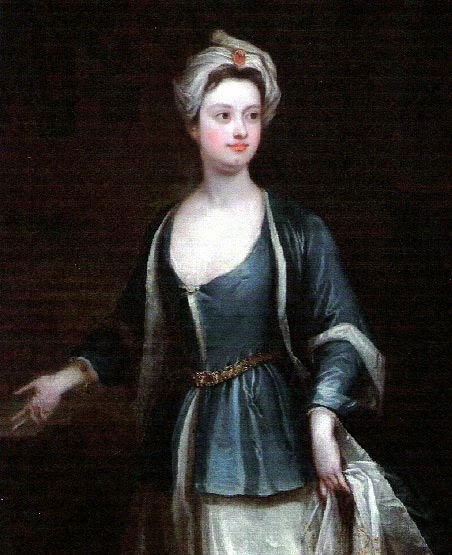
The unfortunate Dorothy Townshend (pictured below) was born Dorothy Walpole on 18th September 1686 at Houghton Hall, Norfolk. As a daughter of Robert Walpole and Mary Burwell, she was the sister of the legendary Sir Robert Walpole, now widely considered to be the first man to hold the office of Prime Minister of Great Britain. For Dorothy, though, life was not destined to be quite so illustrious as that particular sibling. 

In her youth Dorothy took something of a fancy to Charles, 2nd Viscount Townshend (pictured bottom left), who had been left under Walpole's guardianship by his father. Though the young couple were devoted to one another Walpole forbade the marriage, preferring that Townshend make his own way in the world, sure that there would be allegations of nepotism, undue influence and possibly worse should he permit the union.

Townshend and Dorothy gave up on their dreams of marriage and the Viscount married another, leaving the woman who adored him utterly alone. Of course, no intelligent, beautiful, rich young woman is left alone for long and soon Dorothy fell under the influence of Philip Wharton, 1st Duke of Wharton and later founder of the notorious Hellfire Club. Dorothy's affair with Wharton was passionate and heated and though it was over quickly, it was to cast a long shadow even after Wharton fled his creditors and Dorothy was left, once again, alone.


Lady Dorothy Walpole
For once though, Cupid seemed to be smiling on the young lady and Townshend, now widowed, returned to claim her hand. The couple were finally married and together had seven children which should be the happy conclusion to this tale but of course, that wouldn't be much of a story for Halloween.

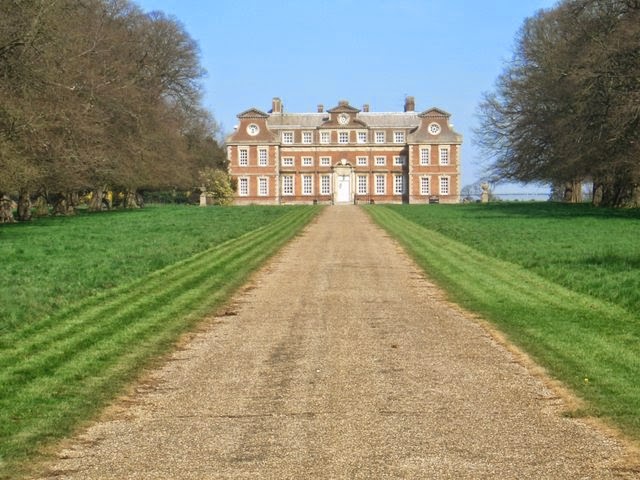
Instead, things eventually began to go downhill in the Townshend household at Raynham Hall and inevitably, word of the earlier affair eventually reached the Viscount's ears. He was furious at his wife's youthful indiscretion and ordered that she be locked up in her rooms, never to know freedom again. Here Dorothy remained for more than a year until her sad incarceration was ended by a dose of smallpox aged just forty. The official explanation struck some commentators as a little too convenient and there was gossip that the unhappy woman, despairing at what her life had become, had thrown herself down the stairs at Raynham Hall or, worse still, had been cast down them by her enraged husband, though suspicions were to remain unfounded.


Charles Townshend, 2nd Viscount Townshend by Sir Godfrey Kneller
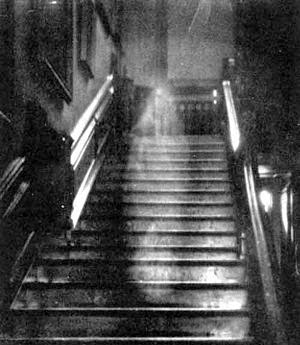
Dorothy's story doesn't end there though and it seems that, according to some, her incarceration at Raynham Hall continues to this day. Many guests at the house have made reports of a ghostly apparition and our very own Prinny, better known as the future George IV, stayed at the house during the Regency and left in quite a hurry after being surprised by "a little lady all dressed in brown, with dishevelled hair and a face of ashy paleness" who stood beside his bed. Some of those who encountered the vision remarked upon its similarity to portraits of Dorothy Townshend and so the legend grew, helped in no small part by a now famous photograph taken in 1936 by Captain Hubert C. Provand. The photograph  purports to show the spirit who has become known as the Brown Lady of Raynham Hall.

Is the Brown Lady really the unfortunate Lady Townshend? Indeed, is the Brown Lady really anything at all beyond a legend? We cannot know for sure but as Halloween celebrations start across the country, let us spare a thought for the tragic fate of Dorothy Townshend, wherever she now walks.


~~~~~~~~~~~~~

Glorious Georgian ginbag, gossip and gadabout Catherine Curzon, aka Madame Gilflurt, is the author of A Covent Garden Gilflurt’s Guide to Life. When not setting quill to paper, she can usually be found gadding about the tea shops and gaming rooms of the capital or hosting intimate gatherings at her tottering abode. In addition to her blog and Facebook, Madame G is also quite the charmer on Twitter. Her first book, Life in the Georgian Court, is available now, and she is also working on An Evening with Jane Austen, starring Adrian Lukis and Caroline Langrishe.
SaveSaveSaveSaveSaveSave

Tuesday, May 14, 2013

The Corpse Road

by Deborah Swift


Now it is the time of night,
That the graves all gaping wide,
Every one lets forth his sprite,
In the church-way paths to glide


Puck - A Midsummer Night's Dream


When I was out walking last week I was travelling what is known as a 'coffin route or 'corpse road.'

So what exactly is a 'corpse road'?

In the Middle Ages there were only a few mother churches in England that held burial rights. This meant that when someone died, the corpse had to be transported long distances, sometimes through difficult terrain. Because of the landscape, often a corpse had to be carried miles by the bearers unless the deceased was rich and had left instructions for a horse-drawn bier.


The Fairy Steps, Beetham, a narrow passageway
where coffins were carried to the top of the hill
One well-known funeral way is the one that runs from Rydal to the church in Ambleside in the Lake District where you can still see a coffin stone on which the coffin was placed while the parishioners rested.

Many of the corpse roads are now long gone, but there are clues in the names of footpaths and fields. Fields crossed by church-way paths often had names like "Church-way" or "Kirk-way Field". 


Where I was walking the coffin had to be carried up the side of a limestone rock face known locally as 'the Fairy Steps' because there was no burial ground in Arnside and the coffin had to be carried over the marshes to nearby Beetham.

The coffins were hoisted over the limestone cliffs using metal rings embedded in the rock. In 1866, the church at Arnside was consecrated, and the walk between Arnside and Beetham was no longer necessary.


St Michael's Church, Beetham
I'll digress a little to show you a few pictures of Beetham church, which is a beautiful historic building dating back to Saxon times, with these lovely medieval-style carvings above the door.


The church was also besieged by Parliamentarians in the Civil War in 1647, where local landowners tombs were desecrated by having the heads removed from the statues.

Desecrated tombs

Stained glass window dedicated to Charles I
Beetham Church

But to return to corpse roads - There was much superstition associated with the coffin route. For example, the feet of the corpse had to be be kept pointing away from the family home on its journey to the cemetery, to prevent the deceased wanting to walk back home.

To prevent the dead returning, the route often went over bridges or stepping stones across running water which it was believed spirits would not be able to cross. Sometimes it led over stiles or through various other hazardous locations, such as The Fairy Steps. This was supposed to deter the ghosts from wandering. Ghosts and spirits were an accepted part of everyday life right up until the 20th century. 

The corpse light, the supposed soul of the dead, was supposed to linger on these roads, and there were many accounts of people seeing them.

~~~~~~~~~~~~
Deborah Swift is the author of several historical novels.  To read more about her, please visit her website  www.deborahswift.blogspot.com

And to find out more about her books:
The Lady's Slipper
The Gilded Lily
A Divided Inheritance (Oct 2013)

Monday, November 7, 2011

The Ghosts of Minster Lovell Judith Arnopp


Day and night traffic roars along the A40 where it cuts through the serenity of the Oxfordshire countryside but should you stop your car just a few miles west of Oxford and turn away from the main road you will find yourself transported back into England’s past.

As the sounds of the twenty-first century are muffled by the sleepiness of Minster Lovell village you will find yourself relaxing and your pace slowing to that of an earlier time. Half close your eyes and, if you can, try to ignore the wheelie bins and imagine yourself back in the 15th century. The layers of time are clearly visible, modern day living is only lightly superimposed upon the old and the ghosts of the past peer at you from every window and every nook.

Minster Lovell is a typical Cotswold village of thatched roofs and mellow stone. It runs alongside the meandering River Windrush, the quiet main street winding uphill toward St Kenelm church and the ruins of the Minster from which the village takes its name.

Although records only go back far enough to provide evidence of a house on the site since the 12th century, the name ‘Minster’ suggests that perhaps there was once a Mercian hall there in the Saxon period, pushing the history of the settlement even further back in time.

The present house was built in the 1430’s by William, Baron of Lovell and Holand, who, at the time, was one of the richest men in England. The family were supporters of the Lancastrian faction until the reign of Richard the third when Francis Lovell broke with family tradition and became a close friend and supporter of the king. It was Richard that made Francis a Viscount.

Lovell, along with Richard’s other supporters, Richard Ratcliffe and William Catesby, was made famous by the rhyme below which is attributed to Lancastrian supporter William Collingbourne.

The Cat, the Rat and Lovell our dog,

rule all England under the hog.

Escaping both Bosworth Field and the wrath of Henry VII, Francis went on to join John de la Pole, the Earl of Lincoln in leading the Yorkist faction in an attempt to overthrow of the new, deeply detested Tudor/Lancastrian reign and replace Henry VII with pretender Lambert Simnel at The Battle of Stoke in 1487.

Some sources say that after escaping the battlefield Francis fled into Scotland but there is a legend that claims he managed to evade capture and return to Minster Lovell where he hid himself away in a secret room …never to emerge alive.

Only an old and loyal servant knew of Francis' whereabouts and was charged to provide him with food and water but the servant died suddenly and, unable to escape, Francis slowly starved to death.

When, more than two hundred years later, the mouldering skeleton of a man was discovered in a secret chamber at the Minster the legend took off. The story was given some credence by William Cowper, clerk to parliament, who wrote in 1737 that when a new chimney was being installed at Minster Lovell ‘there was discovered a large vault or room underground in which was the entire skeleton of a man, as having been sitting at a table, which was before him with a book, paper, pen etc.’

Some accounts embellish this tale with the skeleton of a small dog curled at his master’s feet but although this story is very appealing it is unlikely to be true. On his accession to the throne Henry VII made a gift of the manor to his uncle Jasper Tudor and as a Tudor holding, the house would not provide a likely hiding place for the Yorkist rebel, Francis Lovell. But some facts are stranger than fiction and I find myself wanting to believe it.

This mix of fact and legend is treasure indeed to any historical novelist and a visit to the atmospheric ruin persuades even a level headed cynic like myself that perhaps, just perhaps … there is something in it.

Another ghostly story attached to Minster Lovell is that of a young bride, who during a game of hide and seek took refuge in a lead lined box and, unable to free herself, suffocated. The family searched for weeks, but she was never found and eventually her husband died of a broken heart. Years later, when servants opened an old chest hidden in the attic they found inside a skeleton still dressed in a bridal gown.

When it comes to the paranormal I am a mostly a disbeliever but there are areas of Minster Lovell that are eerily evocative of its past. The timeless beauty, the sadness that lingers is the ruined buildings is redolent of forgotten lives and, for me, at Minster Lovell the past seems so close that it makes my scalp tingle.

I feel that on turning the next corner or ducking beneath the next lintel I might find myself in the midst of a 15th century feasting hall overwhelmed by the festivities, jostled by serving wenches, entranced by the antics of tumblers and warmed by the great roaring fires of bygone days.

photo: woebleycastle © cherry wathall 2011