Showing posts with label judith arnopp. Show all posts

Monday, January 27, 2020

Something about Mary

by Judith Arnopp

Anthonis MorMuseo del PradoMadrid, 1554 - Public Domain

Mary was the eldest of Henry VIII’s children. In her infancy she was lauded as a princess, the king referred to her as his ‘pearl’ and she was afforded every honour due to a Henrygirl in her position. Her mother, Catherine of Aragon, after suffering numerous miscarriages and still births was growing old. and her fertile years were at an end. As her fertility died, so did Henry’s love for her.

Anne Boleyn was everything the queen was not; young, fertile, witty and entrancing and Henry was unable to resist. In the years that followed, Mary and her mother’s status was brought into question, the marriage declared illegal and Mary was branded illegitimate. Teenage years are often difficult. Our emotions are in turmoil as we struggle to come to terms with the adult world. Imagine the thirteen year old Mary, isolated from those she loved, separated from her mother and compelled to deny the validity of her parent’s marriage and condemn herself as illegitimate.

Anne Boleyn National Portrait Gallery - Public Domain

In 1533 Henry and the now pregnant Anne Boleyn were married – seventeen-year-old Mary was heartbroken, the hurt intensified when she was sent as a servant to the household of her new sister, Elizabeth.

I would imagine there are difficulties for anyone accustomed to being the apple of their father’s eye when suddenly supplanted by the arrival of a new sibling but Mary was not just replaced in her father’s affection but in every aspect of her former life. Her titles were stripped, her property removed and her status demolished along with any hope of ever becoming queen. Her father’s love must have seemed like some distant dream, and since her nebulous status made her all but unmarriageable her future looked bleak.

Yet, she seems to have borne no ill-will toward Elizabeth. The same cannot be said for Anne however, whom Mary refused to acknowledge as queen and declared she knew no queen of England other than her mother. The Spanish ambassador, Chapuys, began a rumour that Anne was plotting to poison Mary, a rumour (if it were a rumour) that undermined Mary’s security even further.

During my studies of Mary, I discovered an isolated figure, never more so than during this traumatic period. She was not allowed to see her mother again and was inconsolable when Catherine died in January 1536, just four months before Anne Boleyn herself went to the scaffold. With Anne’s demise one might have imagined Mary’s trials were at an end but although her new step-mother, Jane Seymour, went out of her way to reunite Mary and Henry and persuaded the king to bring her back to court, Mary’s humiliation was not over. Henry insisted she accept him as head of the church in England, renounce papal authority and acknowledge Henry and Catherine’s marriage was invalid and she herself illegitimate. One would imagine that this was a very high price to pay for paternal love that should have been her due.

Henry VIII Holbein - Public Domain

Even after Mary returned to court and her household was reinstated and she was reunited with her lifelong friend, Susan Clarencieux her life continued to be difficult. As the dissolution of the monasteries intensified, Mary saw the church she saw as the ‘true church’ all but demolished. She had to sit quietly while monks and nuns were punished. Henry was no longer the golden king of Mary’s infancy but became increasingly ruthless, a trait that grew worse after Queen Jane died shortly after childbirth, providing Henry with Edward, the son he’d longed for.

After the execution of her fifth step-mother, Katherine Howard, Mary was invited to act as hostess at court until the king married his final wife, Katheryn Parr. For a short time the royal family were reunited and almost ‘normal’ or at least as normal as the Tudors ever managed. Encouraged by Parr, Henry welcomed all three of his children back into the fold and, although they remained illegitimate both Mary and Elizabeth were reinstated in the line of succession, after Edward. It was only a brief respite for Mary, who under her brother’s strictly Protestant rule, was to suffer further subjection and torment.

All things considered, there is little wonder that Mary grew into a troubled adult, and ultimately became as harsh a ruler as her father. Of all the women I have studied and written about in my novels, Mary strikes me as the most pitiful. She wasn’t friendless; the people loved Mary from her cradle to her deathbed but for much of the time were afraid to show it.

Edward VI Attributed William Scrots - Public Domain

From infancy she suffered trauma that would have broken most people. But Mary stood firm for as long as she could under constant pressure from her father and his councillors, her brother and his protectors and never ceased to champion her religion. Isolated and terrified, she stood for what she believed was right and, once the crown was finally within her grasp, she did not hesitate to step up to the mark and fight for it.

In a premeditated act, the Duke of Northumberland persuaded Edward to name his cousin, Lady Jane Grey, as his heir in Mary’s place. Having previously married Jane to his son, Guildford Dudley, Northumberland clearly planned to manipulate her and rule in her stead. But Mary was having none of it and rallied an army at Framlingham Castle where support for Northumberland quickly crumbled.

Mary’s reign has been largely regarded as a failure and from our perspective it is easy to see how she earned the title Bloody Mary. As queen, Mary married against the will of the people. She failed to understand the desire of the populace to worship in the manner of their choosing. She failed to provide an heir, suffering phantom pregnancies and dying before her innovative plans for England came to fruition. Yet some of those plans were promising.

She began many policies that have since been laid at Elizabeth's door: reforms to the economy, naval expansion and colonial exploration and had her reign been longer, she may have been remembered very differently. Her success is always measured against Elizabeth's yet Mary had just five years against Elizabeth's forty-four. As with her father, Mary is remembered for her very worst acts yet there was much more to her than religious persecution and brutality. I do not seek to whitewash her actions but to consider the events of her life as she saw them, and it cannot be denied that Mary flew the Tudor banner bravely. She was stalwart, stubborn and loyal. She was sometimes unwise, she was overly passionate and she could be harsh but despite everything, she was loved by her people.

Mary Tudor by Hans Eworth. National Portrait gallery - public domain

~~~~~~~~~~
Judith Arnopp is the author of twelve historical fiction novels, her latest being in The Heretic Wind: the life of Mary Tudor, Queen of England available on Kindle, in Paperback and soon on audible.

To find out more please visit her website www.judithmarnopp.com


Sunday, March 17, 2019

Editors Weekly Round-up, March 17, 2019

by the EHFA Editors

Enjoy this week's articles from English Historical Fiction Authors.


by Erica Lainé


by Judith Arnopp


by Judith Thomson


Click on the post and leave a comment stating your preference for e-book or paperback. Giveaway closes at midnight Sunday 17 March Pacific Daylight Time (8am Monday 18 March GMT).

Sunday, March 3, 2019

Editors Weekly Round-up, March 3, 2019


by the EHFA Editors

Never miss a post on English Historical Fiction Authors.


by Judith Arnopp


to have a chance for a a paperback copy (UK) or an e-book (worldwide) 

Sunday, September 17, 2017

Editors' Weekly Round-up, September 17, 2017

by the EHFA Editors

Join us every week for quality articles on all aspects of British history.

by Maria Grace


by Judith Arnopp


by Mark Patton


by J.G. Harlond


Find us on Facebook where readers and authors share these and many other posts on English historical fiction. Follow us on Twitter where we also point to wonderful articles from our EHFA Archives - almost 2,200 articles strong.

Tuesday, September 12, 2017

Henry Tudor at Raglan Castle

by Judith Arnopp

Raglan Castle

At the start of the wars of the roses Margaret Beaufort was a relatively insignificant member of the house of Lancaster but after years of struggle she and her son, Henry became the ultimate victors. During her years of struggle for her son’s rights she can have had no inkling that he would one day become King of England.

Margaret was a wealthy heiress, heir to the Duke of Somerset. Her great grandfather was the eldest son of John of Gaunt and his then mistress, Katherine Swynford. Although the Beauforts were later legitimised they were excluded from the succession and never to inherit the throne.

Edmund Tudor
She was married to the king’s half-brother, Edmund Tudor and travelled with him to Wales where he upheld the authority of the king. Shortly after impregnating his teenage bride, he died, either of wounds sustained in a skirmish with the adherents of York, or from plague, or possibly a combination of both. Margaret, widowed and pregnant, was left vulnerable and turned to her brother in law, Jasper Tudor, for support. He offered her shelter at his stronghold in Pembroke where her son was born a few months later. She named him Henry, after her cousin the king.

To avoid another marriage arranged by the king, Margaret quickly married Henry Stafford, a younger son of the Duke of Buckingham. While she moved with her husband to Bourne in Lincolnshire and later Woking, her son remained at Pembroke in the care of his uncle, Jasper, Earl of Pembroke.

Margaret would have seen nothing unusual in her son being brought up in the household of a powerful lord. The couple visited and wrote to young Henry regularly until the trouble between York and Lancaster flared again. Jasper did not take part in the battle of Towton but remained at Pembroke defending the castle against Yorkist forces. After a few weeks of siege, Pembroke and its inhabitants were eventually surrendered into the hands of William Herbert. Jasper managed to escape but he left behind a valuable prize - the four year old Earl of Richmond, Henry Tudor.

Pembroke Castle

Sir William Herbert took Henry into his custody at Raglan and in 1462 paid the king an enormous sum for his wardship. It is not documented how Margaret or Henry felt about this but there was long standing rivalry between the Herbert and Tudor families and, together with the high probability that William Herbert was responsible in some degree for the death of Edmund Tudor, it is quite likely she did not see it as pleasing.


Henry’s time at Raglan is often viewed as one of imprisonment but there is no doubt he was well treated: chronicler Polydore Vergil recorded that Henry was “kept as prisoner, but honourably brought up with the wife of William Herbert”.  As I mentioned earlier, it was not unusual for the sons of noblemen to be sent from home to be raised in the household of a great lord, to learn warfare and sword skill. The Herberts treated Henry with great civility but even so his movements were restricted and although he kept his title Richmond, his properties were in the hands of the Yorkists. He was, you might say, a lucrative guest. Henry and Herbert’s son were the offspring of opposing houses – Henry was from the House of Lancaster, Walter and William Herbert (the younger) were loyal to their father and to York. But ties of friendship formed at this time in the nursery at Raglan proved beneficial to Henry in the years to come.

Raglan Castle

It is interesting to consider that the ruins we see today at Raglan were once the rooms frequented by the young Henry Tudor. When Herbert inherited the castle from his father it was already a magnificent fortress with an impressive tower but William transformed it into a palace with huge glazed windows, a magnificent Fountain Court, the Pitched Stone Court and Great Gatehouse.

Henry spent the next seven years at Raglan, treated as a member of the Herbert family, educated by ‘the best and most upright instructors’ and mingling with the Herbert children. It seems he was happy there and developed strong connections to the family. Testimony of his affection or gratitude to the family, after he became king Henry invited Herbert’s widow, Lady Anne Devereux, to court. Herbert harboured plans to unite his family with the Tudors by marrying his daughter, Maud, to Henry. He left orders for the betrothal in his will but the arrangements were prevented by the readeption of Henry VI. Maud later married another of Herbert’s wards, Henry Percy, 4th Earl of Northumberland. Margaret Beaufort and Henry Stafford continued to visit and correspond with Henry until 1469, when Richard Neville, Earl of Warwick betrayed King Edward IV and joined the Lancastrians.

Raglan Castle

Taking Henry and probably his two sons, William and Walter, with him, Herbert rode off to battle at Edgecote Moor; not to fight but to observe and learn. It may seem incredible to us that an eleven year old should be exposed to the dangers of battle but things were different then. Young boys had to be educated in warfare, exposed to the violence of the battlefield to ensure that when their time came to fight, they’d be prepared. Possibly Herbert saw it as an opportunity for education. Possibly he desired to keep his valuable asset close to hand. Unfortunately for Herbert the battle did not go well for York.
Herbert was captured during fighting and executed by Warwick. It is often recorded that Henry was abandoned on the side lines and later rescued from the field and taken to safety at Weobley, the family seat of Herbert’s wife, Anne Deveraux.

Raglan Castle

For a while, Lancaster was in ascendance in England. The former king, Henry VI, was placed once more on the throne, to be ruled like a puppet by Warwick. At last, Jasper Tudor was able to return from exile, at which time he presented Henry to the Henry VI. 

The supporters of Lancaster emerged once more and everything seemed settled in Lancaster’s favour; King Edward was beaten and Margaret and Jasper would have been confident that the Richmond holdings would now be restored to Henry. Margaret attended court, bringing her son to the attention of the king and queen but it was not to last. In 1471, Edward IV came back with a vengeance and regained the throne with a decisive battle at Tewkesbury which saw the death of the Lancastrian heir, Edward of Lancaster and the fall of his mother, Margaret of Anjou. Edward IV crushed the Lancastrian hopes by the murder of the mentally unstable king, Henry VI, leaving just one possible claimant to the Lancastrian crown - Henry Tudor.

Henry Tudor

Jasper, taking the boy with him, fled to Brittany where Henry spent most of the next fourteen years until August 1485 when he returned with his mother’s financial support, with a mercenary army to face Richard III on the field at Bosworth. During the battle several Welshman ostensibly loyal to Richard, turned their coats and fought for Henry instead; Rhys ap Thomas is believed to have dealt the Yorkist King’s killing blow and Walter Herbert of Raglan is believed to have fought alongside his old friend of the schoolroom.

~~~~~~~~~~

Margaret's battle for her son's rights and Henry's time at Raglan is featured in the trilogy The Beaufort Chronicles.


Judith Arnopp is the author of nine historical fiction novels set in the medieval and Tudor period. You can find more information by following the links below:
author.to/juditharnoppbooks
www.judithmarnopp.com
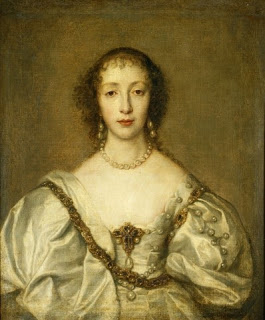
Picture credits
Edmund Tudor https://upload.wikimedia.org/wikipedia/commons/9/9c/Edmund_Tudor%2C_1st_Earl_of_Richmond.jpg
Henry Tudor - https://upload.wikimedia.org/wikipedia/commons/d/da/Henry7England.jpg
Castle Photographs - Judith Arnopp


Friday, August 9, 2013

The Removal, Reassembly and Reconstruction of St Teilo’s Church

Judith Arnopp


All over Wales you will find ancient medieval churches, many of them in out of the way places, the sole reminder of a once thriving rural community. St. Teilo’s church in Llandeilo Talybont was just such a building. 

Saint Teilo was from Penalun in Pembrokeshire, a British Christian monk, bishop and founder of monasteries and churches. ‘Llandeilo Talybont’ translates as 'the church of St.Teilo at the head of the bridge' and refers to the first crossing point of the river near the Roman fort of Leucarum. The site of the church, on a tidal marsh, gives it the local name of 'the Church of St.Teilo on the Marsh'.  

Although worship at the site dates back to the 6th century the only remaining parts date to the 13th century. Additions were made in the late 14th century and further alterations added to the south of the nave in the 15th.   Mercifully it was left untouched by the Victorians. 

 Graveyard at the old site of St. Teilo's - photograph Hywel Williams
The church was cared for, cherished, the hub of village life and in constant use until 1852 when a new, larger parish church was built in the expanding town of Pontarddulais.  Services continued to be held at Talybont, three times a year until 1971. Built on marsh land, St Teilo’s was always vulnerable and when in the autumn of 1984 thieves made off with the roof slates, rain and periodic flooding quickly undermined the fabric of the walls, leaving the church in ruin.

Local societies and groups fought to save the building but access made repairing it on site very difficult and in the end, when the Welsh Folk Museum became involved, it was decided to dismantle the church, stone by stone, and relocate it to the museum at St. Fagans.

St Teilo's reconstructed - photograph by Wolfgang Sauber
I was sceptical about this at first. Although the motives of the museum were noble, I feared the restoration might result in a horrific Disneyfication of our medieval past. I have now come to review that idea and confess that the positives far outnumber the negatives.

The earliest painting (circa 1400) depicts St. Catherine, while scenes from the Passion and a large painting of St Christopher were added around 1500 and painted over during the Reformation. They were photographed and recorded by the Royal Commission on Ancient Monuments in Wales and then a team of Archaeologists from Cardiff University began work to conserve them. Once the paintings were recorded and preserved the church was carefully measured and slowly dismantled, each stone numbered. It must have been a nervous moment for the mason who removed the first stone for, at the time, St Teilo’s was the only church to have been reassembled on another site.

Photograph by Wolfgang Sauber
The project, which took twenty years, brought together Wales’ greatest craftsmen and during reconstruction only medieval techniques were used (where health and safety permitted). This involved pit sawing, splitting and adzing of timbers, carving the arch-braced collar beams, mixing the lime and finally reapplying the wall paint.

The church now provides an excellent resource for students, writers, historians. It is refurbished to an approximation of its appearance around the year 1530, complete with all the elements associated with a late medieval church, including a rood screen and loft, altars, carvings and brightly coloured interior.


The rood loft - photographed by Wolfgang Sauber
St Fagan’s, now known as The Museum of Welsh Life, is a fascinating place with over forty buildings making it possible for visitors to travel through time, passing through furnished homes and businesses from different historical periods. For me, of course, the church of St. Teilo has to be favourite. To arrange your visit click on the link below.


Judith Arnopp writes historical fiction including


The Song of Heledd
Purchase UK
Purchase US


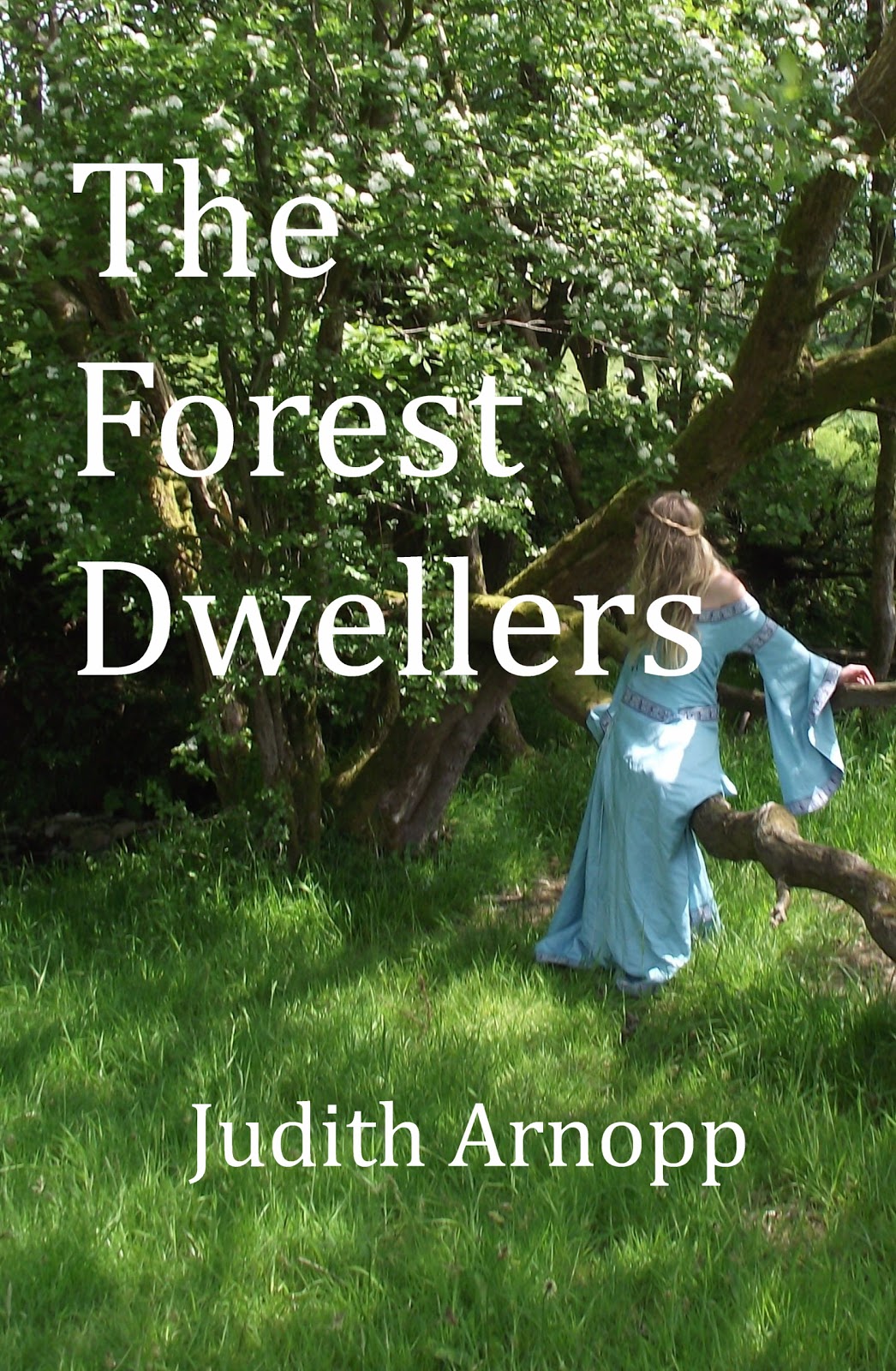
The Forest Dwellers
Purchase UK
Purchase US


All Judith's books are available as paperback or on Kindle. She is currently working on a novel about Anne Boleyn, The Kiss of the Concubine will be available soon. for more information please visit her webpage: http://www.juditharnopp.com

Monday, February 27, 2012

Richard III v Henry VII Naughty or Nice?


I have always been intrigued by the mystery of the Princes in the Tower. Most people are aware that, on the sudden death of their father Edward IV, the two boys were ensconced in the Tower, as was tradition, to await the coronation of the eldest boy as Edward V. But, although preparations for his coronation were underway, it was suddenly claimed that Edward IV’s marriage to Elizabeth Woodville had been bigamous and, therefore, all their children illegitimate.

Since illegitimacy barred the young Edward from the throne, his uncle, Richard III, was, by a statute known as the Titulus Regius, proclaimed as the rightful king and crowned in his stead.

After his coronation in 1483 accounts of the boys’ whereabouts begin to dwindle from the historical record and many believe they never left the Tower alive but were murdered there; suffocated in their sleep with a pillow.

Richard reigned until August 1485 when Henry Tudor landed at Milford Haven to claim the throne for himself. After the Battle of Bosworth, Henry Tudor (and his subsequent heirs) did their best to damage Richard’s reputation and since that date it has been widely believed that Richard III was responsible for the boys’ deaths. Thomas More was the first to blacken his name and William Shakespeare, also writing for a Tudor monarch, twisted Richard’s character further. Consequently many later histories are based on a literary play rather on historical record. Most historians now agree that many of the heinous crimes attributed to Richard were, in fact, committed by others.

Tudor propaganda ensured that the surviving accounts of the years surrounding Bosworth are murky to say the least. Early in his reign Henry Tudor ordered all copies of the Titular Regius to be ‘utterly destroyed’ for reasons which may, or may not, appear obvious. You have to dig deep to find unbiased accounts but they do exist and there are several other candidates that fit the ‘murderer’ tag just as well as Richard.

Richard was crowned king in 1483 and would have been aware that his nephews provided a potential target for those wishing to supplant him. A prudent king would have removed them from the picture. Richard was by all accounts a religious man and killing his nephews would have been sinful, even in those days. It would also be disloyal to his brother to whom Richard had been devoted in life. The act would also be a Godsend to any enemy that wished to turn the kingdom against him and, therefore, foolish. Chronicles prove that Richard was neither imprudent, sinful or foolish. So why, when rumours of the death began circulating, did he not just produce the boys? A lot has been read into this and it does seem to suggest that he could not produce them but that doesn’t necessarily mean they were already dead, they could have been sent out of harm’s way.

Many believe Richard ordered that the boys be removed to safety but there are now so many conflicting accounts and theories as to where they may have been moved to, that it is difficult to sift the good from the bad. During Richard’s reign there was a royal nursery at his castle at Sheriff Hutton where his brother George of Clarence’s children, Margaret, and Edward of Warwick, resided, along with Richard’s legitimate son, also named Edward, and his two illegitimate children, John and Catherine. On Henry’s accession to the throne one of his first acts was to secure the persons of the children therein.

IF the boys were found there then, when you consider Henry’s treatment of other surviving Yorkists, then their fate seems sealed. Richard’s legitimate son, Edward died of natural causes during his father’s reign but the other children were still living at the time of Bosworth. Richard’s illegitimate daughter, Catherine, was no longer surviving as early as Elizabeth of York’s coronation in 1487 and her brother John’s fate is less clear but records show that a ‘base sone’ of Richard’s was executed by Henry in 1491. Clarence’s children were also both executed by Tudor monarchs, Warwick was immediately incarcerated in the tower where he remained until accused of plotting with Perkin Warbeck. He was executed in 1499, an act made worse by the fact that the boy appears to have suffered from learning difficulties. His sister Margaret, Countess of Salisbury, managed to survive Henry VII’s rule but under Henry VIII, at the age of approximately sixty-eight, she was executed. But I digress. I will leave that story for another day.

True or not, I like the idea that the princes escaped, not least because of the wonderful array of ‘survival’ theories that it has provoked. Such imaginings are a real gift to historical novelists whichever way they care to play it.

Henry Tudor’s claim to the throne was tenuous to say the least, based upon his descent from Edward III, but through his mother's illegitimate Beaufort line. His title was Lancastrian and the House of Lancaster had long been regarded as usurpers and the direct line extinguished. He could never have won the victory nor ascended to the throne as heir of the House of Lancaster if his promise to marry Elizabeth of York, the daughter of Edward IV, had not won him the support of a few disaffected Yorkists.

It was imperative that Elizabeth’s illegitimacy was reversed in order to bolster Henry’s position but in legitimising her, Henry also legitimised her brothers, thus placing them before himself in the line of succession. So, IF the boys were still living at this time, they would have been much more of an obstruction to Henry than they ever were to Richard, who already legitimately held the position of king. This, in my view, provides a motive.

Of course, it’s a big IF. In my opinion, a study of the characters of Richard and Henry, make the latter more likely to resort to infanticide. Not that he would have wielded the axe himself, or in this particular case, the pillow.

Far from being the personification of evil as depicted by Shakespeare, Richard did have some qualities that Henry lacked. While Richard, having fought on numerous battlefields since his teens, was an undisputed warrior, Henry was not. At Bosworth he waited on the sidelines and let others do his dirty work for him. While Richard’s life is, with the exception of the puzzling execution of William Hastings, full of loyalty and honour, Henry’s is not. If Richard had wanted the boys killed he would probably have done the deed openly, or wielded the ‘pillow’ himself. Underhanded infanticide does not seem to have been his style.

Henry’s character was far more secretive and underhand. Henry never felt secure on his stolen throne and his court is famous for its intrigue and spies and I believe his reign suffered more uprisings than any other. People just didn’t like Henry and it’s easy to see why.

The first vengeance that Henry Tudor took as monarch was upon the body of the late King. After the battle, in an unprecedented act, the body of Richard III, an anointed king, was slung naked over a horse, arms and legs dangling, a halter was tossed around his neck in symbolism of his defeat. In this indignity, he was taken to the Franciscan Priory church of the Greyfriars at Leicester where, for two days, his body was exhibited for all to see. He was buried at the friary with no ceremony. The church does not exist today – like so many others, when Henry's son ordered the dissolution of the monasteries in the 1530’s, the building was destroyed and, rumour has it, Richard's grave was opened and the remains thrown out.

Henry’s next act as King was to date his reign from the day before Bosworth thus rendering as traitors all those who had loyally fought for King Richard, so that they could then be attainted for treason.

England lost much of its nobility during the battle, including men of great wealth like John Howard, the Duke of Norfolk. Henry appropriated their lands and kept the revenue for the crown. Some he executed for treason, among them William Bracher, Sir John Buck of Harthill and William Catesby of Ashby St Legers. Some, like Thomas Howard, Earl of Surrey and Henry Percy, Earl of Northumberland, he imprisoned in the tower.

Those of Richard’s supporters that did survive the battle were attainted and their estates confiscated; this effectively disarmed them and kept them from raising arms against the king. Henry then forbid all nobles to retain their own armies to prevent them from being more powerful than himself and also to deter them from rebelling against him. It was an effective policy and, although Henry did not manage to subdue all opposition, it is a fact that the English nobility, already in decline during the Wars of the Roses, fell rapidly from influence under the Tudors. By the reign of Queen Elizabeth I England had just one remaining duke, that of Norfolk, and, after plotting to marry Mary Queen of Scots and restore Catholicism to England, he too was executed for treason in 1572.

It was not just the nobility that Henry targeted, indeed they seem to have been lower down on his list than those descended directly from the bloodline of Plantagenet. During the next three reigns the heirs of York were systematically wiped out.

I have tried to be objective in this brief overview but I guess I have failed. I cannot help it. Every time I consider this argument it seems to me that Richard was the guy with the nobler tendencies. While Henry spent his youth skulking around Europe, living off others, emptying gaols in order to come and steal a crown to which he had no right, Richard was aiding his brother, King Edward and proving almost unbelievably loyal despite disagreeing with his policies. In the short years that Richard was king he showed promise of becoming a just ruler, championing the rights of the poor against the rich (imagine that) and inspiring the loyalty in his subjects in the north, who knew him well. He may have been a violent man by our standards but he lived in violent times. Killing on the battlefield was honourable, off the field it was not. He abhorred disloyalty, as is made apparent by his reaction to Hastings’ betrayal, and, given the chance, I believe he would have made a better king than Henry who exploited rich and poor alike to bolster his own bulging coffers.

Throughout his life Henry resorted to devious methods. He lied and cheated his way to the throne and even once he had won it, his insecurities continued to dog him and his unscrupulous practices continued.

The Tudor regime may have put an end to the tumultuous years of the Wars of the Roses but the dying didn’t stop. In Henry VIII’s reign alone it has been estimated that 72,000 people were executed. In 1485 the honourable ferocity of the Plantagenets was replaced by the deceit of the Tudors who, although they brought security and wealth to Britain, did so dishonourably.

You can probably tell which banner I fight under but the subject is just as fascinating from the other side. The years surrounding The Battle of Bosworth have got to be the most intriguing in British History. If my rather biased view of the issues have inspired you to read more, there are countless books on the subject and you will find that historians just cannot remain impartial. There is something about the Wars of the Roses that, even today, forces you to take sides.

You can read more about the Vengeance of the Tudors on my webpage: http://www.juditharnopp.com/vengeanceofthetudors.htm

Pictures: White rose of York, Red Rose of Lancaster.

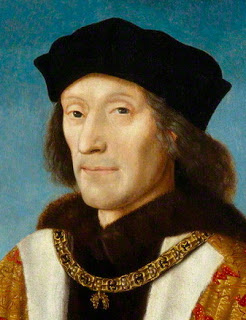
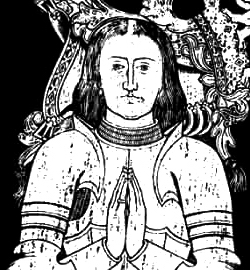
Right hand picture: Richard III

Left hand Picture: Henry VII