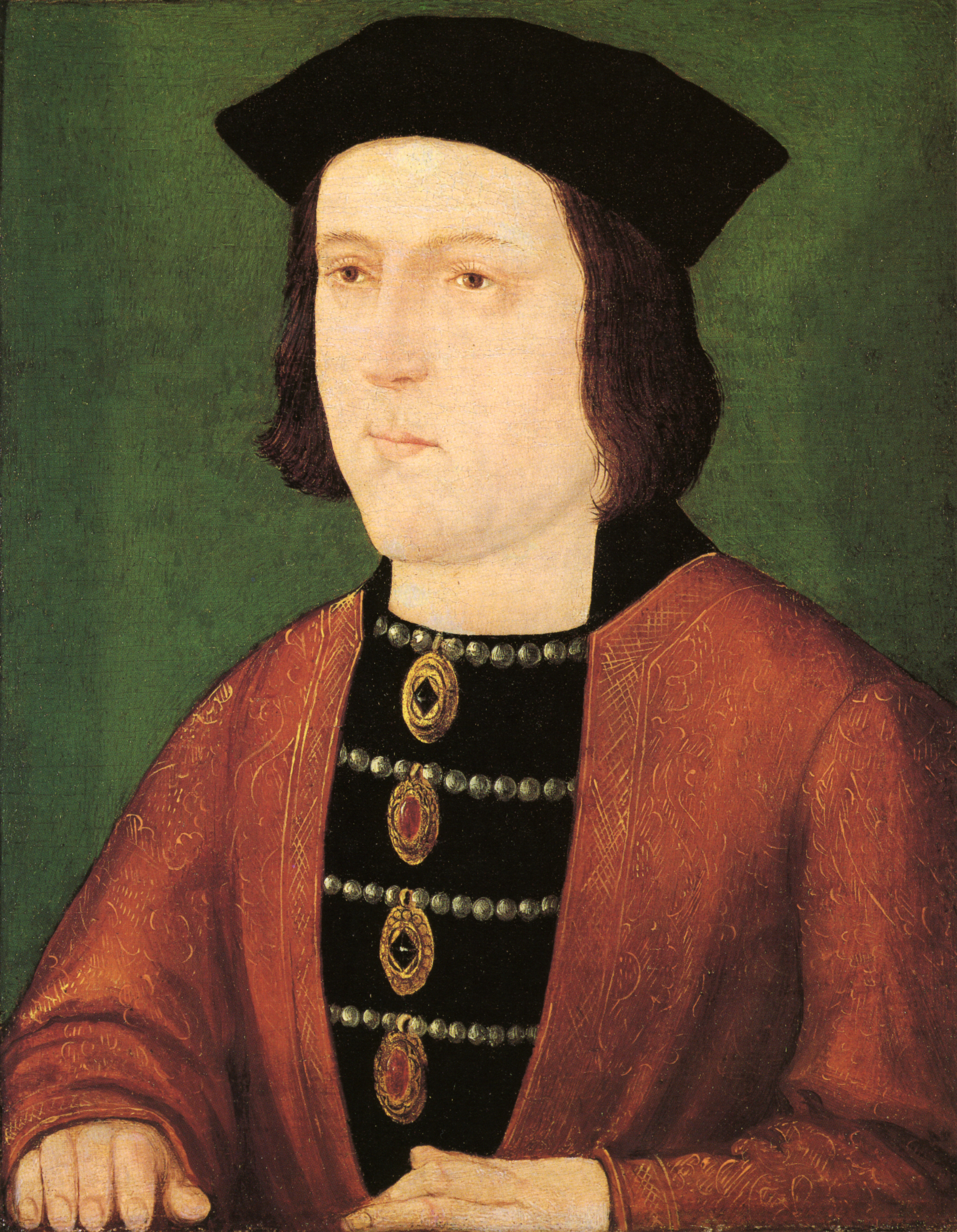
Showing posts with label Edward IV. Show all posts

Thursday, June 12, 2025

Marguerite of Anjou - A woman scorned...

by Judith Arnopp


I first came across Marguerite while I was at university where I was struck by her unjust legacy. I spent many years researching and writing about Marguerite’s contemporary, Margaret Beaufort, who similarly fought for her son. The similarities only diverge when Margaret Beaufort triumphs and Marguerite’s hopes perish on Tewkesbury field.

Yorkist propaganda against Marguerite of Anjou begins early in her story and continues to affect our perception of her today. Polydore Vergil’s assessment of her character, taken from widespread Yorkist propaganda, echoes loudly in Shakespeare’s malevolent portrayal of the queen in his play ‘The True Tragedy of Richard Duke of York and the Good King Henry the Sixth’

‘She wolf of France but worse than the wolves of France,

whose tongue more poisons than the adder’s tooth!

How ill be-seeming is it in thy sex

To triumph like an Amazonian trull

Upon their woes who Fortune captivates!

But that thy face is vizard like, unchanging,

Made impudent with use of evil deeds,

I would assay, proud queen, to make thee blush.

To tell thee whence thy cam’st, of whom derived,

Were shame enough to shame thee, wert not shameless.’ (Act 1.4.112)

Sounds like a nice lady but my research revealed no monster but simply a queen determined to maintain her husband’s throne and to secure the inheritance of her son.  But Marguerite was a foreigner, unhampered by the political restraint placed upon English women and that fact cast the first shadow over her life in England.

Marguerite came from a line of determined women; both her paternal grandmother Yolande of Aragon, and her mother, Isabelle of Lorraine were deeply involved in politics and championed the rights of their absent husbands, raised taxes and armies, administered the duchies and laid down policies. Both women impacted on Marguerite’s own experience after she became Queen of England. To Marguerite, on finding her crown at risk, there was only one thing she could do and that was fight.

During her early years as queen, Marguerite acted as a supporting, conciliatory presence behind the king, mainly confining her activities to matchmaking and obtaining positions at court for friends and servants. She used her influence to secure the surrender of Maine and Anjou and, although the pressure on her to comply is obvious to us now, the act did not endear her to her new subjects.  

Her first real intercession into politics was during the Jack Cade rebellion when at her instigation Henry agreed to show leniency and issue a pardon to the rebels.  The king’s preamble to the pardon illustrates Marguerite’s role in the matter.

‘Nevertheless, recalling to the reflection and consideration of our mind that among those virtues fitting and proper to the royal person and dignity, none befits him more than clemency, which is apt to bring about and put the shame of sinning in the minds of his subject people, and considering as well that it is fitting to show himself such a prince to his subjects as he wishes and desires God to be supreme and high Lord him, persuaded and moved by these and many other pious considerations, among others by the most humble and persistent supplications, prayers and requests of our most serene and beloved wife and consort the queen…we have pardoned…’

The lure of a pardon undermined Cade’s force and mention of Marguerite’s intercession allowed Henry to show leniency without appearing weak. 

It is quite possible that had Henry not fallen ill, Marguerite’s supporting role would have continued but as his condition worsened and the threat from the Yorkist faction grew stronger, she had little option but to assume a more prominent position. The fluctuating health of the king meant that increasingly she governed beneath the cloak of Henry’s kingship, continuing to represent herself as subordinate to the king’s authority whilst, in fact, assuming increasing power.

During a lull in Henry’s illness Marguerite produced the king with an heir Edward, securing Lancaster’s position and dealing a blow to the ambitious Duke of York who was previously Henry’s heir. It is no coincidence that around this time propaganda against the queen increased, and York’s attempts to undermine Margaret’s authority picked up pace.

Some contemporary reports accuse the queen of sexual misconduct and her son, Edward, is described as a ‘changeling,’ a term which infers he was base born.  Two days before York was removed from office on 23 February 1456 a John Helton was executed for distributing bills that alleged the prince was not the queen’s son.  


As the enmity between York and Lancaster increased, the battle for power descended into military combat obliging Marguerite to step further and further from the expected feminine role. The nobles of England and their adherents were killed in skirmishes and battles, the reins of government passing from York to Henry (or Marguerite)  but it was not until the Battle of Towton that the reign of Lancaster was all but ended and the new Yorkist dynasty arose.

York was dead and Edward IV was firmly on the throne, Marguerite could have faded into gentile retirement. The House of York’s vendetta against the deposed queen could have ceased. But poetry and pamphlets continued to be issued, denigrating both Marguerite and her claim to the throne. She was blamed for the fall of the Lancastrian dynasty and stereotyped as ‘an angry woman driven by malice, spreading sorrow, disorder and confusion in her wake.’  

Marguerite, still refusing to admit defeat, spent the next ten years in exile, plotting to reinstate her son Edward. Her determination strong enough that when Warwick fell out with Edward IV, she formed an alliance with her great enemy and consented to a marriage between her son and Warwick’s youngest daughter, Anne.  

It was a short lived alliance that ended for Warwick at Barnet, and for Marguerite at Tewkesbury where her seventeen year old son was killed, along with her ambition for the English throne.

But Yorkist propaganda continued, using a wide range of devices to defame Marguerite, making it difficult, even now, to obtain a clear view of her. Early historians picked up the Yorkist banner and continued to dehumanise her, subverting her female instinct to nurture into an unnatural lust for murder.

               By the time Shakespeare wrote his Wars of the Roses plays Marguerite’s had already come to epitomise unrelieved lust for power possessing a ‘tigers heart wrapped in a woman’s hide.’   Her strength is undermined by her female flaws and she ‘lacks the true qualities of royalty...the queen’s character is also tainted by immorality: she is an adulteress. But it is power rather than lust which dominates her character, and vengefulness which becomes its most terrible flaw.’  

In Henry VI part III her feminine weaknesses are replaced by the most ignoble of male attributes; she is masculine but akin to the worst of men. Shakespeare’s Marguerite is an arch-villainess whose femininity is inverted to encompass the direst human traits; her assumption of a male role and her lust for blood and revenge reverses the natural order and creates chaos in the realm. 


In the hands of the bard, Marguerite is a marvellous authorial depiction of twisted humanity and as a playwright Shakespeare remains unchallenged but a historian he was not.  Unfortunately, Shakespeare’s history plays came to be utilised not as examples of literary genius but as factual documents of history.

In the 1840’s Agnes Strickland published her Lives of the Queens of England and viewed Marguerite’s story ‘...of more powerful of interest than are to be found in the imaginary career of any heroine of romance; for the creations of fiction, however forcibly they may appeal to our imagination, fade into insignificance before the simple majesty of truth.’

Like other Victorian moralists, Strickland provides a highly romanticised picture of an unfortunate queen who unwisely meddled in the concerns of men. Marguerite becomes pitiful in her defeat but Strickland, by illustrating her utter personal defeat and regret, upholds the medieval opinion of a woman’s proper place.

‘There is something touching in the very simplicity of the Latin sentence with which the deed begins, that was wrung from the broken-hearted heroine who had, through so many storms of adversity, defended the rights of her royal consort and son.  While they remained in life, she would have died a thousand deaths rather than relinquish even the most shadowy of their claims; but the dear ones were no more,

‘Ambition, pride, the rival names

of York and Lancaster,

with all their long contested claims

what were they then to her?

Passively and almost with indifference, Margaret subscribed the instrument commencing ‘Ego, Margarita dum in regno Anglia maritata etc. I, Margaret, formerly in England married, renounce all that I could pretend to in England by the conditions of my marriage, with all other things there, to Edward, now king of England.’

J. J. Bagley in his biography of Marguerite written in 1948 provides a less romantic presentation. Bagley admits that Marguerite ‘did not cause the Wars of the Roses, but her intense, bitter feeling, her refusal to compromise, and her disregard of any other factor than the inheritance of her only son were reflected in the brutal, callous nature of the prolonged struggle.  For the sake of its own cause and for the welfare of the English people, the house of Lancaster might have wished for a wiser and more understanding leader, but nowhere could it have found a braver and more determined champion. Queen Margaret’s life was more than a sad story. It was a true tragedy, for the root cause of her failure lay, not in the fickle fate of battles, but in her own character and philosophy.’

In Bagley’s opinion, the Lancastrian cause could not have wished for a braver leader but perhaps one less swayed by dangerous female characteristics such as loyalty to her son and a determination to maintain a hold on his birthright.  

Richard, Duke of York was equally ambitious for his sons and fought just as fiercely for what he saw as his own rights and, moreover, he fought against an anointed king. 

Marguerite was trying to defend the throne of England against attack, as was her duty.


Historical research in the twentieth and twenty-first centuries has focused on the study of women and how women have exercised power; gendered analysis has allowed historians to move away from the traditional perception of queens.  Modern scholars look at the restrictions placed upon them and how those limitations impinged upon their political lives.  Marguerite pushed the boundaries of her engendered position; faced with the insurmountable problem of an inefficient consort she was forced to take unpopular actions and has since been judged accordingly. 

Other people have campaigned for thrones, overthrown kings and taken power from weak or incompetent rulers and (with the exception of Richard III) have not been recorded historically as unnatural monsters; the only difference is that they were men. 

Marguerite posed a threat to male rule that the medieval world was unprepared to accept.   A woman out of her prescribed place was deemed ‘unnatural’ and any divergence from the norm considered suspect and therefore dangerous.  Rosaldo clarifies the point in his book Women, Culture and Society,

‘Societies that define woman as lacking legitimate authority have no way of acknowledging the reality of female power.  This difference between rule and reality is reflected in our own society when we speak of powerful women as ‘bitches.’’

Marguerite’s determination and indefatigable resolve to win back her son’s throne was only exhausted by his death. In a man such tenacity would be heroic.  She has been labelled a violent and vengeful woman but surely she was no more so than her male opponents.  The unique circumstances in which she found herself made it impossible to follow prescribed gender boundaries while her opponents remained unfettered.  

Hostile propaganda, perpetuated by male playwrights and Victorian moralists, remains in our consciousness today.  Every day on social media I hear derogatory comments against Marguerite and her contemporary, Margaret Beaufort, but medieval history cannot be judged from a modern perspective and it does nobody any favours to perpetuate the misogyny of the past. 

As was my intention in The Beaufort Chronicle which traces the life of Margaret Beaufort, my novel, Marguerite: Hell Hath No Fury is my own poor attempt to rectify the flawed perception of a brave woman. 

~~~~~

Judith Arnopp – Author Biography

A lifelong history enthusiast and avid reader, Judith holds a BA in English/Creative writing and a Masters in Medieval Studies. She lives on the coast of West Wales where she writes both fiction and non-fiction. She is best known for her novels set in the Medieval and Tudor period, focussing on the perspective of historical women but recently she has written a trilogy from the perspective of Henry VIII himself.

 Judith is also a founder member of a re-enactment group called The Fyne Companye of Cambria which is when and why she began to experiment with sewing historical garments. She now makes clothes and accessories both for the group and others. She is not a professionally trained sewer but through trial, error and determination has learned how to make authentic looking, if not strictly historically accurate clothing. A non-fiction book about Tudor clothing, How to Dress like a Tudor, was published in 2023 by Pen and Sword.

 She runs a small seaside holiday let in Aberporth and when she has time for fun, likes to garden and restore antique doll’s houses. You can find her on most social media platforms.

 Her novels include:

A Song of Sixpence: the story of Elizabeth of York

The Beaufort Chronicle: the life of Lady Margaret Beaufort (three book series)

The Henrician Chronicle: comprising of:

A Matter of Conscience: Henry VIII, the Aragon Years (Book One of The Henrician Chronicle)

A Matter of Faith: Henry VIII, the Days of the Phoenix (Book Two of The Henrician Chronicle)

A Matter of Time: Henry VIII, the Dying of the Light (Book Three of The Henrician Chronicle)

The Kiss of the Concubine: a story of Anne Boleyn

The Winchester Goose: at the court of Henry VIII

Intractable Heart: the story of Katheryn Parr

Sisters of Arden: on the Pilgrimage of Grace

The Heretic Wind: the life of Mary Tudor, Queen of England

Peaceweaver

The Forest Dwellers

The Song of Heledd

The Book of Thornhold

A Daughter of Warwick: the story of Anne Neville, Queen of Richard III

Marguerite: Hell Hath No Fury! 


Webpage: http://www.judithmarnopp.com

Amazon Author Page: author.to/juditharnoppbooks

Blog: www.juditharnoppnovelist.blogspot.co.uk/


Social media links

https://www.facebook.com/thetudorworldofjuditharnopp

https://x.com/JudithArnopp

https://www.threads.net/@tudor_juditharnopp 


Illustrations via WikimediaCommons

Fig 1 - John Talbot, 1st Earl of Shrewsbury, presents the Book of Romances to Margaret of Anjou, Queen to Henry VI 

Fig 2 - Portrait of Marguerite of Anjou (1430 -1482) Queen Consort of England

Fig 3 - John Gilbert - Margaret of Anjou taken prisoner after the battle of Tewkesbury (1875)

Fig 4 - Richard Burchett (1815-1875) - Sanctuary (Edward IV and Lancastrian Fugitives at Tewkesbury Abbey) - 600 - Guildhall Art Gallery

Friday, February 2, 2018

Common Myths of the Wars of the Roses: Richard Neville, Earl of Warwick, the ‘Kingmaker’? Part 4


by Derek Birks

This is the final part of my exploration into the notion that Richard Neville, Earl of Warwick, merits the epithet of “kingmaker”. [N.B. Links to the previous 3 parts can be found at the end.]

In the winter of 1469-70, despite an apparent rapprochement with the king, Warwick was contemplating open rebellion. Apart from capitulation, it was his only option: he must replace Edward IV with his own son in law, George, Duke of Clarence.

So, in March 1470, Warwick created a crisis by backing Lord Welles in a local feud with one of the king’s household men, Sir Thomas Burgh. At first, the king was unaware of the involvement of Warwick and Clarence, but when he defeated Welles, he discovered plenty of evidence. Though he summoned the earl and the duke to explain, they refused to come and gathered their forces in the midlands. Warwick hoped for support from his brother, John Neville, Earl of Northumberland, and from Lord Thomas Stanley, the most influential lord in the north-west. Both refused to join him and, without them, he knew he was doomed.

Fleeing south, Warwick and Clarence collected their wives and managed – just – to evade the king’s pursuing army at Dartmouth. From there, after attempting to gather more ships and men at Southampton, they sailed to Calais. But King Edward had already written to Calais and the ships were denied entry, though Warwick’s heavily pregnant daughter Isabel was going into labour and subsequently lost her child.

Warwick had little choice but to head for France and hope for a warm welcome. Another attempt at kingmaking had ended in abject failure.

Warwick’s ships continued along the channel, indulging in some gratuitous piracy against Flemish ships on the way. The earl might have seen this as a windfall, or perhaps he reckoned that action against the Burgundians would ease his entry to a French port. My guess is that he thought it couldn’t hurt his reputation with the French king, Louis XI, when he asked for his protection.

Condemned in England as a traitor, Warwick now faced an ignominious end to his illustrious career, but remarkably, in a matter of months, he managed to resurrect his kingmaking ambitions. How did such an unlikely reversal of fortune come about?

Even before this latest disaster, Warwick surely realised that Clarence was a weak reed so, if he really wanted a change of monarch, he needed a better candidate. One of Warwick’s few remaining assets was his daughter, Anne, and now whoever she married would need to bring something special to the family – preferably a touch of royalty. He needed someone whose name alone would attract men to his banner, which brings us to one of the most interesting volte-faces in English history: Warwick’s pact with his most bitter enemy, Margaret of Anjou.

It is a measure of Warwick’s utter desperation that he was willing to fling aside previous loyalties to mount one last attempt at achieving real power.

Source gallica.bnf.fr / National Library of France
England already had a spare king. The unfortunate Henry VI had been a prisoner of Edward IV since July 1465, but his queen, Margaret of Anjou, had never given up hope of restoring not only her husband but more importantly her son, Edward of Westminster.

If Warwick had ever considered the possibility of reconciliation with Queen Margaret, he must have viewed it as a last resort. Well, in May 1470, the last resort had been reached. Yet, how could the former queen be persuaded to agree to a pact with the man she regarded as the architect of her family’s demise? 

Whilst it is true that Margaret would need a lot of persuading, by spring 1470 with no resources left to her, even the indomitable Margaret was low on optimism. 

Louis XI, known as ‘the universal spider’, was an expert manipulator of people. He knew from Warwick’s diplomatic missions that the earl favoured a French alliance – a policy over which he fell out with King Edward who instead allied himself to Burgundy, France’s enemy. 

This was an alliance King Louis was desperate to break. Thus, between May and July 1470, he brokered negotiations between Warwick and Margaret. He was very persuasive and both parties recognised that it was their last chance. Margaret swallowed her bile and came to terms, doing her best to humiliate the earl in the process; and Warwick, always a better diplomat than soldier, soaked it up on his knees.

At first it was probably just one of many irons in the fire for ‘the spider’, but once it seemed that it might actually happen, he provided money, ships and men – the lifeblood of invasion without which Warwick could have gone nowhere!

One could devote a dozen posts to the subsequent events but since my focus is on the kingmaking, I shall simply note that, against all odds, Warwick succeeded in putting together a coalition of Edward’s enemies, including not only Queen Margaret but the renegade lords: Jasper Tudor – King Henry’s half-brother and John de Vere, Earl of Oxford – a diehard Lancastrian.

Nevertheless, as always, success in England would depend upon the actions of a few key men: his brother John Neville, recently stripped of the earldom of Northumberland; Lord Thomas Stanley and, not least, the Duke of Clarence himself. How would all these individuals react in the crisis that Warwick created?

When Warwick landed in the south-west in September 1470, he proclaimed that he was restoring the rightful king, Henry VI. However dishonest one might feel now that this claim was, there is no doubt that it resonated with some at the time. Bear in mind also that, at this point Edward IV had no male heir whereas Henry VI did. However unlikely it seemed, Warwick had put together what appeared to be an attractive package.

King Edward was in the north stamping out Neville-backed risings, but still confident he could defeat Warwick. However, one by one, his leading nobles joined the rebellion: notably Lord Stanley and the Earl of Shrewsbury - but also crucially, and at the very last minute, Warwick’s brother, John Neville – still smarting from the loss of his earldom. Since he had always remained loyal to Edward, it was a body blow to the king. With Warwick advancing from the south and John Neville close by in the north, the king could only disband his army and flee to his Burgundian ally, Duke Charles. Meanwhile, his pregnant wife, Elizabeth Woodville, took sanctuary with her daughters at Westminster – not for the first, or last, time!

Victorious, Warwick headed for the capital to free a bemused Henry VI and await the return of Queen Margaret and her son, Edward – recently married to Anne Neville. Nevertheless, he faced some tricky problems ahead in managing a hastily-engineered coalition which amounted to an alliance of his enemies. Once Queen Margaret returned, along with some of his most bitter foes, such as Henry Beaufort, Duke of Somerset, he must have feared what would happen. All that though lay in the future, because Queen Margaret was reluctant to take the leap of faith and return to England, beset by her own doubts about the wisdom of trusting Warwick.

Thus, at the heart of Warwick’s alliance lay animosity and mistrust. 

His friends too were nervous: some supporters, notably Stanley and Shrewsbury, received little reward for their vital support. His brother John, risking all to support him, must have been uneasy about his rival in the north, Henry Percy, recently restored to the earldom of Northumberland by Edward IV. If these men harboured doubts about what they had done, those with no love at all for Warwick were just biding their time until Queen Margaret arrived. If enough pressure was applied, would the coalition simply splinter?

The sudden return of Edward IV in March 1471 provided the first test for the new regime. Edward landed with perhaps 500 men, professed loyalty to Henry VI and claimed that he wanted only his dukedom of York. With hindsight of course this seems pretty hard to believe, but at the time it created confusion at a critical moment. Edward’s boldness paralysed his enemies, for though both Northumberland and John Neville could have stopped him in his tracks, neither did.

Battle of Barnet via Wikimedia Commons
Even so, Edward gathered only modest support before he reached the midlands. After all, who would risk all by supporting him? Well, as it turned out, his errant brother, George, Duke of Clarence would. Clarence was the ‘spare thumb’ of Warwick’s regime and was even more worried about his future than Warwick himself. Though the earl might have foreseen it, Clarence’s sudden defection to Edward, taking all his adherents with him, changed everything.

Edward IV hurried to London where he returned the old king to the Tower and prepared to meet Warwick head on. At the resulting battle of Barnet in April, several key advantages lay with Warwick: better artillery and two reliable commanders in his brother, John, and the Earl of Oxford. However, since it was fought in a fog, the outcome might just as well have been settled by the toss of a coin. Yet perhaps it was a fitting end to the chaotic years of plotting and in-fighting from 1469-71.


Warwick not only lost at Barnet, but he was killed, so his kingmaking exploits ended there. Only hours afterwards, Queen Margaret and her son landed at Weymouth. King Edward’s troubles did not end at Barnet, but Warwick’s ambitions did.

Like all his kingmaking attempts, the last was fatally flawed. You could argue that he was unlucky and that, had he won at Barnet, his achievement would have endured. But it was not just bad luck. His last hurrah was built upon a creaking foundation and, in his desperation, Warwick ignored vital flaws - not least the very real problem of what to do with Clarence. Clarence, as they say, ‘voted with his feet’.

If ever there was a tragic figure in English history, it is Richard Neville, Earl of Warwick. One of the great men of his age, he promised much, but was destroyed by his own pride and ambition. He was not the only English nobleman to perish in that way during the medieval period, but he was certainly one of the most notable.

For me, there is no occasion when Warwick justifies the name “kingmaker”, for he made no-one king. In every case, other factors were more important than the role of Warwick himself and even the readeption of Henry VI proved so fragile that it barely lasted a few anxious months. The image of Warwick, the kingmaker, belongs only in the pages of historical fiction.


To read the earlier 3 parts of this theme, click on the links below:

Part 1;   Part 2;   Part 3 
____________________________________________________________________________

Derek Birks was born in Hampshire in England but spent his teenage years in Auckland, New Zealand, where he still has strong family ties.

For many years he taught history in a secondary school but took early retirement to concentrate on writing. Apart from his writing, he spends his time gardening, travelling, walking and taking part in archaeological digs at a Roman villa. Derek is interested in a wide range of historical themes but his particular favourite is the late medieval period. He writes action-packed fiction which is rooted in accurate history.

His debut historical novel was Feud, which is set in the period of the Wars of the Roses. Feud is the first of a now complete four-book series, entitled Rebels & Brothers, which follows the fortunes of the fictional Elder family from 1459 to 1471.

A new series, The Craft of Kings, picks up the story of the Elders in 1481 in its first book, Scars from the Past. In February 2018, the violent events of 1483 are played out in the sequel, The Blood of Princes.


Amazon author sites: amazon.co.ukamazon.com

Monday, January 15, 2018

Lambert Simnel and the Blind Poet

by Matt Lewis

One of the most intriguing and confusing stories I read about the possible survival of the Princes in the Tower comes from Bernard Andre, the blind French friar-poet who would act as tutor to Prince Arthur Tudor and possibly to Henry VIII too. It epitomises the lack of conviction that runs through almost all of the contemporary and near-contemporary sources about the precise fate of the sons of Edward IV.

When writing about the Lambert Simnel Affair of 1487, two years into Henry VII’s reign, André provides an account that is quite shocking, yet which just might make sense of the whole muddled business. Andre begins his explanation of the events by describing how ‘the cruel murder of King Edward the Fourth’s sons was yet vexing the people’. On the surface, this is an explicit assertion that both of the boys were dead and is presumably meant to be understood to implicate Richard III. He had earlier written of Richard that ‘After the tyrant, safe in his London stronghold, slew the lords he knew were faithful to his brother, he ordered that his unprotected nephews secretly be dispatched with the sword.’ Referring to news that a coronation of this supposed King Edward of the House of York had taken place in Dublin, André does not refer to the boy as Edward, Earl of Warwick, as the official Tudor version of events has it. The poet specifically states that ‘word came back that the second son of Edward had been crowned king in Ireland’. This second son would have been Richard, Duke of York, yet everywhere else it is made clear that the boy was named Edward. If he was a son of Edward IV named Edward, then he can only have been claiming to be Edward V.

The story doesn’t end there. André continues to describe the questioning of numerous messengers sent to Ireland to discover the boy's identity. Eventually, one person was sent to conclusively answer the question of who this boy really was. André has frustratingly left a blank space where the name should be, but it is possible it was Roger Machado, a herald trusted by both Edward IV and Henry VII. Whoever he was, André tells us that he ‘claimed that he would easily recognise him if he were who he claimed to be’. On this man’s return, André laments that ‘the boy had already been tutored with evil cunning by persons who were familiar with the days of Edward, and he readily answered all the herald’s questions’. So, we are told, a herald who knew Edward IV’s sons was sent to identify the boy in Dublin and returned unable to say he wasn’t Edward IV’s son. He didn’t say that the lad looked nothing like either of the princes. All he could say was that all of his questions were answered satisfactorily, a shocking development that André put down to quick and clever trickery.

In summing up, André confirms that ‘To make a long story short, through the deceptive tutelage of his advisors, he was finally accepted as Edward’s son by many prudent men, and so strong was this belief that many did not even hesitate to die for him’. André does not describe this boy as claiming to be Edward, Earl of Warwick, son of George, Duke of Clarence, but as claiming to be a son of Edward IV named Edward. It’s a brief passage, but it rings so many alarm bells. What if the whole story of an Oxford boy named Lambert Simnel impersonating Edward, Earl of Warwick was a smokescreen? Henry had an Edward, an heir of the House of York, in his custody, so putting out that the boy in Ireland was claiming to be someone imprisoned in the Tower would undermine his attempts to unseat Henry. Warwick was produced at St Paul’s for questioning by former members of the Yorkist court to prove that he really was a prisoner. What if that story was a pretence to whip support from beneath the boy in Ireland by painting his claims as a demonstrable lie, a joke even?

If we allow for a moment that the boy in Dublin might have been claiming to be Edward V, it makes sense of many other snippets of detail. Polydore Vergil, writing twenty years later, described the boy in Ireland as seeking to restore or re-establish himself, using the Latin verb ‘restituere’ to define his efforts. It would be an odd word to apply to Warwick, who had never held the throne in order to be able to restore himself to it. Given Edward V’s lack of a coronation, the desire to crown him in Dublin might also be significant. There is open confusion about the age of the boy later captured at the Battle of Stoke Field, and one account contained within The Heralds’ Memoir refers to the capture of the boy by Robert Bellingham and gives his name as John. Adrien de But even claimed that the boy escaped the field and was taken to Calais by Edmund de la Pole, then Earl of Suffolk, though de But does identify the boy as the ‘young Duke of Clarence’, referring to Warwick’s father’s title.

There are other interesting connections too. The sudden fall from grace of Elizabeth Woodville and the arrest of Thomas Grey, for example. The official Tudor version of the dowager queen’s removal from public life and her loss of her property was Henry’s outrage that she had endangered her daughters, including his wife, by releasing them to Richard III in 1484. Odd to become so suddenly scandalised three years after the fact and over a year into his own reign. Thomas Grey was supposedly told that if he really were loyal to Henry, then he wouldn’t mind a spell in the Tower to prove it. The timing of both events is highly suggestive that it was related to the emergence of the threat in Ireland. Elizabeth Woodville and Thomas Grey would have absolutely nothing to gain by supporting Edward, Earl of Warwick. Elizabeth was implicated in Warwick’s father’s fall and execution. If anything, placing him on the throne would make the Woodville position weaker. The only thing that can have been preferable to her daughter on the throne beside Henry VII for Elizabeth Woodville would have been one of her sons on it.

John de la Pole’s involvement is equally hard to fathom if the Lambert Simnel Affair had been a plot to place Warwick on the throne. Contrary to what has become popular opinion, Richard III never appointed an heir after the death of his only legitimate son in 1484. Some have claimed Warwick was designated heir, whilst other identify John, Earl of Lincoln as receiving that honour. Some even believe Warwick was initially appointed only to be replaced by Lincoln. None of these is true. Richard III left no instruction regarding who should succeed him, not least because he was planning to remarry and would have hoped for another son and heir. Lincoln would, by most measures, have been Richard III’s heir presumptive until a son arrived to replace him. Warwick was a male line descendant of the House of York, but his father’s attainder legally barred him from the succession. Undoing that impediment would create the sticky and awkward question of his senior claim that Richard himself possessed.

Lincoln therefore held his own claim, senior to that of Warwick, which he appears to have ignored. With Henry VII’s removal of Titulus Regius from the statute books, the illegitimacy of Edward IV’s children was reversed. If one or both were still alive, his sons would now possess the most convincing legitimate claim to the throne for the House of York. Warwick had no affinity of his own, having been orphaned at a young age and kept away from any kind of power as a child. Lincoln didn’t really have a swell of support, but he had a legitimate claim unhampered by attainder. The only Yorkist claim better than Lincoln’s was that of the sons of Edward IV. If Lincoln overlooked his own suit in 1487, it only makes sense that he did so for one of the Princes in the Tower.

The fate of the Princes in the Tower ultimately remains a mystery. However, it is a mystery clouded by later Tudor writers and by the unquestioning acceptance of what they wrote. Returning to the source material is critical to stripping away these layers of myth and misdirection, and in this case, it throws up some interesting questions. If you think about it with an open mind and push aside your preconceptions, the Lambert Simnel Affair makes an awful lot more sense as an uprising in favour of Edward V than it does as an attempt to place an imposter Earl of Warwick on the throne. Of course, Henry VII had a vested interest in denying the continued existence of two boys with a better and more popular claim to his crown than he had. Maybe that’s why he ordered that all of the records of the Irish Parliament held in 1487 should be burned. Maybe they referred to something he could never afford to have see the light of day. Maybe they referred to an attempt to return King Edward V to the throne of England. Maybe Henry VII has succeeded in pulling the wool over the eyes of history.

Pictures Copyright Matt Lewis

~~~~~~~~~~~~~

Matthew Lewis is the author of The Survival of the Princes in the Tower published by The History Press and available from Amazon and other outlets.


Wednesday, February 1, 2017

Medieval Morals

 by Barbara Gaskell Denvil

The church was a great power throughout the medieval age, and on through the Tudor and Stuart periods. But the Puritan standards of the early to mid-17th century stand out as quite distinct from earlier eras. The medieval age was not puritan in its beliefs, and certainly not puritan in behaviour.

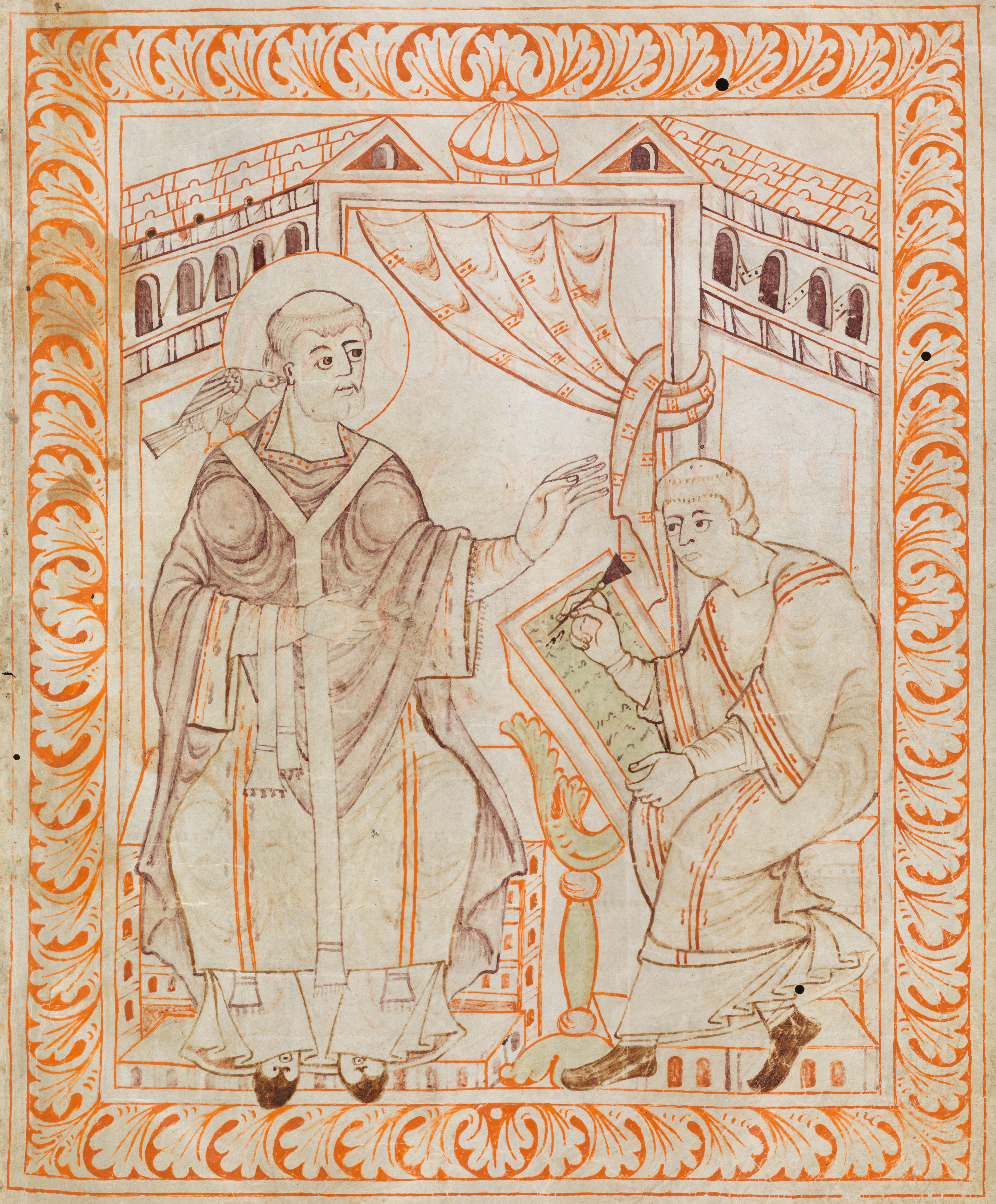
Pope Gregory dictating to a secretary
Much contemporary documentation which still survives today was written by priests. Those who liked to keep records often had little else to do during the long quiet hours in monastery life, and who wished to lay down the standards by which they believed the people should live. Now we can read these past diatribes, and we naturally come to believe that the people of the time were forced to live up to such high moral standards, and that the power of the church demanded exactly that.

Yet although it is true that many people felt obliged to attend church far more regularly than is expected now, and it is also true that daily Mass was not an unusual habit for many, I believe it would be quite wrong to accept that the entire population of any country (I write principally of England ) lived continuously in a state of obedience to the church doctrines. Folk were as independent then as they are now, and few people find it easy to obey strict rules during their day to day lives.

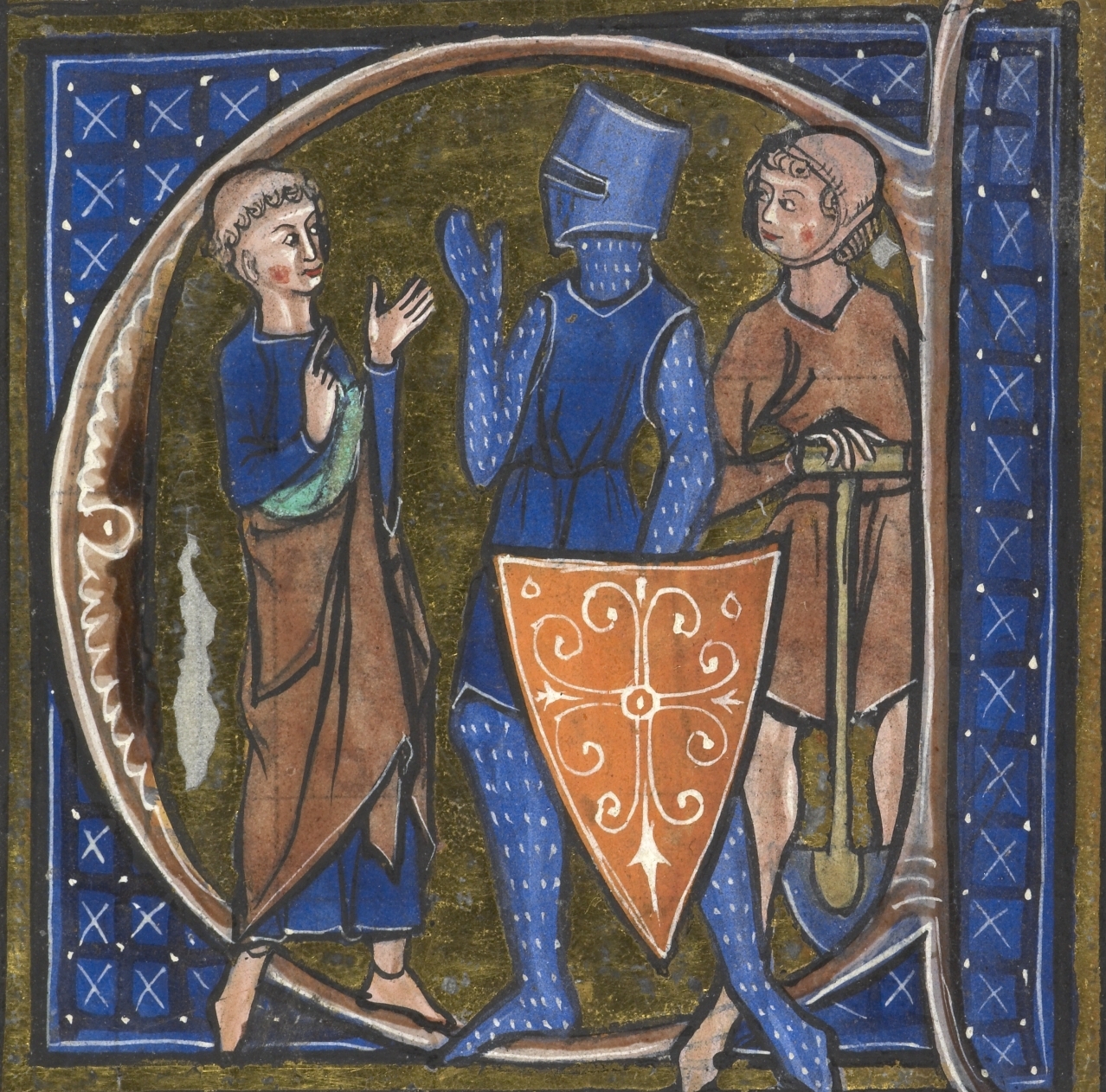
The three medieval classes: those who prayed, those who fought and those who worked
Adultery was a sin, but most kings had openly kept mistresses, had illegitimate children which they cheerfully acknowledged, and made no secret of their adultery. What is more, there is significant documentation showing that the brothels of the time were much used by priests and higher clergy. Many brothels were legally licenced, and on the southern shore of the River Thames across from London, the area of Southwark was awash with prostitutes, taverns, and criminal activity.

There exists a hilarious surviving sermon of the time, scribed by the monks, which lists a series of amazingly lurid sexual acts, describing them all as dreadful sins and utterly forbidden. But it is equally clear that quite a number of people had confessed these behaviours, knowing such acts sinful but acting out their desires anyway. Indeed, it was accepted practice of the time to sin as wished, then to confess those sins, pay the price and take the simple punishment, and thus be forgiven. Earlier generations might commit the most serious of crimes and be absolved by riding off to fight for Christianity during the Crusades, and so earn absolute salvation. But that method was long gone during the late medieval period, yet general behaviour most certainly did not improve.

 Medieval illustration of a battle during the Second Crusade
A depiction of a battle of the Second Crusade
In any case, morality of the time came with certain limitations. Toilets (privies) were not common in most houses and even the great castles might have only one or two for the use of the lords. A few public toilets were built in the city, and were much used. However, none of these were enclosed by a door, and were simply open alcoves where seats were erected over holes emptying directly into the moat, the river, or the cess pit. No flush-toilets in those days – and no privacy either. Of course, when no toilet of any kind was available, then folk used a chamber pot – and these were frequently emptied out of the window each morning – to decorate the gutters of the town.

Privacy was very hard to find in other ways too. Most small houses both in town and countryside, had just one room upstairs which served as bedchamber for the entire family. The children would curl up to sleep on the straw pallets or share a truckle bed, listening to the familiar sounds of their parents making love just a few inches away. Even the nobility had little dignity for such matters. True, they could pull the curtains around their four poster beds, but within the same room the pages and other servants would be listening. And at this time, everyone went to bed naked. The films which show medieval sleepers in glorious long nightdresses are not accurate at all. Naked in bed – and in the coffin!

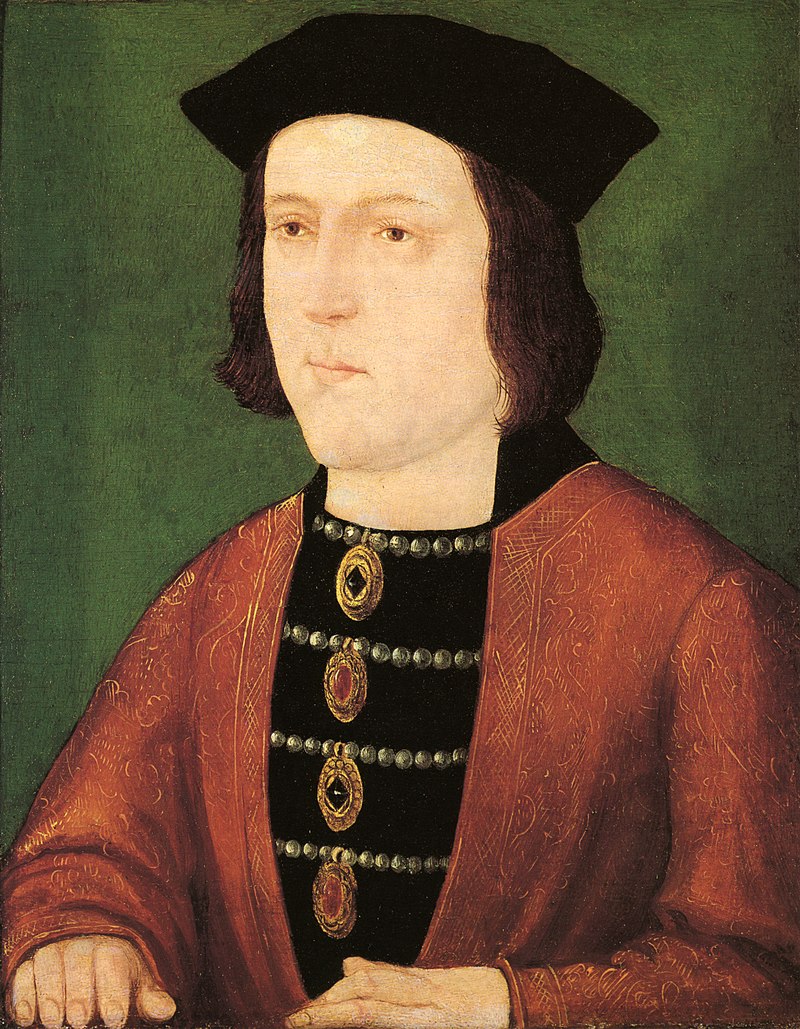
The church was strictly disapproving of common marriage practices, and insisted that only church porch wedding ceremonies were valid in the eyes of God – with God’s law on Earth being the church itself. But this was largely ignored. Most folk committed themselves to a marital union by “hand-fasting” which was a private agreement, needing no clergy and not even witnesses. Even kings – notably King Edward IV – got away with this most improper behaviour. It was perfectly legal after all, however disapproving the church was of such secretive practices.

King Edward IV.jpg
King Edward IV
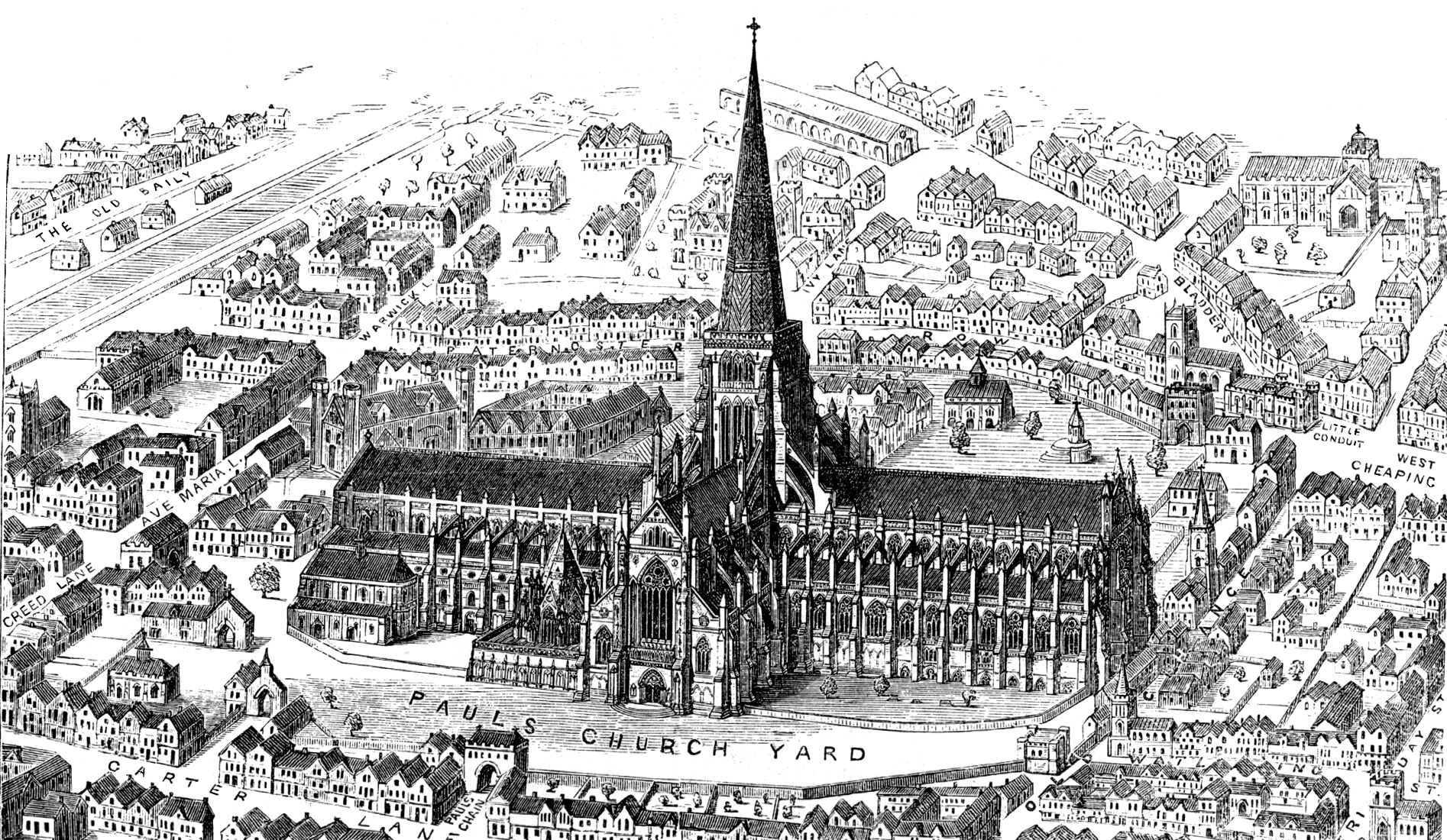
There also exists evidence showing many folk of the time attended church, but without the respect of pious behaviour. St. Paul’s Cathedral, for instance, also allowed wandering beggars and traders, trays of goods hung around their necks, who continued to do their business in the aisles. People evidently carried on their own conversations during the priest’s sermon, had arguments, wandered off to see what was for sale, and left when bored.

St Paul's - before 1561
However, life was not without attempts to make it comfortable and safe, with severe punishment for treason, murder and theft. There was no common police force of course, but there was the Constable and his assistants, and the Sheriff who oversaw the peace.

But it was when death threatened that folk took their religion most seriously, and with the risk of hellfire and endless wandering in Purgatory, their last confession was considered of absolute importance. The presence of a priest was essential for absolution before death, and no one would lie during that final important confession, believing that they must soon answer to God.

Purgatory -  Très Riches Heures du Duc de Berry 1412-16

~~~~~~~~~~

Barbara Gaskell Denvil was born in Gloucestershire, England but, has now moved to rural Australia.
She has published five  historical novels - Satin Cinnabar which is a crime adventure actually commencing on the Bosworth battlefield, Sumerford's Autumn which is an adventure mystery with strong romantic overtones, set in the early years of the Tudor reign, Blessop's Wife (published in Australia as The King's Shadow) which is a crime/romance set in England during 1482-3 in those turbulent years around the death of King Edward IV, The Flame Eater, a romantic crime novel also set in 1482/3, and a time-slip novel Fair Weather, a highly adventurous mystery  which is set earlier during the reign of King John.
Her new novel The Deception of Consequences is a Tudor mystery - adventure and will be published late February 2017.
Barbara is also an author of fantasy fiction.

Saturday, November 14, 2015

The Role of Ransoms in Medieval Warfare

by Helena P. Schrader


The concept of ransom dates back to classical times, but during the Early Middle Ages they fell into disuse and we hear little about them. By the mid-11th century, however, they were back in fashion, and from the mid-12th century to the end of the 15th they were a dominant feature of warfare.  Although they have since disappeared from Western warfare, the criminal custom of capturing people for ransom still persists in some parts of the world such as Latin America and Nigeria. In England, the age of ransoms was the High Middle Ages, when ransoms constituted a fundamental component of warfare. Without them, the very course of English history would have been different — not just because kings like Richard I of England and John “the Good” of France might have been killed rather than held for ransom, but because the custom of allowing a captive to buy his freedom altered many aspects of warfare itself.

It is worth noting, however, that the tradition of ransom was strongest in France. It spread with French influence to England and the Holy Land, but was not so well established in the Holy Roman Empire or Iberia. Interestingly, the Saracens either had an independent tradition of ransom (and if someone knows about this please leave a comment!) or rapidly adopted the “Frankish” custom because it was so highly lucrative. The Arabs were, after all, very good businessmen and traders, and ransoms were first and foremost a financial transaction.

In the French/English tradition, ransoms were a means of enriching oneself, and the rules of tournaments reflected this by dictating that a captured knight had to surrender his horse and armor to his captor. It was the lure of loot as much as the hope for fame and honor that produced the “tournament circuits” of the 12th to 14th centuries, where knights travelled from tournament to tournament like modern-day professional athletes. But the fortunes made on the tournament fields were a pale imitation of what “real” ransoms could bring.


A man taken in battle by his enemy was completely at the mercy of the victor, and the stakes were impossibly high; the victor was within his right to slaughter his opponent. The custom of ransom dramatically decreased casualties, because the prospect of financial gain greatly increased the proclivity of victorious fighting men to show mercy toward those who surrendered to them. This had the unfortunate side-effect, of course, of making the lives of wealthy men more valuable than the lives of the poor. As a result, throughout the High Middle Ages there was a tendency for those of a class deemed good for ransom to escape death, while their less fortunate followers paid the price of defeat with their lives.

But ransoms were not fixed and so not immutably tied to rank and title. They were always negotiable, and a rich merchant’s son — assuming he had enough time to describe the size of his father’s purse to his erstwhile murderer — stood as good if not a better chance of being granted the privilege of ransom than a poor knight. Ransoms were always based on what a man (or his family) could pay quite simply because there was no point in setting a price that one could not hope to collect — unless the real intent was to ensure the captive could never again raise arms against you.

Had Philip II of France, for example, held Richard the Lionheart captive instead of the Holy Roman Emperor, it is probable that he would have set demands intended to keep Richard in a dungeon for the rest of his life.  Likewise, the ransom set for John “the Good” of France after he was captured at the Battle of Poitiers was dictated far more by the political advantage of denying the French a rival king to Edward III than by thoughts of monetary gain. Except where kings and important nobles were at stake, however, ransoms were generally dictated by a captive’s ability to pay.


By which, of course, I do not mean the captive himself, for he was just that — held captive. Ransoms were usually raised by a captive’s relatives — parents, wives, siblings, children. If they couldn’t (or wouldn’t) scrape together the funds needed, then the appeal would go to cousins and in-laws, anyone who might have money and care enough for the captive to contribute to the cause. Lucky men, who enjoyed the respect of those more powerful and wealthy than themselves, might also be ransomed by their feudal overlord. Examples of this were the payment of Aimery de Lusignan’s ransom by King Amalric, or William Marshal’s ransom by Queen Eleanor. In the case of captive kings and barons, of course, they did not have to rely on the generosity of those that loved or respected them. They could demand contributions from their subjects, vassals and tenants.

Usually a man was held in captivity until the ransom was paid, and conditions varied. Some men enjoyed comfortable “house arrest,” able to interact with the household and even family of the man to whom they had surrendered. Others were kept locked in a single room, even a dungeon. In the worse cases, prisoners were kept chained the walls of their prison until the ransom was paid.  On rare occasions, a man (of high rank generally) might be freed on parole in order to enable him to better collect the sum owed. Famous cases of this were Baldwin of Ramla, who was released by Saladin after payment of only a small portion of the enormous ransom set, and Bertrand du Guesclin, who the Black Prince paroled so he could raise his ransom. The former talked the Byzantine Emperor into paying the outstanding portion of his ransom, and the latter raised his ransom from the King of France, Louis d’Anjou and Henry of Trastamare.

While the payment of a ransom could financially ruin a man and his family, ransoms could make the fortune of those fortunate enough to take a valuable prize.  The English and Gascons almost tore the French king apart at the Battle of Poitiers in their eagerness to lay claim to his ransom. Desmond Seward describes a situation like this in his history of the Hundred Years War ( The Hundred Years War: The English in France, 1337-1445, Macmillan, New York, 1978):
[King John] was recognized and surrounded by a great crowd of soldiers anxious to take so fabulous a ransom. Although he surrendered to a knight of Artois, he was still in peril, for the brawling mob of Gascons and English began to fight for him. Finally he was rescued by the Earl of Warwick and Lord Cobham, who took him to the Prince [of Wales].

Few men had a share of a king’s ransom, but as long as a man was on the winning side, it was possible to accumulate a small fortune from the ransoms of lesser men. Ransoms more than plunder was what made the Hundred Years War so lucrative for England — and impoverished France. The latter was in part due to the fact that because a ransom was a reflection of a man’s ability to pay, it was also indirectly a reflection of his “worth.” The English soon learned that it was to their advantage to let French captives name their own ransoms because pride often induced the prisoners to name ransoms suited more to their self-image than the size of their pocketbook.  Even the Black Prince used this tactic when setting the ransom for Guesclin; the latter named the huge sum of 100,000 francs, something he could not possibly have raised from his own resources, hence the resort to the King of France et. al.

Yet common as ransoms were throughout the High Middle Ages, they remained a privilege not a right. The Knights Templar, for example, explicitly prohibited their members from paying ransoms. A Knight Templar was expected to die for Christ and find salvation for his soul in that act of martyrdom. This may have contributed to the Saracen tendency to slaughter captured Templars and Hospitallers; they had no monetary value and so eliminating them sooner rather than latter made sense.

Normally, however, it was the circumstances in which the victor found himself, not the ideology of the captive, that determined whether a ransom would be accepted or not. In the heat of battle, many soldiers became overcome by “blood lust” that utterly obliterated their greed for gold. Or, when the battle was not one between mercenaries but between true adversaries, fighting men might simply hate their opponents too much to be willing to grant mercy. There were also times when commanders made a strategic decision to kill prisoners. A famous case in point here was Henry V’s order to kill the French prisoners taken at Agincourt, which was largely dictated by his sense of vulnerability. Underestimating the demoralizing effect of his initial successes, he felt he needed every Englishman on the frontline, ready to repel the next attack by the still numerically superior French and was unwilling to spare men to guard the prisoners.


Even more significant, however, is that by the Wars of the Roses commanders were beginning to prefer annihilation of the enemy’s ability to fight over the profit gained from ransoms. It is a clear indicator of the increasing hatred between the rival factions for the English throne that Edward IV allegedly told his soldiers to “kill the lords and spare the commons.” Edward IV recognized that the commons might not pay monetary ransoms, but they were his subjects and he gained nothing from killing them. The rebellious lords, on the other hand, were the threat to his throne.

 In the subsequent century, as warfare became increasingly tied to religion and kings became increasingly despotic, the notion that an opponent might be allowed to live in exchange for a payment of money became discredited. Ransoms became anachronistic and eventually disappeared from the customs of Western warfare altogether.

~~~~~~~~~~~~~

Helena P. Schrader is the author of three books set in the crusader kingdoms. St. Louis’ Knight is set in the Latin Kingdom of Cyprus in the mid-13th century and Knight of Jerusalem and Defender of Jerusalem are the first two books in a three biographical novel of Balian d’Ibelin, who defended Jerusalem against Saladin in 1187 and later played an important role during the Third Crusade. St. Louis Knight was winner of the 2014 Chaucer Award for Historical Fiction set in the High Middle Ages.

Amazon

Monday, January 26, 2015

Elizabeth of York - Mother of a Dynasty

by Judith Arnopp

Elizabeth of York
All images rom Wikimedia*
Unlike her son Henry VIII and the granddaughter named in her honour, Elizabeth of York isn’t a household name. When viewed against the back drop of other Tudors she is far less splendid than her children; she is conventional and appears obedient, even cowed perhaps. Her portraits show a pretty, plump, and resigned looking woman who doesn’t adhere to our imagined picture of the mother of a king, the grandmother of a king and two queens. But, although her meek expression belies her harsh experiences she was in fact, the founder of a dynasty.

Elizabeth was born on February 11th 1466 into the bloody era now known as the Wars of the Roses. She was the first child of Edward IV and Elizabeth Woodville. To everyone but the couple involved, this was an unconventional and unpopular match but, unlike other queens, Elizabeth Woodville was to prove satisfactorily fertile.

King Edward IV
It was a time of upheaval and when Edward was forced to flee into exile in Burgundy, the Queen, along with her daughters, fled into Sanctuary at Westminster Abbey.  There, safe from conflict but estranged from the exiled King, the first of the younger Elizabeth’s brothers was born. (The boy Edward would later earn his place in history by ‘disappearing’, along with his brother Richard, from the Tower of London, igniting a mystery that continues to burn today.)

Meanwhile, boosted perhaps by the good news, the exiled king gathered his forces and with the aid of his brother-in-law, Charles the Bold of Burgundy, returned to England to resume the battle for his throne, finally defeating Warwick and Margaret of Anjou and having the old King Henry VI murdered in the Tower. This initiated a time of relative peace.

For Elizabeth, now five or six years old, it was time for her education to begin. As well as the skills of running a huge household, she was also taught to read and write and given some instruction in accounting. Contemporary reports describe her as pious, obedient, and loving, and dedicated to helping the poor.

In 1475 when Edward made his peace with France, it was arranged as part of the treaty that on her twelfth birthday she would go to France to prepare for marriage to Dauphin Charles. But, before this could take place, France reneged on the deal and married his son to Margaret of Austria instead.

Elizabeth Woodville
Things ran smoothly for a while, or as smoothly as they ever do in royal circles, until, on the unexpected death of the King in 1483, Elizabeth fled once more with her mother into Sanctuary at Westminster. Richard of Gloucester took his place as Lord Protector and Elizabeth's brother, the Prince of Wales, was brought to London to await his coronation, as was tradition, in the royal apartments at the Tower. 

Shortly afterward it emerged (whether true or not is another question) that Edward IV’s marriage to Elizabeth Woodville was bigamous due to a prior contract of marriage. All children of the union between Edward IV and Elizabeth Woodville were pronounced illegitimate. As we all know, Gloucester was declared King Richard III, and at some point between 1483 and 1485, Elizabeth’s brothers disappeared from the record. (That is not proof however that they disappeared from the Earth – there are any number of possible explanations).

The Princes in the Tower
How must this have been for Elizabeth? One moment she is the Princess of the realm, Dauphine of France, and the next an illegitimate nobody living in exile from court in the squalor of sanctuary.

And what of her brothers' fate? She would have been ignorant of that, and the resulting uncertainty mixed with grief for her father can only have been hard. It is possible that her mother knew or believed the boys to be safe. Why else, after scurrying into the safety of Westminster in fear of her life, would she suddenly hand her daughters into the care of the very man suspected of injuring her sons? 

We cannot know the answer to that, but the uncertainties provide very tasty fodder for the authors of fiction.

Elizabeth and her sisters returned to court to serve Richard’s Queen, Anne Neville, where they were treated with every courtesy. Queen Anne was ailing and clearly dying. It was at this time that rumours emerged of a relationship between Richard and his niece, Elizabeth. It is now impossible to be certain of the truth behind the allegation, but at the time gossip was strong enough for Richard to publicly deny the accusation. Whether the claim was true or not, Elizabeth would have suffered some degree of shame, but she seems to have continued to be prominent at court, serving the Queen until her death in March 1485. 

In August, when invasion was looming, Elizabeth and other children from the royal nursery were sent north for safety while the King dealt with the threat from Henry Tudor.

Henry Tudor
Henry Tudor, the Lancastrian heir, was aided throughout his exile by his mother, Margaret Beaufort in England. Margaret had devoted her life to her son’s cause. She  untiringly devised methods to secure the throne she saw as rightfully her son’s. Prior to his invasion, in order to muster support from the Yorkist faction, Henry promised that, if he became king, he would marry Elizabeth of York and unite the warring houses of York and Lancaster, putting an end to the Wars of the Roses forever.

After Richard III’s defeat at Bosworth in 1485 Elizabeth was taken to Margaret Beaufort’s house at Coldharbour, but Henry was slow to marry her and slower to crown her. We should consider the logistics of arranging a royal wedding at short notice, but it not something that Henry VIII found an obstacle in the next reign. To some it is almost as if he wished to deny that Elizabeth had any influence on his claim at all. They were married in January 1486. Elizabeth gave birth to their first child, a son whom they named Arthur, in September of the same year scarcely nine months later. She had no further children until two years after her coronation which took place in November 1487.

Perkin Warbeck
Henry Tudor’s reign was fraught with rebellion. Pretenders emerged throughout, some were swiftly dealt with, but one in particular, Perkin Warbeck, claiming to be Elizabeth’s younger brother, Richard, harried the king for years. We will never know his real identity, although the King went to great lengths to provide him with a lowly one.

Elizabeth is always described as a dutiful wife and devoted mother. She took no part in ruling the country, and there are no reports of her ever having spoken out of turn or ‘disappointing’ the King. Henry appears to have been a faithful husband; his later relationship with Katherine Gordon, wife of Warbeck, was possibly no more than friendship, but Katherine did very well, both in status and financially, at Henry's court.

Although Prince Arthur was raised, as convention dictated, in his own vast household at Ludlow, Elizabeth took an active role in the upbringing of her younger children, teaching them their letters and overseeing their education.

Prince Arthur
When Arthur, the Prince of Wales, died suddenly in 1502, both Henry and Elizabeth were distraught, the King thrown into insecurity at having been left with just one male heir. Reports state that the King and Queen comforted each other and, although there are some hints of a possible estrangement between the royal couple, Elizabeth promised to give Henry another son. She fell pregnant quickly and, ten months later, gave birth to a girl, Katherine, but succumbed to puerperal fever and died on her birthday, 11th February 1503.

Elizabeth of York
Elizabeth deserves more credit. There is as much strength in resilience as in resistance, and I believe she was both strong and resolved, bound by duty to serve her country as best she could.

Her union with Henry negated the battle between York and Lancaster, and the many children she bore strengthened political unions with France, Scotland, and Spain. Ultimately, she died doing her duty to England.

When a king puts aside personal desire for the sake of his country or dies on the battlefield defending it, he becomes a hero; often, if he is on the right side, he is honoured throughout history.

Yet Elizabeth did all those things. She married dutifully; she quickly produced an heir, a spare, and several daughters to increase the king’s bargaining powers. At the tragic loss of the Prince of Wales, despite her age and the suggestion of medical problems, she took the most dangerous decision to try to give the King another son. She died a hero, in service of her King and country.

Images:
*http://upload.wikimedia.org/wikipedia/commons/9/95/Elizabeth_of_York_from_Kings_and_Queens_of_England.png
http://upload.wikimedia.org/wikipedia/commons/4/48/King_Edward_IV.jpg
http://upload.wikimedia.org/wikipedia/commons/2/2f/Elizabeth_woodville.jpg
http://upload.wikimedia.org/wikipedia/commons/c/c0/Princes.jpg
http://upload.wikimedia.org/wikipedia/commons/2/2a/Henry_Tudor_of_England_cropped.jpg
http://upload.wikimedia.org/wikipedia/commons/3/3c/Perkin_Warbeck.jpg
http://upload.wikimedia.org/wikipedia/commons/6/69/Anglo-Flemish_School%2C_Arthur%2C_Prince_of_Wales_%28Granard_portrait%29_-004.jpg
http://upload.wikimedia.org/wikipedia/commons/c/c6/Elizabeth_of_York%2C_right_facing_portrait.jpg

~~~~~~~~~~~~~

Elizabeth is the subject of my shortly to be published book A Song of Sixpence, in which I suppose that the younger of the princes was in fact rescued from the Tower in 1483 and re-emerges some years later as the man Henry names 'Perkin Warbeck'. 

The novel considers the division of loyalties a princess, born to the house of York, might have suffered in her union with the House of Lancaster. Would her support be for husband and her sons, or her long lost brother?

This is a massive issue to deal with in one blog, and I would encourage you to read more about Elizabeth in Alison Weir's book Elizabeth of York: The First Tudor Queen and Amy Licence's Elizabeth of York. 


For more information about my work please visit my webpage. 
Follow my blog.
Or find me on Facebook and Twitter.
My Amazon page is here if you are in the UK
or here if you are in the USA