Showing posts with label Elizabeth of York. Show all posts

Monday, September 19, 2016

The First Tudor Prince

Arthur Tudor
Prince of Wales
by Samantha Wilcoxson

With the birth of the first Tudor prince a sparse eight months after the marriage of Henry VII and Elizabeth of York, few would have prophesied the problem of begetting heirs that would plague the short-lived Tudor dynasty. His name spoke of the high expectations that his parents, and indeed the kingdom, had for Prince Arthur. After decades of war and familial infighting, Prince Arthur would solidify the peace that had begun with the marriage of his Lancastrian father and Yorkist mother.

Born on September 20, 1486, Prince Arthur was the embodiment of God’s blessing upon the first Tudor king and queen. In contradiction to some accounts, particularly in historical fiction but not absent from works of nonfiction, Arthur Tudor was not treated as a sickly child unexpected to survive until adulthood. It is easy to assign these descriptions to him in retrospect based upon his early demise, but contemporary accounts and events in his life demonstrate that Arthur was fully expected not only to survive, but to rule. As an infant, he was described as ‘vital and vigorous.’

In 1489, shortly following his third birthday, Arthur was made a Knight of the Bath in preparation for his investiture as Prince of Wales the following February. In 1491, he was made Knight of the Garter. This same year, Arthur welcomed a younger brother, Henry, whose birth was celebrated but not with the exuberance that Arthur’s had been. There is no indication that Henry was expected to take his brother’s place as heir. While Arthur was raised up away from court and included in the governing of Wales from a young age, Henry was kept near his mother with his other siblings.

Ludlow Castle, Shropshire
Established at Ludlow in 1492, Arthur would have hardly known the brother whose name would forever come before his own. Arthur was expected to be king, and great effort was expended toward obtaining for him a royal wife. Henry would have likely looked forward to a leading role in the church to support his brother, perhaps as an Archbishop.

The negotiations for Arthur’s marriage had begun when he was a toddler. More than anything else in his life, he would be remembered for being the first husband of his brother’s wife. Katherine of Aragon insisted until her dying day that this marriage had never been consummated because of the briefness of their time together and Arthur’s failing health. During the decade of haggling over details of the match, Arthur’s health is one of few things not counted as a concern by Queen Isabella and King Ferdinand, further evidence that Arthur’s early death was unexpected. In fact, the Spanish ambassador, who would have no incentive to mislead his king and queen, described the young Arthur as ‘taller than his age would warrant’ and ‘of remarkable beauty and grace.’

The power couple of Spain were not afraid to make demands. Due to their concerns that Arthur’s rule be unchallenged, two executions took place. Perkin Warbeck, who had claimed to be the younger of the Princes in the Tower and therefore the Queen’s brother, was put to death after an attempted escape from the Tower. If these charges were questionable, Warbeck had undoubtedly performed other acts of treason. The scandal was the partner that was executed shortly after him.


Edward Plantagenet, Earl of Warwick
by Edward Harding
National Portrait Gallery, London
Edward of Warwick was one of those pesky Plantagenet sons who made it easy for those who were unimpressed with Tudor rule to think of a possible substitute. Not that Edward himself had ever challenged Henry the way others, such as the de la Pole brothers, did. Son of George of Clarence and brother of Margaret Pole, Edward had been imprisoned since early in Henry VII’s reign. He was not necessarily mistreated, but neither was he allowed to truly live a life where he could become the center of rebellion for disillusioned Yorkists. His sister, Margaret, was married to a Tudor supporter, and she served in a variety of roles, serving Arthur at Ludlow and later Princess Mary. However, Edward, kept under lock and key since childhood, was seen as too much of a risk. Including him in the dubious charges against Warbeck, Edward was executed in 1499 to clear the way for Arthur and Katherine’s marriage. Certainly, this is not an action that one would undertake for a Prince not expected to survive to rule.

Coat of Arms
Arthur Tudor Prince of Wales
Arthur had been educated and raised to be king in a way that was not mirrored in the treatment of his brothers. While Arthur was made Duke of Cornwall at birth, Earl of Chester in 1489, and Prince of Wales in 1490, his brothers received titles reserved for younger sons. Henry was made Lord Warden of the Cinque Ports in 1492, Lord Lieutenant of Ireland in 1493, and Duke of York in 1494.

Arthur was sent to govern Wales with Jasper Tudor, his father’s most loyal supporter, as the head of his council. We have every reason to believe that, with the help of his experienced council, Arthur excelled in the governance of Wales during his time there. Contemporaries praised his intelligence and demeanor.

The fact that Katherine of Aragon insisted that she and Arthur never consummated their marriage is not necessarily evidence that he was already suffering from a long-lasting illness. While couples their age were not kept from the marriage bed, they knew the dangers that young couples faced, especially mothers, but Katherine’s brother had recently died at age nineteen, a disaster that was blamed on his libido. Travel and pageantry that took place during the couple’s short marriage also kept them from sharing a bed more than a handful of times. Therefore, it is possible that, even if Arthur felt well at the wedding ceremony, business and later sickness could have kept him from his wife’s bed.

Katherine of Aragon
National Portrait Gallery
Katherine also became bed-ridden with sweating sickness at this time. It is possible that Arthur died from one of many possibilities that have been suggested: tuberculosis, pneumonia, testicular cancer, or other wasting disease. However, it seems likely that he succumbed to an illness that attacked many people of this time, rich and poor, and that could have just as easily claimed his young wife.

One of the most touching scenes documented of a man reputed to be cold and calculating is Henry VII’s anguish over the death of his firstborn son. He and his wife were shattered, as any parents would be, and there is no evidence that Arthur was raised under the shadow of eminent death based upon their shock and grief. His parents decided to attempt to have another child after Arthur’s death, a step they had not taken two years earlier after the death of his younger brother, Edmund. Arthur’s death was unexpected and the royal couple’s reaction could indicate that the Tudor fear for a lack of sons was beginning to take root.


The first Tudor prince had been welcomed to the world with great acclaim and was mourned in devastation. Let us not dismiss him as a sickly child who was quickly replaced by the charismatic brother but remember him as a life full of promise, extinguished too soon.

Photo Credits:
Portrait of Arthur Tudor by Anonymous Artist: Public Domain
Ludlow Castle: Ian Capper [CC BY-SA 2.0 (http://creativecommons.org/licenses/by-sa/2.0)], via Wikimedia Commons
Arthur Tudor's Coat of Arms: https://commons.wikimedia.org/wiki/File%3ACoat_of_Arms_of_the_Tudor_Princes_of_Wales_(1489-1574).svg
Edward of Warwick: National Portrait Gallery, London
Katherine of Aragon: National Portrait Gallery, London

Additional Reading:
Elizabeth of York: A Tudor Queen and Her World by Alison Weir
Winter King: Henry VII and the Dawn of Tudor England by Thomas Penn

About the Author:
Samantha Wilcoxson is a first generation American with British roots. She is passionate about reading, writing, and history, especially the Plantagenet dynasty. Her novel, Plantagenet Princess, Tudor Queen: The Story of Elizabeth of York has been recognized as a Historical Novel Society Editor's Choice. The Plantagenet Embers series continues with Faithful Traitor: The Story of Margaret Pole and will conclude with Queen of Martyrs: The Story of Mary I in 2017.

Samantha has also published two middle grade novels, No Such Thing as Perfect and Over the Deep: A Titanic Adventure.

When not reading or writing, Samantha enjoys traveling and spending time at the lake with her husband and three children. You can connect with Samantha on her blog, Twitter, Goodreads, Booklikes, and Amazon.

Book Links:

Monday, December 7, 2015

A Not-So-Cool-Yule at Sheen Palace 1497

 Judith Arnopp

Imagine, if you can, this scene. It is almost Christmas, everything is prepared. The presents are wrapped, the tree is hung, your mother-in-law has arrived and settled herself in your favourite chair for the duration of the holiday. The children are racing around the house, over-excited, squeezing presents and dipping their fingers into the trifle. You get them to bed early, put your feet up with a large glass of red, and have just begun to relax when disaster strikes. The boiler bursts in the loft, or the roof blows off in a gale, or horror of all horrors – a house fire breaks out.


 God forbid this should happen to anyone but sometimes disaster strikes when we least expect it and to the most exulted among us. 

In 1497, a few days before Christmas, fire raged through Sheen Palace
Henry, Margaret and Mary, at about the time of the fire.
where King Henry VII, Elizabeth of York, Margaret Beaufort and the young prince Henry, princesses Margaret and Mary were in residence. The cooks were busy in the kitchen, the jesters and mummers practicing for the big day when …
“About nine of the clock quite suddenly … within the king’s lodging and so continued till midnight. By violence whereof …(a) great part of the old building was burnt and much more harm done upon costrings (curtains) and hanging beds of cloth of gold and silk and much other rich apparel with plate and manifold jewels  belonging to such a noble court.
How well loving therefore be to God (that) no living creature was there perished…” (Robert Hutchinson, Young Henry, P.44)

Henry VII
The royal household were hurried outside to safety. You can imagine the scene; the confused and crying children, hastily wrapped in blankets, clasped in their nurses’ arms. Men rushing hither and thither to fight the blaze, women weeping, screaming perhaps as the windows exploded and the ceilings collapsed in a great ball of flame. Henry and Elizabeth, and the king’s mother looked on in cold shock as their sumptuous palace was consumed in flames. 

The king, for all his power, was helpless in the face of fate and, after the costly matter of his recent war with Scotland, and his pursuit of the pretender Perkin Warbeck, was horribly aware of the financial implication of the disaster. The material losses were great. The Milanese Ambassador Raimondo Soncino estimated them at 60,000 ducats which is about £7.3 million in today’s money, amounting to one tenth of Henry’s annual income.
Elizabeth of York
He reported a “Great substance of richesse” destroyed, including tapestries, wall hangings, bed, clothes, plate and furniture. And that was not all, precious royal trinkets were also lost. In the following days the king paid servants £20 a day to sift through the ruin looking for jewels.
(Wroe, Perkin: p.393).

This was not the first time Sheen Palace had suffered destruction. It was once the favourite home of Richard II and Anne of Bohemia and when she died of the plague in 1394, the king, in his grief, ordered the palace to be completely demolished.

Henry V began construction of a palace on the site but this was hampered by his death in 1422 and work did not resume until the infant king, Henry VI, was eight years old. As the wars of the roses wagged on the palace was given into the possession of Elizabeth Woodville on her marriage to Edward IV, and passed to Henry VII after Bosworth.

It is not believed that the fire in 1497 destroyed the whole building but the privvy lodgings were lost and lavishly refurbished afterwards. Once the work was finished and the royal family ready to move back in Henry renamed Sheen as ‘Richmond Palace.’

In the years that followed the palace witnessed some of the greatest events in Tudor history. In Henry VII’s reign alone it saw the wedding of Prince Arthur to Catherine of Aragon in 1501; the official betrothal of Princess Margaret to King James of Scotland in 1503. And in 1509, in his favourite palace, the palace he had built and named in his family’s honour, Henry VII, the first Tudor king, breathed his last.

My novel A Song of Sixpence tells the tale of Elizabeth of York and her marriage to Henry VII. It considers the implications of the loss of her brothers in the Tower, her subsequent marriage to her former enemy. Often portrayed as meek or simply uninteresting, Elizabeth emerges as a brave and resilient woman in a time of suspicion and unrest.
A Song of Sixpence is available in paperback and also on Kindle.


Judith Arnopp is the author of historical novels set in the Tudor and Anglo-Saxon periods. Her work is available from Amazon and includes:


You can find out more about Judith's work on her website: www.juditharnopp.com or find her on facebook.

Monday, January 26, 2015

Elizabeth of York - Mother of a Dynasty

by Judith Arnopp

Elizabeth of York
All images rom Wikimedia*
Unlike her son Henry VIII and the granddaughter named in her honour, Elizabeth of York isn’t a household name. When viewed against the back drop of other Tudors she is far less splendid than her children; she is conventional and appears obedient, even cowed perhaps. Her portraits show a pretty, plump, and resigned looking woman who doesn’t adhere to our imagined picture of the mother of a king, the grandmother of a king and two queens. But, although her meek expression belies her harsh experiences she was in fact, the founder of a dynasty.

Elizabeth was born on February 11th 1466 into the bloody era now known as the Wars of the Roses. She was the first child of Edward IV and Elizabeth Woodville. To everyone but the couple involved, this was an unconventional and unpopular match but, unlike other queens, Elizabeth Woodville was to prove satisfactorily fertile.

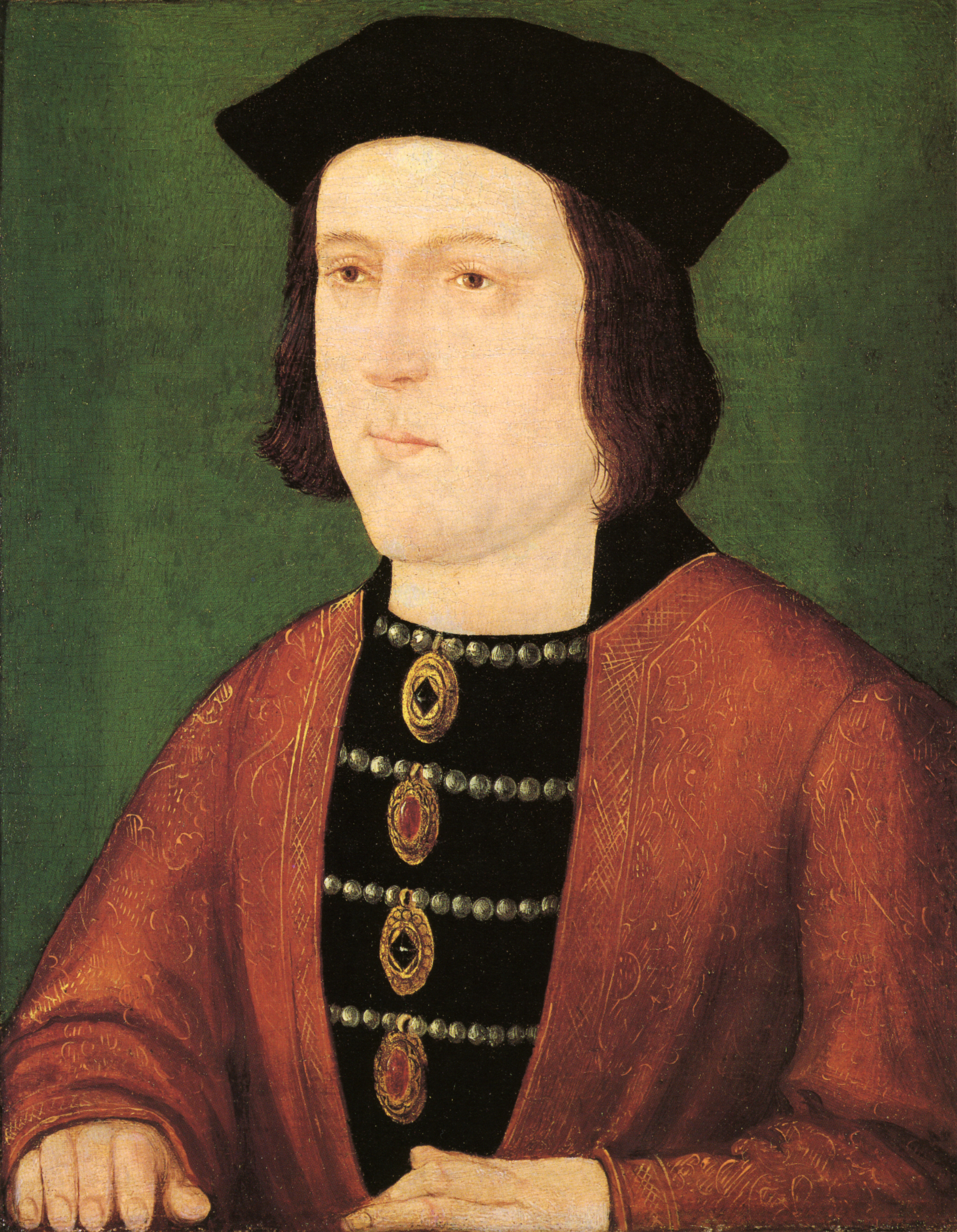
King Edward IV
It was a time of upheaval and when Edward was forced to flee into exile in Burgundy, the Queen, along with her daughters, fled into Sanctuary at Westminster Abbey.  There, safe from conflict but estranged from the exiled King, the first of the younger Elizabeth’s brothers was born. (The boy Edward would later earn his place in history by ‘disappearing’, along with his brother Richard, from the Tower of London, igniting a mystery that continues to burn today.)

Meanwhile, boosted perhaps by the good news, the exiled king gathered his forces and with the aid of his brother-in-law, Charles the Bold of Burgundy, returned to England to resume the battle for his throne, finally defeating Warwick and Margaret of Anjou and having the old King Henry VI murdered in the Tower. This initiated a time of relative peace.

For Elizabeth, now five or six years old, it was time for her education to begin. As well as the skills of running a huge household, she was also taught to read and write and given some instruction in accounting. Contemporary reports describe her as pious, obedient, and loving, and dedicated to helping the poor.

In 1475 when Edward made his peace with France, it was arranged as part of the treaty that on her twelfth birthday she would go to France to prepare for marriage to Dauphin Charles. But, before this could take place, France reneged on the deal and married his son to Margaret of Austria instead.

Elizabeth Woodville
Things ran smoothly for a while, or as smoothly as they ever do in royal circles, until, on the unexpected death of the King in 1483, Elizabeth fled once more with her mother into Sanctuary at Westminster. Richard of Gloucester took his place as Lord Protector and Elizabeth's brother, the Prince of Wales, was brought to London to await his coronation, as was tradition, in the royal apartments at the Tower. 

Shortly afterward it emerged (whether true or not is another question) that Edward IV’s marriage to Elizabeth Woodville was bigamous due to a prior contract of marriage. All children of the union between Edward IV and Elizabeth Woodville were pronounced illegitimate. As we all know, Gloucester was declared King Richard III, and at some point between 1483 and 1485, Elizabeth’s brothers disappeared from the record. (That is not proof however that they disappeared from the Earth – there are any number of possible explanations).

The Princes in the Tower
How must this have been for Elizabeth? One moment she is the Princess of the realm, Dauphine of France, and the next an illegitimate nobody living in exile from court in the squalor of sanctuary.

And what of her brothers' fate? She would have been ignorant of that, and the resulting uncertainty mixed with grief for her father can only have been hard. It is possible that her mother knew or believed the boys to be safe. Why else, after scurrying into the safety of Westminster in fear of her life, would she suddenly hand her daughters into the care of the very man suspected of injuring her sons? 

We cannot know the answer to that, but the uncertainties provide very tasty fodder for the authors of fiction.

Elizabeth and her sisters returned to court to serve Richard’s Queen, Anne Neville, where they were treated with every courtesy. Queen Anne was ailing and clearly dying. It was at this time that rumours emerged of a relationship between Richard and his niece, Elizabeth. It is now impossible to be certain of the truth behind the allegation, but at the time gossip was strong enough for Richard to publicly deny the accusation. Whether the claim was true or not, Elizabeth would have suffered some degree of shame, but she seems to have continued to be prominent at court, serving the Queen until her death in March 1485. 

In August, when invasion was looming, Elizabeth and other children from the royal nursery were sent north for safety while the King dealt with the threat from Henry Tudor.

Henry Tudor
Henry Tudor, the Lancastrian heir, was aided throughout his exile by his mother, Margaret Beaufort in England. Margaret had devoted her life to her son’s cause. She  untiringly devised methods to secure the throne she saw as rightfully her son’s. Prior to his invasion, in order to muster support from the Yorkist faction, Henry promised that, if he became king, he would marry Elizabeth of York and unite the warring houses of York and Lancaster, putting an end to the Wars of the Roses forever.

After Richard III’s defeat at Bosworth in 1485 Elizabeth was taken to Margaret Beaufort’s house at Coldharbour, but Henry was slow to marry her and slower to crown her. We should consider the logistics of arranging a royal wedding at short notice, but it not something that Henry VIII found an obstacle in the next reign. To some it is almost as if he wished to deny that Elizabeth had any influence on his claim at all. They were married in January 1486. Elizabeth gave birth to their first child, a son whom they named Arthur, in September of the same year scarcely nine months later. She had no further children until two years after her coronation which took place in November 1487.

Perkin Warbeck
Henry Tudor’s reign was fraught with rebellion. Pretenders emerged throughout, some were swiftly dealt with, but one in particular, Perkin Warbeck, claiming to be Elizabeth’s younger brother, Richard, harried the king for years. We will never know his real identity, although the King went to great lengths to provide him with a lowly one.

Elizabeth is always described as a dutiful wife and devoted mother. She took no part in ruling the country, and there are no reports of her ever having spoken out of turn or ‘disappointing’ the King. Henry appears to have been a faithful husband; his later relationship with Katherine Gordon, wife of Warbeck, was possibly no more than friendship, but Katherine did very well, both in status and financially, at Henry's court.

Although Prince Arthur was raised, as convention dictated, in his own vast household at Ludlow, Elizabeth took an active role in the upbringing of her younger children, teaching them their letters and overseeing their education.

Prince Arthur
When Arthur, the Prince of Wales, died suddenly in 1502, both Henry and Elizabeth were distraught, the King thrown into insecurity at having been left with just one male heir. Reports state that the King and Queen comforted each other and, although there are some hints of a possible estrangement between the royal couple, Elizabeth promised to give Henry another son. She fell pregnant quickly and, ten months later, gave birth to a girl, Katherine, but succumbed to puerperal fever and died on her birthday, 11th February 1503.

Elizabeth of York
Elizabeth deserves more credit. There is as much strength in resilience as in resistance, and I believe she was both strong and resolved, bound by duty to serve her country as best she could.

Her union with Henry negated the battle between York and Lancaster, and the many children she bore strengthened political unions with France, Scotland, and Spain. Ultimately, she died doing her duty to England.

When a king puts aside personal desire for the sake of his country or dies on the battlefield defending it, he becomes a hero; often, if he is on the right side, he is honoured throughout history.

Yet Elizabeth did all those things. She married dutifully; she quickly produced an heir, a spare, and several daughters to increase the king’s bargaining powers. At the tragic loss of the Prince of Wales, despite her age and the suggestion of medical problems, she took the most dangerous decision to try to give the King another son. She died a hero, in service of her King and country.

Images:
*http://upload.wikimedia.org/wikipedia/commons/9/95/Elizabeth_of_York_from_Kings_and_Queens_of_England.png
http://upload.wikimedia.org/wikipedia/commons/4/48/King_Edward_IV.jpg
http://upload.wikimedia.org/wikipedia/commons/2/2f/Elizabeth_woodville.jpg
http://upload.wikimedia.org/wikipedia/commons/c/c0/Princes.jpg
http://upload.wikimedia.org/wikipedia/commons/2/2a/Henry_Tudor_of_England_cropped.jpg
http://upload.wikimedia.org/wikipedia/commons/3/3c/Perkin_Warbeck.jpg
http://upload.wikimedia.org/wikipedia/commons/6/69/Anglo-Flemish_School%2C_Arthur%2C_Prince_of_Wales_%28Granard_portrait%29_-004.jpg
http://upload.wikimedia.org/wikipedia/commons/c/c6/Elizabeth_of_York%2C_right_facing_portrait.jpg

~~~~~~~~~~~~~

Elizabeth is the subject of my shortly to be published book A Song of Sixpence, in which I suppose that the younger of the princes was in fact rescued from the Tower in 1483 and re-emerges some years later as the man Henry names 'Perkin Warbeck'. 

The novel considers the division of loyalties a princess, born to the house of York, might have suffered in her union with the House of Lancaster. Would her support be for husband and her sons, or her long lost brother?

This is a massive issue to deal with in one blog, and I would encourage you to read more about Elizabeth in Alison Weir's book Elizabeth of York: The First Tudor Queen and Amy Licence's Elizabeth of York. 


For more information about my work please visit my webpage. 
Follow my blog.
Or find me on Facebook and Twitter.
My Amazon page is here if you are in the UK
or here if you are in the USA


Thursday, August 2, 2012

Some of the Greatest Love Stories in History

by Philippa Jane Keyworth

I am rather nervous. I am sat at the end of the dining table in an empty room, my laptop staring back at me and I find I am a little reluctant to touch the keys. I was asked to write a blog for the Historical Author blog and being as I read it regularly, I know the standards and knowledge of the other contributors. With that in mind, I apologise unreservedly for anything I say which is incorrect.

I was so excited to be asked to blog and immediately thought of hundreds of things, well, okay, maybe five, which I could write about. I trawled the archives of the blog however, and found many of my potential titles had already been blogged about (and far better than I could have done I hasten to add!).

So, as I had my hands stuck in a bowl of frothy washing-up bubbles, I was surprised when I suddenly thought of what I would really like to write about. Yes, it’s true, a menial task such as washing up can really get your brain to thinking!

I want to blog about love.

I can hear the groans and whispered words of anguish already. The questions of, why would someone write about that? Again with the soppy, "Come on!"

Well, the thing is, there is a lot of really quite pants stuff going on in the world today: recession, job cuts, drug and alcohol abuse, rape, starvation, war and corruption to name a few. I expect even reading that list sent whatever small smile you had on your face firmly marching away.

The reason I want to blog about love in history is because sometimes you just need something to remind you that there is good in this world. Of course, the fact that I am hopelessly soppy and write Regency Romances has nothing to do with it. Whatsoever. At all.

ANYWAY, when thinking of love stories to recount I came up with three.

To start with, and probably quite surprisingly, I want to mention King Henry VII. He is known to most as a King suffering from immense avarice who was calculating and downright clever in his dealings with a fractious kingdom.

Most of that is true to some extent.  However, when I think of him, I still remember so clearly when I was sat in my history lesson at A-Level and learned Henry had married Elizabeth of York, a sworn enemy of his own house of Lancaster.

After being married for seventeen years Elizabeth died. Henry was recounted to have mourned her death very deeply, locking himself away and commanding no one to enter. This King, who was resented for his greed, actually gave Elizabeth a splendid funeral, sparing no expense. He was a King who had brought a kingdom reluctantly under his close control, a man who was calculating, methodical and cold, too cold you would think to love, and yet he grieved the loss of a Queen consort, a beloved wife and a true companion. I believe he really had loved her.

Next, Henrietta Maria and Charles I.

Now they are a couple which I have hitherto overlooked, but upon chatting to a friend who mentioned them, I decided to do a little research.

I found out quite a real and beautiful love story had existed between the two. Being a political match they did not exactly start married life seeing eye-to-eye and I mean that quite literally. They were married by proxy in May 1625 and then again in person in June 1625.

Yet, as with most of the love stories we cherish, the initial dislike gradually dissipated. The assassination of the King’s closest confidant, the Duke of Buckingham, did help the King’s relationship with his wife - morbid I know, but true.

The death of Buckingham paved the way for Henrietta to take Buckingham’s place. She slowly became the King’s confidant and friend and the seriousness of what they discussed was often lightened by his wife who, being a humorous woman, regularly played jokes on him.

Finally, most obviously, I want to talk about Victoria and Albert.

I have to be frank, I don’t know a great deal about the Victorians.  But what I do know is that Victoria and Albert were deeply in love. Married for 21 years to each other, they portrayed a couple with immense responsibilities who worked together throughout their lifetimes even having office desks facing each other!

Again, we saw a grieving monarch after the death of Albert. Victoria was so heart-broken at his death that she had all the railings and lampposts throughout London painted black in mourning for him. An entire city dedicated to remembering his loss, her loss, her love.

I hope reading this blog has given you a sense of hope. It can be easy, when studying history, to taint all of what has happened throughout humanity's existence with an evilness. It’s true, there have been atrocities uncountable and which should not be belittled or forgotten. Alongside those atrocities, I just wanted to point out, there was love and hope and happiness.

My wish is for this post to make others a little bit happier. I hope it worked.


'If you want to keep up with Philippa and her book 'The Widow's Redeemer' coming out later in 2012 here are her contact details:

Facebook: www.facebook.com/philippajane.keyworth
Twitter: @PJKeyworth
Blog: www.ridiculousauthor.wordpress.com