Showing posts with label Perkin Warbeck. Show all posts

Friday, October 7, 2016

The Tragic Life of Catherine Gordon

by Samantha Wilcoxson
Holyrood Palace, Edinburgh
Little is known about Catherine Gordon's early years, as history is much more careful about recording tragedy and scandal than everyday life. As a great-granddaughter of King James I of Scotland and daughter of the Earl of Huntley, Catherine likely enjoyed a charmed childhood and looked forward to a bright future. That vague dream of imminent prosperity became defined for her in a handsome young man proclaimed to be Richard of York.

Catherine is one of those women who would be wonderful to sit down to tea with and ask many of those questions that drive history enthusiasts mad. Did she think her Richard was truly Perkin Warbeck, the name later assigned to him by Henry VII? What was her impression of the first two Tudor kings? Catherine lived during fascinating times with close connections to some of the historical figures who continue to intrigue us the most. However, as with many who lived during the Tudor era, her life is a complex blend of joys and sorrows.

Perkin Warbeck
Whatever Catherine eventually ended up believing about her first husband, at the time of her marriage she would have been confident that she was marrying a Prince of England, one who was preparing to reclaim his kingdom with her at his side. The fact that Catherine was given to Warbeck in marriage is a significant indication of his belief in his claim.

While Warbeck was undoubtedly pleased with the status that Catherine gave him, he also seems to have been in love. A letter believed to be written by him states, "whoever sees her cannot choose but admire her, admiring cannot choose but love her, loving cannot choose but obey." Catherine appears to have returned his affection, accompanying him when he set out to invade England though she most likely was either pregnant or had a small child with her.

So began the string of tragedies in this lovely young woman's life.

Warbeck's 1497 invasion failed almost before it began, and Catherine was taken captive at St Michael's Mount where she awaited news of her husband's victory. Found wearing mourning clothes, it is believed that Catherine had suffered a miscarriage during her five weeks there. Records being unclear in the details, Catherine may have alternatively suffered the loss of a young child rather than a miscarriage. Either way, Catherine would bear no more children.

St Michael's Mount, Cornwall
Catherine was treated with respect by Henry and became an attendant for his wife, Elizabeth of York. She was informed that her husband was a pretender. What Catherine thought of all this, we can only imagine. The fact that records exist stating that "Henry was treating the couple well enough, but would not let them sleep together," indicate that Catherine still loved her husband, whoever he really was. She remained at the Tudor court, whether she was a well-treated prisoner as her great-grandfather had been or she chose this path is unknown.

In 1499, Warbeck was executed under suspicious circumstances, and Catherine found herself a childless widow of twenty-five at a foreign court. Catherine became close to the royal couple, serving as one of Queen Elizabeth's ladies and eventually mourner at her funeral in 1503. She remained with Henry after he lost his wife, indicating that she had forgiven him for any wrong she may have felt he had done to her or her first husband.

Catherine Gordon before Henry VII
After the first Tudor king's death, Catherine became a member of Katherine of Aragon's household. This Katherine had, too, already seen a small portion of the tragedy that her life would include. Already married and widowed by the first Tudor prince, Katherine of Aragon married the brother who had become Henry VIII.

Around this time, Catherine married her second husband. Little is known of James Strangeways besides the fact that he was Gentleman Usher of the King's Chamber and that he did not survive long after his marriage to Catherine. By the summer of 1517, Catherine was married a third time. This marriage and a role in Princess Mary's household took Catherine a greater distance away from the English court than she had been in twenty years.

Matthew Craddock was a Glamorganshire knight with holdings in Wales. Catherine was able to divide her time between Princess Mary's household at Ludlow and that of her husband. Catherine loved to explore her estates on horseback, and this is an activity she found great refuge in throughout her life. Based upon Catherine's will, written in 1537, Craddock held a special place in Catherine's heart. Though the document refers to Catherine as the "sometime wife" of Strangeways, Craddock is referred to as her "dear and well beloved husband."

Catherine served as Chief Lady of the Privy Chamber for Princess Mary while Margaret Pole served as Governess. These two women were of an age together and likely struck up a friendship at this point if they had not previously. They would be protective of their charge as the political environment deteriorated, causing the downfall of Mary's mother, friend of both women, Queen Katherine of Aragon. Catherine served in this role until 1530, but Margaret stayed until she was forced to leave in 1533.

In the meantime, Catherine had lost her third and gained a fourth husband. Craddock's death in 1531 may be an indication that Catherine had left Princess Mary's household when she did in order to care for him. It is not known precisely when Catherine married her final husband, but he would be the one to survive her.

Fyfield Parish Church
Final resting place of Catherine Gordon
Christopher Ashton, another Gentleman Usher, was from Berkshire, where Catherine held lands that had been gifted to her by Henry VII. When not at court before her move to Wales, this is where she had taken up residence. Her final marriage was brief and little is recorded of it besides Catherine's final will and resting place.

When Catherine died on October 14, 1537, she was sixty-three years old. A surviving monument to her exists within the Parish Church of Fyfield in Berkshire where she is buried. Another monument had been raised by Craddock in Swansea, indicating his doubts that she would remarry after his death. Her will makes no mention of her first husband, and there is no existing record of her discussing him at any point in her life after his death. Whatever she thought of Perkin Warbeck had died with him. Eventually, Ashton was the husband to be buried next to the much admired Scottish noblewoman when he died in 1561.    

Photo Credits:
Holyrood Palace: Cassell's History of England, 1901
Perkin Warbeck: Unknown Artist, Public Domain
St Michael's Mount: Cassell's History of England, 1901
Catherine Gordon before Henry VII: Cassell's History of England, 1901
Fyfield Church by Colin Bates [CC BY-SA 2.0 (http://creativecommons.org/licenses/by-sa/2.0)], via Wikimedia Commons

Additional Reading:
The Last White Rose: Secret Wars of the Tudors by Desmond Seward
Margaret Pole, Countess of Salisbury by Hazel Pierce
Winter King: Henry VII and the Dawn of Tudor England by Thomas Penn

~~~~~~~~~~~~~~
About the Author:
Samantha Wilcoxson is a first generation American with British roots. She is passionate about reading, writing, and history, especially the Plantagenet dynasty. Her novel, Plantagenet Princess, Tudor Queen: The Story of Elizabeth of York has been recognized as a Historical Novel Society Editor's Choice.

The Plantagenet Embers series continues with Faithful Traitor: The Story of Margaret Pole and will conclude with Queen of Martyrs: The Story of Mary I in 2017.

Samantha has also published two middle grade novels, No Such Thing as Perfect and Over the Deep: A Titanic Adventure.

When not reading or writing, Samantha enjoys traveling and spending time at the lake with her husband and three children. You can connect with Samantha on her blogTwitterGoodreadsBooklikes, and Amazon.


Monday, January 26, 2015

Elizabeth of York - Mother of a Dynasty

by Judith Arnopp

Elizabeth of York
All images rom Wikimedia*
Unlike her son Henry VIII and the granddaughter named in her honour, Elizabeth of York isn’t a household name. When viewed against the back drop of other Tudors she is far less splendid than her children; she is conventional and appears obedient, even cowed perhaps. Her portraits show a pretty, plump, and resigned looking woman who doesn’t adhere to our imagined picture of the mother of a king, the grandmother of a king and two queens. But, although her meek expression belies her harsh experiences she was in fact, the founder of a dynasty.

Elizabeth was born on February 11th 1466 into the bloody era now known as the Wars of the Roses. She was the first child of Edward IV and Elizabeth Woodville. To everyone but the couple involved, this was an unconventional and unpopular match but, unlike other queens, Elizabeth Woodville was to prove satisfactorily fertile.

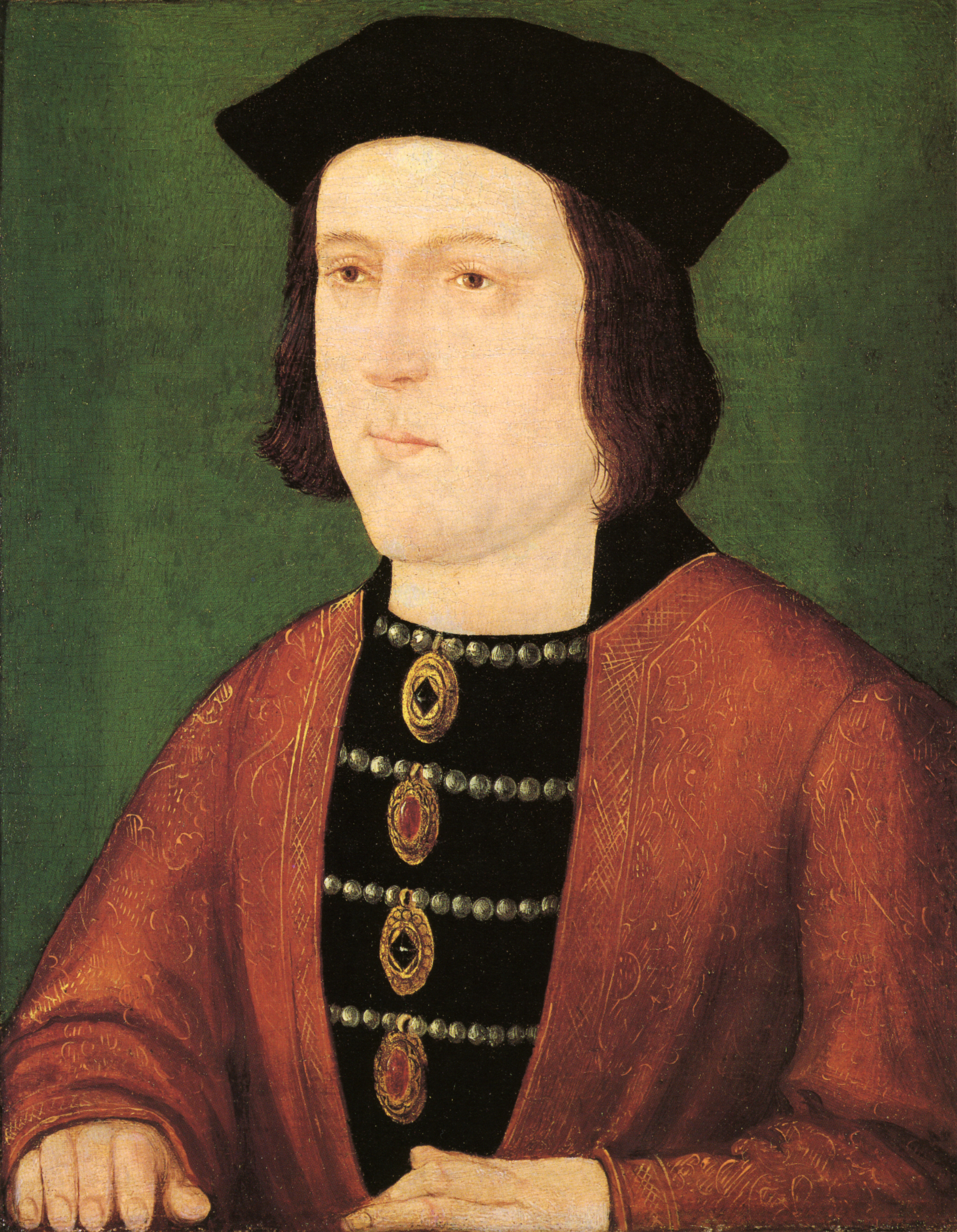
King Edward IV
It was a time of upheaval and when Edward was forced to flee into exile in Burgundy, the Queen, along with her daughters, fled into Sanctuary at Westminster Abbey.  There, safe from conflict but estranged from the exiled King, the first of the younger Elizabeth’s brothers was born. (The boy Edward would later earn his place in history by ‘disappearing’, along with his brother Richard, from the Tower of London, igniting a mystery that continues to burn today.)

Meanwhile, boosted perhaps by the good news, the exiled king gathered his forces and with the aid of his brother-in-law, Charles the Bold of Burgundy, returned to England to resume the battle for his throne, finally defeating Warwick and Margaret of Anjou and having the old King Henry VI murdered in the Tower. This initiated a time of relative peace.

For Elizabeth, now five or six years old, it was time for her education to begin. As well as the skills of running a huge household, she was also taught to read and write and given some instruction in accounting. Contemporary reports describe her as pious, obedient, and loving, and dedicated to helping the poor.

In 1475 when Edward made his peace with France, it was arranged as part of the treaty that on her twelfth birthday she would go to France to prepare for marriage to Dauphin Charles. But, before this could take place, France reneged on the deal and married his son to Margaret of Austria instead.

Elizabeth Woodville
Things ran smoothly for a while, or as smoothly as they ever do in royal circles, until, on the unexpected death of the King in 1483, Elizabeth fled once more with her mother into Sanctuary at Westminster. Richard of Gloucester took his place as Lord Protector and Elizabeth's brother, the Prince of Wales, was brought to London to await his coronation, as was tradition, in the royal apartments at the Tower. 

Shortly afterward it emerged (whether true or not is another question) that Edward IV’s marriage to Elizabeth Woodville was bigamous due to a prior contract of marriage. All children of the union between Edward IV and Elizabeth Woodville were pronounced illegitimate. As we all know, Gloucester was declared King Richard III, and at some point between 1483 and 1485, Elizabeth’s brothers disappeared from the record. (That is not proof however that they disappeared from the Earth – there are any number of possible explanations).

The Princes in the Tower
How must this have been for Elizabeth? One moment she is the Princess of the realm, Dauphine of France, and the next an illegitimate nobody living in exile from court in the squalor of sanctuary.

And what of her brothers' fate? She would have been ignorant of that, and the resulting uncertainty mixed with grief for her father can only have been hard. It is possible that her mother knew or believed the boys to be safe. Why else, after scurrying into the safety of Westminster in fear of her life, would she suddenly hand her daughters into the care of the very man suspected of injuring her sons? 

We cannot know the answer to that, but the uncertainties provide very tasty fodder for the authors of fiction.

Elizabeth and her sisters returned to court to serve Richard’s Queen, Anne Neville, where they were treated with every courtesy. Queen Anne was ailing and clearly dying. It was at this time that rumours emerged of a relationship between Richard and his niece, Elizabeth. It is now impossible to be certain of the truth behind the allegation, but at the time gossip was strong enough for Richard to publicly deny the accusation. Whether the claim was true or not, Elizabeth would have suffered some degree of shame, but she seems to have continued to be prominent at court, serving the Queen until her death in March 1485. 

In August, when invasion was looming, Elizabeth and other children from the royal nursery were sent north for safety while the King dealt with the threat from Henry Tudor.

Henry Tudor
Henry Tudor, the Lancastrian heir, was aided throughout his exile by his mother, Margaret Beaufort in England. Margaret had devoted her life to her son’s cause. She  untiringly devised methods to secure the throne she saw as rightfully her son’s. Prior to his invasion, in order to muster support from the Yorkist faction, Henry promised that, if he became king, he would marry Elizabeth of York and unite the warring houses of York and Lancaster, putting an end to the Wars of the Roses forever.

After Richard III’s defeat at Bosworth in 1485 Elizabeth was taken to Margaret Beaufort’s house at Coldharbour, but Henry was slow to marry her and slower to crown her. We should consider the logistics of arranging a royal wedding at short notice, but it not something that Henry VIII found an obstacle in the next reign. To some it is almost as if he wished to deny that Elizabeth had any influence on his claim at all. They were married in January 1486. Elizabeth gave birth to their first child, a son whom they named Arthur, in September of the same year scarcely nine months later. She had no further children until two years after her coronation which took place in November 1487.

Perkin Warbeck
Henry Tudor’s reign was fraught with rebellion. Pretenders emerged throughout, some were swiftly dealt with, but one in particular, Perkin Warbeck, claiming to be Elizabeth’s younger brother, Richard, harried the king for years. We will never know his real identity, although the King went to great lengths to provide him with a lowly one.

Elizabeth is always described as a dutiful wife and devoted mother. She took no part in ruling the country, and there are no reports of her ever having spoken out of turn or ‘disappointing’ the King. Henry appears to have been a faithful husband; his later relationship with Katherine Gordon, wife of Warbeck, was possibly no more than friendship, but Katherine did very well, both in status and financially, at Henry's court.

Although Prince Arthur was raised, as convention dictated, in his own vast household at Ludlow, Elizabeth took an active role in the upbringing of her younger children, teaching them their letters and overseeing their education.

Prince Arthur
When Arthur, the Prince of Wales, died suddenly in 1502, both Henry and Elizabeth were distraught, the King thrown into insecurity at having been left with just one male heir. Reports state that the King and Queen comforted each other and, although there are some hints of a possible estrangement between the royal couple, Elizabeth promised to give Henry another son. She fell pregnant quickly and, ten months later, gave birth to a girl, Katherine, but succumbed to puerperal fever and died on her birthday, 11th February 1503.

Elizabeth of York
Elizabeth deserves more credit. There is as much strength in resilience as in resistance, and I believe she was both strong and resolved, bound by duty to serve her country as best she could.

Her union with Henry negated the battle between York and Lancaster, and the many children she bore strengthened political unions with France, Scotland, and Spain. Ultimately, she died doing her duty to England.

When a king puts aside personal desire for the sake of his country or dies on the battlefield defending it, he becomes a hero; often, if he is on the right side, he is honoured throughout history.

Yet Elizabeth did all those things. She married dutifully; she quickly produced an heir, a spare, and several daughters to increase the king’s bargaining powers. At the tragic loss of the Prince of Wales, despite her age and the suggestion of medical problems, she took the most dangerous decision to try to give the King another son. She died a hero, in service of her King and country.

Images:
*http://upload.wikimedia.org/wikipedia/commons/9/95/Elizabeth_of_York_from_Kings_and_Queens_of_England.png
http://upload.wikimedia.org/wikipedia/commons/4/48/King_Edward_IV.jpg
http://upload.wikimedia.org/wikipedia/commons/2/2f/Elizabeth_woodville.jpg
http://upload.wikimedia.org/wikipedia/commons/c/c0/Princes.jpg
http://upload.wikimedia.org/wikipedia/commons/2/2a/Henry_Tudor_of_England_cropped.jpg
http://upload.wikimedia.org/wikipedia/commons/3/3c/Perkin_Warbeck.jpg
http://upload.wikimedia.org/wikipedia/commons/6/69/Anglo-Flemish_School%2C_Arthur%2C_Prince_of_Wales_%28Granard_portrait%29_-004.jpg
http://upload.wikimedia.org/wikipedia/commons/c/c6/Elizabeth_of_York%2C_right_facing_portrait.jpg

~~~~~~~~~~~~~

Elizabeth is the subject of my shortly to be published book A Song of Sixpence, in which I suppose that the younger of the princes was in fact rescued from the Tower in 1483 and re-emerges some years later as the man Henry names 'Perkin Warbeck'. 

The novel considers the division of loyalties a princess, born to the house of York, might have suffered in her union with the House of Lancaster. Would her support be for husband and her sons, or her long lost brother?

This is a massive issue to deal with in one blog, and I would encourage you to read more about Elizabeth in Alison Weir's book Elizabeth of York: The First Tudor Queen and Amy Licence's Elizabeth of York. 


For more information about my work please visit my webpage. 
Follow my blog.
Or find me on Facebook and Twitter.
My Amazon page is here if you are in the UK
or here if you are in the USA