Showing posts with label Barbara Gaskell Denvil. Show all posts

Sunday, August 26, 2018

Editors Weekly Round-up, August 26, 2018

from the EHFA Editors

Never miss a post on English Historical Fiction Authors. Enjoy this week's round-up.

by Barbara Gaskell Denvil
(Editor's Choice from the Archives)


by Lauren Gilbert


Tuesday, August 21, 2018

Wickedly Romantic, The Earl of Rochester

by Barbara Gaskell Denvil

When England, disillusioned with Cromwellian rule and its enforced puritanism, welcomed a monarch back to the throne, King Charles II was crowned, and thus began the period we now call The Restoration.

Partially due to a backlash regarding the strict codes of puritanism, and partly due to the character and behaviour of King Charles II himself, this period in history was soon known as a time of loose morals and sexual freedoms, particularly amongst the titled and moneyed classes. Charles was a popular king most of the time, a man of considerable charm and conviviality, but the country continued paranoid concerning Catholicism and the remaining believers in Protestant puritanism were outraged by the new trends in liberal immorality.

Charles had his faults. He also had his virtues and strengths. He tended to elevate his many mistresses to the highest titles in the land and shower them lavishly with the somewhat impoverished country’s dwindling funds. This occurred even to the detriment of those who had suffered appalling poverty and hardship whilst backing Charles as king and attempting to save his father before him. Naturally he was criticised for this, but he was also loved for his flamboyance, disregard for stuffy rules, and outrageous indulgence of his lovers. His queen was unable to give him children, but he managed to sire a number of them on his mistresses. So much for Charles!

John Wilmot
2nd Earl of Rochester
John Wilmot, the 2nd Earl of Rochester, (1647-1680) burst into this scene as one of Restoration England’s most fascinating and unusual characters. His life was hardly routine – and it started with his father. The first earl aided Charles, son of the deposed and executed King Charles I, to escape England during the civil war, both in outrageous disguise before successfully arriving in safe haven abroad. So the first earl was quite a character too, heavy drinking, firmly royalist and unstoppable when roused. Not that young John ever saw much of him. The first earl seemed to fear only one thing – the responsibility of his wife and only child. So John was left to grow up in puritan England with his strictly religious mother, a clever and sensitive young man who heard of his father’s heroic exploits – but did not meet him and knew himself unwanted.

Brought up to consider even Christmas carols, the hint of a dance, bright clothes and any dash of decoration in a church as heinous blasphemy, young John Wilmot was accepted into Oxford University by the age of 12 and later the following year was taken on the grand tour of France and Italy where he discovered many more exciting temptations with vice at the top of the list. He returned to England with a good deal more knowledge than he had left it.

With Charles II on the throne and his father dead, John was now the 2nd earl, with a head full of inspiration and dreams. He loved poetry, which was most definitely in fashion at court during that time, and began tentatively to write his own. However, living a life of ease and pleasure was considered not only the God-given right of a titled gentleman but also essential, since no nobleman could be seen to trade - let alone work!! Yet the Earldom of Rochester came with virtually no land, property or acquisitions, and the 2nd earl was as poor as a church mouse. The king later promised paid positions and allowances, but the king rarely paid up and his promises were frequently empty ones.

So how has Rochester become the inspiration for a multitude of historical romances and authors from the Brontes to Georgette Heyer? It all started when the earl attempted to abduct the woman he wanted to marry. Elizabeth Malet was an heiress, and her two guardians refused Rochester, the poverty-stricken young earl, all permission to court her. She was being approached by far more eligible suitors, although she had refused them all. She was very young, attractive, high spirited and rich. What more could any man want?

It does seem that Rochester was genuinely in love with the lady, and it became clear that abduction was the only way to get her. Sadly this attempt failed when the coach was seen and stopped. The prospective bride was saved, and the 18 year old Rochester was arrested and thrown into the Tower of London. With the plague raging through London at the time (1665), there was considerable danger. The very young earl pleaded with the king and was eventually set free. He later became a close friend of the king although the friendship was sometimes a rocky one. On his release from the Tower, Rochester promptly joined the Dutch wars and following his father’s example, acted with considerable courage, quickly becoming known as a naval hero.

The Lady Elizabeth had declined all other offers of marriage in his absence and on his return to England, they immediately escaped her guardians and eloped. This action leads me to suspect that it was Elizabeth herself, rather than Rochester, who actually organised the earlier abduction. She was in love with the handsome young man with an outrageous and infectious sense of humour who had secretly wooed her with poetry and wildly romantic demonstrations.

And so they were married. But they failed to live happily ever after, although it would seem they were gloriously happy at times and managed to produce four children, three girls and a boy. But Rochester was soon in the employ of the king and therefore obliged to stay in London at court while his wife stayed on the country estate. When separated, Rochester was anything but faithful. He followed the court’s and king’s example and frequented the brothels and theatres. Actresses at that time were little different from prostitutes, and Rochester became particularly involved with one – Elizabeth Barry – who he tutored until she became the most lauded actress of her time. I think some historians have over-exaggerated the seriousness of this infatuation, but she did bear him a lover’s child, a little girl named Elizabeth whom Rochester quickly adopted onto his own estates after breaking up with the mother and accusing her of neglecting the child. Thus at one time he had a wife named Elizabeth, a legitimate daughter Elizabeth, a mistress Elizabeth and an illegitimate daughter Elizabeth. Well at least he wasn’t in danger of saying the wrong name by mistake at impolitic moments.

But at that time the accepted standard of wild immorality had serious disadvantages, and soon Rochester (as did half the court and the king himself) contracted syphilis. A hideous disease, it was both misunderstood and incurable. The agonies that syphilis brought to its many sufferers is almost unimaginable, and Rochester began to die. It took years of collapse and remission during which time he wrote swathes of the most glorious poetry. He also converted from blatant atheism to become a devout religious believer.

Certainly much of Rochester’s poetry is hilariously vulgar and even pornographic, but a good deal more is enchantingly beautiful, thoughtful, and insightful. Although cynical, he was also a master of human understanding, and his work is rich in empathy and melancholy. He was certainly one of the greatest intellectuals of his age, and had he lived longer he would perhaps have become the most accomplished and famed of poets.

The 2nd Earl of Rochester,
older and sicker
The young earl is now more particularly famed as a drunken libertine, but Rochester was an awful lot more than that. Adored by his wife although he often treated her badly, and much loved by his children, he was tall, handsome, highly intelligent, eloquent and dashing, honest and courageous, fought duels, led a madly adventurous life of escapes, disguises, and even foreign espionage in the king’s service. His poetry was of the highest quality, although frequently dissolute and uproariously humorous. There was certainly no one quite like him. But he died tragically young and in terrible pain at the age of 33, leaving a reputation which has lasted more than 400 years.

This is an Editor's Choice originally published September 21, 2015

~~~~~~~~~~~~~

Barbara Gaskell Denvil was born in Gloucestershire, England but, has now moved to rural Australia. She has published six historical novels - Satin Cinnabar which is a crime adventure actually commencing on the Bosworth battlefield, Sumerford's Autumn which is an adventure mystery with strong romantic overtones, set in the early years of the Tudor reign, Blessop's Wife (published in Australia as The King's Shadow) which is a crime/romance set in England during 1482-3 in those turbulent years around the death of King Edward IV, The Flame Eater, a romantic crime novel also set in 1482/3, The Deception of Consequences, a Tudor mystery-adventure, and a time-slip novel Fair Weather, a highly adventurous mystery which is set earlier during the reign of King John.
Her new novel The Deception of Consequences is a Tudor mystery - adventure and will be published late February 2017. Barbara is also an author of fantasy fiction.

Barbara's novels are available through Amazon.


Sunday, February 5, 2017

Wednesday, February 1, 2017

Medieval Morals

 by Barbara Gaskell Denvil

The church was a great power throughout the medieval age, and on through the Tudor and Stuart periods. But the Puritan standards of the early to mid-17th century stand out as quite distinct from earlier eras. The medieval age was not puritan in its beliefs, and certainly not puritan in behaviour.
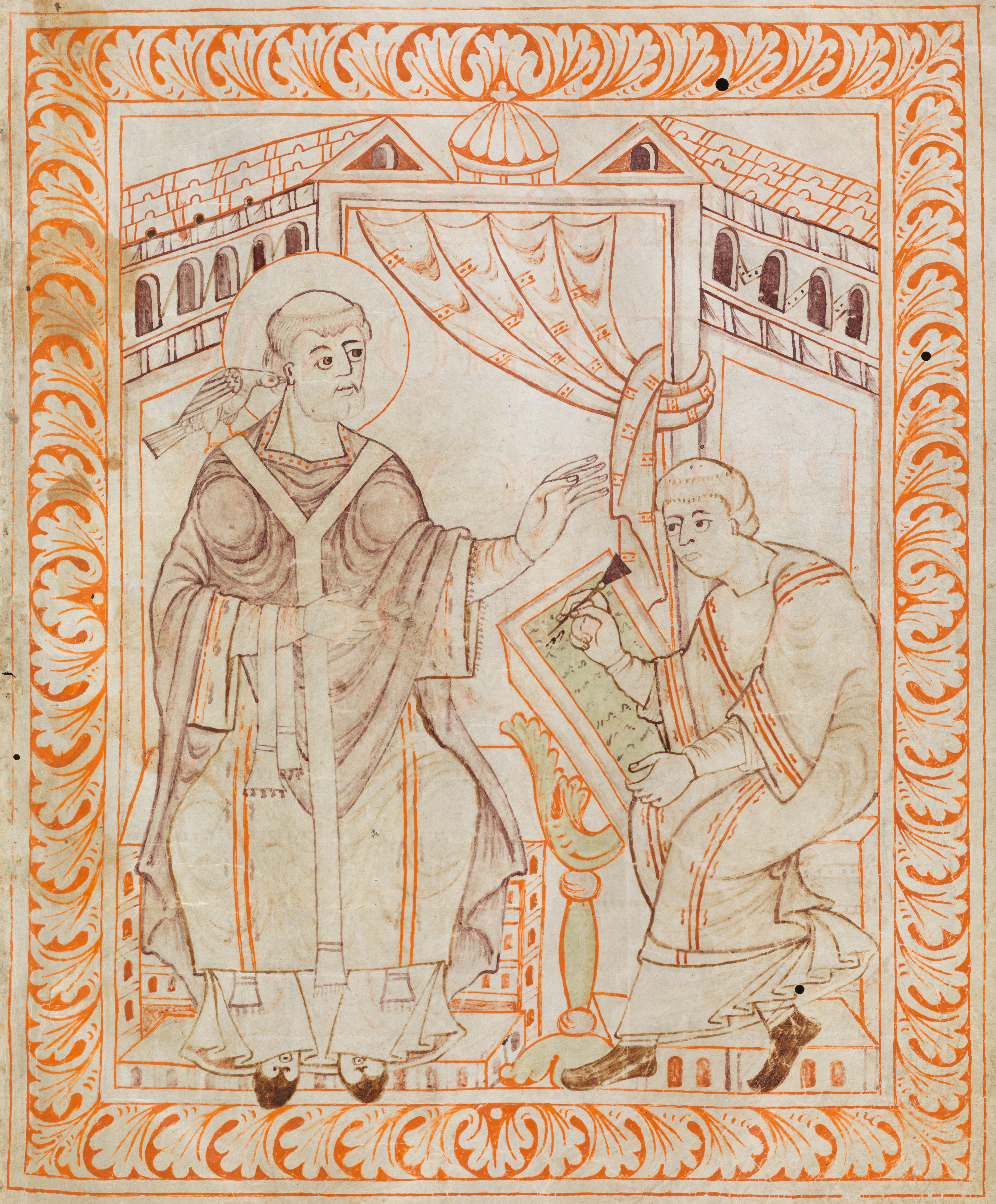
Pope Gregory dictating to a secretary
Much contemporary documentation which still survives today was written by priests. Those who liked to keep records often had little else to do during the long quiet hours in monastery life, and who wished to lay down the standards by which they believed the people should live. Now we can read these past diatribes, and we naturally come to believe that the people of the time were forced to live up to such high moral standards, and that the power of the church demanded exactly that.

Yet although it is true that many people felt obliged to attend church far more regularly than is expected now, and it is also true that daily Mass was not an unusual habit for many, I believe it would be quite wrong to accept that the entire population of any country (I write principally of England ) lived continuously in a state of obedience to the church doctrines. Folk were as independent then as they are now, and few people find it easy to obey strict rules during their day to day lives.
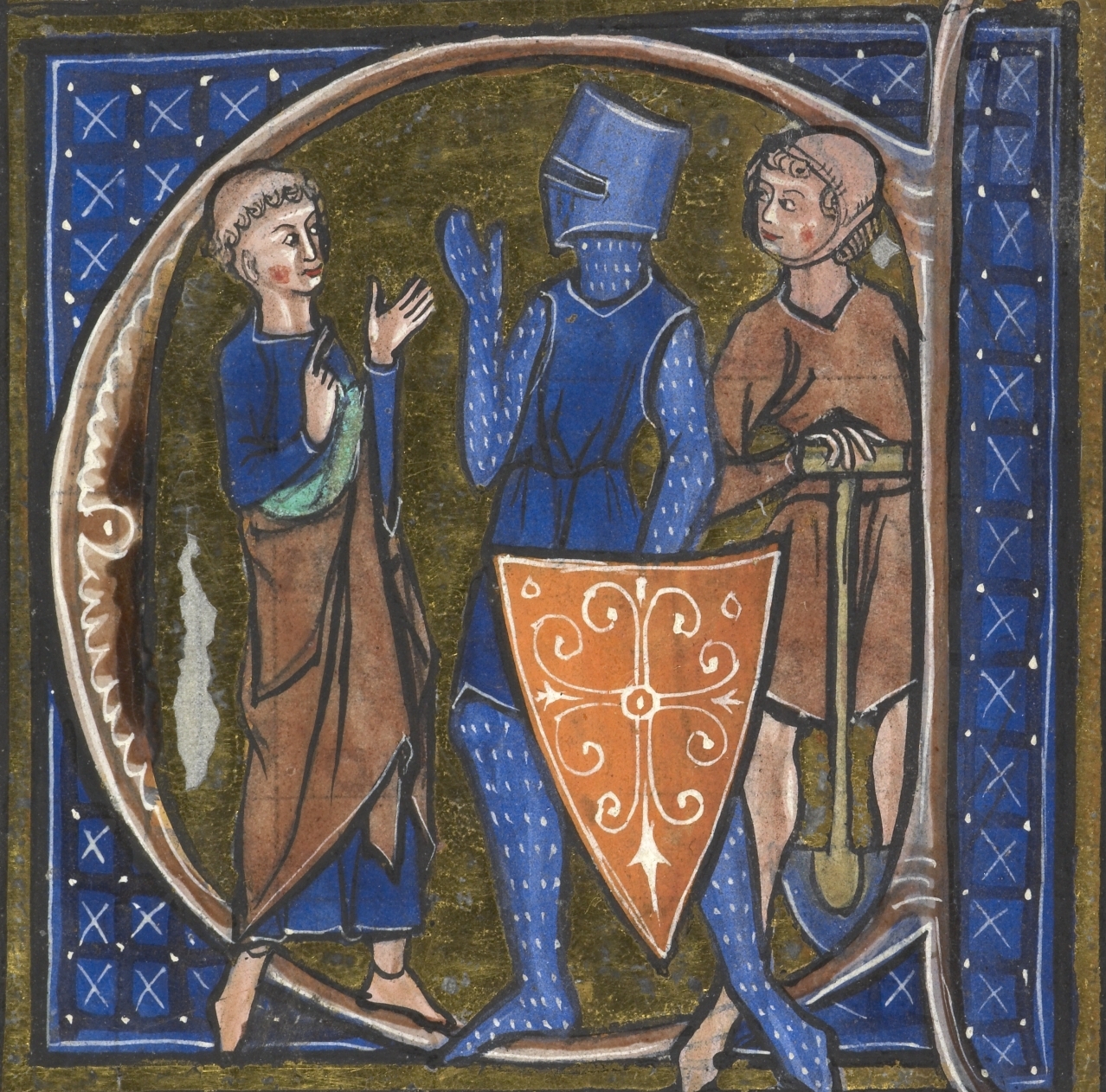
The three medieval classes: those who prayed, those who fought and those who worked
Adultery was a sin, but most kings had openly kept mistresses, had illegitimate children which they cheerfully acknowledged, and made no secret of their adultery. What is more, there is significant documentation showing that the brothels of the time were much used by priests and higher clergy. Many brothels were legally licenced, and on the southern shore of the River Thames across from London, the area of Southwark was awash with prostitutes, taverns, and criminal activity.

There exists a hilarious surviving sermon of the time, scribed by the monks, which lists a series of amazingly lurid sexual acts, describing them all as dreadful sins and utterly forbidden. But it is equally clear that quite a number of people had confessed these behaviours, knowing such acts sinful but acting out their desires anyway. Indeed, it was accepted practice of the time to sin as wished, then to confess those sins, pay the price and take the simple punishment, and thus be forgiven. Earlier generations might commit the most serious of crimes and be absolved by riding off to fight for Christianity during the Crusades, and so earn absolute salvation. But that method was long gone during the late medieval period, yet general behaviour most certainly did not improve.

 Medieval illustration of a battle during the Second Crusade
A depiction of a battle of the Second Crusade
In any case, morality of the time came with certain limitations. Toilets (privies) were not common in most houses and even the great castles might have only one or two for the use of the lords. A few public toilets were built in the city, and were much used. However, none of these were enclosed by a door, and were simply open alcoves where seats were erected over holes emptying directly into the moat, the river, or the cess pit. No flush-toilets in those days – and no privacy either. Of course, when no toilet of any kind was available, then folk used a chamber pot – and these were frequently emptied out of the window each morning – to decorate the gutters of the town.

Privacy was very hard to find in other ways too. Most small houses both in town and countryside, had just one room upstairs which served as bedchamber for the entire family. The children would curl up to sleep on the straw pallets or share a truckle bed, listening to the familiar sounds of their parents making love just a few inches away. Even the nobility had little dignity for such matters. True, they could pull the curtains around their four poster beds, but within the same room the pages and other servants would be listening. And at this time, everyone went to bed naked. The films which show medieval sleepers in glorious long nightdresses are not accurate at all. Naked in bed – and in the coffin!

The church was strictly disapproving of common marriage practices, and insisted that only church porch wedding ceremonies were valid in the eyes of God – with God’s law on Earth being the church itself. But this was largely ignored. Most folk committed themselves to a marital union by “hand-fasting” which was a private agreement, needing no clergy and not even witnesses. Even kings – notably King Edward IV – got away with this most improper behaviour. It was perfectly legal after all, however disapproving the church was of such secretive practices.
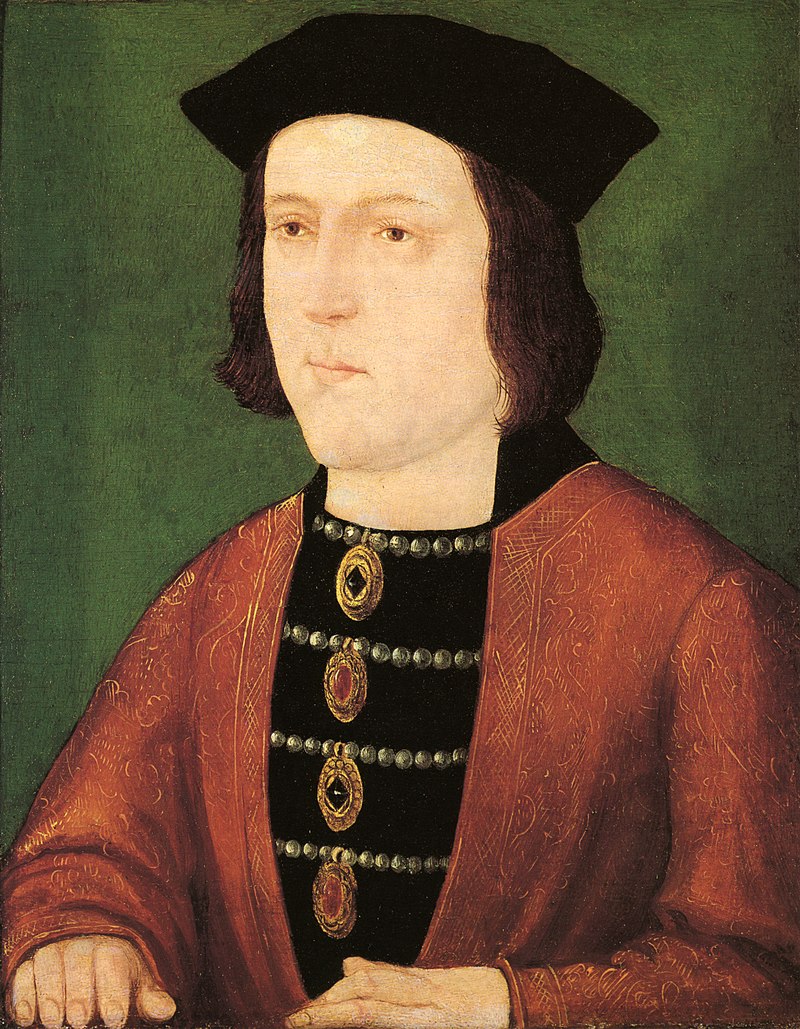
King Edward IV.jpg
King Edward IV
There also exists evidence showing many folk of the time attended church, but without the respect of pious behaviour. St. Paul’s Cathedral, for instance, also allowed wandering beggars and traders, trays of goods hung around their necks, who continued to do their business in the aisles. People evidently carried on their own conversations during the priest’s sermon, had arguments, wandered off to see what was for sale, and left when bored.
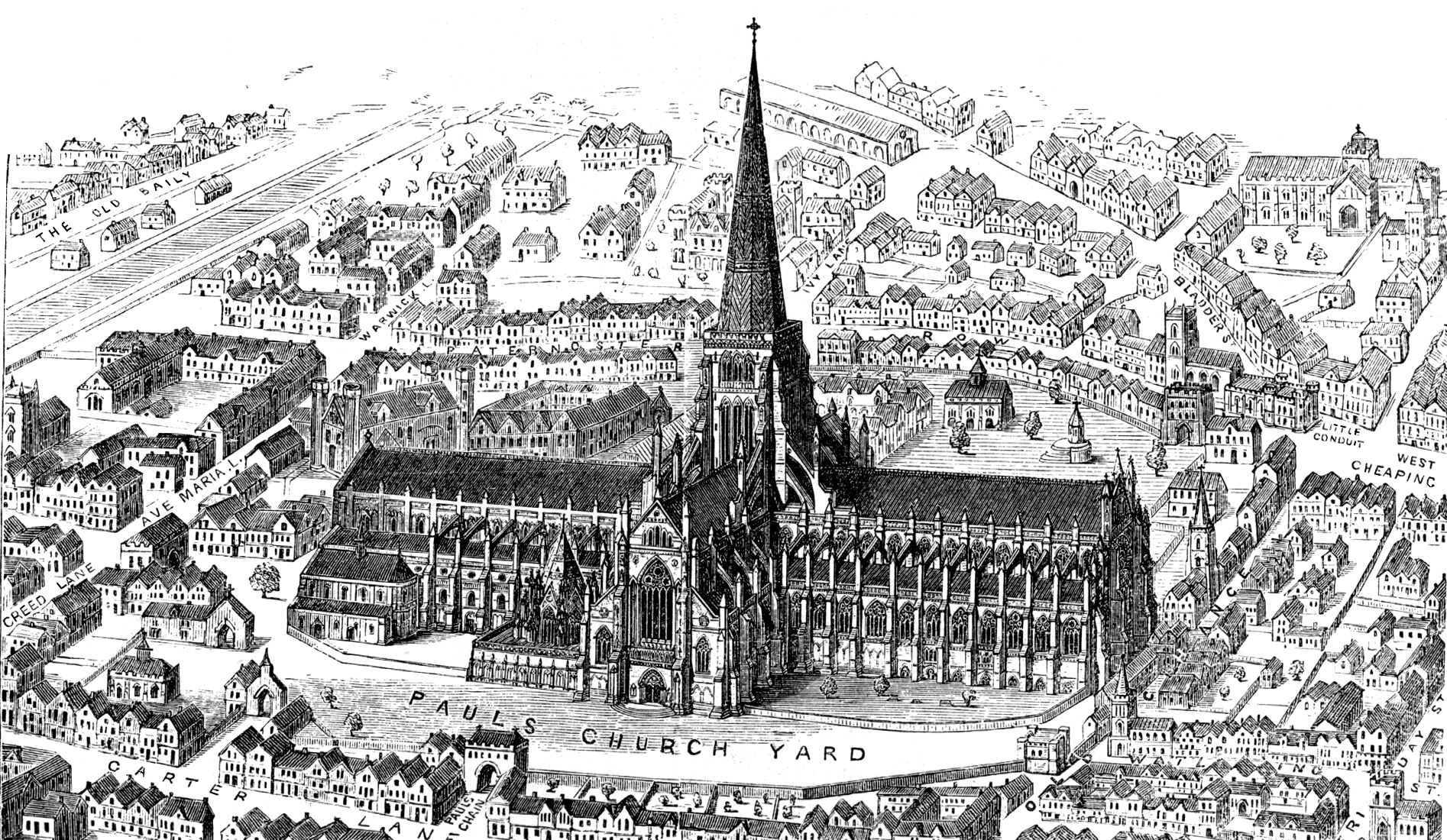
St Paul's - before 1561
However, life was not without attempts to make it comfortable and safe, with severe punishment for treason, murder and theft. There was no common police force of course, but there was the Constable and his assistants, and the Sheriff who oversaw the peace.

But it was when death threatened that folk took their religion most seriously, and with the risk of hellfire and endless wandering in Purgatory, their last confession was considered of absolute importance. The presence of a priest was essential for absolution before death, and no one would lie during that final important confession, believing that they must soon answer to God.

Purgatory -  Très Riches Heures du Duc de Berry 1412-16

~~~~~~~~~~

Barbara Gaskell Denvil was born in Gloucestershire, England but, has now moved to rural Australia.
She has published five  historical novels - Satin Cinnabar which is a crime adventure actually commencing on the Bosworth battlefield, Sumerford's Autumn which is an adventure mystery with strong romantic overtones, set in the early years of the Tudor reign, Blessop's Wife (published in Australia as The King's Shadow) which is a crime/romance set in England during 1482-3 in those turbulent years around the death of King Edward IV, The Flame Eater, a romantic crime novel also set in 1482/3, and a time-slip novel Fair Weather, a highly adventurous mystery  which is set earlier during the reign of King John.
Her new novel The Deception of Consequences is a Tudor mystery - adventure and will be published late February 2017.
Barbara is also an author of fantasy fiction.

Sunday, June 12, 2016

Editor's Weekly Round Up: June 12, 2016

By the EHFA Editors

In case you missed any of the articles posted on the blog, here is our weekly round up.

by Helen Hollick


by Sally O’Reilly (an Editors' Choice archives post)


by Annie Whitehead


by Barbara Gaskell Denvil


by Maria Grace


The English Historical Fiction Authors blog has also been running a Giveaway this week. Jeanna Ellsworth is giving away a kindle e-book copy of Hope for Mr Darcy. You can find the details below. Entries are open until Midnight (Pacific Time), Sunday June 12 2016.


Wednesday, July 8, 2015

The Medieval Mews

by Barbara Gaskell Denvil

Falconry in medieval times was exceedingly popular, particularly amongst the nobility. Probably originating in the middle or Far East (both China and Persia are credited with the first recorded accounts of falconry nearly two thousand years ago, but it may be even older) while the earliest known practise in England occurred well before the arrival of the Normans.

The masters who captured, trained and cared for the birds were much prized and honoured, as were the birds themselves. Falconry was both a favoured sport and a means of hunting food, especially fresh meat for the winter months. Although the vast popularity has diminished in recent times, and today’s attitude is more towards the preservation of these raptors in the wild, the love of the sport is still considerable. The capture of hawks and falcons for sale in medieval times was legal under particular circumstances and in some places whereas today it is definitely not, and falconers must breed their own birds in captivity. However, even back then poaching wild birds was forbidden, and there were severe punishments and considerable imprisonment handed out for anyone who damaged nests, eggs or young birds.

The mews was a quiet and ordered place where the birds perched in silence on their individual stands, tethered by their jesses, and their heads hooded (thus the word hoodwinked was adopted). A hooded bird sleeps, as do birds in the wild when they tuck their heads beneath their wings. Indeed, it is now interesting to remember that birds are the direct descendants of the theropod dinosaurs, (including T Rex) and of course eagles and other birds of prey are the most direct line. To be able to ride out with a dinosaur on your wrist, is certainly a rare and special pleasure, although naturally this particular aspect was unknown to the medieval world.

During the Middle Ages, some much loved birds were treated as honoured companions, were taken to church by their owners, and were included in their master’s prayers. King Frederick II, the Holy Roman Emperor in the early 13th century, was an ardent falconer; he wrote a definitive book on the subject and was famously painted with his falcon at his side. It is further recorded that many lords turned to falconry after tragic events in their personal lives and treated the sport as a form of solitary and thoughtful therapy.

One of the other principal differences back then was the strictly ordered status of particular birds of prey and the limitations placed on who might properly fly them. In England, as in many other western countries, only those of a certain rank were permitted to fly certain birds. The beautiful gyrfalcon was the bird of kings, and few mews would own such a bird. The peregrine falcon was for the exclusive use of the king’s sons whereas other falcons were allotted to dukes and earls. The baron flew a hawk, and knights, squires and others were permitted lesser birds. The ladies flew merlins, priests flew sparrowhawks, and ordinary mortals were able to hunt only with kestrels.

How strictly these rules were kept, we cannot know. Certainly other laws of status regarding, for instance, clothing and materials, were clearly flouted on a regular basis. However, the rules governing falconry were probably adhered to by most.

The acquisition and training of birds of prey was then, and still is, a highly expensive business, but for those who practise falconry it seems that the pleasures far outweigh the difficulties. Many birds of prey are monogamous and eventually come to consider the falconer their mate. And I have known falconers who cheerfully believe this in return. The same was certainly true in the Middle Ages. The head of the medieval mews was the Master or Lord Falconer, who was truly the master of the art. It was a life-long commitment.

Others employed in the mews were the cadgers, and these were often retired Master Falconers, still working with the birds they loved. The term ‘old codger’ originated from the Cadger of the Mews, as did the verb ‘to cadge’. Other terms (some of which we may mistakenly think modern) also come from falconry – the boozer, for instance, is adapted from the word ‘bowzer’ which is the term for a drinking bird of prey. Many of our words today come from old habits, sports and behaviours such as mill grinding (to prove your metal) and cock fighting (cock-sure and cockpit) even though the original practises are no longer popular.

Falconry, however, remains popular, especially in some countries. Once every castle had its mews, and every lord practised the art to some degree. That level of enthusiasm is unlikely to return, but a close relationship with birds of prey is one that I consider unmatched in sport.

~~~~~~~~~~~~~

BARBARA GASKELL DENVIL has been a writer all her life. Born in Gloucestershire, England, she soon moved to London and quickly built up a career publishing numerous short stories and articles while also working as a literary reviewer and critic for Books and Bookmen, a literary editor, publishers’ reader, and television script writer.

She then spent many hot and colourful years sailing the Mediterranean and living in various different countries throughout Europe.

When her partner died, she moved to rural Australia where she still lives amongst the parrots and wallabies, writing full time before contemplating further travels and a possible return to England.
Her historical crime novel Satin Cinnabar is a medieval adventure which commences on the battlefield at Bosworth 1485 and covers the fist few difficult months of the emerging Tudor dynasty. Barbara’s love of late medieval history and many years of meticulous research have enabled her to bring the period vividly to life.

Her following two historical novels Sumerford's Autumn and Blessop's Wife, both already for sale in Australia, are now being prepared for worldwide distribution and will be available over the next two months.

Amazon