Friday, July 14, 2017

Did the Queen Kill Her Husband? The First Trial of Mary, Queen of Scots

by Barbara Kyle

Mary, Queen of Scots

The news that reached London astonished Queen Elizabeth and all her court. Her cousin Mary, Queen of Scots, had been defeated on the battlefield near Glasgow and in terror had fled to England. She had arrived in a fishing boat on the coast of Cumbria with nothing but the clothes she stood up in. It was May 1568.

Mary instantly wrote to her "dear cousin" Elizabeth asking for her protection and her support. Eager for revenge, Mary wanted to rage back to Scotland at the head of an army and vanquish her enemies. Those enemies were led by her own half-brother, the Earl of Moray. 

The year before, Moray and his confederates had forced her (she said at knife-point) to abdicate and had taken over the government. He had also accused her of adultery and conspiring with her lover to murder her husband, Lord Darnley.

Welcome to the shark-infested waters of 16th-century Scottish politics.

Mary and Darnley
Darnley had indeed been murdered - the house he was staying in near Edinburgh was blown up. It had been undermined with kegs of gunpowder. Charges for masterminding the crime were laid against the Earl of Bothwell, the tough military man Mary had turned to when her marriage had soured. Many believed their relationship was adulterous. At his trial Bothwell was acquitted, thanks to Mary's support, and three months after Darnley's death she took Bothwell as her new husband.

Moray then accused Mary herself of the murder and imprisoned her. Bothwell fled to Denmark. Mary escaped, raised an army, and that's when she came up against Moray's army on the Glasgow battlefield. She lost, losing her kingdom for a second time. She was twenty-six years old.

Arriving in England as a royal refugee, Mary fully expected the support of her cousin Elizabeth. Mary was often blind to reality when she had a passionate stake in a situation, and never was she more blind than when she asked Elizabeth for help.

That's because Mary's arrival in England created a terrible quandary for Elizabeth. England was Protestant, but a large, disgruntled portion of its people were Catholics who believed that Mary, a pious Catholic, should be on the throne, since they regarded Elizabeth as illegitimate and a heretic. Both queens had Tudor blood. (Elizabeth was the granddaughter of the first Tudor monarch, Henry VII; Mary was his great-granddaughter.) 

Elizabeth, unmarried at thirty-five, had no children, and Mary had the best claim to succeed her. Elizabeth feared that Mary would be a lightning rod for these disaffected Catholics to rise up to depose her. If they tried, Mary could expect the backing of the mightiest power in Europe, Catholic Spain.  

Elizabeth's councillors were appalled at the thought of Mary moving freely about England to draw Catholics to her cause, and they advised her to imprison Mary. Elizabeth recoiled at that, for she took her cousin's royal status very seriously. However, she knew that Mary was a dangerous threat to her throne. So, crafty ruler that she was, she found a way forward. 

Her solution was Machiavellian - and pure Elizabeth. She let it be know that, much as she sympathized with her fellow queen, she could not support her if Mary was, indeed, an adulteress and a murderer. To discover the truth, she proclaimed, she would hold an inquiry into the charges against Mary.  

In soothing letters to her cousin she assured her that if the charges proved unfounded, as Mary vehemently insisted, Elizabeth would wholeheartedly back her in restoring her to her Scottish throne. Elizabeth's tactic was one that modern-day crafters of smear campaigns would appreciate. Dirt, once it is hurled, tends to stick. If it did, Elizabeth would be free to abandon Mary and uphold the alliance she wanted with Moray's Protestant government in Scotland. Mary, at this point, was notorious for the scandals that had swirled around her, so at the news that there would be an inquiry all of Europe waited, agog, for the outcome.

It was not called a trial, since English courts had no jurisdiction over foreign rulers, but for all intents and purposes, a trial is what it was. Elizabeth set the venue; the proceedings would take place at York, then move to Westminster. She invited the Earl of Moray to come and argue his case before her commissioners. He eagerly agreed, and set out from Edinburgh with a rookery of lawyers.

Westminster
Mary was furious. She said there was only one way she would appear to answer charges made by her subjects: if they were brought before her in chains. She refused to attend the inquiry. It was one of the many impetuous decisions she made that doomed her, for by all accounts she had extraordinary charm and had she attended she might very possibly have won the commissioners' sympathy. Instead, she appointed commissioners to act in her name, Lord Herries and the Bishop of Ross. These men were staunchly loyal to her, but they did not have her "star" power.

Elizabeth appointed the Duke of Norfolk, the premier peer of her realm, to preside. But Norfolk, like just about everyone involved in this intricate piece of political theater, including Elizabeth, had a hidden agenda. Mary, ever seeking to enhance her power base in England, had made Norfolk an offer he could not resist: marriage. Secretly, in letters, the two formed a marriage plan. For Norfolk, it was the brass ring. Mary had the best claim to be Elizabeth's heir, and if she came to the throne, then he, as her husband, would be king. Norfolk, therefore, was secretly predisposed to find Mary innocent.

But then something happened that changed the course of the proceedings, and of history. Moray presented evidence to the English commissioners: eight letters written by Mary to the Earl of Bothwell while she was married to Darnley. These have become known as the "casket letters," so named because, Moray said, they were found in a small silver casket in Bothwell's house after he had fled the country. Found under a bed!

How convenient, Mary raged. She had good reason to rage, for she only heard of this development from leaks. Moray had presented the letters to Elizabeth's commissioners alone, in secret. Mary was not allowed to see the evidence that was to damn her.

And damning it was. The letters were the intimate words of a woman to her lover. She called herself "the most faithful lover that ever you had or shall have" and "I end, after kissing your hands...your humble and faithful lover who hopeth shortly to be another thing unto you for my pains...Love me always, as I shall love you." "I remit myself wholly unto your will." Worse, they indicated that Mary and Bothwell had indeed been plotting to kill Darnley. "Burn this letter, for it is too dangerous." News of the letters, carefully leaked, shocked all of Europe.

Mary swore to her dying day that the letters were forged. And the fact that she was allowed no rebuttal at the inquiry was such a miscarriage of justice, her furious commissioners withdrew in protest.

Elizabeth gave Mary one last chance to come before the inquiry and defend herself. Mary refused, sure that such a desperate move would be a virtual confession of guilt. But the damage had already been done. Mary's reputation was in tatters. Even many of her Catholic followers turned away from her. Elizabeth was satisfied. She wrapped up the inquiry without even proclaiming a verdict. She didn't need to.

Did Mary plot with Bothwell to murder her husband? We may never know. The casket letters no longer exist. Moray took them back to Scotland where they eventually ended up in the possession of Mary's son, James. He became king, and the letters were never seen again.

Mary never regained her freedom. Elizabeth kept her under house arrest for the next nineteen years. Hers was a comfortable captivity, spent in a series of old castles with a small retinue to serve her, but it was captivity nonetheless. During those nineteen years she plotted ceaselessly to take Elizabeth's crown. 

Eventually, she was part of a plot in which her own writings - irrefutable this time - proved her guilt. Elizabeth had had enough. Charged with conspiring to murder Elizabeth, Mary came to trial in October 1586. This time, it was not her reputation that was in jeopardy, it was her life. 

The trial was a mere formality, its outcome never in question. Three months later Mary was executed, beheaded at Fotheringhay Castle.

The famous rivalry between these two queens has enthralled the world for over four hundred years. It enthralls us still.


An Editor's Choice, originally published 29 April 2013.
~~~~~~~~~~~~


Barbara Kyle is the author of the Tudor-era "Thornleigh" novels including,  The Queen's Gamble, The Queen's Captive, The King's Daughter, The Queen's Lady, and Blood Between Queens.

Website: www.BarbaraKyle.com
Facebook: Barbara Kyle Author Page
Twitter: BKyleAuthor

Wednesday, July 12, 2017

The Kinwarton Dovecote

By Richard Denning

On a recent trip to Evesham I stopped at this National Trust Property. The Kinwarton Dovecote is a (fairly rare in the UK) surviving circular 14th-century dovecote situated in Kinwarton, near Alcester in Warwickshire. The dovecot is the only remaining structure from a moated grange that belonged to the Abbey of Evesham, which was close by. (A grange is an outlying farm with tithe barns belonging to a monastery or feudal lord.)

The right to own and use a dovecote was a 'perk' of being a Lord of the Manor.


There is evidence of a certain Robert Green gifting a dovecote to Abbot William de Boys of Evesham. There is no specific evidence that this is that dovecot but its the right age so it could well be.


The dating of the dovecot is based on the style of the doorway which is called a ‘ogee’ arch which have a sort of double S shape. The walls which are over 3 feet thick are built of rubble with plaster rendering.


The interior is lined with over 580 nesting boxes arranged in 17 layers. Access to the boxes was made possible due to the installation of a ‘potence’; a ladder which is made to pivot around a central post.


Above you can see the timbered roof and below an idea of the thickness of the walls can be gauged from this shot of the door way from inside the dovecote.

------------------------------------------------------------

Richard Denning is an historical fiction author whose main period of interest is the Early Anglo-Saxon Era. His Northern Crown series explores the late 6th and early 7th centuries through the eyes of a young Saxon lord. Explore the darkest years of the dark ages with Cerdic.
Tuesday, July 11, 2017

Joining the Gentry

by Maria Grace

The Regency era gentleman was a fairly rare bird. During the era, the gentry class only made up about one and one half percent of the British population. When the rising merchant class had the means to join the elite group, they jumped at the chance. Still, the process was not as easy as simply buying their way in. The transition into the gentry class could take several generations to complete since inherited wealth, especially that related to land ownership, still offered higher social standing than earned wealth.

The Pathway to Gentry Standing

For those not gently born, the pathway to gentry status began with earning money, ideally a very great deal of it. However, wealth alone did not offer real status. It had to be turned into the trappings of the gentry: land, education, and connections.

Arguably, the most significant of these was the purchase of land. And by land, not just a small parcel would do. A yeoman farmer’s plot of fifty acres or so would only grant the status of a “respectable farmer”, not a gentleman. To be part of the gentry, a man needed at least three hundred acres, preferably already fashioned into an estate.

Photo credit: amandabhslater via Visualhunt / CC BY-SA

What is an Estate?

Through the Georgian era, estates were largely self-sustaining economic entities. The most obvious feature of an estate was the grand house where the master of the estate and his family lived and conducted their business. Houses might stand for generations, but changes in fashion, architecture, and gardening meant an estate owner might spend a great deal on bringing the house and grounds up to modern, fashionable standards.

While the house might be the most obvious feature, the more significant ones were those that provided income and sustenance to the owner. A home farm provided food and necessities for the family in residence, as well as the servants who lived with them. Tenant farms and rental properties provided the majority of a gentleman’s income. Natural land resources like trees (lumber), coal, fishing, etc. could supplement incomes. These passive forms of income separated the gentleman from the working class whose hands were soiled by paid work.

Acquiring an Estate

Large land owners were a very exclusive group. By the end of the eighteenth century, half the farm land of Britain belonged to only about five thousand families. (Lane, 2005)

How much did it take to acquire an estate?

In 1801, a one hundred acre estate (not enough to make one part of the gentry, though) in Sussex sold for £3,500. (Donnelly, 2012). In general, an estate would be priced at about thirty times the income it produced. So, an estate producing £1000 a year would sell for approximately £30,000.

To put these numbers in perspective, during the era, the edge of poverty was approximately £50 a year. A shopkeeper might make £150 a year. A comfortable middle class income was £250 while just a quarter million families made a very comfortable £700 pounds or more per year. In 1801, only the top one percent of the population made more than £800 a year. (Morris, 2014)So, it was just a very small fragment of the population who could aspire to land ownership.

Land Ownership was not Enough

Simply owning an estate was not sufficient to grant entry into the upper classes. A family was not part of the gentry until members of the gentry accepted them as part of their social equals. Socializing together was important, but intermarriage was the surest sign of acceptance. Before that could happen, all financial ties with the business that brought in the wealth—commerce, colonial endeavors, manufacturing, military, finance—had to be severed and the family seen to live in a “good sort of way.”

A man aspiring to the gentry class would ensure his sons, especially the eldest, received a gentleman’s education. At Cambridge or Oxford he would be taught the classics, at the not insubstantial sum of £300 a year. Perhaps more significant, the exposure to his social betters would allow him to develop the necessary social graces to mingle with the upper crust.

Photo via Visualhunt.com

While his expensive education would not actually provide useful instruction in how to manage an estate, it would afford him the opportunity to rub shoulders with others sons of the gentry, establishing connections that could serve him well throughout his life.

Not surprisingly, a daughter’s education was secondary, but if there was money available, she might be sent to a “finishing school,”  or girl’s seminary, to complete the education her mother would have begun at home. Training in French and Italian, dance, music, and deportment would be aimed at making her a “social asset” for her future husband—a man whom she might well meet through a brother’s connections. For a daughter, good manners and an excellent dowry were even more important than a pretty face and figure for social mobility.

Once the next generation was sufficiently acceptable to be marriageable to the gentry class, and an estate (and hopefully fortune to go with it) were inherited, the transition to gentry class could be considered complete.

The Importance of Owning Land

To the modern perspective, the emphasis on land over actual wealth seems perplexing. What made land so significant?

In the centuries leading up to the Regency era, people existed in a largely subsistence economy. Crops were difficult to grow and, for most, producing enough for personal use was an achievement. To grow more than one needed was truly a show of success and required a significant amount of land.

Growing crops for market helped shift the economy from a subsistence to a market economy, and helped solidify the mystique of land ownership. Land ownership became a prerequisite for social power. Only land owners could vote. Masters of large estates often served as local magistrates, presiding over civil and certain criminal complaints. They also frequently served as church wardens managing tithes to the local rector and maintaining the parish church.

Thus, land afforded not only economic power, but social standing and influence as well, making it the natural vehicle of the upwardly mobile nouveaux riche to make their impact upon society.

References

Colburn, Henry. A new system of practical domestic economy: founded on modern discoveries and the private communications of persons of experience. London: Printed for Henry Colburn and Co., 1823.

Davidoff, Leonore, and Catherine Hall. Family Fortunes: Men and Women of the English Middle Class, 1780-1850. Chicago: University of Chicago Press, 1987.

Donnelly, Shannon. "Regency Coin — What Did it Cost?" Shannon Donnelly's Fresh Ink. January 14, 2012. Accessed March 2, 2017. https://shannondonnelly.com/2012/01/14/regency-coin-what-did-it-cost/.

Jones, Chris. "Land Ownership." In Jane Austen in Context , 269-77. Cambridge: University Press, 2005.

Lane, Maggie. Jane Austen's World: The Life and times of England's Most Popular Novelist. 2nd ed. London: Carlton Books, 2005.

Morris, Diane. "Mr. Darcy Was a Second-Class Citizen." Moorgate Books. August 10, 2014. Accessed March 20, 2017. http://www.moorgatebooks.com/08/mr-darcy-was-a-second-class-citizen/.

Savage, William. "The Path to Landed Gentry Status." Pen and Pension. October 05, 2016. Accessed March 10, 2017. https://penandpension.com/2016/10/05/the-path-to-landed-gentry-status/.

Sullivan, Margaret C., and Kathryn Rathke. The Jane Austen Handbook: Proper Life Skills from Regency England. Philadelphia, PA: Quirk Books, 2007.

Wilson, Richard, and Alan Mackley. "Founding a landed dynasty, building a country house: the Rolfes of Heacham in the eighteenth century." In Counties and Communities: Essays on East Anglian History: Presented to Hassell Smith. University of East Anglia: Norwich: Centre of East Anglian Studies, 1996.

~~~~~~~~~~

Though Maria Grace has been writing fiction since she was ten years old, those early efforts happily reside in a file drawer and are unlikely to see the light of day again, for which many are grateful.

After penning five file-drawer novels in high school, she took a break from writing to pursue college and earn her doctorate. After 16 years of university teaching, she returned to her first love, fiction writing.

Click here to find her books on Amazon. For more on her writing and other Random Bits of Fascination, visit her website. You can also like her on Facebook, or follow on Twitter.


Sunday, July 9, 2017

Editors Weekly Round-up, July 9, 2017

by the EHFA Editors

Enjoy these great articles from the blog, and don't forget to sign up for the Giveaway before tonight's deadline.

by Cryssa Bazos


by Lauren Gilbert


by Annie Whitehead


And don't forget to sign up for the Giveaway before midnight (Pacific) tonight.


Friday, July 7, 2017

Escomb Church - Anglo-Saxon Rarity

by Annie Whitehead

I love Anglo-Saxon history, but researching it can sometimes be frustrating, not just because of the paucity of surviving documents, but because of the lack of 'locations'. If this blog post were about Anne Boleyn, it would be illustrated with photographs of the Tower of London, and paintings of the lady herself, complete with her famous necklace.

We Anglo-Saxonists aren't quite so fortunate in that regard. Many of the buildings associated with the age no longer exist, buried under later, Norman, edifices. The wooden house at Corfe where Queen Ælfthryth was staying when she murdered, or didn't murder, her stepson King Edward, has long-since disappeared, and even the stone castle built there is now a ruin. There is no surviving artwork which gives us even a rough approximation of how people looked.

Imagine, then, how thrilling it is to be able to visit Escomb Church, built of stone and probably dating to the late seventh century.


Escomb Church is about a mile and a half from Bishop Auckland, home to the Prince Bishops of Durham, and is quite a contrast to the towering grandeur of Durham Cathedral.


I always imagined that Escomb Church, being so ancient, was situated in a small, quaint village, but in fact it sits on a circle of land, surrounded on all sides by modern housing. Yet it exudes calm, an ancient building standing proud, refusing to give up all its secrets, and leaving historians puzzled.


The village of Escomb is mentioned in a grant of land by Bishop Ealdhun, who was bishop of Durham in the tenth century.

Symeon of Durham's Life of St Cuthbert, shows the bishop leasing to "three earls: Ethred, Northman and Uchtred the following lands: Gainford, Whorlton, Sledwich, Barforth, Startforth, Lartington, Marwood Green, Stainton, Streatlam, Cleatlam, Langton, Morton Tinmouth, Piercebridge, Bishop Auckland and West Auckland, Copeland, Weardseatle, Binchester, St Andrew Aucklad (?), Thickley, Escombe, Witton-le-Wear, Hunwick, Newton Cap, Helme Park." (Symeon of Durham. HistoriadeSanctoCuthberto 31.)

It is clear from the architectural evidence, though, that the church itself was built much earlier, but the first puzzle is who built it, and why? We may never know. The second of the puzzles is that the stones in the upper courses are smaller than those lower down. The height of the building and the ground plan hint at Irish Celtic influence, and the very fact that it was, unusually for Saxon buildings, constructed in stone, might point towards a connection with Gallic chapels.

The chancel arch is believed to have been reassembled from a Roman archway, although the scroll paintwork on the underside is probably much later, perhaps even fifteenth century.


The Saxon cross behind the altar is believed to date from the ninth century, although according to the guide I spoke to, it's possible that it is an earlier 'preaching cross' and actually predates the church.


Of the church windows, the smaller ones which have round headed lintels are thought to have been carved 'in situ', and their design conforms to the earliest period of Saxon building.


Behind the pulpit, carved into the wall, there is a cross, described by my guide as an 'incised consecration cross.' Its shape points once more to an Irish/Celtic influence.

Carvings to the side of a blocked up doorway in the sanctuary are believed to depict Adam and Eve standing beneath the tree of life.


In the porch, which is a later, medieval, addition to the building, there are various Saxon artefacts - the remains of Saxon crosses, and pieces of glass and pottery excavated from the churchyard.


In that churchyard, an unusual gravestone has been dated somewhere between 1100 and 1300, although it was not originally outside, but laid in the floor of the nave.


Above the porch, there is a sundial, which being on the porch, is later medieval, but on the original church wall, there is an older, Anglo-Saxon sun dial:


And so to the final puzzle: why did this church survive? It is a rare thing, indeed - a surviving stone Saxon church, so why has it not been knocked down, or 'improved', other than the addition of the porch?

It is thought that the Prince Bishops of Durham were not interested in building a bigger/better church in such a tiny village. In other words, it has probably - ironically - survived because of a lack of interest. The bishops of Durham, whose official residence is still at Auckland Castle in Bishop Auckland, (pictured below) became virtually autonomous and wielded extraordinary power. Little Escomb Church was in all likelihood a beneficiary, in a strange way, of their almost regal status.


For those interested in the later period of Saxon history, it should be pointed out that Bishop Ealdhun was witness to a charter of King Æthelred in 1009 granting land to Morcar, thegn of the Seven Boroughs. He was also the father of Ecgfritha, who married Uchtred, Earl of Bamburgh. Perhaps a more familiar spelling is Uhtred. He was also known as Uhtred the Bold, he was treacherously killed, and it is he from whom a certain Mr Cornwell claims descent...

[all photographs by and copyright of the author]

~~~~~~~~~~

Annie Whitehead is an author and historian, and a member of the Royal Historical Society. Her first two novels are set in tenth century Mercia, chronicling the lives of Æthelflaed, Lady of the Mercians, who ruled a country in all but name, and Earl Alvar who served King Edgar and his son Æthelred the Unready who were both embroiled in murderous scandals. Her third novel, also set in Mercia, is scheduled for release later this year, and she is currently working on a history of Mercia for Amberley Publishing, to be released in 2018.
Amazon Page
Website
Blog

Thursday, July 6, 2017

Barnstaple and John Delbridge

by Lauren Gilbert

A view of Barnstaple and its setting at low tide
Some years ago, I surprised my husband with a fishing trip in northwest Devon. We got off the train in Umberleigh, checked into a delightful hotel (with an equally delightful pub), and discovered...there was no fishing due to an unprecedented heat wave. Nothing daunted, we proceeded to explore the area. At dusk one evening, we witnessed the water rushing into a river at high tide, followed by a family of wild swans. The next day, we hopped back on the train and went on to Barnstaple. It was a fascinating town which we enjoyed exploring. My current work in process includes a gentleman who inherits a small estate in the vicinity of Barnstaple, so I decided to read up on its history.

Afred the Great
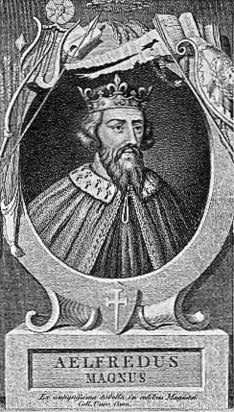
Barnstaple is what may be the oldest borough in England. The town was known in the 900’s, a typical Saxon stronghold. Known to the Romans as “Tunge abertawe” and to the Saxons as “Beardenstaple,” it was referred to as “Barum”, the Latin contraction, in documents of the era. It was created a burg (borough) by King Alfred. A mint was established, possibly by King Athelstan who also supposedly granted a charter with rights to hold a market and fair (If there were a charter, it has been lost-a charter dated 930 was proven a forgery and no other has ever been found). The earliest known coin was minted during King Eadwig’s reign (between 955-59). The mint was not a particularly active and ceased production in the 13th century.

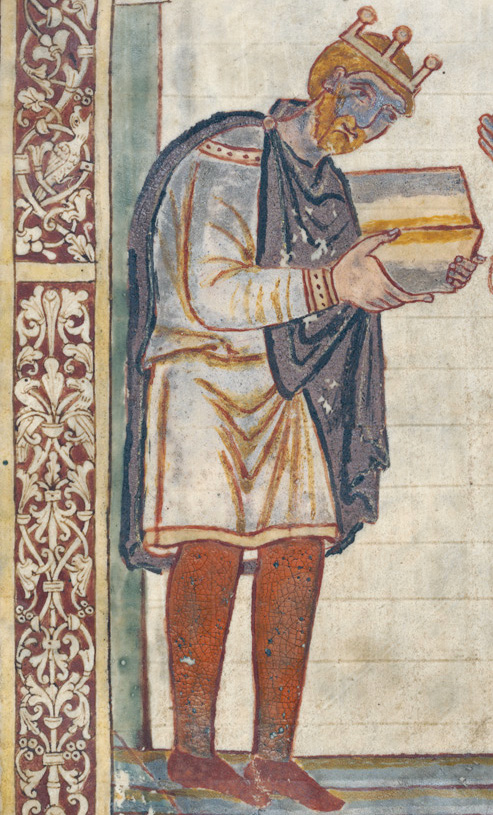
King Athelstan I
It fell to the Normans about 1068, and the fall is discussed in the Domesday Book. It is believed that an original castle was built by King Athelstan, and strengthened after the Conquest. This may be the site of the known castle, built in wood in the 11th century by Geoffrey de Mowbray, Bishop of Coutances. Stone walls were erected subsequently, probably by Henry de Tracey. By 1326, castle was a ruin; only the motte remains as a mound. It was the only port in the southwest of England, and by 1290, an important trade center located on River Taw; trading with Europe, Ireland and New World. Imports included tobacco, wine, spices. Barnstaple was licensed to export wool from the 14th century and was a member of the early merchant Guild of St Nicholas. Exports included woolen material and pottery.

Other industries included lace making, fishing, and ship building. Barnstaple was the 3rd richest town in Devon in the 14th century (behind Exeter and Plymouth). Its importance as a port grew during the 14th to 16th centuries, and the city was represented in the Naval Council. There was a petition to Mary I to build a quay and merchants' exchange on the river in 1555. Barnstaple was a “privileged port” as a member of the Spanish Company (authorized to trade in Spain and Portugal) in 1577. There were 12 merchants in Barnstaple listed in the charter.

Trade with America was also very important in the 16th and 17th centuries. Barnstaple had a rather exciting military past as well. In 1588, 3-5 outfitted ships, manned by locals, sailed to join Sir Francis Drake to help defend against Spanish Armada. In 1642, when the English Civil War erupted, Barnstaple was originally pro-Parliamentarian, but changed sides four times. Seriously damaged after the war, the city eventually resumed its normal business and trading activities.

Queen Anne's Walk
Queen Anne’s Walk was built in 1708 (a rebuilding of the original Merchants' Walk built in Tudor times) and completed in 1713, as a merchant exchange on the river with its own quay for loading and unloading ships. A statue of Queen Anne was placed on the colonnade. In the 18th Century, the wool trade ended and Barnstaple began to import Irish wool which was sent on for manufacture. The harbour silted up (a process which began as early as the 17th century) and trade gradually moved to Bideford although there was local shipping (agricultural) until the 20th century. However, the town still maintained its importance as a market town. It has been represented in Parliament continuously since 1295 (it had 2 representatives until 1885 when representation was reduced to one member). It remains an important business and shopping site and the main town in North Devon.

Delbridge Arms

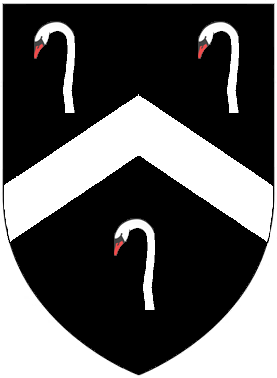
A name that recurred in the history of the town during the 16th century was John Delbridge. Who was John Delbridge? He was born in Barnstaple. His exact date of birth is unknown; however, he was baptized July 9, 1564. John was the 2nd son of Richard Delbridge, a merchant of Barnstaple, and his wife Alice. 

John was a Puritan, and was educated at Emmanuel College Cambridge (he enrolled July 3, 1604 as a paying student or commoner, not as a scholar), and later entered the Middle Temple in London May 10, 1606. He was married to Agnes Downe of Barnstable on January 10th, 1585. Agnes was the niece of Bishop Jewel, Bishop of Salisbury. They had five sons and three daughters, but only one son and daughter survived John. He became a successful cloth merchant, importing and exporting goods by 1591. He was involved in the Newfoundland fishing trade and was a member of the East India Company (1611-21), the French Company (1611), the Virginia. Company (from 1612 to at least 1623), the North West Passage Company (1612), and the Somers Island Company (from 1615 to at least 1622). He was also a member of the Council for Virginia (1621). Clearly, he was a man of great influence with fingers in many pies.

John was involved in the American colonies, including providing passage for colonists to Virginia and Bermuda. His ship The Swan took 70 new settlers to Virginia in 1620 and all survived the voyage (he was apparently known for well supplied ships, and few deaths). He was an active trader particularly in imported tobacco. Clearly successful, John acquired property in Virginia as well as in England. He owned a house in Barnstaple and by 1632 had an estate at West Buckland (a manor which included an advowson (right to appoint a clergyman to serve that area)) about eight miles from Barnstaple. He also had an estate at Bishop’s Tawton. John became active in politics. His political career includes: working under Robert Cecil (Elizabeth I’s chief minister) in 1602-1606 (dates approximate); serving as Mayor of Barnstaple three times (1600-1, 1615-16, 1633-4). He was elected Member of Parliament for Barnstaple six times (elections in 1614, 1621, 1624, 1625, 1626 and 1628), in which capacity he served on various committees (with his known expertise in trade matters) and was very vocal on a wide range of bills at least occasionally in open defiance of the king’s wishes. (He served with Pentecost Dodderidge, a fellow merchant, at least three times, and Alexander St. John, Knight as well).

Agnes died in May of 1639, and was buried May 15th of 1639. John made his will on May 27th and died June 24, 1639 at his home at Bishop's Tawton, leaving the bulk of his estate to his surviving son Richard, with bequests to other relatives and to the poor. 

Unrest was brewing, leading to the Civil War which erupted in 1642. The events involving the war and its aftermath left John Delbridge in obscurity. I couldn't help but wonder if his Puritan faith and service in Parliament steered the loyalty of his city to the Parliamentary side of the conflict, at least at the start.

This is not by any means a comprehensive history of Barnstaple or of John Delbridge; it does, however, serve to tickle one's fancy to look further into that fascinating town and its people.

Sources:

Holton, Denise and Hammett, Elizabeth. BARNSTAPLE THROUGH TIME. Stroud: Amberley Publishing, 2013. (Kindle Version); SECRET BARNSTAPLE. Stroud: Amberley Publishing, 2015. (Kindle Version)

The History of Parliament on-line. “Delbridge, John (1564-1639) of Barnstaple and Bishop’s Tawton, Devon.” HERE

GoogleBooks. Willis, Browne. NOTITIA PARLIAMENTARIA: Or A History of the Counties, Cities and Boroughs in England and Wales. 2nd Edition with Annotations. London: Robert Gosling, 1730. HERE ; Tudor and Stuart Devon: The Common Estate and Government : Essays Presented to Joyce Youngs. Edited by Todd Gray, Margery M. Rowe, and Audrey M. Erskine. Exeter: University of Exeter Press, 1992. HERE

Barnstaple Town Centre on-line. “History.” HERE

A Vision of Britain. “Descriptive Gazetteer Entry for Barnstaple” by John Marious Wilson in IMPERIAL GAZETTEER OF ENGLAND AND WALES (1870-72). HERE

Cambridge Alumni Database. “Delbridge, John.” HERE

View of Barnstaple taken by Lauren Gilbert (c) Lauren Gilbert


Images from Wikimedia Commons

Alfred the Great HERE

Athelstan HERE

Queen Anne's Walk HERE

Delbridge Arms HERE

~~~~~~~~~~
Lauren Gilbert, author of HEYERWOOD: A Novel, is working on her second novel set in Regency England, A RATIONAL ATTACHMENT. She lives in Florida with her husband. Please visit her website HERE.


Tuesday, July 4, 2017

A Royalist Highwayman

by Cryssa Bazos

Late one Sunday night on November 9, 1651, a company of dragoons descended upon a barber’s house on Fleet Street to arrest one of his lodgers. The soldiers burst into the man’s quarters, pistols drawn, and hauled him to the Speaker of the House of Commons, William Lenthall. The next day, they brought their prisoner to Whitehall to be questioned.

The state had finally captured Captain James Hind, notorious highwayman, but their interest in him went beyond common thievery. He had become a political figure.

James Hind by Unknown artist.
NPG D29227 (CC BY-NC-ND 3.0)
James Hind was born in the Oxfordshire town of Chipping Norton in July of 1616, the tenth of thirteen children. His father was a respectable saddler and served as a churchwarden. Hind married Margaret Rowland on February 24, 1638, and their affectionate marriage produced four children: Alice, James, Samuel and Charles. But Hind’s domesticity masked a nearly twenty year run as a highwayman.

The seeds of Hind’s nefarious career had started in the local grammar school. His father had recognized his son’s sharp mind and diverted a portion of his income to educate the boy. Unfortunately, Hind preferred the study of pranks to letters, and he loved tales of high adventure, particularly crime stories. By the age of fifteen, Hind had outstayed his welcome in school. His father apprenticed the lad to a butcher, but subservience did not suit Hind. Fed up by the beatings he received for his impertinence, he ran away to London.

Imagine the world of corruption that suddenly opened up for this clever Chipping Norton lad: drinking, carousing, and visiting houses of ill repute (he hadn’t married to Margaret yet). His life took on a new direction, or rather an inevitable one, when he met Thomas Allen in a holding cell following a drunken spree. Allen, also known as Bishop Allen, led a gang of highwayman working the London suburbs. Allen took the young Hind under his wing and introduced him to life on the highway.

During his coming-out robbery at Shooter’s Hill, Hind held up a gentleman and stole £10. To the dismay of his new crew, he returned part of the booty, a sum of forty shillings, to see the gentleman safely back to London.

Hind’s wit and generosity became his calling card and he developed a reputation as a gentleman robber, often jesting with his “clients” and giving good sport. Not surprising many of his exploits had a Robin Hood feel to them. Once, when travelling through Warwickshire, Hind came upon two bailiffs and a usurer who were trying to collect from an innkeeper a debt of £20. Hind intervened to save the landlord and settled the bond on his behalf. After the bailiffs received their due, Hind ambushed the usurer and stole back not only his £20 but also another twenty for good measure. When he returned to the inn, he gave the innkeeper £5 and said that he “had good luck by lending to honest men.”

James Hind by Unknown artist.
NPG D29226 (CC BY-NC-ND 3.0)
Then in 1642, the English Civil War broke out, and Hind turned his talents for the benefit of the King. Together with other members of the Bishop Allen gang, he joined the Royalist army. Hind’s leadership and courage drew the attention of his superiors, and he became particularly attached to Sir William Compton, third son of the Earl of Northampton of Warwickshire. In 1647, Hind received his captain’s commission from Compton at Colchester. In later years, Compton would found the Sealed Knot, a secret society that conspired to place Charles Stuart (later Charles II) on the throne.

Following the end of the second civil war (1647-48), Hind began to operate alone, for sometime in 1648, Allen and most of his crew were captured after a foiled attempt to assassinate Oliver Cromwell. Hind had managed to escape and returned to highway robbery with a new purpose: harassing Roundheads, and his preferred quarry were regicides when he could get them.

According to legend, Hind held up the man who presided over the King’s trial, a regicide by the name of John Bradshaw. Hind caught the judge on the road in Dorsetshire. When Bradshaw tried to intimidate the highwayman with his reputation, Hind retorted, “I have now as much power over you as you lately had over the King, and I should do God and my country good service if I made the same use of it.”

Hind had become more than a highwayman; he was now a symbol of resistance for the Royalists and a burr in the saddle of Parliament. But he didn’t stop there. At one point, he must have realized that he could contribute more to the Crown than stealing from Roundheads.

On May 2, 1649, Hind sailed for The Hague and stayed there for three days before continuing to Ireland laden with the “King’s goods”, supplies destined for the Royalists' resistance against Cromwell. Not surprising, the Earl of Northampton, William Compton’s eldest brother, spent his exile in The Hague.

Hind remained in Ireland for nine months and served as corporal in the Marquess of Ormonde’s Life Guard. He eventually arrived in Scotland and presented himself to Charles Stuart. In Hind’s declaration, he “sent a letter to His Majesty acquainting His Highness of my arrival, and represented my service, &c, which was favourably accepted of, for no sooner had the King notice of my coming but immediately I had admittance to his chamber and kissed his hand.”

While Charles may have been desperate for men, this special treatment stands out as unusual. Were the King’s actions a result of his relief over receiving the services of a courageous, resourceful soldier or had Hind arrived with a recommendation? Though naturally audacious, that he dared send a letter to the King suggests he expected to be received.

Hind joined the King’s army and stayed with him through the invasion of England in August 1652, which ended with defeat at the Battle of Worcester on September 3, 1652. At the battle, Hind “kept the field until the King was fled” then headed for the anonymity of London, lying under hedges and in woods. When he arrived in London, rumours were already circulating that the infamous highwayman, Captain Hind, had helped the King escape Worcester. He managed to elude capture for five weeks, but eventually the dragoons found and arrested him.

Over the next several months, Hind went through three sensational trials. The bizarre twists would have today earned him round the clock media coverage.

His first trial occurred on Dec 12, 1651 at the Old Bailey. Hind admitted to a few ‘pranks’ and even confessed to fighting with the King at Worcester. Though they could have charged him with High Treason, no Bill of Indictment or witnesses were brought against him. But he remained in close custody at Newgate.

"Old Newgate". Licensed under 
Public domain via Wikimedia Commons

Hind’s second trial was held in Reading on March 1, 1652. The state charged him with the murder of a local man who had once tried to stop Hind in Maidenhead Thicket. In fact, this was the only reported murder attributed to him throughout his long career as a highwayman. Hind stated that he fired on the man in self-defence.

At this point, Hind claimed benefit of clergy, a legal loophole that dated back to 1170 when the clergy were considered outside the jurisdiction of secular courts. To succeed, the defendant would need to read the scripture given to him (because in the 12th century, few except the clergy could read). Unfortunately, Hind failed the test, and they sentenced him to death. He must have regretted not applying himself better in school.

But reprieve came from the most unlikely source. The next day, before the sentence could be carried out, the Act of Oblivion came into force. The Act allowed for many crimes committed prior to September 3, 1651 (the Battle of Worcester) to be pardoned as an act of war, all except High Treason.

Now Parliament became desperate. Chapbooks and broadsheets tallying Hind’s exploits flooded London. One local publisher even released The Declaration of James Hind, an official account of his service to the King. All this publicity made Parliament look bad.

The gloves came off. The state turned to the Act of Oblivion for their cue and indicted Hind with High Treason for his participation at Worcester. For Parliament, the third trial was the charm. The court found Hind guilty and sentenced him to be hanged, drawn and quartered.

On September 24, 1652, Captain James Hind, royalist and notorious highwayman, climbed the scaffold and addressed the gathered crowd. With his typical courage, he pledged his continued loyalty to the King. His last words were, “I value it not threepence to lose my life in so good a cause. God’s will be done. If it were to do again, I protest I would do the like.”

So ended the life of Captain James Hind, Royalist Highwayman.

This is an Editor's Choice and was originally published on November 3, 2014. 

References:
·         Declaration of Captain James Hind, printed for G. Horton 1651
·         The Adventures of Captain James Hind of Chipping Norton: The Oxfordshire Highwayman by O.M. Meades

·         No Jest like a true Jest

~~~~~~~~~~~~~
Cryssa Bazos is an award winning historical fiction writer and 17th century enthusiast with a particular interest in the English Civil War. Her debut novel, Traitor's Knot, is published by Endeavour Press and placed 3rd in 2016 Romance for the Ages (Ancient/Medieval/Renaissance). 

For more stories, visit her blog cryssabazos.com or connect with her through Facebook, Twitter (@cryssabazos) or Instagram. 

Traitor’s Knot is available:
eBook through Amazon. http://mybook.to/TraitorsKnot
Paperback through Amazon US (including Canada) http://amzn.to/2sgTpYv, or Amazon UK http://amzn.to/2sr5ASt

Monday, July 3, 2017

Giveaway: Traitor's Knot by Cryssa Bazos

To celebrate the release of her debut novel, Traitor’s Knot, Cryssa Bazos is offering a giveaway of a signed paperback copy of the book. Traitor’s Knot is a romantic historical adventure set during the English Civil War.

This Giveaway ends at midnight Pacific Standard Time on Sunday July 9, 2017.

To enter the draw, comment below on this page and be sure to leave your contact details.

Bonus! For even more chances to win a copy of Traitor’s Knot, enter the Goodreads Giveaway starting July 5th and running until August 5, 2017.

Good luck!

About Traitor's Knot

England 1650: Civil War has given way to an uneasy peace in the year since Parliament executed King Charles I.

Royalist officer James Hart refuses to accept the tyranny of the new government, and to raise funds for the restoration of the king’s son, he takes to the road as a highwayman.

Elizabeth Seton has long been shunned for being a traitor’s daughter. In the midst of the new order, she risks her life by sheltering fugitives from Parliament in a garrison town. But her attempts to rebuild her life are threatened, first by her own sense of injustice, then by falling in love with the dashing Hart.

The lovers’ loyalty is tested through war, defeat and separation. James must fight his way back to the woman he loves, while Elizabeth will do anything to save him, even if it means sacrificing herself.

Traitor's Knot is a sweeping tale of love and conflicted loyalties set against the turmoil of the English Civil War.

In Praise for Traitor's Knot

"A hugely satisfying read that will appeal to historical fiction fans who demand authenticity, and who enjoy a combination of suspense, action, and a very believable love story. Five stars." Elizabeth St. John, bestselling author of The Lady of the Tower

“A thrilling historical adventure expertly told.” – Carol McGrath, bestselling author of The Handfasted Wife

“Cryssa Bazos is equally at home writing battle scenes as writing romance, and the pace keeps the reader turning the pages.” - Deborah Swift, bestselling author of The Gilded Lily.
a Rafflecopter giveaway

Sunday, July 2, 2017

Editors Weekly Round-Up, July 2, 2017


by the EHFA Editors 

Join us every week for great posts on British history. And don't forget to follow us on Twitter to get a daily dose of posts from our Archives.


by Richard Denning


Saturday, July 1, 2017

The War of 1812: A British-Canadian Victory

by Tom Taylor

Anglo-American War 1812; CC BY-SA 3.0 Wikimedia Commons

This year marks the 205th anniversary of the War of 1812, an extension of the Napoleonic war that many consider Canada’s war of independence, not from Britain but from the United States. Historians often take the beginning of the war to be the Battle of Tippecanoe in November 1811, when General Harrison and the U.S. Fourth Infantry burned Prophet’s Town to the ground. Tecumseh never forgave the Americans for destroying his home and consequently he fought beside the British to the time of his death.

The United States declared war on Great Britain on June 18, 1812 under the guise of an injured party. The royal navy was seizing British deserters off American ships, impinging on newly won American sovereignty. And British orders in council prevented any country trading directly with France. All cargoes had to be approved by England before they could touch a continental port.

In North America, there had been talk of an Indian buffer state between the U.S. and the Canadas which found support in the British foreign office. Also, Canadian fur traders were too successful dealing with the natives in old northwest [now Wisconsin, Indiana, Michigan, and Illinois.] Congressional “war hawks” knew they could solve a lot of problems by what was perceived to be an easy land grab from Britain to the north. Thomas Jefferson declared the acquisition of Canada “will be a mere matter of marching.”

And why wouldn’t he think that? There were eight million Americans against five hundred thousand northern British subjects, many of whom had just arrived from the United States. And to defend an area larger than Britain and France combined, there were 5700 British regular officers and men. Of that number, only 1150 were stationed in all of Upper Canada where 3 out of 5 settlers were newly arrived from the USA. Jefferson and the war hawks looked on British North America as if it was low hanging fruit.

However, at the opening of the war, they hadn’t counted on the unique resistance of Major General Isaac Brock [Guernsey Island man], the cunning of Tecumseh, the determination of Lt. Col. de Salaberry, and the genuine desire of the Canadas to maintain a different way of life.

Sir Issac Brock by John W.L. Forster
[Public Domain] Wikimedia Commons

While much of the land fighting took place in the Niagara Peninsula, there were battles in other key areas. Michilimackinac and Detroit surrendered to the British with few casualties; cargoes were seized on the Great Lakes in the Atlantic Ocean over ship to ship fighting; Queenston Heights was defended at the cost of Brock’s life; Toronto was sacked and burnt; and fought in the pitch dark with bayonets, the battle of Stoney Creek became a turning point for the war in 1813. And all this happened in just the first 12 months.

Some strange events took place during the war. American Lieutenant Porter Hanks, who surrendered Fort Mackinac to the British – Washington had forgot to tell him that war had been declared – was giving his testimony to General Hull in Detroit, when a cannon ball fire from Sandwich [now Windsor], cleared the parapet, bounced in the courtyard, went through an open door, and cut him in half, spewing his innards over the shaken general. Next time you think you are having a bad couple of weeks, think of poor Hanks.

Did you know that Tecumseh, with just twenty-four Shawnee warriors defeated an American force almost ten times his number at the Battle of Brownstown just south of Fort Detroit? His concept of limited siege starved the fort of supplies. It’s said that when Hull surrendered to Brock, he had less than twenty day’s rations remaining.

Tecumseh: attributed to Owen Staples (1866-1949)
Toronto Public Library
[Public Domain] via Wikimedia Commons

Little is known about the “Company of Coloured Men” that fought at the Battle of Queenston Heights. A mixture of ex-slaves and former Butler Rangers, but all Afro-American, fired one or two volleys and charged the American line with bayonets. Think of their fear and courage, knowing that if the Americans won this war, they would be going back to their slave masters.

Southwest of Montreal, in October of 1813, at the Battle of Chateauguay, “the first ever truly all Canadian army” engaged the enemy. Canadian Fencibles and Voltigeurs, 460 of your average French workers so to speak, put to flight 4000 American invaders. The enemy was so sure that Lower Canada would not fight for the British, they sent an emissary on the battle’s eve who shouted from his horse, “Brave Canadians, surrenders yourselves; we wish you no harm.” The Canadian commanding officer, Lt.Col. de Salaberry, grabs a musket himself, and shoots the officer from his horse. A nice French Canadian welcome to Canada.

The next year, we burnt down Washington, and the president’s house! But that story is for another day.

John Donne, the great English writer, in his famous essay/eulogy, The First Anniversary, points out that it is our duty not just to the dead, but to ourselves to remember the spirit those who have past. The notion holds true for individuals and societies. As a nation, we are greater knowing who we are and how we got here.

The War of 1812 isn’t some distant boring history that we can’t understand. Stand in the gates of Fort Malden in Amherstburg, and look out across the river. What did General Brock feel like when he ordered the invasion of the United States against a superior force in a fortified position? Climb the face of the Niagara gorge at Queenston Heights and imagine the American’s fear when they jumped to their deaths rather than face the tomahawk of native warriors. Breathe the fresh water smell of the Niagara River in the early morning. See, feel, touch and smell our history.

The War of 1812 was the last foreign war fought on Canadian soil. As much or perhaps more than any other single war, this war and its myths defined who we are as Canadians and solidified our loyalty to the British crown for generations. We owe it to ourselves to embrace and honour this great British/Canadian achievement. We’re still here. We won.

~~~~~~~~~~

Tom Taylor is the author of Brock’s Agent, and three other award winning novels with the backdrop of the War of 1812. Published by Bonnier Publishing, Zaffra Imprint Division in the UK, and by Hancock and Dean in Canada, the series follows the career of Upper Canada’s first secret agent in the war. For more information about his writing, visit his website www.tomtaylor.ca.