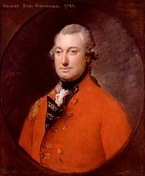
Showing posts with label East India Company. Show all posts

Monday, July 22, 2019

Elihu Yale and his “Wicked Wife”

By David Ebsworth

Elihu Yale should be one of our better-known historical celebrities, yet he’s now largely forgotten. And perhaps there’s justice in that. Born in Boston, in 1649, to a Welsh family of merchant adventurers, but raised in London, Yale was perhaps the first true nabob, eventually becoming the Honourable English East India Company’s Governor at Fort St. George, Madras.

And there he made a fortune, buying and selling diamonds and also managing the lucrative trade in Indian slaves. This aspect of Britain’s involvement in slavery may be less familiar than the African trade, but Elihu Yale exploited it to the full, returning to England in 1699, a multi-millionaire by today’s standards.

That wealth allowed him to make significant donations to the Church and to the Collegiate College of Connecticut – later to become Yale College, now Yale University.

Author's own 1933 Elihu Yale Toby Jug -
More Famous Then Than Now

His biography has been written many times, yet Yale’s biographers have consistently paid scant regard to his wife, Catherine, who was married to him for 41 years. If Catherine gets a mention at all, it’s because of Yale’s last will and testament in which he most notably wrote: To my wicked wife… and then left a very large blank, not even giving the poor woman her name. Yet Catherine’s story turns out to be at least as intriguing as Elihu’s own tale.

So, this is what we know about Catherine from the available archive evidence.

She was born Catherine Elford in 1651, the daughter of Walter and Anne Elford. Her father was a merchant who had traded in Smyrna and later in Alicante. Their whole world revolved around that spider’s web of international commerce – not just the East India Company, but also the Levant, Hudson’s Bay, Muscovy and Royal African Companies, plus all those others that would provide Britain with the roots from which to build her empire. Yet Catherine certainly grew up in London, where Walter Elford later acquired a famous coffee-house.

In 1669, aged 18, Catherine married Joseph Hynmers, ten years her senior. He had already been to India twice, and was now scheduled to return there for the East India Company. Catherine and Joseph sailed together for the Company’s outpost at Fort St. George, Madras – then a tiny village on the Coromandel Coast.

Parish Record of Catherine's Marriage to Joseph Hynmers, 1669

Joseph’s position was important, Second to the Governor, and they enjoyed a comfortable house with several Indian servants. Catherine gave birth to their first child, Joseph Junior, in 1670; then to Richard in 1672; Elford in 1676; and Benjamin in 1678.

The journey to and from Madras was a hazardous one, at least six months at sea and often much longer. Once there, the residents were at risk from the wars raging between the Muslim Mughal Emperor and the armies of the Hindu Marathas. But mortality rates at Fort St. George were high from sickness too, forcing Catherine to send her boys home when she felt them old enough – usually by the time they were ten.

Then, in 1680, after a prolonged fever, Joseph Hynmers died and left her a considerable fortune. He bequeathed sums of money to the oldest three boys but not the youngest – since he had written his will before Benjamin was born. But Joseph was buried in a fine mausoleum, beneath a tall pyramid that still stands in modern Chennai.

Within six months of Joseph’s death, however, Catherine had married again, this time to Elihu Yale. Yale had gone out to Madras as a clerk for the Company in 1672 and in 1680 he still held a relatively junior position. But over the next few years he invested the wealth gained from his marriage to become a very prominent trader in his own right and, eventually, Governor of Fort St. George – by this time the centre of an astonishingly expanded Madras.

Now married to Yale, and her eldest boys sent back to England, Catherine began a second family – David Yale born in 1684; Katherine in 1685; Anne in 1687; and Ursula, probably in 1689. Tragically, little David died at the age of three and is buried in the same mausoleum with Joseph Hynmers, at Chennai.

Mausoleum for Joseph Hynmers and David Yale
at Fort St. George, Chennai

In 1689, Catherine returned to England with her girls and one Hindu servant. Her boys were already with her mother. Things were not going well for Catherine at Fort St. George and we know that, by then, Elihu was sharing a second home with a Portuguese woman called Jeronima de Paiva, with whom he had another son, Carlos Almanza. It’s likely he was also having a further relationship with a woman named Katherine Nicks.

We know little of Catherine’s life back in London, but it would have been a city she hardly recognised – rebuilt after the Great Fire and occupied by William the Third’s Dutch troops in the aftermath of the Glorious Revolution. She settled in the parish of St. Peter-le-Poor, and soon her eldest son, Joseph Junior had also joined the Company and sailed for Madras. Meanwhile, around 1697, Catherine’s second son Richard died, probably abroad.

By now, Elihu himself had come under suspicion from the Company’s Directors, accused of financial irregularities and even the murder of three witnesses against him. He was replaced as Governor while the investigations took place and though the charges had all been dropped by 1696, his days at Fort St. George were numbered. He sailed back to England, as we’ve already seen, in 1699, along with John Nicks, Katherine Nicks’s husband, plus her youngest children – those that, according to rumour, had actually been sired by Elihu. Personally I think this is unlikely but we know that, when John Nicks returned to Madras, the children remained, in boarding school and pretty much at Elihu’s expense.

From the time of his arrival in London, Elihu kept up a steady flow of correspondence with Katherine Nicks in Madras (over fifty letters during the following eight years) and from these we know that he bought a house in Austin Friars to accommodate his family – so, back with Catherine, though it seems this did not last long. He was soon dividing his time between a new property in London (Queen Square) and Plas Grono in Wrexham.

Sample of the letters from Yale to Katherine Nicks, Courtesy of Yale University Archives. 

Catherine’s remaining sons began a law suit against him, claiming they should have been entitled to a larger share of their father’s inheritance, and the youngest son, Benjamin, testifying that he had never received any of the inheritance due to him through his mother’s marriage settlement with Elihu. The cases would rumble on for many years.

The biographies refer to tragedy striking again in 1704 when news arrived that Joseph Junior had died in Madras. But it’s likely that Catherine would actually have received news of Joseph’s death in 1706. The biographies are usually equally careless about Yale’s money-lending practices and, most notably, in the case of Josiah Edisbury, Yale’s neighbour in Wrexham, and the man who originally built the fine mansion known as Erddig Hall. Edisbury needed a loan to complete furnishing of the house but Yale called in the loan at such an extortionate rate of interest that Edisbury was bankrupted and ruined.

In 1706, Catherine and Elihu’s daughter Katherine married Sir Dudley North and, in 1707, the first of Catherine’s grandchildren was born. In that same year, yet another of Catherine’s sons – Elford – also died, again, probably abroad as a merchant adventurer. Catherine herself was now just 56 and four of her sons – David, Richard, Joseph and Elford – were already dead.

On 6th July 1708, their second daughter, Anne Yale, married Lord James Cavendish, younger brother of the 2nd Duke of Devonshire. Lord James leased his property, Latimer House in Buckinghamshire, to Catherine, where she lived for the rest of her life, along with her only surviving son, Benjamin, and her youngest daughter, Ursula.

In 1711, the courts finally decided that Benjamin was entitled to £8765 as the portion from the estate of Joseph Hynmers, his father, owed to him by Elihu Yale. The current equivalent value of that settlement is about £1 million.

In the following year, news arrived that the illegitimate son of Elihu Yale and Jeronima de Paiva, Carlos Almanza, had died in Cape Town. Jeronima died soon after and, by that time, the other alleged mistress, Katherine Nicks, was also dead in Madras.

Elihu himself died in 1721, having earlier made many philanthropic donations – one of which went to the college in New Haven, Connecticut. He was not the biggest benefactor, however, and that honour fell to a gentleman called Charles Dummer. But the governing body of the establishment felt that “Yale College” had a better ring to it than the alternative.

Elihu was buried at St. Giles in Wrexham, where his impressive tomb still stands. It’s a famous landmark inscribed with an equally famous poem. The poem was probably penned by Yale himself, and this is how it reads now:

Born in America, in Europe bred
In Africa travell’d and in Asia wed
Where long he liv’d and thriv’d; In London dead
Much good, some ill, he did; so hope all’s even
And that his soul thro’ mercy’s gone to Heaven
You that survive and read this tale, take care
For this most certain exit to prepare
Where blest in peace, the actions of the just
Smell sweet and blossom in the silent dust.

Elihu Yale's tomb in Wrexham

He left behind too, of course, that last will and testament: To my wicked wife… Why? Had she supported her sons’ Chancery Court claim against him? Or is there a clue in one of those letters to Katherine Nicks? The only reference, it seems by the context, to his wife: “I have got my old affliction by me, a hair-brain’d crazed ill-natur’d toad that loves nothing so well as her bottle. God rid me of her, for she makes me very uneasy.” Is this Catherine? It seems likely. And, addicted to her bottle? If so, more probable that she might have suffered from that curse afflicting women of her class far more than alcohol, the curse of laudanum.

The will, however, was never signed and the probate battle therefore raged for some while.

Catherine’s youngest daughter, Ursula, also died in 1721, at Latimer, where Catherine remained with her son Benjamin until her own death on 8th February 1728. Catherine and Ursula were both buried at the Latimer House chapel.

Despite the number of grandchildren to Catherine and Elihu Yale, their line now seems to have vanished, with no direct descendants still surviving. So what is their legacy?

Yale University is synonymous with liberal education, regardless of any flaws there may have been in the character of the man whose name it bears. And it is therefore nonsense that the name should be changed, as some have suggested, because of Elihu Yale’s involvement in the Indian slave trade. Our inconvenient truths need to be explained, rather than airbrushed away, and Elihu, I think, still deserves his place in history.

Like Robert Clive, Elihu Yale is also a controversial figure in helping, through the East India Company, to lay the foundations for the British Raj. Historians and social commentators, both in India and Britain, are still at odds about the various pros and cons of British colonisation in the Sub-Continent. Yet, warts and all, this was a hugely significant period in the history of both nations and, as such, Yale deserves his place there too.

[all above images in the public domain unless otherwise stated]

~~~~~~~~~~

David Ebsworth is the pen name of Liverpool-born author Dave McCall. Currently living in Wrexham, North Wales, with his wife Ann. He was asked in 2018 to consider writing a novel about Elihu Yale but initially declined, due to Yale’s involvement with the Indian slave trade – though he later decided the story could perhaps be told through the eyes of Yale’s much maligned and largely forgotten wife, Catherine. The result is The Doubtful Diaries of Wicked Mistress Yale – the first part of David Ebsworth’s Yale Trilogy. More details of the novel and its buying links can be found on the author’s website: http://www.davidebsworth.com/doubtful-diaries-wicked-mistress-yale. This is Dave’s seventh novel, his previous titles including the Jack Telford series, set during the Spanish Civil War, as well as historical fiction set variously in 6th Century Britain, the Anglo-Zulu War, the Waterloo Campaign of 1815, and the Jacobite Rebellion of 1745.

Thursday, July 6, 2017

Barnstaple and John Delbridge

by Lauren Gilbert

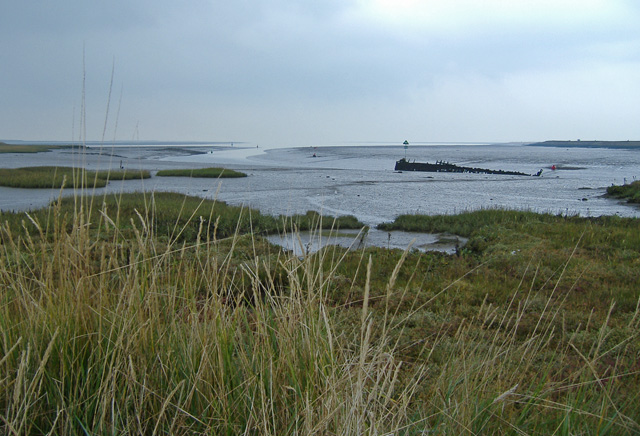
A view of Barnstaple and its setting at low tide
Some years ago, I surprised my husband with a fishing trip in northwest Devon. We got off the train in Umberleigh, checked into a delightful hotel (with an equally delightful pub), and discovered...there was no fishing due to an unprecedented heat wave. Nothing daunted, we proceeded to explore the area. At dusk one evening, we witnessed the water rushing into a river at high tide, followed by a family of wild swans. The next day, we hopped back on the train and went on to Barnstaple. It was a fascinating town which we enjoyed exploring. My current work in process includes a gentleman who inherits a small estate in the vicinity of Barnstaple, so I decided to read up on its history.

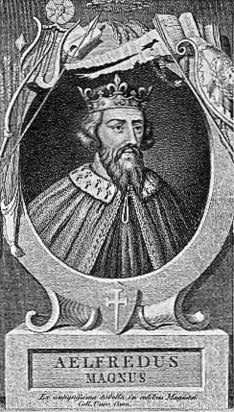
Afred the Great
Barnstaple is what may be the oldest borough in England. The town was known in the 900’s, a typical Saxon stronghold. Known to the Romans as “Tunge abertawe” and to the Saxons as “Beardenstaple,” it was referred to as “Barum”, the Latin contraction, in documents of the era. It was created a burg (borough) by King Alfred. A mint was established, possibly by King Athelstan who also supposedly granted a charter with rights to hold a market and fair (If there were a charter, it has been lost-a charter dated 930 was proven a forgery and no other has ever been found). The earliest known coin was minted during King Eadwig’s reign (between 955-59). The mint was not a particularly active and ceased production in the 13th century.

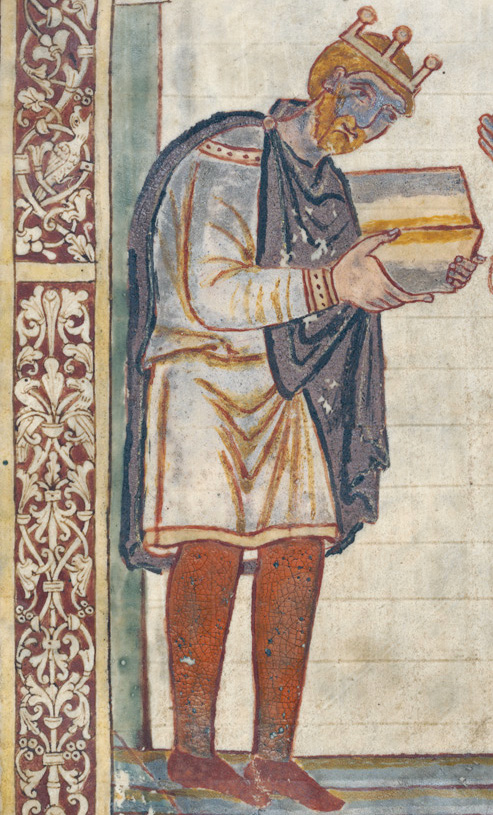
King Athelstan I
It fell to the Normans about 1068, and the fall is discussed in the Domesday Book. It is believed that an original castle was built by King Athelstan, and strengthened after the Conquest. This may be the site of the known castle, built in wood in the 11th century by Geoffrey de Mowbray, Bishop of Coutances. Stone walls were erected subsequently, probably by Henry de Tracey. By 1326, castle was a ruin; only the motte remains as a mound. It was the only port in the southwest of England, and by 1290, an important trade center located on River Taw; trading with Europe, Ireland and New World. Imports included tobacco, wine, spices. Barnstaple was licensed to export wool from the 14th century and was a member of the early merchant Guild of St Nicholas. Exports included woolen material and pottery.

Other industries included lace making, fishing, and ship building. Barnstaple was the 3rd richest town in Devon in the 14th century (behind Exeter and Plymouth). Its importance as a port grew during the 14th to 16th centuries, and the city was represented in the Naval Council. There was a petition to Mary I to build a quay and merchants' exchange on the river in 1555. Barnstaple was a “privileged port” as a member of the Spanish Company (authorized to trade in Spain and Portugal) in 1577. There were 12 merchants in Barnstaple listed in the charter.

Trade with America was also very important in the 16th and 17th centuries. Barnstaple had a rather exciting military past as well. In 1588, 3-5 outfitted ships, manned by locals, sailed to join Sir Francis Drake to help defend against Spanish Armada. In 1642, when the English Civil War erupted, Barnstaple was originally pro-Parliamentarian, but changed sides four times. Seriously damaged after the war, the city eventually resumed its normal business and trading activities.

Queen Anne's Walk
Queen Anne’s Walk was built in 1708 (a rebuilding of the original Merchants' Walk built in Tudor times) and completed in 1713, as a merchant exchange on the river with its own quay for loading and unloading ships. A statue of Queen Anne was placed on the colonnade. In the 18th Century, the wool trade ended and Barnstaple began to import Irish wool which was sent on for manufacture. The harbour silted up (a process which began as early as the 17th century) and trade gradually moved to Bideford although there was local shipping (agricultural) until the 20th century. However, the town still maintained its importance as a market town. It has been represented in Parliament continuously since 1295 (it had 2 representatives until 1885 when representation was reduced to one member). It remains an important business and shopping site and the main town in North Devon.

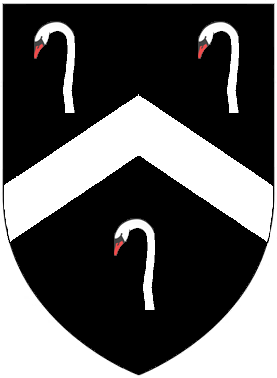
Delbridge Arms

A name that recurred in the history of the town during the 16th century was John Delbridge. Who was John Delbridge? He was born in Barnstaple. His exact date of birth is unknown; however, he was baptized July 9, 1564. John was the 2nd son of Richard Delbridge, a merchant of Barnstaple, and his wife Alice. 

John was a Puritan, and was educated at Emmanuel College Cambridge (he enrolled July 3, 1604 as a paying student or commoner, not as a scholar), and later entered the Middle Temple in London May 10, 1606. He was married to Agnes Downe of Barnstable on January 10th, 1585. Agnes was the niece of Bishop Jewel, Bishop of Salisbury. They had five sons and three daughters, but only one son and daughter survived John. He became a successful cloth merchant, importing and exporting goods by 1591. He was involved in the Newfoundland fishing trade and was a member of the East India Company (1611-21), the French Company (1611), the Virginia. Company (from 1612 to at least 1623), the North West Passage Company (1612), and the Somers Island Company (from 1615 to at least 1622). He was also a member of the Council for Virginia (1621). Clearly, he was a man of great influence with fingers in many pies.

John was involved in the American colonies, including providing passage for colonists to Virginia and Bermuda. His ship The Swan took 70 new settlers to Virginia in 1620 and all survived the voyage (he was apparently known for well supplied ships, and few deaths). He was an active trader particularly in imported tobacco. Clearly successful, John acquired property in Virginia as well as in England. He owned a house in Barnstaple and by 1632 had an estate at West Buckland (a manor which included an advowson (right to appoint a clergyman to serve that area)) about eight miles from Barnstaple. He also had an estate at Bishop’s Tawton. John became active in politics. His political career includes: working under Robert Cecil (Elizabeth I’s chief minister) in 1602-1606 (dates approximate); serving as Mayor of Barnstaple three times (1600-1, 1615-16, 1633-4). He was elected Member of Parliament for Barnstaple six times (elections in 1614, 1621, 1624, 1625, 1626 and 1628), in which capacity he served on various committees (with his known expertise in trade matters) and was very vocal on a wide range of bills at least occasionally in open defiance of the king’s wishes. (He served with Pentecost Dodderidge, a fellow merchant, at least three times, and Alexander St. John, Knight as well).

Agnes died in May of 1639, and was buried May 15th of 1639. John made his will on May 27th and died June 24, 1639 at his home at Bishop's Tawton, leaving the bulk of his estate to his surviving son Richard, with bequests to other relatives and to the poor. 

Unrest was brewing, leading to the Civil War which erupted in 1642. The events involving the war and its aftermath left John Delbridge in obscurity. I couldn't help but wonder if his Puritan faith and service in Parliament steered the loyalty of his city to the Parliamentary side of the conflict, at least at the start.

This is not by any means a comprehensive history of Barnstaple or of John Delbridge; it does, however, serve to tickle one's fancy to look further into that fascinating town and its people.

Sources:

Holton, Denise and Hammett, Elizabeth. BARNSTAPLE THROUGH TIME. Stroud: Amberley Publishing, 2013. (Kindle Version); SECRET BARNSTAPLE. Stroud: Amberley Publishing, 2015. (Kindle Version)

The History of Parliament on-line. “Delbridge, John (1564-1639) of Barnstaple and Bishop’s Tawton, Devon.” HERE

GoogleBooks. Willis, Browne. NOTITIA PARLIAMENTARIA: Or A History of the Counties, Cities and Boroughs in England and Wales. 2nd Edition with Annotations. London: Robert Gosling, 1730. HERE ; Tudor and Stuart Devon: The Common Estate and Government : Essays Presented to Joyce Youngs. Edited by Todd Gray, Margery M. Rowe, and Audrey M. Erskine. Exeter: University of Exeter Press, 1992. HERE

Barnstaple Town Centre on-line. “History.” HERE

A Vision of Britain. “Descriptive Gazetteer Entry for Barnstaple” by John Marious Wilson in IMPERIAL GAZETTEER OF ENGLAND AND WALES (1870-72). HERE

Cambridge Alumni Database. “Delbridge, John.” HERE

View of Barnstaple taken by Lauren Gilbert (c) Lauren Gilbert


Images from Wikimedia Commons

Alfred the Great HERE

Athelstan HERE

Queen Anne's Walk HERE

Delbridge Arms HERE

~~~~~~~~~~
Lauren Gilbert, author of HEYERWOOD: A Novel, is working on her second novel set in Regency England, A RATIONAL ATTACHMENT. She lives in Florida with her husband. Please visit her website HERE.


Wednesday, June 7, 2017

Full Steam Ahead: the Overland Route Home from India

by Caroline Warfield

Before 1830, travelers between England and India and the rest of East Asia had two choices. One way, the overland route known as long ago as ancient Rome, consisted of travel overland across the Ottoman Empire, through Persia and the Kingdom of Kabul (known today as Afghanistan), over mountains or through the Khyber Pass, and across the Punjab. Of limited use for trade in the 19th century, it appealed only to the most adventurous travelers.

But, of course, Britain ruled the sea. The primary route to India involved a four and a half to six month sail around Africa via the Cape of Good Hope. That journey usually took closer to six months than four, depending as it did on prevailing winds, weather, ship design, tides, port conditions, time of year, and even skill. There were few, if any, dedicated passenger companies, and travelers booked passage on crowded merchant or East India Company ships. Conditions could be harrowing, and they didn't always make it!

Steam power came into use early in the century. Early efforts were impractical for ocean travel, however. Navies and merchants were reluctant to use steam engines for fear of fire, engine failure, and issues with fuel. In 1819 the Savannah, a hybrid vessel, crossed the Atlantic but only 1/8 of the voyage involved steam. In 1838 a ship of the British and American Navigation Company managed to cross the Atlantic in only eighteen days with forty passengers, but it ran out of coal part way and had to burn furniture. Still, by 1830 sufficient progress made the dream of a faster route between India and England possible.

Thomas Waghorn by Sir George Hayter, 1847. NPG 974,
National Portrait Gallery, London. (CC BY-NC-ND 3.0)

Thomas Waghorn, a former navy lieutenant employed as a river pilot in Calcutta, failed to persuade the government to support steamer service around the Cape in 1825. The Bengal Steam Fund had sent him to London for that purpose. Two years later, still in London, he obtained an interview with Lord Ellenborough, Chairman of the East India Company, in which Waghorn supposedly told the man he could set up a passenger and mail service that would take just 90 days. He envisioned steamers in the Red Sea and an overland route through Egypt to Alexandria. Ellenborough told him about the planned inaugural run of the steamship Enterprise through the Red Sea from Suez to Bombay and commissioned him to deliver a packet of dispatches to the Governor of Bengal. Ellenborough failed to mention that at least one other competing entity planned to make the run. The race to create overland service was on.

Waghorn left London in October 1829 determined to prove his point. He actually went by coach to Trieste, setting a record when he arrived in nine days. He delivered the London Times to the British Counsel, who soon was demanding to know why the mail typically took fourteen days. Speed had become a central issue. He then begged, borrowed, and patched together transport to Suez via Alexandria, the Nile, and Cairo, but arrived in Suez to find that the Enterprise had not arrived. It had broken down. He persisted, embarking down the Red Sea in an open boat. He arrived in Bombay four months and twenty-one days after he left London. It was a record, but not 90 days. He would not give up.

Waghorn lobbied for steam service in Bombay, Madras, and Calcutta, but both the government and the EIC were content to sit on the sidelines and watch private enterprise put together such a service. Neither wanted to deal with the political complications involving the Ottoman Emperor and Muhammad Ali Pasha, the governor of Egypt. There was concern about Ali, an ambitious Ottoman official originally from Albania, and fear that he could destabilize the Ottoman Empire, something the government very much wanted to avoid. The Eastern Question, concern about Russia's ambitions in the Middle East and India, dominated foreign affairs. The collapse of the Ottomans would cause a vacuum and chaos. When the chairman of the East India Company sent Waghorn a formal letter telling him to return to his position with the Pilot Service in Calcutta, he sent his resignation in reply.

 Mohammud Ali Pasha, 1805 artist unknown

Waghorn proceeded to form a partnership with the Pasha and lived with Arabs for three years, convincing all and sundry of the benefits of his scheme. Waghorn shipped coal for steamships from England to Alexandria, down the Mahmudieh canal to the Nile on native vessels and from there to Cairo where it went by caravan to Suez. It drove the cost of coal at Suez down from £20 to just over £4 per ton. He sent the mail—and eventually passengers—back the same way. His friendship with the Pasha benefited the local economy and enabled him to resolve myriad issues, from how to store and ship mail in that environment to how to feed and house passengers in the 84-mile journey from Suez to Cairo.

By 1835 the Company sent its mail via the overland route through Egypt. Waghorn's 90 days was a reality. The overland portion, involving as it did an 84-mile journey across the desert and tiny paddle steamers and barges from Cairo to Alexandria, wasn't particularly comfortable at first. Passengers needed rest stops. The mail didn't.

Care of Mr. Waghorn, May 2, 1839. via Wiki commons

In 1837 the company initiated steam packet service from Bombay to Suez and passenger travel became more of a reality. In 1840 the Peninsular and Oriental Steam Company won the Bombay contract and three years later began service from Calcutta as well. Passenger amenities improved. The storied Hotel des Anglais, later called Shepheard's Hotel opened in 1841, providing an oasis of England in the midst of Cairo.

Bivouac in the Desert, from Mrs. G.L. Dawson Damer. "Diary of A Tour in Greece, Turkey, Egypt, and The Holy Land, Volume 2." (Henry Colburn, London: 1841). p f05

In the 1840s ads for passenger travel, parcel delivery, agents, and services "with regularity," via "The Overland Route" filled the journal Allen's India Mail. By the 1850s the P&O had 170 coal ships servicing the route and a herd of 3500 camels carried coal across the desert. In 1858 rail service from Alexandria to Suez superseded the beasts.

Other schemes abounded; one dominated. The Company tried service along the Euphrates. It failed. While Waghorn was working out details of his overland route, Muhammad Ali Pasha hired the Frenchman Linant de Bellefonds as chief engineer of public works. He almost immediately began a survey to create a canal at Suez. Concession to build such a canal took until 1854, but in 1869 the Suez Canal opened, effectively eliminating the overland route, and driving the Age of Steam forward. Speed indeed.

SS Farforshire, 1835

~~~~~~~~~~
Caroline Warfield writes historical romance and contributes regularly to History Imagined, a blog at the intersection of history and fiction, and to The Teatime Tattler, a fictional Regency gossip news sheet.

The characters in her latest novel, The Reluctant Wife take The Overland Route, or as Meghal Wheatly age six called it "the way with camels" for their return to England. Sometimes doing the right thing results in failure in the eyes of others. Forced to take two daughters home and start over, Fred Wheatly, the hero of the book, knows failure is not an option this time. The book is part of Caroline's series, Children of Empire, stories of two brothers and their cousin torn apart by lies and deception, who struggle to find their way home from the far reaches of the Empire.


Thursday, June 13, 2013

The First Anglo-Afghan War or Auckland's Folly

by David William Wilkin


Those of us old enough [DWW -- I am at an age where I can use this cliche] or with a sense of humor that has delved into the spirited biography of Sir Harry Paget Flashman will know that this war is the first in which that intrepid (not) hero has his adventures.

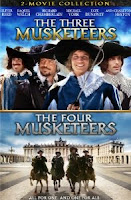
This example, Flashman, by George MacDonald Fraser [Fraser was the screenwriter for the classic Three and Four Musketeer movies staring Oliver Reed and Michael York, directed by Richard Lester] is as keen a work of historical fiction as there ever was. Fraser takes us through much of the Victorian era, using an antagonist from Tom Brown's Schooldays. 

In the first book of his series, Fraser takes us to India and Afghanistan with Flashman embroiled in the misadventures that land him at Kabul at the very beginning of this crisis. It was here that I came to learn how difficult a war in Afghanistan can be -- a point that the Joint Chiefs might have realised had they read Flashman, or studied British Military History. Certainly in modern times, with their own support, they showed the Russians how difficult fighting in that country is.

The War

The action that took place between 1839 and 1842 resulted in the deaths of 4500 British troops, and 12,000 camp followers. All but one man, as the British forces retreated to India, survived to reach Jalalabad. The rest were killed, or a very few were taken captive and later released. Many others may have ended up slaves to the Afghan Tribes. In retribution for the destruction of the column that had surrendered and were marching away from Afghanistan, the British would return and level Kabul.

The cause of this war was the fear by Lord Palmerston that the Russians might invade India by way of the passes through Afghanistan. The British sent an envoy to meet with Afghanistan's Emir Dost Mohammad Khan. The Emir wanted support to help retake Peshawar from the Sikh Empire. Lord Auckland, the Governor General heard that the Emir was also meeting with a Russian Envoy, though the advisors to Auckland made more of this than was so. When talks broke down between the Russians and the Emirs, the British thought that the Russians would certainly invade, and the Persians, backed by the Russians attempted to do so, but stopped when Britain threatened war.

Not happy with all the various negotiations, Lord Auckland sought to put Shuja Shah Durrani in 1838 as ruler of Afghanistan so they would have a firm ally. The British claimed it was not an invasion, yet it was certainly interfering with a country beyond the scope of the borders they did control firmly--an arrogant attitude that would re-emerge in Southern Africa later on, though there the costs were not to be as great in lives.

Eventually, the British sent an army of 21,000 troops commanded by William Elphinstone, a man well past his prime as a competent officer. They arrived at Kandahar in April of 1839. In July they attacked and captured the fortress of Ghazni. The British lost 200 men whilst the Afghans lost 500. 1600 Afghans were taken prisoner. The British then achieved a victory against Dost Mohammad who fled. In August, after an absence of almost 30 years, Shuja Shah Durrani was once again enthroned in Kabul.

A British-Indian force attacks the Ghazni fort during the First Afghan War, 1839

Now the majority of British troops returned to India. This though showed that a larger British presence was needed in Kabul to keep Shah Shuja in power. The government of Britain's representative, William Hay Macnaghten, allowed the soldiers to bring their families to Afghanistan to improve their morale. This further incited the Afghans though, since it looked like the British were coming permanently, when such was not the case.

Dost Mohammad attacked in 1840 and failed, surrendering and was then exiled into India. The British took up residence in northeast Kabul in an indefensible location. Bad planning also saw that their stores and supplies were in a separate fort, some three hundred yards away. In 1841 disaffected Afghan Tribesmen flocked to Dost Mohammad's son, Akbar Khan, and in November Sir Alexander Sekundar Burnes and his aides were killed by a mob in Kabul. On November 9th the Afghans took the supply fort.

The British tried to negotiate with Akbar Khan. Macnaghten offered to make Akbar the vizier, while also trying to pay for Akbar's assassination. Akbar heard of this and then consented to a meeting on December 23rd. Macnaghten and three officers went to this meeting. Akbar seized and killed them all. 

On January 1 1842, an agreement was reached to allow the British to retreat. 16,500 people left Kabul, but only one, Doctor William Brydon arrived in Jalalabad. 

'Remnants of an Army' by Elizabeth Butler portraying William Brydon arriving at the gates of Jalalabad as the only survivor of a 16,500 strong evacuation from Kabul in January 1842.

The British response was thorough. Akbar Khan's forces were attacked. They were defeated. Akbar was poisoned, probably by his father Dost Mohammad. The British were planning to take back Kabul, but there was a change in government back in England, and instead they chose to abandon Afghanistan.

The British were thirty five years ahead of events in their fears of the Russians using Afghanistan as a path into India. It took the Russians that long to extend their empire so that they were ready to advance. This precipitated the Second Anglo-Afghan war.

~~~~~~~~~~~~


Mr. Wilkin writes Regency Historicals and Romances, Ruritanian (A great sub-genre that is fun to explore) and Edwardian Romances, Science Fiction and Fantasy works. He is the author of the very successful Pride & Prejudice continuation; Colonel Fitzwilliam’s Correspondence. He has several other novels set in Regency England including The End of the World and The Shattered Mirror. 


His most recent work is the humorous spoof; Jane Austen and Ghosts, a story of what would happen were we to make any of these Monsters and Austen stories into a movie.


And Two Peas in a Pod, a madcap tale of identical twin brothers in Regency London who find they must impersonate each other to pursue their loves.
He is published by Regency Assembly Press


The links for all locations selling Mr. Wilkin's work can be found at the webpage and will point you to your favorite internet bookstore: David’s Books, and at various Internet and realworld bookstores including the iBookstore, Amazon, Barnes and Noble, Smashwords.


And he maintains his own blog called The Things That Catch My Eye where the entire Regency Lexicon has been hosted these last months as well as the current work in progress of the full Regency Timeline is being presented.

You also may follow Mr. Wilkin on Twitter at @DWWilkin
Mr. Wilkin maintains a Pinterest page with pictures and links to all the Regency Research he uncovers at Pinterest Regency-Era


Saturday, October 6, 2012

Henry Hudson's Search for the East Indies from the North

By Katherine Pym

Henry Hudson
In the first decade of 17th century, Henry Hudson worked for several merchantmen companies, both in England and in Holland. His goal was to find the northern route to the Spicerie Islands in the South Pacific.

He worked for the Muscovy Company, England's East India Company, and the Dutch East India Company.  These companies pooled their resources, made their captains sign extensive contracts, gave them long lists of rules and regulations, then sent them on their way to find the easiest, fastest passage to Spicerie ports of call.

The route south through the Cape of Good Hope was fraught with danger, i.e., weeks of calm or killer storms, scurvy, the bloody flux, pirates. Once into the Cape, there were added dangers of rogue waves that came out of nowhere, swamping and sinking a ship to the depths of the sea.

If it weren't for the ice that filled the northern regions, that route would be far easier to navigate.  When they went north toward Greenland or west to Newfoundland, these intrepid explorers found a vast ocean crowded with so much fish, they leaped into their boats rather than be netted.  They brought home stories of ling cod, and whale meat/lard.  Fishermen sent their ships to these waters, and the English dinner table began to find new foods that delighted the palate. Oil lamps and candles began to smell of whale lard. 

When Hudson worked for the Muscovy Company, he did not find a Northwest Passage, but alerted his employers of a place where one could catch many whales.  The Dutch East India Company (VOC) had so many failures, when they heard of Hudson, they enlisted his services.

Hudson promised better things.  He was certain the passage could be found.  All their previous captains could not find the passage, and the directors wanted to know how he would go about it. 
Henry replied that he followed Petrus Plancius' theory.  Plancius was one of the founders and cartographer of the VOC, so the directors nodded their approval. When Hudson offered this theory, Plancius was still alive. He could be consulted for authenticity.

The theory was of a temperate, open sea in the North Pole not covered with ice. What Hudson professed was a mild climate above '74 degrees latitude - the point at which the Dutch ships had always found their path blocked by ice'. Hudson not only affirmed to have seen this, he raised the stakes higher by adding the depth of the sea was so great at this point, the swells could never freeze. In this temperate area, Hudson declared to have seen a new land with many animals, sweet grasses wherein the animals grazed. It was a veritable paradise.

Hudson further added if he could go above '83 degrees latitude', he would sail west to the Pacific then south into the warmer seas of the East Indies. VOC demanded more proof, so Hudson sent for Petrus Plancius.  The gentleman, also an astronomer and clergyman, nodded his concurrence at Hudson's every point. He added the sun's long days and white nights during the summer kept the waters warm enough so that ice could not form. As a result, Henry was given the opportunity to seek a northern route to the South Seas.

Once aboard ship, Hudson disregarded all instructions by the VOC. He used his own maps and went northwest through bad weather. Finding the way too difficult, Hudson tootled south. He expected to find a waterway along the American coast he could travel to the Pacific. He did not find it, but did find a land rich in fisheries and game, trees so big they would make excellent ships.

Hudson had found Manhattan Island. The VOC was not impressed but other merchants were, which started the colonization of that area.
 
Henry Hudson's last journey
In 1610, this time financed by English merchants, Hudson tried again. He found his way into what is now the Hudson Bay. The seas were filled with ice. His crew turned surly, and one night mutinied. They grabbed hold of Henry Hudson and a few faithful crewmen, put them in a small boat without food, water, or warm clothing, and sent them adrift.  Henry Hudson disappeared into the night, never to be seen again.

Please find my novels (ebook and paperback) at http://www.amazon.com/Katherine-Pym/e/B004GILIAS
You can also find them at the NOOK.

Bibliography: Nathaniel's Nutmeg by Giles Milton, and Wikipedia (Hudson, Petrus Plancius)

Saturday, August 25, 2012

Faversham, Kent

             Faversham is a fascinating port town in Kent.  Some years ago, my husband and I had the pleasure of attending the Hop Festival there, and the town appears in my work in progress.  It’s a lovely town, compact and walkable.   Its known history goes back to before 811, and was known to be settled by the Romans, among others attracted by its location. 

The mouth of Faversham Creek

              Part of the ancient royal demesne, Faversham is mentioned in the Domesday Book, and it also possesses an early Cinque Ports charter (considered to be the oldest in existence) and was linked to Dover.   King Stephen founded Faversham Abbey in 1147, and was subsequently buried there with his wife, Matilda, and son, Eustace.  The abbey was dissolved by Henry VIII, and nothing remains but ruins.  The beautiful parish church, St. Mary of Charity, still remains.
The ruins of Faversham Abbey by Stukeley 1722

As a port city, Faversham had a customs house and fishing was an important industry.  (The oyster beds were particularly important.)  The town has an association with medieval queens, and a fascinating history.  Queen Elizabeth I endowed a grammar school here.  However, I am going to focus on a specific point of interest: gunpowder.
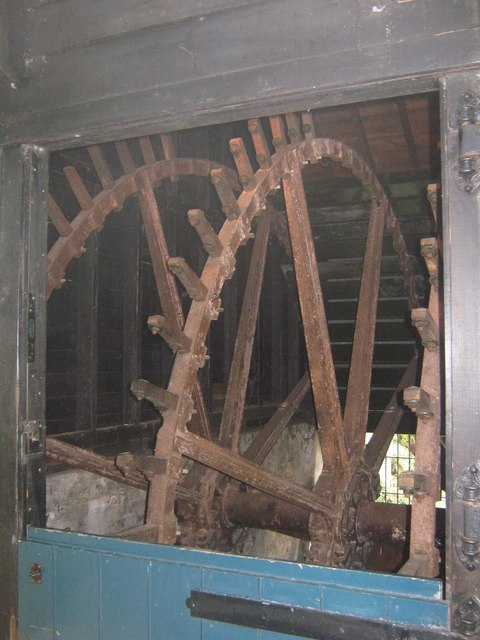
                Advances in weaponry and military activity created a need for gunpowder, and Faversham was peculiarly suited to meet this need.   The ingredients for gunpowder, especially charcoal and sulpher, were readily available.  The site was perfect for factories, with a stream for watermills, and the continent was easily accessible from the port.  The earliest gunpowder works was established in the 16th century.  The original small factories were joined together as the Home Works. 
Home Works was ultimately nationalized by the British government in 1759.  Another factory, Oare Works, had been built very nearby in Davington parish in Kent in the 1680’s.  A third factory, Marsh Works, was built by the government in 1787.  These mills provided gunpowder to the East India Company and the military, furthering the war and expansion efforts.  It is interesting to think of the powder from these factories possibly being used by Nelson’s ships at the Battle of Trafalgar, and by Wellington’s troops at Waterloo!
Gunpowder from these factories was also used for blasting for canals and tunnels (especially important for railway expansion).  These plants continued in operation, and produced explosives during World War I.  In 1916, a horrible explosion killed over 100 employees.  In 1934, the gunpowder factories were closed due to fears that the area would be vulnerable to invasion or attack if war with Germany was declared. 

The site of Home Works was  redeveloped in the 1960’s except for Chart Gunpowder Mill, which is an historic site.  The Marsh Works became a site for  mineral extraction which is still in operation.  Oare Works is a county park, featuring conserved process houses, trails and a visitor center.
Chart Gunpowder Mill-Mill Wheels
 SOURCES
Percival, Arthur.  OLD FAVERSHAM.  1988: Meresborough Books, Rainham, Kent, UK.
Turcan, Robert.  FAVERSHAM THROUGH TIME.  2010: Amberley Publishing PLlc, Stroud, Gloucestershire, UK.
British History Online. The Parish and Town of Faversham.  (From THE HISTORY AND TOPOGRAPHICAL SURVEY OF THE COUNTY OF KENT , Vol. 6 by Edward Hasted, 1798.)  http://www.british-history.ac.uk/report.aspx?compid=62974
Kentfind.Co.UK website.  History of Faversham.  (No author or date shown.)  http://www.kentfind.co.uk/about/faversham/history.php

Photographs from Wikimedia Commons.

Lauren Gilbert lives in Florida, and is the author of HEYERWOOD: A Novel. 

Monday, June 11, 2012

The Impeachment of Warren Hasting 1788-1795

The Road of Politics has a lot of Potholes and certainly no true friends
 
Warren Hastings

Eliza de Feuillide

Henry Thomas Austen
As mentioned a couple posts ago Warren Hastings, who was the first Governor of India, is a fascinating Regency Era study since many believe him to be the natural father of Eliza de Feuillide, who married Henry Thomas Austen, the brother of Jane Austen.

That connection, provides many of those who love novels of the Regency, and Jane Austen, a connection. Real history, interacting with our literary giantess.
Jane Austen

As with the OJ Simpson trial, a few years ago, this trial between 1788 and 1795 was the big court case of the times.

What we see is that the door to a greater discussion of what was happening in India and what the East India Company was doing came about.

Prime Minister Lord North
Hastings became Governor General of India in 1773, after 23 years with “The Company,” The East India Company. Appointed by Prime Minister North whose government was also the party in charge when the British lost the American colonies.

Sir Phillip Francis, the sore Loser
A great deal of the foundation of the impeachment trial was based on the governing Calcutta Council that Hastings led as Governor General. He had one man who was in opposition to nearly all that he did. Sir Phillip Francis and he disagreed so much that they even fought a duel, which Francis was wounded in. Francis then returned to England and began to raise questions about Hastings conduct. He found support in the Whigs who were in opposition to Lord North’s government.

After this, the Second Mysore War came, when Mysore thought to take on the British while they were heavily involved in the American colonies. The war ended with the status quo from when it started. However, back in England much was made of the company’s mismanagement, and thus Hasting’s position.

William Pitt the Younger
Charles James Fox
The many wealthy nabobs who returned to England were quite unpopular, and Francis’ attacks did not make Hastings any better received. 

Then after the Fox government fell, Charles James Fox  attacked Hastings as well. Pitt made no mention of Hastings in introducing a new India Act in 1784 and this was seen as the government not supporting the Governor General.

George III
Edmund Burke
Hastings returned to England in June of 1785. On the return journey, he wrote 'The State of Bengal,' the defense of his conduct. He expected to be attacked by Parliament and the press when he returned, but it to be short lived. King George III gave him an audience and he received a unanimous vote of thanks by the East India Company when he returned. He even thought he might get an Irish peerage. Edmund Burke who is regarded as the father of Anglo-Conservatism, supporter of American Independence and opposed to allowing the French such rights, though, had other plans for Hastings.

In reviewing the material of what the politicians were up to, it seems that Hastings was a nice little scapegoat for the opposition party to embarrass Prime Minister Pitt’s government. Francis (and one can only surmise that he hated that he lost to Hastings in India, and then was wounded by him as well in their duel) made eleven specific charges against Hastings.

Hastings in later years
William Pitt finally said, after defending Hastings against all charges, that perhaps one action, the punishment of the Rajah of Benares, was excessive. This led to Hastings being arrested on May 21, 1787 and taken to the House of Lords to hear the charges against him. Not often had the house of Lords had an Impeachment trial. There has been only one other since this case.

Hastings trial began on February 13th 1788. It took place in Westminster Hall Members of the House of Commons were seated to Hastings right, the Lords to his left and a large audience of spectators, including royals in boxes and public galleries.

Edmund Burke began the proceedings with a long public address. He took four days and treated it all seriously. However most thought the trial resembled a social event.

Westminster Hall in the Palace of Westminster, London, November 1808

The Coronation Banquet of King George IV in Westminster Hall, 1821 (A very Regency Era representation of the site that was used to try Warren Hastings)

Richard Brinsley Sheridan
Hastings was granted bail, despite Burke arguing that he would flee the country with the wealth he had allegedly stolen from India. Other leading Whigs made speeches over the coming weeks against Hastings. Proving that the trial was not about wrongdoing so much as political maneuvering. Charles James Fox spoke against the man as well as Richard Brinsley Sheridan was a playwright and a poet. Sheridan served as Treasurer of the Navy 1806-1807 and also was the owner of the Theatre Royal, Drury Lane. He is known for his plays such as The Rivals, The School for Scandal and A Trip to Scarborough.

Interior of Theatre Royal, Drury Lane. Circa 1808. Plate 32 of Microcosm of London (1808) The play is Coriolanuis.

In total nineteen spoke against Hastings as part of the Impeachment Committee. With Sheridan and so many gathered to witness, it does sound like a theatrical production. While at first, the Whigs had gotten public sympathy on their side over the issue, Sir Phillip Francis having worked so hard to vilify Hastings. But the trial dragged on for months, then years.

When the French Revolution began in 1789, Sheridan, obviously attuned to his audience as a member of the theater community said that he was "heartily tired of the Hastings trial" despite being one of its instigators. Doubt now had permeated into society about Hasting’s guilt. James Gilray the cartoonist depicted Hastings as the “Saviour of India” and he was being assaulted by Burke and Fox.

“Saviour of India”
Lord Cornwallis
Then on April 9th, 1794 Lord Cornwallis who was the second Governor General of India gave testimony in defense of Hastings. He reported that the natives of India respected Hastings. When asked if he had "found any just cause to impeach the character of Mr Hastings?" he replied "never".

William Larkins the former Accountant General of Bengal then testified that there were no irregularities with Hasting’s administration. The Whigs had hoped that they would have had a lot of testimony showing corruption but many came forward as character witnesses for Hastings.

For the trial of Warren Ha(stings)' (includes Edmund Burke; Charles James Fox; Sir Philip Francis; Warren Hastings), by James Sayers (died 1823)

Lord Chancellor Lord Loughborough
23 April 1795 the Lord Chancellor Lord Loughborough presided over the delivery of the verdict. A third of the lords who had attended the opening of the trial seven years before were now dead. Only 29 had sat through enough evidence to pronounce judgement. Most of the charges, there were 16, Hastings was found not guilty unanimously. On three questions only did five or six peers say he was guilty, but 6 of 29 meant that 23 at least found him not guilty of those charges. It was an overwhelming verdict and had been expected for some time.

Edmund Burke died 2 years later and believed in Hasting’s guilt to his dying day. He believed that the Lords acquitting Hastings would lead “to the perpetual infamy of the House of Lords.”

If Hastings had been super wealthy, the impeachment broke him and left him with debts of £70,000. The government and the East India Company did come to his aid in the end and helped to pay for it. The Lawyer made out like a true Nabob of India, though. Richard Shaw(e) had his mansion Casino House in Herne Hill built from his fees. He had John Nash and Humphrey Repton as the architect and Landscaper.

In 1812 Hastings was asked by Parliament to speak as an expert on India. After which, all the members rose in acknowledgement. Something that they only did for members of the Royal family.

As more came out, the role of Pitt abandoning the support of Hastings, and allowing the impeachment to go forth was seen as a Political power play. Pitt feared that he was to be tarred by the same brush wielded by those trying to ruin Hastings. And in the end, the total exoneration of Hastings proves he had never been guilty but helped to begin the transition of rule in India by the East India Company, to the British Government.
* * *

Mr. Wilkin writes Regency Historicals and Romances, Ruritanian (A great sub-genre that is fun to explore) and Edwardian Romances, Science Fiction and Fantasy works. He is the author of the very successful Pride & Prejudice continuation; Colonel Fitzwilliam’s Correspondence. He has several other novels set in Regency England including The End of the World and The Shattered Mirror. His most recent work is the humorous spoof; Jane Austen and Ghosts.

The links for all locations selling Mr. Wilkin's work can be found at the webpage and will point you to your favorite internet bookstore: David’s Books, and at various Internet and realworld bookstores including the iBookstore, Amazon, Barnes and Noble, Smashwords.


He is published by Regency Assembly Press
And he maintains his own blog called The Things That Catch My Eye


You also may follow Mr. Wilkin on Twitter at @DWWilkin
Mr. Wilkin maintains a Pinterest page with pictures and links to all the Regency Research he uncovers at Pinterest Regency-Era