Showing posts with label 17th Century. Show all posts

Monday, May 25, 2020

Equestrian Pageantry in Tudor and Stuart Times

by Margaret Porter


William Cavendish, 1st Duke of Newcastle


The basis of equestrian pageantry began with Xenophon of Athens, who first codified the movements. His treatise On Equitation (circa 400 BC) was first printed in 1512, inspiring centuries of artistic horsemanship, the origin of modern-day dressage. It was then referred to as the Art of Manège, or High School Riding. Riding academies were founded--initially in Italy and Spain. Over time the horse trainer, noble rider, choreographer, composer, and costumier united to develop a popular and exclusive entertainment. During the Renaissance, horse ballets or carrousels rose to prominence at European royal courts, eventually replacing jousting tournaments. A carrousel featured a mock battle, with group manueuvres, quadrilles, and individual feats showcasing elements of the balancing, leaping, jumping, and flying 'airs above the ground': the levade, croupade, courbette, ballotade, and capriole.

England


English royalty preferred court masques to carrousels. But everyone liked a clever horse and rider. The common people tended to prefer low comedy to balletic grace.
Marocco & William Baknes
Marocco, sometimes referred to as Bankes's horse, was the most famous dancing horse of the Renaissance. Born 1586, he was alternately described as a bay, a chestnut, or white. Petite and well-muscled, he was extremely agile, intelligent, and easily trained. His owner, William Bankes of Staffordshire, took his marvel to London. Marocco's initial performances took place in Gracechurch Street, and he was later stabled at the Belle Sauvage Inn and performed there. Marocco, who wore silver horseshoes, could dance a jig, count, play dead, walk on his back legs, and urinate on command. He could also identify which ladies in his audience were sluts, and which were virtuous. He made his bow to Queen Elizabeth I. And he bared his teeth at King Philip of Spain. John Donne and Shakespeare knew of Marocco (there's a reference in Love's Labours Lost) and almost certainly witnessed performances similar to this:

Banks perceiving, to make the people laugh, saies; 'seignior,' to his horse, 'go fetch me the veryest foole in the company.' The jade comes immediately, and with his mouth drawes Tarlton [a famous clown and comedian] forth. Tarlton with merry words, said nothing but, 'God a mercy, horse.' In the end Tarlton, seeing the people laugh so, was angry inwardly, and said: 'Sir, had I power of your horse as you have, I would doe more than that.' 'What ere it be,' said Banks, to please him, 'I will charge him to do it.' 'Then,' said Tarleton: 'charge him bring me the veriest whore-master in the company.' The horse leades his master to him. Then 'God a mercy horse indeed,' saies Tarlton. (1611)
The horse was immortalised in various verses. One example:

Bankes hath a horse of wondrous qualitie
For he can fight, and pisse, and daunce, and lie,
And finde your purse, and tell what coyne ye have:
But Bankes, who taught your horse to smell a knave?

In 1601 he performed his greatest feat, climbing the thousand steps to perform on the rooftop of St. Paul's Cathedral--the medieval one, not the Christopher Wren one with the dome. After touring England and visiting Scotland, he travelled to Europe. In Paris he caused such a sensation that Bankes was accused of sorcery, and to save himself revealed that he controlled the horse primarily through hand gestures. Marocco performed in Germany and travelled as far as Portugal. Returning to England, Bankes worked as a trainer in the royal stables during James I's reign, and also trained the Duke of Buckingham's horses.


Bankes's acquaintance Gervase Markham produced A Discourse on Horsemanship (1593), in which he writes of 'that most excellent and prayse worthie gyft, the breeding and ryding and trayning uppe of horses.' In his multi-volume Cavelarice: Or the English Horseman (1608) dedicated to Prince Henry, James I's son and containing William Bankes's secrets for training Marocco. Markham attributes human emotions to horses, stating, 'It is most certaine that everie horse is possest with these passions: love, joy, hate, sorrow and feare.' He also charts the different 'humours' during the lifetime of the horse as it matures: 'Now these tempers do alter, as the powers of a horse either increase or diminish, as thus, a Foale is said to have his temper from the Fire and Ayre, a horse of middle age from the Fire and the Earth, and a horse of the old age from the Earth and the Water.'


1st Duke of Newcastle
William Cavendish, the polymath First Duke of Newcastle was one of the great riders of his age. Margaret Cavendish, his duchess and biographer, describes the admiration his riding excited at the English court, where was responsible for the education of the future King Charles II. In that role imparted his riding skills to the then-Prince of Wales:
But not only strangers but his Majesty himself, our now gracious Sovereign, was pleased to see my Lord ride, and one time did ride himself, he being an excellent master of that art, and instructed by my Lord, who had the honour to set him first on a horse of manage when he was his governor [instructor, tutor]...his Majesty's capacity was such that being but ten years of age he would ride leaping horses and such as would overthrow others and manage them with the greatest skill and dexterity to the admiration of all that beheld him.
A firm and devoted Royalist, Newcastle spent Interregnum on the Continent. In Antwerp, where he occupied the house associated with painter Peter Paul Rubens, he established a riding school. Then, and later, he published books on horsemanship and established his famous riding-school, exercised 'the art of manège' (High School riding), and published his first work on horsemanship, Méthode et invention nouvelle de dresser les chevaux (1658). After the Restoration and his return to England, he published A New Method and Extraordinary Invention to Dress Horses and Work them according to Nature (1667).

He was not humble about his abilities and their effect upon spectators:
The Marquess of Caracena was so civilly earnest to see me ride that he was pleased to say it would be a great satisfaction to him to see me on horseback, though the horse should but walk...he came to my manage [manège] and I rid first a Spanish horse called Le Superbe, of a light bay a beautiful horse, and though hard to be rid yet when he was hit right he was the readiest horse in the world. He went in corvets forward backward sideways on both hands made the cross perfectly upon his voltoes and did change upon his voltoes, so just without breaking time that a musician could not keep time better, and went terra a terra [terre-á-terre] perfectly. The second horse I rid was another Spanish called Le Genty, and was rightly named so for he was the finest-shaped horse that ever I saw...no horse ever went terra a terra like him so just and so easy and for the piroyte [pirouette] in his length so just and so swift, that the standers by could hardly see the rider's face...truly when he had done I was so dizzy that I could hardly sit in the saddle. The third and last horse I rid then was a Barb that went...very high both forward and upon his voltoes and terra a terra. And when I had done riding, the Marquess of Caracena seemed to be very well-satisfied, and some Spaniards that were with him crossed themselves and cried 'Miraculo!'

France


Grand  Carrousel, 1662

Many English aficionados of equestrian skill were exposed to the carrousel at the French court. Antoine de Pluvinel (1555-1620), a well-born Frenchman, studied equitation and other subjects in Italy, returned to found an academy at Faubourg St. Honore. He served as chief instructor, or gouveneur, to the Dauphin, the future Louis XIII, and his precepts for riding were published in The Maneige Royal, or L'Instruction du Roy (1623), written as a dialogue between master and pupil. In 1612, Pluvinel devised a fifteen-minute carrousel celebrating the marriage of ten-year-old Louis and Anne of Austria.

Like father, like son. The 1662 Grand Carrousel at the Tuileries, performed over two days, celebrated the birth of the Dauphin, son of Louis XIV. It was a grand display of the young King's power and splendour. Louis participated, as did the royal dukes. The riders and their horses were elaborately costumed, and the characters were allegorical and representative in nature--Romans, Turks, famous warriors from history. Teams of participants, each led by a duke or the king, performed this ballet to music created by the court composer Lully. The horses' decorations alone cost one hundred thousand livres. Though not English by birth, England's Dowager Queen, Henrietta Maria, witnessed her nephew's performance.

Louis XIV in Le Grand Carrousel

Monsieur, the King's brother

In May 1686, the two-day Carrousel des Galantes Amazones was held at Versailles. All the most important people received tickets, including the English ambassador, Sir William Trumbull, and his wife. The story depicted was that of Alexander the Great (portrayed by the now adult Dauphin) and the Amazon Queen Thalestris (the Duchess of Bourbon). This was the first time ladies appeared in a carrousel, and all, men and women, were spectacularly attired in costumes by Jean Berain.
Carrousel des Amazones at Versailles, 1686

The King's Champion


After every English coronation, an elaborate banquet was served to the participants, and it included a unique and historic ceremony involving equestrian spectacle. A designated 'King's Champion' (or Queen's) mounted on a steed, rode into Westminster Hall and dared anyone to challenge the new ruler's right to succeed. For more than six hundred years members of the Dymock family held this position, although the George IV coronation in 1821 was the occasion that a Dymock was called on to perform his hereditary role, described thus in 1660:
...to have on the Coronation day one of the King's great coursers with a saddle harness and trappings of cloth of gold and one of the best suits of armour with cases of cloth of gold, and all such other things appertaining to the King's body...if he was going into mortal battel. And on the Coronation day to be mounted on the said courser ...being accompanied by the High Constable and Marshal of England and the King's Herald with a trumpet sounding before him to come riding into the Hall to the place where the King sits at dinner with the crown on his head...to proclaim with an audible voice these words following...that if any person of whatsoever degree he be, either high or low, will deny or gainsay that Charles the Second King of England Scotland France and Ireland son and next heir of our late sovereign Lord Charles the First deceased defender of the faith... ought not to enjoy the crown thereof here is his Champion ready by his body to assert and maintain that he lyes like A false traitor, and in that quarrel to adventure his life on any day that shall be assigned him. And thereupon the said Champion throws down his gauntlet, and in case no man shall say that he is ready in that quarrel to combat then as hath been usually done at all former Coronations of Kings and Queens of this realm...


James II's Champion (British Museum)

Conclusion


The famed Royal Lippizzans of Vienna's Spanish Riding School are modern equivalents of the dancing horses of centuries past, as are the Olympians in the dressage competitions in the Summer Games. Modern groups recreate versions of carrousels that were seen by Henrietta Maria, Charles II, and their kinsmen Louis XIII and Louis XIV, and French courtiers. The one I attended in Brussels is an indelible memory. A video of a similar performance is here. A section of Lully's music for the Grand Carrousel can be heard here.

This is an Editor's Choice from the #EHFA archives, originally published December 15, 2016.
~~~~~~~~~~~~~
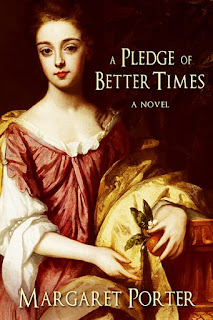
 
Margaret Porter is the award-winning and bestselling author of twelve period novels, whose other publication credits include nonfiction and poetry. The Carrousel des Amazones is the setting for a scene in A Pledge of Better Times, her highly acclaimed novel of 17th century courtiers Lady Diana de Vere and Charles Beauclerk, 1st Duke of St. Albans.

Margaret studied British history in the UK and the US. As historian, her areas of speciality are social, theatrical, and garden history of the 17th and 18th centuries, royal courts, and portraiture. A former actress, she gave up the stage and screen to devote herself to fiction writing, travel, and her rose gardens.

Connect with Margaret:

Website
Blog
Facebook
Twitter
Amazon


Monday, May 11, 2020

The gallant turncoat - or how a Covenanter became a Royalist

by Anna Belfrage

James Graham, Marquis of Montrose
Chances are that if the subject of gallant soldiers during the English – British – Civil War comes up, Prince Rupert of the Rhine gets all the votes. Personally, I am not all that fond of Rupert, however brave and committed he was to Charles I’s cause. I dare say it may be a contrary streak in me – or, alternatively, it is because my heart fixed at a very early age on another of the royalist heroes, namely James Graham, Marquis of Montrose, who is often referred to as The Great Montrose.

Little James was the last – and only son – of the six children born to his parents. He lost his mother when he was still a small child, and in 1626 his father, John Graham, also died, leaving fourteen-year-old James as Earl of Montrose.

James was the chief of the Clan Graham, and he was destined to be an influential man in Scotland. By the mid-1630s, James was looking forward to an ordered life, enlivened by the odd heated debate in Scottish parliament. Plenty of time for his growing family and for his more romantic hobbies, such as writing poetry. Not to be – and all because of the mounting tension between Charles I, King of England, Ireland and Scotland, and his subjects.

There were various reasons for the strained relationship between Charles I and his people. First and foremost, Charles was a firm believer in Divine Right, as per which he ruled by the will of God, and was only accountable to God – definitely not to Parliament. Secondly, Charles perceived himself entrusted with the spiritual well-being of his subjects – which included a major say in how his people worshipped. Thirdly, Charles was a firm believer in hierarchical power constructions – at least within the church – so he advocated a church ruled by bishops (and himself, seeing as Charles was the Head of the Anglican Church).

In Scotland, none of this went down well. Specifically, the powerful Presbyterian Scottish Kirk growled in warning. In Scotland, the Kirk was ruled by the General Assembly, had no time for such fripperies as bishops, and as to the ridiculous notion of having the king as some sort of head of church…No: absolutely not.

Things might never have come to a head had not Charles I been advised by William Laud, Archbishop of Canterbury and deeply distrustful of Calvinism in all its forms – which included the Scottish Kirk. Laud recommended that Charles play hardball, insisting the Anglican Church had to take precedence.

Charles was no fool – far from it – and recognised that imposing the Anglican Church in one fell swoop on the Scots would not go down well. Instead, he aimed for a compromise, an attempt to create a cohesive approach to religion, which is why he presented his subjects with a Common Book of Prayer, a little writ based on Anglican rites and prayers.

To the Scots belonging to the Kirk, Anglicans were borderline papists. To the Scottish Highlanders who clung to the Catholic faith, the Anglicans were as horribly Protestant as the Lowland Presbyterians – with the added disadvantage of being English. In brief, no one in Scotland wanted the Common Book of Prayer, and when Charles tried to enforce its use, hell broke loose.

(c) City of Edinburgh Council; Supplied by The Public Catalogue Foundation.
The Signing of the National Covenant
This, very briefly, is the background to the National Covenant, a document drawn up in 1638 by the Scots which subtly told Charles I to back off when it came to matters of religion – or face the consequences. (For more detail, see this post)  Charles was not good at compromising – comes with the territory when you believe you rule by God’s decree – and soon enough he had a war on his hands, as more or less every adult male in Lowland Scotland signed their name to the Covenant, including the majority of the Scottish nobility.

One of the signatories was Montrose, not because he was a fervent Presbyterian, but because he disliked the fact that Charles had decided to promote politically powerful bishops in Scotland. As far as Montrose was concerned, temporal power was best left in the hands of the Scottish Parliament and the king.

Another of the signatories was a certain Archibald Campbell, future Earl of Argyll. Just like Montrose, Argyll was far from being a rabid Presbyterian – but like Montrose he was a firm believer in Scotland being separate from England in all matters, including religion. Very little other than this conviction united these two men. Where Montrose was tall, dashing and charming, Argyll was neither dashing nor tall – or much inclined to ooze charm. But Argyll was rich – very rich – and as the chief of the Clan Campbell he was a force to be reckoned with – far more powerful than Montrose.

Archibald Campbell, 8th Earl of Argyll
Argyll had not had an easy start in life. His mother died young, his father remarried a Catholic lady and decided this new love of his life was far more important than his son and heir, so he converted to the papist faith and departed for Spain and the 17th century version of the Costa del Sol. (Not really: Archibald Campbell senior took service with Felipe III of Spain) Little Archie was left quite abandoned in Scotland, albeit with a guardian to keep an eye on him. His father made over the estates and titles to his son, but granted himself a hefty annual income, which caused considerable strain on the Argyll finances. Once little Archie came into his own (Papa died in 1638) he had his work cut out for him in repairing the damage done to his wealth – and to his family name, what with his father defecting to the papists.

Anyway: the whole debacle surrounding the Common Book of Prayer resulted in war, with Montrose capably leading the Covenanter armies against Charles I. At the time, things were pretty straightforward for Montrose: he was defending his country and its unassailable rights against a king who tried to impose foreign practices.

While Montrose was off fighting, Argyll was busy constructing a Presbyterian powerbase. Soon enough, the previously so united Covenanters were divided into a faction that demanded Scotland be ruled by the Kirk and the estates, and a more moderate faction who sought some sort of compromise with the king. As the Bishops’ War progressed, Montrose moved towards the Royalist party, torn between loyalty to his country and to his king. Truth be told, he was having second thoughts about the whole Covenanter thing, concerned that too much power was ending up in the hands of the Kirk and men of a most Puritanical bend. Men like Argyll. By now, the temperamental differences between the two men had hardened into personal dislike.

By Divine Right - Charles I
The First Bishops’ War was concluded by the Treaty of Berwick in 1639, at which Charles was obliged to grant major concessions to the Covenanters. Charles, however, had no intention to bide by the terms, and instead planned an invasion of Scotland. Montrose was caught between a rock and a hard place: betray his country or his king? In the event, his loyalty to Scotland won out, and accordingly he was instrumental in leading the troops that yet again defeated Charles.

In 1641, Charles decided to visit Scotland –  a belated attempt to smooth things over, perhaps? Montrose decided to take the opportunity of ridding Scotland of Argyll, whom he considered dangerously radical and far too powerful. Montrose planned to accuse Argyll of treason before Parliament, but Argyll found out and disarmed the plot by arresting Montrose. Obviously, the two men detested each other, and things weren’t exactly improved when Montrose was appointed Lord Lieutenant of Scotland by Charles in 1644.

By this point, England had for some years been embroiled in the Civil War, which spilled over into Scotland. Montrose led the Royalist forces, David Leslie and Argyll headed the Covenanters, now allied with the Parliamentarian and Puritan factions in England.  Montrose called out the Highlanders who had little love for the Covenanters and augmented his forces with 2 000 well-trained Irish infantrymen. Over the coming year, he led his men to one victory after the other.

Mind you, not everything Montrose did was brilliant and honourable, as demonstrated by the atrocities unleashed on Aberdeen in the autumn of 1644. The little town had refused to yield when Montrose asked them to, and when one of the drummer boys accompanying the heralds was shot by a member of the Covenanter garrison, Montrose swore revenge. So when Aberdeen fell, Montrose allowed his soldiers to go on a murderous spree through the town, doing nothing to contain his men as they ravaged and raped, pillaged and killed.

Montrose
At Inverlochy, Montrose destroyed Argyll’s beloved Campbell clansmen and went on to defeat the Covenanter army on several occasions before crowning his efforts by the victory at Kilsyth in August of 1645. Montrose was now effectively in control of all of Scotland, Argyll and his companions forced to flee before his victorious army. It was time, in Montrose’s opinion, to proclaim Charles I as the true ruler of Scotland.

Unfortunately for Montrose, the Royalist faction in England suffered a decisive defeat at the Battle of Naseby earlier in 1645. So instead of basking in the glory of his victories, Montrose was obliged to hasten to Charles’ aid, with David Leslie and the Covenanter Army in hot pursuit. The Highlanders deserted en masse, so it was with a substantially reduced force that Montrose faced Leslie at the battle of Philiphaug in September of 1645. What followed was a rout and a massacre, with the grim Covenanters exacting revenge on the defeated Irishmen for Aberdeen. A distraught Montrose escaped, riding for the protective wilderness of the Highlands.

In 1646, Montrose was ordered to lay down arms by the captured Charles I. He did so reluctantly and went into exile, but being a restless sort, he could not stay away – especially not after hearing Charles I had been executed. He offered his services to the young Charles II, was restored to the post of Lord Lieutenant of Scotland, and began to plan his return. In 1650 Montrose landed in Scotland to raise an army on behalf of Charles II, but the clans did not rally, and at the battle of Carbisdale Montrose was yet again defeated and forced to flee. He sought protection from a certain Neal MacLeod, who happily turned him over to the Covenanter regime and claimed the promised reward, which was why Montrose found himself transported towards Edinburgh as a prisoner.

Charles II was quick to wash his hands of Montrose, eager to comply with the terms dictated by Argyll to recognise him as king, and so a gleeful Argyll was in a position to accuse the valiant and loyal Montrose of treason. The sentence, of course, was a foregone conclusion. It is said that as Montrose was paraded through the streets of Edinburgh, the crowds stood in respectful silence. Likewise, it is said that at some point the cart on which Montrose was seated passed beneath Argyll’s window. For an instant, their eyes met, after which Montrose went on to pass his last night on earth at the Tolbooth.

On 21 May of 1650, Montrose met his end with style. Dressed in scarlet and lace, with beribboned shoes, white gloves and stockings, he was taken to the thirty-foot high gallows. He had been forbidden the right to address the crowd, and instead he was bundled up the ladder, had the noose placed round his neck and was shoved off by the weeping hangman.  Once hanged, he was quartered, his head affixed on a spike and his torso buried in unconsecrated ground.

Montrose's tomb (photo Kim Traynor)
Over a decade later, a restored Charles II attempted to make amends for his betrayal by arranging for a magnificent state burial, at which Montrose’s various body parts were brought together and interred in St Giles. Too little, too late, in my opinion, but today, Montrose’s remains rest in the northern aisle of the cathedral. Ironically, more or less opposite, along the southern aisle, is a monument to Montrose’s nemesis, Argyll, who was to follow Montrose onto the gallows a decade or so later. Fittingly, Montrose himself has written the verse that adorns his grave:

Scatter my ashes, strow them in the air
Lord, since thou knowest where all these atoms are,
I’m hopeful Thou’lt recover once my dust
And confident Thou’lt raise me with the just

(All images from Wikimedia Commons, Public Domain unless otherwise indicated)

This is an Editor's Choice from the #EHFA archives, originally published June 23, 2016.

~~~~~~~~~~~

Had Anna been allowed to choose, she’d have become a time-traveller. As this was impossible, she became a financial professional with two absorbing interests: history and writing. Anna has authored the acclaimed time travelling series The Graham Saga, set in 17th century Scotland and Maryland, as well as the equally acclaimed medieval series The King’s Greatest Enemy which is set in 14th century England. She has recently released A Flame through Eternity, the third in a new series, The Wanderer, a fast-paced contemporary romantic suspense with paranormal and time-slip ingredients.

At present, Anna is working on a new medieval series in which Edward I features prominently as well as a book set in 1715 where magic lockets and Jacobite rebels add quite the twist.

Find Anna:

Website www.annabelfrage.com
Amazon Author.to/ABG
FB www.facebook.com/annabelfrageauthor/
Twitter twitter.com/abelfrageauthor

BUYLINK A Rip in the Veil: myBook.to/ARIV1

Monday, December 16, 2019

Party clothes in the 17th Century

by Deborah Swift

I wondered if my 17th century equivalent would open her closet and sigh the way I did, when someone invited me to a party and I couldn't decide what to wear. So just what would the fashionable woman about town be wearing in the 17th century?

On the left you can see the 17th century equivalent of the "little black dress" in this painting by Verceulen. Invisible in this picture is the fact that at the beginning of the 17th century women wore farthingales and whalebone corsetry beneath their clothes to emphasise a small waist and large hips. So she is probably not as comfortable as she looks. The large amount of gorgeous lace would be hand-made as Elizabethan ruffs gave way to expensive lace collars. Fancy embellished petticoats were now revealed as skirts were hooped back to display them. Perhaps she has one on, just out of view! After the restoration of the monarchy women’s clothes were elegant and colourful and made from costly fabrics such as satin and silk.

But what accessories might you choose on your night out - perhaps dining with a courtier, or attending a concert?

Well one of the oddest 17th century accessories was the mask or "vizard". These were commonly worn by women to protect their skin from the sun when they went outside, particularly for horse-riding or on carriage journeys. Women also wore masks to maintain their mystery as well as to keep their identity secret, although not many masks survive, and those that do are in poor condition.

Here is a real surviving example - this vizard was found during the renovation of an inner wall of a 16th-century stone building. The nose area is strengthened to stand out and form a case around the wearer's nose. The outer fabric is black velvet, the lining of silk, and inside it is strengthened by a pressed-paper inner. A black glass bead attached by a string to the mask was used to hold the mask in place - the wearer would hold the bead tightly in her mouth. This of course made speaking impossible, so I don't think I would have worn mine for long!

An exerpt from Phillip Stubbes Anatomie of Abuses, published in 1583:

"When they use to ride abrod, they have invisories, or masks, visors made of velvet, wherwith they cover all their faces, having holes made in them against their eyes, whereout they look. So that if a man, that knew not their guise before, should chaunce to meet one of them, he would think hee met a monster or a devil; for face hee can see none, but two brode holes against her eyes with glasses in them".

So now you have your dress and your vizard, what else might you need? Well, fans made from silk and decorated paper were widely used by wealthy people during the 17th century and the most essential accessory for women during the Stuart period. And without being able to speak you would definitely need the 'language of the fan'.
The example I show is from the Fitzwilliam Museum.

But I feel we are lacking a bit of glitz and glamour, don't you? So how about embroidered petticoats and a bit of twinkling jewellery?
There was a passion in this period for floral fabrics and jewellery, so it was likely you would put on your earrings by looking in a mirror with an engraved or enamelled back, decorated with floral motifs like the one on the left. You might be tempted to have your dressmaker make a gown, or under-dress, from flower-inspired fabric like the example below made in India for export to the English market.

Cosse-de-pois (pea pod) shapes and later flowers became very popular and many designs in this fashion were produced. Exotic flowers were immensely popular and botany became a study in its own right. In The Lady's Slipper, my main character Alice Ibbetson is a botanist and artist. Like many ladies of this era she was fascinated by new varieties of flowers.

The intensification of the trade with the near East had brought flowers and bulbs to Europe which had never been seen before, and a true craze for flowers suddenly sprang up. The Tulipomania of 1634 is a well-documented example. Flora had been fashionable in embroidery since the end of the 16th century but was now adopted by jewellery designers as well. From the 1650's on engraving in metal was another, and later preferred, way of depicting flowers.

Other popular jewellery designs were the three droplets, or ‘girandoles’, called this as they resembled the lit branches of a candlestick. Examples of these gorgeous 17th century designs for earings and pendants are from http://elogedelart.canalblog.com and http://www.langantiques.com


If you were going to go outside then the latest fashion was for Venetian "chopines" - a type of sandal or stilt designed to keep your shoes protected from the filth and dirt of the city streets, and for short ladies, to add a little height.

Constructed from carved wood and silks, they must have been as uncomfortable to wear as modern platform soles, but twice as difficult to keep on. Chopines apparently caused an unstable and inelegant gait. Women wearing them were generally accompanied by a servant or attendant on whom they could balance themselves, and even to put them on was a little like climbing onto stilts, so they were usually put on with the help of two servants.Some chopines could be as high as 50 cm, and their height became symbolic of the status of the wearer.

So now, in whalebone re-inforced black dress, gripping my vizard between my teeth, ears heavy with floral gems, I shall totter on my chopines to my sedan. Have a great Christmas party time, everyone!

This article is an Editor's Choice and was originally published December 12, 2011.

~~~~~~~~~~

Deborah Swift is the author of eight historical novels as well as the Highway Trilogy for teens (and anyone young at heart!). So far, her books have been set in the 17th Century or in WW2, but she is fascinated by all periods of the past and her new novel will be set in the Renaissance. Deborah lives on the edge of the beautiful and literary English Lake District – a place made famous by the poets Wordsworth and Coleridge.

For more information of Deborah's published work, visit her Author Page


Tuesday, September 18, 2018

Mistress of More Variety: Actress Susanna Verbruggen

by Margaret Porter


Drury Lane Theatre in the late 17th century

Susanna/h Percival was likely born in 1667. Her father, Thomas Percival, was a lesser actor in the Duke's Company of players, and as did many a young person of her era, she entered the family business. Her initial stage appearances may have taken place during her childhood but by 1681, when she was about 14, she was performing with the King's Company in Drury Lane. Her first known role was the vulgar character Welsh Winnifred in Thomas D'Urfey's play Sir Barnaby Whig. In 1683, as a member of the United Company at the Dorset Garden Theatre, she was seen in a breeches role, listed in the bill as Mrs Percival--actresses, whether wed or not, were typically referred to as "Mrs". From the start of her career her skill for comedy and her attractiveness in male costume were apparent to playgoers, and managers and playwrights exploited these assets.

She married a handsome and popular fellow player, William Mountfort/Mountford, on 2 July, 1686, at the church of St. Giles in the Field. Apparently she was one of the rare respectable actresses who maintained her virtue until her wedding day, for Sir George Etheredge observed that, "Mrs Percivall [sic] had only her youth and a maidenhead to recommend her." He, along with Dryden, thought little of Mrs Mountford's talents in these early years--perhaps because of the limited, low-comedy nature of her parts.

Over time, however, she was given more sophisticated roles, often performing opposite her charming husband. Playwrights sometimes relied on the couple's marital partnership as inspiration. Mountford, who wrote as well as performed in plays, included his wife in his compositions,  creating more of the breeches roles for which she was so popular. He is also credited with inventing the immortal phrase "be still my beating heart," a line in his play Zelmane.


Thomas Southerne
In 1690, Thomas Southerne provided Susanna's most successful character in his play Sir Anthony Love. Its principal character Lucia disguises herself as "Sir Anthony" in order to live as freely as the male rakes. The epilogue contained a reference to Susanna: "You'll hear with Patience a dull Scene, to see,/In a contented lazy waggery,/The Female Mountford bare above the knee." Not only were her legs admired. According to Anthony Aston, she was a "fine, fair woman, plump, full-featured; her face of a fine, smooth Oval, full of beautiful and well-disposed Moles on it, and on her Neck and Breast… Whatever she did was not to be called acting; no, no, it was what she represented. She was neither more nor less, and was the most easy actress in the world."

Her home life must have been as taxing as her professional life. She bore three children in quick succession: Susannah (b. 1690); an infant son who died (1691); and Elizabeth, who suffered the same early death as her brother (1692). By late 1692 she was pregnant once more, but tragedy prevented her husband from meeting his fourth child.

Captain Richard Hill was an admirer of the popular and outwardly chaste actress Anne Bracegirdle, who frequently appeared opposite William Mountford. When she rebuffed Hill's overtures, he jumped to the mistaken conclusion that she granted her favours to her on-stage lover Mountford. Madly jealous, he and his crony Lord
Charles, 4th Baron Mohun
Mohun, aged only fifteen, concocted a plan to kidnap the actress from the theatre and force her into marriage. The intended abduction was prevented at the last minute, further provoking Hill's rage, and he hastened to Mountford's house in Howard Street to lie in wait. The actor returned home from the theatre quite unaware that his life was in peril. As he conversed with Mohun, Hill moved forward with sword brandished. After stabbing his supposed rival, he promptly fled. Lord Mohun was seized. The wounded Mountford was carried to his bed, where he died the next morning.


A thousand people attended the actor's funeral at St Clement Danes. His popularity with the monarchs was such that the Royal Chapel choristers sang at the service, and court musician Henry Purcell played the organ. On that sorrowful occasion, the great church bell cracked from repeated tolling.
 
Susanna gave birth to a fatherless daughter the following April and christened her Mary at St Clement's. Captain Hill had escaped, first to the Channel Islands and then to the Continent, and thus could not be tried for the actor's murder. But the House of Lords did hear the case against his conspirator Lord Mohun, and promptly voted acquittal. Susanna fully intended to appeal what she regarded as a most unjust verdict, but was prevented by another family tragedy.

On 17 Oct ’93 her father, Thomas Percival, was sentenced to death for clipping coins—a capital offence. Only by abandoning her appeal, she was told, could she save him from hanging. One account indicates that that she directly petitioned Queen Mary II:


Under this most unparalleled affliction she was introduced to Queen Mary, who being as she was pleased to say struck to the heart upon receiving Mrs Mountfort's petition, immediately granted all that was in her power, a remission of her father's execution, and afterwards was graciously pleased to procure a mitigation of his sentence, which was changed to that of banishment [transportation]. But Mr Percival being weakened by his long imprisonment fell ill upon the road and died at Portsmouth.

Susanna's widowhood was brief, for on 31 January, 1694, she married her fellow actor John Baptista Verbruggen at St Clement Danes. He had previously performed under the stage name Alexander, and first appeared at Drury Lane in 1688. This was apparently a union of necessity at worst, convenience at best, rather than a romantic one. Verbruggen was an energetic and skillful actor, for according to Aston, "That rough diamond shone more bright than all the artful polished brilliants that ever sparkled on our stage...nature without extravagance, freedom without licentiousness, and vociferous without bellowing." He was also  rough of speech,  short-tempered, and prone to violence. As for Susanna, “She was cautious, lest fiery Jack should so resent it, as to breed a quarrel--for he would often say--‘Damme! tho’ I don’t much value my wife, yet nobody shall affront her!’ and his sword was drawn on the least occasion.”


Thomas Betterton, actor and manager
The United Company with which they performed became disunited late in 1694. Hoping for better pay, the Verbruggens were tempted to desert managers Rich and Skipworth and follow Thomas Betterton into a new acting company. But they would not have had as many leading parts, and the Lord Chamberlain urged them to continue with their Drury Lane employers. Jack's pay was raised from £2 to £4 per week, with a share of profits, placing him at the highest tier of the pay scale, and articles drawn up in the spring of 1695 indicate Susanna's salary:
1. John Verbruggen agrees that, for a payment of £75, his wife will act in the theatre.
2. Susanna Verbruggen to have £4 out of £20 ... if this does not amount to £105 per year (i.e £3 a week for 35 weeks) this sum shall be made up to her. At the end of every 6 acting days (except when the young actors play for their own benefit) she shall have £3 till the whole £105 is completed. If, on the other hand, her share comes to more than £105 she shall be allowed to keep it.

Charles Beauclerk, 1st Duke of St Albans
Later that year a backstage scandal threatened the Verbruggens' livelihood. One evening after a Drury Lane performance of Southerne's Oronooko, the Duke of St Albans (illegitimate son of King Charles II and actress Nell Gwyn) visited Susanna's dressing room. This infuriated her husband, who struck the duke and called him the "son of a whore." Assualting and insulting a peer of the realm was a most unwise action, considering that players were royal servants. And the duke, though illegitimate, was by blood first cousin of the King and the Queen.

On learning of the incident, the Lord Chamberlain advised Verbruggen to make a public apology to St Albans from the stage, or else lose his place in the company. The next evening the actor complied, however his apology was couched in such terms that it hardly negated the insult. He retained his place at Drury Lane. Susanna's opinion of what occurred, and her precise relationship with the duke, if any, remain a matter of speculation.

In 1697 Verbruggen broke with Drury Lane, after verbally abusing Skipworth, striking another individual, and breaking the peace. When he left to join Betterton's troupe at Lincoln's Inn Fields, Susanna remained at Drury Lane--fortunate for its proprietors.  Her importance and popularity was as considerable as her talents. She played society coquettes, ladies disguised as men, and low-life characters with equal flair and success.

One of Susanna's greatest admirers was Colley Cibber, as proved by his descriptions of her in his memoirs.


Mrs Mountfort, whose second marriage gave her the name of Verbruggen, was mistress of more variety of humour than I ever knew in any one woman actress. This variety too was attended with an equal vivacity, which made her excellent in characters extremely different. As she was naturally a pleasant mimic, she had the skill to make that talent useful on the stage a talent which may be surprising in a conversation and yet be lost when brought to the theatre….But where the elocution is round, distinct, voluble, and various as Mrs Mountfort's was, the mimic there is a great assistant to the actor. Nothing, though ever so barren, if within the bounds of nature, could be flat in her hands. She gave many heightening touches to characters but coldly written, and often made an author vain of his work that in itself had but little merit. She was so fond of humour, in what low part soever to be found, that she would make no scruple of defacing her fair form to come heartily into it….

Colley Cibber, actor and dramatist

In the summer of 1703 she failed to accompany her fellow players to Bath, pleading illness--she was pregnant. She went into labour on 2 September, and died in childbirth. Her husband, who after her death performed with various London companies and in Dublin, outlived her by just five years.

One hopes that she found satisfaction in the artistry that pleased her audiences so well. Several incidents described above appear in my recent novel about the Duke and Duchess of St Albans, and in researching Susanna I both liked and pitied her. On stage she portrayed independent women of spirit, yet it seems that the men in her offstage life--to whom she was so valuable--held the balance of power. And it is these men only whose portraits survive, and illustrate this article.

[This article is an Editors' Choice, originally published on 21 April 2016]
~~~~~~~~~~


Margaret Porter is the award-winning and bestselling author of twelve period novels, whose other publication credits include nonfiction and poetry. A Pledge of Better Times, her highly acclaimed novel of 17th century courtiers Lady Diana de Vere and Charles Beauclerk, 1st Duke of St. Albans, is her latest release, available in trade paperback and ebook. Margaret studied British history in the UK and the US. As historian, her areas of speciality are social, theatrical, and garden history of the 17th and 18th centuries, royal courts, and portraiture. A former actress, she gave up the stage and screen to devote herself to fiction writing, travel, and her rose gardens.
Margaret's latest novel is A Beautiful Invention: A Novel of Hedy Lamarr, available fore pre-order HERE