Showing posts with label Lady Jane Grey. Show all posts

Friday, January 17, 2020

Romancing the Tower of London: William Harrison Ainsworth

By Nancy Bilyeau

On a December night in 1840, a sizable group of writers, editors, publishers, printers and illustrators gathered at the Sussex Hotel, in the fashionable town of Royal Tunbridge Wells, for a dinner party. It is possible that Charles Dickens, the young author of Oliver Twist and The Life and Adventures of Nicholas Nickleby, was invited to the party. Most definitely in attendance was George Cruikshank, the talented illustrator of Oliver Twist.

The host of this lavish affair was the famed 35-year-old novelist William Harrison Ainsworth. The occasion: the successful serialization over the last year of his fifth novel, The Tower of London: A Historical Romance, which told the story of the tragic Lady Jane Grey, beginning with her arrival by barge at the Tower to launch her nine-day-reign and ending with her decapitation on Tower Green on July 10, 1553.

William Harrison Ainsworth

The novelist was sure to have cut quite the dash at his own party: He was tall, slim and dark, with a fondness for stylish clothes that earned him the description dandy. From the Oxford Dictionary of National Biography: "Lady Blessington, whose salon he attended, said he and Count D'Orsay were the two handsomest men in London."

In a passage accepted as autobiographical, a character in one of Ainsworth's novels says, "Some people told me I was handsome, and my tailor (excellent authority, it must be admitted) extolled the symmetry of my figure, and urged me to go into the Life Guards."

Ainsworth was at perhaps the zenith of his career in 1840. He was a friendly rival to Dickens; in fact, his 1839 novel Jack Shepard outsold Oliver Twist in early editions, and Ainsworth had recently replaced Dickens as editor of Bentley's Miscellany, the predominant fiction magazine.


The rivalry with Dickens would not last; nor would the friendship. Dickens would become a colossus as Ainsworth slowly sank into oblivion. His 39 historical novels, all of them romances and adventures, were astoundingly popular with the reading public of Victorian England, but not with the critics. Although Ainsworth was himself a genial and generous man, he was often on the receiving end of literary volleys almost hysterical in their dislike. When his books no longer sold as well, he had no circle of supporters to buoy him. Quite the opposite. One writer said of him in 1870: "Let us start with an opinion fearlessly expressed as it is earnestly felt, that the existence of this writer is an event to be deplored." Ainsworth was still alive when this sentiment was published, and in reduced circumstances.

That dazzling night at Royal Tunbridge Wells, Ainsworth, mercifully, could not know that his books would go out of print, that fellow writers such as Edgar Allan Poe would describe his prose as "turgid pretension."

Yet he is not without a legacy. The book celebrated that night, The Tower of London: A Historical Romance, triggered a new kind of interest in William the Conqueror's castle keep. It was an interest that deepened through the Victorian age, and is part of the reason visitors pour into the Tower, to the tune of 2 million a year.

Ainsworth was born on February 4, 1805, in Manchester, as the city became the center of the industrial movement. Thomas Ainsworth was a prominent lawyer and pressured his oldest son to follow him in that profession, which he did for a time, but without much enthusiasm. There was a younger son, Thomas Gilbert Ainsworth, who at university suffered a "brain fever" and was incapicitated by mental illness his entire life.

Two years after the father died, Ainsworth, newly married, published his first novel, the romance Sir John Chiverton. It brought him to the attention of Walter Scott, who befriended Ainsworth but privately referred to him as an "imitator." His next two books, the historical novels Rockwood and Jack Schepard, both featuring famous outlaws, were tremendous successes. Yet some criticized the romanticizing of criminals, a complaint Dickens was also hearing with Oliver Twist.

It was time to try something different.

When Ainsworth, along with his illustrator, George Cruikshank, researched the Tower of London, it was far from the smoothly operating tourism operation of today. It had been two centuries since the last monarch, Charles II, resided there. Dickens wrote: "Once a fortress, a royal residence, a court of justice and a prison, {the Tower} is now a government storehouse and armory." An outbreak of disease caused by poor water supply (and blamed on the filthy moat) killed three men of the garrison.

A visitor in 1851 wrote:

"Every one must be struck with the incivility and want of accommodation therein. Upon entering the gates this afternoon I found some hundreds of persons, male and female, huddled together, striving to obtain tickets from a window under a portico where no two persons can pass abreast, and the scene there reminded me of what might be expected at the gallery entrance of a theatre on boxing night. After waiting just one hour we obtained our tickets and were ordered into what is called the ante or refreshment room. This room is about 12ft. by 18ft., with a counter containing ginger pop, buns, &c., immediately behind which are two waterclosets (I understand recently erected). I will not attempt to describe the stench one had to contend with, the place being completely crammed with persons waiting their turns or numbers to be called, but merely add that this room seems to be the resort of pickpockets, two ladies having been eased of their purses, containing some pounds, during the half hour I was present therein."

Ainsworth opened the door to a more illustrious period in the Tower's history. It's true that the novel's prose is melodramatic ("heaving bosoms," "piercing black eyes" and "sinister smiles") and the pages are crowded with Gothic characters (not one or two but three supporting characters who are giants--and a dwarf!) along with august personages of the past. But Ainsworth's diligent research brings to life the grounds, the kitchens, the passageways, the prison cells and the beautiful chapels of the Tower. He made full, imaginative use of the Tower of London, as a setting for a story of high drama. And Cruikshank's 40 engravings and 58 woodcuts play their suggestive part.


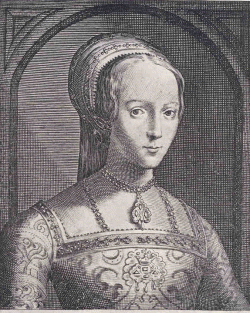
Cruikshank's depiction of Lady Jane Grey
And in the center of it all is Lady Jane Grey, a character of undeniable pathos, surrounded by conspiracies. Ainsworth invests the Spanish ambassador, Simon Renard, with the malevolent abilities of a Blofeld straight from Bond. Northumberland is formidable indeed.There is an energy to the book, and an eerie, even frightening atmosphere. The rack, the Scavenger's Daughter and the infamous Little Ease are all present and accounted for.

The current official Historical Royal Palaces Tower of London "fact sheet" on torture emphasizes how little actual torture has taken place within its walls: "Myth-making reached its peak in the 19th century, spurred on by novelists who wished to evoke the Tower of London in its former days as an ancient fortress and stronghold e.g. Ainsworth’s The Tower of London." Ainsworth may have put the devices of torture to Gothic uses, but they were very much present in the 16th century. Ironically, government-approved torture of prisoners ebbed during the reigns of Edward VI, Jane Grey, and Mary, only to rise to highest levels during reign of Elizabeth.

After The Tower of London, Ainsworth's career went on for more than thirty years. The characters in his books were not dimensional; bosoms continued to heave and black eyes to snap. R.H. Horne, Dickens' friend and collaborator, described Ainsworth as "a reviver of old clothes" whose novels are "generally dull except when revolting." Punch satirized Ainsworth as an aging Tudoresque dandy with the caption "The Greatest Axe-and-Neck Romancer of Our Time."


By the time of the Punch jab, Ainsworth, a widower, was responsible for his mentally ill brother. He had accepted a government pension because...he needed it. A year after a dinner in his honor in Manchester, arguably the only place where he was still esteemed, William Harrison Ainsworth died at the age of 77.
But the Tower felt the lingering impact of Ainsworth. In the foreword of his book, he had called for the opening to the public of Beauchamp Tower, the place of imprisonment of the Lady Jane Grey, where she is thought to have written on the wall of her cell. The cause was taken up by powerful patrons, including Prince Albert. Beauchamp was restored by architects and made available to visitors; other buildings were opened too.

Ainsworth's influence, as explained in The Tower of London: The Official Illustrated History:

"In The Tower of London: A Historical Romance, the Tower was first and foremost the setting for an endless series of heart-rending events and foul play. The author tells of dungeons though in fact the Tower has very few basement rooms and of a time when Tower Hill boasted a scaffold and "its soil was dyed with the richest and best blood in the land.” Such fantasies, backed by the relentless march of the romantic movement, helped create and fuel an ever-increasing demand to see and experience such events.”

No matter how much the novel's violence veers into fantasy, the faintly menacing image of the Tower that draws the throngs of the curious today was created in part by William Harrison Ainsworth. He was the greatest neck-and-axe romancer of his time...and perhaps of ours too.

This article is an Editor's Choice and was originally published August 19, 2012. 

~~~~~~~~~~

Nancy Bilyeau is a historical novelist and magazine editor based in New York. She wrote the Joanna Stafford trilogy, a trio of thrillers set in Henry VIII’s England, for Simon & Schuster. Her fourth novel is The Blue, an 18th century thriller revolving around the art & porcelain world. Her latest novel is Dreamland, set in Coney Island of 1911, is published by Endeavour Quill. A former staff editor at Rolling Stone, Entertainment Weekly, and InStyle, Nancy is currently the deputy editor at the Center on Media, Crime and Justice at John Jay College and contributes to Town & Country, CrimeReads, and Mystery Scene magazine.

For more information, visit www.nancybilyeau.com.

Tuesday, February 12, 2019

The Lady Jane Grey

by Michael Bayus

It was on this day, 465 years ago, at approximately 11 hours UTC: that Jane, the rightful queen of England, France and Ireland, was judicially murdered.

As there are countless re-tellings of the events of Lady Jane Grey's execution on that day, I won't make you read another.

Rather, I would like to take a few moments to reflect on Lady Jane's life.

Lady Jane Grey, was born in June of 1536 to Henry and Frances Grey, later Duke and Duchess of Suffolk. Lady Jane was the granddaughter of Henry VIII's sister Mary. Under the terms of Henry the eighth's will, the Suffolk family stood fourth in the line of succession to the throne. Consequently, Lady Jane received a princess's education. She was precociously intelligent, reading Greek, Latin and Hebrew by the time she was 9 years old, and was a staunch advocate of the newly established Protestant faith. With the accession of the nine-year-old Edward VI in 1547, the English court became embroiled in a sequence of complex power struggles in which Lady Jane, Edward's cousin, became a pawn. As Edward's health deteriorated in 1553, the powerful nobleman John Dudley, Duke of Northumberland, persuaded the young king to exclude his half-sisters Mary and Elizabeth and decree that the crown should instead pass to his cousin Jane. She was then hastily married to the Duke of Northumberland's son, Lord Guildford. Northumberland's hold on power seemed secure when Jane was proclaimed queen on Edward's death in July 1553. However, Mary's Catholic supporters staged a rising, Northumberland's army melted away and just thirteen days later the reign of Queen Jane was over. Although her innocence was never doubted, Jane's existence as a possible figurehead of Protestant revolt made her an unacceptable danger to the new regime. She was executed on February 12th 1554, aged 17.

Lady Jane Grey, who was almost eighteen in February of 1554, had matured into a remarkable young woman, only averagely attractive, but with far better than average brains. She spoke Latin, Greek, French, Italian and some Hebrew. She was a patron of London’s Strangers Church for European Protestant exiles, and was admired amongst a circle of clever Protestant women that included William Cecil’s intellectual wife, Mildred. There is no evidence to support the later romanticized gossip amongst Italians that Jane married at the insistence of her mother and the threats of her father. It was usual for the daughters of the nobility to have an arranged marriage made around their sixteenth birthday, and even if Edward lived, Jane’s marriage had great promise. When her father died his title, Duke of Suffolk, was likely to pass to Jane's husband Guildford, who was close to her age and remembered by contemporaries as a comely, virtuous and goodly gentleman.”

Jane was informed that she was named Queen on the 9th of July 1553, three days after her cousin, King Edward VI, died. Once she realized how big the coup was and that it wasn’t going away,
Jane accepted her new role and signed many letters as "Jane the Quene". This came after Mary had declared herself Queen of England and denounced the coup. But while it was expected of Jane to give her signature to important documents and urge others to come to her aide, “The only action which Jane is known to have taken as queen was to deny her husband, Guildford Dudley, the Crown Matrimonial.”

 Jane had alleged that she had been forced into marriage by her parents and that “relations with her spouse were not good.” Yet I contend that it was common of noblemen’s sons and daughters to go into arranged marriages without question, and aware of her position and her lineage, Jane would have known that she had little choice in matters such as these. And being the religious woman she was, marriage was viewed as one of the most important things in a woman’s life. It is possible that Jane might have not liked being married to someone she barely knew, but due to her religious fervor, had come to accept it. But given how kings and queens saw themselves, it is not outside the realm of possibility that Jane might have said this in order to get her way. Jane would die on the 12th of February 1554, after her husband.

 Jane was made into a passive figure later on, a Protestant martyr who refused to accept the crown, who was the victim of her parents' abuse. Think of this distortion as a Snow White washing of Jane. The Victorians wanted to think of Jane as the poor royal trapped in the tower, at the mercy of her evil cousin, and older woman, envious of her beauty, and a dangerous mother who is lusting for power and sees her daughter as nothing more than a tool. And while everyone fights one another, poor Jane stays true to herself, unwavering in her faith, choosing death instead of being a sell-out. While this is partly true (Jane was a fervent believer who never wavered in her faith), it is largely made up. Jane had to be seen as the epitome of the good, Christian woman who was submissive, yet defiant when it came to her faith. During the Victorian age, this myth became bigger and it is one that has endured.

Jane was a strong woman, no doubt. One of the most educated women of her time, who was also independent and although she did not covet the crown, once she was in that position, she did her duty to the best of her ability, urging her father, her father in law, and many others to rally to her cause and stop Mary. When everyone abandoned her, she had no choice but to admit defeat. Jane accepted Mary's reign, so long as Mary would not bring back Catholicism. When Mary did this, Jane became angry and asked the people to "return to Christ's war!" Although her outburst might seem inconsequential to us, it didn't seem so to Mary and her councilors. Several urged her to deal with her right away and Mary often hesitated to do so, but after the Wyatt Rebellion, Mary signed her death warrant.

The Lady Jane, while she was a prisoner in the Tower of London during the last 8 months or so of her short life, took the time to write. Because she knew that what she wrote would be published posthumously, she wrote very carefully worded letters that she, I believe, conceived as performance pieces. She was careful to express her thoughts in a very special way. It was important to her that she be remembered, not just remembered but in a very particular way.

She was so good at it, that people who have read what she wrote, conscripted her for their own use.

I contend that she never expected that. When she knew her death was imminent, she wrote three epitaphs. One in Latin, one in Greek, and one in English.

If Justice is done with my body, my soul will find mercy in God. [Latin]
Death will give pain to my body for its sins, but the soul will be justified before God. [Greek]
If my faults deserve punishment, my youth at least, and my imprudence were worthy of excuse; God and posterity will show me favour. [English]

I believe that %98 of what you read about the Lady Jane Grey is wrong, and it is my life's work to tell her true story.

~~~~~

Michael Anthony Bayus was born in Union town, Pennsylvania and became blind shortly after birth. At three years of age, he was given a small organ on which he began creating tunes and improvising chord progressions. Michael began formal lessons at age eight and began playing in church at fourteen. He has played numerous recitals throughout the United States.

Mr. Bayus earned a Bachelor of Music degree from Hope College in Holland, Michigan, and a Master of Music degree from The Catholic University of America, where he served as an assistant to Dr. Robert Grogan at the National Shrine of the Immaculate Conception in Washington, D.C. He has been fortunate to study under Virgil Fox, Gunter Kaunzinger, Marilyn Mason, Marie-Claire Alain, and Jean Langlais.

At the age of eight years, Mr. Bayus was given his first Tape Recorder ostensibly to record, and track his progress as an Organist. Instead, Michael used his Tape Recorder to create and produce Sound
Plays for his own amusement and amazement.

Along the way, while in High School and College, Mr. Bayus participated in various Workshops and courses in Broadcasting and while in College, produced a Radio Drama about the Lady Jane Grey as a final exam for one of those courses. Michael first knew about Lady Jane after hearing a BBC produced radio drama about her at age 12, and became passionate about her from age 14. Mr. Bayus has made the study of Lady Jane Grey's life his life's work ever since.

To that end, Mr. Bayus has published Project GreyNoise, an Audio Book about the Lady Jane Grey.

In Project GreyNoise, Lady Jane Grey is trapped in the 21st century, but willingly. Because she knows that in order to affect change and to accomplish her goal, she must act. It’s hard for her because she knows that if she were to tell people that she really is Lady Jane Grey from 1554, people would think she is crazy. So she plays Miss Jane Dudley, and she oversees an exhibit about herself and dresses up in Tudor costume, and enjoys being herself twice a day, (morning and afternoon,) for her show. As the story goes on, Mike suggests that she put on shows about events in her life as short plays or vignettes in the evening. She does it all so well that she gains a reputation around town. She is very entertaining, and she talks Tudor History as though she really lived it, because she has.

We also get to know Jane, as she assumes the role of Miss Jane Dudley, a hard working modern-day young woman, as she interacts with those she meets when she is not working her exhibit. Only Mike, and Jess know for sure just who she really is. Mike is her best friend, and Jess is the caring Mother that she never had. Her goal is to debunk all of the myths, and misinformation that has grown up around her since her death in 1554. The Victorians really did a number on her, and she has a big job on.’

For further information or to purchase, visit http://ProjectGreyNoise.com


Saturday, October 18, 2014

Who Was the Real Charles Brandon?

By Nancy Bilyeau

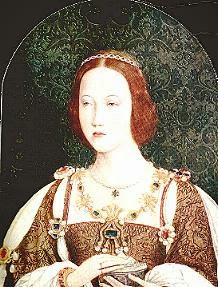
English Princess Mary Tudor
The great humanist scholar Erasmus once said of Mary Tudor, "Nature never formed anything more beautiful." The pampered and adored younger sister of Henry VIII was married at 19 to Louis XII, king of France. After the princess arrived in Paris with her dowry of 400,000 crowns and hundreds of attendants, the French, disposed to find her a disappointment, admitted that she was, indeed, a "nymph from heaven."

King Louis, 52, crippled with gout, died less than three months after the wedding to the English princess, but not before showering her with jewels, including "the Mirror of Naples," a diamond pendant with a pearl "the size of a pigeon's egg." Everyone expected the widow of the French king to make another spectacular royal marriage.

Instead, while still in France, she secretly took as her second husband a 31-year-old Englishman, Charles Brandon, the newly elevated Duke of Suffolk, celebrated for his good looks, military valor and jousting skill. Before she sailed for France, Mary had told her brother she would only agree to wed the old French king if she could choose her second husband herself. Desperate for the diplomatic alliance, Henry VIII had agreed. But Mary feared that if she returned to England, her brother would force her into another arranged marriage. She persuaded Brandon, whom she had known for years and had probably fallen in love with in England before her marriage, to marry her.  They had no permission to do so and were in disgrace, with Brandon facing arrest, until Henry VIII forgave them. Charles Brandon was, after all, his best friend.

It was a highly romantic episode, inspiring a stream of novels over the centuries, most significantly When Knighthood Was in Flower in 1898, which sold so many copies it inspired a burst of similar historical novels and no less than three films, including one in 1922 financed by William Randolph Hearst and starring Hearst's mistress, Marion Davies.


Mary Tudor and her new husband, Charles Brandon


A booted Marion Davies in When Knighthood Was in Flower


"Margaret" Tudor (Gabrielle Anwar) and Charles Brandon (Henry Cavill) in the miniseries "The Tudors"

But the real Charles Brandon, while an impressive and charismatic man to his contemporaries, is not a one-dimensional figure of handsome chivalry. His record with women was notorious. He'd already been married twice when he wed Mary Tudor -- one of the wives was still alive and fighting the annulment --and had contracted to wed yet a third, a child heiress whose family title he was using. A year and a half before he married Mary, ambassadors gossiped that he was trying to seduce Margaret of Austria, Regent of the Netherlands and daughter of the Holy Roman Emperor. The root of his behavior was not womanizing--or at least not only womanizing--but a willingness to use women as a means of gaining fortune and, if possible, fame, a common policy in the Tudor and Stuart age. He had a powerful sexual appeal, and he monetized it.

Like many real people of Henry VIII's court, Brandon is made up of both light and shadow. He is a product of the man-on-the-make spirit of the early Tudor age, which itself was made possible by the violent chaos of the death of Plantagenet rule.

His life is buried in myth, and the first is that Charles Brandon was a favored royal ward, orphaned by the Battle of Bosworth when his father, Sir William Brandon, a heroic man of "pure Lancastrian heritage" bearing the standard of Henry Tudor, was personally slain by Richard III. Which is not true in every respect.

The Brandons were an old, respectable country family. They lived in a small West Suffolk town, drawing income from farms and cattle for at least three centuries. A Geoffrey Brandon, succeeding in trade in Norwich, sent his son, William, to London in the last half of the 15th century. Says one historian: "He was a pushing, shrewd, energetic and very unscrupulous knave, who soon acquired great influence in the city and amassed corresponding wealth. Finally he became sheriff and was knighted by Henry VI." Yet when Henry VI was no longer king, replaced by the Yorkist Edward IV, Sir William Brandon switched to that side, and he lent Edward IV "considerable sums of money."

Which Edward IV declined to pay back.

Ordinarily a rich man would have had no recourse to a King's reneging. But when King Edward died, and his brother Richard III displaced his nephews and took the throne, an opportunity arose for another switching sides. Henry Tudor, in exile in Brittany, was now the leader of the Lancastrians. Brandon threw his support to Tudor. Two of his sons, William and Thomas, joined the Duke of Buckingham's rebellion against Richard III and when it failed, they fled England to join Tudor's cause. William was married to a young widow with some money named Elizabeth Bruyn. In 1484, she gave birth to Charles, the future Duke of Suffolk, in either England or France, and died shortly after.

But before we travel to the heroics of Bosworth, a terrible fact must be disclosed about the young William Brandon, knighted by Henry Tudor before they invaded England. He was, by one historical document, a rapist. In 1478 he was "in ward" for raping an "old gentlewoman" and her daughter, according to Paston. One chronicler of the time thought he would hang for it, but for unknown reasons he went free. The veracity of this record is debated today.

Early 19th century depiction of the Battle of Bosworth

It was a period of sexual brutality. Edward IV tried to assault a beautiful young woman named Elizabeth Woodville but she turned a knife on her own throat, threatening to kill herself. Somehow this made the right kind of impression, and she became his wife and queen. They were the parents of Elizabeth of York, grandparents of Henry VIII, and the present royal family are descended from them. Edward IV had countless mistresses, passing them to his courtiers when he tired of them, often against their will.

But even within this context, standard bearer was a great honor, and William Brandon was a strange choice for it. He was not a close friend of Henry Tudor's, he lacked a distinguished battle record and he was no noble. Probably Tudor, who left England for foreign exile in 1471, did not know about the rapes. One theory is William Brandon was chosen to carry the standard and stand at the side of Tudor because he was tall and strong. Nonetheless, Richard III is said to have "cleaved" his skull in his desperate charge on Tudor. Brandon's death was the most notable loss on Tudor's side.

After Bosworth, the baby Charles Brandon was an orphan. But the romantic tradition that a grateful King raised the boy with his son Henry, sharing lessons, is simply not correct. There is no record of him living with the royal children. And Charles was seven years older than Henry (and two years older than Arthur). As an adult, he was obviously intelligent but knew scant French and exhibited no interest in scholarship; he lacked Henry VIII's knowledge of languages, history, theology, and literature. Instead, Charles Brandon seems to have spent his childhood in the care of his grandfather and uncles, possibly in the country. His later letters, the "worst spelled and written of his day," were "phonetically spelled, proved him to have spoken with a broad Suffolk accent."

When Charles' grandfather died, the family fortune passed to the oldest surviving uncle, Richard. Little Charles had nothing.

Thomas Brandon, another uncle, is an under-appreciated force in the life of Charles. He was an ambitious man of ability who managed to advance himself in the court of Henry VII, and he pulled his young nephew Charles along as best he could. After he became Master of Horse, he found a place for Charles in Arthur's household: he was a sewer, or waiter. A far from cry from the legendary status of chosen playmate to princes.

How then did Charles Brandon rise so high from such inauspicious beginnings, sewer to duke? Like Thomas Cromwell, he used his personal gifts and worked extremely hard. Cromwell was a brilliant lawyer. Brandon was an outstanding athlete, the best jouster in a highly competitive group of men fighting for the attention of first Prince, then King Henry. At the age of 17, he appeared in the lists honoring Arthur's wedding to Catherine of Aragon, and was noticed by all for his prowess when he rode in a tournament held in honor of Philip of Austria and his wife, Joanna of Castile, in 1506. At this time young Brandon was serving as Master of Horse for the Earl of Essex. That household is where he lived; he did not have lodgings at the royal court.

This is the time when Charles Brandon began his marital misadventures. He seduced Anne Brown, a gentlewoman of good family serving Queen Elizabeth, and according to her family, promised to marry her. She was pregnant by him in 1506. But then Brandon jilted Anne for her wealthy widowed aunt, Dame Margaret Mortimer, old enough to be his mother. They married and, once he got his hands on her property, he sold it all and kept the cash. An appalled Venetian ambassador wrote, "In this country, young men marry old ladies for their money."

In 1507, 23-year-old Charles Brandon had the brief marriage annulled and returned to Anne Brown, whom he married. They had two daughters before she died in 1511.

Mary Brandon, by Holbein. She was one of the daughters from his first marriage.

 Lady Mortimer bitterly opposed the annulment, and became a thorn in Brandon's side for 20 years, until he managed to get the pope himself to support the annulment in 1527. The mess of his early marriages was to haunt not just Brandon but his descendants. Decades later, Elizabeth I was supposed to have examined the legal documents of the Mortimer annulment to find a way to discredit Brandon's granddaughter, Catherine Grey, who many considered next in line to the throne but whom Elizabeth loathed.

After Henry VIII succeeded, Brandon rose higher and higher in his estimation, based mostly on his tournament prowess. He took over his uncle's position of Master of Horse. When England went to war with France, Brandon served with great bravery and distinction. Throughout his long life, he was to serve Henry VIII on the battlefield time and again. "He is like a second king," an awestruck advisor wrote Margaret of Austria.

Margaret of Austria

Back in England, Brandon was soon up to his old tricks. He signed a contract to marry his 10-year-old ward, Elizabeth Grey, a wealthy heiress, and was known as Lord Lisle, her family's title, until his best friend, King Henry VIII, made him Duke of Suffolk. "From a stableboy into a nobleman," commented Erasmus skeptically. Now he was one of only three dukes in England.

Brandon was still contracted to his ward when he flirted with Margaret of Austria, pretending to steal her ring while Henry VIII laughed in encouragement. There were rumors that she would marry him, until her father, the Holy Roman Emperor, grew furious. She backed away quickly.

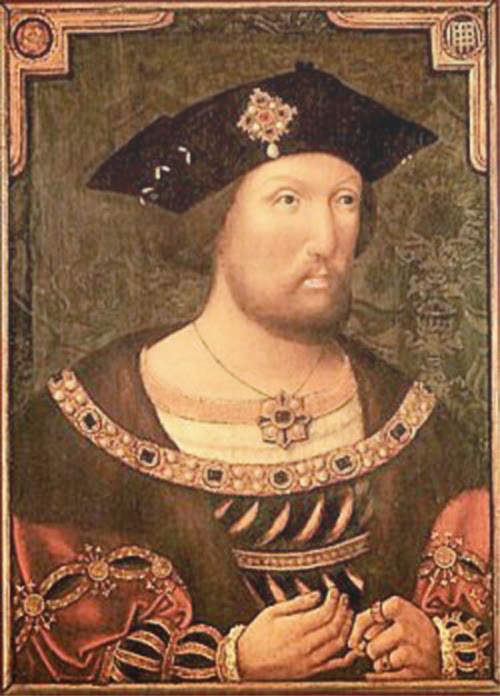
Young Henry VIII


A 19th century historian wrote of Henry VIII and Charles Brandon:
"The two men were of the same towering height but Charles was, perhaps, the more powerful... both were exceedingly fair and had the same golden curly hair, the same steel gray eyes planted on either side of an aquiline nose.... owing to the brilliance of their complexions, they were universally considered extremely handsome."

This was the man Princess Mary fell in love with at the same time her brother was arranging her marriage to the King of France. There is no hint of impropriety between them at the English court; she was scrupulously chaperoned. Brandon did not escort her to France. So why did Henry VIII send his friend, infamous for his treatment of women, to escort a vulnerable Mary back to England after King Louis died? He is supposed to have made Brandon promise not to marry her in France. Brandon was always a loyal friend to Henry VIII...yet he did marry her. The French royal jewels that the couple smuggled out of the country and gave to Henry VIII--including the Mirror of Naples--mollified him.

Henry Cavill's portrayal of Brandon adds to his mythic appeal

Did Mary Tudor find happiness with the husband she chose for herself, who she risked her brother's wrath to marry? Was this a man who, despite his irresistible good looks and athletic prowess, could be a good husband, even in the 16th century? Perhaps. That is another question entirely, fit for another blog post.

---------------------------------------------------------------------------------


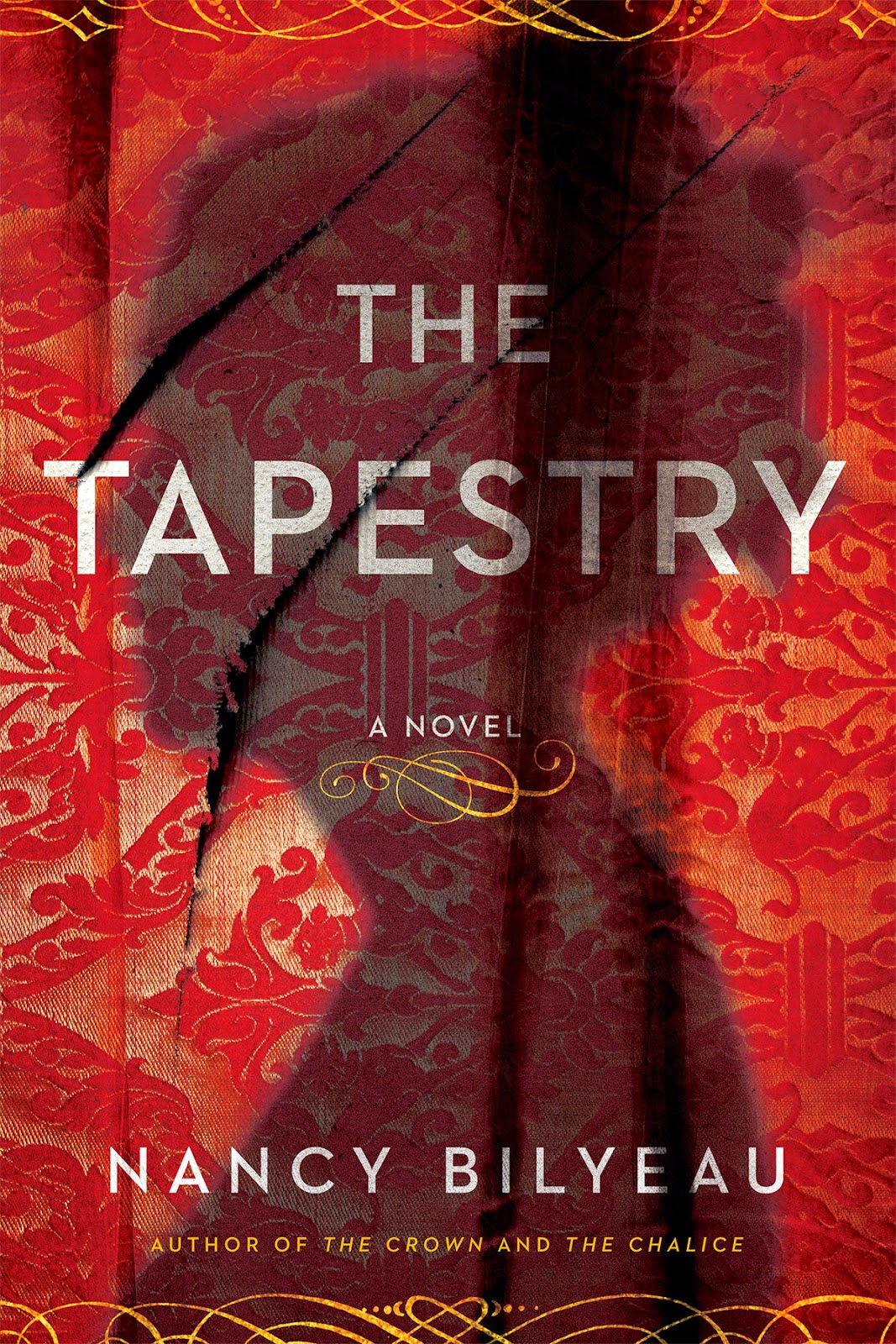
Nancy Bilyeau is the author of a trilogy of mystery novels set in the court of Henry VIII, published by Simon and Schuster. The main character, Joanna Stafford, is a Dominican novice. The Crown was an Oprah magazine pick in January 2012. The Tapestry, the third in the series, was published in 2015. For more information, go to www.nancybilyeau.com


Saturday, February 25, 2012

Lady Jane Grey: Royal Tragedy - Royal Pawn Part II


Lady Jane Grey was proclaimed Queen of England for nine days, and paid for the privilege with her life.  Continued from Lady Jane Grey:Royal Tragedy-Royal Pawn begun on February 7, 2012.

Princess Mary was in the country when she received news of her brother's death and Northumberland's treasonous coup. The Princess was many years older than her cousin Jane, and of a much sterner disposition--not at all the type to sit quietly by and allow her throne to be snatched from beneath her very nose! In a masterstroke of political maneuvering, she sent representatives all over the countryside, rallying people to her rightful cause--building an army of outraged constituents. As the story of the two Queens was trumpeted about, nearly everyone in England felt that Mary's cause was just under English law, and that Northumberland had circumvented English justice.  Soon, even the people in London began to riot, loudly and joyfully proclaiming Mary as the rightful Queen, and abandoning any romantic notions about Lady Jane's tenuous claim.

Northumberland, realizing--if not regretting--his foolishness, hastened to abandon poor little Jane, removing her from her position of State in the Tower, and sending her back to exile at Sion House while remaining in London himself, to proclaim Mary as the true Queen.

Mary triumphantly entered London, and went straight to the Tower, where her first official act was to hold her brother's funeral. Once that little detail was taken care of, she began to address her enemies. Northumberland was quickly imprisoned, and shortly thereafter beheaded along with several of his co-conspirators since Mary knew exactly who lay behind her young cousin's preemptive claim to the crown.  Although, Lady Jane and her husband were quickly returned to the Tower as prisoners; they were allowed to walk in the gardens, and were well treated for Mary, at this time, seemed to believe them innocent--a mere boy and girl forced to play their roles by conniving fathers.

Perhaps they would have stayed in captivity for many years but for Mary herself. Queen Mary--quite stern of both face and manner--quickly became hated. Shortly after she was crowned--people rose up in rebellion, proclaiming that Lady Jane should have been Queen instead. Lady Jane's fate was sealed by those who sought to elevate her. News reached Queen Mary that Sir Thomas Wyatt had collected a large army with the intention of attacking Whitehall Palace and abducting Mary, forcing her to abdicate in favor of Lady Jane.

Wyatt's army arrived, securing St. James's Park and surrounding Whitehall Palace. Fighting commenced between the Queen's troops and Wyatt's rebels, and Queen Marry watched from the Holbein Gate. With all her faults she was very brave, and was said to show no sign of fear even when she saw her own guards driven in and dispersed. When a gentleman rushed up to her, and, falling on his knees, said, 'All is lost,' and begged her to get into a barge on the river and fly to the Tower, where she would be safer, Mary refused to go, and said all was not lost, and by her bravery and her words she so inspired the men that they fought again, and succeeded in beating off the rebel forces who proceeded to fight their way toward the city.  The battle ended when Wyatt was taken prisoner on Ludgate Hill, not far from St. Paul's Cathedral.

Mary knew that she was safe, but she also feared that the danger might again rear its ugly head, and so to prevent this, she ordered Lady Jane Grey and her husband to be beheaded, for so long as they lived there would always be the fear that other men would rise as Wyatt had done, and try to make Jane Queen. On the following morning, Mary rode down to the city to thank her nobles and knights for fighting so bravely and defending her, knowing that before the day was ended she would have signed the death-warrant of Lady Jane.

Lady Jane was in the Tower when the news was brought to her. She had been a prisoner six months. It is said that when the priest came to tell Jane the news, she received it quite calmly and without a shudder. But when he tried to make her turn Roman Catholic, she told him she could never do that. The priest hurried back to Queen Mary, and said if the execution could be put off three days he might make Lady Jane a Roman Catholic, so Queen Mary consented to a short delay. During those three days she was asked if she would see her husband--who was to die first--to say good-bye; but she said it was better not, for the parting might be too heartrending, and make them both break down.

When the morning of the executions came, the guards led Guildford past Lady Jane's window. The execution of Guildford did not take long. Presently a low rumble of cart-wheels over the stones told Lady Jane that they were bringing back his dead body, and then she knew her turn must come.

One can only imagine the young woman's horror that morning; but she was very brave, and when they came for her, she is said to have neither fainted nor screamed, but rose up, and, calmly walked to her death. When she arrived at the place of execution she made a little speech, saying that she ought never to have allowed anyone to persuade her to be queen; but that she was young—she had not known what was right. And then, without any show of fear, she laid her head on the block, and was beheaded with a single blow.

And so ended the tragic tale of Lady Jane Grey—a young girl who loved her books, and would have lived a quiet life had she not been made a pawn in her father and father-in-law's ambitious games.

To read the beginning of  Lady Jane Grey: Royal Tragedy - Royal Pawn Part see the February 7, 2012 post.

Compiled From Sources In The Public Domain.

Teresa Thomas Bohannon,
MyLadyWeb, Women's History, Women Authors
Regency Romance A Very Merry Chase
Historical Fantasy Shadows In A Timeless Myth.

Friday, February 3, 2012

Lady Jane Grey: Royal Tragedy - Royal Pawn Part I


Lady Jane Grey was a young lass of fifteen who had the honor of being the Queen of England for a period of nine days, and was beheaded for it.

Jane was a cousin to young King Edward VI, crowned successor to Henry VIII, at the tender age of nine years. Within a very few years of his crowning,it became obvious that young Edward would soon pass from this earth due to a infirmity. Edward reigned at a time of political unrest as Henry the VIII's newly established Protestant religion sought to wrest all power and prominence from the followers of the Roman Catholic religion.

In seeking a successor for young Edward, the Protestants sought to ensure that the throne did not pass to his elder sister, Mary, a staunch Romanc Catholic, who would, it was feared, restore ascendency to the Roman Catholic church--not to mention, perhaps even going so far as to persecute and excecute the Protestants. A more acceptable heir--at least to the Protestants--was to be found in Mary's younger sister Elizabeth, a girl of only twenty, who just happened to be a Protestant.  Unfortunately, setting aside an older sister for a younger one would have been impossible, and so the Protestant nobles settled on young Jane Grey, thereby setting the stage for a tragedy.

Jane was the eldest daughter of the Duke of Suffolk, and as such was a titled lady in her own right. Through her mother, she was also a cousin to young Edward and his sisters, and had Mary and Elizabeth not existed, Jane would have been next in line for young Edward's throne. It had been initially proposed that Jane and Edward be married, but this scheme was dropped due to Edward's ill health and imminent death. Again, unfortunately for Jane, young Edward was still able to be manipulated by his guardian, the Duke of Northumberland. He persuaded Edward that Lady Jane must reign after him, for if she did not England would suffer; and Edward, who loved the Protestant religion, consented. He made a will stating that Lady Jane was to be Queen instead of his sisters Mary and Elizabeth. Of course, he had no right to do this, for a king cannot say who is to reign after him; the throne must go to the next heir. But Northumberland thought if he and all the Protestant nobles declared Lady Jane Queen, they could force the people of England to acknowledge her. To ensure that he retained power, Northumberland further persuaded Edward to consent to the marriage of Lady Jane to Northumberland's only son, young Lord Guildford Dudley.

According to legend, Lady Jane had lived very quietly up to this time; she was a gentle little girl who loved her books, and never thought of thrones and kings and queens. When she was quite young she could speak French and Italian, wrote Latin, and understood Greek, Hebrew, Chaldee, and Arabic. This was all the more wonderful because in those days ladies were not supposed to know very much; if they could do beautiful tapestry work and ride and sing a little, it was considered quite enough. When asked one time, why she read instead of joining her sisters at play, Jane is said to have replied that she loved books, and they gave her much more pleasure than the things in which people usually tried to find pleasure. When further asked, how she had managed to learn so much, she answered:

'Sir, God hath blessed me with sharp and severe parents and a gentle schoolmaster; for when I am in the presence of either father or mother, whether I speak, keep silence, sit, stand, or go, eat, drink, be merry or sad, be sewing, dancing, or doing anything else, I must do it, as it were, in such weight, measure, and number, even as perfectly as the world was made, or else I am so sharply taunted and cruelly threatened—yea, presently sometimes with pinches, nips, and bobs, and so cruelly disordered, that I think myself in hell until the time come that I go to Mr. Aylmer, who teacheth me so gently, so pleasantly, with such fair allurements to learning, that I think all the time as nothing that I am with him; and thus my book hath been so much my pleasure, and bringeth daily to me more pleasure and more, that in respect of it all other pleasures in very deed be but trifles and very troubles to me.'

Lady Jane knew that her cousin Edward was ill, and it must have grieved her very much; for she was fond of him, and being just the same age, they had learnt the same lessons together.She was however, probably quite surprised to be suddenly told that she must hurriedly marry the son of his guardian, young Guildford Dudley. When Edward died, shortly thereafter, Jane was not told of it until she received a message from her father-in-law, the Duke of Northumberland, ordering her to go to his great house, not far from London. Jane obeyed, most probably, never once guessing the truth of what was going to happen or why she was wanted.  Thus, she was probably quite surprised to arrive and have Northumberland, her own father, and a group of Protestant lords kneeling before her, as they informed her her that her young cousin Edward was dead, and that she must succeed him as Queen of England. Legend tells us that poor Lady Jane was so shocked and startled that she fainted away. When she came round again they told her she must be obedient and do as they told her. She is said to have pleaded with them,claiming that Mary must be Queen, and that for herself she was so young—only sixteen; and she did not care to be Queen, but only wanted to live a quiet life with her husband, Lord Dudley. But they argued with her, and told her she was a coward; that it was for the good of England, and that if she refused she would be wicked; and so she consented.

From that moment forward, her life was changed. A beautiful barge was waiting for Lady Jane in front of Sion House, and she stepped into it, and was rowed down the river through London to the Tower. When Lady Jane entered the Tower the man who was then Lord Treasurer of England came to her, and, kneeling down, offered her the crown of England. Afterwards, Northumberland and his party lost no time in sending men all about London to cry out that Lady Jane Grey was now Queen of England.

Nine days later, young Jane was dethroned, and within a few months, both she and her handsome young husband were beheaded.

I'll share the story of Jane's imprisonment and execution on March 2, 2012.

 Compiled From Sources In The Public Domain.


Teresa Thomas Bohannon,
MyLadyWeb, Women's History, Women Authors
Regency Romance A Very Merry Chase
Historical Fantasy Shadows In A Timeless Myth.