by Geraldine Evans
‘No, I won’t marry that feeble, pocky old man.’
These are the words reputed to be those of Mary Rose Tudor when she declined the proposition of her twenty-three-year-old elder brother, King Henry VIII, that she marry the decrepit King Louis XII of France.
Mary Rose was eighteen and in love, a passionate first love with Charles Brandon, her brother’s bosom friend.
It was these reputed words of Mary Rose that immediately attracted me to the idea of writing about her. It was, of course, a time when women were often subjugated by their supposed male betters. And royal princesses were expected to marry the man selected for them by their family. But, sometimes, love got in the way. Any author keen to write a biographical historical novel would be delighted to find such a strongly-etched character. To oppose Henry VIII’s desires, even when he was a young king, required courage.
Yes, Mary Rose was forced to capitulate in the end; perhaps as she might have known she would be, but her capitulation gave her a result of sorts—her brother’s promise that she could please herself when it came time to take a second husband.
All the three Tudor siblings, Margaret, Henry and Mary, seem to have been the victims of a fiercely-struck Cupid’s Dart. The Tudors were an unusual family for their times—the 16th Century wasn’t, as we know, a period when English royals and aristocrats were free to choose their own life partners. But these Tudors pursued their passionate marital desires until they achieved them. Margaret, the widow of James IV of Scotland, had submitted to the match with the Scottish king when she was no more than thirteen, and by the time she was widowed, (by her brother, Henry’s forces at Flodden) ten years later, she was determined to marry Archibald Douglas, Earl of Angus, a young man of her own age, which she did in August 1514 – the same year her younger sister Mary Rose unwillingly married King Louis XII – and less than a year after the death of her first husband James IV.

But Margaret’s marriage to Angus of the powerful Douglas family aroused the enmity and jealousy of the other Scottish lords, and the Scottish Parliament decided that, by her marriage to Archibald Douglas, she had forfeited her right to be Regent for her son by the king. After being besieged in Stirling Castle by the Scottish lords, Margaret managed to escape to England, though she was forced to leave behind her two young sons by King James. Margaret returned to Scotland in 1517, but by the mid-1520s, her second marriage was a battleground. Margaret, while estranged and not yet divorced from Archibald Douglas, became a scandal for the second time when she began a liaison with the handsome young courtier, Henry Stewart, whom she later married as her third husband; Henry VIII wasn’t the only Tudor who went in for multiple marriages—Margaret ran him a close second and was rather more successful at achieving her aims than Henry.
Mary Rose must have studied her sister and her marital manoeuvres to choose her second husband because she, too, managed to do what her kingly brother had promised she might, and she secretly married Charles Brandon, the love of her life, a scant few weeks after the death of King Louis her first husband–a scandalous action for a widowed queen. She spurned the lusts and promises of marriage of the already married new King of France, Francis I, her late husband’s cousin and son-in-law, and the not unlikely possibility that he would divorce the saintly but unattractively overweight Queen Claude in order to possess her.
Mary Rose could, quite possibly, have been Queen of France twice over if she had chosen to play Francis as later, Anne Boleyn played King Henry. But Mary Rose, like her brother and sister, held passion and love higher than crowns and kingdoms. She spurned that second chance at queen-ship. Margaret threw hers away when she chose to marry Archibald Douglas, and the Council offered the Regency to the French-raised Albany.
Henry, too, threw his throne and his country into the ring for the sake of the love of Anne Boleyn. The world knows that Henry’s passion for Anne consumed him to the extent that he risked his own destruction by the Pope and the Catholic rulers on the continent after he threw off the yoke of the Pope and the mighty Catholic Church. He dared the threat of Excommunication, robbed the Church of its riches and destroyed many beautiful religious buildings in England—we can still see their stark ruins in many a country landscape—not just because of his need for a son, but also for his burning desire for Anne. Of course, he then went on to have a long history of marrying and discarding the loves of his life. He also knew Catherine of Aragon, his brother Arthur’s widow, well before he married her and was, at the least, presumably sufficiently attracted to her to wed her.
Love – the love that the court poets wrote about and that troubadours sang about – was a pretty unusual experience in marriage for those at the top end of society. Yet all three of the surviving Tudor siblings accomplished marriage for love.
Perhaps Henry and his sisters inherited from their maternal Yorkist grandfather, Edward IV, the knowledge that betrothal or marriage needn’t be something that had to last for a lifetime. Because Edward IV entered into a secret marriage with a widow, Lady Elizabeth Grey. Worse, she was a widow from the Lancastrian side during the desperate years of the fight for the English throne known as the Wars of the Roses. And Edward, in his lust, chose to ignore the fact that he was already promised to Eleanor Talbot. This at a time when betrothals were supposedly regarded as seriously as marriage.
Two of the tragic children of Edward’s ‘marriage’ to Elizabeth Grey, were the ‘Princes in the Tower’, killed, as the history books and Shakespeare have it, by Edward’s ‘wicked’ brother so he could take the throne as Richard III. But, if it is true that Edward IV’s children were bastards because of his pre-contract with Eleanor Talbot, the ‘wicked’ Richard was doing no more than take his rights, which, as the next surviving son of Richard Duke of York, he was fully entitled to do (historians still dispute who was really responsible for the death of the young princes), especially as the young son of his executed elder brother George of Clarence lost his right to inherit the throne owing to his father’s traitorous behaviour.
Or perhaps Henry and Margaret learned about the disposability of betrothal and marriage by studying the marital adventures of Henry’s friend, Charles Brandon. Brandon’s behaviour was notorious even for those cavalier times. He had three weddings/betrothals in the space of three-four years; the first in 1505 to Anne Brown, when he was twenty-one. He repudiated Anne Brown after their first betrothal – easy to do as they made their vows ‘Per verba de praesenti’; that is with no ceremony or witnesses although this form of betrothal was considered a binding contract under Canon Law. He left Anne in order to marry her wealthy aunt, Margaret Mortimer. He then proceeded to divorce Margaret Mortimer, help himself to her fortune and, in 1508, re-marry Anne Brown, who must have been a forgiving kind of woman. She must also, by then, have had a far greater understanding of Brandon’s character, because on the second occasion they said their vows at a well-attended public ceremony. Anne died four years later.
Brandon’s next marital ambition was Elizabeth Grey. Elizabeth was a child of eight and he was twenty-nine. She was an orphan, an heiress and Brandon’s ward. Henry VIII had given him the wardship for the explicit purpose of allowing his friend to become Viscount Lisle by right of his young betrothed. Brandon at this time was an untitled country gentleman. Elizabeth later repudiated him.
Notwithstanding his betrothal to little Elizabeth, in 1513, Brandon, who had accompanied King Henry to France, sought, with Henry’s complicit assistance, to persuade Margaret the Regent of the Netherlands to marry him. The pair went so far as to exchange rings. But Margaret’s good sense rescued her, and she demanded the return of her ring.
And this was the man that Mary Rose Tudor desperately desired to marry. But she was only eighteen, an emotional, headstrong girl and can perhaps be forgiven for refusing to heed the advice of older and wiser heads. Love’s Dart had claimed her and Mary Rose, always more of a woman than a princess, wanted to follow her heart.
And Brandon, whatever his protests, when on a diplomatic mission to the French court, allowed himself to be persuaded to go through with this secret marriage by the besotted Mary Rose, the ‘Nymph from Heaven’, who was widely regarded as one of the most attractive young women in Europe. Mary, newly-widowed and desperate to marry him, won the day by virtue of her tears and hysteria.
They went through with their secret marriage, consumated it, and then awaited the reaction of King Henry, who, needless to say, was furious. Or at least he pretended to be so because he allowed his agreement to be bought at the expense of most of Mary’s lavish French dower and the many splendid jewels the besotted old King Louis had showered upon her. I wonder if, knowing his sister (and by sending Brandon, in particular to the French court at this time), this secret marriage to Brandon was something Henry had hoped would happen so he could enrich himself at Mary Rose’s expense. Sometimes, the story of the Tudors reads like a television soap opera!
Yes, they were a passionate lot, those Tudor siblings. They dared all for love and confounded the world. But perhaps they would have been better off if they had married solely for duty. Because their passionate desires for the ‘wrong’ partners and stubborn insistence on following their hearts, brought none of them lasting happiness.
A little love can be a dangerous thing for a royal.
[This archive post is an Editor's Choice, originally published on the EHFA blog on 31st July 2104]
~~~~~~~~~~~

Geraldine Evans is the author of Reluctant Queen: The Story of Mary Rose Tudor, the Defiant Little Sister of Infamous English King, Henry VIII, her first biographical historical novel (Geraldine is also the author the two mystery series as well as other work).
WEBSITE/BLOG
Newsletter Sign-Up Link for Bargains and New Releases
AMAZON UK AUTHOR PAGE
AMAZON US AUTHOR PAGE
 |
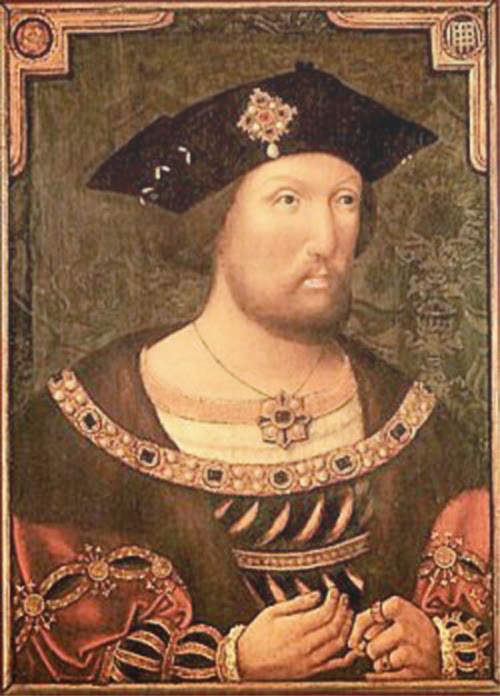
| King Louis XII of France |
These are the words reputed to be those of Mary Rose Tudor when she declined the proposition of her twenty-three-year-old elder brother, King Henry VIII, that she marry the decrepit King Louis XII of France.
Mary Rose was eighteen and in love, a passionate first love with Charles Brandon, her brother’s bosom friend.
It was these reputed words of Mary Rose that immediately attracted me to the idea of writing about her. It was, of course, a time when women were often subjugated by their supposed male betters. And royal princesses were expected to marry the man selected for them by their family. But, sometimes, love got in the way. Any author keen to write a biographical historical novel would be delighted to find such a strongly-etched character. To oppose Henry VIII’s desires, even when he was a young king, required courage.
 |
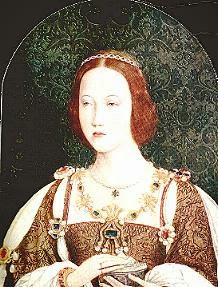
| Mary Rose Tudor |
All the three Tudor siblings, Margaret, Henry and Mary, seem to have been the victims of a fiercely-struck Cupid’s Dart. The Tudors were an unusual family for their times—the 16th Century wasn’t, as we know, a period when English royals and aristocrats were free to choose their own life partners. But these Tudors pursued their passionate marital desires until they achieved them. Margaret, the widow of James IV of Scotland, had submitted to the match with the Scottish king when she was no more than thirteen, and by the time she was widowed, (by her brother, Henry’s forces at Flodden) ten years later, she was determined to marry Archibald Douglas, Earl of Angus, a young man of her own age, which she did in August 1514 – the same year her younger sister Mary Rose unwillingly married King Louis XII – and less than a year after the death of her first husband James IV.

But Margaret’s marriage to Angus of the powerful Douglas family aroused the enmity and jealousy of the other Scottish lords, and the Scottish Parliament decided that, by her marriage to Archibald Douglas, she had forfeited her right to be Regent for her son by the king. After being besieged in Stirling Castle by the Scottish lords, Margaret managed to escape to England, though she was forced to leave behind her two young sons by King James. Margaret returned to Scotland in 1517, but by the mid-1520s, her second marriage was a battleground. Margaret, while estranged and not yet divorced from Archibald Douglas, became a scandal for the second time when she began a liaison with the handsome young courtier, Henry Stewart, whom she later married as her third husband; Henry VIII wasn’t the only Tudor who went in for multiple marriages—Margaret ran him a close second and was rather more successful at achieving her aims than Henry.
Mary Rose must have studied her sister and her marital manoeuvres to choose her second husband because she, too, managed to do what her kingly brother had promised she might, and she secretly married Charles Brandon, the love of her life, a scant few weeks after the death of King Louis her first husband–a scandalous action for a widowed queen. She spurned the lusts and promises of marriage of the already married new King of France, Francis I, her late husband’s cousin and son-in-law, and the not unlikely possibility that he would divorce the saintly but unattractively overweight Queen Claude in order to possess her.
Mary Rose could, quite possibly, have been Queen of France twice over if she had chosen to play Francis as later, Anne Boleyn played King Henry. But Mary Rose, like her brother and sister, held passion and love higher than crowns and kingdoms. She spurned that second chance at queen-ship. Margaret threw hers away when she chose to marry Archibald Douglas, and the Council offered the Regency to the French-raised Albany.
Henry, too, threw his throne and his country into the ring for the sake of the love of Anne Boleyn. The world knows that Henry’s passion for Anne consumed him to the extent that he risked his own destruction by the Pope and the Catholic rulers on the continent after he threw off the yoke of the Pope and the mighty Catholic Church. He dared the threat of Excommunication, robbed the Church of its riches and destroyed many beautiful religious buildings in England—we can still see their stark ruins in many a country landscape—not just because of his need for a son, but also for his burning desire for Anne. Of course, he then went on to have a long history of marrying and discarding the loves of his life. He also knew Catherine of Aragon, his brother Arthur’s widow, well before he married her and was, at the least, presumably sufficiently attracted to her to wed her.
Love – the love that the court poets wrote about and that troubadours sang about – was a pretty unusual experience in marriage for those at the top end of society. Yet all three of the surviving Tudor siblings accomplished marriage for love.
Perhaps Henry and his sisters inherited from their maternal Yorkist grandfather, Edward IV, the knowledge that betrothal or marriage needn’t be something that had to last for a lifetime. Because Edward IV entered into a secret marriage with a widow, Lady Elizabeth Grey. Worse, she was a widow from the Lancastrian side during the desperate years of the fight for the English throne known as the Wars of the Roses. And Edward, in his lust, chose to ignore the fact that he was already promised to Eleanor Talbot. This at a time when betrothals were supposedly regarded as seriously as marriage.
Two of the tragic children of Edward’s ‘marriage’ to Elizabeth Grey, were the ‘Princes in the Tower’, killed, as the history books and Shakespeare have it, by Edward’s ‘wicked’ brother so he could take the throne as Richard III. But, if it is true that Edward IV’s children were bastards because of his pre-contract with Eleanor Talbot, the ‘wicked’ Richard was doing no more than take his rights, which, as the next surviving son of Richard Duke of York, he was fully entitled to do (historians still dispute who was really responsible for the death of the young princes), especially as the young son of his executed elder brother George of Clarence lost his right to inherit the throne owing to his father’s traitorous behaviour.
Or perhaps Henry and Margaret learned about the disposability of betrothal and marriage by studying the marital adventures of Henry’s friend, Charles Brandon. Brandon’s behaviour was notorious even for those cavalier times. He had three weddings/betrothals in the space of three-four years; the first in 1505 to Anne Brown, when he was twenty-one. He repudiated Anne Brown after their first betrothal – easy to do as they made their vows ‘Per verba de praesenti’; that is with no ceremony or witnesses although this form of betrothal was considered a binding contract under Canon Law. He left Anne in order to marry her wealthy aunt, Margaret Mortimer. He then proceeded to divorce Margaret Mortimer, help himself to her fortune and, in 1508, re-marry Anne Brown, who must have been a forgiving kind of woman. She must also, by then, have had a far greater understanding of Brandon’s character, because on the second occasion they said their vows at a well-attended public ceremony. Anne died four years later.
Brandon’s next marital ambition was Elizabeth Grey. Elizabeth was a child of eight and he was twenty-nine. She was an orphan, an heiress and Brandon’s ward. Henry VIII had given him the wardship for the explicit purpose of allowing his friend to become Viscount Lisle by right of his young betrothed. Brandon at this time was an untitled country gentleman. Elizabeth later repudiated him.
Notwithstanding his betrothal to little Elizabeth, in 1513, Brandon, who had accompanied King Henry to France, sought, with Henry’s complicit assistance, to persuade Margaret the Regent of the Netherlands to marry him. The pair went so far as to exchange rings. But Margaret’s good sense rescued her, and she demanded the return of her ring.
And this was the man that Mary Rose Tudor desperately desired to marry. But she was only eighteen, an emotional, headstrong girl and can perhaps be forgiven for refusing to heed the advice of older and wiser heads. Love’s Dart had claimed her and Mary Rose, always more of a woman than a princess, wanted to follow her heart.
 |
| Mary Rose and Charles Brandon |
They went through with their secret marriage, consumated it, and then awaited the reaction of King Henry, who, needless to say, was furious. Or at least he pretended to be so because he allowed his agreement to be bought at the expense of most of Mary’s lavish French dower and the many splendid jewels the besotted old King Louis had showered upon her. I wonder if, knowing his sister (and by sending Brandon, in particular to the French court at this time), this secret marriage to Brandon was something Henry had hoped would happen so he could enrich himself at Mary Rose’s expense. Sometimes, the story of the Tudors reads like a television soap opera!
Yes, they were a passionate lot, those Tudor siblings. They dared all for love and confounded the world. But perhaps they would have been better off if they had married solely for duty. Because their passionate desires for the ‘wrong’ partners and stubborn insistence on following their hearts, brought none of them lasting happiness.
A little love can be a dangerous thing for a royal.
[This archive post is an Editor's Choice, originally published on the EHFA blog on 31st July 2104]
~~~~~~~~~~~

Geraldine Evans is the author of Reluctant Queen: The Story of Mary Rose Tudor, the Defiant Little Sister of Infamous English King, Henry VIII, her first biographical historical novel (Geraldine is also the author the two mystery series as well as other work).
WEBSITE/BLOG
Newsletter Sign-Up Link for Bargains and New Releases
AMAZON UK AUTHOR PAGE
AMAZON US AUTHOR PAGE



_1.jpg)