
By Nancy Bilyeau
The great humanist scholar Erasmus once said of Mary Tudor, "Nature never formed anything more beautiful." The pampered and adored younger sister of Henry VIII was married at 19 to Louis XII, king of France. After the princess arrived in Paris with her dowry of 400,000 crowns and hundreds of attendants, the French, disposed to find her a disappointment, admitted that she was, indeed, a "nymph from heaven."
King Louis, 52, crippled with gout, died less than three months after the wedding to the English princess, but not before showering her with jewels, including "the Mirror of Naples," a diamond pendant with a pearl "the size of a pigeon's egg." Everyone expected the widow of the French king to make another spectacular royal marriage.
Instead, while still in France, she secretly took as her second husband a 31-year-old Englishman, Charles Brandon, the newly elevated Duke of Suffolk, celebrated for his good looks, military valor and jousting skill. Before she sailed for France, Mary had told her brother she would only agree to wed the old French king if she could choose her second husband herself. Desperate for the diplomatic alliance, Henry VIII had agreed. But Mary feared that if she returned to England, her brother would force her into another arranged marriage. She persuaded Brandon, whom she had known for years and had probably fallen in love with in England before her marriage, to marry her. They had no permission to do so and were in disgrace, with Brandon facing arrest, until Henry VIII forgave them. Charles Brandon was, after all, his best friend.
It was a highly romantic episode, inspiring a stream of novels over the centuries, most significantly When Knighthood Was in Flower in 1898, which sold so many copies it inspired a burst of similar historical novels and no less than three films, including one in 1922 financed by William Randolph Hearst and starring Hearst's mistress, Marion Davies.
But the real Charles Brandon, while an impressive and charismatic man to his contemporaries, is not a one-dimensional figure of handsome chivalry. His record with women was notorious. He'd already been married twice when he wed Mary Tudor -- one of the wives was still alive and fighting the annulment --and had contracted to wed yet a third, a child heiress whose family title he was using. A year and a half before he married Mary, ambassadors gossiped that he was trying to seduce Margaret of Austria, Regent of the Netherlands and daughter of the Holy Roman Emperor. The root of his behavior was not womanizing--or at least not only womanizing--but a willingness to use women as a means of gaining fortune and, if possible, fame, a common policy in the Tudor and Stuart age. He had a powerful sexual appeal, and he monetized it.
Like many real people of Henry VIII's court, Brandon is made up of both light and shadow. He is a product of the man-on-the-make spirit of the early Tudor age, which itself was made possible by the violent chaos of the death of Plantagenet rule.
His life is buried in myth, and the first is that Charles Brandon was a favored royal ward, orphaned by the Battle of Bosworth when his father, Sir William Brandon, a heroic man of "pure Lancastrian heritage" bearing the standard of Henry Tudor, was personally slain by Richard III. Which is not true in every respect.
The Brandons were an old, respectable country family. They lived in a small West Suffolk town, drawing income from farms and cattle for at least three centuries. A Geoffrey Brandon, succeeding in trade in Norwich, sent his son, William, to London in the last half of the 15th century. Says one historian: "He was a pushing, shrewd, energetic and very unscrupulous knave, who soon acquired great influence in the city and amassed corresponding wealth. Finally he became sheriff and was knighted by Henry VI." Yet when Henry VI was no longer king, replaced by the Yorkist Edward IV, Sir William Brandon switched to that side, and he lent Edward IV "considerable sums of money."
Which Edward IV declined to pay back.
Ordinarily a rich man would have had no recourse to a King's reneging. But when King Edward died, and his brother Richard III displaced his nephews and took the throne, an opportunity arose for another switching sides. Henry Tudor, in exile in Brittany, was now the leader of the Lancastrians. Brandon threw his support to Tudor. Two of his sons, William and Thomas, joined the Duke of Buckingham's rebellion against Richard III and when it failed, they fled England to join Tudor's cause. William was married to a young widow with some money named Elizabeth Bruyn. In 1484, she gave birth to Charles, the future Duke of Suffolk, in either England or France, and died shortly after.
But before we travel to the heroics of Bosworth, a terrible fact must be disclosed about the young William Brandon, knighted by Henry Tudor before they invaded England. He was, by one historical document, a rapist. In 1478 he was "in ward" for raping an "old gentlewoman" and her daughter, according to Paston. One chronicler of the time thought he would hang for it, but for unknown reasons he went free. The veracity of this record is debated today.
It was a period of sexual brutality. Edward IV tried to assault a beautiful young woman named Elizabeth Woodville but she turned a knife on her own throat, threatening to kill herself. Somehow this made the right kind of impression, and she became his wife and queen. They were the parents of Elizabeth of York, grandparents of Henry VIII, and the present royal family are descended from them. Edward IV had countless mistresses, passing them to his courtiers when he tired of them, often against their will.
But even within this context, standard bearer was a great honor, and William Brandon was a strange choice for it. He was not a close friend of Henry Tudor's, he lacked a distinguished battle record and he was no noble. Probably Tudor, who left England for foreign exile in 1471, did not know about the rapes. One theory is William Brandon was chosen to carry the standard and stand at the side of Tudor because he was tall and strong. Nonetheless, Richard III is said to have "cleaved" his skull in his desperate charge on Tudor. Brandon's death was the most notable loss on Tudor's side.
After Bosworth, the baby Charles Brandon was an orphan. But the romantic tradition that a grateful King raised the boy with his son Henry, sharing lessons, is simply not correct. There is no record of him living with the royal children. And Charles was seven years older than Henry (and two years older than Arthur). As an adult, he was obviously intelligent but knew scant French and exhibited no interest in scholarship; he lacked Henry VIII's knowledge of languages, history, theology, and literature. Instead, Charles Brandon seems to have spent his childhood in the care of his grandfather and uncles, possibly in the country. His later letters, the "worst spelled and written of his day," were "phonetically spelled, proved him to have spoken with a broad Suffolk accent."
When Charles' grandfather died, the family fortune passed to the oldest surviving uncle, Richard. Little Charles had nothing.
Thomas Brandon, another uncle, is an under-appreciated force in the life of Charles. He was an ambitious man of ability who managed to advance himself in the court of Henry VII, and he pulled his young nephew Charles along as best he could. After he became Master of Horse, he found a place for Charles in Arthur's household: he was a sewer, or waiter. A far from cry from the legendary status of chosen playmate to princes.
How then did Charles Brandon rise so high from such inauspicious beginnings, sewer to duke? Like Thomas Cromwell, he used his personal gifts and worked extremely hard. Cromwell was a brilliant lawyer. Brandon was an outstanding athlete, the best jouster in a highly competitive group of men fighting for the attention of first Prince, then King Henry. At the age of 17, he appeared in the lists honoring Arthur's wedding to Catherine of Aragon, and was noticed by all for his prowess when he rode in a tournament held in honor of Philip of Austria and his wife, Joanna of Castile, in 1506. At this time young Brandon was serving as Master of Horse for the Earl of Essex. That household is where he lived; he did not have lodgings at the royal court.
This is the time when Charles Brandon began his marital misadventures. He seduced Anne Brown, a gentlewoman of good family serving Queen Elizabeth, and according to her family, promised to marry her. She was pregnant by him in 1506. But then Brandon jilted Anne for her wealthy widowed aunt, Dame Margaret Mortimer, old enough to be his mother. They married and, once he got his hands on her property, he sold it all and kept the cash. An appalled Venetian ambassador wrote, "In this country, young men marry old ladies for their money."
In 1507, 23-year-old Charles Brandon had the brief marriage annulled and returned to Anne Brown, whom he married. They had two daughters before she died in 1511.
Lady Mortimer bitterly opposed the annulment, and became a thorn in Brandon's side for 20 years, until he managed to get the pope himself to support the annulment in 1527. The mess of his early marriages was to haunt not just Brandon but his descendants. Decades later, Elizabeth I was supposed to have examined the legal documents of the Mortimer annulment to find a way to discredit Brandon's granddaughter, Catherine Grey, who many considered next in line to the throne but whom Elizabeth loathed.
After Henry VIII succeeded, Brandon rose higher and higher in his estimation, based mostly on his tournament prowess. He took over his uncle's position of Master of Horse. When England went to war with France, Brandon served with great bravery and distinction. Throughout his long life, he was to serve Henry VIII on the battlefield time and again. "He is like a second king," an awestruck advisor wrote Margaret of Austria.
Back in England, Brandon was soon up to his old tricks. He signed a contract to marry his 10-year-old ward, Elizabeth Grey, a wealthy heiress, and was known as Lord Lisle, her family's title, until his best friend, King Henry VIII, made him Duke of Suffolk. "From a stableboy into a nobleman," commented Erasmus skeptically. Now he was one of only three dukes in England.
Brandon was still contracted to his ward when he flirted with Margaret of Austria, pretending to steal her ring while Henry VIII laughed in encouragement. There were rumors that she would marry him, until her father, the Holy Roman Emperor, grew furious. She backed away quickly.
A 19th century historian wrote of Henry VIII and Charles Brandon:
This was the man Princess Mary fell in love with at the same time her brother was arranging her marriage to the King of France. There is no hint of impropriety between them at the English court; she was scrupulously chaperoned. Brandon did not escort her to France. So why did Henry VIII send his friend, infamous for his treatment of women, to escort a vulnerable Mary back to England after King Louis died? He is supposed to have made Brandon promise not to marry her in France. Brandon was always a loyal friend to Henry VIII...yet he did marry her. The French royal jewels that the couple smuggled out of the country and gave to Henry VIII--including the Mirror of Naples--mollified him.
Did Mary Tudor find happiness with the husband she chose for herself, who she risked her brother's wrath to marry? Was this a man who, despite his irresistible good looks and athletic prowess, could be a good husband, even in the 16th century? Perhaps. That is another question entirely, fit for another blog post.
---------------------------------------------------------------------------------
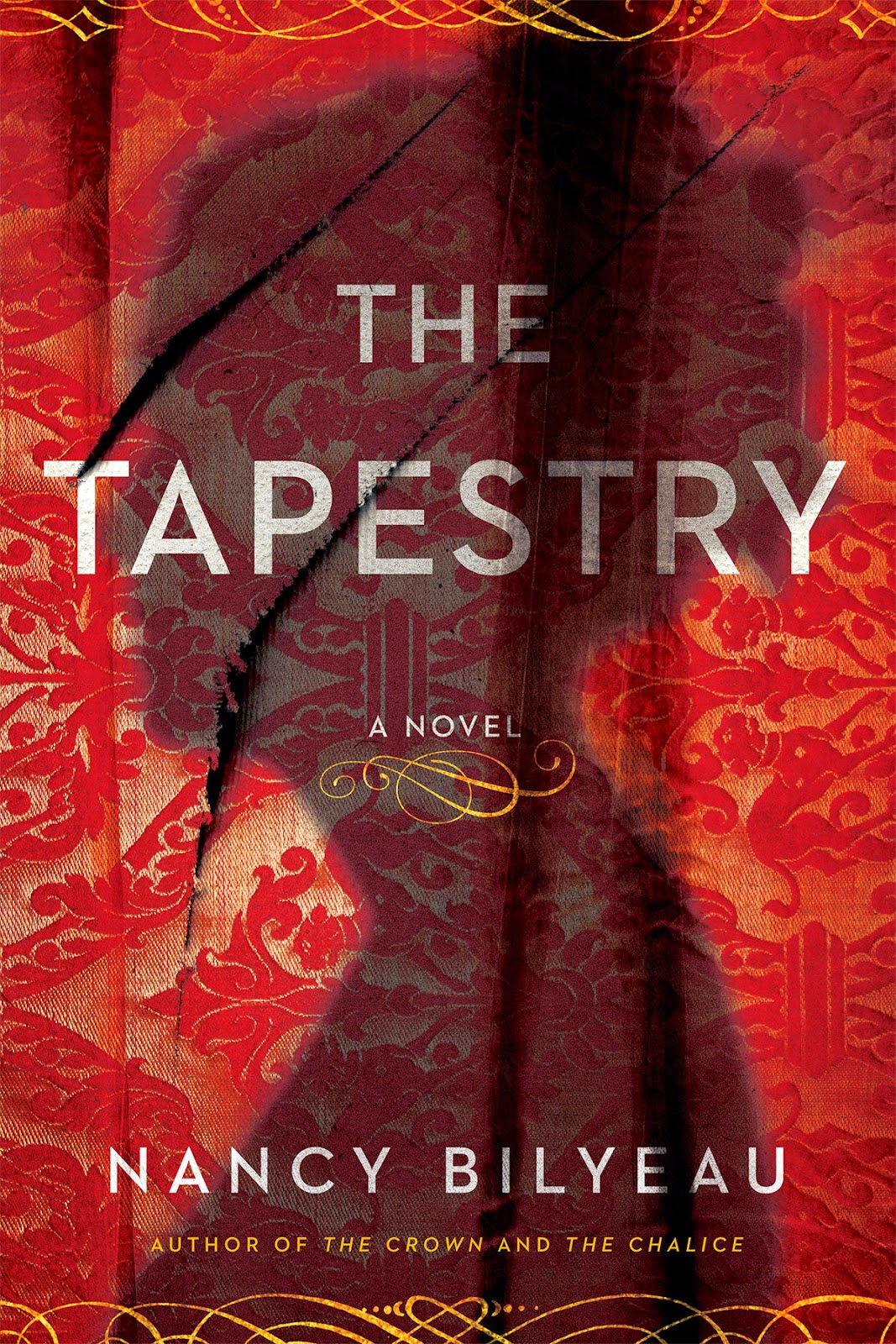
Nancy Bilyeau is the author of a trilogy of mystery novels set in the court of Henry VIII, published by Simon and Schuster. The main character, Joanna Stafford, is a Dominican novice. The Crown was an Oprah magazine pick in January 2012. The Tapestry, the third in the series, was published in 2015. For more information, go to www.nancybilyeau.com
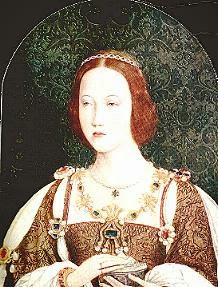 |
| English Princess Mary Tudor |
King Louis, 52, crippled with gout, died less than three months after the wedding to the English princess, but not before showering her with jewels, including "the Mirror of Naples," a diamond pendant with a pearl "the size of a pigeon's egg." Everyone expected the widow of the French king to make another spectacular royal marriage.
Instead, while still in France, she secretly took as her second husband a 31-year-old Englishman, Charles Brandon, the newly elevated Duke of Suffolk, celebrated for his good looks, military valor and jousting skill. Before she sailed for France, Mary had told her brother she would only agree to wed the old French king if she could choose her second husband herself. Desperate for the diplomatic alliance, Henry VIII had agreed. But Mary feared that if she returned to England, her brother would force her into another arranged marriage. She persuaded Brandon, whom she had known for years and had probably fallen in love with in England before her marriage, to marry her. They had no permission to do so and were in disgrace, with Brandon facing arrest, until Henry VIII forgave them. Charles Brandon was, after all, his best friend.
It was a highly romantic episode, inspiring a stream of novels over the centuries, most significantly When Knighthood Was in Flower in 1898, which sold so many copies it inspired a burst of similar historical novels and no less than three films, including one in 1922 financed by William Randolph Hearst and starring Hearst's mistress, Marion Davies.
 |
| Mary Tudor and her new husband, Charles Brandon |
_1.jpg) |
| A booted Marion Davies in When Knighthood Was in Flower |
 |
| "Margaret" Tudor (Gabrielle Anwar) and Charles Brandon (Henry Cavill) in the miniseries "The Tudors" |
But the real Charles Brandon, while an impressive and charismatic man to his contemporaries, is not a one-dimensional figure of handsome chivalry. His record with women was notorious. He'd already been married twice when he wed Mary Tudor -- one of the wives was still alive and fighting the annulment --and had contracted to wed yet a third, a child heiress whose family title he was using. A year and a half before he married Mary, ambassadors gossiped that he was trying to seduce Margaret of Austria, Regent of the Netherlands and daughter of the Holy Roman Emperor. The root of his behavior was not womanizing--or at least not only womanizing--but a willingness to use women as a means of gaining fortune and, if possible, fame, a common policy in the Tudor and Stuart age. He had a powerful sexual appeal, and he monetized it.
Like many real people of Henry VIII's court, Brandon is made up of both light and shadow. He is a product of the man-on-the-make spirit of the early Tudor age, which itself was made possible by the violent chaos of the death of Plantagenet rule.
His life is buried in myth, and the first is that Charles Brandon was a favored royal ward, orphaned by the Battle of Bosworth when his father, Sir William Brandon, a heroic man of "pure Lancastrian heritage" bearing the standard of Henry Tudor, was personally slain by Richard III. Which is not true in every respect.
The Brandons were an old, respectable country family. They lived in a small West Suffolk town, drawing income from farms and cattle for at least three centuries. A Geoffrey Brandon, succeeding in trade in Norwich, sent his son, William, to London in the last half of the 15th century. Says one historian: "He was a pushing, shrewd, energetic and very unscrupulous knave, who soon acquired great influence in the city and amassed corresponding wealth. Finally he became sheriff and was knighted by Henry VI." Yet when Henry VI was no longer king, replaced by the Yorkist Edward IV, Sir William Brandon switched to that side, and he lent Edward IV "considerable sums of money."
Which Edward IV declined to pay back.
Ordinarily a rich man would have had no recourse to a King's reneging. But when King Edward died, and his brother Richard III displaced his nephews and took the throne, an opportunity arose for another switching sides. Henry Tudor, in exile in Brittany, was now the leader of the Lancastrians. Brandon threw his support to Tudor. Two of his sons, William and Thomas, joined the Duke of Buckingham's rebellion against Richard III and when it failed, they fled England to join Tudor's cause. William was married to a young widow with some money named Elizabeth Bruyn. In 1484, she gave birth to Charles, the future Duke of Suffolk, in either England or France, and died shortly after.
But before we travel to the heroics of Bosworth, a terrible fact must be disclosed about the young William Brandon, knighted by Henry Tudor before they invaded England. He was, by one historical document, a rapist. In 1478 he was "in ward" for raping an "old gentlewoman" and her daughter, according to Paston. One chronicler of the time thought he would hang for it, but for unknown reasons he went free. The veracity of this record is debated today.
 |
| Early 19th century depiction of the Battle of Bosworth |
It was a period of sexual brutality. Edward IV tried to assault a beautiful young woman named Elizabeth Woodville but she turned a knife on her own throat, threatening to kill herself. Somehow this made the right kind of impression, and she became his wife and queen. They were the parents of Elizabeth of York, grandparents of Henry VIII, and the present royal family are descended from them. Edward IV had countless mistresses, passing them to his courtiers when he tired of them, often against their will.
But even within this context, standard bearer was a great honor, and William Brandon was a strange choice for it. He was not a close friend of Henry Tudor's, he lacked a distinguished battle record and he was no noble. Probably Tudor, who left England for foreign exile in 1471, did not know about the rapes. One theory is William Brandon was chosen to carry the standard and stand at the side of Tudor because he was tall and strong. Nonetheless, Richard III is said to have "cleaved" his skull in his desperate charge on Tudor. Brandon's death was the most notable loss on Tudor's side.
After Bosworth, the baby Charles Brandon was an orphan. But the romantic tradition that a grateful King raised the boy with his son Henry, sharing lessons, is simply not correct. There is no record of him living with the royal children. And Charles was seven years older than Henry (and two years older than Arthur). As an adult, he was obviously intelligent but knew scant French and exhibited no interest in scholarship; he lacked Henry VIII's knowledge of languages, history, theology, and literature. Instead, Charles Brandon seems to have spent his childhood in the care of his grandfather and uncles, possibly in the country. His later letters, the "worst spelled and written of his day," were "phonetically spelled, proved him to have spoken with a broad Suffolk accent."
When Charles' grandfather died, the family fortune passed to the oldest surviving uncle, Richard. Little Charles had nothing.
Thomas Brandon, another uncle, is an under-appreciated force in the life of Charles. He was an ambitious man of ability who managed to advance himself in the court of Henry VII, and he pulled his young nephew Charles along as best he could. After he became Master of Horse, he found a place for Charles in Arthur's household: he was a sewer, or waiter. A far from cry from the legendary status of chosen playmate to princes.
How then did Charles Brandon rise so high from such inauspicious beginnings, sewer to duke? Like Thomas Cromwell, he used his personal gifts and worked extremely hard. Cromwell was a brilliant lawyer. Brandon was an outstanding athlete, the best jouster in a highly competitive group of men fighting for the attention of first Prince, then King Henry. At the age of 17, he appeared in the lists honoring Arthur's wedding to Catherine of Aragon, and was noticed by all for his prowess when he rode in a tournament held in honor of Philip of Austria and his wife, Joanna of Castile, in 1506. At this time young Brandon was serving as Master of Horse for the Earl of Essex. That household is where he lived; he did not have lodgings at the royal court.
This is the time when Charles Brandon began his marital misadventures. He seduced Anne Brown, a gentlewoman of good family serving Queen Elizabeth, and according to her family, promised to marry her. She was pregnant by him in 1506. But then Brandon jilted Anne for her wealthy widowed aunt, Dame Margaret Mortimer, old enough to be his mother. They married and, once he got his hands on her property, he sold it all and kept the cash. An appalled Venetian ambassador wrote, "In this country, young men marry old ladies for their money."
In 1507, 23-year-old Charles Brandon had the brief marriage annulled and returned to Anne Brown, whom he married. They had two daughters before she died in 1511.
 |
| Mary Brandon, by Holbein. She was one of the daughters from his first marriage. |
Lady Mortimer bitterly opposed the annulment, and became a thorn in Brandon's side for 20 years, until he managed to get the pope himself to support the annulment in 1527. The mess of his early marriages was to haunt not just Brandon but his descendants. Decades later, Elizabeth I was supposed to have examined the legal documents of the Mortimer annulment to find a way to discredit Brandon's granddaughter, Catherine Grey, who many considered next in line to the throne but whom Elizabeth loathed.
After Henry VIII succeeded, Brandon rose higher and higher in his estimation, based mostly on his tournament prowess. He took over his uncle's position of Master of Horse. When England went to war with France, Brandon served with great bravery and distinction. Throughout his long life, he was to serve Henry VIII on the battlefield time and again. "He is like a second king," an awestruck advisor wrote Margaret of Austria.
 |
| Margaret of Austria |
Back in England, Brandon was soon up to his old tricks. He signed a contract to marry his 10-year-old ward, Elizabeth Grey, a wealthy heiress, and was known as Lord Lisle, her family's title, until his best friend, King Henry VIII, made him Duke of Suffolk. "From a stableboy into a nobleman," commented Erasmus skeptically. Now he was one of only three dukes in England.
Brandon was still contracted to his ward when he flirted with Margaret of Austria, pretending to steal her ring while Henry VIII laughed in encouragement. There were rumors that she would marry him, until her father, the Holy Roman Emperor, grew furious. She backed away quickly.
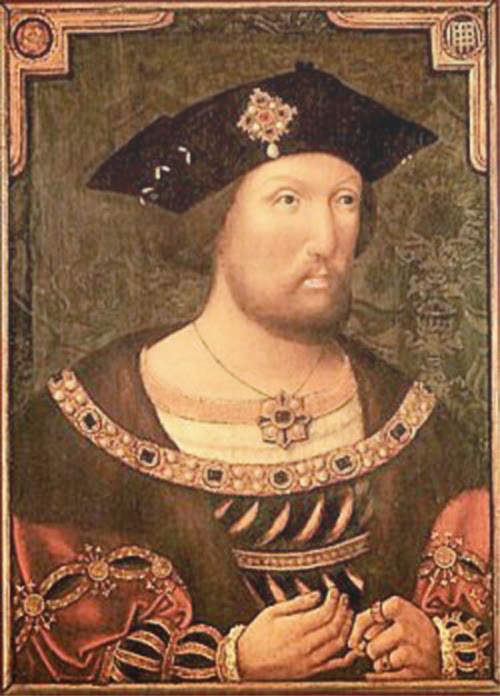 |
| Young Henry VIII |
A 19th century historian wrote of Henry VIII and Charles Brandon:
"The two men were of the same towering height but Charles was, perhaps, the more powerful... both were exceedingly fair and had the same golden curly hair, the same steel gray eyes planted on either side of an aquiline nose.... owing to the brilliance of their complexions, they were universally considered extremely handsome."
This was the man Princess Mary fell in love with at the same time her brother was arranging her marriage to the King of France. There is no hint of impropriety between them at the English court; she was scrupulously chaperoned. Brandon did not escort her to France. So why did Henry VIII send his friend, infamous for his treatment of women, to escort a vulnerable Mary back to England after King Louis died? He is supposed to have made Brandon promise not to marry her in France. Brandon was always a loyal friend to Henry VIII...yet he did marry her. The French royal jewels that the couple smuggled out of the country and gave to Henry VIII--including the Mirror of Naples--mollified him.
 |
| Henry Cavill's portrayal of Brandon adds to his mythic appeal |
Did Mary Tudor find happiness with the husband she chose for herself, who she risked her brother's wrath to marry? Was this a man who, despite his irresistible good looks and athletic prowess, could be a good husband, even in the 16th century? Perhaps. That is another question entirely, fit for another blog post.
---------------------------------------------------------------------------------
Nancy Bilyeau is the author of a trilogy of mystery novels set in the court of Henry VIII, published by Simon and Schuster. The main character, Joanna Stafford, is a Dominican novice. The Crown was an Oprah magazine pick in January 2012. The Tapestry, the third in the series, was published in 2015. For more information, go to www.nancybilyeau.com


