Sunday, December 25, 2011

800 Years of Christmas in England

by Katherine Ashe

Christmas trees, Santa Claus and heaps of presents: none of what we now take for Christmas traditions are indigenous to old England. The indoor, decorated tree is German, appearing first at the Georgian Court and in noble English households as a branch of yew set with candles, introduced by Queen Charlotte. By 1800 Charlotte had enlarged her display to a whole potted yew, and aristocratic families were starting to imitate the beloved queen's custom. Yet the popularization of the Christmas tree dawdled until 1840 when Prince Albert's decorated trees were much lauded in the contemporary press. These first English yew boughs and trees had candles and paper cones filled with candies for the children. And small presents were set out beneath them. But there was no Santa Claus.

Santa, in his quasi-Lappish outfit with his reindeer sleigh and predilection for chimneys, is purely American, birthed in the lovely poem, “The Night Before Christmas,” credited to Clement Moore but now thought to have been written by Henry Livingston Jr. Santa is a demigod of Plenty, like the Roman Ops, fat and opulent and merry, and a total stranger to ancient Christmas ways.

There was of course, Saint Nicholas, Bishop Nicholas of Myra, in what is now Turkey, whose feast day is December 6. He is famed for giving a great gift, but what he gave had nothing to do with Christmas: it was bags of money to provide three virtuous but penniless sisters with dowries. During the Reformation, as the interest in saints waned, Sinter Klaas remained a favorite in Holland, filling children's shoes with sweets and toys on Christmas Eve. It is this Dutch manifestation that has become Santa Claus. If he arrived in England with William and Mary, he seems not to have taken root, but in New York, where the old Dutch families still reigned in Society in the 19th century, he inspired the shy Mr. Livingston with his icon-making verse.

Christmas gift giving, in old English tradition, has neither to do with Saint Nicholas nor even Christmas day. It recalled the gifts the three magi brought to the Christ child, and the proper day was Epiphany, or Twelfth Night, January 6th.

If all we do is really not so very old, how was Christmas celebrated in times long gone by?

Christmas, in well-to-do households, from the twelfth into the 19th centuries, was the time of liveries: the giving of clothes to the servants. In noble establishments the liveries would be new and in the lord's heraldic colors. And the clothes given at Christmastide were to last all year. In poorer homes the clothes would be the master and mistress's used garments. Presumably their every-day ones. Their finer clothes would be turned, cut up and reused as long as there was any use left in the fine fabrics.

Children, parents, spouses and lovers exchanged gifts at Epiphany, in recollection of the gifts the Magi brought to the Christ child.


Christmas, in well-to-do households, from the twelfth into the 19th centuries, was the time of liveries: the giving of clothes to the servants. In noble establishments the liveries would be new and in the lord's heraldic colors. And the clothes given at Christmastide were to last all year. In poorer homes the clothes would be the master and mistress's used garments. Presumably their every-day ones. Their finer clothes would be turned, cut up and reused as long as there was any use left in the fine fabrics.

Children, parents, spouses and lovers exchanged gifts at Epiphany, in recollection of the gifts the Magi brought to the Christ child.

Washington Irving, traveling in England on business in 1814-15, bemoans the loss of the ancient customs, Protestant solemnity, by his time, having long since been replaced by urbane carousing in the cities. Dancing, feasting, winter revels such as those in which Caroline Lamb cavorted wildly to attract young, beautiful, lame George Gordon, Lord Byron, were far too heady to pause for an old church holiday still tainted with Calvinist sobriety.

In the countryside, Irving writes of the survival of the ancient traditions. Fiction or not, his “Old Christmas” is redolent of how Christmas was celebrated in English noble households from the Middle Ages onward to last flickers in the 19th century.
The oldest customs centered upon the church and the fief. In convents ancient lullabies, sung by nuns for their own joy, celebrated the birth of the Christ child, who was husband to them all in the mystical wedding of their vows. A few churches developed reenactments of the arrival of the shepherds and the Three Kings. Caroling grew, contrapuntal, melismatic, rondelled or in simple chant.

From convents and the choirs of high clergy to country churches where villagers with the best voices were pressed to serve, the music of Christmas moved from the church loft into the roadway, and caroling from door to door became a custom to be met with hot cider, milk punch and cakes. In cities the poor turned caroling into a means of earning a pittance in the cold and holy season when charity, Dickens tells us, was most mete.

And on the fiefs? In the village church, during the modest twelfth and thirteenth centuries, the villeins attended a very early Mass, then went to the lord's hall, where a great feast, the high point of the year, was held, with beef and braun and beer for the folk, a boar's head, wine and dainty dishes for the noble family at the table on the dais. Music, by strolling trouveres, or a talented tutor in the lord's household, or a villager with a flare for song with simple flute or drum, was the entertainment, with round dances for the young.

Until the dance was interrupted by the Bean King. As in the ancient Roman Lupercalia, Christmastide was a time for reversal of roles: villein became master, maid became man, man became housewife and clergy became… able to tell ribald jests. And over all ruled the Bean King: king for a day, since he or she had found - and nearly broken a tooth upon - the hard, dry bean baked in the cake. The finder reigned in a topsy turvy world of merriment.


When the dancing and buffoonery waned from tiring spirits and beer befuddled brains, it was time for the story teller: the wandering trouvere intoning his tales of Arthur, Tristan or more recent heroes to the plucked rhythms of his harp; or the village reeve or witten recounting the more humble doings of Wayland and a threatening fairy land. Finally, sodden with beer and overspent spirits, the villagers one by one crumpled to the lordly hall's floor, to sleep a snoring, whickering, dream-filled sleep in a deep litter of hay scented with mint and lady's bedstraw.

Feasting, though simple and hearty for the commoners, was remarkably elaborate for the table on the dais. Kitchen labor was abundant and Christmas preparations could take many days. Minced meats with fruit and spices were baked in pastry coffers: ancestors of mincemeat pie. Not only sweet and tart were favored combinations, but also sweet and salt. Since Roman times for health's sake high cuisine observed a balance of the “humors.” Thus meat could be stuffed with fruit. Turkey, an American bird, was Scrooge's Christmas present to the Cratchets, though goose was the more common bird for feasts, and at grand tables swan was served, or peacock pie enrobed with the bird's brilliant feathered skin and tail, the noble head wired erect.

But what of the mummers and the Morris dancers, you say. Mumming seems to have a divided history: holiday enactments by masked courtiers can be traced to the fourteenth century, developing into professional performances by the 16th. Shakespeare's “Twelfth Night” might be considered a prime mumming, with its Lupercalian reversal of roles, its typical counterpoint of virtuous (Viola, Olivia and the Duke) and base motivation (Sir Toby, Sir Andrew, Malvolio) and its theme of miraculous resurrection (Sebastian and Viola saved from the sea.) A perfect model of the themes of early mummings.

Mumming as it has more recently come to be known in Britain, where villagers in costumes and disguises would beg fees for their performances, is a late arrival to Christmas, first appearing, so far as documentary evidence can reach, only in the eighteenth century. Here the chief characters are usually Saint George, the Turk and the Doctor who resuscitates Saint George. These plays would appear to have more in common, in regard of text, with the paladin puppet plays of Italy than old English enactments. Some scholars hold that mumming of this sort springs from very ancient folkways in Ireland.

Less organized and more common perhaps were “mummings” such as Washington Irving portrays when he has the children of Bracebridge Hall raiding the attics for the finery of ancestors, and appearing costumed in antique garb, declaring themselves to be Dame Mince Pie or the lord and lady of a long past chivalry. There is no play per se in this spontaneous “mumming,” but a striking of attitudes and much dance.

And the Morris Dancers? Those hearkeners back to Robin and Maid Marion who leap and batter with staves? They too are not so very old - so far as current scholarship can tell. “Morris” is a term used as early as the mid-fifteenth century but, in the way of non-standardized spelling, may refer to the Spanish moresca, which seems to have something to do with Moors.

Is the Morris Dance perhaps a survival of a pre Christian ritual? Possibly, as Robin Hood may have been a member of the triumvirate of Cunningman, lady-in-white and dying god, according to the researches of archeologist Margaret Murray, but modern scholarship likes neither Margaret Murray nor the notion of the survival of pre-Christian customs, and certainly not at Christmas time.

Teams, or “sides” of Morris Dancers are a part of present day British Christmas celebrations and derive from the work of Cecil Sharp who, in 1899, viewed a traditional Morris Dance at Headington and set about recording and reviving the custom. Washington Irving knew the Morris Dance as well. But between the 19th century and the old Spanish sword dance said to have been performed for Ferdinand and Isabella to celebrate their conquest of the Moors, there are wide gaps. How did a Spanish sword dance come to be associated with Robin Hood, or choreographed combat with staves come to keep company with Christmas?

As Santa and reindeer, trimmed trees and stuffed turkeys, Morris Dances and mumming are our present ways to celebrate, so the biblical gifts of the Magi, the legend of the medieval Jongleur de Notre Dame who, having nothing but his song and dance, offered those to the Christ child, form a slowly changing continuum in the spirit of giving what we can give, in Christianity's celebration of the birth of Jesus.

Friday, December 23, 2011

The History of Gingerbread

by Gillian Bagwell

Here in America, we associate gingerbread with Christmas, in the form of gingerbread men and decorated gingerbread houses. But gingerbread has a long history. The word "gingerbread" comes from the Old French word "gingebras", which comes from the Latin word "zingiber", meaning preserved ginger. Eventually gingerbread came to mean either biscuits or cake made with ginger and other spices.


The first documented trade of gingerbread biscuits was in the sixteenth century, where they were sold in pharmacies, monasteries and town square farmers' markets. In Shakespeare’s play Love’s Labor’s Lost, Costard, the country fool tells little Moth, “And I had but one penny in the world, thou shouldst have it to buy gingerbread.” Some early recipes had more of a kick than we’re used to, calling for pepper or mustard. In Part One of Henry IV, Hotspur mentions “pepper gingerbread.”

The town of Market Drayton (then Drayton) in Shropshire, England became famous for its gingerbread biscuits, which were traditionally eaten dipped in port. Possibly gingerbread (and perhaps port!) were responsible for the Great Fire of Drayton in 1641. It started in a bakery and raged through the half-timbered buildings with thatched roofs and destroyed seventy percent of the town.

The other type of gingerbread traditional in England is a dense, moist cake, usually baked in a square shape or loaf. It is traditionally eaten on Bonfire Night, the Fifth of November's annual commemoration of the foiling of the plot by Guy Fawkes and his accomplices to blow up the Houses of Parliament in 1605.

Perkin or parkin (both diminutives of the name Peter) is a kind of gingerbread typically made with oatmeal and molasses, originally made in Northern England. It keeps well, and is traditionally not eaten fresh.

Below are two quite different English gingerbread recipes. The first is from Sir Hugh Platt’s Delights for Ladies, published in 1608, for gingerbread biscuits. The original and updated recipes are from A Taste of History: 10,000 Years of Food in Britain. The second recipe, from October 1907, is the parkin variety of moist gingerbread cake. The Guardian newspaper printed it in 2007 and noted “Back then parkin sold for eight old pence a pound.”

1608 GINGERBREAD

To make gingerbread: Take three stale Manchets and grate them, drie them, and sift them through a fine sieve, then adde unto them one ounce of ginger beeing beaten, and as much Cinamon, one ounce of liquorice and aniseedes being beaten together and searced, halfe a pound of sugar, then boile all these together in a posnet, with a quart of claret wine till them come to a stiff paste with often stirring of it; and when it is stiffe, mold it on a table and so drive it thin,
and print it in your moldes; dust your moldes with Cinamon, Ginger, and liquorice, beeing mixed together in fine powder. This is your gingerbread used at the Court, and in all gentlemens houses at festival times. It is otherwise called drie Leach.

Translation!

2 cups (225 g.) fresh white breadcrumbs
1 tsp. (5 ml.) ground ginger
1 tsp. (5 ml.) cinnamon

1 tsp. (5 ml.) aniseed
1 tsp. (5 ml.) ground liquorice (if available)
¼ cup (2.5 g.) sugar)
½ cup (150 ml.) claret

Dry the breadcrumbs under the grill or in the oven (but without browning), and add to the remaining ingredients in a saucepan. Work the mixture over a gentle heat with a wooden spoon, until it forms a stiff dough. Turn the dough out onto a wooden board dusted with ground ginger and cinnamon and roll it out to about ¼ inch (5 mm.) in thickness. It may then be impressed with a small stamp, a 1 inch (2.5 cm.) diameter butter press being ideal for this purpose, and cut into small circles, using a pastry cutter. If antique gingerbread molds are available, then they should be dusted with the ground spices before the slab of dough is firmly impressed into their designs. Then, after the surplus has been trimmed off with the knife, the gingerbread can be removed by inverting the molds, and gently knocking their edges down onto the table. Like most early gingerbreads, this version released its flavors gradually, the gentle aniseed being slowly overwhelmed by the fiery ginger.

Neither of the recipes mentions baking, but I think this might be a mistake. Based on modern recipes, I would bake the gingerbread at 375F/190C for about 8-10 minutes.

1907 GINGERBREAD

2 cups (225g) plain flour
3½ tsp ground ginger
¾ tsp ground nutmeg
½ tsp bicarbonate of soda
A pinch of salt
1½ cups (125g) medium oatmeal
½ cup (100g) unsalted butter, softened
2/3 c. cup (125g) light soft brown sugar
Zest of ½ lemon
¼ cup (100g) treacle or molasses
3 tablespoons (75g) golden syrup or corn syrup (or you could use all molasses)
3 ½ tablespoons (50ml) milk
¼ cup (50g) mixed peel, finely chopped

Butter a deep, 8 inch (20cm) square cake tin and line the base with nonstick baking parchment. Heat the oven to 350F/180C (160C fan-assisted/gas mark 4). Sift the flour, spices, soda and salt into a bowl, then stir in the oatmeal. In another bowl beat the butter, sugar and zest until light and fluffy. Add the treacle and syrup, beat again until creamy and smooth, then add the milk and the
dry ingredients, and beat quickly until smooth once more. Fold in the mixed peel, then spoon the mixture into the tin. Cover the top with foil, bake for 40 minutes, then remove the foil and bake for a further 20 minutes, until a skewer comes out clean.

Sources

The Guardian newspaper

Wikipedia

A Taste of History: 10,000 Years of Food in Britain, Brears et al., published by English Heritage in association with British Museum Press, 1993

Shakespeare Lexicon and Quotation Dictionary, Alexander Schmidt, 1902, reprinted by Dover Publications, Inc., 1971

Gillian Bagwell is the author of The Darling Strumpet, The September Queen, and the forthcoming My Lady Bess. For information about her books, and links to other articles and the blogs of her research adventures, please visit her website.

Thursday, December 22, 2011

EQUINE PORTRAITISTS: Capturing the Obsession of the Elite

by Emery Lee

While many people today are familiar with 18th century portraitists Thomas Gainsborogh (1727 – 1788) and Sir Joshua Reynolds (1723 – 1792) whose portraits and landscapes grace the walls of many museums and private art collections, three of their contemporaries were equally acclaimed for their sporting scenes and equine portraiture.

John Wootton (1682 – 1764) born in Snitterfield, Warwickshire near Stratford-upon-Avon was one of the pioneers in the depiction of sporting subjects and considered the finest artist of his day in this genre. Based in Newmarket, he was most prolific in equine portraiture and other sporting scenes and sought after by the highest strata of society, his patrons including George II, Frederick, Prince of Wales, and the Duke of Marlborough.

(GEORGE II at the Battle of Dettingen by John Wootton)


Many examples of his animal painting can be found in the Tate Gallery, London, the Virginia Museum of Fine Arts, Richomnd, the Yale Center for British Art, and in the Elizabethan Great Hall at Longleat.

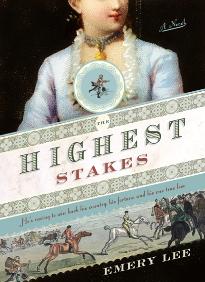
(Wootton’s work was used for the cover of my romantic historical novel THE HIGHEST STAKES)


James Seymour (1702–1752) was another English painter widely recognized for his equestrian art. Born in London to an amateur artist and art dealer, he was encouraged at a young age to pursue his passions to include racehorses, which would later become not only his primary artistic subject, but ultimately his financial ruin.

(Flying Childers by James Seymour)


Seymour’s equine art was immensely popular among the prominent sporting families of the day, and still ranks him amongst the most prominent artists of the “sporting school,” though he would later be “Eclipsed” (Yes, the pun is intended) by George Stubbs.


(Eclipse by George Stubbs)


George Stubbs (1724 – 1806) was the best known of these artists for his paintings of horses. Born the son of a Liverpool currier and leather merchant, little more is known of Stubbs early life. He worked with his father until age 15 or 16, after which he briefly apprenticed to a Lancashire painter and engraver until the 1740s when he began painting portraits. From about 1745 to 1751 he studied human anatomy at York County Hospital and one of his earliest surviving works is a set of illustrations for a textbook on midwifery which was published in 1751. While throughout his career Stubbs accepted commissions for human portraits, he is best known for his equine subjects, often depicted with their grooms.


(Whistlejacket by George Stubbs)


His most famous work is probably Whistlejacket, commissioned by the 2nd Marquess of Rockingham, which is now in the National Gallery in London. This and two other paintings carried out for Rockingham break with convention in having plain backgrounds.

My book trailer is very much an homage to these great artists and their fabulously fleet subjects.

- Emery Lee


(The accompaniment is Bach's Harpsichord concerto in D minor)

ABOUT THE AUTHOR
Emery Lee loves nothing more than crafting emotionally compelling romantic stories that bring a historical period vividly to life.

Her debut novel THE HIGHEST STAKES, is an epic tale of star-cross lovers set in the high stakes world of 18th century horse racing. In FORTUNE'S SON, Emery spins a web of drama, passion, and deceit, deep in the world of high stakes gaming.

She currently resides in NE Georgia with her husband of twenty-eight years, two sons, a little dog with a big attitude, and her two horses. She is represented by Nicole Resciniti of The Seymour Agency and is a member of the Historical Novel Society, Romance Writers of America, RWA , Georgia Romance Writers, and the group moderator for Goodreads Romantic Historical Fiction Lovers.

WEB SITE:http://authoremerylee.com
Email: authoremerylee@yahoo.com
Blog: http://emerylee.wordpress.com
Blog: http://georgianjunkie.wordpress.com
Twitter: authoremerylee

Wednesday, December 21, 2011

Scourge of Europe: The Religious Hysteria Created by the Black Plague

By Rosanne E. Lortz

Death has always been one of the most frightening prospects faced by mankind. The fear of death even has its own word to describe it—thanotophobia. In a society where a third to a half of the people around you have succumbed to death within the past year, the terror of knowing that you might be next can become overwhelming. It can drive a person to bizarre and unthinkable acts as he tries to ward off death’s icy grip from descending on his own shoulder. This is what happened in the mid-fourteenth century, during the years of the Black Plague. The world went wild with thanotophobia, and the country of England was no exception.

Monty Python to the contrary, the Black Plague was no joking matter. The medieval chronicler Geoffrey le Baker wrote:
Men who had been one day full of life, were often found dead the next. Some were afflicted with abscesses which erupted in various parts of their bodies, and which were so hard and dry, that even when they were cut with a knife, hardly and liquid flowed out…. Others had small black sores which developed all over their bodies. Only a very few who suffered from these survived and recovered their health. 
Such was the great plague which reached Bristol on 15 August [1348], and London around 29 September. It raged in England for a year or more, and such were its ravages, that many country towns were almost emptied of human life.
For some, the proximity of the plague created the pernicious attitude of “eat, drink, and be merry, for tomorrow we die.” Immorality, excess, and crime became rife in towns and cities, especially in the metropolis of London, as despairing people grasped after every last piece of self-gratification before death should come for them.

Others, however, still nourished the hope that the plague might be avoided. Doctors tried the normal remedies of bleeding and laxatives and prescribed more outlandish cures such as drinking one’s own urine. It soon became obvious, however, that medicine had failed to find the answer. As corpse after corpse was thrown in the common burial pits, the only course left to the living was to repent of their sins, cast themselves on divine mercy, and entreat the angel of death to forbear.

The fourteenth century, like the rest of the medieval period, was quick to consider any sort of disaster (natural or manmade) as a judgment from God. Earthquakes, fires, Viking invasions, Muslim conquests—all these things came about because of the sinful backsliding of God’s people. When the Black Plague, the greatest disaster in human memory, beset Europe, it was not hard for the deeply religious and deeply frightened populace to believe that God was exceptionally wroth with the world. Someone must intercede with Almighty, and prevail upon Him to stay His hand.

The early Church had understood Christ to be the intercessor between His people and God the Father. But somewhere, in between the age of the Church Fathers and the era of the Hundred Years’ War, Christ, the “shepherd of tender youth,” had metamorphosed into Christ, the stern and implacable Judge. With Christ seen as the author of the plague itself, the desperate looked for a mediator in His kinder, gentler mother Mary.

Across Europe, a strange sect known as the Flagellants began to gain followers. Wearing a uniform of a white robe marked with a red cross—much like the Knights Templar’ surcoat seen in so many period films—the Flagellants were a society of ascetic laymen determined to atone for the sins of the world. They gathered in groups of anywhere from 50 to 500 men, traveling around the towns of Europe and performing the ritual of publicly scourging themselves.


The Catholic Encyclopedia offers this description of the Flagellants’ activities:
Twice a day, proceeding slowly to the public square or to the principal church, they put off their shoes, stripped themselves to the waist and prostrated themselves in a large circle. By their posture they indicated the nature of the sins they intended to expiate, the murderer lying on his back, the adulterer on his face, the perjurer on one side holding up three fingers, etc. First they were beaten by the "Master", then, bidden solemnly in a prescribed form to rise, they stood in a circle and scourged themselves severely, crying out that their blood was mingled with the Blood of Christ and that their penance was preserving the whole world from perishing. 
After the Flagellants had gathered a crowd to watch their bloody antics, the Master would read aloud from a “heavenly letter,” trying to terrify the onlookers with its apocalyptic contents. Matthew of Neuenberg wrote:
In this [letter], the angel said that Christ was displeased by the depravities of the world, and named many sins: violation of the Lord’s day, not fasting on Friday, blasphemy, usury, adultery. The letter went on to say that, through the intercession of the Blessed Virgin and the angels, Christ had replied that to obtain mercy, a man should undertake voluntary exile and flagellate himself for thirty-three and a half days….
The number was a symbolic one, standing for the thirty-three and a half years that Christ had dwelt in human form upon the earth. By identifying themselves with Christ, and taking on his sufferings as it were, the Flagellants could redeem the world from the death and destruction that had come in the form of the Black Plague.


At first, the Church did not know what to make of this strange new sect. The clergy appreciated the Flagellants’ calls for repentance but also feared that this parachurch organization would provide a rival to the Roman Church’s authority. When the Flagellants began to speak out against the Church, blaming it for allowing the corruption that had brought God’s judgment, and also began to embellish their own teachings with flagrant heresy (e.g. denial of the sacraments, professing their own ability to grant absolution), the Church reacted violently. Pope Clement VI commanded that the brotherhood be suppressed in whatever country they appeared throughout Europe.

The Church’s antagonism toward the Flagellants, however, did not necessarily reflect the popular perception of them. The fear of death that had overshadowed Europe created a ripe breeding ground for the Flagellants’ fanaticism. The movement grew quickly in Germany and the Netherlands. Matthew of Neuenberg remarks that after the Flagellants proceeded through the city of Strasbourg, about a thousand men joined their brotherhood. France, also, had many converts to the sect until in 1349, King Philip VI forbade public self-flagellation on pain of death; this decree effectively nipped the movement in the bud throughout his domains.

Interestingly enough, England was one of the countries where the Flagellants made the fewest inroads. In 1349, a group of fanatical Frisians came across the Channel hoping to gain converts in London. They put on a dramatic public display outside of St. Paul’s Cathedral. But although their bloody flails and eerie chants unnerved the crowd, the chroniclers record that not a single Englishman wished to don their red-cross robes and take up the scourge himself.

In my book, I Serve: A Novel of the Black Prince, the hero Sir John Potenhale encounters this group of Flagellants making their demonstration in London. His mother has already been carried off by the plague, his father has been driven insane by it, and Potenhale himself is in a spiritually fragile condition. The Flagellants’ bloody ceremony fills him with horror and makes him wonder whether it is indeed the sins of the world that have brought this punishment upon the land. Although he is not impelled to join the brotherhood, their ceremony does make him question his own calling as a knight, a quandary central to the plot of the novel.

Fortunately for Europe, a movement like this could not last forever. The fuel of the Flagellants’ fanaticism had always been the terror created by the Black Plague, and when the pestilence began to abate in the early 1350’s, the numbers of the sect diminished significantly. Although it was not eradicated entirely, the Flagellant brotherhood disappeared from public view and into the void of obscurity. Throughout the next couple centuries, pockets of it would crop up here and there, but the brotherhood never again gained the same following that the Black Plague had brought them. The scourge of Europe had disappeared, and there was no longer any need to scourge oneself in an attempt to avoid it. The thanotophobia had receded, and with it the religious hysteria that had turned the fourteenth century on its head.

________

Rosanne E. Lortz's first book, I Serve: A Novel of the Black Prince, is a tale of arms, of death, of love and of honor--all set against the turbulent backdrop of the Hundred Years' War. 

Her latest book, Road from the West: Book I of the Chronicles of Tancred, is set during the First Crusade and follows a young Norman noble on his quest to be the first over the walls of Jerusalem. 

You can learn more about Rosanne's books at her author website. 

Tuesday, December 20, 2011

The Plague

by Barbara Gaskell Denvil

The nursery rhyme ‘Ring a Ring o’ Roses’ has a lot to answer for. As far as can be ascertained, this emanates from 19th century America, but the popular modern supposition is now that it refers to the sufferings of the Plague, thus describing the common symptoms (rings of roses and a-tishu), followed by falling down dead. Cheery! But entirely erroneous.

Indeed, one of the greatest catastrophes ever to alter England’s history was neither war nor dynastic challenge. The bubonic plague which first arrived in England in the 14th century and is now known as the Black Death, originally also the Great Mortality and the Pestilence, changed the whole country and its population, the politics and almost every aspect of everyday living conditions. The absolute terror which this first sudden visitation wreaked on the whole of Europe can be barely imagined. But outbreaks of this dreadful disease reappeared sporadically and frequently over the next few hundred years until its final catastrophic visitation in England in 1665, after which it appears to have quite mysteriously died out. The bubonic plague has revisited some other countries however, with occasional outbreaks even in the recent past, yet the actual sufferings of the people are now persistently misunderstood.

Indeed, plague victims did not sneeze and quickly die. The rash did not consist of large florid circles, and actually the word posies in past history did not refer to small bunches of flowers, but to short poems. There are many first hand contemporary references to this terrible disease and its effects, and also modern accounts both scientific and colloquial. Therefore researching this particular subject is not too difficult. (Indeed, I’ve studied the latter half of 15th century and medieval England for so many years, and have written several books of historical fiction set in that period and my novel SATIN CINNABAR by BARBARA GASKELL DENVIL has recently been published online for Kindle and all other e.book formats and devices.)

There are several related forms of the plague, and recently some experts have suggested that the original Black Death was not the bubonic but another similar kind, or even a combination of infections. Others argue that the affliction was indeed the bubonic type, but of a more lethal and unpleasant strain than is presently in existence. However, the symptoms are all sufficiently identical. The bubonic plague was not passed directly between humans and was contagious only via the rodent flea, but the flea was numerous in most human habitations, so the specific cause of infection mattered little. Besides, if the bacteria affected the lungs, this became pneumonic plague, and the sputum was then contagious human to human. Indeed, those thus infected, those desperate souls now dismissed by some writers as suffering from sneezes and the occasional bubo, did instead
suffer from some of the most hideous and agonising symptoms I can imagine.

Once the infected rats had died in large numbers, the fleas carrying the bacteria inevitably looked for other hosts. Humanity, living in close proximity and with generally poor standards of hygiene, was the next step. It seems there was a four to six day incubation period from the moment of actual infection, during which time this horrible condition usually localised, occurred virtually every 15 to 20 years in some area or another. Where this occurred in highly populated areas (such as London) the death toll could still be alarmingly high. The threat of this appalling disease therefore continued and must have haunted people, especially those who saw it as a punishment from God. Throughout the final epidemic in 1665/6, definitely the worst since its very first arrival in the country in 1348, great pits were dug on the outskirts of towns to take the piled corpses. Many of these plague pits have later been uncovered in England, sometimes unearthed due to the subsidence of a building’s foundations unknowingly erected on this unsound ground.

No one knows why the plague then died out in England. Hygiene did not noticeably
improve for some time afterwards, and the supposition that the Great Fire of London in 1666 was the cleansing miracle, is not supported by experts. But the plague has never devastated England since.

Researching and writing about this dreadful suffering is heartbreaking. I cannot possibly contemplate the utter terror and hopeless misery caused throughout plague affected areas during those 400 relevant years from the 14th to the 17th centuries, and the confusion, terror and bitter loss experienced by both those poor souls afflicted, and by those left alive to mourn the mass deaths of their loved ones.

And not a sneeze in sight.

My own medieval adventure SATIN CINNABAR
and those novels to follow (SUMERFORD’S AUTUMN) will be published online next
year) do not so far contain accounts of the plague, but a passion for research inevitably leads beyond the detailed events of any novel. I personally believe that an understanding of the times combined with insight into contemporary conditions is the only route to writing believable atmosphere.

http://commons.wikimedia.org/wiki/File%3ABubonic-plague.jpg

http://commons.wikimedia.org/wiki/File%3A20_The_Great_Plague.JPG

Monday, December 19, 2011

A Victorian Christmas Carol

By Karen V. Wasylowski


I have always thought of Christmas time…as a good time: a kind, forgiving, charitable, pleasant time: the only time I know of, in the long calendar of the year, when men and women seem by one consent to open their shut-up hearts freely, and to think of people below them as if they were really fellow-passengers to the grave and not another race of creatures bound on other journeys.

- Nephew Fred from 'A Christmas Carol'

There is nothing in this world that evokes Christmas more for me than Victorian England and Charles Dickens' A Christmas Carol.  How many times have I seen this movie, and in how many versions?   Well, it's hard to keep track - the story is similar to Pride and Prejudice in that Hollywood feels the need to keep retelling the tale, change the locale, modernize the message.  My brother and I watched and waited each year for it, hoping for the 1951 version starring Alastair Sims and complaining bitterly if it was the 1938 Reginald Owen film.  In 1970 Albert Finney starred in 'Scrooge' but I never did take to his performance.  It was like Tom Jones on crack cocaine or something and then in 1988 Bill Murray got 'Scrooged' and that just made me nervous.  I never for one moment believed Scrooge was reformed in the end.  I mean, it was Bill Murray after all. 

The Christmas festivities described in A Christmas Carol were a good deal different from the old Puritan Christmas that had been the norm for years.  Puritans, Quakers and others strongly disapproved of the mingling of liquor and merriment with a sacred holiday, were disturbed by some of the tradition’s origins in pagan ritual. Writing in 1871, G.K. Chesterton provides an insight into the mid-19th century mindset with his claim that

...in fighting for Christmas [Dickens] was fighting for the old European festival, Pagan and Christian, for that trinity of eating, drinking and praying which to moderns appears irreverent, for the holy day which is really a holiday.

In spite of its detractors, the New Christmas gradually took hold, and the Victorians established many of the customs that are at the center of today’s traditional Christmas celebration. In 1840, when Prince Albert celebrated the holiday at Windsor Castle by presenting his family with the “German” Christmas tree, all of England followed suit. The festival began to focus predominantly on the family, particularly on children. The first Christmas cards appeared in 1843, the year that A Christmas Carol was published. The originally pagan ritual of caroling was revived, gift giving grew in importance, and the traditional Christmas dinner began to take shape.


And still it grows - there are new traditions added every year, cultural preferences, family blending.  Christmas itself remains the same though, a blessed time of peace, family and remembrance.   I pray you have a joyful day, but remember others less fortunate.  May you help the poor, love your neighbor, forgive your enemies. 

And settle in for another year of "A Christmas Carol."


Preface to A Christmas Carol 
        "I have endeavoured in this Ghostly little book, to raise the Ghost of an Idea, which shall not put my readers out of humour with themselves, with each other, with the season, or with me. May it haunt their houses pleasantly, and no one wish to lay it.
 Their faithful Friend and Servant, C.D. "

 Merry Christmas, and God Bless us,
One and All

Hope you take a moment and visit my other blog -
"The League of British Artists"

'Darcy and Fitzwilliam' By Karen V. Wasylowski
"It is absorbing.  It is Intoxicating.  It is excellent..."  Jane Austen's World and Jane Austen Today


.

.

Giveaway: Montfort The Early Years 1229 to 1243

This week's Giveaway is Montfort: The Early Years 1229 to 1243 by Katherine Ashe. Please visit HERE to learn about the book. You will be directed to return to this post to comment and enter the drawing.

Sunday, December 18, 2011

WINTER WONDERLAND: Icy fun in Norman London

by Elizabeth Chadwick

Some time in  the mid-twelfth century before the year 1183, a cleric called William FitzStephen wrote a document titled  "Descriptio Nobilissimi Civitatis Londoniae" or 'A Description of the Noble City of London.' It was written as a preface to FitzStephen's biography of Thomas Becket and is an insider's view of the city of London, its topography, monuments, trades, industries of population.  The author describes the daily life of the inhabitants and many of their past times.  It's a very positive, rosy view, but none the worse for that and a wonderful snapshot. There's a particularly interesting description of what the residents do to have fun when winter comes, and given that it's that time of year again in the UK, and close to Christmas, I thought I would quote from William FitzStephen's history. 
Historical fiction is all about telling tales of times that have gone, but it is also about bringing those times to life. After all, it is us as we were then.


Here is a midwinter 12th century English city scene
In winter on almost every feast day before dinner either foaming boars and hogs, armed with tusks lightning swift themselves soon-to-be bacon, fight for their lives, or fat bulls with butting horns, or huge bears, do combat to the death against hounds let loose upon them.
When the great marsh that washes the northern walls of the city is frozen, dense throngs of youths go forth to disport themselves upon the ice. Some gathering speed by runs, glide sidelong, with feet set well apart, over a vast space of ice. Others make themselves seats of ice like millstones and are dragged along by a number who run before them holding hands. Sometimes they slip owing to the greatness of their speed and fall, everyone of them, upon their faces. Others there are, with more skill to sport in a public place, who fit to their feet shinbones of beasts, lashing them beneath their ankles. With iron shod poles in their hands they strike ever and anon against the ice and are borne along swifter than a bird in flight or a bolt shot from a mangonel. But sometimes by agreement they run one against the other from a great distance and, raising their poles strike one another. One or both fall, not without bodily hurt, since falling  they are borne a long way in opposite directions by the force of their own motion; and wherever the ice touches the head, it scrapes away the skin entirely. Often he that falls breaks shin or arm, if he fall upon it. But  youth is an age greedy for renown, yearning for victory, and exercises itself in mimic battles that it may bear itself more boldly in true combat.


You can still see a pair of these shin bone skates from the Medieval period  in the Museum of London! 


Shin bone Ice Skates from the Norman and Angevin period 


Saturday, December 17, 2011

From the “Hints to Grown Sportsmen”

Believe it or not but I'm still on the subject of shooting and I'm quite determined to remain here until I know my way. At the moment I'm wading through a thicket of birds (there are so many of them – so many I've never even heard of!) one can shoot during the season but I'm not at all ready to talk about them just yet. That's why I'm turning back to my earlier notes that deal with bringing them down and disposing of them in a proper way. It sounds awfully bloodthirsty and cruel and I keep my sensibilities locked away so that they don't stand in the way of my research.

I've mentioned in one of my previous posts that “Hints to Grown Sportsmen” is a curious little book, because it's written as a series of chats between friends during the actual sport, where an accomplished sportsman instructs his less accomplished friends in the art of shooting. Here is one such example:

- Look at these broken stones – the birds sit there in general, and are hardly perceptible from their similarity of colour. You may pass them many times without being aware of it. Let us hunt the soft moss upon this bare and bleak-looking hill. Now see, the dogs are quite desponding, and never having found game in such a place, barely hunt. Are you satisfied?

- Indeed I am! Let us return.

- No; we cannot go back without finding one covey. Let us try that cairn, and place our men so, that if we do find any, they may mark them. Look, our attendant to the left is making signs, they are wild as hawks. They are up – we shall find them with difficulty. Up again!

- Did I do right to fire?

- Perfectly; you might have killed – and you have, too! See, the bird you shot is falling at the turn of the hill, and a leading bird too! Now we shall get them – let us make the most of the covey.

- I think I counted six brace and a half; we have five brace, and two are gone out of bounds. I have a mind to have a brace of these preserved; how shall I carry them?

- Smooth their feathers, and lay them in your handkerchief, roll it up carefully, taking care there is no blood; now a little heather over and under, I think will do.

The next bit is probably my favourite part, because it allows us to penetrate into the thoughts and feelings of a sportsman after a day of sport:

Let us send our men home, and spend the end of this lovely day by ourselves. I confess I feel a sort of annoyance at travelling all day with a servant behind; and I cannot help looking back with some pleasure to those times, when all my little arrangements were begun and completed without assistance. The dogs seemed more under my own control when let out of the kennel by their master, and each partridge, as it went into the pocket, had an individual value – (here, with the quantity we bring home, we cannot be so independent,) – and this, I think, gives a great zest to those days when we start late after rain, and can only try for an old black cock, or endeavour to get within distance of a buck. On these occasions how delightful is it to make the gun but a sort of excuse for our wandering, and, seated, upon one of the rocks in the wildest spot to be found, ponder over auld lang syne; the company we are in, the weather, the wildness of the scene, can make a moderate bag all that we desire… See, the snow falls in clouds, home we must go; the dogs are frozen. How we cling to that we like, when the thing itself – nay, even the capability of enjoying it, is no more! Many, many will be the recollections we shall experience of this our trip!

Ah! Nice, isn't it?

Farida Mestek is the author of “Margaret's Rematch” (newly edited and with a gorgeous new cover), “A Secret Arrangement” and “Lord Darlington's Fancy” - romantic stories set against the backdrop of Regency England. You can learn more about her books at her blog Regency Sketches.

Friday, December 16, 2011

Richard II and His Double

By Brian Wainwright

The 'official' version of Richard II's death is straightforward. After his deposition in the autumn of 1399 in favour of his cousin Bolingbroke (Henry IV) he was imprisoned in Pontefract Castle. Following a rebellion of his supporters against his successor in early January 1400, he was starved to death. The date of death is usually given as 14th February 1400. His body was subsequently taken by stages to London, being publicly exhibited (as was the tradition for deposed, dead kings in England) culminating in a final display in St Paul's Cathedral prior to a relatively obscure burial at King's Langley, Hertfordshire. However rumours persisted that he was still alive, and the promise of his return was often, if not invariably, attached to the various conspiracies of Henry IV's reign.


Although Richard's body was put on display, only part of his face was actually visible and he was presented on a high catafalque. This may have led to some suspicion that his corpse had been substituted as it would have been impossible for anyone to study the King's features with any degree of thoroughness.

Richard II had a known 'double' his clerk, Richard Maudelyn, supposedly the son of no less a person than Hawise Maudelyn, sometime waiting woman to Katherine Roet-Swynford, mistress and later third wife of John of Gaunt, Duke of Lancaster, the eldest of Richard's surviving uncles and father of Henry Bolingbroke. The family resemblance suggests that Maudelyn's father may well have been John of Gaunt or one of the other royal uncles, and it is reasonable to assume that Maudelyn was at least a cousin to Richard II and maybe rather closer in blood to Henry IV.

Maudelyn was used by the January 1400 conspirators to impersonate Richard II in the hope of drawing out support. This suggests the resemblance was at least strong enough to deceive country gentlemen and the like, if not people who knew Richard really well. Maudelyn was captured and executed by the usual means of hanging, drawing and quartering. It seems unlikely his body could have been used as a substitute for Richard's unless this was decided upon immediately and his remains embalmed. One might expect to bones of Maudelyn to be severely damaged by his violent execution, but when Richard II's (presumed) remains were examined in the 19th Century no such evidence was found. It seems certain that whoever was buried in the official tomb, it could not have been Maudelyn.

The 'Scottish Richard II' was found wandering about on the island of Islay, of all places. He was 'recognised' by a woman who claimed she had seen the King while visiting Ireland the previous year, and following this incident was conveyed to the Scottish Court, where he was treated as an honoured guest for the rest of his life.

Islay is a small and relatively remote island off the west coast of Scotland, nowadays best known for the production of the incomparable Laphroaig whisky. Assuming Richard escaped from Pontefract, is it likely that he would make his way to such an obscure place? Surprisingly, the answer is - yes, he might.

Richard saw himself primarily as emperor of the British Isles, and his complex diplomacy in the 1390s had as one of its principal objectives the detachment of Scotland from the Franco-Scottish alliance and its subordination to England. This proved impossible because of the attitude of the French, and the Scots were included in the 28-year truce concluded in the autumn of 1396. However, as part of his diplomacy Richard had secured an alliance with the semi-independent Lord of the Isles, valuable in strategic terms for both his Scottish and Irish pretensions. (Since the Lord of the Isles came close to breaking the Scottish Crown's forces at Harlaw, 1411, it seems likely that the combination of his forces with those of England would have been formidable in this context.)

Therefore Richard had some reason to expect help in the Western Isles. That the supposed imposter should turn up on Islay may well be significant.

The Grey Friars in England were persistent in spreading the rumour that Richard II was alive, and several were executed for their trouble. Several nobles received letters from 'Richard II' bearing one of his authentic seals, which had somehow found its way to Scotland. In 1403 the Percys - in effective alliance with the Scots - rose in rebellion against King Henry and promised the men of Cheshire that Richard would appear at their rendezvous at Sandiway, Cheshire. Needless to say, he did not, and the Percys were defeated, but the rumours of his survival went on.

Bolingbroke claimed that the 'Scottish Richard II' was one Thomas Warde of Trumpington, Cambridgeshire, and continued to execute those foolish enough to spread the word that Richard was alive. (It is not explained how Thomas Warde came to be on Islay.) As late as 1415 the Southampton Conspirators were still talking of bringing back 'Richard II' from Scotland while in December 1417 Sir John Oldcastle, Lord Cobham, refused to recognise the authority of his judges 'so long as his liege lord King Richard was alive in Scotland.' It may be that one of the motives for Henry V's reburial of the official corpse of Richard II at Westminster was a desire to squash the belief that his father's predecessor on the throne was still living.

Thomas Warde was a real person. His few acres of land in Trumpington were forfeited in 1408. However, the evidence to prove he was the same individual as the 'Scottish Richard II' no longer exists, supposing that it ever did.

It appears the man responsible for many, if not all, of the rumours of Richard II's survival was William Serle who had been a minor member of Richard's household. When captured he admitted he had stolen Richard's seal at Flint (where the King had fallen into Bolingbroke's hands) and forged a number of letters. Of course it should be borne in mind this admission may well have been extracted by torture and is not necessarily reliable. Bolingbroke was sometimes generous to high-born traitors, but for those of lower birth he had no mercy at all. Serle was half-hanged in a number of towns before his ultimate execution.

When the 'Scottish Richard II' died at Stirling in 1419 he was buried with full honours close to the High Altar of the Blackfriars. Whether he was the 'real Richard' we shall probably never know, but it remains a fascinating possibility.

Image - Portrait of Richard II at Westminster Abbey. Public Domain.