Showing posts with label welsh history. Show all posts

Wednesday, November 5, 2014

Men of Harlech

by Judith Arnopp

copyright Judith Arnopp

Harlech castle stands proud on a rock on the edge of Snowdonia. It was raised by Edward I as part of his ring of fourteen stone strongholds to suppress and control the rebellious Welsh. Even now, some eight centuries later, the castle still reverberates with power.

copyright Judith Arnopp
By 1283 the Welsh were at last more or less conquered and Edward began to colonise the land with English. As his imposing castles went up, the native Welsh were evicted and replaced with English peasants, English tradesmen and English craftsman. Unsurprisingly Welsh resentment grew as strongly as the castles.

Rebellions followed, the first in 1287-8, in 1294, and another lasting from 1316-18. By the 1370’s the Welsh were still not totally vanquished but it was not until 1400 when the most serious revolt of all broke out. The leader of the revolt, Owain Glyndŵr, had previously led a conventional life, studying law at the Inns of Court in London, and serving with Richard II in France and Scotland.

In the late 1390s Glyndŵr’s neighbour, Baron Grey de Ruthyn, seized control of a parcel of land. Glyndŵr’s petition to the English parliament was ignored. In 1400 Lord Grey failed to inform Glyndŵr in time of a royal command to levy troops for Scottish border service, an act that put Glyndŵr at odds with the king. Lord Grey was a personal friend to Henry IV and Glyndŵr under no delusion as to the threat in which he stood.

 Ian West
CC-BY-SA-2.0 via Wikimedia Commons


Glyndŵr, understandably fed up with the way he was treated, turned away from English authority and assumed his ancestral title of Prince of Powys. With a band of followers he launched an attack on Lord Grey’s territories.

Glyndŵr was declared an outlaw and his estates confiscated. In the years that followed the skirmishes grew into battles and outright war against the English crown. The Welsh grasped the opportunity to follow and serve a leader such as they’d been waiting for since the death of Llewellyn Fawr in 1240. Glyndŵr’s revolt spread until much of north and central Wales was in Welsh hands. The English king sent Henry ‘Hotpsur’ Percy to regain control of the country who issued an amnesty to all rebels with the exception of Glyndŵr and his cousins, Rhys and Gwilym ap Tudor.

In 1402 penal laws were issued by Parliament against Wales and the harsh anti-Welsh legislation, designed to establish English dominance, actually pushed even more Welshmen into revolt.

copyright Judith Arnopp
War is always brutal and the suffering of ordinary people is inevitable. The army burnt the towns around some of the castles to the ground and the death toll among the population was high. The battle of Stalling Down, reputedly lasting eighteen hours, resulted in defeat for the English. The English and Welsh armies met in a ravine and chronicles say that the blood was fetlock-deep.

In June the English force led by Sir Edmund Mortimer was defeated and Mortimer held hostage with Glyndŵr demanding a large sum for his safe return, but Henry refused to pay up. Mortimer retaliated against his king by forming an alliance with Glyndŵr and marrying one of his daughters.

By 1403 the revolt had spread right across Wales, and English resistance was reduced to a few isolated castles, walled towns and fortified manor houses. Welsh students at Oxford University abandoned their studies to join Glyndŵr; Welsh labourers and craftsmen resident in England abandoned their jobs and returned to Wales. Owain called on Welsh soldiers, seasoned by the English campaigns in France and Scotland, and Welsh archers and men-at-arms quit English service to offer support of their homeland. At this point Wales looked strong, the dream of an independent state within reach.

copyright Judith Arnopp
At the castles of Aberystwyth, Cricieth, Beaumaris, Caernafon and Harlech the English were caught in their own traps; the strongholds now isolated English outposts. After long sieges the castles fell into Welsh hands giving Glyndŵr control of central Wales, the run of the country.

Glyndŵr moved his family into Harlech and held court there, calling his first parliament (Cynulliard – gathering of all Wales) at Machynlleth. Tradition has it that he was crowned Prince of Wales at Harlech Castle in the presence of envoys from Spain, Scotland and France. He held two other parliaments, one in Dolgellau where he signed a treaty with France.

But by 1408 the dream began to fade. Some battles were lost in the east and south and Aberystwyth Castle fell, becoming the first British castle to be assaulted by the big guns.

Harlech was under siege again. The massive curtain walls were peppered with cannon balls; one canon named ‘The King’s Daughter’ is reported to have exploded. Today the castle gatehouse displays a number of stone cannon balls which are believed to date from this time.

Copyright Judith Arnopp
Ultimately Harlech was forced to surrender; Glyndŵr’s wife, daughters and grandchildren were taken prisoner. By 1410, Owain Glyndŵr was a fugitive, his dream of a free Wales shattered, his home and his family destroyed.  Glyndŵr himself faded from history. It is believed his last years were spent in Herefordshire near the manor of his daughter’s husband, Sir John Scudamore. Folklore has it that a horse was kept saddled day and night in case he needed to make a quick getaway.  He is believed to have died in 1416 but there is no burial site to mark his time on earth.

Today the name Owain Glyndŵr continues to resonate throughout Wales; there is hardly a town you can visit that does not bear his name, or his image. Every Welsh town, be it history or legend, has a story of Owain Glyndŵr.

There are many historical sites pertaining to the story of Owain Glyndŵr. A good starting point is the Owain Glyndŵr centre in Machynlleth: http://www.canolfanglyndwr.org/

The castles of Harlech, Aberystwyth, Beaumaris, Criccieth should not be omitted from any visit to Wales.

Judith Arnopp

By de:Benutzer:Rdb [Public domain], via Wikimedia Commons

Judith Arnopp is the author of eight historical novels. Her early books Peaceweaver and The Song of Heledd are set in medieval Wales. She also writes novels set in the court of Henry VIII. For more information please visit the website: www.juditharnopp.com

Sunday, October 5, 2014

The Last Lord of Deheubarth - Rhys ap Maredudd

by Judith Arnopp

Rhys was the son of Maredudd ap Rhys Gryg (d. 1271), Lord of Dryslwyn and Isabel, daughter of William (II) Marshal, Earl of Pembroke.

The gatehouse at Newcastle Emlyn
Judith Arnopp

The ruins of Newcastle Emlyn sit quietly on a pretty grassy hill on the edge of the market town. Surrounded by a loop in the river Teifi, fringed by trees, it is a favourite spot for picnickers, tourists and local teenagers. The flat land below that once rang with the sounds of battle is now the haunt of children, lovers, and dog walkers.

I have finished my lunch; I tidy away the wrappers, screw the lid back on to my flask and observe the other visitors to the castle mound. How many pause in their day to read the bright boards that tell the tale of the castle’s birth, the desperate battles that took place here for territory and control?

A few stop to read them, cast a quick eye across the landscape but only a minority detect the cries of battle, feel the fear, the strain of the trebuchet, the crash of stone on stone, steel on steel. The past is all around us, if you take the time you can still see it, you can hear it, you can almost feel it.

View from the castle: Stephen McKay
CC-BY-SA-2.0 (http://creativecommons.org/licenses/by-sa/2.0)
Wikimedia Commons


Newcastle Emlyn: Judith Arnopp
In 920 when Hywel Dda combined the former kingdoms of Dyfed and Seisyllwg under one rule, the kingdom of Deheubarth was born. After the Normans conquered Deheubarth in 1093 the descendants of the Welsh ruling family were allowed to hold some authority over Cantref Mawr and Ystrad Tywi, a truncated portion of the former kingdom. But in the 12th century, during the time of Maredudd ap Gruffydd and Lord Rhys, Deheubarth briefly re-emerged.

In 1240 (or thereabouts) the king divided the lands around Emlyn and put them in the control of Maredudd ap Rhys Gryg and the Earl of Pembroke. The land to the west was to be controlled by the Earl from his castle at Cilgerran and, to defend his own territory, a ‘new’ castle was erected at Emlyn. Maredudd chose a good site on a steep sided hill where a loop in the river Teifi provided defence on three sides, access to the castle being a narrow strip of land from what is now the modern town of Newcastle Emlyn.

Unrest between the Welsh and supporters of the English crown continued to blight the area. Maredudd’s alliance with the English brought him into conflict with his fellow Welshmen, and in 1259 he was accused of treason against Llewellyn and imprisoned in Criccieth Castle for a time. After his death in 1271 the castle, along with Dryslwyn estates, passed to his son Rhys.

The gatehouse: Judith Arnopp

In 1277 Rhys submitted to King Edward, surrendering the castle of Dinefwr, but maintaining his control of Dryslwyn. In 1282 when Prince Llywelyn ap Gruffydd put forward ‘grievances’ on Rhys's behalf against the royal officers in West Wales, Rhys himself took no part in the revolt but gave assistance to Edward instead, collaborating on an attack on Llanbadarn and patrolling Ceredigion for the king. In return he was granted the homage of Welsh chieftains in north Carmarthenshire, but the peace was flimsy and not to last.

In June 1287 his relationship with the English soured and he revolted against King Edward. Rhys’ army ran amok, ravaging much territory in the west of Wales as far as Llanbadarn. In retaliation the English royal troops converged upon Rhys' other castle at Dryslwyn which quickly fell to them along with the new castle at Emlyn, but Rhys remained at large, harrying the English. Then, in a matter of months, in a surprise counter attack, he fell upon the 'new' castle and regained his hold on it.

Dryslywn Castle: Clare West
CC-BY-SA-2.0 (http://creativecommons.org/licenses/by-sa/2.0)
 Wikimedia Commons

The English swiftly assembled a large army at Dryslwyn and marched on the castle at Emlyn bringing with them a huge siege machine, a trebuchet hauled by sixty oxen. They also carried with them a supply of beach stones to hurl at the castle and bring it into submission. A siege ensued, but by the time they’d battered their way inside Rhys had fled and remained at large in the Welsh countryside for several years. He was finally captured and taken before the king at York where he was hung in 1292, ending native rule in Deheubarth forever.

The castle at Emlyn passed to the English crown and much of the surviving structure was erected in the early fourteenth century. Further improvements were made, including the addition of large windows by Rhys ap Thomas when the castle (along with many others) was gifted to him by Henry VII when he took the throne at Bosworth in 1485.

~~~~~~~~~~~~~

Judith is the author of eight historical novels. Her early works Peaceweaver and The Song of Heledd are set in medieval Wales. She also writes novels set in the court of Henry VIII. For more information visit her webpage: www.juditharnopp.com.


Friday, August 9, 2013

The Removal, Reassembly and Reconstruction of St Teilo’s Church

Judith Arnopp


All over Wales you will find ancient medieval churches, many of them in out of the way places, the sole reminder of a once thriving rural community. St. Teilo’s church in Llandeilo Talybont was just such a building. 

Saint Teilo was from Penalun in Pembrokeshire, a British Christian monk, bishop and founder of monasteries and churches. ‘Llandeilo Talybont’ translates as 'the church of St.Teilo at the head of the bridge' and refers to the first crossing point of the river near the Roman fort of Leucarum. The site of the church, on a tidal marsh, gives it the local name of 'the Church of St.Teilo on the Marsh'.  

Although worship at the site dates back to the 6th century the only remaining parts date to the 13th century. Additions were made in the late 14th century and further alterations added to the south of the nave in the 15th.   Mercifully it was left untouched by the Victorians. 

 Graveyard at the old site of St. Teilo's - photograph Hywel Williams
The church was cared for, cherished, the hub of village life and in constant use until 1852 when a new, larger parish church was built in the expanding town of Pontarddulais.  Services continued to be held at Talybont, three times a year until 1971. Built on marsh land, St Teilo’s was always vulnerable and when in the autumn of 1984 thieves made off with the roof slates, rain and periodic flooding quickly undermined the fabric of the walls, leaving the church in ruin.

Local societies and groups fought to save the building but access made repairing it on site very difficult and in the end, when the Welsh Folk Museum became involved, it was decided to dismantle the church, stone by stone, and relocate it to the museum at St. Fagans.

St Teilo's reconstructed - photograph by Wolfgang Sauber
I was sceptical about this at first. Although the motives of the museum were noble, I feared the restoration might result in a horrific Disneyfication of our medieval past. I have now come to review that idea and confess that the positives far outnumber the negatives.

The earliest painting (circa 1400) depicts St. Catherine, while scenes from the Passion and a large painting of St Christopher were added around 1500 and painted over during the Reformation. They were photographed and recorded by the Royal Commission on Ancient Monuments in Wales and then a team of Archaeologists from Cardiff University began work to conserve them. Once the paintings were recorded and preserved the church was carefully measured and slowly dismantled, each stone numbered. It must have been a nervous moment for the mason who removed the first stone for, at the time, St Teilo’s was the only church to have been reassembled on another site.

Photograph by Wolfgang Sauber
The project, which took twenty years, brought together Wales’ greatest craftsmen and during reconstruction only medieval techniques were used (where health and safety permitted). This involved pit sawing, splitting and adzing of timbers, carving the arch-braced collar beams, mixing the lime and finally reapplying the wall paint.

The church now provides an excellent resource for students, writers, historians. It is refurbished to an approximation of its appearance around the year 1530, complete with all the elements associated with a late medieval church, including a rood screen and loft, altars, carvings and brightly coloured interior.


The rood loft - photographed by Wolfgang Sauber
St Fagan’s, now known as The Museum of Welsh Life, is a fascinating place with over forty buildings making it possible for visitors to travel through time, passing through furnished homes and businesses from different historical periods. For me, of course, the church of St. Teilo has to be favourite. To arrange your visit click on the link below.


Judith Arnopp writes historical fiction including


The Song of Heledd
Purchase UK
Purchase US


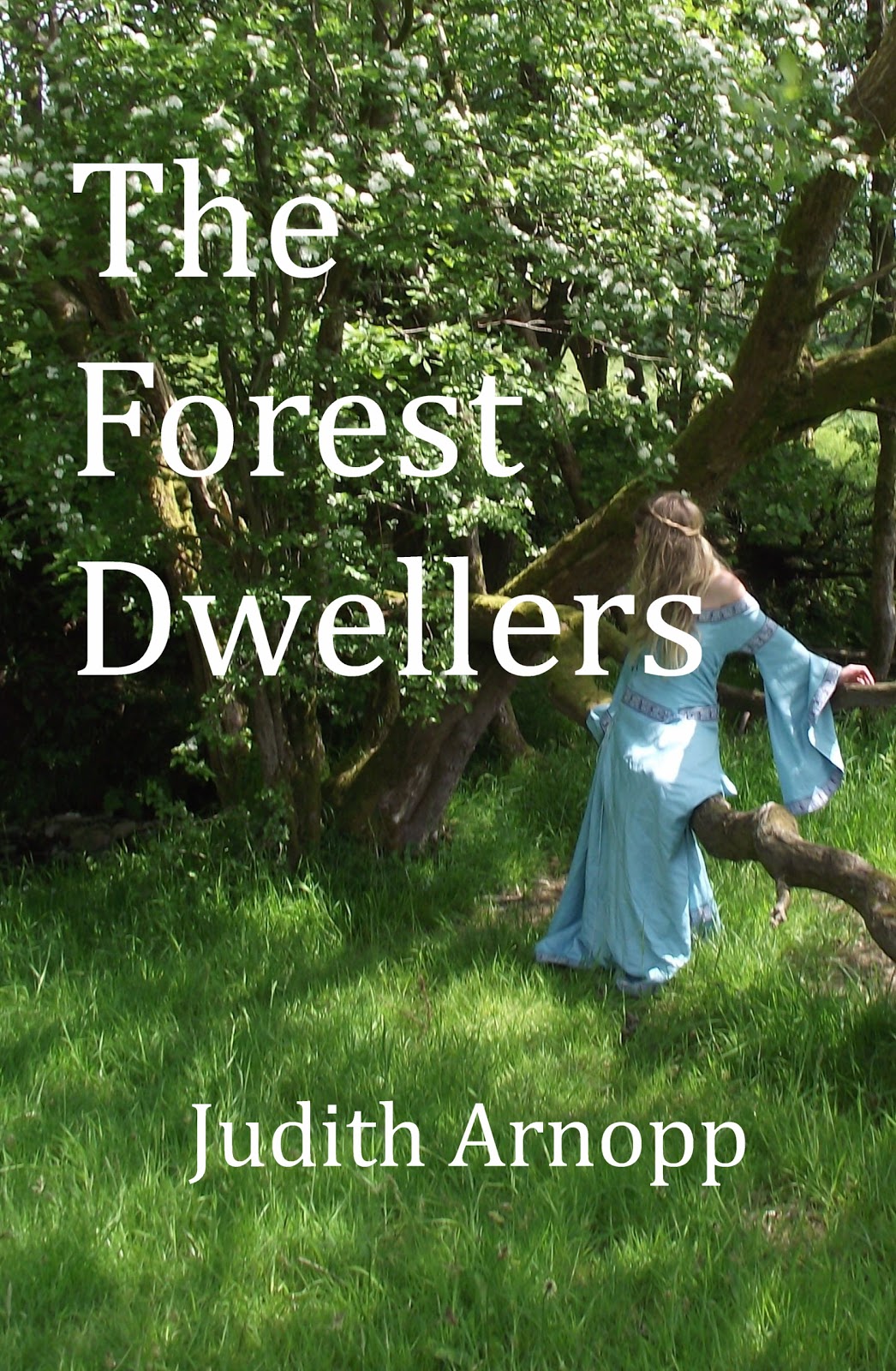
The Forest Dwellers
Purchase UK
Purchase US


All Judith's books are available as paperback or on Kindle. She is currently working on a novel about Anne Boleyn, The Kiss of the Concubine will be available soon. for more information please visit her webpage: http://www.juditharnopp.com

Friday, April 26, 2013

Rebellion in Wales ~ Owain Glyn Dŵr and Cydweli Castle - Carmarthenshire


by Judith Arnopp


Standing proud above a small village, over-looking the River Gwendraeth near Carmarthen in West Wales, is Cydweli Castle. Of Norman origin, the fortress is testament to the years of Anglo/Welsh conflict, its dominant position in the landscape making it quite clear who was in control of whom.

The earliest castle was a Norman earth and timber construction built shortly after the conquest, the village growing up around it. During the 12th century the castle fell several times into Welsh hands and by the 13th century it had been rebuilt in stone with the latest in defensive design.

Today, we see most phases of building; a square inner bailey defended by four round towers, a semi-circular outer curtain wall to protect the landward side and the massive gatehouse and jutting tower defending the riverside walls.

Cydweli (or the anglicised Kidwelly) is of concentric design with defensive walls set one within the other providing the best defence possible at the time of building. The gate house was still under construction when Owain Glyn Dŵr held it under siege during his campaign against the English.


Owain Glyn Dŵr was born around 1359 and through his parents, Gruffydd Fychan II and Elen ferch Tomas ap Llywelyn,  descended from the Welsh princes of Powys and Deheubarth.  His early life is quite unremarkable and law abiding. He was educated in London and served as a squire and a soldier, fighting for the English king in campaigns in Scotland. By the year 1400 he had become a well-respected Welsh gentlemen but events over the next few years pushed Glyn Dŵr further into rebellion.

Baron Grey de Ruthyn, a neighbour of Glyn Dŵr’s, had seized control of some land, forcing him to appeal to the English Parliament.  In 1400, Lord Grey failed to inform Glyn Dŵr in time of a royal command to levy feudal troops for service on the Scottish border. This apparent dereliction of duty enabled the Welshman to be named a traitor in London court circles

Possibly due to Lord Grey’s  personal friendship with King Henry IV, Glyn Dŵr lost the case and when, in January 1400, civil disorder broke out in Chester in support of the deposed king, Richard II, Glyn Dŵr’s relationship with Henry IV broke down completely.


In September 1400 Owain Glyn Dŵr was created Prince of Wales by the dissenting Welsh.


By 1401, after a series of confrontations between Owain’s followers and Henry IV the revolt began to spread. Welshmen studying at Oxford abandoned their studies, labourers lay down their tools, returned to Wales and flocked to Owain’s  banner. Welsh troops who had fought for the king in France and Scotland also joined the cause, Welsh archers and men-at-arms abandoned the English king to join the Welsh rebellion.

Early in the campaign the Welsh skill at guerrilla warfare gained them some notable success. They were victorious at the battle of Bryn Glas in Powys in 1402; inflicted much damage on many towns (including Cardiff) and took control of several of the strongest castles in Wales, notably Aberystwyth and Harlech.

During the fourth year of the revolt Owain Glyn Dŵr and his armies turned up in the Tywi Valley and captured a number of castles, including Dyslwyn and Carmarthen and persuaded Henry Don, a former steward of the Duchy of Lancaster and a fellow of considerable standing and power, to throw in his lot with the rebels. It was Henry Don who led the attack on Cydweli Town and castle.

However, around 1405 the rebels began to lose ground, they were defeated at Usk and sometime between 1408-9 the castles at Aberystwyth, Harlech were retaken by the crown. Owain himself was never captured but faded from history, believed to be dead by 1416. Many tales are told about the circumstances of his death.

A supporter of Glyn Dŵr,  Adam of Usk, wrote  in his Chronicle in the year 1415 that, ‘After four years in hiding, from the king and the realm, Owain Glyndŵr died, and was buried by his followers in the darkness of night. His grave was discovered by his enemies, however, so he had to be re-buried, though it is impossible to discover where he was laid.’

Adrien Jones, the president of the Owain Glyn Dŵr Society, as late as 2006 visited Sir John Scudamore who is a direct descendant of Glyndŵr and lives  near Abergavenny. He told him that Glyn Dŵr spent his last years with  his daughter Alys at Monnington Straddel in Herefordshire and eventually died there. The family kept the secret for six hundred years but Sir John claimed that Glyn Dŵr is buried beneath a mound nearby at Monnington Straddel.

Whatever the truth of the matter may be Owain Glyn Dŵr is gone but never forgotten and remains a hero in Wales, a household name and icon of Welsh nationalism.

 By AlexD (Own work) [CC-BY-SA-3.0 (http://creativecommons.org/licenses/by-sa/3.0)], via Wikimedia Commons
~~~~~~~~~~~~
Castle photos property of Judith Arnopp.
You can find out more about Judith and her historical novels on her website: www.juditharnopp.com
or on her Amazon Author page.
UK - click here
USA - click here

Tuesday, March 26, 2013

Llewellyn ap Gruffydd Fychan -- Welsh Hero

by Judith Arnopp


Edward I’s defeat of Llewellyn the Last in 1282 and his subsequent subjugation of the Welsh people caused seething discontent among the Welsh.  After a hundred years of continuing discontent, things finally reached boiling point when the English crown refused to settle a land dispute between  Baron Grey de Ruthyn  and the forty-something, grey-haired and law abiding Owain Glyn Dŵr. It is difficult to access the details of this matter but we do know that events quickly spiraled out of control and ultimately, Glyn Dŵr took up arms against King Henry IV. 

Glyn Dŵr himself, on calling for Welsh assistance, is likely to have been surprised at the alacrity of response.  In September 1400 when he raised his banner at Ruthin, supporters came from far and wide and, due to his descent from the Welsh Princes, they dubbed him, Prince of Wales.

In response, the English king marched his army through North Wales burning and looting without mercy. The population were easily quelled and sought peace with Henry, leaving Glyn Dŵr and a few remaining supporters to take to the hills.

But things weren't over yet and the rebellion took off again when Conway Castle was taken by the Welsh, allowing Glyn Dŵr access to mid and south Wales. Consequently, the rebellion picked up momentum and Welshmen living and working in England laid down their tools and returned home to join his ranks.

It was around this time that Henry IV, following Glyn Dŵr into the wilds of Wales, called at the home of Llewellyn ap Gruffydd Fychan who lived in Caeo in Carmarthenshire. 

According to the chronicle of Adam of Usk, Llewellyn was a ‘bountiful’ member of the Carmarthenshire gentry, a country squire whose household used ‘fifteen pipes of wine’ annually. This is not to imply that the man was a drunk but shows him to be a wealthy and generous host. 

At the time in question Llewellyn was around sixty years of age, too old to fight perhaps, but it is believed two of his sons were at Glyn Dŵr’s side.  Henry IV forced Llewellyn to lead him to Glyn Dŵr’s base camp, and for several weeks the old man led the King on a goose chase through the wild uplands of Deheubarth, allowing Glyn Dŵr time to escape into Gwynedd and gain a position of greater strength.

King Henry, cold, tired and frustrated, realising somewhat belatedly what was afoot, forced Llewellyn to admit his stratagem. Knowing full well what punishment lay in store, the Welshman spoke out bravely as a loyal follower of Glyn Dŵr and supporter of Wales.

On October 9th 1401 Llewellyn was dragged to the gallows at Llandovery Castle where he was publicly disembowelled and dismembered in front of his eldest son. (Documentation does not make clear whether this refers to Llewellyn’s eldest son or Henry’s.)  As a deterrent to future rebels Llewellyn’s remains were displayed in towns across Wales and his lands were granted to Henry’s supporter Gruffydd ap Rhys. But the rebels weren't done with Henry yet and unrest continued for more than a decade.

It seems that Llewellyn ap Gruffydd was not alone in his loyalty to the last Welsh Prince of Wales for, although Henry IV led one of the largest, most feared armies in Europe (remember Agincourt a few years later in 1415), Owain Glyn Dŵr, who had re-united the Welsh nation, was never captured, mostly because his countrymen refused to betray him. His final end remains a mystery today.

Six hundred years later, in 1998, a campaign was started by residents of Llandovery to construct some sort of a monument to their local hero, Llewelyn, and after an exhibition of proposed designs in the year 2000, a statue by Toby and Gideon Peterson of St Clears was chosen.

The effigy stands sixteen feet tall and is fashioned of stainless steel, standing on a base of stone brought from near Llewellyn’s home in Caeo. The figure of Llewellyn, clothed in cloak, armour and wearing an empty helmet, stands proudly on the skyline, looking out across the town of Llandovery as a mark of Welsh solidarity.

~~~~~~~~~~~~

Judith Arnopp writes historical novels set in the medieval and Tudor period. for more information please visit her website: www.juditharnopp.com


Photos from wikimediacommons.

Wednesday, July 18, 2012

Welsh Idylls with Judith Arnopp Part One: St Gwenog's Church


Llanwenog Church, Ceredigion
Just a stone’s throw from my home in the parish of Llanwenog is St Gwenog’s church. I have only recently found the time to go and have a close look and thought I would share my visit with you.
The Church of St Gwenog is delightful and anyone in love with ancient churches and planning a trip to the area should put it on their list of places to visit. It is only a small building and does not take long to explore but entering the church is like stepping into another world.
A memorable battle was fought in Llanwenog in 981, between the Dane, Godfrid, and the native Welsh chieftan, Eineon ab Owain; a battle in which the Danes were totally defeated.  Nearby there is a field on a farm named Ty Cam where the engagement is believed to have occurred.  The field is called Cae'r Vaes, or roughly translated, ‘the battle field,’ although whether the story has its root in fact or legend is open to debate.
In ancient, pagan times the word ‘Llan’ was used to denote an enclosure or sacred place. Early Christians built their churches in such places in an attempt to displace older religions.  By utilising ancient religious sites, Christian priests thought to encourage pagan worshippers to abandon the old gods and adopt the new teachings.
There are many such sites in Wales and Llanwenog is possibly one of the oldest for, although most of the extant building dates back to the 13th century, the foundation of the earliest church dates to the 6th.  As I circumnavigate the graveyard it is still just possible to detect that the original enclosure or ‘Llan’ was circular, or oval, in shape although it has now been extended and squared off at one end.
St Gwenog
We know almost nothing about St Gwenog.  She is mentioned in the Laws of Howell Dda copied in the 15th century and in the 18th century an annual local fair, held in January, was known as Ffair Gwenog’s.  Links have also been made with St Gwennlian who was active locally but it is a link that is difficult to establish. Even St Gwenog’s Well, once famous for its healing properties, has long since disappeared.  Its existence points to the reason for the site being allocated as a ‘Llan’ in pagan times as water was the earliest form of worship followed by that of the sun until Christianity incorporated elements of those older religions into its own.
Inside the church I see thick whitewashed walls and, at the altar, an early stone carving of Mary and St John at the foot of the cross. It is very badly weathered having originally been built into the exterior end of the side chapel. Now it is safe and sound in the new altar, the figures barely discernible.  I turn away and spy an early wall painting of the Apostles and the Ten Commandments, the faces peer out at me through the fog of time while, above me, the beautiful ceiling rafters smile down.  Richly carved pews escort me to the door and I climb a few worn stone steps while the tiny stone heads of the saints watch me as I pass.
Outside the battlemented tower draws my eye from the older, softer parts of the church. It is an imposing feature, providing protection for the village in times of strife.  It was a later edition to the building, built in the 15th century by Sir Rhys ap Thomas whose heraldric shield is displayed above one of the windows. The building was to commemorate Henry VII’s victory over Richard III at Bosworth in 1485.  Many men from Llanwenog parish fought and died for Henry in his quest for the throne but, once established, the Tudor dynasty did little to enhance the fortunes of their Welsh countrymen. 
I sit for a while among the markers of the dead and think about what I have seen.  I am touched by the peace and the great age of the place and love every inch of it.  But for me, the best thing about the visit is the font.  I slip back inside for another look. 
Llanwenog Church interior
It used to sit near the western doorway but has been moved to the south side of the lady chapel.  Today it is filled with a tacky flower arrangement totally out of keeping with the awesome antiquity of the piece. I take away the flowers and with the tip of one finger trace the marks where the cover once sat.  It dates from the Norman period and is showing its age.  The stone is carved with the heads of the twelve apostles, worn from centuries of visitors drawn to touch the primitive features as I am doing now. I have seen these carved faces described variously as ‘crude’, ‘grotesque’ and ‘rough’ but to me, they are beautiful. The tracks of the ancient chisel giving voice to the long dead craftsman.  I wish I could spend longer here. I run my fingers over the surface and feel as if I am clasping the gnarled hand of the mason that worked it.
font, featuring the twelve apostles, circa 11th century

Information about Judith Arnopp and her books can be found on her webpage: http://www.juditharnopp.com