Showing posts with label Medieval Wales. Show all posts

Friday, November 3, 2017

History Revealed: The Welsh Highland Railway

by Annie Whitehead

A trip on the Welsh Highland Railway reveals more than just its own history; it allows the traveller to learn about centuries of Welsh history.

My historical research often takes me into the pages of the Welsh annals. It's true that the Mercians of the English Midlands often fought the Welsh, but it's also true that they allied themselves frequently to the Welsh princes to unite against a common enemy.

In the seventh century, Penda, (a pagan) and Cadwallon of Gwynedd (a Christian) banded together to wage war on Northumbria.

In the ninth century, Anarawd of Gwynedd gave fealty to Alfred the Great and Welsh troops allied with Alfred's son-in-law,  Æthelred of Mercia, (husband of  Æthelflæd, Lady of the Mercians) helping the English to defeat the Danes at Buttington in 893.

Ælfhere of Mercia, (whom I called Alvar) was also an ally of the Welsh. As earl of Mercia, his job was to defend the marches from incursions by the Welsh, but the chronicles often noted him aiding the Welsh in their internecine struggles. He aided Hywel ap Ieuaf against his uncle in 974 and again in 978.

It's not just my research that takes me into Wales, but my travels, too. And once in Wales, it's impossible to encounter only one period of history. The story of the land is everywhere, and you can see much of it from the railway.

Public Domain Image

The Ffestiniog Railway had already proved its worth in the nineteenth century in carrying people and goods through the mountain region of Snowdonia. In 1872 Charles Spooner proposed a new line linking the main railway at Dinas with Rhyd Ddu at the foot of Snowdon. It was only partially completed when it opened in 1881, and was only fully laid southwards through Beddgelert and the Aberglasyn Pass to Porthmadog in 1923. But, as I said, a trip on the railway reveals more than just the industrial past of Wales.

Embarking at Caernarfon, one cannot help but be awed, as the station stands in the looming shadow of the castle, built by Edward I (known as Longshanks) in 1283, and designed as a symbol of oppression, echoing the walls of Constantinople and reminding the Welsh that their princes were no more, and that Edward was now their lord and master.

Caernarfon Castle, photographed by my late father

But not far away we can see occupation of Caernarfon from an earlier time, at the Roman fort of Segontium. The Romans arrived in North Wales in 60AD, over a century after Caesar's first invasion. Their main objective was Ynys Mon (Anglesey) where they set about subduing the druids there. (See my earlier post.) In around 77AD Suetonius Paulinus established a fort at Caernarfon. It was named Segontium, and housed around 800 men. It was a base well-located for keeping control of both Ynys Mon and the Llyn Peninsular.

Roman soldiers murdering druids and burning their groves
on Anglesey, as described by Tacitus

The train journey takes you through the valley of the Afon Gwyrfai and through the village of Waunfawr. As it crosses the bridge over the Afon Gwyrfai it passes the old church at Betws Garmon.

Saint Garmon was a Gallican bishop who arrived in Britain in the latter half of the fifth century. He was best known for establishing schools and it it thought that Betws was one of these. Clearly the church is more modern, and has been rebuilt many times. In 1634 a small four-leafed clover was inscribed on the font in the rebuilt church, but no one knows for sure when the previous church had been built. Saint Garmon was also known as Germanus, and his mission was to combat the influence of Pelagius, who has been the study of a recent EHFA blog post by Kim Rendfeld.

The railway arrives at the foot of Snowdon and begins to climb. Somewhere around this area, JMW Turner must have sat for a while as he drew a pencil watercolour entitled Llyn Cwellyn.


Full citation for image at bottom of this LINK

Offering views back down the valley towards Llyn Cwellin and Mynydd Mawr (Great Mountain), the line curves sharply as the train heads towards Rhyd Ddu (Black Ford). Rhyd Ddu is believed at one time to have formed the pasture lands of Llewlyn Fawr (of whom more in a moment.) It remained a farming community until the middle of the nineteenth century when the slate quarries and copper mines caused the population to double in size. The village became home to a blacksmith and a postmaster, as well as a coal merchant, a dressmaker and a publican. This Welsh-speaking settlement also boasted three shops, a school, and a woollen mill. The downturn came in the latter part of the century, and these days there are no shops, although there is still a pub, and with the loss of the industry, the community makes its living from farming.

From the stop at Rhyd Ddu, the view is a choice between the looking up to the summit of Snowdon, or towards Beddgelert.

Mount Snowdon, or Yr Wyddfa, is the highest peak in Wales. Its name means 'burial place' and there is a legend attached to it. A cairn at the top of the mountain is said to mark the grave of Rhita Fawr, a giant who wore a cloak fashioned from the beards of all the kings he had killed.

The mountain village of Beddgelert provides more insight into medieval Welsh history. The parish church of St Mary's was built on an earlier, sixth-century site, which eventually became the nucleus of an Augustinian priory in the thirteenth century. The priory was endowed by Llewelyn ap Iorwerth, also known as Llewelyn Fawr (Llewelyn the Great). He married the natural daughter of King John, and his grandson came to be known as Llewelyn the Last, fighting, and ultimately losing to, Longshanks. The priory prospered, and became an important centre. The building was destroyed by fire around 1283/4 and restored by Edward I. It is said that his munificent act was prompted by the fact that it was the carelessness of his own soldiers which had caused the fire in the first place. The later history of the priory is a familiar one, seeing it damaged again by fire in the early sixteenth century and then being allowed to fall into ruin on the orders of Henry VIII. Only the chapel was left standing.

St Mary's, Beddgelert - image attribution

Beddgelert is reputed to have been named after Gelert, the faithful hound of Llewelyn Fawr, who had a hunting lodge in the area, and it's possible to visit Gelert's 'grave'. The story goes that the faithful hound was left to guard the prince's baby, only to be discovered with bloodied mouth and the baby missing. Llewelyn drew his sword and killed the dog, whose yelp caused the baby to cry out. Seemingly, the dog had in fact protected the baby from a wolf. Full of remorse, Llewelyn buried the dog with great ceremony.

Gelert by Charles Burton Barber - Public Domain Image

Travelling on from Beddgelert the train crosses the Afon Glaslyn and along the Aberglasyn Pass. It then goes through the Aberglasyn tunnels. Between these tunnels, at Plas-y-Nant, the story of Wales is brought nearer to modern times, with the location of circular gun mounting blocks, built for World War II 'Blacker' Bombards, 20lb anti-tank mortars. There is also a pill box dating from around 1940.

Since I first travelled on the railway, the line has been opened up further and a team of enthusiasts works hard to keep the engines running.

Wherever I go in North Wales, I encounter history spanning the centuries. Here on the little mountain railway, the same is true. With monuments, sites and buildings stretching from Roman times to WWII, it really is the tale of centuries, incorporating a wonderful mix of fact and legend.

~~~~~~~~~~

Annie Whitehead is an author and historian, and a member of the Royal Historical Society. Her first two novels are set in tenth-century Mercia, chronicling the lives of Æthelflæd, Lady of the Mercians, who ruled a country in all but name, and Earl Alvar who served King Edgar and his son Æthelred the Unready who were both embroiled in murderous scandals. Her third novel, also set in Mercia, tells the story of seventh-century King Penda and his feud with the Northumbrian kings. She is currently working on a history of Mercia for Amberley Publishing, to be released in 2018.
Amazon Page
Website
Blog


Friday, August 25, 2017

A dark Welsh lady

by Anna Belfrage

In 1230, Ralph Mortimer of Wigmore took a certain Gwladus Ddu as his wife. Ralph was a Marcher Lord, always intent on expanding his domains into Wales. His new wife was as Welsh as they came, daughter of Prince Llewellyn the Great.

While Gwladus’ paternity has never been up for discussion – she is Gwladus ferch Llewellyn when mentioned in records of the time – who her mother was is a substantially thornier issue. Was Gwladus the product of Llewellyn’s long-standing affair with a certain Tangwystl, mother of his eldest son Gruffydd, or was she a legitimate daughter, born to Llewellyn and his Angevin wife Joanna? Somewhat ironically given the discussions as to whether Gwladus was illegitimate or not, Joanna was most definitely illegitimate, the daughter of King John of England.

To sort out who was Gwladus’ mother, one could start by trying to pin down when Gwladus was born. Well, unsurprisingly, it’s not as if there’s a neat entry stating her date of birth. Instead, genealogists usually work backwards from what known facts there are, and one of those facts is that Gwladus’ marriage to Ralph was not her first: she’d been wed to Reginald de Braose already back in 1215.

This, according to some, means she must have been born at the latest around 1202, so as to be of marriageable age in 1215. And if Gwladus was born in 1202, she could not be Joanna’s daughter seeing as Joanna and Llewellyn were wed in 1205, ergo Ralph Mortimer married an illegitimate Welsh princess.

However, there are some doubts as to whether there was a real marriage in 1215. Maybe it was more of a betrothal. Besides, why would Reginald de Braose, a man pushing forty and with heirs to his body (among which a certain William de Braose whom Llewellyn would hang in 1230 for having engaged in adulterous relations with Llewellyn’s wife, Joanna. All very complicated, isn’t it?) want to marry the illegitimate daughter of Llewellyn? A second marriage in this case would have been entered out of political interests, and Gwladus was worth much, much more as a political pawn if she was the legitimate daughter of a Welsh prince and the granddaughter of an English king than if she were the daughter of Llewellyn and the irresistibly named Tangwystl.

It is also interesting to note that while Gwladus and Reginald were married for thirteen years there are no recorded children. Reginald was definitely fertile and with her second husband Gwladus would go on to prove that she was too which begs the question if this first marriage was ever consummated, thereby indicating (perhaps) that maybe the bride was very young in 1215, corresponding with a birthdate after 1205.

When King John gave his daughter in marriage to Llewellyn, he also had Llewellyn promise that it would be the children he had with Joanna who would be his heirs. This was not in accordance with Welsh custom which in general supported every child’s right to inherit from its father, no matter if the child was conceived within or without the marital bed. At the time of Llewellyn’s wedding to Joanna, he already had a son named Gruffydd, so by agreeing to John’s demands he was effectively disinheriting his boy. Did not go down well with Gruffydd.

Llewellyn with his sons
Eventually, Joanna did present Llewellyn with a son who was named Dafydd. In 1229, young Dafydd rode to London to visit with his young uncle, Henry III. He did this to present himself before the entire English court as Llewelyn’s recognised heir, thereby formally acquiring his uncle’s support against his half-brother’s claim.

Interestingly enough, Dafydd was accompanied on this little jaunt by none other than Gwladus, at the time recently widowed as Reginald passed away in 1228. Now, the fact that Gwladus chose to accompany her younger sibling may indicate nothing more than a case of wanderlust. But if Gwladus was Gruffydd’s full sister, wouldn’t she have hesitated in accompanying her half-brother on a trip that had as its purpose to permanently scotch Gruffydd’s hopes of inheriting Llewellyn’s lands?

It did not take long for Llewellyn to find a new husband for his widowed daughter. This time, Gwladus was dispatched to wed Ralph Mortimer of Wigmore, a man some years her senior who’d become heir to the Mortimer lands upon the death of his older brother. The Mortimers were as covetous and power-hungry as all the Marcher Lords and while Ralph definitely wanted heirs, he also wanted valuable alliances. I seriously doubt he’d have wanted Gwladus—no matter how beautiful she might have been—unless she was not only the daughter of Llewellyn but also the niece of Henry III.

Whatever the case, Ralph and Gwladus seem to have hit it off. Over the first nine years of married life, she gave birth to six known children, among them the very competent Roger Mortimer who would go on to become a loyal servant of the king, behead Simon de Montfort at Evesham and marry Maud de Braose, daughter of the man his Welsh grandfather once hanged for adultery.
In 1246, Ralph died, leaving Gwladus a widow. She never remarried, dying five years later while visiting with her uncle, Henry III, in Winchester.

Not only don’t we know for sure who Gwladus’ mother was. We know nothing about Gwladus herself, beyond who her father was, who her husbands were, who her children were. She is defined not by who she was but by what she was, daughter, wife, mother. We have no depiction of her, all we have is her epithet, Ddu, which is Welsh for black. I guess this probably means that Gwladus was dark rather than fair, and I picture her with long dark braids and eyes the colour of a deep forest tarn. For some reason, I imagine she was of a serious disposition – but that is entirely fanciful, and for all I know, Gwladus may have been the life and soul of any medieval party she might have been invited to.

Gwladus Ddu remains an enigmatic and anonymous lady who attracts more interest due to the uncertainties surrounding her mother than due to herself. That’s a bit sad. However, no matter who her mother was, through Gwladus the blood of the Royal House of Gwynedd would pass down the Mortimer line, the Welsh Dragon lying dormant until that very distant descendant of hers, Edward IV, claimed the throne. Through Edward’s daughter, Elizabeth of York, that rather diluted drop of Welsh blood has made it all the way down the line to the present Queen. Having cried my eyes out over the sad fate of Llewellyn’s grandson and namesake, Llewellyn the Last, I find some comfort in that. Some.


All pictures in public domain and/or licensed under Wikimedia Creative Commons

~~~~~~~~~~~

Had Anna Belfrage been allowed to choose, she’d have become a professional time-traveller. As such a profession does not exist, she became a financial professional with two absorbing interests, namely history and writing.

Presently, Anna is hard at work with The King’s Greatest Enemy, a series set in the 1320s featuring Adam de Guirande, his wife Kit, and their adventures and misfortunes in connection with Roger Mortimer’s rise to power. And yes, Edmund of Woodstock appears quite frequently. The first book, In The Shadow of the Storm was published in 2015, the second, Days of Sun and Glory, was published in July 2016, and the third, Under the Approaching Dark, was published in April 2017.

When Anna is not stuck in the 14th century, she's probably visiting in the 17th century, specifically with Alex(andra) and Matthew Graham, the protagonists of the acclaimed The Graham Saga. This is the story of two people who should never have met – not when she was born three centuries after him.


Monday, February 22, 2016

Gerald of Wales: Colourful Medieval Chronicler.

By E.M. Powell

I think that most lovers of history would agree that very little beats a first-person account. There is something very special about reading the words of someone who was there, who witnessed momentous events or who was in the presence of individuals famous and infamous. And the further back in history one goes, the scarcer such accounts are. Yet in the world of the twelfth and early thirteenth century, we have the work of a prolific chronicler to bring much of it to life.

 Scribe writing the Gospels of Kildare.

Giraldus Cambrensis, or Gerald of Wales, was born around 1146 in his noble family’s castle at Manorbier. He could count leading Anglo-Norman families in south-west Wales as well as native Welsh princes among his kinsmen. Unlike his older brothers, Gerald had no desire to become a knight. From an early age, he was destined for the Church and was educated in Paris. In 1184, Gerald entered into the service of Henry II as a royal clerk and remained so for twelve years. Though he harboured a lifelong ambition to become bishop of the see of Saint David’s in Wales, he was ultimately to be thwarted which caused him much bitterness.

Saint Kevin and the blackbird.

Gerald’s written output was considerable. He wrote poems, the lives of saints, letters, opinion pieces- and histories. Arguably Gerald’s four most important books are those he wrote on Ireland and Wales. The two volumes on Ireland are the Topographia Hibernica (Topography of Ireland) and Expugnatio Hibernica (The Conquest of Ireland). The images in this post are all from his Topographia Hibernica. His Welsh books are Itinerarium Cambriae  (Itinerary of Wales) and Cambriae descriptio (Description of Wales). The books contain some controversial views, especially the Topographia Hibernica (I have written a previous post for EHFA on it and you can find it here.)

 Bernard blowing the horn of Brendan.

Gerald has also been described as gossipy, opinionated, quarrelsome, prejudiced and critical and that he veers into anecdote. While one can see examples of all of the above, his works also contain a wealth of information about the world as he experienced it. So much of what we know about Ireland and Wales at the time comes from him. And that includes Welsh teeth. In the Description of Wales, Gerald informs us: ‘Both sexes exceed any other nation in attention to their teeth, which they render like ivory, by constantly rubbing them with green hazel and wiping with a woollen cloth.’


Woman playing a harp.

That, for me, is the type of detail that makes a time and a place come alive. Gerald makes people come alive, too and that is one of the aspects of his writing that I enjoy the most. Here are some of my favourite examples.

Diarmait Mac Murchada (Dermot MacMurrough) was the Irish King of Leinster. In 1166, Mac Murchada appealed to Henry II of England for help in the recovery of his kingdom, from which he had been exiled by his enemies. Because of this act, Mac Murchada is regarded as the instigator of English involvement in Ireland. Gerald describes him thus:‘Diarmait was tall and well built, a brave and warlike man among his people, whose voice was hoarse as a result of constantly having been in the din of battle. He preferred to be feared by all rather than loved. All men’s hands were raised against him and he was hostile to all men.’


A man killing another.

Of fellow Cambro-Norman, the second earl of Pembroke Richard fitzGilbert de Clare (familiar to many as Strongbow), Gerald has this to say:‘He had reddish hair and freckles, grey eyes, a feminine face, a weak voice and a short neck, though in almost all other aspects he was of a tall build. He was a generous and easy-going man…In war he remained steadfast and reliable, in good fortune and bad alike. In adversity, no feelings of despair caused him to waver, while lack of self-restraint did not make him run amok when successful.’


A stag, a hare, a badger & a beaver.

Gerald’s description of his king brings Henry vividly to life with its detail: ‘Henry II was a man of reddish, freckled complexion, with a large round head, grey eyes that glowed fiercely and grew bloodshot in anger, a fiery countenance and a harsh, cracked voice. His neck was thrust forward slightly from his shoulders, his chest was broad and square, his arms strong and powerful. His body was stocky, with a pronounced tendency towards fatness, due to nature rather than self-indulgence, which he tempered with exercise. For in eating and drinking he was moderate and sparing.’


Men of Connacht in a boat.

Less favourable is Gerald’s assessment of Henry’s relationship with his young mistress, Rosamund Clifford, the Fair Rosamund of many mythical stories. ‘The King, who had long been a secret adulterer, now blatantly flaunted his paramour for all the world to see, not a rose of the world, as some vain and foolish people called her, but a rose of unchastity. And since the world copies a king, he offended not only by his behaviour but even more by his bad example.’ 

Gerald also provided an opinion of Henry’s sons. Of Richard I, the Lionheart, Gerald states the he ‘cared for no success that was not reached by a path cut by his own sword and stained with the blood of his adversaries.’

A priest and a wolf.

Geoffrey, Henry’s son who was Duke of Brittany fares very badly under Gerald’s pen. Geoffrey was ‘overflowing with words, soft as oil, possessed, by his syrupy and persuasive eloquence, of the power of dissolving the seeming indissoluble, able to corrupt two kingdoms with his tongue; of tireless endeavour, a hypocrite in everything, a deceiver and a dissembler.’ Ouch.

Gerald was of the view that Geoffrey and John (the future King John) looked alike physically: ‘one was corn in the ear, the other corn in the blade.’ As for Gerald’s opinion of John, describing him as a ‘tyrannous whelp’ gives us some idea.

A fox and a wolf.

It is of course easy to criticise Gerald. Much of his writing is his personal, embittered opinion and it can veer into the ludicrous and/or downright dangerous. Yet it can also be wonderful and shines a brilliant light on the medieval world. His words still have the power to surprise, inform and entertain, even after 800 years—and that’s pretty remarkable.
~~~~~~~~~~~~
References:
All images are in the Public Domain and are part of the British Library's Catalogue of Illuminated Manuscripts.
Bartlett, Robert‘Gerald of Wales', Oxford Dictionary of National Biography, Oxford University Press, 2004; online edn, Oct 2006
Gerald of Wales: The History and Topography of Ireland: Penguin Clasics (1982)
Giraldus Cambrensis: The Description of Wales (Public Domain Books)
Jones, Dan: The Plantagenets: The Kings Who Made England, William Collins, (2013)
Scott, A.B. & Martin, F.X. eds., The Conquest of Ireland by Giraldus Cambrensis: Dublin, Royal Irish Academy (1978)
Warren, W.L., Henry II, Yale University Press (2000)
Warren, W.L., King John, Yale University Press (1981)
Weir, Alison: Eleanor of Aquitaine: By the Wrath of God, Queen of England, Vintage Books (2007)
~~~~~~~~~~~
E.M. Powell is the author of medieval thrillers THE FIFTH KNIGHT & THE BLOOD OF THE FIFTH KNIGHT which have both been #1 Historical Thrillers on Amazon's US and UK sites and on the Bild bestseller list in Germany..

Sir Benedict Palmer and his wife Theodosia are back in book #3 in the series, THE LORD OF IRELAND. It's 1185 and Henry II sends his youngest son, John (the future despised King of England), to bring peace to his new lands in Ireland. But John has other ideas and only Palmer and Theodosia can stop him. THE LORD OF IRELAND is published by Thomas & Mercer on April 5 2016.

E.M. Powell was born and raised in the Republic of Ireland into the family of Michael Collins (the legendary revolutionary and founder of the Irish Free State) she now lives in the north west of England with her husband and daughter and a Facebook-friendly dog. Find out more by visiting www.empowell.com

Amazon.com
Barnes & Noble
Amazon.co.uk
Waterstones


Sunday, October 5, 2014

The Last Lord of Deheubarth - Rhys ap Maredudd

by Judith Arnopp

Rhys was the son of Maredudd ap Rhys Gryg (d. 1271), Lord of Dryslwyn and Isabel, daughter of William (II) Marshal, Earl of Pembroke.

The gatehouse at Newcastle Emlyn
Judith Arnopp

The ruins of Newcastle Emlyn sit quietly on a pretty grassy hill on the edge of the market town. Surrounded by a loop in the river Teifi, fringed by trees, it is a favourite spot for picnickers, tourists and local teenagers. The flat land below that once rang with the sounds of battle is now the haunt of children, lovers, and dog walkers.

I have finished my lunch; I tidy away the wrappers, screw the lid back on to my flask and observe the other visitors to the castle mound. How many pause in their day to read the bright boards that tell the tale of the castle’s birth, the desperate battles that took place here for territory and control?

A few stop to read them, cast a quick eye across the landscape but only a minority detect the cries of battle, feel the fear, the strain of the trebuchet, the crash of stone on stone, steel on steel. The past is all around us, if you take the time you can still see it, you can hear it, you can almost feel it.

View from the castle: Stephen McKay
CC-BY-SA-2.0 (http://creativecommons.org/licenses/by-sa/2.0)
Wikimedia Commons


Newcastle Emlyn: Judith Arnopp
In 920 when Hywel Dda combined the former kingdoms of Dyfed and Seisyllwg under one rule, the kingdom of Deheubarth was born. After the Normans conquered Deheubarth in 1093 the descendants of the Welsh ruling family were allowed to hold some authority over Cantref Mawr and Ystrad Tywi, a truncated portion of the former kingdom. But in the 12th century, during the time of Maredudd ap Gruffydd and Lord Rhys, Deheubarth briefly re-emerged.

In 1240 (or thereabouts) the king divided the lands around Emlyn and put them in the control of Maredudd ap Rhys Gryg and the Earl of Pembroke. The land to the west was to be controlled by the Earl from his castle at Cilgerran and, to defend his own territory, a ‘new’ castle was erected at Emlyn. Maredudd chose a good site on a steep sided hill where a loop in the river Teifi provided defence on three sides, access to the castle being a narrow strip of land from what is now the modern town of Newcastle Emlyn.

Unrest between the Welsh and supporters of the English crown continued to blight the area. Maredudd’s alliance with the English brought him into conflict with his fellow Welshmen, and in 1259 he was accused of treason against Llewellyn and imprisoned in Criccieth Castle for a time. After his death in 1271 the castle, along with Dryslwyn estates, passed to his son Rhys.

The gatehouse: Judith Arnopp

In 1277 Rhys submitted to King Edward, surrendering the castle of Dinefwr, but maintaining his control of Dryslwyn. In 1282 when Prince Llywelyn ap Gruffydd put forward ‘grievances’ on Rhys's behalf against the royal officers in West Wales, Rhys himself took no part in the revolt but gave assistance to Edward instead, collaborating on an attack on Llanbadarn and patrolling Ceredigion for the king. In return he was granted the homage of Welsh chieftains in north Carmarthenshire, but the peace was flimsy and not to last.

In June 1287 his relationship with the English soured and he revolted against King Edward. Rhys’ army ran amok, ravaging much territory in the west of Wales as far as Llanbadarn. In retaliation the English royal troops converged upon Rhys' other castle at Dryslwyn which quickly fell to them along with the new castle at Emlyn, but Rhys remained at large, harrying the English. Then, in a matter of months, in a surprise counter attack, he fell upon the 'new' castle and regained his hold on it.

Dryslywn Castle: Clare West
CC-BY-SA-2.0 (http://creativecommons.org/licenses/by-sa/2.0)
 Wikimedia Commons

The English swiftly assembled a large army at Dryslwyn and marched on the castle at Emlyn bringing with them a huge siege machine, a trebuchet hauled by sixty oxen. They also carried with them a supply of beach stones to hurl at the castle and bring it into submission. A siege ensued, but by the time they’d battered their way inside Rhys had fled and remained at large in the Welsh countryside for several years. He was finally captured and taken before the king at York where he was hung in 1292, ending native rule in Deheubarth forever.

The castle at Emlyn passed to the English crown and much of the surviving structure was erected in the early fourteenth century. Further improvements were made, including the addition of large windows by Rhys ap Thomas when the castle (along with many others) was gifted to him by Henry VII when he took the throne at Bosworth in 1485.

~~~~~~~~~~~~~

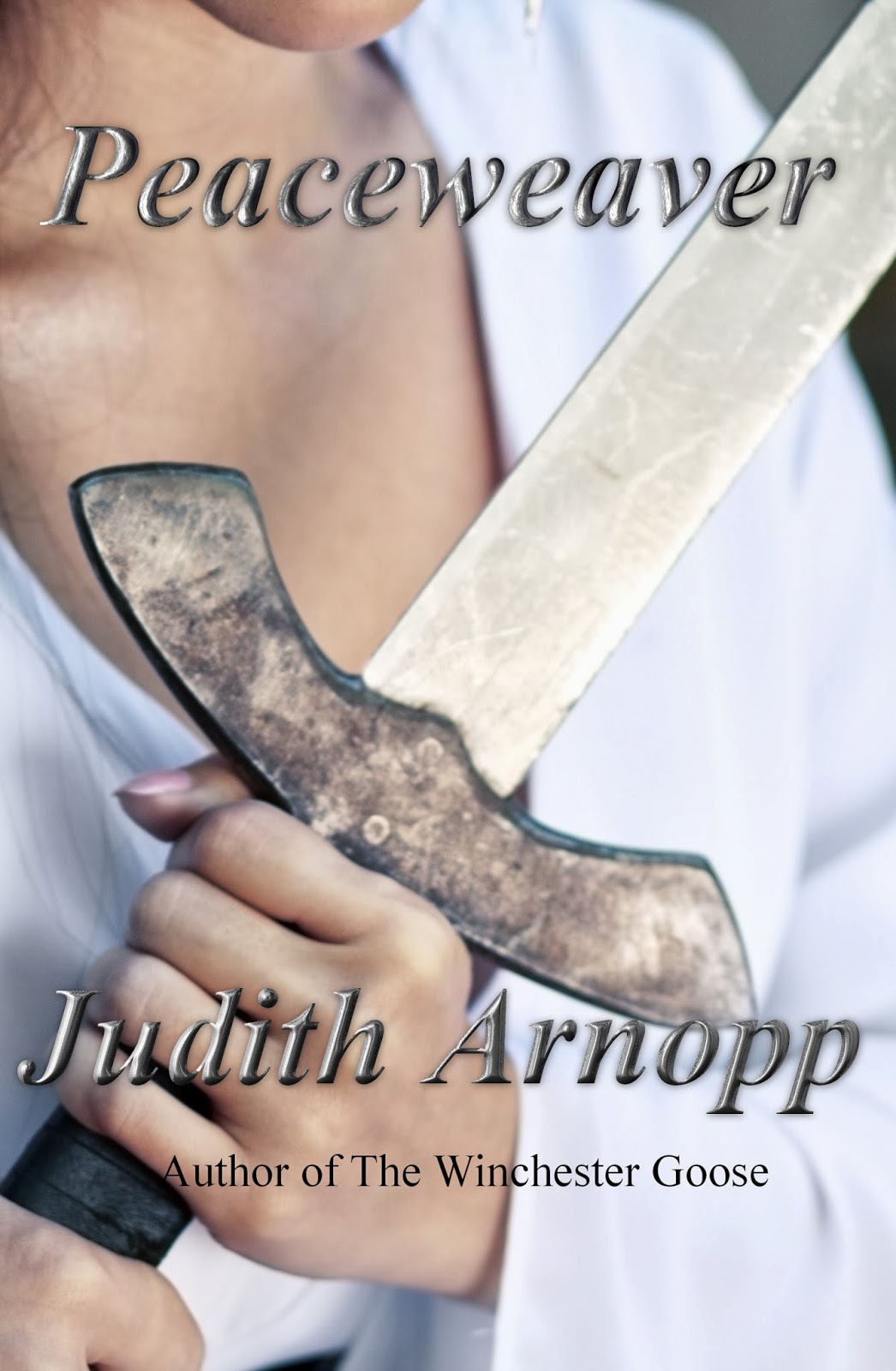
Judith is the author of eight historical novels. Her early works Peaceweaver and The Song of Heledd are set in medieval Wales. She also writes novels set in the court of Henry VIII. For more information visit her webpage: www.juditharnopp.com.