Showing posts with label shakespeare. Show all posts

Friday, May 4, 2018

Common Myths of the Wars of the Roses: Richard III: Victim of Tudor Propaganda? Part 2


I have come to loathe the phrase ‘Tudor propaganda’ which is trotted out so regularly – especially online – that it has become a joke. It is used to stop argument and debate rather than to further it.

So, this is how I see it.

Propaganda has to be a deliberate and concerted attempt to mislead by repeatedly using information which you know or suspect to be false. So, is that what Henry Tudor – and his successors – were doing?

There is no question that Henry VII was determined to promote his own image by presenting himself as the king who brought unity to a divided land.

Young Henry VII
[Public domain via wikipedia]
It is often said that history is written by the victors, so it would be very surprising if the supporters of the victorious Henry Tudor started his reign by congratulating the late Richard III on his excellent reputation and achievements. Naturally, the very reverse was the case: King Henry was keen to emphasise the faults of his predecessor because his own claim to the throne was about as solid as the proverbial chocolate teapot. Compared to Richard, Henry was a novice for he had not even managed an estate let alone governed a country!

Thus, by painting a dark image of Richard, Henry could distract from his own major shortcomings: a weak dynastic claim and complete inexperience of government.

Inevitably, this involved blackening Richard’s name but Henry had to be careful what he said because he was pledged to marry Richard’s niece, Elizabeth of York, and thus he could not blacken the name of York entirely.

Sometimes when a country seeks unity after conflict they choose to forgive – though not forget - past acts in order to move forward.  Henry did do that to some extent and by presenting the short reign of Richard III as an aberration, he found a means of unifying the majority of political interests behind him.  Since he had pretty much appeared from nowhere, having held no high office and with no large retinue of supporters, he needed to justify his kingship. 

So, after 1485, there was indeed a concerted attempt to present Richard’s reign as a disastrous interlude which only the timely arrival of young Henry Tudor had resolved. This was where the weight of emphasis was and the early Tudor pageantry and badges – most obviously the Tudor Rose – hammered home the message of unity, made flesh by the symbolic union of Henry and Elizabeth.

Let us not forget though that most of those who inhabited the Tudor Court in Henry VII’s reign would have supported this approach because that was how they viewed the immediate past too. Many – perhaps the majority - of his supporters were men who had loyally served Edward IV, but presumably most had little love for the dead king because they had abandoned him in favour of Henry. As I indicated in the first part of this discussion, ‘the strength of their opinion is shown by their willingness to support an exile about whom they knew nothing and whose claim to the throne could not have been weaker.’

All the same, there was no guarantee that Henry Tudor could keep the throne. Many had supported Henry only because he had formally committed to marrying the Yorkist heiress, Elizabeth. However much Henry disliked this fact, it remained true. Therefore, it made sense for him to focus the heat on Richard as an individual - the usurper - not Richard, of the House of York. 

After his victory in 1485, Henry was merely making as much capital as he could out of a legacy that many folk regarded as genuine. In this approach then, Henry was pushing at an open door.

It is a very long stretch to move from the clear intention on the first Tudor king’s part to promote his own image at the expense of his predecessor, to the suggestion that throughout the entire period of the Tudor monarchy, lasting about 120 years, there was some sort of orchestrated attempt to blacken Richard’s name. Such an idea is quite simply nonsense.  So what were the contemporary writers saying?
Edward Hall's Chronicle
[Public domain]

Those who wrote about the past in the Tudor period such as Polydore Vergil, Thomas More and Edward Hall would have grown up accepting the version of events, as presented in 1485 and 1486, as fact.

Edward Hall’s Chronicle is the best example of a contemporary history because, unlike More, he was at least trying to tell the history of what we know as the Wars of the Roses in his Chronicle: The Union of the Two Noble and Illustrious Houses of Lancaster and York.  

Hall wrote in Henry VIII’s reign though his chronicle was published after his death – and Henry’s! Though Hall had many original sources to refer to and took pride in listing them, he relied heavily on Thomas More’s account of Richard’s reign. More was not especially concerned with the veracity of his work. He accepted the “received history” and used it to present moral arguments. From a twenty-first century perspective this makes More unusual but for writers of the period – all God-fearing men – separating moral judgements from history would be an alien concept. Frequently Hall made judgements on events by use of spectacular adjectives. Thus, men’s actions were “glorious” or “detestable” or “odious” but then Hall did want his work to be interesting to read!

Was Hall writing propaganda?

Not really, no.  His was the earliest attempt at a comprehensive history of the struggle between Lancaster and York. Like an awful lot of historians since his time, Hall assumed that what had been said by folk in authority was probably true.  As far as he was concerned, it was a great story with a happy ending – King Henry VIII - though we might judge Henry rather differently.

Hall was attempting to explain what had happened to cause division in the state and he traced it back to the demise of Richard II in 1399. In doing so, he laid down the traditional view of the origins of the Wars of the Roses. Reading Hall, one is astonished how little that view changed over the next four centuries. Since the second half of the twentieth century, though historians have analysed more rigorously and critically the sources available, yet in some respects Hall’s account remains largely unchallenged.

Although Hall had access to sources long since lost to us, he lacked the one thing we do have: perspective. Surely though, we cannot blame him for that.

It does make his work biased and flawed, but it does not make it propaganda. He saw Richard III through a Tudor lens, but that does not mean it was a Tudor plot – nor, crucially, does it mean that what he wrote is actually incorrect.

Hall was not attempting to deliberately twist the truth.  Although the Privy Council did make some changes to Hall’s Chronicle before publication in 1548 and again when it was republished in Elizabeth’s reign, that was normal enough and there is no suggestion that the Tudor state significantly adulterated his account.

Hall’s Chronicle is evidence enough that the line taken by Henry VII in 1485 had been successful if, fifty or more years later, it was accepted as fact. So Hall was certainly furthering the Tudor image, but that does not mean that everything he wrote about Richard III was wrong.

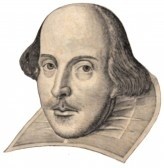
If the ‘Tudor propaganda’ tag is applied to one man more than any other, it is William Shakespeare. His tragedy, Richard III, is regarded as the ultimate Tudor propaganda.

William Shakespeare
[Public domain via wikipedia]
Indeed, if you Google Richard III, you’ll find a lot about the play before you discover anything much about the king! It’s certain that the play has coloured opinion over the centuries but that does not make it propaganda.

Shakespeare drew inspiration for his plays from two chronicles in particular: Hall’s and the more contemporary, Raphael Holinshed – who also drew heavily from More and Hall.

Hall would have provided him with the entire historical backdrop not just for Richard III but for all his other history plays from Richard II onwards.

Shakespeare was thus making use of the best possible source of historical information available to him at the time.

It is ludicrous to suggest that Shakespeare set out to destroy Richard III’s name – but I have seen it written many times online. The playwright was creating an interesting character – as is shown by our fascination with him ever since.

Some will say that he was ‘under pressure’ from Queen Elizabeth to blacken Richard’s reputation. No, he was not. He was under pressure not to write plays that annoyed the queen, or other prominent courtiers, because he relied on their patronage to make a living. The queen, however, was far more interested in what he wrote in Richard II than Richard III because in the former he concentrated on the theme of kingship and sovereignty. He raised the spectre of an anointed monarch being overthrown, eloquently presenting the victim’s views as well as the usurping Henry IV. For Elizabeth, who several times faced the threat of being removed, that was a far more important issue.

So, in conclusion, the writers of Tudor England reflected not simply the line taken by the victor in 1485, but the accepted ‘world view’ of Richard III. 

Are there aspects of that which we would now question? Yes, of course there are – and rightly so, but please let us banish the old red herring of ‘Tudor propaganda’.

-------------------------------------------------------------------------------------------------------------------------
Derek Birks was born in Hampshire in England but spent his teenage years in Auckland, New Zealand, where he still has strong family ties.

For many years he taught history in a secondary school but took early retirement to concentrate on writing. Apart from his writing, he spends his time gardening, travelling, walking and taking part in archaeological digs at a Roman villa. Derek is interested in a wide range of historical themes but his particular favourite is the late medieval period. He writes action-packed fiction Now the violent events of 1483 are played out in the sequel, The Blood of Princes.


Connect with Derek through his Website, Twitter (@Feud_writer), and his author sites through Amazon UK and Amazon US.

Wednesday, June 15, 2016

Your Weight in Gold - The Problem of Tudor and Stuart Money

By Deborah Swift


This Horrible Histories video shows precisely the difficulty with Tudor and Stuart coinage - the denominations were extremely confusing. But it wasn't the only problem - in these days of virtual money, credit cards and online banking, we tend to forget exactly how much space the average man’s wealth took up. Money in Tudor and Jacobean England was a physical commodity that needed to be stored, carried and guarded. Often wealth was stored as 'plate', i.e. silver and gold that could be used for a purpose such as dining. Large sums of money meant having the physical space to keep it and so wealth was often displayed in the form of silver or gold plate, cutlery, candlesticks or other domestic trappings, which could be melted down to make a large number of coins of the same weight.


Wealth was very visible in the 16th century. Ben Jonson’s play, ‘Volpone’, opens with Volpone’s worship of his gold:

‘Good morning to the day; and next, my gold!
Open the shrine that I may see my Saint!’


Johnson’s play about greed and lust satirises some of the forms of financial speculation practised in Jacobean London. The phrase ‘worth your weight in gold’ was a literal truth in Tudor England.

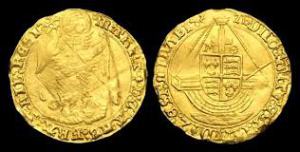
Currency was based on the penny, and the smallest denomination above it was the humble groat or fourpenny piece, and the half-groat (twopence), and one of the largest was the Angel or Angel-noble, called this because of its image of the Archangel Michael stamped in the design. The first shillings, or 'testoons' were created in 1502 in the reign of Henry VII. Occasionally half-pennies or farthings (quarter of a penny) were actually struck as coins, but this was rare: the smaller denominations were usually made by cutting a full penny into halves and quarters, or by using tokens as in Pepys’s Diary.

From The Pastry Cook at the sign of the Crown in Shoe Lane
The picture above is from this excellent site about trade tokens in the 17th Century.

Just a few of the coins in circulation:
Farthing = 1/4 penny
Half-penny = 1/2 penny
Three-farthing = 3/4 penny
Groat = 4 pennies (4d)
Sixpence = 6 pennies (6d)
Shilling = 12 pennies (1s )
Half-crown = 30 pennnies (2s 6d)
Crown = 60 pennies (5s)
Angel = 120 pennies (10s)
Pound = 240 pennies (20s or £1)
Sovereign = 360 pence (30s or £1 10s)

The sovereign was first minted under Henry VII as the gold equivalent of a pound (20 shillings) and was much easier to carry about than the arm-stretching weight of a pound of silver coinage. However, because the currency was based on the actual value of the precious metal, the face value of individual coins was not static as modern coins are, and a particular coin’s value would fluctuate with the price of silver or gold. Apart from the weight, the other disadvantage was that counterfeiting and coin-clipping (chipping a bit off the edge) was rife, although counterfeiting coins was a hanging offence. More detail about actual coins is here: Tudor Coinage.

Gold Angel

Most Elizabethan and Jacobean aristocrats borrowed heavily. Shakespeare’s patron William Herbert, the Earl of Pembroke, for instance, borrowed large sums from regular court money-lender Sir Michael Hicks. The borrowing was mainly to invest in mercantile ventures in other countries, from where England imported luxury goods or foodstuffs not easily obtained at home. Investing in trade was a risky business. Most trades depended on the ocean and many investors lost their fortunes to the sea. There were rare examples of great success in trade, such as Sir Thomas Gresham who became enormously wealthy from his dealings in munitions and bullion in the Netherlands. Gresham founded and invested in the Royal Exchange, the forerunner of London’s modern stock exchange in 1570. Sadly the first Royal Exchange, the great centre of trade and finance, was destroyed by the Great Fire in 1666.


And in fact the biggest risk to all wealth was fire. In towns made of wood and wattle, and thatched with reed, it was an ever-present risk. In this letter from Henry Wotton to Edward Bacon dated 13 July 1613, he says; ‘some of the paper or other stuff where with one of them was stopped did light on the thatch, where being thought at first but an idle smoke, it kindled inwardly and ran round like a train, consuming the whole house to the very grounds.’

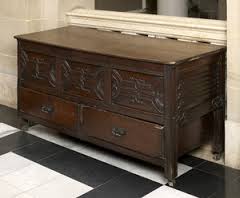
Counter Table from Hull Museum

Fear of losing all your money led to obsessive tallying, both at home, and at the ‘Counting House’. This is a rare example from Hull Museum is of a 'counter table' from the time of Henry VIII. Often the surfaces were marked with a grid or had a chequered board to help counting. In fact this is where the word 'counter' , as in a shop counter, is derived. In wills and inventories from the 16th century, counters are often listed as having a compartment. These compartments were probably for storing money and accounting ledgers, but in this example the drawers and hinged lid were added to it later, probably in the 18th century.

By the closing years of Elizabeth’s reign inflation was unstoppable and if their ships failed to come in, many men found themselves in debt. Debt carried a prison sentence so was greatly feared. In ‘The Merchant of Venice’ the themes of loans, bonds and mercantile transactions are interwoven with the plot. Financial concerns would have been familiar to Shakespeare as his father John Shakespeare made a good deal of money from investments in commodities such as wool and malt, apart from carrying on his business as a glover. He also did a bit of moneylending on the side. William followed in his father’s footsteps and these ventures, apart from inspiring a play, probably brought in considerably larger sums than his craft.

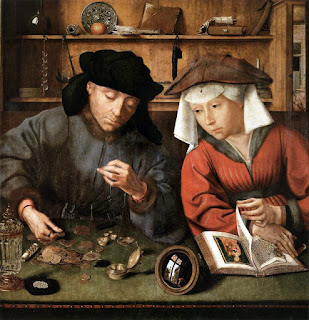
The Moneylender and his Wife - Matsys

Lending sums of money at a high rate of interest was common as interest rates were not fixed. It was usual to charge ‘damages’ , particularly if a debt was paid late, and often substantial fines were added with the full support of the law.

In Johnson’s ‘Every Man out of his Humour’ Puntarvolo invites his friends to sponsor him in his journey to Constantinople. Men would regularly lay down large sums of money to sponsor travellers on condition that the sums were doubled or trebled on their safe return. Travel was risky, but could be lucrative for the sponsor when the traveller returned with the spoils of their travels. 

Johnson and Shakespeare deposited £40 with the eccentric Somerset traveller Thomas Coryate before he set out to walk to Venice and back in a single pair of shoes. Coryate seems to have made quite a good living out of his sponsored travels, together with the books he wrote about them -- and even those who did not provide him with major support were willing to stand him a good dinner in return for his eyewitness accounts of exotic places. Coryate died during his last journey to India in 1670, but his books are still available today.


This type of sponsorship was a form of gambling, and the dividing line between legitimate investment or ‘venturing’ and various forms of betting was a good deal finer than it is today. Almost all Elizabethans gambled, from schoolboys who wagered with the ‘points’ that fastened their clothes, to the Queen and her courtiers who loved to play card games with enormous stakes. John Harrington wrote an epigram on the ‘rake’s progress’ of Marcus, a young man who gambled away his fortune at the very popular card game Primero. ‘The Counter’, where Marcus ends up, was one of London’s debtors prisons, called that because of its large number of debtors.

Lucas van Leyden - Primero players

Primero appears to have been one of the earliest card games played in England during Tudor and Stuart times, and was a forerunner to poker. Even Kings, or especially Kings, were not immune to gambling. During the reign of Henry VII, notices of the King's losses at cards appear in the Remembrance's Office. An entry is shown of one hundred shillings paid at one time to him for the purpose of playing at cards. The private expenses of Princess Mary, Henry VIII's daughter and later Queen, also contain numerous items of money ‘for the playe at cardes’.

Sources: 
Shakespeare's Life and World - Katherine Duncan-Jones
Early Modern England - Sharpe
The Time Traveller's guide to Elizabethan England - Ian Mortimer

Deborah Swift is the author of five historical novels for adults and a trilogy for teens. She blogs on her website about historical curios and historical fiction, and whilst you're reading this she is probably staring out of the window, coffee in hand, lucky black cat on lap, plotting her next book. You can chat to her online @swiftstory, or find her on facebook.

Saturday, April 9, 2016

Greek Mythology in British Literature

by Glyn Iliffe
“Let me not think on't! Frailty, thy name is woman— A little month, or ere those shoes were old with which she follow'd my poor father's body Like Niobe, all tears—why she, even she— O God! a beast that wants discourse of reason Would have mourn'd longer—married with my uncle” (Hamlet, Act 1, Scene 2, 145-151)
Many writers spent their childhoods reading one book after another, totally absorbed in imaginary worlds as they tried to escape the reality of being small and helpless. I wasn’t one of them. The books I was given at primary school to read were so dull that I lost interest and looked to films and toys to provide my flights of fancy instead.

This all changed when I read The Lord of the Rings at the age of 14, after which I became an avid bookworm. But as my reading became wider and began to include more literary classics, I felt gaps appearing in my understanding of the texts. These gaps included the many biblical references in older books (I wasn’t brought up in a church-going family, so my knowledge of the Bible was poor), and the frequent, almost throwaway, mentions of mythological names, such as Shakespeare’s “like Niobe, all tears” quoted above.

Like pretty shells scattered across a beach, they had, for me, a romantic sense of mystery. Who was Niobe and why was she crying? But Shakespeare doesn’t say. Neither do the other giants of literature—Chaucer, Spenser, Milton, Wilde, Joyce, Eliot—as they name-drop the heroes and demi-gods of Greek mythology with the assumption that their audiences will be familiar with them. So it both frustrated and intrigued me as I encountered glimpses of characters and stories that British state education in the 70s and 80s hadn’t prepared me for.

Niobid Painter: Artemis and Apollo killing Niobe's children
In short, Niobe was the proud mother of fourteen children. She made the mistake of boasting about it to Leto, who only had two. But Leto’s children were the divine Apollo and Artemis, probably the most lethal brother/sister act in mythology. In answer to their mother’s plea for vengeance, they murdered all of Niobe’s offspring. Devastated at their deaths, Niobe wept ceaselessly until she was turned into stone, after which her tears continued to flow in the form of a spring. It’s a tale typical of Greek mythology—mortal encounters immortal and suffers tragic consequences -- and one that I did not learn in full until I studied Classics at university.

By opting for a “classical” education - wanting to scratch the itch that had been left by Shakespeare and others years before—I was embarking on a study of something ancient, foreign and exotic, but at the same time quintessentially British. There is a deep affinity between the British and the ancient Greeks. It’s so normal we barely even notice it: the Doric style columns that adorn Victorian railway stations, the Greek words that smatter our language, and the fact we’re a democracy. But there are similarities in our national experience, too, especially with the Classical Athenians. Our language has become universal. Our wealth once came from maritime trade, protected by a powerful navy. We had an empire that moulded the modern world

It seems natural, then, that the British have a special appreciation for the ancient Greeks. This is never more obvious than in our literature. Many of our greatest writers were classically educated and were familiar with the history, culture, politics and art of the ancient world, as well as being able to read Greek and Latin texts. I’ve already mentioned the habit of British authors, playwrights and poets of liberally referring to characters from Greek mythology. It’s a way of conversing on another level with readers and audiences who, in those days, understood the references.

Name-dropping of this kind is useful for contrasting and comparing, such as the distinction Hamlet makes between his mother’s false tears and those of Niobe. To evoke such characters and their stories gives depth to the scene that the writer is trying to convey. By merely naming Niobe, Shakespeare puts an image in his audience’s mind of a woman devastated by grief (and thus shows the falseness of Gertrude’s tears, at least in Hamlet’s eyes). It wasn’t so long ago that audiences understood the references.

Such is the authority given by the Classics that some of our greatest writers have often begun their works by calling on one of the Greek Muses - the nine goddesses who symbolised the arts and sciences (Milton’s in Paradise Lost is Urania, the Muse of Astronomy).

But this authority is well-deserved. The stories of Greek mythology draw upon the whole spectrum of human experience. There are few emotions or themes that have not already been powerfully explored in the ancient writings of Hesiod, Aeschylus, Sophocles and other Greek playwrights. This is why Freud referred to Oedipus and Electra complexes - because the subconscious desire to sleep with a parent appeared in Greek drama twenty-five centuries earlier. But it is literature that remains most enthralled by the ancient Greeks, a tradition that was revived by the Renaissance in the 14th-century, though which had probably continued uninterrupted since the days of the Roman Empire.

One of the greatest influences on British literature from Greek mythology is Homer and the Trojan War. George Chapman’s partial translation of the Iliad in 1598 inspired Shakespeare’s Troilus and Cressida. One of the most famous quotes about the Trojan War, “Was this the face that launch’d a thousand ships,” came from Marlowe’s Dr Faustus in 1604. Fast-forwarding, the Iliad was a favourite of the Great War poets, some of whom read Homer’s epic in the Dardanelles while waiting to storm the beaches of Gallipoli. Considered by some to be the greatest literary work of the 20th century, James Joyce’s Ulysses sets the characters and incidents of the Odyssey in modern Dublin. More recently, Derek Walcott’s Omeros — a loose retelling of the Odyssey set in St Lucia — effectively won him the Nobel Prize for Literature. Among the less direct references are Lyra’s descent into the land of the dead in Phillip Pullman’s The Amber Spyglass - an allusion to Book 11 of the Odyssey.

James Joyce, by Ohne
Wikimedia Commons [Public Domain]
But what of the popular novel? Sadly, considering the wide appeal of Homer and the storytelling possibilities offered by the Trojan War, there have been very few novels dedicated to the subject. Strangely though, to my way of thinking, there haven’t been nearly as many novels about ancient Greece as there have been about Rome. Authors writing in this era include Lindsay Clarke, Greg Tobin and Valerio Manfredi, David Gemmell’s popular trilogy, and The Song of Achilles by Madeline Miller in 2012, which won the Orange Prize for Fiction.

The fifth and penultimate volume in my Adventures of Odysseus series has now been released in paperback and e-book formats. I’ve thoroughly enjoyed recreating the Trojan War, using a blend of historical accuracy and Homeric liberties, but not shying away from the mythical elements (after all, Greek mythology without the myth is just Greek!) I’ve tried to make these ancient stories accessible to readers with little or no prior understanding of the subject, and ultimately hope that my small chapter in the long British (or perhaps I should say English-speaking) homage to Homer will encourage a few more people to read his original works.

~~~~~~~~~~~~~

Glyn Iliffe studied English and Classics at Reading University, where he developed a passion for the stories of ancient Greek mythology. Well-travelled, Glyn has visited nearly forty countries, trekked in the Himalayas, spent six weeks hitchhiking across North America and had his collarbone broken by a bull in Pamplona.

King of Ithaca was Glyn’s first novel, followed by The Gates of Troy, The Armour of Achilles, and The Oracles of Troy. All are available for sale in the UK through Amazon. He is currently working on the fifth book in the series, The Voyage of Odysseus.


For more information about his work, check out Glyn's website, Facebook or follow him on Twitter.


Tuesday, May 5, 2015

"Thank you, Shakespeare, for my life."

by David Blixt, Finalist in the M.M. Bennetts Award for Historical Fiction

I always hated Shakespeare.

They made me read him. In junior high, it was Julius Caesar. In high school, first it was Romeo & Juliet (which was cool only because we wasted a week watching the movie), then it was Henry IV Part One, to which I said ‘You’ve got to be kidding’ and scraped through by listening to class discussions.

The Bard of Avon and I were not friendly. Which is why it’s so wonderfully ironic that he now dominates my life.

At the end of high school, I had a choice between a reading-Shakespeare and an acting-Shakespeare class. I was already acting, so the choice was easy. As it happened, the teachers had chosen Romeo & Juliet that year, mainly because they had a Juliet in mind. I remembered from the film that Mercutio was the best part in that show, and after auditioning against the rest of the class, I landed the part.

It was somewhere in the middle of rehearsals when I realized that my teachers had been holding out on me. You don’t read Shakespeare – you perform him. It’s not literature to be scanned, but language to be spoken by real, living, breathing people. What language! What power! What humanity!

Thus started my love affair with the Bard of Avon. Today I am a Shakespearean actor, something I would never have believed in my youth. Moreover, after giving me a career, Billy Shakes did me one better and introduced me to my wife. I met Jan playing Petruchio to her Kate in The Taming of the Shrew, giving us banter material for the rest of our lives.

And then, as if all that were not enough, Shakespeare got me to write novels.

Once again it starts with Romeo & Juliet. I’ve long been of the opinion that directors miss the point of the show. I like to compare it to the premiere of Snow White and the Seven Dwarves in 1937. Before the film was released, it was called ‘Disney’s Folly.’ Who was going to sit through a feature-length cartoon? Insanity! But grown men and women left the premiere of the film crying, the critics went nuts with praise, every song became a top 10 hit, and theatre owners were forced to change seat-covers after every showing because of kids wetting themselves in terror and joy. No one had ever seen anything like it.

That’s what I think Romeo & Juliet was for the mid-1590s. It’s not a Tragedy, it bears no resemblance to Hamlet or Othello or the Scottish Play. It’s something much worse – a Comedy that goes wrong. The horror lies in the fact that first the play makes us laugh, then pulls the rug out, leaving us all confused and bewildered.

I expressed my views a few times, and suddenly found myself approached to direct the show. Warily, I accepted. It was my first time directing Shakespeare. I read old versions of the play and Shakespeare’s source materials. I pored through the whole text in a way I’d never done as an actor. Poking around for lines to cut, I found something.

I found a cause for the feud.

The cause is never actually mentioned in the play, and it’s not vital to either the actor’s or the audience’s understanding of the show. At the top of Act One, the ‘ancient grudge’ is established fact.

I was cutting the script for length and was doing well when I reached the final scene. Paris is slain, Romeo and Juliet both snuff it – we’re firmly into the denouement. Suddenly a line leapt out at me. Capulet and his wife find their daughter's bleeding body. Romeo’s father, Lord Montague, enters to tomb, and the Prince addresses him: ‘Come, Montague, for thou art early up / To see thy son and heir now early down.’

Montague replies:

Alas, my liege, my wife is dead tonight;
Grief of my son’s exile hath stopped her breath.
What further woe conspires against my age?


So clearly I didn’t need Lady Montague for the final scene. I flipped back to find her last appearance. She’s listed as entering in Act Three, Scene Four, when Mercutio and Tybalt both buy it – but she’s strangely quiet in that scene. Lord Capulet, too, but at least people talk to him. No one addresses Romeo’s mom, even when her son is banished. In fact, looking at it harder, Lady Montague hasn't been heard from since Act One, Scene One, in which she uttered a mere two lines!

So this was my quandary – should I cut Montague’s lines at the end of the show? Why not? The play is basically over. We’ve just watched the two romantic leads die pitiably. Why do we care if some woman we barely remember is dead?

Still, it continued to bother me. There had to be a reason she was dead. (Of course, in Shakespeare’s day, there was a very good reason: the actor who played Lady Montague was probably needed in another role – the exigencies of the stage.)

Still, I couldn't let go of the line. My wife is dead tonight. The rules of dramatic structure nagged at me. An off-stage death like that is supposed to be symbolic. Death is symbolic of an ending. But what ends at the end of the play?

I was going about my business later that week when it hit me – the feud! The thing that gets closure at the end of the show is the feud! Montague and Capulet bury the hatchet. They're even going to build statues to honor their dead kids. Could Lady Montague’s death be symbolic of the end of the feud? The only way that could work would be –

If she were the cause of the feud.

I experienced a breathless moment as the idea formed: a love triangle a generation earlier, between the parents! Romeo’s mother, engaged to young Capulet, runs off with young Montague instead. That’s certainly cause for a feud. And wouldn’t it be worse if young Capulet and Montague were friends, best friends, torn apart by their love for a woman. A feud born of love, dies with love.

This idea explained so much in the play. Lord Capulet, Juliet's doting father, suddenly threatening to kill her for refusing to marry the man he’s chosen for her, telling her to ‘hang, beg, starve, die in the streets’. This from a man who has called her ‘the hopeful lady of my earth.’ His fury seems to come out of nowhere and is brutally excessive. But if his own bride-to-be had jilted him to run off with his best friend, of course Juliet’s similar behavior would press his buttons.

This notion also goes on to inform much of Capulet's relationship with his wife – a younger wife, we know from the script, not well content in her match, married to a man who thinks she is ‘marred.’ It hints, in turn, at her relationship with Tybalt. In fact, the behavior of both families is wonderfully colored by this single, simple idea. Romeo’s mom jilted Juliet’s dad.

Oddly enough, all this doesn’t affect the actual performance of the show at all. It’s fun for the actors to play, and there are moments when it can be very clear, but the play stands, as it always has, on its action and language. The backstory ends up being superfluous.

But the idea had its hooks in me and wouldn’t let go. Throughout the following year, I was unable to leave it behind. The play was done, but my research continued.

Submerging myself in the history of Verona, I discovered some interesting facts. At the beginning of the fourteenth century, the time the tale of the star-cross’d lovers supposedly took place, Dante was in Verona. Giotto was in Verona. Petrarch was in Verona. In a very real sense the Renaissance began, not in Florence as I’d assumed, but in Verona.

I cracked open earlier versions of the play, the short stories (some not so short) that were Shakespeare’s sources, and then back further to his sources’ sources. Luigi da Porto pinpoints a four year period wherein the tale is supposed to take place – during the reign of one Bartolomeo della Scala.

Della Scala? Shakespeare’s Prince of Verona is named Escalus, a Latinized version of della Scala. But the name was ringing another bell. I went back and found that Dante had dedicated the final third of his Divine Comedy, Paradiso, to Bartolomeo’s little brother, Cangrande della Scala.

Cangrande. It didn’t mean much at the time. But it would.

As I was running around doing historical research, I was also pleasure-reading. I am a glutton for well-written historical fiction. Bernard Cornwell, Patrick O’Brian, Colleen McCullough’s ‘Masters of Rome’ series, all of it. At the time, though, at the suggestion of my future wife, I was reading Dorothy Dunnett.

To me, Dunnett is the pinnacle of the genre. Her writing is smart and densely layered. You have to earn Dunnett, but once you’re in her world, there’s no going back. She weaves a tapestry so fine, so richly detailed, so at the core of human experience, that each of her books are a treasure. It was Dunnett more than any other writer who showed me that a book can be intelligent, dark, witty, gruesome, and exciting all at once. Her death was a heart-breaking loss to literature.

But back in early 2000 I hadn’t yet completed even the first of her series of historical novels. I wasn’t fully able to enjoy The Lymond Chronicles because Dante and the rest of the Verona cast kept crowding my brain. So I temporarily laid her books aside and started to write.

It was going to be short, more a novella than anything. Two friends in love with the same woman have a falling out over her. Simple, sweet, it would get the idea out of my system.

The first couple attempts I couldn’t find the voice. I was obsessed with the notion of the feud, which I thought was the core of my book. But while the origin of the Capulet/Montague feud fascinated me, it was the backdrop – the della Scalas, Giotto, Dante – that kept leaping to the fore.

I fought halfway through a bad version before I realized I wasn’t writing the story I wanted to tell. More research, more false starts. Finally I took a deep breath and settled in to read Dante’s Divine Comedy, something I would have bet money against at any other point in my life. It wasn’t the great revelation Shakespeare was, but it did give me the landscape of the time. And halfway through Dante knocked my socks off by mentioning the feud between the Capelletti and the Montecchi. Capulet and Montagues', anyone?

In reading both the history of the period and the footnotes to Dante’s work, one man’s name kept cropping up. A man who stood above all his peers, outshone the luminaries of his day. Giotto’s patron, Dante’s friend. A man fit to be a tragic hero of one of Shakespeare’s plays. Cangrande della Scala, known as the Greyhound of Verona. Revered as almost a God in his own lifetime, the man took Verona to its highest height, just before its worst fall.

Tall and handsome, with a smile famous for its joy and perfect set of teeth, he was successful in everything he did – warrior, lover, reveler, patron of the arts. Under his rule Verona was a hub of commercial and artistic growth. It was also hated and feared by its neighbors. Venice conspired against Cangrande, as did popes and emperors. He waged an almost-unceasing war with nearby Padua, finally winning through benevolence, not battle.

Cangrande’s life fascinated me as much as any play I’d ever read. Because he reminded me of someone, a rogue I had fallen in love with the first time I played him. The ties between Shakespeare and Dante were growing.

Soon I was reading about Dante himself – his wit, his loves, his politics, his exile, his family. It was then that it happened – one of those moments you hear writers talk about, where a character steps off the page and introduces himself as the lead.

Pietro Alighieri, also known as Pietro di Dante. Barely eighteen when my story starts, he came upon the scene and knocked down all my plans, which is very unlike him because he’s such a good guy. A really good guy, the kind of guy I’d want to play if I didn’t enjoy scoundrels so much. Raised in his father’s ever-growing shadow, he was a prospectless second son until the death of his elder brother elevated him to heir.

With no particular skill in anything, just great heart and determination, he gave the series its initial voice, allowing us to watch his growth, feel his joys and hopes, and share his disillusionments.

But there was another element missing. If the idea for the feud was going to become the subplot, a crucial but subdued backdrop, where was my plot? What was my spine? The book seemed to be writing itself, everything falling into place, and still I didn’t know what Pietro’s goal was.

All good actors, when they are lost, return to the text. That goes for directors and, it seems, writers. I sat down and once again pored through the story of the star-cross’d lovers.

Then it came, the answer. In my mind, the Bard of Avon chuckled as he met Dante’s son and gave him his raison d’etre. I had come full circle, the best of all possible worlds.

Mercutio. Of course, Mercutio. Referred to as both a cousin to the Prince, and ‘the Prince’s near ally,’ Mercutio was in some way tied to the della Scala family. The pivotal figure of Romeo & Juliet would be only a newborn babe when my story began. We couldn’t follow him, not from the outset – following the adventures of a toddler in fourteenth century Italy is not what I call exciting. But following the trials and tribulations of his protector, young Pietro Alighieri – that had promise!

All at once it was Mercutio’s story. The possibility of creating from Shakespeare’s text and real history the tale of this marvelously troubled young man was just too tempting. I could explain the darkness in the Queen Mab speech, from his disdain of love and his homoerotic tendencies to his fear of war drums and his foul images of childbirth. Shakespeare’s Mercutio has a wealth of possibility, and if I could tap even a little of it, I had the makings of a great story.

Moreover, bringing it back to Shakespeare led me to look at the phrase ‘star-cross’d,’ which carries elements of both prophecy and futility. Looking closely, Mercutio is the agent of the stars, because his death is what leads the young lovers to their fate. So Mercutio is a tool of the heavens.

Dante uses prophecy often. The Inferno begins with a retooling of an ancient one regarding the mythical Greyhound, a man who will save Italy and take it into another age. I knew from my reading that scholars have often speculated that Dante was referring to Cangrande – but what if he meant someone else?

Here I was faced with a decision – can I bring the prophecies of Shakespeare and Dante together, roll them together, and slap them on a defenseless child still in his crib? Am I that cruel?

Turns out I am. Researching astrology and numerology, I came up with a prophetic doom revolving around Dante’s Greyhound that all my characters could struggle against, in vain. With the advantage of hindsight, I can say that the ‘new age of man’ alluded to in the Greyhound prophecy was the Renaissance.

The stars aligned, the story poured out. Once into the thick of it, I started seeing connections with the Bard's other Italian plays. Characters and events from The Taming of the Shrew are actually mentioned in R&J, so Kate and Petruchio make cameo appearances. There are characters from Two Gentlemen of Verona, of course, but others as well – Shylock, Don Pedro of Aragon and his nasty bastard brother. The Duke from Measure for Measure (also an Escalus) is mentioned in passing. The original idea of the Montague/Capulet feud blossomed into a panoramic story about Shakespeare’s characters living in Dante’s world.

The book ended, sold, and was published. But I was nowhere near finished. The Master of Verona was followed by Voice of the Falconer and Fortune's Fool. Pietro became a man, and the child grew, becoming more and more the focus of the story. The Prince’s Doom is the tale of him stepping into manhood, with wonderful and disastrous results. The story is now fully Mercutio’s.

I’m hard pressed to choose a favorite. Everyone likes beginnings. Some people like the sticky middle. But I think of the whole series to date as a symphony. Themes were built early on, providing familiar ground. Then more instruments came in, digressing and intriguing. But this, this is the swelling crescendo, where all the elements come together to pull the spirit straight out of the chest and into the air. It has something for everyone – mystery, romance, murder, war, politics, law, whimsy, horror, chills, pathos, hope, and ruin.

I read somewhere that when Alan Alda met Donald Sutherland, he simply took the other man’s hand and said, “Thank you for my life.” If Shakespeare were alive today, I’m sure that’s what I’d have to say.

But I'd start by telling him how I'd always hated him.

~~~~~~~~~~~~~

David Blixt is the author of seven novels, most recently The Prince’s Doom, the fourth volume in the Star-Cross’d series, which began with The Master Of Verona and continued through Voice Of The Falconer. The third volume, Fortune’s Fool, was Editor’s Choice for the Historical Novel Society in 2013. The Prince’s Doom is a Finalist for the M.M. Bennetts Award for Historical Fiction.

Born in Ann Arbor and now living in Chicago, David’s career began in theatre. Drawn to classical works, he’s traveled far and wide, performing Aristophanes in ancient amphitheatres, Shakespeare in re-creations of the Globe, acting and designing theatrical combat for national productions. In 2014 David won a Wilde Award for Best Actor In A Comedy for his portrayal of Algernon in The Importance Of Being Earnest.

Amazon

Saturday, April 11, 2015

Like Father Like Son: We Know Little About Shakespeare’s Life, But What We Do Know Is Important

by Andrea Chapin

Most of William Shakespeare’s life is undocumented. Indeed, it was his “lost years” between 1585 and 1592 that compelled me to write The Tutor, my novel about a year in the life of Shakespeare. What was he up to between twenty-one, when he was living in Stratford with three children, and twenty-eight, when he emerged as an actor, playwright and poet in London? Was he a deer poacher in Stratford, horse handler for theaters in London, soldier, sailor, actor, musician? Was he a schoolmaster in the country? What perfect terrain, I thought, for a fiction writer.

There is as much speculation as to what Shakespeare was doing during those lost years as there is about what sort of person he was: kind or selfish, faithful or promiscuous, teetotaler or boozer? We know Shakespeare’s poems, sonnets, and plays. We know dates in his life: christenings, weddings, and deaths chronicled in church and town records. But we know little about his personality.

Scholars often warn against interpreting any of his writing as autobiographical. He left no letters—though there’s a story that many years after his death, in the late 1700s, several baskets of letters and papers with Shakespeare’s name on them were destroyed by a farmer who did not know their importance. The scant quotes from fellow poets and playwrights possibly give some clues as to Shakespeare’s knowledge and his character. Robert Greene, in a penny pamphlet, wrote a snarky gibe in a passage assumed to be about Shakespeare:
..for there is an upstart Crow, beautified with our feathers, that with his Tygers hart wrapt in a Players hyde, supposes he is as well able to bombast out a blanke verse as the best of you: and being an absolute Johannes factotum, is in his owne conceit the onely Shake-scene in a countrey
And in the preface to the First Folio, in Ben Johnson’s laudatory “Eulogy to Shakespeare” where he praises the Bard’s spectacular genius, Johnson remarks that Shakespeare knew “small Latine, and lesse Greeke…”

With all the worry about what we don’t know about Shakespeare, what I found perhaps most interesting when researching him is what we do know about him—especially the facts about his father.

John Shakespeare married up: Mary Arden was from gentry, a prominent land-owning family, whereas John Shakespeare was from the yeoman class, his family tenant farmers on Arden land. John left the life of farming, moved to Stratford and became a glove maker, probably starting as an apprentice. He did well enough to purchase a house on Henley Street in 1551 and another house
nearby in 1552. Records show that in the years after John’s marriage to Mary in 1557, he traded goods, including wool, malt and corn, and dealt in moneylending.

As John expanded into several businesses, he also embarked on a career within the Stratford town government:

1557: Ale-taster—Stratford was known for its brewing.

1561: Chamberlain of the Borough of Stratford, where he presided over the town council.

1565: Alderman—a position that brought with it a free education for his boys at Stratford’s grammar school.

1568: Bailiff of Stratford—equivalent to a mayor.

1570: Chief Alderman—top position in the town. During 1570, John sought the title of “gentleman” by applying for coat of arms—a symbol of his rise in the world. From Yeoman to Gentleman was a big leap. But John was denied the coat-of-arms—perhaps because during this same year John was accused of Usury for lending money at 20% and 25% interest. Perhaps there were other reasons.

From 1578 on: Documents show that when William is around 14 something went terribly wrong with John Shakespeare’s business and civic life. He incurred debts and fines, failed to show up for court dates and for church (for which he was fined). He started to lose property and even lost his wife’s large farm. Finally, he was removed from the town’s Board of Alderman. Was it illegal business dealings? Was he a Catholic? Was he sick? Again, there’s only been conjecture—no one knows why.

Intelligent young men from humble backgrounds did receive scholarships to Oxford and Cambridge at that time. Christopher Marlowe, who went to Cambridge, was the son of a cobbler. But if that son had to go to work because his father for some reason was out of work, then no such university was in sight.

John Shakespeare was clearly a very ambitious man. Perhaps a Johannes factotum—a Jack-of-all trades. Like father like son. Shakespeare was not content only to act, but he published poetry, had his plays produced and became part owner of a theater company and a theater, so he made money from every ticket sold (the way his father made money on the wool he sold and the money he lended—a percentage). As Shakespeare became successful in London, he purchased property. He bought Sir Clopton’s house in Stratford, a large house with ten fireplaces, far grander than the house on Henley Street where he grew up. And he applied for and was granted a coat of arms.

Robert Greene does not say the heart of a “bunny” or “mouse” in his snide remark about Shakespeare, but gives him the heart of a tiger—an animal that is aggressive, powerful, and controlling—who by his own conceit is the only “Shake-scene” in the country. In play after play, Shakespeare’s plots deal with the rise and fall of great men. Who, in a child’s life, is the greatest and most powerful person? His father. And who would know better about that “vaulting ambition” Shakespeare attributes to Macbeth, than Shakespeare himself.

Sources: Contested Will: Who Wrote Shakespeare by James Shapiro; 1599: A Year in the Life of William Shakespeare by James Shapiro; Shakespeare Unbound: Decoding a Hidden Life by Rene Weis; Will in the World: How Shakespeare Became Shakespeare by Stephen Greenblatt; Shakespeare of London by Marchette Chute; The Age of Shakespeare by Frank Kermode; and Shakespeare: The World As Stage by Bill Bryson.

~~~~~~~~~~~~~

Andrea Chapin has acted professionally, touring Germany in Edward Albee’s Seascape. She has been an editor at art, movie, theater, and literary magazines, including The Paris Review, Conjunctions, and The Lincoln Center Theater Review, and has written for More, Redbook, Town & Country, Self, Martha Stewart Living, Marie Claire, and other publications. Chapin is also a writing teacher and private book editor. The Tutor,her first novel, was published by Riverhead Books in the US in February and last month by Penguin Books in the UK.

Amazon US
Amazon UK
Amazon CA


Tuesday, August 13, 2013

A Masque, A Mask, and a Mystery

by Sandra Byrd

Although she bore no child, Queen Elizabeth I mid-wived a number of bright achievements during her reign which persist to this day, among them a settled religious faith, a healthy national commerce, and a nursing of the fine arts, specifically, the development of theater. London still has one of the finest, if not the premiere, theater districts in the world. But in truth, the English love of drama began much earlier than the 16th century.

Palace Theater, London
Theater—A  Crash Course by Rob Graham states: "During the 12th century, nonliturgical vernacular plays based on biblical stories were performed at festivals, such as Christmas. These were called the Mystery Cycles (the 'mystery' was redemption...). Local lads from the crafts guilds and companies performed those 'passions' on rough wagons in procession through the streets or on fixed circular stages."

Early Chester Mystery Play

These plays, staged locally, were mostly enjoyed by the lower classes. The upper class enjoyed theater, too, especially when they put it on themselves. To plays based solely upon Scripture, courtiers added topics such as Greek and Roman gods, comedy, tragedy, and life as they (and their countrymen) knew it.

Henry VIII was well known as a person who loved to sponsor and act in masques and disguisings. He preferred, of course, to play the valiant knight, or sometimes, what else? the sun itself!


Later in the sixteenth century, plays, playwrights, and performers came into their own and the love of theater spread. The Age of Shakespeare by Frank Kermode, shares that poets and playwrights depended on aristocratic patrons for support. Many of the most highly titled men in Elizabeth's court sponsored their own troupe, known by the sponsor’s name. For example, The Earl of Leicester's Men were sponsored by the queen's favorite, and later, The Queen's Men were sponsored by Her Majesty herself.

When the queen finally sponsored her own troupe, the cloudy reputation of players and playwrights finally lifted. The Lord Chamberlain's Men were sponsored by Baron Hunsdon, Queen Elizabeth's cousin by Mary Boleyn. William Shakespeare wrote many of his plays for the troupe sponsored by The Lord Chamberlain, including Hamlet, Othello, and Macbeth. Others were writing and performing too. Kermode tells us that, "between 1558 and 1642 there were about three thousand (plays), of which six hundred and fifty have survived."

Henry Carey, 1st Baron Hunsdon
Shakespeare was not only a playwright, he sometimes acted in secondary roles and later, when partnerships began to sponsor performances for financial gains, he was an investor. He was among those who received a grant of arms and a great deal of money for his talents. Some of his better known colleagues and competition weren't so lucky. Christopher Marlow was stabbed to death at 29; Ben Johnson was often in jail and ended up with a branded thumb.  Plays were also used for political purposes, even against the queen who allowed them to flourish.

Sir Henry Lee


Historian Simon Schama tells us that the traitorous Earl of Essex sponsored a special production of "Richard II - which deals with the murder of an incompetent king ... to gee up his supporters against Elizabeth..."

Elizabeth herself approved a play written by Sir Henry Lee, The Hermit's Tale, which celebrated a woman who chose her father's dukedom and duty over her own love. She used the tale, masterfully, to signal to her courtiers and her people that she would always put her true husband, England, first.

Then, and now, drama allows us to explore our lives, our problems, our hopes and dreams, and our loves and losses. In fact, we, too, are players, for as William Shakespeare wrote, "All the world's a stage and all the men and women merely players: they have their exits and entrances and one man in his time plays many parts, his acts being seven ages."   

~~~~~~~~~~~~
Please visit Sandra Byrd's website, here, to learn more about the Ladies in Waiting series, and her blog, here, for Elizabethan themed giveaways!


Monday, April 1, 2013

Shakespeare, Bloody Mary, and Henry VIII's Bones

by Barbara Kyle


Research is the lifeblood of our art. Ask any historical novelist and they'll tell you that poring over the letters and diaries of our subjects and reading biographies of them and books about their times is a hugely engrossing part of our work. So engrossing, in fact, that I don't think of it anymore as "research." To me it's THE Search.

It's like panning for gold. I sit by the riverside day after day sifting through mounds of information sand. Every grain is worth scanning, because I'll need these stolid, solid facts to ground my stories in the truth of the period, but they're not eye-catching. It's the nuggets I look for. The details that gleam, the facets that will spark my subject to flesh-and-blood life.

I'd like to share with you three such nuggets that have sparked the life of my books.

Sir Thomas More
The Queen's Lady features Honor Larke, a character I created to be the ward of Sir Thomas More (who did, in fact, have two wards). More was Henry VIII's chancellor and famously went to the execution block rather than swear the oath that Henry was supreme head of the church in England, a title Henry created so he could divorce Catherine of Aragon and marry Anne Boleyn.

My research revealed that in 1517 More was undersheriff of London, and that on May 1st of that year the London apprentices rioted and he went with a troop of guards to speak to them. The young men were a furious mob, their torches flaring in the night as they went on a rampage, denouncing foreigners for taking their jobs, breaking into foreign-owned shops, and assaulting Italians and Flemings in the streets.

The Nugget: Gleaming at me in my research was the fact that, years after More's death, Shakespeare had a hand, along with others, in collaboratively writing a play called "Sir Thomas More." I went to the British Museum and read the original manuscript. It gave me goose bumps.

Shakespeare's brilliance glitters in every line he wrote. There's a scene of the May Day riot in which More, as undersheriff, addresses the furious apprentices and shames them by asking how would they feel if they were friendless in a faraway county where they would be the foreigners. Would they not hope to be treated with compassion?

William Shakespeare

"For other ruffians, as their fancies wrought,
With self same hand, self reasons, and self right,
Would shark on you, and men like ravenous fishes
Would feed on one another."

He points out an apprentice whose kind Italian master is giving him a good livelihood and a secure future. With this tolerant rationale More calms the mob. The event is so stirring I used it, incorporating my created characters, as the opening of The Queen's Lady.

My second novel, The King's Daughter, features Isabel Thornleigh, Honor's daughter, who joins the uprising led by Sir Thomas Wyatt, a true event in which the rebels sought to unseat Mary I from the throne in the winter of 1554. The only surviving child of Henry VIII and his pious first wife, Catherine of Aragon, Mary was driven by religious zeal. As queen she oversaw the burning of hundreds of English men and women, earning the name her subjects gave her in her lifetime: Bloody Mary.

Mary I
Mary was very close to her mother, Catherine, and badly treated by her father. He treated Catherine even worse, sending her off to a damp, draughty house in the fens of Norfolk, far from the royal court where he installed Anne Boleyn as his new queen. Henry forbade Mary to even see the mother she adored. Mary always believed that Catherine died of a broken heart, and she never forgave her father for it.

The Nugget. I read J.J. Scarisbrick's monumental biography, Henry VIII, in which he reports that, for decades after Mary’s reign, there was "whispering" that she had dug up the entombed remains of her royal father and burned him as a heretic. Again, I got goose bumps. I can use that, I thought. And I did. The King's Daughter opens on a snowy night at Windsor Castle where, inside St. George’s Chapel, Mary orders the gravedigger to smash the tomb with his pickaxe. And then she burns her hated father's bones.

Mary's five years as queen were a disaster. She unleashed religious strife, plunged her realm into bankruptcy to finance the wars of her husband, Philip of Spain, and forfeited Calais, England's last precious toehold in Europe.

Philip and Mary

Yet it is hard not to pity the woman when we consider what she suffered. She adored Philip, who spent only enough time with her to perform his conjugal duty before returning to Spain. A few months later Mary joyfully announced she was pregnant, good news for her people who were anxious to one day have a king. Mary happily passed the next months employing her gentlewomen to sew baby clothes, installing midwives, and sending ecstatic notices to every head of state about the imminent birth.


The Nugget. This is a sad one. Mary's time came to deliver . . . and passed. There was no baby. Hers was a phantom pregnancy. Court gossip raged as she remained holed up in her private rooms, and foreign ambassadors wrote home about the situation with increasing astonishment as Mary willed herself to believe she really was pregnant right through the tenth month. (Some modern scholars have attributed her malady to uterine cancer.) This event became a pivotal one in my novel.

Elizabeth I
Mary's humiliation over her phantom pregnancy coupled with the desertion of her husband broke her in body and spirit. She died with no heir of her body, an abject failure in her own eyes as a wife and as a queen, for she knew that her half-sister Elizabeth, whom she considered illegitimate, would succeed her. Elizabeth did so, and her forty-three year reign was a magnificent sucess. Mary's life was tragic.

The Queen's Gamble is set in the first year of Elizabeth's reign when her future triumphs were still undreamed of. Quite the contrary: she was just twenty-four and without allies, since all of Catholic Europe considered her a bastard and a heretic. She and her council feared that France would invade via Scotland, a country France controlled. People throughout Europe were laying bets that Elizabeth's reign would not last the year.  

In my novel Isabel Thornleigh returns from the New World to find French troops posted on the English border, ostensibly to crush Scottish rebels who have banded together under the firebrand preacher John Knox to oust the French. But everyone believes that once the French defeat Knox they will then invade England.

The Nugget. My research told me that Elizabeth, though desperate for Knox's rebels to win, did not dare openly send them aid for fear it would provoke the very attack from France that she was trying to prevent. So she sent the gold secretly, via a gentleman of her court. It was stolen en route, and Knox had to struggle on with his campaign until Elizabeth eventually sent troops to help him.

All fiction springs from a "What if?" question in the author's mind, and I took that glinting nugget of the stolen gold and polished it. It became the driving plot element in The Queen's Gamble: Isabel goes north to Scotland with the Queen's gold while war brews all around her.

My new novel, Blood Between Queens, features cousins Elizabeth I of England and Mary, Queen of Scots, locked in their deadly rivalry for the English crown. Nuggets guaranteed.

~~~~~~~~~~~~~


Barbara Kyle is the author of the acclaimed "Thornleigh" novels The Queen’s Gamble, The Queen’s Captive, The King’s Daughter and The Queen’s Lady, all published internationally, and the upcoming Blood Between Queens (May 2013). The "Thornleigh" novels follow a rising middle-class English family through three turbulent Tudor reigns.

Visit www.BarbaraKyle.com and follow Barbara on Twitter @BKyleAuthor.