Showing posts with label Tea. Show all posts

Friday, December 28, 2018

Royal Worcester Porcelain


By Lauren Gilbert

Mankind has created pottery vessels for millennia, using whatever clay (earthen material that could be kneaded and shaped when damp) and heat source available to dry it. Porcelain has its roots in China going back as far at the 7th century during the Tang dynasty. The Yuan dynasty (13th-14th century) developed the hard paste porcelain as known today, combining white China clay (kaolin) with the dust of a finely ground rock called petuntse, which was then fired at extremely high heat (2650 degrees F). The Portuguese first visited Macao, a small peninsula on the southern coast of China in 1513 and visited regularly thereafter. After paying tribute to the Chinese, they established a trading post and began bringing goods from China and Japan, including Chinese porcelain, back to Europe.

Noting the superiority of porcelain over the pottery then used in European countries, Europeans then decided to recreate it in their own lands. The earliest recorded attempt was in Florence in 1575. France, Germany and England also made their efforts. In the 17th century, tea drinking became popular which resulted in increased importation of tea from China as well as the porcelain wares required for maximum enjoyment. The 18th century saw tremendous advances in Germany, France and England in the development of pottery forms similar to Chinese porcelain ware. Early in the 18th century, kaolin was discovered in Germany and delicate white porcelain was developed in Meissen, Germany. Throughout France and the other European countries, as well as England, efforts were being made to produce porcelain that was comparable to that produced by China. English factories could not easily access kaolin, so continued perfecting their soft paste porcelain, using materials they had at hand. English china became distinguished by the addition of ground ox bones to the formula, resulting in the well-known “bone china.”

John Wall was born in Powick, near Worcester, October 12, 1708. He studied at Worcester King’s School, won a scholarship to Worcester College Oxford, became a fellow at Merton College, Oxford in 1735, and qualified with a Batchelor of Physic at St. Thomas Hospital, London in 1736. He was qualified as a Doctor of Medicine (Medicinae Doctor or MD) in 1739. He returned to Worcester in 1740, married Catherine Sandys, and developed a vast practice.

Although a medical doctor of renown and fortune, Dr. Wall was interested in many things. In 1750, he and William Davis, an apothecary in Worcester, performed experiments in making porcelain with soapstone (a form of granite, also known as steatize granite).

Dr. John Wall, 18th Century
In 1751, a group of 15 men, under the guidance of Dr. Wall, opened a porcelain factory in Worcester by the Severn River. They were determined to produce the highest quality porcelain available. In 1752, they brought workers, equipment and materials from an existing porcelain factory purchased in Bristol to facilitate their efforts. Available data indicates the factory in Bristol had also worked with the soapstone addition so the workers with Bristol and the knowledge contributed by Dr. Wall and Mr. Davis (who was one of the 15 men participating) led to the production of a porcelain with attributes of Chinese hard-paste porcelain, including a finer grain and glaze that did not craze (develop fine cracks on its surface). Most importantly, it did not crack when boiling water was poured into it (a common problem with many soft-paste porcelains at this time). From this, they developed a distinctive, high-quality product. The Worcester Porcelain factory opened its first show room in London in 1754.

During the first decade of its existence, the most popular Worcester Porcelain was painted in blue then glazed. An engraver named Robert Hancock arrived at the factory about 1756 and, with his expertise with engraving prints, Worcester Porcelain factory developed the use of transfers to print designs on porcelain and produced porcelain so decorated on a large scale, which provided employment to a significant number of people. Around 1770, Worcester Porcelain produced a dinner service for the Duke of Gloucester. In 1774, Dr. Wall retired. The partners continued the production of porcelain. The factory was purchased by Thomas Flight, who had acted as the factory’s London agent, and became established as one of the most prominent porcelain manufacturers in Europe. George III granted the factory a Royal Warrant in 1789, at which time the word “Royal” was added to the name. The factory became known at the Worcester Royal Porcelain Manufactory, also known as Royal Worcester.

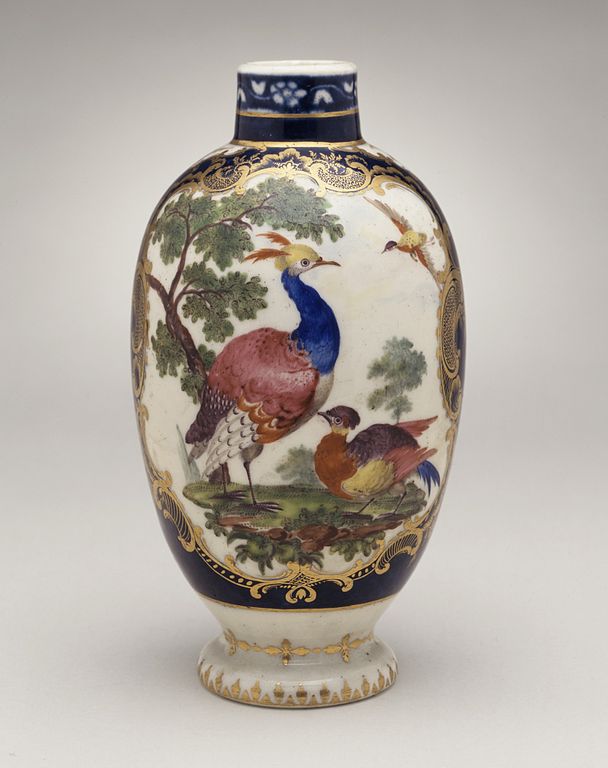
Cup 1755-1790, Auckland Museum

Royal Worcester Tea Caddy 1770

Worcester Royal Porcelain remained popular throughout the Victorian era, producing services for the royal family and others. The company name was changed to Worcester Royal Porcelain Company Ltd. in 1862. Throughout its history, the company changed ownership and design direction several times without loss of quality. At its height, the factory provided employment to over 700 people. The company’s products were highly regarded and maintained popularity well into the 20th century. In 1976, Worcester Royal merged with W. T. Copeland to become Royal Worcester Spode. While its porcelain maintained its popularity with high end customers, it began to struggle and, in the late 20th-early 21st century, began attempting a more mass market appeal by producing comedy mugs and other departures. By 2006, work in England was being performed in Stoke-on-Trent instead of Worcester, and production was outsourced abroad. 
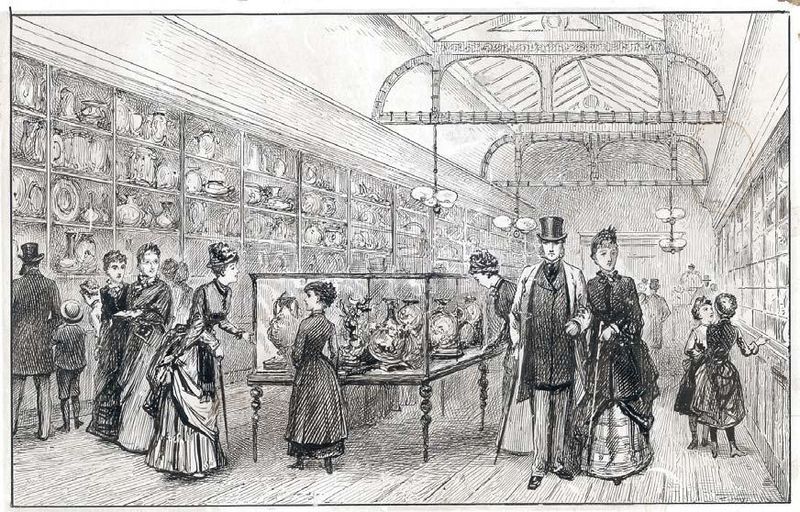
Royal Worcester Factory Museum before 1900
 
In November of 2008, the economic downturn combined with the company’s failure to find a buyer led to the company being placed under a court-appointed administrator whose job was to leverage the company’s assets to repay creditors and avoid insolvency. On April 23, 2009, Worcester Royal Porcelain was acquired by an English firm, Portmeirion Pottery, which is now known as Portmeirion Group. In Worcester, visitors can spend time at the Museum of Royal Worcester to learn about the history of the factory and see the products and films of work in process from the 1930’s until the end. The archives there hold a range of information, including pattern books and order records.


Sources include:

BBC. “HEREFORD & WORCESTER A History of Royal Worcester Porcelain.”  HERE

Collector’s Weekly. “Royal Worcester China.” HERE

Britannica.com “Porcelain” by the Editors of Encyclopaedia Britannica. HERE  ; “Macau” by the editors of Encyclopaedia Britannica. HERE

GourmetSleuth. “Royal Worcester History.” HERE

Hektoen International. “Dr. John Wall and Royal Worcester Porcelain” by JMS Pearce, Summer 2018. HERE

History World. “HISTORY OF POTTERY AND PORCELAIN The European Quest for Porcelain: 16th-18th Century.”HERE

Museum of Royal Worcester. “Dr. John Wall.” HERE

The Telegraph. “A History of Royal Worcester and Spode” published November 6, 2008.HERE ; “Royal Worcester collapses after 257 years making China” by Nick Britten, published November 6, 2008. HERE

Wikisource. 1911 Encyclopaedia Britannica, Volume 5. “Ceramics.” HERE


All illustrations from Wikimedia Commons:
Dr. John Wall  HERE (Public Domain)
Coffee Cup c 1755-1790, by Auckland Museum [CC BY 4.0 (https://creativecommons.org/licenses/by/4.0)] HERE 
Royal Worcester Tea Caddy  c1770 HERE (Public Domain-Los Angeles County Museum of Art) 
Royal Worcester Factory Museum before 1900 HERE (Public Domain)

~~~~~~~~~~~~~~~
Lauren Gilbert holds a BA in English with a minor in Art History, and is a long-time member of the Jane Austen Society of North America.  She published HEYERWOOD: A Novel in 2011, and is in the process of completing a second novel while doing research for a nonfiction work.  She is a member of the Florida Writers Association and the Society of Authors.  Lauren lives in Florida with her husband Ed.  You may visit her website here for more information.


Friday, February 9, 2018

Coffee, Tea and Chocolate: A cup for every purpose

by Maria Grace

During the regency era, there were three particular luxury drinks: tea, coffee and chocolate. They were in high demand, but expensive to acquire and, in the case of chocolate, difficult to make. Now of course luxury drinks needed accessories to go with them, just like our iphones need fancy cases—gotta show off the bling, right?  
Proper hostesses would do exactly that with specialized cups and pots for each beverage. The differences between the pieces were not random though, they were based on the way the drinks were created and enjoyed. Rather scientific, if you think about it. 

Drinking chocolate was often prepared in a large saucepan and then poured into special pots, known in France as a chocolatière, designed just for serving it. At first, when chocolate was a luxury limited to only the most elite, chocolate pots were made exclusively of silver with fine hardwoods or ivory used for the finials. In the early 1700’s, porcelain chocolate pots were made in China for export to Europe. Later, sturdier (and less expensive) pots were made of pewter or earthenware. Chocolate pots tended to be tall and relatively slender, looking a lot like coffee pots, but with a few significant differences in the lid, the spout and the handle. 

Drinking chocolate was very thick and tended to settle, so it was essential to continue whipping it with the molinet. To accommodate the molinet, a chocolate pot had a very distinct lid. The top of a chocolate pot had a hole for the molinet handle to extend from, allowing the hostess to stir the chocolate without splashing herself or her guests. The hole might remain uncovered, but in many cases a special hinged or swiveling finial would cap the hole and help preserve the heat in the chocolate. Sometimes the finial might be attached by a chain to the pot so it would not get lost.

Spouts on chocolate pots were wide and set high on the pot. Both qualities relate to the froth on the top of the chocolate. Since the froth floats on top of the chocolate, locating the spout high helps to capture the foam. Similarly, a wide spout facilitates getting it into a serving cup. A high spout also helps to keep the undesirable sediments that settled to the bottom out of the serving cups. 

The earliest chocolate pots had handles set at right angles to the pot. Usually these were made of wood, with a bit of a knob at the end. After the later part of the 1730’s, chocolate pots with looping handles in line with the pouring spout were produced. 

Drinking chocolate was thick, even syrupy, very different from tea or coffee. Its thickness, and the need to preserve the froth on top meant that special cups were required to properly enjoy sipping the chocolate through the milky froth. Here's where it gets particularly interesting--to me at least.

Chocolate cups were taller and narrower than coffee or tea cups. This would force the foam into a thick layer on the top and keep it from dispersing so quickly. Their unique shape also gave them a high center of gravity, which in English means it made them more likely to spill, especially if one's hands were less than steady.

That problem gave rise to a whole new style of china. 

The trembleuse or tasse trembleuse originated in Paris in the 1690's and was designed to allow those with trembling hands to drink with greater ease. It consisted of a cup, often with a lid and two handles, and a saucer with ether a deep well or a raised rim that steadied the cup and kept it from tipping. 
In contrast, teapots tend to be short and stout (remember the kids’ song?)  The round shape allows room for the tea to move in the pot, allowing it to steep more effectively. Their short spouts come from the center of the pot and sometimes have a grate behind to keep the tea leaves from clogging the spout.  The short length makes them easier to clean if leaves get trapped inside the spout. 

Because tea steeps near boiling, it must be slightly cooled before drinking. A tea cup has a wide open rim that tapers down to a smaller base and a handle designed to hook a single finger, all purposed to help cool the tea and prevent burns.

In many ways, coffee serving pieces do the opposite. Coffee pots are designed to help maintain the heat of the beverage, which preserves its flavor. The taller, narrow shape helps minimize heat loss. The longer, low-mounted spout helps keep cool air from circulating into the pot.


Coffee tastes best when served hot. Since it brews at around 180F, burns are not as much a concern as keeping the beverage hot. So coffee cups have a more vertical, cylindrical shape and bigger handles to accommodate two or three fingers which helps them conserve the beverage's temperature.

A proper regency hostess would have had all three sorts of china in her collection and been able to identify these pots at just a glance. In all likelihood, she would not have considered serving chocolate from anything but a chocolate pot. For the rest of us though, chocolate served from another sort of pot would still be chocolate, right? And that has to be a very good thing indeed.

References

Deitz, Paula. "Chocolate Pots Brewed Ingenuity." The New York Times. February 18, 1989. Accessed May 24, 2017. http://www.nytimes.com/1989/02/19/arts/antiques-chocolate-pots-brewed-ingenuity.html.
Kane, Kathryn. "Regency Chocolate:   The Correct Accoutrements." The Regency Redingote. August 02, 2011. Accessed May 24, 2017. https://regencyredingote.wordpress.com/2011/05/20/regency-chocolate-the-correct-accoutrements/. 
Righthand, Jess. "A Brief History of the Chocolate Pot." Smithsonian.com. February 13, 2015. Accessed May 24, 2017. http://www.smithsonianmag.com/smithsonian-institution/brief-history-chocolate-pot-180954241/.


~~~~~~~~~~

Though Maria Grace has been writing fiction since she was ten years old, those early efforts happily reside in a file drawer and are unlikely to see the light of day again, for which many are grateful. 

After penning five file-drawer novels in high school, she took a break from writing to pursue college and earn her doctorate. After 16 years of university teaching, she returned to her first love, fiction writing.

Click here to find her books on Amazon. For more on her writing and other Random Bits of Fascination, visit her website. You can also like her on Facebook, or follow on Twitter.


Wednesday, July 10, 2013

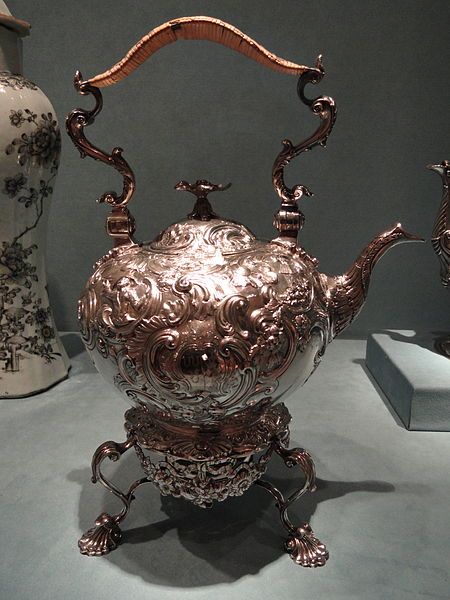
Polly put the Kettle On

by Maria Grace


"Polly put the kettle on, we'll all have tea." ~ Charles Dickens (1812-1870) Barnaby Rudge.

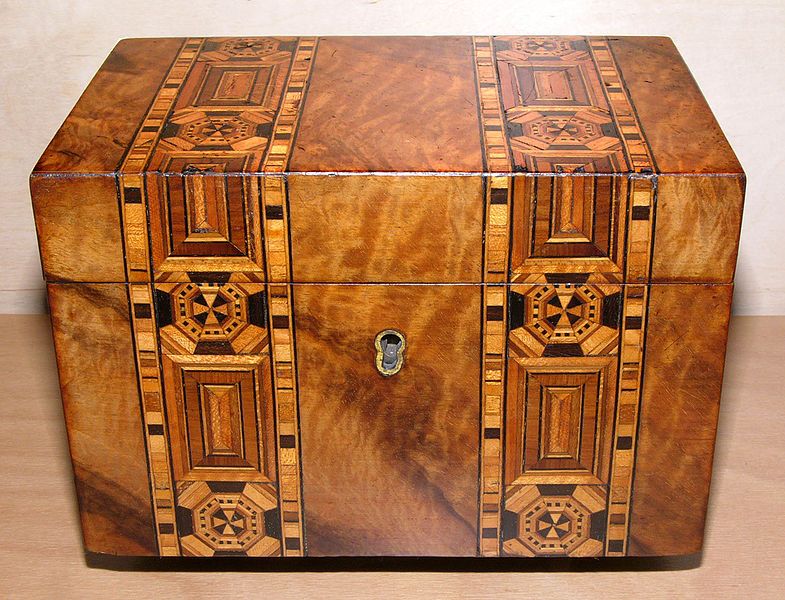
Since its popular introduction into English society, by Catherine of Braganza, in 1662, tea was an expensive commodity. At the beginning of the 1800’s over eleven thousand tons were imported, compared with just six tons a hundred years before. It was so expensive it was usually kept under lock and key, protected from pilfering by the servants. Both the cupboards and the tea caddies were locked to keep their tea safe.
 
Two primary types of tea were available, green and black. Black teas included bohea, souchong, congo (or congou) and pekoe, bohea being the cheapest, pekoe the most expensive. Of the green teas, single was the cheapest. Other varieties included hyson, caper, and bloom.   

Both forms of tea began with the same leaves, but they were processed differently. Green tea leaves are roasted as soon as they are gathered to prevent fermentation. Black tea leaves are allowed to ferment for some time. The brown/black color and flavor developed during fermentation. Roasting stopped the process. Typically different types of tea leaves would be combined to produce tasty blends for consumers.

The tea trade recognized nine different grades of quality in both green and brown/black teas. The cheapest might be found for 5-6 shillings per pound. The best grades could cost as much as 20 shillings or more a pound. In 1800 a year’s supply of tea and sugar could cost a family of six nearly as much as their yearly rent.  

Why was tea so expensive?
Two major factors contributed to the cost of tea: cost of import and taxes.

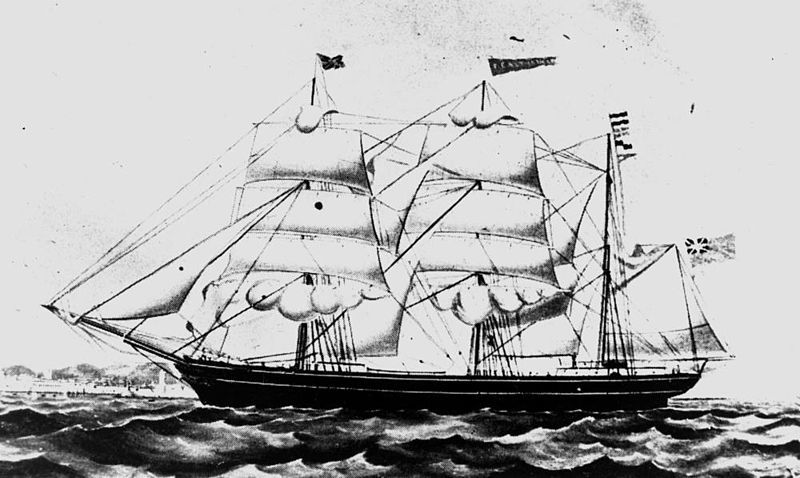
In the Regency era, tea had not yet been cultivated in India, so all supplies had to be shipped in from China. The journey from China to Britain could take more than a year to complete. In China, foreign traders were confined to trading in Canton. Trade was strictly regulated by Chinese officials with only the Hong guild licensed to deal with foreign traders. These merchants were taxed heavily by their own officials and in turn passed their expenses off to the traders, thus increasing the cost of exported goods.

Once the tea entered Britain, the local government would add their own taxes which further increased the cost. In 1784, dry leaf tea was taxed at a shilling a pound. By 1801, tax rates increased to 2 shilling, 6 pence a pound.

 Smuggling

 Richard Twinning, of Twinning Tea company, estimated at least half of the tea drunk in England was smuggled. Even in 1820 tea was one of the two most smuggled commodities, the other being liquor.

Smuggled tea often came from Holland where it might be purchased for as little as 7 pence per pound. This tea was then transported to England by ship and sold at 2 shillings a pound, a third of what legally procured teas sold for.

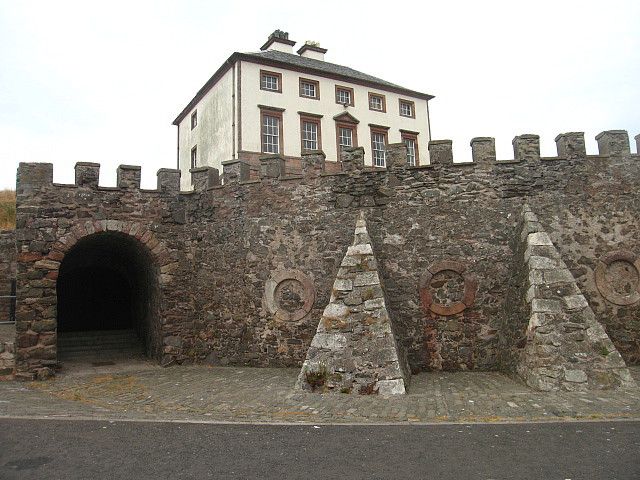
Gunsgreen House where smugglers hid tea
The smugglers, who often were local fishermen, snuck the tea from offshore ships to smaller vessels which brought it to land in oilskin bags. On land, the tea was repacked in sacks to minimize the off taste from the oilskin and taken by horse to various hiding places. Parish churches often were used to stash the ill-gotten goods.
  
To make the smuggled tea even more lucrative, many smugglers adulterated the tea with other substances, until the Food and Drug Act of 1875 brought in stiff penalties for the practice.  

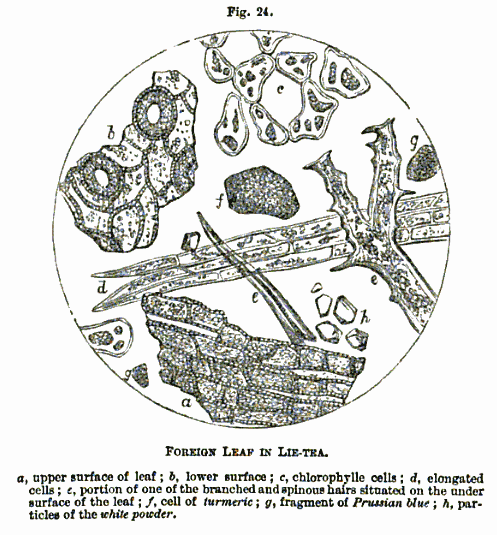
Adulterated tea 

Prepacked tea was not produced until 1826 making it very susceptible to contamination. Moreover, tea was never sold in outdoor public markets, but in smaller shops, like chandler’s shops, further increasing its vulnerability. Loose tea, sometimes called gunpowder was more difficult to successfully adulterate and was thus more expensive than dried and ground versions.

Green teas were generally thought easier to adulterate, so public preference shifted to black tea. Not to be outdone by wary consumers, unscrupulous merchants stretched black tea supplies with both used tea leaves, colorants and other contaminants.

Used teas leaves were in ready supply. In wealthy households, it passed through the household hierarchy. First the family brewed and drank of it. Then the used leaves would the given to the servants to brew and drink. Finally, they would end in the hands of a high ranking servant, cook or housekeeper, who, as part of her contract would be entitled to the used leaves. She would then dry and sell them to a char woman or directly to poorer families for as much as a shilling a pound.

Charwomen might resell the used leaves to a slop shop that would then process them for reuse. The leaves were stiffened with a solution of gum, colored with green vitriol (iron sulfate) or black lead or log wood and combined with fresh tea leaves. Willow, licorice and sloe leaves  might also be added to further extend the mixture.
Sloe leaves

Fake tea called ‘smouch’ or sometimes ‘British tea’ was also widely available. Counterfeit green tea could be produced from thorn or ash leaves, steeped in green vitriol or verdigris (copper acetate) and dried. These dyes were toxic and could produce a variety of symptoms including constipation.

Imitation black tea often contained the same hawthorn, ash and sloe leaves. It might also be a mixture of bran and animal dung or ‘chamber lye’ (the contents of a chamber pot). Dried and ground these were said to strongly resemble fashionable bohea tea in appearance if not in flavor.

Some estimates suggested up to three million pounds (weight) of these mixtures were produced a year. So while most of the nation drank ‘tea’, the contents of many tea cups might not have been as pleasant as the drinker might have wished. A great irony in this is, for the laboring class, even these adulterated teas were the safest way of taking in water because of the poor sanitary conditions of the water supply.

Resources 
http://www.bl.uk/reshelp/findhelpregion/asia/china/guidesources/chinatrade/index.html
http://www.britainexpress.com/History/tea-in-britain.htm
Fullerton, Susannah and Hill, Reginald. Jane Austen & Crime. Jones Books. (2006)
Horn, Pamela. Flunkeys and Scullions, Life Below Stairs in Georgian England . Sutton Publishing (2004)
Murray, Venetia. An Elegant Madness. Penguin Books (1998)
Olsen, Kirstin. Cooking with Jane Austen. Greenwood Press (2005)
Wilson, Kim. Tea with Jane Austen. Jones Books (2004)

~~~~~~~~~~~~

Maria Grace is the author of Darcy's Decision,  The Future Mrs. Darcy and All the Appearance of Goodness.  Click here to find her books on Amazon. For more on her writing and other Random Bits of Fascination, visit her website. You can also like her on Facebook, follow on Twitter or email her.

Sunday, November 25, 2012

Why the English took to Tea - Deborah Swift

I would certainly not have been able to finish any of my books without my regular top-up of that quintessentrially English drink, tea. I have inherited a number of teapots from my mother much like these from Vintage Dorset, and tea drinking has always been a big part of my family life.

Of course tea is not really English at all, it came first from China and later was introduced to India by the British as a way of suppliying the British Empire with a cheaper product .

At the end of the 17th century almost nobody in England drank tea,  but by the end of the next century nearly everyone from King to commoner did. In 1699 six tons were imported, but by the turn of the eighteenth century eleven thousand tons were inported!


The sudden enthusiasm for tea can be attributed to a number of factors - the first of which was the King's marriage to Catherine of Braganza. Her enormous dowry, suited to her position as daughter of King John IV of Portugal, included the trading posts of Tangier and Bombay, a fortune in gold bullion, and - a large chest of tea.

Catherine loved her tea and drank it from delicate thimble-sized cups. This tea-drinking caught on like wild-fire amongst the aristocracy, leading to many ladies also demanding this new elegant drink.

Because women were excluded from coffee shops drinking tea also became sociable, particularly amongst women, and in 1717 Thomas Twining of Devereux Court, who already owned a coffee shop, opened up a tea shop to furnish women with this fashionable and popular commodity.


Tea was still so expensive that ladies could not trust their servants to buy the tea for them as it would mean entrusting them with large sums of cash. So now the ladies could take a sedan to the shop, carrying their tea caddies, which were equipped with locks to prevent pilfering. They were able to buy directly from the shop or stay a while there to meet their friends and enjoy tea freshly prepared and served in porcelain dishes.

A whole ritual then evolved as a means of demonstrating how sophisticated and cultured you were. Books and articles were written on the etiquette of serving tea, and small snacks were introduced to cleanse the palate between tastings. Great effort was made to make the dishes and plates as dainty and genteel as possible, and the food as refined. Bread and butter was the usual accompaniment, cut up very small. This later became a whole afternoon meal, our 'Afternoon Tea'.

Tea Gardens then opened up where women could meet, and also a respectable place to meet members of the opposite sex. The first to open was in Vauxhall Gardens in 1732.An article about Vauxhall Pleasure Gardens can be found here on the Museum of London Blog.

Of course none of this would have been possible without the British East India Company, which during King Charles's reign grew to become a manifestation of British power in the East Indies. The first tea imports were from Bantam (now in Indonesia) in 1669, and it was part of a cargo of pepper, silk and other textiles. As the company grew it managed to establish trading posts in China, and despite warring with the Dutch, managed to retain control over the importation of tea.

For the poor, tea became an essential once people realised that it improved health and productivity.It was healthy because of its natural anti-bacterial effects (of course this was not understood then) and the fact it was made with boiled water. It was also more suited to a labouring workforce as it was a stimulant and not like ale, likely to send you to sleep!

The story of tea is a fascinating one and I can highly recommend these books: The True History of Tea - Erling Hoh
A History of the World in Six Glasses - Tom Standage
For All the Tea In China - Sarah Rose


And my new book THE GILDED LILY- during the writing of which I must have drunk hundreds if not thousands of cups of tea -  is released in the US tomorrow!


A fast-paced adventure peopled with ruthless villains and feisty heroines whose exploits grab the imagination and add suspense and excitement to a historical gem Lancashire Evening Post