Showing posts with label etiquette. Show all posts

Friday, April 17, 2020

Of Refinement and Good Manners

by Maria Grace

Etiquette is an integral part of every culture. Although the details differ among regions and historical periods, the concept of correct and incorrect ways to behave remains constant. Rules of polite behavior are essential elements of communication within a society, a social code that enables individuals to understand motives and subtle messages that are otherwise cumbersome to display through words alone.

These social rules are adopted and adapted over time. Some may be written into elaborate manuals, though many are unwritten, caught rather than taught among the population at large.

In general these rules reflect the values of a society. Following these rules demonstrates respect for the common morality and for other people. Obedience to the guidelines of good manners also reflects on the character of the individual and suggests one is well bred and refined.

In periods of great social transition, like the Regency, published manuals are especially abundant. Many pages in these manuals were filled with comments on general deportment and the behavior to be exhibited by individuals of good breeding. When trying to rise into higher levels of society, a family’s social standing could be made or broken by the ability to conform to all the conventions associated polite behavior.

Although these patterns of etiquette might appear awkward and restrictive, especially for women, they did act as a safeguard against misunderstanding and embarrassment for both parties. This was particularly true as well-bred women were thought to have a "natural" sense of delicacy. Taste and poise should come naturally to a lady, and it was an indictment against her breeding to be worried about looking correct.

Marks of Good Breeding


In line with the emphasis on elegance and formality, people were encouraged to maintain an erect seating posture when sitting or standing. Slouching or leaning back was regarded as slothful unless the individual was infirm in some way. Similarly, a well-bred person walked upright and moved with grace and ease. Moreover, such a person maintained an elegance of manners and deportment and could respond to any social situation with calm assurance and no awkwardness.

Etiquette demanded a person behaved with courteous dignity to acquaintance and stranger alike at all times. Well-bred individuals and those seeking to be seen as such were instructed to keep at arm's length any who presumed too great a familiarity. Icy politeness was the best weapon in putting so-called 'vulgar mushrooms' in their place.

To be considered wall-mannered, an individual had to control their features, their physical bodies, and their speech when in company. Extremes of emotion and public outbursts were unacceptable, as was anything pretentious or flamboyant. A woman, though, could have the vapors, faint, or suffer from hysteria if confronted by vulgarity or an unpleasant scene.

All forms of vulgarity were unacceptable and to be continually guarded against. Laughter, too, was moderated in polite company, particularly among women. Men might engage in unrestrained mirth in the company of other men or among women of low repute for whom the rules of etiquette were more or less irrelevant.

Showing Respect

These marks of good breeding were one means by which respect for others was demonstrated. Rituals of bowing and curtsying accomplished similar ends.
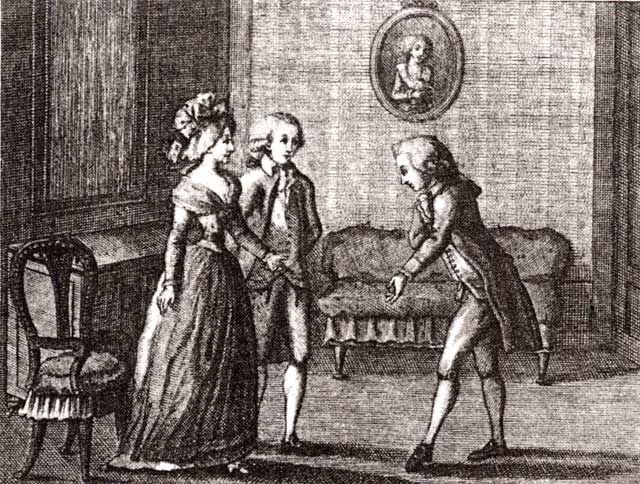


A bow or curtsy would be performed according to the status and relationship of the person encountered and with respect to the particular circumstance. For example, a bow or curtsey would be made on entering or leaving a room, though good friends and family were not always bowing to one another.

Bows and curtsies were expected at the beginning and end of a dance, and on encountering any person one wished to acknowledge. Children generally bowed or curtsied on meeting their parents for the first time each day.

When encountering people in public, etiquette suggested it was the woman's duty to acknowledge an acquaintance first by a slight bow with the head and shoulders. If she did not make such an acknowledgement, a gentleman should not acknowledge her.

Such recognition could only occur if the two individuals had been previously introduced.

Introductions

It was unacceptable to speak to anyone of good breeding without a formal introduction by a third party.

The higher ranking individual (or the woman in the case of two equally ranking individuals) would indicate whether he or she wishes to permit the introduction of an inferior. In the case he or she desired an introduction, a third party would be asked to make one. At a public ball, the Master of Ceremonies would conduct this service to enable gentleman and ladies to dance. However, if the higher ranking person did not desire an introduction, one could not be forced upon them.

In some circumstances, the higher ranking person could introduce him or herself to the lower one. When introduced the people of lower rank bowed or curtsied. Gentlemen and ladies of equal rank bowed and curtsied when formally introduced to each other and again when parting.

Touching and tipping one's hat was a standard salutation, not returning it would be very rude. After being introduced, individuals always acknowledged each other in public, at minimum with a tip or touch to the hat or a slight bow of the shoulders. Failure to acknowledge an acquaintance was a breach in conduct and considered a cut. Manuals warned that a lady should never ‘cut’ someone unless ‘absolutely necessary’ and only ladies were truly justified in delivering a ‘cut’.

Servants
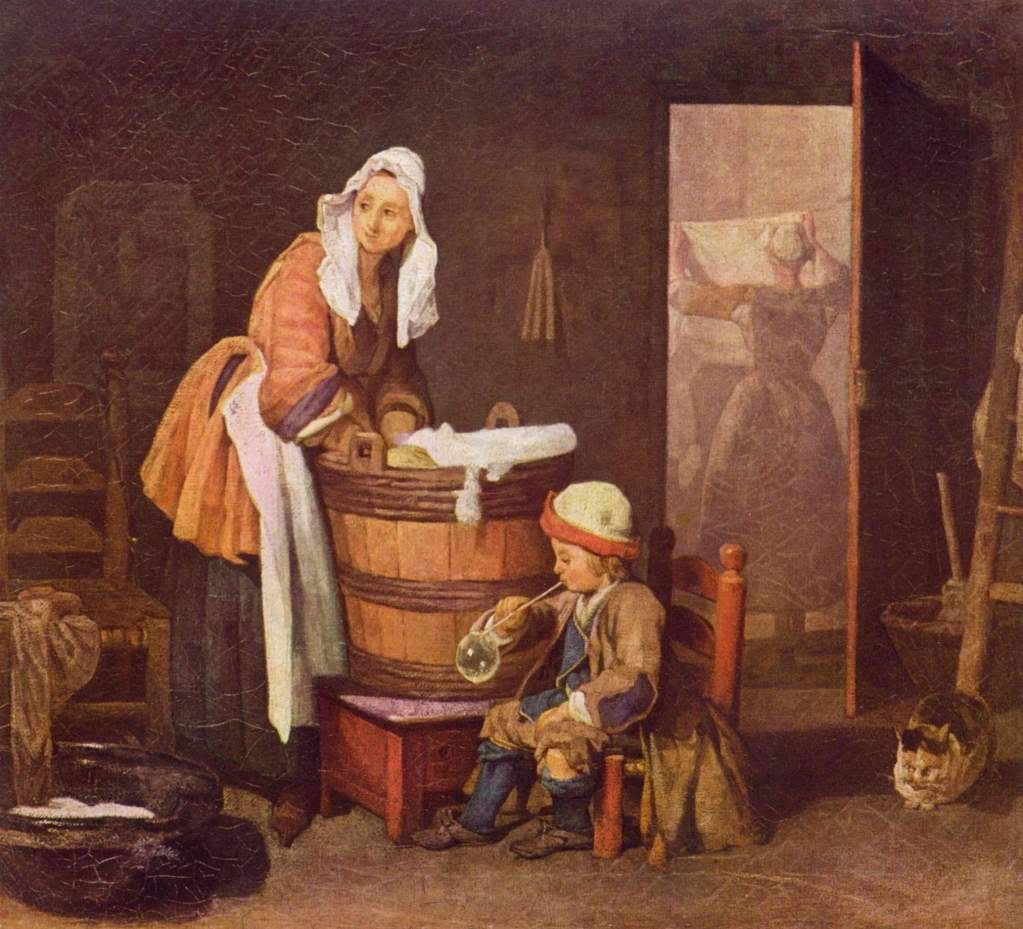


Servants and social inferiors were, of course the exception to this rule. They were always kept at a proper distance but without arrogance, pride or aloofness. The well-bred individual spoke to servants with an appropriate degree of civility and avoided the casual informality with which a person might address an equal. Private business was not discussed in the presence of servants and they were generally ignored at mealtimes. Mocking or belittling servants or their families was deemed undignified and a sign of bad manners.

Conversation

The heart of polite sociability was conversation. The whole purpose of conversation was to please other people and to be deemed pleasing. In general, conversation was tightly controlled by rules of etiquette as well. The list of unacceptable topics far outnumbered the acceptable ones.

A polite individual did not ask direct personal questions of someone they had just met. To question or even compliment anyone else on the details of their dress might also be regarded as impertinent. Personal remarks, however flattering, were not considered good manners. Etiquette manuals counseled such comments should be exchanged only with close family and intimate friends.

Similarly, scandal and gossip should be omitted from public conversation. Any references to pregnancy, childbirth, or other natural bodily functions were considered coarse and carefully sidestepped. A man could sometimes discuss his hunters or driving horses in the presence of ladies though it was generally discouraged. Greater latitudes of conversation were allowed when the genders were segregated, particularly for the men.

Touch 

Not surprisingly, good manners required all forms of touching between members of the opposite sex were to be kept to a minimum. Putting a lady's shawl about her shoulders, or assisting her to mount a horse, enter a carriage and for a gentleman to take a lady's arm through his to support her while out walking were considered acceptable forms of courtesy.


Shaking hands though was not. In the Regency era, shaking hands was considered a mark of unusual affability or intimacy. Only gentlemen of about the same social class, who knew each other well, shook hands. Moreover, the intimacy of shaking hands was a mark of condescension, if offered by one of a higher rank.

Shaking hands with a person of the opposite sex was less frequent and less proper. A pressure of the hands, was the only external sign a woman could give of harboring a particular regard for certain gentleman and was not to be thrown away lightly. According to some contemporary conduct guides, a woman should avoid even touching the hand of a man who was not a family member.

Between sisters or ladies of equal age or rank a kiss on the cheek was acceptable. A gentleman might kiss a lady's hand, but kissing it 'passionately' was a gesture of excessive intimacy.

Though these rules might seem excessive, adherence to them was crucial, especially for ladies whose reputations were especially brittle. For those seeking admission to higher society, any breech in etiquette could be fatal to one’s social standing.

References
A Lady of Distinction - Regency Etiquette, the Mirror of Graces (1811). R.L. Shep Publications (1997)
Black, Maggie & Le Faye, Deirdre - The Jane Austen Cookbook. Chicago Review Press (1995)
Byrne, Paula -in Jane Austen in Context. Cambridge University Press (2005)
Day, Malcom - Voices from the World of Jane Austen. David & Charles (2006)
Downing, Sarah Jane - Fashion in the Time of Jane Austen. Shire Publications (2010)
Jones, Hazel - Jane Austen & Marriage. Continuum Books (2009)
Lane, Maggie - Jane Austen's World. Carlton Books (2005)
Lane, Maggie - Jane Austen and Food. Hambledon (1995)
Laudermilk, Sharon & Hamlin, Teresa L. - The Regency Companion. Garland Publishing (1989)
Le Faye, Deirdre - Jane Austen: The World of Her Novels. Harry N. Abrams (2002)
Ray, Joan Klingel - Jane Austen for Dummies. Wiley Publishing, Inc. (2006)
Ross, Josephine - Jane Austen's Guide to Good Manners. Bloomsbury USA (2006)
Selwyn, David - Jane Austen & Leisure. The Hambledon Press (1999)
Trusler, John - The Honours of the Table or Rules for Behavior During Meals. Literary-Press (1791)
Vickery, Amanda - The Gentleman's Daughter. Yale University Press (1998)

An Editor's Choice from the #EHFA Archives, originally published April 11, 2013


~~~~~~~~~~~~

Though Maria Grace has been writing fiction since she was ten years old, those early efforts happily reside in a file drawer and are unlikely to see the light of day again, for which many are grateful.

After penning five file-drawer novels in high school, she took a break from writing to pursue college and earn her doctorate. After 16 years of university teaching, she returned to her first love, fiction writing.

Click here to find her books on Amazon. For more on her writing and other Random Bits of Fascination, visit her website. You can also like her on Facebook, or follow on Twitter.

Friday, February 9, 2018

Coffee, Tea and Chocolate: A cup for every purpose

by Maria Grace

During the regency era, there were three particular luxury drinks: tea, coffee and chocolate. They were in high demand, but expensive to acquire and, in the case of chocolate, difficult to make. Now of course luxury drinks needed accessories to go with them, just like our iphones need fancy cases—gotta show off the bling, right?  
Proper hostesses would do exactly that with specialized cups and pots for each beverage. The differences between the pieces were not random though, they were based on the way the drinks were created and enjoyed. Rather scientific, if you think about it. 

Drinking chocolate was often prepared in a large saucepan and then poured into special pots, known in France as a chocolatière, designed just for serving it. At first, when chocolate was a luxury limited to only the most elite, chocolate pots were made exclusively of silver with fine hardwoods or ivory used for the finials. In the early 1700’s, porcelain chocolate pots were made in China for export to Europe. Later, sturdier (and less expensive) pots were made of pewter or earthenware. Chocolate pots tended to be tall and relatively slender, looking a lot like coffee pots, but with a few significant differences in the lid, the spout and the handle. 

Drinking chocolate was very thick and tended to settle, so it was essential to continue whipping it with the molinet. To accommodate the molinet, a chocolate pot had a very distinct lid. The top of a chocolate pot had a hole for the molinet handle to extend from, allowing the hostess to stir the chocolate without splashing herself or her guests. The hole might remain uncovered, but in many cases a special hinged or swiveling finial would cap the hole and help preserve the heat in the chocolate. Sometimes the finial might be attached by a chain to the pot so it would not get lost.

Spouts on chocolate pots were wide and set high on the pot. Both qualities relate to the froth on the top of the chocolate. Since the froth floats on top of the chocolate, locating the spout high helps to capture the foam. Similarly, a wide spout facilitates getting it into a serving cup. A high spout also helps to keep the undesirable sediments that settled to the bottom out of the serving cups. 

The earliest chocolate pots had handles set at right angles to the pot. Usually these were made of wood, with a bit of a knob at the end. After the later part of the 1730’s, chocolate pots with looping handles in line with the pouring spout were produced. 

Drinking chocolate was thick, even syrupy, very different from tea or coffee. Its thickness, and the need to preserve the froth on top meant that special cups were required to properly enjoy sipping the chocolate through the milky froth. Here's where it gets particularly interesting--to me at least.

Chocolate cups were taller and narrower than coffee or tea cups. This would force the foam into a thick layer on the top and keep it from dispersing so quickly. Their unique shape also gave them a high center of gravity, which in English means it made them more likely to spill, especially if one's hands were less than steady.

That problem gave rise to a whole new style of china. 

The trembleuse or tasse trembleuse originated in Paris in the 1690's and was designed to allow those with trembling hands to drink with greater ease. It consisted of a cup, often with a lid and two handles, and a saucer with ether a deep well or a raised rim that steadied the cup and kept it from tipping. 
In contrast, teapots tend to be short and stout (remember the kids’ song?)  The round shape allows room for the tea to move in the pot, allowing it to steep more effectively. Their short spouts come from the center of the pot and sometimes have a grate behind to keep the tea leaves from clogging the spout.  The short length makes them easier to clean if leaves get trapped inside the spout. 

Because tea steeps near boiling, it must be slightly cooled before drinking. A tea cup has a wide open rim that tapers down to a smaller base and a handle designed to hook a single finger, all purposed to help cool the tea and prevent burns.

In many ways, coffee serving pieces do the opposite. Coffee pots are designed to help maintain the heat of the beverage, which preserves its flavor. The taller, narrow shape helps minimize heat loss. The longer, low-mounted spout helps keep cool air from circulating into the pot.


Coffee tastes best when served hot. Since it brews at around 180F, burns are not as much a concern as keeping the beverage hot. So coffee cups have a more vertical, cylindrical shape and bigger handles to accommodate two or three fingers which helps them conserve the beverage's temperature.

A proper regency hostess would have had all three sorts of china in her collection and been able to identify these pots at just a glance. In all likelihood, she would not have considered serving chocolate from anything but a chocolate pot. For the rest of us though, chocolate served from another sort of pot would still be chocolate, right? And that has to be a very good thing indeed.

References

Deitz, Paula. "Chocolate Pots Brewed Ingenuity." The New York Times. February 18, 1989. Accessed May 24, 2017. http://www.nytimes.com/1989/02/19/arts/antiques-chocolate-pots-brewed-ingenuity.html.
Kane, Kathryn. "Regency Chocolate:   The Correct Accoutrements." The Regency Redingote. August 02, 2011. Accessed May 24, 2017. https://regencyredingote.wordpress.com/2011/05/20/regency-chocolate-the-correct-accoutrements/. 
Righthand, Jess. "A Brief History of the Chocolate Pot." Smithsonian.com. February 13, 2015. Accessed May 24, 2017. http://www.smithsonianmag.com/smithsonian-institution/brief-history-chocolate-pot-180954241/.


~~~~~~~~~~

Though Maria Grace has been writing fiction since she was ten years old, those early efforts happily reside in a file drawer and are unlikely to see the light of day again, for which many are grateful. 

After penning five file-drawer novels in high school, she took a break from writing to pursue college and earn her doctorate. After 16 years of university teaching, she returned to her first love, fiction writing.

Click here to find her books on Amazon. For more on her writing and other Random Bits of Fascination, visit her website. You can also like her on Facebook, or follow on Twitter.


Sunday, May 15, 2016

Show Me the Money: Marriage Settlements in the Regency Era

by Maria Grace

Even though the attitudes toward arranged marriages changed in the Regency era, and young people were, by and large, able to choose their own mates, marriage still remained largely a business proposition. Perhaps more significantly, a woman’s legal position changed dramatically at marriage, forever impacting her existence as a legal individual and making attendance to legal matters and paperwork essential for her future.

Women's Legal Position in Regency times


In 1765, William Blackstone presented a common man’s language interpretation of English law, which sets out the law’s approach to women’s legal existence and rights in marriage. These remained largely unchanged until the Married Women’s Property Act of 1884. Blackstone said:

By marriage, the husband and wife are one person in law: that is, the very being or legal existence of the woman is suspended during the marriage, or at least is incorporated and consolidated into that of the husband… and her condition during her marriage is called her coverture.
… For this reason, a man cannot grant anything to his wife, or enter into covenant with her: for the grant would be to suppose her separate existence; and to covenant with her, would be only to covenant with himself: … a husband may also bequeath any thing to his wife by will; for that cannot take effect till the coverture is determined by his death.
… the chief legal effects of marriage during the coverture; upon which we may observe, that even the disabilities which the wife lies under are for the most part intended for her protection and benefit: so great a favourite is the female sex of the laws of England.

Effectively this common law doctrine rendered married women unable to sign Bills of exchange, make contracts, buy property, write a will, act as a business partner, or even own her own earnings or have custody of her children. I’m not sure the law favored women the way Blackstone thought it did.

Ironically, single women and widows were able to act with much greater independence. In many cases widowhood gave a woman the greatest legal freedoms, which many wealthy widows were loath to give up by remarrying.

It was not until the Married Women’s Property Act of 1884 that married women the same legal rights as unmarried women.

Marriage Settlements

In most cases, women did not bring a great deal of property or money into a marriage (of course, neither did the husband). When there was substantial property involved, legal documents called marriage settlements or articles were required by one or both families.

Lawyers, one representing each family worked together to draw up a legal document know as a marriage settlement or marriage articles. Only about one tenth of marriages had them as the fee for such documents was around £100. (For reference, a family of four could live a comfortable middle class lifestyle on £250-300 a year.)

A marriage settlement was a prenuptial agreement (bet you thought that was a modern invention!) that established the financial terms of the marriage. The terms included stipulations about what was to be done with the wife’s dowry, what her discretionary income would be (known as ‘pin money’), what her income would if she became a widow, and what (total) amount would go to her children from the monies she brought into the marriage. The timing of these payments was also often specified.

Parents could also ‘settle’ money on the couple in the marriage articles. Jane Austen references this in Lydia’s settlement with Wickham in which Mr. Bennet is to allow her £100 per year during his lifetime.

A Woman’s Dowry

Though Jane Austen’s Mr. Bennet referred to dowries as bribes to worthless young men to marry his daughters, dowries were more commonly considered a means by which a responsible family compensated a husband for their daughter’s lifelong upkeep. Thus, a woman’s birth family was responsible for seeing that she could maintain the lifestyle to which she was accustomed once she was married.

Dowries (or more commonly the interest earned off a dowry) provided a woman’s lifetime spending money, her income if she became a widow, and money for her children at the death of one or both parents. Settlements would specify a total amount of money set aside for daughter’s dowries. The more daughters a family had, the more ways the sum would have to be divided. The division of the money was generally not specified, so it did not have to be divided evenly amongst the daughters. A father might add to the sum during his lifetime, but if not stipulated in the settlement, it was not required.

There was no guarantee that a woman’s family would have the cash on hand to pay a dowry on marriage. Often time, that sum was tied up in estate capital or investments. The family might have to take out a mortgage to pay the dowry, or a down payment on it, with the final portion due from the estate at the father’s death.

To replenish the loss of capital, the heir of the estate needed to marry a bride with her own fortune. Marrying a woman without sufficient capital could harm the financial position of the family estate.

Pin Money

Pin money, a woman’s disposable income, was stipulated in the marriage settlement. It represented money she could spend without answering to her husband. Since common law only stipulated that a man had to provide his wife’s ‘necessities’, pin money could supply the ‘luxuries’ that might be required to live the life style to which her family accustomed her.

The concept makes a great deal of sense, but since only a small minority of women enjoyed marriage settlements, most probably did not enjoy the luxury of their own private allowance to be spent as they wished.

Jointure

Common law did not allow for joint property ownership as we know it today. Upon a husband’s death, his estate and other property did not automatically become his wife’s. Typically the estate would be settled upon his heir, the widow would only receive what was willed her by the husband and what was set aside in her jointure. If a man left his wife property, it might be marked with the stipulation that it would revert to his heir or another designate if she remarried.

A jointure was the typical means of provision for a man’s widow, usually anchored on the amount that a woman brought into a marriage. Generally it was an annuity equal to one tenth of a woman’s dowry. The annuity would be payable by the heir of a man’s estate until the woman’s death upon which the principle would descend to her children. The ratio of jointure to dowry was established by the idea that the average wife would outlive her husband by about ten years. Thus, she would most likely receive back the amount she brought into the marriage over the duration of her widowhood.

Marriage Settlements to the Children

Marriage settlements also stipulated provisions for a woman’s children. Special provisions for children from a prior marriage would be included to insure that they received portions from their father’s property if it was in their mother’s hands at the time of her remarriage. If a man were widowed, these same provisions protected a first wife’s children from losing their mother’s fortune to a subsequent wife’s machinations, though it might also limit what a father could pass down to children from subsequent wives. This was the salient plot point for Jane Austen’s Sense and Sensibility.

The monies a woman brought into the marriage through her dowry and any other settlements on her, would go to her children, both sons and daughters, upon her death. Additional funds could be settled on the children from the father’s estate. The marriage articles would stipulate the amounts. Typically, only the total amounts would be set forth in the settlement, not the division among the children. This made sense given there was no way to know ahead of time how many children of which gender would be born. One consequence, though, was that a parent might threaten to readjust the division of the funds in order to control the behavior of a child set on thwarting his or her parent’s wishes.

While all these documents and legal requirements make for great plot points in fiction, few actually obtained them. These matters were mainly the purview of the landed and wealthy who made up the top ten percent or so of the population. Most women would have been happy with a dowry of a few hundred pounds; most children did not inherit vast sums or property from their parents; and most widows had to rely on their children and other family for support.

Find previous installments of this series here:

Get Me to the Church on Time: Changing Attitudes toward Marriage
To Have a Courtship, One Needs a Suitor
Nothing is ever that simple: Rules of Courtship

References

William Blackstone. Commentaries on the Laws of England. Vol, 1 (1765), pages 442-445.

Dr Amy Erickson, Women and property in early modern England (1993)

~~~~~~~~~~~~

Though Maria Grace has been writing fiction since she was ten years old, those early efforts happily reside in a file drawer and are unlikely to see the light of day again, for which many are grateful. After penning five file-drawer novels in high school, she took a break from writing to pursue college and earn her doctorate. After 16 years of university teaching, she returned to her first love, fiction writing.

Click here to find her books on Amazon. For more on her writing and other Random Bits of Fascination, visit her website. You can also like her on Facebook, follow on Twitter or email

Monday, April 11, 2016

Nothing is Ever that Simple: Rules of Courtship

1805-courtship-caricature
1805-courtship-caricature (public domain: Wikipedia)
by Maria Grace

In previous centuries that relied upon arranged marriages, courtship was more a seducer’s art. But at the dawn of the 19th century, it became the road leading to matrimony. Conduct literature proliferated in response to the new anxieties and uncertainties of finding a proper mate. Since young people now enjoyed a degree of choice over their marriage partner, they needed advice on how to judge character, how to behave in public toward the opposite sex, how to attract the opposite sex, even the proper way to make or refuse an offer of marriage.

Thus, strict rules for behavior during courtship developed. The rules safeguarded both sexes. Gentlemen required protection from being trapped into matrimony, and ladies needed to be guarded from becoming attached to men who were not sincere in their intentions toward them.

Initiating a Courtship


Courtship and marriage were serious steps for middle class men and women, usually not embarked upon until their middle to late twenties. Young men were counseled not to embark upon it lightly, and young women not to give affections too easily.
I cannot even understand how it is flattering to a man's vanity, to gain the affections of a deserving and too credulous woman, whom he never intends to marry. He ought to lose more in his character for integrity, than he can gain as one successful in courtship. His manner of address, consisting of a visible attachment. While his heart is not engaged, is most detestable hypocrisy. And to say that he is not bound in honour, because he has subjected himself to no specific promise, is the highest aggravation of his guilt. Were he to act in the same manner in his common transactions with mankind, his character would be forever blasted. (Gener, 1812)
A woman is often placed in a very delicate situation. She may be distinguished by a kind of attention which is calculated to gain her affections, while it is impossible to know whether the addresses of her pretended lover will end in a serious declaration. (Gener, 1812)
As in most things in society in that era, men played the active role in the prescribed procedure for proper courtship. Moreover, “the scarcity value of men in Jane Austen's lifetime, together with women's dependence on husbands for status and financial security, gave eligible bachelors the power to act as connoisseurs.” (Jones, 2009)

Women had to wait for pursuit by a suitor. Siblings and friends could be recruited as messengers to alert a potential suitor of a young lady’s inclinations, but she could take no further initiative. Even if a suitor made the first move, she was expected to behave with considerable reserve and not openly encourage a man’s suit.
ONE of the chief beauties in a female character is that modest reserve, that retiring delicacy, which avoids the public eye, and is disconcerted even at the gaze of admiration. (Gregory, 1774)
Ironically, the one area in courtship where the lady might have an active role was in refusing unwanted attentions. This restricted her choices from among those who made advances toward her. It was not uncommon for a woman to feel pressured to accept the first reasonable offer they received, since another might never come their way.

A woman’s sterling reputation enhanced her value in the marriage market and increased the likelihood of receiving the attention of eligible young men. Thus, an etiquette of courtship developed to help guard against impropriety of any kind that could damage her reputation.

Discretion in all things


For the Gentleman


Those marriages generally abound most with love and constancy, that are preceded by long courtship. The passion should strike root, and gather strength before marriage be grafted on it. A long course of hopes and expectations fixes the idea in our minds, and habituates us to a fondness of the person beloved…(The Young Husband's Book 1839.)
In Harmony before Matrimony (1805), James Gill...
In Harmony before Matrimony (1805), James Gillray caricatured a courtship in which the couple sings together from Duets de l'Amour. (Photo credit: James Gillray [Public domain], via Wikimedia Commons)
Unmarried men had to exercise caution around unmarried young ladies. Attentions or worse, particular friendliness, might be interpreted as romantic interest by the lady herself or her friends and family. Since men were not to express interest unless they were serious about a woman, misunderstood actions could lead to accusations of intentionally leading a woman on. Pressure to offer marriage might follow.

For the Lady

The Advantages of being reserved are too many to be set down; we will only say, that it is a Guard to a good Woman, and a Disguise to an ill One. It is of so much Use to both, that those ought to use it as an Artifice who refuse to practice it as a Virtue. (The Whole Duty of a Woman, 1737)
Female conduct manuals universally cautioned women not to be forward in their dealings with men or to encourage their advances. A woman must never confess her feelings until absolutely convinced of his intentions. Some went so far as to insist a woman must never look at a man unless he made the first advance. Not surprisingly, it was difficult for either party to truly discern the feelings and intentions of the other. Only at the moment an offer of marriage was made could a man declare his feelings and a woman her own in return.

Do’s and Do Nots of Courtship


Strict rules of behavior governed courtship. If a couple was observed violating any of them, onlookers would immediately assume a proposal had been offered and accepted. Even mild displays of friendliness could inspire speculations about a possible offer of marriage.

A great many behaviors were prohibited to a young couple prior to betrothal. These prohibitions included: using Christian names, paying compliments, driving in carriages alone together, correspondence, and any kind of intimate touching.

Chaperones


Young women were protected zealously in company. Young, unmarried women were never alone in the company of a gentleman, save family and close family friends. A chaperone was also required for a young single woman to attend any social occasion. Under no circumstances could a lady call upon a gentleman alone unless consulting him on business matters, and she never forced herself upon a man's notice.

Except for a walk to church or a park in the early morning, a lady could not walk alone. She always needed to be accompanied by another lady, an appropriate man, or a servant. Though a lady was permitted to drive her own carriage, if she left the family estate, she required the attendance of a groom. Similarly, on horseback she needed an appropriate companion to protect her reputation.

Conversation


Since the courting couple could never be truly alone, the best they could hope for was to be out of earshot of the other people present. Conversations had to be extremely discreet leaving much to be interpreted from facial expressions alone. Even those were proscribed by many writers.
There is another Character not quite so criminal, yet not less ridiculous; which is, that of a good humour'd Woman, one who thinketh me must always be in a Laugh, or a broad Smile, because Good-Humour is an obliging Quality; thinks it less ill Manners to talk impertinently than to be silent in Company. (The Whole Duty of a Woman, 1737)

Touch


All forms of touching were kept to a minimum. Putting a lady's shawl about her shoulders, or assisting her to mount a horse, enter a carriage or climb stairs were acceptable. A gentleman might take a lady's arm through his, to support her while out walking. But he must never try to take her hand. If he did, she must immediately withdraw it with a strong air of disapproval, whether she felt it or not. Even shaking hands was frowned upon.

Gifts


Although letters could not be exchanged by unmarried couples, surprisingly, some gifts were entirely acceptable. A young man could send a posey or a fan to a young lady, perhaps to be carried at an event like a ball. He might send treats like out of season fruits or sweets. However, a woman could not receive a miniature from an unrelated man unless she was engaged to him.

Once engaged, couples were expected to proclaim that fact clearly, in part ensuring that neither could back out without serious social repercussions. The serious matter of betrothals and the business that accompanied them will be the focus of the next installment of this series.


Find previous installments here:

Get Me to the Church on Time: Changing Attitudes toward Marriage
To Have a Courtship, One Needs a Suitor


References

Gener, S., and John Muckersy. M. Gener, Or, A Selection of Letters on Life and Manners. 3rd ed. Edinburgh: Printed for Peter Hill ..., A. Constable & and A. MacKay ;, 1812.

Gregory, John. A Father's Legacy to His Daughters By the Late Dr. Gregory, of Edinburgh. The 2nd ed. London: Printed for W. Strahan ;, 1774.

Jones, Hazel. Jane Austen and Marriage. London: Continuum, 2009.

The Whole Duty of a Woman, Or, an Infallible Guide to the Fair Sex. Containing, Rules, Directions, and Observations, for Their Conduct and Behaviour through All Ages and Circumstances of Life, as Virgins, Wives, or Widows. With Directions, How to Obtain All Use. The 2nd ed. London: Printed for T. Read, in Dogwell-Court, White-Fryers, Fleet-Street, 1737.

The Young Husband's Book a Manual of the Duties, Moral, Religious, and Domestic, Imposed by the Relations of Married Life. Philadelphia: Lea & Blanchard, 1839.

 ~~~~~~~~~~~~

 Maria Grace is the author of Darcy's Decision,  The Future Mrs. Darcy, All the Appearance of Goodness, and Twelfth Night at Longbourn, Remember the Past, and Mistaking Her Character.  Click here to find her books on Amazon. For more on her writing and other Random Bits of Fascination, visit her website. You can also like her on Facebook, follow on Twitter or email her.

Friday, March 11, 2016

To Have a Courtship, One Needs a Suitor

by Maria Grace

During the Georgian and Regency eras, marriage provided the key to a strong, stable society. Society identified individuals by their connections, the ones they were born with and the ones he or she merged through marriage. Laws surrounding marriage and inheritance insured for the privileged class that ancestral estates passed intact to the next generation. On a more personal level, family members, especially unmarried sisters and not-yet-widowed mothers, might look to the marriage of siblings and children as a source of security for their future.

For the gently bred female, marriage was the only acceptable occupation, and all aspects of her life reflected that fact. Her childhood would be spent quietly at home, sheltered from most social interactions, keeping her pure and untainted. At about the age of sixteen though, everything changed. The schoolroom was set aside, and she would be come-out into the world of the marriage market.

Preparing for Courtship: Becoming Accomplished


Prior to coming out, a young woman was not to call attention to herself. She dressed demurely, often with a deep-brimmed bonnet that hid her face. Young men in particular were not to pay her any notice. She would not speak to adults unless asked a question. Effectively she did not exist in society.

During her early years, a young woman’s focus would be directed toward learning those skills that would make her a marriageable woman: a social asset to a man and able to effectively run a household. She might be sent to school for a few years, after the age of ten, but often a governess or the girl’s mother handled her education from home.

To run a household, a girl needed to be able to read and write; elegant penmanship was of course a plus as her letters could be widely read. She would need to sew, with decorative needlework an added bonus. As the keeper of the household accounts, she needed sufficient understanding of mathematics to manage household ledgers. Gardening, food preservation, the work of servants and household remedies could also prove quite useful.

To be a social asset, and considered ‘accomplished’ a girl needed more. Singing and playing an instrument would allow her to entertain her husband’s guests. Her drawings and paintings would decorate her husband’s homes. By speaking French and possibly Italian, she could converse elegantly on the history, geography, literature and poetry with which she had been made familiar.

Girls were warned, though, to “be ever cautious in displaying your good sense. It will be thought you assume superiority over the rest of the company. But if you happen to have any learning, keep it a profound secret, especially from the men, who generally look with a jealous and malignant eye on a woman of great parts, and a cultivated understanding.” (Gregory, 1774)

Debut into Society

Although sometime between sixteen and eighteen was the common time for a girl to make her ‘come out’, the exact timing might vary depending on the status of other siblings, especially sisters. There was no hard and fast rule that a family have only one daughter ‘out’ at a time, however, for practical considerations, it was a common practice.

Being ‘out’ demanded both financial resources and the assistance of friends and connections to extend invitations and make introductions. A family with several daughters might easily be spread too thin if more than one girl were out at once. It also offered the embarrassing possibility that a younger daughter might receive an offer of marriage before the elder. So, younger sisters often waited until the elder was at least engaged, if not married, before coming out. But if an elder daughter had several seasons out without an engagement, parents might allow a younger girl to come out as well.

There was no single established way for a young woman to make her entry into society. Girls in the highest levels of society might expect to come out during the London season, starting around sometime after Christmas. She could anticipate a ball in her honor and an official presentation at court to the sovereign. Court presentation required a sponsor and a very specific (and expensive) presentation gown. A whirlwind of society events would follow, all in the hopes of attracting the notice of the right sort of gentleman.

Girls in lower social strata came out with somewhat less pomp and circumstance (and expense). A girl’s parents might plan a ball or party in her honor. In Jane Austen’s Mansfield Park, Fanny Price’s uncle held a ball in honor of her and her brother which marked her coming out.

A major event was not necessary, though. A mother might simply allow a girl to begin pinning up her hair (a sign of adulthood) and begin accompanying her on her morning calls and social events to indicate she was out in society. At these events, parents, friends and acquaintances would essentially show her off to potential suitors, for, once a girl was out, a courtship might begin at any time.

Meeting Potential Suitors


Being ‘out’ allowed a girl to establish formal acquaintances. Until a formal acquaintance was recognized, individuals could not interact. Formal introductions by, a third party acquainted with both were essential.

Neighborhood matrons, and parsons’ wives, having a wide range of connections, were in especially good positions to affect introductions between young people at social events, both public and private. Dinners and parties, feasts, festivals, even wakes, provided opportunities for introductions. At a public ball, the Master of Ceremonies could conduct this service to enable gentleman and ladies to dance, though he might not be acquainted with either party.

Though it might seem cumbersome to modern sensibilities, introductions provided a means by which young ladies might have some control of social interactions. The men had the power of “chusing whom they may address, and (women) of rejecting whom they may dislike.” (Gener, 1812)

Young ladies needed this option as not all acquaintances might pursue noble design. Not surprisingly, women of fortune were particular objects of pursuit, especially by younger sons not eligible to inherit the family estate. One such man, under the pen name of ‘A Younger Brother’, went so far as to publish, A Master-Key to the Rich Ladies Treasury or The Widower and Batchelor’s Directory in 1742.

The book contained a list of London heiresses, their expected fortune and the general location of their residence. The Younger Brother advised:

“Thus Gentlemen, have I in the following Sheets I think, opened a fair Field for Action for you; a fine Choice and a fine Collection of Ladies; — Open the Campaign directly then yourselves, that my next may be a new Sett. I have one favour to beg of you, and then I take my Leave; that no one of you, of what Degree soever, presume to attempt the Lovely Charmer I dedicate to; as to the Rest, I heartily wish you all Success …”

An Alternative to Traditional Introductions

Not everyone enjoyed success in the efforts to meet prospective suitors. Some lacked the family or social connections to do so. Others simply desired an economical alternative to the marriage mart. For them, matrimonial advertisements could provide the solution. Though some viewed the practice as anything from indelicate to dangerous, men and women from every age group and social class placed advisements.

Some advertisements emphasized the seeker: a woman of considerable accomplishments and easy independency, a man of respectable rank. While others requested specific characteristics for the applicant: an income equal to his/her own, age not less than 30, no more than 35, an agreeable partner. Meetings might be arranged by a third party or by the matrimonial advertiser him or herself. A single interview might be all that was required to secure a proposal of marriage.


It comes as no surprise that matrimonial advertisements were not always safe. The sensational 1827 case of the Red Barn Murderer, William Corder, involved a marriage through just such an advertisement. His wife, Mary Moore, who met him through an ad in the Morning Herald, discovered he had murdered his previous lover and buried her body in a barn.

Despite the risks, the difficulties of introductions and courtships insured matrimonial advertisements continued as a popular way to find a marriage partner.

For the more traditionally minded, once a suitable introduction was made, a courtship might begin. The next installment of this series will examine the extensive rules governing courtships in the Regency era.

References

A Master-Key to the Rich Ladies Treasury or The Widower and Batchelor’s Directory by a Younger Brother, published in 1742.

Gener, S., and John Muckersy. M. Gener, Or, A Selection of Letters on Life and Manners. 3rd ed. Edinburgh: Printed for Peter Hill ..., A. Constable & and A. MacKay ;, 1812.

Gregory, John. A Father's Legacy to His Daughters By the Late Dr. Gregory, of Edinburgh. The 2nd ed. London: Printed for W. Strahan ;, 1774.

M. Y. Some Remarks on Matrimonial Advertisements Being an Inquiry into their Use and Abuse. London: Sedding and Turtle, 1832.

Morning Post, November 27, 1811.

Morning Post, December 19, 1822.

~~~~~~~~~~~~

 Maria Grace is the author of Darcy's Decision,  The Future Mrs. Darcy, All the Appearance of Goodness, and Twelfth Night at Longbourn, Remember the Past, and Mistaking Her Character.  Click here to find her books on Amazon. For more on her writing and other Random Bits of Fascination, visit her website. You can also like her on Facebook, follow on Twitter or email her.

Wednesday, April 11, 2012

The Art of Courtship

by V.R. Christensen

People have very little idea how great are the injuries which imprudence draws on them, or they would not despise this homely virtue. Especially for young women is prudence required in the conduct of love affairs. There is no end to the tale of misery we could tell resulting from its want. ... Marriage would not be the lottery it is, if girls would exercise a little prudence. They should never engage themselves to a man of whom they know nothing—the past of their future husband ought to be clear to them...

So advises, Mrs Valentine in The Young Woman's Book - A Useful Manual for Everyday Life.

Indeed, most advice books of the time dealt not so much with the where's and how's of courtship as with the qualities and modes of conduct most desirable in a matrimonial candidate. Robert Morris, in his Courtship and Matrimony, admonishes mothers, teachers and nursery maids to begin in childhood to establish the virtues desirable in an adult. In the instance of young men, in particular, he advises rooting out the "early habits, of disrespect, of insolence, and of moral recklessness," which should be "guarded against with the most vigilant caution."

Wise counsel indeed! For marriage, without the prospect of divorce, with hardly any opportunity to 'test the waters', so to speak, as is the aim of our modern system of 'dating', was a very serious matter. For women, in particular, it was a decision that bore with it the promise of happiness and protection, but also brought with it the very real prospect of trial and misery.

Though the idea of romantic love was the driving factor behind many Victorian marriages, marriage as a business transaction was still the reality. The concept of two becoming one in matrimony was much more than a sentimental aphorism. Before 1882, a woman's legal identity, as well as all of her personal property, was literally absorbed by her husband upon marriage. It's little wonder there was such a demand (and presumably a need) for the vast quantities of literature that were written on the subject.

So, considering the grave nature of the matrimonial contract, just what were the considerations involved? Well, to begin with, no gentleman possessing any degree of respectability could even consider marriage until he had established the means by which he could support a wife, no matter how fond he might be of a particular woman.

Such a dilemma is illustrated in George Meredith's Diana of the Crossways. An established bachelor, Thomas Redworth, is caught off guard by the disarming beauty and sharp wit of Diana Merion. As he is assigned to serve her at table during a dinner party, and during which time she engages him in some witty banter, he begins to reconsider his position. What has he to offer her?

"Eight or ten hundred. Comfortable enough for a man in chambers. To dream of entering as a householder on that sum, in these days, would be stark nonsense: and a man two removes from a baronetcy has no right to set his reckoning on deaths:—if he does, he becomes a sort of meditative assassin. But what were the Fates about when they planted a man of the ability of Tom Redworth in a Government office! Clearly they intended him to remain a bachelor for life. And they sent him over to Ireland on inspection duty for a month to have sight of an Irish Beauty....

"—Eight hundred? a thousand a year, two thousand, are as nothing in the calculation of a householder who means that the mistress of the house shall have the choicest of the fruits and flowers of the Four Quarters; and Thomas Redworth had vowed at his first outlook on the world of women, that never should one of the sisterhood coming under his charge complain of not having them in profusion."

Perhaps Redworth might have done more to prepare. Perhaps circumstances were beyond his control. Whatever the reason, he was in no position to consider Diana as a prospect. And when she married another, a heartless wastrel, just the sort Mr. Morris above would have warned against... his chance, for all intents and purposes, has passed.

To marry an equal was of course the aim of most. It came with the fewest complications. And yet, to many, the appeal of marrying up, with an eye at improving one's position, could not be denied. A gentleman did wise to marry above his station, at least where money was concerned. A woman, however, took a very great risk in marrying a man without money, even if (or perhaps particularly if) he had property. Before the Married Women's Property Act of 1882, all portable property, including money, all income made, belonged to her husband. Trusts arranged by fathers could only protect a woman's property by removing it from her hands as well, and into the protective custody of a trustee. Even for the working classes, marriage was a financial risk. As Mrs. Valentine warns, the improvident husband might sink to idleness, succumbing to the temptation to rely upon the labours of his more industrious wife.

Yet money wasn't the only matter to be considered when it came to matrimonial ambition. The social aspects were often at least as significant. A woman typically adopted the sphere of her husband, whether higher or lower. As stated in one advice guide of the time, The Etiquette of Love, Courtship, and Marriage, "A lady of high rank does not raise her husband to the same position as she formerly occupied; but sinks down to his standard; but the gentleman raises the lady, however much below himself, to the position in society."

Of course this is not universally true. Take the example of Arthur Munby, who married his servant, Hannah Cullwick. The marriage was kept a secret. Perhaps in part because Hannah would not give up her station. But, considering that Munby was obsessed with the working woman, it's quite possible he did not wish to raise her. It wasn't until many years after his death that his persona papers were made available and the truth made known.

Courtship rituals of course differed somewhat for the working classes, who did not (and could not afford to) live by such strict rules of conduct and propriety as did the upper and even middle classes, who strove to emulate their betters. The intercourse of the working classes being freer, they had much greater license, and opportunity, to become acquainted with members of the opposite sex.

However, for anyone aspiring to respectability, the prescribed method of courtship went something like this:

1) A gentlemen/lady singles out a member of the opposite sex who he/she thinks might be a good candidate.

2) He/she does a little reconnaissance in order to find out what the general opinion, character, reputation and family/financial situation of the person is.

3) If the couple are not already acquainted, a formal introduction is arranged, either through family members or a mutual friend of the same station of the party who inhabits that which is highest of the two. (An introduction at a ball does not count.)

4) Once introduced, the gentleman, as a prospective suitor, has the obligation of making his position known to the lady, as tactfully as possible. The blunt stating of financial position, as with the case of Mr. Guppy, in the prologue to his proposal to Esther in Bleak House, would have been considered presumptuous and in bad form.

"My present salary, Miss Summerson, at Kenge and Carboy's, is two pound a week. When I first had the happiness of looking upon you, it was one fifteen, and had stood at that figure for a lengthened period. A rise of five has since taken place, and a further rise of five is guaranteed at the expiration of a term not exceeding twelve months from the present date. My mother has a little property, which takes the form of a small life annuity, upon which she lives in an independent though unassuming manner in the Old Street Road. ... It is lowly, but airy, open at the back, and considered one of the 'ealthiest outlets. Miss Summerson! In the mildest language, I adore you. Would you be so kind as to allow me (as I may say) to file a declaration—to make an offer!"

Mr. Guppy went down on his knees. I was well behind my table and not much frightened. I said, "Get up from that ridiculous position immediately, sir, or you will oblige me to break my implied promise and ring the bell!"

5) Having accomplished the task of making his ability to support a wife known (and in considerably more tact than the illustration above) the next thing to do was to ascertain, very carefully, the feelings of the young woman. This was a bit of a precarious business, as a man who was too forward might offend. Alternately, he would wish to take care not to draw the young woman into any precipitate commitments, lest she compromise her character by having the term 'flirt' adhered to her.

6) Once the gentleman has some assurance of the lady's reciprocal interest, he might beg permission to call upon her, meeting her 'privately', at home, in the company of her family. All their intercourse from here on would be conducted in the presence of a chaperone, preferably married, though very often it was a hired companion, or barring that luxury, a member of the family, or a trusted household member. Here it was the young woman's duty to ascertain the gentleman's character, looking for flaws and inconsistencies which might shed some light on his true character.

7) Once an understanding has been established, the gentleman must address the girl's father, stating his intentions and proving his ability to provide for the gentleman's daughter in a matter at least equal to that which she is used to.

8) Obtaining the father's permission (or other, lacking that, a trusted guardian or appointed authority), the gentleman would, without waste of time and in all possible eloquence and delicacy, present his offer.

9) At which juncture the young woman in question had the opportunity and right (and some might add the greatest power she would ever in her life wield) to refuse or to accept.

Congratulations to them!

But what if this carefully guarded system failed to produce the desired results?

Well,...one could always place an add in the local newspaper.


For more about the Matrimonial advertisements, visit my blog post, (pr)eHarmony - or Alternative Courtship in the Victorian era.

*personal ads taken from 1)Freeman's Journal and Daily Commercial Advertiser. Dublin, Ireland. 12 Feb 1875 2)Truman's Exeter Flying Post. Exeter, England. 30 Sep 1893 3)Bristol Mercury and Daily Post. Bristol, England. 19 Mar 1892


V.R. Christensen is the author of Of Moths & Butterflies, and Blind - a novella. Cry of the Peacock, a companion piece to Of Moths & Butterflies, is due to be released in October of 2012. To learn more about her and her work, visit www.vrchristensen.com