Showing posts with label Catherine of Braganza. Show all posts

Thursday, July 19, 2018

Infertility in the 17th Century – Reasons and Remedies

By Kate Braithwaite

Take a handful of barley or any other fast growing corn. Soak half in a husband’s urine and half in his wife’s urine for twenty-four hours. Dry each pile on some earth and then water daily with more of the urine of each person. The corn that grows first belongs to the person who is more fertile. If one does not grow at all, that person is barren and will not bear children.

At a time when barrenness, or infertility, was commonly perceived to be a fault of the woman, rather than her male partner, the suggestion – from midwife Jane Sharp - that men as well as women might have fertility problems, is unusual. Her method of determining where the fault lies, however, seems less than reliable.

But then in the 17th century, people had rather different ideas about the human body. Belief in the need to maintain balance ‘humors’- blood, black bile, yellow bile and phlegm - a theory developed by Hippocrates in Ancient Greece – was still predominant in all medical thinking. Not surprisingly, people’s understanding about how conception was achieved was also rather different than it is today. Both men and women were believed to have ‘seeds’ which were released during orgasm and mingled in the womb before taking root and growing into a child.


The London preacher, Samuel Hieron, firmly believed that “barrenness in grace” and “fruitlessness in holy things” would result a “want of outward increase” or infertility. It was commonly held to be a woman’s duty to bear children and in doing so, make reparations for the sins of Eve. If she could not do so, she was a failure as a woman and lacked God’s grace. For a strongly religious woman like Catherine de Braganza, wife of Charles II, her failure to bear children while Charles fathered upwards of twelve children with his numerous mistresses, must have been a torment. Another famously childless 17th century woman, Elizabeth Pepys, wife of the diarist Samuel, was surely equally saddened, but it is notable that her husband, also a man who had several extra-marital relationships, had no children with any other woman either.

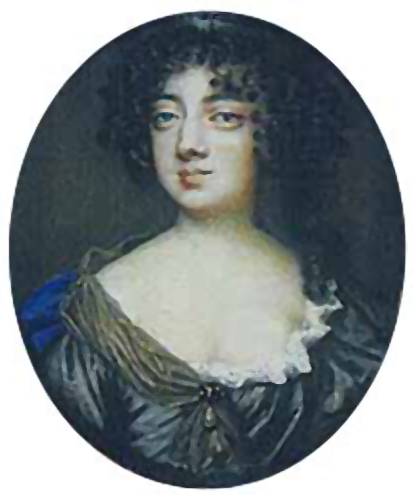
Portrait of Catherine de Braganza

Jane Sharp, writing in The Midwife Book, published in 1671, certainly believed that conception was determined by God’s will and permission, but she also had some other ideas about why some women conceived and others could not. She dismissed one common theory - that some couples are barren because they have “too much likeness and similitude in their complexions,” - and suggested instead that “some disproportion of Organs or some impediment not easily perceived,” may be the cause. Hatred between married people, she explained, was a legitimate problem however, particularly where children were forced into marriage by their parents. She also cautioned against blood-letting in the arms of girls before their first ‘courses’ or period, preferring such girls be bled from the foot to insure that blood was not ‘drawn down’ from their bodies before nature intended it. She talked of problems of the womb, ill health and disease as possible causes of infertility before setting out her last reason, ‘barrenness by inchantment.’ In cases where it is suspected that a charm may be making a husband unable to lie with his wife, Sharp recommended that he “piss through his wives Wedding ring and not to spill a drop and then he shall be perfectly cured.”

Given the importance of having children and growing a family, couples that struggled to conceive in the seventeenth century, could easily find advice on how to cure their difficulties.

Dining with friends on July 26th 1664, Samuel Pepys asked the ladies for their advice on he and his wife’s childless state. He recorded ten pieces of advice in his diary:

1. Do not hug my wife too hard nor too much
2. Eat no late suppers
3. Drink juyce of sage;
4. Tent and toast
5. Wear cool Holland drawers
6. Keep stomach warm and back cool
7. Upon query whether it was best to do at night or morn, they answered me neither one nor other, but when we had most mind to it
8. Wife not to go too straight laced;
9. Myself to drink mum (ale) and sugar
10. To change my place. 
Of these, he wrote, “the 3rd, 4th, 6th, 7th, and 10th they all did seriously declare, and lay much stress upon them as rules fit to be observed indeed, and especially the last, to lie with our heads where our heels do, or at least to make the bed high at feet and low at head.”

Portrait of Elizabeth Pepys

Other recorded remedies – these from William Sermon, author of The Ladies Companion in 1671 – vary in degrees of outlandishness. He suggests the woman try taking white ginger in a powdered form or sitting over a bath of water used to boil yarn and mixed with ash, or even bathing in water “in which ale-hoof, oaten and pease straw have been boiled together” before drying off and letting her husband “do his best endeavour.”


Valentine Greatrakes, pictured above, an Irish healer who was famous in England in the 1660s, offered guidance more like the list given to Samuel Pepys than any of William Sermon's suggestions.

Further reading:

The Midwives Book, Jane Sharp 1671
The Weaker Vessel, Antonia Fraser, 1984
The Diary of Samuel Pepys

~~~~~~~~~~
 
Kate Braithwaite was born and grew up in Edinburgh, Scotland. Her first novel, Charlatan, was longlisted for the Mslexia New Novel Award and the Historical Novel Society Novel Award in 2015. The Road to Newgate, a story of love, lies and the Popish Plot, was published by Crooked Cat in 2018.  In the novel, Kate's character, Anne, seeks advice on conceiving from Valentine Greatrakes and is thankful to receive advice more in line with that given to Pepys than that suggested by Sermon.
Kate lives in Pennsylvania with her husband and three children.

Links:
Facebook - https://www.facebook.com/KateBraithwaiteAuthor/
Twitter - https://twitter.com/KMBraithwaite
Website/blog – http://www.kate-braithwaite.com

mybook.to/theroadtonewgate

Saturday, January 26, 2013

The Protestant Prince - James Scott, Duke of Monmouth, by Tim Vicary


This story, like so much of English history, begins with a love affair and ends on the chopping block. The love affair began in Holland, in 1648, where the eighteen year old Charles, Prince of Wales, was anxiously awaiting news of the trial for treason of his father, King Charles 1. The young prince, seeking a diversion from these grim matters, met a pretty girl from Wales, Lucy Walter. Like teenagers everywhere, they fell in love, with predictable results. On 9th April 1649, Lucy produced a son, whom they christened James.

By then, Lucy’s prince had become a king. King Charles 1 had been executed three months before, so the baby’s father was now King Charles II – although still exiled from his kingdom. Charles liked the baby, but his love for Lucy did not last. There were plenty of other girls in Holland, after all, and he was a young king with time on his hands. Lucy died in 1658, not particularly mourned by Charles. But he was fond of young James, whom he openly acknowledged as his royal bastard, first of many.
In 1660 Charles II was triumphantly restored to his throne, and two years later he invited his son to join him at court.  The thirteen year old boy was created Duke of Monmouth, and a year later was married to Ann Scott, the twelve-year old daughter of the Duke of Buccleuch. He adopted his wife’s surname, and was henceforth known as James Scott, Duke of Monmouth.
At this time it was perfectly clear what his status was – the beloved ‘natural son’ of the King. True, there were a few stories of how the young Charles, living in poverty in Holland, had once persuaded his threadbare courtiers to bow down before ‘Queen’ Lucy Walters, but no one took such tales as serious evidence that he’d actually married the girl. It was just play-acting, at a drunken party, in a foreign land, long ago. And besides, the wench was dead.
Anyway, Charles had a real wife. In 1662  he married Catherine of Braganza, a Portuguese princess. Catherine was 23, young and beautiful, Charles was virile, and everyone looked forward to the birth of a future Prince of Wales.
Charles was fond of his wife, but in his own way. Morals at his court were notoriously loose. He insisted, right from the start, that his mistress, Barbara Palmer, would be a lady of the Queen’s Bedchamber, and over the years he had many more mistresses, several of whom – like Nell Gwyn  - bore his children. But  unfortunately, Catherine did not. And so, as time passed, people began to wonder who might succeed Charles when he died. The obvious answer was his brother James.
But unfortunately, James was a Catholic. And that was unacceptable to many people in England. Parliament passed the Test Acts, insisting that all holders of public offices swear an oath to accept the doctrines of the Church of England – and the King, of course, was the head of that church.  James refused, so people began to look for an alternative. And their eyes fell upon another James – James Scott, Duke of Monmouth.
Young Monmouth wasn’t interested in religion. He was an energetic, hearty young man, interested in physical sports. Samuel Pepys described him as ‘the most leaping gallant, that I ever saw; always in action, vaulting, leaping or clambering.’ He was an excellent horseman who loved hunting. He loved dancing too, the one interest he shared with his wife, until - perhaps trying to keep up with his energetic leaps – she hurt her leg and became lame. But that didn’t matter to Monmouth, who, like his father, had several mistresses, with whom he had children.
He frequented brothels like his father, too, with scandalous results. Once, at a brothel called Whetstone Park, a watchman asked him and his companions – two other dukes – to keep the noise down.  Laughing, Monmouth gaily drew his sword and ran the man through, killing him. Even for Restoration England this murder of a law officer was a bit much, but the King didn’t mind. He granted:
‘A gracious pardon unto our dear son James, Duke of Monmouth, of all Murders, Homicides, and Felonies whatsoever at any time before the 28th day of February last past, committed either by himself alone, or together with any other person or persons.'
Amazingly, despite all this, the young Duke of Monmouth became a hero to – of all people – the English Puritans! Those who had once supported the ‘good old cause’ of Oliver Cromwell! Why? Well, partly because many people forgive sins a lord that they would never accept in their own family – why else is Charles II so popular? But also because Monmouth was, quite simply, a Protestant – and therefore better than his Catholic uncle James, whom they didn’t want as King at any price.
Also, like his father, Monmouth had the common touch – the ability to speak to ordinary people and make them like him. A bit like Prince Harry today, perhaps. Monmouth was a soldier too. He’d fought with reckless bravery in several campaigns in Holland, and in 1679 led the royal forces against a rebellion in Scotland. His victory was swift, decisive and merciful – only a few leaders being hanged, the rest transported to the West Indies.
So why did it all go wrong?  Put simply, it was because the Exclusionist Party – those who wanted to stop his uncle James from becoming king  – puffed up Monmouth to make him believe he was something he was not – the legitimate son and heir of Charles II. Lucy Waters and Charles had been married, they claimed; lost certificates in a Black Box would prove it. Vast crowds cheered Monmouth in the West Country. He even laid on hands to cure the King’s Evil. (Something only a King could do) The trouble was, nobody could find this Black Box, and the King resolutely denied the story:
‘I do here declare, in the presence of Almighty God, that I never was married nor gave any contract whatsoever but to my wife, Queen Catherine.’
If only Queen Catherine, like Charles’s mistresses, would have a son! But she didn’t. This annoyed the Duke of Buckingham so much that he urged the King to have her kidnapped and sent to Virginia. Then he could divorce her on the grounds of desertion and marry someone else. But unlike Henry VIII, Charles was loyal to his barren wife. He might have dozens of mistresses, but she was his Queen and that was how it was going to stay. Maybe one day, she might even get pregnant …
And then, quite suddenly, he died. His brother, Monmouth’s uncle, became King James II – the first openly Catholic monarch since Bloody Mary.
What was Monmouth to do? Well, rashly, bravely, he sailed from Holland with just three ships to claim the throne. He landed at Lyme Regis, and raised an army of Protestant clothworkers and artisans. ‘Fear Nothing But God’ his standard read – a motto that appealed to his sober, God-fearing followers. In Taunton he declared himself King – a little awkward, since his name, James, was the same as that of the other king, his uncle.
Did he expect to win? Well, yes, presumably. He hoped and believed that his friends, young nobles and soliders with whom he’d shared battlefields and brothels a-plenty, would ride in to join him with regiments of skilled, well-equipped cavalrymen.
But none did. And at the battle of Sedgemoor his brave, half-trained levies were slaughtered by well-trained professionals. Monmouth fled, but was captured in a field in Dorset, and dragged before his grim-faced, merciless uncle. Despite pleading on his knees for his life, he was beheaded on Tower Hill next day.
Would he have made a good king, if he’d won? Unlikely. He’d inherited his father’s love of women, horses, and wild adventures, but none of Charles II’s political skill and cunning. Lord Bruce described him as ‘most charming both as to his person and engaging behavior, a fine courtier, but of a most poor understanding as to cabinet and politics, and given up wholly to flatterers and knaves by consequence.’
That was why his wiser friends did not join him. He was being used by others for their own ends. The tale of Lucy Waters’ marriage and the Black Box was just that; a story his supporters had invented to suit themselves. They knew he wasn’t a real king, and his father knew that too. Once you break the principle of legitimacy, it’s hard to get it back. You’re not far from electing your rulers, and deposing those you don’t like. If Monmouth had become king, he’d have been in a shaky, uncertain position, challenged by critics on all sides. It had been hard enough for his father, and he was a real king.
James Scott was a handsome playboy, who gambled and lost. Not a Protestant prince after all.
*****
Tim Vicary’s novel, The Monmouth Summer, is available on Amazon US and Amazon UK as an ebook and a paperback. You can read about his other books on his website and his blog. 


Tuesday, December 25, 2012

17th Century Trade

by Katherine Pym
The East India Company almost died under the reign of Cromwell. The dour religion disallowed many things. Gold and silver did not help the ‘saints’ into heaven.

Calicoes from India were not allowed during the Commonwealth. Only dark and homespun woolens prevailed. Spices brought about the fall of man, so little sold in England. The East India Company was forced to trade spices for other goods in the foreign markets. Pepper traded for coral in Italy sold in India at a 90% profit.

It brought the Dutchman Company, called: VOC or United East Indian Company, into power. They took advantage of England’s weakened Navy and merchant ships to increase holdings in the Far East. In Persian waters, Dutch merchant ships outnumbered the English four to one. The Dutch gained control of one port after the other. After the English Civil Wars, Cromwell went to war with the Dutch. In the South Seas a battle completely destroyed Pulo Run Island’s nutmeg industry.

English merchant ships were virtual warships that carried cannon and shot. If the crew survived periods of calm in the seas, scurvy, or the treacherous waters off the Cape of Good Hope, they invariably fought the Dutch, and other sundries as pirates, to gain ports of call where they could trade. This continued until after Charles II regained the throne.


Enter the Portuguese Infanta, Catherine of Braganza in 1662. Portugal had been in the South Seas trade industry for well over one hundred years. Her dowry brought a wealth of cash, artisans, new designs in furniture, and ports of call in India. They included stations in the Far East, warehouses called factories, counting houses, and residences.
 
Her dowry ship to England used sugar for ballast.

My resources indicate tea was introduced in England about 1660 by Thomas Garway. He felt it preserved one’s health until old age, but it was expensive—10 shillings per pound with the (England's) East India Company the sole right to import it. Called China tea, it was transported in square wooden boxes lined with lead. The new queen, Catherine of Braganza gave tea popularity. She felt the quality of water in England terrible. Her first drink when she arrived was a horn of ale. She shook her head, and asked for ‘tee’.

Along with the new ports of call came a plethora of new items from the South Seas. Porcelain made its original entry to Europe through the Crusaders. Queen Elizabeth I was given by Lord Burghley a ‘poringer of white porselyn, and a cup of greene porselyn’. She also wore ‘an armlet of pearls and enclosed thereof a clock’. But few others enjoyed such riches. 

When Catherine of Braganza came to England, food was eaten out of bowls and trenchers, liquid slurped from horn cups, tankards, two-handled cups, or posset pots (generally called dishes). These were made of earthenware, wood, or tough leather. Porcelain for the general public did not really hit England’s shores until after King James II went into exile.

King William and Queen Mary brought porcelain with them when they came to England to rule. Europe, who had been the recipient of Dutch trading for years, received a further taste for tea, sipped from porcelain, and served from lacquer-ware.

As time marched toward the end of the 17th Century, shiploads of 250,000 porcelain pieces at a time were brought to England. No longer were the habits of good Englishmen as they had been during the Restoration. Breakfasts were then a dish of new beer, bread, Cheshire cheese, or gruel served with a heavy meat. In early 18th Century the Tatler stated a breakfast of  ‘tea and bread and butter…have prevailed of late years.’

Even though Catherine never gave Charles II an heir, she brought to England a new way of living with the finer things of life. England’s taste became more dignified and refined.

For more information on England and trade, please see my novel, Twins. It takes place in London 1661. It is a study of trade and Catholicism in an overwhelming Protestant city.

You can find it and my other works at the Nook and amazon. http://www.amazon.com/Katherine-Pym/e/B004GILIAS 

My many thanks go to Richer than Spices by Gertrude Z. Thomas.


Sunday, November 25, 2012

Why the English took to Tea - Deborah Swift

I would certainly not have been able to finish any of my books without my regular top-up of that quintessentrially English drink, tea. I have inherited a number of teapots from my mother much like these from Vintage Dorset, and tea drinking has always been a big part of my family life.

Of course tea is not really English at all, it came first from China and later was introduced to India by the British as a way of suppliying the British Empire with a cheaper product .

At the end of the 17th century almost nobody in England drank tea,  but by the end of the next century nearly everyone from King to commoner did. In 1699 six tons were imported, but by the turn of the eighteenth century eleven thousand tons were inported!


The sudden enthusiasm for tea can be attributed to a number of factors - the first of which was the King's marriage to Catherine of Braganza. Her enormous dowry, suited to her position as daughter of King John IV of Portugal, included the trading posts of Tangier and Bombay, a fortune in gold bullion, and - a large chest of tea.

Catherine loved her tea and drank it from delicate thimble-sized cups. This tea-drinking caught on like wild-fire amongst the aristocracy, leading to many ladies also demanding this new elegant drink.

Because women were excluded from coffee shops drinking tea also became sociable, particularly amongst women, and in 1717 Thomas Twining of Devereux Court, who already owned a coffee shop, opened up a tea shop to furnish women with this fashionable and popular commodity.


Tea was still so expensive that ladies could not trust their servants to buy the tea for them as it would mean entrusting them with large sums of cash. So now the ladies could take a sedan to the shop, carrying their tea caddies, which were equipped with locks to prevent pilfering. They were able to buy directly from the shop or stay a while there to meet their friends and enjoy tea freshly prepared and served in porcelain dishes.

A whole ritual then evolved as a means of demonstrating how sophisticated and cultured you were. Books and articles were written on the etiquette of serving tea, and small snacks were introduced to cleanse the palate between tastings. Great effort was made to make the dishes and plates as dainty and genteel as possible, and the food as refined. Bread and butter was the usual accompaniment, cut up very small. This later became a whole afternoon meal, our 'Afternoon Tea'.

Tea Gardens then opened up where women could meet, and also a respectable place to meet members of the opposite sex. The first to open was in Vauxhall Gardens in 1732.An article about Vauxhall Pleasure Gardens can be found here on the Museum of London Blog.

Of course none of this would have been possible without the British East India Company, which during King Charles's reign grew to become a manifestation of British power in the East Indies. The first tea imports were from Bantam (now in Indonesia) in 1669, and it was part of a cargo of pepper, silk and other textiles. As the company grew it managed to establish trading posts in China, and despite warring with the Dutch, managed to retain control over the importation of tea.

For the poor, tea became an essential once people realised that it improved health and productivity.It was healthy because of its natural anti-bacterial effects (of course this was not understood then) and the fact it was made with boiled water. It was also more suited to a labouring workforce as it was a stimulant and not like ale, likely to send you to sleep!

The story of tea is a fascinating one and I can highly recommend these books: The True History of Tea - Erling Hoh
A History of the World in Six Glasses - Tom Standage
For All the Tea In China - Sarah Rose


And my new book THE GILDED LILY- during the writing of which I must have drunk hundreds if not thousands of cups of tea -  is released in the US tomorrow!


A fast-paced adventure peopled with ruthless villains and feisty heroines whose exploits grab the imagination and add suspense and excitement to a historical gem Lancashire Evening Post