Showing posts with label Stephen. Show all posts

Saturday, August 25, 2012

Faversham, Kent

             Faversham is a fascinating port town in Kent.  Some years ago, my husband and I had the pleasure of attending the Hop Festival there, and the town appears in my work in progress.  It’s a lovely town, compact and walkable.   Its known history goes back to before 811, and was known to be settled by the Romans, among others attracted by its location. 
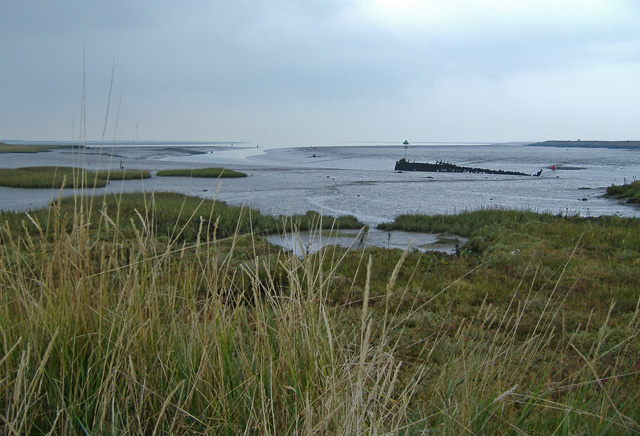
The mouth of Faversham Creek

              Part of the ancient royal demesne, Faversham is mentioned in the Domesday Book, and it also possesses an early Cinque Ports charter (considered to be the oldest in existence) and was linked to Dover.   King Stephen founded Faversham Abbey in 1147, and was subsequently buried there with his wife, Matilda, and son, Eustace.  The abbey was dissolved by Henry VIII, and nothing remains but ruins.  The beautiful parish church, St. Mary of Charity, still remains.
The ruins of Faversham Abbey by Stukeley 1722

As a port city, Faversham had a customs house and fishing was an important industry.  (The oyster beds were particularly important.)  The town has an association with medieval queens, and a fascinating history.  Queen Elizabeth I endowed a grammar school here.  However, I am going to focus on a specific point of interest: gunpowder.
                Advances in weaponry and military activity created a need for gunpowder, and Faversham was peculiarly suited to meet this need.   The ingredients for gunpowder, especially charcoal and sulpher, were readily available.  The site was perfect for factories, with a stream for watermills, and the continent was easily accessible from the port.  The earliest gunpowder works was established in the 16th century.  The original small factories were joined together as the Home Works. 
Home Works was ultimately nationalized by the British government in 1759.  Another factory, Oare Works, had been built very nearby in Davington parish in Kent in the 1680’s.  A third factory, Marsh Works, was built by the government in 1787.  These mills provided gunpowder to the East India Company and the military, furthering the war and expansion efforts.  It is interesting to think of the powder from these factories possibly being used by Nelson’s ships at the Battle of Trafalgar, and by Wellington’s troops at Waterloo!
Gunpowder from these factories was also used for blasting for canals and tunnels (especially important for railway expansion).  These plants continued in operation, and produced explosives during World War I.  In 1916, a horrible explosion killed over 100 employees.  In 1934, the gunpowder factories were closed due to fears that the area would be vulnerable to invasion or attack if war with Germany was declared. 

The site of Home Works was  redeveloped in the 1960’s except for Chart Gunpowder Mill, which is an historic site.  The Marsh Works became a site for  mineral extraction which is still in operation.  Oare Works is a county park, featuring conserved process houses, trails and a visitor center.
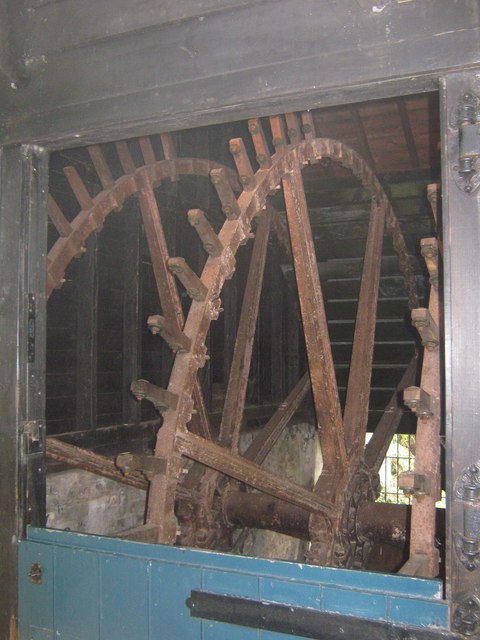
Chart Gunpowder Mill-Mill Wheels
 SOURCES
Percival, Arthur.  OLD FAVERSHAM.  1988: Meresborough Books, Rainham, Kent, UK.
Turcan, Robert.  FAVERSHAM THROUGH TIME.  2010: Amberley Publishing PLlc, Stroud, Gloucestershire, UK.
British History Online. The Parish and Town of Faversham.  (From THE HISTORY AND TOPOGRAPHICAL SURVEY OF THE COUNTY OF KENT , Vol. 6 by Edward Hasted, 1798.)  http://www.british-history.ac.uk/report.aspx?compid=62974
Kentfind.Co.UK website.  History of Faversham.  (No author or date shown.)  http://www.kentfind.co.uk/about/faversham/history.php

Photographs from Wikimedia Commons.

Lauren Gilbert lives in Florida, and is the author of HEYERWOOD: A Novel. 

Saturday, April 14, 2012

Monarchy~ The Normans: Stephen and Matilda

by Debra Brown

Following the early death of the only legitimate son of Henry I, William, few of the English and Norman barons were prepared to stand by their oath to him to support his daughter's claim to the throne. Matilda was, after all, a woman, and was said to have been arrogant and unpopular. She was also married to the Count of Anjou. He was the ruler of Anjou- England and Normandy's traditional enemy.

When Henry died in 1135, the barons met to choose a king. Despite Matilda's having an infant son, they chose Count Theobald of Blois, the grandson of William the Conqueror by his daughter, Adela. Negotiations were in progress when Stephen, Theobald's younger brother, made himself King of England.

Stephen had been brought up by Henry I, who had loved him and made him one of the richest men in England. Stephen now pointed to this as evidence that Henry had been grooming him to become the next king, despite Henry's having obtained Stephen's oath to support Matilda. As soon as Henry was dead, Stephen sailed for England. He obtained the support of his brother, whom Henry had created the Bishop of Winchester, as well as the citizens of London. The Archbishop of Canterbury crowned him King on 22 December, 1135.

Stephen was charming, courageous and chivalrous. He became the first English king to allow jousting. He had humbly earned the people's affection and was generous toward the Church. Most of the barons and even Henry's favorite illegitimate son, Earl Robert of Gloucester (pronounced Gloster), swore allegiance to him.

Stephen was a brave soldier, but a failure as a king and commander. Because of it, Robert turned against him, and many followed. Matilda's uncle, David I of Scotland, invaded England, and though Stephen defeated David, Matilda could see that Stephen's support was bleeding away and that it was time for her to act. In an attempt to weaken King Henry's bureaucracy, which might support Matilda, Stephen arrested bishops and counselors, some of whom were his own family. This lost for him the vital support of the Church. He made strategic mistakes in battle defending his rule, not the least of which was to decide not to besiege Arundel, the castle where Matilda had taken up residence after arriving from France with Robert, and to allow her safe passage to join Robert in Bristol! Even I could have figured that one out.

Arundel

Chivalrous it was, but foolish, and the result was full-scale civil war. Barons built illegal castles and plundered. They sold their allegiance to the highest bidder and then changed sides at will. Anarchy existed, and no one felt safe.

Finally Stephen was a prisoner in chains at Bristol, and Matilda rode to London to claim her throne with the help of Stephen's brother, the Bishop of Winchester. She was called Lady of the English by her supporters, but she had imposed high taxes and was still a woman, and the people would not have her. They drove her out of the city.

The Water Gate of Bristol Castle

Stephen's wife, also named Matilda for the sake of confusion, was rallying his forces. Earl Robert was captured, and the Matildas made an exchange. Henry's daughter was forced to release Stephen in exchange for her main supporter. The Bishop of Winchester had by now realigned himself with Stephen.

Matilda sent Robert to Anjou to request help from her husband. The Count was, however, engaged in a successful invasion of Normandy and could not leave. Stephen had become reconciled to the clergy, and Matilda's supporters were under threat of excommunication.

Stephen laid siege to Matilda in Oxford Castle. On a frozen, snowy night, however, she and four knights dressed in white (hers was a nightgown) and climbed down from a tower. They slipped through Stephen's lines and ran to London. The war dragged on, but five years later, Robert died and Matilda was forced to give up. She left for Anjou.

Oxford Castle

Since the Count of Anjou had taken over Normandy, some of the English barons who owned Norman estates felt that their only hope of retaining their possessions across the Channel was to support Anjou in England. They threw their support to the son of Matilda, Henry, the heir to the house of Anjou. The war continued. Stephen attempted to secure the succession of his line by having his son and heir, Eustace, crowned during his own lifetime. The Archbishop of Canterbury, however, with the Pope's backing, refused to perform the coronation.

Young Henry returned to England in 1153. He was now the most powerful feudal prince in Europe. Through inheritance and marriage, he was now Duke of Normandy and Aquitaine. He landed with a small army, and barons flocked to join him. Fear of reprisals caused the barons to conclude a peace agreement, but Stephen remained adamant that his son should succeed. When Eustace died, however, in 1153, Stephen gave up interest in the succession. Peace through the Treaty of Westminster meant that Stephen would rule till his death and that Henry was acknowledged as his heir instead of his own second son, William. Stephen did not enjoy the peace for long- he died the next year.

Henry II was crowned in 1154. Matilda lived till 1167, long enough to know of her son's succession, though she did not attend his coronation in Westminster Abbey. Matilda never returned to England.


Debra Brown is the author of The Companion of Lady Holmeshire, a Victorian mystery with sweet romance.