Showing posts with label Queen Elizabeth I. Show all posts

Thursday, January 4, 2018

Bad Queens - Part II

by Danielle Marchant

On Sunday 7th September 1533, Elizabeth, daughter of Henry VIII and Anne Boleyn, was born at 3 o’clock in the afternoon at Greenwich Palace. This was supposed to be a happy occasion, but there was one detail that cast a shadow over this important event.

The baby was a girl.

Both her mother and father were disappointed that she was a girl. Up until now, all of the best astrologers and doctors had predicted a boy. Henry had spent time wondering whether to call his son Edward or Henry and was making plans for the celebratory tournament. Anne had even seen in advance the letter announcing the birth. In the letter, it gave thanks to God for sending her “good speed, in the deliverance and bringing forth of a prince”.

However, as soon as the baby girl was born, Henry decided to name her Elizabeth, after his mother Elizabeth of York, instead. The tournament was cancelled and the letter announcing the birth was slightly altered with an extra “s”, giving thanks to God for the birth of a “princes”.

Why was there so much disappointment over the baby being a girl? The reason for this was that at the time, there was a fear of having a female ruler. A history of what has been perceived as a series of “Bad Queens” had made it all the more important for the heir to the throne to be a boy, to keep the stability of the country. Henry had even divorced his first wife, Catherine of Aragon and had broken away from the Catholic Church because of Catherine’s failure in producing a healthy, male heir - despite the fact that they did have a healthy daughter, Mary.

Here is a part II of a list of Queens that helped to create the climate of fear of having another female ruler… (Read Part I HERE)

The Queens in the Wars of the Roses

Just over four decades before Princess Elizabeth’s birth in 1533, the country was torn apart by civil war between the House of York and the House of Lancaster, in the Wars of the Roses that lasted nearly thirty years. Around the time of Elizabeth’s birth, there may have still been many old enough to remember what they had seen, and this made it all the more important for the current generation to maintain peace. There were two main Queens in this civil war who became focus points for both Houses and helped to exasperate the situation even more. The series of events and the roles these two Queens played would definitely have helped to contribute to the climate of fear of not wanting another female ruler in the Tudor period:
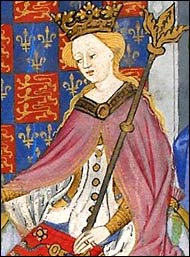

1. Margaret of Anjou

Like Queen Isabella a century before her, Margaret was another French princess, who married Henry VI in 1445. In Shakespeare’s Henry VI Part 3, she was famously named the “She-Wolf” of France, and that her “tiger’s heart wrapped in a woman’s hide”.

Margaret was niece by marriage to the French King, Charles VII. The marriage caused controversy because no dowry had been given to the English Crown for Margaret by the French. Alternatively, they agreed that Charles VII, who was at war with Henry V in The Hundred Years' War in France, would have the lands of Maine and Anjou returned to France. This caused friction in the King’s council.

A breakdown in law and order, corruption, the distribution of royal land to the king's court favourites, and the continuous loss of land in France meant Henry and Margaret’s reign was an unpopular one. Returning troops, who had often not been paid, contributed to the anarchy and triggered a rebellion led by Jack Cade. Henry lost Normandy in 1450 and later lost other French territories, leaving only Calais untouched.

It is believed that this loss of French territory contributed to Henry’s nervous breakdown, which modern Doctors would probably diagnose as Catatonic Schizophrenia. Margaret gave birth to their only son, Edward of Lancaster, in 1453. However, given Henry’s mental state, this fuelled rumours that the son was not his; he believed that he would have been incapable of fathering a child and that the baby was actually the result of an affair between Margaret and one of her favourites. Edmund Beaufort 1st Duke of Somerset, or James Butler Earl of Wiltshire were considered to be possible fathers. Nevertheless, Henry accepted the son as his own.

While Henry remained for some weeks in a catatonic stupor, Margaret had to rule in his place. The kingdom found difficulty in having to cope without a king, but Margaret was ruthless and called for a Great Council in May 1455. This council excluded Richard Duke of York, and this sparked the series of battles between the Houses of York and Lancaster. Margaret attempted to raise support for the Lancastrian cause and subsequently, Lancaster was victorious at the Battle of Wakefield and of St Albans.

However, they were defeated by York at the Battle of Towton, in 1461. Edward, son of Richard Duke of York (who had been beheaded at the Battle of Wakefield) overthrew King Henry VI and proclaimed himself Edward IV. Margaret then fled to Scotland with her son and remained there, plotting her return.
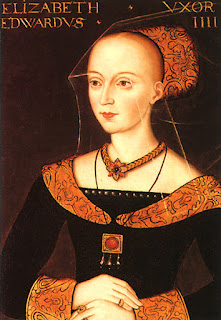
2. Elizabeth Woodville

Elizabeth was the eldest of twelve children and spent her early life in relative obscurity in Grafton Regis, Northamptonshire. Even though her mother was Jacquetta, Dowager Duchess of Bedford and her father was Sir Richard Woodville, she was considered to be a “commoner” by her contemporaries. Her first husband, Sir John Grey, was killed at the Battle of St Albans, leaving her a widow with two sons.

It is believed that around the summer of 1464, Elizabeth heard that Edward VI was hunting in Whittlewood Forest. She waited for him under a tree (which was later called the “Queen’s Oak”), holding her two sons tightly. The King then rode by and she allegedly threw herself at his feet, begging him for help with the Grey family inheritance. According to the story, Edward was so struck by her “mournful beauty” that he fell in love with her and assumed she would just agree to be his mistress. However, she refused to be his mistress, even when a dagger was put to her throat (according to some interpretations of the story, she produced the dagger herself and put it to her own throat).

Her refusal to give in to him, unless he married her, increased his passion for her even more. They married in secret on Mayday in 1464. Only her mother, a Priest, probably two others and “a young man who helped the Priest sing” were present. It is believed that Elizabeth and Edward continued to meet in secret with the help of Jacquetta (who even managed to hide the secret marriage from her husband) until September, when the Council met in Reading. Here, Edward was being coerced into a marriage with Bona of Savoy, sister-in-law to the French King. Edward then had to admit the truth about his relationship with Elizabeth.

The news was a bombshell. Richard Neville, Earl of Warwick – also known as “The Kingmaker” – who had helped Edward take the throne, responded angrily to the clandestine marriage. He had negotiated for the hand of Lady Bona, and her marriage to Edward would have helped to forge an alliance between the House of York and one of the greatest Houses of Europe, helping to replenish the dwindling treasury with a generous dowry. Warwick’s anger at not being consulted on such an important matter would have been understandable.

Elizabeth was crowned Queen in May 1465. However, refusing to accept the marriage, Warwick fell out with Edward. Warwick later formed an alliance with Margaret of Anjou. Together, they overthrew Edward and restored Henry VI to the throne. In addition, Warwick’s daughter, Anne Neville, was married to Margaret's son Edward in December 1470.

Their success was brief, as Margaret was taken prisoner by York after being defeated at the Battle of Tewkesbury, in May 1471, where her son Edward was killed. Soon afterwards in the same year, Warwick was killed in the Battle of Barnet by Edward VI’s forces.

Since her marriage to Edward, however, Elizabeth was plagued with rumours of being a “sorceress”, having bewitched Edward into marriage. When Edward died in 1483, his brother Richard seized the throne, accusing her of having bewitched his brother into a bigamous marriage. As a result, Elizabeth’s marriage was declared invalid, and her two sons were taken into the Tower of London by their uncle Richard, after which they mysteriously disappeared.

It is possible that she may have plotted against Henry VII, who married her daughter Elizabeth of York. It is believed that she may have conspired with rebels in the Simnel rebellion. Subsequently, she was sent to live in Bermondsey Abbey, where she died in June 1492. She was allowed only occasional visits to court, and all her lands were transferred to Elizabeth of York.

Therefore, it is understandable that this history of “Bad Queens” (or those perceived to be “Bad Queens”) would have made the news of Princess Elizabeth’s birth in 1533 most unwelcome news. However, as we know, Elizabeth grew up to become Queen Elizabeth I. Elizabeth was one of the most successful rulers in English history, and her reign was called “The Golden Age”. Not a “Bad Queen” at all and all fears of another female ruler had been unfounded.

Images:

Margaret of Anjou (British Library Royal)
Elizabeth Woodville, possibly a copy of a lost original (Master and Fellows of Queen's College, Cambridge)

Sources and further reading:

Elizabeth – David Starkey, 2001
Eleanor of Aquitaine – By the Wrath of God, Queen of England – Alison Weir, 2000
Blood Sisters – The Women Behind the Wars of the Roses – Sarah Gristwood, 2013
Anne Neville – Queen to Richard III – Michael Hicks, 2007
Elizabeth Woodville – Mother of the Princes in the Tower – David Baldwin, 2012.
She-Wolves: the Women Who Ruled England Before Elizabeth - Helen Castor, 2011
www.bbc.co.uk/history
www.historyextra.com
www.philippagregory.com

~~~~~~~~~~
Danielle Marchant is an Independent Author from London, UK. Parts 1, 2 and 3 of her series of historical novellas based on Jane Boleyn Lady Rochford’s life, The Lady Rochford Saga, are available now:

https://www.amazon.co.uk/gp/product/B077PRF6F9/ref=series_rw_dp_sw

Visit her pages at https://www.facebook.com/TheLadyRochfordSaga and at http://danielleliannem.wix.com/janeboleyn.


Wednesday, January 3, 2018

Bad Queens - Part I

By Danielle Marchant

On Sunday 7th September 1533, Elizabeth, daughter of Henry VIII and Anne Boleyn, was born at 3 o’clock in the afternoon at Greenwich Palace. This was supposed to be a happy occasion, but there was one detail that cast a shadow over this important event.

The baby was a girl.

Both her mother and father were disappointed that she was a girl. Up until now, all of the best astrologers and doctors had predicted a boy. Henry had spent time wondering whether to call his son Edward or Henry and was making plans for the celebratory tournament. Anne had even seen in advance the letter announcing the birth. In the letter, it gave thanks to God for sending her “good speed, in the deliverance and bringing forth of a prince”.

However, as soon as the baby girl was born, Henry decided to name her Elizabeth, after his mother Elizabeth of York, instead. The tournament was cancelled and the letter announcing the birth was slightly altered with an extra “s”, giving thanks to God for the birth of a “princes”.

Why was there so much disappointment over the baby being a girl? The reason for this was that at the time, there was a fear of having a female ruler. A history of what has been perceived as a series of “Bad Queens” had made it all the more important for the heir to the throne to be a boy, to keep the stability of the country. Henry had even divorced his first wife, Catherine of Aragon and had broken away from the Catholic Church because of Catherine’s failure in producing a healthy, male heir - despite the fact that they did have a healthy daughter, Mary.

Here is a part I of a list of Queens that helped to create the climate of fear of having another female ruler… (part II tomorrow)

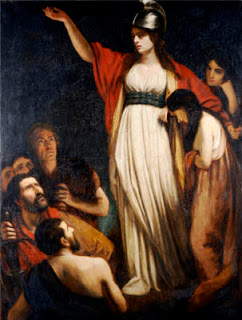
Queen Boudicca (died circa AD 60)

Boudicca was maybe not necessarily a “Bad Queen”, but her reign was definitely not a quiet and peaceful one. She ruled over the Iceni people of Eastern England and led a major uprising against occupying Roman forces. She was married to Prasutagus, ruler of the Iceni people of East Anglia.

When the Romans conquered southern England in AD 43, they allowed Prasutagus to continue to rule. However, when Prasutagus died, the Romans decided to rule the Iceni directly. They confiscated the property of the leading tribesmen. It is also believed that they stripped and thrashed Boudicca and raped her daughters. These actions helped to intensify widespread hatred at Roman rule.

In 60 or 61 AD, while the Roman governor, Gaius Suetonius Paullinus, was leading a campaign in North Wales, the Iceni rebelled with the help of members from other tribes.

Boudicca's warriors successfully defeated the Roman Ninth Legion and destroyed the capital of Roman Britain, which as the time was in Colchester. They went on to destroy London and Verulamium (St Albans). Thousands were killed. Finally, Boudicca was defeated by a Roman army led by Paulinus. Many Britons were killed, and Boudicca is thought to have poisoned herself to avoid capture. Where the battle had taken place and the site of Boudicca's death are unknown.

Empress Matilda

Once again, she was probably not exactly a “Bad Queen” (and Matilda was never crowned a Queen either), but it was down to the fact that she was a woman and the resulting dispute over her disregarded claim to the throne that led to years of civil war. Empress Matilda was the granddaughter of William the Conqueror and daughter of Henry I. She is known today as the Lady of the English, having never been crowned queen. She was married for a short time to the Holy Roman Emperor and was the rightful heir to the throne. If she had become Queen, she would have been the first reigning queen of England in 1135, being descended from Norman, Scottish, and English (Saxon) kings. However, on her father’s death in 1135 – and partly because she was a woman – her cousin Stephen of Blois seized the throne.

Like Matilda, Stephen was a grandchild of William the Conqueror. He had, on at least two occasions, promised Henry I to support Matilda as Queen of England, as had all other nobles in the realm. But after Henry died, Stephen claimed Henry made these promises under coercion and that Henry had named Stephen as his successor. In spite of this, the nobles and the Pope supported Stephen’s claim to the throne, and he became King of the English and Duke of Normandy, which was another title he had inherited from Henry I.

However, his reign was not a peaceful one, and this was the start of almost 20 years of civil war. Within four years of Stephen’s accession, Matilda had gathered a force to challenge him for the crown. She had a lot of political support, because along with other estranged nobles, she also had her husband, who was one of the most powerful nobles in France, Geoffrey, Count of Anjou.

In 1141, she was in London and was ready to be crowned. However, within a few months Stephen ruined her chances and forced Matilda out before the coronation occurred. In spite of this, Matilda’s supporters continued to fight for her claim by challenging Stephen. However, neither she, nor they could win and to make matters worse, her husband Geoffrey never sent a major force to England to assist them.

However, Geoffrey did eventually force out Stephen from Normandy and then, took over as its Duke. Geoffrey and Matilda had a son, Henry, who Geoffrey named Duke of Normandy in 1150. Henry inherited the titles and lands as Count of Anjou following his father’s death in 1151.

With the support of his mother, Henry claimed the English throne from Stephen. Eventually, Henry and King Stephen made an agreement that Henry would be the heir to the throne after Stephen died, even superseding the claims of Stephen’s son, Eustace. This ended the civil war. Within two years, both Eustace and Stephen’s wives were dead, and Stephen was forced to relinquish the crown to Henry. In 1154, Stephen died of natural causes and was succeeded by Matilda’s son, King Henry II.

Eleanor of Aquitaine

Eleanor was one of the most powerful and controversial women of the Middle Ages. She was beautiful, intelligent and headstrong. There were rumours about her in her lifetime, but definitely within reason and her contemporaries were shocked by her behaviour. Eleanor was the elder daughter of William, tenth Duke of Aquitaine. She was raised in one of Europe's most cultured courts and given an excellent education. She later became an important patron of poets and writers. It was also a relaxed and licentious place, where the arts of the troubadours thrived, and she even presided over the fabled Courts of Love.

In 1137, both her only brother and her father died, leaving her with a vast inheritance. At just the age of 15, she became the most eligible heiress in Europe. That same year, she married Louis, heir to Louis VI of France, who shortly afterwards became King Louis VII. The couple had two daughters.

In 1147, Eleanor accompanied her husband on the Second Crusade, travelling to Constantinople and Jerusalem. The Crusade was a failure. The relationship between Eleanor and her husband – which was already in a vulnerable state - worsened even more. Eleanor failed to produce a son, and this added to the tension. In 1152, they were divorced.

Two months later Eleanor married Henry of Anjou, who in 1154 became King of England. The couple had five sons and three daughters. For nearly twenty years, Eleanor played an active part in the running of Henry's empire, and she travelled back and forth between their territories in England and France.

In 1173, two of Eleanor's sons involved her in a plot against their father. Subsequently, Henry imprisoned her. After Henry's death in 1189, his eldest son, Richard I, ordered his mother's release. Despite her age (at this point, she would have been in her mid-sixties), Eleanor played a major part in government. In 1190, she acted as regent in England when Richard went to join the Third Crusade. She even played her part in negotiations for his release after he was taken prisoner in Germany on his way home.

Queen Isabella

Queen Isabella was the wife of Edward II. Isabella is definitely viewed as a “Bad Queen” because she helped to remove her husband from the throne, alongside her lover Roger Mortimer, one of Edward’s enemies. Edward was later imprisoned and murdered. In addition, Isabella’s reign alongside Mortimer was a failure.

Edward became King in July 1307. On his accession, he immediately recalled his favourite, Piers Gaveston from exile, whom his father, Edward I, had banished to France for having a bad influence on his son. Gaveston was given the earldom of Cornwall, which had previously been a title conferred on royalty.

This act sparked opposition to the king and his favourite. In 1311, the nobles issued the “Ordinances”. This was an attempt to restrict royal control of finance and appointments. Gaveston was twice exiled at the demand of the barons, but returned to England soon afterwards. In 1312, he was captured and executed by the barons.

In 1314, Edward invaded Scotland. He was defeated by Robert the Bruce at Bannockburn. Power was now in the hands of the barons led by Edward's cousin, Thomas of Lancaster, who by 1315 made himself the real ruler of England. Yet Lancaster did very little to pledge reform and as a result, some areas of the country collapsed into anarchy.

By 1318, Edward and Lancaster did resolve some issues between them, but the king had two new favourites - Hugh le Despenser and his son. When Edward supported the two Despensers' ambitions in Wales, a group of barons banished both father and son. This made Edward want to fight back. Edward defeated Lancaster - who had begged the Scots to help him - at Boroughbridge in March 1322. He executed him and recalled the Despensers, with whom he now ruled.

This is where Isabella comes in, because at this point, she emerged as a focus for Edward’s enemies. In 1325, she was sent on a diplomatic mission to France. There she met and became the mistress of Roger Mortimer, an exiled opponent of Edward. In September 1326, they invaded England. Fortunately for them, there was almost no resistance. The Despensers were captured and executed, and Edward was overthrown in favour of his and Isabella's son, who was crowned Edward III in January 1327. Edward II was imprisoned at Berkeley Castle and murdered there.

As Edward III was still a minor, the country was ruled by Queen Isabella and Roger Mortimer. However, their reign was as bad as Edward II’s. They had even gone so far as to recognize Robert the Bruce as the King of Scots, something even Edward wouldn’t do.

As soon as Edward reached the age of 18 in 1330, he decided to take matters into his own hands. He had Mortimer arrested, but instead of having him killed straight-away, Edward had Mortimer tried for treason in Parliament. Despite Queen Isabella’s protest, Mortimer was then hanged.

Isabella, however, escaped such a similar fate when Edward allowed her to retire from public life for the rest of her life. She died in 1358.

Tomorrow, Part II will explore the lives of the 'Bad Queens' of the Wars of the Roses...


Sources and further reading:
Elizabeth – David Starkey, 2001
Eleanor of Aquitaine – By the Wrath of God, Queen of England – Alison Weir, 2000
Blood Sisters – The Women Behind the Wars of the Roses – Sarah Gristwood, 2013
Anne Neville – Queen to Richard III – Michael Hicks, 2007
Elizabeth Woodville – Mother of the Princes in the Tower – David Baldwin, 2012.
She-Wolves: the Women Who Ruled England Before Elizabeth - Helen Castor, 2011
www.bbc.co.uk/history
www.historyextra.com
www.philippagregory.com

~~~~~~~~~~

Danielle Marchant is an Independent Author from London, UK. Parts 1, 2 and 3 of her series of historical novellas based on Jane Boleyn Lady Rochford’s life, The Lady Rochford Saga, are available now:
https://www.amazon.co.uk/gp/product/B077PRF6F9/ref=series_rw_dp_sw

Visit her pages at https://www.facebook.com/TheLadyRochfordSaga and at http://danielleliannem.wix.com/janeboleyn.

Thursday, August 3, 2017

The Evidence Against Elizabeth

by Samantha Wilcoxson

Elizabeth I: The Coronation Portrait
Queen Elizabeth I has become fabulously more popular in our time than she was in her own, and she is often held up as a shining example of feminism or listed as one of England's greatest monarchs. Whether she was or not is an interesting subject for debate, but we would not be able to have it if Elizabeth's sister, Queen Mary I, had not refused to execute the girl for treason.

What evidence was there against the Lady Elizabeth? More than you might think and certainly more than had doomed many others.

When Mary became queen, many influential people, Bishop Steven Gardiner and Spanish ambassador Simon Renard chief among them, discouraged Queen Mary's naive trust in her younger sister. Mary did not completely ignore their advice, not keeping a close guard on Elizabeth but also not giving her the type of court position enjoyed by others, such as Margaret Douglas and Jane Dormer. Elizabeth was her heir after all, though Mary hoped to soon remedy that situation by having a child of her own.

Elizabeth was in greater danger of losing her position due to charges of treason than by being replaced by a young niece or nephew.

The strongest evidence against Lady Elizabeth was Wyatt's Rebellion. In December 1553, Elizabeth requested to leave her sister's court, and that permission was granted, though many advised Mary to keep Elizabeth close enough to monitor her activity. By January, information about the multi-pronged rebellion were being quickly uncovered. Edward Courtenay was involved in the plot with the goal of stopping Queen Mary's marriage to Prince Philip at minimum, with a higher goal of placing himself on the throne as Elizabeth's husband.

Entry of Queen Mary I with Princess Elizabeth
into London in 1553
by John Byam Liston Shaw, 1910
When Elizabeth was summoned to return to court and give testimony regarding her knowledge and possible involvement in the plot, she claimed poor health made it impossible for her to travel. To make matters worse for Elizabeth, a copy of a letter she had written to the queen was found in the possession of a French spy just as Nicholas Carew, a leader in the rebellion, fled to France to avoid arrest.

The truth of Elizabeth's involvement in Wyatt's Rebellion is one of history's great mysteries, but there is little doubt that she had knowledge that she did not share with her sister, the queen. For her part, Mary rallied the people of London to stand in her defense against the rebels in a speech that proved she was her father's daughter. It was a resounding success, and Wyatt's forces found that their entrance to the city was denied.

The rebellion quelled, several executions took place, including that of Wyatt himself along with Henry Grey and his daughter the 'nine day queen', but Mary hesitated to take such a severe step against her sister and heir. Elizabeth continued to ignore summons to London, and Wyatt testified that he had communicated with Elizabeth through servant William St Loe, though he admitted that Elizabeth's reply had been characteristically noncommittal. Elizabeth denied any connection with Wyatt or the French, but Mary sent an escort to put an end to her sister's excuses to avoid court.

When questioned, Elizabeth gave the sort of evasive and clever responses she has become well known for, at one point even claiming she could not recall if she owned a certain estate. Yet, more concrete evidence of her involvement could not be established, and Mary could not be persuaded to bring charges against her without greater certainty. Mary would not continue the sorts of executions that her predecessors had signed off on against the likes of Edward of Warwick, Edward Stafford, and Margaret Pole. Instead, Elizabeth was left in gilded captivity for two months before being moved to house arrest at Woodstock until she was brought to Hampton Court to wait upon the queen in April 1555.

Mary I of England
by Hans Eworth, 1554
In 1556, Elizabeth's name was tied to rebellion once again. This time, it was Sir Henry Dudley who led the scheming to place Elizabeth and Edward Courtenay on the throne in Mary's place. The conspiracy was found out before it could come to fruition, and servants of Elizabeth were arrested for having knowledge of it. But did Elizabeth herself know of the plot and support it? Once again, Mary could not be convinced with certainty, so Elizabeth remained free though the relationship between the sisters was more strained than ever.

Not only could Elizabeth easily have been charged with treason, she also left herself open to conviction for heresy. In Henry VIII's England, the two crimes were closely tied, but Mary chose to have patience with her sister in this arena as well. Hoping that Elizabeth could be converted to the Catholic faith, the queen brought her sister to mass only to hear her "complain loudly all the way" and make no commitments beyond exploring the faith to determine "if her conscience could allow her to be persuaded" to convert.

Any one of these incidents would have been enough for charges of treason to be brought up against a subject of King Henry VIII. Therefore, we have the mercy of Queen Mary to thank for the reign of Queen Elizabeth.

Additional Reading
Mary Tudor: Princess, Bastard, Queen by Anna Whitelock
The First Queen of England by Linda Porter
The Children of Henry VIII by Alison Weir

All images in the public domain through Wikimedia Commons
~~~~~~~~~~

Samantha Wilcoxson is the author of the Plantagenet Embers Trilogy featuring women of Tudor England.

An incurable bibliophile and sufferer of wanderlust, Samantha lives in Michigan with her husband and three teenagers. You can connect with her on her blog or on Facebook, Twitter, Instagram, and Goodreads.

Saturday, October 17, 2015

Chasing Francis Bacon Around the Winding Stair

by Anna Castle

Sir Francis Bacon
The philosopher Francis Bacon (b. 1561 - d. 1626) is the protagonist of my historical mystery series. The more I learn about him, the more I like him, but that hasn’t always been the common view. Bacon wrote, “All rising to great place is by a winding stair” (Of Great Place.) His reputation rose and fell during his own lifetime and has taken many twists and turns through the centuries since his death.

Start at the top


Bacon was recognized as exceptional from early childhood. His father, Sir Nicholas Bacon, was Queen Elizabeth’s Lord Keeper of the Great Seal. His mother, Lady Anne Bacon, was one of the five daughters of Sir Anthony Cooke, who were renowned for their intelligence and learning. The queen visited the Bacons in Gorhambury in 1572, when Francis was eleven. When she asked him how old he was, he replied, “Two years younger than Your Majesty’s happy reign.” The felicity of that response earned him the nickname ‘the little Lord Keeper.’

A sharp setback

Sir Nicholas died when Francis was 18, depriving him of crucial support in finding a place in government. His uncle, Lord Burghley, was the Lord Treasurer, but he held Francis at arm’s length throughout Elizabeth’s reign, probably to advance his own son, Robert Cecil, without competition from his brilliant cousin.

Bacon never stopped trying, though his early efforts were often clumsy and poorly received. We have a letter from him to his aunt, Lady Burghley, apologizing for some apparently over-ambitious request dated 1580 from Gray’s Inn. His colleagues at the Inns of Court complained about his poor social skills a few years later. He apologized for that too. His letters and others give us a portrait of a shy intellectual, more comfortable with a quill than in person.

A slow, laborious climb

The queen “pulled him across the bar” in 1582, making him one of the youngest barristers in Gray’s Inn history. She granted him the reversion of the office of the Clerk of the Counsel in Star Chamber in 1589, a post worth £1600 per annum -- except that he had to wait twenty years for the present office-holder to die. That’s all she and his powerful uncle ever did for him, other than exploiting his talents and his deeply ingrained sense of duty.

Bacon served as a translator during visits of the French ambassador, having spent his late adolescence studying civil law in France. He served on a commission to interview Catholic prisoners in jail in 1588. That must have been weary work, especially since one of his co-commissioners was Sir Richard Topcliffe (not yet notorious as a torturer.) In 1594, Elizabeth made him one of her Learned Counsel, a legal advisory body; yet another unpaid honor.

Bacon managed the correspondence of his brother Anthony, an intelligencer based in southern France. He attended upon the queen at court and wrote masques for the court’s entertainment on behalf of the gentlemen of Gray’s. He also wrote ‘advice literature,’ essays about current affairs read by the queen’s counselors. He never received payment for any of this work, though his writings were widely circulated. His extraordinary mental clarity shines through these works, urging moderation in all things and consideration of the needs of the common folk.

He was a Member of Parliament, participating in every session of the House of Commons from 1584 to 1601. He had the unfortunate habit of speaking his mind, whether it conformed with the queen’s wishes or not. In 1589 and 1593 he argued against increases in taxes, earning her wrath. Bacon was a persuasive and compelling speaker, often using humor to defuse contention. He introduced a bill against enclosures in 1597, arguing that “I should be sorry to see within this kingdom that piece of Ovid’s verse prove true, ‘jam seges ubi Troja fuit;’ in England nought but green fields, a shepherd, and a dog.” Ben Jonson wrote, "when he spoke his hearers could not cough or look aside without loss... The fear of every man that heard him was, lest he should make an end."

There was never a breach between Bacon and his uncle. Even so, it seems obvious to me that Lord Burghley did far less for his worthy nephew than he could have done; certainly far less than his sister-in-law, Lady Anne Bacon, thought he ought to do. Burghley seemed content to allow Bacon success with the confines of Gray’s Inn, but not one step beyond.

A rash and temerarious patron

2nd Earl of Essex
As Bacon entered his third decade, he began a friendship with Robert Devereux, the 2nd Earl of Essex and the queen’s rising favorite. Anthony Bacon also entered Essex’ service on his return from France in 1592, eventually moving into rooms in Essex House on the Strand. Anthony managed a network of intelligencers. Knowledge was indeed a form of power in those days, when information was so difficult to obtain. Every principal courtier had his own stable of spies and messengers.

Soon after Anthony returned, Francis wrote the oft-quoted letter to his uncle begging for some position to support his studies: “I confess that I have as vast contemplative ends, as I have moderate civil ends: for I have taken all knowledge to be my province.” No response to this plea has survived; perhaps none was offered. Essex was the brilliant Bacon brothers’ best hope of advancement at that time.

Essex sought an appointment for Francis to the position of Attorney General in 1594. The chief argument, again, was Bacon’s youth and inexperience. At 33, he had been a barrister nearly ten years, but had not argued a single case in court. He swiftly remedied that fault, taking three important cases and arguing them with an éclat that impressed everybody, including the queen. Copies of his arguments were circulated and read with interest. (We must remember that the Elizabethan’s loved rhetorical skill and had an enormous appetite for the spoken word.) In spite of this effort, the post was granted to the older and more experienced Sir Edward Coke.

Bacon had aspired to the lesser position of Solicitor General, but Essex wouldn’t have it. He wanted the best for his man and pressed his suit aggressively, irritating everyone, especially the queen. After Coke was granted the Attorney Generalship, Essex pushed Bacon for the alternate post, but by this time he had so infuriated the queen that she said she would “seek all England for a Solicitor” rather than grant Essex the favor.

Poor Francis! Who would want to be that tattered doll, tugged back and forth by two such forceful personalities? At least he recognized that their contention had nothing to do with him personally. He wrote to his brother, “my conceit is that I am the least part of my own matter...”

The young earl’s ambitions soon outgrew all bounds. Bacon urged him to moderate his behavior toward the queen. After Essex’ greatest moment of glory -- the victory at the Battle of Cadiz -- Bacon advised him to return to a quiet life of study and patient service, aspiring to some sober position such as Lord Privy Seal and withdrawing from military activity. No monarch likes to see a militaristic nobleman grow too popular. This prescient advice fell on deaf ears, as did so much of Bacon’s clear-eyed counsel.

Bacon well understood the hazards of his relationship with Essex. He told the queen, “A great many love me not because they think I have been against my Lord of Essex; and you love me not because you know that I have been for him; yet will I never repent me that I dealt in simplicity of heart towards you both.”

In 1601, the earl led an armed band into the streets, rebelling against the queen and sealing his own fate. The earl and his principal followers were tried for treason. Bacon had been excluded from Essex’ inner circle for some time before the fateful day, so the conspiracy came as a shock to him. As one of the Queen’s Counsel, he was obliged to serve on the legal team prosecuting the case, led by Sir Edward Coke. Bacon’s main job was the examination of witnesses. His hope, unrealized, was to obtain a pardon. The rebellious earl lost his head in the Tower yard.

A swift rise to the summit

Elizabeth died in 1603, succeeded by James VI of Scotland, and Bacon’s star began to rise. James knighted him in 1603 (along with 300 other gentlemen), made him Solicitor General in 1607, Attorney General in 1613, and Lord Keeper in 1617. He elevated Bacon to the peerage in 1618, creating him Baron Verulam. He raised him a step higher in 1621, making him Viscount St. Alban.

Now sixty years old, Bacon had reached the summit in all aspects of his life. He had published one of his major works, the Novum Organum, in which he introduced a new system of logic based on induction, building from facts toward general propositions, discovering facts by careful observation and rigorous experimentation. This is science as we know it today -- a radical idea back then. The work was received with eager appreciation at home and abroad.

On the legal front, he had cleared the enormous backlog of Chancery cases for the first time in living memory. Bacon was praised by his contemporaries both for his comprehensive knowledge of the law and the compassion with which he judged cases, arguing that Chancery must function as the court of the King’s conscience, offering remedy for the harshness of the Common Law.

Bacon persuaded the king to summon a Parliament, after a five year lag, and crafted an agenda that would improve the defenses of the realm, advance trade, address agricultural problems, and reform the law. He intended to initiate a program he’d been arguing for all his adult life: surveying all the legal statutes to identify and abrogate those which had become obsolete.

Duke of Buckingham
On the home front, his new mansion, designed to facilitate and display his philosophical researches, was almost complete. He had a circle of excellent friends, including playwright Ben Jonson, poet Thomas Campion, and many others. He had the ear of the king and more importantly, the king’s favorite: George Villiers, Duke of Buckingham. Thirty years older than the handsome and powerful duke, Francis considered himself a fond advisor and respectful tutor, and hoped Buckingham could be persuaded to advance the cause of the new science, aimed at the benefit of all mankind.

Pushed off the stair, straight to the bottom

Alas, Buckingham cared little for mankind and nothing for the future, apart from gathering power and money into the hands of his own kinsmen. The besotted king allowed him absolute control of patronage and Buckingham rewarded his supporters lavishly. Sir Henry Montagu paid £20,000 to be made Lord Treasurer. Sir Edward Coke, Bacon’s longtime rival, paid £30,000 for the privilege of marrying his daughter to Buckingham’s brother and regaining a seat on the Privy Council. He wanted the Chancellorship, but even more, he wanted Francis Bacon brought down.

Coke stirred up a committee in Parliament to levy charges of corruption against Bacon, accusing him of taking bribes from defendants with suits in his court. Bacon was shocked. Of course he had accepted bribes; everyone did. They were called ‘gifts’ and were a routine part of doing business in those times. He protested that gifts never influenced his decisions, which even the gift-givers attested to be true, but the damage was done.

Buckingham threw his counselor to the wolves. Francis spent a few days in the Tower. He endured a humiliating trial and confessed all his sins, turning the same searching light of truth on his own actions that he had applied to every other inquiry. He had allowed his servants (we would say, ‘his staff’) free rein, and they had taken advantage of it, soliciting secret bribes for favors granted and controlling access to Chancery behind Bacon’s back. “Sit down, my masters,” he said when they rose to greet him. “Your rise has been my fall.”

He correctly blamed himself for not managing them better, but that indulgence was his only real offense. Everyone knew it; nevertheless, Bacon was stripped of his viscountcy, banished from court, banned from all positions of authority, banned even from London, and confined to his house in Gorhambury. Buckingham took York House for himself. A fine of £40,000 was levied, although the King forgave him of it later, and Bacon was eventually allowed to return to Gray’s Inn. Those were the only helps James offered him, although he treated him with compassion during the trial. The king and his favorite wanted the people’s wrath to remain focused on Bacon, not turned toward their actions.

Most of us would have spent the rest of our lives either grumbling in a dark parlor or obsessively pursuing revenge against Coke and his minions. Not Francis Bacon. He had never been given to bitter recriminations about the past; like a true visionary, his focus was always toward the future. He went home and wrote the works that made him immortal. He died in 1626 of a chill caught during an experiment in refrigeration. He thought he might be able to preserve a chicken by storing it in snow.

And the stair just keeps on winding

Those who loved him, especially his secretary Sir Thomas Meautys, rushed to preserve Bacon’s letters and works for posterity. He had always known that he wrote for the ages. He considered himself a plowman, preparing a new field for others to sow and reap. “I have been content to tune the instruments of the muses, that they may play that have better hands.”

Statue of Francis Bacon
For two centuries after his death, his reputation rose. His legacy inspired the foundings of the Royal Society in England, the Imperial Academy in Germany, and the French Academy of Science, all during the latter half of the seventeenth century. John Milton, Robert Hooke, and Joseph Addison admired him. David Hume wrote that Bacon was “a man universally admired for the greatness of his genius and beloved for the courteousness and humanity of his behaviour.” In the eighteenth century, Thomas Jefferson wrote, “Bacon, Locke, and Newton. I consider them as the three greatest men that have ever lived, without any exception...”

But the stair wound back around, when anti-Stuart polemicists began writing ‘secret histories,’ purporting to tell the true stories of corruption and influence around the throne. Bacon once again became a pawn in their tales, portrayed as the ultimate schemer, the epitome of corruption and servile manipulation. Real historians like Addison and Jonathan Swift disdained these libelers, but as we know in our time, scandal travels faster and farther than its rebuttals.

By the eighteenth century, Bacon had become the avatar of the Tories among the more rabid Whig writers. I’ve never been able to keep my Whigs straight, but somehow Bacon was drawn into that conflict as well. In 1837, Whig politician Lord Macaulay published an influential essay in which he trotted out every vicious rumor invented by the seventeenth-century scandal-mongers. Bacon was reviled as the betrayer of noble Essex, the two-souled monster who schemed his way to power and was justly cast down by a democratic Parliament.

Victorian historian James Spedding devoted his life to a comprehensive and objective study of Bacon’s life and works, refuting every scrap of malicious gossip and eventually producing the fifteen volume edition that remains the authoritative source. Every subsequent historian has based their work on Spedding, but his rational voice continues to be overwhelmed.

Bacon was a versatile genius who spent most of his time serving in government posts. He wrote something wise and witty about nearly every topic known to his age. The multi-faceted nature of his abilities continues to fascinate people, just as the wildly divergent biographies continue to confuse them.

Some people think Francis Bacon wrote Shakespeare’s plays. (To me, this is like saying, “No, seriously; Woody Allen was the real director of Jaws.”) Some people think he never died, that he faked his death in 1626 and traveled secretly to the Continent, aided by his fellow Rosicrucians. Eventually he ascended to another plane in a castle in Transylvania where he lives forever. Ecofeminists blame him for the Gulf Oil Spill of 2010. And worse, now some irreverent Texan has expropriated his very character for the production of works that can only be regarded as frivolous.

References

Matthews, Nieves. 1996. Francis Bacon: The History of a Character Assassination. Yale University Press.

Spedding, James, ed. 1890. The Letters and the Life of Francis Bacon. Vol. I. London: Longmans, Green, and Co.

Wikipedia. 2015. “Occult theories about Francis Bacon.” https://en.wikipedia.org/wiki/Occult_theories_about_Francis_Bacon

~~~~~~~~~~~~~

Anna Castle writes the Francis Bacon mysteries and the Lost Hat, Texas mysteries. She’s earned a series of degrees -- BA Classics, MS Computer Science, and PhD Linguistics -- and has had a corresponding series of careers -- waitressing, software engineering, assistant professor, and archivist. Writing fiction combines her lifelong love of stories and learning. Find out more at www.annacastle.com.

Amazon


Friday, September 18, 2015

Anne Boleyn’s Jewelry

by Sandra Vasoli

Hever portrait of Anne
The image haunts us… the beautiful oval face; dark eyes gazing steadily toward the viewer; deep auburn hair parted smoothly and held by a French hood edged in pearls; black velvet gown lavishly trimmed with gold discs and pearls, the sleeves set off by russet marten fur. Her are hands visible, holding a single red rose – the long elegant fingers are unadorned. The only jewelry worn by the sitter is a golden chain made of circular links which is fastened behind her neck and neatly tucked into the bodice of her gown, paired with a pearl necklace: that pearl necklace! Perhaps the most famous string of pearls in the world: a double rope, large and lustrous, the longer length nestled in the wearer’s décolleté, the other a choker to which is fastened a pendant – a golden B. From the lower loop of the pendant hang three large pear-shaped pearls, attached by posts of gold.

The hypnotic portrait is Anne Boleyn: trend-setter and lover of beautiful clothing and jewelry; a woman whose flair and fashionable charisma attracted the lust and love of arguably the most powerful man in the world. At least that is what the world has come to believe, and if indeed the painting is a good likeness – what does it tell us about her style and image? What secrets did her wardrobe and jewelry casks hold? We study the portrait which today hangs in Hever Castle and pore over the other images which have been obviously taken from a source now lost to us, but all we know is what we see – the seductive and flattering dark gown set off by the chain of gold and the pearl and gold B. We are tantalized to imagine what else she might have owned and worn to create her special mystique - one which men found irresistible and women envied.

We can be sure, even though there remain no portraits to refer to, that Anne was the owner of jewels of all kinds. As her love affair with Henry VIII progressed, it is a certainty that the magnificent king took pleasure in seeing his beloved mistress model examples of his wealth and taste.

It is possible that Anne, unlike other royals and women of great wealth during her era, selected the pieces she wore with care and some restraint. We view paintings of other Renaissance women, loaded with gems and gold. Certainly, Anne’s daughter Elizabeth was never a model of moderation when it came to wearing and displaying her collection of jewels. In that regard it seems she took after her father, Henry, who was well known to love ostentation. Anne, on the other hand, perhaps understood the formula of enhancing her beauty and allure with just the right pieces, never more. Yet we know that she owned a fabulous assemblage of jewelry, as well as gold and silver plate and ornaments.

Henry employed several royal jewelers during the years in which he courted and was married to Anne. Morgan Phenwolf , a Welsh master, was paid a sum on 30 November, 1529 for four and three quarter ounces of ‘parys warke’, or Paris Work – a piece designed in the sought-after style of French treasures. On that same day, a payment was made to “John large jeweler for certeyne Jewellex…by the King’s grace”. Also noted with great frequency in contemporary records are the names of Cornelys Hayes, John Cryspin, John Langey, and other accomplished jewelers and goldsmiths. Henry regularly made large payments to these jewelers and goldsmiths for “such Jewelles as the king’s grace bought” of them. It is certain that these gentlemen were commissioned to create beautiful adornments for the Lady Anne.

The most fashionable pieces of the early to mid 16th century included such splendidly crafted items as pendants, especially those which depicted the wearer’s initials, studded in gems and pearls, and were highly sought after. Pendants were often worn on golden chains, but only the wealthiest of patrons could afford necklaces made entirely of sizable pearls from which to hang their ornaments. Anne’s were stunning in size, whiteness, and uniformity. (see photo of pendants http://www.langantiques.com/university/images/6/6f/Designs_for_Pendant_Jewels_by_Hans_Holbein_.jpg )

Hans Holbein was not only an important court painter of likenesses, he also created many designs for jewels to be worn, and elaborate trinkets or decor which would be made of gold or silver, such as a silver gilt basin which Anne commissioned from Holbein as a gift to Henry in 1533. (photos of Holbein design http://speedy.theanneboleynfiles.com/wp-content/uploads/2010/12/Table_Ornament_with_Jupiter_design_by_Hans_Holbein_the_Younger.jpg ) Master Holbein must have designed many custom pieces for the Lady Anne.

Often, jeweled ornaments were worn on chains which girdled the wearer’s hips. These included miniature illuminated books, trinkets made from gold or silver, or pomanders which held perfumes. It is possible that a pomander, or a similar item, was taken from Anne by Sir Thomas Wyatt as a love token by a hopeful suitor. The story includes Henry becoming quite jealous and angry when Wyatt’s flirtatious action was discovered.

As their romance progressed, Henry lavished Anne with more elaborate, more costly, and very conspicuous jewels. In preparation for their trip to Calais, France, in November of 1532, a suite of jewelry was prepared for Anne to take with her, wear, and demonstrate her importance as Henry’s intended wife. A demand was made of the ousted Queen Katharine of Aragon that she return her Crown Jewels to the king. The demand was met by Katharine with outrage; however, in the end Henry had his way, and the jewels were reclaimed, with many of them being melted down or the gemstones reset for Anne. Amongst these stones were 18 table-cut rubies, probably from Burma, as these were known the world over to be incomparable in deep blood-red colour and clarity.
In that same year, 1532, there are a slew of records indicating that Henry went on a buying spree to bedeck his Anne with stunning jewelry. In a short span there are no less than 36 recordings of purchases of gold and gemstones, mostly commissioned from Cornelis Hayes. There were several pendants designed by Holbein; one with the romantic cipher of an H and an A intertwined. (see Holbein pendants http://www.langantiques.com/university/images/b/b2/Designs_for_Jewelled_Initial_Letters_by_Hans_Holbein.jpg ). Anne owned many rings, and we know today that there was a diamond ring with that same H and A cipher, perhaps a part of a lovely diamond parure designed by Holbein and executed by Hayes. In the inventory of Henry VIII’s belongings there is a record of a small golden tablet, set with a diamond, emeralds and pearls, upon which had been imprinted the monogram H A. It must have been a long-forgotten relic of the great love Henry once bore for his second wife.

It seems that Anne Boleyn’s pearl drop necklace was a favorite of hers. In several paintings she is depicted wearing that particular design. The question of what happened to those pearls is a compelling one. Perhaps they were recommissioned and sold as material for other jewelry, for another noble lady. It’s even possible that Henry may have been so angry and distraught that he had them destroyed, wanting to blot out his most intimate reminders of Anne, as he evidently did. Or just perhaps they were kept by someone who cared for Anne and her daughter Elizabeth. It’s possible that the necklace was given to Elizabeth as a memento of her deceased mother. And just maybe those very same pearls were worn by Elizabeth as she sat for her portrait as a thirteen year old (see painting of Elizabeth http://www.internetstones.com/image-files/elizabeth-1-in-1546-before-ascending-the-throne.jpg ). It’s a lovely thought.

Even more imaginative, yet entirely possible, is that Elizabeth, in an unspoken tribute to her mother, had the pearls preserved to be ultimately set in what we know and see today as the Imperial State Crown. It is said that embedded in this crown are three pearls which at one time belonged to Elizabeth I. The current Queen Elizabeth II tells us of this in a short video she recorded regarding the magnificent Crown.


I like to believe that those iconic pearls, by which we instantly recognize Anne, remain - quietly and secretly - overseeing some of the most special moments of Britain’s monarchy, today and for years to come.

Sources
• Antique Jewelry University, http://www.langantiques.com/university/index.php/Main_Page
• Nicolas, Nicholas ed., The Privy Purse Expences of King Henry the Eighth, Pickering, London, 1827.
• Brewer, J.S, ed., Letters and Papers Foreign and Domestic, British History Online, London, 1920.
• Ives, Eric, The Life and Death of Anne Boleyn, Blackwell Publishing, 2004.

~~~~~~~~~~~~~

Sandra Vasoli, author of Anne Boleyn’s Letter from the Tower, earned a Bachelor’s degree in English and biology from Villanova University before embarking on a thirty-five-year career in human resources for a large international company.

Having written essays, stories, and articles all her life, Vasoli was prompted by her overwhelming fascination with the Tudor dynasty to try her hand at writing both historical fiction and non-fiction. While researching what would eventually become her Je Anne Boleyn series, Vasoli was granted unprecedented access to the Papal Library. There she was able to read the original love letters from Henry VIII to Anne Boleyn—an event that contributed greatly to her research and writing.

Vasoli currently lives in Gwynedd Valley, Pennsylvania, with her husband and two greyhounds.

To enter a giveaway to win Anne Boleyn's Letter from the Tower by Sandra Vasoli, please leave a comment below with your contact information.


Monday, December 8, 2014

(Some of) The Women of Queen Elizabeth’s Court

by Lea Rachel

Elizabeth I is well known as a long-surviving, successful, female ruler of England. But what about some of the other contemporary women favored by Queen Elizabeth, or present at her court? Do we know much about any of them, and if so, what were their stories?

Elizabeth I
One such notable woman was Levina Teerlinc, a Flemish painter who moved to England with her husband in 1545 and soon became royal painter to Henry VIII. She stayed on over the years in the courts of Edward VI, Mary I, and Elizabeth I. Much of her artwork has unfortunately not survived, but a few noteworthy pieces have, including this portrait of Elizabeth I, c. 1565.

Teerlinc is best known for her portrait miniatures, and indeed she is well known today for helping the portrait miniature gain success as a respected art form.

Elizabeth, Lady Hoby
Elizabeth Cooke, Lady Hoby was the first female in all of England to be keeper of her own castle. Her modern-thinking father allowed her (and her three sisters) an advanced education for the time, and Elizabeth Cooke over her lifetime became a noted poet and musician, as well as translator of French and writer in Greek, Latin and English. She was a confidant and very close friend of Elizabeth I, even attending (and hosting) meetings of the Privy Council.

Katherine Champernowne, Lady Astley, was governess to Elizabeth I from the time she was four years old. She was not a noblewoman and indeed her parentage is uncertain, but it is clear that she was well educated as she taught the future Queen Elizabeth many subjects, including astronomy, geography, history, mathematics, and at least four languages. “Kat,” as she was affectionately known, was loyal to Elizabeth throughout the upheaval of Henry VIII’s death and the reigns of Edward and Mary, and when Elizabeth ascended to the throne in 1559 Kat followed her as a trusted and regular confidant, go-between, and source of information about the realm.

Blanche Parry was a long-time personal attendant of Elizabeth I, even claiming that she rocked Elizabeth’s cradle when she was a newborn. Parry is known to have stayed with Elizabeth I during her time in the Tower of London, and after Elizabeth became Queen, Parry became a member of the privy chamber and Keeper of Her Majesty’s Jewels. She was also given extraordinary duties as keeper of the queen’s personal papers, clothes, furs, and books. Throughout Elizabeth’s reign Parry received gifts and sensitive information for the queen, and was known to write letters on the queen’s behalf. Parry never married and instead chose to become a central player in Elizabeth’s court, receiving substantial material rewards and acknowledgement from Elizabeth in recognition of her pivotal importance to the success of the reign.

Catherine Carey, Lady Knollys, was chief lady of the bedchamber to Queen Elizabeth I, and well known at the time as Queen Elizabeth’s favorite lady in waiting. She served Queen Elizabeth for decades, while also giving birth to over a dozen children. Servant and mother both, she was always working, and by all accounts she was also very well respected and liked.

Archival records list a number of other women at the Royal Court of Elizabeth I, including Joan Hilton, laundress; Alice Smythe, silkwoman; Elizabeth Green, starchwoman; Millicent Frankwell, distiller; Abigail Heveningham, maid, and many, many others. It is clear that the reign of Elizabeth I, noteworthy for many reasons, was successful not just due to the talents of one remarkable woman at the top, but to many remarkable women, at all levels of power and influence throughout the Royal Court.

~~~~~~~~~~~~~

Lea Rachel possesses a strong literary background firmly planted in her roots, education, and experiences. Originally from Detroit, Michigan, she hails from a bloodline of writers, including her grandmother Beki Bahar, an internationally published Turkish author and poet, and her uncle Anthony Kosnik, coauthor of a well-respected liturgical book that circulated circa the 1970s.

Rachel attended the University of Michigan, where she had two short stories published in the competitive literary publications Prism and The Write Stuff. She has attended writing workshops at the University of Michigan, University of California, and University of Iowa—and placed fifth, out of 18,000 entries, in the personal essay category of the 72nd Annual Writer’s Digest Writing Competition.

Rachel makes her home in St. Louis, Missouri, with her husband and son. The Other Shakespeare is her first novel, released subsequent to her debut work, a personal memoir entitled I Promise.


Sunday, July 13, 2014

The Princess in the Tower

by Barbara Kyle

Princess Elizabeth, age 14
They came for her at dawn.

Princess Elizabeth, daughter of Henry VIII and Anne Boleyn, was twenty years old. For three weeks her bitter half-sister, Queen Mary, had kept her a prisoner in a remote corner room of Whitehall Palace. Music and laughter from distant banqueting rooms had reached Elizabeth faintly, like echoes of the life she had lost. It was March, 1554.

The men who came for her were Henry Radcliffe, Earl of Sussex, and William Paulet, the sixty-year-old Marquis of Winchester. They led her out into the cold spring rain and took her down the Thames toward the Tower. Terrified, Elizabeth sat shivering in the barge. She was sure she was on her way to die.

Sir Thomas Wyatt
She had been arrested at her country home at Ashridge, and when they had brought her into London she had seen the grisly evidence of her sister’s justice in the wake of Sir Thomas Wyatt's failed rebellion. Gallows heavy with decomposing rebel corpses stood at every one of the city’s gates and in the market squares. Body parts of rebels who had been hanged, drawn and quartered were strung up along the city walls, a nightmare vision of dismembered arms and legs, the stench making the street dogs howl.

London Bridge
The river, squeezed between the viaduct’s twenty huge arches, roiled in treacherous rapids, and the bargemen squared their feet wide, preparing to "shoot the Bridge." Elizabeth gripped the gunwale to steady herself. The barge rocked and pitched in the angry water as it tumbled through the cavern of the stone arch. The barge shot out the other side, wallowing in the confused currents, jolting Elizabeth’s neck and knocking her knee against the hull.

Reaching the Tower, she implored the lords not to take her in by Traitor’s Gate. "I am her Majesty’s true subject," she said, "no traitor."

In fact, the tide was with her. The low water made it impossible to enter by Traitor’s Gate, a water gate. Instead the bargemen were rowing for Tower Wharf.

Tower of London

Queen Mary I
As Elizabeth's escort walked her into the Tower precincts she glimpsed, across the courtyard, the scaffold on Tower Green. Just weeks ago her cousin, Lady Jane Gray – queen for nine chaotic days – had stumbled up the steps of that scaffold. Trembling, she had groped in confusion for the block on which to lay her head and the Queen’s executioner had brought his axe thundering down. Pitiful, bewildered Jane, just seventeen years old. Yet Wyatt's rebels had not fought in her name but in Elizabeth’s. How much more cause, then, did Mary have to hate Elizabeth?

Mary’s hate was a deep well that Wyatt’s treason had merely topped up. Its wellspring had been Elizabeth’s mother, Anne Boleyn, despised by Mary for supplanting her own mother, Catherine, as their father's queen. Mary’s years of suffering before coming to the throne all stemmed from Anne. Now, as Queen, she was going to make Anne’s daughter pay.

The place Elizabeth was taken to was not a dungeon or a filthy cell but a fine room in the ancient royal palace in the Tower's inner ward. This was the very place where her mother, condemned by the king her husband, had been lodged before he had executed her. Elizabeth had been three years old. Later, she had heard the tales of her mother’s reckless courage in those days. Knowing that the axe of an English executioner sometimes hacked two or three times to finish his grisly job, Anne had demanded that an expert French swordsman be imported to make one clean cut.

Now, Elizabeth tried to muster her mother’s courage. She believed she would be the next to die . . .

But she was not executed. Two months later, reluctantly bowing to the people's love of the Princess Elizabeth, Mary released her, but kept her under house arrest at the moldy old "palace" of Woodstock for almost a year.

In 1558 Mary died, childless after a failed and unhappy reign, having been virtually abandoned by her husband, Philip II of Spain.

Elizabeth ascended the throne at age twenty-five. She ruled for forty-three years, one of England's wiliest and most successful monarchs.

Elizabeth I

~~~~~~~~~~~~~

My novel, The Queen's Captive, opens with Elizabeth taking that terrifying barge journey to the Tower. It's the third book in my Thornleigh Saga which follows a middle-class English family’s rise through three tumultuous Tudor reigns during which they make hard choices about loyalty, duty, family and love.

The most recent book in the series is The Queen's Exiles.

For information about all my books, please visit my website: www.BarbaraKyle.com


Saturday, August 25, 2012

Faversham, Kent

             Faversham is a fascinating port town in Kent.  Some years ago, my husband and I had the pleasure of attending the Hop Festival there, and the town appears in my work in progress.  It’s a lovely town, compact and walkable.   Its known history goes back to before 811, and was known to be settled by the Romans, among others attracted by its location. 

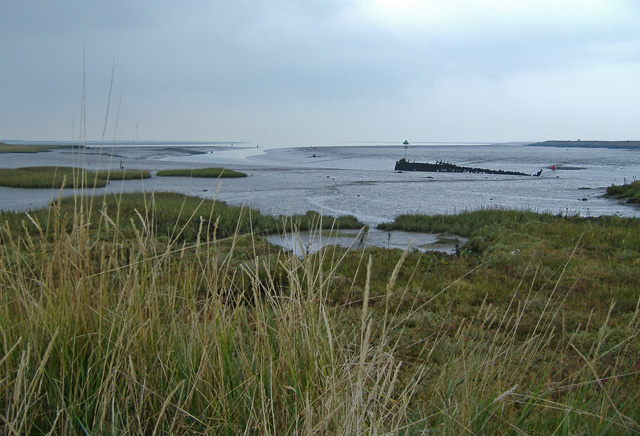
The mouth of Faversham Creek

              Part of the ancient royal demesne, Faversham is mentioned in the Domesday Book, and it also possesses an early Cinque Ports charter (considered to be the oldest in existence) and was linked to Dover.   King Stephen founded Faversham Abbey in 1147, and was subsequently buried there with his wife, Matilda, and son, Eustace.  The abbey was dissolved by Henry VIII, and nothing remains but ruins.  The beautiful parish church, St. Mary of Charity, still remains.
The ruins of Faversham Abbey by Stukeley 1722

As a port city, Faversham had a customs house and fishing was an important industry.  (The oyster beds were particularly important.)  The town has an association with medieval queens, and a fascinating history.  Queen Elizabeth I endowed a grammar school here.  However, I am going to focus on a specific point of interest: gunpowder.
                Advances in weaponry and military activity created a need for gunpowder, and Faversham was peculiarly suited to meet this need.   The ingredients for gunpowder, especially charcoal and sulpher, were readily available.  The site was perfect for factories, with a stream for watermills, and the continent was easily accessible from the port.  The earliest gunpowder works was established in the 16th century.  The original small factories were joined together as the Home Works. 
Home Works was ultimately nationalized by the British government in 1759.  Another factory, Oare Works, had been built very nearby in Davington parish in Kent in the 1680’s.  A third factory, Marsh Works, was built by the government in 1787.  These mills provided gunpowder to the East India Company and the military, furthering the war and expansion efforts.  It is interesting to think of the powder from these factories possibly being used by Nelson’s ships at the Battle of Trafalgar, and by Wellington’s troops at Waterloo!
Gunpowder from these factories was also used for blasting for canals and tunnels (especially important for railway expansion).  These plants continued in operation, and produced explosives during World War I.  In 1916, a horrible explosion killed over 100 employees.  In 1934, the gunpowder factories were closed due to fears that the area would be vulnerable to invasion or attack if war with Germany was declared. 

The site of Home Works was  redeveloped in the 1960’s except for Chart Gunpowder Mill, which is an historic site.  The Marsh Works became a site for  mineral extraction which is still in operation.  Oare Works is a county park, featuring conserved process houses, trails and a visitor center.
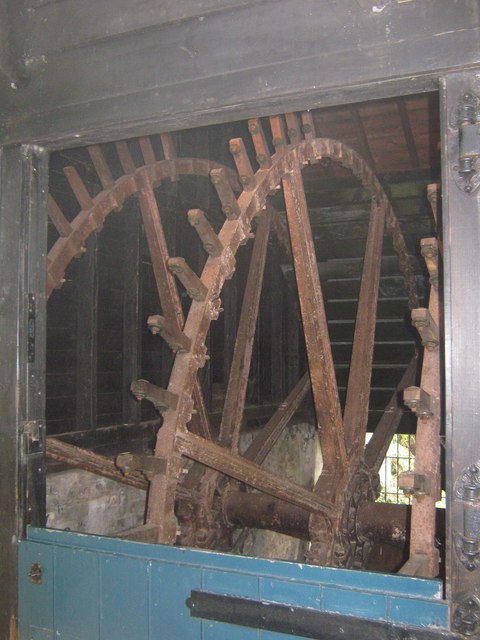
Chart Gunpowder Mill-Mill Wheels
 SOURCES
Percival, Arthur.  OLD FAVERSHAM.  1988: Meresborough Books, Rainham, Kent, UK.
Turcan, Robert.  FAVERSHAM THROUGH TIME.  2010: Amberley Publishing PLlc, Stroud, Gloucestershire, UK.
British History Online. The Parish and Town of Faversham.  (From THE HISTORY AND TOPOGRAPHICAL SURVEY OF THE COUNTY OF KENT , Vol. 6 by Edward Hasted, 1798.)  http://www.british-history.ac.uk/report.aspx?compid=62974
Kentfind.Co.UK website.  History of Faversham.  (No author or date shown.)  http://www.kentfind.co.uk/about/faversham/history.php

Photographs from Wikimedia Commons.

Lauren Gilbert lives in Florida, and is the author of HEYERWOOD: A Novel.