Tuesday, January 22, 2013

The Toymaker and A Lot Like a Lady

Kay Springsteen is offering an ecopy of each of her books, Thte Toymaker and A Lot Like a Lady to two winners. You can see more about the books HERE.

You will be prompted to return to this post to enter the drawing by commenting below. Please be sure to leave your contact information.

Monday, January 21, 2013

The Alternate Histories of the Norman Conquest, Part 2


By Rosanne E. Lortz

Yesterday we considered seven different primary sources relating to the Norman Conquest, trying to discover the true story of what happened with the English succession. Three Anglo-Saxon sources told us that Edward the Confessor, on his deathbed, gave the crown to Harold, but they made no mention of Harold taking an earlier trip to Normandy to pledge the crown to William. Four Norman sources placed great emphasis on this trip and on Harold’s oath, although some of them, like the Bayeux Tapestry, were not clear on what the actual terms of the oath were.

Today we will consider some sources written a little bit after the fact—fifty to a hundred years after the Norman Conquest. 

SOURCE 8

William of Jumièges’ work, one of the Norman sources that we looked at yesterday, was revised in the early twelfth century by Orderic Vitalis. In the passage discussing Harold’s trip to Normandy, Orderic Vitalis adds these interesting details: (1) After Harold swore fealty to William, William “promised he would give him his daughter Adeliza with half the kingdom of England,” and (2) after these transactions, William sent Harold “back to the king with many gifts but kept as hostage his handsome brother Wulfnoth.”

These additions by Orderic Vitalis indicate that the oath Harold swore was more of a treaty, an agreement between two men, each who had something to gain. In exchange for Harold’s support, William would make Harold his Number Two Man, and he would seal the deal with his daughter’s hand. William keeping Harold’s brother Wulfnoth as a hostage was a standard way for lords of this time to guarantee a treaty.

These additions also make us question: where did Orderic Vitalis get his information? The detail of the daughter is not mentioned in any of the earliest sources. How did Orderic come by this evidence? And how much weight should be given to these sources that were written a generation or two after the fact? Are they less reliable? More?

SOURCES 9 AND 10

Like Orderic Vitalis’ additions, the rest of the sources telling us about the Norman Conquest come late to the game. In the Historia Novorum in Anglia, penned sometime between 1095 and 1123, Eadmer wrote that Harold intended to see William on his journey, but for the purpose of retrieving hostages, not to swear an oath. Significantly, Eadmer says that Harold did swear an oath to William, but he did so under compulsion. 

Another writer, Wace, wrote his Roman de Rou in the first half of Henry II’s reign (1155-1170). He includes a fantastic story of Harold swearing an oath to Duke William, then being surprised to discover that William had hidden relics below his hands, which made the oath sacred and inviolable. This story is often repeated in history books, although the earliest sources have no mention of such a dramatic surprise. 

SOURCE 11

The last source for this discussion is, in my opinion, the most interesting of them all. William of Malmesbury wrote the Gesta Regum Anglorum (Deeds of the English Kings) around 1120. He had a Norman father and an English mother and spent his whole life in England. To the degree that it is possible for a historian to be without national bias, William of Malmesbury seems to be.

His explanation of why Harold took that fateful voyage to Normandy is a unique one.
Some say that Harold himself was sent to Normandy for this purpose by the king; others, more familiar with his secret intentions, maintain that he was driven there against his will by the violence of the wind, and to protect himself invented a story which, since it looks very close to the truth, I will now tell. Harold had gone to an estate of his at Bosham, and there, by way of pastime, he boarded a fishing-boat and for a time, pressing his entertainment rather far, proceeded out to sea; but a storm blew up suddenly from the wrong quarter, and he and his companions were driven to the country of Ponthieu. The men of that country, as is their national habit, flocked together suddenly from all directions, and the party, being few and unarmed, were easily overwhelmed by a larger force of armed men; their hands were bound and feet shackled. Harold, pondering with all his ingenuity how to mend the situation, suborned a man with large promises and sent him to William. He had been sent to Normandy by the king, he said, as the best man to confirm by his presence the message haltingly conveyed to lesser envoys; he was being held in chains by Guy count of Ponthieu, to prevent him carrying out his mission. So Harold was freed on William’s orders, and taken personally to Normandy by Guy.
According to William of Malmesbury, Edward the Confessor did not send Harold to promise the crown to William. But when Harold ended up in a tight pinch, captured by Guy of Ponthieu, he invented that story to save himself from duress. If this version of events is true, it would make sense why the English sources record no such embassy and why the Norman sources are adamant that Edward sent Harold. 

William of Malmesbury’s version of Edward’s deathbed bequeathal conflicts slightly with the early English sources:
When king Edward died, England, fluctuating with doubtful favour, was uncertain to which ruler she should commit herself; to Harold, William, or Edgar [the young grandson of Edward’s half-brother]; for the king had recommended him also to the nobility, as nearest to the sovereignty in point of birth; concealing his better judgment from the tenderness of his disposition.
Here it seems as if the dying Edward offered no clear choice of successor, and perhaps even leaned toward preferring Edgar who was closest to him in blood.

William of Malmesbury goes on to relate what happened after Edward’s death:
…Harold, once crowned, did not spare a thought for the agreement between himself and William, declaring himself released from his oath because William’s daughter, to whom he had been betrothed, had died before she was old enough to marry…. [Harold] added with regard to the kingdom that it had been presumptuous to promise on oath a succession that was not his, without the general assembly and decision of his council and his folk; and so a foolish oath deserved to be broken. If an oath or vow disposing of her hand taken voluntarily by a maiden in her father’s house without her parents’ knowledge is held to be null and void, how much less weight should be given to the oath by which he had disposed the kingdom, while under the king’s authority, without the knowledge of all England and compelled by circumstances! It was moreover unfair to demand that he should resign the authority conferred upon him with such popular support; this would be unwelcome to his countrymen and perilous for his knights.
Once again, we see the promised marriage alliance that showed up in Orderic Vitalis’ interpolations. Here, however, Harold claims that William’s daughter has died before the marriage could take place, thus terminating the treaty and freeing him from any obligation to William. He also argues that the oath was under compulsion, and that he had promised something that did not actually belong to him. If Edward did not actually send Harold, then how could an earl pledge away the crown of England? And if the Witan was responsible for electing the next king, then how could Harold force them to give the crown to William?

CONCLUSION

So, what really happened? There are a couple things that we can say with a fair amount of certainty. Harold probably did go on a voyage to Normandy and probably did swear some kind of oath to William. Conspiracy theories aside, Edward probably did bequeath the crown to Harold upon his deathbed. Other matters are very much open for debate. Did Edward send Harold to Normandy? What were the terms of the oath? Was it under compulsion? Was a marriage alliance mentioned? Did William’s daughter die, thus terminating the agreement?

All of these questions are questions still. But of two things I am more than certain—with an issue this complex, a historical novelist may take whatever version of the story she chooses and craft a brilliant novel; and conversely, with so many tangled strands of evidence, no modern historian should give just one version of events and then leave his readers believing that his story is the Gospel truth.

__________________________


Rosanne E. Lortz is the author of I Serve: A Novel of the Black Prince, a historical adventure/romance set during the Hundred Years' War, and Road from the West: Book I of the Chronicles of Tancred, the beginning of a trilogy which takes place during the First Crusade.

You can learn more about Rosanne's books at her Official Author Website where she blogs about writing, mothering, and things historical.
______________________________________

AUTHOR'S NOTE: The majority of these sources and many of these questions were introduced to me in a class I took from Professor Christopher Schlect at New St. Andrews College back in my college days. 

Sunday, January 20, 2013

The Alternate Histories of the Norman Conquest, Part 1

By Rosanne E. Lortz


One disservice that many historians do to readers is to weigh two sides of a disputed issue, form a judgment on what they think happened, and then present their judgment as if it is incontrovertible fact. The events leading up to the Norman Conquest are one such issue. School children everywhere learn that prior to Edward the Confessor’s death, Harold Godwinson, the most powerful earl in England, made a trip to Normandy and swore to support Duke William’s claim to the crown. After Edward’s death, Harold reneged on his oath, precipitating the Norman Conquest and his own death at the Battle of Hastings.

It is interesting to note, however, that most of the primary sources of the period have fairly different versions of this tale. Things are not as cut and dried as the historians would have us imagine. Did Harold actually make a journey to Normandy? And if so, did King Edward send him? Was his purpose in going to swear an oath of support to William? Or was the oath exacted under compulsion? Did Edward the Confessor, upon his deathbed, name Harold as his successor? If so, was this a change from having previously named William? 

A brief look at the primary sources of this period will show us that there are no easy answers to these questions. To tell only one version of the story is glib, at best, or deceptive, at worst. 

SOURCE 1

The first sources that we will examine are from the English side of the Channel. The Anglo-Saxon Chronicle, (a source written at a monastery and regularly updated by the record-keepers) makes no mention of Harold’s visit to Normandy. At King Edward’s death, it includes an epitaph that commends Harold as Edward’s choice for successor:
Yet did the wise king entrust his kingdom
To a man of high rank, to Harold himself,
The noble earl, who ever
Faithfully obeyed his noble lord
In words and deeds, neglecting nothing
Whereof the national king stood in need.
An argument from silence is not a strong one. It is possible that Harold’s visit to Normandy was a secret one and not common knowledge to the people of England. This source does indicate, however, that King Edward gave the crown to Harold upon his deathbed.

SOURCE 2

Another chronicle, the eleventh-century Chronicon ex Chronicis from Worcester Abbey also makes no mention of Harold’s journey to Normandy. As in the Anglo-Saxon Chronicle, we see the claim that Edward chose Harold to succeed.
When [Edward] was entombed, the underking (subregulus), Harold, son of Earl Godwine, whom the king had chosen before his demise as successor to the kingdom, was elected by the primates of all England to the dignity of kingship, and was consecrated king with due ceremony by Ealdred, archbishop of York, on the same day.
This source also gives us another important detail, that Harold “was elected by the primates of all England to the dignity of kingship.” During the later Anglo-Saxon period, the king’s heir was usually elected by a group of nobles called the Witan, adding a bit of oligarchic democracy into the monarchical succession. 

SOURCE 3

A third English source worth looking at is the Vita Aedwardi Regis (The Life of King Edward), a hagiographic work that King Edward’s wife commissioned immediately following his death. Edward’s wife Edith was the sister of Harold Godwinson—meaning she was probably very much in favor of her brother being the chosen heir to the kingdom. 

The Vita Aedwardi says that there were three people present at the deathbed of the king: Edith, Harold, and the Archbishop of Canterbury. According to this source, the dying Edward looked at Harold and said: “I entrust this woman and all the kingdom to your protection.”

Some historians have wondered about the veracity of this account. If Edward really had chosen William earlier (as we will find the Norman accounts attest), why did he change his mind at the last minute? Wouldn’t it have been very easy for Edith and Harold to fabricate a story about Edward’s last words? The only person they would have to suborn would be Archbishop Stigand, who from other sources, seems to have been quite friendly with the house of Godwin. 

But although this theory is an interesting one, it is both impossible to prove and a conspiracy theory that none of Edward’s contemporaries ever considered. The two preceding sources confirm that the entire country of England believed Edward to have bestowed the crown on Harold. 

SOURCE 4

Although Harold’s trip to Normandy is ignored in these early English sources, the Norman chroniclers are extremely eager to highlight it. William of Jumièges, a Norman monk in a monastry near Rouen, lived through the Norman Conquest and wrote an account of it in the Gesta Normannorum Ducum (Deeds of the Norman Dukes). He writes that King Edward sent Harold to Normandy in order to “swear fealty to the duke concerning his crown and, according to the Christian custom, pledge it with oaths.” After crossing the channel and landing in Ponthieu, Harold fell into the hands of Guy, count of Abbeville, who threw Harold into prison. William sent envoys to Guy to secure Harold’s freedom. Then, “after Harold had stayed with [William] for some time and had sworn fealty to him about the kingdom with many oaths he sent him back to the king with many gifts.” 

Notice the details in the above work. Harold was sent by King Edward to pledge his support to William for the crown. If this is true, and if Edward did indeed bequeath the crown to Harold on his deathbed, then something must have happened in between to change the old king’s mind. The account goes on to say that William rescued Harold from a local baron named Guy. There is no suggestion that William held Harold captive himself, only that he treated him as a guest, loading him down with presents after he swore the requisite fealty.

SOURCE 5

William of Poitiers, another Norman writing during the Conquest years, confirms the story as told by William of Jumièges. King Edward sent Harold to Normandy for the express purpose of strengthening Duke William’s right to inherit the English throne. Harold was captured by Guy in Ponthieu, rescued by William, and then….
Harold swore fealty to him according to the holy rite of Christians. And, as the most truthful and distinguished men who were there as witnesses have told, at the crucial point in the oath he clearly and of his own free will pronounced these words that as long as he lived he would be the vicar of Duke William in the court of his lord King Edward; that he would strive to the utmost with his counsel and his wealth to ensure that the English monarchy should be pledged to him after Edward’s death…. For there was no hope that Edward, already sick, could live much longer.

Notice, the emphasis that Harold swore “clearly” and “of his own free will,” indicating that there may have been claims circulating that the oath was under compulsion. While the Anglo-Saxon sources are clear that Edward promised the crown to Harold on his deathbed, the Norman sources are equally clear that Edward sent Harold to promise the crown to William just a short while earlier.

SOURCE 6

The Carmen de Hastingae Proelio (Song of the Battle of Hastings), an epic poem that was probably composed for William’s coronation, confirms the official Norman view of how events transpired. In the poem, after William lands in England, he responds to a threatening delegation sent by Harold, making clear reference to the earlier oath.
Although he threatens, unjustly, to make war, my men, trusting in the Lord, will not retreat. Is he not aware of the oath made to me and covertly forsworn? Does he not in his heart remember that he was my vassal? If his perjured hand does not yet recoil condemned, it has already been found guilty by the judgement of God. If he seeks peace and wants to confess his crimes, I will be indulgent and promptly overlook his faults. I will grant him the lands which formerly his father held if he is willing to be, as before, my vassal.

SOURCE 7

The Bayeux Tapestry, a long embroidery documenting the history of the Norman Conquest, is enigmatic in the way that pictures often are. The pictures tell us that Harold went to Normandy, was captured by Guy, and swore an oath to William, but the captions do not tell us why Harold went and what were the terms of the oath he swore. The pictures do indicate that the oath was of a serious nature, for Harold’s hands are placed on two reliquaries.


"Here Harold made an oath to Duke William"
When Harold returns to England, the picture where Edward the Confessor receives him almost looks as if the king is rebuking him—but then pictures like these are hard to use as conclusive evidence. Perhaps Edward did not want Harold to make that oath (whatever the oath was), or perhaps there is some other explanation for Harold’s obsequious posture and King Edward’s admonishing finger.


"Harold returns to Edward the King"

CONCLUSION

The seven sources we have examined thus far can all be somewhat harmonized. Perhaps the English sources simply omitted Harold’s voyage to Normandy. Perhaps the Norman version of Edward sending Harold to Normandy is correct. They do leave us with one serious gap in knowledge, however. What caused Edward the Confessor to change his mind? Why would he acknowledge William as his heir and then change the plan of succession on his deathbed to Harold?

Tomorrow we will look at more sources, histories written several decades after the event, that throw even more elements of mystery into the mix, showing that there is more than one way to tell the story of how the Norman Conquest came about….

TO BE CONTINUED

__________________________


Rosanne E. Lortz is the author of I Serve: A Novel of the Black Prince, a historical adventure/romance set during the Hundred Years' War, and Road from the West: Book I of the Chronicles of Tancred, the beginning of a trilogy which takes place during the First Crusade.

You can learn more about Rosanne's books at her Official Author Website where she also blogs about writing, mothering, and things historical.

Friday, January 18, 2013

Of Stubborn Scots, an Obdurate King and a Little Book of Prayer

by Anna Belfrage

In a simplified version of history, the Scottish Covenanter movement sprang from a smouldering fire to a huge bonfire through the actions of one Jenny Geddes. A devout member of the Scottish Kirk, Jenny was in St Giles the day the dean chose to read from the new Book of Common Prayer, and so incensed was she by these proposed changes to her familiar liturgy that she stood up and spontaneously hurled her stool at the poor dean.

Whether spontaneous or not – and a lot of things point to this being a well-planned protest – it is a fact that when the new Book of Common Prayer was introduced, the majority of the Scots were already convinced this was a fiendish attempt at weaning them away from the true religion as advocated by the Scottish Kirk, luring them into the dangerous mires of popery.


Had Charles I understood just what havoc his insistence on implementing this new Prayer Book was to have, he would probably have desisted. However, being anything but prophetic, Charles I took a mulish approach to the loud protests from Scotland, and in so doing fanned the flames of religious fervour into a devastating inferno that was to consume his three kingdoms and ultimately cost him his life.

Charles I was neither unintelligent nor uneducated – rather the reverse, in fact – but he does seem to have had a tendency to compensate his short stature with an authoritarian approach to most things in life. As anointed king, he firmly believed it was his responsibility and duty to care for his subjects, leading them up the right path in all matters, including faith. Minor obstacles such as the said subjects reluctance to follow him down the chosen path, mainly because they did not agree with their king’s opinion in matters of faith, were generally ignored by Charles, who to further undermine his religious credibility in his kingdoms committed the faux-pas of marrying a catholic princess – not a popular move in a time and age when the whole of Europe was a battlefield between the Protestants of the north and the Catholics of the south.

So what was the argument about? What were those principles of faith that had the majority of the English – and Scottish – citizens of the seventeenth century walking about with their knickers in a twist? (Not that all that many of them had any knickers to twist in the first place …) Well, to answer that we must leapfrog backwards a century to the heady age of the Reformation.

In England, Henry VIII proclaimed himself the Head of the Anglican Church, disbanded the clerical orders and severed his ties with Rome. But the rituals remained virtually unchanged, the Anglican Church building on the medieval (and therefore catholic) rites that were already well-established within the kingdom.

In Scotland, the Reformation was led by John Knox, a disciple of Calvin himself, but was ultimately a bid for Scottish independence from the French interests as represented by Marie de Guise, mother of Mary Queen of Scots. The hundred or so Scottish nobles that headed this coup probably found it convenient to set a religious label on their actions – it had a better ring to it than to admit they were only doing this to protect their own interests. However, in difference to England, the Reformed Scottish Kirk very quickly divested itself of “popish” ritual and practise, emphasising instead the importance of the Word (scripture) and faith.

By the seventeenth century, the Scottish Kirk was a robust and thriving organisation in which the local parishes played a strong role. It was also an organisation dominated by leaders who shuddered at the thought of having their cleansed and purified Kirk besmirched by the papist trappings that still lingered in the Anglican Church. So when Charles I decided to harmonize the religious practices in his three kingdoms by advocating a Book of Common Prayer he was throwing in a lit fuse in a munitions store, and eventually the whole thing exploded in his face.


A Book of Common Prayer valid in all three kingdoms was not a new idea. Already James I (VI) had tried to go down that way, but having far better political instincts than his unfortunate son, he backed off in the light of the Scottish protests. In difference to Charles, James understood his Scottish subjects, having spent his first 37 years as king of Scotland only. Charles on the other hand was born in Scotland, but he was raised and educated in England, and his first visit to Scotland was for his coronation in 1633. As stated above, Charles was also somewhat jealous of his royal prerogative, and where his father would have been open to discussions about the incendiary book, Charles refused to budge. He was the king and knew best what his subjects needed to fortify their spiritual life.

The Scottish Kirk wasn’t about to keel over without a fight. Upon hearing that Charles was planning a new Book of Common Prayer, the Kirk began its countermoves which involved all the parishes but also a massive PR effort with a number of printed documents (pamphlets, tracts) defending its principal tenets of faith. Well before the Book of Common Prayer had been published “everyone” in Scotland knew that it was full of potentially popish garbage, and matrons in Edinburgh were heard protesting about this terrible little book well in advance of Jenny’s little stunt with her stool.

On Sunday 23 July 1637, a number of loyalist ministers and bishops set out to their respective churches to use the new Book of Common Prayer for the first time. By the time the sun set, all of them had realised that implementing the new liturgy was a bad idea. Too bad they never got Charles to understand this. Over the coming months the protests did not abate – rather the reverse – and when Charles finally grasped just how serious the situation was, it had already snowballed into an unstoppable avalanche.

The protest culminated in the document known as the National Covenant. Drafted by Alexander Henderson , the Covenant was an elegant piece of work that professed the Kirk’s loyalty to God and the king – in that order – thereby attempting to avoid being labelled as treasonous. The Covenant also listed the acts of parliament against superstitious and papist rites, an oath to uphold the true reformed religion, plus an oblique reference to the king’s obligation to uphold the kirk. More importantly, there were a lot of things NOT SAID in the covenant, but implicit in the entire document was a clear threat: “Back off our Kirk, Mr King, or beware of the consequences.”

Charles I recognised the Covenant for what it was; a thrown gauntlet telling him quite clearly that should he not hold to his coronation oaths, well then … Unfortunately for him – and the thousands upon thousands of civilians that were to lose their lives, homes, families in the coming conflict – Charles severely underestimated his adversary, calmly convinced that his forces would prevail against whatever army the covenanters might put together. They didn’t, and even worse, the Covenanters inspired people of similar beliefs in England to also take up arms. The rest, as they say, is history, ending for Charles I on a cold January day in 1649 when his head was severed from his body.

The Civil War – and in particular the Covenanter movement – was a major source of inspiration for Matthew Graham, the deeply religious hero of my series of books set in the seventeenth century. The first two books, A Rip in the Veil and Like Chaff in the Wind, are available on amazon.com or amazon.co.uk plus a number of other e-stores.  


The third book, The Prodigal Son,  will be out later this year and will concentrate on the conflict between His Restored Majesty Charles II and the recalcitrant, obstinate Scottish Covenanters – among them Matthew – who blankly refused to give up their faith, no matter the cost.


Should you be interested in more information about me and my books, visit my website
http://www.annabelfrage.com


For those of you interested in reading more about God and the Civil War, I warmly recommend Michael Braddick’s “God’s Fury, England’s Fire”.
 

Thursday, January 17, 2013

On Becoming an Officer and a Gentleman

by Maria Grace

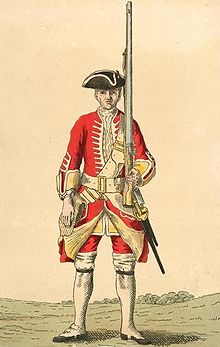
In the Regency era, social status was closely related to career and wealth. An Army or Navy officer was considered a gentleman. Thus a man could gain an element of “respectability” by purchasing a commission that they might not hold by virtue of their birth or fortune. Moreover, an officer’s status was considered higher than that of other accepted gentlemanly professions: the church, the law and medicine.

Why were commissions purchased?


Though our modern sensibilities tend to be uncomfortable with the concept of buying a commission, in the Regency era, the belief was that paying for the rank meant that only men of fortune, character, and who had a real interest in the fate of the nation would be drawn to the military, thus reducing the number of unworthies serving in the officer’s ranks. Furthermore, since officers ‘owned’ their commission, they would be more responsible with their ‘property’ than someone with nothing to lose. Private ownership of rank also implied officers would be less likely to be used by the King against the people since they did not owe their rank to the crown.

The purchase of commissions also served a practical purpose. The price paid for a commission served as a sort of nest egg for the officer, returned to him when he ‘sold out’ and retired. Thus there was no need to provide pensions for retiring officers, a definite advantage to the crown. 

These nest eggs were particularly necessary because army pay was low, enough to live on but not much more, particularly if one sought to maintain the standard of living of a wealthy family. In general, officers' honorarium (as gentlemen they did not take salaries) were just less than the amount of interest that could be earned by the cost of the commission. It was widely accepted that gentlemen should not profit from their military service. (Prize money, when it could be had, was a different thing.)  Many sons of wealthy parents who joined the army also had an allowance from their families that helped them to live in the style to which they had been accustomed. 

Purchasing a commission

Reforms set in place by the Duke of York in 1796 mandated that officer candidates had to be between the ages of 16 and 21 years of age, able to read and write, and vouched for by a superior officer. Once these were fulfilled, the required sum of money would be deposited with an authorized Regimental Agent who would submit the applicant’s documentation for approval. Depending on the regiment, officers began their careers at a ‘Subaltern’ rank of Ensign, Second Lieutenant or Coronet. Little to no training was provided for the newly fledged officer, he picked up what he would need on the job.

How much did a commission cost?

Commissions were expensive. One had to be wealthy or have wealthy friends from which to borrow in order to afford a commission. Prices varied depending on the regiment and rank. (Keep in mind a very rough reference point of £50 a year as parallel to our minimum wage.) Subaltern rank ranged in price from £400 with the Infantry to £1050 with the Horse Guards. Lieutenant Colonel ranged from £3500 to £4950.

The same logic that led to the purchase of commissions discouraged promotion by merit as it could lead to an excess of patronage, something objected to on political and professional grounds. When an officer served long enough to be eligible and wished to purchase a promotion to the next level of rank, he would pay the difference between his current commission and the next rank. After 1795, a Subaltern (Lieutenant and below) had to serve at least three years before becoming a Captain; at least seven years in service (two as Captain) to become a Major; and nine years in service to be a Lieutenant-Colonel. Advancement above the rank of Colonel was by seniority only and only possible if there were vacancies in the desired ranks. Junior officers could spend several years without advancing.

Gaining a commission without purchase

If an individual could not afford a commission, there were non-purchased ways of obtaining a commission. A man could become a “Gentlemen Volunteer.” To do so, he would apply to the Commanding Officer of a regiment to serve at their own expense in the hope of filling a non-purchase vacancy when (and if) it occurred.

It was also possible for a man to be promoted from the ranks due to valor or meritorious service. The death, disability, or retirement, of another officer might create a vacancy that needed to be filled immediately. Other openings came with the establishment of new Regiments, or the expansion of existing ones. These alternatives were much more common in times of war.

References:


Boyle, Laura.(2001) Jane Austen Centre On Line Magazine.  Advancement in the British Army  

Boyle, Laura.(2001) Jane Austen Centre On Line Magazine. Entry into the OfficerCorps

Boyle, Laura.(2001) Jane Austen Centre On Line Magazine.  Prices of Officer’s Commissions

Day, Malcom. (2006) Voices from the World of Jane. Austen David & Charles .

Holmes, Richard.  (2001).   Redcoat, the British Soldier in the Age of Horse and Musket. W. W. Norton & Company 

Southam, Brian  (2005). Jane Austen in Context.  Janet M. Todd ed. Cambridge University Press


Maria Grace is the author of Darcy's Decision and The Future Mrs. Darcy. Click here to find her books on Amazon. For more on her writing and other Random Bits of Fascination, visit her website. You can also like her on Facebook or email

Wednesday, January 16, 2013

A Monster's Mind: Jack the Ripper

by Regina Jeffers

Anyone who knows me, knows that I am a BIG Matthew Macfadyen fan. So, needless to say, I am anticipating the premiere of "Ripper Street" on BBC America on January 19 at 9 P.M. And yes, I do realize "'Ripper Street' is a BBC mini-series set in Whitechapel in London's East End in 1889, six months after the infamous Jack the Ripper murders."

That being said, I thought we could take a look at the definitive serial killer, Jack the Ripper. Many consider "Jack" the most terrifying of killers. The pure ferocity of Jack's crimes continue to fascinate us over a century later.

The killer we know as Jack the Ripper made his first appearance on 31 August 1888 with the murder of a prostitute named Mary 'Polly' Nichols. Mary's was the third killing of a prostitute in London's East End, and despite its brutality, it did not initially attract attention. However, a week later, another prostitute, Annie Chapman, known as 'Dark Annie,' met a similar death. Mary's throat and torso had been slit open, and there were stab wounds to the genitals. Polly also sported a slit throat, but with Polly, the Ripper  had disemboweled the woman, even going so far as to drape her entrails over Polly's shoulder and to cut her vagina and ovaries. The precision of the cuts immediately led investigators to believe that the killer had medical training and was familiar with dissecting bodies in a post-mortem room.

On September 30, the killer upped the ante when he killed twice in one night. Elizabeth Stride, a seamstress and part-time prostitute, was the first victim. 'Long Liz' was done away with by a knife wound to the throat. Unlike Mary and Polly, though, Elizabeth displayed no other markings. Most experts believe the Ripper was interrupted in his mutilation of Elizabeth's body. Dissatisfied, Jack the Ripper struck a second time in the same evening. He killed prostitute Catherine Eddowes with characteristic brutality. For example, the killer had removed Catherine's kidney. In addition, someone had written on the wall of the building behind which Catherine was found this cryptic message: 'The Juwes are not the men that will be blamed for nothing.' Uncertain what the message meant, an investigating officer had the message removed, claiming he wished to avoid anti-Jewish hysteria.

Shortly before the double murder, the Central News Agency had received a letter reportedly from the killer. CNA ignored the first letter, but a second one arrived within hours of the first. In it, the note's author signed the letter 'Jack the Ripper.' The moniker brought the expected sensationalism. Two weeks later, a third letter arrived. This one was directed to the attention of George Lusk, head of the Whitechapel Vigilance Committee. This third letter was, obviously, from a different author. The note showed the writer to be less literate than the first two and more disturbing. The return address simply said "From Hell," and inside was a slice of human tissue, one the writer claimed to be part of Eddowes' removed organ.

Another three weeks passed before the Ripper struck again. Mary Kelly, like the others, was a prostitute, but a different mode of operation occurred. Mary Kelly was killed indoors, in a room in Miller's Court. Her body was the most brutalized. The killer had partially skinned Kelly, disemboweled her, and many of her organs, including her uterus and a fetus taken from it, were displayed like trophies about the room.

Victorian London held its breath and waited another murder, but none came. A knife murder of a prostitute occurred in 1890 and again in 1892, but neither displayed the characteristic savagery of the Ripper's murders. As quickly as he appeared, Jack the Ripper was gone.

Many theories as to the Ripper's identity have risen from time to time. Some of the suspects have included Queen Victoria's grandson, Prince Eddy, who was thought to have taken his revenge on prostitutes because he had "earned" a case of syphilis from a prostitute. Then there is the idea that Sir William Gull, the Queen's surgeon, had conspired to cover up an illegitimate child that Prince Eddy had conceived with a Whitechapel girl. Crime novelist Patricia Cornwell reportedly spent $8 million of her own money to prove the Victorian painter Walter Sickert was the murderer. We shall likely never know the true identity of the world's most infamous murderer. I particularly found the 2006 BBC News article on "Jack the Ripper's Face Revealed," which uses modern profiling techniques to discover the face of the killer.

'THE CROWN' by Nancy Bilyeau


Nancy Bilyeau is giving away three copies of her historical thriller THE CROWN, set in 1530s England, to residents of North America and the United Kingdom. This giveaway ends at midnight on Sunday, January 20th.

To see some information about the book, please click HERE. Comment below to enter the drawing, and be sure to leave contact information.

Tuesday, January 15, 2013

Nuns, monks, priests and believers: writing about spiritual matters in English historical fiction


I once told a friend that it was impossible for me to write a novel without a nun or a priest in it. In my household this has become a bit of a joke; my husband likes to say, “Oh you wouldn’t like this book or movie! No one’s searching for God!” Well, sometimes it is true.

I am myself a church mouse; I can hardly pass an old church or chapel in England without slipping inside. Oh the history! Sometimes a thousand years or more in one church. Women were praying for families seven hundred years ago in the very spot where you stand.

Roughly I can put the nuns, priests and devout characters in novels in three categories: sleuth, spiritual seekers, and secondary characters who slip in and out of pages baptizing and burying (in the many periods of historical fiction, religion was a major part of one’s life.)  And of course the first two categories intermingle.

There are so many such novels or series that I can mention only a few. The sleuth nuns in both THE CROWN by Nancy Bilyeau and the Margaret Frazer DAME FREVISSE series; the monk in Ellis Peter’s BROTHER CADFAEL mysteries.  All are wonderful portraits of sleuths who are devout as a matter of course as they try to bring a little justice and grace into the world and find the inevitable murderer. On the other hand, Margaret of Ashbury in Judith Merkle Riley’s A VISION OF LIGHT is not a sleuth. She does not need to pursue spiritual light; it overcomes her, and she has no idea why. On page 121 in a poor parish church, Margaret sees “something very strange, like a veil of light…I was seized with inexpressible ecstasy.” I was reading this fascinating book and came across these pages. I had found one of the truest descriptions of spiritual ecstasy not in my shelf of books of theology and sermons, but in a historical novel. I was spellbound and cheered.

I would like to depart the shores of England for a moment and mention that, though this novel is set in Germany (her previous was set in England), I felt a deep spiritual sense in Mary Sharratt’s writing even before she decided to tackle the medieval nun Hildegard of Bingen. I read ILLUMINATIONS with great fascination. To write a historical novel with no central love story, indeed where the love story is for a true realization of God, is a very brave thing and she succeeds beautifully.

It is difficult to write about spiritual matters. They are the most intimate of our feelings and more difficult to express in words than physics, which is most deeply expressed in mathematics. And words are all we have as novelists. Yet a good historical novel can transplant a reader to spiritual places and feelings which a theological book can seldom do. Novels can be a gate to “thing that are unseen.”

My own most spiritual novel NICHOLAS COOKE is about an Elizabethan boy who grows up as an actor, soldier and physician and longs to be a priest and serve God but is always in too much trouble; it was published in the 90s by W.W. Norton and is now available on Kindle. I was involved in my own intense spiritual search when I wrote it but even with that, I can’t say where it came from. The spiritual parts of the writing descended on me as the light does in Riley’s novel. “I have never once seen God, and yet I feel Him more intensely than I feel you. It burns inside me so fiercely that it should kill me.” Library Journal called it “An exquisitely drawn portrait of a robust age and a complex man at war with himself.”  I was astonished when the novel was featured in People Magazine. Of all my books!

I’ll end with an absolute favorite, now out of print but so much loved by me! A novel of John Donne, TAKE HEED OF LOVING ME, by Elizabeth Gray Vining. Pure poetry! (Donne is the author of the words “No man is an island” and James I made him Dean of St. Paul’s in 1621. You can find his statue there in his shroud, one of the few things which survived the 1666 fiery destruction of the earlier St. Paul’s.)

Please do leave comments about your favorite English historical novel with a nun, priest, monk or spiritual seeker as protagonist! Also rabbis! I will buy more books!

___________

Historical novelist Stephanie Cowell writes about English history and historic people in the arts. She is the author of Nicholas Cooke, The Physician of London, The Players: a novel of the young Shakespeare, Marrying Mozart (which debuted as an opera/play in NYC this past December) and Claude & Camille: a novel of Monet. She is the recipient of the American Book Award. Her work has been translated into nine languages. Her website is http://www.stephaniecowell.com


Monday, January 14, 2013

A Queen in Shadow – a peek back through time at Anne Boleyn and her daughter, Elizabeth.

Judith Arnopp

The Hever Portrait
The subject to Anne Boleyn’s true physical appearance has been discussed time and time again in books, blogs and journals, yet it is a subject that remains endlessly fascinating, the varied opinions and theories almost as intriguing as the woman herself. 

Almost instantly recognisable, Anne Boleyn’s portrait graces thousands of book covers, mugs, tea towels, key rings…her face is everywhere. But is it really her face that we are seeing? Do the portraits show us what was Anne really like?

I don’t intend to hold a full debate on the portraits here but none we have are contemporary and the closest  are copies made of likenesses painted in her life time. 

National Portrait Gallery portrait

After her execution it wasn’t wise to have representations of a fallen queen gracing one’s walls so during the remainder of Henry’s reign and the years of Edward and Mary’s rule, her face and many artefacts belonging to her, slipped away. It wasn’t until her daughter, Elizabeth, ascended the throne that Anne became acceptable again and the demand for her image increased. As a consequence most extant images were worked long after her death – some as late as the 17th century. 

The likenesses attributed to be her range from softly pretty to plum ugly as do the textual descriptions. Opinions of Anne Boleyn depended enormously upon the political stance and agenda of the author and as a consequence the documentary evidence is as varied and unreliable as the pictorial.

Due to her efforts for religious reform and the displacement of Catherine of Aragon, Anne was never a favourite of Spain or the Catholic faction and this is clear from some of the descriptions of her. Roman Catholic Nicholas Sander saw her as: ‘…rather tall of stature, with black hair and an oval face of sallow complexion, as if troubled with jaundice. She had a projecting tooth under the upper lip, and on her right hand, six fingers. There was a large wen under her chin, and therefore to hide its ugliness, she wore a high dress covering her throat. In this she was followed by the ladies of the court, who also wore high dresses, having before been in the habit of leaving their necks and the upper portion of their persons uncovered. She was handsome to look at, with a pretty mouth.’

Very nice of him to go to the trouble of saying so. And the Venetian ambassador was scarcely more flattering in his account.

‘Madame Anne is not one of the handsomest women in the world. She is of middling stature, swarthy complexion, long neck, wide mouth, bosom not much raised, and in fact has nothing but the King's great appetite, and her eyes, which are black and beautiful - and take great effect on those who served the Queen when she was on the throne. She lives like a queen, and the King accompanies her to Mass - and everywhere.’

The Nidd Hall Portrait
It is quite clear that she was not a ravishing beauty although of course, what is considered beautiful today is vastly different to that favoured in the 16th century. If you look at the line-up of Henry’s wives, the ‘Flanders Mare’ of Henry’s stable, Anne of Cleves, was by today’s standards, rather pretty.   

In a society that favoured delicately complexioned blondes, Anne’s dark hair and olive skin were far from fashionable and neither did her slim, small breasted (‘not much raised’) figure fit the current vogue for voluptuous women.

But most descriptions, even the most unfavourable, agree that Anne possessed expressive eyes and a vivacious wit and it must have been those attributes that captivated the king. Which, for once I think, speaks  rather well of Henry in that he was able to see past contemporary ideals to what lay beneath. Shame it didn’t last.

The only truly contemporary image we have of Anne is a badly damaged portrait medal that nevertheless bears some resemblance to the Anne we see depicted in later portraits.  From this we can deduce that we can come quite close to discovering a likeness to the real woman. 

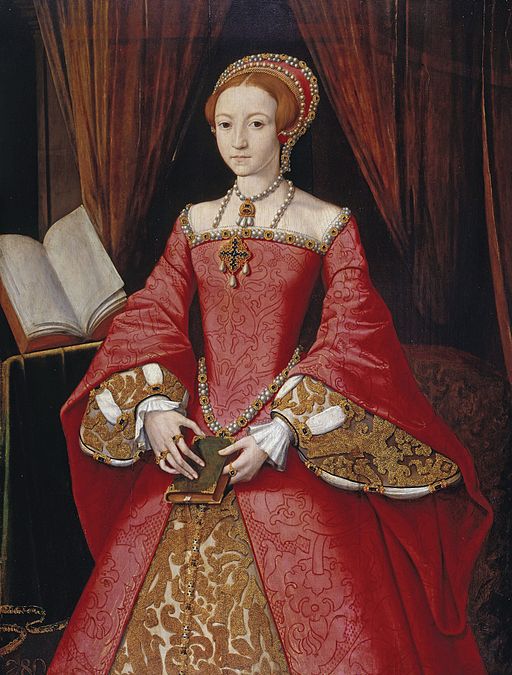
Elizabeth I while still Princess Elizabeth
The medal was struck in 1534 with Anne’s motto, ‘The Most Happi’ and the initials ‘A.R’ – Anna Regina, so we can be quite sure that it is her. These medals were usually struck to commemorate a great event, often a coronation but since the date does not tie in with this, Eric Ives believes that it was more likely to have been intended to mark birth of Anne’s second child in the autumn of 1534 that she miscarried. This theory also explains why few copies survive.

Other portraits include the familiar Hever portrait and the one at the National Portrait Gallery as well as some sketches by Holbein which receive varying degrees of certainty from the experts. The Nidd Hall portrait shows an aging Anne which is closer to some of the less favourable documented descriptions discussed previously. Another rather touching artefact is the Chequers Ring, a jewel removed from the finger of Elizabeth I on her death bed and found to contain the image of herself and her mother, Anne.

The Drewe Portrait of Elizabeth I

Of course we can never know the extent of Elizabeth’s attachment to her mother but some documented incidents point to a curiosity about her. Although Elizabeth was just two years old when Anne was executed and is not likely to have had strong memories of her, there were those around her who had known Anne and would have been able to keep her memory alive. If Elizabeth was satisfied that the image bore a likeness to her mother then I think we can be fairly confident too.

The recent (and not so recent) discussions of Anne’s appearance have led to the assumption that she and her daughter bore a close resemblance. Apart from Elizabeth’s colouring which was auburn and Tudor in origin, there are likenesses to Anne, especially in the earlier portraits before Royal iconography began to overshadow Elizabeth’s personality. The dark eyes are particularly similar.

Margaret Beaufort -  Great grandmother to Elizabeth I
I spend a lot of time looking at paintings of historical figures and recently with the matter of Anne and Elizabeth at the forefront of my mind I came across a painting of Margaret Beaufort. Of course, I had seen it many times before but for the first time it struck me that Elizabeth did in fact come to closely resemble her great grandmother in her later years. I suppose it should come as no surprise that there is also a look of Henry VII,  Elizabeth’s grandfather.  Perhaps there is  more Tudor in Elizabeth than we thought, after all.


More information about Judith's novels and essays can be found on her website: www.juditharnopp.com.

Her novels include: Peaceweaver, The Forest Dwellers, The Song of Heledd and The Winchester Goose and are all available in paperback and on Kindle. Click here for her UK Amazon author page: 
and her for her US Amazon author page

Photos from Wikimedia commons.