by Danielle Marchant
On Sunday 7th September 1533, Elizabeth, daughter of Henry VIII and Anne Boleyn, was born at 3 o’clock in the afternoon at Greenwich Palace. This was supposed to be a happy occasion, but there was one detail that cast a shadow over this important event.
The baby was a girl.
Both her mother and father were disappointed that she was a girl. Up until now, all of the best astrologers and doctors had predicted a boy. Henry had spent time wondering whether to call his son Edward or Henry and was making plans for the celebratory tournament. Anne had even seen in advance the letter announcing the birth. In the letter, it gave thanks to God for sending her “good speed, in the deliverance and bringing forth of a prince”.
However, as soon as the baby girl was born, Henry decided to name her Elizabeth, after his mother Elizabeth of York, instead. The tournament was cancelled and the letter announcing the birth was slightly altered with an extra “s”, giving thanks to God for the birth of a “princes”.
Why was there so much disappointment over the baby being a girl? The reason for this was that at the time, there was a fear of having a female ruler. A history of what has been perceived as a series of “Bad Queens” had made it all the more important for the heir to the throne to be a boy, to keep the stability of the country. Henry had even divorced his first wife, Catherine of Aragon and had broken away from the Catholic Church because of Catherine’s failure in producing a healthy, male heir - despite the fact that they did have a healthy daughter, Mary.
Here is a part II of a list of Queens that helped to create the climate of fear of having another female ruler… (Read Part I HERE)
The Queens in the Wars of the Roses
Just over four decades before Princess Elizabeth’s birth in 1533, the country was torn apart by civil war between the House of York and the House of Lancaster, in the Wars of the Roses that lasted nearly thirty years. Around the time of Elizabeth’s birth, there may have still been many old enough to remember what they had seen, and this made it all the more important for the current generation to maintain peace. There were two main Queens in this civil war who became focus points for both Houses and helped to exasperate the situation even more. The series of events and the roles these two Queens played would definitely have helped to contribute to the climate of fear of not wanting another female ruler in the Tudor period:
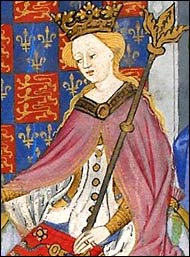 1. Margaret of Anjou
Like Queen Isabella a century before her, Margaret was another French princess, who married Henry VI in 1445. In Shakespeare’s Henry VI Part 3, she was famously named the “She-Wolf” of France, and that her “tiger’s heart wrapped in a woman’s hide”.
Margaret was niece by marriage to the French King, Charles VII. The marriage caused controversy because no dowry had been given to the English Crown for Margaret by the French. Alternatively, they agreed that Charles VII, who was at war with Henry V in The Hundred Years' War in France, would have the lands of Maine and Anjou returned to France. This caused friction in the King’s council.
A breakdown in law and order, corruption, the distribution of royal land to the king's court favourites, and the continuous loss of land in France meant Henry and Margaret’s reign was an unpopular one. Returning troops, who had often not been paid, contributed to the anarchy and triggered a rebellion led by Jack Cade. Henry lost Normandy in 1450 and later lost other French territories, leaving only Calais untouched.
It is believed that this loss of French territory contributed to Henry’s nervous breakdown, which modern Doctors would probably diagnose as Catatonic Schizophrenia. Margaret gave birth to their only son, Edward of Lancaster, in 1453. However, given Henry’s mental state, this fuelled rumours that the son was not his; he believed that he would have been incapable of fathering a child and that the baby was actually the result of an affair between Margaret and one of her favourites. Edmund Beaufort 1st Duke of Somerset, or James Butler Earl of Wiltshire were considered to be possible fathers. Nevertheless, Henry accepted the son as his own.
While Henry remained for some weeks in a catatonic stupor, Margaret had to rule in his place. The kingdom found difficulty in having to cope without a king, but Margaret was ruthless and called for a Great Council in May 1455. This council excluded Richard Duke of York, and this sparked the series of battles between the Houses of York and Lancaster. Margaret attempted to raise support for the Lancastrian cause and subsequently, Lancaster was victorious at the Battle of Wakefield and of St Albans.
However, they were defeated by York at the Battle of Towton, in 1461. Edward, son of Richard Duke of York (who had been beheaded at the Battle of Wakefield) overthrew King Henry VI and proclaimed himself Edward IV. Margaret then fled to Scotland with her son and remained there, plotting her return.
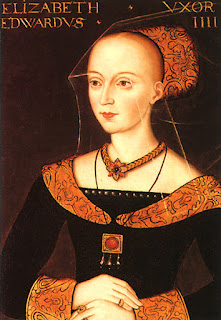 2. Elizabeth Woodville
Elizabeth was the eldest of twelve children and spent her early life in relative obscurity in Grafton Regis, Northamptonshire. Even though her mother was Jacquetta, Dowager Duchess of Bedford and her father was Sir Richard Woodville, she was considered to be a “commoner” by her contemporaries. Her first husband, Sir John Grey, was killed at the Battle of St Albans, leaving her a widow with two sons.
It is believed that around the summer of 1464, Elizabeth heard that Edward VI was hunting in Whittlewood Forest. She waited for him under a tree (which was later called the “Queen’s Oak”), holding her two sons tightly. The King then rode by and she allegedly threw herself at his feet, begging him for help with the Grey family inheritance. According to the story, Edward was so struck by her “mournful beauty” that he fell in love with her and assumed she would just agree to be his mistress. However, she refused to be his mistress, even when a dagger was put to her throat (according to some interpretations of the story, she produced the dagger herself and put it to her own throat).
Her refusal to give in to him, unless he married her, increased his passion for her even more. They married in secret on Mayday in 1464. Only her mother, a Priest, probably two others and “a young man who helped the Priest sing” were present. It is believed that Elizabeth and Edward continued to meet in secret with the help of Jacquetta (who even managed to hide the secret marriage from her husband) until September, when the Council met in Reading. Here, Edward was being coerced into a marriage with Bona of Savoy, sister-in-law to the French King. Edward then had to admit the truth about his relationship with Elizabeth.
The news was a bombshell. Richard Neville, Earl of Warwick – also known as “The Kingmaker” – who had helped Edward take the throne, responded angrily to the clandestine marriage. He had negotiated for the hand of Lady Bona, and her marriage to Edward would have helped to forge an alliance between the House of York and one of the greatest Houses of Europe, helping to replenish the dwindling treasury with a generous dowry. Warwick’s anger at not being consulted on such an important matter would have been understandable.
Elizabeth was crowned Queen in May 1465. However, refusing to accept the marriage, Warwick fell out with Edward. Warwick later formed an alliance with Margaret of Anjou. Together, they overthrew Edward and restored Henry VI to the throne. In addition, Warwick’s daughter, Anne Neville, was married to Margaret's son Edward in December 1470.
Their success was brief, as Margaret was taken prisoner by York after being defeated at the Battle of Tewkesbury, in May 1471, where her son Edward was killed. Soon afterwards in the same year, Warwick was killed in the Battle of Barnet by Edward VI’s forces.
Since her marriage to Edward, however, Elizabeth was plagued with rumours of being a “sorceress”, having bewitched Edward into marriage. When Edward died in 1483, his brother Richard seized the throne, accusing her of having bewitched his brother into a bigamous marriage. As a result, Elizabeth’s marriage was declared invalid, and her two sons were taken into the Tower of London by their uncle Richard, after which they mysteriously disappeared.
It is possible that she may have plotted against Henry VII, who married her daughter Elizabeth of York. It is believed that she may have conspired with rebels in the Simnel rebellion. Subsequently, she was sent to live in Bermondsey Abbey, where she died in June 1492. She was allowed only occasional visits to court, and all her lands were transferred to Elizabeth of York.
Therefore, it is understandable that this history of “Bad Queens” (or those perceived to be “Bad Queens”) would have made the news of Princess Elizabeth’s birth in 1533 most unwelcome news. However, as we know, Elizabeth grew up to become Queen Elizabeth I. Elizabeth was one of the most successful rulers in English history, and her reign was called “The Golden Age”. Not a “Bad Queen” at all and all fears of another female ruler had been unfounded.
Images:
Margaret of Anjou (British Library Royal)
Elizabeth Woodville, possibly a copy of a lost original (Master and Fellows of Queen's College, Cambridge)
Sources and further reading:
Elizabeth – David Starkey, 2001
Eleanor of Aquitaine – By the Wrath of God, Queen of England – Alison Weir, 2000
Blood Sisters – The Women Behind the Wars of the Roses – Sarah Gristwood, 2013
Anne Neville – Queen to Richard III – Michael Hicks, 2007
Elizabeth Woodville – Mother of the Princes in the Tower – David Baldwin, 2012.
She-Wolves: the Women Who Ruled England Before Elizabeth - Helen Castor, 2011
www.bbc.co.uk/history
www.historyextra.com
www.philippagregory.com
~~~~~~~~~~
 Danielle Marchant is an Independent Author from London, UK. Parts 1, 2 and 3 of her series of historical novellas based on Jane Boleyn Lady Rochford’s life, The Lady Rochford Saga, are available now:
https://www.amazon.co.uk/gp/product/B077PRF6F9/ref=series_rw_dp_sw
Visit her pages at https://www.facebook.com/TheLadyRochfordSaga and at http://danielleliannem.wix.com/janeboleyn.
On Sunday 7th September 1533, Elizabeth, daughter of Henry VIII and Anne Boleyn, was born at 3 o’clock in the afternoon at Greenwich Palace. This was supposed to be a happy occasion, but there was one detail that cast a shadow over this important event.
The baby was a girl.
Both her mother and father were disappointed that she was a girl. Up until now, all of the best astrologers and doctors had predicted a boy. Henry had spent time wondering whether to call his son Edward or Henry and was making plans for the celebratory tournament. Anne had even seen in advance the letter announcing the birth. In the letter, it gave thanks to God for sending her “good speed, in the deliverance and bringing forth of a prince”.
However, as soon as the baby girl was born, Henry decided to name her Elizabeth, after his mother Elizabeth of York, instead. The tournament was cancelled and the letter announcing the birth was slightly altered with an extra “s”, giving thanks to God for the birth of a “princes”.
Why was there so much disappointment over the baby being a girl? The reason for this was that at the time, there was a fear of having a female ruler. A history of what has been perceived as a series of “Bad Queens” had made it all the more important for the heir to the throne to be a boy, to keep the stability of the country. Henry had even divorced his first wife, Catherine of Aragon and had broken away from the Catholic Church because of Catherine’s failure in producing a healthy, male heir - despite the fact that they did have a healthy daughter, Mary.
Here is a part II of a list of Queens that helped to create the climate of fear of having another female ruler… (Read Part I HERE)
The Queens in the Wars of the Roses
Just over four decades before Princess Elizabeth’s birth in 1533, the country was torn apart by civil war between the House of York and the House of Lancaster, in the Wars of the Roses that lasted nearly thirty years. Around the time of Elizabeth’s birth, there may have still been many old enough to remember what they had seen, and this made it all the more important for the current generation to maintain peace. There were two main Queens in this civil war who became focus points for both Houses and helped to exasperate the situation even more. The series of events and the roles these two Queens played would definitely have helped to contribute to the climate of fear of not wanting another female ruler in the Tudor period:

Like Queen Isabella a century before her, Margaret was another French princess, who married Henry VI in 1445. In Shakespeare’s Henry VI Part 3, she was famously named the “She-Wolf” of France, and that her “tiger’s heart wrapped in a woman’s hide”.
Margaret was niece by marriage to the French King, Charles VII. The marriage caused controversy because no dowry had been given to the English Crown for Margaret by the French. Alternatively, they agreed that Charles VII, who was at war with Henry V in The Hundred Years' War in France, would have the lands of Maine and Anjou returned to France. This caused friction in the King’s council.
A breakdown in law and order, corruption, the distribution of royal land to the king's court favourites, and the continuous loss of land in France meant Henry and Margaret’s reign was an unpopular one. Returning troops, who had often not been paid, contributed to the anarchy and triggered a rebellion led by Jack Cade. Henry lost Normandy in 1450 and later lost other French territories, leaving only Calais untouched.
It is believed that this loss of French territory contributed to Henry’s nervous breakdown, which modern Doctors would probably diagnose as Catatonic Schizophrenia. Margaret gave birth to their only son, Edward of Lancaster, in 1453. However, given Henry’s mental state, this fuelled rumours that the son was not his; he believed that he would have been incapable of fathering a child and that the baby was actually the result of an affair between Margaret and one of her favourites. Edmund Beaufort 1st Duke of Somerset, or James Butler Earl of Wiltshire were considered to be possible fathers. Nevertheless, Henry accepted the son as his own.
While Henry remained for some weeks in a catatonic stupor, Margaret had to rule in his place. The kingdom found difficulty in having to cope without a king, but Margaret was ruthless and called for a Great Council in May 1455. This council excluded Richard Duke of York, and this sparked the series of battles between the Houses of York and Lancaster. Margaret attempted to raise support for the Lancastrian cause and subsequently, Lancaster was victorious at the Battle of Wakefield and of St Albans.
However, they were defeated by York at the Battle of Towton, in 1461. Edward, son of Richard Duke of York (who had been beheaded at the Battle of Wakefield) overthrew King Henry VI and proclaimed himself Edward IV. Margaret then fled to Scotland with her son and remained there, plotting her return.

Elizabeth was the eldest of twelve children and spent her early life in relative obscurity in Grafton Regis, Northamptonshire. Even though her mother was Jacquetta, Dowager Duchess of Bedford and her father was Sir Richard Woodville, she was considered to be a “commoner” by her contemporaries. Her first husband, Sir John Grey, was killed at the Battle of St Albans, leaving her a widow with two sons.
It is believed that around the summer of 1464, Elizabeth heard that Edward VI was hunting in Whittlewood Forest. She waited for him under a tree (which was later called the “Queen’s Oak”), holding her two sons tightly. The King then rode by and she allegedly threw herself at his feet, begging him for help with the Grey family inheritance. According to the story, Edward was so struck by her “mournful beauty” that he fell in love with her and assumed she would just agree to be his mistress. However, she refused to be his mistress, even when a dagger was put to her throat (according to some interpretations of the story, she produced the dagger herself and put it to her own throat).
Her refusal to give in to him, unless he married her, increased his passion for her even more. They married in secret on Mayday in 1464. Only her mother, a Priest, probably two others and “a young man who helped the Priest sing” were present. It is believed that Elizabeth and Edward continued to meet in secret with the help of Jacquetta (who even managed to hide the secret marriage from her husband) until September, when the Council met in Reading. Here, Edward was being coerced into a marriage with Bona of Savoy, sister-in-law to the French King. Edward then had to admit the truth about his relationship with Elizabeth.
The news was a bombshell. Richard Neville, Earl of Warwick – also known as “The Kingmaker” – who had helped Edward take the throne, responded angrily to the clandestine marriage. He had negotiated for the hand of Lady Bona, and her marriage to Edward would have helped to forge an alliance between the House of York and one of the greatest Houses of Europe, helping to replenish the dwindling treasury with a generous dowry. Warwick’s anger at not being consulted on such an important matter would have been understandable.
Elizabeth was crowned Queen in May 1465. However, refusing to accept the marriage, Warwick fell out with Edward. Warwick later formed an alliance with Margaret of Anjou. Together, they overthrew Edward and restored Henry VI to the throne. In addition, Warwick’s daughter, Anne Neville, was married to Margaret's son Edward in December 1470.
Their success was brief, as Margaret was taken prisoner by York after being defeated at the Battle of Tewkesbury, in May 1471, where her son Edward was killed. Soon afterwards in the same year, Warwick was killed in the Battle of Barnet by Edward VI’s forces.
Since her marriage to Edward, however, Elizabeth was plagued with rumours of being a “sorceress”, having bewitched Edward into marriage. When Edward died in 1483, his brother Richard seized the throne, accusing her of having bewitched his brother into a bigamous marriage. As a result, Elizabeth’s marriage was declared invalid, and her two sons were taken into the Tower of London by their uncle Richard, after which they mysteriously disappeared.
It is possible that she may have plotted against Henry VII, who married her daughter Elizabeth of York. It is believed that she may have conspired with rebels in the Simnel rebellion. Subsequently, she was sent to live in Bermondsey Abbey, where she died in June 1492. She was allowed only occasional visits to court, and all her lands were transferred to Elizabeth of York.
Therefore, it is understandable that this history of “Bad Queens” (or those perceived to be “Bad Queens”) would have made the news of Princess Elizabeth’s birth in 1533 most unwelcome news. However, as we know, Elizabeth grew up to become Queen Elizabeth I. Elizabeth was one of the most successful rulers in English history, and her reign was called “The Golden Age”. Not a “Bad Queen” at all and all fears of another female ruler had been unfounded.
Images:
Margaret of Anjou (British Library Royal)
Elizabeth Woodville, possibly a copy of a lost original (Master and Fellows of Queen's College, Cambridge)
Sources and further reading:
Elizabeth – David Starkey, 2001
Eleanor of Aquitaine – By the Wrath of God, Queen of England – Alison Weir, 2000
Blood Sisters – The Women Behind the Wars of the Roses – Sarah Gristwood, 2013
Anne Neville – Queen to Richard III – Michael Hicks, 2007
Elizabeth Woodville – Mother of the Princes in the Tower – David Baldwin, 2012.
She-Wolves: the Women Who Ruled England Before Elizabeth - Helen Castor, 2011
www.bbc.co.uk/history
www.historyextra.com
www.philippagregory.com
~~~~~~~~~~

https://www.amazon.co.uk/gp/product/B077PRF6F9/ref=series_rw_dp_sw
Visit her pages at https://www.facebook.com/TheLadyRochfordSaga and at http://danielleliannem.wix.com/janeboleyn.