Showing posts with label Mary Wollstonecraft. Show all posts

Friday, May 29, 2020

Charles and Nancy Wollstonecraft

By Lauren Gilbert

Botanical illustration and description by Nancy Anne Kingsbury
Wollstonecraft of the Cuban Blue Passion Flower, Vol. I, Pl. 25, ca. 1826

In 2019, we learned of an astonishing discovery: the manuscript of a work long thought lost created by American Anne Kingsbury Wollstonecraft titled SPECIMENS OF THE PLANTS AND FRUITS OF THE ISLAND OF CUBA. This remarkable work consists of three volumes, in which Mrs. Wollstonecraft described various specimens. She also illustrated them beautifully in watercolors herself. Although we know little about her, data shows that she was married to Charles Wollstonecraft, the youngest brother of British author Mary Wollstonecraft, who wrote VINDICATION OF THE RIGHTS OF WOMAN, among other works. I was immediately intrigued. How did Charles Wollstonecraft get to America? What is their story?

Mary Wollstonecraft in 1790-91, By John Opie - Tate Britain

In April 1789, Charles went to Cork, Ireland to stay with family, but returned to his father in the spring of 1791. That didn't work out, so he returned to his brother Ned in the fall. (It appears that Charles had difficulty finding himself.) He was supposed to go to America in 1792 with Joel and Ruth Barlow, American acquaintances of sister Mary. Mr. Barlow was a speculator in land. Mary bought Charles clothes and put him on a farm in Leatherhead so he could learn something of agriculture until his departure. However, Mr. Barlow ended up in France and Charles went to America alone, possibly later in 1792 or in 1793.

There are indications that Charles dabbled in land speculation, and he may have purchased land in Ohio. He was in Philadelphia, PA in late 1794, and wrote to his sisters telling them how well he was doing. In 1795, he became involved with a calico mill with Archibald Hamilton Rowan, another acquaintance of Mary's who was also a speculator. Although he continually wrote in optimistic terms, he did not respond to requests for financial assistance from his family in England.

Apparently, Charles' efforts at speculation in land and calico did not pay off, as he enlisted in the U.S. Army in Pennsylvania in 1798. He was a Lieutenant in 2 Artilleries and Engineers June 4, 1798 and went to Artillery April 1, 1802. Charles married Sarah Garrison of New Orleans in 1804, and they had a daughter named Jane Nelson Wollstonecraft about 1806. Data indicates he divorced Sarah for adultery in 1811, and kept their daughter. He was promoted to Captain March 15, 1805. He served as captain of the Regiment of Artillerists (known as Captain Charles Wollstonecraft's Company from 1806 until late 1815). He himself was transferred to Corps Artillery May 12, 1814 and was present in the British bombardment of Fort St. Philip, Lower Mississippi River, Louisiana from Jan 9-18, 1815 (in the aftermath of the Battle of New Orleans).

A general map of the seat of war in Louisiana & west Florida :
shewing all the fortified points and encampments of both
the American and British armies also the march of
Genl. Jackson's army on his expedition against Pensacola. 1814

Charles married Anne Kingsbury in 1813 in New Orleans. (Her name is commonly shown as Nancy or even Nancy Anne.) She was born October 29, 1791 to Benjamin Kingsbury and Abigail Sawin. She had multiple siblings, and her mother died when she was 12 years old. I found no information on her youth, education or when (and why) she came to New Orleans. I also found no information on how Charles and Nancy became acquainted. She would have been approximately 22 years of age, and he would have been about 43 years old when they were wed.

Charles became brevet major on March 15, 1815, as a reward for 10 years' service in one grade. He died in Louisiana, possibly of fever, September 28, 1817. He left his daughter Jane (then age 12) in Nancy's care, with Nancy as her guardian. Nancy placed Jane in other people's custody, the last being Rev. Richard Hall in New Ipswich, NH. Jane's mother Sarah managed to find and take the child to New York. A custody battle ensued, which resulted in Sarah being awarded custody of the child in August 1819, based in part on Jane's expressed desire to stay with her mother.

Nancy apparently remained in New Orleans for a time. She was a benefactor of the Poydras Female Asylum (an orphanage) in 1817. In 1819, she moved to Matanzas, Cuba. The reason for this move is unclear; health seems a likely possibility as Cuba's subtropical climate made it a destination for sufferers of various health problems, including lung complaints, for which warmth and sea air were specifics.

Throughout the 1820s, Nancy worked on SPECIMENS OF THE PLANTS AND FRUITS OF THE ISLAND OF CUBA. She was very knowledgeable in the study of botany, showing familiarity with the work of Carolus Linnaeus (18th century Swedish botanist who pioneered classification and naming of organisms), Olof Swartz (another Swedish botanist, noted for his work with orchids) and other contemporary scientists. At this time, it is unknown where she studied or if she was self-taught. Besides her scientific knowledge, she was also a talented artist as her illustrations show. (The 3 volume manuscript has been digitized and can be viewed here.)


Portrait of Carl von Linne (Carolus Linnaeus), 1774

In 1825, Nancy visited New England. Under the pseudonym, "D'Anville", she began publishing articles about her botanical studies and about women's issues. "The Natural Rights of Women" was published in the Boston Monthly Magazine in August  1825, in which she appeared to echo many of her sister-in-law Mary Wollstonecraft's views, especially on women's education. (It is tempting to imagine that Charles told Nancy about his sister, and that Nancy read her works. It is certainly not impossible.) Nancy's "Letters from Cuba" appeared in the Boston Monthly Magazine in April and May 1826. On June 10, 1827, her father Benjamin Kingsbury died.

At some point around 1827, Nancy sent her manuscript for SPECIMENS OF THE PLANTS AND FRUITS OF THE ISLAND OF CUBA to New York for publication (her manuscript was known to be there in April 1828, even thought it was not published). There are indications that she was still working on notes for her manuscript when she died on May 16, 1828 in Matanzas, Cuba, aged 46 years.

SOURCES INCLUDE:

Todd, Janet. MARY WOLLSTONECRAFT A Revolutionary Life. 2000: Weidenfeld & Nicholson, London.

AtlasObscura. "A Forgotten Botanist's Stunning 19th Century Manuscript Is Now Online" by Jonathon Carey, February 5, 2019. HERE

Cornell University Library. “Rediscovering a pioneering botanical illustrator.” (no author shown) February 1, 2019. HERE

DaphneJohnson.co.uk. “Edward John WOLLSTONECRAFT/Elizabeth DIXON”, Family Tree Maker, 2/19/05. HERE

Feminist History of Philosophy. “An ‘Exciting New Discovery’: Anne Wollstonecraft, Botanist and Woman’s Rights Writer” by Sandrine Berges, April 25, 2019. HERE

GoogleBooks. Davis, Paris M. AN AUTHENTICK HISTORY OF THE LATE WAR BETWEEN THE UNITED STATES AND GREAT BRITAIN with a Full Account of Every Battle. 1829: ATHAEA. HERE ; Hamersly, T.H.S. COMPLETE REGULAR ARMY REGISTER FOR ONE HUNDRED YEARS (1789-1879). 1881: T.H.S Hamersly, Washington D.C. HERE

Hathi Trust Digital Library. “The Natural Rights of Woman” by D’Anville. Boston Monthly Magazine, Vol. 1, No. 1-7 (1825). HERE ; “Letters from Cuba No. 11”. Boston Monthly Magazine, 1825-1826, S.L. Knapp, Boston. HERE ; Wollstonecraft, Anne Kingsbury. SPECIMENS OF THE PLANTS AND FRUITS OF THE ISLAND OF CUBA, 1826? V. 1, 2 and 3. HERE

National Geographic. “.'Lost' Book of exquisite scientific drawings rediscovered after 190 years” by Czerne Reid, April 22, 2019. HERE

Penelope.uchicago.edu “Historical Memoir of the War in West Florida and Louisiana, 1814-1815” by Major A. Lacarriere Latour, translated by H. P. Nugent, Esq., Philadelphia 1816. Bombardment of Fort St. Philip, in Placquemines Parish [reproduction of an item in the Louisiana Historical Quarterly, published by the Louisiana Historical Society] Bill Thayer, no date of post. HERE

University of Florida. “The Cuban Botanical illustrations (1819- 1828) of Nancy Kingsbury Wollstonecraft (1781-1828) at Cornell University Ithaca, New York” by Emilio Cueto, November 8, 2018 (PDF). HERE

U.S. Army Center of Military History. McKenney, Janice E. FIELD ARTILLERY PART 1. 1985: Center of Military History, Washington D.C. p. 311.HERE

Illustrations:

Botanical illustration and description of the Cuban Blue Passion Flower, Wikimedia Commons, Public Domain. HERE

Mary Wollstonecraft by John Opie, Wikimedia Commons, Public Domain. HERE

A general map of the seat of war in Louisiana & west Florida 1814. Wikimedia Commons, Public Domain. HERE

Carolus Linnaeus, Wikimedia Commons, Public Domain, HERE

An Editor's Choice from the EHFA Archives, originally published May 30, 2019.
~~~~~~~~~~
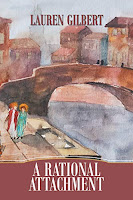
Lauren Gilbert was introduced to English authors early in life, and the passion has never left. An avid reader, she earned a Bachelor of Arts degree in liberal arts English with a minor in Art History. She is a contributing writer to both volumes of CASTLES, CUSTOMS AND KINGS: True Tales by English Historical Fiction Authors. She has written two novels, including her new release, A RATIONAL ATTACHMENT. She is working on a non-fiction book about powerful women in Regency Europe, and is also researching material for another novel. Visit her website for more information.

Thursday, March 10, 2016

Literary Genius in the 'Long Eighteenth' Century

By Janet Todd

Over many decades I have been a biographer and literary-historical critic of the long eighteenth century. Some of my earliest work helped to promote women writers who, at that time, were largely obscure, writers such as Mary Wollstonecraft, Charlotte Smith, Mary Hays, Frances Sheridan - and indeed Mary Shelley, who was not always known even as the creator of Frankenstein, let alone of her other historical novels.

Happily, times have much changed and these writers are now so appreciated that they form the basis of many university courses devoted to the literature of the late eighteenth and early nineteenth centuries. But far more obscure are the large number of other women who entered the scribbling marketplace during these years. They came in such a crowd that for a time they even outnumbered their male colleagues.


Some of these women wrote short moralising tales for the poor or for children, but the majority fed the taste for Gothic and sensational fiction which had been so brilliantly accelerated by Mrs Radcliffe with The Romance of the Forest (1791)and The Mysteries of Udolpho (1794). They were jobbing writers supplying the cheaper circulating libraries. These had sprung up in the late eighteenth century to feed a public desire for inexpensive fiction that needed to be read only once and at speed, then passed on or discarded. The works were published by presses such as the notorious Minerva Press that were unperturbed about quality, not even worrying about repetition or the use of identical material across books with only different titles to differentiate them.

I read a lot of these novels and enjoyed the lurid woodcuts that often accompanied them. In the process I became especially fascinated by the women who wrote them. On the whole their lives are hidden from us but those whom we can hear across the centuries - from a few extant letters and some prefatory material - are keen to stress that they were not presumptuous, were not encroaching on the male business of public writing, and did not regard themselves as ‘authors’. They never expected to be valued by the literary world or reviewed in respectable journals. Often they declared they wrote for money because there was no male breadwinner to support them and their children, either through the death of a husband or by his desertion of his family.

Far from these jobbing writers is of course Jane Austen, who very much regarded herself as an ‘Author’ and a highly skilful one.


She was not in the position of these women writers for, although she was never well off, she was never close to destitution. She always had a supportive family. So, although she was very eager to earn as much money as possible from her writings, she was not dependent on this income for a living.

During my last years in academics I have been studying Austen’s life and novels - I am the general editor of the Cambridge edition of all her works and I have written and edited four volumes dealing with her fiction. It is from this close involvement that I can assert that Austen well knew her worth: she was tart in her comments on other less skilled but popular writers and very careful in the revision of her own novels. She is quite different from the Gothic and sensational authors mentioned above: for a start, they would never have been allowed to publish with the prestigious press of John Murray. In Jane Austen’s lifetime Murray brought out Emma and the second edition of Mansfield Park.

Because of her superior talents and powers, we now couple Austen with Lord Byron, Murray’s most famous author, and in college courses put the pair together because they are from the same era. Yet at the time there were profound differences in public response. Despite the enormous fame Jane Austen now has, when she was alive she was very little known and any personal praise was usually directed at her as a home-loving and pious spinster. Byron, however, was part of the new cult of the natural and creative genius, a lone individual who had a link to the divine and whose art came more from inspiration than from craft. Although we know from surviving manuscripts that it was often not the case, Romantic poets such as Byron and his contemporary and friend, Percy Bysshe Shelley, claimed sudden inspiration for their writing. By contrast, Jane Austen admitted to spending 15 or so years intermittently polishing and revising Pride and Prejudice.

The idea of the ‘genius’ as a separate and distinctive being took hold in the culture just as the communal ideas of the Enlightenment were being dashed by the bloody failure of the French Revolution. The ‘genius’ was almost invariably male. He was different from other people, and he lived by different rules: he was uninhibited by the morality that constrained the rest of ordinary humanity. But there was always a threatening shadow about him. For the man of genius had a demon within that could spur him on to great art or to his destruction. To sustain himself he required both enormous self-belief and enormous belief in himself from others.

Byron and Shelley both at times held this belief, Shelley rather more than Byron, and both men, as is well known, played havoc with the lives of the women who loved them or cared for them. My most recent biography, Death and the Maidens, described the effect of Shelley on my main subject, Mary Wollstonecraft’s eldest daughter, Fanny. It also showed his impact on her half sister Mary Shelley, whom he later married, and on his first wife Harriet. Byron and Shelley were indeed great poets, worthy of some of the adulation they received. What happens to the ‘genius’ if the adulation is there but the substance is not? What happens to the worshipper or lover when she realises the idol is hollow?

I have described a little of my past work and interests to suggest where some of my material came from when at last - in my mid 70s - I retired from full time academic and administrative work to become what I'd always wanted to be: a novelist. A Man of Genius has as a protagonist Ann, who resembles one of those many hack writers who produced the ‘horrid’ novels that so entranced Catherine Morland in Jane Austen’s Northanger Abbey. Her writing of Gothic novels provides her with a reasonable living and above all makes her independent of family. She can avoid the usual role of the poor but ladylike young woman: as governess, teacher or companion. She turns to Gothic writing because in her lonely childhood she had already become enthralled by this kind of fiction, stories of fear, entrapment, illicit passion and desperate pursuit.

In the centre of my novel is a fatal attraction of a woman for a man admired by himself and his followers as a ‘genius’. My story does not follow the trajectory of my biographies of Mary Wollstonecraft and her daughter Fanny, both of whose passions led to suicide or attempted suicide. At the same time my reading of these star-crossed lives did, I think, inform my creation of Ann and her demanding lover Robert.

The historical background of my novel is the period I have long loved and studied: the Regency in England. In 1815 at the battle of Waterloo the English Duke of Wellington defeated the French Emperor Napoleon and brought to a close more than two decades of European war. A few years earlier, the intermittently mad George III had been declared irreparably insane and his debauched, dissolute and very extravagant son had become Prince Regent. Five years after Waterloo George III died and ended the Regency. This period between 1815 and the accession of George IV is a time associated with glamorous style, excess, and an unprecedented flowering of Romantic poetry. It is also associated with political repression, a clamping down on home-grown political and social dissent.

My male protagonist grew up under the shadow of the French Revolution when universal radical change seemed possible and when heroic men thought they might bring it about in Britain and Ireland with inspiring words and daring acts - as initially seemed to be happening in France. But they were adults in a time when these hopes had been much dashed by the Reign of Terror and the imperialistic conquests of Napoleon. Some men and women still held to beliefs and hopes, and on them the government kept a firm eye. From time to time they were questioned and imprisoned for sedition and plotting. Byron and Shelley were both disillusioned with the political mood in an increasingly conservative England and both left for continental Europe and remained there. In this respect alone, my character Robert resembles these Romantic poets.

As in most periods when there is a flourishing press and great cartoonists, the royal family provided much entertainment. To ensure an easy succession to the British throne and despite his private marriage to a Catholic- a forbidden union in this Protestant country - the Prince had been persuaded to marry a German princess, Caroline of Brunswick in 1795. He took an instant and deep dislike to her. Over the next years he persecuted this unwanted and rather foolish lady who took to travelling with a motley entourage around Europe. Her husband sent emissaries to find enough suitable evidence of imropriety to allow him a divorce. The 'Delicate Investigation', as the late phase of the investigation was called, much concerned the Princess’s time in Venice and her relationship with the Italian Bartolomeo Pergami. The fat, squat Princess and the tall be-whiskered Pergami do not feature in my novel as characters but, as they amuse all of Europe, so they intermittently amuse my heroine!


With the end of the Napoleonic wars in 1815 victorious England became the most powerful country in Europe and London, its bustling and commercial centre, flourished and grew richer. By contrast, Venice was in a sorry state. By the time Ann and Robert travel there, its glamour has been tarnished and its political hopes defeated.


It had been a great maritime and commercial power with a thousand-year-old history of independence as a republic, boasting an idiosyncratic system of government and laws, and a robust sense of itself as superior politically and culturally to other states. It had both opposed popes and created them, and it had bred and nurtured amazing sculptors and architects, as well as the most celebrated painters of the Renaissance, Tintoretto, Veronese and Titian. Its richness was legendary. But, by the end of the eighteenth century, it had suffered a long decline and Napoleon had an easy time of it when he chose to conquer it and make it part of his Italian empire in 1797. It was a dismal and shameful end to a great military and cultural history.


The following year Napoleon gave Venice to his ally, Austria, but by 1805 it was back in French hands. It stayed there until the battle of Waterloo crushed French imperial power. In the distribution of spoils that followed his defeat Venice was ceded once more to Austria and made part of its kingdom of Lombardy and Venetia. Some Venetians appreciated the changes the Austrians made to their city and some collaborated with them in bringing these about, while others preferred the French as conquering master for, although even more radical in the changes they wrought on the city - they tore down churches and convents and carted off many artistic treasures to Paris - they appeared more compatible to the Venetians in temperament. Still others mourned the loss of control and plotted for an independence that Venice would never see again: in 1866 it would become part of the independent kingdom of Italy.

The dilapidated - but still glamorous - city of A Man of Genius is not far from that described by John Ruskin thirty years later in his monumental study, The Stones of Venice. He likened the city’s decay to that of a wearied and aged human being. Although Venice had always been on the aristocratic grand tour and continued to be so after 1815, very soon it attracted as well more modest middle class tourists from northern Europe, armed with an increasing array of guidebooks. The era of mass tourism was, however, still in the future.

I end with a photograph I have just taken of the southern lagoon of Venice on a cold February day. My characters first sees the place in cold and dreary weather and never quite gets over the experience! But Ann in particular also succumbs to Venice’s special magic.


Janet Todd has just retired from teaching, mainly in the US and the UK. Her last positions were as Professor of English in the University of Aberdeen and President of Lucy Cavendish College, Cambridge. Her most recent published works have been introductions to the novels of Jane Austen and biographies of women writers from Aphra Behn to Mary Wollstonecraft. A Man of Genius is her first original novel.

Saturday, August 29, 2015

Influences of the New World, Asia and Africa in Jane Austen's Novels

by Lauren Gilbert


Jane Austen was not obliging enough to leave footnotes or other references to her ideas and her writings.  Looking for outside influences on Austen’s writing was a challenge because, in my preliminary research, I found tantalizing hints but little concrete material.  As I studied more, I found more hints, more links, and more ideas and have managed to form certain conclusions.  Although influenced by the materials I’ve covered, these conclusions are my own, and no one else is to blame for any errors, misinterpretations and contradictions you may detect.

England during Jane Austen’s time reflected the culture of empire. Even though the American colonies were lost, England was just approaching the golden age of the empire on which the sun never set. England’s presence in Asia, India, the West Indies, Africa and other parts of the world brought influences from many areas and many viewpoints together.

In Miss Austen’s time, the issues of slavery and the abolishment of the slave trade in Britain were significant, even though the practice of owning slaves was not yet abolished. Slavery, empire and marriage (at least to some degree, in Miss Austen's era) involve relationships of "superior beings" with "inferior beings"--all three conditions require that the dominant (i.e. stronger, better educated, richer--superior or male) being takes care of the subordinate or inferior being (or female) for his or her own good as well as the dominant being’s profit (whether monetary, emotional or other). The abolition of the slave trade in 1807 reflects the changing views of society.

The rise of female authors, such as Mary Wollstonecraft, also reflects change. Miss Austen’s letter to Cassandra of 1/24/1813 refers to an author Clarkson--this author is considered to have been Thomas Clarkson who in 1808 wrote a history of the slave trade, among other things. Much has been made of the mentions of Antigua and slavery in Mansfield Park. It’s difficult from a 21st century perspective to consider these issues from the perspective of Jane Austen’s time. However, I don’t think it’s too much to consider the possibility that Fanny’s lowly, subservient  (slave-like) position in the household initially, and her elevation as her value (and the flaws of other, more highly-regarded persons) becomes clear is a metaphor for the changing order of things in society. The subordinate role of women in the late Georgian era is a topic Austen explores repeatedly.

In considering the influences of Asia, I took the obvious approach by starting with Miss Austen's link to India in the form of her aunt, Philadelphia Austen, who (after being a milliners apprentice for 5 years) sailed to India in 1752, married Tyso Saul Hancock on Feb. 22, 1753, and had a daughter, Jane’s cousin, Eliza de Feuillide. Although no letters written by Philadelphia detailing her life and adventures seem to exist, it’s difficult to believe that no information was shared among the family regarding her experiences and life in India, if not from Philadelphia herself, at least through Eliza.

The fashions of the time heavily involved muslin, calico and silk from India. India and the Orient were the source of trade goods, and information (whether true or otherwise) would have travelled with these goods. Park Honan’s biography of Jane Austen specifically refers to an exotic play, The Sultan, or a Peep into the Seraglio (attributed to Isaac Bickerstaff), as a play in which Miss Austen's brother Henry played the part of the Sultan in 1790 at Steventon, when Jane was 14.  The plot of this play presents a plucky English slave woman resisting the role specified for her by Islam, winning over the sultan, becoming queen and freeing the rest of the harem from bondage.

Jane Austen wrote of the plight the poor young woman in need of a husband going to India in Catherine, or The Bower, written in 1792: a friend of Catherine’s, upon the death of her father, accepted the offer of a cousin to send her to India (against her own inclinations) and was “splendidly, yet unhappily married.”, an obvious reaction to her aunt’s situation. Even before her own circumstances were an immediate issue, Miss Austen had obviously given a great deal of thought to the difficulties of a young woman with little money, and the ramifications of marriage seen solely as a solution to that problem. The choices made by Charlotte Lucas and Elizabeth Bennet, and their subsequent rewards in Pride and Prejudice, as well as Jane’s own decision to break her engagement to Mr. Bigg-Wither clearly illustrate Jane Austen’s views on marriage and concerns with the results of a woman marrying solely for an establishment versus a marriage based on affection and respect.

Even the word “sopha” used in Persuasion and her own letters shows an eastern influence.  Laurie Kaplan pointed out that the words “couch” or “settee” would have been more common during this time.  The word sopha derived in part “from a part of the floor in Eastern countries raised a foot or two, covered with rich carpets and cushions”, a couch for reclining. She quotes Ackerman’s Repository for 1809 that “the sofa is recommended ‘when tired and fatigued with study, writing and reading’”. Mary Musgrove and Lady Bertram are pictured vividly on their sofas, languid or bored or dissatisfied or idle or ill, as the case may be. Miss Austen uses the sofa specifically to illustrate certain ideas about her characters’ qualities. In letters where she refers to her illness, she refers to her own sofa.

The influence of America (as an important part of the New World) was, for me, harder to trace. In her letter to Martha Lloyd of 9/2/1814, Miss Austen does not reflect a favorable view of America (“…I place my hope of better things on a claim to the protection of Heaven, as a Religious Nation, a Nation inspite of much Evil improving in Religion, which I cannot believe the Americans to possess.”)  In considering the West Indies as part of the  Americas as the New World, it is somewhat different--her aunt Mrs. Leigh-Perrot brought a plantation in Barbados with her when she married Jane Austen's uncle, so the issues of slavery and income as discussed in relation to Mansfield Park would have had a great deal of immediacy for her family. The War of 1812 (the circumstance under discussion in the letter previously cited) would have been a concern but does not make an appearance in her novels (as with so many other politically-charged events of her time).

The ideals of democracy espoused by America, and later in the French Revolution, were a more direct influence on earlier authors with whom Miss Austen was familiar, such as Edmund Burke and Charlotte Turner Smith, but suffered an eclipse when in France the Terror erupted and the King and Queen were executed.  Park Honan wrote that, in The Loiterer, Jane’s brother James printed a story reflecting the Tory view of France and America in which a Scottish soldier fighting against Washington becomes a democratic  fool, loses his values, marries a rich vicious mean-born widow, and becomes miserable, ruined by the American Revolution. There is a strong probability that Miss Austen would have read the story. Her novels reflect a more prudent, Tory approach to advancement: her heroines who make advantageous marriages, and heroes who successfully advance clearly have worth of their own in terms not only of character, but also of birth. Elizabeth Bennet is a “gentleman’s daughter”, so her marriage to Mr. Darcy is not totally inappropriate. Fanny and William Price’s mother is Lady Bertram’s sister, so there is good blood there (however diluted) to supplement their individual merits. In spite of Emma’s improvements, Harriet (who is, we discover, the illegitimate daughter of a tradesman) is matched appropriately with the farmer Mr. Martin, and her friendship with Emma evolves into a more suitable relationship. Captain Wentworth's brother is a clergyman which argues a family of at least a respectable level. A case could be made for America being a negative influence, in Miss Austen's view. She tends to uphold the traditional values and structures, even while she makes her concerns about women’s role and place in life apparent.

Even though Jane Austen set her tales on a small stage and never referred directly to the great political and military events of her time, it is a mistake to conclude that her view was a narrow or restricted view. She was observant and read widely. Her own family exemplified the issues and upheavals of the time and encouraged her to develop her talent, in itself an anomaly. She was also very subtle. The activities and events that took place on the broader stage were absorbed and distilled to blend the colors with which she painted her little bits of ivory.

Sources include:
Honan, Park.  Jane Austen Her Life.  Ballantine Books Edition, New York, NY: May 1989.
LeFaye, Deirdre.  Jane Austen The World of Her Novels.  Frances Lincoln Ltd, London, UK: 2002.
Le Faye, Deirdre, ed.  Jane Austen's Letters (Third Edition) Oxford University Press, Oxford UK, 1997.
MacDonagh, Oliver.  Jane Austen Real and Imagined Worlds.  Bath Press, Avon, UK: 1991.
Mitton, G. E. Jane Austen and Her Times, 1775-1817. (Originally published 1905) Barnes & Noble, Inc., New York, NY: 2007 (reprint).
Tomalin, Claire.  Jane Austen A Life.  First Vintage Books  Edition, division of Random House, New York, NY: May 1999.

On-Line Research:
Persuasions On-Line : Numerous articles read, including:
http://www.jasna.org/persuasions/on-line/vol26no1/ray.htm  Vol. 26, No. 1  Ray, Joan Klingel.  “The Amiable Prejudices of a Young  [Writer’s] Mind”: The Problems of Sense and Sensibility”.
http://www.jasna.org/persuasions/on-line/vol27no2/ailwood.htm  Vol. 27, No. 2  Ailwood, Sarah.   “”What are men to rocks and mountains?” Romanticism in Joe Wright’s Pride and Prejudice”.
http://www.jasna.org/persuasions/on-line/vol27no1/tontiplaphol.htm  Vol. 27, No. 1  Tontiplaphol, Betsy Winakur.  “Justice in Epistolary Matters: Revised Rights and Deconstructed Duties in Austen’s Lady Susan.”

http://www.jasna.org/persuasions/on-line/vol25no1/sheehan.html  Vol. 25, No. 1  Sheehan, Colleen A.  “To Govern the Winds: Dangerous Acquaintances at Mansfield Park”.
http://www.jasna.org/persuasions/on-line/vol24no1/ellwood.html  Vol.24, No. 1  Ellwood, Gracia Fay.  “”Such a Dead Silence:” Cultural Evil, Challenge, Deliberate Evil and Metanoia in Mansfield Park”.
http://www.jasna.org/persuasions/on-line/vol25no1/kaplan.html  Vol 25, No. 1  Kaplan, Laurie.  “Sir Walter Elliot’s Looking Glass, Mary Musgrove’s Sofa, and Anne Elliot’s Chair: Exteriority/Interiority, Intimacy/Society.”
http://www.jasna.org/persuasions/on-line/vol26no1/ford.htm  Vol. 26, No. 1  Ford, Susan Allen.  “”No business with politics”: Writing the Sentimental Heroine in Desmond and Lady Susan”.
http://www.jasna.org/persuasions/printed/opno1/mosel.htm  Mosel, Tad.  “Jane Austen’s Two Inches of Ivory”.
Persuasions (Printed):
Showalter, Elaine.  “Retrenchment.”, Persuasions, No. 15, pp. 101-110, 1993.
Kaplan, Laurie (PhD) and Richard S. (MD, FACP). “What is Wrong with Marianne? Medicine and Disease in Jane Austen’s England.”  Persuasions, No. 12, pp. 117-130, 1990.
King, Gaye.  “Jane Austen’s Staffordshire Cousin:  Edward Cooper and His Circle.” Persuasions, No. 15, pp. 252-259, 1993.
Other On-Line Sources:
BBC HISTORY:
http://www.bbc.co.uk/history/british/empire_seapower/paine_print.html Belchem, Professor John.  “Thomas Paine: Citizen of the World.”
http://www.bbc.co.uk/history/historic_figures/burke_edmund.shtml  “Edmund Burke (1729-1797)”
The Literary Encyclopedia:
http://www.litencyc.com/php/speople.php?rec=true&UID=4112   “Charlotte Smith (1749-1806)”First Published June 23 2003.  Citation: Antje Blank, University of Glasgow.
Other:
http://en.wikipedia.org/wiki/Charlotte_Turner_Smith  “Charlotte Turner Smith”
http://www.jasna.org/persuasions/on-line/vol24no1/ellwood.html  Vol.24, No. 1  Ellwood, Gracia Fay.  “”Such a Dead Silence:” Cultural Evil, Challenge, Deliberate Evil and Metanoia in Mansfield Park”.
http://www.tilneysandtrapdoors.com/mollands/etexts/jasb/jasb7.html

~~~~~~~~~~~~~

Lauren Gilbert is a member of JASNA and lives in Florida with her husband. Her first published book HEYERWOOD: A Novel is available at Amazon.com, Jane Austen Books, and other sources.


Tuesday, October 25, 2011

FEMINIST WRITERS DURING THE FRENCH REVOLUTION ~ MAGGI ANDERSEN

As my books are set in the Georgian era at present, I’m learning more about this fascinating era and the complex and world-changing French Revolution.
MARY WOLLSTONECRAFT 1759-1797
Mary Wollstonecraft was the granddaughter of a respectable manufacturer in the Spitalfields weaving trade. Her father, she labeled a domestic tyrant. When he lost his inheritance through a series of unwise investments Mary sought to make her way in the world. She attempted unsuccessfully to run a school and work as a governess.
After publisher Joseph Johnson paid her 10 guineas for her first manuscript, Thoughts on the Education of Daughters, she became a respected member of London’s rationalist intelligentsia.
The Great National Debate on the French Revolution was opened by Edmund Burke’s Reflections on the Revolution in France. Mary Wollstonecraft replied to this attack on the French National Assembly and on the English radicals for rejoicing at the events across the Channel by writing A Vindication of the Rights of Men (1790) expressing the passionate conviction that the power of reason is the common possession of men and women. Mind, she argued has no gender, but women’s reason had been stolen from them. Her contemporaries regarded her defense as one of the most forceful and persuasive contributions to this famous public argument.  She later wrote History and Moral View of the Origins and Progress of the French Revolution (1793).
Upon her return to England, Mary joined a radical group whose membership included Blake, Paine, Fuseli, and Wordsworth. Her first child, Fanny, was born in 1795, the daughter of American Gilbert Imlay. After his desertion, she married the radical activist William Godwin, a long-time friend in 1797. Wollstonecraft died a few days after the birth of their daughter, Mary (who later married Percy Bysshe Shelley and wrote Frankenstein, or The Modern Prometheus and other novels).
OLYMPE DE GOUGES 1748-93 was a butcher's daughter and early feminist who demanded that French women be given the same rights as French men. In her Declaration of the Rights of Woman and the Female Citizen (1791), she challenged the practice of male authority and the notion of male-female inequality. She was executed by guillotine during the Reign of Terror for attacking the regime of Maximilien Robespierre and for her close relation with the Girondists. In addition to these provocative writings, her defense of the king was one of the factors leading to her execution. Early in the Revolution she suggested a voluntary, patriotic tax, which was adopted by the National Convention in 1789.
MADAME ROLAND (aka Manon or Marie Roland) 1754-93 was another important female activist. Although she did not specifically focus on women or their liberation, she was a feminist by virtue of the fact that she was a woman working to influence the world. Her personal letters to leaders of the Revolution influenced policy; in addition, she often hosted political gatherings of the Brissotins, a political group which allowed women to join.
Madame Roland took it upon herself to spread Revolutionary ideology. Roland attributed women’s lack of education to the public view that women were too weak or vain to be involved in the serious business of politics. She believed that it was this inferior education that turned them into foolish people, but women ‘could easily be concentrated and solidified upon objects of great significance’ if given the chance. As she was led to the scaffold, Madame Roland shouted "O liberty! What crimes are committed in thy name!" Her writings were finished by others and published posthumously.
Although women did not gain the right to vote as a result of the Revolution, they still greatly expanded their political participation and involvement in governing. They set precedents for generations of feminists to come.
  Women and European Politics: Contemporary Feminism and Public Policy by Joni Lovenduski
 Mary Wollstonecraft, Political Writings: A Vindication of the Rights of Men; A Vindication of the Rights of Woman; and An Historical and Moral View of the Origin and Progress of the French Revolution, ed. by Janet Todd (Toronto, 1993
Images from Wikipedia