Showing posts with label Mary Shelley. Show all posts

Friday, April 8, 2016

Frankenstein & the Earl of Surrey

By Nancy Bilyeau

This is a story of magic and monsters, of poets and parents, and writers with enormous dreams and very little money.

Picture this: Young Henry Howard, earl of Surrey, known as the "poet earl" for his brilliant literary innovations in the mid-16th century, wanders through Europe in great style, tended to by servants and accompanied by learned and amusing friends. Nonetheless, Surrey pines for his ravishing mistress, Geraldine, left behind in England.

Henry Howard, earl of Surrey

In a sonnet, Surrey had written :
"Bright is her hue, and Geraldine she hight:
Hampton me taught to wish her first for mine:
And Windsor, alas, doth chase me from her sight.
Her beauty of kind, her virtues from above;
Happy is he that can obtain her love."
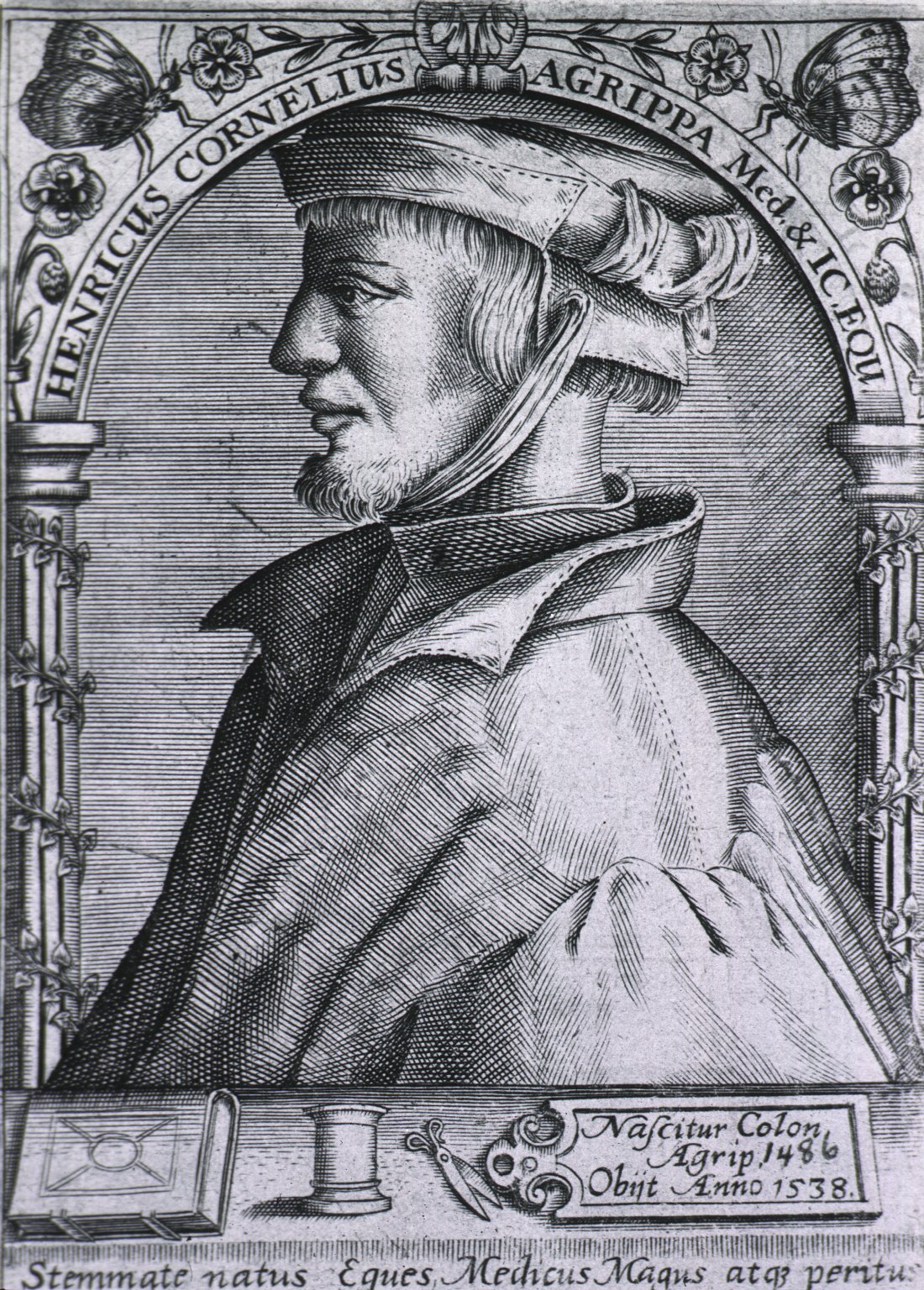
One day, in Italy, the lovesick Surrey turned for a cure to one of his companions, German-born Cornelius Agrippa, who, besides being a scholar, physician and soldier, was an astrologer and student of the occult. Agrippa "was one of the most celebrated men of his time...but he was a man of the most violent passions and of great instability of temper."

Heinrich Cornelius Agrippa

Agrippa possessed the ability to summon up apparitions for his friends, often displaying them in a crystal glass. One day, to please the Renaissance humanist Erasmus, he'd summoned an image of Tully, giving an oration in ancient Rome. For Sir Thomas More, Agrippa delivered "the whole destruction of Troy in a dream."

Surrey longed to see the faraway Geraldine, and Agrippa complied. In the "magical glass," Surrey saw the "beautiful dame, sick, weeping upon her bed, and inconsolable for the absence of her admirer." The Howard heir was distraught.

This is a story that appeared in a chapter devoted to Agrippa in William Godwin's Lives of the Necromancers, published in 1834. And ever since, puzzled historians and biographers and literary critics have tried to figure out if there is one true thing in it.

A necromancer is a wizard, a seer, someone who can conjure the spirits of the dead for purposes of magically revealing the future or influencing the course of events. Godwin's book begins with divination from the ancient times, moves through the Old Testament seers, Roman oracles and the "Arabian Nights," picks up speed in medieval times with Bacon and Magnus before concentrating on the Renaissance necromancers: Agrippa, Paracelsus, Faustus, John Dee, Nostradamus. Then it's time for the Lancashire witches and King James I's demonology before finishing up with the witches of New England. Whew.

The fact that Godwin, the revered writer of the book Political Justice and the novel Caleb Williams, wrote a tome about centuries of necromancers is bizarre. But that's not the only strange and remarkable aspect. Godwin was the devoted father of Mary Shelley, author of Frankenstein. And in that famous horror novel, it is the 16th century writings of Agrippa that obsess a young student named Victor Frankenstein, leading him to create a living man from the parts of the dead.

 
             This first edition of Shelley's 'Frankenstein' sold for $175,000 in auction in 2015.

Before we continue, it must be acknowledged: The story of Agrippa revealing Geraldine to Surrey is fishy. Not that they weren't real people. Surrey, the first cousin of Anne Boleyn and Catherine Howard, is famous in his own right: He and his friend Sir Thomas Wyatt were the first English poets to write in the sonnet form.

As for Agrippa, born in Cologne, he mastered six languages and studied medicine and law as well as the work of the Humanists. Alchemy was his passion, and he believed "magic comprises the most profound contemplation of the most secret things, their nature, power, quality, substance and virtues." He published De Occulta Philosophia, three volumes on magic. The lives of Agrippa and Surrey overlapped by 19 years, but the story of their meeting and traveling together in Italy is almost certainly not true. Moreover, Godwin may have known that ... but found it impossible to resist throwing it in the pot. More on Godwin later!

The facts: The charismatic Surrey was executed for treason in 1546. Henry VIII had grown acutely paranoid about the Howard family's pretensions to the throne. Surrey was the biggest threat because he had royal blood through his mother, Elizabeth Stafford, the oldest daughter of the third Duke of Buckingham, another arrogant charmer who lost his head to Bluff King Hal.

The sonnet "Description and Praise of His Love Geraldine" is one of Surrey's finest. Sir Walter Scott and Michael Drayton would later pay homage to its romantic power. But their being a real, devouring love behind the poem is also just too good to be true. The girl in the poem is thought to be based on a real female: Elizabeth Fitzgerald, daughter of Gerald Fitzgerald, ninth earl of Kildare. But when he wrote it, she was at most 10 years of age.

Elizabeth Fitzgerald, aka Geraldine, after marrying

The aristocratic Fitzgerald family came from Ireland to London in 1533, when Elizabeth was six years old, and she and her brother became playmates to Henry VIII's children. Her father, however, was imprisoned in the Tower of London for corruption; he died there "of grief" in 1534. It is thought that a sympathetic Surrey wrote the sonnet in 1537 for the 10-year-old girl to improve her chances of someday making a good marriage.

So Surrey and Genevieve weren't really in love and Surrey never traveled through Italy. It's settled. Yet, nonetheless, Agrippa conjuring up Geraldine in a magic glass for Surrey is a story that kept showing up in art and letters. Watercolour painter Edward Corbould, favorite of Prince Albert, was the toast of London with his "The Earl of Surrey Beholding the Fayre Geraldine in the Magic Mirror."

Corbould's famous painting


The origin of this story can be traced to a book written after Surrey's death, from the quill of another author of the 16th century, the sort of talented rapscallion that keeps surfacing in our narrative. Thomas Nashe, a parson's son, became a leading Elizabethan playwright, poet and satirical pamphleteer. In his book The Unfortunate Traveller, published in 1594, a man named Jack Wilton rollicks through Europe, surviving many adventures and meeting famous people as if he were a Tudor-era Zelig. Some of the stories in the novel are based on real events, such as the Peasant Revolt in Germany. One of the people Wilton meets is the Earl of Surrey, and while traveling together they encounter Agrippa and his magic crystal. Geraldine revealed!

Nashe, a friend of Ben Johnson's, is thought to be one of the contributors to Henry VI, Part 1, published under William Shakespeare's name. On the opposite end of the prestige spectrum, he wrote erotica such as the notorious The Choice of Valentines, about a trip to a brothel. In response to the outraged criticism over his writing the 50 Shades of its day, Nashe penned this: "When the bottom of my purse is turned downward and my conduit of ink will no flower flow for want of reparations, I am faine to let my Plow stand still in the midst of a furrow."

Nashe was dead by 1601. A friend's epitaph: 
 "Let all his faults sleepe with his mournful chest/And there forever with his ashes rest/His style was wittie, though it had some gall/Some things he might have mended, so may all/Yet this I say, that for a mother witt/Few men have ever seene the like of it."
Surrey's stature grew in the pantheon of Renaissance literature over the next two hundred years ... and so did doubts about the Agrippa anecdote described by Nashe.  One early Surrey biographer pointed out that, aside from Geraldine being nine years old when the sonnet was being composed, "it is unlikely Howard was ever in Italy because he never made any mention of it." In the 16th century--no surprise--traveling around Europe was difficult even if you had money. The promise of the Grand Tour dangled far in the future.

And so we come to the Godwin family.


William Godwin's early life was a bit like Nashe's.  His austere Calvinist father was a Nonconformist minister in Norwich; Godwin was the seventh of thirteen children. He made his way to London in his twenties and, living hand to mouth,  joined a circle of young philosophers, poets and revolutionaries such as William Blake and Thomas Paine. In 1793 he published Enquiry Concerning Political Justice and Its Influence on Morals and Happiness, an enormously influential book that decried government and urged people to use their own reason to plan their actions. Godwin is today considered the founder of political anarchism.

Godwin fell in love with a fellow author and spirited revolutionary, Mary Wollstonecraft, a passionate believer in the rights of women who had an illegitimate child and suicide attempts in her own past. She died days after giving birth to their only child, the future Mary Shelley.

As the death toll of the French Revolution became more known, those who called for anarchy became less popular. Godwin, remarried, saw sales of his books begin to decline. He started a publishing business but it failed, nearly sending Godwin, a hopeless businessman, to debtors' prison. Friends rescued him with loans.
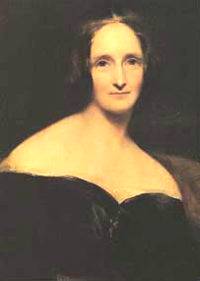
Mary Godwin Shelley

Through it all, he devoted himself to the education of his daughter. Mary not only studied literature and languages but was surrounded by her father's scientist friends, chemists and surgeons who were fascinated by the notion of "animal electricity," also known as "galvanism," the study of muscle contractions causing an electrical current.

Godwin was furious and heartbroken when Mary, 17, ran away with the married poet Percy Shelley. London gossip snickered that Godwin had courted Shelley, heir to a fortune, because he was desperate for a patron for his strained writing life, and "sold" his child to the dissolute young man. It was definitely untrue.

It's well known that when Mary, Shelley, Lord Byron and John Polidori gathered at the Villa Diodati  in 1816, competing to see who could pen  the best ghost story, the talk was of the occult, of alchemists and necromancers. In Frankenstein, Mary Shelley gave direct credit to Agrippa for setting things in motion. She wrote of her main character, a young student, coming across a book:
"Natural philosophy is the genius that has regulated my fate. I desire, therefore, in this narration, to state those facts which led to my predilection for that science. When I was thirteen years old, we all went on a party of pleasure to the Baths near Thoneo. The inclemency of the weather obliged us to remain a day confined to this inn. In this house I chanced to find a volume of the works of Cornelius Agrippa. I opened it with apathy; the theory which he attempts to demonstrate, and the wonderful facts which he relates, soon changed this feeling into enthusiasm. A new light seemed to dawn upon my mind..."
The student's fate was set. One day Victor Frankenstein would use "natural philosophy" to create life.

In mid-April 1817, Mary Shelley finished her fair copy of the novel. Frankenstein: A Modern Prometheus was published in 1818, to mixed reviews. After her husband drowned in 1822, Mary returned to England. She became close again with her father, whose book sales foundered further as Frankenstein gained strength. Mary thrived as a writer and editor, and eventually helped to support her father financially. She wrote a friend in 1831 she was "full of disquietude for my father, who lives by his pen."

William Godwin, in later life

Godwin, although he'd written more than a dozen books, did not have a publisher when he created Lives of the Necromancers. It took him two years to find one for it, even though Mary was exerting personal pressure on editors and publishers she knew. Everyone rejected it. Finally, an obscure London publisher, Andrew Mason, took the book in 1834. (In his chapter on Agrippa, Godwin conceded that the "sole authority" for the Surrey section was Nashe. The episode is followed by tales of black-cat familiars and dangerous potions.)

The book found fans on both sides of the Atlantic. Washington Irving and Edgar Allan Poe,in particular, enjoyed its treatment of magic and superstition.

Poe, who hated just about everything, praised Lives of the Necromancers in Southern Literary Messenger, saying, "No English writer with whom we have any acquaintance, with the single exception of Coleridge, has a fuller appreciation of the value of words." Poe continued:
"Unlike the work of Brewster, the Necromancy of Mr. Godwin is not a Treatise on Natural Magic. It does not pretend to show the manner in which delusion acts upon mankind — at all events, this is not the object of the book. The design, if we understand it, is to display in their widest extent, the great range and wild extravagancy of the imagination of man. It is almost superfluous to say that in this he has fully succeeded. His compilation is an invaluable work, evincing much labor and research, and full of absorbing interest."
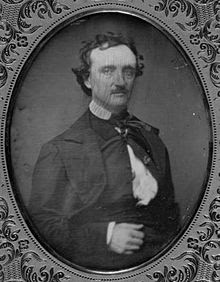

Edgar Allan Poe

(More recently, biographers have studied the book as proof of the shared interests of Mary Shelley and William Godwin. Some critics are rather baffled, trying to decide whether Godwin was mocking the gullible or celebrating mystical beliefs.)

Lives of the Necromancers was the last book written by William Godwin. In 1833, in recognition of his body of work, the Whig government granted him a pension of 200 pounds a year and a modest home in New Palace Yard. In April 1834, at the age of 80, he caught a cough and died, his daughter by his side. At his request, Godwin was buried next to his long-dead first wife, Mary Wollstonecraft.

The books of William Godwin, Mary Wollstonecraft and Mary Shelley have never gone out of print.

And neither have the books of magic written by Heinrich Cornelius Agrippa.

-------------------------------------------------------------------------------------

Nancy Bilyeau is the author of a trilogy of mysteries set in the 16th century: The Crown, The Chalice, and The Tapestry. for sale in North America, the United Kingdom, Germany and Spain. The Crown was an Oprah pick: "The real draw of this suspenseful novel is its juicy blend of murder, lust, conspiracy and betrayal."  The Chalice won the RT Reviewers Award for Best Historical Mystery. The Tapestry was released in paperback in March 2016. For more information, go here.


Thursday, March 10, 2016

Literary Genius in the 'Long Eighteenth' Century

By Janet Todd

Over many decades I have been a biographer and literary-historical critic of the long eighteenth century. Some of my earliest work helped to promote women writers who, at that time, were largely obscure, writers such as Mary Wollstonecraft, Charlotte Smith, Mary Hays, Frances Sheridan - and indeed Mary Shelley, who was not always known even as the creator of Frankenstein, let alone of her other historical novels.

Happily, times have much changed and these writers are now so appreciated that they form the basis of many university courses devoted to the literature of the late eighteenth and early nineteenth centuries. But far more obscure are the large number of other women who entered the scribbling marketplace during these years. They came in such a crowd that for a time they even outnumbered their male colleagues.


Some of these women wrote short moralising tales for the poor or for children, but the majority fed the taste for Gothic and sensational fiction which had been so brilliantly accelerated by Mrs Radcliffe with The Romance of the Forest (1791)and The Mysteries of Udolpho (1794). They were jobbing writers supplying the cheaper circulating libraries. These had sprung up in the late eighteenth century to feed a public desire for inexpensive fiction that needed to be read only once and at speed, then passed on or discarded. The works were published by presses such as the notorious Minerva Press that were unperturbed about quality, not even worrying about repetition or the use of identical material across books with only different titles to differentiate them.

I read a lot of these novels and enjoyed the lurid woodcuts that often accompanied them. In the process I became especially fascinated by the women who wrote them. On the whole their lives are hidden from us but those whom we can hear across the centuries - from a few extant letters and some prefatory material - are keen to stress that they were not presumptuous, were not encroaching on the male business of public writing, and did not regard themselves as ‘authors’. They never expected to be valued by the literary world or reviewed in respectable journals. Often they declared they wrote for money because there was no male breadwinner to support them and their children, either through the death of a husband or by his desertion of his family.

Far from these jobbing writers is of course Jane Austen, who very much regarded herself as an ‘Author’ and a highly skilful one.


She was not in the position of these women writers for, although she was never well off, she was never close to destitution. She always had a supportive family. So, although she was very eager to earn as much money as possible from her writings, she was not dependent on this income for a living.

During my last years in academics I have been studying Austen’s life and novels - I am the general editor of the Cambridge edition of all her works and I have written and edited four volumes dealing with her fiction. It is from this close involvement that I can assert that Austen well knew her worth: she was tart in her comments on other less skilled but popular writers and very careful in the revision of her own novels. She is quite different from the Gothic and sensational authors mentioned above: for a start, they would never have been allowed to publish with the prestigious press of John Murray. In Jane Austen’s lifetime Murray brought out Emma and the second edition of Mansfield Park.

Because of her superior talents and powers, we now couple Austen with Lord Byron, Murray’s most famous author, and in college courses put the pair together because they are from the same era. Yet at the time there were profound differences in public response. Despite the enormous fame Jane Austen now has, when she was alive she was very little known and any personal praise was usually directed at her as a home-loving and pious spinster. Byron, however, was part of the new cult of the natural and creative genius, a lone individual who had a link to the divine and whose art came more from inspiration than from craft. Although we know from surviving manuscripts that it was often not the case, Romantic poets such as Byron and his contemporary and friend, Percy Bysshe Shelley, claimed sudden inspiration for their writing. By contrast, Jane Austen admitted to spending 15 or so years intermittently polishing and revising Pride and Prejudice.

The idea of the ‘genius’ as a separate and distinctive being took hold in the culture just as the communal ideas of the Enlightenment were being dashed by the bloody failure of the French Revolution. The ‘genius’ was almost invariably male. He was different from other people, and he lived by different rules: he was uninhibited by the morality that constrained the rest of ordinary humanity. But there was always a threatening shadow about him. For the man of genius had a demon within that could spur him on to great art or to his destruction. To sustain himself he required both enormous self-belief and enormous belief in himself from others.

Byron and Shelley both at times held this belief, Shelley rather more than Byron, and both men, as is well known, played havoc with the lives of the women who loved them or cared for them. My most recent biography, Death and the Maidens, described the effect of Shelley on my main subject, Mary Wollstonecraft’s eldest daughter, Fanny. It also showed his impact on her half sister Mary Shelley, whom he later married, and on his first wife Harriet. Byron and Shelley were indeed great poets, worthy of some of the adulation they received. What happens to the ‘genius’ if the adulation is there but the substance is not? What happens to the worshipper or lover when she realises the idol is hollow?

I have described a little of my past work and interests to suggest where some of my material came from when at last - in my mid 70s - I retired from full time academic and administrative work to become what I'd always wanted to be: a novelist. A Man of Genius has as a protagonist Ann, who resembles one of those many hack writers who produced the ‘horrid’ novels that so entranced Catherine Morland in Jane Austen’s Northanger Abbey. Her writing of Gothic novels provides her with a reasonable living and above all makes her independent of family. She can avoid the usual role of the poor but ladylike young woman: as governess, teacher or companion. She turns to Gothic writing because in her lonely childhood she had already become enthralled by this kind of fiction, stories of fear, entrapment, illicit passion and desperate pursuit.

In the centre of my novel is a fatal attraction of a woman for a man admired by himself and his followers as a ‘genius’. My story does not follow the trajectory of my biographies of Mary Wollstonecraft and her daughter Fanny, both of whose passions led to suicide or attempted suicide. At the same time my reading of these star-crossed lives did, I think, inform my creation of Ann and her demanding lover Robert.

The historical background of my novel is the period I have long loved and studied: the Regency in England. In 1815 at the battle of Waterloo the English Duke of Wellington defeated the French Emperor Napoleon and brought to a close more than two decades of European war. A few years earlier, the intermittently mad George III had been declared irreparably insane and his debauched, dissolute and very extravagant son had become Prince Regent. Five years after Waterloo George III died and ended the Regency. This period between 1815 and the accession of George IV is a time associated with glamorous style, excess, and an unprecedented flowering of Romantic poetry. It is also associated with political repression, a clamping down on home-grown political and social dissent.

My male protagonist grew up under the shadow of the French Revolution when universal radical change seemed possible and when heroic men thought they might bring it about in Britain and Ireland with inspiring words and daring acts - as initially seemed to be happening in France. But they were adults in a time when these hopes had been much dashed by the Reign of Terror and the imperialistic conquests of Napoleon. Some men and women still held to beliefs and hopes, and on them the government kept a firm eye. From time to time they were questioned and imprisoned for sedition and plotting. Byron and Shelley were both disillusioned with the political mood in an increasingly conservative England and both left for continental Europe and remained there. In this respect alone, my character Robert resembles these Romantic poets.

As in most periods when there is a flourishing press and great cartoonists, the royal family provided much entertainment. To ensure an easy succession to the British throne and despite his private marriage to a Catholic- a forbidden union in this Protestant country - the Prince had been persuaded to marry a German princess, Caroline of Brunswick in 1795. He took an instant and deep dislike to her. Over the next years he persecuted this unwanted and rather foolish lady who took to travelling with a motley entourage around Europe. Her husband sent emissaries to find enough suitable evidence of imropriety to allow him a divorce. The 'Delicate Investigation', as the late phase of the investigation was called, much concerned the Princess’s time in Venice and her relationship with the Italian Bartolomeo Pergami. The fat, squat Princess and the tall be-whiskered Pergami do not feature in my novel as characters but, as they amuse all of Europe, so they intermittently amuse my heroine!


With the end of the Napoleonic wars in 1815 victorious England became the most powerful country in Europe and London, its bustling and commercial centre, flourished and grew richer. By contrast, Venice was in a sorry state. By the time Ann and Robert travel there, its glamour has been tarnished and its political hopes defeated.


It had been a great maritime and commercial power with a thousand-year-old history of independence as a republic, boasting an idiosyncratic system of government and laws, and a robust sense of itself as superior politically and culturally to other states. It had both opposed popes and created them, and it had bred and nurtured amazing sculptors and architects, as well as the most celebrated painters of the Renaissance, Tintoretto, Veronese and Titian. Its richness was legendary. But, by the end of the eighteenth century, it had suffered a long decline and Napoleon had an easy time of it when he chose to conquer it and make it part of his Italian empire in 1797. It was a dismal and shameful end to a great military and cultural history.


The following year Napoleon gave Venice to his ally, Austria, but by 1805 it was back in French hands. It stayed there until the battle of Waterloo crushed French imperial power. In the distribution of spoils that followed his defeat Venice was ceded once more to Austria and made part of its kingdom of Lombardy and Venetia. Some Venetians appreciated the changes the Austrians made to their city and some collaborated with them in bringing these about, while others preferred the French as conquering master for, although even more radical in the changes they wrought on the city - they tore down churches and convents and carted off many artistic treasures to Paris - they appeared more compatible to the Venetians in temperament. Still others mourned the loss of control and plotted for an independence that Venice would never see again: in 1866 it would become part of the independent kingdom of Italy.

The dilapidated - but still glamorous - city of A Man of Genius is not far from that described by John Ruskin thirty years later in his monumental study, The Stones of Venice. He likened the city’s decay to that of a wearied and aged human being. Although Venice had always been on the aristocratic grand tour and continued to be so after 1815, very soon it attracted as well more modest middle class tourists from northern Europe, armed with an increasing array of guidebooks. The era of mass tourism was, however, still in the future.

I end with a photograph I have just taken of the southern lagoon of Venice on a cold February day. My characters first sees the place in cold and dreary weather and never quite gets over the experience! But Ann in particular also succumbs to Venice’s special magic.


Janet Todd has just retired from teaching, mainly in the US and the UK. Her last positions were as Professor of English in the University of Aberdeen and President of Lucy Cavendish College, Cambridge. Her most recent published works have been introductions to the novels of Jane Austen and biographies of women writers from Aphra Behn to Mary Wollstonecraft. A Man of Genius is her first original novel.

Thursday, March 1, 2012

A Strange Relationship ~ Mary Shelley and Frankenstein's Monster

by Gary Inbinder

“Accursed creator! Why did you form a monster so hideous that even you turned from me in disgust? God, in pity, made man beautiful and alluring, after his own image; but my form is a filthy type of yours, more horrid even from the very resemblance. Satan had his companions, fellow-devils, to admire and encourage him; but I am solitary and abhorred.”

That is the voice of the creature from Mary Shelley’s Frankenstein; it is not the grunting monster portrayed in most films. Moreover, it may be the cri de coeur of Frankenstein’s nineteen-year-old author.

At the time she wrote Frankenstein, Mary Wollstonecraft Godwin was involved in scandal, and the object of gossip and ridicule. At sixteen she had eloped to the continent with the then married poet Percy Bysshe Shelley. Her teen-aged half-sister, Jane Claire Clairmont, joined them. Claire may have also been intimate with Shelley, and she later became Lord Byron’s mistress, bearing him a daughter whom Byron had placed in an orphanage where the girl, Allegra, died at age five.

At seventeen, Mary gave premature birth to an unnamed daughter who died within days. The following year, Mary’s other stepsister, Fanny Imlay, killed herself, and she too may have had an affair with Shelley. That same year, Shelley’s pregnant wife, Harriet, committed suicide by jumping from a bridge over the Serpentine in Hyde Park.

Mary was the daughter of famous parents. Her mother, who died shortly after giving birth, author and philosopher Mary Wollstonecraft, is considered among the first modern feminists. Mary Wollstonecraft’s husband, William Godwin, was a noted radical author and philosopher. Both of Mary Shelley’s parents advocated free love and questioned traditional marriage. Therefore, Mary was shocked, confused and deeply hurt when her father refused to speak to her for two years, until after the death of Shelley’s wife and Mary and Percy’s subsequent marriage. At the time she wrote Frankenstein, young Mary may have identified with her creature, despised and abandoned by its creator. And there is also evidence from her journals that she identified with pariahs she encountered in her reading, like Milton’s Satan and Coleridge’s Ancient Mariner.

In my re-imagined sequel, Confessions of the Creature, Frankenstein’s monster narrates his heroic quest for love and honor while Napoleon rages across Europe. In the Arctic waters of the Barents Sea, the creature has taken the ultimate revenge on his creator, Frankenstein. He travels south to a forest outside the town of Yaroslavl, where a chance meeting with a witch who sees through his hideous exterior to his damaged spirit gives him the opportunity to overcome what he is, and perhaps become who he was meant to be.

Transformed by witchcraft into a normal looking man, but retaining his superhuman strength, the creature journeys to Moscow, where he becomes the protégé of the wealthy natural philosopher Baron Suvorin, and the lover of Suvorin's daughter, Sabrina Pavlovna. Taking the name Viktor Suvorin, the creature wins acclaim as a military hero.

An honored hero, happy with his family, Viktor faces a final challenge to his hard won humanity when tragedy strikes. Pursuit of an enemy returns Viktor to the Arctic, scene of his final struggle with his creator. There, on a frozen sea under the shimmering Northern Lights, the creature must confront the truth about himself and the meaning of his creation and his life.

There has been much speculation over the years concerning Mary Shelley’s identification with her creature. In my novel, a fictionalized Mary confronts the transformed monster who may have been her alter ego. And, like my character Viktor, Mary’s own life was transformed by the tragic realities of life, most notably the deaths of her husband and their son William. In her preface to the 1831 edition of Frankenstein, she wrote nostalgically of the time of the novel’s creation, when both Percy and William were still living: “And now, once again, I bid my hideous progeny go forth and prosper. I have an affection for it, for it was the offspring of happy days, when death and grief were but words which found no true echo in my heart.”

I think her reference to the “true echo” of death and grief is telling. There was certainly “death and grief” in Mary Shelley’s life prior to the time she wrote Frankenstein, but the two greatest blows of misfortune were yet to come.