Showing posts with label India. Show all posts

Saturday, August 29, 2015

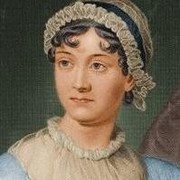
Influences of the New World, Asia and Africa in Jane Austen's Novels

by Lauren Gilbert


Jane Austen was not obliging enough to leave footnotes or other references to her ideas and her writings.  Looking for outside influences on Austen’s writing was a challenge because, in my preliminary research, I found tantalizing hints but little concrete material.  As I studied more, I found more hints, more links, and more ideas and have managed to form certain conclusions.  Although influenced by the materials I’ve covered, these conclusions are my own, and no one else is to blame for any errors, misinterpretations and contradictions you may detect.

England during Jane Austen’s time reflected the culture of empire. Even though the American colonies were lost, England was just approaching the golden age of the empire on which the sun never set. England’s presence in Asia, India, the West Indies, Africa and other parts of the world brought influences from many areas and many viewpoints together.

In Miss Austen’s time, the issues of slavery and the abolishment of the slave trade in Britain were significant, even though the practice of owning slaves was not yet abolished. Slavery, empire and marriage (at least to some degree, in Miss Austen's era) involve relationships of "superior beings" with "inferior beings"--all three conditions require that the dominant (i.e. stronger, better educated, richer--superior or male) being takes care of the subordinate or inferior being (or female) for his or her own good as well as the dominant being’s profit (whether monetary, emotional or other). The abolition of the slave trade in 1807 reflects the changing views of society.

The rise of female authors, such as Mary Wollstonecraft, also reflects change. Miss Austen’s letter to Cassandra of 1/24/1813 refers to an author Clarkson--this author is considered to have been Thomas Clarkson who in 1808 wrote a history of the slave trade, among other things. Much has been made of the mentions of Antigua and slavery in Mansfield Park. It’s difficult from a 21st century perspective to consider these issues from the perspective of Jane Austen’s time. However, I don’t think it’s too much to consider the possibility that Fanny’s lowly, subservient  (slave-like) position in the household initially, and her elevation as her value (and the flaws of other, more highly-regarded persons) becomes clear is a metaphor for the changing order of things in society. The subordinate role of women in the late Georgian era is a topic Austen explores repeatedly.

In considering the influences of Asia, I took the obvious approach by starting with Miss Austen's link to India in the form of her aunt, Philadelphia Austen, who (after being a milliners apprentice for 5 years) sailed to India in 1752, married Tyso Saul Hancock on Feb. 22, 1753, and had a daughter, Jane’s cousin, Eliza de Feuillide. Although no letters written by Philadelphia detailing her life and adventures seem to exist, it’s difficult to believe that no information was shared among the family regarding her experiences and life in India, if not from Philadelphia herself, at least through Eliza.

The fashions of the time heavily involved muslin, calico and silk from India. India and the Orient were the source of trade goods, and information (whether true or otherwise) would have travelled with these goods. Park Honan’s biography of Jane Austen specifically refers to an exotic play, The Sultan, or a Peep into the Seraglio (attributed to Isaac Bickerstaff), as a play in which Miss Austen's brother Henry played the part of the Sultan in 1790 at Steventon, when Jane was 14.  The plot of this play presents a plucky English slave woman resisting the role specified for her by Islam, winning over the sultan, becoming queen and freeing the rest of the harem from bondage.

Jane Austen wrote of the plight the poor young woman in need of a husband going to India in Catherine, or The Bower, written in 1792: a friend of Catherine’s, upon the death of her father, accepted the offer of a cousin to send her to India (against her own inclinations) and was “splendidly, yet unhappily married.”, an obvious reaction to her aunt’s situation. Even before her own circumstances were an immediate issue, Miss Austen had obviously given a great deal of thought to the difficulties of a young woman with little money, and the ramifications of marriage seen solely as a solution to that problem. The choices made by Charlotte Lucas and Elizabeth Bennet, and their subsequent rewards in Pride and Prejudice, as well as Jane’s own decision to break her engagement to Mr. Bigg-Wither clearly illustrate Jane Austen’s views on marriage and concerns with the results of a woman marrying solely for an establishment versus a marriage based on affection and respect.

Even the word “sopha” used in Persuasion and her own letters shows an eastern influence.  Laurie Kaplan pointed out that the words “couch” or “settee” would have been more common during this time.  The word sopha derived in part “from a part of the floor in Eastern countries raised a foot or two, covered with rich carpets and cushions”, a couch for reclining. She quotes Ackerman’s Repository for 1809 that “the sofa is recommended ‘when tired and fatigued with study, writing and reading’”. Mary Musgrove and Lady Bertram are pictured vividly on their sofas, languid or bored or dissatisfied or idle or ill, as the case may be. Miss Austen uses the sofa specifically to illustrate certain ideas about her characters’ qualities. In letters where she refers to her illness, she refers to her own sofa.

The influence of America (as an important part of the New World) was, for me, harder to trace. In her letter to Martha Lloyd of 9/2/1814, Miss Austen does not reflect a favorable view of America (“…I place my hope of better things on a claim to the protection of Heaven, as a Religious Nation, a Nation inspite of much Evil improving in Religion, which I cannot believe the Americans to possess.”)  In considering the West Indies as part of the  Americas as the New World, it is somewhat different--her aunt Mrs. Leigh-Perrot brought a plantation in Barbados with her when she married Jane Austen's uncle, so the issues of slavery and income as discussed in relation to Mansfield Park would have had a great deal of immediacy for her family. The War of 1812 (the circumstance under discussion in the letter previously cited) would have been a concern but does not make an appearance in her novels (as with so many other politically-charged events of her time).

The ideals of democracy espoused by America, and later in the French Revolution, were a more direct influence on earlier authors with whom Miss Austen was familiar, such as Edmund Burke and Charlotte Turner Smith, but suffered an eclipse when in France the Terror erupted and the King and Queen were executed.  Park Honan wrote that, in The Loiterer, Jane’s brother James printed a story reflecting the Tory view of France and America in which a Scottish soldier fighting against Washington becomes a democratic  fool, loses his values, marries a rich vicious mean-born widow, and becomes miserable, ruined by the American Revolution. There is a strong probability that Miss Austen would have read the story. Her novels reflect a more prudent, Tory approach to advancement: her heroines who make advantageous marriages, and heroes who successfully advance clearly have worth of their own in terms not only of character, but also of birth. Elizabeth Bennet is a “gentleman’s daughter”, so her marriage to Mr. Darcy is not totally inappropriate. Fanny and William Price’s mother is Lady Bertram’s sister, so there is good blood there (however diluted) to supplement their individual merits. In spite of Emma’s improvements, Harriet (who is, we discover, the illegitimate daughter of a tradesman) is matched appropriately with the farmer Mr. Martin, and her friendship with Emma evolves into a more suitable relationship. Captain Wentworth's brother is a clergyman which argues a family of at least a respectable level. A case could be made for America being a negative influence, in Miss Austen's view. She tends to uphold the traditional values and structures, even while she makes her concerns about women’s role and place in life apparent.

Even though Jane Austen set her tales on a small stage and never referred directly to the great political and military events of her time, it is a mistake to conclude that her view was a narrow or restricted view. She was observant and read widely. Her own family exemplified the issues and upheavals of the time and encouraged her to develop her talent, in itself an anomaly. She was also very subtle. The activities and events that took place on the broader stage were absorbed and distilled to blend the colors with which she painted her little bits of ivory.

Sources include:
Honan, Park.  Jane Austen Her Life.  Ballantine Books Edition, New York, NY: May 1989.
LeFaye, Deirdre.  Jane Austen The World of Her NovelsFrances Lincoln Ltd, London, UK: 2002.
Le Faye, Deirdre, ed.  Jane Austen's Letters (Third Edition) Oxford University Press, Oxford UK, 1997.
MacDonagh, Oliver.  Jane Austen Real and Imagined Worlds.  Bath Press, Avon, UK: 1991.
Mitton, G. E. Jane Austen and Her Times, 1775-1817. (Originally published 1905) Barnes & Noble, Inc., New York, NY: 2007 (reprint).
Tomalin, Claire.  Jane Austen A Life.  First Vintage Books  Edition, division of Random House, New York, NY: May 1999.

On-Line Research:
Persuasions On-Line : Numerous articles read, including:
http://www.jasna.org/persuasions/on-line/vol26no1/ray.htm  Vol. 26, No. 1  Ray, Joan Klingel.  “The Amiable Prejudices of a Young  [Writer’s] Mind”: The Problems of Sense and Sensibility”.
http://www.jasna.org/persuasions/on-line/vol27no2/ailwood.htm  Vol. 27, No. 2  Ailwood, Sarah.   “”What are men to rocks and mountains?” Romanticism in Joe Wright’s Pride and Prejudice”.
http://www.jasna.org/persuasions/on-line/vol27no1/tontiplaphol.htm  Vol. 27, No. 1  Tontiplaphol, Betsy Winakur.  “Justice in Epistolary Matters: Revised Rights and Deconstructed Duties in Austen’s Lady Susan.”

http://www.jasna.org/persuasions/on-line/vol25no1/sheehan.html  Vol. 25, No. 1  Sheehan, Colleen A.  “To Govern the Winds: Dangerous Acquaintances at Mansfield Park”.
http://www.jasna.org/persuasions/on-line/vol24no1/ellwood.html  Vol.24, No. 1  Ellwood, Gracia Fay.  “”Such a Dead Silence:” Cultural Evil, Challenge, Deliberate Evil and Metanoia in Mansfield Park”.
http://www.jasna.org/persuasions/on-line/vol25no1/kaplan.html  Vol 25, No. 1  Kaplan, Laurie.  “Sir Walter Elliot’s Looking Glass, Mary Musgrove’s Sofa, and Anne Elliot’s Chair: Exteriority/Interiority, Intimacy/Society.”
http://www.jasna.org/persuasions/on-line/vol26no1/ford.htm  Vol. 26, No. 1  Ford, Susan Allen.  “”No business with politics”: Writing the Sentimental Heroine in Desmond and Lady Susan”.
http://www.jasna.org/persuasions/printed/opno1/mosel.htm  Mosel, Tad.  “Jane Austen’s Two Inches of Ivory”.
Persuasions (Printed):
Showalter, Elaine.  “Retrenchment.”, Persuasions, No. 15, pp. 101-110, 1993.
Kaplan, Laurie (PhD) and Richard S. (MD, FACP). “What is Wrong with Marianne? Medicine and Disease in Jane Austen’s England.”  Persuasions, No. 12, pp. 117-130, 1990.
King, Gaye.  “Jane Austen’s Staffordshire Cousin:  Edward Cooper and His Circle.” Persuasions, No. 15, pp. 252-259, 1993.
Other On-Line Sources:
BBC HISTORY:
http://www.bbc.co.uk/history/british/empire_seapower/paine_print.html Belchem, Professor John.  “Thomas Paine: Citizen of the World.”
http://www.bbc.co.uk/history/historic_figures/burke_edmund.shtml  “Edmund Burke (1729-1797)”
The Literary Encyclopedia:
http://www.litencyc.com/php/speople.php?rec=true&UID=4112   “Charlotte Smith (1749-1806)”First Published June 23 2003.  Citation: Antje Blank, University of Glasgow.
Other:
http://en.wikipedia.org/wiki/Charlotte_Turner_Smith  “Charlotte Turner Smith”
http://www.jasna.org/persuasions/on-line/vol24no1/ellwood.html  Vol.24, No. 1  Ellwood, Gracia Fay.  “”Such a Dead Silence:” Cultural Evil, Challenge, Deliberate Evil and Metanoia in Mansfield Park”.
http://www.tilneysandtrapdoors.com/mollands/etexts/jasb/jasb7.html

~~~~~~~~~~~~~

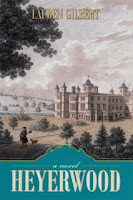
Lauren Gilbert is a member of JASNA and lives in Florida with her husband. Her first published book HEYERWOOD: A Novel is available at Amazon.com, Jane Austen Books, and other sources.


Saturday, April 12, 2014

The Great Game

Roller-skating in the Hindu Kush

by J.G. Harlond

‘Horrible looking hills loomed nearer and nearer and then you saw some sort of crack going up through the hills – and this was the Khyber Pass; great slabs of rock towering up on either side of you.’ Ed Brown, Royal Warwickshire Regiment, 1930s

‘I set the defaulters to work with pick axes and chisels to level a large area of virgin rock to a perfect level over which was spread a coating of fine cement. The contractor was then told to produce all the roller-skates in India, fairy lights were slung up over this area and all through the cold weather the British troops roller-skated and roller-skated.’ George Wood, Brigade Major on the Khyber Pass during 1930s (1)

It sounds amusing, somewhat absurd: a Brigade Major orders an area of rock to be flattened and chiselled smooth - for a roller-skating rink. But the intention was well-meant, and not without purpose; separated from all they knew, without wives and family, George Wood was providing a harmless entertainment for his off-duty troops at a Frontier ‘hardship station’. Such postings were known colloquially as being ‘on the grim’. Regiments were posted high up in the most inhospitable of regions in India as part of The Great Game. A game that was neither harmless nor entertaining: it was a game of strategy and watchfulness, and by the time this Brigade Major ordered the roller-skating rink to be created, it had already been in play for well over a hundred years.

According to David Fromkin in The Great Game in Asia ‘. . . as czarist armies overran Central Asia, attention shifted to Persia, to Afghanistan and to the mountain passes of the Himalayas. By the last quarter of the nineteenth century, it was a common assumption in Europe that the next great war - the inevitable war - was going to be the final showdown between Britain and Russia.’ India was a prime target for Russian expansionism because it provided essential raw materials and, perhaps even more importantly in this line of thought, warm water harbours.

Since about 1850, the gap between the British and Russian Empires had physically narrowed to not much over 1,000 miles (it had been about 4,000 miles in the early 18th century). With every passing year the British and Russians became more and more interested in the territory that separated them - the buffer states running in a crescent around northern India, what is now Pakistan, Persia (Iran), Afghanistan and Tibet. British and Indian troops were posted in these frontier regions because Britain was determined to halt Russia before India was threatened.

This confrontation, the rivalry for geographical power and India’s resources became known as ‘The Great Game’ in the British Press. What the press reported, however, was only the exterior of the affair; there was a lot, lot more going on undercover. The name of the game had, perhaps, been conjured as a reference to chess: south-central Asia being the chess board. Another explanation, however, reads like the sort of politically incorrect fiction one would hesitate to write these days:

Supposedly it was a British officer who first called it the Great Game. He played it exuberantly, and lost it in the terrifying way in which one lost in Central Asia: an Uzbek emir cast him for two months into a well filled with vermin and reptiles, and then what remained of him was brought up and beheaded. The phrase "the Great Game" was found in his papers and quoted by a historian of the First Afghan War.

Rudyard Kipling made it famous in Kim, and visualized it in terms of an Anglo-Indian boy and his Afghan mentor foiling Russian intrigues along the highways to Hindustan. These activities of the rival intelligence services are what some writers mean by the Great Game; others use the phrase in the broader sense (...) to describe the whole of the Anglo-Russian quarrel about the fate of Asia. (2)

Kipling’s novel Kim is set against the geography and politics of this political conflict after the Second Afghan War (1881). Kim’s adventures take the reader into ‘the hills’ spying on Russian agents who are supposedly mapping territory for their government. A government that is sending agents and arms to a mysterious mountain country called Tibet. If you want to get a feel for this epoch in India read Kipling’s short stories, they offer fascinating, detailed portraits of people from very disparate backgrounds and cultures, and bring to life what the bazaars and the teeming cities and roads must have been like.

Reading Kim influenced my writing because it concerned two of my particular interests: the ambivalences and contradictions in old colonial India, and shifting notions of identity. Writing over a hundred years after Kipling, though, my perspective is quite different: The Empress Emerald shows the hero’s need to distance himself from the Raj; his developing sense of an Indian identity and the rightness of Home Rule. Much has been said in the last few decades about Kipling’s right-wing politics, but many people become more conservative with age, and Kim was written when Kipling was still relatively young. First published as a serial in McClure’s Magazine from December 1900 to October 1901, Kim was then printed as a book by Macmillan in October 1901.

Kipling's Short Stories

The espionage and counter-espionage that went on along the Indian frontiers is wonderful material for historical fiction and it is easy to see how chess became an analogy. India was a vital piece in this game; the British valued India more highly than any of their other imperial possessions, largely for its lucrative trade and investment opportunities, but also for the troops India provided and the commanding position in southern Asia. Losing India meant losing Britain’s reputation for invincibility on which British imperial rule depended.

When looking at sources or fiction written before Indian Independence, though, one has to remember that the colonial social-psyche was heavily informed by memories of the Mutiny (1857). Ultimately, the rights and wrongs of that event faded, what the British in India retained was the image of massacres - of innocent women and children being killed. Fear of another, more widespread mutiny became aligned with a related fear of a Russian attack because it would ‘encourage Indians to rise up and expel the British’ (Fromkin).

In 1900, Britain had granted permission for the establishment of a Russian consulate in Bombay. Russia and India had well-established, long-term trade links: Russia imported tea and exported vast quantities of kerosene for Indian kitchens. For this reason alone, Russia had been harrying Britain for permission to set up trade missions on Indian soil for over forty years, but viceroys such as Lord Curzon had held out, insisting that Britain needed to protect her source of raw materials, her jewel in the crown, from potential thieves.

The period leading up to the First World War and the Russian Revolution was particularly busy for India-watchers. Apart from trade links, they also kept a close eye on intellectuals and politicians. Cultural exchanges between Delhi and Moscow could easily have lead to insurrection. The Tsar was weak; there had been bad harvests; Russian peasants, said to be organized by student agitators, were ready to revolt.

The Raj feared that if the peasant class in Russia did revolt, India might follow suit. Hence ever more diligent watching and reporting: knowledge was power. Fear of another form of Mutiny was still very strong. This fuelled even greater vigilance. India ‘with its population of nearly 300 million and area as large as Europe, could not be held by force alone’ (3) so British officials employed many different types of people in their effort to watch what was going on.

‘Gateway to India’

Monitoring trade from a political perspective, as far as India House in London and the Indian Civil and Political Services in the country itself were concerned, meant no Russian and no Russian goods metaphorically passed through Bombay’s ‘Gateway to India’ without them knowing about it. This required constant vigilance, which during the British Raj was standard practice. From what I have read, everybody watched everybody - all the time. Rajahs and parliamentarians, nabobs and businessmen, they all maintained a string of informants. Indians in the professions, especially the politically inclined, and lawyers; begums and maharanis; over-exuberant memsahibs and ordinary box-wallahs; itinerant ministers of religion; peripatetic princes . . . they were all subject to scrutiny, and they all gossiped about one another incessantly.

In the so-called autonomous princely states, eccentric rajas had kept British sub-secretaries scribbling away for generations. Dowdy clerks from Clerkenwell and Tunbridge Wells spent their dull lives minuting oriental peccadilloes. Some of the more startling extravagances that now read like fabrications, such as stealing Hill State virgins for dubious religious ceremonies, might on the surface seem frivolous, nothing more than titillating nonsense, but there was a serious aspect at the time: if a Hill State tribal leader had become an aggrieved father or suffered a loss of dignity, retribution would have been sought. That might have led to inter-state trouble, which in turn would have upset the delicate balance of the Raj.

The troops stationed up ‘on the grim’ were also there to prevent internecine skirmishes and revenge raids from getting out of hand. It put the troops in a dangerous situation because they often became a target themselves. ‘Sniping – “the odd bang, bang at night and the whang of a bullet” - was a constant and trying feature’ of life on the Frontier’ according to John Dring, a political agent in South Waziristan (4). Curiously, it was considered cowardly for troops to fire back at snipers in the Indian Army. Men were supposed to locate the sniper, ‘but it was a sign of steadiness not to fire back’. One has the sense that little has changed in this respect, but it does show the very real danger individual soldiers were in.

Another aspect of life on the Frontier was the administration of the tribal areas, which supposedly was to ensure tribes did not ‘commit nuisances’ either in India or Afghanistan. These nuisances came in various forms; ‘some as manifestations of the “blood feud” which accounted for three hundred murders a year in the Peshawar district alone . . .’ (5)

The Great Game involved fear and danger from within and without. The more research I did about life in colonial India prior to Independence, the more I came to realise how easy it is to criticise or be prejudiced with little information. Whatever the politics, the rights and the wrongs, individual men and women, Indian and British, were basically trying to get on with their lives as best they could and doing what they believed was best under circumstances influenced by politicians in offices very far away. One goes from the general to the particular and back again: from international expansionism to the plight of the private soldier, or that of his wife left down in the baking plains to cope as best she could with only an urban English upbringing to help her.

As someone who has lived in different countries - where I have had to do the family shopping, organize health-care, make sure my children were safe at play outside school hours - I empathise and sympathise. It must have been very difficult for the wife of any soldier, whatever his rank, while her husband was posted at the top of nowhere in a mountain range; knowing he was in danger and might never return; wondering how she would cope if he didn’t. One can understand these women being angry and worried, and how that anger turned itself against local people. In the end of course, India rightly claimed Home Rule, which was best for all.

Footnotes:
(1) Quoted in Plain Tales from the Raj edited by Charles Allen (Futura, 1975) pp 202 & 203.

(2) See: http://myweb.tiscali.co.uk/kenanderson/histemp/thegreatgame.html (Accessed 25th March, 2014)

(3) David Fromkin ‘Foreign Affairs’ www.foreignaffairs.com/articles/33619/david-fromkin/the-great-game-in-asia (accessed 26th March, 2014)

(4) Plain Tales from the Raj p205

(5) Plain Tales from the Raj p198

~~~~~~~~~~~~~

Jane G. Harlond is a full-time author, whose fiction examines aspects of how time and place influence a person’s life-choices and identity. Her novels include 'The Empress Emerald' (Famelton Publishing, 2014) and 'The Chosen Man' (Knox Robinson Publishing, 2012). She is a member of the prestigious Historical Writers’ Association and a consultant for Famelton Writing Services.

Apart from fiction, Jane has also written an IGCSE English textbook for OUP and educational material for Pearson and Penguin under her married name, Arredondo.

Jane grew up in Devon, and studied in Bristol, Portsmouth and the U.S.A. before finishing her academic studies with an M.A. in Social and Political Thought at the University of Sussex.  She has lived and worked in various different European countries and is married to a Spanish naval officer. They have a large grown-up family now scattered around Europe and live in rural Andalucía, Spain.

India has long held a fascination for Jane. As a child she was captivated by stories told by her great uncle, Walter Harlond, an army officer posted in India.  Walter and his wife remained in India after Independence because they loved it so much. Neither of them ever settled properly once they were back in Scotland. India had changed them forever.

Inspired by her uncle, and after a great deal of research into Anglo-Indian and Russian politics, Jane started writing the ‘The Empress Emerald’. The novel features an Indian boy with a Russian father, and a Cornish girl who is uprooted and set down in a household full of secrets in Spain. From her own life and extensive travel, Jane had learnt how people need to renegotiate their personality and views, and accept different attitudes, beliefs and customs if they were to live successfully in a foreign environment. Her own two sons had five schools and three languages in the first eight years of their education; being young, they accepted what was given with each move and triumphed in circumstances that Jane, as an adult, found challenging.  The tension between who we are according to our roots and the demands of an alien culture and/or other people’s expectations underlies the narrative of ‘The Empress Emerald’.

email: jgharlond@telefonica.net              webpage: http://www.jgharlond.name/


Tuesday, October 8, 2013

Fanny Parks: A Wandering Pilgrim in 19th Century India

by Tom Williams


Fanny Parks went to India in 1822, accompanying her husband. Arriving in Calcutta, she and her husband lived respectably with the other Europeans, although she was quick to learn Hindi so that she could communicate with the servants.

After two years in Calcutta, her husband took up a post in Allahabad, 500 miles to the north-west. It was her first experience of rural India, and she loved it. The time was, she said, "the most approaching to delightful that we had passed in India." Once there, her husband became manager of the ice works.

The manufacture and storing of ice in the days before refrigeration was an important industry, but managing an ice plant must have had more than a passing similarity to watching paint dry. Fanny threw herself into organising the household, arranging an avenue of trees and digging a new well. (She quotes the local proverb: "Plant a tree, dig a well, write a book, and go to heaven.") It seems pretty clear, though, that she was bored.

Equipped with her workable Hindi and her horse, Mootee, she spent much of her time exploring the country. "Roaming about with a good tent and a good Arab [horse]," she wrote, "one might be happy for ever in India."

As a woman, she was allowed to socialise with Indian women in a way that local custom would have considered quite unacceptable for men. She formed friendships with many Indian women and was even able to visit them in the zenana (harem), an area completely forbidden to men other than the immediate family and therefore a continual source of exotic rumour amongst most Europeans. It was her accounts of life in the zenana that, in part, led to the success of her autobiographical Wanderings of a Pilgrim in Search of the Picturesque, two extraordinary volumes which gave an unparalleled insight into Indian life under British rule in the first half of the 19th century.

Her husband seems to have been, by the standards of the time, unusually relaxed about leaving her to travel on her own. When the two of them went to visit the Taj Mahal, he sent her ahead in her own boat and she writes about her experiences and adventures on the river as an unchaperoned woman. Her behaviour was considered improper by more conventionally-minded memsahibs and she seems to have had few women friends among the European community, although she is always writing of the men she knows and visits. (Even back in England she shocked people by going out and about unchaperoned. "I shall never be tamed," she wrote "… to the ideas of propriety of a civilised lady.")

She took to wearing Indian dress, even having a burka made for herself (though she doesn't say that she ever wore it in public). She complained that "a lady in European attire gives me the idea of a German mannequin" and contrasted European women's stiff walk with "that snakelike, undulating movement, – the poetry of motion" that she saw in the Indians.

Although the early 19th century saw generally good relations between the Indian and European communities, Fanny Parks was much closer to the local aristocracy than most and was regarded by many Europeans as having "gone native". She learned Urdu, which was the language of court and which she described as "Hindostanee, intermixed largely with Persian."

She was sympathetic to Indian religions and contrasted them favourably with Christianity: "The fakir, who from a religious motive, however mistaken, holds up both arms until they become withered and immovable, and who, being, in consequence, utterly unable to support himself, relies in perfect faith on the support of the Almighty, displays more religion than the [bishop], who, with a salary of £8000 per annum, leaves the work to be done by curates, on a pittance of £80 a year."

Her enthusiasm for Indian religious observance did not, however stop her from stealing idols that she found in the countryside and adding them to her collection of Indian artefacts. On her return to England she proudly announced that: "My collection of Hindoo idols is far superior to any in the [British] Museum."

She was entranced by fabrics and fashion and learned the esoteric skill of dressing a camel. "There is but one thing in the world that I perfectly understand, and that is, how to dress a camel," she claimed. She was good enough at dressing camels to be asked to dress the camel of a local Rajah. The dress was made of "many yards" of black and crimson cloth covered in seven hundred bells, one hundred beads and thousands of cowrie shells. She drew the line, though, at actually riding the beast, saying that she would be frightened of tumbling off.

Much of her time was spent at entertainments, whether the balls given by the British or more elaborate entertainments provided by the Indians. Having animals fight seems to have been considered a great sport, with elephants and even rhinoceroses being pitched against each other. Nach dancers provided a more relaxed entertainment.

With no need to find herself employment, Fanny Parks gives the impression of a life spent in a continual round of exploring, socialising and being entertained. The realities of life in India do intrude, though. She is constantly reporting herself unwell, often through the effects of the heat. She matter-of-factly records the deaths of native friends, servants and Europeans as smallpox, plague, heatstroke and other unspecified illnesses take their toll. Even her substantial domestic menagerie suffers. "The sickness in our farm-yard is great: 47 … sheep and lambs have died of small-pox; much sickness is in the stable…" There is the occasional murder to break the monotony of death from sickness.

The East India Company offered generous pensions. Fanny Parks reminds us of why they could afford to: most of their employees failed to survive to collect their pensions. A detailed study of the mortality rate amongst British troops in India in the 1840s suggested that almost 3% died every year. A 21-year-old soldier in the Bombay army was reckoned to have only an evens chance of surviving 25 years of service – much less than he would need to collect his pension.

The life expectancy of the native Indians was, of course, less than that of the Europeans. Besides issues of sanitation and general health, the natives suffered the effects of famine. Fanny Parks describes passing through a famine area:

"There lay the skeleton of a woman who had died of famine; the whole of her clothes had been stolen by the famished wretches around, the pewter rings were still in her ears, but not a rag was left on the bones that were starting through the black and shrivelled skin; the agony on the countenance of the corpse was terrible. Next to her a poor woman, unable to rise, lifted up her skinny arm, and moaned for food. The unhappy women, with their babies in their arms, pressing them to their bony breasts, made me shudder… I cannot write about the scene without weeping…."

In 1839, Fanny Parks returned to England to visit her family, her father having died. She complained that the country was small and dark. Even the mutton was compared unfavourably with that in India, although she was fascinated by her first experience of a steam train. Her visit was not a happy one. While she was in England, her mother died and she herself was seriously ill for three months. It was not until 1844 that she returned to India. She seems to have spent less time now exploring the country and complained of life being monotonous. Years in India had sapped her health and that of her husband. In 1848, both of them left India for England, arriving on New Year's Day 1846.

Her homecoming was unpropitious. "[I]t was bitterly cold, and I began to speculate if it were possible to exist in England." Exist in England she did, though, surviving until 1875, when she died at the age of 81.

------------------------------------------------------
Fanny Park's memoirs are available free on Google Books.

Tom Williams is the author of two books based around Britain's colonial experience in the mid-19th century: The White Rajah and Cawnpore. Both are published by JMS Books and available as paperbacks or e-books from Amazon and other retailers.

Tom's Blog
White Rajah (US)
White Rajah (UK)

Fanny Parks actually visited Cawnpore about thirty years before the events in Tom's book, which explains his interest in her travels – though they're interesting anyway.

Tom is currently working on a book set in South America during the Napoleonic wars. Tom writes about 19th-century history, writing and dancing tango on his blog.

Cawnpore (US)
Cawnpore (UK)

Tuesday, October 1, 2013

British India to 1857: The Rise and Fall of the East India Company

by Tom Williams


In the mid-19th century, India, the jewel in Britain's imperial crown wasn't, technically, part of the Empire at all. It was run by the East India Company, a commercial organisation, originally set up to trade with the Far East. Under the India Act of 1784, the activities of the Company were subject to direction from the British government, but the Company remained a commercial organisation with shareholders who were paid dividends from the Company's substantial profits. How had we reached a situation where one of the world's largest countries was being administered for profit by a private company?

For centuries, Europe had traded with the Far East. The spice trade was of vital economic importance as far back as the days of Ancient Rome. Look in your store cupboard, even today, and see how many of the spices we use come from the Far East. And remember that, in the days before refrigeration, spices were essential in making meat palatable.

Until the 15th century, trade routes to the East went overland and were controlled first by Arabs and later by the Ottoman Turks. It was not until 1498 that the Portuguese explorer, Vasco da Gama, navigated round the Cape of Good Hope and opened a sea route from Europe to the Far East. This meant that European merchants could trade directly with their suppliers and a new age of maritime commerce was born.

Britain was late to the party. By the time that the Queen Elizabeth signed the original Royal Charter of the East India Company in 1600, the Portuguese and the Dutch were well established in the Far East. Repeatedly rebuffed by their rivals in the East Indies, Britain looked to the possibilities of India.

It was not until 1639 that the Company established its first permanent base in India, in Madras on the Bay of Bengal. In 1668, it acquired Bombay and then Calcutta followed in 1690. These three "factories", as they were known, were intended as trading outposts: places where merchants could warehouse goods imported and exported in the increasingly profitable trade between Britain and the Indian states.

By the 1740s, the main threat in India came not from the Portuguese or the Dutch, but from the French. Their principal trading point was at Pondicherry, less than 100 miles from Madras. In 1749, the local ruler died. There were two rival claimants for his throne. The French and the British, both trying to extend their own influence, each backed one of the rivals. Both trading companies had their own military forces to defend their activities and each supported their own choice for ruler with troops. Open war was underway by 1750.

Although the dispute was notionally between two Indian princes, involvement of French and British trading companies led, inexorably, to the involvement of the French and British governments. Both sides sent professional government troops to support their own trading companies.

Backed by the military and naval resources of Britain and France, the two companies had now become significant political forces in the region. At this point, in 1756, a separate war broke out a thousand miles away, where the nawab of Bengal attacked and occupied Calcutta. The military build-up around Madras meant that the British were in a position to respond decisively. Ships of the Royal Navy carried an army from Madras to Bengal. At the Battle of Plassey on 23 June 1757, the army of the Nawab of Bengal, supported by French troops, was decisively defeated by the forces of the East India Company under Robert Clive. Historians, both Indian and European, usually view Plassey as marking the start of British rule in India.


Statue of Clive of India in Whitehall, London
Immediately following the victory at Plassey, Clive installed the British candidate, Mir Jafar, as Nawab of Bengal, Orissa and Bihar. Effectively, the East India Company now governed Bengal through a puppet ruler.

The tax revenues of these provinces now passed to the Company with Mir Jafar left responsible for justice and policing. (The Company took over even these residual powers in 1772.) All Frenchmen were expelled from Bengal. With the revenue from Bengal, the company was able to expand its efforts against the French further south and their hold over Pondicherry was destroyed in 1761.

India, at this time, was not a single country. The place was governed by local rulers, some with limited authority while some were absolute monarchs of huge areas of the subcontinent. All, though, recognised that the political and military presence of the British had changed the balance of power for ever. Some chose to make formal alliances with the British. Others sought to maintain some kind of independence by joining with the French.

The Sultan of Mysore allied with them to war on the Company in southern India in the late 1770s and 80s. His son, Tipu, became the most powerful threat to British hegemony. He styled himself the "Tiger of Mysore" with tiger motifs worked into his uniforms, cannons, cane handles, bed hangings, swords and thrones. He sent agents to Europe to buy arms in the hope of acquiring Western military technology which would enable him to meet the British on equal terms. British intelligence suggested he bought 50 cannon, 80 gun carriages, and 100,000 cannonballs, besides muskets and sabres. His army was built up to the point where he did pose a real threat to the British, but he was ultimately defeated, dying in battle in 1799.

By now, the Company was committed to Indian politics. Company troops had to defend the borders of those rulers that the Company had put in power and this meant coming to terms with their neighbours. In some cases "coming to terms" meant crushing militarily. In others, alliances were formed. The continuing involvement of the French, trying to regain territories that they had lost, and carrying on their Revolutionary Wars in the Indian theatre, meant that the Company continually felt under threat. Rulers who had not been won over to the British side, might always ally with the French. Every new territorial gain, therefore, meant more territory that had to be defended, which, in turn, meant the need for further expansion.

The British conquest of India, state by state, was far from being motivated solely by the need for self-defence. The settlement after Plassey, gave the East India Company vast tax revenues. Clive predicted a £2 million annual revenue surplus (an incredible sum in 1760), which led to a 100% rise in the price of Company stock.

The military also benefited directly from the campaigns that accompanied the Company's expansion. The word "loot" comes from the Hindu word for booty and its adoption into the English language gives an indication of the enthusiasm with which European troops plundered their enemies. Everyone from the humblest private to the general could expect to get rich should they survive a war in India.

As the Company moved from a commercial to a political entity, trade became an increasingly unimportant part of its activities. In 1833 the Charter Act ended the Company's trading rights in India, as trading was deemed to be incompatible with ruling. The East India Company was therefore the ultimate example of privatisation. The entire government of one of the largest countries in the world had been outsourced to a private supplier whose profits came from the tax surplus of the nation that they governed.

Government for profit clearly had a vast potential for abuse. A clear example of this came early in the East India Company's rule, with the Bengal Famine of 1770. This is estimated to have killed around 10 million people – about a quarter of the population of the province. During this time, the government of the East India Company took no effective measures to reduce starvation but, instead, increased land taxes and encouraged the growing of non-food crops (including opium) instead of the desperately needed rice.

Despite horrors such as the famine, many aspects of British rule were benign. In a time when communications with India were slow, British administrators would spend years in post, often not returning to Britain for long periods. In general, the late 18th century saw a relaxed coexistence between the Company's servants and the native rulers. Many pleasures were shared, with British officers often enjoying lavish hospitality from native rulers.

Initially too, intermarriage was encouraged, with children receiving Company christening presents, on the basis that the children would grow up to soldier for the Company. Colonel James Skinner, the founder of a famous cavalry troop, Skinner's Horse, fathered a substantial Anglo-Indian dynasty. According to his family he had seven wives, while legend claims he had fourteen. In appropriately multi-denominational style, Skinner built a mosque for one Muslim wife, a temple for a Hindu one and then his own church in Delhi, where he was buried in 1841.

The result of such good relationships was a European ruling class that, for a while at least, demonstrated some understanding of India and a real interest in improving the economy of the country. The commitment of enlightened European rulers to their Indian subjects was rewarded with a surprising degree of loyalty and respect by many of the Indians.

By the mid-19th century, though, such mutual respect and understanding was breaking down. A new breed of administrators was ruling India, often contemptuous of all things native. Christian missionaries, whose activities had been restricted by the Company until 1833, were now proselytising widely in a country which was not naturally inclined to Christianity. Changes in the structure of the Army had reduced the pay and promotion opportunities of native soldiers. Perhaps most seriously, the British now controlled so much of India that they were increasingly ruthless in their manipulation of the law in order to seize those few states that remained even notionally independent.

By the time of my novel, Cawnpore, British rule had lasted almost 100 years. A trading company, still structured as a commercial organisation, was ruling over around 200 million people. It was a time of technological and social change, yet the administration was increasingly out of touch with the people and the army was restless. The scene was set for revolution.

In 1857 a rumour spread that the cartridges issued to native troops had been greased with pig and beef fat, making them unclean for both Moslems and Hindus. The story about the fat may well have been untrue. Despite official inquiries, no one will ever know for sure. On 24th April Colonel Carmichael-Smyth of the 3rd Light Cavalry took it on himself (against the advice of many of his officers) to insist that his men drill with the new cartridges. The men refused and 85 were convicted of mutiny. On May 9th, the men were paraded in chains before their regiment at Meerut in north west India and marched off to jail. Shamed by the treatment of their comrades, the regiment rose in revolt on Sunday 10th May, 1857. The Indian Mutiny had begun.

What started as a mutiny in one small outpost became a revolt that swept across the sub-continent and nearly saw Britain driven from its most important colonial possession. When it was over, millions had died, either in the fighting or the reprisals that followed. The East India Company was abolished soon afterwards. The British continued to rule for almost another hundred years, but the relationship between rulers and ruled had changed forever.

~~~~~~~~~~~~
Tom Williams is the author of two books based around Britain's colonial experience in the mid-19th century: The White Rajah and Cawnpore. Both are published by JMS Books and available as paperbacks or e-books from Amazon and other retailers. He is currently working on a book set in South America during the Napoleonic wars. Tom writes about 19th-century history, writing and dancing tango on his blog.


Saturday, September 14, 2013

Ice by Appointment

by Geoff Woodland


What do you think of when you see the word ice? Is it a high-speed European train (Inter-City Express) or some mind destroying addictive chemical? For most people it is frozen water, but for Frederic Tudor in 1806 it was the beginning of a new venture.

At twenty-two he had a vision to sell the pure frozen water from a lake and ponds outside Boston to the people of the French Caribbean colony island of Martinique. He was ridiculed by fellow traders, because they couldn’t imagine the ice surviving the month long voyage and the heat of the tropics. He failed to find any ship owner who was willing to carry his cargo of ice, so he bought his own brig for $4,750.


Tudor was not the first man to see the benefit of selling ice. There had been an ice trade in the 16th century. It had been harvested from the mountains around the Mediterranean, where they were high enough to retain snow through the summer months. Donkeys transported this snow and ice, which was packed in straw baskets for the journey to the coast.

In South America this ‘cold’ trade flourished wherever the locals had access to high mountains, again with summer snow, and a demand for the product in local towns near the coast. In India they collected ice in a different way. The hills and mountains around Calcutta were too far away for the ice to be carried to the coast before it melted, so they used to boil water and placed a small amount in earthenware jars which were placed in pits packed with straw. During the night the cold wind would cause a thin film of ice (slush) on top of the water.

Huge numbers of natives were required to harvest this slush and transport it to ice houses to keep for the hotter months. This system was very expensive and it was estimated that 2,000 workers working on a huge tract of land could collect 25 to 30 tons of ice a night. During the summer it would only be available for a few weeks, and sold at around 4 pence for a pound.


In 1834 Frederick Tudor shipped clean fresh Boston ice to the British in Calcutta and offered it for sale at 3 pence per pound. He made a fortune. Remember the ice was free, because nature supplied him with virtually endless amounts during the Boston winters. Later, as a trial, he shipped apples and butter along with the ice, to see if the fruit and other foodstuff would survive the voyage; the food did survive the voyage.

In 1806 the US exported 130 tons of ice; by 1856 they exported 146,000 tons of clean sparkling ice. It is noted that Queen Victoria enjoyed Boston ice. Her majesty’s ice was not supplied by Tudor, but by one of his rivals.

Tudor was a trader, with his cousin, who persuaded him to go in to coffee futures in 1831. Frederick committed himself to buying between five and six million pounds of coffee, which was about 15% of the annual consumption in the US at that time. He did not have to outlay any cash, but he was required to put up the ice business as surety.

The population of America at that time was expanding at around 750,000 people a year, and they all liked coffee. At the beginning coffee prices were rising at between 20 and 30% a year, so he kept buying to the tune of $250,000, plus the assets of the ice venture.

By the end of 1834 he began to realise that his coffee ventures were not going as well as he planned. Toward the end of the year his cousin, who had persuaded him to go in to coffee futures, went bankrupt owing $200,000. Tudor had bought and sold seven million pounds of coffee and still had 500,000 pounds left. He knew he would have to sell at a loss and he anticipated this loss to be around $175,000; it was in fact $210,000.

He still had his ice business, which was expanding in India from Calcutta to Bombay (now called Mumbai) and Madras (now called Chennai), and he was making about $40,000 a year profit. He persuaded his creditors to allow him to run his ice business and he would repay his debts with interest. Fortunately for Tudor they agreed.

By 1849 he had paid his coffee debt, plus interest, which amounted to $280,000. In addition he had become a very wealthy man and had created a whole new industry.

His wealth was not just due to the selling of ice, but was linked to the value of his land that he had bought along the shoreline of lakes and ponds to protect his access to ice. An acre of land was bought for $130 on the shoreline of Fresh Pond, Tudor was offered $2000 for just part of his Fresh Pond holding. Frederick Tudor died on the 6th February 1864 at the age of eighty.


I read about Tudor some years ago, and the ice trade was always in the back of my mind. When I wrote Triangle Trade (published by Pen and Sword of the UK http://www.pen-and-sword.co.uk/Triangle-Trade/p/3865/ ), which is about a Liverpool slave-trading family, I used certain aspects of the ice trade in the story. It is surprising how many readers have commented about how the ice trade was used in Triangle Trade. The original title of Triangle Trade was Ice King. The current publisher changed the title, so if you see Ice King as an e-book, it is the same story.

~~~~~~~~~~~~

Amazon US
Amazon UK

Geoff Woodland was born in Birkenhead, Cheshire, to English /Welsh parents. He grew up with the smell of the sea and the sound of deep-sea ships plying their trade from Liverpool to the world. He emigrated, with his wife Maureen, and his two children to Melbourne, Australia in 1980. He currently lives in Sydney.