Showing posts with label Duke of Monmouth. Show all posts

Friday, July 15, 2016

An Execution Timeline: The Duke of Monmouth's Last Days

by Margaret Porter


The Duke of Monmouth
The Monmouth Rebellion, geographically based in the West Country, lasted only a month. This failed attempt by King Charles II's illegitimate Protestant son to remove his Catholic uncle King James II from England's throne concluded in July of 1685. James Crofts, also known as James Fitzroy, Duke of Monmouth and Duke of Buccleuch, was captured in a hedge near Ringwood in Hampshire. Under the Act of Attainder passed by Parliament on 13 June, he had been declared a traitor to the Crown and sentenced to death. Therefore no court proceeding was necessary after he was seized. The following timeline traces his final days and hours.

King James II
Monday, 13th July. The Duke of Monmouth arrived in London to face the King he had intended to depose. A monarch typically agreed to receive a condemned person only if intending to grant a pardon. James departed from this precedent. The prisoner was brought before the King, Queen, and royal advisors gathered in William Chiffinch's chamber at Whitehall Palace. The interview lasted nearly fifty minutes, during which Monmouth was forced to declare his illegitimacy. James, unmoved by the spectacle of his prostrated enemy, paid no heed to reminders of their blood relationship and pleas for mercy.

When the tide was favourable, Monmouth travelled by river to the Tower of London, where his children had been placed four days earlier. The King granted the his wife, who hadn't seen him for years, permission to visit that evening. Throughout their arranged marriage the duke had disregarded his vows, and after various amours he deserted his duchess and children to live with Lady Henrietta Wentworth.

Monmouth's duchess & their two sons
Descriptions of how he reacted to his duchess's arrival are in conflict. One source states that he was reluctant to see her. Another describes a "melancholy" encounter in the presence of Lord Clarendon, Lord Privy Seal, who attended at the duchess's request. Clarendon offered to withdraw into the adjoining room to give the couple privacy but Monmouth insisted that he remain--perhaps in hopes that the earl would give a favourable report to the King. He repeatedly asked whether the King was likely to be merciful and spare his life. For the duchess, knowing Monmouth's case was hopeless, her own and her children's interests were paramount. She insisted that he acquit her of any knowledge or involvement in his treasonous activities. She also reminded him that she'd always advised him to obey the King, and had often shown displeasure at his womanising. Monmouth praised her faithfulness and dutifulness, and her "steady loyalty and affection" to the late King (Charles II), and to their children.

In the evening, Monmouth wrote a letter of entreaty to King James, putting into words all that he'd said in person earlier, and much more. It was never received--and probably would have made no difference.

Tuesday, 14th July. The Earl of Sunderland wrote the Lieutenant of the Tower, informing him that Monmouth could have a servant with him. The Bishop of Ely had the hard task of informing Monmouth that his execution would take place the following day. After learning his fate, Monmouth wrote a second letter to the King:
I have received your Majesty's order this day that I am to dye to-morrow. I was in hopes, sir, by what your Majesty said to me yesterday, of taking care of my soul, that I should have had some little more time; for truly, sir, this is very short. I do beg of your Majesty, if it be possible, to let me have one day more, that I may go out of the world as a Christian ought. I had desired several times to speak with my Lord Arundel of Wardour, which I do desire still. I hope your Majesty will grant it me ; and I do beg of your Majesty to let me know by him if there is nothing in this world that can recall your sentence, or at least reprieve me for some time. I was in hopes I should have lived to have served you, which I think I could have done to a great degree ; but your Majesty does not think it fit. Therefore, sir, I shall end my days with being satisfied that I had all the good intentions imaginable for it, and should have done it, being that I am your Majesty's most dutiful
Monmouth.
I hope your Majesty will give Doctor Tennison leave to come to me, or any other that you will be pleased to grant me.
The King refused the request. Monmouth also wrote unsuccessfully to various Catholic nobles who might persuade the King to allow a reprieve of several days. Roman Catholic priests visited Monmouth to determine whether his stated desire to "take care of his soul," i.e. conversion, was genuine. They reported to the King that true salvation was not his purpose but rather, the preservation of his life.

That night the Bishop of Ely and the Bishop of Bath and Wells, both Anglican, visited Monmouth to prepare him for his execution. Monmouth's earlier desperation and panic gradually gave way to acceptance and composure.

Wednesday, 15th July. Dr. Hooper and Dr. Tennison, Anglican priests, arrived and:
"untill he was led furth to executione the divines continowed & renued their pious endeavours to prepaire him for aneother world...Sometymes they prayed with him & sometymes he was left to praye himself alone. His behaviour all the tyme was brave & unmoved & even dureing the last conversatione &c farewell with his ladie and childeren which was the mourningest scene in the world and noe bystanderes could see it without melting in teares he did not shew the least consernedness."
Monmouth was stoic, advising his sons to be obedient to the King. Yet again he exonerated his wife, affirming her innocence and praising her goodness. He also begged her to forgive his many offences, at which point she fell to the floor and fainted. The bishops not only urged Monmouth to repent his misdeeds and crimes, they desired a reconciliation between the couple in this final hour. On the contrary, Monmouth steadfastly refused to forswear his liaison with his longtime mistress, Lady Henrietta Wentworth, who had lived with him in exile in the Low Countries and had not followed him to England. Because he would not repent and receive absolution for this sin, he could not have holy communion.

The crowd on Tower Hill
An immense crowd had gathered on Tower Hill to witness the execution. At ten o'clock that morning Monmouth was delivered by the Lieutenant's coach, accompanied by the two bishops; the priests followed. He was heavily guarded by sheriffs and soldiers carrying pistols, who all ascended the scaffold, already decked in black mourning material. Jack Ketch, the King's Executioner was waiting. Monmouth made several declarations, avowing himself a Protestant, and again mentioning Lady Henrietta, declaring her to be a "virtuous and Godly woman." This displeased the clerics, who badgered him about his amorality and the "Publick Evil" he had done in raising an army against his king and causing much bloodshed. Despite his expressions of regret for wronging others, and words of forgiveness towards his enemies, Monmouth's contrition was not up to the required standard, and the priests continued to press him, to no avail. He chose not to make any speeches. "I come to die," he said.

His words to Ketch are well-known. On presenting his executioner with six guineas, he said he didn't want to be butchered as badly as the late Lord Russell--who received multiple blows from Ketch before being killed. Ketch would receive six more guineas, Monmouth told him, if he performed well. After being undressed, he asked to test the axe blade and was concerned that it was "not sharp enough." Ketch contradicted this criticism.

What followed this exchange was one of the most gruesome executions in English history. The first blow left a cut on the neck, causing Monmouth to raise up and turn. The second stroke was somewhat deeper. After a third, Ketch flung his axe away, saying, "God damn, I can do no more, my heart fails me," and offered forty guineas to anyone who would finish the job. Forced to take up the weapon again, he delivered two more unsuccessful strokes to his victim. And in the end,
"he was fain at last to draw furth his long knife & with it to cutt of the remaining pairt of his neck. If there had not bein a guard before the shouldieres to conduct the executioner away the people would have torn him to pieces soe great was their indignatione at the barbarous usage of the leat [late] Duke of Monmouth receaved at his hand. There were many that had the superstitious curiositie of diping their handkerchiefs in his blood & carreying it away as a precious relique. He [Ketch] left the scaffold surrounded by guards to prevent the crowd from tearing him to pieces."

Jack Ketch finishes the job with his knife blade

The duke's mortal remains were placed in a coffin. After Monmouth's head was sewn back onto his lifeless body, he was interred at St. Peter ad Vincula, the church within the Tower walls.

Possibly a portrait of Monmouth painted post-mortem

The Survivors

King James II. In 1688 his other Protestant nephew--and son-in-law--Prince William of Orange, accomplished what Monmouth could not. The combination of an invading army, a Parliament outraged by his despotic actions, and the birth of a Catholic Prince of Wales resulted in the King and Queen becoming exiles in France. His attempt in 1689-90 to regain the throne by invading Ireland ended in disaster. He died in 1701 at the Château de Saint-Germain-en-Laye in France.

Monmouth's Widow. In January, 1686, Anne, Duchess of Buccleuch received a grant of Monmouth's forfeited property Moor Park and lands in Rickmansworth, Hertfordshire. She married Lord Cornwallis in 1688 and lived to the age of 80, dying in 1732.

Monmouth's Children. They remained incarcerated for some months after their father's death. On 12th August, 1685, the Duchess was permitted to "dispose of the body of her daughter, who is now dead in the Tower." The King permitted Lady Anne Scott's burial in Westminster Abbey. On November 17 a royal warrant ordered the Lieutenant of the Tower to deliver the two sons of the late Duke of Monmouth into the hands of Samuel Hancock, Esq. The elder, James Scott, Earl of Dalkeith lived till 1705. His brother Henry Scott, 1st Earl of Deloraine, survived him till 1730. A sister, Lady Isabella Scott, died in 1748.

Lady Henrietta Wentworth. Monmouth's mistress did not long survive him. Several weeks after her lover's execution she returned to England. She died the following year, in April 1686.

John Ketch, Executioner. The year after his bloody encounter with Monmouth, Ketch insulted a sheriff and landed in Bridewell prison. His job went to his assistant, a former butcher, who after a mere four months was seized for robbery and hanged at Tyburn. Ketch was reinstated but had not long to serve, as he died in November 1686.

~~~~~~~~~~~~~~
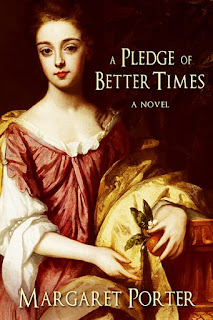
Margaret Porter is the award-winning and bestselling author of twelve period novels, whose other publication credits include nonfiction and poetry. Some of the incidents described above appear in A Pledge of Better Times, her highly acclaimed novel of 17th century courtiers Lady Diana de Vere and Charles Beauclerk, 1st Duke of St. Albans. Margaret studied British history in the UK and the US. As historian, her areas of speciality are social, theatrical, and garden history of the 17th and 18th centuries, royal courts, and portraiture. A former actress, she gave up the stage and screen to devote herself to fiction writing, travel, and her rose gardens.

Connect with Margaret:
Website | Blog | Facebook | Twitter | Amazon 

Monday, May 25, 2015

The Razor's Edge - of Arthur Capell, Earl of Essex

by Anna Belfrage

Some months ago, I presented a certain Arthur Capell to you, a gentleman whose loyalty to his King, Charles I, ultimately lead to his execution (for more, see here). Today, I thought we could spend some time with Arthur’s son – also named Arthur, just to make things confusing.

Can't get enough of it! Love this painting. Arthur Jr to the left
Other than his presence in the beautiful National Gallery portrait that originally sparked my interest in the Capell family, Arthur junior first rides into history as a terrified hostage, the Parliamentarian troops parading the sickly teenager before the besieged city of Colchester in the hope this would spur his father, Baron Capell, to give up. It didn’t. Baron Capell may not have made jokes along the lines of having the instruments required to make more sons, but no matter how distressed he was by the sight of his son, he was not about to betray his comrades.

Fortunately for our Arthur, once Thomas Fairfax realised Baron Capell was not about to give in to his paternal instincts, he had Arthur sent home to Hadham Hall and his anxious mother.

The siege at Colchester ended in capitulation. Arthur’s father never came home alive. Instead, in March of 1649, his wife took delivery of her husband’s body – the head had been sewn back on after his beheading. Times of woe and misery lay ahead, and it was only through Lady Capell’s contacts within the Parliamentarian government that she managed to keep her young family more or less together.

For Arthur, it must have been a confusing and frightening time. His father had died on behalf of his King, but the King was also dead, and instead the new government attempted to reshape England into a Puritan country, a place with little room for merriment and fun.

In 1651, Charles II was soundly defeated at Worcester, and it seemed the royalist cause was forever dead. Except, of course, that there were a number of people throughout England who were less than happy with Cromwell and his tame parliament. Repression does that to people – it brings out their backbone, so to speak.

As all dominant leaders, Oliver Cromwell purged most of his potential competition, ensuring his control remained uncontested. Sound policy (from Olly’s point of view) as long as Cromwell remained hale and hearty, but once the great man fell ill and died, it became apparent the Parliamentarian faction lacked a future leader, Richard Cromwell having proved to be woefully inept.

Arthur, Earl of Essex as a young man
By now, Arthur Capell was no longer a child. The sickly boy who’d been scared silly at being dragged back and forth before the walls of Colchester was now a man who embraced his father’s royalist beliefs, but who was also fervently anti-papist, no doubt a consequence of being raised under the anything but permissive religious atmosphere of Cromwell’s England.

He was also a man with a debt to collect. His father had lost his life for Charles I, and the Capell family had since then lived a borderline destitute life.  When Charles II returned to England in 1661, he went out of his way to reward men like the late Baron Capell, which in this case meant our Arthur was invested with the title of Earl of Essex, complete with substantial landholdings.

The new King needed able servants – trustworthy servants. The new Earl needed purpose. A match made in heaven, one could say. Except, of course, that Charles II and Arthur had very little in common. Where Charles II was witty and expansive, a man who embraced life to the full and who had every intention of enjoying what time he had left on Earth – a fully understandable approach, given years in exile and penury – Arthur was very much about integrity and duty.

Charles was open-minded and tolerant, Arthur was selectively open-minded and not so tolerant, finding the moral lassitude at court disgusting. But he was capable and loyal, so despite Charles II finding his Earl of Essex poor company, he sent him off as ambassador to Denmark for a couple of years, and in 1672 our Arthur was appointed lord lieutenant of Ireland.

At the time, Charles II and Arthur were having one of those rare moments when they mostly saw eye-to-eye on political issues. Arthur, for example, supported the 1672 Declaration of Indulgences, which allowed for a more tolerant approach towards dissenters. He was less happy about extending such tolerance to Catholics, but chose not to make an issue of it at the time – after all, Arthur was now to govern Ireland, a mostly Catholic part of Charles II’s realm, which made it foolish to speak out harshly against papists.

The rapacious Duchess of Cleveland
Arthur was to spend the coming five years managing Ireland. Being gifted with a head for numbers, he quickly set to work straightening the miserable finances, and despite his own religious beliefs he went out of his way to try and understand the Irish and their needs. With Arthur in office, it was pointless to try and buy plum appointments – he gave them to men of real merit. He purged the Irish administration of corruption, insisted Irish revenues should be spent on Irish issues rather than on the King’s lavish court, and in general became much respected in Ireland and just as disliked in London, where his opposition to giving away forfeited Irish estates to royal mistresses and favourites had Charles seeing red.

Obviously, the situation could not go on. Charles did not need men of integrity and convictions as much as he needed financiers – preferably men who did not question how the money was spent – and as a consequence, the Earl of Essex was relieved of his Irish position in 1677, much to the distress of the Irish. Arthur himself was less than pleased, and by his action Charles II had more or less kicked Arthur in the direction of the opposition, led by Lord Shaftesbury.

Shaftesbury
Shaftesbury, or Anthony to his friends, is a man whose political career is a mirror of the complexities of 17th century England. Once a Royalist, then a Parliamentarian, a trusted servant of Cromwell, a proponent of restoring the monarchy, an advocate for free trade, an outspoken defender of Protestant dissenters, a man set on building a government built on Parliament, of ensuring no Catholic would ever again sit on the English throne – well, the man clearly held strong political beliefs.

Arthur and Lord Shaftesbury found common ground when it came to their opinion of papists: they didn’t like them, they didn’t trust them. Neither of them liked the Treaty of Dover, whereby Charles II was to receive an annual stipend from France if he attacked the Dutch. (This despite none of them knowing the truly incendiary clauses in this particular treaty, namely that Charles II promised to convert to Catholicism and return his entire kingdom to the Old Faith). Both of them were very worried about the fact that Charles II had no legitimate heirs – in fact, Lord Shaftesbury proposed that the King divorce his barren Queen and marry a nice Protestant lady instead. Neither of them liked the idea of the Duke of York becoming the next king – even less when it became common knowledge the Duke was a Catholic.

Handsome Monmouth
Initially, Arthur was wary of Shaftesbury, whom he considered too radical. Instead, he teamed up with Lord Halifax, also a man suspicious of a Catholic king, but more interested in curtailing royal power – thereby making it less important who sat on the throne – than in excluding Catholics from the line of succession. Like Halifax, Arthur was sceptical of the young and flamboyant Duke of Monmouth, while Shaftesbury was an eager proponent of forcing Charles II to legitimise his eldest bastard son, thereby once and for all sorting the issue of succession. (As an aside, the fact that Charles II never expressed any desire or intention to do so, must, in my opinion, be taken as proof that Monmouth was, in fact, illegitimate)

Upon his return from Ireland, Arthur served for some time in the Treasury, but resigned his position in 1679, this time in protest at having yet another royal mistress demand a pay-out of 25 000 pounds. The King, in Arthur’s opinion, needed to economise. Charles II, unsurprisingly, did not agree.

James II
By 1680, our Arthur had joined Lord Shaftesbury’s faction and supported the Exclusion Bill, that rather intolerant piece of legislation that had as its purpose to exclude the Duke of York, soon to be James II, from the succession. What finally drove Arthur to move from his previously moderate opposition to this radical approach is unknown, but the man had, throughout his life, expressed anti-papists sentiments, and in the general furore surrounding the Popish Plot (for more, see here) and the utterly despicable Titus Oates, maybe he found it was time to act.

Arthur’s hitherto nice CV was to receive a couple of big inkblots over the coming year. As an example, he was an eager prosecutor of the Catholic Lords implicated in the Popish Plot (a fabrication of evidence in which Shaftesbury seems to have been implicated) and even voted for attainder of some of these men.

He did, however, regain his senses when the Irish Archbishop, Oliver Plunkett, was detained as a participant in plots against the King, and argued for the man’s innocence, even went as far as to intercede with Charles II and plead for Plunkett’s life, but was angrily informed that there was nothing the King could do to save Plunkett – it was too late, and the blame for the loss of innocent life lay squarely on Arthur and his cronies, for persecuting where there was no proof.

In 1682, Shaftesbury fled the country. After years of attempting to advance his position, of persecuting Catholics, of trying to strong-arm Charles II into either divorcing his wife or legitimising the Duke of Monmouth, Shaftesbury had acquired quite the collection of enemies, first and foremost among them the King himself – and his brother. Instead of risking a trial in England, Shaftesbury took a ship to the Continent, where he soon died. In many ways a brilliant man, Shaftesbury does not come across as a likeable man, and his death in foreign lands seems like just desserts for a man responsible for so much death and persecution.

Charles II
In England, Arthur found himself the leader of Shaftesbury’s previous faction, a group of men who supported the Duke of Monmouth as their future king. But where some of the members proposed action, Arthur distanced himself from some of the wilder schemes, such as the Rye House Plot in June 1683. The intention of the plot was to assassinate Charles II and his brother. Due to a change in time-schedule, the plot failed, and in a matter of weeks the leaders were rounded up and arrested – well, except for those who like the Duke of Monmouth fled to the Netherlands.

Arthur was among the arrested and was imprisoned in the Tower. Maybe it was the sensation of déjà-vu (his father had spent his last months in the Tower before being executed), maybe he feared that a trial against him would leave his family destitute, or maybe he was plagued by guilt for having known about the planned assassination but done nothing to stop it, but whatever the case, Arthur decided to take drastic measures.

He asked the guard for a razor with which to pare his nails, and the request was granted. With the razor in hand, he retired to a closet, and that is where his servant found him, wallowing in blood and with his throat cut. Rather than facing the iniquities of a trial, Arthur Capell, Earl of Essex, had chosen to take his own life.

It is said Charles II was genuinely saddened by the news of his death. In his book, Essex might have been difficult and insubordinate, but he was also the son of a man who gave his life in service of a king – a debt that could never be repaid.

Algernon, Arthur's son. Beautiful portrait
Among his contemporaries, Arthur was known as a good man, a sincere patriot, unselfish and conscientious, a man who always did his duty to the best of his capabilities, and who had no serious seditious designs - he sort of just happened to end up leading the vociferous opposition against a future Catholic king.

Whatever the case, just like his father, our Arthur left behind a young family in the care of his wife. In difference to his father, he died not on behalf of his King, but because he had, at some level, betrayed him.

~~~~~~~~~~~~~

Anna Belfrage is the successful author of seven published books, all of them part of The Graham Saga. Set in 17th century Scotland, Virginia and Maryland, this is the story of Matthew Graham and his wife, Alex Lind - two people who should never have met, not when she was born three centuries after him.

Anna's books have won several awards and are available on Amazon, or wherever else good books are sold.
For more information about Anna and her books, please visit her website. If not on her website, Anna can mostly be found on her blog.

Wednesday, February 13, 2013

Sedgemoor - England's last battle, by Tim Vicary


The last pitched land battle in England happened at Sedgemoor, just outside Bridgwater in Somerset, in 1685. And if hadn’t been for a man with a pistol, and an unexpected ditch, it might have ended quite differently.

Earl of Feversham
The two generals on either side were Louis Duras, the Earl of Feversham, and James Scott, Duke of Monmouth. In June 1685 Monmouth had landed with three ships at Lyme Regis, in Dorset, where he recruited an army mostly composed of Protestant West Country cloth workers and artisans, with whose aid he hoped to depose his Catholic uncle, King James II. The army of Louis Duras, and his second in command John Churchill (later the Duke of Marlborough), consisted entirely of professional soldiers. Their job was to crush Monmouth’s rebellion as quickly as they could.


In the three weeks between 11th June, when he landed, and 1st July, the date of the battle of Sedgemoor, Monmouth had done his best to equip and train his part-time soldiers. They were well armed with the latest up-to-date flintlock muskets, shiploads of which he had brought from Holland. Some pikeman had eighteen foot pikes, others had scythe blades tacked to long poles. And to their credit they had already fought two small battles, at Bridport and Philips Norton, in neither of which they had been defeated.

Monmouth’s main problem, however, was his lack of trained cavalry horses. When he landed, he was convinced that many English gentlemen and old friends from his army days – including John Churchill – would ride in to join him, bringing skilled horsemen with him. But very few did. And so his cavalry, led by his friend Ford, Lord Grey, had to make do with such horses as they could beg or steal. Not surprisingly, at their first battle in the crowded streets of Bridport, these animals panicked and bolted, carrying their riders with them. The same problem would bedevil Monmouth at Sedgemoor.


Monmouth's men moved fast. On 21st June they were in Taunton, where Monmouth was proclaimed King. On 25th June they were outside the walls of Bristol, the second city in England. But then, instead of attacking, they retreated, trudging back towards Bridgwater which they had passed on their journey east. It seemed Monmouth had lost the initiative, suffered a fatal lack of
confidence when the promised cavalry did not arrive.

But then, in Bridgwater, he regained his courage. Standing on top of St Mary's church tower by the city walls, he could see the royal army settling down to camp on the flat marshy ground of the Somerset Levels, about five miles away. As the sun set, a mist began to rise, hiding everything from view.  And his scouts brought him hope, in the shape of a local countryman, who knew the moorland outside the town intimately.

‘I can bring you to them, my lord,’ he said. (or something very similar) ‘If your men are quiet, and don’t speak, I can bring you right into the enemy camp before anyone knows you’re there.’

To Monmouth it seemed a risk worth taking. ‘Who dares, wins,’ he might have thought to himself, as he ordered the army to prepare.  Boots and horses’ hooves were muffled with rags, buckles secured so they would not clink. And then shortly before midnight, the town gates were opened and the army filed out – a long line of men, mostly on foot, following the countryman’s lead.

It was dark, and the mist was higher than a man’s head. To avoid getting lost, men held onto their friends, sometimes clutching the jacket of the man in front. There was a scarey moment when they all had to stop, listening to the hooves of a royalist cavalry patrol crossing the road in front of them. But nothing happened, and the line of silent soldiers trudged on, first north, then turning south-east towards the enemy’s camp.


And then they came to a ford. The Somerset Levels are a wide, flat marshy area, only a few feet above sea level, drained by a network of ditches called ‘rhines’, some five feet across, some wider and deeper, like small canals or rivers. Their guide knew the best places to cross, he had assured Monmouth of that. But to some men – and horses – water can be frightening, especially at night, when it’s black, and of an unknown depth. And it was while they were crossing a ford, within a few hundred yards of the enemy camp – you can imagine the hesitations, the urgent whispers, the officer’s orders not to splash or curse or fall over, not to make a noise of any sort –that a pistol went off.

Was it an accident, or treachery? At the time, the man who fired claimed, of course, that it was an accident, and it may well have been. But much later, when he was on trial in front of Judge Jeffreys, Captain Hucker claimed he’d done it on purpose, to warn the royal troops. Jeffreys, to his credit, despised this excuse. ‘First you betray your King, then you betray your fellows,’ he said. 'There is no mercy for such as you.’ When he was sent back to prison, his fellows nearly lynched him.

Whatever the reason, the pistol shot awoke Feversham’s sentries. As Monmouth’s men waded through the ford, they heard shouts in the darkness ahead of them, and drums calling men to arms, rat-a–tat-tat! But they still had a chance.  The enemy was alarmed, confused, and only a short distance ahead; their surprise had almost worked.  And they had been practicing their drill for three weeks now, as if their lives depended on it – which they did. So under their officers’ shouted orders – no need for silence now – they deployed into lines; musket men in the middle, pikemen to right and left – and advanced to where the light of camp fires and slow match was becoming clearer in the mist.

The enemy were in a state of shock and panic – they still weren’t ready. Whereas Monmouth’s men had been visualizing this moment all evening, ever since they left the town. And unlike Feversham’s men, they had modern flintlock muskets, which they had fired in anger several times already.

But then, as they advanced towards the enemy, they saw the rhine.


It wasn't as wide or deep as the river Rhine in Germany, of course not, but it might was well have been. Right there between themselves and the men they were about to attack there was another unexpected drainage ditch. No-one had warned them about this. It was full of black water maybe fifteen yard wide, and who knows how deep? Their officers urged them to cross it, some going down into the water themselves, but somehow, the thought of wading across that black unknown depth while the enemy soldiers stood on the far bank firing down into them was just … too much.

They couldn’t do it.

And so, instead, they stood on their own bank and fired back.  They fired well, for a while, their new flintlock muskets performing as well or better than the matchlocks of their enemy. But the element of surprise was gone; and with it, all their advantage.

Feversham’s men, now they were awake, had two deadly advantages. Firstly, their cavalry. Monmouth’s cavalry had no more success than the infantry at crossing the rhine. They tried to urge their half-trained farm horses into the water and failed. They searched for a ford but had no idea where it was. So they trotted up and down uselessly in the darkness, until Feversham’s cavalry – who’d found the ford in daylight – rode across and chased them away.

canister of grapeshot
The other advantage was artillery. Monmouth had dragged a few small field guns through the mist and darkness to the battlefield, but Feversham had far more. That was why it had been vital for Monmouth’s men to cross the rhine and get into the enemy camp straight away: so that they could capture the enemy guns and either spike them or turn them against their own men. But instead, here they were, still standing on their own side of the rhine, a sitting target for enemy’ field guns. Guns loaded with grapeshot, which could tear through a file of soldiers, killing five or ten men at a time.

And so they lost. They stood there until they could take it no more, and then they fled, some running, some marching grimly down the road to Bridgwater. Monmouth fled on horseback, to be found hiding a field a few days later. The last battle on English soil had been won and lost.

But if Captain Hucker hadn't fired that pistol, and Monmouth's men had dared to cross the rhine – who knows? History can turn on very small moments. 

****
Tim Vicary's novel of the rebellion, The Monmouth Summer, is available as paperback and ebook on Amazon US and Amazon UK. See also his website and blog 


Saturday, January 26, 2013

The Protestant Prince - James Scott, Duke of Monmouth, by Tim Vicary


This story, like so much of English history, begins with a love affair and ends on the chopping block. The love affair began in Holland, in 1648, where the eighteen year old Charles, Prince of Wales, was anxiously awaiting news of the trial for treason of his father, King Charles 1. The young prince, seeking a diversion from these grim matters, met a pretty girl from Wales, Lucy Walter. Like teenagers everywhere, they fell in love, with predictable results. On 9th April 1649, Lucy produced a son, whom they christened James.

By then, Lucy’s prince had become a king. King Charles 1 had been executed three months before, so the baby’s father was now King Charles II – although still exiled from his kingdom. Charles liked the baby, but his love for Lucy did not last. There were plenty of other girls in Holland, after all, and he was a young king with time on his hands. Lucy died in 1658, not particularly mourned by Charles. But he was fond of young James, whom he openly acknowledged as his royal bastard, first of many.
In 1660 Charles II was triumphantly restored to his throne, and two years later he invited his son to join him at court.  The thirteen year old boy was created Duke of Monmouth, and a year later was married to Ann Scott, the twelve-year old daughter of the Duke of Buccleuch. He adopted his wife’s surname, and was henceforth known as James Scott, Duke of Monmouth.
At this time it was perfectly clear what his status was – the beloved ‘natural son’ of the King. True, there were a few stories of how the young Charles, living in poverty in Holland, had once persuaded his threadbare courtiers to bow down before ‘Queen’ Lucy Walters, but no one took such tales as serious evidence that he’d actually married the girl. It was just play-acting, at a drunken party, in a foreign land, long ago. And besides, the wench was dead.
Anyway, Charles had a real wife. In 1662  he married Catherine of Braganza, a Portuguese princess. Catherine was 23, young and beautiful, Charles was virile, and everyone looked forward to the birth of a future Prince of Wales.
Charles was fond of his wife, but in his own way. Morals at his court were notoriously loose. He insisted, right from the start, that his mistress, Barbara Palmer, would be a lady of the Queen’s Bedchamber, and over the years he had many more mistresses, several of whom – like Nell Gwyn  - bore his children. But  unfortunately, Catherine did not. And so, as time passed, people began to wonder who might succeed Charles when he died. The obvious answer was his brother James.
But unfortunately, James was a Catholic. And that was unacceptable to many people in England. Parliament passed the Test Acts, insisting that all holders of public offices swear an oath to accept the doctrines of the Church of England – and the King, of course, was the head of that church.  James refused, so people began to look for an alternative. And their eyes fell upon another James – James Scott, Duke of Monmouth.
Young Monmouth wasn’t interested in religion. He was an energetic, hearty young man, interested in physical sports. Samuel Pepys described him as ‘the most leaping gallant, that I ever saw; always in action, vaulting, leaping or clambering.’ He was an excellent horseman who loved hunting. He loved dancing too, the one interest he shared with his wife, until - perhaps trying to keep up with his energetic leaps – she hurt her leg and became lame. But that didn’t matter to Monmouth, who, like his father, had several mistresses, with whom he had children.
He frequented brothels like his father, too, with scandalous results. Once, at a brothel called Whetstone Park, a watchman asked him and his companions – two other dukes – to keep the noise down.  Laughing, Monmouth gaily drew his sword and ran the man through, killing him. Even for Restoration England this murder of a law officer was a bit much, but the King didn’t mind. He granted:
‘A gracious pardon unto our dear son James, Duke of Monmouth, of all Murders, Homicides, and Felonies whatsoever at any time before the 28th day of February last past, committed either by himself alone, or together with any other person or persons.'
Amazingly, despite all this, the young Duke of Monmouth became a hero to – of all people – the English Puritans! Those who had once supported the ‘good old cause’ of Oliver Cromwell! Why? Well, partly because many people forgive sins a lord that they would never accept in their own family – why else is Charles II so popular? But also because Monmouth was, quite simply, a Protestant – and therefore better than his Catholic uncle James, whom they didn’t want as King at any price.
Also, like his father, Monmouth had the common touch – the ability to speak to ordinary people and make them like him. A bit like Prince Harry today, perhaps. Monmouth was a soldier too. He’d fought with reckless bravery in several campaigns in Holland, and in 1679 led the royal forces against a rebellion in Scotland. His victory was swift, decisive and merciful – only a few leaders being hanged, the rest transported to the West Indies.
So why did it all go wrong?  Put simply, it was because the Exclusionist Party – those who wanted to stop his uncle James from becoming king  – puffed up Monmouth to make him believe he was something he was not – the legitimate son and heir of Charles II. Lucy Waters and Charles had been married, they claimed; lost certificates in a Black Box would prove it. Vast crowds cheered Monmouth in the West Country. He even laid on hands to cure the King’s Evil. (Something only a King could do) The trouble was, nobody could find this Black Box, and the King resolutely denied the story:
‘I do here declare, in the presence of Almighty God, that I never was married nor gave any contract whatsoever but to my wife, Queen Catherine.’
If only Queen Catherine, like Charles’s mistresses, would have a son! But she didn’t. This annoyed the Duke of Buckingham so much that he urged the King to have her kidnapped and sent to Virginia. Then he could divorce her on the grounds of desertion and marry someone else. But unlike Henry VIII, Charles was loyal to his barren wife. He might have dozens of mistresses, but she was his Queen and that was how it was going to stay. Maybe one day, she might even get pregnant …
And then, quite suddenly, he died. His brother, Monmouth’s uncle, became King James II – the first openly Catholic monarch since Bloody Mary.
What was Monmouth to do? Well, rashly, bravely, he sailed from Holland with just three ships to claim the throne. He landed at Lyme Regis, and raised an army of Protestant clothworkers and artisans. ‘Fear Nothing But God’ his standard read – a motto that appealed to his sober, God-fearing followers. In Taunton he declared himself King – a little awkward, since his name, James, was the same as that of the other king, his uncle.
Did he expect to win? Well, yes, presumably. He hoped and believed that his friends, young nobles and soliders with whom he’d shared battlefields and brothels a-plenty, would ride in to join him with regiments of skilled, well-equipped cavalrymen.
But none did. And at the battle of Sedgemoor his brave, half-trained levies were slaughtered by well-trained professionals. Monmouth fled, but was captured in a field in Dorset, and dragged before his grim-faced, merciless uncle. Despite pleading on his knees for his life, he was beheaded on Tower Hill next day.
Would he have made a good king, if he’d won? Unlikely. He’d inherited his father’s love of women, horses, and wild adventures, but none of Charles II’s political skill and cunning. Lord Bruce described him as ‘most charming both as to his person and engaging behavior, a fine courtier, but of a most poor understanding as to cabinet and politics, and given up wholly to flatterers and knaves by consequence.’
That was why his wiser friends did not join him. He was being used by others for their own ends. The tale of Lucy Waters’ marriage and the Black Box was just that; a story his supporters had invented to suit themselves. They knew he wasn’t a real king, and his father knew that too. Once you break the principle of legitimacy, it’s hard to get it back. You’re not far from electing your rulers, and deposing those you don’t like. If Monmouth had become king, he’d have been in a shaky, uncertain position, challenged by critics on all sides. It had been hard enough for his father, and he was a real king.
James Scott was a handsome playboy, who gambled and lost. Not a Protestant prince after all.
*****
Tim Vicary’s novel, The Monmouth Summer, is available on Amazon US and Amazon UK as an ebook and a paperback. You can read about his other books on his website and his blog. 


Sunday, December 30, 2012

The Bloody Assizes: Justice and Cruelty in 1685

by Tim Vicary

The first person brought before the court was a woman. She was seventy years old, partially deaf, and possibly senile. The charge was high treason, for which the penalty was death. Her name was Alice Lyle.

The judge was the Lord Chief Justice of England, the newly ennobled George, First Baron Jeffreys of Wem. In 1685 Jeffreys was 40 years old and had been England’s top judge for 2 years. He was a highly intelligent, ambitious man, renowned for his energy, hatred of criminals, and ferocious skill in cross-examination. He was also a sick man, suffering from a kidney stone. He frequently sipped what was thought to be brandy during trials, leading to accusations that he was drunk. This may have been true, but if so the brandy was probably medicinal, to dull the extreme pain he was suffering. And like most people in chronic pain, he was often in a filthy temper, searching for a scapegoat to vent his fury on.
If that was so, he had been given the perfect opportunity.  Earlier that year, James II succeeded to the throne, and his nephew James Scott, duke of Monmouth, rose in rebellion against him. Monmouth landed at Lyme Regis, in Dorset, and gathered an army of Protestant rebels to depose King James, his Catholic uncle. But the rebels were defeated at Sedgemoor (the last battle on English soil) Monmouth was captured and beheaded, and King James sent Judge Jeffreys to the West Country to teach the rebels a lesson they would never forget.
The charge against Alice Lyle was that she had hidden a rebel fugitive named Hicks in a priest’s hole at her home.  Her defence (she was a wealthy widow, able to hire a lawyer) rested on two points:
a)      Hicks hadn’t even been tried yet, let alone convicted, so there was no proof that he actually was a rebel;
b)      She was too old and doddery to know anything about Monmouth’s rebellion; she thought he was a priest
Jeffreys was having none of it. Point a) – which would certainly have stopped the trial in its tracks today – he brushed aside as irrelevant; of course Hicks was a rebel, everyone knew he had been with Monmouth’s army, he said. For point b) the prosecution produced two witnesses, a man called Barter and a man called Dunne. Barter said he’d seen Dame Alice with Dunne about ‘the business’ by which he meant the rebellion. When Dunne refused to confirm this Jeffreys launched into a terrifying cross-examination.  Part of it went like this:
Jeffreys:  Come now and tell us, what business was that?
Dunne:  (After a long silence) Does your lordship ask what that business was?
Jeffreys: Yes. It is a plain question. What was the business that the lady asked thee, whether the other men knew?
Another long silence.
Jeffreys: He is studying and musing how he shall prevaricate ... But thou hadst better tell the truth, friend ... Now I would know what that business was.
Dunne: I cannot mind it, my lord.
Jeffreys: Oh, how hard the truth is, to come out of a lying Presbyterian rogue!
Dunne: I cannot give you an account of it, my lord.
Jeffreys: Oh blessed God! Was there ever such a villain upon the face of the Earth?
And so on, over half an hour. Very effective cross-examination, you might think, from a prosecution barrister.  But Jeffreys wasn’t the prosecution, he was the judge, whom we think of today as impartial. But that wasn’t how Judge Jeffreys saw his role, not at all. He was there to get convictions, as quickly and efficiently as possible, and that was what he did.
Alice Lyle was convicted and sentenced to be burnt alive. There was no appeal on legal grounds, as there would be today. The only appeal was to the King, for mercy. And King James was merciful, sort of.  Alice wasn’t burnt alive; she was beheaded.
Hers was just the first case in the Bloody Assizes; Jeffreys had well over a thousand more to deal with.  In Dorchester he found 300 prisoners crammed into a small jail, mostly men charged with fighting in Monmouth’s army. Clearly it would take months to try them all individually, but Jeffreys had a better idea. Dispensing with a Grand Jury, he sent his clerk into the jail to offer them mercy if they would confess (and inform on their friends) He repeated this in court:
‘If you will plead guilty, the King, who is almost all mercy, will be as ready to forgive you as you were to rebel against him, yea as ready to pardon you as you are to ask it of him.’
Does that sound familiar? It should: it is the basis of the ‘plea bargain’ which is, unfortunately, practised daily by district attorneys across the United States, and, slightly more discreetly, by the Crown Prosecution Service in England. In 1685 the main differences were:
a) it was the judge who was making a direct offer to the accused, rather than a deal being struck between prosecution and defence lawyers (but then few, if any, of the rebels had defence lawyers) and
b) the punishments the rebels were facing were much more extreme.
The choice was between being transported as indentured slaves to the West Indies, or being hanged.   A cruel punishment indeed, but Jeffreys was able to joke about it.  When Christopher Battiscombe was convicted, his mistress bravely pleaded with the judge to hand over his body, unmutilated, for her to bury after death. ‘Certainly, madam,’ Jeffreys laughed. ‘You shall have part of the body. I know what part you love best and will direct the Sherriff accordingly.’

In fact, of course, the men were not just hanged, but drawn and quartered too.  They were half hanged, then cut down and disembowelled while still alive, and chopped into four pieces. Captain John Kidd was the last of twelve men to be executed like this on the beach at Lyme Regis; he suffered the unimaginable horror of watching this happen to eleven of his friends before him. The courage of such men, many of whom met their deaths while singing a psalm, is as humbling as the cruelty of the executioners is appalling.
Jeffreys ordered all this, but he was not the only monster of cruelty around. At least he acted within the law. James Kirke, the colonel of ‘Kirke’s Lambs’ a royal regiment who wore white coats, was said to have hanged over a hundred rebels without any trial at all. When a pretty young woman begged him in floods of tears to save her father’s life, Kirke agreed on one condition: that she would spent the night in his bed, which she did. When she got up next morning and walked to the window, she saw her father, hanging from the signpost outside the inn.
Such stories, and the fact that the rebels’ arms, legs and heads of rebels were boiled, tarred, and publically displayed in towns and villages all around the West Country, had a terrifying effect. Judge Jeffreys’ Bloody Assizes didn’t make anyone love the King, but they surely made people fear him.
For the next three years, at least.  
Then, in 1688, King William of Orange sailed to England with a much larger army, and chased King James away. James fled abroad, but Jeffreys – now Lord Chancellor - was captured, thrown into prison, and died of kidney disease in the Tower of London.  In the West Country, his death was greeted with understandable delight.
********
Tim Vicary’s novel about 1685, The Monmouth Summer, which touches only briefly on the cruelties described here, was listed as one of the 10 top history books of 2012 by Samantha J. Morris ‘Lady Hertford’ in her blog ‘Loyaltybindsme’. It is available on Amazon UK and Amazon US.