Showing posts with label King James II. Show all posts

Thursday, October 20, 2016

The Great Stuart Bake Off: What They Ate

by Margaret Porter


Typically a person of the Stuart era ate three meals per day. Early risers and those who had the leisure for it--aristocrats, gentry, the merchant and professional classes--ate breakfast. Laborers and farm workers broke their fast, at a very early hour, before beginning their daily work. Heavy with protein, it consisted mainly of cold meat, fish, cheese, washed down with ale or small beer. Dinner, the principal meal, occurred midday or early afternoon, gradually shifting to mid-afternoon, and included any number of dishes. In general, few vegetables were consumed but the table was spread with a vast array of meats, fish, cheeses, pies, and puddings. Many dishes were flavored with common herbs--sage, thyme, rosemary--or costly spices such as saffron, mace, and nutmeg. Supper was a light meal taken before bedtime.

At certain times of the year--and particularly during the Interregnum--fast days were designated. Each year Lent brought restrictions on meat-eating. During one week in Lent, 1661, Lord Bedford's household record indicates the purchase of salted fish, fresh cod, a quartern of smelts, twenty flounders, a chine of salmon, two pairs of soles, and four quarts of oysters. In summertime, fruit was purchased in quantity, for eating but also for preserving in some fashion for later use.
The seasons ordained the substance of meals. Fresh foods were eaten when fresh, and stored as feasible for later consumption. Chief methods of food preservation were pickling, potting, drying, and salting. Fruits were used as sweeting agents, as was honey. Sugar came in loaves, dark in colour, that were cut with snippers and then ground into granules or powder. A drop in price during the century resulted in an expansion of sweet puddings in addition to savoury ones.
The foreign visitor is always a valuable source of information that the resident takes for granted. Monsieur Henri Misson of France was highly enthusiastic about puddings:
The pudding is a Dish very difficult to be describ'd because of the several Sorts there are of it; Flower [flour], Milk, Eggs, Butter, Sugar, Suet, Marrow, Raisins, &c &c are the most common Ingredients of a Pudding. They bake them in an Oven, they boil them with Meat, they make them fifty several Ways. Blessed be he that invented Pudding, for it is a Manna that hits the Palates of all Sorts of People . . . the People are never weary of it. Ah, what an excellent Thing is an English Pudding!
During his stay Misson encountered people who never or seldom ate any bread. He further describes the eating habits of various classes:

They chew the Meat by whole Mouthfuls. Generally speaking the English Tables are not delicately serv'd. There are some Noblemen that have both French and English Cooks and these eat much after the French Manner: But among the middling Sort of People (which are those I spoke of before) they have ten or twelve Sorts of common Meats which infallibly take their Turns at their Tables and two Dishes are their Dinners, a Pudding for instance, and a Piece of roast Beef. Another time they will have a Piece of boil'd Beef, and then they salt it some Days beforehand and besiege it with five or six Heaps of Cabbage, Carrots, Turnips, or some other Herbs or Roots, well pepper'd and salted and swimming in Butter. A Leg of roast or boil'd Mutton dish'd up with the same Dainties, Fowls, Pigs, Ox tripes, and Tongues, Rabbits, Pidgeons, all well moisten'd with Butter without larding. Two of these Dishes always serv'd up one after the other make the usual Dinner of a substantial Gentleman, or wealthy Citizen.


Samuel Pepys by Godfrey Kneller
Anyone interested in a London gentleman's food habits should seek out Samuel Pepys's Diary, in which he recounts various feasts, fasts, 'frolicks'. Every year he threw a party to celebrate the successful removal of the 'stone' from his bladder. (He preserved said object in a leather case, and displayed it to visitors!) It has been observed that his record of dinners and such is sketchy at best, considering the vast amounts of food that the average Stuart gentleman consumed in the course of his day--he remarks only on what is, to him, noteworthy or particularly delectable.

Then, as ever, children were especially fond of sweets and treats. In May and June of 1655, Lord Bedford's account books contain these line items: For six sweet oranges and cherries for my Lady Anne, 1s. 6d. To one that brought a cake for my Lady Anne, 1s.

Those possessed of great estates, like his lordship, could rely upon the produce of his own lands, and tenant farmers fed their families from their grounds and gardens. Residents of county towns obtained their food from weekly markets, and in cities from butchers, fishmongers, poulterers, cookshops, etc.

Kitchen Scene www.metmuseum.org

During the 17th century, the surge in printing presses in England led to increased production of books on food and cookery--the nation was far behind Italy, Germany, and France in that respect. Gervase Markham produced The English Hus-wife in 1615, but it is much more a guide for housekeeping and other skills though it includes recipes.

The 1st English Cookery Book

In 1660, shortly after the Restoration, The Accomplish't Cook or the Art and Mystery of Cookery by Robert May appeared, regarded as the very first English cookery book. The author, son of a cook ('one of the ablest cooks in his time' asserts May in his preface), learned much from his parent, who worked for Lady Dormer. Her ladyship sent the youth to France to train, and during his five years there he had access to the wealth of French cookery books. Following his London apprenticeship, he returned to Lady Dormer's household. During the course of his career he was employed by a number of lords and ladies: The Countess of Kent, Lord Lovelace, Sir Kenelm Digby, Lord Montagu, and more. In addition to the recipes, May helpfully provides menu suggestions for holiday feasts and fasting-days, as well as recommended bills of fare for each month in the year.

The next important tome is Will Rabisha's The Whole Body of Cookery Dissected (1662), a title that bestows a medical and scientific imprimatur upon the subject. Sir Kenelm Digby (one of May's employers) published the first edition of his book of cookery and 'receipts' (recipes) in 1669. Here we have Digby's version of Puffs:
Take new milk Curds, strained well from the whey; then rub them very well; season them with Nutmeg, Mace, Rose water and Sugar; then take an Egg or two, a good piece of Butter, and a handful of flower; work all together, and make them into Balls; bake them in an overn, upon sheets of Paper; when they are baked, serve them up with butter melted and beaten with Rose-water and Sugar.

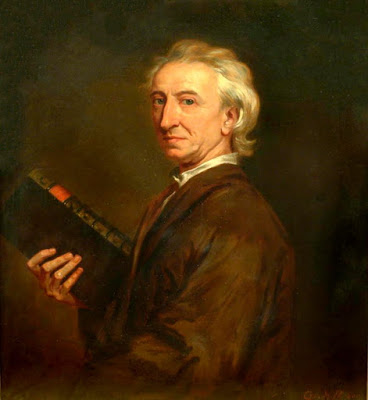
About 1679 John Evelyn, the diarist, began composing a treatise titled Acetaria: A Discourse of Sallets (1699), in which he primarily discusses garden plans, plants, and gardens. His description of produce to be used in salads includes many which are familiar to the modern diner:

--Lettuce, Lactuca...ever was, and still continues the principal Foundation of the universal Tribe of Sallets; which is to Cool and Refresh, besides its other Properties
--Cucumber, Cucumis; tho' very cold and moist, the most approved Sallet alone, or in Composition, of all the Vinaigrets, to sharpen the Appetite, and cool the Liver,
--Endive, Endivium, Intubum Sativum; the largest, whitest, and tenderest Leaves best boil'd, and less crude.
--Cabbage, Brassica (and its several kinds)
--Beet, Beta; of which there is both Red, Black, and White
--Artichaux, Cinara, (Carduus Sativus) hot and dry. The Heads being slit in quarters first eaten raw, with Oyl, a little Vinegar, Salt, and Pepper.
--Carrots
--Basil, Ocimum (as Baulm) imparts a grateful Flavour, if not too strong, somewhat offensive to the Eyes; and therefore the tender Tops to be very sparingly us'd in our Sallet.
--Borrage, Borrago hot and kindly moist, purifying the Blood, is an exhilarating Cordial, of a pleasant Flavour.
--Cresses, Nasturtium, Garden Cresses; But above all the Indian, moderately hot, and aromatick, quicken the torpent Spirits, and purge the Brain.
--Garlick, Allium; dry towards Excess; and tho' both by Spaniards and Italians, and the more Southern People, familiarly eaten, with almost every thing, and esteem'd of such singular Vertue to help Conception, and thought a Charm against all Infection and Poyson.

Title page of Evelyn's book on Sallets


Edward Kidder (born 1665) was not only a skillful pastry cook, he's acknowledged as the proprietor of ones of the first cookery schools in England. Apparently he had several London schools, at Holborn and near Furnival's Inn and at St. Martin's Le Grand, which might have operated simultaneously. Late in his career, after the dawn of the Georgian era, he had his recipes printed and bound as a handbook for his pupils--several copies of which are extant. His students were male--females were privately instructed, as indicated by a note in some editions that 'Ladies may be taught at their own Houses.' Lady Mary Pierrepont (after her marriage Wortley Montagu), who kept house for her widower father, received thrice weekly carving lessons from a master of the art.

Kidder's book is valuable for its detailed account of table arrangement and specific dishes that could be included in each course.

Arrangement of the Table
First Dishes: Pottages of all sorts, a dish of fish, beans & bacon, ham & chickens, pullets & oysters, boiled tongues & udders, a leg of veal, a calves head, a goose or turkey, haunch of venison, leg of mutton & tunips, piece of salt beef, boiled fowls & marrow bones, a turbot & small fish

Bottom Dishes: A chine of veal or mutton, a neck of veal, pigeons in saffron, puddings, roast beef minced pies, cold ham, sliced tongue, venison pasty, potted meats or fowls, cold lobster or salmon or sturgeon, haunch of venison roast, let of mutton roast, hens with eggs, chicken & asparagus, a roast pike, calve's head roasted

Side Dishes: Bombarded veal, Scotch collops, leg of lamb, fricasees white or brown, ragout of any sort, a tart or tansy, scalloped oysters, carp in a ragout, pigeons and asparagus, lamb stones & sweet breads, stewed carp, chickens

For the middle of the table: a grand salad of pickles, a salad & butter, hot or cold pie, tarts, cheesecakes, puffs & custards, jellies, creams, blanc manges, a dish of fruit, sweetmeat tart, patty of lobsters, cold lobsters

Second Course: A dish of wild fowl, green geese or ducklings, roast chicken or pigeons, lamb joint, fried fish, turkey, leverets, partridges or cocks or snipes, pheasants or quails or larks, buttered lobsters or crabs, scalloped oysters, tart or tansy, tarts, cheesecakes, puffs, custards, dish of peas, ragout of mushrooms, lobsters ragout or roast

Plates: Oyster loaves, artichokes in cream, Portugal eggs, cutlets of veal, patties of oysters, crawfish, prawns, shrimp, apricot fritters, Polonia sausages, salmagundy, pickles of any sort, marrow or spinach toast, veal puffs, sweetbreads.

The most elaborate meals, as one would expect, were enjoyed by royalty--who regularly dined in public, so lesser persons could enter the palace to witness this spectacle. Immediately after a monarch's coronation, a massive feast took place in London's Westminster Hall, with all the nobility seated at tables heaped with delicacies. For a description of the foods served at King James II's coronation feast, see my earlier post for EHFA here.


Tables at the Coronation Feast

~~~~~~~~~~~~~~

Margaret Porter is the award-winning and bestselling author of twelve period novels, whose other publication credits include nonfiction and poetry. James II's coronation feast is depicted in A Pledge of Better Times, her highly acclaimed novel of 17th century courtiers Lady Diana de Vere and Charles Beauclerk, 1st Duke of St. Albans. Margaret studied British history in the UK and the US. As historian, her areas of speciality are social, theatrical, and garden history of the 17th and 18th centuries, royal courts, and portraiture. A former actress, she gave up the stage and screen to devote herself to fiction writing, travel, and her rose gardens.

Connect with Margaret:

Website | Blog | Facebook | Twitter | Amazon

Friday, July 15, 2016

An Execution Timeline: The Duke of Monmouth's Last Days

by Margaret Porter


The Duke of Monmouth
The Monmouth Rebellion, geographically based in the West Country, lasted only a month. This failed attempt by King Charles II's illegitimate Protestant son to remove his Catholic uncle King James II from England's throne concluded in July of 1685. James Crofts, also known as James Fitzroy, Duke of Monmouth and Duke of Buccleuch, was captured in a hedge near Ringwood in Hampshire. Under the Act of Attainder passed by Parliament on 13 June, he had been declared a traitor to the Crown and sentenced to death. Therefore no court proceeding was necessary after he was seized. The following timeline traces his final days and hours.

King James II
Monday, 13th July. The Duke of Monmouth arrived in London to face the King he had intended to depose. A monarch typically agreed to receive a condemned person only if intending to grant a pardon. James departed from this precedent. The prisoner was brought before the King, Queen, and royal advisors gathered in William Chiffinch's chamber at Whitehall Palace. The interview lasted nearly fifty minutes, during which Monmouth was forced to declare his illegitimacy. James, unmoved by the spectacle of his prostrated enemy, paid no heed to reminders of their blood relationship and pleas for mercy.

When the tide was favourable, Monmouth travelled by river to the Tower of London, where his children had been placed four days earlier. The King granted the his wife, who hadn't seen him for years, permission to visit that evening. Throughout their arranged marriage the duke had disregarded his vows, and after various amours he deserted his duchess and children to live with Lady Henrietta Wentworth.

Monmouth's duchess & their two sons
Descriptions of how he reacted to his duchess's arrival are in conflict. One source states that he was reluctant to see her. Another describes a "melancholy" encounter in the presence of Lord Clarendon, Lord Privy Seal, who attended at the duchess's request. Clarendon offered to withdraw into the adjoining room to give the couple privacy but Monmouth insisted that he remain--perhaps in hopes that the earl would give a favourable report to the King. He repeatedly asked whether the King was likely to be merciful and spare his life. For the duchess, knowing Monmouth's case was hopeless, her own and her children's interests were paramount. She insisted that he acquit her of any knowledge or involvement in his treasonous activities. She also reminded him that she'd always advised him to obey the King, and had often shown displeasure at his womanising. Monmouth praised her faithfulness and dutifulness, and her "steady loyalty and affection" to the late King (Charles II), and to their children.

In the evening, Monmouth wrote a letter of entreaty to King James, putting into words all that he'd said in person earlier, and much more. It was never received--and probably would have made no difference.

Tuesday, 14th July. The Earl of Sunderland wrote the Lieutenant of the Tower, informing him that Monmouth could have a servant with him. The Bishop of Ely had the hard task of informing Monmouth that his execution would take place the following day. After learning his fate, Monmouth wrote a second letter to the King:
I have received your Majesty's order this day that I am to dye to-morrow. I was in hopes, sir, by what your Majesty said to me yesterday, of taking care of my soul, that I should have had some little more time; for truly, sir, this is very short. I do beg of your Majesty, if it be possible, to let me have one day more, that I may go out of the world as a Christian ought. I had desired several times to speak with my Lord Arundel of Wardour, which I do desire still. I hope your Majesty will grant it me ; and I do beg of your Majesty to let me know by him if there is nothing in this world that can recall your sentence, or at least reprieve me for some time. I was in hopes I should have lived to have served you, which I think I could have done to a great degree ; but your Majesty does not think it fit. Therefore, sir, I shall end my days with being satisfied that I had all the good intentions imaginable for it, and should have done it, being that I am your Majesty's most dutiful
Monmouth.
I hope your Majesty will give Doctor Tennison leave to come to me, or any other that you will be pleased to grant me.
The King refused the request. Monmouth also wrote unsuccessfully to various Catholic nobles who might persuade the King to allow a reprieve of several days. Roman Catholic priests visited Monmouth to determine whether his stated desire to "take care of his soul," i.e. conversion, was genuine. They reported to the King that true salvation was not his purpose but rather, the preservation of his life.

That night the Bishop of Ely and the Bishop of Bath and Wells, both Anglican, visited Monmouth to prepare him for his execution. Monmouth's earlier desperation and panic gradually gave way to acceptance and composure.

Wednesday, 15th July. Dr. Hooper and Dr. Tennison, Anglican priests, arrived and:
"untill he was led furth to executione the divines continowed & renued their pious endeavours to prepaire him for aneother world...Sometymes they prayed with him & sometymes he was left to praye himself alone. His behaviour all the tyme was brave & unmoved & even dureing the last conversatione &c farewell with his ladie and childeren which was the mourningest scene in the world and noe bystanderes could see it without melting in teares he did not shew the least consernedness."
Monmouth was stoic, advising his sons to be obedient to the King. Yet again he exonerated his wife, affirming her innocence and praising her goodness. He also begged her to forgive his many offences, at which point she fell to the floor and fainted. The bishops not only urged Monmouth to repent his misdeeds and crimes, they desired a reconciliation between the couple in this final hour. On the contrary, Monmouth steadfastly refused to forswear his liaison with his longtime mistress, Lady Henrietta Wentworth, who had lived with him in exile in the Low Countries and had not followed him to England. Because he would not repent and receive absolution for this sin, he could not have holy communion.

The crowd on Tower Hill
An immense crowd had gathered on Tower Hill to witness the execution. At ten o'clock that morning Monmouth was delivered by the Lieutenant's coach, accompanied by the two bishops; the priests followed. He was heavily guarded by sheriffs and soldiers carrying pistols, who all ascended the scaffold, already decked in black mourning material. Jack Ketch, the King's Executioner was waiting. Monmouth made several declarations, avowing himself a Protestant, and again mentioning Lady Henrietta, declaring her to be a "virtuous and Godly woman." This displeased the clerics, who badgered him about his amorality and the "Publick Evil" he had done in raising an army against his king and causing much bloodshed. Despite his expressions of regret for wronging others, and words of forgiveness towards his enemies, Monmouth's contrition was not up to the required standard, and the priests continued to press him, to no avail. He chose not to make any speeches. "I come to die," he said.

His words to Ketch are well-known. On presenting his executioner with six guineas, he said he didn't want to be butchered as badly as the late Lord Russell--who received multiple blows from Ketch before being killed. Ketch would receive six more guineas, Monmouth told him, if he performed well. After being undressed, he asked to test the axe blade and was concerned that it was "not sharp enough." Ketch contradicted this criticism.

What followed this exchange was one of the most gruesome executions in English history. The first blow left a cut on the neck, causing Monmouth to raise up and turn. The second stroke was somewhat deeper. After a third, Ketch flung his axe away, saying, "God damn, I can do no more, my heart fails me," and offered forty guineas to anyone who would finish the job. Forced to take up the weapon again, he delivered two more unsuccessful strokes to his victim. And in the end,
"he was fain at last to draw furth his long knife & with it to cutt of the remaining pairt of his neck. If there had not bein a guard before the shouldieres to conduct the executioner away the people would have torn him to pieces soe great was their indignatione at the barbarous usage of the leat [late] Duke of Monmouth receaved at his hand. There were many that had the superstitious curiositie of diping their handkerchiefs in his blood & carreying it away as a precious relique. He [Ketch] left the scaffold surrounded by guards to prevent the crowd from tearing him to pieces."

Jack Ketch finishes the job with his knife blade

The duke's mortal remains were placed in a coffin. After Monmouth's head was sewn back onto his lifeless body, he was interred at St. Peter ad Vincula, the church within the Tower walls.

Possibly a portrait of Monmouth painted post-mortem

The Survivors

King James II. In 1688 his other Protestant nephew--and son-in-law--Prince William of Orange, accomplished what Monmouth could not. The combination of an invading army, a Parliament outraged by his despotic actions, and the birth of a Catholic Prince of Wales resulted in the King and Queen becoming exiles in France. His attempt in 1689-90 to regain the throne by invading Ireland ended in disaster. He died in 1701 at the Château de Saint-Germain-en-Laye in France.

Monmouth's Widow. In January, 1686, Anne, Duchess of Buccleuch received a grant of Monmouth's forfeited property Moor Park and lands in Rickmansworth, Hertfordshire. She married Lord Cornwallis in 1688 and lived to the age of 80, dying in 1732.

Monmouth's Children. They remained incarcerated for some months after their father's death. On 12th August, 1685, the Duchess was permitted to "dispose of the body of her daughter, who is now dead in the Tower." The King permitted Lady Anne Scott's burial in Westminster Abbey. On November 17 a royal warrant ordered the Lieutenant of the Tower to deliver the two sons of the late Duke of Monmouth into the hands of Samuel Hancock, Esq. The elder, James Scott, Earl of Dalkeith lived till 1705. His brother Henry Scott, 1st Earl of Deloraine, survived him till 1730. A sister, Lady Isabella Scott, died in 1748.

Lady Henrietta Wentworth. Monmouth's mistress did not long survive him. Several weeks after her lover's execution she returned to England. She died the following year, in April 1686.

John Ketch, Executioner. The year after his bloody encounter with Monmouth, Ketch insulted a sheriff and landed in Bridewell prison. His job went to his assistant, a former butcher, who after a mere four months was seized for robbery and hanged at Tyburn. Ketch was reinstated but had not long to serve, as he died in November 1686.

~~~~~~~~~~~~~~
Margaret Porter is the award-winning and bestselling author of twelve period novels, whose other publication credits include nonfiction and poetry. Some of the incidents described above appear in A Pledge of Better Times, her highly acclaimed novel of 17th century courtiers Lady Diana de Vere and Charles Beauclerk, 1st Duke of St. Albans. Margaret studied British history in the UK and the US. As historian, her areas of speciality are social, theatrical, and garden history of the 17th and 18th centuries, royal courts, and portraiture. A former actress, she gave up the stage and screen to devote herself to fiction writing, travel, and her rose gardens.

Connect with Margaret:
Website | Blog | Facebook | Twitter | Amazon 

Monday, February 23, 2015

A Coronation Feast, 23 April, 1685

by Margaret Porter


James II in 1685
Wikimedia Commons
 At about noontime on 6 February, 1685,  King Charles II breathed his last and his brother instantly succeeded him as King James II. In the midst of royal mourning and the many necessary changes within the royal household, thoughts quickly turned towards the planning of a coronation. The chosen date was 23 April, the Feast of St. George, England’s patron saint. Ten days after James's accession, the clerk of the Great Wardrobe was making lists of the “Necessaries” for such an event and researching earlier coronations.

 Officers of the Board of Greencloth were ordered to present to the Council “a particular account of the Dinner kept in Westminster-Hall at the Coronation of His Late Majesty King Charles the Second, and also that provided at the Coronation of his Royal Father, together with the whole Expense and Charge of each of the said Dinners.” They returned with the requested information, including the fact that Charles II's coronation dinner cost £1209 15s 7 ½d. But all records for Charles I’s coronation had been “lost in the Great War.”

Francis Sandford 1630-1694
By George Vertue
© National Portrait Gallery, London
We know every detail of James II's coronation day from Francis Sandford, the Lancaster Herald of Arms, whose very thorough, fully illustrated account of the proceedings was commissioned by the King. The planning, the pronouncements, the order of the service, its participants, what they wore, what they did and said . . . he recorded it all.

On the appointed day, the coronation began with a procession from Westminster Hall to the Collegiate Church of St. Peter—commonly known as Westminster Abbey.

The event was plagued by ill-omens: the staves of the royal canopy broke, and it nearly collapsed over the King as he entered the abbey. His newly-minted crown didn't quite fit and almost fell off as soon as it was placed upon his head. And, in a preview of conflicts to come, James—a convert to Roman Catholicism—refused to take communion by Anglican rite as required in the coronation ritual.
Diarist John Evelyn reported, “. . . to the greate sorrow of the people, no Sacrament, as ought to have ben . . . . Having ben present at the late King's Coronation, I was not ambitious of seeing this ceremonie.” Hard to say whether this reluctance was indicative of his opinion of James, or of his experience twenty-five years previously of a day-long event that stretched well into evening.

By five o’clock that day James and his consort Mary Beatrice had been crowned, and they processed out of the Abbey beneath their separate canopies. Wearing their purple velvet robes, carrying their regalia, accompanied by trumpeters, and hailed by the cheering populace, they returned to Westminster Hall for the grand feast.

Within the vast and ancient  hall the tables had been arranged and were already covered by all the banquet dishes that didn’t contain hot food—99 of them on the King and Queen’s table. These consisted of cold meat (flesh and fish) “excellently well Dressed and Ordered all manner of ways. In three very great Chargers and 14 large Basins, Dryed sweet-meats, and Plates of all sorts of Jellyes, Bla-mange etc., with Sallads of all kinds . . . Void places were left for the Hot Meat.” Sandford’s book shows each table and the placement of each dish—numbered, with a corresponding numbered list to indicate what was served and where.


The King and Queen occupied the high table and there were six additional tables, three on either side of the hall. On the west side was the First Table, for court officers and significant coronation participants, and the highest orders of the nobility from dukes and duchesses down to some of the earls and countesses. At the Second Table sat the remainder of the earls and countesses with the viscounts and viscountesses, The lowest table on that side was for barons and baronesses. On the east side was a table for the Lords Spiritual, judges, barons of the Cinque Ports, with a second table for sergeants of law, clerks and masters of Chancery, the Lord Mayor and Aldermen. And the lowest table was occupied by Kings’ Heralds (Francis Sandford was one of them) and Pursuivants of Arms. The King and Queen each had a carver and a cup-bearer, and every member of the nobility “had a servant of their own to wait upon them.” Quite a crowd, as evidenced by the illustration.


 The metrics of the feast are mind-boggling. The King and Queen had 145 dishes as a first course, with 30 more dishes of hot meat served in the second course, for a total of 175 dishes at the royal table. Each of the peers’ and peeresses’ tables had 213 dishes. A total of 1445 dishes was served!

What exactly were these dishes? Thanks to Sandford’s meticulous account, we know every single one of them. Here's a sampling of the more interesting or curious foods served to the King and Queen (period spelling preserved):

pistachio cream in glasses
custards
anchoviz
lamb stones
cocks combs, hot
marrow patie
sallet
stags tongues
sweet breads
patty pidgeon,  hot
cray fish, cold
bolonia sausages, cold
collops and eggs
frigase chicken, hot
rabbets ragou
oysters pickled
portugal eggs
Dutch beef
Andolioes
mushrooms, hot
veal
hogs tongues
cheese cakes
ciprus birds
tansy, hot
asparagus, hot
ragou of oysters, cold
scallops, cold
salmagundy
3 dozen glasses of Lemon jelly
5 neats tongues, cold
a whole salmon, cold
8 pheasants, cold
9 small pidgeon pyes, cold
24 fat chickens, hot
12 crabs, cold
24 partridges, hot
a dish of tarts
soles marinetted
4 fawns, hot
12 quails
10 oyster pyes, hot
pease
artichokes
Beef  a la Royal, hot
turkeys
bacon gammon
spinage
three pigs, hot
almond puff
a square pyramide rising from 4 large dishes on the angles and 4 lesser dishes on the sides, containing several fruits in season and all manner of sweet meats
4 dozen egg pyes, cold
A very large circular pyramide in the middle of the table rising from 12 dishes in the circumference, 6 of which were large and the other 6 less, containing several fruits in season and
all manner of sweet meats
6 mullets large souc’d
8 godwits
18 mincd pyes, cold
8 wild ducks marinated, hot
lampreys
shrimps
24 puffins, cold
smelts
truffles
4 dozen of petit paties, hot
morels
5 carps, cold
8 Ortelans
5 partridge pyes
12 lobsters, cold
12 leverets, hot
sturgeon, cold
24 ducklings, larded, hot
8 capons
8 geese 3 larded, hot
gerkins
soucd’d trout, cold
cabbadge pudding
french beans
periwinkles
cavear
olives
prawns
samphire
trotter pye
taffata tarts
parmezan
capers
whitings, marinated
cockles
mangoes
cardoons
3 dozen glasses of bla-mange, cold

After a 5-hour coronation ceremony, the diners must have been starving—but perhaps also too exhausted to do justice to such a feast. And the day's pageantry wasn't yet over.

During the interval between the first and second courses, the King’s Champion, Sir Charles Dymoke, rode into the hall on a “goodly white horse” with attendants. He declared to all present, “If any person, of what degree soever, shall deny or gainsay our Sovereign Lord, King James II . . . here is his Champion, who say that he lieth and is a false Traitor, being ready in person to combat with him.” The champion threw down the gauntlet, and after a respectable pause, it was returned to him by the herald, at which point he and his horse advanced further into the hall, repeating the challenge and throwing the gauntlet once more. And then again. When this spectacle concluded, the second course was served.

By virtue of his title of Baron of the Cinque Port of Sandwich, Samuel Pepys had marched beside the King in the coronation procession. As gourmand and convivial fellow he must have enjoyed the meats and fish served at his table, the first on the east side—and doubtless ate one of the 36 cheesecakes on the board.

At the conclusion of the feast, the amply-fed King and Queen processed out of the hall, with their regalia. The scheduled fireworks display on the River Thames at Whitehall Palace was postponed until the following night, “by the reason of the great fatigue of the day.” And when it did take place, the results were disastrous—a rocket misfired, an explosion ruined the illuminations, boats carrying spectators overturned, many were drowned.  Still more ill-omens clinging to the unfortunate King James II.

Francis Sandford’s book about the coronation day was so exhaustive that it took fully two years to compose and produce. It was not published until 1687, the year before James was denounced by his people and Parliament, de-throned by his son-in-law William of Orange, and sent into exile in France.

~~~~~~~~~~~~~

Sources:

Sandford, Francis, The history of the coronation of the most high, most mighty, and most excellent monarch, James II by the grace of God, King of England, Scotland, France and Ireland, defender of the faith, &c. and of his royal consort Queen Mary: solemnized in the collegiate church of St. Peter in the city of Westminster, on Thursday the 23 of April, being the festival of St. George, in the year of our Lord 1685; with an exact account of the several preparations in order thereunto, Their Majesties most splendid processions, and their royal and magnificent feast in Westminster-Hall; the whole work illustrated with sculptures; by His Majesties especial command/ by Francis Sandford Esq; Lancaster herald of arms, The British Library.

Tomalin, Claire, Samuel Pepys: The Unequalled Self.

The Diary of John Evelyn.

~~~~~~~~~~~~~
 
Margaret Porter is the award-winning and bestselling author of several historical fiction genres, and is also published in nonfiction and poetry. Various characters in her novel A Pledge of Better Times (April 2015) participate in James II's coronation. Margaret studied British history in the UK and the US. As historian, her areas of speciality are social, theatrical, and garden history of the 17th and 18th centuries, royal courts, and portraiture. A former actress, she gave up the stage and screen to devote herself to fiction writing, travel, and her rose gardens.

Tuesday, April 2, 2013

Babies, warming pans, and wars.

by Tim Vicary


This is the story of a baby who wasn't born at all - or at least, not when his mother said he was. (And she wasn't his mother anyway, so what did she know?) That, amazingly, seems to have been the view of many people in England at the time - perhaps the majority view.

Or to put it another way, it's the story of sixty people - adult men and women - many of whom refused to believe their own eyes.

And so, to prove that this baby hadn't been born - even though it had happened right in front of their own eyes - they raised an army, invaded a country, and deposed a king.
King James II
So what was it all about? 

Well, here's the story. In 1685, Charles II died, and his brother James became king. Unfortunately, King James II was a Roman Catholic.  This made him hugely unpopular with most of the English ruling class, who hated and feared Catholicism -  just as many people fear Islam today - so the idea of a Catholic king was anathema to them. 

In Charles II's reign, there had been a determined attempt to exclude his brother James from the succession. As soon as James was crowned his Protestant nephew, the Duke of Monmouth, led a rebellion against him.

When Monmouth was executed, James seemed secure. His opponents consoled themselves with the thought that James' heirs - his two daughters, Mary and Anne - were both loyal Anglicans with staunch Protestant husbands. So all they had to do was wait a few years for James to die and everything would be all right again.

Mary of Modena
But then - oh dear - James' second wife, Mary of Modena, became pregnant. At first this wasn't too much of a worry because Mary was well into her forties and had suffered a number of miscarriages and still-births already. 

But while her husband proceeded with his plans to reintroduce Catholic officers to his army and Catholic clergy into the universities, the baby in Mary's womb grew steadily bigger. The bigger her belly, the more the public worried. What if she gave birth to a Catholic prince? That would change everything. In their minds people saw a long line of Catholic kings stretching into the future.

Some of their fears were real, others imaginary. The real fears were that England could be plunged into religious war, like those which had convulsed Europe for the past century. Millions on both sides had been massacred. The English Civil War had been partly about religion. And just over the Channel, French Protestants - Huguenots - were being forcibly converted, imprisoned and tortured by the agents of King Louis XIV. Many fled to England with genuine tales of terror.

But there were imaginary terrors too. The reign of Charles II had been disfigured by fantasists like Titus Oates, whose lies about non-existent Catholic plots had sent many innocent men to the scaffold. Many believed the Great Fire of London, even the Plague, were spread by Catholics. To the London mob, Catholics were monsters, like Jews in Nazi Germany.

And here was the Queen about to give birth to one! It was such an awful thought that many people refused to believe it.  After all, the last Catholic queen - Bloody Mary - had claimed she was pregnant too. And it had all turned out to be a fantasy, a dropsy, a joke. Surely this would be the same.

Plans were laid to ensure that 'unbiased' witnesses - respectable Protestants - would be on hand to witness the birth. The Archbishop of Canterbury, for instance, and King James' second daughter, Princess Anne.

Ambulance
But the Queen went into labour a month early, while Princess Anne was still in Bath, taking the waters. On the evening of 9th June 1688, Queen Mary was playing cards in Whitehall until midnight. Then, as her labour started, an ambulance (a sedan chair!) was hurriedly called to carry her to St James' Palace and messengers were sent running hither and thither to summon help and witnesses. Lots of them. A really enormous number of people.

Poor lady - she gave birth in front of no less than sixty people!!

She had two midwives, Mrs De Labadie and Mrs Wilkins, who each received 500 guineas. There were doctors too, and priests, and Lords of the Privy Council, and Ladies of the Bedchamber. Presumably the King was there too (a new man!) and a few servants to light the fire and change the sheets. If it had been possible to invite a TV crew they would have done that too, no doubt.

Or perhaps not. Because even though the Queen gave birth in as public a way as it is possible to imagine, many people still refused to believe it. Princess Anne said it must be a conspiracy to pretend the birth had come early while she was in Bath and couldn't witness it. The Archbishop of Canterbury had been arrested the day before (about something quite different) so he wasn't present either. And the royal obstetrician, Dr Hugh Chamberlen, missed the birth too because no-one could find him - he was attending another birth in Chatham.

Weapon of mass deception
So there you are, people cried. It's obviously not true - it's a conspiracy, a fraud! (Dan Brown would have had a field day.) Gilbert Burnet, a prominent churchman, said the Queen had deliberately sent Dr Chamberlen away so that she could deceive everyone by smuggling in a changeling. 

And why were so many of the witnesses Catholics? Why hadn't the King invited the Dutch ambassador, for instance? No, only a fool would believe the Queen had actually given birth as she claimed. The baby wasn't hers at all.  They'd smuggled one into the bed in a warming pan.

Dr Burnet, who was in Holland at the time, was quite certain of this.

And so the evidence of sixty eye-witnesses counted for nothing. Not even the evidence of the vociferously Protestant midwife, Mrs Wilkins, who surely ought to know what had happened if anyone did. She protested to Dr Chamberlen:  'Alas, will they not let the poor infant alone! I am certain no such thing as the bringing of a strange child in a warming-pan could be practised without my seeing it; attending constantly in and about all the avenues of the chamber.'

Crazy, isn't it? People just believed what they wanted to believe. Nothing like that could happen today, surely? We're far more rational now. Ah, but bear with me. Here's a thought. Far-fetched, I admit, but still ...

Ten years ago, British and American soldiers invaded Iraq. (I told you my idea was far-fetched - a giant leap across centuries!) Why? Because Saddam Hussein had weapons of mass destruction. Almost everyone believed that; even the protesters. I certainly believed it, and so did George Bush and Tony Blair.  I don't think they lied; they deceived themselves. They believed what they wanted to believe, because they were afraid of another, bigger 9/11.

Oh dear, I'm in seriously hot water now. Let's jump swiftly back to 1688. What happened as a result of this earlier bout of mass self-deception, this refusal to believe a baby prince had been born? Well, a large force gathered in Holland, sailed across the Channel and landed in Torbay, England. King James II fled, and was replaced, at Parliament's invitation, by his daughter, Mary, and her husband, William of Orange--the throne, with strings attached. This was the Glorious Revolution of 1688-1689.
James III - 

So there you have it: the invasion of a foreign country, regime change, and a change in the balance of power between monarch and Parliament. Coincidence, or what? All because of a bout of self-deception.

Amazing what a warming pan can do. Especially when it wasn't there at all.

**********

You read about Tim Vicary's books on his website and his blog 


Sunday, December 30, 2012

The Bloody Assizes: Justice and Cruelty in 1685

by Tim Vicary

The first person brought before the court was a woman. She was seventy years old, partially deaf, and possibly senile. The charge was high treason, for which the penalty was death. Her name was Alice Lyle.

The judge was the Lord Chief Justice of England, the newly ennobled George, First Baron Jeffreys of Wem. In 1685 Jeffreys was 40 years old and had been England’s top judge for 2 years. He was a highly intelligent, ambitious man, renowned for his energy, hatred of criminals, and ferocious skill in cross-examination. He was also a sick man, suffering from a kidney stone. He frequently sipped what was thought to be brandy during trials, leading to accusations that he was drunk. This may have been true, but if so the brandy was probably medicinal, to dull the extreme pain he was suffering. And like most people in chronic pain, he was often in a filthy temper, searching for a scapegoat to vent his fury on.
If that was so, he had been given the perfect opportunity.  Earlier that year, James II succeeded to the throne, and his nephew James Scott, duke of Monmouth, rose in rebellion against him. Monmouth landed at Lyme Regis, in Dorset, and gathered an army of Protestant rebels to depose King James, his Catholic uncle. But the rebels were defeated at Sedgemoor (the last battle on English soil) Monmouth was captured and beheaded, and King James sent Judge Jeffreys to the West Country to teach the rebels a lesson they would never forget.
The charge against Alice Lyle was that she had hidden a rebel fugitive named Hicks in a priest’s hole at her home.  Her defence (she was a wealthy widow, able to hire a lawyer) rested on two points:
a)      Hicks hadn’t even been tried yet, let alone convicted, so there was no proof that he actually was a rebel;
b)      She was too old and doddery to know anything about Monmouth’s rebellion; she thought he was a priest
Jeffreys was having none of it. Point a) – which would certainly have stopped the trial in its tracks today – he brushed aside as irrelevant; of course Hicks was a rebel, everyone knew he had been with Monmouth’s army, he said. For point b) the prosecution produced two witnesses, a man called Barter and a man called Dunne. Barter said he’d seen Dame Alice with Dunne about ‘the business’ by which he meant the rebellion. When Dunne refused to confirm this Jeffreys launched into a terrifying cross-examination.  Part of it went like this:
Jeffreys:  Come now and tell us, what business was that?
Dunne:  (After a long silence) Does your lordship ask what that business was?
Jeffreys: Yes. It is a plain question. What was the business that the lady asked thee, whether the other men knew?
Another long silence.
Jeffreys: He is studying and musing how he shall prevaricate ... But thou hadst better tell the truth, friend ... Now I would know what that business was.
Dunne: I cannot mind it, my lord.
Jeffreys: Oh, how hard the truth is, to come out of a lying Presbyterian rogue!
Dunne: I cannot give you an account of it, my lord.
Jeffreys: Oh blessed God! Was there ever such a villain upon the face of the Earth?
And so on, over half an hour. Very effective cross-examination, you might think, from a prosecution barrister.  But Jeffreys wasn’t the prosecution, he was the judge, whom we think of today as impartial. But that wasn’t how Judge Jeffreys saw his role, not at all. He was there to get convictions, as quickly and efficiently as possible, and that was what he did.
Alice Lyle was convicted and sentenced to be burnt alive. There was no appeal on legal grounds, as there would be today. The only appeal was to the King, for mercy. And King James was merciful, sort of.  Alice wasn’t burnt alive; she was beheaded.
Hers was just the first case in the Bloody Assizes; Jeffreys had well over a thousand more to deal with.  In Dorchester he found 300 prisoners crammed into a small jail, mostly men charged with fighting in Monmouth’s army. Clearly it would take months to try them all individually, but Jeffreys had a better idea. Dispensing with a Grand Jury, he sent his clerk into the jail to offer them mercy if they would confess (and inform on their friends) He repeated this in court:
‘If you will plead guilty, the King, who is almost all mercy, will be as ready to forgive you as you were to rebel against him, yea as ready to pardon you as you are to ask it of him.’
Does that sound familiar? It should: it is the basis of the ‘plea bargain’ which is, unfortunately, practised daily by district attorneys across the United States, and, slightly more discreetly, by the Crown Prosecution Service in England. In 1685 the main differences were:
a) it was the judge who was making a direct offer to the accused, rather than a deal being struck between prosecution and defence lawyers (but then few, if any, of the rebels had defence lawyers) and
b) the punishments the rebels were facing were much more extreme.
The choice was between being transported as indentured slaves to the West Indies, or being hanged.   A cruel punishment indeed, but Jeffreys was able to joke about it.  When Christopher Battiscombe was convicted, his mistress bravely pleaded with the judge to hand over his body, unmutilated, for her to bury after death. ‘Certainly, madam,’ Jeffreys laughed. ‘You shall have part of the body. I know what part you love best and will direct the Sherriff accordingly.’

In fact, of course, the men were not just hanged, but drawn and quartered too.  They were half hanged, then cut down and disembowelled while still alive, and chopped into four pieces. Captain John Kidd was the last of twelve men to be executed like this on the beach at Lyme Regis; he suffered the unimaginable horror of watching this happen to eleven of his friends before him. The courage of such men, many of whom met their deaths while singing a psalm, is as humbling as the cruelty of the executioners is appalling.
Jeffreys ordered all this, but he was not the only monster of cruelty around. At least he acted within the law. James Kirke, the colonel of ‘Kirke’s Lambs’ a royal regiment who wore white coats, was said to have hanged over a hundred rebels without any trial at all. When a pretty young woman begged him in floods of tears to save her father’s life, Kirke agreed on one condition: that she would spent the night in his bed, which she did. When she got up next morning and walked to the window, she saw her father, hanging from the signpost outside the inn.
Such stories, and the fact that the rebels’ arms, legs and heads of rebels were boiled, tarred, and publically displayed in towns and villages all around the West Country, had a terrifying effect. Judge Jeffreys’ Bloody Assizes didn’t make anyone love the King, but they surely made people fear him.
For the next three years, at least.  
Then, in 1688, King William of Orange sailed to England with a much larger army, and chased King James away. James fled abroad, but Jeffreys – now Lord Chancellor - was captured, thrown into prison, and died of kidney disease in the Tower of London.  In the West Country, his death was greeted with understandable delight.
********
Tim Vicary’s novel about 1685, The Monmouth Summer, which touches only briefly on the cruelties described here, was listed as one of the 10 top history books of 2012 by Samantha J. Morris ‘Lady Hertford’ in her blog ‘Loyaltybindsme’. It is available on Amazon UK and Amazon US.