Showing posts with label horses. Show all posts

Thursday, August 6, 2020

My Kingdom for a Horse: The Cost of the Equestrian Lifestyle in the Middle Ages

By Rosanne E. Lortz

It is the prince of palfreys. His neigh is like the bidding of a monarch, and his countenance enforces homage…. I once writ a sonnet in his praise and began thus: “Wonder of nature—”
--Shakespeare's Henry V  
A horse, a horse! My kingdom for a horse!
--Shakespeare's Richard III

Very few people (unless they happen to find themselves in the same sticky situation as Richard III did) would consider trading the kingdom of England for something as inconsequential as a horse. And yet, when the medieval horse is compared to something other than the inestimable value of a kingdom, it was in fact quite a costly item, and an item that added a great deal of consequence to its owner.

A thirteenth century treatise on horses states:
No animal is more noble than the horse, since it is by horses that princes, magnates and knights are separated from lesser people, and because a lord cannot fittingly be seen among private citizens except through the mediation of a horse. 
The owning of horses, and especially warhorses, was an essential part of being a medieval nobleman precisely because it was something far out of the reach of a simple peasant.

Steven Muhlberger, in his book Jousts and Tournaments, helps us understand the value of warhorses during the thirteenth and fourteenth centuries by looking at the records of the king’s compensation to men-at-arms for horses lost during a campaign. He says that, “the lowest value assigned to a warhorse was £5 and the highest £100.”

To put this in perspective, “a well-off English peasant family at the beginning of the century might earn just a little over £3 annually.” In order to qualify to become a knight, Muhlberger says that a landowner would need to make £40 a year. They were “an elite class that included at the very most 1500 men.

With warhorses being valued all the way up to £100, some of the noblest of the beasts would be worth more than a lower-level knight’s yearly income. The loss of a horse, therefore, would be a devastating blow to all but the wealthiest of men (meaning that a man would think twice about taking his horse into battle…unless the king was willing to compensate him if his horse was lost).

Detail of a horse from a medieval bestiary

Besides war, tournaments were another place where horses might be lost…or won. In many cases, the loser of the joust had to forfeit his horse to the winner.

Geffroi de Charny, one of the premier French knights of the fourteenth century, wrote a series of questions and answers dealing with the etiquette of the joust. Unfortunately, the answers (if they were ever written down) have been lost to posterity, but the content of the questions is still revealing.
2. If it happened that…one knight knocked another to the ground with a stroke of the lance, his saddle being between his legs and the whole thing off the horse, will he who knocked the other down win the horse? What do you say in this case, will it not be judged by the laws of arms?  
3. Knights are jousting without any formal announcement, and one knight knocks another down and out of the saddle with a stroke of the lance. Will he who knocked the other down win the horse? What do you say? 
5. In the emprise it is said that anyone who kills a horse with a stroke of a lance will pay for it. So it happens that in jousting one strikes the other’s horse with his lance well advanced; but their horses collide so hard that both of them fall to the ground. Will he who struck the horse with the lance pay for it or not? What do you say? 
8. A banneret sends out from his entourage some knights to go out with him in the fields to joust with those who have set the emprise; …If there are two or three of them whose horses are dead and injured in the joust from blows or falls, will the banneret be obliged to compensate them? What do you say?
From reading just a short sampling of these questions, a common theme emerges—the theme of who deserves to win a horse and who is required to compensate for a horse’s loss. In fact, out of the twenty questions centered around jousting, nineteen of them deal with these equestrian issues. Charny’s questions, designed to standardize judicial rulings in the “law of arms” at tournaments, reinforce the idea of just how consequential the possession—and loss—of a horse could be.

A medieval warhorse might not have been worth an entire kingdom, but he was still worth a tidy chunk of change. And since the consequence of owning a horse was not something the nobler classes would willingly do without, it was essential for kings to recompense knights when horses were lost and for tournament law to clearly explain when a horse would be forfeit.

The horse was the ultimate status symbol in the later Middle Ages. Shakespeare's scene in Henry V describing "the prince of palfreys" was clearly written to poke fun at the French prince...and yet, knowing how valuable horse of this period actually were, one can almost understand why the Dauphin once “writ a sonnet” in praise of his horse, whose “neigh is like the bidding of a monarch” and whose “countenance enforces homage.”

BIBLIOGRAPHY

Muhlberger, Steven. Jousts and Tournaments: Charny and the Rules for Chivalric Sport in Fourteenth Century France. Union City, CA: Chivalry Bookshelf, 2002.

~~~~~~~~~~~~~

Rosanne E. Lortz (“Rose”) is a writer, editor, teacher, history-lover, and mom to four boys. Her first book, I Serve: A Novel of the Black Prince, released in 2009. This book explores the tumultuous landscape surrounding the Hundred Years’ War and the Black Death and is a tale of arms, of death, of love, and of honor. In 2015, Rose began her Pevensey mysteries, novels of romantic suspense set during the British Regency (with inspiration from medieval characters and events). The first three titles are: To Wed an Heiress, The Duke’s Last Hunt, and A Duel for Christmas. Rose has served on the board of the Historical Novel Society North America and works to promote interest in historical novels. Find Rose on website, and her books on Amazon.


Monday, May 25, 2020

Equestrian Pageantry in Tudor and Stuart Times

by Margaret Porter


William Cavendish, 1st Duke of Newcastle


The basis of equestrian pageantry began with Xenophon of Athens, who first codified the movements. His treatise On Equitation (circa 400 BC) was first printed in 1512, inspiring centuries of artistic horsemanship, the origin of modern-day dressage. It was then referred to as the Art of Manège, or High School Riding. Riding academies were founded--initially in Italy and Spain. Over time the horse trainer, noble rider, choreographer, composer, and costumier united to develop a popular and exclusive entertainment. During the Renaissance, horse ballets or carrousels rose to prominence at European royal courts, eventually replacing jousting tournaments. A carrousel featured a mock battle, with group manueuvres, quadrilles, and individual feats showcasing elements of the balancing, leaping, jumping, and flying 'airs above the ground': the levade, croupade, courbette, ballotade, and capriole.

England


English royalty preferred court masques to carrousels. But everyone liked a clever horse and rider. The common people tended to prefer low comedy to balletic grace.
Marocco & William Baknes
Marocco, sometimes referred to as Bankes's horse, was the most famous dancing horse of the Renaissance. Born 1586, he was alternately described as a bay, a chestnut, or white. Petite and well-muscled, he was extremely agile, intelligent, and easily trained. His owner, William Bankes of Staffordshire, took his marvel to London. Marocco's initial performances took place in Gracechurch Street, and he was later stabled at the Belle Sauvage Inn and performed there. Marocco, who wore silver horseshoes, could dance a jig, count, play dead, walk on his back legs, and urinate on command. He could also identify which ladies in his audience were sluts, and which were virtuous. He made his bow to Queen Elizabeth I. And he bared his teeth at King Philip of Spain. John Donne and Shakespeare knew of Marocco (there's a reference in Love's Labours Lost) and almost certainly witnessed performances similar to this:

Banks perceiving, to make the people laugh, saies; 'seignior,' to his horse, 'go fetch me the veryest foole in the company.' The jade comes immediately, and with his mouth drawes Tarlton [a famous clown and comedian] forth. Tarlton with merry words, said nothing but, 'God a mercy, horse.' In the end Tarlton, seeing the people laugh so, was angry inwardly, and said: 'Sir, had I power of your horse as you have, I would doe more than that.' 'What ere it be,' said Banks, to please him, 'I will charge him to do it.' 'Then,' said Tarleton: 'charge him bring me the veriest whore-master in the company.' The horse leades his master to him. Then 'God a mercy horse indeed,' saies Tarlton. (1611)
The horse was immortalised in various verses. One example:

Bankes hath a horse of wondrous qualitie
For he can fight, and pisse, and daunce, and lie,
And finde your purse, and tell what coyne ye have:
But Bankes, who taught your horse to smell a knave?

In 1601 he performed his greatest feat, climbing the thousand steps to perform on the rooftop of St. Paul's Cathedral--the medieval one, not the Christopher Wren one with the dome. After touring England and visiting Scotland, he travelled to Europe. In Paris he caused such a sensation that Bankes was accused of sorcery, and to save himself revealed that he controlled the horse primarily through hand gestures. Marocco performed in Germany and travelled as far as Portugal. Returning to England, Bankes worked as a trainer in the royal stables during James I's reign, and also trained the Duke of Buckingham's horses.


Bankes's acquaintance Gervase Markham produced A Discourse on Horsemanship (1593), in which he writes of 'that most excellent and prayse worthie gyft, the breeding and ryding and trayning uppe of horses.' In his multi-volume Cavelarice: Or the English Horseman (1608) dedicated to Prince Henry, James I's son and containing William Bankes's secrets for training Marocco. Markham attributes human emotions to horses, stating, 'It is most certaine that everie horse is possest with these passions: love, joy, hate, sorrow and feare.' He also charts the different 'humours' during the lifetime of the horse as it matures: 'Now these tempers do alter, as the powers of a horse either increase or diminish, as thus, a Foale is said to have his temper from the Fire and Ayre, a horse of middle age from the Fire and the Earth, and a horse of the old age from the Earth and the Water.'


1st Duke of Newcastle
William Cavendish, the polymath First Duke of Newcastle was one of the great riders of his age. Margaret Cavendish, his duchess and biographer, describes the admiration his riding excited at the English court, where was responsible for the education of the future King Charles II. In that role imparted his riding skills to the then-Prince of Wales:
But not only strangers but his Majesty himself, our now gracious Sovereign, was pleased to see my Lord ride, and one time did ride himself, he being an excellent master of that art, and instructed by my Lord, who had the honour to set him first on a horse of manage when he was his governor [instructor, tutor]...his Majesty's capacity was such that being but ten years of age he would ride leaping horses and such as would overthrow others and manage them with the greatest skill and dexterity to the admiration of all that beheld him.
A firm and devoted Royalist, Newcastle spent Interregnum on the Continent. In Antwerp, where he occupied the house associated with painter Peter Paul Rubens, he established a riding school. Then, and later, he published books on horsemanship and established his famous riding-school, exercised 'the art of manège' (High School riding), and published his first work on horsemanship, Méthode et invention nouvelle de dresser les chevaux (1658). After the Restoration and his return to England, he published A New Method and Extraordinary Invention to Dress Horses and Work them according to Nature (1667).

He was not humble about his abilities and their effect upon spectators:
The Marquess of Caracena was so civilly earnest to see me ride that he was pleased to say it would be a great satisfaction to him to see me on horseback, though the horse should but walk...he came to my manage [manège] and I rid first a Spanish horse called Le Superbe, of a light bay a beautiful horse, and though hard to be rid yet when he was hit right he was the readiest horse in the world. He went in corvets forward backward sideways on both hands made the cross perfectly upon his voltoes and did change upon his voltoes, so just without breaking time that a musician could not keep time better, and went terra a terra [terre-á-terre] perfectly. The second horse I rid was another Spanish called Le Genty, and was rightly named so for he was the finest-shaped horse that ever I saw...no horse ever went terra a terra like him so just and so easy and for the piroyte [pirouette] in his length so just and so swift, that the standers by could hardly see the rider's face...truly when he had done I was so dizzy that I could hardly sit in the saddle. The third and last horse I rid then was a Barb that went...very high both forward and upon his voltoes and terra a terra. And when I had done riding, the Marquess of Caracena seemed to be very well-satisfied, and some Spaniards that were with him crossed themselves and cried 'Miraculo!'

France


Grand  Carrousel, 1662

Many English aficionados of equestrian skill were exposed to the carrousel at the French court. Antoine de Pluvinel (1555-1620), a well-born Frenchman, studied equitation and other subjects in Italy, returned to found an academy at Faubourg St. Honore. He served as chief instructor, or gouveneur, to the Dauphin, the future Louis XIII, and his precepts for riding were published in The Maneige Royal, or L'Instruction du Roy (1623), written as a dialogue between master and pupil. In 1612, Pluvinel devised a fifteen-minute carrousel celebrating the marriage of ten-year-old Louis and Anne of Austria.

Like father, like son. The 1662 Grand Carrousel at the Tuileries, performed over two days, celebrated the birth of the Dauphin, son of Louis XIV. It was a grand display of the young King's power and splendour. Louis participated, as did the royal dukes. The riders and their horses were elaborately costumed, and the characters were allegorical and representative in nature--Romans, Turks, famous warriors from history. Teams of participants, each led by a duke or the king, performed this ballet to music created by the court composer Lully. The horses' decorations alone cost one hundred thousand livres. Though not English by birth, England's Dowager Queen, Henrietta Maria, witnessed her nephew's performance.

Louis XIV in Le Grand Carrousel

Monsieur, the King's brother

In May 1686, the two-day Carrousel des Galantes Amazones was held at Versailles. All the most important people received tickets, including the English ambassador, Sir William Trumbull, and his wife. The story depicted was that of Alexander the Great (portrayed by the now adult Dauphin) and the Amazon Queen Thalestris (the Duchess of Bourbon). This was the first time ladies appeared in a carrousel, and all, men and women, were spectacularly attired in costumes by Jean Berain.
Carrousel des Amazones at Versailles, 1686

The King's Champion


After every English coronation, an elaborate banquet was served to the participants, and it included a unique and historic ceremony involving equestrian spectacle. A designated 'King's Champion' (or Queen's) mounted on a steed, rode into Westminster Hall and dared anyone to challenge the new ruler's right to succeed. For more than six hundred years members of the Dymock family held this position, although the George IV coronation in 1821 was the occasion that a Dymock was called on to perform his hereditary role, described thus in 1660:
...to have on the Coronation day one of the King's great coursers with a saddle harness and trappings of cloth of gold and one of the best suits of armour with cases of cloth of gold, and all such other things appertaining to the King's body...if he was going into mortal battel. And on the Coronation day to be mounted on the said courser ...being accompanied by the High Constable and Marshal of England and the King's Herald with a trumpet sounding before him to come riding into the Hall to the place where the King sits at dinner with the crown on his head...to proclaim with an audible voice these words following...that if any person of whatsoever degree he be, either high or low, will deny or gainsay that Charles the Second King of England Scotland France and Ireland son and next heir of our late sovereign Lord Charles the First deceased defender of the faith... ought not to enjoy the crown thereof here is his Champion ready by his body to assert and maintain that he lyes like A false traitor, and in that quarrel to adventure his life on any day that shall be assigned him. And thereupon the said Champion throws down his gauntlet, and in case no man shall say that he is ready in that quarrel to combat then as hath been usually done at all former Coronations of Kings and Queens of this realm...


James II's Champion (British Museum)

Conclusion


The famed Royal Lippizzans of Vienna's Spanish Riding School are modern equivalents of the dancing horses of centuries past, as are the Olympians in the dressage competitions in the Summer Games. Modern groups recreate versions of carrousels that were seen by Henrietta Maria, Charles II, and their kinsmen Louis XIII and Louis XIV, and French courtiers. The one I attended in Brussels is an indelible memory. A video of a similar performance is here. A section of Lully's music for the Grand Carrousel can be heard here.

This is an Editor's Choice from the #EHFA archives, originally published December 15, 2016.
~~~~~~~~~~~~~
 
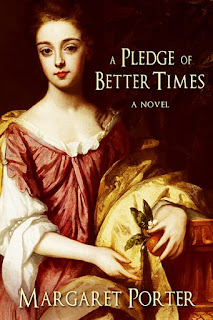
Margaret Porter is the award-winning and bestselling author of twelve period novels, whose other publication credits include nonfiction and poetry. The Carrousel des Amazones is the setting for a scene in A Pledge of Better Times, her highly acclaimed novel of 17th century courtiers Lady Diana de Vere and Charles Beauclerk, 1st Duke of St. Albans.

Margaret studied British history in the UK and the US. As historian, her areas of speciality are social, theatrical, and garden history of the 17th and 18th centuries, royal courts, and portraiture. A former actress, she gave up the stage and screen to devote herself to fiction writing, travel, and her rose gardens.

Connect with Margaret:

Website
Blog
Facebook
Twitter
Amazon


Friday, October 19, 2018

Travelling in Comfort: The Importance of Horse Gaits in the Past

by Natalie Rose

Anyone familiar with horses and even those not so familiar with them will know about walking, trotting and galloping, maybe even cantering. There are however a pile of other gaits available, and in the past when animals were the only land transport available people really knew the value of them!

A travelling horse was a defined type of animal in the past. You were extremely lucky to be travelling on some kind of level, dry, well maintained road in the past and as such wheeled vehicles were virtually useless in most areas for at least half the year, if at all. Peasants would have been grateful for anything to get their feet out of the mud no doubt, but anyone who was anyone would have wanted a 'gaited' horse to ride. Trotting horses, so familiar today, were dismissed as bone shakers.

A single gene is responsible for producing odd gaits in animals and it tinkers with messages sent via the spinal cord, possibly making the cord itself more flexible. It sounds terrible and chaotic, but in fact the gaits produced are slightly more efficient than the other counterparts and as a handy by product, significantly smoother and more comfortable for humans!

In medieval times 'amblers' were much prized for long distance riding in comfort and most often used as 'palfreys' - light riding horses. What the 'amble' actually was is open to interpretation, as there are many different gaits for a horse to use and some can be extremely difficult for the layperson to identify with the naked eye as the legs are moving so fast! It's possible that any differing gait was termed an amble in order to bump up the value of a horse!

If you are a rider and want to test the theory, probably the closest ride to a medieval palfrey available in Britain today is on an Icelandic. Icelandics are short, hardy horses that can go for hours in a pace called a tolt. A tolt is like a power walk; to the observer it looks like it would feel like riding a sewing machine, but trust me, it is smooth as silk to ride - highly recommended!

"The period from around 1650 to the mid 1830s brought a revolution in British transport...The state of the roads at the beginning of this period was appalling. An Act of Parliament in 1555 holding each parish responsible for the roads passing through it had made no difference. But with the economy and trade expanding, some system for maintenance and improvement was desperately needed. The solution eventually reached was by way of travellers paying a toll, and this was the beginning of the turnpike system." - Brian Houghton, Coaching Days in the Midlands (1997).

The turnpike system was sometimes unpopular, but it did get the job done and wheeled carts and carriages could come into their own. Suddenly the other gaits were less important as the wealthy now wanted to ride in relative comfort, away from the sun or wind, snow or rain and trotting was perfectly acceptable for this purpose.

One of the interesting quirks of all this for a transport geek like me is that thesedays, when riding is such a common pastime, everybody rides trotting/galloping horses and the only strongholds left for a gaited breed in this country is within driving - standardbreds are used for harness racing where pacing is valued as it is ever so slightly faster than trotting.

Another is the Hackney, now a very endangered breed and inextricably linked with carriage driving despite the distinctive high-stepping trot they use having been designed to absorb some of the shock of a trot, to make things more comfortable for a rider. I am lucky enough to live in one of the heartlands of the Hackney breed in East Yorkshire (the other is Norfolk - I suppose long, flat roads were a good nursery for roadhorses).

"The Vale (of Pickering), the Wolds, the Holderness, probably employ a hundred thoroughbred stallions. One hundred mares are considered the complement for one horse: some of them, perhaps, do not get fifty. On this calculation there are from five to ten thousand horses bred between the Eastern Wolds and the Humber." - The Rural Economy of Yorkshire, William Marshall (1788).

I am very close to Howden, which used to host a famous horsefair, now sadly a distant memory, which would bring people flocking from all over the country to buy and sell horses. From the ballad 'Howden Fair':

It's I have been to Howden Fair,
And of what sights did I see there,
To hear my tale would make you stare,
And see the horses showing,
They come from east, they come from west,
They bring their worst, they bring their best,

Back in their heyday Hackneys would be raced, often under heavy riders more than 15st, on ordinary country roads. Although belting hammer and tongs along roads would make some modern equestrians wibble, it seems to have been easier on the horses than the horseracing we are familiar with today as horses were regularly competing at great ages. From Tom Ryder's wonderful 'The High Stepper', an account of 'The Pretender' at 33 years of age from a letter in The Sporting Magazine, July 1821:

"...the horse in question is now serving mares in Westmoreland and Cumberland....was bred by Christopher Rook (Wroot), Long Sutton, Lincolnshire. His first peformance was in that county, when he trotted two miles in 5 min, 54 sec., with a high weight, upon green sward. I well remember his first appearance in a market town in the north. The Johnny Raws smiled at his emaciated form, but the moment room was given for him to get upon his pins every other stallion that was exhibited retired into the shade in an instant....'it is remarkable that trotters, unlike gallopers, do not lose their speed from old age many having been known to trot as fast at 20, and even near 30 years of age, as they did in their prime'. It appears to be the case with this animal."

I'm sure it's always difficult for authors passionate about their time periods to decide when that line has been crossed - when have you put so much detail from your research in that your readers are starting to notice it and maybe even have a little snooze. I must admit, how people get about in my writing probably crosses that line, my characters never merely ride a horse, they pace or amble on a roadster or a palfrey, but I am allowing myself this indulgence in the hope of subtley educating about the fascinating, intricate world of transport before steam.

Sources:
The High Stepper - Tom Ryder (1997)
Coaching Days in the Midlands - Brian Houghton (1979)
Horse Gaitedness: It's in the Genes - Natalie DeFee Mendik (April 17, 2013) - http://www.thehorse.com/articles/31702/horse-gaitedness-its-in-the-genes

~~~~~~~~~~~~~

Natalie is a farmer from East Yorkshire and raises and trains oxen, some of which go on to perform with stunt team "Les Amis". She has published two nonfiction books about oxen and the Bearnshaw series set during the Wars of the Roses and Tudor years is her first foray into fiction.

Bearnshaw: Legend of the Whyte Doe

Amazon US
Amazon UK
Amazon CA

Website
Blog


Wednesday, October 24, 2012

Sir Francis Drake, the Hellburners of Holland, and the Sea of Horses

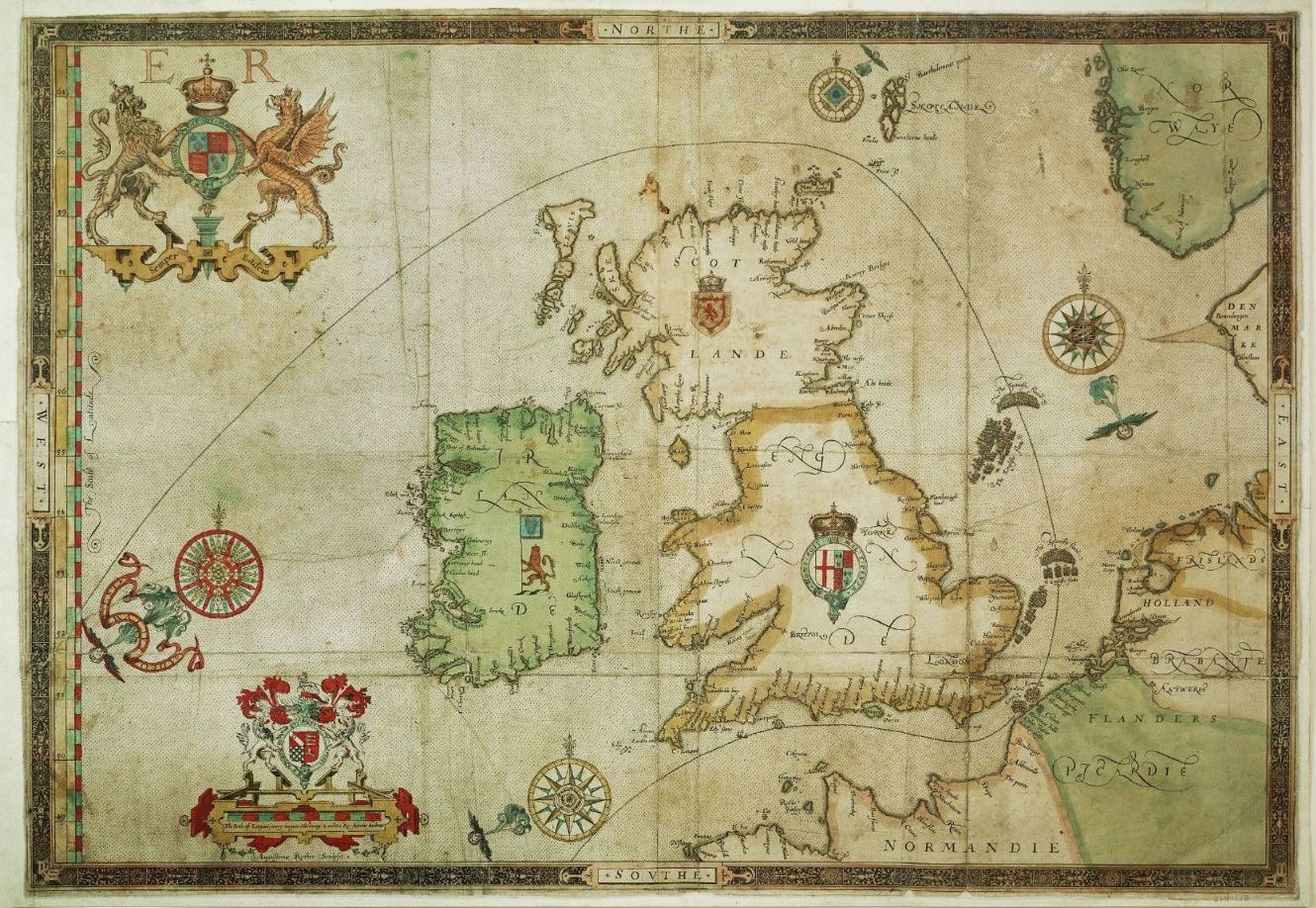
What defeated the Spanish Armada? Well, the English navy, of course, and Lord Howard, Francis Drake, John Hawkins. They sailed out of Plymouth in their gallant little ships and harried the Spanish galleons all along the Channel from the Lizard to Calais until the Spaniards had had enough. It was a great naval victory.
Well, yes, up to a point. The English ships – many of which were as big or even bigger than the Spanish – did all of that. It was a continuous naval battle lasting – with intervals – over a week. There was lots of cannon fire – particularly from the English, who probably fired about three times as many cannon balls as the Spanish. It was a major naval battle – 150 ships in the Spanish fleet, about the same in the English.
But – here’s a strange thing. Despite all those guns, and all those cannon balls, not a single ship was sunk by enemy fire on either side. Not one. Because naval gunnery simply wasn’t good enough.  And anyway, wooden ships were notoriously difficult to sink. Even in the battle of Trafalgar, when naval cannons were much more powerful, most ships were dismasted and battered into hulks, rather than being actually sunk.
So in 1588, the Armada made it all the way along the English Channel to Calais, battered, but unbeaten. The English ships were a nuisance, but the mighty Spanish fleet was still as much of a threat as it had been a week earlier. More so, in fact, because it was very close to achieving its first objective.
It’s important to understand that the Armada itself wasn’t an invasion fleet. Even though it had lots of soldiers and horses on board (more about those later) the Armada’s job was to act as an escort for another Spanish army, led by the duke of Parma, which was in Holland. Parma’s men (and horses) were supposed to cross the Channel on flat-bottomed barges, while the galleons of the Spanish Armada protected them from the English navy. The same plan that Napoleon and Hitler tried to use later.
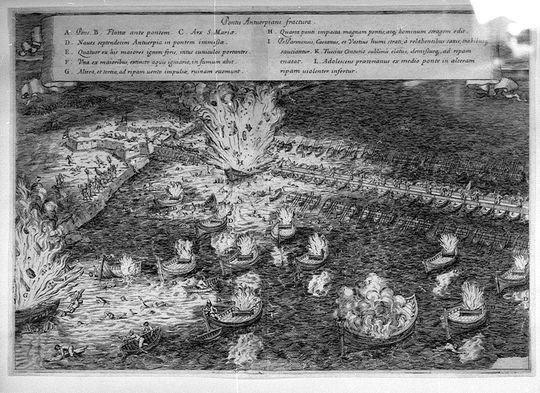
So why did it fail?   Well, that’s where the secret weapon comes in - the terrible Hellburners of Holland. These were really scarey – the nuclear weapons of the sixteenth century. They had first appeared in 1585, at the siege of Antwerp. The Spanish army had blocked access to the city with an 800 metre long bridge made of ships tied together across the river. The Dutch needed to break this blockade, or they would starve. So on the night of 4th-5th April 1585 they sent a fleet of 32 fireships floating downstream towards the bridge. The Spanish soldiers laughed. They didn’t think it would work.
But two of these fireships, the Fortuyn and the Hoop, were different. An Italian engineer, Federigo Giambelli, had made them into bombs. Inside each ship he had built an oblong chamber with a brick floor, walls five feet thick, and a roof made of lead with tombstones piled on top. He filled each chamber with 7000 pounds of high quality gunpowder. Then he fitted a delayed action clockwork fuse, and covered the chamber with a wooden deck so the ship looked normal.
The first ship, Fortuyn, ran aground before it reached the bridge, but the Hoop crunched straight into it. Then it exploded. All that gunpowder confined in a chamber produced a COLOSSAL explosion. According to the historian John Lothrop
            ‘The Hoop disappeared, together with the men (Spanish soldiers) who had boarded her, and the blockhouse, against which she had struck, with all its garrison, while a large portion of the bridge, with all the troops stationed on it, had vanished into air. It was the work of a single instant. The Scheldt yawned to its lowest depth, and then cast its waters across the dykes … and far across the land. The earth shook as with the throb of a volcano … Houses were toppled down miles away and not a living thing … could keep its feet. The air was filled with a rain of ploughshares, grave-stones, and marble balls, intermixed with the heads, limbs and bodies of what had been human beings. Slabs of granite, vomited by the flaming ship, were found afterwards at league’s distance, buried deep in the earth. A thousand soldiers were destroyed in a second of time; many of them were torn to shreds, beyond even the semblance of humanity.’

What has this got to do with the Armada? Well, three years later, when the Spanish Armada was anchored off Calais, waiting for the Duke of Parma’s army, the English admiral, Lord Howard, sent a fleet of 8 fireships floating towards them. This was a fairly desperate measure, after a week of inconclusive bombardment. Probably he hoped to set some Spanish ships on fire. But if he did, he was about to be disappointed.
Disappointed, because not a single Spanish ship was set on fire. The English fireships drifted harmlessly through the Spanish fleet, and burnt themselves out on the shore. All of them. So Howard had just wasted 8 of his own ships.
But he probably didn’t care – in fact he must have been delighted with the result. Because what the fireships did cause was chaos, and total, utter panic. The Spanish captains cut their cables, sailed into each other, crashed their ships on the shore, or fled out to sea. The next day there was a major battle off Gravelines, which scattered them further. Despite all the Spanish admiral’s appeals, the Armada never assembled as a disciplined force again. They gave up the idea of waiting for the Duke of Parma’s invasion force, and fled into the North Sea, losing touch with each other, and each surviving ship began its long desperate journey north, around Scotland and Ireland to their Spanish home. Lord Howard had finally won the victory which had eluded him for so long.
But what caused it? Why did the Spanish captains – all experienced seamen – panic like that? Why not just dodge the fireships and laugh at the English for wasting their own ships? Well, the answer lies in the Hellburners. Everyone had heard the horror story of the Siege of Antwerp, and the Italian engineer, Giambelli, was known to be working for Queen Elizabeth. So when the Spanish sailors saw those fireships bearing down on them, they thought they were looking at weapons of mass destruction. They were about to be vaporized.
It was a mistake, because none of the fireships were hellburners. The English navy had almost run out of gunpowder; they couldn’t have made one even if they’d wanted. But the Spanish didn’t know that. So they panicked and fled.
And the sea of horses? That’s a really sad story. Many of the Spanish ships didn’t just have men on board, they had horses too, for their officers to ride when they landed in England. But on the long journey home, they didn’t need the horses. Everyone on board was starving, and short of water. So …
A week or two after this battle, the skipper of a Hansa merchant vessel reported a strange, terrible sight. He’d sailed through an empty sea, he said, but everywhere he looked, it was alive with horses and mules, swimming desperately for their lives.
Tim Vicary writes historical novels and legal thrillers. You can read about them on his website and blog.
All images from Wikimedia commons