Showing posts with label Louis XIV. Show all posts

Monday, May 25, 2020

Equestrian Pageantry in Tudor and Stuart Times

by Margaret Porter


William Cavendish, 1st Duke of Newcastle


The basis of equestrian pageantry began with Xenophon of Athens, who first codified the movements. His treatise On Equitation (circa 400 BC) was first printed in 1512, inspiring centuries of artistic horsemanship, the origin of modern-day dressage. It was then referred to as the Art of Manège, or High School Riding. Riding academies were founded--initially in Italy and Spain. Over time the horse trainer, noble rider, choreographer, composer, and costumier united to develop a popular and exclusive entertainment. During the Renaissance, horse ballets or carrousels rose to prominence at European royal courts, eventually replacing jousting tournaments. A carrousel featured a mock battle, with group manueuvres, quadrilles, and individual feats showcasing elements of the balancing, leaping, jumping, and flying 'airs above the ground': the levade, croupade, courbette, ballotade, and capriole.

England


English royalty preferred court masques to carrousels. But everyone liked a clever horse and rider. The common people tended to prefer low comedy to balletic grace.
Marocco & William Baknes
Marocco, sometimes referred to as Bankes's horse, was the most famous dancing horse of the Renaissance. Born 1586, he was alternately described as a bay, a chestnut, or white. Petite and well-muscled, he was extremely agile, intelligent, and easily trained. His owner, William Bankes of Staffordshire, took his marvel to London. Marocco's initial performances took place in Gracechurch Street, and he was later stabled at the Belle Sauvage Inn and performed there. Marocco, who wore silver horseshoes, could dance a jig, count, play dead, walk on his back legs, and urinate on command. He could also identify which ladies in his audience were sluts, and which were virtuous. He made his bow to Queen Elizabeth I. And he bared his teeth at King Philip of Spain. John Donne and Shakespeare knew of Marocco (there's a reference in Love's Labours Lost) and almost certainly witnessed performances similar to this:

Banks perceiving, to make the people laugh, saies; 'seignior,' to his horse, 'go fetch me the veryest foole in the company.' The jade comes immediately, and with his mouth drawes Tarlton [a famous clown and comedian] forth. Tarlton with merry words, said nothing but, 'God a mercy, horse.' In the end Tarlton, seeing the people laugh so, was angry inwardly, and said: 'Sir, had I power of your horse as you have, I would doe more than that.' 'What ere it be,' said Banks, to please him, 'I will charge him to do it.' 'Then,' said Tarleton: 'charge him bring me the veriest whore-master in the company.' The horse leades his master to him. Then 'God a mercy horse indeed,' saies Tarlton. (1611)
The horse was immortalised in various verses. One example:

Bankes hath a horse of wondrous qualitie
For he can fight, and pisse, and daunce, and lie,
And finde your purse, and tell what coyne ye have:
But Bankes, who taught your horse to smell a knave?

In 1601 he performed his greatest feat, climbing the thousand steps to perform on the rooftop of St. Paul's Cathedral--the medieval one, not the Christopher Wren one with the dome. After touring England and visiting Scotland, he travelled to Europe. In Paris he caused such a sensation that Bankes was accused of sorcery, and to save himself revealed that he controlled the horse primarily through hand gestures. Marocco performed in Germany and travelled as far as Portugal. Returning to England, Bankes worked as a trainer in the royal stables during James I's reign, and also trained the Duke of Buckingham's horses.


Bankes's acquaintance Gervase Markham produced A Discourse on Horsemanship (1593), in which he writes of 'that most excellent and prayse worthie gyft, the breeding and ryding and trayning uppe of horses.' In his multi-volume Cavelarice: Or the English Horseman (1608) dedicated to Prince Henry, James I's son and containing William Bankes's secrets for training Marocco. Markham attributes human emotions to horses, stating, 'It is most certaine that everie horse is possest with these passions: love, joy, hate, sorrow and feare.' He also charts the different 'humours' during the lifetime of the horse as it matures: 'Now these tempers do alter, as the powers of a horse either increase or diminish, as thus, a Foale is said to have his temper from the Fire and Ayre, a horse of middle age from the Fire and the Earth, and a horse of the old age from the Earth and the Water.'


1st Duke of Newcastle
William Cavendish, the polymath First Duke of Newcastle was one of the great riders of his age. Margaret Cavendish, his duchess and biographer, describes the admiration his riding excited at the English court, where was responsible for the education of the future King Charles II. In that role imparted his riding skills to the then-Prince of Wales:
But not only strangers but his Majesty himself, our now gracious Sovereign, was pleased to see my Lord ride, and one time did ride himself, he being an excellent master of that art, and instructed by my Lord, who had the honour to set him first on a horse of manage when he was his governor [instructor, tutor]...his Majesty's capacity was such that being but ten years of age he would ride leaping horses and such as would overthrow others and manage them with the greatest skill and dexterity to the admiration of all that beheld him.
A firm and devoted Royalist, Newcastle spent Interregnum on the Continent. In Antwerp, where he occupied the house associated with painter Peter Paul Rubens, he established a riding school. Then, and later, he published books on horsemanship and established his famous riding-school, exercised 'the art of manège' (High School riding), and published his first work on horsemanship, Méthode et invention nouvelle de dresser les chevaux (1658). After the Restoration and his return to England, he published A New Method and Extraordinary Invention to Dress Horses and Work them according to Nature (1667).

He was not humble about his abilities and their effect upon spectators:
The Marquess of Caracena was so civilly earnest to see me ride that he was pleased to say it would be a great satisfaction to him to see me on horseback, though the horse should but walk...he came to my manage [manège] and I rid first a Spanish horse called Le Superbe, of a light bay a beautiful horse, and though hard to be rid yet when he was hit right he was the readiest horse in the world. He went in corvets forward backward sideways on both hands made the cross perfectly upon his voltoes and did change upon his voltoes, so just without breaking time that a musician could not keep time better, and went terra a terra [terre-á-terre] perfectly. The second horse I rid was another Spanish called Le Genty, and was rightly named so for he was the finest-shaped horse that ever I saw...no horse ever went terra a terra like him so just and so easy and for the piroyte [pirouette] in his length so just and so swift, that the standers by could hardly see the rider's face...truly when he had done I was so dizzy that I could hardly sit in the saddle. The third and last horse I rid then was a Barb that went...very high both forward and upon his voltoes and terra a terra. And when I had done riding, the Marquess of Caracena seemed to be very well-satisfied, and some Spaniards that were with him crossed themselves and cried 'Miraculo!'

France


Grand  Carrousel, 1662

Many English aficionados of equestrian skill were exposed to the carrousel at the French court. Antoine de Pluvinel (1555-1620), a well-born Frenchman, studied equitation and other subjects in Italy, returned to found an academy at Faubourg St. Honore. He served as chief instructor, or gouveneur, to the Dauphin, the future Louis XIII, and his precepts for riding were published in The Maneige Royal, or L'Instruction du Roy (1623), written as a dialogue between master and pupil. In 1612, Pluvinel devised a fifteen-minute carrousel celebrating the marriage of ten-year-old Louis and Anne of Austria.

Like father, like son. The 1662 Grand Carrousel at the Tuileries, performed over two days, celebrated the birth of the Dauphin, son of Louis XIV. It was a grand display of the young King's power and splendour. Louis participated, as did the royal dukes. The riders and their horses were elaborately costumed, and the characters were allegorical and representative in nature--Romans, Turks, famous warriors from history. Teams of participants, each led by a duke or the king, performed this ballet to music created by the court composer Lully. The horses' decorations alone cost one hundred thousand livres. Though not English by birth, England's Dowager Queen, Henrietta Maria, witnessed her nephew's performance.

Louis XIV in Le Grand Carrousel

Monsieur, the King's brother

In May 1686, the two-day Carrousel des Galantes Amazones was held at Versailles. All the most important people received tickets, including the English ambassador, Sir William Trumbull, and his wife. The story depicted was that of Alexander the Great (portrayed by the now adult Dauphin) and the Amazon Queen Thalestris (the Duchess of Bourbon). This was the first time ladies appeared in a carrousel, and all, men and women, were spectacularly attired in costumes by Jean Berain.
Carrousel des Amazones at Versailles, 1686

The King's Champion


After every English coronation, an elaborate banquet was served to the participants, and it included a unique and historic ceremony involving equestrian spectacle. A designated 'King's Champion' (or Queen's) mounted on a steed, rode into Westminster Hall and dared anyone to challenge the new ruler's right to succeed. For more than six hundred years members of the Dymock family held this position, although the George IV coronation in 1821 was the occasion that a Dymock was called on to perform his hereditary role, described thus in 1660:
...to have on the Coronation day one of the King's great coursers with a saddle harness and trappings of cloth of gold and one of the best suits of armour with cases of cloth of gold, and all such other things appertaining to the King's body...if he was going into mortal battel. And on the Coronation day to be mounted on the said courser ...being accompanied by the High Constable and Marshal of England and the King's Herald with a trumpet sounding before him to come riding into the Hall to the place where the King sits at dinner with the crown on his head...to proclaim with an audible voice these words following...that if any person of whatsoever degree he be, either high or low, will deny or gainsay that Charles the Second King of England Scotland France and Ireland son and next heir of our late sovereign Lord Charles the First deceased defender of the faith... ought not to enjoy the crown thereof here is his Champion ready by his body to assert and maintain that he lyes like A false traitor, and in that quarrel to adventure his life on any day that shall be assigned him. And thereupon the said Champion throws down his gauntlet, and in case no man shall say that he is ready in that quarrel to combat then as hath been usually done at all former Coronations of Kings and Queens of this realm...


James II's Champion (British Museum)

Conclusion


The famed Royal Lippizzans of Vienna's Spanish Riding School are modern equivalents of the dancing horses of centuries past, as are the Olympians in the dressage competitions in the Summer Games. Modern groups recreate versions of carrousels that were seen by Henrietta Maria, Charles II, and their kinsmen Louis XIII and Louis XIV, and French courtiers. The one I attended in Brussels is an indelible memory. A video of a similar performance is here. A section of Lully's music for the Grand Carrousel can be heard here.

This is an Editor's Choice from the #EHFA archives, originally published December 15, 2016.
~~~~~~~~~~~~~
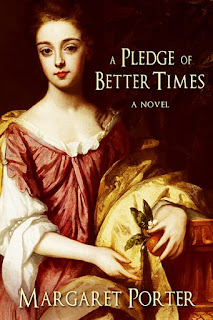
 
Margaret Porter is the award-winning and bestselling author of twelve period novels, whose other publication credits include nonfiction and poetry. The Carrousel des Amazones is the setting for a scene in A Pledge of Better Times, her highly acclaimed novel of 17th century courtiers Lady Diana de Vere and Charles Beauclerk, 1st Duke of St. Albans.

Margaret studied British history in the UK and the US. As historian, her areas of speciality are social, theatrical, and garden history of the 17th and 18th centuries, royal courts, and portraiture. A former actress, she gave up the stage and screen to devote herself to fiction writing, travel, and her rose gardens.

Connect with Margaret:

Website
Blog
Facebook
Twitter
Amazon


Wednesday, March 25, 2015

Religious persecution and Glorious revolution

by Anna Belfrage

Louis XIV
In 1685, Louis XIV of France revoked the Edict of Nantes, thereby indirectly laying the foundation to what would become the so called Glorious Revolution in England.

“Eh, what?” I hear some of you say, brows rising as you consider just how the revocation of the Edict of Nantes could lead to the events that ousted England’s rightful king. Well, dear people, as so many events in the 17th century, it comes down to religion – or rather, to religion as a political instrument.

Louis XIV was, as we all know, French. King since childhood, he was a firm believer in the divine right of kings and in his own capacity to rule. He was equally determined to expand French interests and territories and therefore promoted an expansive – aggressive – foreign policy. Plus there was the ever present issue of religion, a hot potato that had temporarily been set on a back-burner by Henri IVs 1598 Edict whereby all Frenchmen were allowed to worship according to their own conscience.

Louis was no big fan of this tolerant approach to heretics. It irked him that there should be close to a million such heretics living in his France, a country that should in its entirety belong to the Holy Church. (Here dear Louis was being somewhat hypocritical, turning a blind eye to the fact that France, this oh so Catholic nation, had happily bankrolled the Swedish Protestant Army under Gustav II Adolf as it laid waste to the Holy Roman Empire during the Thirty Years' War. Bygones, he probably said, waving a perfumed handkerchief...)

To Louis, his Protestant subjects were a personal affront – they should take heed, listen to their King and convert. And when milder forms of coercion didn’t help, Louis launched the dragonnades in the early 1680’s whereby dragoons were forcibly billed with Protestant families, there to constantly persecute them and hound them until the poor people either converted or fled. Many of them fled, and the surrounding European nations saw a huge influx of Huguenot refugees.

And yet, Louis was not satisfied. Egged on by his pious wife, Madame de Maintenon, he took the drastic step of revoking the Edict of Nantes, thereby making it illegal to adhere to any other faith than the Catholic one. Over the coming months, France suffered a major brain drain as an entire generation of Protestant tradesmen, merchants, and skilled labourers left – no doubt to Louis’ personal joy. By early 1686, less than 2 000 Protestants remained in France.

James
For Protestants in the surrounding countries, Louis XIV’s measures just went to prove the point that Catholic rulers were dangerous, intolerant creatures. In countries such as England, the anti-papist sentiments that were a constant presence throughout the 17th century were further strengthened by the terrifying stories told by the Huguenot refugees. Unfortunately – at least in the eyes of some of the more bigoted Englishmen – the English king was a Catholic. Even worse, James II was Louis XIV’s cousin, and as we all know, blood will tell…

James is second from the left
James II didn’t begin his life as a Catholic. His father, Charles I, was raised an Anglican, remained an Anglican, and ensured his children were raised as Anglicans, no matter their Catholic mother, Henriette Marie of France. As we all know, Charles I hit the dust in 1649 – in his case almost in the literal sense, given that he was beheaded. At the time, James II was not quite sixteen, and he was to spend the coming decade in either the French or the Spanish army where he served with distinction - and came into contact with various men of Catholic faith.

Like his older brother, James had an eye for pretty women. In 1659 he seduced Anne Hyde by promising to marry her, and to his credit he followed through on his promise, even if no one expected a prince to do so. Sometime during his marriage to Anne, James and his wife converted to Catholicism, even if he kept this secret. His surviving daughters by Anne, however, were raised as Anglicans as ordered by their royal uncle, Charles II.

Mary of Modena
When the English Parliament introduced a new Test Act in 1673, it became impossible for James to keep his conversion a secret. The Test Act was one in a series of laws put in place to stop Catholics from holding higher office, either in government or the military, by requiring all such officers to take an oath by which they disavowed certain central tenets of Catholic faith, and also to take communion under Anglican rites. James refused to do so, stepping down from his post as Lord High Admiral. He didn’t exactly improve his popularity ratings when he then went on to marry Mary of Modena, a fifteen-year-old Catholic Italian princess.

Over the coming years, Parliament and King were locked in a constant power struggle, with Charles II adamantly refusing to sign anything that would potentially exclude his brother from the line of succession, the so called Exclusion Crisis. When tensions were at their highest, James was recommended to leave the country, which he did, spending a number of years in Scotland.

In 1685, Charles II died – and a pretty awful death it was. On his deathbed, he converted to Catholicism, allowing himself the privilege to die professing the faith he must have held to in secret for years. With no legitimate heirs of his body, Charles was succeeded by James, and the powers that were in England were not pleased – at all.

It was unfortunate that in this self-same year Louis XIV upped the persecution of the Huguenots by revoking the Edict. It was also unfortunate that James II lacked that streak of pragmatism that had always guided his older brother. Had James but taken the time to stop and think he would have realised that for a newly crowned Catholic king in a country so mistrustful of Catholics, it made sense to take things slow. Instead, the man immediately set off on his own personal crusade to revoke all legislation that made it impossible for Catholics to hold office. Not, to put it mildly, a popular move.

James II
At the time, James was accused of wanting to return England in its entirety to the Catholic Church. These days, historians agree that James’ purpose was to create a more tolerant approach to his co-religionists. They also agree that James was somewhat inept – call it heavy-handed – in his attempts, thereby alienating former supporters. Whatever the case, while Parliament may have grumbled and Protestant Peers protested, there were never any plans to depose James. Deposing kings was simply not done, and the English public did not want a repeat on the royal execution not quite forty years ago.

So, what have we here? On the one side, a disgruntled English populace, angry with their king for promoting his Catholic friends, even angrier when he initiated a massive conversion campaign. On the other, a bewildered monarch, who didn't understand why everyone misinterpreted him so. (A simplification, of course. And I haven’t even touched upon James’ attempts at fiscal reform, but seeing as most people find taxes boring, let’s not go there…)

On the other side of the Channel, Louis XIV was more than thrilled to see his Catholic cousin on the English throne, while further north William III and his wife Mary, James’ oldest daughter, bided their time. Unless James had a son, the English crown would revert to their staunchly Protestant hands upon his death. The probability of James ever having a son was deemed as low. So far, Mary of Modena and James had been singularly unfortunate when it came to children. She’d been pregnant close to ten times, but as yet there was not one surviving child. And yes, I do feel this is a good moment to feel sorry for poor Mary – and her husband.

It was indicative of how out of touch James was with his people that throughout 1686 he tried very hard to influence the Anglican faction into accepting his more lenient approach to Catholics. England was a hotbed of anti-papist emotions, nurtured over several decades, first by the Parliamentarian forces, then by the Restoration government and their anti-Catholic legislation. Well, if we’re going to be quite correct, the anti-papist sentiments went back further than that, to the reign of Elizabeth I and onwards. No, in England of the 17th century a good Catholic was a dead Catholic – or at least a Catholic who had the sense to stay well away from the green fields of fair England.

In 1687, a frustrated James decided he needed new allies to pursue his political ambitions, and so he started flirting with the Protestant Dissenters so as to undermine the Anglican Church. To win their support, in April of 1687 he announced a Declaration of Indulgence whereby all penal laws and the Test and Corporation Acts were suspended. Suddenly, religious freedom raised its head in England. Suddenly, one could openly be a Quaker, or a Baptist, or a Presbyterian – hang on, even a Presbyterian? Hmm. James was no major fan of the Scottish Kirk, but yes, they were also included, albeit after some pressure – or a Catholic. We rarely give James II the credit he deserves for this attempt at creating a society where people could worship as they pleased. Was it self-serving? Of course it was, but for the thousands upon thousands that had been oppressed by the Anglican Church, the Declaration of Indulgence provided quite a breath of fresh air.

William 
This innovative piece of legislation was not greeted with spontaneous outbursts of joy. Most people were sceptical of the King’s motives, and besides, there was a bigger concern. The Queen was pregnant, and should she be delivered of a healthy boy child, England would face a succession of Catholic kings. The Protestant nobility gulped. Combining a potentially healthy baby boy with the King’s recent legislation would, over time, erode their power base. No, this needed to be stopped before it went too far, and where else to go for support than to William of Orange in the United Provinces? After all, should the Queen be delivered of a boy child that would not be good for William’s aspirations.

It was a boy. Delirious with joy, James wanted to embrace the entire world. A son, he had a son, and even the cruel stories whereby it was insinuated that the boy was a changeling, smuggled into the royal apartments in a warming pan, could not quench his joy – even if it must have hurt that his elder daughters were implicated in this gossip-mongering. James Frances Edward Stuart was born on June 10th of 1688 – less than six months later, the baby would begin his lifelong exile.

On June 30th, seven protestant grandees sent a letter to William III, inviting him to invade – not to depose James, but to curb his policies. All the same, the letter signed by Edward Russel, the earls of Shrewsbury, Devonshire and Danby, Bishop Compton, Lord Lumley and Henry Sidney cannot be described as anything but high treason. However, the large majority of the political establishment in England did not support this move. Yes, they wanted to restrain James, but far too many had far too recent memories of the consequences of plunging England into a civil war to risk taking up arms against their king.

This is where we have to return to Louis XIV and his revocation of the Edict of Nantes, this in an attempt to understand William’s motivations in invading England. If we’re going to be honest, no one does know the man’s motivations – William was a man who mostly kept his own counsel. One thing that is very apparent, however, is that William’s lifelong ambition was to halt France’s expansion, especially into his own territories. He found little support at home for his bellicose activities – the Dutch states depended on trade with France and saw no reason to antagonise this huge market, no matter that it was nibbling at the borders of the United Provinces.

Spain was no help at all, the Holy Roman Empire had its hands full with the Turks, and William all on his own was no match for Louis XIV. However, should one combine England with the United Provinces, well then…Whatever the case, as long as the pacifists remained in power in the United Provinces, William was without the funds required to do more than gnash his teeth when the French took Strasbourg (1681) and Luxembourg (1684) And then came the revocation.

Horrified Dutch Protestants opened their homes to the refugees from Louis XIV’s France. They listened, aghast, to stories of bloodshed, to being forced to leave all their wealth behind (with which the wealthy Dutch traders could more than relate), to being beaten and whipped, murdered even, by angry Catholic mobs. Which is when William coughed and said “ahem”. Now he was given funds – plenty of funds. Even more fortuitously, the Holy Roman Emperor beat off the Turks and was more than happy to join the coalition against France. Only England, ruled by Louis XIVs cousin, remained loyal to France. The invitation from the seven grandees therefore came at an opportune time. By invading, William hoped to strong-arm his father-in-law into supporting his efforts to contain France. Whether his initial ambitions extended beyond that, we don't know.

William landed in Torbay on November 5, 1688. William was hailed as a liberator. James dithered, uncertain as to what to do – William was family, and James was more than aware of how much his eldest daughter loved her husband. Besides, he was unnerved by the last year’s outbreak of violent anti-Catholic riots throughout the north of England, and he definitely did not want to be the one who started a new Civil War – he was as beset by spectres as his peers.

On November 23, James took the decision to retire to London rather than meet William on the field. A capable military leader, an experienced battle commander, James could probably have held his own – and his was the larger force. So why did he retreat? Why did he attempt to flee to France rather than defend his crown? We will never know – but chances are that had he stayed and fought, he would have carried the day, thereby rewriting history as we know it. But then, history is full of ‘what if’s’, isn’t it?

Mary II
Captured by William's troops in December of 1688 while making for France, James then managed to escape - and one suspects he was allowed to escape - and fled to his powerful French cousin. In 1689, William and Mary were confirmed by Parliament as the new King and Queen.

James made one serious attempt to regain his throne that ended at the Battle of the Boyne in 1690. His son would go on to make his own attempts, as would his son, the famous Bonnie Prince Charlie who for a short while in 1745-46 actually seemed to be carrying the day. Until the disaster at Culloden, that is.

These days, James II is often considered a parenthesis, a king who is remembered mainly because he lost it all. I do believe the man deserves a somewhat grander epitaph than that, however ineptly he handled the single most momentous event in his life. James Stuart was a loyal son, a loyal brother. He was brave and honourable, served his country as well as he could and was allowed to. He was a loving father – doting, even – a caring husband and a man who stood by his friends and his word. He was also a Catholic, and somehow the matter of his faith overshadows all his qualities. After all, it is because of his faith and his pig-headed efforts to make life easier for his co-religionists that he lost his throne. A high price to pay for his faith, although personally I think James considered his daughter’s betrayal and defection the far heavier price. The lesser me must admit to hoping Mary suffered endless sleepless nights as a consequence, but on the other hand, her life was not exactly a bed of roses either, and who are we to sit in the comfort of hindsight and judge those that went before?

The events of 1688 and 1689 play an important role in the recently released To Catch a Falling Star, the eighth book in The Graham Saga.

~~~~~~~~~~~~~


Anna Belfrage is the successful author of seven published books, all of them part of The Graham Saga. Set in 17th century Scotland, Virginia and Maryland, this is the story of Matthew Graham and his wife, Alex Lind - two people who should never have met, not when she was born three centuries after him.

Anna's books have won several awards and are available on Amazon US,  Amazon UK, or wherever else good books are sold.
For more information about Anna and her books, please visit her website. If not on her website, Anna can mostly be found on her blog.

Wednesday, March 11, 2015

Romantic Negligence - Seventeenth Century Fashion

by Deborah Swift

When investigating mid-seventeenth century fashion, you might well be misled by portraits of the time. This is because there was a craze during the mid and late seventeenth century for women to be dressed (or rather undressed) in what appears to be a lot of drapery. The portrait below of Moll Davis exemplifies this kind of look.

Moll (Mary) Davis by Peter Lely (wiki)

Mid-seventeenth century court etiquette demanded that only someone of a superior rank could receive a person of lower rank when in a state of undress. However, a person of inferior rank had to be formally attired, right down to hat and gloves, when attending a person of superior rank. Sitting for a portrait in a state of undress emphasized the fact that the sitter belonged to the upper classes, and soon the idea caught on, and everyone demanded these 'superior' portraits.

Barbara Castlemaine,  Royal Mistress

The drapery was often open at the front like a loose sleeveless coat, and was in fact known as a nightgown. It was worn over a chemise which was (to modern eyes) only just decent and showed the curve of the breasts. At the time a woman's neck and shoulders were considered extremely beautiful, and the clothing for portraits was designed to show off this décolleté neckline. It was fashionable to mimic the romantic clothing of fifty to seventy years earlier, very much as 'vintage' is fashionable today. Women wanted to look like the portraits of Van Dyck, with flowing curls and rich swathes of deep-hued fabric. In wealthy circles, satin was the most popular fabric, followed by velvet and textured brocade.

When not sitting for a portrait, the wealthy woman's dress was much more fussy. France was a large influence on fashion and the flamboyant Louis XIV (1638–1715) and his palace at Versailles became the leading fashion influence of the century.  The French led the production of silk, lace, (known as point) and brocade. Londoners imported French wares, along with the French taste for excessive embellishment with ribbons, bows, buttons and embroidery. Italian lace and ribbon was also popular.

Anna Maria Louise von Medici

From the 1650's over-skirts began to be parted to reveal decorative petticoats.  A mantua was where the over-skirt was hitched up at the front and sides to reveal an embroidered or fancy petticoat, a fashion which persisted into the 18th century. The outer part was often worn very long to form a train. This is an example (from the Met Museum) which must be for winter wear, as it is of a heavier and more durable fabric. Click on the picture for more information.


Poorer women might wear gowns made of wool or cotton with much simpler tailoring. A rich woman's bodice might be seamed together with dozen different panels to fit perfectly, but a poor woman's was often less shapely and designed to be handed on to other members of the family to get maximum wear. 

We have very few English portraits of women from the lower classes, but must rely on our Dutch and Flemish neighbours to show us what 17th century dress might have looked like. This picture by Gabriel Metsu shows a woman of servant class, and her skirt is of a much more practical length (no trailing train) and the skirts are protected by an apron. When writing novels set in the seventeenth century it is easy to take a simplistic view of what people wore, but the truth is immensely complex, and much more fascinating.

~~~~~~~~~~~~~

Thank you for reading! Find out more about me and my seventeenth century books by clicking the picture.

Her characters are so real that they linger in the mind long after the book is back on the shelf - Historical Novel Review


Monday, July 16, 2012

The Wig Business was Big Business in 18th Century France

by LUCINDA BRANT

It is often assumed that the wig* of the 17th and 18th centuries was the preserve of the aristocracy, “an aristocratic ornament of Old Regime Europe”, a marker of high birth and status worn by the privileged few. Indeed, at the French Courts of Louis XIII and Louis XIV, wigs were very much part of the display of power and status.
[*Wig here refers to the wigs worn by men. Women’s hair is not discussed in this post.]

The full-bottom wigs worn by Louis XIV of France required ten heads of long human hair to achieve one luxuriant wig with an over-abundance of flowing locks. Cost consideration aside, how to wear such an article in every day life made it prohibitive to all but the most aristocratic fashion-conscious courtier.


Yet, by the end of Louis XIV’s reign in 1715, the wearing of wigs had spread throughout France. Surprisingly, wigs were not the exclusive preserve of noble courtiers but had “tumbled down the social hierarchy”, so far down in fact, that by the mid 1700’s wigs were upon the heads of tutors, bakers, messengers, servants, cooks and shopkeepers. All wore a wig, and often owned two—one for every day and one for Sunday best.

The Marquis of Mirabeau lamented, “Everyone [in Paris] has become a Monsieur. On Sunday, a man came up to me wearing black silk clothes and a well-powdered wig, and as I fell over myself offering him compliments, he introduced himself as the oldest son of my blacksmith or saddler; will such a seigneur deign to dance in the streets?”

The male wig became big business in the 18th century. It was no longer an aristocratic affectation, or worn only by certain non-aristocratic professional groups such as judges, lawyers and clergymen. The wig was not confined to men in the city but spread to towns and villages. As well as every town having a wigmaker or three, estimates put the number of journeymen who trudged the roads of rural France selling wigs at 10,000.


The account books of French wigmakers attest to a customer base that included not only the wealthy merchant citizens of the town but included priests, petty clerks, and shopkeepers, and in the death inventories of middle class citizens wigs figured as prominent possessions. The wig was such a universal object of consumption by mid century that it became synonymous not with luxury but with convenience. Wig advertisements stressed comfort and appeal as most important when considering the purchase of a wig. Wigmakers were keen to emphasize the free movement of the head of the 18th century wig. Unlike its predecessor, the full bottom wig, which restricted its wearer’s movements and peripheral vision, an 18th century wig permitted the wearer to carry out his daily life as if he was wearing his own head of hair, not someone else’s.

The Parisian wigmaker Neuhaus asserted that wearing a wig was far more convenient than looking after natural hair. Well, he would, wouldn’t he? He’s in the business of selling wigs! But he went to great lengths to ensure his customers felt comfortable in their wigs. He announced the invention of a new “elastic skin that grips the wig” without any irritating loops or garters, and “this skin has the softness of velvet, and does not at all inconvenience the head.”

In some respects, Neauhaus’s assertion regarding the convenience of the wig over a natural head of hair was true, given the prevalence of head lice, the lack of shampoo and intermittent bathing practices. It was far easier for a man to have his head shaved and wear a wig than to groom his own hair, particularly when, for a small fee, he could have his barber maintain his shaven head and have his wig serviced by his local wigmaker.


With wigs being the universal male consumer product of the 1700s, and everyone from shopkeeper to king wearing one, men were spoiled for choice. While a shop boy might only be able to afford one wig, and thus had to choose wisely and for durability, those of the one percent of the population, the nobleman and the wealthy cit, could afford to own dozens of wigs. If they considered themselves to be a leader of fashion, were eccentric, or merely had the money to indulge a whim, they could purchase wigs that others could only dream of owning (or not, as the case may be!).

It has often been assumed that every man wore a powdered wig, but this was not so. For everyday wear and for most occasions, men wore their wigs in their natural state, which was unpowdered natural hair. Only on the most formal of occasions, and those of the nobility attending court or a formal function, were wigs powdered. Another misconception is that because wigs looked like wigs (you could tell it was a wig!) then the wig must have been made from horsehair. Not so. All the evidence—portraits, surviving wigs, engravings, documents, letters—suggest that less than half of all wigs consisted of hair from horses, and from such animals as goats and cows. Most wigs were made from human hair. For the shop boy, however, the “horse-hair tie wig” was probably his only option.


There were a small number of wigmakers who were prepared to experiment with other materials, and often because of this found themselves ostracized by their fellow wigmakers. Yet, the experimental wig attracted the eccentric, the dandy and the jaded gentlemen. Looking for something different to make them stand out in the crowd or as a mark of their wealth, these gentlemen were not afraid to parade about society and garner the stares of amazement, incredulity and puzzlement of others about the hairpiece atop their heads.

Horace Walpole, that great 18th century letter writer and gossip, who collected fascinating tidbits about Society, wrote in a letter dated 1751, about Edward Wortley Montagu’s odd manner of dressing, commenting “that the most curious part of his dress, which he has brought from Paris, is an iron wig; you literally would not know it from hair...”.

Naturally, I just had to give one of my characters an iron wig and so the eccentric poet Hilary Wraxton in SALT BRIDE gets to wear one at a recital, causing hilarity and disruption to an afternoon’s entertainments.

Made from iron wire turned into spiral curls, such a wig could also be made of copper. While Edward Wortley Montagu may have thought he cut quite a figure in English society parading about in his iron wig, one wigmaker advertised an iron wig as being economical because it can “withstand rain, wind and hail, and all without causing discomfort to the wearer” (I wonder about that final claim).

Feathers were also used in the making of wigs, particularly sporting wigs. Wigs made from the tails of mallards or drakes were said to be not only durable but could also fight off the wet. Some parsons’ wigs employed feathers at the front and were known as “feather tops”. One can imagine the congregation doing its best to keep a straight face with a parson at the pulpit in a fine feather top wig delivering the Sunday sermon.

Most sectors of male society succumbed to the wearing of a wig in 18th century France. Testament to the wig’s universality was its necessity. Without a wig, a gentleman’s outfit was incomplete; he could not go about his daily business out in the world without his wig. Just as in the 21st century, a man’s business suit is not complete without a tie. An 18th century bewigged gentleman wished to project an air of elegance and refinement, no matter his station in life, and this is evidence in the many portraits that survive of handsome chaps in frockcoat, breeches and perfectly fitted wig, whether as part of a family group or in a singular pose, the wig helped maketh the man. As to the many styles created for the gentleman’s wig, that requires a whole other post!


Bibliography

John Woodforde, The Strange Story of False Hair, Routledge and Kegan Paul, London, 1971

Michael Kwass, Big Hair: A Wig History of Consumption in Eighteenth-Century France, American Historical Review, June 2006

The Letters of Horace Walpole, Vols. 1-4, Charles Duke Yonge (Ed), Putnam and Sons, London, 1890

Hair and Hair dos: http://www.marquise.de/en/1700/howto/frisuren/frisuren.shtml

The Hair at the Eighteenth Century: http://thehistoryofthehairsworld.com/hair_18th_century.html

The Eighteenth Century Garb Homepage: Handbook of English Costume in the Eighteenth Century by Willett & Phillis Cunnington: http://www.theweebsite.com/18cgarb/1750.html