Showing posts with label gentleman. Show all posts

Saturday, November 11, 2017

Land Stewards: Professional help in running an estate.

by Maria Grace

We often hear about gentlemen employing stewards to help manage their estates. Who were these men, though, and what did they do?
Small estates, like Longbourn of Pride and Prejudice, could be managed by the master of the estate with the assistance of a non-professional man, called a bailiff. Typically a bailiff would be one of the major tenants on the estate, hired to act as a go-between to collect tenants’ rents. (In the era, it would have been considered vulgar for a gentleman to collect the rents himself.) Larger estates, like Darcy’s Pemberley or Lady Catherine’s Rosings Park, were major economic endeavors that necessitated professional help in the form of a steward.

Qualifications

Where the bailiff simply collected rents for the master of the estate, the steward was responsible for actually running the business of the estate and thus was integral to its success. He had to be an educated man, often the son of clergy, a smaller landowner or a professional man. He needed a head for numbers, scrupulous record-keeping skills, an exceptional knowledge of all aspects of agriculture, and excellent people-skills--a pretty tall order, all told. Typically he would be university trained as a solicitor, necessary because of his dealings with contracts. A steward was not considered a servant, but rather a skilled professional with a higher status than the family lawyer.

For these reasons, a steward was addressed as ‘Mister’. Not long after the regency era, the term ‘steward’, with its servile connotations, was dropped in favor of the more professional term ‘land agent.’ 

Duties

Stewards were tied to the estate and did not travel with the master of the estate. They managed all the activities associated with making the estate profitable, including record and account keeping, managing contracts, and overseeing the agricultural aspects of the home farm. 
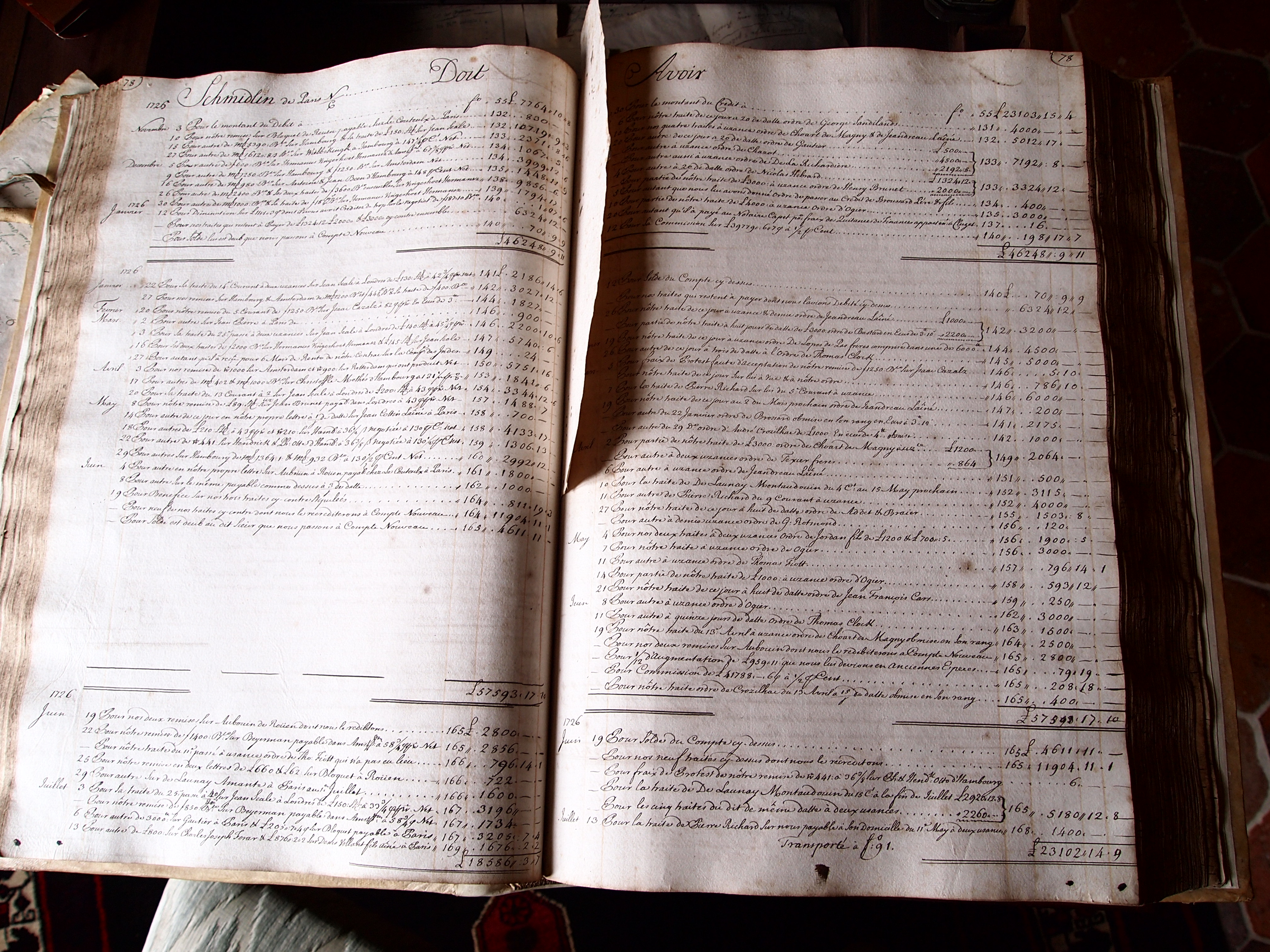
A good steward kept meticulous accounts and records of everything—seriously everything. In addition to the expected accounting that would go with such an enterprise, he kept logs of work done, including repairs to buildings, fences and roads, as well as records of the parkland, game animals, livestock and crops. He also maintained a rent roll of tenancies and records of the farm boundaries. Further, an estate employed a number of department heads, such as the head gardener, head gamekeeper, and the like. The steward kept records for all these departments and paid the wages of their workmen.

Beyond these duties, stewards also spent a lot of time touring the estate on horseback, dealing with the people of the estate face to face. He collected rents, found new tenants when necessary, leased land, supervised the tenantry, directed any work and improvements done on the land, settled squabbles that arose among the tenants or workers, purchased animals, seed and so on. (Shapard, 2003) 

Salaries

A steward’s salary related both to the size of the estate and his expertise. Typically, a steward’s salary would range from £100-300 annually. (As a point of reference, in the era a middle class family of four could live very comfortably on £250 a year.) In addition, he would have use of a private house on the estate. For reference, Austen’s Longbourn had an income of about £2000, which probably put hiring a steward out of their range. 

Risks

Although not nearly as hazardous as many professions of the era, working as a steward was not without risks. Although employers relied heavily upon their stewards for their efficient management of their estates, that did not prevent employers from doubting their honesty, especially as the large sums that many of them handled offered opportunities for speculation. Accusations of wrongdoing could ruin a man’s reputation and (wrongful) conviction for the same could result in prison time or worse, depending on the amount of money involved.

Since the steward was also in charge of collecting the rent from the tenants, he could be an unpopular figure. Historical records show assaults on stewards and in one case, the murder of one. So, in a very literal sense, his people-skills could be a life-saver.

References

Austen, Jane, and David M. Shapard. The Annotated Pride and Prejudice. New York: Anchor Books, 2003. 
Karsten, Susan. “The Steward: Guardian of the Noble Estate (Farm).” Vanessa Riley’s Regency Life. Accessed May 26, 2014. 
http://christianregency.com/blog/2013/09/09/the-steward-guardian-of-the-noble-estate-farm-by-susan-karsten/ 
Laudermilk, Sharon H., and Teresa L. Hamlin. The Regency Companion. New York: Garland, 1989.
LeFaye, Deirdre. Jane Austen: The World of Her Novels. New York: Abrams, 2002.
Ray, Joan Klingel. Jane Austen for Dummies. Chichester: John Wiley, 2006.
Schmidt,  Wayne.  “Victorian Domestic Servant Hierarchy and Wage Scale.” This and That. Accessed May 26, 2014.  http://www.waynesthisandthat.com/servantwages.htm
Sullivan, Margaret C., and Kathryn Rathke. The Jane Austen Handbook: Proper Life Skills from Regency England. Philadelphia, PA: Quirk Books, 2007. 

~~~~~~~~~~

Though Maria Grace has been writing fiction since she was ten years old, those early efforts happily reside in a file drawer and are unlikely to see the light of day again, for which many are grateful. 

After penning five file-drawer novels in high school, she took a break from writing to pursue college and earn her doctorate. After 16 years of university teaching, she returned to her first love, fiction writing.

Click here to find her books on Amazon. For more on her writing and other Random Bits of Fascination, visit her website. You can also like her on Facebook, or follow on Twitter.


Wednesday, October 11, 2017

Managing an estate

by Maria Grace

There were two major types of great landowners in the regency era–the aristocrats who were deeply involved in running the government, but rather less hands-on in regards to their estates, and land-owning gentry, who were very hands-on and represented the majority of land owners.

A country estate was a complex economic mini-state that typically included a residence of sufficient size to suit a gentleman with parkland, gardens, stables and paddocks. A large agrarian business extended out from this center, consisting of a home farm and gardens, numerous tenanted farms and cottages usually in a village near the manor. The survival of the resident family, household staff, tenant farmers and their families and workers depended on revenues from the estate’s agricultural enterprises and rents. (Laudermilk, 1989) A successful estate owner needed solid business acumen.

But why? Gentlemen did not work for their income, did they?

Technically, they did not. Their income came largely from rents and investments. Estates often had small villages within their boundaries including church and parsonage, stone, brick or timbered farmhouses, and cottages, even wind/water mills in a few narrow lanes, all surrounded by productive (and often leased out) meadows and fields. (It was generally considered a village, not a town because it had no market, the defining characteristic of a small town.)

Estate owners might also receive revenue from the sale of products from their land, including crops, animal products, timber and minerals.


Rent

Estate owners leased out various kinds of property, including tenant farms of various sizes, houses and cottages, and even small estates that might be part of their holdings. Rents rose dramatically between 1790 and 1830, in some cases increasing fivefold over that period, making rents a considerable source of income, especially for large estate owners. (Murray, 1998)

Since a gentleman did not dirty his hands with money, for him to collect the rents from this himself would have been vulgar. A steward, or in the case off smaller estates, a bailiff, would be hired for that task and others related to estate management. 

Stewards and Bailiffs

Whereas a bailiff might be an estate’s major tenant hired to simply collect rents, a steward was an educated man, often the son of clergy, a smaller landowner or a professional man, hired to assist in the running and management of the estate. A steward was not considered a servant, but rather a skilled professional. For this reason, he was addressed as ‘Mister’. Not long after the regency era, the term ‘steward’, having servile connotations, was dropped in favor of the more professional term ‘land agent.’

Stewards frequently had experience and training as solicitors which was particularly useful in their duties managing contracts and overseeing estate accounts. Beyond these duties, stewards also collected rents, leased land, supervised the tenantry, directed any work done on the land, settled squabbles that arose among the tenants or workers, purchased animals, seed and so on. (Shapard,2003)

The steward would often have a home of his own, but would on occasion stay at the manor. His duties might regularly take him to the family's other country houses, and to London, but he was unlikely to travel with the family on a regular basis. (Martin, 2004)


Farming

Tenant farmers

By 1790, three quarters of England's agricultural land was cultivated by tenants. (Day, 2006) The remaining quarter represented small yeoman farmers whose numbers would decrease through the ensuing century.

Tenants usually rented sections of land with farmhouse and outbuildings, paid their rents on the established quarter days: Lady Day (March 25), Midsummer (June 24), Michaelmas (September 29), Christmas (December 25), sold the produce, and kept the earnings. Customary provisions required the landlord to supply materials, buildings and facilities such as drainage and hedging while the tenant provided stock, seed and tools. (Davidoff, 2002)

Farmers, including tenant farmers, made up the middling ranks of rural society. They could become quite well off with their sons and daughters educated as they moved up the social scale. Though the sons of tenants could not inherit the land their father’s works, they could inherit their farm leases. These leases, which traditionally ran for multiples of seven years, were often passed from father to son, with the land owners preferring to maintain the continuity of a known tenants and the relationships that went with it. (Davidoff, 2002)

It was not uncommon for a tenant farmer to rent extra land with additional farmhouses for adult sons to farm. The eldest son would eventually take over his father’s tenant farm when he retired or died. Widows might head a farm household, hiring help with the farm as needed until a young son was old enough to take over the tenancy. (Davidoff, 2002)

Tenants normally looked to their landlord for assistance whether for personal matters or for help in improvements to the land. Some of these improvements might include better ways to farm the land and improve productivity.

Farming methods

With populations rapidly increasing, the best landowners sought out advanced methods of agricultural science to improve production (and profits.) The agricultural reports of the newly formed Board of Agriculture were avidly studied to learn more about advancements including crop rotation, scientific stock breeding, and new technologies including the seed drill and machines for threshing and chaff cutting. The installation of drainage in fields was another innovation practiced by many farmers during this era. Heavy clay soils where excess water made plowing more difficult and hurt the growth and root structure of plants would have rows of drains cut beneath the surface to move water away from the fields. (Shapard, 2012)

Four-course crop rotation, commonly called the Norfolk four-course system, increased fodder production. There were many variations of this system, depending on the region. Typically, fields would be sown with wheat in the first year, turnips in the second, followed by barley in the third. The clover and ryegrass were grazed or cut for feed in the fourth year. This produced two cash crops and two animal feed crops.

One constant was the presence of livestock as part of the strategy. Sheep (or sometimes cattle) were turned out to graze the turnip tops. This kept weeds down and allowed the field to be fertilized by mobile manure factories. Turnip roots were stored for winter animal fodder. More fodder meant larger livestock herds and the ability to keep animals through the winter. Improvements like these could double one's income. (Laudermilk,1989)

In addition to increased agricultural production, estates began to enjoy profits from heretofore unexplored avenues such as mining and timber sales. Changes in technologies often fueled demand while improvements in transportation with new canals and steam engines made previously prohibitive production profitable.


Incomes

What kind of income could a landed estate provide? Naturally the answer depended a great deal on the size of the estate and the kind of management it had.

For a little perspective, the 1801 census found that the average income of the 287 peerage families (all of whom would have landed estates) was approximately £8,000 The top 2000 merchant families averaged £2,500, whereas the top 6000 esquires that Austen’s Mr. Bennet would have belonged to averaged £1,500. That suggests that the £2,000 a year Mr. Bennet had represents a very good income, compared to his peers.

To have an income above the average nobility as a gentleman estate holder, one did not spend a very great deal of time sitting about enjoying the social life of the town. While a man like Austen’s Mr. Darcy might take time to enjoy the finer things as it were, he would also have to spend a very great deal of time and effort in managing the massive agricultural enterprise that provided those finer things.

Technically a gentleman did not ‘work’ for his income. But planning how to keep an estate afloat through the long years of the French war, determining how best to manage the home farm and advise his tenants considering the price of corn, debating whether to invest in draining a new field or if rain will spoil the harvest or damage tenant houses that he will have to repair—and how to effect those repairs—seeking new hands to man the sawmill and cider press and what to pay them—all of that sounds a very great deal like what we today would call work. While there were inevitably bad landowners who put little into managing their estates, many, if not most put in a great deal of very hard work to manage estates that provided “livelihood and the stability for both the landowner and a vast army of workers–tenant farmers, gardeners, cowmen, sawyers and shepherds alike.(As well as providing employment for seasonal labourers like codders, harvesters, shearers…)” (Bennetts, 2012)


References

Adkins, Roy, and Lesley Adkins. Jane Austen's England. Viking, 2013.
Austen, Jane, and David M. Shapard. The Annotated Pride and Prejudice. New York: Anchor Books, 2003.
Austen, Jane, and David M. Shapard. The Annotated Sense and Sensibility. New York: Anchor Books, 2011.
Austen, Jane, and Edward Copeland. The Cambridge Edition of Sense and Sensibility. Cambridge: Cambridge University Press, 2006.
Bennetts, M.M., “At the heart of a great estate is… .“ M.M.Bennetts. April 11,2012. Accessed May 20, 2014. http://mmbennetts.wordpress.com/2012/04/11/at-the-heart-of-a-great-estate-is/
Collins, Irene. Jane Austen and the Clergy. London: Hambledon and London, 2001.
Davidoff, Leonore, and Catherine Hall. Family fortunes: men and women of the English middle class, 1780-1850. London: Routledge, 2002.
Day, Malcom. Voices from the World of Jane Austen. David and Charles, 2006.
Ellis, Markman "Trade." In Jane Austen in Context , 269-77. Cambridge: University Press, 2005.
Girouard, Mark. Life in the English Country House: A Social and Architectural History. New Haven: Yale University Press, 1978.
Gornall, J.F.G. "Marriage and Property in Jane Austen’s Novels." History Today 17, no. 12 (December 1967). Accessed May 22, 2017. http://www.historytoday.com/jfg-gornall/marriage-and-property-jane-austen%E2%80%99s-novels.
Hitchcock, Tim, Sharon Howard and Robert Shoemaker, " Churchwardens and Overseers of the Poor Account Books ", London Lives, 1690-1800 (www.londonlives.org, version, 1.1 17 June 2012). https://www.londonlives.org/static/AC.jsp
Laudermilk, Sharon H., and Teresa L. Hamlin. The Regency Companion. New York: Garland, 1989.
LeFaye, Deirdre. Jane Austen: The World of Her Novels. New York: Abrams, 2002.
Martin, Joanna. Wives and Daughters: Women and Children in the Georgian Country House. London: Hambledon and London, 2004.
Morris, Diane H. “Mr. Darcy was a Second-Class Citizen.” Moorgate Books. August 10th, 2014. Accessed May 22, 2017. http://www.moorgatebooks.com/10/a-true-regency-gentleman-had-good-breeding/.
Ray, Joan Klingel. Jane Austen for Dummies. Chichester: John Wiley, 2006.
Selwyn, David. Jane Austen and Leisure. London: Hambledon Press, 1999.
Seven Trees Farm, “Norfolk four course.” Seven Trees Farm. April 30, 2012. Accessed May 29, 2017. http://seventreesfarm.wordpress.com/2012/04/30/norfolk-four-course/
Sullivan, Margaret C., and Kathryn Rathke. The Jane Austen Handbook: Proper Life Skills from Regency England. Philadelphia, PA: Quirk Books, 2007.
Swift, Deborah. “Law & Order - Duties of the Constable in 17th Century England.” English Historical Fiction Authors. May 24, 2017. Accessed May 29, 2017. http://englishhistoryauthors.blogspot.com/2017/05/law-order-duties-of-constable-in-17th.html
Trevelyan, George Macaulay. Illustrated English Social History. New York: D. McKay, 1949.
Vickery, Amanda. The Gentleman's Daughter: Women's Lives in Georgian England. New Haven, Conn.: Yale University Press, 1998.
Watkins, Susan. Jane Austen's Town and Country Style. New York: Rizzoli, 1990.
Wilson, Ben. The Making of Victorian Values: Decency and Dissent in Britain, 1789-1837. New York: Penguin Press, 2007.


~~~~~~~~~~

Though Maria Grace has been writing fiction since she was ten years old, those early efforts happily reside in a file drawer and are unlikely to see the light of day again, for which many are grateful. 

After penning five file-drawer novels in high school, she took a break from writing to pursue college and earn her doctorate. After 16 years of university teaching, she returned to her first love, fiction writing.

Click here to find her books on Amazon. For more on her writing and other Random Bits of Fascination, visit her website. You can also like her on Facebook, or follow on Twitter.


Friday, August 11, 2017

Inheriting an Estate

by Maria Grace

For most, land ownership came about as the privilege (or right depending on how you looked at it) of being the eldest son (or otherwise designated heir) and inheriting the family holdings. Since, during the era, social standing and power was all about land, those who possessed it enjoyed considerable perks as a result. But there were commensurate responsibilities that went along with those advantages

Primogeniture

The law of primogeniture guided most estate inheritance of the era. In short, the law required that a family’s eldest surviving son would inherit the family’s estate in its entirety. Only in the case of a family with no sons, would the estate pass to a daughter or daughters. If there was more than one daughter, the estate would pass to all of them equally, not just the eldest. Since, if any of these daughters married, their share would then belong to their husbands, the ownership of the estate could become very complicated very quickly. So when multiple daughters inherited, the estate was often sold and the money divided equally among the sisters.

What about widows and younger children?

Widows did not inherit estates. Instead, marriage settlements would establish a jointure—an allowance normally based on one tenth of the dowry she brought into the marriage—to be paid by the estate annually for the remainder of their lifetime. These arrangements would have been made at the time of the marriage and might or might not permit her to maintain the lifestyle to which she had been accustomed during her married life.

Primogeniture did not require any inheritance be passed to younger children. When a man wanted to provide something for his younger children, the total legacy allowable was based on the amount his estate could support without harm to its capital value. In England this sum was calculated customarily by estimating the amount available at twelve and a half per cent of the capital value of the estate. (Copeland, 2006) This total amount could be divided among all the younger children, equally or not, according to the father’s wishes. This amount would usually be separate from the money for daughter’s dowries, which would have been established in the marriage articles.

Merchant families were not bound by the constraints of primogeniture and typically left fortunes to all their children, including their daughters.

Strict Settlement and Entailment

Since females inheriting estates generally mean the loss of estate to the family line, many—estimates place it at half or more during the eighteenth century—used strict settlement entailment to ensure an estate would pass down a family’s male line, usually for three generations.

A strict settlement could be done in two ways, each featured in Jane Austen’s writing: a fee tail and a left estate. Sense and Sensibility featured a life estate. The senior Mr. Dashwood inherited the use of Norland estate during his life time, not the actual ownership of the estate. After Mr. Dashwood’s death, the estate would go to the individual designated in the original will, in this case, his son by his first marriage.

In Pride and Prejudice, Jane Austen featured a fee tail estate. In the simplest of terms, a fee tail meant that a man would leave his estate not to his heir but to his heir’s heir. The man’s heir would receive a ‘limited life tenancy’ to the estate, after which the estate would pass to the life tenant’s heir. The inheritance could be further limited to male heirs or ‘male heirs of the body’ which would ensure patrilineal inheritance, keeping the estate in the family for two more generation.

When a landowner suffered a failure of issue—that is, he failed to produce sons—a paternal nephew would normally be made the sole heir. If he were somehow unavailable, then a descendent would be determined according to ancient heirship rules. (Designations other than ‘male heirs of the body’ could be made. Wills could designate a daughter or daughters as life tenant with the fee tail held for the first (legitimate) male heir produced among them.)

A strict settlement of either variety gave the life tenant limited use of the estate during his lifetime. He might enjoy the income of the estate and the responsible use of its facilities. However, he could not dispose of the estate or any part of it. Moreover, he was often limited in the ways he could use the resources of the estate. A life tenant might be prevented from selling timber from the land because it was considered as belonging to fee tail holder of the estate and would deplete the capital value of the estate. Similarly, he might not be able to mine resources on the estate and even if he could, he might not be able to raise the money to do the mining because he could not obtain a mortgage on the land.

All of this meant that the life tenant had limited access to capital to repair or improve the estate, leading to estates falling into severe disrepair. To avoid this problem, in many cases, a small portion of the estate was granted outright to the current owner to give him some flexibility to deal with unexpected problems. (Shapard, 2010)

Even with all these difficulties, entailments could continue for many generations through the process of resettlement. Typically, this would occur when the heir or eldest son reached the age of twenty one, or at the time of his marriage. Essentially, the life tenant would offer the fee tail heir—usually a father offering this son—a lump sum of money or an annuity from the estate. In order to acquire the money, they further agreed to end the current entail, fund the amount from the estate, and create a new settlement whereby the land would go to the father for his life, to the heir for his life and then in fee tail to the heir's heir. Thus a new entail would be created, but the estate would now be depleted by the lump sum or encumbered by the annuity pair to the original fee tail heir.

So, if the Dashwood family had done this, when Mr. John Dashwood reached twenty one (or married Fanny) he and his father, Henry Dashwood, would have sat down together and decided how much Henry would have to offer John to see the entail continued. Next, they would visit the solicitor to have the original entailment barred (discontinued). A trip to the banker would follow to juggle the finances in whatever way necessary to provide John’s money. The process would end with another visit to the solicitor to redraft a new entail, naming John’s (not yet born) heir as the fee tail heir of Norland. John would have money to fund his lifestyle, Henry would know the estate would be preserved in the family for two more generations, and the heir to be of John Dashwood would have to deal with an estate, now depleted of a possibly significant portion of its capital. The estate might be impoverished, but it would remain in the family, which was after all, the most important thing.

This system of inheritance flourished between the mid-seventeenth century to the later part of the nineteenth century, when an act of parliament gave the life tenant greater powers to dispose of the estate.


References


Adkins, Roy, and Lesley Adkins. Jane Austen's England. Viking, 2013.
Austen, Jane, and David M. Shapard. The Annotated Pride and Prejudice. New York: Anchor Books, 2003.
Austen, Jane, and David M. Shapard. The Annotated Sense and Sensibility. New York: Anchor Books, 2011.
Austen, Jane, and Edward Copeland. The Cambridge Edition of Sense and Sensibility. Cambridge: Cambridge University Press, 2006.
Bennetts, M.M., “At the heart of a great estate is… .“ M.M.Bennetts. April 11, 2012. Accessed May 20, 2014. http://mmbennetts.wordpress.com/2012/04/11/at-the-heart-of-a-great-estate-is/
Collins, Irene. Jane Austen and the Clergy. London: Hambledon and London, 2001.
Davidoff, Leonore, and Catherine Hall. Family fortunes: men and women of the English middle class, 1780-1850. London: Routledge, 2002.
Day, Malcom. Voices from the World of Jane Austen. David and Charles, 2006.
Ellis, Markman "Trade." In Jane Austen in Context , 269-77. Cambridge: University Press, 2005.
Girouard, Mark. Life in the English Country House: A Social and Architectural History. New Haven: Yale University Press, 1978.
Gornall, J.F.G. "Marriage and Property in Jane Austen’s Novels." History Today 17, no. 12 (December 1967). Accessed May 22, 2017. http://www.historytoday.com/jfg-gornall/marriage-and-property-jane-austen%E2%80%99s-novels.
Hitchcock, Tim, Sharon Howard and Robert Shoemaker, "Churchwardens and Overseers of the Poor Account Books", London Lives, 1690-1800 (www.londonlives.org, version, 1.1 17 June 2012). https://www.londonlives.org/static/AC.jsp
Laudermilk, Sharon H., and Teresa L. Hamlin. The Regency Companion. New York: Garland, 1989.
LeFaye, Deirdre. Jane Austen: The World of Her Novels. New York: Abrams, 2002.
Martin, Joanna. Wives and Daughters: Women and Children in the Georgian Country House. London: Hambledon and London, 2004.
Morris, Diane H. “Mr. Darcy was a Second-Class Citizen.” Moorgate Books. August 10th, 2014. Accessed May 22, 2017. http://www.moorgatebooks.com/10/a-true-regency-gentleman-had-good-breeding/.
Ray, Joan Klingel. Jane Austen for Dummies. Chichester: John Wiley, 2006.
Selwyn, David. Jane Austen and Leisure. London: Hambledon Press, 1999.
Seven Trees Farm, “Norfolk four course.” Seven Trees Farm. April 30, 2012. Accessed May 29, 2017. http://seventreesfarm.wordpress.com/2012/04/30/norfolk-four-course/
Sullivan, Margaret C., and Kathryn Rathke. The Jane Austen Handbook: Proper Life Skills from Regency England. Philadelphia, PA: Quirk Books, 2007.
Swift, Deborah. “Law & Order - Duties of the Constable in 17th Century England.” English Historical Fiction Authors. May 24, 2017. Accessed May 29, 2017. http://englishhistoryauthors.blogspot.com/2017/05/law-order-duties-of-constable-in-17th.html
Trevelyan, George Macaulay. Illustrated English Social History. New York: D. McKay, 1949.
Vickery, Amanda. The Gentleman's Daughter: Women's Lives in Georgian England. New Haven, Conn.: Yale University Press, 1998.
Watkins, Susan. Jane Austen's Town and Country Style. New York: Rizzoli, 1990.
Wilson, Ben. The Making of Victorian Values: Decency and Dissent in Britain, 1789-1837. New York: Penguin Press, 2007.

~~~~~~~~~~

Though Maria Grace has been writing fiction since she was ten years old, those early efforts happily reside in a file drawer and are unlikely to see the light of day again, for which many are grateful. 

After penning five file-drawer novels in high school, she took a break from writing to pursue college and earn her doctorate. After 16 years of university teaching, she returned to her first love, fiction writing.

Click here to find her books on Amazon. For more on her writing and other Random Bits of Fascination, visit her website. You can also like her on Facebook, or follow on Twitter.


Saturday, June 10, 2017

Did Behavior make a Gentleman?

by Maria Grace

The concept of a gentleman runs back to medieval times, but its meaning has changed over the centuries.  Today, most regard a gentleman to be a cultured, courteous, well-educated man with a code of honor and high standards of behavior. Those ideas though, came into vogue during the Victorian era. Prior to that, being a gentleman reflected birth and wealth as much as it did one’s behavior.

The Georgian era gentleman, the precursor to the Victorian gentleman, established a code of conduct based on the three R’s considered fundamental to gentlemanly conduct: Restraint, Refinement and Religion. After the French Revolution (and quite possibly because of it), in the reign of George III, the British began to distinguish themselves with their restraint and reserve from the more hot-headed peoples of southern Europe. The move also increased the social distance between the English aristocracy (and eventually the upper class in general) and the lower and serving classes. The shift happened slowly, though, over decades, as the British Empire expanded. (Mason, 1982) This is where the change to defining the gentleman by his manners rather than his birth or fortune began. (Cornick, 2015)

The regency era gentlemen were caught in this shift, still interacting cordially with those not of their class, including their servants and professionals under their employ, but at the same time becoming a bit more reserved in their dealing with them. (Kane, March 2009) So, if a man of this era was haughty and dismissive of his servants, it was more a matter of his personality than of a social expectation of arrogance toward the lower classes. This suggests Mrs. Reynold’s praise of Mr. Darcy as a considerate and caring master in Austen’s Pride and Prejudice is more a statement meant to correct Elizabeth Bennet’s opinion of Darcy than it is to suggest that Darcy is an aberration amongst his class.

A young gentleman’s behavior would have been dramatically shaped by his schooling. Most young gentlemen would begin their schooling under a governess. By the age of six, he would often have a private tutor or be sent to study a few days a week with the local curate, vicar or resident scholar. (Kane, August, 2012) Some families would send boys this young to boarding school, others waited until closer to ten years old. During these years of primary, secondary and university education spent with other young men of their social class, gentlemanly behavior would be both caught and taught.

Gentlemanly behavior 

So then, what did this ‘gentlemanly behavior’ (sometimes referred to as ‘good breeding’) entail? Through the centuries, numerous writers attempted to describe it.
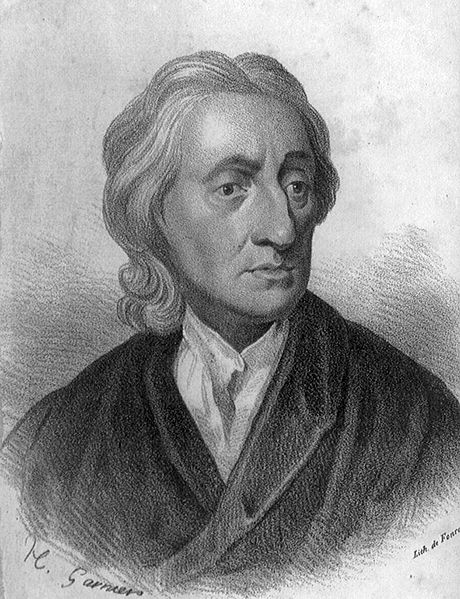
Philosopher John Locke (1693) suggested a young man of good breeding:
• was decent and graceful in his looks, voice, words, gestures and general demeanor.
• was pleasing in company, taking care not to offend others or demonstrating “sheepish bashfulness”
• showed no excess of ceremony; did not flatter or dissimulate; was not mean.
• In conversation displayed respect, esteem, good manners and goodwill to everyone.

Philip Dormer Stanhope, 4th Earl of Chesterfield by William HoareIn the mid-1700’s Philip Dormer Stanhope, 4th Earl of Chesterfield wrote to his illegitimate son on the issue of that which would make a man “welcome and agreeable in conversation and common life.” (Chesterfield, 1984) His advice echoed Locke’s including:
• “One of the most important points in life is decency; which is to do what is proper and where it is proper.”  (Chesterfield, 1984) Do not be ashamed of doing what is right.
• Do not be distracted, rude or thoughtless during a conversation.
• You should always endeavor to procure all the conveniences you can to the people you are with.” (Chesterfield, 1984) (In other words, think of others first and make them comfortable when they are with you.

Mason (1982) helps to sum up the overall English notion of a gentleman suggesting that the true English gentleman was a combination of both good birth and a sterling character. In addition to coming from a good family:
• A gentleman knew his place in society and the world
• While it was convenient for the gentleman to have money, he should never be one to be seen to count pennies
• A gentleman was a man of principle, careful of his reputation, fulfilling his obligations, and behaving with integrity and honor in every situation
• Gentlemen weren’t awkwardly bashful or formal; they didn’t put themselves forward in social settings, but rather stylish and elegant and considerate of others
• Gentlemen show consideration for women and would never insult those below them be they servant or beggar.

The limits of Gentlemanly Behavior

As interesting as is it is to consider what made a gentleman in the regency era, it is perhaps more interesting to examine what behaviors seemed to have little impact on one’s status as a gentleman.
Gentlemen of the regency were not particularly religious as a group, many were not regular church-goers. Mason (1982) suggests that many of these substituted the gentlemanly behavior Christian tenets since the former were easier to uphold. (Mason, 1982) These men included much of the clergy who were younger sons of the aristocracy who went into the church only because it was expected of them. Often these vicars hired a curate to minister to the parish whilst they continued in the social life of the season, hunting, gambling, and dallying with women all without particular scandal. They could not be faulted for living the life of an aristocratic gentlemen.

Perhaps this preference for easier to follow guidelines of behavior explains why there are a few principles that are noticeably absent in the behavioral rules for gentlemen. Sexual morals are nowhere addressed. Faithfulness to one’s marriage is not related to being a gentleman. Nor does being a gentleman preclude visiting prostitutes. Many, if not most, high society gentlemen supported mistresses and frequented brothels.

Issues of gaming, debt and financial management are not directly addressed by any ‘gentlemanly code’, only tangentially in matters of reputation and principles. Similarly any sort of reference to a ‘work ethic’ is absent from tenets of gentlemanly behavior. Remember, a gentleman was first defined as one who did not actually dirty his hands with work for his income.

In short, being a proper Regency era gentleman did not mean many of the things we assume of the term today. That is not to say there were no gentlemen who were faithful to their wives, hardworking and conscientious with their money, only that those traits were not actually considered a necessary part of gentlemanly behavior.


 References

Cornick, Nicola. "What Makes a Gentleman? - A historical post." Historical and Regency Romance UK. August, 2015. Accessed May 22, 2017. http://historicalromanceuk.blogspot.com/2015/08/what-makes-gentleman-historical-post.html.
Kane, Kathryn. "Boy to Man:   The Breeching Ceremony." The Regency Redingote. August 31, 2012. Accessed May 22, 2017. https://regencyredingote.wordpress.com/2012/08/31/boy-to-man-the-breeching-ceremony/ .
Kane, Kathryn. "The Regency Gentleman." The Regency Redingote. March 20, 2009. Accessed May 22, 2017. http://regencyredingote.wordpress.com/2009/03/20/the-regency-gentleman/.
Locke, John. Some thoughts concerning education. London: A. and J. Churchill, 1693.
Mason, Philip. The english gentleman: the rise and fall of an ideal. London: André Deutsch, 1982.
Morris, Diane H.  “A True Regency Gentleman Had Good Breeding” Moorgate Books. Thursday, October 22nd, 2015. Accessed May 22, 2017. http://www.moorgatebooks.com/10/a-true-regency-gentleman-had-good-breeding/.
Morris, Diane H.  “Good Breeding: The Regency Principle of Decency.” Moorgate Books. November 10th, 2016 Accessed May 22, 2017. http://www.moorgatebooks.com/11/good-breeding-the-regency-principle-of-decency/
 Morris, Diane H. "Is Mr. Darcy the Ideal Regency Gentleman?" Moorgate Books. September 24, 2015. Accessed May 22, 2017. http://www.moorgatebooks.com/09/is-mr-darcy-the-ideal-regency-gentleman/ .
Morris, Diane H. “Mr. Darcy’s Breeding Problem” Moorgate Books. November 5th, 2015 Accessed May 22, 2017. http://www.moorgatebooks.com/11/mr-darcys-breeding-problem/
Stanhope, Philip Dormer. Lord Chesterfield letters to his son and others. London and Melburne: Dent, 1984.


~~~~~~~~~~

Though Maria Grace has been writing fiction since she was ten years old, those early efforts happily reside in a file drawer and are unlikely to see the light of day again, for which many are grateful. 

After penning five file-drawer novels in high school, she took a break from writing to pursue college and earn her doctorate. After 16 years of university teaching, she returned to her first love, fiction writing.

Click here to find her books on Amazon. For more on her writing and other Random Bits of Fascination, visit her website. You can also like her on Facebook, or follow on Twitter.