Showing posts with label estate. Show all posts

Saturday, November 11, 2017

Land Stewards: Professional help in running an estate.

by Maria Grace

We often hear about gentlemen employing stewards to help manage their estates. Who were these men, though, and what did they do?
Small estates, like Longbourn of Pride and Prejudice, could be managed by the master of the estate with the assistance of a non-professional man, called a bailiff. Typically a bailiff would be one of the major tenants on the estate, hired to act as a go-between to collect tenants’ rents. (In the era, it would have been considered vulgar for a gentleman to collect the rents himself.) Larger estates, like Darcy’s Pemberley or Lady Catherine’s Rosings Park, were major economic endeavors that necessitated professional help in the form of a steward.

Qualifications

Where the bailiff simply collected rents for the master of the estate, the steward was responsible for actually running the business of the estate and thus was integral to its success. He had to be an educated man, often the son of clergy, a smaller landowner or a professional man. He needed a head for numbers, scrupulous record-keeping skills, an exceptional knowledge of all aspects of agriculture, and excellent people-skills--a pretty tall order, all told. Typically he would be university trained as a solicitor, necessary because of his dealings with contracts. A steward was not considered a servant, but rather a skilled professional with a higher status than the family lawyer.

For these reasons, a steward was addressed as ‘Mister’. Not long after the regency era, the term ‘steward’, with its servile connotations, was dropped in favor of the more professional term ‘land agent.’ 

Duties

Stewards were tied to the estate and did not travel with the master of the estate. They managed all the activities associated with making the estate profitable, including record and account keeping, managing contracts, and overseeing the agricultural aspects of the home farm. 
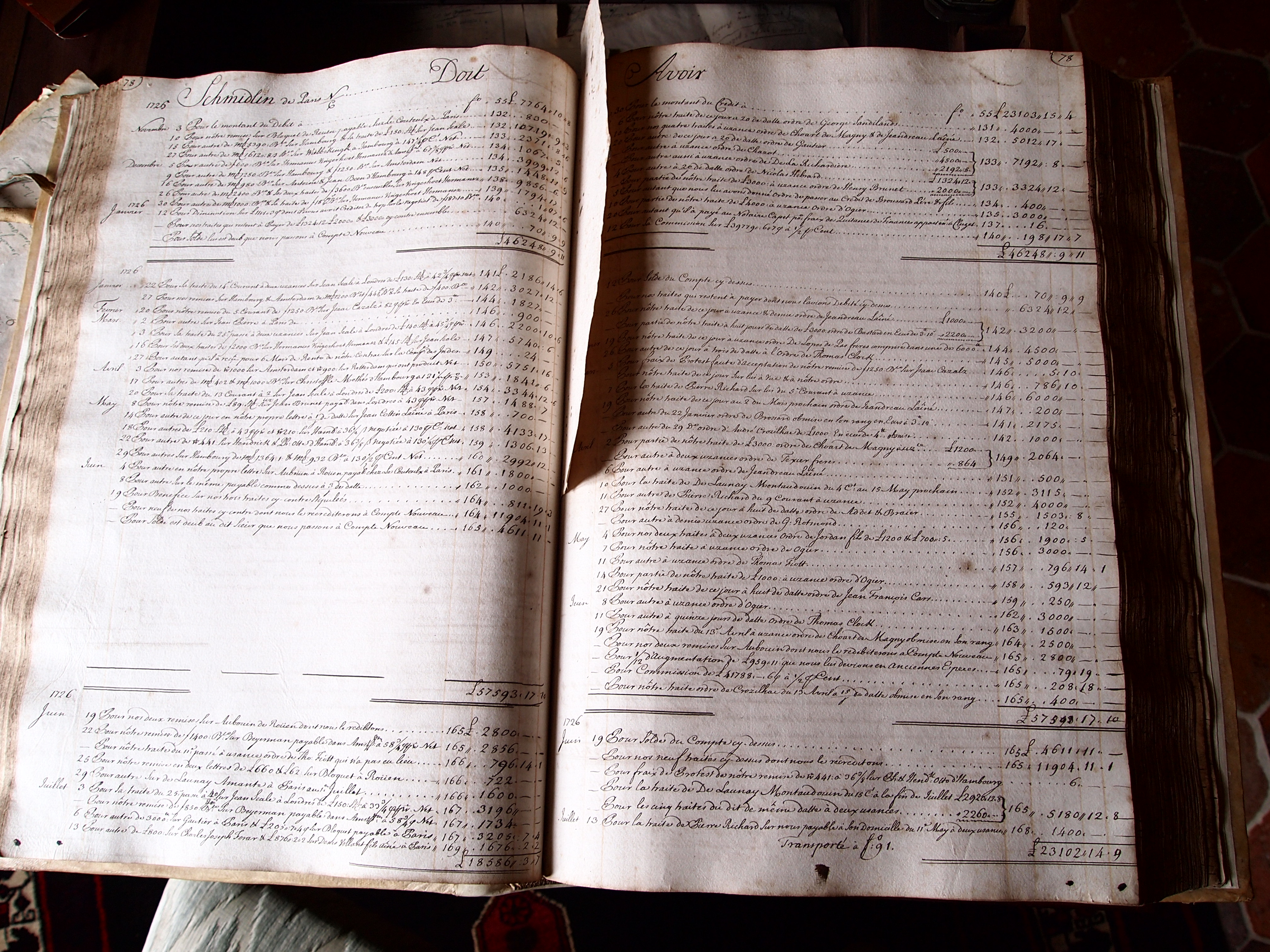
A good steward kept meticulous accounts and records of everything—seriously everything. In addition to the expected accounting that would go with such an enterprise, he kept logs of work done, including repairs to buildings, fences and roads, as well as records of the parkland, game animals, livestock and crops. He also maintained a rent roll of tenancies and records of the farm boundaries. Further, an estate employed a number of department heads, such as the head gardener, head gamekeeper, and the like. The steward kept records for all these departments and paid the wages of their workmen.

Beyond these duties, stewards also spent a lot of time touring the estate on horseback, dealing with the people of the estate face to face. He collected rents, found new tenants when necessary, leased land, supervised the tenantry, directed any work and improvements done on the land, settled squabbles that arose among the tenants or workers, purchased animals, seed and so on. (Shapard, 2003) 

Salaries

A steward’s salary related both to the size of the estate and his expertise. Typically, a steward’s salary would range from £100-300 annually. (As a point of reference, in the era a middle class family of four could live very comfortably on £250 a year.) In addition, he would have use of a private house on the estate. For reference, Austen’s Longbourn had an income of about £2000, which probably put hiring a steward out of their range. 

Risks

Although not nearly as hazardous as many professions of the era, working as a steward was not without risks. Although employers relied heavily upon their stewards for their efficient management of their estates, that did not prevent employers from doubting their honesty, especially as the large sums that many of them handled offered opportunities for speculation. Accusations of wrongdoing could ruin a man’s reputation and (wrongful) conviction for the same could result in prison time or worse, depending on the amount of money involved.

Since the steward was also in charge of collecting the rent from the tenants, he could be an unpopular figure. Historical records show assaults on stewards and in one case, the murder of one. So, in a very literal sense, his people-skills could be a life-saver.

References

Austen, Jane, and David M. Shapard. The Annotated Pride and Prejudice. New York: Anchor Books, 2003. 
Karsten, Susan. “The Steward: Guardian of the Noble Estate (Farm).” Vanessa Riley’s Regency Life. Accessed May 26, 2014. 
http://christianregency.com/blog/2013/09/09/the-steward-guardian-of-the-noble-estate-farm-by-susan-karsten/ 
Laudermilk, Sharon H., and Teresa L. Hamlin. The Regency Companion. New York: Garland, 1989.
LeFaye, Deirdre. Jane Austen: The World of Her Novels. New York: Abrams, 2002.
Ray, Joan Klingel. Jane Austen for Dummies. Chichester: John Wiley, 2006.
Schmidt,  Wayne.  “Victorian Domestic Servant Hierarchy and Wage Scale.” This and That. Accessed May 26, 2014.  http://www.waynesthisandthat.com/servantwages.htm
Sullivan, Margaret C., and Kathryn Rathke. The Jane Austen Handbook: Proper Life Skills from Regency England. Philadelphia, PA: Quirk Books, 2007. 

~~~~~~~~~~

Though Maria Grace has been writing fiction since she was ten years old, those early efforts happily reside in a file drawer and are unlikely to see the light of day again, for which many are grateful. 

After penning five file-drawer novels in high school, she took a break from writing to pursue college and earn her doctorate. After 16 years of university teaching, she returned to her first love, fiction writing.

Click here to find her books on Amazon. For more on her writing and other Random Bits of Fascination, visit her website. You can also like her on Facebook, or follow on Twitter.


Friday, August 11, 2017

Inheriting an Estate

by Maria Grace

For most, land ownership came about as the privilege (or right depending on how you looked at it) of being the eldest son (or otherwise designated heir) and inheriting the family holdings. Since, during the era, social standing and power was all about land, those who possessed it enjoyed considerable perks as a result. But there were commensurate responsibilities that went along with those advantages

Primogeniture

The law of primogeniture guided most estate inheritance of the era. In short, the law required that a family’s eldest surviving son would inherit the family’s estate in its entirety. Only in the case of a family with no sons, would the estate pass to a daughter or daughters. If there was more than one daughter, the estate would pass to all of them equally, not just the eldest. Since, if any of these daughters married, their share would then belong to their husbands, the ownership of the estate could become very complicated very quickly. So when multiple daughters inherited, the estate was often sold and the money divided equally among the sisters.

What about widows and younger children?

Widows did not inherit estates. Instead, marriage settlements would establish a jointure—an allowance normally based on one tenth of the dowry she brought into the marriage—to be paid by the estate annually for the remainder of their lifetime. These arrangements would have been made at the time of the marriage and might or might not permit her to maintain the lifestyle to which she had been accustomed during her married life.

Primogeniture did not require any inheritance be passed to younger children. When a man wanted to provide something for his younger children, the total legacy allowable was based on the amount his estate could support without harm to its capital value. In England this sum was calculated customarily by estimating the amount available at twelve and a half per cent of the capital value of the estate. (Copeland, 2006) This total amount could be divided among all the younger children, equally or not, according to the father’s wishes. This amount would usually be separate from the money for daughter’s dowries, which would have been established in the marriage articles.

Merchant families were not bound by the constraints of primogeniture and typically left fortunes to all their children, including their daughters.

Strict Settlement and Entailment

Since females inheriting estates generally mean the loss of estate to the family line, many—estimates place it at half or more during the eighteenth century—used strict settlement entailment to ensure an estate would pass down a family’s male line, usually for three generations.

A strict settlement could be done in two ways, each featured in Jane Austen’s writing: a fee tail and a left estate. Sense and Sensibility featured a life estate. The senior Mr. Dashwood inherited the use of Norland estate during his life time, not the actual ownership of the estate. After Mr. Dashwood’s death, the estate would go to the individual designated in the original will, in this case, his son by his first marriage.

In Pride and Prejudice, Jane Austen featured a fee tail estate. In the simplest of terms, a fee tail meant that a man would leave his estate not to his heir but to his heir’s heir. The man’s heir would receive a ‘limited life tenancy’ to the estate, after which the estate would pass to the life tenant’s heir. The inheritance could be further limited to male heirs or ‘male heirs of the body’ which would ensure patrilineal inheritance, keeping the estate in the family for two more generation.

When a landowner suffered a failure of issue—that is, he failed to produce sons—a paternal nephew would normally be made the sole heir. If he were somehow unavailable, then a descendent would be determined according to ancient heirship rules. (Designations other than ‘male heirs of the body’ could be made. Wills could designate a daughter or daughters as life tenant with the fee tail held for the first (legitimate) male heir produced among them.)

A strict settlement of either variety gave the life tenant limited use of the estate during his lifetime. He might enjoy the income of the estate and the responsible use of its facilities. However, he could not dispose of the estate or any part of it. Moreover, he was often limited in the ways he could use the resources of the estate. A life tenant might be prevented from selling timber from the land because it was considered as belonging to fee tail holder of the estate and would deplete the capital value of the estate. Similarly, he might not be able to mine resources on the estate and even if he could, he might not be able to raise the money to do the mining because he could not obtain a mortgage on the land.

All of this meant that the life tenant had limited access to capital to repair or improve the estate, leading to estates falling into severe disrepair. To avoid this problem, in many cases, a small portion of the estate was granted outright to the current owner to give him some flexibility to deal with unexpected problems. (Shapard, 2010)

Even with all these difficulties, entailments could continue for many generations through the process of resettlement. Typically, this would occur when the heir or eldest son reached the age of twenty one, or at the time of his marriage. Essentially, the life tenant would offer the fee tail heir—usually a father offering this son—a lump sum of money or an annuity from the estate. In order to acquire the money, they further agreed to end the current entail, fund the amount from the estate, and create a new settlement whereby the land would go to the father for his life, to the heir for his life and then in fee tail to the heir's heir. Thus a new entail would be created, but the estate would now be depleted by the lump sum or encumbered by the annuity pair to the original fee tail heir.

So, if the Dashwood family had done this, when Mr. John Dashwood reached twenty one (or married Fanny) he and his father, Henry Dashwood, would have sat down together and decided how much Henry would have to offer John to see the entail continued. Next, they would visit the solicitor to have the original entailment barred (discontinued). A trip to the banker would follow to juggle the finances in whatever way necessary to provide John’s money. The process would end with another visit to the solicitor to redraft a new entail, naming John’s (not yet born) heir as the fee tail heir of Norland. John would have money to fund his lifestyle, Henry would know the estate would be preserved in the family for two more generations, and the heir to be of John Dashwood would have to deal with an estate, now depleted of a possibly significant portion of its capital. The estate might be impoverished, but it would remain in the family, which was after all, the most important thing.

This system of inheritance flourished between the mid-seventeenth century to the later part of the nineteenth century, when an act of parliament gave the life tenant greater powers to dispose of the estate.


References


Adkins, Roy, and Lesley Adkins. Jane Austen's England. Viking, 2013.
Austen, Jane, and David M. Shapard. The Annotated Pride and Prejudice. New York: Anchor Books, 2003.
Austen, Jane, and David M. Shapard. The Annotated Sense and Sensibility. New York: Anchor Books, 2011.
Austen, Jane, and Edward Copeland. The Cambridge Edition of Sense and Sensibility. Cambridge: Cambridge University Press, 2006.
Bennetts, M.M., “At the heart of a great estate is… .“ M.M.Bennetts. April 11, 2012. Accessed May 20, 2014. http://mmbennetts.wordpress.com/2012/04/11/at-the-heart-of-a-great-estate-is/
Collins, Irene. Jane Austen and the Clergy. London: Hambledon and London, 2001.
Davidoff, Leonore, and Catherine Hall. Family fortunes: men and women of the English middle class, 1780-1850. London: Routledge, 2002.
Day, Malcom. Voices from the World of Jane Austen. David and Charles, 2006.
Ellis, Markman "Trade." In Jane Austen in Context , 269-77. Cambridge: University Press, 2005.
Girouard, Mark. Life in the English Country House: A Social and Architectural History. New Haven: Yale University Press, 1978.
Gornall, J.F.G. "Marriage and Property in Jane Austen’s Novels." History Today 17, no. 12 (December 1967). Accessed May 22, 2017. http://www.historytoday.com/jfg-gornall/marriage-and-property-jane-austen%E2%80%99s-novels.
Hitchcock, Tim, Sharon Howard and Robert Shoemaker, "Churchwardens and Overseers of the Poor Account Books", London Lives, 1690-1800 (www.londonlives.org, version, 1.1 17 June 2012). https://www.londonlives.org/static/AC.jsp
Laudermilk, Sharon H., and Teresa L. Hamlin. The Regency Companion. New York: Garland, 1989.
LeFaye, Deirdre. Jane Austen: The World of Her Novels. New York: Abrams, 2002.
Martin, Joanna. Wives and Daughters: Women and Children in the Georgian Country House. London: Hambledon and London, 2004.
Morris, Diane H. “Mr. Darcy was a Second-Class Citizen.” Moorgate Books. August 10th, 2014. Accessed May 22, 2017. http://www.moorgatebooks.com/10/a-true-regency-gentleman-had-good-breeding/.
Ray, Joan Klingel. Jane Austen for Dummies. Chichester: John Wiley, 2006.
Selwyn, David. Jane Austen and Leisure. London: Hambledon Press, 1999.
Seven Trees Farm, “Norfolk four course.” Seven Trees Farm. April 30, 2012. Accessed May 29, 2017. http://seventreesfarm.wordpress.com/2012/04/30/norfolk-four-course/
Sullivan, Margaret C., and Kathryn Rathke. The Jane Austen Handbook: Proper Life Skills from Regency England. Philadelphia, PA: Quirk Books, 2007.
Swift, Deborah. “Law & Order - Duties of the Constable in 17th Century England.” English Historical Fiction Authors. May 24, 2017. Accessed May 29, 2017. http://englishhistoryauthors.blogspot.com/2017/05/law-order-duties-of-constable-in-17th.html
Trevelyan, George Macaulay. Illustrated English Social History. New York: D. McKay, 1949.
Vickery, Amanda. The Gentleman's Daughter: Women's Lives in Georgian England. New Haven, Conn.: Yale University Press, 1998.
Watkins, Susan. Jane Austen's Town and Country Style. New York: Rizzoli, 1990.
Wilson, Ben. The Making of Victorian Values: Decency and Dissent in Britain, 1789-1837. New York: Penguin Press, 2007.

~~~~~~~~~~

Though Maria Grace has been writing fiction since she was ten years old, those early efforts happily reside in a file drawer and are unlikely to see the light of day again, for which many are grateful. 

After penning five file-drawer novels in high school, she took a break from writing to pursue college and earn her doctorate. After 16 years of university teaching, she returned to her first love, fiction writing.

Click here to find her books on Amazon. For more on her writing and other Random Bits of Fascination, visit her website. You can also like her on Facebook, or follow on Twitter.