Showing posts with label gentlemen. Show all posts

Monday, November 12, 2018

Early Education of up-and-coming Gentlemen

by Maria Grace
"In all well-regulated states, the two principal points in view in the education of youth, ought to be, first, to make them good men, good members of the universal society of mankind; and in the next place to frame their minds in such a manner, as to make them most useful to that society to which they more immediately belong; and to shape their talents, in such a way, as will render them most serviceable to the support of that government, under which they were born, and on the strength and vigour of which, the well-being of every individual, in some measure depends." (Sheridan, 1756)
Although sentiments for the education of youth (read here, male youth; female education would not be considered worthwhile yet for quite some time), no one really argued for state-provided education for middle and upper-class children before 1850. (Brown, 2011) That was left entirely in the hands of the parents. Although considerable effort and activity went into educating these children, it was hardly standardized. How a young boy was educated depended entirely on the preferences and means of his family.

Early education

On the whole, early education in the home was preferred. Mothers and governesses would provide a boy’s first education, often teaching him the basics of reading and writing. Usually by the age of seven, he would graduate from being taught by women to being educated by men. There were no standards of how this worked though. The specific details varied by family and by social class.

A male tutor might be brought into the home to teach the child, preparing him for the next step in his education. This could continue for just a few years until the boy was deemed ready for a boarding school, or it could continue until he was ready for university study, depending on the educational philosophy of the family, usually the father. (Selwyn 2010)

Alternatively, a boy might be sent to a local scholar, often a clergyman, for lessons as a day student. Many clergymen also took such students on as boarders, running small schools to supplement their income teaching anywhere for half a dozen to two dozen students.

Preparatory Schools

These smaller schools which routinely took boys in the 7 to 13-year-old age range were often referred to as preparatory schools, preparing boys for the larger public schools that often preceded entry into the universities.

These schools were usually held in the schoolmaster’s home. Jane Austen’s father, Rev. George Austen conducted such a school out of the vicarage in Steventon beginning in 1793. His living as a vicar was £230 a year. He charged £35 per term for each of his student boarders. It is easy to see how taking even just a few students could substantially augment his family’s income. The work though did not fall on him alone. His wife cooked, cleaned, sewed, and mother-henned the boys in her care, much like a surrogate mother. (Sanborrn, 2016)

In larger schools where the teaching staff consisted of ordained clergymen, teachers could make as much as £200-400 a year, giving them a comfortable middle-class income. (Davidoff 2002) Headmasters in such schools, especially if scholars themselves, might enjoy a position of respect and distinction in local society. (Selwyn 2010)

By modern standards, preparatory school curriculum was very limited. It consisted mainly of Latin and Greek classical texts (both prose and verse), modern and ancient history, some mathematics, and the use of globes to locate nations. French and Italian might be taught as extras (for additional fees), along with handwriting, dancing, drawing and a smattering of scientific subjects. (Le Faye, 2002) No curriculum standards existed, so what might actually be taught varied widely and there was no guarantee that a particular teacher was actually well versed in the subjects he taught.

Teachers in these preparatory schools were most often clergymen or failed ordinals. There were far more men ordained than there were livings to provide for them. In 1805, it was estimated that up to 45% of those ordained never found a church living and were forced to work as (usually highly underpaid) curates for men who had a living or to try their hand at teaching or take up another occupation entirely outside the church (Southam, 2005). After their education in these preparatory schools, boys might then progress to a public school.

Public Schools

Public schools were public in the sense that boys were taught in groups outside of their private homes, not in the sense that these institutions were funded by public funds. A number of public schools existed, but the landed elite, in particular, chose to send their sons to a select number of these schools: Eton, Harrow, Winchester, Westminster, Rugby, Charterhouse and Shrewsbury. (Adkins, 2013) The exact timing and duration of a boy’s stay at school varied greatly. Some were sent as young as age seven and stayed until age eighteen. More commonly boys started public schools around age thirteen and stayed about five years.

Though Regency era education was very different from modern education, two factors, in particular, seem to distinguish it most from modern schooling: the curriculum taught and the lifestyle of the students.

What was Taught

In his 1693 treatise, Some Thoughts Concerning Education, John Locke recommended that instruction in foreign languages (beginning with a living language like French) should start as soon as a boy could speak English. Locke considered Latin and Greek to be absolutely essential to a gentleman’s education, enabling him to read classical literature. In addition, he endorsed the study of geography, astronomy, anatomy, chronology, history, mathematics and geometry. (Morris, 2015).

Based on Locke’s foundations, students were expected to know some Latin upon arrival to public school. “The first two years of their education was entirely a study of Latin–memorizing, reciting, reading, and answering set questions in that language, so pronunciation too.… Thus they learned to be confident public speakers, first in Latin, then in classical Greek and finally in English.” (Bennetts 2010) These studies also developed an understanding of the moral and philosophical issues brought up by classical thinkers and a literary appreciation of poetry and prose. Dancing, fencing, and other sports also featured in some curriculums.

What was notably absent from both public school and university educations were courses on anything the modern mind would consider practical. Since these establishments catered to gentlemen who were not destined to actually work for their living, courses like bookkeeping or land management that might equip them for jobs (oh the horror!) were relegated to schools that catered to the sons of men in trade. (Selwyn 2010)

Life in public school

Students at public schools either boarded at the school itself or in town at boarding houses known as ‘Dame’s Houses’ usually overseen by a ‘Dame’ or landlady. In the early 1800s, about thirteen such houses were associated with Eton. Although school life was very regimented, with school days running from six in the morning until eight in the evening, there was actually very little direct supervision over the boys. They were often left to fend for themselves. Once they entered public school, most boys spent the majority of their year at school, with only a few weeks of holidays spent back home during the year.

With a strong economic incentive to admit as many students as possible, public schools were often so crowded that even beds were shared by two or more boys at the same time. The same incentives also influenced the quantity and quality of food made available to the students. Those with pocket money frequently supplemented their rations at local shops. (Brander, 1973)

Under such conditions, it was no surprise that public school culture was wild. Almost no limits were placed to the amount the boys could drink, gamble, fight and indulge any sexual bent with maidservants, local prostitutes, and girls living in town. Even the institution of prefects (older boys in charge of younger ones) did little to curb the out of control behavior. “ … Most schools suffered occasional rebellions, or mutinies, resulting in mass expulsions or floggings. In 1797, Dr. Ingles, headmaster of Rugby, had his door blown open by gunpowder. The boys at Harrow were even more ambitious, setting up a roadblock and blowing up one of the governor's carriage.” (Brander, 1973)

Bullying and Brutality

Not only was dissolute, licentious behavior the norm, bullying and brutality were expected. Corporal punishment consisting of flogging with a birch, or caning with a rod until blood was drawn from the bare buttocks, was regarded as the normal and accepted punishment for transgressions. Such punishments were frequently delivered in public, adding additional humiliation to the experience.

Not only was brutality dished out from the masters to the students, older boys were put in charge of younger ones and permitted to order them about and punish them with beatings just as the schoolmasters did. Depending on the sorts of friends a boy did or did not make and how he got on with others, especially older students, a boy’s public school years could be very testing indeed.

Why was it tolerated?

If public schools could be so bad, why did not parents intervene? Why would a father who had suffered through such school days send his son into a place that brutalized him?

In short, such an environment was regarded as essential for inculcating the toughness and fortitude men needed to perform their social roles. “Educators and parents subscribed to the principle that one was fit to command only after one had learned to obey. And those young boys of the gentry and nobility were there to learn their place and destiny in England's highly structured society.” (Laudermilk, 1989)

So, even if a boy had been able to appeal to parents for help, he would have been unlikely to receive either assistance or sympathy. At a very tender age, he was literally on his own, to survive the experience in whatever way he could. Is it any wonder that the friends a boy made during his time in public school were often strong allies for a lifetime?

References

Adkins, Roy, and Lesley Adkins. Jane Austen's England. Viking, 2013.

Austen, Jane, and David M. Shapard. The Annotated Persuasion. New York: Anchor Books, 2010.

Bennetts, M.M. A gentleman’s education. M.M. Bennets. July 20, 2010. Accessed October 5, 2016. https://mmbennetts.wordpress.com/2010/07/27/a-gentlemans-education/

Brander, Michael. The Georgian Gentleman. Glasgow: University Press, 1973.

Brown, Richard. Educating the middle-classes 1800-1870. Looking at History. Accessed October 29, 2016. http://richardjohnbr.blogspot.com/2011/02/educating-middle-classes-1800-1870.html>

Davidoff, Leonore, and Catherine Hall. Family Fortunes: Men and Women of the English Middle Class, 1780-1850. Chicago: University of Chicago Press, 1987.

Day, Malcom. Voices from the World of Jane Austen. David and Charles, 2006.

Evans, Bronwen. Eton College During the Regency Era. Collette Cameron. May, 9, 2015. Accessed October 3, 2016. https://collettecameron.com/2015/09/eton-college-during-the-regency-era/

Glover, Anne. Regency Culture and Society: Harrow. Regency Reader. November, 15, 2013. Accessed October 10, 2016. http://www.regrom.com/2013/11/15/regency-culture-and-society-harrow/

Laudermilk, Sharon H., and Teresa L. Hamlin. The Regency Companion. New York: Garland, 1989.

LeFaye, Deirdre. Jane Austen: The World of Her Novels. New York: Abrams, 2002.

Locke, John. Some Thoughts concerning Education. London, 1693.

Morris, Diane H. “I Am Illiterate by Regency Standards.” Moorgate Books. Thursday, October 8, 2015. Accessed May 22, 2017. http://www.moorgatebooks.com/10/i-am-illiterate-by-regency-standards/

Sanborn, Vic. "19th Century Learning Academies and Boarding Schools: An Eyewitness Account" Jane Austen’s World. August 1, 20012. Accessed October 28, 2016. https://janeaustensworld.wordpress.com/tag/regency-schooling

Selwyn, David. Jane Austen and children. London: Continuum, 2010.

Sheridan, Thomas. British Education. London: R. and J. Dodeley, 1756.

Southam, Brian . “Professions,” in Jane Austen in Context edited by Janet Todd, p 366-376. Cambridge, UK: Cambridge University Press, 2005.

Sullivan, Margaret C., and Kathryn Rathke. The Jane Austen Handbook: Proper Life Skills from Regency England. Philadelphia, PA: Quirk Books, 2007.

~~~~~~~~~~

Though Maria Grace has been writing fiction since she was ten years old, those early efforts happily reside in a file drawer and are unlikely to see the light of day again, for which many are grateful.

After penning five file-drawer novels in high school, she took a break from writing to pursue college and earn her doctorate. After 16 years of university teaching, she returned to her first love, fiction writing.

Click here to find her books on Amazon. For more on her writing and other Random Bits of Fascination, visit her website. You can also like her on Facebook, or follow on Twitter.

Wednesday, October 11, 2017

Managing an estate

by Maria Grace

There were two major types of great landowners in the regency era–the aristocrats who were deeply involved in running the government, but rather less hands-on in regards to their estates, and land-owning gentry, who were very hands-on and represented the majority of land owners.

A country estate was a complex economic mini-state that typically included a residence of sufficient size to suit a gentleman with parkland, gardens, stables and paddocks. A large agrarian business extended out from this center, consisting of a home farm and gardens, numerous tenanted farms and cottages usually in a village near the manor. The survival of the resident family, household staff, tenant farmers and their families and workers depended on revenues from the estate’s agricultural enterprises and rents. (Laudermilk, 1989) A successful estate owner needed solid business acumen.

But why? Gentlemen did not work for their income, did they?

Technically, they did not. Their income came largely from rents and investments. Estates often had small villages within their boundaries including church and parsonage, stone, brick or timbered farmhouses, and cottages, even wind/water mills in a few narrow lanes, all surrounded by productive (and often leased out) meadows and fields. (It was generally considered a village, not a town because it had no market, the defining characteristic of a small town.)

Estate owners might also receive revenue from the sale of products from their land, including crops, animal products, timber and minerals.


Rent

Estate owners leased out various kinds of property, including tenant farms of various sizes, houses and cottages, and even small estates that might be part of their holdings. Rents rose dramatically between 1790 and 1830, in some cases increasing fivefold over that period, making rents a considerable source of income, especially for large estate owners. (Murray, 1998)

Since a gentleman did not dirty his hands with money, for him to collect the rents from this himself would have been vulgar. A steward, or in the case off smaller estates, a bailiff, would be hired for that task and others related to estate management. 

Stewards and Bailiffs

Whereas a bailiff might be an estate’s major tenant hired to simply collect rents, a steward was an educated man, often the son of clergy, a smaller landowner or a professional man, hired to assist in the running and management of the estate. A steward was not considered a servant, but rather a skilled professional. For this reason, he was addressed as ‘Mister’. Not long after the regency era, the term ‘steward’, having servile connotations, was dropped in favor of the more professional term ‘land agent.’

Stewards frequently had experience and training as solicitors which was particularly useful in their duties managing contracts and overseeing estate accounts. Beyond these duties, stewards also collected rents, leased land, supervised the tenantry, directed any work done on the land, settled squabbles that arose among the tenants or workers, purchased animals, seed and so on. (Shapard,2003)

The steward would often have a home of his own, but would on occasion stay at the manor. His duties might regularly take him to the family's other country houses, and to London, but he was unlikely to travel with the family on a regular basis. (Martin, 2004)


Farming

Tenant farmers

By 1790, three quarters of England's agricultural land was cultivated by tenants. (Day, 2006) The remaining quarter represented small yeoman farmers whose numbers would decrease through the ensuing century.

Tenants usually rented sections of land with farmhouse and outbuildings, paid their rents on the established quarter days: Lady Day (March 25), Midsummer (June 24), Michaelmas (September 29), Christmas (December 25), sold the produce, and kept the earnings. Customary provisions required the landlord to supply materials, buildings and facilities such as drainage and hedging while the tenant provided stock, seed and tools. (Davidoff, 2002)

Farmers, including tenant farmers, made up the middling ranks of rural society. They could become quite well off with their sons and daughters educated as they moved up the social scale. Though the sons of tenants could not inherit the land their father’s works, they could inherit their farm leases. These leases, which traditionally ran for multiples of seven years, were often passed from father to son, with the land owners preferring to maintain the continuity of a known tenants and the relationships that went with it. (Davidoff, 2002)

It was not uncommon for a tenant farmer to rent extra land with additional farmhouses for adult sons to farm. The eldest son would eventually take over his father’s tenant farm when he retired or died. Widows might head a farm household, hiring help with the farm as needed until a young son was old enough to take over the tenancy. (Davidoff, 2002)

Tenants normally looked to their landlord for assistance whether for personal matters or for help in improvements to the land. Some of these improvements might include better ways to farm the land and improve productivity.

Farming methods

With populations rapidly increasing, the best landowners sought out advanced methods of agricultural science to improve production (and profits.) The agricultural reports of the newly formed Board of Agriculture were avidly studied to learn more about advancements including crop rotation, scientific stock breeding, and new technologies including the seed drill and machines for threshing and chaff cutting. The installation of drainage in fields was another innovation practiced by many farmers during this era. Heavy clay soils where excess water made plowing more difficult and hurt the growth and root structure of plants would have rows of drains cut beneath the surface to move water away from the fields. (Shapard, 2012)

Four-course crop rotation, commonly called the Norfolk four-course system, increased fodder production. There were many variations of this system, depending on the region. Typically, fields would be sown with wheat in the first year, turnips in the second, followed by barley in the third. The clover and ryegrass were grazed or cut for feed in the fourth year. This produced two cash crops and two animal feed crops.

One constant was the presence of livestock as part of the strategy. Sheep (or sometimes cattle) were turned out to graze the turnip tops. This kept weeds down and allowed the field to be fertilized by mobile manure factories. Turnip roots were stored for winter animal fodder. More fodder meant larger livestock herds and the ability to keep animals through the winter. Improvements like these could double one's income. (Laudermilk,1989)

In addition to increased agricultural production, estates began to enjoy profits from heretofore unexplored avenues such as mining and timber sales. Changes in technologies often fueled demand while improvements in transportation with new canals and steam engines made previously prohibitive production profitable.


Incomes

What kind of income could a landed estate provide? Naturally the answer depended a great deal on the size of the estate and the kind of management it had.

For a little perspective, the 1801 census found that the average income of the 287 peerage families (all of whom would have landed estates) was approximately £8,000 The top 2000 merchant families averaged £2,500, whereas the top 6000 esquires that Austen’s Mr. Bennet would have belonged to averaged £1,500. That suggests that the £2,000 a year Mr. Bennet had represents a very good income, compared to his peers.

To have an income above the average nobility as a gentleman estate holder, one did not spend a very great deal of time sitting about enjoying the social life of the town. While a man like Austen’s Mr. Darcy might take time to enjoy the finer things as it were, he would also have to spend a very great deal of time and effort in managing the massive agricultural enterprise that provided those finer things.

Technically a gentleman did not ‘work’ for his income. But planning how to keep an estate afloat through the long years of the French war, determining how best to manage the home farm and advise his tenants considering the price of corn, debating whether to invest in draining a new field or if rain will spoil the harvest or damage tenant houses that he will have to repair—and how to effect those repairs—seeking new hands to man the sawmill and cider press and what to pay them—all of that sounds a very great deal like what we today would call work. While there were inevitably bad landowners who put little into managing their estates, many, if not most put in a great deal of very hard work to manage estates that provided “livelihood and the stability for both the landowner and a vast army of workers–tenant farmers, gardeners, cowmen, sawyers and shepherds alike.(As well as providing employment for seasonal labourers like codders, harvesters, shearers…)” (Bennetts, 2012)


References

Adkins, Roy, and Lesley Adkins. Jane Austen's England. Viking, 2013.
Austen, Jane, and David M. Shapard. The Annotated Pride and Prejudice. New York: Anchor Books, 2003.
Austen, Jane, and David M. Shapard. The Annotated Sense and Sensibility. New York: Anchor Books, 2011.
Austen, Jane, and Edward Copeland. The Cambridge Edition of Sense and Sensibility. Cambridge: Cambridge University Press, 2006.
Bennetts, M.M., “At the heart of a great estate is… .“ M.M.Bennetts. April 11,2012. Accessed May 20, 2014. http://mmbennetts.wordpress.com/2012/04/11/at-the-heart-of-a-great-estate-is/
Collins, Irene. Jane Austen and the Clergy. London: Hambledon and London, 2001.
Davidoff, Leonore, and Catherine Hall. Family fortunes: men and women of the English middle class, 1780-1850. London: Routledge, 2002.
Day, Malcom. Voices from the World of Jane Austen. David and Charles, 2006.
Ellis, Markman "Trade." In Jane Austen in Context , 269-77. Cambridge: University Press, 2005.
Girouard, Mark. Life in the English Country House: A Social and Architectural History. New Haven: Yale University Press, 1978.
Gornall, J.F.G. "Marriage and Property in Jane Austen’s Novels." History Today 17, no. 12 (December 1967). Accessed May 22, 2017. http://www.historytoday.com/jfg-gornall/marriage-and-property-jane-austen%E2%80%99s-novels.
Hitchcock, Tim, Sharon Howard and Robert Shoemaker, " Churchwardens and Overseers of the Poor Account Books ", London Lives, 1690-1800 (www.londonlives.org, version, 1.1 17 June 2012). https://www.londonlives.org/static/AC.jsp
Laudermilk, Sharon H., and Teresa L. Hamlin. The Regency Companion. New York: Garland, 1989.
LeFaye, Deirdre. Jane Austen: The World of Her Novels. New York: Abrams, 2002.
Martin, Joanna. Wives and Daughters: Women and Children in the Georgian Country House. London: Hambledon and London, 2004.
Morris, Diane H. “Mr. Darcy was a Second-Class Citizen.” Moorgate Books. August 10th, 2014. Accessed May 22, 2017. http://www.moorgatebooks.com/10/a-true-regency-gentleman-had-good-breeding/.
Ray, Joan Klingel. Jane Austen for Dummies. Chichester: John Wiley, 2006.
Selwyn, David. Jane Austen and Leisure. London: Hambledon Press, 1999.
Seven Trees Farm, “Norfolk four course.” Seven Trees Farm. April 30, 2012. Accessed May 29, 2017. http://seventreesfarm.wordpress.com/2012/04/30/norfolk-four-course/
Sullivan, Margaret C., and Kathryn Rathke. The Jane Austen Handbook: Proper Life Skills from Regency England. Philadelphia, PA: Quirk Books, 2007.
Swift, Deborah. “Law & Order - Duties of the Constable in 17th Century England.” English Historical Fiction Authors. May 24, 2017. Accessed May 29, 2017. http://englishhistoryauthors.blogspot.com/2017/05/law-order-duties-of-constable-in-17th.html
Trevelyan, George Macaulay. Illustrated English Social History. New York: D. McKay, 1949.
Vickery, Amanda. The Gentleman's Daughter: Women's Lives in Georgian England. New Haven, Conn.: Yale University Press, 1998.
Watkins, Susan. Jane Austen's Town and Country Style. New York: Rizzoli, 1990.
Wilson, Ben. The Making of Victorian Values: Decency and Dissent in Britain, 1789-1837. New York: Penguin Press, 2007.


~~~~~~~~~~

Though Maria Grace has been writing fiction since she was ten years old, those early efforts happily reside in a file drawer and are unlikely to see the light of day again, for which many are grateful. 

After penning five file-drawer novels in high school, she took a break from writing to pursue college and earn her doctorate. After 16 years of university teaching, she returned to her first love, fiction writing.

Click here to find her books on Amazon. For more on her writing and other Random Bits of Fascination, visit her website. You can also like her on Facebook, or follow on Twitter.


Monday, September 11, 2017

Rights and responsibilities of land ownership

by Maria Grace

By the time of the 1801 census, England had a population of just over eight million living in a country of some thirty two million acres - and eighty to ninety percent of this land was owned by the aristocracy or landed gentry, (Adkins, 2013) nearly half in the hands of about 5,000 families in total. (Lane, 2005) The remainder belonged to institutions like the church or colleges or to attorneys, shopkeepers and bankers of the market towns. (Davidoff, 2002) These families enjoyed considerable status and power associated with land ownership, but with the rights, came a number of social responsibilities.

Land owner rights & power

Voting rights


Landowners had the right to vote, which non-land owners did not. Thus, Parliament was controlled by those whose wealth came from the land rather than trade until the early 1830's. Moreover, the landed classes also controlled government at the local, shire level through service as local magistrates and participation in other local political roles
John Harriott (1745–1817),
English mariner and magistrate.


Justice of the peace/magistrate

In rural areas, a magistrate or justice of the peace served as the principal legal authority of the area. The primary qualification for the post of magistrate was to own an estate worth more than a hundred pounds a year. Few with estates that small held the position, though. Since the post was unpaid and involved substantial duties, it typically fell to the larger landowners of the region.

In this capacity, the magistrate would judge all ordinary (non-felony) legal cases. He would often appoint constables, surveyors of the highways, overseers of the poor and churchwardens. Frequently, he would work together with the clergyman of the region to manage its affairs. The extent of the magistrate’s influence could be quite broad, particularly when considering the roles of the men he might appoint to official offices that would work with him.

Constables were the precursor to an official police force. Chosen from among local householders (usually the wealthiest), the constable was responsible for keeping the local peace. Duties included collecting certain taxes, catching and confining suspected criminals, managing vagrants and beggars, and maintaining records of all of the above.

Surveyors of the highways acted to maintain the highways in a parish, particularly those which ran to market towns. They removed nuisances from highways and identified needed repairs. In order to see those repairs completed, they could levy a rate on landowners and require landowners to provide labor and equipment to accomplish the repairs.

Overseers of the poor administered poor relief, including food, money and clothing, in accordance with the Poor Law system. They were to estimate how much poor relief money was needed and set the poor rate accordingly. It was also their purview to collect the funds from their fellows in the parish. Subsequently they would distribute the relief as they saw fit both as ‘indoor’ relief within the walls of the poor house and ‘outdoor’ relief offered in the homes of the poor. They kept careful accounting records of their activities which were then audited and signed off at the end of each accounting year (Easter) by two justices.

Finally church wardens were responsible for the property and moveable goods of a parish church, maintaining and inventorying them. They also kept accounts of church funds and ensure that the rector receives the tithes to which he is entitled. (Sullivan 2007) They also maintained order and peace in the church and churchyard at all times, and especially during services.

Through the exercise of these roles, the estate owner could exercise considerable power and authority among those in his parish and shire.

Land owner responsibilities


Though landowners often enjoyed rights and powers that others did not, land ownership also demanded added social responsibilities from estate owners. 

Charity

Patriarchal ideology still prevalent during the era contributed to the notion than a landowner owed a stewardship duty to those tied to his estate. Though they worked for him, he had a responsibility to see they were adequately fed, clothed, and housed. These duties went above and beyond paying the required poor rate and required personal attention and interaction with tenants and villagers who lived nearby.

Typically, the mistress of the estate and the local clergy would also be involved in providing relief to those who had come upon hard times. A landowner regularly supplied gifts of food, clothing, even money to the needy at regular intervals; usually at Christmas, during instances of bad harvest or weather, sickness, bereavement and unemployment. 
 

Hospitality

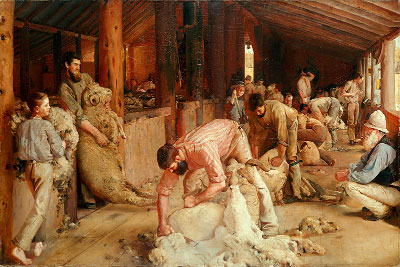
Traditional festivals and celebrations also provided a chance to demonstrate charity as well as hospitality—another basic social duty of the era. Entertainments that included tenants, laborers, school children, local townspeople and small farmers often took place on an enormous scale. Parties would celebrate the completion of key seasonal activities like sheep-shearing in the spring. At midsummer, haymaking parties would follow mowing the fields. Autumn brought harvest suppers and the possibility of harvest ball to go with it. November heralded celebrations of Guy Fawkes Night. Christmas and Twelfth Night parties rounded out the year’s celebrations.

At its best, entertaining the lower orders expressed a genuine concern for the poor and a desire to improve the relations between the classes; at its worst it showed a rather odious condescension. (LeFaye, 2002) Sometimes these fesitvals even offered the potential for violence and disorder. Poorer members of the community sometimes demanded money, beer and meals as a right from landowners, not a gift that many gave grudgingly out of fear of reprisals. (Wilson 2007)

Such festivals were but one example of the hospitality a wealthy landowner was expected to demonstrate. Often this meant large groups of houseguests who might say for months at a time. Parties and annual celebrations which brought in the entire neighborhood, rich and poor, to the grounds and for food and entertainment were also regularly expected. While taxing, hospitality did offer the opportunity to display one's wealth and importance.

These varied rights, roles and responsibilities illustrate how an estate holder was more than a simple farmer, he was required by custom (and in some ways by law) to be a community leader, tax assessor and collector, law enforcer, and social support network. Probably not the roles you might have seen any of Austen’s leading men playing.


References

Adkins, Roy, and Lesley Adkins. Jane Austen's England. Viking, 2013.

Austen, Jane, and David M. Shapard. The Annotated Pride and Prejudice. New York: Anchor Books, 2003.

Austen, Jane, and David M. Shapard. The Annotated Sense and Sensibility. New York: Anchor Books, 2011.

Austen, Jane, and Edward Copeland. The Cambridge Edition of Sense and Sensibility. Cambridge: Cambridge University Press, 2006.

Bennetts, M.M., “At the heart of a great estate is… .“ M.M.Bennetts. April 11,2012. Accessed May 20, 2014. http://mmbennetts.wordpress.com/2012/04/11/at-the-heart-of-a-great-estate-is/

Collins, Irene. Jane Austen and the Clergy. London: Hambledon and London, 2001.

Davidoff, Leonore, and Catherine Hall. Family fortunes: men and women of the English middle class, 1780-1850. London: Routledge, 2002.

Day, Malcom. Voices from the World of Jane Austen. David and Charles, 2006.

Ellis, Markman "Trade." In Jane Austen in Context , 269-77. Cambridge: University Press, 2005.

Girouard, Mark. Life in the English Country House: A Social and Architectural History. New Haven: Yale University Press, 1978.

Gornall, J.F.G. "Marriage and Property in Jane Austen’s Novels." History Today 17, no. 12 (December 1967). Accessed May 22, 2017. http://www.historytoday.com/jfg-gornall/marriage-and-property-jane-austen%E2%80%99s-novels.

Hitchcock, Tim, Sharon Howard and Robert Shoemaker, " Churchwardens and Overseers of the Poor Account Books ", London Lives, 1690-1800 (www.londonlives.org, version, 1.1 17 June 2012). https://www.londonlives.org/static/AC.jsp

Laudermilk, Sharon H., and Teresa L. Hamlin. The Regency Companion. New York: Garland, 1989.

LeFaye, Deirdre. Jane Austen: The World of Her Novels. New York: Abrams, 2002.

Martin, Joanna. Wives and Daughters: Women and Children in the Georgian Country House. London: Hambledon and London, 2004.

Morris, Diane H. “Mr. Darcy was a Second-Class Citizen.” Moorgate Books. August 10th, 2014. Accessed May 22, 2017. http://www.moorgatebooks.com/10/a-true-regency-gentleman-had-good-breeding/.

Ray, Joan Klingel. Jane Austen for Dummies. Chichester: John Wiley, 2006.

Selwyn, David. Jane Austen and Leisure. London: Hambledon Press, 1999.

Seven Trees Farm, “Norfolk four course.” Seven Trees Farm. April 30, 2012. Accessed May 29, 2017. http://seventreesfarm.wordpress.com/2012/04/30/norfolk-four-course/

Sullivan, Margaret C., and Kathryn Rathke. The Jane Austen Handbook: Proper Life Skills from Regency England. Philadelphia, PA: Quirk Books, 2007.

Swift, Deborah. “Law & Order - Duties of the Constable in 17th Century England.” English Historical Fiction Authors. May 24, 2017. Accessed May 29, 2017. http://englishhistoryauthors.blogspot.com/2017/05/law-order-duties-of-constable-in-17th.html

Trevelyan, George Macaulay. Illustrated English Social History. New York: D. McKay, 1949.

Vickery, Amanda. The Gentleman's Daughter: Women's Lives in Georgian England. New Haven, Conn.: Yale University Press, 1998.

Watkins, Susan. Jane Austen's Town and Country Style. New York: Rizzoli, 1990.

Wilson, Ben. The Making of Victorian Values: Decency and Dissent in Britain, 1789-1837. New York: Penguin Press, 2007.

~~~~~~~~~~

Though Maria Grace has been writing fiction since she was ten years old, those early efforts happily reside in a file drawer and are unlikely to see the light of day again, for which many are grateful. 

After penning five file-drawer novels in high school, she took a break from writing to pursue college and earn her doctorate. After 16 years of university teaching, she returned to her first love, fiction writing.

Click here to find her books on Amazon. For more on her writing and other Random Bits of Fascination, visit her website. You can also like her on Facebook, or follow on Twitter.


Thursday, May 11, 2017

What makes a Gentleman?

by Maria Grace

The nuances of social class and what made a gentleman a gentleman remains a perennial source of confusion for Regency readers. The pages of Georgian and Regency era fiction are littered with gentlemen, but offer absolutely no explanation of what that title actually meant.

How did one get to be a gentleman—were they born or ‘made’? How did these men provide a livelihood for themselves and their families particularly since it appears that some gentlemen had a profession while others did not. Were all gentlemen equal or did they have differing ranks? Were gentlemen universally wealthy? Were gentlemen common in the population, or really rare birds?

What made a Gentleman a Gentleman?


Gentlemen were, in general, members of the upper classes. But beyond that, how did one recognize this elusive species?

Although many would site land-ownership as their defining feature, this was not fully the case. Not all landowners were gentlemen and not all gentlemen were land owners. The primary quality of a gentleman was that he did not sully his hands with work. His income came from other, more noble sources: passive income from rent and investments and honorariums offered by grateful recipients of their services. Note this was critically different than being paid for one's services. If one was paid for their work, his standing as a gentleman would fall into question. An army officer received an honorarium for his service whilst a common soldier was paid (and not very well at that, but that is another issue altogether.)

A large number of gentlemen were born to the designation. The eldest son of a gentlemen had the potential to inherit the means that made his father a gentleman and that would make him a gentleman as well—a landed estate. The all-important estate was more than a simple farm. It was a tract of land large enough to provide the potential for rental incomes and income from agricultural and land based products like wood or coal, thus funding a gentleman’s life.

So, how much land did it take to get one’s head above the gentlemanly line? In general, a yeoman farmer owned from one to three hundred acres of property that produced £40-50 a year. Over three hundred acres, and a man had a shot at being a gentleman.

What about the younger sons born to gentlemen? If the estate only went to the eldest, could the younger ones manage to be gentlemen, too?

The answer is yes. That is where the ‘honorariums offered by grateful recipients’ clause comes in. There were certain professions for which the practitioner was not directly paid for their services, making them 'gentlemanly professions.' These professions were: the church, the law (as a barrister, not solicitor), medicine(as a physician, not a surgeon) and service as a military officer. All required a significant investment in the way of education or purchase of a commission, and provided an income disconnected from sullying one’s hands with work.

Gentlemanly Ranks

Not surprisingly in a rank obsessed society, there were gradations and ranks among the gentlemen. It goes without saying that titled peers in all their various forms occupied the top of society and were classed at the top of the gentlemanly ladder.

Immediately below the titled peers were the landed gentry. Though definitely part of the upper class, they were lower ranked than the peers. Interestingly, their income might exceed that of peers who might be saddled with debt or other financial difficulties.

Like the peers, the landed gentry were not created equal with some positioned some firmly above others. Within the landed gentry were:
1.  Baronet. A position created by King James in 1611, giving the person a hereditary knighthood that passed to the eldest son, and the right to be addressed as "Sir." These title holders were not considered part of the aristocracy and did not sit in the House of Lords.

2. Knight. Originally a military honor, but came to be used as a reward for service to the Crown. This was not a hereditary title. The number of knights increased dramatically during the regency years, with a particular surge from 1811-1815, when one's service to the crown could have been simply making a pleasing speech.

Neither the title of baronet nor knight conveyed any land or wealth to the title holder, nor any privilege beyond being addressed as ‘sir.’(and his wife as Lady His Last Name—can’t forget that one, right?)

3. Esquire/squire. Originally a title related to a knight’s attendant, it was an honor that could be conferred by the Crown. The title included certain offices such as Justice of the Peace and was used informally, unlike the prior two official titles. A squire was often the principal landowner in a district.

4. Gentlemen. This started as a separate title with the Statute of Additions of 1413. It became used to signify a man who did not have to work for a living. It was not a title and men would not be introduces as Mr. Smith, gentleman.

How many were in the Gentry


So just how many of these gentlemanly types were there?

At the start of the 19th century the landed gentry made up only a small part of the population. Whereas the peerage included about 300 families, the landed gentry encompassed closer to 25,000 or 26,000: 540 baronets, 350 knights, 6,000 landed squires and 20,000 just plain gentlemen. This group totaled about 1.5% of the national population and possessed about 16% of the national income. (Interestingly this is not out of line with the statistics in the US for 2010.) (Keymer, 2005) Said another way, 98.5% of the population were not of the gentlemanly class. So by that standard, gentlemen were rare birds indeed.


References

Kelly, Pauline E. (2009) Jane Austen Dictionary. Ink Well Publishing

Keymer, Thomas in Janet Todd (ed.) (2005) Jane Austen in Context. Cambridge University Press

Shapard, David M. (editor) - The Annotated Persuasion Anchor Books (2010)

Gornall, J. F.G. - Marriage and Property in Jane Austen's Novels The Jane Austen Hampshire Group

Austen, Jane, and David M. Shapard. The Annotated Pride and Prejudice. New York: Anchor Books, 2003.

Austen, Jane, and David M. Shapard. The Annotated Sense and Sensibility. New York: Anchor Books, 2011.

Lane, Maggie. Jane Austen's World: The Life and times of England's Most Popular Novelist. 2nd ed. London: Carlton Books, 2005.

Laudermilk, Sharon H., and Teresa L. Hamlin. The Regency Companion. New York: Garland, 1989.


~~~~~~~~~~

Though Maria Grace has been writing fiction since she was ten years old, those early efforts happily reside in a file drawer and are unlikely to see the light of day again, for which many are grateful.

After penning five file-drawer novels in high school, she took a break from writing to pursue college and earn her doctorate. After 16 years of university teaching, she returned to her first love, fiction writing.

Click here to find her books on Amazon. For more on her writing and other Random Bits of Fascination, visit her website. You can also like her on Facebook, or follow on Twitter.

Friday, September 11, 2015

Gentlemanly Professions

by Maria Grace

The nuances of social class and what makes a gentleman a gentleman remains a perennial source of confusion for Austenesque and Regency readers. How these men provided a livelihood for themselves and their families proves even more bewildering as some gentlemen had a profession, others did not, some were wealthy, and some could find themselves in very dire straits.

Of Gentlemen and the Gentry

A gentleman was the lowest ranking member of a social class known as the landed gentry. The group was considered upper class, but definitely below the titled peers. The group included:

1. Baronet. A position created by King James in 1611, giving the person a hereditary title that passed to the eldest son, and the right to be addressed as "Sir."

2. Knight. Originally a military honor, it was increasingly used as a reward for service to the Crown. This was not a hereditary title.

3. Esquire/squire. Originally a title related to the battlefield, it included a squire or person aspiring to knighthood, an attendant on a knight. Later it was an honor that could be conferred by the Crown and included certain offices such as Justice of the Peace. A squire was often the principal landowner in a district.

4. Gentlemen. This started as a separate title with the Statute of Additions of 1413. It is used generally for a man of high birth or rank, good social standing, and of wealth.

This group was distinct from the middle class because they did not work for a living. Many were landowners who lived entirely off income generated from a home farm and numerous rented (tenanted) farms and cottages. Revenues from agricultural enterprises and rents were the primary source of gentleman's income.

Gentlemanly professions

In the 1800s the English laws of primogenitor, intended to preserve the integrity of large landed estates, made it a challenge for younger sons of the landed gentry to establish themselves in life. If their family did not possess an additional estate for them to inherit or they lacked some other relative to provide an inheritance, younger sons had little choice but to make their own way in the world. The question was how to do so and not lose their status as gentlemen.

Four professions offered them the opportunity to do so, the traditional ‘learned’ professions: the church, the law and medicine and services as a military officer. All required a significant investment in the way of education or purchase of a commission, and provided an income disconnected from sullying one’s hands with work.

Officers

In the Regency era, the highest status gentlemanly profession was a military officer, a position requiring a purchased commission. Though our modern sensibilities tend to be uncomfortable with the concept of buying a commission, in the Regency era, the belief was that paying for the rank meant that only men of fortune, character, and who had a real interest in the fate of the nation would be drawn to the military, thus reducing the number of unworthies serving in the officers' ranks. Moreover, since officers ‘owned’ their commission, they would be more responsible with their ‘property’ than someone with nothing to lose. Furthermore, private ownership of rank also implied that since officers did not owe their rank to the King, they would be less likely to be used by the King against the people.

Purchase of commissions also served a practical purpose. The price paid for a commission served as a sort of nest egg for the officer, returned to him when he ‘sold out’ and retired. Thus there was no need to provide pensions for retiring officers, a definite advantage to the crown.

These nest eggs were particularly necessary because army pay was enough to live on but not much more, particularly if one sought to maintain the standard of living of a wealthy family. In general, officers' honoraria (as gentlemen they did not take salaries) were just less than the amount of interest that could be earned by the cost of the commission. It was widely accepted that gentlemen should not profit from their military service. (Prize money, when it could be had was a different thing.) Many sons of wealthy parents who joined the army also had an allowance from their families that helped them to live in the style to which they had been accustomed. 

Clergy

The church was a particularly attractive option if a family had a living they could bestow as they chose. A living meant a guaranteed income and home for the lifetime of the clergyman lucky enough to be appointed to one. But what was a living and how did one manage to get appointed to one?

Two primary types of clergymen could be found in the Regency era, the vicar and the curate. Both required a university education - a standard honors degree from Cambridge or Oxford. Afterwards, the candidate needed a testimonial from his college vouching for his fitness for ordination. He then presented the testimonial to a bishop and made arrangements for an examination to prove his competency in Latin, knowledge of the Scripture, and familiarity with the liturgy and church doctrine as written in the 39 Articles. Once he passed the examination, he was considered qualified to administer the sacraments of the Church. His career would begin at age 23 as a deacon assisting an ordained priest. At 24 he could be fully ordained and eligible to be in charge of a parish and hopefully obtain a living.

To become a vicar, a man needed a living. A living was essentially a position in a parish church, funded by tithes and possibly other similar sources in the parish. It included a parsonage and often glebe lands that the vicar could farm himself or rent out for additional income. The surest way of procuring a living was to be related to the patron. A well-placed relative might mean he could walk into a living immediately after ordination. Less well-connected individuals could wait ten or twenty years for the opportunity. In the Regency period, once installed in a living a man was there for life. No one less than the bishop could remove him for cause. Thus, Mr. Collins’ deference to Lady Catherine in Pride and Prejudice could be considered quite misplaced, as she had no control over his livelihood after she appointed him to the living.

The right to appoint a living was called an advowson and was a piece of property considered part of an estate to be bought, sold and inherited. Typically an advowson sold for five to seven times the annual value of the living. Instead of selling an entire advowson, a gentleman strapped for cash might sell just the ‘right of next presentation’ as did Sir Thomas Bertram in Jane Austen's Mansfield Park. An extremely fortunate clergyman could own an advowson and appoint himself to a living.

Still, having a living did not guarantee the holder a life of wealth and ease. An 1802 figure suggests a third of the benefices brought in less than £150 a year and some 1,000 of those less than £100. (£50 a year was more or less equivalent to our minimum wage.) A clergyman needed an income £300-400 per annum to be on the level with the lesser gentry.

A vicar could resign his duties to a curate once he obtained the permission of his bishop. Many hired a curate, who would be paid out of the vicar’s own pocket, from the beginning of their incumbency.

A curate was usually a young man just recently ordained, who assisted or sometimes performed the duties of a clergyman. As members of the clergy, curates were regarded as gentlemen. Despite their official standing, the subservient nature of their position and their paltry incomes (as little as £50 per year, not enough to afford a maid) often caused some of the gentry and peers to hold them in disregard.

The Law

The law was a less distinguished profession than the military. Moreover, ‘livings’ did not exist for those outside the clergy, so a legal man’s salary might vary dramatically during his lifetime, making it somewhat less desirable, though less dangerous than the military and less prone to chance than obtaining a living.

In the practice of law, two sorts of professionals existed, the barrister and the solicitor. The barrister was essentially a trial lawyer and considered a gentleman. The solicitor dealt with other aspects of the law, like writing contracts and was considered a member of the middle class.

Becoming a barrister was an expensive proposition, costing as much as £2,000 . A young man typically went first to study at university, then would apply to one of the Inns of Court. The Inns of Court were the equivalent of a law school, but there was no specific curriculum. The students would study on their own and rub shoulders with established barristers and ‘eat their dinners’ with them. These dinners were actually dinner meetings which would include lectures or mock court sessions. At the end of three to five years, senior members of the Inn of Courts would determine who would go on to be called to the bar (present cases in court). Those not chosen could earn their livelihoods as solicitors, who usually only had five years' training as an apprentice clerk in a legal office.

Barristers were considered gentlemen because they were not paid a salary, but a gratuity. Clients approached solicitors for their need of a trial lawyer. Solicitors then came and offered the barrister a case. Solicitors acted as a go-between for the barristers and clients, taking a portion of the gratuity as their fee.

An established barrister earned £4,000 a year on average, with some making as much as £15,000. Barristers were also favored for government appointments and cabinet positions. With all the impediments to entry though, only a small number of barristers actually practiced. In 1810, less than 600 barristers existed to address the courts.

Doctor

The final and arguably least prestigious gentlemanly profession was medicine. As with lawyers, extensive training and apprenticeship were required to practice, and two social strata of practitioners existed, one a gentleman and one firmly middle class. Though occasionally physicians might be knighted, in general their profession did not bring them the notoriety or interaction with superior society that the other gentlemanly professions might afford.

Traditionally, many medical men practiced with little or no formal education. However, during the Regency era, medical schools attached to major hospitals developed. Many young aspiring physicians chose to train and qualify for the newly-established medical licenses by attending these. To be a physician, a young man studied and trained at a hospital. When his studies were complete, he would be considered a gentleman.

A surgeon, the equivalent of today’s general practitioner, treated everyday ailments of common people. His education was more apprentice than university training and he was considered, like the solicitor, part of the middle class.

A physician’s income would usually be considerably lower than that of a barrister. He typically made an adequate living, around £300, paid in gratuities, not fees for services rendered. A specialist, or consulting physician, or one who had rich patrons to keep him on a retainer might earn as much as £2,000.

~~~~~~~~~~~~

 Maria Grace is the author of Darcy's Decision,  The Future Mrs. Darcy, All the Appearance of Goodness, and Twelfth Night at LongbournRemember the Past, and Mistaking Her CharacterClick here to find her books on Amazon. For more on her writing and other Random Bits of Fascination, visit her website. You can also like her on Facebook, follow on Twitter or email her.