Showing posts with label Midwives. Show all posts

Wednesday, May 6, 2015

Spiritual High Stakes for Newborns

by Kim Rendfeld


Childbirth was so risky in early medieval times the expectant mother confessed her sins as her time drew near. If her baby was in jeopardy, the fate of the infant’s soul was in the hands of the midwife.

Christians in this era believed the teaching of Saint Augustine (354-430): an unbaptized infant, even one who died in the womb, would spend eternity with the damned but receive the lightest of punishments. Saint Augustine admitted these children had done nothing wrong, but he contended they still bore Adam’s original sin, which only baptism could remove.

As if losing a baby was not tragic enough. Now the great hope of the parents’ faith—that they would see their loved ones in the afterlife—could be crushed. Contrary to a common misconception, medieval parents were attached to their infant children. Just read the epitaph for Charlemagne’s 40-day-old daughter: “Dear little maiden, you leave no little grief/Stabbing your father's heart with a dagger.”

A 16th century image of The Last Judgment,
depicting various forms of the afterlife.
Limbo is the second from the bottom
at the left (public domain
via Wikimedia Commons).
Apparently, theologians in later centuries thought Saint Augustine was too harsh. In the 12th century, they argued that infants wouldn’t feel physical pain but would mourn the loss of being outside God’s presence. In the 13th century, Church schools adopted Saint Thomas Aquinas’s argument for limbo, where unbaptized infants would be happy, unaware of their loss, but still wouldn’t go to heaven.

Thomas Aquinas’s ideas were close to those of early Church fathers, who believed that infants would not go to heaven or hell. They saw original sin more as an inclination toward evil rather than guilt for a specific wrongdoing.

Aquinas’s ideas were further refined in the 15th century, when writers added that infants in limbo would receive bodies during the Resurrection and happily spend eternity in the New Earth.

Still, I can imagine that if there was any sign of life, even a faint one, a midwife would splash water on the child and say the prayer, or something that passed for Latin, and hope the newborn would spend eternity in paradise.

Postscript: Roman Catholic teachings have moderated in recent years. Catechisms have not included references to limbo since 1992. In 2007, a theological commission went further: “The conclusion of this study is that there are theological and liturgical reasons to hope that infants who die without baptism may be saved and brought into eternal happiness, even if there is not an explicit teaching on this question found in Revelation.”

Sources

"Limbo" by Patrick Toner. The Catholic Encyclopedia, Vol. 9, 1910.

Saint Augustine’s On Merit and the Forgiveness of Sins, and the Baptism of Infants (Book I)

Vatican revises limbo view, hope for unbaptized babies,” USA Today, April 22, 2007

The Hope of Salvation for Infants Who Die without Being Baptised,” International Theological Commission


Kim Rendfeld will serve on a panel about midwifery at the 2015 Historical Novel Society Conference, June 26-28, and talk specifically about the practice in early medieval times. She has written two novels set in eighth century Francia.The Cross and the Dragon (2012, Fireship Press), a story of a noblewoman contending with a jilted suitor and the premonition she will lose her husband in battle, and The Ashes of Heaven’s Pillar (2014, Fireship Press), a tale of a mother who will go to great lengths to protect her children after she has lost everything else.

To read the first chapters of  Kim's published novels or learn more about her, visit kimrendfeld.com or her blog Outtakes of a Historical Novelist at kimrendfeld.wordpress.com. You can also like her on Facebook at facebook.com/authorkimrendfeld, follow her on Twitter at @kimrendfeld, or contact her at kim [at] kimrendfeld [dot] com.

Kim's book are available at Amazon, Barnes & Noble, and other retailers.

Monday, January 5, 2015

Witches and Midwives in Early Modern England

by Sam Thomas

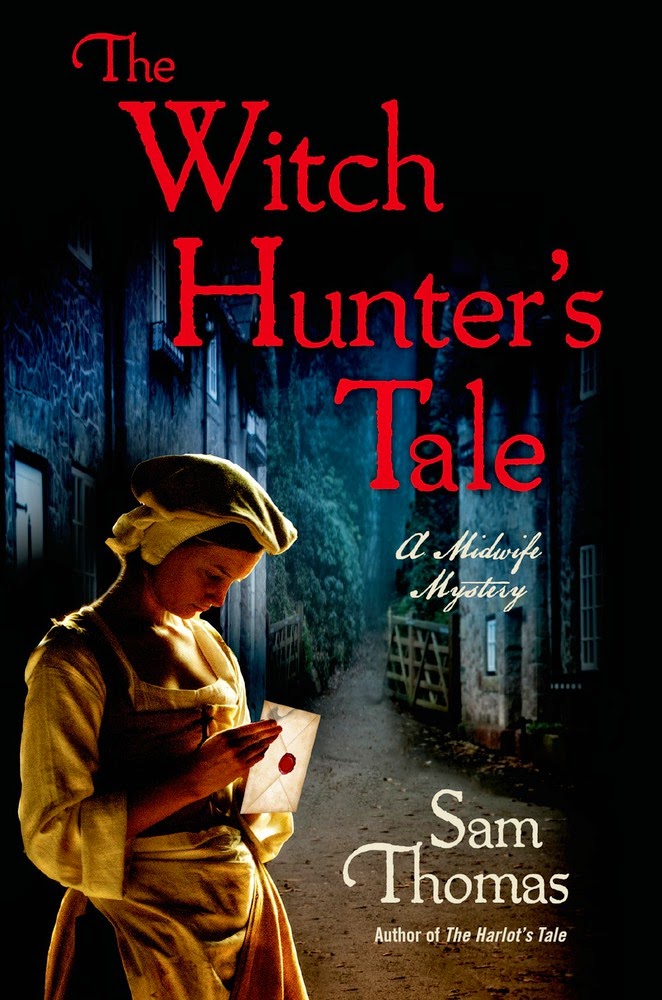
English Historical Fiction Authors alum Sam Thomas is back to celebrate the launch of the third Midwife Mystery featuring Bridget Hodgson, The Witch Hunter's Tale. Return to Civil War York as Bridget faces enemies old and new, or if you're new to the series, pick up the first installment for just $2.99. But before you do that, here's the low-down on witches and midwives.

For many years, conventional wisdom has connected midwives and witches. The connection was first drawn in a 1487 book called Malleus Maleficarum (The Hammer of Witches) by a medieval clergyman named Heinrich Kramer. In Malleus, Kramer asserts the existence of “witch midwives, who surpass all other witches in their crimes… the number of them is so great that…it is thought they there is scarcely any tiny hamlet in which at least one is not to be found.” This accusation, coupled with a tiny number of cases in which midwives were accused of witchcraft, has cemented this into popular culture.

The problem is that the existence of the “midwife witch” is a myth – the number of midwives accused of witchcraft is vanishingly small. The truth is that midwives hunted witches, which is what I should like to discuss today.

The midwife’s connection to witches depends on a creature called the Devil’s Familiar, and even if you've never heard the phrase, you know what I mean. Imagine your typical Halloween witch. You know that black cat we envision hanging about with a witch? That’s the modern version of the Devil’s Familiar, Satan’s representative to the witch after she sells her soul. In the early modern period, the Familiar could be a cat, of course, but also a mouse, bird, mole, frog, or toad…nearly any small animal would do. According to demonologists, witches called on their familiars when they needed help, and some claimed that the witch could not practice magic without the familiar’s assistance. (Click on the image to the left for a closer look.)

So how does the midwife come into things?

According to common lore, in order to survive, the familiar had to suck from the “witch’s teat,” an unnatural growth usually found in a woman’s armpit or “secret places.” The teat’s existence was taken as evidence of a woman’s guilt, and who better to recognize such a growth than a midwife?

According to an account written in 1597, when a mother and daughter were jointly accused of witchcraft, the magistrates “agreed that certain women should search the mother and the daughter to see if they could find any such marks on them as are usually found on witches. The old woman they stripped, and found behind her right shoulder a thing much like the udder of an ewe that giveth suck, with two teats like unto two great warts, the one behind under her armhole, the other a handful off towards the top of her shoulder.”

This discovery – along with other evidence and the suspect’s confession – led officials to cast the poor woman into prison, where, “had she lived, she should have been executed.”

This is not of course to say that midwives made witch-hunting their primary business, for cases of witchcraft were both spectacular and rare. But it remains true that, as guardians of public well-being, midwives had an obligation to protect mothers and children, and in some cases that meant hunting witches.

~~~~~~~~~~~~~

Sam Thomas is the author of the Midwife Mystery series. You can learn more about the history and mystery of midwifery at his website.

Tuesday, April 2, 2013

Babies, warming pans, and wars.

by Tim Vicary


This is the story of a baby who wasn't born at all - or at least, not when his mother said he was. (And she wasn't his mother anyway, so what did she know?) That, amazingly, seems to have been the view of many people in England at the time - perhaps the majority view.

Or to put it another way, it's the story of sixty people - adult men and women - many of whom refused to believe their own eyes.

And so, to prove that this baby hadn't been born - even though it had happened right in front of their own eyes - they raised an army, invaded a country, and deposed a king.
King James II
So what was it all about? 

Well, here's the story. In 1685, Charles II died, and his brother James became king. Unfortunately, King James II was a Roman Catholic.  This made him hugely unpopular with most of the English ruling class, who hated and feared Catholicism -  just as many people fear Islam today - so the idea of a Catholic king was anathema to them. 

In Charles II's reign, there had been a determined attempt to exclude his brother James from the succession. As soon as James was crowned his Protestant nephew, the Duke of Monmouth, led a rebellion against him.

When Monmouth was executed, James seemed secure. His opponents consoled themselves with the thought that James' heirs - his two daughters, Mary and Anne - were both loyal Anglicans with staunch Protestant husbands. So all they had to do was wait a few years for James to die and everything would be all right again.

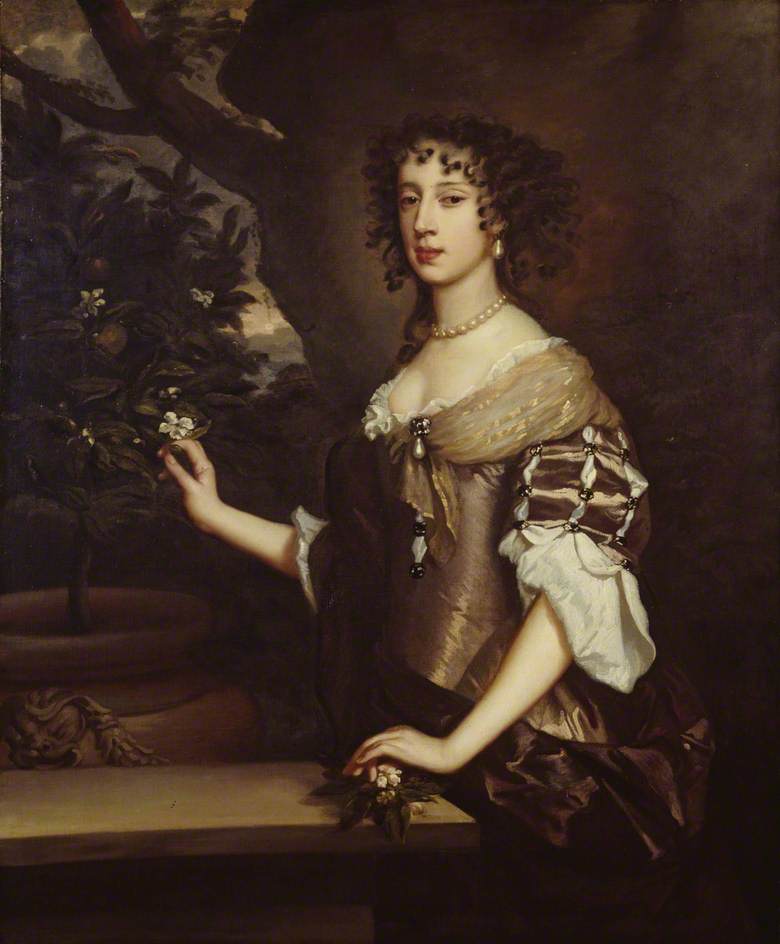
Mary of Modena
But then - oh dear - James' second wife, Mary of Modena, became pregnant. At first this wasn't too much of a worry because Mary was well into her forties and had suffered a number of miscarriages and still-births already. 

But while her husband proceeded with his plans to reintroduce Catholic officers to his army and Catholic clergy into the universities, the baby in Mary's womb grew steadily bigger. The bigger her belly, the more the public worried. What if she gave birth to a Catholic prince? That would change everything. In their minds people saw a long line of Catholic kings stretching into the future.

Some of their fears were real, others imaginary. The real fears were that England could be plunged into religious war, like those which had convulsed Europe for the past century. Millions on both sides had been massacred. The English Civil War had been partly about religion. And just over the Channel, French Protestants - Huguenots - were being forcibly converted, imprisoned and tortured by the agents of King Louis XIV. Many fled to England with genuine tales of terror.

But there were imaginary terrors too. The reign of Charles II had been disfigured by fantasists like Titus Oates, whose lies about non-existent Catholic plots had sent many innocent men to the scaffold. Many believed the Great Fire of London, even the Plague, were spread by Catholics. To the London mob, Catholics were monsters, like Jews in Nazi Germany.

And here was the Queen about to give birth to one! It was such an awful thought that many people refused to believe it.  After all, the last Catholic queen - Bloody Mary - had claimed she was pregnant too. And it had all turned out to be a fantasy, a dropsy, a joke. Surely this would be the same.

Plans were laid to ensure that 'unbiased' witnesses - respectable Protestants - would be on hand to witness the birth. The Archbishop of Canterbury, for instance, and King James' second daughter, Princess Anne.

Ambulance
But the Queen went into labour a month early, while Princess Anne was still in Bath, taking the waters. On the evening of 9th June 1688, Queen Mary was playing cards in Whitehall until midnight. Then, as her labour started, an ambulance (a sedan chair!) was hurriedly called to carry her to St James' Palace and messengers were sent running hither and thither to summon help and witnesses. Lots of them. A really enormous number of people.

Poor lady - she gave birth in front of no less than sixty people!!

She had two midwives, Mrs De Labadie and Mrs Wilkins, who each received 500 guineas. There were doctors too, and priests, and Lords of the Privy Council, and Ladies of the Bedchamber. Presumably the King was there too (a new man!) and a few servants to light the fire and change the sheets. If it had been possible to invite a TV crew they would have done that too, no doubt.

Or perhaps not. Because even though the Queen gave birth in as public a way as it is possible to imagine, many people still refused to believe it. Princess Anne said it must be a conspiracy to pretend the birth had come early while she was in Bath and couldn't witness it. The Archbishop of Canterbury had been arrested the day before (about something quite different) so he wasn't present either. And the royal obstetrician, Dr Hugh Chamberlen, missed the birth too because no-one could find him - he was attending another birth in Chatham.

Weapon of mass deception
So there you are, people cried. It's obviously not true - it's a conspiracy, a fraud! (Dan Brown would have had a field day.) Gilbert Burnet, a prominent churchman, said the Queen had deliberately sent Dr Chamberlen away so that she could deceive everyone by smuggling in a changeling. 

And why were so many of the witnesses Catholics? Why hadn't the King invited the Dutch ambassador, for instance? No, only a fool would believe the Queen had actually given birth as she claimed. The baby wasn't hers at all.  They'd smuggled one into the bed in a warming pan.

Dr Burnet, who was in Holland at the time, was quite certain of this.

And so the evidence of sixty eye-witnesses counted for nothing. Not even the evidence of the vociferously Protestant midwife, Mrs Wilkins, who surely ought to know what had happened if anyone did. She protested to Dr Chamberlen:  'Alas, will they not let the poor infant alone! I am certain no such thing as the bringing of a strange child in a warming-pan could be practised without my seeing it; attending constantly in and about all the avenues of the chamber.'

Crazy, isn't it? People just believed what they wanted to believe. Nothing like that could happen today, surely? We're far more rational now. Ah, but bear with me. Here's a thought. Far-fetched, I admit, but still ...

Ten years ago, British and American soldiers invaded Iraq. (I told you my idea was far-fetched - a giant leap across centuries!) Why? Because Saddam Hussein had weapons of mass destruction. Almost everyone believed that; even the protesters. I certainly believed it, and so did George Bush and Tony Blair.  I don't think they lied; they deceived themselves. They believed what they wanted to believe, because they were afraid of another, bigger 9/11.

Oh dear, I'm in seriously hot water now. Let's jump swiftly back to 1688. What happened as a result of this earlier bout of mass self-deception, this refusal to believe a baby prince had been born? Well, a large force gathered in Holland, sailed across the Channel and landed in Torbay, England. King James II fled, and was replaced, at Parliament's invitation, by his daughter, Mary, and her husband, William of Orange--the throne, with strings attached. This was the Glorious Revolution of 1688-1689.
James III - 

So there you have it: the invasion of a foreign country, regime change, and a change in the balance of power between monarch and Parliament. Coincidence, or what? All because of a bout of self-deception.

Amazing what a warming pan can do. Especially when it wasn't there at all.

**********

You read about Tim Vicary's books on his website and his blog 


Monday, December 3, 2012

Midwives, Infanticide, and the Law

by Sam Thomas

While we often (correctly) associate midwives with childbirth, one of the factors that makes them such compelling figures both in history and in fiction is that their responsibilities did not end at the delivery-room door. In addition to being the most important female medical practitioners, midwives were central to the maintenance of law and order, as they investigated cases, questioned suspects, and examined condemned women to ensure that no pregnant women were executed.

While midwives could become involved in any case involving women, their role was largest in cases of infanticide. When legal officials suspected that an infant had been murdered, they would essentially deputize the midwife, and let her conduct the search for the child’s body and identify the murderer.

According to Susan Topham, when the constable suspected a case of infanticide he “required [me] and other neighborhood wives…to search Mary Broughton.” Upon the discovery of a dead child in the parish of Hawksweek, the constable was given a warrant “to summon and charge several grave matrons to enquire after and search all women…that they should any way suspect to be guilty of the late private bearing of a child.” 

Unlike modern “whodunnits,” in cases of infanticide there was usually not much doubt as to the guilty party. When an infant’s body was discovered, suspicion fell upon unmarried women who had been (or were rumored to be) pregnant. The midwife would then examine the mother’s body, checking her breasts for milk and searching her ‘privities’ for signs that she’d recently given birth. In these activities, we see why midwives would need to have a certain strength of character in order to succeed. Not only did midwives have to control the delivery room, they had to unearth the community’s darkest secrets, often against stiff resistance.

The women charged with investigating a possible infanticide in Dalton, Cumberland ran into just such resistance when they attempted to search the body of a servant named Anne Nicholson. The investigators were resisted not by Nicholson, but by her mistress, Mary Holme. Initially, Holme did her best to keep her servant’s pregnancy a secret, and when word got out she attempted to prevent Nicholson’s interrogation. When parish women attempted to search Nicholson’s body, Holme “replied to them saying – Let’s see who dare be so bold as view her maids breasts without her consent.” A midwife who could not overcome this sort of resistance would not get very far in her investigations.

Once a suspect had been identified (and isolated), it then fell to the midwife to extract a confession. In some cases, suspects responded violently, as in the case of Jane Cooper. When Dorothy Lister accused Jane of being with child, “Jane called her a whore and beat her with her own hat.”

In most cases, however, the accused could do little except endure a humiliating interrogation and search of her body. What chance did a poor, unmarried woman have against a dozen or so of her powerful neighbors? We see this in the case of Mary Riley, who was questioned by the town midwife and a dozen other women who would not take “No” for an answer. After the constable arrested her, he, “carried her before the said Grace wife widow Toppan where there was a dozen more women or there abouts and they searched her bodie…” The women found signs that Mary had given birth, and they “pressed her farther and again till at last…Mary Ryley did confess that she bore a Child.”

Thus, while midwives delivered some women in labor, they delivered others to the gallows.

For more on the legal side of midwives’ work, including their role finding witches, wander over to A Bloody Good Read.


__________________________

Sam Thomas is the author of The Midwife's Tale: A Mystery from Minotaur/St.Martin's. Want to pre-order a copy? Click here. For more on midwifery and childbirth visit his website. You can also like him on Facebook  and follow him on Twitter.

Thursday, November 8, 2012

Of Midwives and Childbirth

by Sam Thomas


In a post from last month I made the case that – contrary to popular perception and two different groups of historians – midwives were not decrepit crones from the edges of society. But once we’ve established that, we still need to learn more about the work that midwives did in the delivery room. Given the limited medical tools at their disposal, what could they do?

It is first important to note that in the pre-modern world midwifery was midwifery was not a science in the modern sense of the world. Rather, practitioners described their work as an “art” and, significantly, a “mystery.” The 1689 testimonial for the wife of James Phillips noted that she was “a Civill & discreet Matron & one well skilled & knowing in the Art & Mistery of Midwifery.” A few years later, Elizabeth Arrandell was described as “well skild in the Mystery of Midwifery…”

In keeping with its status as an art, there was much room for variation in the delivery room, but a midwife would check the cervix to see how far along the labor was, and prepare the mother for delivery by lubricating the birth canal, usually with oil or animal fat. She might give the mother an enema, rub liniment on her belly, and give the mother ‘caudle,’ a hot drink somewhere between gruel and spiced wine.

In the day of modern anesthetics, such work might seem (to some) to be of questionable value, but in the early modern period a good midwife made labor less painful, moved it along more quickly, and could be the difference between life and death. In the midst of her labor, Susanna Watkin cried out, “Godsake either fetch Ellin Jackson (being a midwife) or else knock me on the head.” Another woman – complaining when her desired midwife was late – claimed that she “might have been delivered two houres sooner if she had had...helpe when they desired it.”

Once the child was born, the midwife had the honor of cutting the umbilical cord, and it was she who washed and swaddled the child before returning it to the mother. She then made the decision whether to deliver the placenta manually or to let nature take its course.

While it would be a mistake not to acknowledge the importance of this work, as one historian noted, “majority of births…were uneventful whether attended by a physician, a midwife or a stork.” So what made one midwife better than another? I would argue that a midwife’s skill lay less on the medical side of the equation, and more on the social side. A good midwife could effectively manage the mother and the delivery room.

Naturally enough, a midwife’s social work focused on the mother. She ruled the delivery room, deciding assigning tasks to the other women present, and managing any conflicts between the mother and her birth attendants, or among the gossips themselves. The midwife also encouraged the mother in the last stages of labor, as in 1739 when a midwife assured her patient that “in less than Two Minutes the Child would be in the World.” 

The midwife also would have reassured anxious fathers during labor and consoled them in the event that the birth ended in the death of mother or child. In performing these tasks, from calming a panicky mother to controlling quarrelling gossips, a midwife would have had to project a great deal of authority – this was not a profession for a shrinking violet!

A good midwife thus had to have the ability to take control of difficult and dangerous situations, and convince her friends and neighbors to do as they were told. She was as authoritative a woman as you’d find. But a midwife’s role in the neighborhood went well beyond labor and delivery, and took her into the world of law enforcement as she investigated and helped to prosecute a variety of crimes.

But more on that next month...


Further reading:

David Cressy, Birth, Marriage, and Death: Ritual, Religion, and the Life-Cycle in Tudor and Stuart England (Oxford, 1997). (An excellent book full of great stories!)

Laura Gowing, Common Bodies: Women, Touch and Power in Seventeenth-Century England (New Haven, 2003).

Mary Lindemann, Medicine and Society in Early Modern Europe (Cambridge, 1999).

----------------------

Sam Thomas is the author of 
The Midwife's Tale: A Mystery from Minotaur/St.Martin's. Want to pre-order a copy? Click here. For more on midwifery and childbirth visit his website. You can also like him on Facebook  and follow him on Twitter.

Monday, October 8, 2012

Of Witches and Midwives

by Sam Thomas


For many years, historians knew one of two things about midwives in pre-modern Europe. If you asked medical historians, they were decrepit old crones, with no medical training. They were untrained, lived on the margins of society, and probably dabbled in witchcraft.

If you asked (some) women’s historians, they would agree that midwives practiced witchcraft, but in this account, they were the distant heirs to a pre-Christian religion, practitioners in an early modern Earth-Mother cult. These rebellious figures rejected the Church’s authority, and for their trouble were often burned at the stake.

Both of these accounts are complete bunk.

Malleus Maleficarum
The connection between midwives and witchcraft dates back to the notorious Malleus Maleficarum (Latin for Hammer of Witches), written in 1486 by two Dominican inquisitors, Jacob Spernger and Heinrich Kramer. In Malleus, Sprenger and Kramer offer lurid accusations that midwives murdered newborn children and sacrificed them to the Devil.

While Malleus has influenced generations of historians, it is less clear that it had much influence on its readers. Kremer’s behavior at a witch trial in 1485 so outraged his fellow-inquisitors and a local bishop that they came to the defense of the accused witch, and the Spanish Inquisition(!) warned its inquisitors not to take it too seriously. More significantly, when historians have studied witch trials, they find midwives not among the women accused, but testifying for the prosecution! While thousands of women were tried for witchcraft, only the tiniest handful were in any way connected to midwifery.

If midwives weren’t witches, who were they? Just because the medical historians were wrong about the witchcraft, were they right that midwives were poor old women who lived on the margins of society?

Wrong again.

It turns out, they were not much different than women in England. Many midwives were quite well-off, often referred to with the honorific “Mrs.”, and we know that the wife of the Lord Mayor of Chester practiced midwifery. Letters written on behalf of Martha Baker describe her as “a Gentlewoman of great Judgement & skill,” and the will of Bridget Hodgson of York includes large cash gifts and refers to her family’s coat of arms. It is not uncommon to find midwives married to Anglican ministers, which is hardly the mark of poverty and disdain.

That said, poor midwives did exist. Court documents describe Anne Doughty as “very poore & hath very small employment,” and say that Johanna Thompson “is very low and poore in the world.” In some cases, there is evidence that women receiving poor-relief were encouraged to take up midwifery in order to reduce their reliance on public funds.

It thus seems that midwives were young and old, rich and poor, married, widowed, and even spinsters.

Once we have figured out who midwives were, the question then becomes What did midwives do? Sure they delivered children, but in a world before anesthetics and instruments, how did they do this? What was it that made midwives different from the other women who helped mothers when they were in labor? For that and more, you’ll have to come back next month! (Cue cliff-hanger music.)

Further reading:

David Harley, “Historians as Demonologists: The Myth of the Midwife-witch,” Social History of Medicine 3, no. 1 (1990): 1-26.
 
Hilary Marland, ed., The Art of Midwifery: Early Modern Midwives in Europe (London, 1994).

________________


Sam Thomas is the author of The Midwife's Tale: A Mystery from Minotaur/St.Martin's. Want to pre-order a copy? Click here. For more on midwifery and childbirth visit his website. You can also like him on Facebook  and follow him on Twitter.

Monday, September 10, 2012

Childbirth in Early Modern England

by Sam Thomas

When we think about the difference between the past and present, our minds often turn to medicine, and with good reason. Who in their right minds would want to return to a world of leeches and blood-letting, of pregnancy without doctors and high death-rates for both mothers and children? But as so many of the writers on this blog have made clear, there is far more behind the history than modern stereotypes, and childbirth is no exception.

If you were to peek in on a woman in labor (or “in travail” as she might have said), the first thing you might notice is the people in the room. There would be a midwife rather than a doctor, of course, and you’d not find her husband – until the eighteenth century at the very earliest, childbirth was the business of women.

Rather than doctors, nurses, and bright lights, the mother would be surrounded by her female friends and neighbors – her god-sibs or gossips – who came to help, socialize, to see and be seen, and at a more general level, just to make sure that everything went right. (Before we join hands and start to sing Kumbaya, it’s worth noting that sometimes gossips argued with each other, with the midwife, and even with the mother. Imagine if your own mother were present – and giving you advice – when you were in labor.)

Unlike today, when most women deliver while lying on their backs (good for the doctor, not so good for the mother), early modern women gave birth in a more upright position, either held by two of her gossips or sitting on a birthing stool, or both. While other women could participate in the delivery of the child, only the midwife had the right to touch the mother’s ‘privities.’ Once the child was born, the midwife would cut the umbilical cord (for boys, the longer the cord, the longer his, um, equipment; for girls the shorter the cord, the tighter her privities), swaddle the child, and hand her over to the mother.

The question of maternal mortality has been much discussed, and our best guess is that 5-7% of births ended in the death of the mother. In some cases, death might be caused by an obstructed birth, but more often mothers died some weeks after delivery, usually of puerperal fever, a bacterial infection contracted during childbirth. Thus while individual incidents of maternal death were not terribly common, most women would know a woman who had died in labor.

After giving birth, the mother would enjoy a period of lying-in. During these forty days, she would be confined to her room, free from the demands of household labor. During this time, her neighbors would visit, but she did not go out into public. At the end of her lying-in, the mother would go to her parish church and give thanks to God for her survival, and resume the heavy work of a wife and mother.

----------------

Sam Thomas is the author of The Midwife's Tale: A Mystery from Minotaur/St.Martin's. Want to pre-order a copy? Click here. For more on midwifery and childbirth visit his website. You can also like him on Facebook  and follow him on Twitter.

Wednesday, January 11, 2012

Gossip in Early Modern England

by Samuel Thomas

In today’s world, whether it is used as a noun or a verb, the term “gossip” has universally negative connotations. Gossips spread rumors of dubious veracity, and are often considered the very opposite of what a friend should be. But such was not always the case, for in early modern England “gossip” had additional and sometimes contradictory meanings. In this post I’ll briefly outline origins and changing definitions of “gossip” and in a later post I’ll try to rehabilitate gossip’s reputation and make the case for it’s importance to a well-ordered society.

According to the Oxford English Dictionary, the earliest recorded use of the word “gossip” comes from 1014, but its meaning would have no resonance today, for “gossip” referred to a child’s godmother or godfather. The spiritual kinship between the child and the godparent extended to the child’s birth parents as well, making them “siblings in god.” And here is where things get really cool: “gossip” is short for “god-sib” which is itself an abbreviated form of “god sibling.” Thus your gossips were the women and men you chose as godparents for your child – gossips were your closest friends. (According to the English, the Irish chose wolves as their gossips. As one historian noted, this idea is as interesting if it is false as if it is true.) Intriguingly enough, this meaning of the word – including its inclusion of men as gossips – endured into the late 19th century.

In the seventeenth century, “gossip” began to refer to the women who attended a woman during labor and delivery of a child, or at her recovery (or lying-in) afterwards, and here we can begin to see the word taking on its negative connotations. Prior to the eighteenth century, childbirth was women’s business, and a central occasion for women’s sociability. A woman gave birth not in the presence of doctors and nurses (whom she knew not at all), but her friends and neighbors. Such gatherings of women made some men very nervous, and they spilt a great deal of ink voicing their anxiety. In ’Tis Merry When Gossips Meet (1602) and its sequel A Crew of Kind Gossips (1609), Samuel Rowlands describes the meeting between a widow, wife, and spinster in which the three women exchange complaints about their husbands, and the widow offers the other women advice on how to manipulate their spouses.


While there is no denying Rowlands’s misogyny, his description may not have been entirely off the mark. Writing later in the century Margaret Cavendish, Duchess of Newcastle, describes just such a gathering in terms Rowlands would recognize:

as is Usual at such Gossiping Meetings, their Discourse was most of Labours and Child-beds, Children and Nurses, and Household Servants...at last they fell into a Discourse of Husbands, Complaining of Ill Husbands, and so from Husbands in General, to their own Particular Husbands.

When Cavendish ( ever the defender of patriarchy ) reprimanded the women for their disrespectful carriage, they turned their guns on her.

the ladies being before Heated with Wine, and then at my Words, with Anger fell into such a Fury with me, as they fell upon me, not with Blows, but with Words, and their Tongues as their Swords, did endeavour to Wound me...it hath so Frighted me, as I shall not hastily go to a Gossiping-meeting again, like as those that become Cowards at the Roaring Noise of Cannons, so I, at the Scolding Voices of Women.

(This episode also makes clear we should not imagine these gatherings as occasions for sisterly resistance against patriarchal oppression. Rather they were the scene of as much infighting and competition as characterized society in general.)

In the early modern period, then, the term “gossip” could refer any number of things, ranging from a child’s godfather, to a woman’s closest female friends, to a woman who spread scurrilous rumors about her neighbors. While some might find such imprecision frustrating, to my mind it simply speaks to the richness of early modern English and the ability of the common folk to define words in terms that were useful to them.


Sam Thomas's debut novel The Midwife's Tale: A Mystery will be published in 2013 by Minotaur/St. Martin's press. He can be found on Facebook, Twitter, and his very own website.