Wednesday, September 13, 2017

London in 1800: A Stranger's Arrival

By Mark Patton.

Between 1801 and 1841, the population of London increased by an average of 22,500 people per year, or 1875 per month. The overwhelming majority of the new arrivals came, like the fictional David Copperfield; Nicholas Nickleby and his sister, Kate; from other parts of England, Scotland, and Wales (the most significant waves of Irish and Jewish immigration came later). Many had been uprooted from the communities of their birth by changes in their family circumstances: David's journey begins with the death of his mother; that of Nicholas and Kate with the loss of their father; Charles Dickens's own parents had moved to London in a forlorn attempt to escape a looming mountain of personal debts.


The Mail Coach, as taken by David Copperfield and Mr Quinion, was the fastest means of getting to London from the countryside, but was also among the most expensive (image is in the Public Domain). 

Private stage-wagons offered a cheaper, but less comfortable, means of transport (image is in the Public Domain).

In an age before the coming of the railways, almost all of the new arrivals, like their Medieval predecessors, would have made their way to London by road, and many of them on foot. Most of the road along which they had traveled were Roman in origin, but had been improved by the Eighteenth Century Turnpike Trusts, and the threat formerly posed by highwaymen removed almost entirely.

The Roman and Medieval walls and gates of the City had, for the most part, been demolished, and the newly broadened roads were lined with coaching inns, where the better heeled among the new arrivals may have spent their first London nights, and held their first conversations with their new urban neighbours. There were doubtless offers of employment to be had, and business propositions to be negotiated, but there would also have been con-men, all too ready to relieve a naive country lad or lass of what little money he or she had in wallet or purse.

A young man or woman arriving in London from Kent might pause at Blackheath. His or her first impression of the capital, seen from afar, might well have matched David Copperfield's:

"What an amazing place London was to me when I saw it in the distance, and how I believed all the adventures of my favourite heroes to be constantly enacting and re-enacting there ... I made it out in my own mind to be fuller of wonders and wickedness than all the cities of the earth ... "

Lodging at Southwark's Queen's Head, he or she might have strolled across London Bridge the following morning, along the main thoroughfares of the City, and on into the West End. The prosperity of London's maritime commerce, obvious enough from the forest of ships' masts in the Pool of London, to the east of London Bridge, was reflected both in the grandeur of the public buildings (the Mansion House, the Bank of England, Saint Paul's Cathedral), and in the elegant dress and comportment of those passing between them. One did not have to search far, however, to find another side to London life.

The Queen's Head, Borough High Street (image is in the Public Domain).

"Imports from France," by Louis Peter Boitard, 1757 (image is in the Public Domain).

London's Mansion House (image is in the Public Domain).

Apsley House ("No.1, London"), home of the Duke of Wellington. The Duke encouraged his fellow aristocrats to spend part of the year in London, rather than on their country estates: this facilitated both the growth of the retail trade in the West End, and increasing demand for domestic servants.

In the shadow of the grandest buildings could be found men, women, and children eking out the most precarious of livings. In 1856, the campaigning journalist, Henry Mayhew, observed from the balcony beneath the dome of Saint Paul's Cathedral, the "sauntering forth" of the "unwashed poor:"

" ... some with greasy wallets on their backs to hunt over each dust-heap, and eke out life by seeking refuse bones, or stray rags and pieces of old iron; others, whilst on their way to work, are gathered at the corner of some street round the early breakfast stall, and blowing sauces of steaming coffee, drawn in tall tin cans that have the red-hot charcoal shining crimson through the holes in the fire-pan beneath them; whilst already the little slattern girl, with her basket slung before her, screams 'water-creases!' through the sleeping streets ... "  


Dust-sifters (image is in the Public Domain).

A watercress seller (image is in the Public Domain).

The fortunes of any man or woman, newly arrived in London in the opening decades of the Nineteenth Century, hung very much in the balance. Those who could call upon the support of a relative, or family friend, already established in the capital, were far more likely to find work (whether as City clerks, West End retail workers, or as domestic servants) than those who could not. Those who did not find a "position" had to create their own opportunities: selling watercress, coffee, or sandwiches on the streets; scavenging on dust-heaps; or, as a last resort, prostitution or crime. Social mobility was real, but it operated in both directions.

~~~~~~~~~~

Mark Patton blogs regularly on aspects of history and historical fiction at http://mark-patton.blogspot.co.uk. He is a published author, whose books may be purchased from Amazon.

Tuesday, September 12, 2017

Henry Tudor at Raglan Castle

by Judith Arnopp

Raglan Castle

At the start of the wars of the roses Margaret Beaufort was a relatively insignificant member of the house of Lancaster but after years of struggle she and her son, Henry became the ultimate victors. During her years of struggle for her son’s rights she can have had no inkling that he would one day become King of England.

Margaret was a wealthy heiress, heir to the Duke of Somerset. Her great grandfather was the eldest son of John of Gaunt and his then mistress, Katherine Swynford. Although the Beauforts were later legitimised they were excluded from the succession and never to inherit the throne.

Edmund Tudor
She was married to the king’s half-brother, Edmund Tudor and travelled with him to Wales where he upheld the authority of the king. Shortly after impregnating his teenage bride, he died, either of wounds sustained in a skirmish with the adherents of York, or from plague, or possibly a combination of both. Margaret, widowed and pregnant, was left vulnerable and turned to her brother in law, Jasper Tudor, for support. He offered her shelter at his stronghold in Pembroke where her son was born a few months later. She named him Henry, after her cousin the king.

To avoid another marriage arranged by the king, Margaret quickly married Henry Stafford, a younger son of the Duke of Buckingham. While she moved with her husband to Bourne in Lincolnshire and later Woking, her son remained at Pembroke in the care of his uncle, Jasper, Earl of Pembroke.

Margaret would have seen nothing unusual in her son being brought up in the household of a powerful lord. The couple visited and wrote to young Henry regularly until the trouble between York and Lancaster flared again. Jasper did not take part in the battle of Towton but remained at Pembroke defending the castle against Yorkist forces. After a few weeks of siege, Pembroke and its inhabitants were eventually surrendered into the hands of William Herbert. Jasper managed to escape but he left behind a valuable prize - the four year old Earl of Richmond, Henry Tudor.

Pembroke Castle

Sir William Herbert took Henry into his custody at Raglan and in 1462 paid the king an enormous sum for his wardship. It is not documented how Margaret or Henry felt about this but there was long standing rivalry between the Herbert and Tudor families and, together with the high probability that William Herbert was responsible in some degree for the death of Edmund Tudor, it is quite likely she did not see it as pleasing.


Henry’s time at Raglan is often viewed as one of imprisonment but there is no doubt he was well treated: chronicler Polydore Vergil recorded that Henry was “kept as prisoner, but honourably brought up with the wife of William Herbert”.  As I mentioned earlier, it was not unusual for the sons of noblemen to be sent from home to be raised in the household of a great lord, to learn warfare and sword skill. The Herberts treated Henry with great civility but even so his movements were restricted and although he kept his title Richmond, his properties were in the hands of the Yorkists. He was, you might say, a lucrative guest. Henry and Herbert’s son were the offspring of opposing houses – Henry was from the House of Lancaster, Walter and William Herbert (the younger) were loyal to their father and to York. But ties of friendship formed at this time in the nursery at Raglan proved beneficial to Henry in the years to come.

Raglan Castle

It is interesting to consider that the ruins we see today at Raglan were once the rooms frequented by the young Henry Tudor. When Herbert inherited the castle from his father it was already a magnificent fortress with an impressive tower but William transformed it into a palace with huge glazed windows, a magnificent Fountain Court, the Pitched Stone Court and Great Gatehouse.

Henry spent the next seven years at Raglan, treated as a member of the Herbert family, educated by ‘the best and most upright instructors’ and mingling with the Herbert children. It seems he was happy there and developed strong connections to the family. Testimony of his affection or gratitude to the family, after he became king Henry invited Herbert’s widow, Lady Anne Devereux, to court. Herbert harboured plans to unite his family with the Tudors by marrying his daughter, Maud, to Henry. He left orders for the betrothal in his will but the arrangements were prevented by the readeption of Henry VI. Maud later married another of Herbert’s wards, Henry Percy, 4th Earl of Northumberland. Margaret Beaufort and Henry Stafford continued to visit and correspond with Henry until 1469, when Richard Neville, Earl of Warwick betrayed King Edward IV and joined the Lancastrians.

Raglan Castle

Taking Henry and probably his two sons, William and Walter, with him, Herbert rode off to battle at Edgecote Moor; not to fight but to observe and learn. It may seem incredible to us that an eleven year old should be exposed to the dangers of battle but things were different then. Young boys had to be educated in warfare, exposed to the violence of the battlefield to ensure that when their time came to fight, they’d be prepared. Possibly Herbert saw it as an opportunity for education. Possibly he desired to keep his valuable asset close to hand. Unfortunately for Herbert the battle did not go well for York.
Herbert was captured during fighting and executed by Warwick. It is often recorded that Henry was abandoned on the side lines and later rescued from the field and taken to safety at Weobley, the family seat of Herbert’s wife, Anne Deveraux.

Raglan Castle

For a while, Lancaster was in ascendance in England. The former king, Henry VI, was placed once more on the throne, to be ruled like a puppet by Warwick. At last, Jasper Tudor was able to return from exile, at which time he presented Henry to the Henry VI. 

The supporters of Lancaster emerged once more and everything seemed settled in Lancaster’s favour; King Edward was beaten and Margaret and Jasper would have been confident that the Richmond holdings would now be restored to Henry. Margaret attended court, bringing her son to the attention of the king and queen but it was not to last. In 1471, Edward IV came back with a vengeance and regained the throne with a decisive battle at Tewkesbury which saw the death of the Lancastrian heir, Edward of Lancaster and the fall of his mother, Margaret of Anjou. Edward IV crushed the Lancastrian hopes by the murder of the mentally unstable king, Henry VI, leaving just one possible claimant to the Lancastrian crown - Henry Tudor.

Henry Tudor

Jasper, taking the boy with him, fled to Brittany where Henry spent most of the next fourteen years until August 1485 when he returned with his mother’s financial support, with a mercenary army to face Richard III on the field at Bosworth. During the battle several Welshman ostensibly loyal to Richard, turned their coats and fought for Henry instead; Rhys ap Thomas is believed to have dealt the Yorkist King’s killing blow and Walter Herbert of Raglan is believed to have fought alongside his old friend of the schoolroom.

~~~~~~~~~~

Margaret's battle for her son's rights and Henry's time at Raglan is featured in the trilogy The Beaufort Chronicles.


Judith Arnopp is the author of nine historical fiction novels set in the medieval and Tudor period. You can find more information by following the links below:
author.to/juditharnoppbooks
www.judithmarnopp.com

Picture credits
Edmund Tudor https://upload.wikimedia.org/wikipedia/commons/9/9c/Edmund_Tudor%2C_1st_Earl_of_Richmond.jpg
Henry Tudor - https://upload.wikimedia.org/wikipedia/commons/d/da/Henry7England.jpg
Castle Photographs - Judith Arnopp


Monday, September 11, 2017

Rights and responsibilities of land ownership

by Maria Grace

By the time of the 1801 census, England had a population of just over eight million living in a country of some thirty two million acres - and eighty to ninety percent of this land was owned by the aristocracy or landed gentry, (Adkins, 2013) nearly half in the hands of about 5,000 families in total. (Lane, 2005) The remainder belonged to institutions like the church or colleges or to attorneys, shopkeepers and bankers of the market towns. (Davidoff, 2002) These families enjoyed considerable status and power associated with land ownership, but with the rights, came a number of social responsibilities.

Land owner rights & power

Voting rights


Landowners had the right to vote, which non-land owners did not. Thus, Parliament was controlled by those whose wealth came from the land rather than trade until the early 1830's. Moreover, the landed classes also controlled government at the local, shire level through service as local magistrates and participation in other local political roles
John Harriott (1745–1817),
English mariner and magistrate.


Justice of the peace/magistrate

In rural areas, a magistrate or justice of the peace served as the principal legal authority of the area. The primary qualification for the post of magistrate was to own an estate worth more than a hundred pounds a year. Few with estates that small held the position, though. Since the post was unpaid and involved substantial duties, it typically fell to the larger landowners of the region.

In this capacity, the magistrate would judge all ordinary (non-felony) legal cases. He would often appoint constables, surveyors of the highways, overseers of the poor and churchwardens. Frequently, he would work together with the clergyman of the region to manage its affairs. The extent of the magistrate’s influence could be quite broad, particularly when considering the roles of the men he might appoint to official offices that would work with him.

Constables were the precursor to an official police force. Chosen from among local householders (usually the wealthiest), the constable was responsible for keeping the local peace. Duties included collecting certain taxes, catching and confining suspected criminals, managing vagrants and beggars, and maintaining records of all of the above.

Surveyors of the highways acted to maintain the highways in a parish, particularly those which ran to market towns. They removed nuisances from highways and identified needed repairs. In order to see those repairs completed, they could levy a rate on landowners and require landowners to provide labor and equipment to accomplish the repairs.

Overseers of the poor administered poor relief, including food, money and clothing, in accordance with the Poor Law system. They were to estimate how much poor relief money was needed and set the poor rate accordingly. It was also their purview to collect the funds from their fellows in the parish. Subsequently they would distribute the relief as they saw fit both as ‘indoor’ relief within the walls of the poor house and ‘outdoor’ relief offered in the homes of the poor. They kept careful accounting records of their activities which were then audited and signed off at the end of each accounting year (Easter) by two justices.

Finally church wardens were responsible for the property and moveable goods of a parish church, maintaining and inventorying them. They also kept accounts of church funds and ensure that the rector receives the tithes to which he is entitled. (Sullivan 2007) They also maintained order and peace in the church and churchyard at all times, and especially during services.

Through the exercise of these roles, the estate owner could exercise considerable power and authority among those in his parish and shire.

Land owner responsibilities


Though landowners often enjoyed rights and powers that others did not, land ownership also demanded added social responsibilities from estate owners. 

Charity

Patriarchal ideology still prevalent during the era contributed to the notion than a landowner owed a stewardship duty to those tied to his estate. Though they worked for him, he had a responsibility to see they were adequately fed, clothed, and housed. These duties went above and beyond paying the required poor rate and required personal attention and interaction with tenants and villagers who lived nearby.

Typically, the mistress of the estate and the local clergy would also be involved in providing relief to those who had come upon hard times. A landowner regularly supplied gifts of food, clothing, even money to the needy at regular intervals; usually at Christmas, during instances of bad harvest or weather, sickness, bereavement and unemployment. 
 

Hospitality

Traditional festivals and celebrations also provided a chance to demonstrate charity as well as hospitality—another basic social duty of the era. Entertainments that included tenants, laborers, school children, local townspeople and small farmers often took place on an enormous scale. Parties would celebrate the completion of key seasonal activities like sheep-shearing in the spring. At midsummer, haymaking parties would follow mowing the fields. Autumn brought harvest suppers and the possibility of harvest ball to go with it. November heralded celebrations of Guy Fawkes Night. Christmas and Twelfth Night parties rounded out the year’s celebrations.

At its best, entertaining the lower orders expressed a genuine concern for the poor and a desire to improve the relations between the classes; at its worst it showed a rather odious condescension. (LeFaye, 2002) Sometimes these fesitvals even offered the potential for violence and disorder. Poorer members of the community sometimes demanded money, beer and meals as a right from landowners, not a gift that many gave grudgingly out of fear of reprisals. (Wilson 2007)

Such festivals were but one example of the hospitality a wealthy landowner was expected to demonstrate. Often this meant large groups of houseguests who might say for months at a time. Parties and annual celebrations which brought in the entire neighborhood, rich and poor, to the grounds and for food and entertainment were also regularly expected. While taxing, hospitality did offer the opportunity to display one's wealth and importance.

These varied rights, roles and responsibilities illustrate how an estate holder was more than a simple farmer, he was required by custom (and in some ways by law) to be a community leader, tax assessor and collector, law enforcer, and social support network. Probably not the roles you might have seen any of Austen’s leading men playing.


References

Adkins, Roy, and Lesley Adkins. Jane Austen's England. Viking, 2013.

Austen, Jane, and David M. Shapard. The Annotated Pride and Prejudice. New York: Anchor Books, 2003.

Austen, Jane, and David M. Shapard. The Annotated Sense and Sensibility. New York: Anchor Books, 2011.

Austen, Jane, and Edward Copeland. The Cambridge Edition of Sense and Sensibility. Cambridge: Cambridge University Press, 2006.

Bennetts, M.M., “At the heart of a great estate is… .“ M.M.Bennetts. April 11,2012. Accessed May 20, 2014. http://mmbennetts.wordpress.com/2012/04/11/at-the-heart-of-a-great-estate-is/

Collins, Irene. Jane Austen and the Clergy. London: Hambledon and London, 2001.

Davidoff, Leonore, and Catherine Hall. Family fortunes: men and women of the English middle class, 1780-1850. London: Routledge, 2002.

Day, Malcom. Voices from the World of Jane Austen. David and Charles, 2006.

Ellis, Markman "Trade." In Jane Austen in Context , 269-77. Cambridge: University Press, 2005.

Girouard, Mark. Life in the English Country House: A Social and Architectural History. New Haven: Yale University Press, 1978.

Gornall, J.F.G. "Marriage and Property in Jane Austen’s Novels." History Today 17, no. 12 (December 1967). Accessed May 22, 2017. http://www.historytoday.com/jfg-gornall/marriage-and-property-jane-austen%E2%80%99s-novels.

Hitchcock, Tim, Sharon Howard and Robert Shoemaker, " Churchwardens and Overseers of the Poor Account Books ", London Lives, 1690-1800 (www.londonlives.org, version, 1.1 17 June 2012). https://www.londonlives.org/static/AC.jsp

Laudermilk, Sharon H., and Teresa L. Hamlin. The Regency Companion. New York: Garland, 1989.

LeFaye, Deirdre. Jane Austen: The World of Her Novels. New York: Abrams, 2002.

Martin, Joanna. Wives and Daughters: Women and Children in the Georgian Country House. London: Hambledon and London, 2004.

Morris, Diane H. “Mr. Darcy was a Second-Class Citizen.” Moorgate Books. August 10th, 2014. Accessed May 22, 2017. http://www.moorgatebooks.com/10/a-true-regency-gentleman-had-good-breeding/.

Ray, Joan Klingel. Jane Austen for Dummies. Chichester: John Wiley, 2006.

Selwyn, David. Jane Austen and Leisure. London: Hambledon Press, 1999.

Seven Trees Farm, “Norfolk four course.” Seven Trees Farm. April 30, 2012. Accessed May 29, 2017. http://seventreesfarm.wordpress.com/2012/04/30/norfolk-four-course/

Sullivan, Margaret C., and Kathryn Rathke. The Jane Austen Handbook: Proper Life Skills from Regency England. Philadelphia, PA: Quirk Books, 2007.

Swift, Deborah. “Law & Order - Duties of the Constable in 17th Century England.” English Historical Fiction Authors. May 24, 2017. Accessed May 29, 2017. http://englishhistoryauthors.blogspot.com/2017/05/law-order-duties-of-constable-in-17th.html

Trevelyan, George Macaulay. Illustrated English Social History. New York: D. McKay, 1949.

Vickery, Amanda. The Gentleman's Daughter: Women's Lives in Georgian England. New Haven, Conn.: Yale University Press, 1998.

Watkins, Susan. Jane Austen's Town and Country Style. New York: Rizzoli, 1990.

Wilson, Ben. The Making of Victorian Values: Decency and Dissent in Britain, 1789-1837. New York: Penguin Press, 2007.

~~~~~~~~~~

Though Maria Grace has been writing fiction since she was ten years old, those early efforts happily reside in a file drawer and are unlikely to see the light of day again, for which many are grateful. 

After penning five file-drawer novels in high school, she took a break from writing to pursue college and earn her doctorate. After 16 years of university teaching, she returned to her first love, fiction writing.

Click here to find her books on Amazon. For more on her writing and other Random Bits of Fascination, visit her website. You can also like her on Facebook, or follow on Twitter.


Sunday, September 10, 2017

Editors' Weekly Round-up, September 10, 2017

by the EHFA Editors

Enjoy this week's posts -

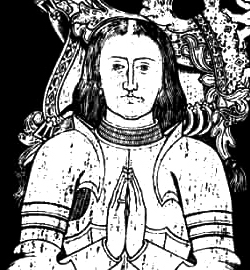
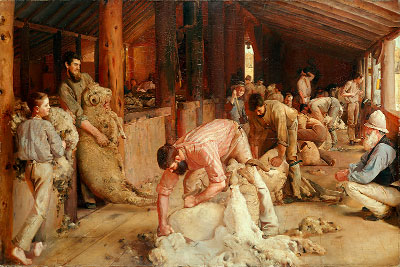
by Cheryl Bolen


by Cryssa Bazos


by Annie Whitehead


Every week, English Historical Fiction Authors (EHFA) features a variety of articles on English history - people, places, events, social, cultural, and more. Don't miss a post! Follow us on Facebook and Twitter.

Friday, September 8, 2017

Inchcolm: Medieval Jewel in the Firth of Forth

by Annie Whitehead

Happenstance found me in a boat heading out from South Queensferry to the Island of Inchcolm, the pilot announcing that passengers may disembark to explore, to be collected on the boat's return some two hours later. Two hours? That's a long time. Turns out, it wasn't really long enough to explore.

Inchcolm, an island in the Firth of Forth in south-east Scotland, means Island of Colm, (possibly Saint Columba, although Columba had no known links to the island) and its medieval abbey can be seen from miles around.


It's likely, though, that before the abbey was built, the island was first settled by religious hermits. Tradition has it that the Danes defeated by King Macbeth in the eleventh century at the Battle of Kinghorn paid large sums of gold to have their dead buried on the holy isle. There is a hogback gravestone on display, which was once thought to be a monument to the Danish leader, but has now been dated to the tenth century.


There is also a tenth century stone cross shaft, further evidence of the island's being inhabited in early medieval times,


although we have to jump forward a couple of centuries before the history of the island begins to take recognisable shape.

The story goes that in 1123, King Alexander I was attempting to cross the Firth of Forth and was blown off course by a gale. For three days he was forced to take shelter on Inchcolm, looked after by a hermit. Safely back on the mainland, the king vowed to build a monastery on the island to give thanks for his deliverance. However, it was Alexander's brother, David I, who invited Augustinian canons to settle on the island. The earliest surviving charter dates from around 1165, with Bishop Gregory of Dunkeld gifting the property to the Prior and canons of Inchcolm.

Thus the first church was built in the twelfth-century, with the bell-tower being added around the year 1200, and the choir was extended in the 1260s. A remnant from the original choir can still be seen in the abbey ruins: a wall-painting which depicts a gathering of clergy. When the new choir was completed, Bishop John de Leycestre, who died in 1214, was re-interred and it is thought that this painting depicts his entombment.


The bishop's body would have been embalmed, wrapped in waxed cloth and dressed before being carried to the burial site. John de Leycestre was bishop of Dunkeld Cathedral in the early 1200s. Inchcolm was in the diocese of Dunkeld; both institutions were dedicated to St. Columba and had close ties. 

The bishops of Dunkeld were not the only wealthy patrons of Inchcolm; the Mortimers, who were lords of nearby Aberdour, were generous benefactors. The water between the island and the mainland is known as 'Mortimer's Deep'.

In May 1235, permission was sought from the pope, and granted, for the priory to become an abbey. Prior Henry became the first abbot, and Inchcolm's wealth and status increased. In 1265 the chancel was doubled in size. But the good times were not to last.

In the 1300s, the abbey was repeatedly attacked by English forces, during the years of the wars of Scottish independence. The first recorded attack was in 1315, when a naval force was beaten back by the bishop (Sinclair of Dunkeld) and his men. In a further attack of 1335, the monastery was plundered.


Walter Bower was the abbot of Inchcolm from 1418-1449, but is perhaps better known as the compiler of the Scotichronicon, a history of Scotland from the reign of  Malcolm III (Canmore) to the beginning of the reign of James II (1437-60). Walter recorded that the invaders, frightened by a sudden storm at sea, sent the plunder back. But fear of storms evidently did not deter the raiders.

In 1385, a barge carrying 140 English soldiers plundered the monastery and set fire to an outhouse. Fortunately the wind changed and the church was saved. The story goes that the flames were blown back towards the English, who retreated to South Queensferry.

It was but a temporary respite, for the abbey fell victim to the Reformation. In August 1560, the Reformation Parliament ended Catholic worship at the monastery. The last document to bear signatures of the canons of Inchcolm is dated 1578, and is signed by 'Dominus John Brounhill' and 'Dominus Andro Anguss.'
This was not the end of the island's history however, nor of its role in repelling invaders. In the sixteenth and early seventeenth centuries the island was a quarantine station for any plague-stricken ships entering the Forth. In the Napoleonic era it was used as a hospital for the Russian fleet, and a gun battery was built in response to the threat of a French invasion.

When WWII broke out, the island was equipped with guns with searchlights, and a large camp was built for the garrison. The guns were manned around the clock, until the threat of invasion passed. Some of the twentieth century buildings remain, sitting a little incongruously beside the ruins of the abbey.


Nowadays, the only inhabitants of the island are the seabirds, and it is advisable, especially during nesting time, to walk through the WWII tunnel (pictured below) than around the coastal path, because the birds are very protective of their young and will attack.


Well, I say that the birds are the only inhabitants, but, on a neighbouring island, Inch Gnome, there are a few residents...


Inchcolm island has an area of only 9 hectares. And yet, two hours was barely long enough to explore, and soak up the atmosphere of this tiny place. It can be seen, as I've said, from many points of the coast around the Firth of Forth, and yet, out there, one feels miles away from the modern world. The history spans the centuries and yet is encapsulated in a small area. As you step off the boat, it seems as if you can already see all there is to see. But two hours later, you will leave feeling that the island has revealed only a fraction of its centuries-old story.

[all photographs by and copyright of the author]

~~~~~~~~~~

Annie Whitehead is an author and historian, and a member of the Royal Historical Society. Her first two novels are set in tenth-century Mercia, chronicling the lives of Æthelflæd, Lady of the Mercians, who ruled a country in all but name, and Earl Alvar who served King Edgar and his son Æthelred the Unready who were both embroiled in murderous scandals. Her third novel, also set in Mercia, tells the story of seventh-century King Penda and his feud with the Northumbrian kings. She is currently working on a history of Mercia for Amberley Publishing, to be released in 2018.

Thursday, September 7, 2017

The Brothers Penderel

by Cryssa Bazos

One of the most famous adventures in British history is the six week escape of Charles II following the Royalist defeat at the Battle of Worcester. This was during the 3rd English Civil War when Charles II marched his Scottish army south against Cromwell’s Parliamentarian forces on September 3, 1651. With the Royalist army in shreds and his bid to regain his crown momentarily crushed, Charles Stuart managed to escape Worcester and head north. So desperate were they to catch him, Parliament offered a thousand pound reward. Even with such a fortune, the king still escaped to France. How did he do it with Parliament beating the countryside for him?


Charles Stuart only survived through the assistance of the extraordinarily brave people, many of them commoners, who helped to hide him at great risk to themselves. The Penderel brothers, servants to a middle class family, were the first to put their life on the line for their king.

At pre-dawn in the early hours of September 4th, less than twenty four hours after the battle, an exhausted Charles Stuart with his close companions (including the Duke of Buckingham and Lord Wilmot) showed up at White Ladies in Shropshire seeking shelter. White Ladies was once a priory, but after the dissolution of the monasteries (over a hundred years earlier), the site passed to private ownership, and a farm house had been built beside the crumbling priory. In 1651, the Giffard family owned White Ladies and the surrounding area, including Boscobel House, a hunting lodge several miles away. 

White Ladies arch;
by Nilfanion - Wikimedia UK, CC BY-SA 4.0

A distant cousin of the Giffards, Major Charles Giffard, happened to be one of Charles’s companions, and as dawn approached, led the party to White Ladies where they could take shelter. Major Giffard knew his kin were loyal to the King and would gladly open their doors to receive their monarch, but when they arrived there, they discovered that the Giffards were not in residence. Instead, they were welcomed by their servants, John Penderel, his wife Joan and his brother George.

It was George who answered the knock, in his night shirt and cap. I can imagine his surprise when he answered the summons only to find the rightful heir to the British throne on the door step. There was likely a great deal of gaping involved. John Penderel had more presence of mind and welcomed the weary party into the parlour, where his wife passed out refreshments of sack and biscuits.

A few hours later, John sent a lad, Bart Martin, to fetch his brothers. The oldest Penderel, William, was the caretaker of Boscobel House, while Richard (also known as Trusty Richard) lived nearby in Hobbal Grange with their mother. The last Penderel brother, Humphrey, was also fetched.

Meanwhile, Charles’s party debated what they were to do and where to go. Word had reached them that one of the King’s generals, David Leslie, had been spotted in the area with three thousand of his men. Most were in favour of joining forces with Leslie in order to reach Scotland, but Charles flatly refused. General Leslie had not committed his reserve troops in the battle which was one of the factors in their defeat. In the end, the party agreed that those who wanted to leave should go, while Charles would make his own way, to where, no one was to be told. Secretly, Charles had made arrangements with Lord Wilmot to meet him in London, should either of them make it, but the implication was that each man would be getting there on their own.

Charles remained with the Penderels while the rest of his comrades left. Good thing, because later that morning, those who had left were all captured not far from White Ladies along with Leslie’s two thousand men!

Word reached the Penderels, and there was no time to waste. They had to somehow hide the King before the dragoons made a sweep of the area, as they would surely do. The Penderels scrounged up a coarse noggin shirt, a green suit and leather doublet for Charles. William, being the tallest, cobbled together rough shoes from his own footwear, the trick being that Charles’s feet were considerably bigger than William’s. 

Charles II at White Ladies, by Isaac Fuller
National Portrait Gallery NPG 5247
via Wikimedia Commons [Public Domain]

Hiding him would be a challenge. They couldn’t risk having Charles found at White Ladies, and they were expecting that the dragoons would insist on searching the house when they came, so Richard Penderel took Charles to a nearby coppice to hide. There the two men sat, in miserably wet weather. Richard had the presence of mind to beg blankets and provisions from his brother-in-law, Francis Yates, another Royalist.

Soon the militia arrived, and they were combing the woods looking for more of Leslie's men. In their hiding spot, they could see the militia beating the woods looking for more of Leslie’s men. By some bizarre twist (a fiction writer couldn’t get away with this), the rain only fell on the section where Richard and Charles hid. Instead of continuing their search, the poor weather chased them away.

I like to believe that it was here, soaked to the bone and having had a narrow escape, that Richard convinced Charles not to try for London and instead to ferry over the Severn and cross into Wales. From there, he could reach a port and arrange passage to the Continent.

They waited for night to descend before setting out on foot. Half-way between Bridgenorth and Shewsbury, around midnight, they came upon Evelith Mill and found a miller standing in the doorway of his mill, his white shirt visible in the dark. Richard warned Charles not to speak, as he didn’t have the manners or accents of a country fellow. When the miller heard them approach, he stepped out and challenged them:
“Who goes there?” the miller demanded.
“Neighbours going home,” Richard said.
And being disagreeable and belligerent, the miller said, “If you be neighbours, stand, or I will knock you down.”
Then from inside the mill, a burst of laughter erupted, and not knowing who the miller was entertaining, nor wanting to take any chances, Richard and Charles dashed for the gate leading to a “dirty lane up a hill.”

The miller screamed, “Rogues! Rogues!” and men ran out of the mill to investigate. Not knowing if they were soldiers, Richard and Charles dove over a hedge and hid in a ditch. They waited for half an hour to make sure they weren’t being chased.

Richard had to quickly concoct Plan B. He knew of an old Catholic gentleman, Francis Wolfe, who lived not far in Madeley and who would give them shelter for the rest of the night. If you recall, Richard’s nickname was Trusty Richard and he lived up to his monicker. When Wolfe asked who his companion was, anyone else would have made up an alias, but not Trusty Richard Penderel. He blurted the truth. I imagine Charles had a few bad moments until he realized Richard’s trust had not been misplaced. Wolfe was completely overwhelmed and pledged his aid to the king. Unfortunately, the only place he could safely keep them was his barn. Madeley had a number of priest holes but they had been found out and so weren’t safe to hide a cat in them, but who would ever think to hide a king in a barn?

The next morning, while Charles rested in his loft, Richard scouted the situation ahead. Bad news. All the ferry crossings were being watched by Cromwell’s men. There was no choice than to return back to the Giffard’s estate. After a simple meal of cold meat, Wolfe darkened Charles’s hands with walnut oil to make him look more weathered. Just before midnight, Richard and Charles set out again, this time for Boscobel House. 

Boscobel House
By Oosoom at Wikipedia, CC BY-SA 3.0
They arrived at 3am and found another Worcester with William Penderel. Major Carlis (also Careless) came from the area and knew the Giffards and their servants. But now there were two of them to hide. In the morning, William came up with another creative solution. All the priest’s holes in Boscobel had been previously uncovered so the house was not safe. William’s solution was to hide the men in plain sight, and he put them up in an oak tree. William had been tending the trees for years, and besides being sturdy, they were very thick and bushy at the top. 

The Royal Oak at Boscobel
By Oosoom at Wikipedia CC BY-SA 3.0
Up Carlis and Charles went into the tree (thereafter known as the Boscobel tree, or the Royal Oak), and the Penderels handed up a basket full of bread, cheese and ale for them to pass the time. While the two men hid in the tree, the Penderels kept close to the area, going about their wooding duties. 

Imagine how William would have felt when the militia showed up, to once again scour the area for fugitives. The militia passed right under the Boscobel tree, not once looking up. As an aside, a descendent of the original oak still lives on the property.

The next day, being Sunday, William kept the fugitives indoors, and Charles spent his time eating mutton and reading. His poorly shod feet were blistered and sore, and he could barely walk on them. Mistress Penderel personally bathed his feet. Remembering the trouble at the mill, the Penderels also took this time to coach Charles as to how to speak with a country accent.

Later that afternoon, John Penderel came to Boscobel to say that he had made arrangements for Charles to travel to the next safe house, Moseley Old Hall in Wolverhampton, the home of Thomas Whitgreave. Since Charles was still suffering with his feet and he couldn’t walk, Humphrey Penderel fetched his mill horse for Charles.

Charles left Boscobel with all five Penderels along for company. Along the way, Charles’s horse stumbled and Humphrey quipped, it was “not to be wondered at, for it had the weight of three kingdoms upon its back.”

In the wee hours, the Penderel brothers safely delivered Charles Stuart to Moseley Old Hall, where they commended him to the care of his new host, Thomas Whitgreave. He was one step closer to freedom.

Epilogue

When Charles Stuart was restored to his throne in 1660, he did not forget the Penderels. To Trusty Richard, the King bestowed an annual pension of one hundred pounds to be paid to him and his descendants in perpetuity. The other Penderels also received a pension, though a lesser amount. To this day, Penderel descendants are still receiving their share of the annuity.

Oak Apple Day is celebrated on the anniversary of Charles's birthday, with sprigs of oak leaves in honour of the Boscobel tree.

~~~~~~~~~~
Cryssa Bazos is an award winning historical fiction writer and 17th century enthusiast with a particular interest in the English Civil War. Her debut novel, Traitor's Knot, is published by Endeavour Press and placed 3rd in 2016 Romance for the Ages (Ancient/Medieval/Renaissance). For more stories, visit her blog cryssabazos.com.

Connect with Cryssa on Goodreads, Facebook, Twitter (@CryssaBazos), Instagram and her Website.

Traitor's Knot is available on Amazon in eBook and paperback.

Sunday, September 3, 2017

The Interesting History of London's Cheyne Walk and Its Famed Residents

©by Cheryl Bolen

Cheyne Walk is a rarity in London: a street of lovely mansions practically on the banks of the River Thames. Located in Chelsea, the walk was originally constructed in the early 1700's and over the centuries has been home to a Who's Who of authors, painters, musicians, one Prime Minister, and in more recent decades, billionaires.

The street is named after Lord Cheyne who lived in the Chelsea mansion until 1712, at which time he sold it to Sir Hans Sloane. The new owner constructed individual mansions on the site. Each of the properties went all the way to the river until the Embankment was built in the nineteenth century. Since then, pedestrians can stroll in front of the houses, which still have grand views of the river. Since the stunning Albert Bridge was built of iron in 1873, the homes on Cheyne Walk also have a close-up view of the bridge.

Sloane built Numbers 19-26 between 1759 and 1765 on land that had once held a manor house belonging to Henry VIII. It's said Elizabeth I planted trees on the site.

During the 19th century many artists and authors, including Dante Gabriel Rossetti, George Eliot, JMW Turner, Bram Stoker, and Algernon Charles Swinburne, lived here.

Sir Mark Brunel (1769-1849), who designed the Thames Tunnel, lived on Cheyne Walk, as did his more famous son, Isambard Kingdom Brunel (1806-1859), an engineering giant of the nineteenth century.

In 1886 Carlyle Mansions, a block of flats, was built on Cheyne Walk. They were named after Thomas Carlyle, whose residence was just around the corner from Cheyne Walk. The author was a lifelong resident of Chelsea. Famed authors who've rented flats at Carlyle Mansions (sometimes called Writers' Block) include Henry James, T.S. Eliot, William Somerset Maugham, and James Bond's creator, Ian Fleming, who also lived briefly at Number 124. (Flats there now average around $2 million each but can go much higher.)

Prime Minister David Llyod George (1863-1945) lived at Number 10. In the 1930s Laurence Olivier lived on Cheyne Walk, and another actor, American John Barrymore, also made his home briefly at Cheyne Walk.

Three of the Rolling Stones have called Cheyne Walk home. In the 1960s Mick Jagger lived at Number 48 with Marianne Faithful, and fellow band mate Keith Richards lived at Number 3. A later addition to the band, Ronnie Wood, lived at Number 119.

Author Ken Follett has lived at Number 92.

The houses have fences around them for privacy and locked gates, but their view of the bustling river from the upper stories has not been obstructed.

One of Sherlock Holmes' clients lived on Cheyne Walk in the BBC production starring Jeremy Britt. One scene supposedly depicts the home’s great river views during Victorian times.

Many of the homes have been turned into flats, but there are still a number of them which have remained multi-story homes. During the past forty years, billionaires have been buying these. John Paul Getty II lived in one. Russian billionaire Roman Abramovich, who owns the Chelsea Football Club, owns Number 101. In 2015, American billionaire and former New York Mayor Michael Bloomberg paid $25 million for the house at Number 4. See interior and exterior pictures of it here.

The house which formerly stood at Number 128 has been demolished, and the World's End Estate now stands on the site. The Clash front man Joe Strummer lived there.

Hopefully, no more of these historic houses will be demolished, and Cheyne Walk will remain largely as it was in the eighteenth and nineteenth centuries.

~~~~~~~~~~

Cheryl Bolen has strolled Cheyne Walk on one of her frequent trips to England. The author of 33 historical novels and novellas has been writing about Georgian England for the past twenty years. Her articles can be found both on her website,  or her blog. Her latest release is a Regency romance titled Miss Hastings' Excellent London Adventure.


Editors' Weekly Round-up, September 3, 2017

by the EHFA Editors

Enjoy this week's articles from the blog.

by Linda Root 


by Lauren Gilbert


by Sally A. Moore
Editor's Choice


Follow EHFA on Twitter, https://twitter.com/ehfablog.

Join us on Facebook, https://www.facebook.com/groups/212369672160560/, where readers, researchers, and authors come together to share posts on British history. Join the discussion. Find new books to read.

Saturday, September 2, 2017

Hero's Journey: Royal Brothers and the Great Fire of London

by Sally A. Moore

351 years ago on September 2, 1666, the Great Fire changed the face of London forever. Its advance ignited the spirits of its people for good and bad, and tested the mettle of the two brothers who governed England: Charles II and his brother, James, Duke of York.

By Anonymous [Public domain],
via Wikimedia Commons

Sometime between the hours of midnight and 2 a.m, a flame sprung up in the baker’s oven of Thomas Farriner. 
By daylight, most of Pudding Lane and Fish Street Hill were destroyed and the fire showed no signs of stopping. Samuel Pepys, an administrator for the Royal Navy, arrived at Whitehall to report to the King. 
“So I was called for, and did tell the King and Duke of Yorke what I saw, and that unless his Majesty did command houses to be pulled down nothing could stop the fire. They seemed much troubled, and the King commanded me to go to my Lord Mayor [Sir Thomas Bludworth] and command him to spare no houses, but to pull down before the fire every way.” (1)
Charles II and his brother James had returned to London in 1660 on the invitation of Parliament to end the Commonwealth and restore the throne of England. In those first six years of Charles’ reign, the Stuart brothers had garnered a reputation for a dissolute lifestyle with a people still in the throes of a Puritan hangover.
“The loose morals of Charles’s court were an unfailing source of public scandal, and as early as August 1661 Pepys was commenting on ‘the lewdness and beggary of the court, which I am feared will bring all to ruin again’.” (5)
King Charles II, by Unknown artist
National Portrait Gallery (NPG 1313)

Charles and James kept many mistresses and their profligate spending drew the criticism of his people. Contrary to Puritan doctrine, the Merry Monarch and his band of favourites spent long hours gambling and drinking, and the King’s courtiers publicly engaged in duels and verbal attacks one another. 
“These high-spirited gentlemen… diverted themselves at times with poetry, plays and literature in general, at times with sardonic comment on everything about them, couched, very often, in scabrous language.” (4)
Who was this self-indulgent Stuart king with a brother to mirror him, and why should the English people tolerate such pleasure-seekers as the governors of their nation? Wasn’t the plague two years before and the recent severe drought evidence enough of God’s displeasure?

The fire was to challenge the worth of these men at home and earn them notoriety abroad. Pepys, despite noting; the indulgence of Charles’ court; the mistresses of both men at hand; the King in his bed with dogs everywhere; and his nobles in the outer chamber at cards on a Sunday, also recorded the King’s immediate action upon hearing news of the fire.
“A clerk was summoned and the King dictated and signed a parchment. He handed it to Pepys, instructing him to find Sir Thomas Bludworth and give him the royal orders.” (3)
In addition to the instructions for the Mayor, the King promised the assistance of the King’s Royal Guard. The Duke of York informed Pepys that if soldiers were needed by the mayor, he would have them.

Duke of York, by Peter Lely
[Public domain], Wikimedia Commons

Pepys hastened to find Bludworth, but upon handing him the royal orders, the poor man, more suited to enjoying the royal favour of his appointment than in carrying out its duties, expressed himself overwhelmed.
“To the King’s message he cried, like a fainting woman, ‘Lord! what can I do? I am spent: people will not obey me. I have been pulling down houses; but the fire overtakes us faster than we can do it.’ That he needed no more soldiers; and that, for himself, he must go and refresh himself, having been up all night.” (1)
Bludworth retired without carrying out the King’s orders to continue the effort of pulling down houses. The King and the Duke of York took a barge on the Thames to see the extent of the damage. What they found was a city in dire threat of destruction.
“In the eighteen hours or so since the fire had broken out at the Farriner’s, it had destroyed twenty-two alleys and wharves, nearly a thousand homes and ships, and six Livery Company Halls, including those of the Vintners, the Watermen and the powerful Fishmongers... Nine churches were in ruins along with the parishes they served.” (2)
It was evident to the royal brothers that the fire would not be contained without immediate and sustained effort. Watching the flames devour the city, street by street, Charles and James became convinced that their intervention was crucial to saving the city.
“In a risky move which showed how seriously he viewed the situation, Charles overrode the Lord Mayor’s authority as chief magistrate and told Browne [London Alderman, Sir Richard Browne] to [continue the effort to] pull down buildings, concentrating on the area below London Bridge towards the Tower, where the presence of large quantities of gunpowder was making everyone nervous. He also ignored Bludworth’s refusal to ask for troops.” (2)
In spite of these actions, the fire took on a demonic momentum, devouring homes, shops, warehouses, and even spilling onto the Thames on slicks of oil and tar. The people fled in panic, unable to comprehend the destruction that seemed without end. Black smoke hung over the city and the sky turned blood red in reflection of the flames.
“Beside the dreadful scenes of flames, ruins and desolation, there appeared the most killing sight under the sun, the distracted looks of so many citizens, the wailings of miserable women and the cries of poor children and decrepit old people with all the marks of confusion and despair.” (3)
Faced with the loss of life and every material thing they had, the people gathered in the street and made a pitiful appeal to their king.
“The glow of the fires and the spurts of flame soaring into the heavens had lit up the windows of the Palace of Whitehall during the night. Citizens gathering outside the walls of his palace, held back by the company of Guards stationed before the gates, had woken Charles with their pleas of ‘God and the King save us.’ ” (3)
The hapless Bludworth was nowhere to be found, and Pepys noted that he was not seen for three days. While the mayor fled, the “dissolute” Charles and his brother sprang into action, declaring themselves stewards of the city. Recognizing the dire nature of this threat, they left the comforts of Whitehall on Monday morning, September 3, and spent most of the day and night fighting the fire.
“The streets were a bedlam of noise: the rumble of iron wheels, the cracking of whips, the rattle of carts jolting over the cobbles, the stamp of hooves, the sound of running feet and a cacophony of shouts and yells, voices raised in curses or prayers, and ‘the fearful cries and howlings of undone people’.” (3)
By Unknown- Display in Museum of London,
copy from Pepys Library in Magdalene College,
Cambridge [Public domain]

Wading into the fray without regard for personal safety, the brothers toiled alongside the citizens, alternately encouraging the people and the troops and passing off buckets of water or pulling down houses and calming the residents, acting with the determination of men of who would not shrink from the responsibility of saving the city that had welcomed them home six years before.
“By the end of the day the King’s clothes were soaking, his face black, his whole person muddy and dirty. But there were many testimonials to his bravery and resolution as he stood up to his ankles in the water, joining in the work with a will, wielding a bucket and spade with the rest, and encouraging the courtiers to do likewise.” (4) 
Their efforts were frustrated by changing winds and empty water reservoirs as a result of a drought, as well as the panicked flight of people. Charles carried a bag of coins to entice men into joining the effort, adding his personal royal plea to stand and fight. There were few takers, and even the royal guards were balking at their duty in the face of the growing wall of fire.
“By mid-morning on Tuesday the pall of smoke hanging over the city had grown to biblical proportions. It was so great, claimed Thomas Vincent, ‘that travellers did ride at noon-day some miles together in the shadow thereof, though there were no other cloud beside to be seen in the sky’. On the rare occasion when the sun did manage to break through the gloom, it was as red as blood.” (2)
Pepys described the fire from his garden as “…extremely dreadful, for it looks just as if it was at us; and the whole heaven on fire.” (1)

By Wednesday night, September 5, the fire was quelled, leaving a smouldering heap of destruction that covered up to 80 percent of the city and an estimated 100,000 homeless. In all, 13,000 homes, 89 churches including St. Paul’s Cathedral and 52 Guild Halls were destroyed.

The fact that anything was still standing and the loss of life estimated to be low was a miracle of heroic proportion. Without the courage of the royals it is likely that the fire would have consumed the rest of the city. The veneer of Charles’ court had burned away and exposed the men beneath who claimed the ruling class. While so many minor officials ran away, the royal brothers led their courtiers and people to triumph over the engulfing flames.

The Paris Gazette, in spite of relief on the part of the French that the fire would prevent an impending attack by the English, published a glowing story about the role of the Stuart brothers.
“[The Gazette] had nothing but praise for Charles II, crediting him with personally organising the firefighting and, through his kindness and courage, earning the lasting tenderness and veneration of his people.” (2)
James, too, was cited for his bravery and his ability to stay calm in the crisis, organizing the destruction of buildings to create a break for the fire.
“ ‘Next, Princely York, with sweat and dirt besmear’d/ (More glorious thus than in his Robes appear’d. James was seen ‘handling Bucketts of water with as much diligence as the poorest man did assist’. John Rushworth, a witness who wrote these words, went on to point out that ‘if the Lord Maior had donn as much, his example might have gone far to saveing the Citty’.”
In London, superstitions, despair and anger caused riots, the people blaming alternately the Dutch, the French or the wrath of God toward the ways of the King and his court for the catastrophe.
“Charles was anxious to reassure his subjects. So he addressed the crowd, telling them that the Fire had been an accident, and not a plot. It had come from the Hand of God. Just why God should have chosen to punish London in such a dramatic fashion he declined to say, although in the coming weeks and months there would be plenty who thought it an obvious and well-deserved judgement on Charles’s dissolute ways.” (2)
The aftermath of the fire was a period of hard-earned growth for England, with the new building slowly revitalizing London and a renewed respect between king and his people that lasted, with a few notable bumps, throughout his reign.
“…pleasure-loving, easy-going as the Court of Charles II was, it was not a bad and certainly not an evil place.” (4)
Charles never lost his taste for the pleasure-loving life that his people both loved and criticized him for. He continued to collect mistresses as some collect coins. But he and his brother had proven what Charles had professed to the people during the Great Fire: that they had the will and the means to protect their kingdom, a promise that was to test Charles’ resolve again in the years to come.

References:
1. The Diary of Samuel Pepys, 1660 – 1669
2. Permission of Heaven, the Story of the Great Fire of London, by Adrian Tinniswood, Pimlico, Random House UK, 2004 
3. The Dreadful Judgement, the True Story of the Great Fire of London, by Neil Hanson, Doubleday, 2001
4. Charles II, His Life and Times, by Antonia Fraser, Weidenfeld & Nicolson, 1993
5. The Life and Times of Charles II, by Christopher Falkus; Weidenfeld and Nicolson, 1992

This Editor's Choice was originally posted September 2, 2016

~~~~~~~~~~
Sally A. Moore is an award-winning writer from Kingston, Ontario in Canada. Represented by The Rights Factory Literary Agency in Toronto, she is currently writing a historical fiction/fantasy trilogy. Her writing credits include fiction and creative nonfiction, as well as poetry prizes from the Ontario Poetry Society and the Montreal International Poetry Prize. Sally is Past President of the Writers’ Community of Durham Region (WCDR), a member of the Historical Novel Society, and the recipient of the Len Cullen Writing Scholarship. Sally holds certificates of achievement from Humber School for Writers and a diploma with Distinction in Commercial Communications. 
Connect with her through Twitter (@SallyMoore11), LinkedIn, and her Website. For more information about her work, check out her portal, Legend of Three Crowns.