Showing posts with label Social Mobility. Show all posts

Monday, November 13, 2017

Henry Mayhew and the London Poor: The Streetwalker's Tale

by Mark Patton

In earlier blog-posts on this site, I explored the arrival of strangers in Nineteenth Century London, and the interviews conducted by the campaigning journalist, Henry Mayhew, with some of those new arrivals who found themselves precariously self-employed, as street sellers, whether of ham sandwiches, combs or apples, in the City or the West End. These men and women, many of them disabled, were rarely more than a few days of sickness away from destitution, and were frequently subject to abuse, but there were even worse positions to be in. Young women, in particular, were often lured or tricked into prostitution, and, in many cases, found themselves in a position of effective slavery.

An encounter between prostitutes and a potential client (image is in the Public Domain).

"The Haymarket, Midnight" (image is in the Public Domain).


Mayhew's collaborator, the lawyer, Bracebridge Hemyng, spoke to a number of these women, presumably gaining access to them by posing as a client (Mayhew was too well known to attempt this himself). One of these had recently arrived from Lyme Regis, in Dorset, and had been lodging with an aunt, whilst seeking a "position." She was groomed by a "gentleman," and persuaded to accompany him to a house: from the description she gave, this was clearly a brothel, but the naive country girl did not recognise it as such when first taken there.

"We found the door half open when we arrived. 'How careless,' said my friend, 'to leave the street-door open, anyone might get in.' We entered without knocking, and seeing a door in the passage standing ajar we went in. My friend shook hands with an old lady who was talking to several girls dispersed across the room, who, she said, were her daughters. At this announcement some of them laughed, when she got very angry and ordered them out of the room. Somehow I didn't like the place, and not feeling alright asked to be put in a cab and sent home."


Kate Hamilton's "Night House" (image is in the Public Domain).


Her "friend" agreed to this, and offered her a drink whilst she waited for the cab. She refused wine, but accepted a coffee, which, predictably enough (to us), was drugged. As she slept, the man raped her. He subsequently kept her as his mistress for a few months, but then abandoned her, leaving her with no alternative to prostitution. She would have had no protection from violent clients. Pregnancies were more or less inevitable, and would have forced her into painful and dangerous back-street abortions. Ultimately, a sexually transmitted disease was likely to end both her career and her life.

"Mornington Crescent Nude," by Walter Sickert, 1907 (image is in the Public Domain).

"The Iron Bed," by Walter Sickert, 1905 (image is in the Public Domain).


Certain streets in the West End became known for prostitution (the City authorities did not tolerate it within the "Square Mile"). John Gay wrote, in 1721:

"O! May thy virtue guard thee through the roads Of Drury's mazy courts, and dark abodes!The harlot's guileful paths, who nightly stand Where Catherine Street descends into the Strand!"


The Cock and Magpie, Drury Lane, at the heart of Victorian London's sex trade (image is in the Public Domain).

Feathers Court, Drury Lane - the figure in the arch is probably a prostitute (image is in the Public Domain).


One hundred and eighty years after John Gay penned his comments, the late Victorian social reformer, Charles Booth (whose research, in a sense, picks up where Henry Mayhew's earlier work had left off), noted that prostitution was continuing in the same streets and alleys.


Charles Booth's (1889-1903) "Poverty Map," showing Feathers Court, Catherine Street, and the Strand (image is in the Public Domain).

The colour-coding of Booth's "Poverty Maps" - prostitutes would have lived in the "very poor" or "lowest class" dwellings, their clients in the "fairly comfortable" or "middle class housing (image is in the Public Domain).

"I don't leave off this sort of life," Hemyng's informant from Dorset explained, "because I'm in a manner used to it, and what could I do if I did? I've no character; I've never been used to do anything, and I don't see what employment I stand a chance of getting ... I get enough money to keep me in victuals and drink, and it's the drink, mainly, that keeps me going. You've no idea how I look forward to my drop of gin ... I don't suppose I'll live much longer, and that's another thing that pleases me. I don't want to live and yet I don't care enough about dying to make away with myself. I arn't got that amount of feeling that some has, and that's where it is I'm kinder 'fraid of it." 

~~~~~~~~~
Mark Patton blogs regularly on aspects of history and historical fiction at https://mark-patton.blogspot.co.uk. He is a published author of historical fiction and nonfiction, whose books can be purchased from Amazon.

Wednesday, September 13, 2017

London in 1800: A Stranger's Arrival

By Mark Patton.

Between 1801 and 1841, the population of London increased by an average of 22,500 people per year, or 1875 per month. The overwhelming majority of the new arrivals came, like the fictional David Copperfield; Nicholas Nickleby and his sister, Kate; from other parts of England, Scotland, and Wales (the most significant waves of Irish and Jewish immigration came later). Many had been uprooted from the communities of their birth by changes in their family circumstances: David's journey begins with the death of his mother; that of Nicholas and Kate with the loss of their father; Charles Dickens's own parents had moved to London in a forlorn attempt to escape a looming mountain of personal debts.


The Mail Coach, as taken by David Copperfield and Mr Quinion, was the fastest means of getting to London from the countryside, but was also among the most expensive (image is in the Public Domain). 

Private stage-wagons offered a cheaper, but less comfortable, means of transport (image is in the Public Domain).

In an age before the coming of the railways, almost all of the new arrivals, like their Medieval predecessors, would have made their way to London by road, and many of them on foot. Most of the road along which they had traveled were Roman in origin, but had been improved by the Eighteenth Century Turnpike Trusts, and the threat formerly posed by highwaymen removed almost entirely.

The Roman and Medieval walls and gates of the City had, for the most part, been demolished, and the newly broadened roads were lined with coaching inns, where the better heeled among the new arrivals may have spent their first London nights, and held their first conversations with their new urban neighbours. There were doubtless offers of employment to be had, and business propositions to be negotiated, but there would also have been con-men, all too ready to relieve a naive country lad or lass of what little money he or she had in wallet or purse.

A young man or woman arriving in London from Kent might pause at Blackheath. His or her first impression of the capital, seen from afar, might well have matched David Copperfield's:

"What an amazing place London was to me when I saw it in the distance, and how I believed all the adventures of my favourite heroes to be constantly enacting and re-enacting there ... I made it out in my own mind to be fuller of wonders and wickedness than all the cities of the earth ... "

Lodging at Southwark's Queen's Head, he or she might have strolled across London Bridge the following morning, along the main thoroughfares of the City, and on into the West End. The prosperity of London's maritime commerce, obvious enough from the forest of ships' masts in the Pool of London, to the east of London Bridge, was reflected both in the grandeur of the public buildings (the Mansion House, the Bank of England, Saint Paul's Cathedral), and in the elegant dress and comportment of those passing between them. One did not have to search far, however, to find another side to London life.

The Queen's Head, Borough High Street (image is in the Public Domain).

"Imports from France," by Louis Peter Boitard, 1757 (image is in the Public Domain).

London's Mansion House (image is in the Public Domain).

Apsley House ("No.1, London"), home of the Duke of Wellington. The Duke encouraged his fellow aristocrats to spend part of the year in London, rather than on their country estates: this facilitated both the growth of the retail trade in the West End, and increasing demand for domestic servants.

In the shadow of the grandest buildings could be found men, women, and children eking out the most precarious of livings. In 1856, the campaigning journalist, Henry Mayhew, observed from the balcony beneath the dome of Saint Paul's Cathedral, the "sauntering forth" of the "unwashed poor:"

" ... some with greasy wallets on their backs to hunt over each dust-heap, and eke out life by seeking refuse bones, or stray rags and pieces of old iron; others, whilst on their way to work, are gathered at the corner of some street round the early breakfast stall, and blowing sauces of steaming coffee, drawn in tall tin cans that have the red-hot charcoal shining crimson through the holes in the fire-pan beneath them; whilst already the little slattern girl, with her basket slung before her, screams 'water-creases!' through the sleeping streets ... "  


Dust-sifters (image is in the Public Domain).

A watercress seller (image is in the Public Domain).

The fortunes of any man or woman, newly arrived in London in the opening decades of the Nineteenth Century, hung very much in the balance. Those who could call upon the support of a relative, or family friend, already established in the capital, were far more likely to find work (whether as City clerks, West End retail workers, or as domestic servants) than those who could not. Those who did not find a "position" had to create their own opportunities: selling watercress, coffee, or sandwiches on the streets; scavenging on dust-heaps; or, as a last resort, prostitution or crime. Social mobility was real, but it operated in both directions.

~~~~~~~~~~

Mark Patton blogs regularly on aspects of history and historical fiction at http://mark-patton.blogspot.co.uk. He is a published author, whose books may be purchased from Amazon.

Friday, February 13, 2015

Social Mobility in Medieval England

by Helena P. Schrader

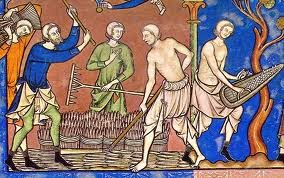
The rigid class structure of medieval society has frequently mislead casual students of the period to assume that there was little to no social mobility in the Middle Ages. While it is certainly true that it was impossible for a serf to become a king or vice versa, and individuals were largely confined to their broad social strata, society was far less stagnant than frequently alleged.


The accumulation of wealth was, then as now, the best means of upward mobility. Contrary to popular opinion, archeological evidence suggests that many peasants, even serfs, could through hard work, judicious management, clever marriage alliances (and luck, of course) acquire substantial land-holdings. They built large, comfortable houses comparable to manor houses, and could, when circumstances favored them, buy their freedom. The first step of the ladder.

Freemen likewise had opportunities for the accumulation of wealth, and already by the 12th Century there were merchants in major cities such as London, Southampton, and York that could afford grand houses (by the standards of their day) often surpassing the houses of poorer nobles and gentry.  The very need for sumptuary laws in the 14th century underscores the degree to which wealth attained through trade or industry had started to surpass the wealth of the landed aristocracy making the latter jealous of the former.

The Church, of course, had always offered the sons of peasants opportunities for advancement. A particularly bright boy could be given to the Church (with the consent of his landlord, who would hardly be in a position to refuse), and if very talented that peasant boy could theoretically rise to very high office. Thomas Becket is perhaps the most prominent English example of a youth of “low” (in this case merchant) birth rising to the highest ecclesiastical office in the Kingdom.  More common and still a step upward, youths of peasant origin with a church education could become household officials to the nobility as clerks, stewards, confessors and chancellors. The Templars and Hospitallers, meanwhile, reserved certain senior offices within the Orders for non-noble members.
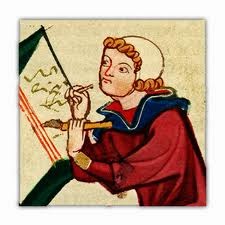

Another avenue for upward mobility — and one of only two open to girls — was, of course, marriage. Marriage in the Middle Ages was concluded between families for material/political gain. While this usually entailed marrying within one’s class, the English nobility, in contrast to the French, recognized the advantages of marrying money, particularly the daughters of the fabulously wealthy wool merchants of the High Middle Ages. Such a practice benefitted both parties, of course, because not only did the bride take on her husband’s title, but her brothers and sisters, nieces and nephews could henceforth expect patronage from her noble husband. As a result of such alliances, youth of non-noble birth acquired access to training as squires and so knighthood as well.
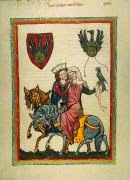

The other option for girls was, of course, to become the mistress of a great lord or the king. This was considerably more risky as men’s affection could prove short-lived. But the more successful courtesans generally obtained for their family members as well as themselves significant material advantages for as long as they were in favor. These in turn could be used to advance the entire family socially. In very rare instances, such as the case of Katherine de Roet, the liaison might even be legalized; after being John of Gaunt’s mistress for years and giving him four bastards, Katherine eventually became John of Gaunt’s third wife and died as Duchess of Lancaster.

But marriage for men could also be a stepping stone upwards.  Admittedly, no family willingly gave a daughter to a man of significantly lower birth, but the guardians of heiresses were much less scrupulous.  Indeed, one of the most important means by which a king could reward a favorite was through the award of an heiress. A man who married an heiress acquired the titles and lands that went with her regardless of his own social background. Thus, for example, William Marshal, a landless younger son, gained his barony by marriage to the heiress of Pembroke.


Royal service, of course, offered yet another means of advancement. Here the opportunities were various from battlefield knightings to royal appointments. I have already mentioned Thomas Becket, but another good example is the above mentioned William Marshal. Born the fourth son of John Marshal, he started out in life with nothing but his horse and his armor, the former of which he promptly lost in a melee. He took service, as was usual, with a maternal uncle and here had a stroke of luck. While he as part of his uncle’s retinue escorting Queen Eleanor across her own territories in Poitou, they were attacked by the rebellious Lusignan brothers, who promptly killed William’s uncle in an ambush. William himself fought fiercely, bareheaded and on foot, against 68 men (according to his 13th century biographer) killing six before he himself was gravely injured and carried off a hostage. This act of youthful courage earned him the enduring gratitude of not only the Queen of England, but her husband, Henry II. William Marshal was taken into the royal household where he served with sufficient skill, diligence and discretion to be appointed tutor-in-arms to Henry the Young King. Although his rise was not always easy and he encountered a number of set-backs, he would eventually rose to Regent of England, ruling for the under-aged Henry III.

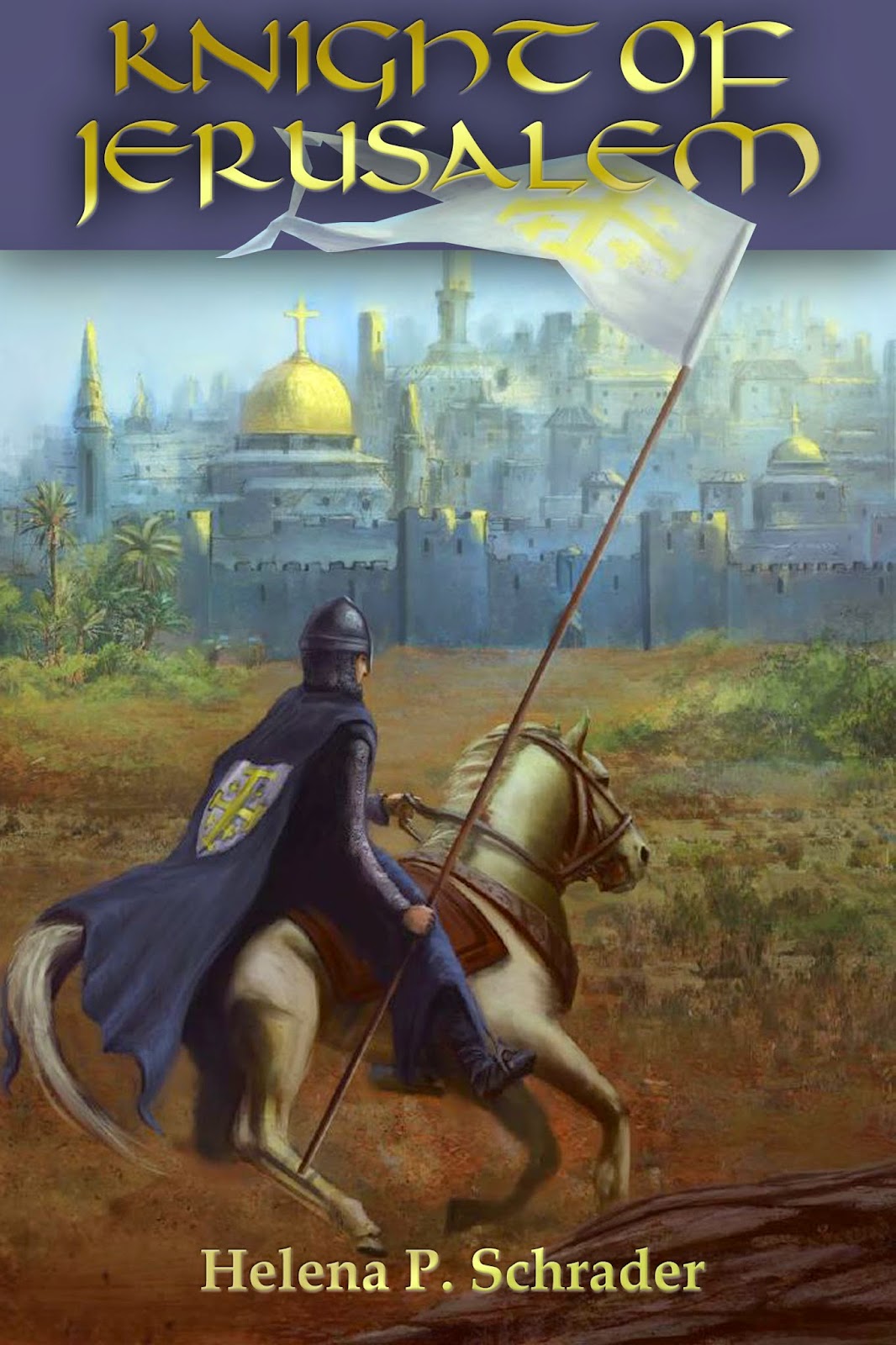
And as long as there was a Christian presence in the Holy Land (Outremer), there was always the option of going East to seek one’s fortune there. Fulcher of Chartes, the chaplain of Baldwin of Boulogne, wrote of the crusader kingdoms:

Every day relatives and friends arrive from the West come to join us. They do not hesitate to leave everything they have behind them. Indeed,  by the grace of God, he who was poor attains riches here. He who had no more than a few deniers finds himself here in possession of a fortune. He who owned not so much as one village finds himself, by God’s grace, the lord of a city.
Bartlett, W.B., Downfall of the Crusader Kingdom, The History Press, 2007, p. 189.

While Fulcher of Chartes was undoubtedly and unabashedly seeking to encourage immigration to the Latin East, he did not exaggerate. Peasants had to receive their freedom to be able to participate on a crusade, and if they made it to the Holy Land and chose to settle there — as tens of thousands did — they settled as free men and burghers, not serfs. But it was the younger sons of obscure European noblemen that took the greatest prizes: Barison (of unknown and possibly non-noble origin) received the newly built castle of Ibelin, married the heiress of Ramla, and paved the way for his descendants to become queens and regents of both Jerusalem and Cyprus. Reynald de Chatillon married the widowed Princess of Antioch to become a prince. And Guy de Lusignan, the third son of Poitevan nobleman, took the greatest prize of all: he married the widowed Princess of Jerusalem and became a king.


In short, there were many more opportunities for social mobility in the Middle Ages than is popularly assumed.

~~~~~~~~~~~~~

Helena P. Schrader is the author of numerous works of history and historical fiction.  She holds a PhD in History from the University of Hamburg.  The first book of a three-part biographical novel of Balian d’Ibelin, who defended Jerusalem against Saladin in 1187 and was later one of Richard I’s envoys to Saladin, is now available for sale.  Read more at: http://helenapschrader.com or follow Helena’s blogs: Schrader’s Historical Fiction and Defending the Crusader Kingdoms.

A Biographical Novel of Balian d’Ibelin

Book I

A landless knight,
                A leper King
                                And the struggle for Jerusalem.

Buy now in Paperback or Kindle format!