Sunday, December 9, 2018

Editors Weekly Round-up, December 9, 2018

by the EHFA Editors

Join us every week on English Historical Fiction Authors. We have saints and sinners, politics and war. Read about kings, queens, the common man and woman, and legends from ancient to post-WWII.

by Annie Whitehead


by Hilary Green


Monday, December 3, 2018

How Cnut Established Himself as Full King in England

By Annie Whitehead

Nearly one thousand years ago*, in November 1016, Cnut became king of England. How did he establish himself, a foreigner, with full authority?

For a contemporary account of the reign of Aethelred II, it is natural to look to the Anglo-Saxon Chronicle. In it, we find the closing years of the reign fraught with difficulties; those of fending off Danish raiders. It would be easy to agree with the Chronicler who, writing with hindsight, concludes that the slide towards Danish rule in England was inevitable. The payment of the Danegeld might at first sight seem like sheer folly, yet the policy appears in the short term to have worked.

Aethelred’s problem was that paying off one Viking force would not necessarily keep another one away from his shores. The Chronicler blames the military failure of the English on the cowardice of the military leaders. But while the squabble between Brihtric and Wulfnoth caused the loss of a hundred ships in 1009, we also know that Brihtnoth’s actions at the Battle of Maldon in 991 were those of courage and loyalty, that the army of 1009 left in 1010 without tribute, and that Aethelred was assured of the loyalty of Ulfcytel in East Anglia.

King Aethelred II

If things were not as bad before 1009 as the Chronicler would have us believe, there is little doubt that the armies of Swein Forkbeard (Cnut's father) widened any existing cracks in the morale of the English. Within a year, Swein had established himself as full king. But with his death in 1014, the Witan (king's council) sent to Normandy for Aethelred, and accepted him back as their king “if he would govern them more justly than before.” In the same year, Aethelred’s ravaging of Lindsey drove Cnut’s forces away. With further hindsight than the Chronicler had to offer, and perhaps with less bias, it is probably fair to say that it was far from inevitable that Cnut would succeed Aethelred as king of the English. We must, therefore, look elsewhere to find the reasons for his ultimate success.

It is hard to find a source which places emphasis on the military prowess of Cnut; most in fact, praise his piety and generosity to the Church. He was driven back to Denmark in 1014, and his reputation as a warrior must have suffered as a result. So his success in England must be attributed to something other than military superiority. While it might be rash to say that luck was on Cnut’s side, there is no doubt that circumstances helped him a great deal.

King Cnut

Before he left Denmark, Cnut was allowed by his brother King Harald to raise an army. He was fortunate to have the support of Eric of Hlathir, who had played a great part in the overthrow of Olaf Tryggvason, and who was to prove invaluable to Cnut in England. Before Cnut set sail, he was joined by Thorkell the Tall**. It is possible that Thorkell was seeking revenge for the death of his brother at the hands of the English, although it is possible, but not universally accepted among historians, that this revenge was sought earlier, and was, in fact, the reason for Thorkell’s invasion of England in 1009. Whatever his reason, Thorkell’s presence was a bonus for Cnut; he now had with him an accomplished warrior who knew England and the English.

The champion of English resistance was Aethelred’s son, Edmund Ironside. He had procured the support of the Danelaw by marrying the widow of Sigeferth, murdered by Eadric Streona (ealdorman of Mercia) probably at the behest of Aethelred. Cnut could not, therefore, be certain that the Danes in England would submit to him, and he landed in the south and began ravaging Wessex. Edmund and Eadric were raising forces, but they separated before they met the enemy. Eadric joined Cnut, and within four months Cnut was in firm control of Wessex and had the resources of the Mercian ealdormanry at his command.

Edmund Ironside

Cnut was aided elsewhere in England by Edmund’s troubles. His army in the Danelaw dispersed after demanding that the London militia should join them. Having lost his opportunity here, Edmund joined forces with Uhtred of Bamburgh. Cnut was quick to seize the chance he had been given and invaded the Danelaw, whence he proceeded towards Northumbria. Uhtred hurried back from the midlands and submitted to Cnut. Soon afterwards he was murdered, and Northumbria was left in the capable hands of Eric of Hlathir. Cnut was free now to turn his attention to the south east.

Edmund had joined his father in London, and when Aethelred died in 1016 the men of London chose Edmund as his successor. Within a few days of Aethelred’s death, however, a more representative assembly at Southampton swore fealty to Cnut in return for a promise of good government. Cnut was again helped by Eadric Streona’s amazing capacity to vacillate. He went over to Edmund’s side, and then took flight during the definitive Battle of Ashingdon. Cnut, as victor, came to terms with Edmund, and the result was a division of the kingdom. Edmund was given Wessex, and the rest of the country beyond the Thames Cnut took for himself. This was obviously a dangerous situation, in which conflict could easily flare up again. As Stenton pointed out, it imposed a divided allegiance on all those noblemen who held land in both Mercia and Wessex. [1] But circumstances once again favoured Cnut when, less than two months after the Battle of Ashingdon, Edmund Ironside died, and the West Saxons accepted Cnut as their king.

King of all England now, Cnut was by no means secure in his position. Good fortune and opportunity had helped him thus far; now he had to rely on his judgement and ability. He eliminated any chance that Richard of Normandy might support the claims of Aethelred’s children by Emma, by marrying the lady himself. For military rather than administrative reasons he divided the kingdom into four: Wessex he controlled himself, Eadric Streona was appointed to Mercia, East Anglia went to Thorkell, and Eric of Hlathir remained in Northumbria. In the same year, 1017, the atheling Eadwig was exiled and subsequently murdered. The Anglo-Saxon aristocracy also lost at least four of its prominent members, among them Eadric Streona. ('Streona' means 'The Grasper' or the 'Acquisitive' and the name first appeared in Hemming's Cartulary, an 11th-century manuscript, pictured below.)


Cnut set out to win the respect of the English church, and in this he was successful, being fully prepared to accept the traditional responsibility of being an agent of God with the duty to protect his people. He claimed to be occupying a throne to which he had been chosen at Gainsborough in 1014, and at Southampton in 1016. Though in reality much was changed during his reign, Cnut sought to establish himself by emphasising the importance of continuity. There was not such a large scale change in land ownership as was to occur in 1066, nor was there a great change in the personnel within the leadership of the Church. Archbishop Wulfstan drew up Cnut’s lawcodes drawing on those he’d written for Aethelred. The lawcodes themselves stressed continuity; very little in them was new.

Cnut (top centre)

Before the end of 1017, with Eadric Streona dead, and the alliance with Normandy secured, Cnut dismissed his fleet, retaining only forty ships. Its dismissal showed that henceforth he intended to rule as the chosen king of the English. At a council at Oxford it was agreed that the laws of Edgar (Aethelred's father, whose reign of 959 to 975 was already beginning to be looked upon as a golden age) should be observed.

In 1018 the military rule was relaxed. Two earldoms were re-established in Wessex, and in Mercia the earldoms of Herefordshire and Worcestershire were re-established. Stenton says that it was then that Cnut's reign began in earnest. [2] But throughout his reign the presence of the huscarls (housecarls) and the distribution of the heregeld (military tax) to them made it difficult for the English to forget that they were being ruled by a conquering alien king. There is no doubt though that by this point Cnut had established himself, for afterwards he felt sufficiently secure to leave the country in four separate expeditions to the north.

Cnut had invaded a vulnerable country in 1015, a country which was war-torn and weary. There were no clear dividing lines of loyalty; Edmund's army included Danes, Cnut’s included Englishmen. There can be no doubt that Cnut benefited considerably from the untrustworthiness of Eadric Streona, and from the dispersal of Edmund’s army in the Danelaw. For Cnut, the death of Edmund Ironside was nothing short of a blessing. Thereafter, his success rested on the fact that he did not conspicuously behave as a conqueror, stressing the importance of continuity, and keeping to the path that the pious King Edgar had trodden.

King Edgar

This emphasis must have taken attention away from the changes  his reign brought about. Keeping his military forces for less than a year Cnut reduced feeling among the English that they were a conquered people. Cnut made good use of his opportunities. By 1018 he had successfully established himself as full king of the English.

[1] Anglo-Saxon England - FM Stenton p387
[2] Op cit p 393

**Some historians, Campbell among them, argue that Thorkell did not join Cnut until 1016/17

Further reading/Bibliography:
The Anglo-Saxon Age - DJV Fisher
The Laws of Cnut & The History of Anglo-Saxon Royal Promises - P Stafford in Anglo-Saxon England 10
Encomium Emmae Reginae - Ed Campbell
The Chronicle of Thietmar of Merseberg EHD
The Sermon of the wolf to the English “ “
King Edgar and the Danelaw - Niels Lund, Med Scand 9
The Diplomas of Aethelred the Unready - Simon Keynes
Wulfstan and the Laws of Cnut - D Whitelock EHR 63

(all the above images are in the public domain)

*This article is an Editor's Choice and was originally published September 19, 2016

~~~~~~~~~~

Annie Whitehead is an author and historian, and a member of the Royal Historical Society. She has written three award-winning novels set in Anglo-Saxon Mercia. Her history of Mercia, from Penda the pagan king to the last brave stand of the earl of Mercia against the Conqueror, Mercia: The Rise and Fall of a Kingdom, is published by Amberley.

Find out more at www.anniewhiteheadauthor.co.uk

Sunday, December 2, 2018

Editors Weekly Round-up, December 2, 2018

by the EHFA Editors

Never miss a post on English Historical Fiction Authors. Enjoy this week's round-up.

by Hilary Green (writing as Holly Green)


by Kim Rendfeld


by Lauren Gilbert


Friday, November 30, 2018

Bourton-on-the-Water: Venice of the North

by Lauren Gilbert

A view of Bourton-on-the-Water taken by the author 2018

My husband and I recently returned from a wonderful trip, where we saw many places we had never previously visited. One of these places was a beautiful town in England named Bourton-on-the-Water, located in the Cotswolds. Some dear friends took us out for the day, and took us through several villages in the Malvern hills and the Cotswolds. Situated among rolling hills with cottages of buildings constructed of golden stone, some with thatched roofs, the villages of the Cotswolds are lovely and match every description I had ever read. Thanks to its beautiful setting, Bourton-on-the-Water has a special magic, and it has a fascinating history to go with it.

There are signs that people took advantage of the location well over 4000 years ago. Indications of a camp used by nomadic tribes consist of archaeological finds including arrow heads, flints, pottery going back to the Neolithic area, and even a pre-800 BC hand axe. The area along the river appears to have been permanently settled at least for defensive purposes sometime during the Iron Age, as indicated by a site called Salmonsbury Camp which remained a landmark in the area at least into medieval times. The Romans arrived in the area c AD 45. Roman remains including coins, buildings, roadwork, a well and two lead water storage tanks and indicate that a small Roman town was on this site. Roman troops left Britain in the 5th century, and the area was plundered by various tribes, including the Picts from Scotland, with the result that the Angles and the Saxons were invited in to help drive them back. This in turn led to issues with the Germanic people; data indicates that Bishop Germanus led a Christian army in 429 that defeated a military made up of both Picts and Saxons in 429 somewhere in the vicinity. Ultimately, the Saxons settled in the Cotswolds more or less peacefully, leaving the local inhabitants to mange themselves under their own systems. Bourton was mentioned in Saxon documents in the 8th century.

There has been a parish church in Bourton since the mid-7th century. The original Saxon church was said to have been built of wood on the site of a Roman temple, possibly in 708 when a gift of land was made by the Saxon king Oswin. This church was torn down and a new church , dedicated to Our Lady, was built on the Saxon foundations by the Normans about 1110. This church and others in the area were affiliated with Evesham Abbey. It appears that the first Norman church was replaced in the 14th century. It has been dedicated to St. Lawrence the martyr since 1328. A chantry dedicated to Our Blessed Lady was also added in the 14th century. The last Norman church was partially torn down in 1784, with the chancel being retained. The current Georgian structure was designed by local resident William Marshall and built on the same site. More rebuilding was completed during the Victorian era between 1875-1890 under the supervision of architect Sir Thomas Jackson.

St Lawrence's Church,
Bourton-on-the-Water
(by Nilfanion [CC BY-SA 4.0, via Wikimedia Commons)

During the Middle Ages, thanks to the river and the fertile land, farming expanded, as did trade. A successful wool trade resulted in the employment of two weavers, and the village also boasted a cobbler and a smith, as well as various other craftsmen. In 1381, there were 118 residents who paid poll tax. Although the Black Death troubled England from approximately 1348 to 1378, there is no record of its effect on the village. “On the Water” was not added to the name until the reign of Henry VIII. As with other parts of England, the effects on local religion with Henry VIII’s break with the Roman Catholic church and the dissolution of the monasteries, the restoration of Catholicism under Queen Mary Tudor, and the return to Protestantism under Elizabeth I were felt. As dissenting religious groups (particularly the Puritans) became established and more vocal and the Stuart kings appeared more tolerant of Catholicism, things came to a head under Charles I, largely due to taxes imposed by the king without Parliament, resulting in civil war. Armies from both sides passed through the area, although there is no indication that fighting occurred Bourton itself. King Charles and his remaining troops did stay in Bourton for one night in June 1644 after fleeing from Oxford. Charles surrendered May 6, 1646 and was executed January 30, 1649.

After the Civil War, Bourton was known to have a population of Catholics living in the area. There were also a number of nonconformists, including Puritans and Baptists (the Baptist community appears to have been established locally around 1650). Charles Stuart, Prince of Wales, was invited back to England in 1660 and was proclaimed King Charles II May 8, 1660. As a result of the restoration, tension rose between the Anglican Church and the dissenting communities. In 1660, a minister named Anthony Palmer was removed from the parish church and ejected from the Anglican Communion. He subsequently became minister to the local Congregationalists. Records indicate that, by 1676, Bourton had greater numbers of dissenters than any other community in the Stow deanery (of which Bourton was a part). Anabaptists and Presbyterians also established communities.

In August of 1876, the Baptist community in Bourton-on-the-Water opened a large new church and significantly increased its membership. While these developments occurred, the village grew and prospered. The village developed an established and prosperous middle class of business and trades people, the larger portion of whom were not Anglican. Shoemaking became a major industry of the town as the wool trade waned. The railway came through the town, with the last link completed in 1881.

Victoria Hall was built in Bourton-on-the-Water in 1897 by subscription, to celebrate Queen Victoria’s Jubilee (60 years on the throne 1837-1897). It was and still is the centre of village activities today. It boasts two plaques, one commemorating Victoria’s Jubilee, and a second honouring Queen Elizabeth II’s Jubilee (60 years on the throne 1952-2012) that were erected in 2012. The railroad and subsequent development of automobile traffic brought a thriving tourist trade to the Cotswolds, and thus to Bourton-on-the-Water. Rather than its history (of which I have touched only on parts), Bourton-on-the-Water’s lovely setting on the Windrush River, beautiful stone buildings and five stone bridges that made it a favoured destination for tourists, which it is to this day. It’s no wonder that Bourton-on-the-Water is listed as one of England’s “Venice of the North” cities.

Victoria Hall (on the right) taken by the author 2018


Sources include:

Wray, Tony and Stratford, David. Bourton on the Water. (Towns and Villages of England) Sutton Publishing Limited: Gloucestershire, 1994, reprinted 2004.

Britain Express. “Bourton on the Water, Gloucestershire” by David Ross.  HERE

British History Online. “Parishes: Bourton-on-the-Water.” From A History of the County of Gloucester: Volume 6. Originally published by Victoria County History, London, 1965, Pages 33-49.

Cotswolds.Info “History of Bourton-on-the-Water” by Ralph Green. HERE

Historic England. “Iron Age fortified enclosure known as Salmonsbury Camp.”  HERE

Know Britain. “The Church of St. Lawrence Bourton-on-the-Water.” HERE

~~~~~~~~~~~~
About the Author:
Lauren Gilbert, author of HEYERWOOD: A Novel, holds a bachelor of arts degree in English, and is a long-time member of the Jane Austen Society of North America.  Her second novel, A RATIONAL ATTACHMENT is in process and she is engaged in research for a biography.  She lives in Florida with her husband.  You can find out more on her Amazon page.

Wednesday, November 28, 2018

Cynethryth, a Powerful Queen of the Mercians

By Kim Rendfeld


Queen Cynethryth had an exalted status during her husband’s reign and enjoyed seeing her son succeed his father, a rarity in 8th-century Mercia. Yet she would also see the dynasty she and her husband desired fall apart.

Alcuin, a scholar in Charlemagne’s court, described her as the controller of the royal household, a role akin to a treasurer and chief of staff for the kings—traditional for early medieval queens. She likely managed the properties of the many religious houses her husband founded and got papal permission to control.

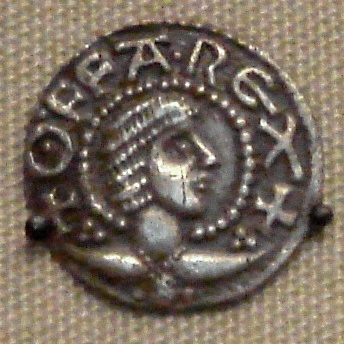
Yet she had something unique: her image graces a coin minted during her husband’s reign. It was common for kings to assert their authority by having their image imprinted on currency. Cynethryth is the only known Anglo-Saxon queen to do so. Perhaps, she and her husband were inspired by the Byzantines, who minted coins with the image of Empress Mother Irene.

Cynethryth penny (public domain via Wikimedia Commons)


Cynethryth’s husband was Mercian King Offa. Although he had a reputation for ruthlessness, he knew how to play by the rules, at least when it served to his advantage. Unlike his predecessor, his kinsman Æthelbald (accused of fornication, including acts with nuns), Offa wanted the Church’s approval for his relationship with one woman—and only one woman—to ensure his offspring would inherit the crown. Offa knew that special woman, the mother of his children, should be queen of the Mercians, endowed with a royal status.

Offa apparently was a steadfast husband. He had no children born outside wedlock. True, the Church preached against sex outside marriage, but for men, it wasn’t a big deal. All a father had to do was acknowledge and support the child. Perhaps, Offa was faithful because he was fond of Cynethryth. He definitely wanted to limit the number of claimants to the throne and took the necessary, and maybe murderous, steps.

Presumably, Offa and Cynethryth wed for political reasons. We don’t know Cynethryth’s parents or her age. Her name is similar to 7th-century King Penda’s wife and daughters, so she likely came from a prestigious family. We don’t know exactly when the couple married, but her name starts to appear on charters around 770, where she identified herself as the mother of the heir to the throne, Ecgfrith.

Women in that era typically were teenagers when they married, some as young as 12 or 13. She might have been born a few years before Offa seized the throne. Æthelbald had been murdered in 757, and Offa drove away a rival shortly thereafter. Considering that Offa ruled for almost 40 years, he was probably a young man at the time. If he married around 769, he might have been in his 30s and thinking about the future.

By 770, Offa had imposed himself as overlord of Kent, taking advantage of a succession crisis there. Or, from his point of view, reasserting the Mercian rule his predecessor had established. He might have seen Cynethryth as the woman who shared his ambition for Mercia and would support his conquests. After their son’s birth, Offa continued expanding his territory into Sussex and the Hwicce.

Coin with Offa's image (public domain via Wikimedia Commons)


Who Cynethryth was as a woman is hard to say. During her lifetime, the scholar Alcuin advised Ecgfrith to learn piety from his mother. After Cynethryth’s death—long after—she is accused of being as ruthless as her husband in ordering the execution of a visiting East Anglian king. In reality, her husband might have been responsible, for political reasons. But then again, Cynethryth very well could have supported her husband. Medieval women were ambitious.

In addition to the son, Offa and Cynethryth had three daughters, Æthelburh, Eadburh, and Ælfflæd. The couple put their daughters in positions of influence. Æthelburh was an abbess who corresponded with Alcuin. Eadburh wed Beorhtric, king of Wessex. The marriage solidified Beorhtric’s claim to his throne, and the father- and son-in-law drove out Ecgberht, son of Kentish King Ealhmund and a rival for the West Saxon crown. Ælfflæd married Northumbrian King Æthelred I.

In 787, Ecgfrith was crowned co-ruler with his father, a move that ensured his succession. After Offa died on July 29, 796, Cynethryth remained at court. Her son would die before the year was over. The cause of his death remain unknown, but I suspect it was not natural causes. Her son-in-law Æthelred was murdered that year, leaving Ælfflæd a widow. We don’t know whether Cynethryth lived to see Eadburh become a widow when her husband (likely) died in battle in 802 (likely) at Ecgberht’s hand. (Decades later, Alfred the Great’s biographer, Asser, accused Eadburh of accidentally poisoning her husband while trying to kill someone else. His account is highly suspicious for many reasons, including that Alfred was Ecgberht’s grandson.)

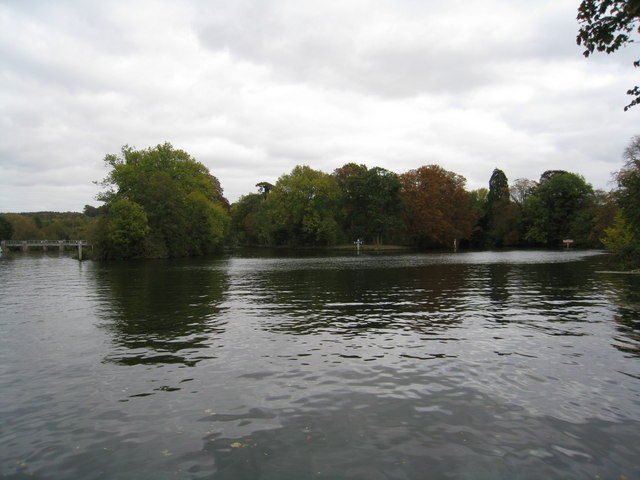
After Ecgfrith died, Cynethryth took the veil and became abbess of Cookham (in Berkshire), one of the religious houses her husband founded and bequeathed to her. Perhaps a sign of the couple’s affection is where Cynethryth chose to retire. Cookham was close to Bedford, where Offa was buried.

The Thames at Cookham (by Sebastian Ballard,
  CC BY-SA 2.0 via Wikimedia Commons)


Sources

Oxford National Biography
“Offa” by S.E. Kelly
“Cynethryth” by S.E. Kelly

“Political Women in Mercia” by Pauline Stafford, Mercia: An Anglo-Saxon Kingdom in Europe

Carolingian Connections: Anglo-Saxon England and Carolingian Francia, c. 750–870 by Joanna Story
~~~~~~~~~~

In Kim Rendfeld's Queen of the Darkest Hour, Queen Fastrada must stop a conspiracy before it destroys everyone and everything she loves. The book is available on Amazon, iBooks, Barnes & Noble, Kobo, and Smashwords.

Kim has written two other books set in 8th century Francia. In The Cross and the Dragon, a Frankish noblewoman must contend with a jilted suitor and the fear of losing her husband (available on Amazon). In The Ashes of Heaven's Pillar, a Saxon peasant will fight for her children after losing everything else (available on Amazon). Kim's short story “Betrothed to the Red Dragon,” about Guinevere’s decision to marry Arthur, is set in early medieval Britain and available on Amazon.

Connect with Kim at on her website kimrendfeld.com, her blog, Outtakes of a Historical Novelist at kimrendfeld.wordpress.com, on Facebook at facebook.com/authorkimrendfeld, or follow her on Twitter at @kimrendfeld.


Sunday, November 25, 2018

Editors Weekly Round-up, November 25, 2018

by the EHFA Editors

Two special posts from the archives this week. Enjoy!


by Lauren Gilbert


by Kim Rendfeld


We are delighted that English Historical Fiction Authors has been named one of the Top 35 Historical Book Blogs, Websites and Newsletters. Check the post to see that we are in excellent company.


Thursday, November 22, 2018

Thanksgiving Dinner for 142

By Kim Rendfeld


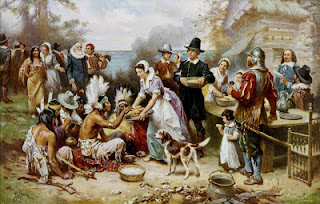
The first Thanksgiving was a three-day feast, so today would be the equivalent of day two of the 1621 event for what was then an English settlement.

The First Thanksgiving, Jean Leon Gerome Ferris,
circa 1912 to 1915 (public domain image via Wikimedia Commons)
At the party were 52 English people and 90 Wampanoag guests. That’s right. The guests outnumbered the hosts. The cooks among the settlers: the four surviving married women, five teenage girls, and a maidservant.

Many traditions we associate with Thanksgiving are from the 19th century. It wasn’t even an annual holiday until President Abraham Lincoln designated it in 1863.

In the 17th century, the settlers didn’t know they were setting a precedent, which likely occurred between September 21 and November 11. They were just glad to be alive after a year of hunger and hardship, and they wanted to celebrate with food and recreation.

U.S. Fish and Wildlife Service photo of wild turkey flock
According to settler Edward Winslow, four Englishmen had gone fowling and killed enough to feed the settlers for a week. The Wampanoag guests stopped by, were entertained for three days, and contributed five deer (about 360 pounds of venison if they bagged mature bucks).

The fare was not as portrayed in Standish of Standish: A Story of the Pilgrims, an 1889 novel by Jane Goodwin Austin (an account later taught as part of school curricula). Among other things, Austin describes a long table laden with stew, clam chowder, turnips, oysters, venison, ale and root beer, hasty pudding, and of course a turkey, only stuffed with beechnuts instead of bread.

USDA photo by Scott Bauer, via Wikimedia Commons
The real menu probably had fowl, venison, corn (also called maize), ale, and perhaps cod and a pudding made from goat’s milk. It’s possible the fowl was wild turkey – the Plymouth Plantation is in its range – but the area also supported geese, ducks, and passenger pigeons.

The tale of two disparate peoples coming together to celebrate has been mythologized over the centuries. Still, I must admit I love this story of friendship and fellowship, even though I feel sorry for the women who had to cook for all those people.

Sources

“The First Thanksgiving,” Christian Science Monitor

Butcher & Packer

Eating History, Andrew F Smith

A Thousand Years over a Hot Stove, Laura Schenone

[This post is an Editor's Choice first published on the blog on 28 November 2013]

Kim Rendfeld’s novels take place in eighth-century Francia, long before the first Thanksgiving. She is the author of The Cross and the Dragon (2012, Fireship Press) and  The Ashes of Heaven’s Pillar (forthcoming, Fireship Press). For more about Kim and her fiction, visit kimrendfeld.com or her blog, Outtakes. You can also connect with her on Facebook and Twitter.
Tuesday, November 20, 2018

Lady Elinor Fettiplace and Her Receipt Book

by Lauren Gilbert

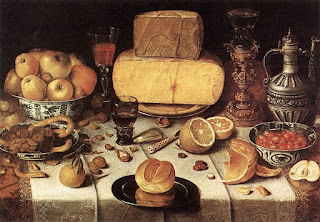
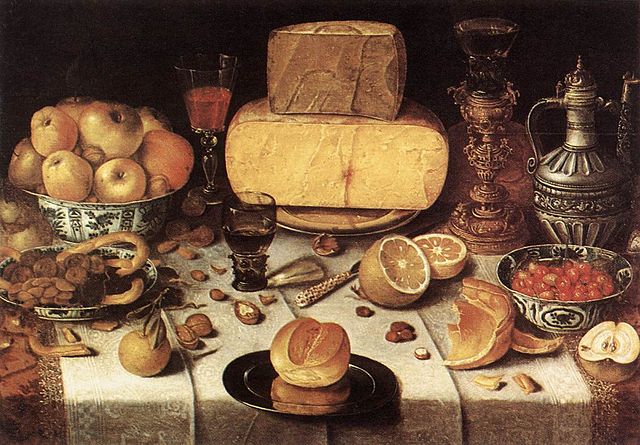
Laid Table by Nicholas Gillis, 1611

Old cookbooks and women’s household books or receipt books from times past are fascinating to me. So much “real people” information is to be found there: what they ate and when they ate it, how they celebrated, how they treated sickness or injury and which of those concerned them most, and other personal details of daily life can be found in these books. Women were responsible for the health, welfare, and feeding of their families, which at the wealthier end of the spectrum, included employees and visitors (uninvited as well as invited). Recipes were collected from friends and relatives and added to personal collections. The mistress of the household had to know what ingredients should be used and how dishes should be prepared (even if she did not do the cooking), make sure that medicinals and home remedies were properly prepared and available for use when needed, and that the supplies needed were available and techniques for completing tasks were known for household chores like laundry. Initially, these books were compiled by and for wealthy women (education being limited), but can still provide a view of their times that can illuminate the lives of people in general. One of the earliest of these books is the receipt book of Lady Elinor Fettiplace, of 1604.

Borne Elinor Poole c1570-1574, probably in Gloucestershire, to Sir Henry Poole of Gloucestershire and his wife Anne Wroughton (daughter of Sir William Wroughton of Wiltshire), Elinor was born into a family of “new men” making their fortune in the Tudor era by judicious marriages, holding positions with benefits and making themselves agreeable to important people. (The wool trade also helped.) Her paternal grandmother was a descendant of Sir Richard Whittington, a wealthy merchant who was Lord Mayor of London four times (and the inspiration for the story about Dick Whittington and his cat). Her paternal grandfather Sir Giles Poole was one of Henry VIII’s gentleman pensioners and prospered under all three of Henry’s children. (There was a family connection with the Earl of Leicester.) Her mother’s family prospered in a similar fashion. Other marriage connections included the Thynne family as well as Sir Walter Raleigh.

The Fettiplace family was an ancient line, which supposedly served William the Conqueror. Fettiplaces held various positions at court in the 13th, 14th and 15th century. They too made advantageous marriages and acquired large land holdings (at one point rumoured to hold 13 counties). At the time Elinor Poole married Richard Fettiplace in 1589, the Fettiplace name and land holdings were still impressive, but the family fortune was more uncertain. In February of 1589, her grandfather Sir Giles Poole died and left her a marriage portion of 400 pounds. It appears that, in their part of the marriage agreements, the Fettiplaces had to settle debts, which involved selling a certain amount of property. However, after the wedding of Elinor to Richard (later in 1589 after her grandfather’s death), influence by both sides got Richard invited to an important wedding at which Queen Elizabeth I was present in June of 1600. He was knighted during the celebrations. In 1604, Elinor wrote her name in her book of receipts with that year. The basic recording of the recipes themselves was apparently the work of a scribe, but she made notes herself. It’s important to realize that literacy among women was not particularly prized during this time; her ability to read and write (including knowledge of Latin) argues a more extensive education than was common even among upper-class women of this time.

The couple lived at Appleton Manor, near Oxford, where she would eventually have been responsible for the normal duties of the mistress of the house and prepared to manage the rest of the estate in her husband’s absence. The family in residence appears to have included Richard’s father Sir Bessell Fettiplace and mother (called Elinor or Helen) and his younger brothers and sisters. Elinor and Richard had 2 sons, John (the heir) born about 1589 and a younger son Henry born in 1602 about whom nothing else is known, as well as a daughter Anne born about 1594 who died in 1609. In between, there were 2 other daughters who did not survive infancy. It seems likely that Henry died in infancy or as a very small child, but his fate is not known. In 1603, Richard attended the coronation of King James, which indicated his holding a position of some influence. Son John was married in 1606 to his cousin Margaret Fettiplace. The young couple also lived at Appleton and had a son the next year.

Sir Bessells died in 1609 at which point Sir Richard came into his own, making Elinor the mistress of the household. (It appears that Richard’s mother retired on her jointure, making way for Elinor.) At this point, there was a multi-generational family living together (whether at Appleton Manor or at another family property) plus servants. Normally this would include a steward, a butler, a cook, a gardener, personal servants, and assistants to the others; similar households numbered as many as 100 or more persons. In addition to that, such households were responsible for providing hospitality to travelers and others, and assistance to local poor. Being an age of conspicuous consumption, Sir Richard and Lady Elinor Fettiplace would have been expected to “keep up with the Joneses” and maintain a similar standard of hospitality as that of their relatives and peers, many of whom were in high places indeed. Plague and other illnesses would also have to be dealt with. Elinor’s receipts included a plague remedy going back to Henry VIII and a herbal poultice from Dr. Thomas Muffet, scientist (whose daughter was the inspiration of Little Miss Muffet), as well as receipts for elegant cuisine (including a sweet potato dish attributed to Sir Walter Raleigh), and instructions for proper laundering of silk, whitening clothes and to prepare leather to be perfumed (perfumed gloves being a popular gift during the Elizabethan era).

Sir Richard Fettiplace died in 1615, leaving Elinor a widow. It appears she left Appleton Manor, retiring to her dower property (apparently near her family), leaving Appleton to her son and his wife and 4 children. She also spent considerable time at her father’s seat, Sapperton House. Her father Sir Henry Poole died in 1616 and left Elinor another 500 pounds and his coach. Sadly, Elinor’s son John died in 1619. At some point, Elinor married Edward Rogers, apparently a commoner known only as a citizen of Gloucestershire. This marriage appeared to be of fairly short duration. He died in 1623 and was buried at Sapperton church, leaving his entire estate to Elinor except for some bequests. After his death, Elinor lived on as a widow until her own death in 1647, which also appeared to have occurred in Sapperton. At her death, Lady Fettiplace left her book to her niece Anne, daughter of Sir Henry Poole the younger (her brother). The book was written in by other hands as it was passed on through the family and back to Fettiplace descendants until that branch of the family became extinct in the 18th century. It came into the hands of Hilary Spurling (author and theatre critic), as it was in the possession of one of her husband’s great-aunts. Ms. Spurling was fascinated by the book as a historical document. She put together a wonderful volume containing family information, historical context and the recipes themselves, as they were recorded (with Elinor’s notes where made) and then explains how to make these dishes today. This book gives an eye-opening view of Tudor and Elizabethan cuisine.


The original book itself (which I have not seen, unfortunately) is bound in leather and written on fine paper, with the Poole coat of arms stamped in gold on the cover. I do have Ms. Spurling’s book. The recipes are by month in her work, which illustrates the seasonality of food at that time. The recipes included some that appear to have been accumulated from times past (it was not unusual for a mother’s book to be copied and given to her daughter or daughter’s at the time of her marriage, then added to) as well as contemporary recipes. Spices were used differently than in medieval tradition, with a lighter hand. Citrus fruits were used, and lemon juice appeared. More vegetables were used, including imports such as the sweet potato. (I always envisioned lots of bread and meat, but not so many vegetables.) The recipes also indicated a level of knowledge of techniques that surprised me. Lady Fettiplace’s recipe “To Make White Bisket Bread” involves sugar, a small amount of flour, beaten whites of eggs and some crushed aniseed, combined together, formed into “coffins” (crusts) and baked; this is a recipe for meringues, which were not supposed to have been known (at least in England) in 1604. Clearly, Elizabethan cuisine was more sophisticated than many people believed. Ms. Spurling included suggestions for modern cooks and tried many of them successfully, as have others. Some of the more exotic ingredients such as rose water and ambergris are available (although not necessarily at the grocery store) and make it possible at least have an idea of what these foods might have tasted like. I plan to have a go myself. (The sweet potatoes sound especially nice, especially for Thanksgiving!)

Sources include:

Spurling, Hilary. ELINOR FETTIPLACES’S RECEIPT BOOK English Country House Cooking. 1987: Penguin Books, Middlesex.

Dickson Wright, Clarissa. A HISTORY OF ENGLISH FOOD. 2011: Random House, London.

David Nash Ford’s Royal Berkshire History. “Elinor Poole, Lady Fettiplace.” 2008. HERE

Epicurean Piranha. “The Magic of Meringue!” Posted September 10, 2012. HERE

Lost Past Remembered. “Elinor Fettiplace, Walter Raleigh’s Rose Sweet Potatoes, and an Excellent Negus,” posted by Deana Sidney on November 24, 2010. HERE

Image: Wikimedia Commons. "Laid Table" by Nicholas Gillis, 1611 (Public Domain). HERE

Image: Cover of ELINOR FETTIPLACE'S RECEIPT BOOK by Hilary Spurling-picture taken by Lauren Gilbert of her copy of the book.


~~~~~~~~~~~~~

Lauren Gilbert, author of HEYERWOOD: A Novel, lives in Florida and loves old cookbooks. She is working on A RATIONAL ATTACHMENT, due out soon.

Visit her website at http://www.lauren-gilbert.com for more information about her.

Sunday, November 18, 2018

Thursday, November 15, 2018

Lady Charlotte Guest - Victorian powerhouse of myth and iron

by Deborah Swift

Next weekend* I am booked to give a talk on the Mabinogion, the extraordinary collection of Welsh myths that were first brought to prominence in England by Lady Charlotte Guest. Not only are the myths fascinating, but Charlotte Guest was quite a phenomenon herself.

Charlotte Guest

Born Charlotte Bertie in May 1812, she was the eldest child of the ninth Earl of Lindsay of Lincolnshire, and was brought up at Uffington House, a large country estate. When she was six years old, her father died and her mother remarried a vicar, a man whom she disliked intensely. Charlotte was a bookish and intelligent child, and being educated at home, her only escape was into literature. She soon taught herself several languages, including Arabic, Hebrew and Persian. She began keeping a journal when she was nine, and so we know a lot about her life, because she carried on writing it for another seventy years - until she was was seventy-nine! 

Page from Charlotte Guest's Diary

Her interest in Wales and its history began after meeting the MP for Merthyr Tydfil,  John Josiah Guest.  Full of vitality and energy, Josiah ran the largest ironworks in the country, the Dowlais Iron Company, which employed 7,000 workers. In 1833 Charlotte and John were married. Charlotte took a keen interest in the business, and in the welfare and education of the workers. Moreover, she was keen to escape the oppression of her step-father and Wales was suitably far from her family home.

Ever a keen linguist, she launched herself into learning Welsh. At that time there was a romantic revival and a strong interest in Arthurian legends. Charlotte began translating some Medieval Welsh tales into English. These tales were part of an oral tradition, and drawn from the written sources of the Llyfr Coch o Hergest, or Red Book of Hergest. Her translations included the four branches of the Mabinogi, three Arthurian Romances, and a translation of the well-known myth Taliesin. 


The Lady of the Fountain  (an Arthurian tale) was first published in 1838, and in 1849 the collected tales appeared as The Mabinogion in a lavishly illustrated edition. Since then they have been widely studied by poets such as Tennyson and scholars of Welsh and Celtic mythology, as well as those interested in the spiritual and wisdom traditions they embody. The myths are much-loved by illustrators too, trying to capture the unknowable in paint.

Click picture for more great
illustrations by Lee

Back to Charlotte Guest.  Not content with documenting the ancient tribes of Britain, Lady Charlotte also produced her own tribe - ten children: five boys and five girls. She was ambitious for her children, marrying them into the aristocracy and ensuring their education through the schools she endowed (the Dowlais Central Schools cost £20,000 to build - an enormous sum in the Victorian era.) This area of Wales was heavily influenced by Chartism, and these principles were evident in Charlotte Guest's educational ideals for her workforce.

On her husband's death she became the only active trustee of the ironworks, and ran the business. Astute and energetic, she insisted on being in control. This included negotiating terms when the men went on strike, and dealing with dissatisfied workers who in those times were unused to being ordered by a woman. One cannot help but think, that the models of the powerful women in the tales from the Mabinogion must have proved an inspiration to her when faced with these difficulties.

Dowlais House, centre of Charlotte Guest's empire

Two years later Charlotte fell in love with her son's classics tutor, Charles Schreiber. They shared a passion for history and collecting ceramics, and from then on they travelled the continent collecting, as many wealthy Victorians did. Their collections were left to the nation and are housed in the V&A, where there is a 'Schreiber' Room, and in the British Museum, which houses her collection of playing cards and fans. In 1891 she became the first woman to receive the freedom of the Worshipful Company of Fanmakers. 

Below - an unmounted fan-leaf,  painted for the occasion of the Schreibers' silver wedding anniversary in 1880, now in the British Museum.


Lady Charlotte died in 1895 but it wasn't until 1950 that her grandson, the Earl of Bessborough, published edited highlights from her diaries. The originals are now housed in the National Library of Wales. 

Charlotte Guest is chiefly remembered for her translations of the Mabinogion, from which we receive most of our knowledge about Welsh mythology, including the story of Rhiannon, the tale of the mysterious mound that leads to the Otherworld, Bran and the ravens that now roost in the Tower of London, about Arianrhod and her turning wheel of stars. Although many now take issue with Guest's translations, without her a whole generation of people would have had the door to these wisdom stories closed to them.

Work with the myths and stories of the Mabinogion still goes on, and new translations have appeared and continue to do so, proving that good stories always outlast those that tell them.


Watch a BBC video about The Mabinogion
The Dancing Floor Film - new film based on Mabinogion Myths

Sources:
The Mabinogion - translations by Guest, Davies, Jones
National Library of Wales

* This post is an Editors' Choice post, originally published on this blog on 16 March 2016

~~~~~~~~~~

Deborah Swift is the author of seven novels for adults and a trilogy for young adults. She lives in the North of England close to the mountains and the sea. Follow her on Twitter @swiftstory or find her on her website www.deborahswift.com