Showing posts with label Lauren Gilbert. Show all posts

Sunday, September 4, 2022

The Marriage Drama of Frances Vane Stewart, 3rd Marchioness of Londonderry

  By Lauren Gilbert


Lady Frances Anne Emily Vane-Tempest, Marchioness of Londonderry (1800-1865) and her Son George Henry Robert Charles William Vane-Tempest, Viscount Seaham, later 5th Marquess of Londonderry (1821-1884) by Thomas Lawrence, public domain


The Hon. Frances Anne Vane Tempest was born January 17, 1800, in St. James’s Square, London. Frances Anne was admired and respected for her successes as a political and a society hostess, her business acumen, and her position in society. She capably ran estates in England and Ireland, and was known for being strong minded. Her background certainly prepared her to think for herself, to trust her own judgment, and to stand her ground. Her parents were fascinating people in their own rights.

Her father was Sir Henry Vane-Tempest of Long Newton, County Durham, 2nd Bearonet. He was born with the last name of Vane, and added Tempest by royal patent, after he inherited his late maternal uncle John Tempest’s estates in County Durham and Wynyard in 1793. This inheritance made him very wealthy, as the estates included significant coal mines. His uncle’s will required that the name Tempest be adopted. He replaced his uncle as M.P. for the City of Durham 1794-1800 and for County Durham 1807-1813. Also a sportsman, he owned a successful racing stable, including a horse named Hambletonian. (Henry gambled, and won, 3000 pounds on this horse to win at Newmarket in March 1799.) Sir Henry had a bad reputation as womaniser, and was known for having a bad temper. Henry Vane-Tempest’s father died in 1794, and he inherited the title, becoming 2nd Baronet. He had one sibling, his sister Frances, who married Michael Angelo Taylor, M. P. for the City of Durham. Frances’s marriage to Mr. Taylor caused an estrangement, but brother and sister eventually reconciled. Sir Henry also had an illegitimate son, named John, born about 1792, who apparently remained in County Durham. In April 1799, he married Anne Catherine McDonnell, Countess of Antrim.

Anne Catherine MacDonnell was born in 1775 in County Durham to Randal MacDonnell, 6th Earl of Antrim and 1st Marquis of Antrim and Viscount Dunluce, and his wife Letitia Morres. The Marquis and his lady left no sons. When he died in 1791, the Marquisate became extinct. However, the Earldom had a remainder which allowed it to pass on to daughters if there were no sons. As the eldest surviving daughter, Anne Catherine became Countess of Antrim and Viscountess Dunluce in her own right. She also inherited significant property in Northern Ireland. She met Sir Henry when she was about 18 years old, and her family tried to discourage the match, to no avail. Lady Anne and Sir Henry were married at her home in Hanover Square, London.

Although it seemed a good match, both being young, good looking and wealthy, unfortunately, it was not. Sir Henry was bad tempered and neglectful; both were extravagant and fond of partying. Lady Anne and Sir Henry alienated her family, and Lady Anne did not like Sir Henry’s sister, Frances Taylor, who visited frequently. Frances Anne, the only surviving child of the marriage, was born at Sir Henry’s estate of Long Newton, in County Durham. According to her own account, her parents were by turns neglectful and harsh, leaving her to form a close attachment to her aunt Mrs. Taylor, who was kind and paid attention to her. She also became scheming and independent.

Frances Anne was allowed to visit her aunt and formed a friendship with her half-brother. Sir Henry at least showed her affection, gave her money, and wrote his daughter affectionate notes when she was away. She formed a great attachment to him, although she and her mother never seemed to become close. Sir Henry’s death on August 1, 1813, was a serious blow to Frances Anne. She was 13 years old and a significant heiress.

The power structure changed. Frances Anne was now the owner of her father’s estates. Her father’s will left Frances Anne to the joint guardianship of her mother and her aunt. Her mother kept her own fortune and inherited personal property from Sir Henry, as well. Disagreements between Lady Anne and Mrs. Taylor flared up, and the result was that Frances Anne became a Ward in Chancery. Before leaving Wynyard, Mr. and Mrs. Taylor made sure that Frances Anne understood her position fully, and incited Frances Anne to oppose her mother. Frances Anne also had a temper and quarrelled with her mother. After a quarrel, in the heat of her anger, Frances Anne wrote to her aunt appealing for rescue. She was then about 14 years old. Her aunt responded by appealing to the Count of Chancery. The Countess of Antrim and Mrs. Taylor duly pursued the case in London.

In the process of the case, the Countess of Antrim consulted with John Beckett, Under-Secretary of State for the Home Department. Mr. Beckett, a friend of the late Sir Henry, offered her advice and (apparently) a flirtation. During this period, because no one could seem to handle her, Frances Anne was set up, in the care of her governess Mrs. Cade, in her own establishment, a house in Portman Square, London. Frances Anne, who was basically on her own, without effective supervision, made the acquaintance of Mr. Beckett’s younger brother, Edmund, who was about 24 and engaged to be married. Thus, drama began.

Frances Anne and Edmund began a relationship where they spent time together during the days and engaged in a clandestine correspondence. He even gave her a ring. This situation lasted about 4 months until Mrs. Cade came across their correspondence. Unbelievably, neither her mother nor her governess, nor Edmund’s brother (nor apparently Edmund’s betrothed) noticed this very shocking situation until this point. Frances had to give back the ring he had given her and his letters; Edmund returned the letters she had written to him. The whole affair remarkably seemed to have occurred without notice by society, and did not generate a scandal.

Marriage was an unavoidable issue for a major heiress of the time, and Frances Anne was no exception, despite her youth. Even though she was a minor and had guardians, she had no hesitation in speaking for herself and turned down more than one proposal. She was looking forward to being presented at court at age 17, but this plan was derailed by a marriage, this time by her mother. The Countess of Antrim remarried on June 27, 1817, to a singer named Edmund Phelps. She had met Mr. Phelps approximately a month or so previously. A wedding after such a brief acquaintance would have been surprising enough, but Mr. Phelps was a singer, a man of no fortune or connections of his own. The fact that he took his wife’s name, MacDonnell, afterwards did little to mask the state of affairs. Frances Anne did not attend, and the marriage was considered undignified, to say the least. Frances Anne’s presentation was postponed until 1818.

The newspapers reported Frances Anne’s presentation at court in February 1818. The Queen held a drawing room for the celebration of her birthday, which was attended by the Prince Regent and other members of the royal family. Frances Anne was presented by her mother, the Countess of Antrim. Following her presentation, she no was longer under her governess’s watch and, at 18, was maturing into a woman of some stature. Her mother and her aunt took her about to different society events. (Not together; they each accompanied her to separate events.) According to her biography, written by Edith, Marchioness of Londonderry, based on Frances Anne’s memoir, she met Lord Charles Stewart at her mother’s home early in February 1818.

Lord Charles Stewart was over 20 years older than she, a widower with a son, and she was not overly impressed, even though he was related to the Foreign Secretary, and was serving as Ambassador to Austria. Despite the slow start, she saw more of him at her mother’s home and at court. Mrs. Taylor did not care for the connection for various reasons, but the Countess of Antrim was completely supportive. As Frances Anne and Lord Charles saw more of each other, they became attached, and, in April of 1818, she accepted his proposal, without discussing the matter with either her mother or aunt. Although the Countess of Antrim approved, her aunt and uncle Mr. and Mrs. Taylor were quite angry. As one of her guardians, with Frances Anne being a ward in Chancery, Mrs. Taylor was not a force to be ignored.

The Countess of Antrim requested that the Lord Chancellor’s Court refer her daughter’s case to a Master to determine an appropriate settlement for daughter in relation to her impending marriage to Lord Stewart. Her mother’s petition was reported in the newspapers, including The Commercial Chronicle (London) of Saturday, April 25, 1818. Mrs. Taylor responded with a request of her own, asking that the Countess of Antrim denied contact with her daughter unless Frances Anne was accompanied by her governess. She accused the countess of promoting the match without the consent of either the Court or the co-guardian. She also included a memo detailing her reasons for opposing the marriage of Frances Anne and Lord Charles Stewart. Mrs. Taylor’s petition was also widely reported in great detail. The fireworks began, especially after the Lord Chancellor granted the injunction requiring that no one see Frances Anne without her governess being present.

Mrs. Taylor’s reasons for disapproving of the marriage included the facts that she considered Lord Stewart to be after Frances for her money, that he was too old for her, that he had a bad reputation, that insanity ran in his family, that his title would descend to his son by his previous marriage and Frances’s children would be disadvantaged, and that the marriage was improper for her. As the case went on, Lord Stewart refuted her charges. Although Frances’s fortune surpassed his, he had a respectable fortune and income of his own; he was willing to make settlements for Frances and any children; in his capacity as a soldier and ambassador, he was not a man of ill repute (although he had acquired a reputation of a ladies’ man and a drinker); the charge of insanity in his family was not proved. (He could not refute the age difference.)

The case went on for some months, and the Master ruled that the marriage would not be improper; it might not be the most advantageous marriage, but Lord Stewart had successfully established his situation, and Mr. and Mrs. Taylor had presented no evidence supporting Mrs. Taylor’s claims. In July 1818, although the Lord Chancellor sympathised with Mrs. Taylor, and had talked to Frances Anne himself, he felt he could not overrule the Master’s report, and found the marriage to be not improper. He commented specifically on Frances Anne’s determination to proceed with the marriage. He did, however stipulate that the couple could not celebrate the marriage until after the appeal to the House of Lords was resolved. (Data indicates that there was nothing preventing the settlement negotiations during the appeal.) Mrs. Taylor expressed her determination to appeal. Interestingly, newspaper reports indicate that a house was taken in Putney for Frances Anne and her governess Mrs. Cade in August. Lord Stewart returned to Vienna, where he indicated he planned to stay until the appeal was finished.

Newspaper accounts in November 1818 show that Frances Anne and Mrs. Cade were still in Putney. In January 1819, the Countess of Antrim was not yet in London, but Frances Anne had returned to London and was living in Norfolk Street. Although Mrs. Taylor had expressed her intent to appeal, newspaper accounts indicate she had apparently failed to pursue it vigorously, as the court questioned her about her intentions and ultimately dismissed the application in late January 1819. The Countess of Antrim held a dinner where she entertained Lord Stewart, Frances Anne and others at her home in Bruton Street in mid-February. Mrs. Taylor did try again to have the marriage blocked, but was unsuccessful. In late March 1819, the Order of Restraint preventing their marriage was finally discharged.

Lord Charles and Frances Anne were finally married at her mother’s house in Bruton Street, by special licence, on April 3, 1819. In accordance with Sir Henry’s will, Lord Charles Stewart and his wife took the last name of Vane by Royal Warrant. The entire affair was a cause célèbre. The case was covered extensively by newspapers across the United Kingdom and abroad. A romantic poem, called THE COUNTESS OF CARRICK, dedicated to Frances Anne by name, was widely advertised for sale in February 1819. The whole situation effectively destroyed her relationship with her aunt and uncle. The circumstances had to have been intensely uncomfortable and embarrassing for the couple themselves and their extended family, to have so much attention focused on such personal matters.

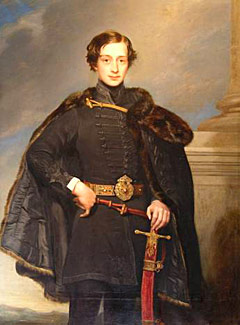
Charles William Vane, 3rd Marquess of Londonderry (1778-1854) by James Godsell Middleton, photo by BotMultiChill, July 5, 2020-public domain


Fortunately, the couple enjoyed a long and prosperous marriage and had 6 children. She became a noted hostess. They purchased properties, including Holdernesse House (later renamed Londonderry House) in London and Seaham Hall in County Durham. Upon the suicide of Lord Charles’s half-brother in 1822, Charles became the 3rd Marquis of Londonderry. Subsequently, he was also granted the titles Earl Vane and Viscount Seaham, both of which were remaindered to heirs from his marriage to Frances Anne (an answer to Mrs. Taylor’s concern). They expanded the coal industry on their estates and developed a port at Seaham to facilitate shipping. Already quite affluent, they became even wealthier. Frances Anne was quite interested and active in these concerns and, before Charles died, their family was among the wealthiest in the UK. When Charles died in 1854, the title of Marquis of Londonderry went to his oldest son Frederick by his first wife, and the titles of Earl Vane and Viscount Seaham to his son George, his oldest son with Frances Anne. She ran the businesses herself. Sadly, Frederick died without an heir and Frances Anne’s son George became the 5th Marquis of Londonderry. Frances Anne died on January 20, 1865, at Seaham.

Sources include:

FRANCES ANNE The Life and Times of Frances Anne Marchioness of Londonderry and her husband Charles Third Marquess of Londonderry, by Edith, Marchioness of Londonderry, D. B. E. London: Macmillan & Co., Ltd. 1958.

THE LADIES OF LONDONDERRY Women and Political Patronage, by Diane Urquhart. London: Bloomsbury Academic, 2020 (1st published by I. B. Tauris & Co. Ltd. in 2007).

Christening record: City of West Minster Archives, Westminster Baptisms, transcriptions, via FindMyPast showing birthdate January 17, 1800, and baptism date February 14, 1800, in St. James, Piccadilly, Parish.

Marriage Record: Westminster, London, England, Church of England Marriages and Bans, 1754-1935; St. George, Hanover Square, 1798-1802, p. 132 of 616, showing marriage by special license at the home in Bruton Street by special license on the 3rd day of April 1819, via Ancestry .

Various newspaper articles from multiple cities, via BritishNewspaperArchive , including THE GLOBE, Friday, February 27, 1818, p. 2, London, England, one of many which covered her presentation; COMMERCIAL CHRONICLE, Saturday, April 25, 1818, p. 4, London, England, among those which discussed her mother’s petition regarding a settlement; BELL’S WEEKLY MESSENGER, April 26, 1818, p. 6-7, London, England, one of those which addressed Mrs. Taylor’s counter petition; BALDWIN’S WEEKLY JOURNAL, Saturday, July 18, 1818, p. 3, London, England which discussed the judgement; THE DURHAM COUNTY ADVERTISER, Saturday, August 29, 1818, p. 2, which mentioned her sojourn in Putney; MORNING POST, Saturday, February 6, 1819, p. 2, London, England, which contained the advertisement for THE COUNTESS OF CARRICK; EXETER FLYING POST, Thursday, April 9, 1819, p. 4, Devon, England, one of those which reported that the order of restraint was lifted; and the SUSSEX ADVERTISER, Monday, April 12, 1819, p. 4, Sussex, England, among the many which reported their wedding. THE LONDON GAZETTE, published May 26, 1819, issue: 17480, p. 906, found at TheGazette, reported the name change to Vane (as did other papers).

Images: Wikimedia Commons

Lauren Gilbert is fascinated with English literature and history, particularly the Regency era.  Lauren has a BA degree in liberal arts English and Art History.  A long-time member of JASNA, she delivered a breakout session at the Annual General Meeting in 2001.  She was keynote speaker for Jane Austen Fest in Mt Dora, FL in 2022.  A RATIONAL ATTACHMENT is her second novel.  Her essays appear in both volumes of CASTLES, CUSTOMS AND KINGS: True Tales by English Historical Fiction Authors. Her current project is a non-fiction book.  Visit her Amazon Author Page, her Facebook author page or  her website for more information.  


Thursday, April 28, 2022

A Visit to the Seaside: Worthing


by Lauren Gilbert

Located on the coast in West Sussex, Worthing is between 50-60 miles south of London, and 10-12 miles west of Brighton and Hove (depending on routes taken). It has a long and fascinating history.

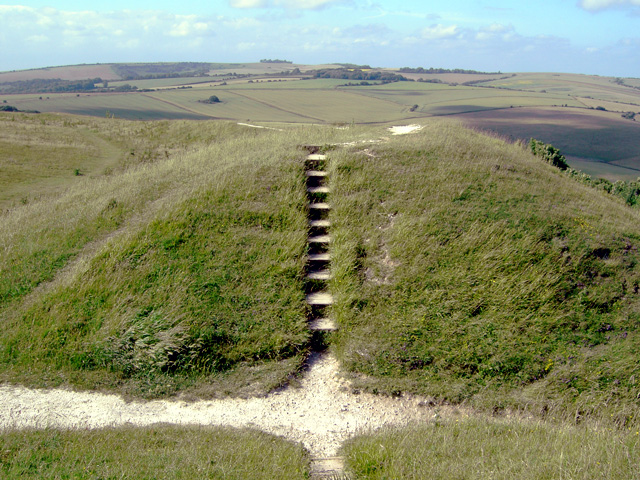
Stone Age people were in the area approximately 60,000 years ago. By the New Stone Age or Neolithic era (between about 4000 BCE to about 2000BCE), Worthing was the centre of flint mining; Romans also settled the area. The Iron Age (about 750 BCE-about 43 AD) hillfort Cissbury Ring is the largest hill fort in Sussex, and the 2nd largest in England. It contains one of the Neolithic flint mines found in the area.


Easternmost Part of Cissbury Ring by Slbs June 29, 2008 Creative Commons

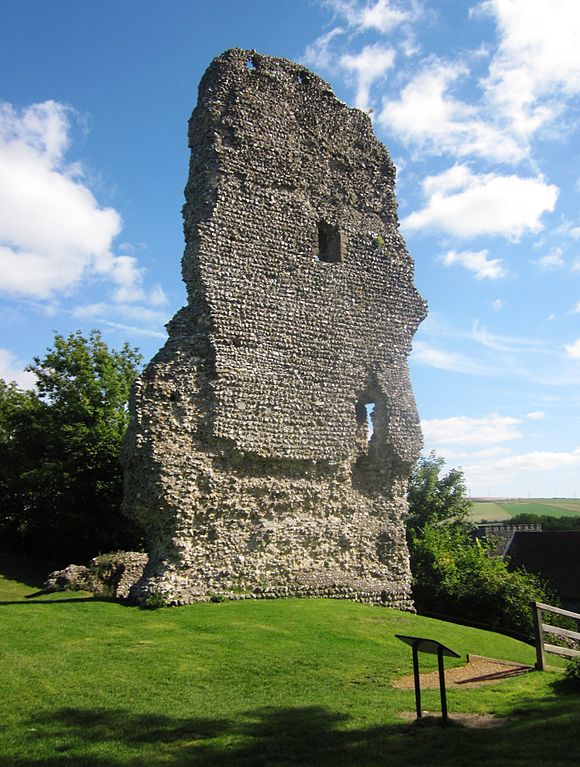
At the Norman Conquest, the Manor of Worthing included the Ordinges and Mordinges estates. William de Braose received the Manor. The estates were joined, and Bramber Castle was built. The Manor was then leased to Robert Le Sauvage. Worthing was included in the Domesday Book.


Remains of the Norman keep of Old Bramber Castle by Margaret Anne Clarke Sept. 20, 2013, Creative Commons


During Georgian Era, Worthing saw great change. For decades, Worthing was a fishing village, with mackerel as the prime catch, until the temperate climate and seaside started attracting visitors in the 1750s. It was also a stronghold of smugglers throughout the 19th century.

As other watering places such as Brighton became more congested, less crowded places, such as Worthing, became more attractive. As physicians extolled the benefits of sea bathing for health, more visitors came. George III (who had popularized Weymouth as a seaside destination, visiting numerous times in 1789-1805) thought it might improve Princess Amelia’s health and brought her to Worthing in 1798.

By 1803, streets had been built, along with some hotels and fine homes. The early visitors were wealthy fashionables, who expected comfortable accommodations and entertainment. The medical benefits of sea bathing attracted some. Others confined themselves to travel within the United Kingdom due to the difficulties of foreign travel resulting from the Napoleonic Wars. In 1803, Parliament passed an Act, establishing Worthing as the Town of Worthing, and establishing a group of commissioners to manage cleaning, lighting, improving streets and roads, and to establish a police force.

There is also a Jane Austen connection-she stayed at Stanford’s Cottage in Worthing, with her mother, her sister Cassandra and her friend Martha Lloyd for several weeks in late 1805. Worthing is considered the likely inspiration for SANDITON. Edward Ogle (a prominent businessman) and Warwick House, which he purchased in 1801, may have been models for Mr. Parker and Trafalgar House.(1) Now known as Stanford Cottage now has a blue plaque declaring that Jane Austen stayed there.

In 1813, John Feltham described Worthing and said, “In a short space of time, a few miserable fishing huts and smugglers’ dens have been exchanged for buildings sufficiently extensive and elegant to accommodate the first families in the kingdom. The establishment of two respectable libraries (Spooner’s and Stafford’s) at each of which the newspapers are regularly received, and the erection of commodious warm baths (Wickes’s) within a few years; sufficiently prove how far it has risen in public estimation.” (2)

In 1821, The Esplanade was built to create a suitable place for people to promenade. After 1825, Worthing was no longer considered a fashionable resort, and drew a much smaller crowd of visitors, which resulted in financial difficulties for the town in the 1830s. It became a suitable resort for families and those seeking health.

During the Victorian Era, as its status declined, Worthing again experienced financial difficulties in the 1850s. In 1862, the Pier was built, and in 1865, the Esplanade was expanded and renamed the Marine Parade. By 1889, a pavilion had been built on the southern end of the Pier. Paddle steamers, providing popular day trips along the coast, moored there to pick up and drop off passengers. Oscar Wilde is known to have spent time there in 1893, and liked it well enough to spend the summer and autumn of 1894 in Worthing, writing THE IMPORTANCE OF BEING EARNEST. In 1897, a bandstand was built west of the pier. Band concerts became a crowd-pleasing feature.


The Pier, Worthing, England-print-1890-1900, Library of Congress, public domain

The Pier was badly damaged during a storm on March 24, 1913 (Easter Monday). Repairs were begun promptly, and the pier reopened in 1914. In September 1933, fire destroyed the South Pavilion. This was repaired, and the pavilion subsequently reopened.

On October 9, 1934, there were clashes between Oswald Mosley’s British Union of Fascists and anti-fascist protestors, an event which became known as the Battle of South Street. During World War II, Worthing was a prime defensive place in the event of an enemy landing along the coast. In 1942, it became a popular recreation area for the troops. Worthing also served as the embarkation site for the D-Day invasion on June 6, 1944.

After World War II, the town was repaired and refurbished. The population has grown steadily. In the 1960s, Worthing was a popular music venue. It evolved to a retirement haven in the 1970s and 1980s. From the 1990s to present, major corporations have located there, attracting younger workers with families. In 1998, 1999 and 2000, Worthing was voted the most profitable town in Britain by Experian. In the 21st century, Worthing continues to grow and thrive as the seaside location continues to attract visitors and residents.

NOTES:

(1) Edmonds, Antony. JANE AUSTEN’S WORTHING The Real Sanditon. Pp. 9-11, pp. 14-30.

(2) Feltham, John. A GUIDE TO ALL THE WATERING AND SEA-BATHING PLACES FOR 1813. Vol. 2, p. 463.

Sources include:

Edmonds, Antony. JANE AUSTEN’S WORTHING The Real Sanditon. 2015: Amberley Publishing, Stroud, Gloucestershire.

Evans, John. PICTURE OF WORTHING To Which Is Added An Account of Arundel and Shoreham, with Other Parts of the Surrounding Country. 1805: printed by C. Stower, London. Reprint published by Sagwan Press, imprint of Creative Media Partners. Scholar Select.

Feltham, John. A GUIDE TO ALL THE WATERING AND SEA-BATHING PLACES FOR 1813. With a description of The Lakes; A Sketch of A Tour in Wales and Itineraries. Vol. 2 1813: Longman, Hurst, Rees, Orme and Brown, London. Reprint published by Franklin Classics, an imprint of Creative Media Partners. Scholar Select.

Visitworthing.co “History of Worthing.” (No author or post date shown.) HERE

En.wikipedia.org “Worthing,” last edited April 20, 2022. (No author shown.) HERE

All images from Wikimedia Commons.


Lauren Gilbert was introduced to English authors early in life. An avid reader, she pursued a Bachelor of Arts degree in English, with a minor in Art History. She is a contributing writer to both volumes of CASTLES, CUSTOMS AND KINGS: True Tales by English Historical Fiction Authors. She has two novels, HEYERWOOD A Novel and A RATIONAL ATTACHMENT, currently in print and is working on a new nonfiction work. A long-time member of JASNA, she has presented programs for the JASNA Palm Beaches Region, the JASNA annual general meeting in 2011, and the Jane Austen Fest in Mount Dora in 2022. She lives in Florida with her husband. Visit her website here.


Sunday, February 27, 2022

Lady Mary Wroth, Author and Courtier

 By Lauren Gilbert

Lady Mary Wroth c 1620


Born Mary Sidney, she was the daughter of Robert Sidney, Earl of Leicester & Viscount de L’Isle and his wife Barbara Gamage, a Welsh heiress. She was born about 1587 (possibly October 18) possibly in Penshurst Place in Kent or in Baynard’s Castle, London (the Sidney family’s London headquarters). Robert Sidney was the younger brother of Sir Philip Sidney and Lady Mary Herbert, Countess of Pembroke. Robert Sidney was also a poet. He was appointed Governor of Flushing, the Netherlands, in 1588, where his wife and daughter Mary accompanied him. A brother, William, was born there. When she couldn’t accompany her parents, Mary was in the household of the Countess of Pembroke for much of her childhood.

Out of eleven pregnancies, Lord and Lady Leicester had six surviving children including Mary, and seemed to have an affectionate family unit. When at home together, the children had a tutor, who apparently gave the children a good education. When staying in the household of her aunt, the Countess of Pembroke, Mary shared her cousins’ tutor. She was known to have talent for writing, playing the virginals and dancing. In 1602, Mary danced at court, before Queen Elizabeth, whose reign would end at her death the next year.

When James I succeeded in 1603, he appointed Lord Leicester as Lord Chamberlain of Queen Anne’s household. His increased status put Mary, now about fifteen or sixteen years old, in a position to attend court as one of Queen Anne’s attendants. Mary was married in 1604, at about age seventeen to Sir Robert Wroth, who at about age twenty-seven, was about ten years older. He was a wealthy landowner and one of the king’s many hunting companions. He had been knighted in 1603. In 1613, he was chosen to be sheriff of Essex.

There are suggestions that the couple was unhappy, possibly an arranged or forced marriage. There were rumours of incompatibility early on. There are also suggestions that he was a profligate spender and womaniser. Lord Wroth inherited Loughton House and Durrants in Essex from his father c. 1605-1606. (Loughton House was a family home, and Durrants a hunting lodge.) Lady Wroth continued to attend court after her marriage, although she was not a member of the Queen’s household, and acted at Whitehall in one of Ben Jonson’s masques, The Masque of Blackness” on Twelfth Night 1605. This introduced her into literary society.

Lord and Lady Wroth had one child, a son named James, born in February 1613 or 1614, after about ten years of marriage, suggesting a possible rapprochement. Lord Wroth died March 14, 1614. She was left a widow with a very young child, a jointure of 1200 pounds per year (about $320,220.00 USD today), and debts totaling 23,000 pounds (approximately $6,138,000.00 USD today). Although there were three trustees involved, it appears she managed her estates herself, and wasn’t very good at it. She lived primarily at Loughton House, a widow the last forty years of her life. Sadly, little James died in July 1616, which resulted in Lady Wroth’s losing many of her rights as widow regarding her late husband’s estates.

As with many court ladies, there were rumours about Lady Wroth. One was a rumoured affair with Ben Jonson, for which there seems to be no evidence, so that is likely untrue. (He dedicated his play The Alchemist to her in 1612. He also wrote a sonnet, “A Sonnet to the Noble Lady, The Lady Mary Wroth,” which was not published until after his death, and was known to seek and receive patronage from Lady Wroth’s mother as well as Lady Wroth.) It is worth noting that Jonson was not the only poet to write poetry to her.

Lady Wroth did have an affair with her cousin, William Herbert, 3rd Earl of Pembroke (1580-1630). He was her first cousin (son of Mary Herbert, Countess of Pembroke). When children, Lady Wroth and her cousin were close, and there is an indication that they may have been more than friends. Lord Pembroke was a wealthy and powerful courtier (even though he was not a favourite of King James). He was also a poet in his own right-his poems were collected and published by John Donne.

It is not known when Mary and William became lovers (there is an implication that the affair began while her husband was still living). Whenever it started, their affair lasted until the mid-1620’s. Lady Wroth had two children by William: a son William who died in the 1640s fighting as a Royalist in the English civil war, and a daughter Katherine who survived her mother. Lord Herbert never acknowledged these children as his, and there are no records of these children in the Wroth family records.

Lady Wroth was an accomplished writer-her poetry was noticed as early as 1613. She predated Aphra Behn (c. 1640-c. 1689), who wrote plays, poetry, and other works during the Restoration. (It has been suggested that Lady Wroth may have been Behn’s grandmother through her daughter Katherine, who married twice. I am unable to address this as so little is known of Aphra Behn’s personal history and much is contradictory.) Lady Wroth’s writings addressed themes of love, faithfulness, loyalty, and questions of power and gender.

Around 1617-1619, Lady Wroth wrote a play, a romance titled “Love’s Victory” and gave a bound, hand-written copy to Lord Pembroke before their affair ended.* The play was not published. It was, however, performed at Penshurst in 2008, the first professional performance.

Her most famous work is “The Countess of Montgomerie’s Urania” for which she was issued a licence to publish July 13, 1621. A lengthy novels, this was her first and only published work and was based extensively on the lives of her family and fellow courtiers, including her affair with the Earl of Pembroke. Considered a forerunner of the modern novel, it also created a huge scandal.*  “Mad Madge”, Margaret Cavendish, Duchess of Newcastle (an author herself) made fun of it. Edward Denny, the Baron of Witham accused Lady Wroth of slander-he was so angry about it, he wrote scurrilous verses about her in 1623. She ended up withdrawing it from sale by December of 1621. Because of this work, Lady Wroth is considered the first English woman novelist.

The title page of Lady Mary Wroth's The Countesse of Mountgomeries Urania 1621


Lady Wroth wrote a sequel to Urania, which hinted at her affair with the Earl of Pembroke and the fact that he fathered her children, but did not publish it. (It was published in 1999, and the manuscript is held at the Newberry Library in Chicago.) 

Lady Wroth owned a translation of Xenon’s CYROPAEDIA (biography of the Persian Emperor Cyrus the Great) which was published in 1632. She also wrote poetry. In “The Countess of Montgomerie’s Urania”, the heroine of her novel wrote sonnets to the hero. Lady Wroth also wrote other poetry. Considered to be one of the first women to write a sonnet sequence, over 200 of her poems are known, and there may be others not yet discovered.

After her affair with the Earl of Pembroke ended, Lady Wroth no longer attended court, apparently going into seclusion. She was heavily in debt, and received help more than once from the king to stave off creditors. Another blow came when William Herbert, Earl of Pembroke died in 1630. She died in March of 1651 (or 1653), at age 53. After her death, some of her possessions, including some writings came into her daughter's hands and were preserved.*. Her primary home, Loughton House, which included her library, burned down in the 1800s.

*See "The Secret Codes of Lady Wroth, The First Female Novelist" by V.M. Braganza.  

Sources for Lady Mary Wroth, Author include:


Waller, Gary. THE SIDNEY FAMILY ROMANCE Mary Wroth, William Herbert, and the Early Modern Construction of Gender. 1993: Wayne State University Press, Detroit.

Early Modern Women Research Network. “Mary Wroth, Biography.” here

Goucher College online. “Lady Mary Wroth, The Countess of Montgomerie’s Urania (including “Pamphilia to Amphialanthus”) (1621).” (No author or post date.) here

Luminarium.org “Lady Mary Wroth (1587? -1651?)” by John Butler and Anniina Jokinen. (No post date.) here

Orlando Project, Cambridge University. “Lady Mary Wroth Entry.” Overview. here

Smithsonian Magazine. “The Secret Codes of Lady Wroth, the First Female English Novelist,” by V. M. Braganza, September 2021. [Print version title: “Decoding Lady Wroth”], here

The Monstrous Regiment of Women blog. “Mary Sidney Wroth, Pamphielia, Poetry, and Prose,” posted on October 18, 2015 by Sharon L. Jansen. here

The Sidney Homepage online. Biography. “Lady Mary Wroth,” by Nandini Das. (No post date.) here

University of Saskatchewan, Digital Research Center. “Lady Mary Wroth, Biographical Introduction.” (No author shown.) Revised June 8, 1998, contact person Ron Cooley, Dept. of English. here

Wikisource.org DICTIONARY OF NATIONAL BIOGRAPHY, 1885-1900. “Wroth, Mary” by Sidney Lee. here

Images
Lady Mary Wroth (Public domain) here
The Countess of Montgomerie's Urania Title Page (1621) (Creative Commons) here

An avid reader, Lauren Gilbert was introduced to English authors early in life. Lauren has a Bachelor of Arts degree in liberal arts English with a minor in Art History. She has presented several programs for the Palm Beaches Region of the Jane Austen Society of North America, and recently for the Jane Austen Fest in Mt. Dora, FL. She lives in Florida with her husband. Her most recent novel, A RATIONAL ATTACHMENT, is available at Amazon, Barnes and Noble and more. She is currently working on a non-fiction book. For more information, visit her website at here , her Facebook page here and her Amazon page at here.


Tuesday, December 29, 2020

An Amiable Wife

 By Lauren Gilbert

Portrait of Anne Law, nee' Towry, 1st Lady Ellenborough by John Linnell


As a female, I cannot help being interested in the lives of women of earlier times. Finding information about some is easy, thanks to published letters and memoirs, newspaper archives, and (because of their own personal status or accomplishments or notoriety) even biographies. With others, it is a challenge, and we may find ourselves finding that little data is available, and that as side details provided in the information related to a father, husband or other male relative. One such lady is Anne Law, Lady Ellenborough. The November/December issue of JANE AUSTEN’S WORLD magazine included a reference to her in “What Made The News in November & December 1812” that caught my attention.

Anne was born about 1769, and possibly christened in St. Pancras Church in London. Her father was George Phillips Towry and his wife Elizabeth More. Mr. Towry served in the Royal Navy, commissioned a lieutenant in 1757. He inherited an estate from his uncle in 1762, and subsequently married the well-to-d0 and well-connected Miss More (possibly descended from Sir Thomas More) in June 1766 at St. Martin’s in the Fields. She had two brothers George Henry and Charles George. Elizabeth died, and her father remarried on April 3, 1770 to Susannah Haywood. In November of 1770, Mr. Towry won 20,000 pounds in a lottery. He became a Commissioner of the Naval Victualling in 1784, rising to Deputy Chairman of the Victualling Board November 4, 1803. He was considered an able administrator.

I found no information about Anne’s youth or education or her introduction to society. She was considered a great beauty, with regular features, rosy complexion, and a good figure. She was painted by Sir Joshua Reynolds in March of 1789, but that portrait was lost at sea. She had numerous admirers, among them a successful lawyer named Edward Law.


Mr. Law was the son of the Bishop of Carlisle, had attended school at the Charterhouse, and went on to Cambridge, obtaining a B.A. and an M.A. He decided to pursue law and was admitted to Lincoln’s Inn as a student in 1769. In 1771, he studied in London with George Wood (a special pleader (a lawyer who specialised in drafting statements of cases, give opinions, and prepare papers for various court proceedings) who was knighted, taught many students, and became famous). In 1775, Mr. Law became a special pleader himself, and was called to the bar in 1780. He built a successful practice and was elected to the Inner Temple in 1782. He gained a level of fame as leading counsel for Warren Hastings, a long-drawn-out trial that began in February of 1788. Although he was not handsome and was apparently socially awkward, he had acquired the reputation as something of a rake (and kept a mistress), prior to meeting Anne Towry. He pursued her fixedly, and asked her father for her hand. Being of good family and successful in his work, her father gave his consent to Mr. Law’s courtship.

Regardless of her father’s approval, Anne Towry refused his hand as she had already refused other suitors. In fact, she refused him three times. Each time, Mr. Law continued to court her despite her determined refusal. Finally, Anne consented to marry him the fourth time of asking. There is a suggestion that, at this point, members of her family pressured her to reconsider because he was such a promising suitor. According to THE LIVES OF THE CHIEF JUSTICES OF ENGLAND From the Norman Conquest Till the Death of Lord Tenterden, “…her aversion was softened, and she became tenderly attached to him.” (1) They were married by special license at her father’s home in Great Ormand Street on October 17, 1789.

On all counts, the marriage was successful. The couple had their first child, a son named Edward, about September of 1790. He was the first of thirteen children. Mr. Law’s career continued successfully-he became quite wealthy, he was involved with numerous high-profile cases and was instrumental in the ultimate acquittal of Mr. Hastings in 1795. He became Attorney General February 1801, and was knighted February 20, 1801 by George III. Shortly after being knighted, Mr. Law was returned as member for the borough of Newtown, Isle of Wight, to the House of Commons. His career in the House was short-lived, as he was appointed Lord Chief Justice April 11, 1802. On April 19, 1802, Mr. Law was created Baron Ellenborough in the county of Ellenborough, sworn a member of the privy council on April 21, and took his seat in the House of Lords on April 26th.

What little data is available indicates that Anne was busy with home and children, acting as her husband’s hostess. After their marriage, she was known to have retained her beauty, causing her to be pursued by followers at social events, and strangers gathering to watch her tend her flowers at their home. Their marriage was considered an affectionate and harmonious one. (2) She was painted by Sir Thomas Lawrence in 1811 and again in 1813, and by other artists. In addition to residence in London, the couple also had for some years a principal residence at Waldershare in Kent near Dover. This property was owned by the Earl of Guildford, and apparently leased by Lord Ellenborough.

The reference to Anne as Lady Ellenborough in JANE AUSTEN’S WORLD occurred in December of 1812: because of her generosity, one hundred poor women and girls were completely clothed, taken to church and then back to the mansion where they were provided with soup to take home and a shilling each. (There were 12 pennies in a shilling; in 1812, a pound of cheese cost about 9 pence.) This action was mentioned in the SUN (London) of Wednesday, September 16, 1812, in which Lady Ellenborough was described as “the amiable hostess of Waldershare-house”. While similar acts of charity were not uncommon, one of the things that struck me about this was the specific focus being on women and girls.

In early 1816, Lord Ellenborough began experiencing health problems but continued working. Anne’s father died March 12, 1817. His obituary describes him as “Commissioner of the Victualling-office, father of Lady Ellenborough.” Lord Ellenborough went abroad in the fall of 1817 in an attempt to improve his health, and returned to the bench on his return. He was very upset about the acquittals resulting in the winter of 1817, and his health deteriorated to the point that he was periodically absent from court. In September of l1818, he gave notice of his intent to resign, and executed his deed of resignation on November 6, 1818. He died December 13, 1818 at home in St. James’s Square. He was buried in the chapel of the Charterhouse, and a monument was raised there in his honour. At the time of his passing, he was survived by nine of his children with Anne, including their son Edward (now married) ranging to their youngest a daughter named Frances Henrietta born in 1812. (It appears he was also survived by some children born out of wedlock.) Anne was left a very wealthy widow.

The house at Waldershare was no longer in their possession, as it appears to have been occupied by the Earl of Guildford at the time of Lord Ellenborough’s death. Anne was seldom mentioned in print, other than at attendance at weddings. She outlived her husband by almost 25 years and never remarried. She apparently suffered ill health before her death at her home in Stratford-place in London. She died August 16, 1843. She left a rather detailed will, in which she left specific requests of jewelry to her daughters with other provisions, which was proved September 13, 1843. 


FOOTNOTES:

1. Campbell, John Lord, LLD, FRSE, THE LIVES OF THE CHIEF JUSTICES OF ENGLAND FROM THE NORMAN CONQUEST TILL THE DEATH OF LORD TENTERDEN. P. 164

2. Ibid.


Sources include:

JANE AUSTEN’S REGENCY WORLD. November/December 2020, Issue 108. “WHAT MADE THE NEWS IN NOVEMBR & DECEMBER 1812”, compiled by Judy Boyd from the British Newspaper Archives.

Britishnewspaperarchive.com.uk  Numerous articles including the Hereford Journal for Wednesday, October 28, 1789; the Derby Mercury for Friday, December 7, 1770; the Leeds Mercury for Saturday, December 19, 1818; the Kerry Evening Post for Saturday, October 23, 1841; the Lincolnshire Chronicle for Friday, August 25, 1843; the home page is HERE

Thegazette.co.uk  THE LONDON GAZETTE for Tuesday February 17 to Saturday February 21, 1801. P. 202. https://www.thegazette.co.uk/London/issue/15338/page/202 ; THE LONDON GAZETTE FOR TUESDAY APRIL 13 to SATURDAY April 17, 1802. P. 386. HERE

Books.google.com FRAGMENTIA GENEALOGICA, Volume 10. Great Britain: Private Press of Frederick Arthur Crisp, 1904. P. 43 HERE ;  The Annual Register or A View of the History and Politics of the Year 1843. London: F. & J. Rivington, 1844. P. 286.HERE ; THE UNIVERSAL MAGAZINE, NEW SERIES. VOL. XVIII. July to December, Inclusive. 1812. London: Sherwood, Neely, and Jones. P. 521 HERE; THE ROYAL KALENDAR AND COURT AND CITY REGISTER FOR ENGLAND, SCOTLAND, IRELAND, AND THE COLONIES FOR THE YEAR 1820. London: William Stockdale. P. 31. HERE

Minnesotalegalhistoryproject.org Campbell, John Lord, LL.D, FRSE. THE LIVES OF THE CHIEF JUSTICES OF ENGLAND FROM THE NORMAN CONQUEST TILL THE DEATH OF LORD TENDERDEN. Third Edition. In Four Volumes-Vol. IV. London: John Murray, 1874. Pp. 163-164. (PDF) HERE

Wikisource.org THE DICTIONARY OF NATIONAL BIOGRAPHY 1885-1900, Vol.32. “Law, Edward (1750-1818)” by George Russell Barker. HERE

Images:

Anne Law, nee’ Towry, 1st Lady Ellenborough by John Linnell. Wikimedia Commons. Photo by Wmpearl, May 21, 2012. HERE
Edward Law, 1st Lord Ellenborough by Sir Thomas Lawrence. Wikimedia Commons. Photo by Donan.raven, November 20, 2012. HERE

~~~~~~~~~~

Lauren Gilbert lives in Florida with her husband. She earned a B.A. degree in liberal arts English, minoring in Art History. She has presented programs for the South Florida region of JASNA. Her first book, HEYERWOOD A Novel, is still in print, and her second novel,  A RATIONAL ATTACHMENT, is out now. She has articles in both volumes of CASTLES, CUSTOMS AND KINGS: True Tales by English Historical Fiction Authors. She is also working on a non-fiction book about seven powerful women.  Please visit her website for more information. 


Tuesday, October 27, 2020

RESEARCHING THE REGENCY ERA: Looking for Her-story

By Lauren Gilbert

Anyone intending to visit an archive or library to conduct research this year has found their plans cancelled thanks to COVID-19. Between travel restrictions and facility closures, access has been suddenly and severely limited. However, all is not completely lost.

When looking for information about people or events in the past, it is astonishing how much material there can be. Many primary sources may now be available on-line, if only temporarily. Various biographies and numerous histories can be found, sometimes written by contemporary authors, more often by authors of subsequent generations. Many of the readily available sources are written by men, although there are currently a number of excellent female historians now writing.

If one is curious about contemporary female perspectives on past events or historical personages, finding materials can be a bit challenging. A female perspective is invaluable, especially when one is looking for information about women in the past. At present, my research is focused on the late Georgian/Regency era in the United Kingdom, and I have found a variety of materials available to me via archives and on-line searches. However, some of the most fascinating were not produced by the individuals themselves, but by their contemporaries. Published memoirs, diaries and collections of letters can be found. Mrs. Harriet Arbuthnot, Lady Frances Shelley, the Comtesse de Boigne and the Duchesse de Dino, all moved in the highest circles, politically and socially, and interacted with the movers and shakers of their day. The diaries and memoirs of these four women give feminine perspectives of the times and places, and frequently make observations about the people and events of their time that give a wider view. In addition to being informative, they have the advantage of being entertaining and easily available, either on-line or by purchase.

THE JOURNAL OF MRS. ARBUTHNOT


Harriet Arbuthnot by Thomas Lawrence-public domain

Harriet Arbuthnot was born on September 10, 1793 to the Hon. Henry Fane and his wife, the former Ann Batson. Mr. Fane was a connection of John Fane, 9th Earl of Westmorland, making her a relation of Sarah Sophia, Countess of Jersey, and member of Parliament. The couple had 14 children, of whom Harriet was second to the youngest. Her father died when she was 9 years old. Her mother received a generous inheritance in 1810, which eased matters for the family.

Harriet Fane married the Right Honourable Charles Arbuthnot on January 31, 1814. She was 20 years old to his 46. He had been and continued to be an active member of Parliament and had held numerous government appointments, including Ambassador Extraordinary to the Ottoman Empire between 1804 and 1807. He was a widower with children when they married. Her family was not pleased with the engagement, due to Charles’ age and to financial considerations. The amount her mother and brother Vere Fane (who worked for Child’s Bank, owned by Lady Jersey) were prepared to settle on Harriet did not please Charles, but the matter was eventually resolved, and the marriage celebrated. Through her marriage to Charles, Harriet became a part of the political and diplomatic world, which was a source of fascination to her.

Harriet formed a close friendship with Robert Stewart, Lord Castlereagh (later Lord Londonderry) which lasted until his death by suicide until 1822. Subsequently, she formed a lasting friendship with the Duke of Wellington, who was also a friend of her husband’s. Although there were suggestions that she was Wellington’s mistress, most sources conclude that she was not his mistress, but a dear and intimate friend who acted as his hostess when needed.

Harriet was only 41 when she died August 2, 1834 of cholera, leaving both her husband and the duke disconsolate. Interestingly, Charles Arbuthnot took up residence with the Duke of Wellington until Arbuthnot’s own death in 1850.

Her journal was edited by Francis Bamford and the 7th Duke of Wellington-supposedly published in their entirety with adjustments for style and readability. Her views were conservative and aligned with the Tory party. In her journal, her primary focus was political. (Although she did have some choice remarks to make about unfaithful wives and various ladies of her acquaintance.) Her journals cover the periods 1820 to 1825 (volume 1) and 1826 to 1832 (volume 2). Volume 2 contains multiple appendices containing various letters and an index to both volumes.

THE DIARY OF FRANCES LADY SHELLEY


Lady Shelley, from a miniature by G. Sanders, 
in the possession of Spencer Shelley Esq.

Lady Frances Shelley was born June 16, 1787 to Thomas Hinckley and Jacintha Dalrymple Hesketh. (Jacintha was a widow with 6 children when she married Thomas, and was the sister of Grace Dalrymple Elliot, a famous courtesan, whom Frances met once.) Frances was the only child of this marriage. Her mother died when she was about 15 years old. She then went to live with her half-brother Sir Thomas Hesketh. She was presented at court in 1805, and became acquainted with Lord and Lady Sefton.

Frances met Sir John Shelley through the Seftons. He was also a particularly close friend of Lord George Villiers (later Earl of Jersey, married to Lady Sarah Sophia Fane, mentioned previously). He was 15 years older than Frances, known as a gambler and a womanizer, and a member of the highest society. He had served in Parliament from 1804 to 1806, so had political acquaintances. Numerous ladies had set their sights on him, including Lady Jersey’s sister. Frances’ brother and family objected to the match. Time and the good offices of Lord and Lady Sefton won out and Frances married Lord Shelley on June 4th, 1807. She was shy and younger than the women in whose society she found herself, and it took time for her to adjust. They had 5 children. Sir John inherited an estate in East Essex, which assisted their financial situation.

Frances met Wellington at Peace Celebrations in 1814. After the Battle of Waterloo in 1815, the Shelleys journeyed to Paris where they became part of Wellington’s circle. She became a close friend of Wellington’s, and a close friend of Harriet Arbuthnot. Sir John Shelley returned to Parliament and served 1816-1831. Frances and the Duke of Wellington socialized and corresponded regularly. Both Wellington and Lord Shelley died in 1852. Frances continued her diary until she made her final entry at age 83. She intended to write an autobiography but did not.

Frances died on the Isle of Wight February 24, 1873.

Her grandson Richard Edgcumbe, who admitted to natural sympathies, and possible mistakes as he attempted to be impartial, edited her diary. She discussed her youth; she was much younger than her husband, and not comfortable with women who had flirted with him in the past. Throughout, she was not above tart comments about many of the women of her acquaintance. The diary contains personal as well as political observations. It was published in 2 volumes. Volume 1 covers 1787-1817, and volume 2 1818-her Last Words at age 83 (1870). There is an end note by the editor in which he concludes with her death. Each volume has an index.

THE MEMOIRS OF THE COMTESSE DE BOIGNE


Portrait of the Comtesse de Boigne by J. Isabey-Creative Commons

The Comtesse de Boigne was born Adelaide Charlotte Louise Eleonore d’Osmond on February 10, 1781, the daughter of the 4th Marquis d’Osmond (whose lineage extended back to the 10th century) and his wife Eleonore Dillon, the daughter of an Irishman. Her mother was lady-in-waiting to Princess Marie Adelaide and baby Adelaide was born and raised in Versailles. After the French Revolution broke out, the family relocated in 1790 to first Italy, then England.

While living in England, she and her family met General Benoit de Boigne, a wealthy man 30 years older than she, in 1797. They were married on June 11, 1798. While the marriage improved her family’s financial status, it appears to have been unhappy from the beginning. He had made his fortune in India, and he apparently neglected to mention that he had a native wife and children there. In 1802, he bought a chateau in his native town of Chambery, Savoy. The couple had no children, and separated permanently in 1804. Madame de Boigne returned to France in 1804, living with her parents in Paris. After the restoration of the Bourbons in 1814, she and her family rose to prominence. Her father became ambassador to Turin, and subsequently to England. She accompanied her family. She became a close friend of Marie-Amelie, wife of Louis-Philippe.

Her father’s assignment allowed her to return to England in the spring of 1816, following her parents. Once back in France, the Comtesse de Boigne established a salon in Paris that became a popular meeting place for politicians and society elite, particularly between 1830-1848. She started writing her memoirs in 1835, although they were not published until 1907. She also wrote 2 novels. Comtesse de Boigne died May 10, 1866 in Paris.

Her memoirs contain her personal recollections of people and events. She seemed as interested in the people as the politics. Volume 2 in particular includes her observations on going back to London after 12 years, comparing her memories to current conditions, as well as her observations on personalities, including the Prince Regent and the leaders of society, and on social customs. I have a set of her primary memoirs in English in 3 volumes: Volume 1 (1781-1814), volume 2 (1815-1819) and volume 3 (1820-1830). Each volume has an index. When available, the complete set in French includes volume 4 which contains fragments from 1830-1839 and volume 5 that includes fragments from 1832-1848 with some unpublished correspondence.

MEMOIRS OF THE DUCHESSE DE DINO

Dorothea von Biron, Princess of Courland, Duchess of Dino, Talleyrand, and Sagan, was born August 21, 1793 to Anne Charlotte Dorothea von Medem, Duchess of Courland and her husband Duke Peter von Biron. (The duke had been married previously and already had three daughters.) The duke acknowledged Dorothea as his daughter. However, it is suggested that her father actually may have been Aleksander Batowski , a Polish statesman. She was the Duke’s fourth and last daughter. She was known as Dorothea de Courland or Dorothea de Dino.

In 1809, Dorothea married Edmond de Talleyrand-Perigord, a French cavalry officer who was the nephew of statesman Charles Maurice de Talleyrand-Perigord, in Frankfurt. The elder Talleyrand had promoted the match. The couple had two sons, Napoleon-Louis and Alexandre. In 1817, Charles Maurice de Talleyrand-Perigord was made a prince and duke by Louis XVII of France. He turned over the duchy of Dino to Edmond, making Dorothea the Duchesse de Dino. The couple legally separated in 1818. They were unsuccessfully reconciled in 1820, finally separating in 1821.

Dorothea’s beauty and charm won the affection of the elder Talleyrand even though he was 39 years older. Accompanying him as his niece, Dorothea was present at the Congress of Vienna in 1814-1815. From 1815 on, Dorothea acted as his hostess at his home in Paris. Her husband, Edmond, died in Italy in 1822. Dorothea had other liaisons (and other children), but remained with Prince Talleyrand he died in 1838. She held Prince Talleyrand’s papers and personal archives, and is supposed to have been involved in the posthumous publication of his Memoirs. Subsequently she spent time living in Paris and finally in Sagan in Germany. Her relationship with Prince Talleyrand was the subject of much speculation. She was his niece by marriage, and gossip also identified her as his mistress. She was aware of this, and acknowledged the rumours in her memoirs. There seems little doubt that she was, in fact, his mistress even though both had other lovers.

The Duchesse de Dino died September 18, 1862 after a long illness.

Her memoirs were edited by her granddaughter, Princesse Radziwill. The Duchesse had told the princess that she was leaving her the materials with instructions and advice, and the princess completed the project with assistance from the late Duchesse’s executor. The memoirs are fascinating reading, consisting of diary entries with annotations and quotes from letters (or even whole letters). They are a fascinating blend of personal and political observations, with references to letters from other people. Her diary addresses events and people in England as well as France.

The memoirs were published in multiple volumes in French. The volumes contain appendices and biographical indices (which provide only brief paragraphs with biographical data). I have a reprint set comprised of volume 1 (1831-1835), volume 2 (1836-1840) and volume 3 (1841-1850), available in English, and pertinent to the periods I am studying. Other editions with volumes covering up to 1862 are available in French. (The numbers of volumes in the complete set seems to vary depending on in which language and edition they were published.) Volume 1 contains her diaries and memoirs of her time in London (starting in 1831). She became friends with Lady Cowper (later Lady Palmerston) and with Princess Lieven, and maintained her friendship and correspondence with both ladies for years.

While these memoirs and diaries do not replace original sources, such as wills, complete correspondence, and so forth, they provide valuable insight to this entire period, and particularly feminine points of view of the people, events and politics of the era. While there are inevitable biases and fact checking is (as always) needed, I found all of these sources to be eminently readable and helpful. In these difficult times when access to original source materials is so restricted, they are invaluable sources of information.

SOURCES INCLUDE:

Ziegler, Philip. THE DUCHESS OF DINO A life of Dorothea of Courland, mistress to Talleyrand. New York: The John Day Company, 1963.

Castlesandcoffeehouses.com “Talleyrand’s Chateau de Valencay. » Author not shown. Posted July 16, 2018. HERE

Chateaudelucy.com “The de Boigne Family » by Antoine de Galbert (no post date).

Guizot.com “Duchess of Dino.” No author or post date provided. HERE

Heritagealive.co.uk “The Iron Duke’s Lady” by HeritageAlive!, posted August 2 (year not shown). HERE

History.blog.gov.uk “Harriet Arbuthnot and the ‘vortex of politics’” by Dr. Stephen Lee, posted January 12, 2015. HERE

marie-antoinette.forumactif.org “Memoirs of the Comtesse de Boigne » by Mme. de Sabran, posted Saturday, April 9, 2016. HERE

thebeaumonde.com “The Journal of Mrs. Arbuthnot” by Cheryl Bolen, first published in The Quizzing Glass, December 2010, posted online with author’s permission January 23, 2012. HERE

VersaillesCentury.com “Born at Versailles: The Author Mme De Boigne” by David Gemeinhardt, posted February 12, 2017. HERE


Illustrations:

Lady Shelley: scanned frontispiece from my personal copy of THE DIARY OF FRANCES LADY SHELLEY 1787-1817.

Others from Wikimedia Commons.

~~~~~~~~~~

An avid reader, Lauren Gilbert was introduced to English authors early in life. Lauren has a bachelor of arts degree in liberal arts English with a minor in Art History. A long time member of JASNA, she has presented a number of programs. She lives in Florida with her husband. Her first book, HEYERWOOD A Novel, is still available. Recently released, A RATIONAL ATTACHMENT is her second novel. A long-time contributor to the English Historical Fiction Authors blog, her work is included in both volumes of CASTLES, CUSTOMS AND KINGS: True Tales by English Historical Fiction Authors. She is researching material for a non-fiction work. Please visit her website for more information HERE .


Thursday, August 27, 2020

Lady Sarah Frederica Caroline Villiers: An English Princess

 By Lauren Gilbert

https://commons.wikimedia.org/wiki/File:Schloss_Esterh%C3%A1zy_Eisenstadt_1587.jpg

Schloss Esterházy, Eisenstadt, Darstellung von Lady Sarah Frederica Caroline Child Villiers 
by Karl Gruber / CC BY 3.0 AT 


Lady Sarah Caroline Frederica Caroline Child-Villiers was born August 12, 1822 in London, and was baptized May 27, 1823 in St George’s Hanover Square Parish. Her mother was Sarah Sophia Child-Villiers, Countess of Jersey and her father George Child-Villiers, 5th Earl of Jersey. She was born into one of the wealthiest and most powerful families.

At age 18, Sarah was One of 12 bridesmaids to Queen Victoria when she married Prince Albert in 1840. They wore gowns designed by Queen Victoria, and each received a brooch designed by Prince Albert, shaped like an eagle in turquoises.

Sarah married Prince Miklos Pal Esterhazy von Galantha on Feb 8, 1842. (The date was changed multiple times.) Born June 25, 1817, Prince Miklos (Nicholas in English) was the son of Prince Pal Anton Esterhazy von Galantha and his wife Princess Maria Theresia Esterhazy von Galantha. (Lady Jersey and Princess Esterhazy were both Lady Patronesses of Almack’s and friends.) After marriage, Sarah's title in English was Princess Nicholas Esterhazy von Galantha.

Nikolaus III, prince Esterházy de Galántha (public domain)

Theirs was a love match according to Esterhazy Palace data and the Duchess de Dino.(1) Nicholas had spent much of his life in England as the son of the Austrian Ambassador, so he and Lady Sarah Frederica could have become acquainted as children, especially given their mothers’ connection. Theirs was an unusually long engagement. It was known that they wanted to marry as early as 1836 (they apparently fell in love as teenagers). Prince Paul apparently was not pleased with the match (at least in part due to difference in status: the Jersey’s were not of a royal house, and Lady Jersey’s roots were in trade (her grandfather being the banker Robert Child)). He tried to prevent the match despite the fact the young couple were in love. There are indications that Princess Esterhazy was not enthused either (there are comments in the MEMOIRS OF THE DUCHESS DE DINO about having Lady Jersey as a mother-in-law (2), and a suggestion that the Esterhazy’s avoided having Lady Jersey in Vienna as much as possible). 

Lady Jersey encouraged the match. There were suggestions that she pursued the match relentlessly due to the status of the groom’s family. It seems equally possible that she wanted her daughter to marry the man she loved. Prince Paul tried to get out of the engagement as late as June 1841(3). However, he finally conceded. Lady Sarah Frederica’s trousseau was prepared and displayed for viewing in December 1841(4).

The marriage settlement was finally signed Monday Feb 7, 1842, and Lady Sarah Frederica and Prince Nicholas were married on Tuesday, February 8, 1842. Their wedding involved two ceremonies. At 10:00 in the morning, the couple was married in a Roman Catholic service in the library of Chandos House, the Austrian Embassy, performed by Rev. Dr. Griffiths, Apostolical Vicar of London. This service was followed by a breakfast. Shortly after 11:00, the wedding party arrived in St. George’s Hanover Square, where a Church of England service was performed by Robert Bagot, the Lord Bishop of Oxford (the bride’s uncle by marriage).

At this service, Lady Sarah Frederica had six bridesmaids, two of whom were her sisters Clementina and Adela*. She was given away by her father, who was visibly emotional. This service was followed by a sumptuous luncheon at the Child-Villiers home in Berkley Square, which included three bridal cakes. The wedding was a significant social event. Following the luncheon, the bride and groom spent some days at Osterley Park (the Countess of Jersey’s seat, formerly that of Robert Child), returning to Chandos House before leaving for Europe to join Prince and Princess Esterhazy. They arrived in Vienna in April 1842(5).

Prince and Princess Nicholas had an active social life in both England and Austria. Newspaper accounts document them going back and forth for a variety of social and family events (which included presentation at Queen Victoria’s Drawing Room on February 26, 1846, and a visit to the spa town of Ischl, Austria in August 1847 that included her mother and her sister Clementina (7)).

Prince and Princess Nicholas had six children, five of whom survived to adulthood: Pal Antal Miklos Prince Esterhazy von Galantha, born March 11, 1843 and died August 2nd, 1898; Alajos Gyogy Prince Esterhazy von Galantha, born March 9th, 1844 and died October 25th, 1912; Adolf Prince Esterhazy von Galantha born October 5th, 1846 and died in infancy February 1st, 1847; Sara Zsofia Princess Esterhazy von Galantha, born March 16th, 1848 and died February 22nd, 1885; Maria Terezia Princess Esterhazy von Galantha, born November 29th, 1849 and died May 7th, 1856 and Antal Miklos Furst Esterhazy von Galantha, born January 14th, 1851 and died February 10th, 1935. (The names are shown as in Vienna.)

Princess Nicholas sadly developed a lung complaint (consumption). After suffering several months of illness and unsuccessful spa treatments in Europe (at Ems and Ischl particularly), she finally went, at her doctor’s suggestion, to England to see if the air of her native country would help. It did not; she died at Torquay, Devon, England on November 17, 1853. She was buried at Eisenstadt in the Esterhazy vault. In 1871, Prince Nicholas raised an obelisk in the palace gardens in her memory. There is also a memorial in the Jersey family vault at the country estate in Middleton Stoney, England. Prince Nicholas did not remarry.

Church of England parish church of All Saints, Middleton Stoney, Oxfordshire; Jersey Chapel: detail of the tomb of Princess Esterhazy and Lady Clementina Villiers 
by Motacilla / CC BY-SA

*Newspaper accounts showed her sister's name as Adelaide; her name is correctly Adela Corisande.

Footnotes

(1) THE MEMOIRS OF THE DUCHESSE DE DINO, entry for June 16, 1841.

(2) THE MEMOIRS OF THE DUCHESSE DE DINO, entry for June 19, 1841.

(3) THE MEMOIRS OF THE DUCHESSE DE DINO, entry for June 16, 1841.

(4) Devizes and Wiltshire Gazette, Thursday 23 December 1841-British Newspaper Archives

(5) MEMOIRS OF THE DUCHESSE DE DINO, entry for April 17, 1842.

(6) The Globe, Saturday 26 March 1842-British Newspaper Archives.

(7) The Morning Post - Friday 27 February 1846, and the Morning Post- Saturday, 04 September 1847-British Newspaper Archives.

Sources include: 

Sudley, Lord, editor. THE LIEVEN-PALMERSTON CORRESPONDENCE 1828-1856. London: John Murray, 1943.

British Newspaper Archives. Northampton Mercury, Saturday 12 June 1841; London Evening Standard, MARRIAGE OF PRINCE NICHOLAS ESTERHAZY AND LADY SARAH VILLIERS, 22 December 1841; Devizes and Wiltshire Gazette, Trousseau of the Lady Sarah Villiers, Thursday 23 December 1841; Oxford Chronicle and Reading Gazette, MARRIAGE OF PRINCE NICHOLAS ESTERHAXY AND LADY SARAH VILLIERS< Saturday 12 February 1842; Weekly Freeman’s Journal Saturday, FASHIONABLE INTELLIGENCE, 12 March 1842; Globe, FASHION AND TABLE-TALK, Windsor, Friday. Saturday 26 March 1842; Morning Post, Ischl, Aug. 26, Saturday 04 September 1847; and John Bull, DEATH OF HER HIGHNESS PRINCESS NICHOLAS ESTERHAZY, Saturday 19 November 1853. (All articles © British Library Board) HERE

Gutenberg.org The Project Gutenberg’s eBook of MEMOIRS OF THE DUCHESSE de DINO (Afterwards the Duchesse de Tallyrand) 1841-1850, edited by Princess Radziwill, New York: Charles Scribner’s Sons, London: William Heinemann, 1910. HERE

RoyalCentral.co.uk “Queen Victoria’s Bridesmaids” by Elizabeth Jane Timms, July 4th, 2019. HERE

Thepeerage.com “Lady Sarah Frederica Caroline Child-Villiers.” HERE ; “Miklos Pal Prinz Esterhazy von Galantha.’’ http://www.thepeerage.com/p32788.htm#i327874

Esterhazy.net “Lady Sarah Child-Villiers.” HERE ; ‘’Prince Miklos Pal Esterhazy de Galantha.’’ HERE

Szervuszaustria.hu “Princess Have Happy and Less Happy Lives”. Supplement to the Eisenstadt Exhibition. November 6, 2012.HERE

Books.google.com THE NEW WORLD: A Weekly Family Journal of Popular Literature, Science, Art and News, Volume 3. New York: 1841. THE NEW WORLD, December 25, 1841. “Foreign Items.” HERE ; THE GENTLEMAN’S MAGAZINE, Volume XLI New Series, January to June inclusive. London: John Bowyer Nichols and Sons, 1854. January 1854, P. 106. Obituary of Princess Nicholas Esterhazy. HERE

Wikipedia. “Robert Bagot (Bishop)”. Last edited 29 January 2020. HEREImages from Wikimedia Common.

~ ~ ~ ~ ~ ~ ~ ~ ~ ~

Lauren Gilbert was introduced to English authors early in life. Lauren has a bachelor of arts degree in liberal arts English with a minor in Art History. A long time member of JASNA, she has presented a number of programs. She lives in Florida with her husband. 

Lauren's first book, HEYERWOOD A Novel, is available. A RATIONAL ATTACHMENT is her second novel. A long-time contributor to the English Historical Fiction Authors blog, her work is included in both volumes of CASTLES, CUSTOMS AND KINGS: True Tales by English Historical Fiction Authors. She is also researching material for a biography. For more information, visit her website.


Friday, July 24, 2020

Club London in the Georgian and Regency Eras

By Lauren Gilbert

PAUL FARMER / White's Club St James's Street / CC BY-SA 2.0


During this time of social distancing and staying home, people miss socialising with friends. Just as we do, people in the Georgian and Regency eras enjoyed associating with others who shared their interests, a comfortable place to stay when traveling to another city to take care of business or for entertainment, and sharing a meal with friends or colleagues. For men during the Georgian and Regency eras, these activities frequently included a club.

In their earliest form, clubs were focused on providing food and drink. Some evolved from cocoa and coffee shops and taverns in the late 16th and early 17th century. Men visiting from the country wanted a comfortable place to sleep, eat a good dinner, and meet with friends or associates. Other men, living in town, wanted a place to go when they did not want to be at home (or somewhere else). Many clubs were formed with a political bent. Clubs began as a commercial enterprise. Then members’ clubs came into being. Membership became structured, with dues and rules. Some limited membership to a specific number. Membership criteria could be strict, good breeding and connections in some cases counting for more than money.

Gambling seemed to be a chief attraction of many of the clubs. Historical novels set in these eras frequently reference Brooks, Whites and Boodles, with excesses at the gambling tables (dissipated young men whose fortunes and properties were won or lost at the turn of a card; callow youths involved with frivolous bets, such as a race between raindrops on windows, cockroach races, etc.; the betting book at White’s, which could cause notoriety if one’s name (especially that of a woman) appeared). Jane Austen’s brother Henry Austen (the banker) was known to have visited White’s, although it does not appear he was a member. While some clubs did support, if not encourage, high stakes gambling, not all clubs were focused on gambling exclusively. We will take a look at some of the clubs that catered to people in particular groups or specific interests.

The Sublime Society of Beef Steaks got its start about 1735 when an actor named Henry Rich, in his private room at Covent Garden Theatre, used to fix himself a steak in his private room at 2:00. One Saturday, Mordaunt, Earl of Peterborough happened to be there when Rich laid his steak on his gridiron to cook. It smelled so delicious, according to the story, the earl invited himself to share Rich’s meal. Thereafter, a group formed for dinner on Saturdays, where they enjoyed steak, toasted cheese and a variety of beverages including port, whisky toddy and porter. The membership was limited to 24 persons; a person desiring to join had to wait until a vacancy occurred. (George III’s son, George, Prince of Wales, supposedly was one who had to wait.) The Covent Garden Theatre burned down, so the group met at the old Lyceum Theatre. When that burned down, they met at the Bedford Coffee House until the new Lyceum was built, and they returned there. Rich’s original gridiron decorated the ceiling. The members sported blue coats over buff waistcoats adorned with gold buttons embellished with a design of a gridiron and the motto “Beef and Liberty.” They met at 5:00 each Saturday from November to June at the Lyceum, until the club dissolved in 1867.

The Guards’ Club was formed in 1810, and was the first members’ club in London, established to be a non-profit entity. The Prince Regent and the Duke of Wellington felt that Guards officers, returning from the Peninsula, needed a place that was affordable, yet with better surroundings than chophouses and taverns. The goal was comfortable but not luxurious accommodation. The club moved from location to location, depending on rents and funding. For a period of time, they occupied a house across the street from White’s on St. James’s Street and offered good food, decent wine and cards played for low stakes. They moved again, and finally built their own premises in Pall Mall. They were able to remain at that location until the end of World War I. A large increase in membership after World War I required larger accommodation, so that house was sold, and the club moved to a larger building in Brook Street. After World War II ended, they moved again to a different property, that (unfortunately) had been damaged and needed expensive renovation. Financial problems resulted and they finally merged with the Cavalry Club on January 1, 1976.

The Roxburghe Club  was a club for book lovers established after the sale of the library of the Duke of Roxburghe, which was one of the great libraries of the day, which concluded June 17, 1812. Its membership was men who loved and who could afford books, comprised of a mixed group of aristocrats, businessmen and academics. The original group dined together on the night of June 17, 1812 at the Saint Alban’s Club. Thereafter, they met annually on June 17 for dinner. The dinners became a feature of the club, and were held at various locations, including Grillion’s, the Clarendon and Albion House. These dinners became known as the Roxburghe Revels, not least because of the quantity of alcoholic beverages consumed.

The members of the Roxburghe Club were (and still are) known for producing facsimile editions of rare books and publishing medieval texts. The membership was, and still is, limited to 40 members. They still dine every year on or near the date of June 17. Although originally made up of men, women are now included in the membership. You can visit their website  to see the membership list from 1812 to present, and what books are being produced, which are available for purchase.

A final example of a club established for a particular group was the Royal Society Club. As its name suggests, this club was a social club established in 1743 for members of the Royal Society, where the scientists and philosophers met for dinner every Thursday before the Royal Society meetings. The President of the Royal Society was the president of the club. Eventually, Membership was fixed at 40 members. Initially, most of the members were Fellows of the Royal Society. Members paid a fee of  one shilling six pence per dinner. Members also contributed a sum of 6 shillings into a fund, intended to cover any excess needed if the members’ 1 shilling 6 pence fees were not sufficient to cover the charges for a meal. Visitors were welcome, although not for 2 consecutive Thursdays. Available data indicates the Royal Society Club actually came into existence much earlier, possibly as early as 1731, as The Club of the Royal Philosophers. Some earlier form of this group may have existed as early as 1709. There appears to be no record of when or why the name changed, but it appears the shorter name was in use in 1786.

Royal Society Club members were elected, and there were usually more applicants than vacancies. Dinners were held at various locations, and records were kept of what was consumed. (Black pudding was apparently a popular side.) Gifts of food to the club were apparently fairly common; there were special rules established. Venison, beef, a turtle, and salmon are all among foods listed as comestibles given to the club. Discussions of science, the arts and other matters over dinner were apparently lively. Because there were applicants who were rejected, a new club was formed in 1847 called The Philosophical Club, made up Fellows actively involved in the natural sciences. Although they also met for dinner, they seemed to have a more serious intent. The two clubs merged in 1901. A history THE ANNALS OF THE PHILOSOPHICAL CLUB OF THE ROYAL SOCIETY was published in 1919.

Clubs in London provided their members the comfort of a home away from home and the society, in many cases, of individuals with similar interests and tastes. A common thread is the pleasure of a shared meal, good food and drink, in company. One cannot help imaging the conversations that must have taken place around some of these tables.

Sources include:

Chancellor, E. Beresford. MEMORIALS OF ST. JAMES’S STREET. 1922: New York, Brentano’s.

LeJeune, Anthony. THE GENTLEMEN’S CLUBS OF LONDON. 1984: Dorset Press, New York. Photographs by Malcolm Lewis.

Archive.org Bonney, T. G. ANNALS OF THE PHILOSOPHICAL CLUB OF THE ROYAL SOCIETY. 1919: Macmillan & Co., London HERE. 

GoogleBooks. Timbs, John. CLUBS AND CLUB LIFE IN LONDON. 1872: Chatto and Windus, London HERE ; THE NATIONAL REVIEW Vol. VIII September to February 1886-7. 1887: W. H. Allen & Co., London. “Club Sketches of Old London” by H. W. Hoare, pp. 225-241 HERE.

Royalsocietypublishing.org THE ROYAL SOCIETY JOURNAL OF THE HISTORY OF SCIENCE. “The Thursday’s Club Called the Club of the Royal Philosophers, And Its Relation To The Royal Society Club.” By T. E. Allibone, F.R.S. pp. 73-80. June 1, 1971 HERE.

(All online sources accessed July 19-20, 2020.)

~ ~ ~ ~ ~ ~ ~ ~ ~ ~

Lauren Gilbert was introduced to English authors as a child. Lauren has a Bachelor of Arts degree in liberal arts English with a minor in Art History. A long time member of JASNA, she has presented a number of programs. She lives in Florida with her husband. Her first book, HEYERWOOD A Novel, is available. A RATIONAL ATTACHMENT is her second novel, recently released. A long-time contributor to the English Historical Fiction Authors blog, her work is included in both volumes of CASTLES, CUSTOMS AND KINGS: True Tales by English Historical Fiction Authors. She is also writing a book about seven powerful women in Regency Europe. For more information, visit her website.