Showing posts with label Kim Rendfeld. Show all posts

Monday, April 20, 2020

A Delightful Curse on a Lead Scroll

By Kim Rendfeld

Only a historical novelist would use the word “delightful” to describe a curse inscribed on a rolled thin sheet of lead. Well, maybe an archaeologist or historian might know what I mean.

In research for my short story “Betrothed to the Red Dragon,” I came across this tidbit. Followers of the Celtic deity Sulis would write their requests to her on a lead scroll or tablet and toss it in a sacred hot spring at Bath. When the Roman ruled over Britain, that spring did some double duty as a space for devotion to Sulis and the Roman goddess Minerva. In fact, she is often called Sulis Minerva.

To polytheistic Celts, it was not a big deal. They could still worship Sulis and let her know their wishes, a lot of them calls for justice. If the Romans wanted to call her Minerva and ask for her assistance, fine. The Romans cared little about the religion of the people they conquered except for one thing: acknowledge their emperor as a god. A lot of polytheistic religions likely greeted this with a shrug. What was one more god after all? They could even distance themselves and say that the Romans have their gods and we have ours.

Roman Baths of Bath Spa, England
(photo by David Iliff, license: CC-BY-SA 3.0,
via Wikimedia Commons)

The Jews were having none of it, but they were not proselytizing. So their belief was confined. Christians posed another problem. Like the Jews, they refused to accept any other deity, and they were trying to convert other people to see the world as they did. That was one reason Christians were persecuted, especially when a natural disaster like a drought hit. Pagans and Christians believed the cause was an angry deity, but they disagreed on who offended what supernatural being.

Christians got a break in 313, when Constantine the Great proclaimed they would be tolerated. Their faith became mainstream in 337, when the Roman emperor accepted baptism shortly before his death.

Yet religion among Britons in the fourth and fifth centuries was fluid. Seemingly disparate sets of beliefs could coexist not only in society, but within the same person. No one would fault a midwife who whispered a spell to an expectant mother to ease her labor. Nor did wearing an amulet alongside a cross draw much attention.

Some habits are just too hard to break. When your harvest or victory in battle depended on pleasing deities (or at least not angering them), it didn’t hurt to hedge your bets.

A request to Sulis Minerva on a small scroll of lead is more tangible evidence of Christianity and paganism existing side by side. About 130 such requests, or curse tablets, were excavated from Bath, and many more remain buried. Throughout Britain, there are about 500.

These tablets are thin pieces of lead or pewter inscribed in a somewhat formulaic way. In the case of theft, it’s a complaint, name of the thief or catch-all phraseology if the perpetrator is unknown, name of the victim, and the appeal to the goddess. The piece is then rolled and folded to be legible only to the goddess and pierced with a nail.

A folded curse, photo by Mike Peel (www.mikepeel.net),
CC BY-SA 4.0, via Wikimedia Commons

The reason I find delight in one from a guy named Annianus is that I am hearing the beliefs of an ordinary Christian in his own words (in translation).

Annianus, son of Matutina, signed his name, so it’s not like he’s hiding anything. Annianus is believed to be Christian because he used the word “pagan,” a term only an early medieval Christian would use to distinguish other religions. Apparently Annianus doesn’t know the thief, but on the back of his request, he provides Sulis Minerva with 18 names, probably people he suspects.

What Annianus asks for is anything but Christian: “Whether pagan or Christian, whosoever man or woman, boy or girl, slave or free has stolen from me, Annianus, six silver coins from my purse, you lady goddess are to extract ... the blood of him who has invoked this upon me.”

Apparently, Annianus set aside that part of no other gods for the moment, and that part about forgiving your enemies hadn’t gotten through to Annianus.

In Annianus’s defense, those lost coins might have been six days of wages. One of those coins would have bought enough wheat for 20 loaves of bread. If he were a soldier, six silver coins could buy him a pair of boots and a good cloak.

The fellow likely just wanted his coins back. Appealing to Sulis Minerva might have been his best chance at justice.

This article is an Editor's Choice and was originally published August 23, 2017.


Sources

Daily Life in Arthurian Britain by Deborah J. Shepherd

Curse Tablets and Binding Spells from the Ancient World, edited by John G. Gager

Brigid: Goddess, Druidess and Saint by Brian Wright

Curse Tablets of Roman Britain

What Were They Worth? The Purchasing Power of Ancient Coins,” CoinWeek

~~~~~~~~~~

Kim Rendfeld has written three books set in 8th century Francia. In The Cross and the Dragon, a Frankish noblewoman must contend with a jilted suitor and the fear of losing her husband (available on Amazon). In The Ashes of Heaven's Pillar, a Saxon peasant will fight for her children after losing everything else (available on Amazon). In Queen of the Darkest Hour, Queen Fastrada must stop a conspiracy before it destroys everyone and everything she loves. The book is available on Amazon, Apple Books, Barnes & Noble, Kobo, and Smashwords.

Kim's short story “Betrothed to the Red Dragon,” about Guinevere’s decision to marry Arthur, is set in early medieval Britain and available on Amazon.

Connect with Kim at on her website kimrendfeld.com, her blog, Outtakes of a Historical Novelist at kimrendfeld.wordpress.com, on Facebook at facebook.com/authorkimrendfeld, or follow her on Twitter at @kimrendfeld.


Sunday, April 14, 2019

Editors Weekly Round-up, April 14, 2019

by the EHFA Editors

Kim Rendfeld takes the spotlight on the round-up this week, exploring the career of the Irishman Virgil of Salzburg and his dealings with the Bavarians.

by Kim Rendfeld


Never miss a post on English Historical Fiction Authors. Subscribe to the blog, or follow us on Facebook or Twitter.

Monday, December 31, 2018

#EHFA Top 20 Articles for 2018

The editors of English Historical Fiction Authors want to thank all the authors who contributed articles to the blog in 2018, and a sincere thank-you to all our readers.

Every week we bring you a bit of British history: people, places, social customs, and more. We hope you'll enjoy this look at the top 20 posts for 2018. 

by Danielle Marchant

by Arthur Russell

by Kim Rendfeld


by Matt Lewis

by Maria Grace


by Mark Patton

by Arthur Russell

by Maria Grace

by Paula Lofting


by Anna Belfrage

by Annie Whitehead


by Paula Lofting

by Derek Birks

by Paula Lofting

by Anna Belfrage


by Danielle Marchan

by Derek Birks


by Paula Lofting

by Derek Birks

And, our most read post for 2018, with over 8600 views:

by Matthew Harffy


Sunday, December 2, 2018

Editors Weekly Round-up, December 2, 2018

by the EHFA Editors

Never miss a post on English Historical Fiction Authors. Enjoy this week's round-up.

by Hilary Green (writing as Holly Green)


by Kim Rendfeld


by Lauren Gilbert


Sunday, November 25, 2018

Editors Weekly Round-up, November 25, 2018

by the EHFA Editors

Two special posts from the archives this week. Enjoy!


by Lauren Gilbert


by Kim Rendfeld


We are delighted that English Historical Fiction Authors has been named one of the Top 35 Historical Book Blogs, Websites and Newsletters. Check the post to see that we are in excellent company.

Sunday, October 28, 2018

Editors Weekly Round-up, October 28, 2018

by the EHFA Editors

Join us every week on English Historical Fiction Authors. We have saints and sinners, politics and war. Read about kings, queens, the common man and woman, and legends from ancient to post-WWII.

Kim Rendfeld takes the spotlight in this week's round-up. Enjoy!

Sunday, September 30, 2018

Editors Weekly Round-up, September 30, 2018

by the EHFA Editors

Enjoy this week's articles from English Historical Fiction Authors, and don't forget to comment on the Giveaway post!

by Morag Edwards


by Kim Rendfeld


by Anna Belfrage


comment by 11:59pm Sunday (PST) for a chance to win a signed copy


Sunday, September 2, 2018

Sunday, July 29, 2018

Editors Weekly Round-up, July 29, 2018

by the EHFA Editors

New posts on various aspects of British history every week! Enjoy our round-up:


by Kim Rendfeld


by Anna Belfrage


Never miss a post. Follow us via email, on Facebook, or on Twitter

Sunday, July 1, 2018

Editors Weekly Round up, July 1, 2018

by the EHFA Editors

English Historical Fiction Authors brings you posts every week on different aspects of British history, society, and culture. Enjoy the articles for the week ending June 30.

by Kim Rendfeld


by Gareth Griffith

by Lauren Gilbert


Images
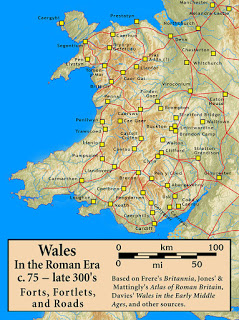
Map of Wales. By my work, CC BY-SA 3.0, via Wikimedia Commons

British Lying-in Hospital. Wellcome Collection, CC-BY 4.0.

Sunday, May 20, 2018

Editors Weekly Round-up, May 20, 2018

by the EHFA Editors

Every week, contributors to English Historical Fiction Authors post on various aspects of British history. Enjoy this week's round-up!

by Kim Rendfeld


by Helen Hollick


Sunday, February 25, 2018

Editors Weekly Round-up, February 25, 2018

by the EHFA Editors

Join us on the blog every week for wonderful posts on various aspects of British history. Enjoy our weekly round-up:

by Kim Rendfeld


Sunday, January 21, 2018

Editors Weekly Round-up, January 21, 2018

by the EHFA Editors

Every week, English Historical Fiction Authors brings readers posts on various aspects of British history. Enjoy this week's round up!

by Matt Lewis


by Kim Rendfeld


by Simon J. Cook
(an Editor's choice from the Archives)


Wednesday, January 17, 2018

Ælfflæd: An Abbess Who Was Always a Princess

By Kim Rendfeld


Ælfflæd’s life was decided in her father’s battle against the Mercians in 655. Northumbrian King Oswiu made a promise: if God granted him victory, he would give land and his 1-year-old daughter to the Church. Ælfflæd would never be a queen, but she wielded royal power.

When she was an infant, Ælfflæd was commended to the care of her mother’s kinswoman Hild, abbess of Hartlepool. Two years later, Hild founded the double monastery of Whitby with the donated land, and she and the toddler took up residence there.

Because of her father’s decision, Ælfflæd was no longer eligible for a political marriage. Probably not a bad thing in this family. Elder half-sister Alhflæd might have had something to do with the death of her husband, the son of the ruler Oswiu killed in battle. Her full sister, Osthryth, later married to a Mercian king, was murdered by Mercian nobles.

Ælfflæd grew up in Whitby, a center for learning and a cradle of bishops. While Ælfflæd was still a child, the abbey hosted the Synod of Whitby in 664 to decide whether the Church should practice Christianity like the Romans or the Celts. The two sides disagreed on many things such as the date for Easter and how tonsures should be shaped. Ælfflæd’s own parents were on different sides—her father favored the Celts while her mother supported the Romans. The Roman way prevailed.


At the abbey, Ælfflæd would become a teacher and was probably being groomed to succeed Hild. It was common for an abbey to pass from aunt to niece or another female relative. As an aristocrat, Ælfflæd was expected to lead.

After Oswiu died in 670, Ælfflæd’s widowed mother, Eanflæd, joined her daughter at Whitby. Eanflæd and Hild apparently were close in childhood, baptized together in 627. When Hild died in 680, Ælfflæd and Eanflæd jointly ruled the double monastery. Eanflæd died after 685, and Ælfflæd assumed sole rule until her death in 714.

And rule she did.

Ælfflæd might have played a role in one of Hild’s pupils becoming a bishop. She commissioned the Life of Gregory, a hagiography written by one of her monks or nuns, and oversaw the translation of her grandfather King Edwin’s relics to Whitby. She was influential enough to write to a continental abbess of behalf of religious women pilgrims. And she was a close friend of the holy man Cuthbert. One story has a linen girdle Cuthbert sent miraculously healing her of an illness that left her paralyzed. About 684, she consulted with him on a matter close to her heart.


She might have been concerned that her brother Ecgfrith, her father’s successor as king of Northumbria, had no sons. Ecgfrith’s first marriage with Etheldreda ended with her following her dream to be a nun, at the urging of Bishop Wilfrid (whom Hild also disliked), and her brother’s second marriage had yet to produce heirs. If we are to believe Cuthbert’s hagiography—and that’s a big if—Cuthbert reminded her that she had a half-brother born out of wedlock before her father’s first marriage. I have a feeling Ælfflæd knew all along and was testing Cuthbert’s loyalty.

Cuthbert was appointed a bishop of Lindisfarne soon after the meeting. Supposedly, he didn’t want the office. It would not surprise me if Ælfflæd played a role the decision.

Ecgfrith died in a disastrous battle in 685, and half-brother Aldfrith, a man in his 50s, ascended to the throne. Although she did not wear a crown, Ælfflæd was someone to reckon with when it came to making peace between Aldfrith and Wilfrid. The archbishop seeking the reconciliation wrote to both the king and his sister. Apparently brother and sister were close, and she had a streak of pragmatism.

When Aldfrith died at the end of his 20-year reign, he had an 8-year-old son, Osred. A rival named Eadwulf seized the throne but was expelled two months later, thanks to teamwork from Ælfflæd, Wilfrid, and a nobleman. Ælfflæd testified that Aldfrith wished for his successor to reconcile the royal family with Wilfrid, and Osred became Wilfrid’s adopted son and king. The next year, Wilfrid didn’t get the See of York as he wanted but he was allow to retain two churches and named a bishop.

With her combination of piety, education, and savvy, it is little wonder her contemporaries called her “a wise woman and learned in the Holy Scripture” and “ever the comforter and best counsellor of the whole kingdom.”

Public domain images via Wikimedia Commons.

Sources

“Ælfflæd (654–714)” by Alan Thacker, Oxford Dictionary of National Biography

“Osred I (696x8–716)” by David Rollason, Oxford Dictionary of National Biography

Bede’s Life of Cuthbert

Beda: A Journey to the Seven Kingdoms at the Time of Bede by Henrietta Leyser

The Earliest English Kings by D. P. Kirby

Double Agents: Women and Clerical Culture in Anglo-Saxon England, by Clare Lees, Gillian Overing

Motherhood and Mothering in Anglo-Saxon England by M. Dockray-Miller

Prayer and Thought in Monastic Tradition: Essays in Honour of Benedicta Ward SLG edited by Santha Bhattacharji, Dominic Mattos, Rowan Williams

A Handbook of Anglo-Saxon Studies, edited by Jacqueline Stodnick, Renée Trilling


~~~~~~~~~~

Kim Rendfeld has written two novels set in 8th century Europe. In The Cross and the Dragon, a Frankish noblewoman must contend with a jilted suitor and the fear of losing her husband (available on Amazon). In The Ashes of Heaven's Pillar, a Saxon peasant will fight for her children after losing everything else (available on Amazon). Her short story “Betrothed to the Red Dragon,” about Guinevere’s decision to marry Arthur, is set in early medieval Britain and available on Amazon.

Connect with Kim at on her website kimrendfeld.com, her blog, Outtakes of a Historical Novelist at kimrendfeld.wordpress.com, on Facebook at facebook.com/authorkimrendfeld, or follow her on Twitter at @kimrendfeld.


Friday, December 29, 2017

A Medley of Posts - Our Selection Box from 2017

Our Editorial Team is taking a Christmas break, but here are some posts from our regular contributors which were published earlier this year, so you have something to read while digesting all those left-over mince pies that you've decided to eat up!


and Maria Grace explained how to throw a Regency Ball


and in June, Kim Rendfeld explained about ancient coppicing


The EHFA team wish you all a very Happy Christmas, and we will return next week with new articles about all aspects of British History!


Sunday, November 26, 2017