Showing posts with label Early Medieval. Show all posts

Wednesday, November 28, 2018

Cynethryth, a Powerful Queen of the Mercians

By Kim Rendfeld


Queen Cynethryth had an exalted status during her husband’s reign and enjoyed seeing her son succeed his father, a rarity in 8th-century Mercia. Yet she would also see the dynasty she and her husband desired fall apart.

Alcuin, a scholar in Charlemagne’s court, described her as the controller of the royal household, a role akin to a treasurer and chief of staff for the kings—traditional for early medieval queens. She likely managed the properties of the many religious houses her husband founded and got papal permission to control.

Yet she had something unique: her image graces a coin minted during her husband’s reign. It was common for kings to assert their authority by having their image imprinted on currency. Cynethryth is the only known Anglo-Saxon queen to do so. Perhaps, she and her husband were inspired by the Byzantines, who minted coins with the image of Empress Mother Irene.

Cynethryth penny (public domain via Wikimedia Commons)


Cynethryth’s husband was Mercian King Offa. Although he had a reputation for ruthlessness, he knew how to play by the rules, at least when it served to his advantage. Unlike his predecessor, his kinsman Æthelbald (accused of fornication, including acts with nuns), Offa wanted the Church’s approval for his relationship with one woman—and only one woman—to ensure his offspring would inherit the crown. Offa knew that special woman, the mother of his children, should be queen of the Mercians, endowed with a royal status.

Offa apparently was a steadfast husband. He had no children born outside wedlock. True, the Church preached against sex outside marriage, but for men, it wasn’t a big deal. All a father had to do was acknowledge and support the child. Perhaps, Offa was faithful because he was fond of Cynethryth. He definitely wanted to limit the number of claimants to the throne and took the necessary, and maybe murderous, steps.

Presumably, Offa and Cynethryth wed for political reasons. We don’t know Cynethryth’s parents or her age. Her name is similar to 7th-century King Penda’s wife and daughters, so she likely came from a prestigious family. We don’t know exactly when the couple married, but her name starts to appear on charters around 770, where she identified herself as the mother of the heir to the throne, Ecgfrith.

Women in that era typically were teenagers when they married, some as young as 12 or 13. She might have been born a few years before Offa seized the throne. Æthelbald had been murdered in 757, and Offa drove away a rival shortly thereafter. Considering that Offa ruled for almost 40 years, he was probably a young man at the time. If he married around 769, he might have been in his 30s and thinking about the future.

By 770, Offa had imposed himself as overlord of Kent, taking advantage of a succession crisis there. Or, from his point of view, reasserting the Mercian rule his predecessor had established. He might have seen Cynethryth as the woman who shared his ambition for Mercia and would support his conquests. After their son’s birth, Offa continued expanding his territory into Sussex and the Hwicce.
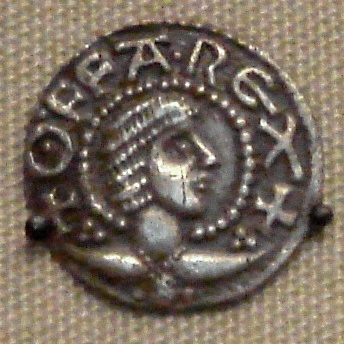
Coin with Offa's image (public domain via Wikimedia Commons)


Who Cynethryth was as a woman is hard to say. During her lifetime, the scholar Alcuin advised Ecgfrith to learn piety from his mother. After Cynethryth’s death—long after—she is accused of being as ruthless as her husband in ordering the execution of a visiting East Anglian king. In reality, her husband might have been responsible, for political reasons. But then again, Cynethryth very well could have supported her husband. Medieval women were ambitious.

In addition to the son, Offa and Cynethryth had three daughters, Æthelburh, Eadburh, and Ælfflæd. The couple put their daughters in positions of influence. Æthelburh was an abbess who corresponded with Alcuin. Eadburh wed Beorhtric, king of Wessex. The marriage solidified Beorhtric’s claim to his throne, and the father- and son-in-law drove out Ecgberht, son of Kentish King Ealhmund and a rival for the West Saxon crown. Ælfflæd married Northumbrian King Æthelred I.

In 787, Ecgfrith was crowned co-ruler with his father, a move that ensured his succession. After Offa died on July 29, 796, Cynethryth remained at court. Her son would die before the year was over. The cause of his death remain unknown, but I suspect it was not natural causes. Her son-in-law Æthelred was murdered that year, leaving Ælfflæd a widow. We don’t know whether Cynethryth lived to see Eadburh become a widow when her husband (likely) died in battle in 802 (likely) at Ecgberht’s hand. (Decades later, Alfred the Great’s biographer, Asser, accused Eadburh of accidentally poisoning her husband while trying to kill someone else. His account is highly suspicious for many reasons, including that Alfred was Ecgberht’s grandson.)

After Ecgfrith died, Cynethryth took the veil and became abbess of Cookham (in Berkshire), one of the religious houses her husband founded and bequeathed to her. Perhaps a sign of the couple’s affection is where Cynethryth chose to retire. Cookham was close to Bedford, where Offa was buried.
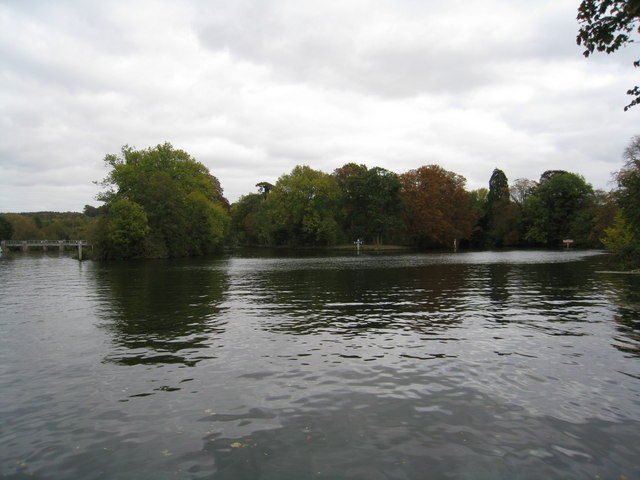
The Thames at Cookham (by Sebastian Ballard,
  CC BY-SA 2.0 via Wikimedia Commons)


Sources

Oxford National Biography
“Offa” by S.E. Kelly
“Cynethryth” by S.E. Kelly

“Political Women in Mercia” by Pauline Stafford, Mercia: An Anglo-Saxon Kingdom in Europe

Carolingian Connections: Anglo-Saxon England and Carolingian Francia, c. 750–870 by Joanna Story
~~~~~~~~~~

In Kim Rendfeld's Queen of the Darkest Hour, Queen Fastrada must stop a conspiracy before it destroys everyone and everything she loves. The book is available on Amazon, iBooks, Barnes & NobleKobo, and Smashwords.

Kim has written two other books set in 8th century Francia. In The Cross and the Dragon, a Frankish noblewoman must contend with a jilted suitor and the fear of losing her husband (available on Amazon). In The Ashes of Heaven's Pillar, a Saxon peasant will fight for her children after losing everything else (available on Amazon). Kim's short story “Betrothed to the Red Dragon,” about Guinevere’s decision to marry Arthur, is set in early medieval Britain and available on Amazon.

Connect with Kim at on her website kimrendfeld.com, her blog, Outtakes of a Historical Novelist at kimrendfeld.wordpress.com, on Facebook at facebook.com/authorkimrendfeld, or follow her on Twitter at @kimrendfeld.


Wednesday, July 25, 2018

Why Alcuin Joined Charlemagne’s Court

By Kim Rendfeld

In 781, Alcuin had a choice. Should he accept an offer from Frankish King Charles (Charlemagne) to teach in the brand new Palace School or should he continue serving as master of the Cathedral School of York as he had for 15 years?

At the time, the Northumbrian was about 46. (His exact birthdate is unknown; the estimate is 735, which is good enough for me.) He had been with the York school since he was a child, placed there by his noble parents. York was a prestigious place, second only to Canterbury. York’s archbishop, Ecgberht, was King Eadberht’s brother.

Alcuin proved to be an apt pupil and said the school taught him “with tenderness of a mother’s love” and “a fatherly chastisement.” He attracted the attention of Ælbert, the master of the school, and Ecgberht.

In the morning, Ecgberht taught Latin literature, Greek, Roman law, astronomy, music, and theology such as the New Testament. Ælbert’s subjects were rhetoric, grammar, jurisprudence, poetry, astronomy, and the Old Testament. The students attended Mass at midday, followed by dinner and recreation, which included discussions and debates of the morning’s lesson. At vespers, students knelt for blessing.

Alcuin also might have grown up hearing about missionaries such as Willibrord and Wigbert, who tried to convert pagan peoples on the Continent. He likely knew about Boniface and the nuns and priests who followed him across the channel to strengthen Christianity. Alcuin would have been 19 when Boniface was martyred.

All this must have instilled a deep faith and devotion to scholarship in him. Later he would write, “My master Ecgberht used to tell me that the arts were discovered by the wisest of men, and it would be a deep and lasting shame if we allowed them to perish for want of zeal. But many are so faint-hearted as not care about knowing the reason for such things.”

Public domain,
via Wikimedia Commons

When Alcuin was 20, Ecgberht sent him to the Continent to acquire books to enrich York’s library, an expensive and hazardous mission. Alcuin risked his ship sinking, bandits on the road, being robbed by hosts, and sudden turns in the weather. Books were precious. Made of sheepskin, a large tome could require a whole herd. They were copied by hand, and those beautiful illuminations and ornate covers added to the price.

Yet York had a collection to boast about. It included work by Greeks and Romans (Aristotle, Virgil, Cicero, and Lucan), Church fathers (Jerome, Ambrose, Hilary, Augustine, Leo, and Gregory the Great), historians (Bede and Aldhelm), and grammarians (Donatus, Probus, and Phocas).

We don’t know how long Alcuin’s first errand for the archbishop lasted, but it likely took months. At home, the political situation was unstable. Alcuin thought King Eadberht, the archbishop’s brother, had a prosperous, harmonious, and militarily successful reign. But in 756, when Alcuin was 21, Eadberht suffered a disastrous defeat. Two years later, the king received the tonsure and joined his brother at York. The king’s successor, his son Oswulf, was murdered a year later.

In 766—and two more Northumbrian kings later—Ecgberht died. Ælbert succeeded the archbishop, and Alcuin, newly ordained a deacon, became master of York’s school. Alcuin must have been a good teacher. He attracted students from all over Britain and abroad, including Frisia and Ireland.

Politics remained volatile. In 774, another king seized the crown after his predecessor was deposed and exiled. Four years later, Ælbert resigned his archbishopric to retire, and Alcuin’s friend Eanbald succeeded him.

© Hubertl / Wikimedia Commons /
  CC BY-SA 4.0

In 779, yet another king ascended to the Northumbrian throne: Ælfwald, son of the murdered Oswulf and grandson of Eadberht. Although Alcuin admired Eadberht, he didn’t think much of the current king: “From the days of King Ælfwald fornications, adulteries, and incest have flooded the land, so that these sins have been committed without any shame and even with the handmaids of God.” (Ælfwald reign ended with his murder in 788.)

Ælbert died in 780. Soon after, Eanbald sent Alcuin to Rome to fetch a pallium (a woolen band with pendants that symbolize authority). Alcuin was on his way home when he met the king of the Franks. What was running through Alcuin’s mind when Charles asked him to come to the Frankish court?

Here is my speculation. He might have craved stability on the political front. In the past 10 years, Northumbria had three kings, and the current one was leading his realm into immorality. Charles had ruled the Franks alone since 771. Twice divorced, the king of the Franks had his own shortcomings, but he was a steadfast husband to his current wife. More important, he was an ally of the pope and providing missionaries like Alcuin’s friend Willehad with the military support for they needed to bring Christianity to pagans. In the Frankish court, Alcuin could interact with scholars from Italy, Francia, Ireland, and Hispania. He would still teach. His students would be the royal family and their close friends.

The prospect of leaving York might have been nerve-wracking, yet the opportunity to do something different might have excited him. Alcuin returned to York to get his superior’s permission to join the Palace School in Francia. With that choice, he would help build the intellectual foundation for Charles’s empire.

Sources

Alcuin: His Life and His Work, by C.J.B. Gaskoin

Alcuin, by E.M. Wilmot-Buxton

Alcuin” by James Burns, The Catholic Encyclopedia.

The Oxford Companion to British History (2 ed.), edited by Robert Crowcroft and John Cannon

Oxford Dictionary of National Biography

~~~~~~~~~~

Alcuin appears in Kim Rendfelds third novelQueen of the Darkest Hour, which will be launched August 7. In Kim's version of events, Queen Fastrada must stop a conspiracy before it destroys everyone and everything she loves. The ebook is available for preorder on AmazoniBooksBarnes & Noble, and Kobo.

Kim has written two other stories set in 8th century Francia. In The Cross and the Dragon, a Frankish noblewoman must contend with a jilted suitor and the fear of losing her husband (available on Amazon). In The Ashes of Heaven's Pillar, a Saxon peasant will fight for her children after losing everything else (available on Amazon). Kim's short story “Betrothed to the Red Dragon,” about Guinevere’s decision to marry Arthur, is set in early medieval Britain and available on Amazon.

Connect with Kim at on her website kimrendfeld.com, her blog, Outtakes of a Historical Novelist at kimrendfeld.wordpress.com, on Facebook at facebook.com/authorkimrendfeld, or follow her on Twitter at @kimrendfeld.


Wednesday, March 21, 2018

Cwenthryth: A Maligned Royal Abbess

By Kim Rendfeld

The story of Cynehelm and Cwenthryth has envy, sibling rivalry, lust for power, murder, and divine justice. Too bad it’s just not true.

According to an 11th-century passio (account of martyrdom), Mercian King Cenwulf died in 819, and his realm passed to his 7-year-old son, Cynehelm (also spelled Kenelm). Lusting for power, Cwenthryth persuaded Cynehelm’s tutor to decapitate the child while the young king was hunting. Cwenthryth got the crown, but a dove miraculously delivered a parchment to the pope, telling him where Cynehelm was buried. The pope sent a delegation, led by Wulfred, archbishop of Canterbury, to recover the body and have it enshrined at Winchcombe. Apparently, Cwenthryth was not satisfied with her brother’s death; she wanted to curse him. So she read the psalter backward as the procession passed by her window. Her eyes, literally, dropped to the page, and she soon died in disgrace.

Any resemblance between this tale and actual history is purely coincidental.

Sculpture of St. Kenelm (photo by
Sjukmidlands,  CC BY-SA 4.0, via
Wikimedia Commons)


The real Cwenthryth was the daughter of King Cenwulf, who reigned from 796 to 821. She did witness a charter as the king’s daughter in 811, the same year Wulfred dedicated a church at Winchcombe.

Cenwulf, who claimed descent from Penda’s brother, had succeeded Offa’s son Ecgfrith, whose death might not have been from natural causes. Offa had a reputation for ruthlessness (Alcuin said Ecgfrith paid for his father’s sins). But Cenwulf had his moments. Early in his reign, he suppressed a rebellion in Kent and had its leader blinded and his hands chopped off. He released his crippled rival to Winchcombe, an abbey Cenwulf had founded in 798 and a center of power.

If Cynehelm was Cenwulf’s son—it is possible with such similar names—Cynehelm preceded his father in death. When Cenwulf died in 821 (two years after the legend says he did), the king did not have a male heir, and his brother Coelwulf ascended to the throne.

Coins with Cenwulf's image (drawing by DrKay,
public domain, via Wikimedia Commons)


If she had a living brother, Cwenthryth likely would have wanted him remain alive and influence him. What happened to Cwenthryth raises a more nuanced question: Why did she become an abbess? As a late king’s daughter and current king’s niece, and one with ties to a dynasty, she would have been a desirable bride. Marriage was a way for noble families to forge alliances. Yet kings sometimes gave daughters to the Church as a thanksgiving for a victory in battle. Did Cwenthryth herself feel pulled to the religious life? Or did she simply not want a husband ordering her around?

As the abbess of Winchcombe, as well as Reculver and Minster-in-Thanet in Kent, she led communities and controlled land. And she was determined to keep control of those properties.

When her father died, Cwenthyth inherited a years-long dispute between Cenwulf and Wulfred (who happens to be one of the good guys in the legend). At the center was who controlled the Kentish churches. Wulfred had reached an agreement with Cenwulf shortly before the monarch died and expected those properties.

Wulfred was a powerful churchman, having anointed Cwenthryth’s uncle Coelwulf as king, but Cwenthryth did not give in to the archbishop’s demand for rent or her obedience.

Unfortunately for Cwenthryth, Coelwulf had a short reign. He was deposed in 823. Perhaps Wulfred saw an opportunity in the new king, Beornwulf. But he underestimated Cwenthyth.

Finally, Wulfred filed a lawsuit against her in 825, demanding those two church properties in Kent and submission from Cwenthryth. Beornwulf was less sympathetic to Cwenthryth and ruled against her, but before she surrendered the Kentish lands, she managed to drag out the process until 827, a year after Beornwulf was killed by East Angles.

Cwenthryth disappears from the historical record after 827. She likely remained abbess at Winchcombe for the rest of her life, and the abbey might have passed to her cousin Ælfflæd, daughter of Coelwulf.

Photo by Philip Halling, CC BY-SA 2.0,
via Wikimedia Commons


So why defame Cwenthryth? Her defiance to a male authority did not make her an ideal woman in medieval eyes, but she wasn’t a murderer.

Like some historical fiction such as The Song of Roland, the passio might have been more about the times it was written in. The 11th century story might reflect the culture of England right before the Norman Conquest. It is similar to Edward the Martyr—a young king killed by treachery of female relative.

Winchcombe, where Cynehelm is interred, might have become a center for pilgrims who wished to pray before a martyr’s relics. Its cathedral was rededicated twice between 970 and 1070. The first was for an Anglo-Saxon revival; the second, to introduce the Norman church.

A religious story like a hagiography or a passio is meant to be a tale of faith rather than a literal historical record. In this case, it might be the message of divine punishment and spiritual blindness manifesting as a physical one.

Sources

Oxford Dictionary of National Biography, including
“Cenwulf” by M.K. Lawson
“Cwenthryth” by S.E. Kelly
“Beornwulf” by S.E. Kelly
“Cynehelm [St Cynehelm, Kenelm]” by David Rollason

Wicked Queens and Martyred Kings – the 819 Murder of S. Kenelm of Mercia,” The Postgrad Chronicles
~~~~~~~~~~

Kim Rendfeld has written two novels set in 8th century Europe, and a third, Queen of the Darkest Hour, will be published this summer. In The Cross and the Dragon, a Frankish noblewoman must contend with a jilted suitor and the fear of losing her husband (available on Amazon). In The Ashes of Heaven's Pillar, a Saxon peasant will fight for her children after losing everything else (available on Amazon). Her short story “Betrothed to the Red Dragon,” about Guinevere’s decision to marry Arthur, is set in early medieval Britain and available on Amazon.

Connect with Kim at on her website kimrendfeld.com, her blog, Outtakes of a Historical Novelist at kimrendfeld.wordpress.com, on Facebook at facebook.com/authorkimrendfeld, or follow her on Twitter at @kimrendfeld.

Tuesday, May 30, 2017

Did the Saints Part over Medieval Politics?

By Kim Rendfeld


The official reason Saints Gall and Columbanus parted in the early seventh century is that Gall was too ill to accompany his longtime friend to Italy. But was that the real cause? Did they instead have a falling out over politics?

The pair went back decades. Gall and Columbanus got their education at Bangor, Ireland. Columbanus was born around 543. Gall was younger, born in Ireland in the latter half of the sixth century. His wealthy parents dedicated him to the Church as an infant, which probably means he was not their first child. At Bangor, Gall learned grammar, poetry, and Scripture, and was ordained a priest.

You might remember Columbanus as the young man who stepped over his weeping mother to leave home and pursue a life in the Church. He had forsaken all women, including her. That should be enough of a clue that he wasn’t the easiest guy to be around.

Still, he had followers. When Columbanus felt called to be a missionary to the Continent, Gall was one of his 12 companions. In early medieval times, travel was expensive, hazardous, and miserable, and the missionaries had no idea how the folk at their destination would receive them.


They landed in Gaul in 585, where they would have stood out. They spoke a different language, and even their tonsures varied from the Roman ones. Urged by the king of Austrasia to stay in his realm where he could protect them, Columbanus founded a monastery in castle ruins at Anegray.

The brothers lived an austere lifestyle. They mortified their flesh and practiced what a 7th-century monk called “extreme fasting,” eating only bark and herbs and the occasional food brought to them as charity. If we are to believe Columbanus’s hagiography, they received visitors seeking miraculous healing.

After a while, more monks joined the order, and Columbanus sought better place for his monastery. He chose Luxeuil, a site formerly sacred to pagans, a common practice. The abbey flourished for many years, but Columbanus got in trouble with Theoderic, the king of Burgundy, and Brunhilda, the monarch’s grandmother who ruled with him. Theoderic had sons born out of wedlock, and Columbanus refused Brunhilda’s request to bless them as heirs to the throne. He thought the king should get married and have children with a wife, but a queen meant less power for Brunhilda.

Theoderic was smart enough not to make Columbus a martyr, so he settled for the next best thing: exiling the troublesome missionary. Gall accompanied his leader on the heartbreaking journey in 610. They traveled along the Rhine to Lake Constance and settled in a wilderness near Bregenz.

And they began preaching again. They weren’t always popular. Apparently, people don’t take kindly to strangers breaking their sacred statues and throwing them in the lake. They also attracted the enmity of the governor, Gunzo.

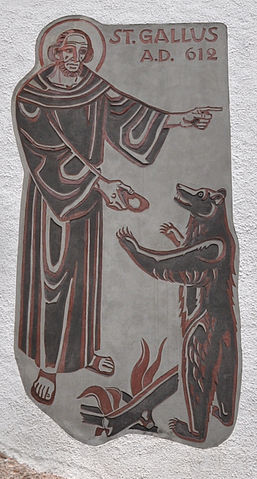
Still, Gall adjusted to life in the area. He enjoyed fishing on the lake and knew the local language. Legend has Gall, like Columbanus, able to command bears. The stories for Gall vary. One has him rebuking the beast in the forest. Awestruck, the bear brought firewood for Gall and his companions, and everyone warmed themselves by the fire.


A year later, Columbanus left for Italy. Gall stayed behind, apparently too ill for a journey. But even when he got better, he did not follow Columbanus. As arduous as travel was, it seems like Gall could have found a way to join his friend. They had faced danger and hardship before.

Perhaps, they did have a falling out, and it had something to do with Gall’s assistance to Gunzo’s ailing daughter Fridiburga. Betrothed to Sigibert, one of Theoderic’s illegitimate sons, the young woman was believed to be sickened by a demon. Sigibert sent two bishops to Überlingen to heal her, to no avail. Gall succeeded where they had failed and cured her. As a reward, Sigibert gave the Irishman royal land near Arbon for him to pursue a religious life.

Was Columbanus angry Gall had helped the enemy? Was Gall tempted by the offer of land? Or was he moved by compassion, believing a young woman’s soul was at stake? After all, why had he ventured to the Continent if not to save souls?

Regardless of Gall’s motivation, the gift of land made him a leader. The monastery had humble beginnings. He built a small, windowless stone hut—a cell for prayer—and an oratory. Soon 12 monks joined him, and they, too, wanted cells.

Gall preached, continuing his missionary work, and kept to his simple life. Apparently, he didn’t want power. When the see of Constance became vacant, the clergy—impressed with his learning and piety—unanimously chose him. Gall refused, saying that electing a stranger to lead the bishopric went against Church law.

His decision was a sacrifice, considering that an early medieval bishop or abbot could live an aristocratic lifestyle, form alliances with the nobility, and wield influence. Perhaps, Gall wanted nothing to do with politics. Or maybe he feared that luxury would corrupt him and endanger his soul.

In 625, Columbanus’s successor at the abbey at Luxeuil died, and Gall was asked to be its abbot. He again had a chance to hold power and again rejected it. At that point he might have been in his 70s. Did old age deter him? Or did he prize his humble life above everything?

Gall would live on for a while. He died Oct. 16, 646, and left behind a legacy. The abbey that bears his name went on to become a center for scholarship in Europe.

Images are public domain, via Wikimedia Commons.

Sources

"St. Gall" by Albert Poncelot, The Catholic Encyclopedia

The Lives of the Saints, Rev. Alban Butler (1711–73). Volume X: October

Who Was St Gall” St. Gall’s Church, Carnalea, in Bangor County Down in Northern Ireland

Columbanus: Poet, Preacher, Statesman, Saint by Carol Richards

Medieval Sourcebook: The Life of St. Columban, by the Monk Jonas

Columba Edmonds, "St. Columbanus," The Catholic Encyclopedia

"Silverware in Early Medieval Gift Exchange: Imitatio Imperii and Object of Memory," by Matthias Hardt, Franks and Alamanni in the Merovingian Period: An Ethnographic Perspective edited by Ian Wood

~~~~~~~~~~

Kim Rendfeld has written two novels set in early medieval times and is working on a third.

You can order The Ashes of Heaven's Pillar, about a Saxon peasant who will fight for her children after losing everything else, at AmazonKoboBarnes & Noble, and iTunes. Kim's first novel, The Cross and the Dragon, in which a Frankish noblewoman must contend with a jilted suitor and the fear of losing her husband, is available at Amazon, Kobo, iTunes, Barnes & Noble, Smashwords, CreateSpace, and other vendors.

Connect with Kim at on her website kimrendfeld.com, her blog, Outtakes of a Historical Novelist at kimrendfeld.wordpress.com, on Facebook at facebook.com/authorkimrendfeld, or follow her on Twitter at @kimrendfeld.

Wednesday, April 19, 2017

Yes, the Anglo-Saxon Spring Goddess Eostre Did Exist

By Kim Rendfeld


The Venerable Bede probably did not realize he would create a controversy for centuries when he wrote about the months of the year. In De Ratione Temporum (The Reckoning of Time), he mentioned the English used to call April Eosturmonath.

“Eosturmonath has a name which is now translated ‘Paschal month’, and which was once called after a goddess of theirs named Eostre, in whose honour feasts were celebrated in that month. Now they designate that Paschal season by her name, calling the joys of the new rite by the time-honoured name of the old observance.” (Translated by Faith Wallis, Liverpool University Press, 1988)

Eostre might have been a goddess of spring. Or of the dawn. Or both. Worshipers might have lit bonfires, drawn healing waters during her festival, and have maidens wearing white. (Tales of Eostre, also known as Ostara, transforming a wounded bird into an egg-laying rabbit are from the 19th century, apparently from Germans influenced by the Romantic Nationalist movement.)

The problem is, Bede’s mention of Eostre is the only one in historical records. Even scholars have debated whether she existed among the deities pagans worshiped. Some argue Bede got it wrong.

Bede (672/3-735), a monk at Wearmouth-Jarrow in Northumbria, penned the famous Historia Ecclesiastica (Ecclesiastical History of the English Nation) about the English peoples’ conversion to Christianity in the seventh century. Anyone who has studied the Middle Ages will tell you the writers of that time were far from objective observers and would have been less than meticulous about how they portrayed pagan beliefs, especially if the followers of those religions officially converted about 100 years before.

Despite the lack of evidence, it is possible Eostre was real to early medieval pagans in today’s England and Germany. There is a dearth of information about anything that early medieval pagans believed and how they worshiped, much to the frustration of a novelist trying to depict pagan characters in eighth-century Saxony. The faithful didn’t write their mythology down. In fact, the Continental Saxons had no written language as we know it, and among cultures that used pens and parchment, only a select few could read. Even fewer could write—that task was often left to clerks employed by aristocrats, the only people who could afford book. So, there might be a lot of god, goddesses, and other supernatural beings that we’ll never know about.

"Ostara" (1901) by Johannes Gehrts


Paganism Not Completely Dead

A lot of what we do know about Saxon mythology comes to us in remnants such as poems, folk tales, rituals, and what their literate enemies had to say. On top of that, the eighth-century Church made every effort to obliterate a religion it believed to be devil worship when Charlemagne conquered territory in Saxony and Avaria and used increasingly harsh measures to get the indigenous peoples to convert.

Even after a populace accepted baptism, pagan practices did not vanish. In fact, they continued for generations. The Church officially prohibited what it called sorcery, but the faithful, including the clergy, still turned to white magic—vestiges of paganism. It was common for Christians to wear amulets beside their crosses. A priest might employ someone to interpret his dreams. A manuscript copied by a monk might have a magical square with the letters of a patient’s name and the number of the day on which they fell ill. The epic poem Beowulf has both Christian and pagan elements. The monsters, Grendel and his mother, are descendants of Cain, but human warriors wear helmets with boar figures, a symbol of a pagan god.

Keep in mind that the practice of a religion differed from region to region. Even Christian rites varied with geography. So it would not be a surprise if Eostre was revered in one place but ignored in another.

In arguing for Eostre’s existence, Jacob Grimm, one of the Grimm brothers who collected German folk tales, takes a look at the language. The holy day to celebrate Jesus’s resurrection is Easter in English and Ostern in German. Other languages, including French, Danish, Norwegian, Swedish, Icelandic, and even Latin, are a variation on Pasch. Easter comes to us through Old English and is akin to Old High German. Pasch originates in pesah, the Hebrew word for Passover. Eostre is also similar to the Austri, mentioned in the Norse Edda. The gender is different, but both are spirits of light.

"Frigg as Ostara" (1882)


If You Can’t Beat Them ...

Like other pagan practices, the rites associated with Eostre were probably so much a part of the culture that rather than ban them, Church leaders used them to celebrate a holy day occurring about the same time. The reason would be to celebrate Jesus conquering sin and death rather than the arrival of a goddess. It wouldn’t be the first time a seasonal celebration was adapted to a new religion. And it was a happier and more peaceful way to get converts to accept their new faith.

In other words, I conclude that Bede got it right. As Grimm states, Eostre “seems therefore to have been the divinity of the radiant dawn, of upspringing light, a spectacle that brings joy and blessing, whose meaning could be easily adapted to the resurrection-day of the Christians' God.”

At this time of year, life returns. Birds are singing again, flowers bloom, green shoots emerge from the earth, and gardeners can start planting crops. And isn’t that a cause for celebration, no matter what religion?

Sources

Bede, on ‘Eostre’

Ostara’s Home Page

Jacob Grimm’s Teutonic Mythology, Volume 1, pp. 288-291

“The Goddess Eostre: Bede’s Text and Contemporary Pagan Tradition(s)” by Carole Cusack, The Pomegranate 9.1 (2007) 22-40

Pierre Riché’s Daily Life in the World of Charlemagne, translated by Jo Ann McNamara

Ostara and the Hare: Not Ancient, but Not As Modern As Some Skeptics ThinkFolklife Today by Stephen Winick

Merriam-Webster

~~~~~~~~~~

Kim Rendfeld researched the pagan religion of eighth-century Continental Saxons as best she could while writing her second novel, The Ashes of Heaven's Pillar, about a Saxon peasant who will fight for her children after losing everything else. The book is available at AmazonKoboBarnes & NobleiTunesCreateSpaceSmashwords, and other vendors.

Kim's first novel, The Cross and the Dragon, in which a Frankish noblewoman must contend with a jilted suitor and the fear of losing her husband, is available at Amazon, Kobo, iTunes, Barnes & Noble, Smashwords, CreateSpace, and other vendors.

Kim is working on her third novel, Queen of the Darkest Hour, about Charlemagne's influential fourth wife, Fastrada, and his rebellious eldest son, Pepin.
Connect with Kim at her website kimrendfeld.com, her blog, Outtakes of a Historical Novelist at kimrendfeld.wordpress.com, on Facebook at facebook.com/authorkimrendfeld, or follow her on Twitter at @kimrendfeld.

Wednesday, March 29, 2017

Horse Heredity in the Dark Ages

By Kim Rendfeld

The early medieval warhorse had two jobs. The first was to charge into battle with a fully armed and armored warrior on his back. The second was to beget foals as strong and brave as he was.

He—they were all stallions—was shorter than today’s thoroughbred. The modern thoroughbred can be 5-foot-1 to 5-foot-8 at the withers. A Germanic early medieval warhorse was about 4-foot-5, and a Roman military horse could be 4-foot-9 to 5-foot-3. (Yes, my horse friends, I know the proper unit is hands, and medieval people likely used that measurement or something similar. But like most 21st century Americans, I think in terms of feet and inches.)

All horses were expensive; they could cost three to five times more than a bull and as much as 90 times more than a ram. But the warhorse, a predecessor of the famous destrier, was the most costly of all livestock, both to purchase and to maintain. As was the case with all grazing animals, land had to be set aside for pasture rather than crops, and if we are to believe written sources, horses required a lot more oats in winter than oxen did.

Horses were critical to the military and had a variety of functions, carrying soldiers and baggage and pulling carts with supplies. The only time a warhorse was put to work was in combat (well, maybe he was used in the hunt, too).

This meant warhorses belonged only to the wealthy, who could afford to set aside land and have livestock work for such limited times. While medieval animals were valued more for their work than companionship as pets, warriors did get attached to their steeds, akin to fellow soldiers. The men relied warhorses not to freeze or bolt when they heard clashing swords and screams or saw an enemy attacking them. A horse giving in to fear endangered both man and beast.


Early Signs of Bravery

In other words, there was no room for cowardice—for anyone. Medieval people believed gelding would make a horse timid. The folk also thought that male horses were solely responsible for passing desirable characteristics, like courage and pride, to their offspring. As for the females, they just needed to have the broad quarters and abdomens good for bearing young, maybe be good-looking, and have attained the right age, at least 3 years. Some writers recommended mares stop breeding at age 10 because her foals would be lazy, while others thought she could reproduce throughout her life.

Mares outnumbered stallions, anywhere from 10 to 30, so not all colts grew up to reproduce. The rate of gelding varied region by region, but the decision of whether a colt would later become a stallion or a gelding was made when the animals were young, likely before they were 3. (Male horses were ages 3 to 4 1/2 before being allowed to mate. The belief was that younger parents had smaller and weaker young.)

Because bravery was a desired trait, owners would watch for signs. Those included a colt running in the front of the herd, staying calm when seeing or hearing something unfamiliar, being more playful than other horses his age, and when racing, leaping over ditches and crossing bridges without a fuss. Easily spooked colts would have an appointment with the knife in the fall, considered the perfect time for the procedure.


In Spring, a Stallion’s Fancy Turns To ...

At this time of year, between the vernal equinox and the summer solstice, a stallion would be fulfilling his more pleasant responsibility and become reacquainted with his harem. He didn’t have access to his mares at any other time. He was fattened, perhaps on barley and vetch, before and during the spring because his duty was exhausting. A strong, well-fed stallion was believed to sire strong foals, but he had a deadline.

Breeding after summer solstice was believed to result in weaker foals. Yet a real practicality came into account. A mare’s pregnancy lasts 11 to 12 months. Her caretakers would prefer her to deliver when the grass was growing so that both mother and baby would have fodder.

Conceiving foals might take more than one try. The mare was thought to be pregnant when she no longer showed interest in the stud.

Not all the mares in the herd would be available to the stallion. Some of them would have recently given birth. Nursing foals took six months, and the mothers would not be bred for another six months after that. The waiting period might have been to time optimal conception and the availability of fodder. Yet the owners of the herd would want to keep their animals healthy, if more for practical reasons than sentimental ones. They needed to protect their investment.

The inspiration for this post is a tragedy that happened while Charlemagne was at war against the Avars in 791. In his half of the army, a pestilence killed nine-tenths of the horses, which from a military perspective is devastating. Think of it as nine-tenths of the vehicles being wiped out. Even if you have more tanks in production, that kind of a loss is still a huge blow, and in this case, you can't speed up production.

This occurred in the late fall, and more horses would be on the way. Some mares in the herd would be in foal, and there would be some months-old foals along with maturing colts and fillies. But none of that was enough to come anywhere near replacing a loss of this magnitude. A normal year would have some deaths from illness or age among the herd, and aristocrats would expect to lose some horses in battle. But not this many.

First, stallion and mares would need to wait until spring to breed. On top of the 11-to-12-month pregnancy, it would take another two years for horses to be ready for someone to ride them.

Replenishing the herd was a slow process indeed, and in the meantime, the army was crippled.

All images public domain via Wikimedia Commons.

Source: Horse Breeding in the Medieval World by Charles Gladitz

~~~~~~~~~~

Kim Rendfeld learned about the mass loss of horses while researching her work in progress, Queen of the Darkest Hour, a novel about Charlemagne's influential fourth wife, Fastrada, and his rebellious eldest son, Pepin. She has written two novels set in early medieval times.

You can order The Ashes of Heaven's Pillar, about a Saxon peasant who will fight for her children after losing everything else, at Amazon, Kobo, Barnes & Noble, iTunes, CreateSpace, Smashwords, and other vendors.

Kim's first novel, The Cross and the Dragon, in which a Frankish noblewoman must contend with a jilted suitor and the fear of losing her husband, is available at Amazon, Kobo, iTunes, Barnes & Noble, Smashwords, CreateSpace, and other vendors.

Connect with Kim at on her website kimrendfeld.com, her blog, Outtakes of a Historical Novelist at kimrendfeld.wordpress.com, on Facebook at facebook.com/authorkimrendfeld, or follow her on Twitter at @kimrendfeld.

Wednesday, November 23, 2016

Did Lull Advise Charlemagne to Get Tough on Pagans?

By Kim Rendfeld


What was it like for Saint Lull in 785, when he got the news Continental Saxon ruler Widukind, responsible for church burnings and mass murder, had agreed to accept baptism, with Frankish King Charles as his godfather?

Lull was between age 75 and 80. A disciple of the missionary Saint Boniface, the English-born churchman had worked for 40 years to restore the faith where Christians had lapsed and wanted to spread it to pagan lands. Lull might have recently retired to the abbey at Hersfeld. Before his death on Oct. 16, 786, he composed a few verses celebrating Charles’s conquest.

Perhaps he did more than watch from the sidelines. Lull was an advisor to Charles (Charlemagne), and historian Richard A. Fletcher suggested Lull might have encouraged the Frankish monarch to get tough with recalcitrant pagans.

It is possible for several reasons. Boniface, who had anointed Charles’s father as king of the Franks, had chosen his close friend Lull to be his successor as the archbishop of Mainz. Lull had joined Boniface in Germany after a pilgrimage to Rome, and rose through the clerical ranks. He was a deacon in 745, priest in 751, and bishop in 752. His ascendance in 753 to an influential position in a city that was almost 800 years old was bittersweet. In instructing Lull to keep building churches, Boniface told his disciple he was nearing the end of his life. Lull wept at this foretelling.

An advocate for strict discipline and the authority of bishops over all monasteries and convents, Lull might not have been the easiest guy to get along with, as Saint Sturm, abbot of Fulda, would attest. After Boniface’s martyrdom in 754, they fought over where the relics would have their final resting place, and Lull retaliated when he lost. (See the link below for more on that.)

Statue of Saint Lullus in Bad Hersfeld
(photo  by 2micha GFDL or CC-BY-SA-3.0,
 
via Wikimedia Commons)

The King Needs Allies in the Right Places

Charles was only a child when this tiff happened, and history doesn’t record what he thought about it. Twelve years later, a dying Pepin split his kingdom between his two sons, Charles and Carloman. The brothers didn’t get along, and Charles needed allies. Lull was a good choice. His diocese was near Carloman’s realm, and Charles would have liked that Lull, educated at monasteries in Malmesbury and Nhutscelle, was a learned man. In fact, Lull was constantly asking for more books.

Charles also made friends with Sturm, who had not forgotten his earlier dispute with Lull. I suspect the feeling was mutual. Yet the two clerics might have agreed on one thing: protect their abbeys, along with Fritzlar, from the pagan Saxons. The monastery at Hersfeld, which Lull had founded with Charles's support around the time Charles became king, was less than a week’s journey from the Saxon fortress Eresburg. Sturm’s abbey at Fulda was a two-day journey after that.

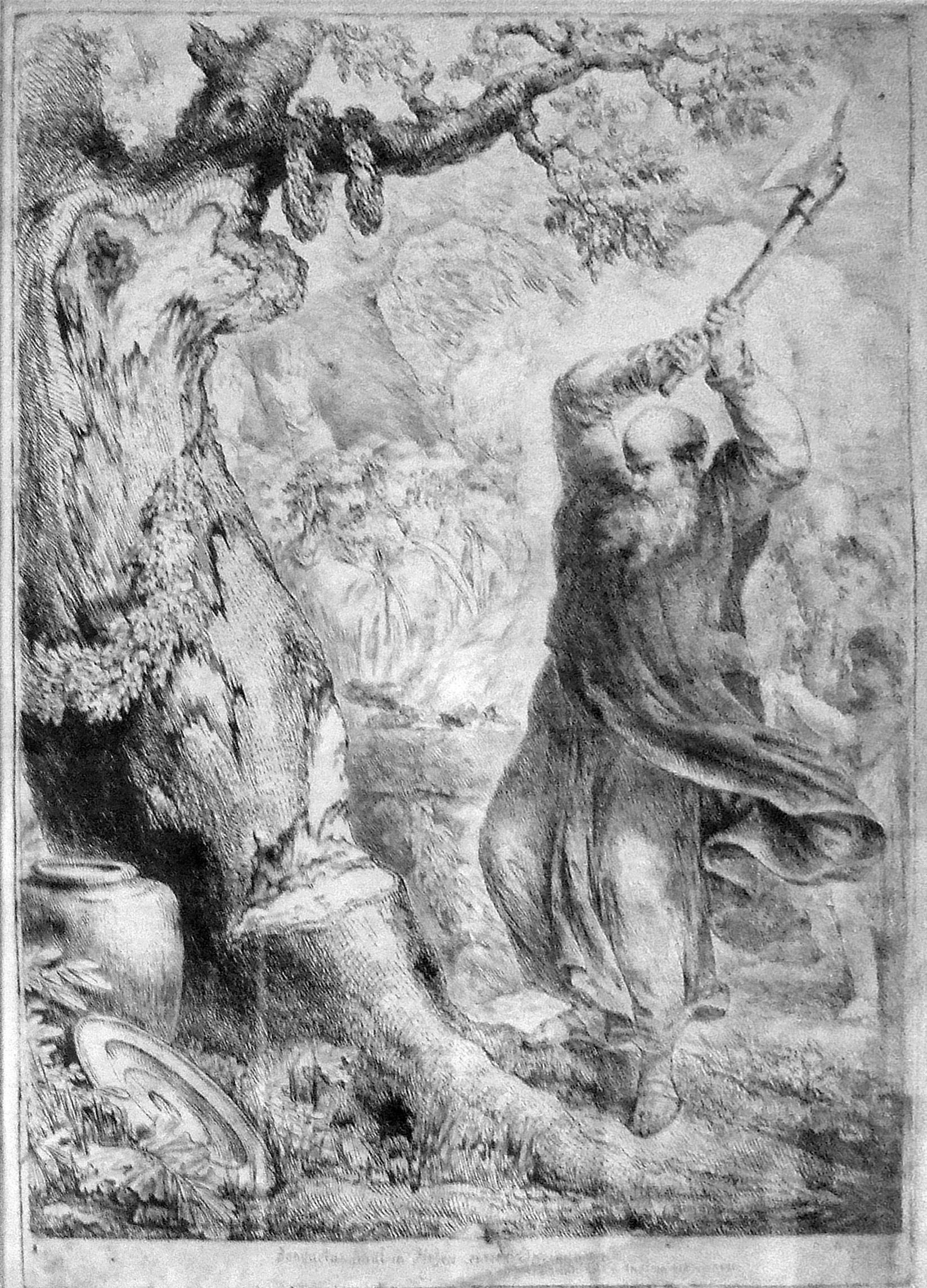
Lull and Sturm would have known about the long-standing hostility between the Christian Franks and the pagan Saxons. But Charles’s first war in Saxony in 772 was different; it was the first time religion became a factor. Charles borrowed a tactic from Boniface and ordered the destruction of a monument sacred to the pagans, a pillar in this case. It’s not too much of a stretch to think Lull or Sturm reminded him of the story where Boniface felled a sacred tree and pagans had converted.

Boniface chops down a tree sacred to pagans,
engraving by Bernhard Rode, 1781
(public domain, via Wikimedia Commons)
Why Charles, now sole ruler of the Franks, invaded Saxony at that time is open to speculation. Perhaps, the Saxons had stopped paying yearly tribute won from the previous war 14 years before, while Pepin, and then Charles were distracted with the wars in Aquitaine. Charles might have thought to let such insolence go unanswered would weaken him. Perhaps, Charles was trying to protect Church interests in pagan lands, or he saw the Saxons as a threat with the fortress of Eresburg so close to Frankish territory.

Charles had a military victory that year, but the wars with brutality on both sides would continue on and off for decades. At one point, he appointed Sturm to watch over affairs in the conquered Eresburg. In 779, age and illness caught up with Sturm. On his deathbed, he asked his brethren to pray for him and singled out Lull “who always took sides against me” for forgiveness.

Time to Be More Aggressive?


I would like to think Lull welcomed the attempt at reconciliation, but he probably had other things on his mind. At this point, he had supported missionary work for 34 years. He likely remembered the pagans who had burned Saint Lebwin’s churches in Deventer and the attacks on Fritzlar and the nearby fortress of Büraburg. Just the previous year, the Saxons again burned churches all the way to the Rhine and slaughtered indiscriminately.

And then there was the abbey in Hersfeld, which sat on land Sturm was told to leave many years ago because it was too close to Saxony to be safe. Lull was setting it up as a center for learning, a monastery that would rival Fulda. He might have already wanted to translate Saint Wigbert’s relics to Hersfeld, making it an attraction for pilgrims and their alms.

Might Lull have encouraged Charles to be more aggressive? The best answer I can give is it’s possible.

In 782, the same year Charles avenged a disastrous military defeat in the Süntel with a mass execution (4,500 if we are to believe the Royal Frankish Annals), he issued a capitulary to the Saxons. Among other things, it made capital offenses of pagan practices such as burning the dead. The capitulary put the force of law behind the missionaries’ efforts. Perhaps in Lull’s mind and others’, a few souls would be lost, but they were going to hell anyway. This was a way to prevent them from dragging others with them.

Charlemagne accepts Widukind's submission,
1840 painting by Ary Scheffer
(public domain, via Wikimedia Commons)
Now the Saxons were in a hard place. If they followed their old gods, they risked execution. If they ignored the deities responsible for victory in battle and successful harvests they risked starvation and the ability to be ruled by their own. Led by Widukind, they decided to keep fighting. So did the Franks.

Near the end of 784, Charles took the extraordinary step of going to war in the winter, using Eresburg as a base. Most early medieval wars were fought in summer, when animals could graze and soldiers could get food by raiding farms on enemy lands. The lack of crops and fodder made fighting in winter risky. Apparently the pressure was too much for Widukind. He and Charles made a deal: Widukind would convert to Christianity and submit to Charles, and Charles would offer his protection as his lord.

Lull must have felt triumphant to hear the news. Finally, missionaries would be able to do their work unimpeded. Finally, Saxon souls would be saved. He might have gone to his death at peace with the knowledge, despite a conspiracy against Charles from Franks or Thuringians unhappy with the deal. What he didn’t know was that the wars would resume in a few years.

Related: A Fight over Who Gets the Martyr's Relics

Sources

The New Schaff-Herzog Encyclopedia of Religious Knowledge

The Lives of the Fathers, Martyrs, and Other Principal Saints, Alban Butler

The Barbarian Conversion: From Paganism to Christianity by Richard A. Fletcher

St Lullus” Athelstan Museum, Malmesbury

"Hersfeld" by Oswald Hunter-Blair, The Catholic Encyclopedia

The Wiley Blackwell Encyclopedia of Anglo-Saxon England


Willibald: The Life of St. Boniface


Kim Rendfeld’s rereleased novel The Ashes of Heaven’s Pillar opens with the destruction of the Irminsul, a monument sacred to the pagan Continental Saxons, and Charlemagne’s deal with Widukind plays a key role in her work in progress, Queen of the Darkest Hour.

You can order The Ashes of Heaven's Pillar, about a Saxon peasant who will fight for her children after losing everything else, at AmazonKoboBarnes & Noble, and iTunes. Kim's first novel, The Cross and the Dragon, in which a Frankish noblewoman must contend with a jilted suitor and the fear of losing her husband, is available at Amazon, Kobo, iTunes, Barnes & Noble, Smashwords, CreateSpace, and other vendors.

Connect with Kim at on her website kimrendfeld.com, her blog, Outtakes of a Historical Novelist at kimrendfeld.wordpress.com, on Facebook at facebook.com/authorkimrendfeld, or follow her on Twitter at @kimrendfeld.


Wednesday, October 19, 2016

Saint Lebwin: A Reluctant Dark Ages Missionary Who Found Courage

by Kim Rendfeld

While in his native England around 754, Saint Lebwin apparently resisted the call to be a missionary. His 10th century hagiography says God admonished him three times before he got on a boat and traveled to the Continent.

Lebwin’s life in England, including his birth date, is a mystery other than that he was educated in a monastery. His reluctance to leave his homeland is understandable. Travel was uncomfortable and hazardous, and when he got to his destination, he would be preaching to a stubborn audience of pagans. This line of work also was dangerous. Saint Boniface, a Saxon missionary from Britain, and his companions had recently been martyred by a mob of pagans in Frisia.

We don’t know what persuaded Lebwin to go. Maybe he believed that he would someday stand before God and be asked to account for all the souls he could’ve brought to Christ. If he neglected that duty, he would face consequences in the afterlife.


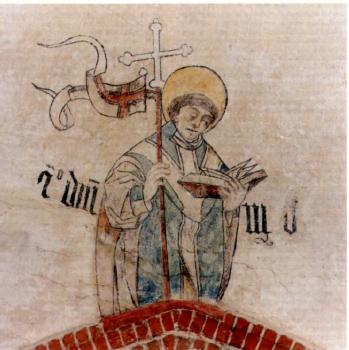
Saint Lebwin, from a fresco painted before 1800

Lebwin’s ship sailed to Utrecht, close to Frisia, and he was greeted by Saint Gregory, who was serving as bishop. A disciple of Boniface since childhood, Gregory might still have been mourning his mentor when Lebwin related God’s command.

Gregory sent Lebwin and a companion to a settlement on the River IJssel, an area the Frisians and Continental Saxons disputed. Here, he enjoyed the hospitality of an aristocratic Saxon widow named Abachilda, and with her support, found fertile ground. At first, the faithful built a chapel on the river’s west bank. Then they built a church across the river in Deventer, which was perhaps a merchant town. It proved to be a good place of operation for Lebwin. He traveled into Saxon lands and gained many followers, including the nobleman Folcbert of Sudberg.

Converting an aristocrat helped keep a missionary safe, and if a leader converted, so might his followers. But pagans of all classes might fear divine retribution. They believed their survival in this world depended on pleasing their gods. So they would leave behind a few stalks of grain for the goddess responsible for the harvest and their ability to feed themselves through winter. Or they might sacrifice war captives as a thanksgiving to Wodan, the god who decided which side won wars. Baptismal vows required Christians to renounce Wodan and other deities. Not a big deal if that convert was a peasant or a slave, who by definition had little influence. But if the new Christian was someone who could order others to displease the old gods, the consequences were dire.

That might be why a mob burned Lebwin’s church in Deventer and caused his followers to scatter.

If the mob was trying to scare Lebwin away, they were sorely disappointed. Instead he was determined to speak at the annual assembly of Saxon leaders at Marklohe. The decentralized peoples had no king, but noblemen from the villages did choose someone to lead soldiers during wartime.

Folcbert tried to dissuade Lebwin, fearing the Englishman would be killed. In addition, the roughly three weeks to get to Marklohe had its own hazards such as bandits and otherworldly creatures. Lebwin would not be moved and was certain God would protect him. Frustrated by his friend’s refusal, Folcbert sent him away.

The assembly at first went as planned, with the pagans giving thanks to their gods, asking for protection of their lands, and gathering in a circle. Suddenly, Lebwin showed up at the meeting in his priestly garb, holding a cross in one hand and the gospel in the crook of his other arm. He prophesized that if the Saxons followed the Christian God’s command, they would be richly rewarded, and no king would rule over them. If they didn’t, he predicted, a king from a nearby land would conquer them, and they would lose everything, even their freedom.


An 1869 illustration

It’s a convenient prophesy, written well over 100 years after Charlemagne had subjugated the Saxon peoples and the Church, with the monarch’s support, had made every attempt to obliterate the old religion. Like their pagan counterparts, Christians believed their deity had a hand in everything, including who won the battle, and this literary device was a way to reinforce that faith would be rewarded while disobedience was punished.

But might there be a grain of truth? Might Lebwin have feared that God would blame him for the lost souls if he didn’t summon the courage to speak to Saxon leaders? Hard to say for certain.

If Lebwin addressed the assembly, he did not get the response he wanted. The pagans thought he was a charlatan preaching nonsense and wanted to kill him. Somehow Lebwin escaped. A Saxon chided those assembled for their lack of manners—they had respected foreign envoys—and made the case for Lebwin to be left alone. Apparently, the Saxon leaders agreed, and they went back to their normal business.

Lebwin returned to Deventer and had his church rebuilt. He died of natural causes around 770 and was entombed within the church.

Later, pagan Saxons destroyed the church again—we don’t know exactly when—and spent three days vainly looking for his body, if we are to believe the hagiography. Pagan Saxons, who burned their dead, might not have understood the significance of a saint’s relics. The fruitless search might have been a creative addition to show that pagans were ultimately on the losing side. They didn’t find the relics because God didn’t want them to.


A mural from around 1880 depicting the destruction of the Irminsul.

In 772, Charlemagne and his Frankish forces invaded Saxony, and reminiscent of Saints Boniface and Willibrord, demolished their sacred pillar, the Irminsul. The enmity between the Franks and the Saxons went back for generations even then, but this was the first time the conflict had a religious tone. Two summers later, while Charlemagne was at war (literally) with his ex-father-in-law in Italy, the Saxons retaliated, wrecking churches.

In 775, the same year Charlemagne’s army was again fighting the Saxons, Saint Ludger was sent to Deventer to restore the church and find Lebwin’s relics. According to the hagiography, Lebwin appeared to Ludger in a dream, telling him where to find his body. Ludger did as instructed and found the remains. He moved one of the building’s outer walls to make sure the saint would always be present in the church he had lived for.

All images are public domain, via Wikimedia Commons.

Sources

Medieval Sourcebook: The Life of Lebwin

"St. Lebwin" by Thomas Kennedy, The Catholic Encyclopedia

Charlemagne's Early Campaigns (768-777): A Diplomatic and Military Analysis, by Bernard Bachrach

Butler's Lives of the Saints, Volume 11, edited by Alban Butler, Paul Burns

The Barbarian Conversion: From Paganism to Christianity, by Richard A. Fletcher

~~~~~~~~~~

Kim Rendfeld learned about the Frankish-Saxon wars while writing her first novel, The Cross and the Dragon, in which a Frankish noblewoman must contend with a jilted suitor and the fear of losing her husband. Kim wrote her second book, The Ashes of Heaven's Pillar, about a Saxon peasant who will fight for her children after losing everything else, to provide a Saxon perspective on the events.

The Cross and the Dragon was rereleased Aug. 3, 2016, in print and ebook formats. You can order the book at Amazon, Kobo, iTunes, Barnes and Noble, Smashwords, CreateSpace, and other vendors.
The Ashes of Heaven's Pillar will be rereleased on Nov. 2, 2016. Preorders for ebooks are available at Amazon, Kobo, Barnes and Noble, and iTunes. It will also be published in print, and if you would like a note when it's available, email Kim at kim [at] kimrendfeld [dot] com.

The wars between the Franks and the Saxons play a major role in Kim's third novel, Queen of the Darkest Hour, about Charlemagne’s fourth wife, Fastrada.

Connect with Kim at on her website kimrendfeld.com, her blog, Outtakes of a Historical Novelist at kimrendfeld.wordpress.com, on Facebook at facebook.com/authorkimrendfeld, or follow her on Twitter at @kimrendfeld.

Thursday, September 22, 2016

St. Wigbert: A 2nd Chance to Spread the Gospel?

by Kim Rendfeld

As the pagan Continental Saxons burned their way through East Francia in 774, the residents of the Abbey of Fritzlar feared for their church and their lives. When they left, they took a cherished possession with them to the hilltop fortress of Büraburg: the relics of Saint Wigbert.

The fortress also attracted refugees from smaller settlements in the area. Help for the Franks was far away. Their king, Charles (Charlemagne) had taken the army to Italy last fall to save Rome from the Lombards and ensure his young nephews would not have a claim to the Frankish throne. The Franks who were left behind had known it was only a matter of time before Saxons sought to avenge their defeat in 772, the one that destroyed their sacred pillar.

As the Saxons attacked Büraburg and burned houses outside it, I can imagine the Christians praying to the saint for protection. The fortress withstood the attack, and the Saxons proceeded to Fritzlar and tried to destroy the church. If we are to believe the Royal Frankish Annals, the Christians in the fortress beheld a miracle: two young men on white horses appeared and struck terror into the invaders, who fled. Later, the Franks found a dead Saxon beside the church. He was squatting on the ground and looked like he was about to blow on fuel to set the church afire.

The martyred Saint Boniface, who had consecrated the church, had prophesied it would not be burned. He was the one to appoint Wigbert as the abbot of Fritzlar. The annals don’t say which saint the faithful credited with the miracle, but it’s possible they believed their act of faith in preserving Wigbert’s relics played a part.


The remains of the southeastern gate of the Büraburg (JGALoewi at the
German language Wikipedia, GFDL or CC-BY-SA-3.0, via Wikimedia Commons)

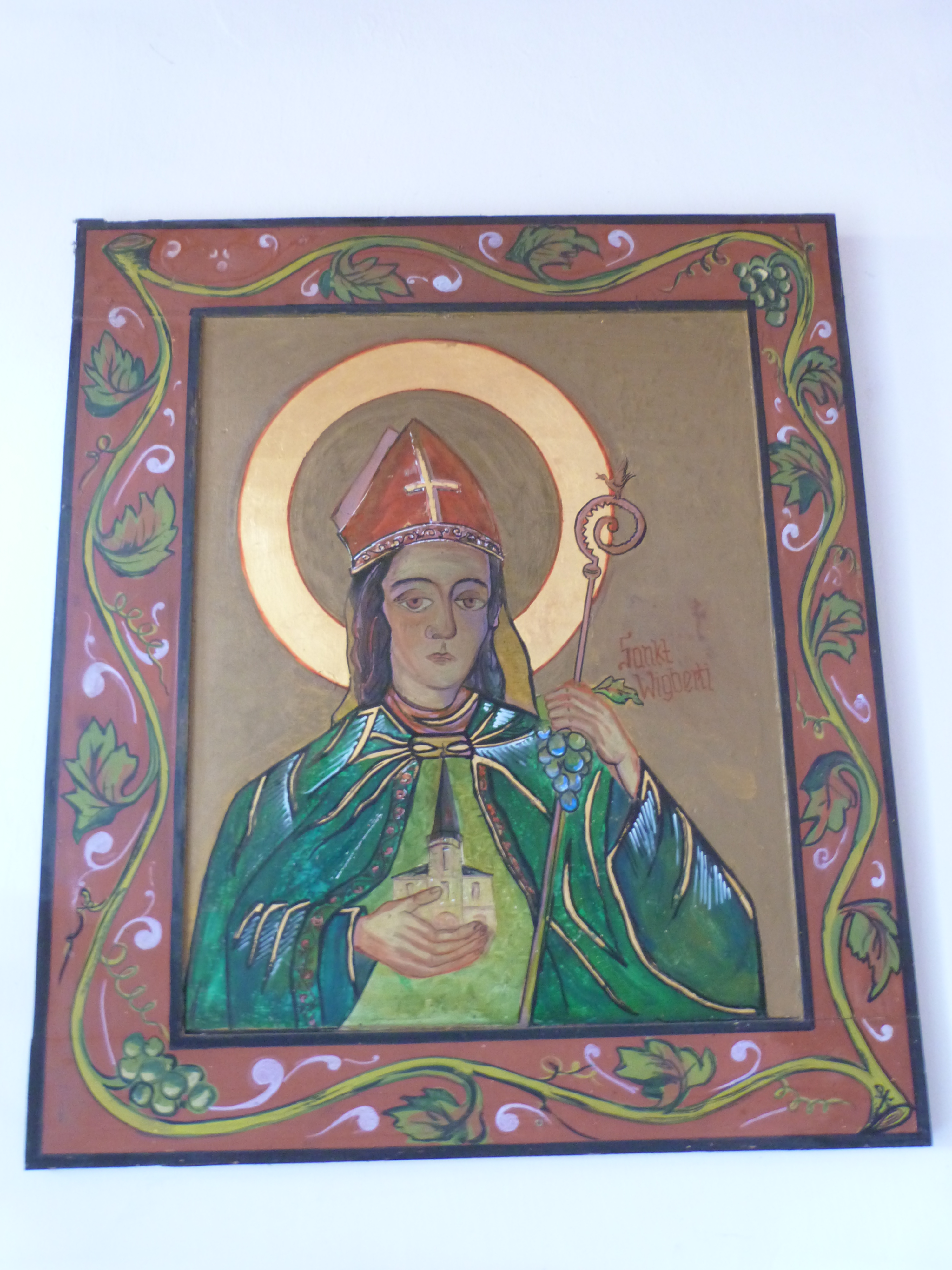
Today, we don’t know much about Wigbert, especially his early years. More than one churchman in this era had this name, and the variant spellings add to the confusion. His hagiography was written about 90 years after his death. With scant information, this post amounts to my best guess of who this saint was.

Wigbert likely was a native of the Saxon kingdom of Wessex, the same area as fellow missionaries Boniface and Lioba. Wigbert’s birth year is unclear; sometime between 655 and 665 is as good an estimate as any, if the missionary to Frisia and abbot of Fritzlar are the same person. He was older than Boniface, who might have been born between 676 and 679, and Wigbert was “venerable” when Saint Willibrord was in Ireland from 678-690.

Because Wigbert was later appointed abbot, we can surmise he likely came from a noble family. He embraced the monastic life at a young age and spent time in Ireland with Bishop Egbert. Both had forsaken homeland and family and lived cut off from the world but close to God. Wigbert had lived as a hermit and was a learned man. In the 680s, Egbert sent Wigbert to Frisia to convert pagans to Christianity.

Perhaps they had heard that the Frisian ruler, Aldgisl, had been a gracious host to Bishop Wilfrid and allowed missionaries to preach. When Wigbert arrived, Aldgisl might have been out of power, and this was not good news for Wigbert. Missionaries needed support from the people’s leaders, who would provide protection for someone telling the populace what they believe is all wrong. And if the ruler converted, his followers often did as well.

Instead, Wigbert had to deal with Radbod. We don’t know what transpired between the two men, but there is no doubt Radbod was hostile to Christianity. According to legend, Radbod once had his toe in the baptismal font and asked if he would see his pagan ancestors after he died. Told he would not, Radbod refused the rite, saying he’d rather be with his family in hell than his enemies in heaven. The details probably are a dramatization, shall we say, but the gist is accurate. After two fruitless years of preaching to the Frisians and to Radbod, Wigbert returned to Ireland.

What happened in the following decades is hazy. The Venerable Bede says Wigbert gave up missionary work altogether. If he couldn’t persuade strangers, he would benefit his own people by serving as an example and living a holy, quiet life.

Or maybe Wigbert thought that at first. Bede wrote his history in 731 and died four years later, about the same time as Wigbert’s next chapter. Or I should say his next known chapter.

Photo by Catatine (GFDL
or CC BY-SA 4.0-3.0-2.5-2.0-1.0,
via Wikimedia Commons)

Enter Boniface, a disciple of Willibrord. Both men had missions to pagan lands. Boniface might have heard of Wigbert through his mentor or one of his relatives in Wessex. A letter from someone named Wigbert to monks in Glastonbury describes the warm welcome he received from Boniface upon his safe arrival in Germany, and the writer asks the monks to convey the news to Mother Tetta and her nuns at the double monastery of Wimbourne, also in Wessex. Tetta was an ally of Boniface’s and allowed nuns from her abbey to carry out Boniface’s mission on the Continent.

The year was 734, and Wigbert would have been an old man, even by our standards. The question that comes to my mind: is the missionary to Frisia and the abbot of Fritzlar the same person? The best answer I can give is: it’s possible, even though about 50 years had passed since his last mission. Age alone would not be a detriment, and he was still healthy enough to fast. Boniface needed a knowledgeable, learned man to lead the new monastery at Fritzlar, and a grandfatherly priest who had preached in foreign lands before might have filled the role well.

What went through Wigbert’s head? Did he yearn for that second chance? Did he worry about failing again? Or did he reason circumstances were different this time? Boniface’s mission, and by extension Wigbert’s, had the support of Charles Martel, the Frankish mayor of the palace and the most powerful man in the realm.

Apparently Wigbert did well at Fritzlar. Three years later, Boniface asked him to lead the monastery at Ortdorf as well.

Later, ill and sensing his end was near, he resigned his government of the abbeys. He died about 747 and was buried in the church at Fritzlar.

Six years after the scare in 774, Archbishop Lull had Wigbert’s relics translated to Hersfeld, and his shrine was adorned with silver and gold. A church was built there in 850 but burned in 1037. A new church was constructed, but a fire consumed it in 1761, taking the relics with it. A sad fate for the relics the monks in Fritzlar risked their lives to save. Sadder still is how little we know about the saint for whom they took that risk.

Sources

"St. Wigbert" by Klemens Löffler, The Catholic Encyclopedia, Vol. 15. New York: Robert Appleton Company, 1912.

"St. Egbert" by George Phillips, The Catholic Encyclopedia, Vol. 5. New York: Robert Appleton Company, 1909.

Letters of Saint Boniface

Lives of Saints, by Rev. Alban Butler

Alcuin’s The Life of Saint Willibrord

Bede's Ecclesiastical History of England: A Revised Translation with Introduction, Life, and Notes, translated by A. M. Sellar, G. Bell, 1907, pg. 319

St. Cuthbert, His Cult and His Community to AD 1200, by Gerald Bonner, David W. Rollason, Clare Stancliffe

Handbook of Dutch Church History, edited by Herman Selderhuis

~~~~~~~~~~

Thanks to research on this blog post, Kim Rendfeld has new material for her work in progress, Queen of the Darkest Hour, a novel about Charlemagne’s fourth wife, Fastrada.

Kim's debut, The Cross and the Dragon, in which a Frankish noblewoman must contend with a jilted suitor and the fear of losing her husband, was rereleased August 3, 2016, in print and ebook formats. You can order the book at Amazon, Kobo, iTunes, Barnes and Noble, Smashwords, CreateSpace, and other vendors. Until Sept. 25, 2016, you can enter the giveaway for The Cross and the Dragon.

Kim’s second book, The Ashes of Heaven's Pillar, about a mother who will fight for her children after losing everything else, will be rereleased in Nov. 2,  2016. Preorders for ebooks are available at Amazon, Kobo, Barnes and Noble, and iTunes.