Showing posts with label Maria Grace. Show all posts

Monday, July 20, 2020

Black Britons in Georgian England

by Maria Grace

Although they they were a small minority population, Black Britons were definitely present in Georgian England.

The Earliest Black Britons


Evidence of Black Britons exists all the way back to Roman Britain. Archeological analysis of twenty-two sets of remains from Southwark, Roman London revealed at least one of them had African ancestry. Analysis of the ‘Ivory Bangle Lady’ burial in York suggests a mixed white/Back ancestry. Remains found in 1953 of Beachy Head Lady (dating to 245 AD) in East Sussex, and in 2013 in Fairford, Gloucestershire (dating between 900 and 1000AD) both appear to be of sub-Saharan African ancestry. Written evidence suggests the presence of residents in Roman Britain from Romanized North Africa (a section of the coast of modern Algeria, Libya and Tunisia).

During the Renaissance


As early as the beginning of the fifteen hundreds, Black entertainers could be found in Scotland and the royal courts. “They quickly became not only popular but fashionably essential in England as well.” (Gerzina,1995) Most historians though, suggest the 1555 arrival of five Africans in England to study English and facilitate trade as the start of a continuous Black presence in Britain.

During Queen Elizabeth I's reign, the Black population of London was mostly made of free individuals many of whom intermarried with native English people. Parish records suggest that many of the Black Londoners were servants, but some worked in local business establishments (Wood, 2012).

In Early Modern and Georgian England 


The Black population in Britain swelled exponentially during the 17th and 18th centuries, fed by the so-called Triangular Trade. Trade ships with goods from Britain exchanged goods for slaves on the coasts of West Africa. Slaves would be transported and sold for labor in plantations. Products of slave labor including sugar and rum would then return to Britain for sale.

Black communities began to develop and flourish in the port cities most associated with the slave trade, like Liverpool and Bristol. Early Black settlers in these cities included sailors in the merchant navy, soldiers and sailors in Britain's military, the mixed-race children of traders sent to be educated in England, servants, and freed slaves. During the American Revolution, slaves fleeing captivity often joined the British armed forces with the promise of freedom in Britain.

By the mid-18th century, Blacks accounted for somewhere between one and three per cent of the London populace. In 1768, some estimated the number of Black servants in London at 20,000, out of a total London population of 676,250. Others, depending upon the year and the source, put the figure somewhere between 10,000 and 30,000, although the accurate figure is probably closer to 15,000 (Gerzina 1995). Consequently, by mid-century Black men and women were a relatively familiar sight on the streets of London.

Slavery in Georgian England


Technically, the Cartwright decision of 1569 established that slavery was not legal in England. The 1706 ruling by Lord Chief Justice Holt supported the decision. However, these rulings were routinely ignored and slaves continued to be bought and sold throughout the 1700s.

Finally, the case of James Somersett a fugitive Black slave from Virginia in 1772 legally contested English slavery. Lord Chief Justice William Murray, 1st Earl of Mansfield, ruled that a master could not force a slave to leave the kingdom against his will. Mansfield was clear that his ruling did not abolish slavery per se, and it was vague enough to allow Blacks to continue to be hunted and kidnapped in cities like London, Liverpool and Bristol then sold elsewhere.

Still, the decision helped foster the decline of slavery. The Slave Trade Act of 1807 finally abolished the slave trade, but not the practice of slavery which would wait until the Slavery Abolition Act of 1833 to be finally eliminated.
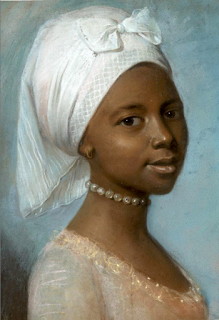
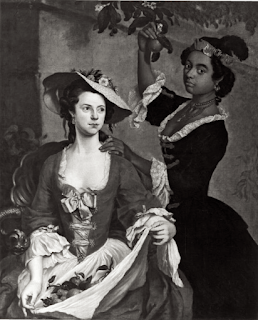
The Black Community of Georgian Britain


Even against this backdrop of slavery, particularly in London, a thriving Black community developed, one that evidenced concern for joint action and solidarity (Gerzina 1995).

“The word 'Black' itself was a loose term; those men and women in Britain hailed from many different tribes and regions of Africa. And they spoke several different kinds of English: some, brought up by their aristocrat owners, used refined language; others, educated at sea, used Jack Tar lingo, a stew of Cockney, Creole, Irish, Spanish and low-grade American. All this created great differences in their way of life, and social class played at least as important a role as color in their way of dealing with day-to-day vicissitudes.” (Sandhu, 2011).

These class differences played out in the Black community much as they did in the rest of England. There were those who managed to attain a comfortable, and even prosperous standard of living in the free Black community. Cesar Picton and George Africanus are just two examples of successful Black businessmen. There is evidence of alehouses with a predominantly Black clientele, and of the existence of Black social events. It is also clear that Blacks participated fully in the working-class culture of London.

Despite the existence of community, barely 20% of the Black population was female (Sandhu, 2011). In part because of these gender imbalances and in part because of its social and geographical diffusion, many Black men married local women (Emsley, et al, version 8.0). In general, mixed-race marriages were not viewed as problematic, mainly because they occurred among the lower working classes. This attitude “is visually clear in the prints and engravings of Hogarth and Rowlandson, among numerous others, as well as in novels and plays, and that race was secondary, to the working class at least.” (Gerzina 1995).

This working class made up the bulk of English society, and an even larger percentage of Black society. But where did working-class Black people find employment?

For some Black men, a life at sea offered more opportunities than one on land. Although most never advanced far in rank, Black petty officers were not unusual in late 18th-century Britain. These sailors were the exception rather than the rule. For most, domestic service and urban occupations like porters, watermen, basket women, hawkers, and chairmen were the main employments for lower working-class Black Londoners (Emsley, et al, version 8.0). But even for those who found such employment, the specter of poverty was never far away.

The Problem of Poverty


In 1731 the Lord Mayor of London ruled that "no Negroes shall be bound apprentices to any Tradesman or Artificer of this City". Due to this ruling, most were forced into working as servants (Sandhu, 2011).

During this same period, many former American slave soldiers, who had fought on the side of the British in the American Revolutionary War, were resettled as free men in London. Left without pensions or access to the system of poor relief established by the Old Poor Law, and often without skills, many of them became poverty-stricken and were reduced to begging on the streets. Thus the "Black poor" became a much-discussed social phenomenon in the final quarter of the eighteenth century (Gerzina 1995). In truth though, the itinerant of any race had little hope of steady employment and a way out of their situations.

Some poor Blacks found shelter in the areas of St Giles or Seven Dials, St Paul’s, Ratcliff and Limehouse, and along the Wapping riverside. Black people forced to live in such areas shared these unsanitary conditions with poor whites who made up the majority of the population. These were not ghettoes defined by race, but by situation, inhabited by those whose only recourse to starvation and death was often theft, prostitution and beggary. (Gerzina 1995)

Conclusion


Though the poor were often out of sight and out of mind of the upper classes, this did not mean that Black people were invisible. Even if one lived away from the active Black communities of Georgian England, audiences, both literary and theatrical, were accustomed to seeing Black people in the theatre as both subject and spectators. They also knew them as musicians and performers at fairs. Black Britons were an active part of British society during the Georgian and Regency eras.

This post only scratches the surface, just highlighting a few points in a broad and important topic. Some of the references below might be helpful in gaining deeper understandings.

References

“Black Lives in England.” Historic England. 2020. Accessed July 10, 2020. https://historicengland.org.uk/research/inclusive-heritage/the-slave-trade-and-abolition/sites-of-memory/Black-lives-in-england/

“Black people in late 18th-century Britain.” English Heritage. Accessed July 12, 2020. https://www.english-heritage.org.uk/visit/places/portchester-castle/history-and-stories/Black-people-in-late-18th-century-britain/

Alliance for Workers’ Liberty. “A Short History of Black people in Britain.” Worker’s Liberty. March, 23, 2006. Accessed July 9, 2020. https://www.workersliberty.org/story/2017-07-26/short-history-Black-people-britain

Edwards, Paul. “The History of Black People in Britain.” History Today. September 9, 1981. Accessed 7/1/2020. https://www.historytoday.com/archive/history-Black-people-britain

Emsley, Clive; Tim Hitchcock and Robert Shoemaker, "Community Histories; Black Communities", Old Bailey Proceedings Online (www.oldbaileyonline.org, version 8.0, July 12, 2020). https://www.oldbaileyonline.org/static/Black.jsp

Gerzina, Gretchen, Black London: Life Before Emancipation, Rutgers University Press, New Brunswick, New Jersey, 1995.

Glover, Dominic. “The First Black Briton? 1000 Year Old Skeleton of African Woman Discovered by Schoolboys in Gloucestershire River.” International Business Times. October 2, 2013. Accessed June 30, 2020. https://www.ibtimes.co.uk/fairford-sub-sahara-africa-skeleton-gloucestershire-507102

Martin, S.I.. “African writers and Black thought in 18th-century Britain.” Discovering Literature: Restoration & 18th Century. June 21, 2018. Accessed June 30, 2020. https://www.bl.uk/restoration-18th-century-literature/articles/african-writers-and-Black-thought-in-18th-century-britain

Rebecca C Redfern, Michael Marshall, Katherine Eaton, Hendrik Poinar. "'Written in Bone': New discoveries about the Lives and Burials of Four Roman Londoners". Britannia 48 (2017), 253-277, doi:10.1017/S0068113X17000216. Accessed July 12, 2020. https://www.cambridge.org/core/journals/britannia/article/written-in-bone-new-discoveries-about-the-lives-and-burials-of-four-roman-londoners/F464D9E93FCE96341DDD7774C4C8CA10/core-reader

Sandhu, Sukhdev. “The First Black Britons.” BBC History. February, 17, 2011. Accessed 7/3/2020.http://www.bbc.co.uk/history/british/empire_seapower/black_britons_01.shtml

Seaman, Jo. "The mystery of Beachy Head Lady: A Roman African from Eastbourne.” Museum Crush. May 4, 2018. Accessed July 12, 2020. https://museumcrush.org/the-mystery-of-beachy-head-lady-a-roman-african-from-eastbourne/

Wood, Michael. “Britain's first Black community in Elizabethan London” BBC News. 20 July 2012. Accessed July 5, 2020. https://www.bbc.com/news/magazine-18903391

~~~~~~~~~~

Six time BRAG Medallion Honoree, #1 Best-selling Historical Fantasy author Maria Grace has her PhD in Educational Psychology and is a 16-year veteran of the university classroom where she taught courses in human growth and development, learning, test development and counseling. None of which have anything to do with her undergraduate studies in economics/sociology/managerial studies/behavior sciences. She pretends to be a mild-mannered writer/cat-lady, but most of her vacations require helmets and waivers or historical costumes, usually not at the same time. She writes gaslamp fantasy, historical romance and non-fiction to help justify her research addiction. 

Click here to find her books on Amazon.

For more on her writing and other Random Bits of Fascination, visit her website. You can also like her on Facebook, or follow on Twitter.


Monday, February 17, 2020

An Accomplished Young Lady

by Maria Grace

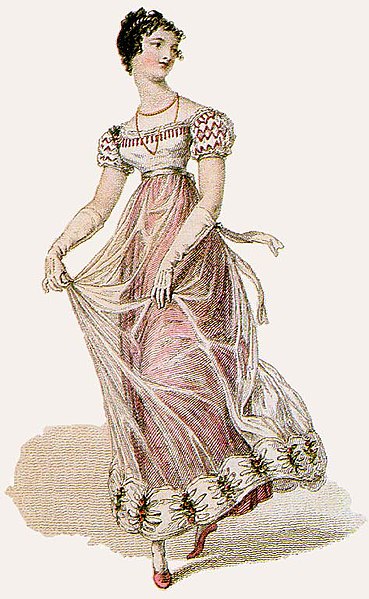
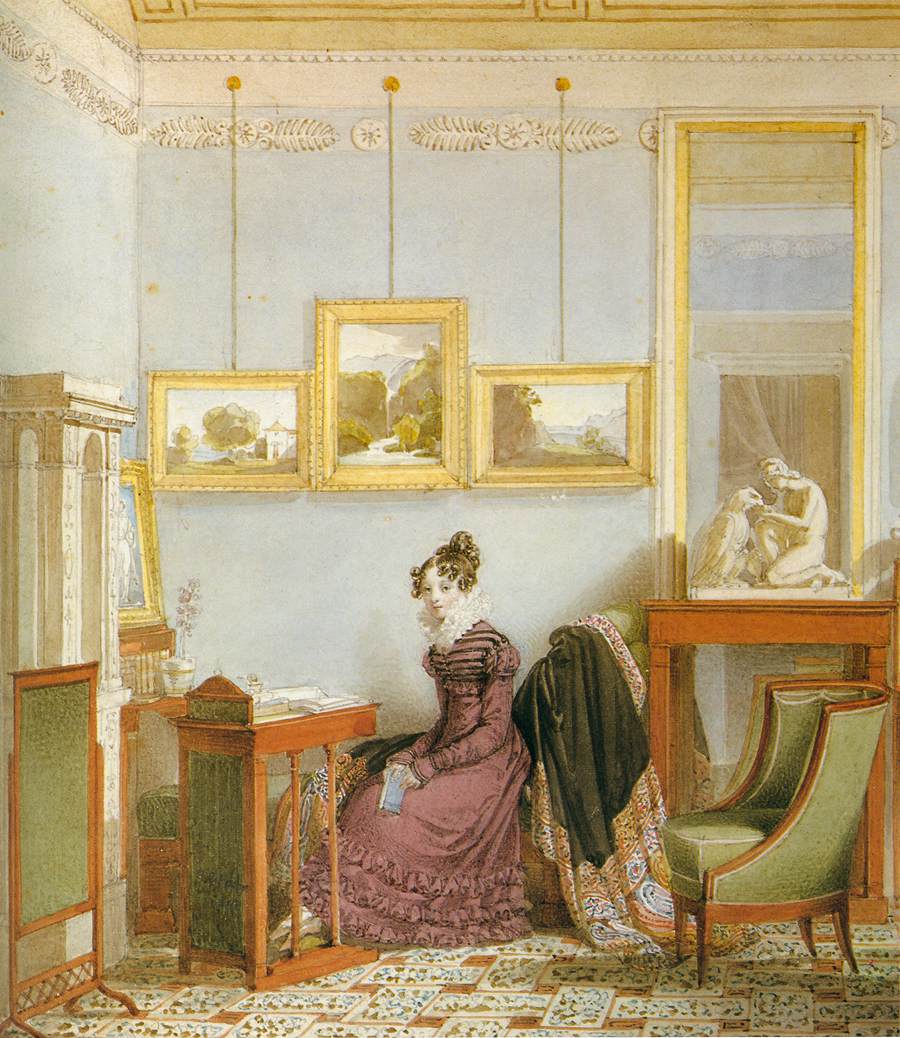
During the Regency era, a proper education was crucial to a middle or upper class young lady’s future. Since a woman’s only ‘proper’ aspiration was to marriage, her education focused on making her noticeable to potential husbands. Her accomplishments enabled her to display cultural distinction and set herself apart from women who were merely ‘notable’—those who could only manage a household but not cultivate elegant socializing.

The number of accomplishments a young lady acquired reflected the financial state of her family and the level of sacrifice they were willing to make to improve her chances of marrying well.

Men of the middle and upper classes sought a wife who would be a social asset to them (in addition to a good dowry of course.) A "social asset" was to never be an intellectual threat to her husband, but to able to follow conversation, and perhaps more importantly to keep a conversation away from unpleasantries and steered toward good humor for all. She could understand what was being said around her, but did not have ready opinions or advice to offer.

Certain subjects were considered necessary for becoming that desired social asset.


Reading


No young woman could be considered accomplished without the ability to read. Not only was it necessary for basic household management and correspondence, but it formed a foundation for intelligent conversation and for reading aloud for the entertainment of others.

Though young ladies were not encouraged to read heavy subjects like philosophy and theology, serious books were considered appropriate as they enabled interesting conversation. Similarly, scripture to enable her to recognize passages and sermons, such as Fordyce’s, aimed at young women, were appropriate reading for an accomplished lady.

Writing


In this context, writing did not refer to a creative endeavour, but rather being able to create a letter with beautiful penmanship, correctly spelled and with excellent grammar. Young women would be schooled in the art of letter writing, with books dedicated to the topic and offering examples of good letters for her to emulate. She might even copy particularly pretty phrases out of these books for use in her own letters.


Arithmetic


No mistress could run a household or estate without a solid understanding of basic math. She had to be able to keep accounts, balance a budget, calculate how much food and others supplies needed to be bought, track expenses and even forecast trends in the use of supplies.
Few women would have exposure to advanced algebra or other pure mathematics. She had no practical use for them and would be dangerously close to challenging her husband’s expertise if she knew them.

Sciences and Social sciences


The natural sciences and social sciences were significant to young ladies only insofar as they facilitated the art of refined conversation. General awareness and rote memorization in areas of history, politics, geography, literature and philosophy were sufficient for ladies of quality.

A cursory knowledge of botany was common. Ladies who were more interested might also become learned in the use of plants as home remedies since the mistress of an estate was often the first one consulted in cases of injury and illness.

Languages


Despite the Napoleonic wars, a working knowledge of French was indispensable for a young lady. Italian and German, for singing and understanding sung performances were also useful, but conversational fluency was not expected. Greek and Latin, beyond a handful of commonly used phrases were the purview of men and not included in a young lady’s curriculum.


Music 


Though not expected to be virtuosos, quality young ladies were expected to be proficient musicians. Playing and singing were considered seductive to men since they displayed her body and bearing to potential suitors. Furthermore, once married, musical skills would be useful for long evening of entertaining both her husband and her guests.

Only a few instruments were considered appropriate for young ladies. Anything which needed to be blown into was a risk for causing a reddened face and heaving bosom, neither of which would be attractive, much less alluring, so they were out of the question. The violin, which required raised arms, was also inappropriate. The short bodied dresses of the era presented too many possibilities for embarrassing mishaps. Moreover, the violin required a higher level of expertise to perform and the potential for embarrassing oneself with a mediocre was greater.

The harp was the most desirable instrument, but most had to make do with the piano which had replaced the harpsichord in popularity. Some young ladies also learned the guitar.

Not only did girls need to be able to play and sing, but they had to be able to dance. The dance floor was the place for young ladies to interact with their suitors, a place where they could escape the watchful eyes of their chaperones and engage in somewhat private conversation and even touch, which was otherwise entirely forbidden. Skilled and graceful partners were highly desirable. Girls who danced poorly could expect to spend a lot of time without a partner.


Artistic endeavors


Girls were encouraged to draw and paint and given training in it whenever possible. Particularly talented girls might even exhibit their work at local or national levels, or teach other girls, all of which could be valuable if she failed to obtain a husband.

Filigree work, now known as quilling, and japanning, now called decoupage, were also encouraged as ways for ladies to display their artistic skills. Screens, small
chests and trunks and various bric-a-brac were frequently the object of their efforts.

Needlework (plain and fancy)

Needlework was one of the most practical subjects for a young lady. No matter what her future might hold, clothing, plain or elegant, would be a part of it. Clothing required mending and making. Even ladies who could hire out their own sewing would often engage in making garments for charitable cases in their parish. Fancy work included embroidery, cross stitch, knotting, netting and more.

Needlework need not be a solitary endeavor. Often, women would bring along their work baskets during social calls and work as they visited. If someone arrived without something to work on, a hostess might offer something from her workbasket to her visitor. Of course, the elegance of the project would reflect upon the seamstress and fancy projects were more desirable for working in company than plain.

Boarding Schools


Girl’s education was a bit of a controversial subject. Girls from wealthy and cultured homes were often educated by their mothers since they could hire enough help with the household work to have time to invest in their daughter’s education. They might enlist the aid of additional teaching masters for training in music, languages and dance. Alternatively, at the age of ten, parents might consider sending their daughter to a boarding school, sometimes for as little as a year or two to ‘finish’ their accomplishments. If the girls was in the way at home, she might be sent off for much longer.


Boarding school could be a risky proposition. Many girls' school were underfunded, badly managed, and were never quite respectable. Teachers frequently came from the ranks of clever, but poor former students, impoverished gentlewomen, poor relatives of the clergy or retired servants of the upper classes.

Subjects taught at these schools included decidedly nonacademic subjects like sewing and fancy needlework, drawing, dancing, music. Polite literature, including mythology, writing, arithmetic, botany, history, geography, and French formed the balance of the more academic studies. Rudiments of stagecraft and acting might also be taught as training in elocution and grace of movement.

Parents typically paid twenty to thirty guineas per year for these schools. Some of these subjects, particularly those which required additional masters to be brought in, like dance, might incur additional fees. Washing and the privilege of being a ‘parlor boarder’ who enjoyed extra privileges like eating with the mistress of the school and using the parlor, also incurred additional fees.

Armed with these skills, a young woman would be considered ready to enter society and engage in the all-important task of finding a suitable husband.

References

Baird, Rosemary. Mistress of the House, Great Ladies and Grand Houses. Phoenix (2003)
Collins, Irene. Jane Austen, The Parson's Daughter; Hambledon (1998)
Collins, Irene. Jane Austen & the Clergy; The Hambledon Press (2002)
Davidoff, Leonore & Hall, Catherine. Family Fortunes: Men and Women of the English Middle Class 1780-1850;  Routledge (2002)
The Female Preceptor. Essays On The Duties Of The Female Sex, Conducted By A Lady. 1813 and 1814
Fullerton, Susannah. Jane Austen & Crime; JASA Press (2004)
Harvey, A. D. Sex in Georgian England; Phoenix Press (1994)
Ives, Susanna Educating Your Daughters – A Guide to English Boarding Schools in 1814, March, 10 2013.
Jones, Hazel. Jane Austen & Marriage; Continuum Books (2009)
Lane, Maggie. Jane Austen's World; Carlton Books (2005)
Laudermilk, Sharon & Hamlin, Teresa L. The Regency Companion; Garland Publishing (1989)
Le Faye, Deirdre. Jane Austen: The World of Her Novels; Harry N. Abrams (2002)
Martin, Joanna. Wives and Daughters; Hambledon Continuum (2004
Selwyn, David. Jane Austen & Leisure; The Hambledon Press (1999)
Sullivan, Margaret C. The Jane Austen; Handbook Quirk Books (2007)
Watkins, Susan. Jane Austen's Town and Country Style; Rizzoli (1990)

This article is an Editor's Choice and was originally published June 10, 2014.

~~~~~~~~~~~~
Though Maria Grace has been writing fiction since she was ten years old, those early efforts happily reside in a file drawer and are unlikely to see the light of day again, for which many are grateful. 

After penning five file-drawer novels in high school, she took a break from writing to pursue college and earn her doctorate. After 16 years of university teaching, she returned to her first love, fiction writing.

Click here to find her books on Amazon. For more on her writing and other Random Bits of Fascination, visit her website. You can also like her on Facebook, or follow on Twitter.

Sunday, November 17, 2019

Editors Weekly Round-up, November 17, 2019

by the EHFA Editors

Contributors to English Historical Fiction Authors bring us posts that delve into various aspects of British history. Enjoy these fascinating stories, and never miss a post on EFHA when you follow us on Facebook, Twitter, or via email.

by Maria Grace


by Judith Taylor

Sunday, October 13, 2019

Editors Weekly Round-up, October 13, 2019

by the EHFA Editors

Contributors to English Historical Fiction Authors bring us posts that delve into various aspects of British history. Enjoy these fascinating stories, and never miss a post on EFHA when you follow us on Facebook, Twitter, or via email.

by Judith Taylor


by Maria Grace

Sunday, September 15, 2019

Editors Weekly Round-up, September 15, 2019

by the EHFA Editors

Maria Grace takes the spotlight on the round-up this week, with a post on the popularity of acting during the Georgian and Regency eras.

by Maria Grace


Sunday, August 18, 2019

Tuesday, August 13, 2019

The Pinnacle of Country Entertaining

by Maria Grace


Summer vacation season is rapidly descending upon us. As we are trying to plan a bit of a vacation later in the summer, I naturally began thinking about the sort of summer vacations that might have been planned during the Regency era—because of course that is what everyone thinks about while contemplating summer travel, right? Yes, that is my husband shaking his head in the background.

Although trips to visit various natural and man-made wonders were certainly undertaken, one Regency era option struck me as very unlike modern options, the centuries old tradition of the country house party.

On the whole, during the Regency era, the upper echelons of society generally preferred to congregate in London whenever possible. After all, it was the center of all things cultured and good. But the heat of August made London extremely unpleasant—hot, sticky, and smelly. So, with Parliament out of session and the all-important ‘Season’ winding to a close (not to mention the hunting and shooting seasons starting soon), those who could afford to do so headed for the cooler climes of the countryside.

The fortunate few with country seats often invited friends and family to gather with them on their estates—an opportunity to lengthen the social season a bit, with limited and particularly chosen company in the comfort and slower pace of the countryside. These informal gatherings of friends could simply be convivial in nature, but it wasn’t uncommon for social, marital or political advancement to be underlying motives as well. (How better to gain the ear of an influential parliamentarian than to have him at your dining table and drawing room night after night? And who could possibly object to giving eligible young people the opportunity to get to know each other away from the London crush? So, yeah, they could also be the focal point for a lot of interpersonal drama, but I digress…)

House parties lasted anywhere from three to four days up to a month. With the difficulties and expense of traveling over dangerous and badly maintained roads, long stays made sense—at least for the guests. What the hostess thought of them could be an entirely different matter—and the subject of an upcoming post.

An Expensive Affair


While running a country estate was often an expensive prospect, hosting a house party brought that expense to a whole different level. Since the entire affair often amounted to calculated display of wealth, guests were often treated to the best of everything. Said guests also probably expected what they experienced to be the best the host and hostess could offer and likely made judgement accordingly. No doubt much talk would be generated by what was or was not provided to a house party’s guests.

Servants might be outfitted with new livery and additional servants hired for the duration to accommodate the needs of the guests. The best glasses, china, and silver were used for meals—which meant a lot of extra labor for the servants (or sometimes they were purchased for the occasion!)

Then there was the food! Gracious, just so much food. It wasn’t just a matter of the extra mouths of the guests and their servants to feed. That would have been far more manageable.

Hosts were expected to serve lavish dinners which could include dozens of dishes for each dinner, not to mention expensive (and often imported) alcohol and desserts. It was not unknown for families to live very modestly apart from the house parties in order to afford their guests when they came. The alternative might be incurring heavy debts for the endeavor.

Entertaining the guests also came with a cost. Indoor entertainments might seem inexpensive, but writing papers for letters, new sheet music for the pianoforte, fresh decks of cards, new games, and even the accoutrement for home theatricals could add up quickly. And if balls and parties were held as well, musicians, food, and candles to light the long evenings had to be acquired.

If outdoor amusements were pursued, then fishing tackle and shooting supplies might have to be provided. Horses and their tack would have to be managed for those who chose to ride or drive. Equipment for outside games like lawn tennis, croquet or lawn bowls might need to be obtained or at minimum maintained.

All this is not to say that guests’ pocketbooks escaped unscathed. Since house parties were often an opportunity for ostentatious displays of wealth, guests brought their finest fashions, many, many of them. Informal garments for morning, outfits for sport, attire for receiving visitors, apparel for balls, formal dress for dinner. Clothes. All of the clothes. So many, that new clothes might have to be acquired or older ones freshened up in anticipation of the visit. Even if a house guest did not incur expenses for new clothes, they still have to face the issue of vails.

Vails were tips for the servants who attended one while visiting. Every servant one interacted with from the porter who carried bags in from the carriage to the maid who made up the room each day, expected recompense from you for the extra work a guest caused them. The expense was heavy enough that some would forgo a house party to avoid the cost! While an invitation to a house party might be exciting to receive, it behooved one to count the cost before accepting.

Entertainment at a house party


If one braved the dangers of travel and the burden of the expenses, what did one actually do at a house party?

The reality was probably a bit different from what a modern guest might expect. During the day, guests were largely responsible for their own entertainment, availing themselves of the amenities of the estate. Typically, the day’s activities kept the gender’s segregated until dinner, although if a couple was determined to spent some time together, it could certainly happen.

Breakfast would be set out to be enjoyed individually, according to one’s preferred time to rise. The men were often up early, enjoying a substantial breakfast before heading out for fishing, shooting or hunting. Riding and boating might also be on the agenda. If the weather were disagreeable, billiards—which ladies generally did not play—might also be an option.

Ladies often rose much later, and sometimes kept to their rooms to write letters or read before breakfast. A majority of the activities open to the ladies centered around the house. They might read, write letters, practice their music, share patterns with the other ladies and sew. (Unless they were actively doing something else, women almost always had needlework in their hands, but that’s another post…) Often neighbors would call on the visitors. as polite society demanded. Those social calls would be repaid a day or two later. Visits to local places of interest might also be arranged.

If the ladies desired outdoor amusements, they might go for walks or carriage rides, or watch the men plays sports. Certain outdoor games were considered appropriate for ladies including croquet, lawn tennis, archery, shuttlecock, and lawn bowls. It should be noted, appropriate garments would be required for these activities.

Lunch was a relatively new innovation during the Regency. Oftentimes a midday repast was an informal meal set out on the sideboards in whatever room people gathered. The dining room would not be used for such a meal. The foods served and the time a midday meal would be served would depend on the dinner hour of the house.

Dinner was the main meal of the day and the major event of most days. It could be served as early as 2pm, although that would be considered rather low class, or as late as 6 or even 7pm. The later the hour, the more fashionable it was considered to be. Dinner was a formal occasion and required formal dress. Men and women were expected to dress accordingly and present themselves in the drawing room about a quarter of an hour before the dinner hour. Now at last, after a day of leisure, ladies and gentlemen enjoyed each other’s company.

Dinner was a lavish affair with typically two courses and possibly a dessert course served. Each course could consist of as many as two dozen different dishes. The meal could easily last two hours or more. After dinner, typically the hostess would escort the ladies to the drawing room to allow the men some time to themselves. (As though they did not have enough of that during the day—but I digress.) During this time, men would enjoy port, cigars, and manly conversation not appropriate in front of the ladies.

While the ladies waited for the men to join them in the drawing room, they might converse, play games, perform music, and for some, be glad not to be in the company of drinking men and coarse conversation. The men might trickle in as they saw fit or might join the ladies en masse for the evening’s entertainments.

Unless they were going out to attend a public assembly (ball) or other public entertainment, the group would remain in the drawing room until they retired. Tea and light refreshments would be brought to the drawing room for the company to enjoy as they focused on the pleasing art of conversation. Games, like charades and other parlor games, board games and cards often helped pass the time. Because high-stakes gambling wreaked havoc among the upper classes, it was not unusual for hostesses to limit the amount that could be bet on games in the house. Musical performances, home theatricals and informal dances could also be employed for evening entertainments.

House parties continued to be enjoyed well into the Edwardian era. However, as transportation improved, the events grew shorter, often just a few days in length. I can’t help but imagine hostesses would have appreciated that change immensely.


References

Lane, Maggie. Jane Austen and Food. London: Hambledon Press, 1995.

Pool, Daniel. What Jane Austen Ate and Charles Dickens Knew. New York: Simon and Schuster,1993.


~~~~~~~~~~~~~~~~~~~~~~~~~~~~~~
Though Maria Grace has been writing fiction since she was ten years old, those early efforts happily reside in a file drawer and are unlikely to see the light of day again, for which many are grateful. 

After penning five file-drawer novels in high school, she took a break from writing to pursue college and earn her doctorate. After 16 years of university teaching, she returned to her first love, fiction writing.

Click here to find her books on Amazon. For more on her writing and other Random Bits of Fascination, visit her website. You can also like her on Facebook, or follow on Twitter.
Sunday, January 6, 2019

Editors Weekly Round-up, January 6, 2019

by the EHFA Editors

Never miss a post on English Historical Fiction Authors. Enjoy this week's round-up.

by Maria Grace


Every week we bring you a bit of British history: people, places, social customs, and more. We hope you'll enjoy this look at the top 20 posts for 2018.

Tuesday, January 1, 2019

Traditional New Year's Celebrations

by Maria Grace


Illustration to Robert Burns' poem, Auld Lang Syne
By John Masey Wright (1777-1866, artist)
Public Domain, via Wikimedia Commons 

Although we often concentrate on Christmastime traditions, for some, New Years’ traditions can be as involved and every bit as significant. Many of the traditions focus around prediction the year’s fortune, repelling bad luck and inviting good.


New Year’s Eve

For some, New Year’s Eve meant thoroughly cleaning the house to start the new year clean. Old superstitions required the removal of ashes, rags, scraps and anything perishable from the house so that nothing was carried over from one year to the next. In this way, they would preserve their good luck was preserved and bad luck banished

Some celebrated with the family or a party gathering in a circle before midnight. At the stroke of the midnight hour, the head of the family would open the front and back doors to usher out the old year out the back and welcome the new year in the front.

In Yorkshire one traditionally says “black rabbits, black rabbits, black rabbits” as the clock is about to chime midnight then, as the clock strikes twelve, say “white rabbits, white rabbits, white rabbits” as the first utterance of the new year. This will bring good luck.


First Footing

Some Scots and residents of northern England believed in ‘first footing’—the first visitor to set foot across the threshold after midnight on New Year’s Eve affected the family's fortunes. A tall, dark, and handsome male stranger without physical handicap was the best omen, especially if his feet were the right shape.

High-insteps implied that "water would run under"—that is bad luck would flow past. A flat foot meant bad luck, as did women in most cases. These omens were not fully agreed upon though. For some, blonde or red-headed, bare-foot girls were bringers of good luck, but not in Yorkshire where the first footer had to be male.

The first-footer entered through the front door. Tradition held that no one spoke until the ‘first-footer’ wished the occupants a happy new year. Ideally, the first-footer would come bearing traditional gifts: coin, a lump of coal, a piece of bread or shortbread, whiskey, salt and black bun—representing financial prosperity, warmth, food, good cheer, and flavor in the new year.

Once inside, the first-footer would be led through the clean home to place the coal on the fire and offer a toast to the house and all who lived there. Then the first-footer might be permitted to kiss every woman in the house. The first-footer would leave through the back door and take all the old year's troubles and sorrows.

Dark haired young men often made the rounds of the neighborhood houses, bringing good luck to the homes and to themselves when they were invited in for a holiday toast. Although in many places for the first-footer could be a resident of the house, it was imperative that they not be in the house at the stroke of midnight or they could not be considered a true first-footer. In Worcestershire, householders would take luck into their own hands, ensuring good luck by stopping the first carol singer who appeared and leading him through the house.


New Year’s Day

A variety of traditions for New Year’s Day suggested how one might discern or influence their fortunes for the coming year.

One custom was to hook a pancake on one of a cow’s horns, then sing and dance around the unsuspecting bovine. If the cake fell off in front of the cow, it foretold good luck, if behind, bad. (Of course I have to imagine not getting gored by a ticked-off cow would signal good luck, but that’s just me.)

In Radnorshire (Wales), Herefordshire and Hertfordshire farmers might participate in the Burning Bush custom. At sunrise on New Year's Day, a hawthorn bush would be burned in the straw on the wheat fields to ensure good luck and bountiful crops. The bushes sometimes hung in the kitchen until the next year.


Creaming the Well

In some regions (particularly Scotland), young women raced to draw the first water from the well in a practice known as ‘creaming the well.’ Possession of this water meant marriage with in the coming year if she could get the man she desired to marry to drink the water before the end of the day.

Others believed the water had curative properties and even washed the udders of cows with it to insure productivity.

In another attempt to predict their marriage partners, young women would drop egg whites into water on New Year’s Day. They believed that the first letter of the name of man they would marry would appear in the swirling goo. (I can’t quite imagine how you would see a letter in that, but that’s neither here nor there, right?)


News Years’ Gifts

Until the 18th century, gifts were exchanged on New Year's Day instead of Christmas or Twelfth Night (Epiphany). Food, money, and clothing were traditional gifts, with gloves being particularly popular.

In some places (especially Wales), on New Year’s day, children would sing door to door at the neighbor’s houses. In return (or perhaps simply to make them go away) they would be given coins, mince pies, apples and other treats. The singing must accomplished by noon or the singers will be called fools.

A Welsh New Years’ gifting tradition is known as Calennig. Gifts are exchanged particularly between family members. Food, money and other gifts might be given. Window sills and mantelpieces were often decorated with a calennig made from an apple stuck with three twigs to form a tripod, coated in spices, dried fruit and nuts and topped with a sprig of evergreen. These were seen as bringers of good fortune for the coming year.


Scottish Hogmanay

Hogmanay—a Scottish new year celebration dates back to Norse celebrations of the winter solstice. The custom of first-footing is strongly associated with Hogmanay. In fishing communities, first footers carried decorated herring. (Of course, now I’m wondering how does one decorate a herring—but I digress.)

A variety of parades and ceremonies involving fire were (and still are) popular. In northeast Scotland, fireball swinging remains popular. Balls of wire stuffed with flammables would be attached to wire, chain or nonflammable rope and swung around the carriers’ heads in a memorable display ending with the balls being cast into a large body of water. Other similar parades involved carrying torches or burning half-barrels on the bearer’s heads.

In the Highlands Hogmanay would be celebrated with the blessing of the household and livestock. Early on New Year's morning, water obtained from a river ford routinely crossed by both the living and the dead is first drunk by the householders, then sprinkled in every room of the house, the beds, and the inhabitants. Afterwards, the house is sealed and juniper branches lit on fire and carried through the house, the juniper smoke fumigating the home until everyone is coughing and sneezing. At this point, all the doors and windows are opened to allow in the fresh new year’s air. After a restorative from the whisky bottle, the household could sit down to its New Year breakfast.

Traditional New Year’s foods include: shortbread, venison pie, haggis, black bun (fruitcake wrapped in pastry) and rumbledethumps, similar to bubble and squeak or colcannon.

This seasonal favorite is an Editor's Choice and was originally published on January 2, 2018. 

~~~~~~~~~~

Though Maria Grace has been writing fiction since she was ten years old, those early efforts happily reside in a file drawer and are unlikely to see the light of day again, for which many are grateful. 

After penning five file-drawer novels in high school, she took a break from writing to pursue college and earn her doctorate. After 16 years of university teaching, she returned to her first love, fiction writing.

Click here to find her books on Amazon. For more on her writing and other Random Bits of Fascination, visit her website. You can also like her on Facebook, or follow on Twitter.

Monday, December 31, 2018

#EHFA Top 20 Articles for 2018

The editors of English Historical Fiction Authors want to thank all the authors who contributed articles to the blog in 2018, and a sincere thank-you to all our readers.

Every week we bring you a bit of British history: people, places, social customs, and more. We hope you'll enjoy this look at the top 20 posts for 2018. 

by Danielle Marchant

by Arthur Russell

by Kim Rendfeld


by Matt Lewis

by Maria Grace


by Mark Patton

by Arthur Russell

by Maria Grace

by Paula Lofting


by Anna Belfrage

by Annie Whitehead


by Paula Lofting

by Derek Birks

by Paula Lofting

by Anna Belfrage


by Danielle Marchan

by Derek Birks


by Paula Lofting

by Derek Birks

And, our most read post for 2018, with over 8600 views:

by Matthew Harffy


Sunday, December 16, 2018

Editors Weekly Round-up, December 16, 2018

by the EHFA Editors

Never miss a post on English Historical Fiction Authors. Enjoy this week's round-up.

Sunday, November 18, 2018

Monday, November 12, 2018

Early Education of up-and-coming Gentlemen

by Maria Grace
"In all well-regulated states, the two principal points in view in the education of youth, ought to be, first, to make them good men, good members of the universal society of mankind; and in the next place to frame their minds in such a manner, as to make them most useful to that society to which they more immediately belong; and to shape their talents, in such a way, as will render them most serviceable to the support of that government, under which they were born, and on the strength and vigour of which, the well-being of every individual, in some measure depends." (Sheridan, 1756)
Although sentiments for the education of youth (read here, male youth; female education would not be considered worthwhile yet for quite some time), no one really argued for state-provided education for middle and upper-class children before 1850. (Brown, 2011) That was left entirely in the hands of the parents. Although considerable effort and activity went into educating these children, it was hardly standardized. How a young boy was educated depended entirely on the preferences and means of his family.

Early education

On the whole, early education in the home was preferred. Mothers and governesses would provide a boy’s first education, often teaching him the basics of reading and writing. Usually by the age of seven, he would graduate from being taught by women to being educated by men. There were no standards of how this worked though. The specific details varied by family and by social class.

A male tutor might be brought into the home to teach the child, preparing him for the next step in his education. This could continue for just a few years until the boy was deemed ready for a boarding school, or it could continue until he was ready for university study, depending on the educational philosophy of the family, usually the father. (Selwyn 2010)

Alternatively, a boy might be sent to a local scholar, often a clergyman, for lessons as a day student. Many clergymen also took such students on as boarders, running small schools to supplement their income teaching anywhere for half a dozen to two dozen students.

Preparatory Schools

These smaller schools which routinely took boys in the 7 to 13-year-old age range were often referred to as preparatory schools, preparing boys for the larger public schools that often preceded entry into the universities.

These schools were usually held in the schoolmaster’s home. Jane Austen’s father, Rev. George Austen conducted such a school out of the vicarage in Steventon beginning in 1793. His living as a vicar was £230 a year. He charged £35 per term for each of his student boarders. It is easy to see how taking even just a few students could substantially augment his family’s income. The work though did not fall on him alone. His wife cooked, cleaned, sewed, and mother-henned the boys in her care, much like a surrogate mother. (Sanborrn, 2016)

In larger schools where the teaching staff consisted of ordained clergymen, teachers could make as much as £200-400 a year, giving them a comfortable middle-class income. (Davidoff 2002) Headmasters in such schools, especially if scholars themselves, might enjoy a position of respect and distinction in local society. (Selwyn 2010)

By modern standards, preparatory school curriculum was very limited. It consisted mainly of Latin and Greek classical texts (both prose and verse), modern and ancient history, some mathematics, and the use of globes to locate nations. French and Italian might be taught as extras (for additional fees), along with handwriting, dancing, drawing and a smattering of scientific subjects. (Le Faye, 2002) No curriculum standards existed, so what might actually be taught varied widely and there was no guarantee that a particular teacher was actually well versed in the subjects he taught.

Teachers in these preparatory schools were most often clergymen or failed ordinals. There were far more men ordained than there were livings to provide for them. In 1805, it was estimated that up to 45% of those ordained never found a church living and were forced to work as (usually highly underpaid) curates for men who had a living or to try their hand at teaching or take up another occupation entirely outside the church (Southam, 2005). After their education in these preparatory schools, boys might then progress to a public school.

Public Schools

Public schools were public in the sense that boys were taught in groups outside of their private homes, not in the sense that these institutions were funded by public funds. A number of public schools existed, but the landed elite, in particular, chose to send their sons to a select number of these schools: Eton, Harrow, Winchester, Westminster, Rugby, Charterhouse and Shrewsbury. (Adkins, 2013) The exact timing and duration of a boy’s stay at school varied greatly. Some were sent as young as age seven and stayed until age eighteen. More commonly boys started public schools around age thirteen and stayed about five years.

Though Regency era education was very different from modern education, two factors, in particular, seem to distinguish it most from modern schooling: the curriculum taught and the lifestyle of the students.

What was Taught

In his 1693 treatise, Some Thoughts Concerning Education, John Locke recommended that instruction in foreign languages (beginning with a living language like French) should start as soon as a boy could speak English. Locke considered Latin and Greek to be absolutely essential to a gentleman’s education, enabling him to read classical literature. In addition, he endorsed the study of geography, astronomy, anatomy, chronology, history, mathematics and geometry. (Morris, 2015).

Based on Locke’s foundations, students were expected to know some Latin upon arrival to public school. “The first two years of their education was entirely a study of Latin–memorizing, reciting, reading, and answering set questions in that language, so pronunciation too.… Thus they learned to be confident public speakers, first in Latin, then in classical Greek and finally in English.” (Bennetts 2010) These studies also developed an understanding of the moral and philosophical issues brought up by classical thinkers and a literary appreciation of poetry and prose. Dancing, fencing, and other sports also featured in some curriculums.

What was notably absent from both public school and university educations were courses on anything the modern mind would consider practical. Since these establishments catered to gentlemen who were not destined to actually work for their living, courses like bookkeeping or land management that might equip them for jobs (oh the horror!) were relegated to schools that catered to the sons of men in trade. (Selwyn 2010)

Life in public school

Students at public schools either boarded at the school itself or in town at boarding houses known as ‘Dame’s Houses’ usually overseen by a ‘Dame’ or landlady. In the early 1800s, about thirteen such houses were associated with Eton. Although school life was very regimented, with school days running from six in the morning until eight in the evening, there was actually very little direct supervision over the boys. They were often left to fend for themselves. Once they entered public school, most boys spent the majority of their year at school, with only a few weeks of holidays spent back home during the year.

With a strong economic incentive to admit as many students as possible, public schools were often so crowded that even beds were shared by two or more boys at the same time. The same incentives also influenced the quantity and quality of food made available to the students. Those with pocket money frequently supplemented their rations at local shops. (Brander, 1973)

Under such conditions, it was no surprise that public school culture was wild. Almost no limits were placed to the amount the boys could drink, gamble, fight and indulge any sexual bent with maidservants, local prostitutes, and girls living in town. Even the institution of prefects (older boys in charge of younger ones) did little to curb the out of control behavior. “ … Most schools suffered occasional rebellions, or mutinies, resulting in mass expulsions or floggings. In 1797, Dr. Ingles, headmaster of Rugby, had his door blown open by gunpowder. The boys at Harrow were even more ambitious, setting up a roadblock and blowing up one of the governor's carriage.” (Brander, 1973)

Bullying and Brutality

Not only was dissolute, licentious behavior the norm, bullying and brutality were expected. Corporal punishment consisting of flogging with a birch, or caning with a rod until blood was drawn from the bare buttocks, was regarded as the normal and accepted punishment for transgressions. Such punishments were frequently delivered in public, adding additional humiliation to the experience.

Not only was brutality dished out from the masters to the students, older boys were put in charge of younger ones and permitted to order them about and punish them with beatings just as the schoolmasters did. Depending on the sorts of friends a boy did or did not make and how he got on with others, especially older students, a boy’s public school years could be very testing indeed.

Why was it tolerated?

If public schools could be so bad, why did not parents intervene? Why would a father who had suffered through such school days send his son into a place that brutalized him?

In short, such an environment was regarded as essential for inculcating the toughness and fortitude men needed to perform their social roles. “Educators and parents subscribed to the principle that one was fit to command only after one had learned to obey. And those young boys of the gentry and nobility were there to learn their place and destiny in England's highly structured society.” (Laudermilk, 1989)

So, even if a boy had been able to appeal to parents for help, he would have been unlikely to receive either assistance or sympathy. At a very tender age, he was literally on his own, to survive the experience in whatever way he could. Is it any wonder that the friends a boy made during his time in public school were often strong allies for a lifetime?

References

Adkins, Roy, and Lesley Adkins. Jane Austen's England. Viking, 2013.

Austen, Jane, and David M. Shapard. The Annotated Persuasion. New York: Anchor Books, 2010.

Bennetts, M.M. A gentleman’s education. M.M. Bennets. July 20, 2010. Accessed October 5, 2016. https://mmbennetts.wordpress.com/2010/07/27/a-gentlemans-education/

Brander, Michael. The Georgian Gentleman. Glasgow: University Press, 1973.

Brown, Richard. Educating the middle-classes 1800-1870. Looking at History. Accessed October 29, 2016. http://richardjohnbr.blogspot.com/2011/02/educating-middle-classes-1800-1870.html>

Davidoff, Leonore, and Catherine Hall. Family Fortunes: Men and Women of the English Middle Class, 1780-1850. Chicago: University of Chicago Press, 1987.

Day, Malcom. Voices from the World of Jane Austen. David and Charles, 2006.

Evans, Bronwen. Eton College During the Regency Era. Collette Cameron. May, 9, 2015. Accessed October 3, 2016. https://collettecameron.com/2015/09/eton-college-during-the-regency-era/

Glover, Anne. Regency Culture and Society: Harrow. Regency Reader. November, 15, 2013. Accessed October 10, 2016. http://www.regrom.com/2013/11/15/regency-culture-and-society-harrow/

Laudermilk, Sharon H., and Teresa L. Hamlin. The Regency Companion. New York: Garland, 1989.

LeFaye, Deirdre. Jane Austen: The World of Her Novels. New York: Abrams, 2002.

Locke, John. Some Thoughts concerning Education. London, 1693.

Morris, Diane H. “I Am Illiterate by Regency Standards.” Moorgate Books. Thursday, October 8, 2015. Accessed May 22, 2017. http://www.moorgatebooks.com/10/i-am-illiterate-by-regency-standards/

Sanborn, Vic. "19th Century Learning Academies and Boarding Schools: An Eyewitness Account" Jane Austen’s World. August 1, 20012. Accessed October 28, 2016. https://janeaustensworld.wordpress.com/tag/regency-schooling

Selwyn, David. Jane Austen and children. London: Continuum, 2010.

Sheridan, Thomas. British Education. London: R. and J. Dodeley, 1756.

Southam, Brian . “Professions,” in Jane Austen in Context edited by Janet Todd, p 366-376. Cambridge, UK: Cambridge University Press, 2005.

Sullivan, Margaret C., and Kathryn Rathke. The Jane Austen Handbook: Proper Life Skills from Regency England. Philadelphia, PA: Quirk Books, 2007.

~~~~~~~~~~

Though Maria Grace has been writing fiction since she was ten years old, those early efforts happily reside in a file drawer and are unlikely to see the light of day again, for which many are grateful.

After penning five file-drawer novels in high school, she took a break from writing to pursue college and earn her doctorate. After 16 years of university teaching, she returned to her first love, fiction writing.

Click here to find her books on Amazon. For more on her writing and other Random Bits of Fascination, visit her website. You can also like her on Facebook, or follow on Twitter.