Showing posts with label governess. Show all posts

Thursday, August 13, 2020

The Vulnerable Victorian Governess

by Mimi Matthews

The Governess by Richard Redgrave, 1844.

A governess occupied a unique position in a Victorian household. She was neither servant, nor family member. She existed in a sort of in-between world which often left her feeling isolated and alone. To combat this, the young governess was advised to cultivate a tolerance for solitude. Author Susan Ridout addresses this in her somewhat depressing nineteenth century book of advice, Letters to a Young Governess on the Principles of Education and Other Subjects Connected with Her Duties (1840):
“Consider therefore, before you enter a family, how far you are able to support the solitude into which you must be thrown, in such a situation. It is not now a separation merely from friends and relations to which you are called; it is a seclusion from society altogether, at least from any which sympathizes with you.”
Seclusion from society not only left a Victorian governess isolated and alone, it also left her vulnerable to the unwelcome advances of men, both in and out of the household. To that end, Ridout instructs the young governess to be gentle, modest, reserved, and dignified, stating that:
“If there are young men in the family where you reside, remember that your carriage will generally govern theirs; they will not presume, if you are discreet and unpretending.”
On occasion, modesty and dignified reserve did not provide enough of a deterrent to gentlemen who were determined to take liberties with an unprotected female. Cases abound of governesses who were kissed, groped, and otherwise assaulted in the course of their employment. On these unfortunate occasions, there was little incentive for the governess to complain to her employer, since, as Ridout implies, gentlemanly presumptions were generally marked down to some lapse in decorum on the part of the governess. If she brought them to the attention of the mistress or master of the household, she risked being let go without a reference.

Fortunately, the courts were not always as indifferent to the plight of governesses as the rest of society. Below are just a few instances of advances made toward young governesses, some of which were ultimately dealt with in a Victorian court of law.

Proposals, Elopements, and Bigamy


In some cases, the overtures of a gentleman of the household could lead to a marriage proposal. This happened with enough regularity—both in reality and in popular fiction—that the young governess could be forgiven for dreaming that she might, too, meet a wealthy Mr. Rochester during the course of her employment. In reality, however, the man of the house was usually more of a middle-aged fellow in a marital rut than a single, charismatic hero.

Arrival of a New Governess in a Merchant's House by Vasily Perov 1866.

The 18 November 1893 edition of the Yorkshire Gazette reports the case of Mr. Hearn, a wealthy, fifty-four year old father who had engaged Miss Crosswell, a governess, to instruct his daughters on the pianoforte. He subsequently fell in love with Miss Crosswell and made her an offer of marriage. Miss Crosswell eagerly accepted, but when Mr. Hearn’s daughters protested the engagement, he broke it off. Miss Crosswell pleaded with Mr. Hearn to stand by her. When he refused, she promptly sued him for breach of promise. According to the Yorkshire Gazette, the jury awarded her £475, a sum which they considered to be “an approximate pecuniary equivalent to her pain and loss.”

Often, the master of the house developed a tendre for the governess while still married to his wife. This caused quite a bit of tension in the household. The 17 September 1892 edition of the Dundee Evening Telegraph reports the case of a wealthy farmer who eloped with the family governess while still married. As the newspaper explains:
“His wife had occasion to remonstrate concerning his marked attentions to the attractive young lady who had for a considerable period acted as governess in the family.”
When confronted, the governess agreed to find another situation and asked for a leave of absence in order to do so. The husband left the family home at the same time, ostensibly on a business trip. The following day, the pair was spotted “at a junction in England,” after which they were never seen again.

A governess and her male employer in 1901 were not so lucky. The Sheffield Independent states that, after ten years of marriage, Leopold Moulton and his wife, Lucy, hired a governess named Miss Robson to teach their children. Less than two years later, Mr. Moulton and Miss Robson departed the family home, intending to elope together to Australia. The pair was “caught together at Marseilles,” at which point they made a full confession. Mrs. Moulton subsequently sued her husband for divorce on the grounds of cruelty and adultery and was granted a dissolution of marriage.

Assault


Far more common than marriage proposals and elopements, were the everyday instances of physical encroachments perpetrated against the vulnerable young governess. If committed by a member of the household, these insults were difficult to defend against. However, if an assault was perpetrated by a man outside of the home, a governess sometimes had recourse in the courts—especially if that assault was witnessed by others.

The Governess by Rebecca Solomon, 1851.

In 1874, while out walking in a field with her three young charges, governess Lydia Jackson crossed paths with Mr. John Bickley, a young gentleman of the neighbourhood who was heir to a great fortune. Mr. Bickley was driving by in a cart when he saw Miss Jackson gathering violets. He made disparaging remarks about the children and, when Miss Jackson did not reply, the 20 May 1874 edition of the Norwich Mercury states that Mr. Bickley “did something to his trowsers; and subsequently tying his horse up, he came towards plaintiff in that position.”

Miss Jackson ran. Mr. Bickley followed and soon overtook her, grabbing hold of her jacket. Miss Jackson was able to get free and, along with the children, ran to the cottage of a neighbour. When later confronted in court, Mr. Bickley denied he had ever even seen or spoken to Miss Jackson. He claimed she was either lying or that it was a case of mistaken identity. Fortunately, the children and the neighbour were all able to verify Mr. Bickley’s presence in the field of violets that afternoon. The Norwich Mercury reports that:
“The jury almost immediately returned a verdict for the plaintiff for the full amount claimed, namely £50, the usual costs following. His Honour, addressing the jury, said that if it was any satisfaction to them to know it, he quite concurred in the decision at which they had arrived.”
In a similar case from 1881, a governess by the name of Jane Hutton was out walking when Christopher Henderson, a railway worker, grabbed her by the wrist, pulled her close to him, and attempted to kiss her. Miss Hutton ran away, but, as the Dundee Courier relates:
“He ran after her and overtook her, and again seized hold of her by the wrist and arm, dragged her on to the embankment, pulled her on to his knee, and placed his arm round her waist.”
What happened next is not entirely clear from the reports, but whatever transpired, it was enough to result in Mr. Henderson being sentenced to thirty days' imprisonment.

Murder


Cases of governess murdered by their employer are not as numerous as those involving assault, but they do exist and are, in my opinion, some of the most tragic. Victorian governesses were often alone in the world, without friends or family to inquire after them if they should happen to disappear. With no one to ask questions, a governess’s murder could go undiscovered for years. For example, in 1843, a governess by the name of Miss Crossland was employed by Mr. and Mrs. Clarke at Firth Wood Farm. The 19 August 1893 edition of the Yorkshire Evening Post reports that:
“Clark became enamoured of her and got rid his wife, to whom he allowed £60 a year, while he retained Miss Crossland as housekeeper.”
Mr. Clarke was a big man who had been known to participate in prize fights. When Miss Crossland later disappeared, the locals assumed she had either “died in giving birth to a child” or met with foul play.

The New Governess by Thomas Ballard, (1836-1908).

Her ultimate fate was destined to remain a mystery until, forty years later, railway workers excavating a field near Firth Wood found “the remains of a young woman” buried in a shallow grave. The newspaper reports that “the skull was crushed on to the chest, and both jaws wore broken, as well as several ribs.” By this point, Mr. Clarke had long since died himself and, though the remains were widely believed to be those of Miss Crossland, the Coroner in the case declined to hold an inquest.

In Conclusion


Not every position held by a Victorian governess was fraught with physical danger. There were many families who were genuinely decent and respectable, allowing the governess to go about her duties without fear of being importuned by the gentlemen of the household. With that being said, it is important to remember just how vulnerable a governess was during the nineteenth century and just how precarious her situation could become if an unscrupulous man should decide to embark on a seduction.
________________________________________
Sources
Dundee Courier (Angus, Scotland), 26 November 1881.
Norwich Mercury (Norfolk, England), 20 May 1874.
Ridout, Susan. Letters to a Young Governess on the Principles of Education and Other Subjects     Connected with her Duties. London: Edmund Fry, 1840.
Sheffield Independent (South Yorkshire, England), 05 February 1901.
Yorkshire Evening Post (West Yorkshire, England), 19 August 1893.
Yorkshire Gazette (North Yorkshire, England), 18 November 1893.

This post is an Editor's Choice from the Archives, originally published August 7, 2017.

~ ~ ~ ~ ~ ~ ~ ~ ~ ~ ~ ~
Mimi Matthews writes both historical non-fiction and traditional historical romances set in Victorian England. She is the author of numerous works both nonfiction and fiction, including The Pug Who Bit Napoleon: Animal Tales of the 18th and 19th Centuries, A Victorian Lady’s Guide to Fashion and Beauty, The Work of Art, and most recently, Fair as A Star.


In her other life, Mimi is an attorney with both a Juris Doctor and a Bachelor of Arts in English Literature. She resides in California with her family, which includes an Andalusian dressage horse, two Shelties, and two Siamese cats.

Website: www.MimiMatthews.com
Facebook: Facebook.com/MimiMatthewsAuthor
Twitter: Twitter.com/MimiMatthewsEsq

Saturday, April 29, 2017

Baroness Lehzen, Victoria's Governess

by Lauren Gilbert

Too often, when we consider Queen Victoria, we consider the Widow of Windsor dressed in black, or, if we're in a romantic mood, Albert's young bride.  It's easy to forget that she was once a little girl, and a singularly isolated and put-upon one at that.  One constant through her childhood, youth and young married life was Louise Lehzen.  Lehzen was first her governess and protector, then her lady-attendant and only friend.  Lehzen was one of the very few people around Victoria who was motivated solely for the love of and best interest of Victoria herself.  In return, she has gone down in history as a strong influence on the queen during the first several years of her reign.

Louise Lehzen was born October 3, 1784 to Joachim Friedrich Lehzen, a distinguished Lutheran pastor, and his wife Melusine Palm in Hanover. At birth, her name was recorded as Johanna Clara Louise Lehzen. She was the youngest of nine children. Available data indicates that family finances required her to go to work as early as possible. There is little information about her schooling, but she was reputed to be at least adequately educated, possibly at home by her father. Her first situation was that of governess to the daughter of Baron von Marenholtz in Brunswick. In this position, she was treated as a member of the family, and was valued for her knowledge, excellent character and behaviour. This period of employment resulted in excellent references.

In 1818-1819, Lehzen entered the household of Princess Marie Luise Victoire of Saxe-Coburg-Saalfeld, widowed Princess of Leiningen who married Edward, Duke of Kent (fourth son of George III), to serve as governess of the princess’s 12-year-old daughter Princess Feodora of Leiningen. (Known as Victoire, the new duchess was the sister of Prince Leopold, the Prince Regent’s son-in-law.) Victoire obligingly became pregnant, and Edward was determined that his child would be born in England. The household (including a midwife) was moved to London when Victoire was almost due to give birth. Her son Charles (Carl), now Prince of Leiningen, had to stay behind.

Princess Alexandrina Victoria was born in Kensington Palace May 24, 1819, fifth in line to the throne. She was not yet considered a real contender for the throne, as George III was still living and had three living sons ahead of her father. (Princess Charlotte, daughter of the Prince of Wales, had died at age 21 in 1817.) However, she was ahead of two uncles, younger than her father, who were eligible for the throne: Ernest, Duke of Cumberland, and Adolphus, Duke of Cambridge, both of whom had sons named George close in age to Alexandrina. The birth of Alexandrina Victoria stirred up a great deal of bad feelings between the Prince Regent, her father and the other brothers, resulting in Edward and his family being somewhat isolated from the royal family. This, in turn, allowed the child’s parents, and in particular her mother, to have greater opportunity to make their own decisions concerning her care.


Princess Victoria Aged 4
by Stephen Poyntz Denning, 1823

Edward died in January 23, 1820, leaving his wife as sole guardian of Alexandrina, an unusual arrangement. His friend, Captain John Conway, was one of the executors of Edward’s will and became comptroller of his widow’s household. 

When George III died January 29, 1820, his eldest son George, Prince of Wales and Prince Regent, became king as George IV. Neither he nor his next two surviving brothers had living children, and the little girl was now fourth in the succession. George IV resented that she was potentially an heir to the throne as he intensely disliked the Duke and Duchess of Kent and Prince Leopold, and preferred that his niece Alexandrina live in seclusion. As when her first husband died, the Duchess of Kent inherited debts so she and her children were virtually destitute. The Duchess of Kent was reliant on her brother Prince Leopold, his man of business Baron Christian Stockmar, and Captain John Conroy. While Leopold, and Stockmar, assumed direction of the duchess’s affairs, they were frequently absent due to political matters. As a potential heir to the throne, Alexandrina Victoria needed to stay in England. Leopold helped the duchess get permission to have Edward’s rooms in Kensington Palace, gave her an income, and helped her get loans to establish her household. Conroy stayed with the household, and the duchess became very dependent on him.

When Conroy became comptroller, he took control of all of the finances for Duchess of Kent and her daughters. Neither George IV nor any of the royal family provided any financial assistance. (George IV basically snubbed the child and her mother, and would have been delighted had they moved to Germany as dependents of Prince Leopold.) While in Kensington Palace, Conroy met and befriended Princess Sophia, George IV’s sister. It is believed Conroy guaranteed the Duchess of Kent’s debts (which were huge) with his own fortune and kept her creditors at bay in exchange for the duchess’s promise of reimbursement when her daughter inherited the throne. (Obviously, they were playing a long game.) He also acted as her secretary and general factotum. The Duchess of Kent was determined to devote herself exclusively to the raising of Alexandrina. Under the “Kensington system,” Alexandrina was never allowed to be alone; she slept in her mother’s room, she was never allowed to talk to anyone without a third party present (usually her mother or Lehzen), and was continually monitored. She was isolated from the outside world. She had only occasional visits from children from outside of the household. Her sister Feodora was her only friend, and the sisters were very close in spite of the age difference. Household rules required that employees not maintain diaries or mention household matters in correspondence (Lehzen complied). Conroy’s family was in the household, and his children, particularly his daughter Victoire who was about Alexandrina’s age, were thrust on her frequently. She did not like or trust Victoire (or anyone connected to Conroy) and deeply resented having his family forced on her.

When Mrs. Brock, Alexandrina Victoria’s nurse, was dismissed in 1824, Lehzen became governess to Alexandrina Victoria (at age 17, apparently Princess Feodora no longer needed a governess). The Duchess of Kent and Conroy, her comptroller, appointed her to this position because they assumed, as a dependent in a foreign country, she would be submissive and obedient to their instructions. Lehzen read to Alexandrina, and worked hard to engage her attention on her studies. Available data indicates that Lehzen was considered stern in appearance (pictures show an attractive woman) and quite disciplined; young Alexandrina was in awe of her new governess. Sources indicate that Lehzen gave Alexandrina a good grounding in the basics. More to the point, Lehzen worked with the Duchess of Kent, and became extremely close to Alexandrina. Lehzen and Alexandrina spent a great deal of time alone. The education envisioned by the duchess (and Conroy) was not the education of one expected to rule a kingdom, but was similar to that of the duchess herself or any other well-born girl, emphasizing accomplishments rather than real knowledge. Lehzen avoided the infighting of the household and focused on Alexandrina. She was firm with the child, and earned her respect. She devoted herself to Alexandrina; the two spent hours together, reading, making dolls (dressing them, naming them and imagining lives for them), forging a closeness that resulted in Alexandrina considering her a second mother. It speaks volumes for Lehzen’s tact and discretion that she outlasted George IV’s threat to send her back to Germany, avoided arousing the jealousy of the Duchess for her closeness to the child and avoided (for the most part) hostilities with Sir John Conroy. It seems clear that Lehzen’s primary functions were basic education and personal care for the child. It’s to Lehzen’s credit that, working within the “Kensington system”, she was able to meet the Duchess’s requirement that Alexandrina never be left alone without incurring Alexandrina’s resentment. Her loyalty to Alexandrina, and Alexandrina’s trust in her, became absolute.

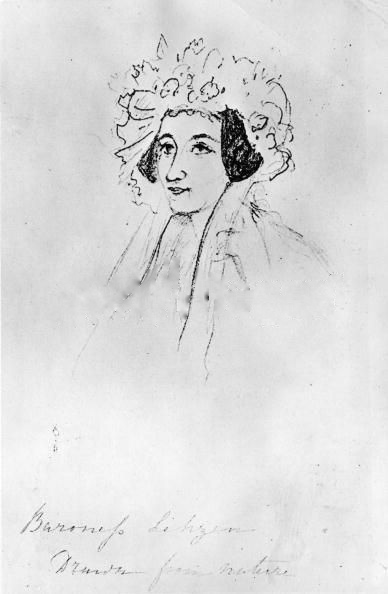
Baroness  Louise Lehzen,
drawn by Princess Victoria 1835

When Alexandrina Victoria became undoubted heiress to the throne, George IV grew concerned about her education. Alexandrina spoke German with her mother and Lehzen and knew English. In 1825, he requested that Parliament grant an additional 6000 pounds per year each to Alexandrina and to her cousin George Cumberland specifically for their education. In 1827, George IV appointed Rev. George Davys to be Victoria’s tutor, at which point her more formal education began. His lessons included religion, ancient history and Latin. It’s important to note that Alexandrina had other tutors (she was taught French and Italian, penmanship, dancing, piano and singing; she was taught to draw by Richard Westall, R.A., and enjoyed mathematics). 

At the request of his sister Princess Sophia, George IV made Lehzen a baroness in the kingdom of Hanover, to reconcile Lehzen to this appointment. (Captain Conroy became Sir John Conroy, Knight Commander of the Hanoverian empire, at this time as well, also at Princess Sophia’s request.) There are suggestions that Lehzen’s elevation was designed to eliminate “commoners” from serving the princess, as well as to ameliorate any disappointment. 

Lehzen remained with Alexandrina as lady-in attendance, and cooperated with Rev. Davys and the other tutors. Princess Sophia had previously given Conroy an estate worth 18,000 pounds in 1826. Alexandrina experienced a great loss when Feodora married Ernst, Prince of Hohenlohe-Langenburg, in 1828. (Feodora was eager to leave Kensington Palace and Conroy.) Alexandrina and her sister remained close throughout their lives. When Alexandrina Victoria reached the age of 10, she became known as Victoria. During these years, as the Duchess became more dependent upon him and he obtained more and more authority, Sir John Conroy became more overbearing and arrogant, looking for slights and determined, with the Duchess, to control Victoria.

George IV died June 26, 1830 and was succeeded by his brother William, who reigned as William IV. William and his wife Adelaide had always been fond of Victoria. Unfortunately, the duchess and Conroy immediately created friction and bad feeling by demanding more money, more prestige, formal recognition of Victoria as heir apparent, and that the duchess be made her regent. These demands offended William IV, and made him suspicious not only of the duchess and Conroy, but of Victoria herself. He was not comfortable in his role as king, preferring a simple life, and found the duchess and Conroy a great and perpetual vexation. The Duchess of Kent, in her turn, prevented Victoria from participating in the coronation procession and ceremony. 

At the king’s behest, Charlotte Percy, Duchess of Northumberland became Victoria’s official governess in 1831. Also in 1831, Prince Leopold, who had been less and less in sight, became king of Belgium, and Stockmar was needed in Coburg. Victoria was by this time aware that she was heir to the throne, and was increasingly confined. Lehzen continued to support and encourage her. Her mother and Conroy quarrelled with each other, and the pair of them continually quarrelled with the King, his ministers and the court at large. Victoria became skilled at hiding her feelings from her mother, Conroy and others in her household. The Duchess of Northumberland was dismissed in 1837 by the Duchess of Kent over her objections to the “Kensington system” and her refusal to submit to Sir John Conroy. Rev. Davys continued in his position until the death of William IV. Tensions and changes in the household strengthened the bonds between Victoria and Lehzen, and Lehzen’s influence. Lehzen encouraged Victoria to be informed and strong-minded, even though the Princess disliked learning. (Lehzen envisioned Victoria ruling as a strong, independent and unmarried queen.)

The duchess and Conroy continued their campaign to control Victoria. The duchess was determined to be appointed regent, in the event Victoria was under age when the king died, while Conroy had ambitions to be Victoria’s personal secretary and to have control over her, her household and her money. Conroy bullied the household, acting as master. Even as they quarrelled, the duchess did not prevent his domineering over Victoria. 

Victoria grew to hate Conroy and to deeply resent her mother for allowing him to abuse her. This resentment caused Victoria to withdraw into herself and created an estrangement between Victoria and her mother, long before the duchess was aware of it. Victoria was isolated except for Lehzen. In 1835, when Victoria was 16, she became ill typhoid and almost died. William IV was frail, and there were fears of his sanity. In an effort to establish his position firmly, Conroy went to Victoria as she lay extremely ill and tried to browbeat her into appointing him her personal secretary. When she refused, he brought her mother in to support his demands which Victoria continued to withstand. Angry and frustrated, Conroy apparently raged at both Victoria and Lehzen, for not giving in to his demands. This episode seems to have hardened her determination to stand her ground. She also began to read and study more on her own, preparing for her future. Even though her mother and Conroy continued their efforts, they were unable to shake her. 

Now in her teens, Victoria knew her marriage was an issue of concern and speculation. At one point, she had said she would not marry, but it was considered essential that she marry a suitable consort. William IV favoured a match with her cousin George Cambridge and, in 1833, brought George and other potential acceptable suitors together at a ball for her birthday (she was 14 years old). German cousins also began appearing for consideration. Her mother and her Uncle Leopold were in favour of her marrying her cousin Albert of Saxe-Coburg-Gotha. She was in no hurry to decide. William IV was determined that he would choose a husband for Victoria and settled on Alexander of Orange, younger son of the Prince of Orange, and arranged for Alexander and his brother to come to England to meet Victoria in 1836. Unfortunately for the king’s plan, Victoria did not take to Alexander, especially in comparison to Albert and his brother Ernest, who met Victoria a short time later. Their visit lasted 3 weeks, at the end of which Victoria wanted Albert to be her husband, even though nothing was discussed or settled at the time. Lehzen and her Uncle Leopold were her only allies through this year, as her mother and Conroy continued their program of bullying and keeping Victoria under their control and badgering the king and court to acknowledge Victoria’s status.

Victoria, Duchess of Kent (1786-1861),
mother of Queen Victoria,
by Sir George Hayter, 1835
William IV was bitterly aware of the Duchess of Kent’s ambitions to be regent and was determined to live until Victoria was 18 years old, and could inherit the throne without a regent. Victoria turned 18 on May 24, 1837. Despite being watched, she managed to meet with Lord Liverpool to discuss her situation. She also had the benefit of counsel from Baron Stockmar, sent by her Uncle Leopold to advise her. As always, Lehzen was present to support and encourage her in her stand against Conroy’s and her mother’s machinations. William IV died June 20, 1837, succeeding in thwarting the duchess’s (and Conroy’s) ambitions.

When the princess took the throne as queen, she took the name Victoria. Her first act, even before being crowned, was to have her bed removed from her mother’s room to her own room. Victoria relied on Lord Melbourne and on Lehzen for support. When Victoria moved to Buckingham Palace, Louise Lehzen accompanied her, acting as an unofficial personal secretary and unofficial head of Victoria’s household, with rooms adjoining the queen’s apartments. (Lehzen refused an official status.) Her mother had a suite of rooms much further away.

Conroy was dismissed from Victoria’s household, but continued to handle the duchess’s affairs. He was around on the duchess’s business but had no standing or influence at court, as Victoria banned him from approaching her. The duchess was present for the coronation but Conroy was not allowed to attend. Victoria acknowledged Lehzen during her coronation, and kissed Queen Adelaide and shook hands with her mother after the ceremony. Conroy was made a baronet in 1837, but the government (under Prime Minister Robert Peel) refused to create him an Irish peer. Conroy resigned his position with her mother in 1842 and left court. Victoria’s relationship with her mother improved slightly but remained distant due in part to the duchess’s continuing demands and complaints.

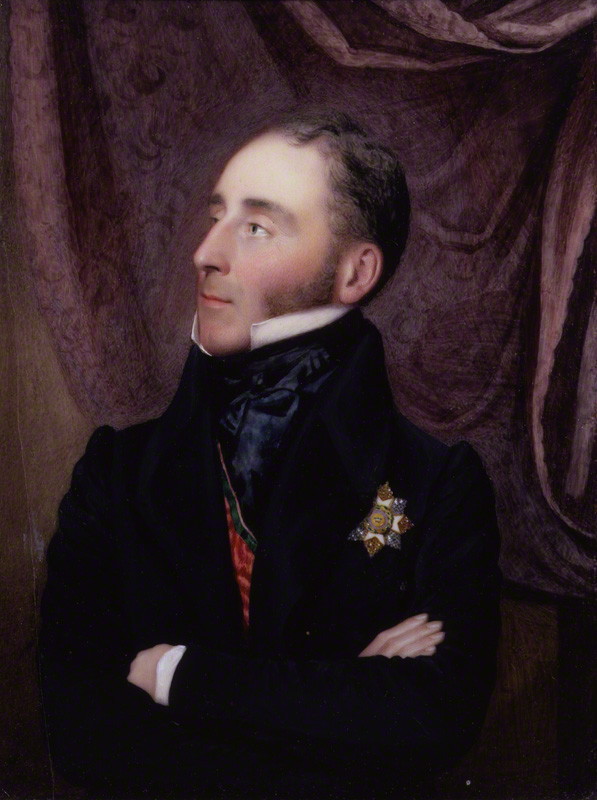
John Conroy, British Army Officer
and royal official by Alfred Tidey, 1836
Victoria considered Lehzen her only friend and intimate. Lehzen had unparalleled access and a definite influence over Victoria, that was maintained until Victoria’s marriage to Albert in 1840. Lehzen had envisioned Victoria ruling unmarried, as another Virgin Queen, and did not approve of her marriage. Lehzen did not think Albert was a good choice for Victoria’s consort. She particularly disapproved of Albert’s lack of position, money and influence; he gave nothing and received everything in her view. She was also jealous of Victoria’s love for Albert. Albert, in turn, disliked Lehzen and her continued influence over Victoria, considering her a servant who did not know her place and who was interfering in his marriage. Lehzen blocked various changes in the household that Albert wanted to make, and was not above going to the queen over his head. He in turn was jealous and resented Lehzen’s influence and Victoria’s reliance on her. (He wanted to be the head of his household, and had ambitions of his own, which required that he have Victoria’s full trust and dependence. Lehzen encouraged Victoria’s independence as queen.)

Albert got along with the Duchess of Kent, and supported a rapprochement between her and her daughter; he did not approve of Victoria’s intimacy with a servant and encouraged her to improve her relationship with her mother. He particularly resented Lehzen’s control spreading into various areas of the household over the heads of those appointed, especially the nursery. He had definite ideas of how he wanted his children raised, and they did not include Lehzen. A power struggle ensued between Albert and Lehzen, which was only resolved when Victoria’s and Albert’s first child became ill and almost died in the care of Dr. John Clark (court physician and part of the Flora Hastings case) who was summoned by Lehzen. Torn between Albert and Lehzen, Victoria finally conceded to Albert and Lehzen was let go as a result of this situation.

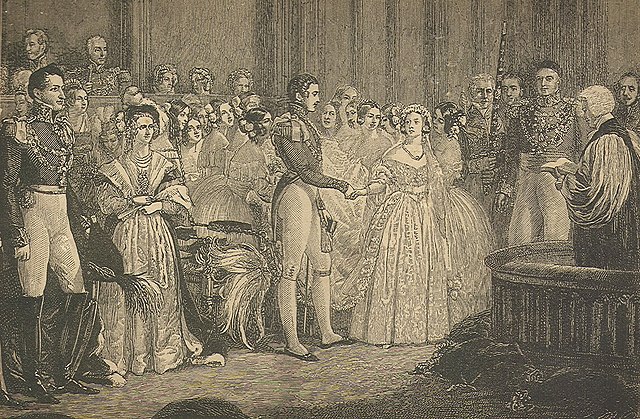
Marriage of Queen Victoria and Prince Albert.
Engraving from the book "True Stories of the Reign of Queen Victoria"
by Cornelius Brown, 1886

Lehzen left court in September 1842, ostensibly for her health, and returned to Germany with a generous pension. She lived with her sister, until her sister’s death, after which she continued to support her sister’s children. In 1858, Victoria was in Hanover and Lehzen was on the train platform, waving as Queen Victoria’s train passed, which the queen acknowledged. Much has been made of her estrangement from Queen Victoria but, in fact, she remained in regular correspondence with the Queen, and was visited by the Queen on a couple of occasions.

Louise Lehzen died September 9, 1870 in Buckeburg, Schaumberger Landkreis, Lower Saxony and was buried in the Jetenberger Cemetery. On her monument (raised by Queen Victoria), her name was shown as “Louise Clara Johanna von Lehzen.” Victoria did not significantly repair her relationship with her mother until after the death of Sir John Conroy March 2 1854, long after Louise Lehzen had left court.  It is worthy of note that, after the death of her mother, Victoria did not seem to have another intimate nurturing female relationship (other than with her daughters, which is different-she was queen and  mother in those relationships).  She relied on Albert for support and security, then John Brown, and then Abdul Karim (her Indian servant known as the Munshi).  After all is said and done, Lehzen was her safest and most trusted female friend and mentor.

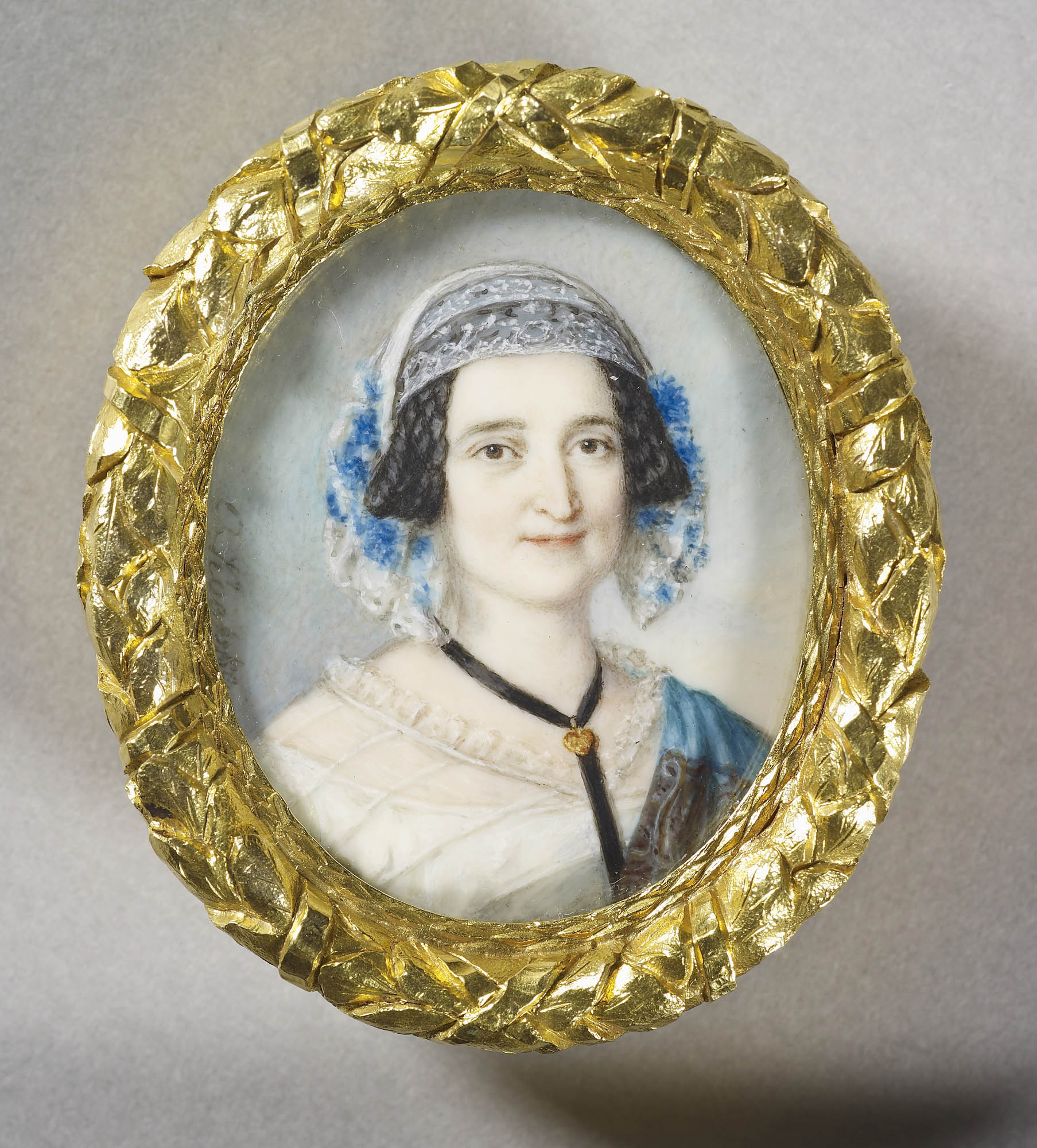
Baroness Louise Lehzen, 
Governess and Companion to Queen Victoria, 
by Koepke, 1842


Sources include:

Erickson, Carolly. HER LITTLE MAJESTY The Life of Queen Victoria. New York: Simon & Schuster, 1997.

Gill, Gillian. WE TWO: Victoria and Albert: Rulers, Partners, Rivals. (Kindle edition.) New York: Ballantine Books, an imprint of the Random House Publishing Group, 2009.

Images are all in the public domain, found in Wikimedia Commons.

Express.co.uk. “The Women Who Really Raised The Royals” by David Cohen. November 16, 2012. Here.

FamPeople.com. “Louise Lehzen, biography.” Here.

FindAGrave.com. “Louise Von Lehzen.” Posted by Dieter Bierkenmaier, April 27, 2013. Here.

Google Books. Lee, Sidney, Ed. DICTIONARY OF NATIONAL BIOGRAPHY. Supplement Vol. 3. “Victoria,” Pp. 389-500. New York: Macmillan Co. 1901. Here.

Google Books. ENCYCLOPAEDIA BRITANNICA A Dictionary of Arts, Sciences, Literature and General Information, 11th Edition, Vol. 28. “Victoria, Queen” by H. CH. (Hugh Chisholm). Pp. 28-37. New York: Encyclopaedia Britannica Company, 1911. Here.

The Esoteric Curiosa. Raising A Queen; An 1840's Thumbnail Of The Initial Lady Behind The Throne Of One Of Histories Greatest Monarchs; Johanna Clara Louise Lehzen, Better Known As Baroness Lehzen, Governess, Adviser & Companion To Her Imperial Majesty The Queen Empress, Victoria! November 12, 2013. Here.

Queen Victoria’s Scrapbook. A Letter to Queen Victoria from Baroness Lehzen from 1867. Here.

Victorian Gothic. “Louise Lehzen, Governess to Princess Victoria” April 9, 2011. Here.

Victoriana Magazine on-line. “Queen Victoria-A Very Naughty Princess.” July 13, 2014. Here.

Web of English History. “Louise Lehzen (c1784-1870)” by H. G. Pitt, 1993. Here.

Web of English History. “Sir John Ponsonby Conroy, first baronet (1786-1854)” by Elizabeth Longford, 1993. Here.

Wikiwand. “Louise Lehzen.” Here.

~~~~~~~~~~

Lauren Gilbert has a bachelor's degree in English, and a life-long love of reading. Her first published book, HEYERWOOD: A Novel, was released in 2011. Her second, A RATIONAL ATTACHMENT, is due out soon. She lives in Florida with her husband Ed. Visit her website here for more information!


Tuesday, May 31, 2016

The Life of the Governess Continued: Agnes Porter

by Lauren Gilbert

The Governess
As we’ve already seen, governesses were a necessary feature in upper class households with children. The position came to be regarded as oppressive, socially ambiguous and somehow shameful. This is especially true of the Victorian era, when middle class and tradesman families who had acquired new wealth wanted governesses for their children as a sign of their new status (and to help their children move into a higher social sphere). In many ways, this created a new tension in that, at the same time, there was a plethora of unattached gentlewomen seeking employment who went to work for people whom they might never have considered a social equal. Within the household, a governess had the social strain of being kept “in her place” combined with the need to provide their female students with less intellectual stimulation and more accomplishments, creating a singularly isolated and intellectually arid situation. This is the situation from which JANE EYRE and her like was born. Miss Trimmer (see my previous post HERE.) and Miss Agnes Porter, today’s subject, had the advantage of being from an earlier generation. They grew up at a time when education for girls was not as restricted (even if only in their reading) and worked at a time when governesses were employed primarily by the aristocracy, so the issue of rank was already settled.

Fortunately, Agnes Porter left diaries and letters, which give us an opportunity to learn about her working life. However, we do not have as much personal detail as we could wish. Ann Agnes Porter was born on June 18, sometime around 1750-52 (exact year unknown) in Edinburgh, the oldest of 4 children (she had 2 sisters and a brother; her brother died young). Her father was Francis Porter, born about 1718. His parents having died when he was young, he was apprenticed at age 12 under his uncle, a woolendraper in Great Yarmouth. Although he completed his apprenticeship, he apparently had different ambitions; by 1750, he was an ordained Anglican clergyman living in Edinburgh and married to a woman named Elizabeth (maiden name unknown but of apparently better connections) and beginning his own family. It is important to note that, despite his beginnings in trade, by becoming a clergyman and marrying a woman of somewhat better status, he raised himself up to a higher social level. This allowed his daughters to be considered gentlewomen, an important consideration.

Although Mr. Porter does not seem to have held a permanent living for most of his career, he performed marriages and services and apparently continued his studies. Despite the fact he and his family seem to have relocated to Chelsea near London by about 1763, Francis Porter was awarded a Doctor of Divinity degree by Edinburgh University in 1765. He had also benefited from a series of inheritances from aunts, first in 1757, again in 1764 and again in 1765, inheriting money and property in Great Yarmouth, among other benefits. The family remained in the Chelsea-London area until about 1770. In 1778, he was given his own living at Wroughton, Wiltshire, as vicar. He died March 28, 1782 at Wroughton, living his widow and 3 daughters.

We know nothing of the education of Agnes and her sisters. There is no indication that she or her sisters were sent away to school; there is a strong probability they were educated at home. We don’t know what benefits Mr. Porter’s inheritances may have afforded the family prior to his death. As a clergyman, particularly one pursuing his own education, one assumes there were books in the households in which they lived. There is an indication that Agnes and her youngest sister Fanny were in Boulogne, France, for some time as girls; certainly, Agnes spoke respectable French as an adult. At some point, she must have had music lessons, as she played the piano and the harpsichord and sang. It is apparent she read widely, had an inquiring mind, and acquired the usual skills: the use of the globes (celestial and terrestrial), drawing, geography, etc.

Agnes spent some time in the household of a wealthy family named Ramey in Great Yarmouth. John Ramey, head of the household, may have been a friend or acquaintance of her father. She may have been in the household for at least part of the time as Mrs. Ramey’s companion, and was there at the time her father died in 1782. There is no indication of what happened to the property Mr. Porter had inherited in Great Yarmouth; he left little to his surviving family and, as the widow of a clergyman, Mrs. Porter had to leave the house that had come with the living. From this point, it was apparent that Agnes was going to have to support herself and her mother. Her first known position as a governess was in the household of a family named Goddard with several daughters later in 1782, which was located in Swindon, not far from Wroughton. She stayed there a short time, before moving on to the household of the 2nd Earl of Ilchester in January of 1784. She was then in her early thirties. Her salary was 100 pounds per year and she was provided with comfortable rooms of her own, including the use of a parlour.

Lord Ilchester’s family was wealthy and related to Lord Holland and Charles James Fox, one of the strong Whig families. Despite this, his wife and children spent most of their time at Redlynch in Somerset, rather than in London or at other more imposing estates. Lady Ilchester was the daughter of an Irish gentleman, and apparently the marriage was a love match. At the time Agnes Porter joined their household, Lord and Lady Ilchester had 3 daughters, and her arrival occurred just before the birth of a 4th daughter. Lady Ilchester, by all accounts, was a warm-hearted person who preferred life in the country with her children, and Agnes Porter became very attached to her. It appears that Miss Porter and Lady Ilchester became friends. A son and 2 more daughters were born. Sadly, Lady Ilchester died in June of 1790, shortly after the birth of her 6th daughter. Agnes Porter had the teaching of and a great deal of the care of the children. Lord Ilchester was involved with his children, particularly the older ones, taking them on visits from home and to his London home during the season.

Miss Porter’s teaching style seems to have been less reliant on learning by rote than by experience, reward and making the lessons fun. She heard their prayers and their lessons, took them for walks, supervised their play and read with them. This could involve a day lasting up to 16 hours, and occurred every day. Having an affectionate relationship with their mother and fondness for the children must have made things much easier for Miss Porter and the family (unlike the periodic tensions between Selina Trimmer and Georgiana, Duchess of Devonshire and Elizabeth, the 2nd duchess). After the death of Lady Ilchester, Miss Porter was even more involved with the day-to-day care of the younger children. She genuinely liked teaching. She was also a sympathetic friend to the two older girls who were growing up and no longer required teaching as much as guidance.

During this time, Miss Porter was able to see friends, especially when in London. Her youngest sister Fanny Richards (who had married a clergyman) visited her at Redlynch. She sent money to her mother and younger sister Elizabeth, who lived with Mrs. Porter. She also corresponded with her sister Fanny. Agnes wrote and published a book of children’s stories in 1791. However, despite the many advantages of her position, she worried about her mother and wanted to spend more time with her which was difficult. She visited when she could, and was concerned about her mother’s health. Agnes was there multiple times in 1791, and again in July of 1792, when she paid her mother’s debts and arranged for more care for her (sister Elizabeth was apparently not a reliable caregiver, which added to Agnes’ worries). She was also anxious about an indigent old age, despite Lord Ilchester’s promise of an annuity of 30 pounds per year. She hoped for a marriage, and a home of her own, as that offered the most security.

In 1794, one of Lord Ilchester’s older daughters, Mary, married Thomas Talbot and moved with him to his home Penrice Castle in Wales. This was a wrench, as Lady Mary and Miss Porter were friends. They did however engage in correspondence. On June 8, 1794, Miss Porter’s beloved mother died. Then, in August of 1794, Lord Ilchester married again, to his cousin Maria Digby, a much younger woman. Although Miss Porter tried to be optimistic, the new Lady Ilchester did not warm to Miss Porter, apparently uncomfortable with Miss Porter’s affectionate relationship with her stepchildren. The birth of a son two years later to Lord and Lady Ilchester only exacerbated the tension, culminating in Miss Porter’s determination to leave the position in 1796, although restricted by her situation (where to go?). Fortunately, a friend, Mrs. Upchur, offered Miss Porter 100 pounds per year to come as companion, so Miss Porter was able to give her notice to Lord Ilchester, who was distressed to lose her. She moved in with Mrs. Upchur in September of 1797. She was in her mid forties and had been with them over a decade.

In March 1799, Mrs. Upchur died, leaving Agnes 100 pounds. Later in 1799, her friend and former pupil Lady Mary Talbot, now a mother herself, invited Miss Porter to come to Penrice to teach her children, also offering 100 pounds per year. This gave Miss Porter the opportunity to return to a country household with a congenial mistress and a second generation of children to teach. She remained with the family until she retired in 1806. Lord Ilchester had died in 1802, but he left many debts and an unclear will, so it took much time for the promised annuity to be paid. At some point in 1808, the payment of the annuity finally became reliable.

Fortunately, the Talbots continued to pay her 30 pounds per year after her retirement and she was able to go live with her married sister Fanny and her brother-in-law in Fairford, Gloucestershire. She periodically returned to Penrice to help out, and also visited London and Norfolk. At some point, she decided to leave her sister’s home (there is a suggestion that her brother-in-law’s evangelical beliefs were not compatible with her beliefs, and particularly her fondness for cards). Ultimately, she spent the last few years of her life comfortably in lodgings in Bruton, a happy situation near Redlynch where she had acquaintance and was able to enjoy a social life. Agnes maintained her correspondence with Lady Mary Talbot until she passed away in February 1814, in her early 60’s. She left approximately 2000 pounds, which she had settled with a will written in 1813, benefiting her sister Fanny and some cousins, and leaving a few other bequests.

Agnes Porter’s diaries give us many insights to her life and activities as a governess that we do not have with Selina Trimmer. She acknowledged herself as plain, but she retained her intellectual curiosity and strove to learn. She read books about education, tried to teach herself Latin, German and Italian, and continued to read widely during her life. She clearly had positions in the Ilchester and Talbot homes that allowed her privacy and a certain amount of freedom and paid her decently, allowing her to support her mother and to save something for herself. In spite of this, she was dogged by the uncertainty of her situation and the fear of being alone and poor in her old age. Throughout her career, as successful and satisfying as it was in many ways, Agnes Porter wanted to be married. She had her hopes raised and disappointed more than once well into her middle years. It’s no wonder that, after Lord Ilchester’s death, she pursued her annuity until it was resolved and paid regularly.


The information here is from the following sources:

Brandon, Ruth. GOVERNESS The Lives and Times of the Real Jane Eyres. 2008: Walker Publishing Co., New York, NY.

Martin, Joanna, ed. A GOVERNESS IN THE AGE OF JANE AUSTEN The Journals and Letters of Agnes Porter. 1998: The Hambledon Press, London, England.

I highly recommend both books. Unfortunately, I found no portrait of Miss Porter in the public domain.


Image: The Governess by Emily Mary Osborne, 1860. Wikimedia Commons. HERE


Lauren Gilbert lives in Florida with her husband.  Her first published work, HEYERWOOD: A Novel, was released in 2011.  Her second novel, working title A RATIONAL ATTACHMENT in in process.  Visit her website HERE for more information.

Tuesday, May 17, 2016

The Life of the Governess: Selina Trimmer

by Lauren Gilbert


The Governess by Richard Redgrave

Governesses were a necessary feature in upper class Regency households with children. In literature, their lives are seldom discussed with admiration or envy, sometimes not even with respect. In Jane Austen’s novel, 'Emma', the marriage of Emma’s governess to Mr. Weston was celebrated not least for the drastic improvement of her status from governess to wife of a respectable man in local society. In the same novel, Jane Fairfax referred to the prospect of becoming a governess in bleak terms “...Offices for the sale – not quite of human flesh – but of human intellect.”

The governess was not on equal footing with the family but of higher status than other servants, a lonely position. Maria Grace described the duties and position of governess well in her excellent post Here. However, with all its difficulties and limitations, the position of governess was one of few respectable alternatives for an educated woman of no means to support herself, and could, at least in some cases, provide opportunities for satisfaction, a measure of security and even affection. Some of these can be found in the lives of two governesses during the Regency era: Selina Trimmer and Agnes Porter. In this post, we will first meet Selina Trimmer.

In order to get a glimpse of Selina Trimmer, it is important to know her mother. Selina was the daughter of Sarah Kirby Trimmer, an education reformer, writer and philanthropist. She founded several schools, Sunday schools as well as charity schools, and questioned many of the attitudes and customs regarding women and family then in place. From a genteel family, she was living at Kew (thanks to her father’s appointment as clerk of works in the palace) when she met James Trimmer, whom she married. They had twelve children, six boys and six girls. She was primarily a wife and mother, who educated her children herself at home (the boys until they went to school) with the assistance of her husband, and became passionate about education.

Sarah read all of the books intended for her children, and selected reading specifically for each child. She herself wrote between thirty and fifty books, including text books, children’s literature, teaching manuals, and more. Sarah was also deeply religious, believed in rank and the social structure of her time (the poor were meant to be poor, in her estimation), and she embedded a strong religious and moral foundation into her educational program. She placed her students in positions, including positions as governess in respectable households. As Mrs. Trimmer became known for her interest in education, her schools and her writing, she became influential; even the Queen asked her advice regarding the founding of a school.

Selina (actually named Sarah, like her mother) was the second child, and second daughter, born to Mr and Mrs Trimmer. She was born August 16, 1764, and was thoroughly educated at home by her mother. Mrs. Trimmer took her children to visit their grandparents regularly. She was literally surrounded by books and educational theory throughout her childhood and young adulthood. She did not marry, and references to her are limited to her position as governess in the family of the Georgiana, Duchess of Devonshire. I found no biography of Selina, and she appears in the background as a minor character when reading of the Duchess and her children, and her niece Caroline Lamb. However, there was much more to Selina Trimmer than first appeared. An interesting question: how did she get into the Devonshire household?

Margaret Georgiana Poyntz Spencer, Countess Spencer, was the mother of Georgiana, Duchess of Devonshire. She was a very intelligent, well-educated woman, who was interested in philanthropy and education herself. She and her husband John, Earl Spencer were noted patrons of writers and artists. Although I have found no specific reference to support this, I find it hard to believe that Lady Spencer did not at some point make the acquaintance of Mrs. Trimmer and possibly her daughter. 

There is no doubt that Lady Spencer was instrumental in inserting Selina into the Duchess’s household. Lady Spencer had long been concerned about and vastly disapproving of the intimate friendship Georgiana had formed with Lady Elizabeth Foster, who had also become the intimate friend of Georgiana’s husband, the Duke of Devonshire. Elizabeth had also been hired as governess to the Duke’s illegitimate daughter Charlotte and was to accompany Charlotte to France. Unfortunately, in Lady Spencer’s view, this separation did not cool the friendship. Lady Spencer also disapproved severely of Georgiana’s own behaviour, particularly the gambling, the interest in politics and her other activities.

The Duchess of Devonshire by Joshua Reynolds (with Little G)

By 1785, Georgiana had two daughters with the Duke, and Bess also had a daughter with him. (I do not propose to go into all of the particulars of the activities of the Devonshire House set. Suffice to say, Lady Spencer found plenty about which to be upset, not only with Georgiana and her activities, her son-in-law, and their live-in friend Elizabeth, but with her younger daughter Harriet Ponsonby, Lady Bessborough, the mother of Caroline Ponsonby who became Lady Caroline Lamb.) I am speculating here, but it seems highly likely that Lady Spencer would have consulted with Mrs. Sarah Trimmer regarding her daughters’ children, their need for a governess who was not only intelligent and well educated, but of strong moral fibre, to counteract the bad influences swirling around them. Who better than Mrs. Trimmer’s own daughter?

Selina was already in the household as governess when Georgiana conceived her third child while in France in 1789 with her husband and Elizabeth. There are hints that Lady Spencer had managed to insert her in the Devonshire household, and that Selina reported to Lady Spencer even at this early date. Apparently the entire family was together when the longed-for son William, the Marquise of Hartington, was born May 21, 1790.

Lady Spencer returned to England with the children in July, which was apparently the point that Lady Spencer actually became friendly with Selina, and saw an opportunity to try to reform her daughter’s household from within. Multiple accounts indicate that Selina reported the intimate goings-on in the household to Lady Spencer, and was influenced by Lady Spencer’s displeasure with those goings on and desire to rid the household of Lady Elizabeth. Selina was particularly disapproving of the presence of Lady Elizabeth in the household (a ménage a’ trois, by all accounts), and made her disapproval known to the lady in no uncertain terms.

Lady Elizabeth Foster by Sir Joshua Reynolds

Fanny Burney met Selina Trimmer in the Duchess’s household, and was apparently not impressed, finding her neither natural nor simple in manner, plain, yet in possession of her mother Sarah’s pleasant calm. Most accounts describe her as friendly and well-liked, yet easily worn down. (Apparently, despite her education and moral rectitude, Selina was not a harsh disciplinarian; it seems her charges were able to get around her.) She was considered quite learned and imbued her lessons with the religious morality learned from her mother, which must have been a source of satisfaction to Lady Spencer.

When in October of 1791, the Duke of Devonshire ordered Georgiana (who was pregnant with Charles Grey’s child) to go abroad, Selina had sole care of the three children at Devonshire House in London. During the two years that the Duchess was separated from her children, Selina Trimmer assisted her in maintaining contact with her children by letter, and kept her informed on their activities. The Duchess was allowed to return in September of 1793, which created further awkwardness.

The children had developed difficulties in the Duchess’s absence: under the strictly moral program of education formulated by Miss Trimmer (and, I’m sure, approved by Lady Spencer), Georgiana (“Little G”, the oldest child of the Duke and Duchess of Devonshire) had become morbidly religious, worried about sin and with no self-confidence; Harriet (“Harry-O”) was reserved and very sensitive; their son William (the Marquise of Hartington, called “Hart”) had had an infection that resulted in his near-deafness, didn’t remember Georgiana at all, and had grown from a cuddly baby to an angry toddler.

Georgiana would hardly have been human if she had not resented these issues with her children, and blamed Selina at least in part. Selina, on the other hand, was accustomed to having free rein with the children and disliked the duchess trying to take back control of the children’s care. The tension was exacerbated by the duchess’ awareness that Selina was continuing to report to her mother. It took three years for the two women to come to terms and rebuild a semblance of trust between them.

The children were all genuinely fond of Selina and, even after the Duchess had restored her relationship with her children to some degree and regained some control over their upbringing, the Duchess continued to rely on Selina and encouraged her children to appreciate the care Selina had given them. There are letters in the Chatsworth archives written by the children that show their continuing affection for her even after they reached adulthood.

About 1794, the household included the Duchess’s niece, Caroline Ponsonby, who created her own excitement with her lively curiosity and intense emotional swings. Selina was limited in her ability to challenge Caroline’s intellectual curiosity as much as she may have wished, as the doctors recommended that Caroline be discouraged from applying herself to her study and to refrain from stimulation in hopes of calming her. However, Caroline was a great reader and developed a talent for writing. As the girls grew up, Selina acted as their chaperon and companion.

Lady Caroline Lamb

Selina remained in the Devonshire household even after both girls had come out and Hart had gone to Harrow in 1801. When the Duchess became ill in March of 1806, the Duke asked Selina to remain with them to attend to the household during her illness and decline. The Duchess died on March 30, 1806. By this time, Little G was married and in her own household. Harriet, the oldest daughter at home, assumed she would be in control of the household (at least to the extent of sitting in her mother’s place at table and being the hostess) but, to her chagrin, found the role taken by Lady Elizabeth. Neither of Georgiana’s daughters had ever liked Elizabeth, and they greatly resented her continued presence in the house and their father’s life.

Harriet kept Selina with her to avoid having to appear with Lady Elizabeth. This was a particularly difficult time for Selina as Lady Elizabeth, in her role as chatelaine, apparently decided to avenge past slights and made Selina’s life very uncomfortable by criticizing and contradicting her. There is an indication that Selina left Devonshire House in November of 1806. If she did leave, it was not permanent because she was back with Harriet (“Harry-O”) in 1807. Regardless of the emotional highs or lows, there is no indication that Selina was forced to look elsewhere or that her life was unpleasant enough for Selina to want to move on.

Elizabeth married the Duke of Devonshire on October 19, 1809, yet another cause for uproar within the family. However, she was received into society and the situation calmed. Regrettably, the Duke became ill in July of 1811, and died July 29th. Unfortunately for Elizabeth, he died leaving financial matters for his son by Elizabeth unclear. Selina joined other family members in counselling the new Duke (Hart) to make an appropriate settlement for his half-brother. Selina was recommended to Princess Charlotte as a possible candidate to become governess to the Princess’s expected child, but stayed on in the Devonshire household. Princess Charlotte died in childbirth November 6, 1817.

When the late Duchess of Devonshire’s beloved sister Harriet (Lady Bessborough and Lady Caroline Lamb’s mother) became ill, Caroline became very agitated. When Lady Bessborough died, Selina stepped into the breach and stayed with Caroline in London prior to the funeral, to be held December 31, 1821 (Harriet was buried at Chatsworth). Caroline was distraught, contemplating suicide, and under medical care during this time. Selina went to Brocket, the Lamb’s country home, with Caroline, and then on to Chatsworth with her, although Caroline did not actually attend the funeral.

Selina Trimmer was a valued member of the Devonshire household from approximately 1788 or 1789 until at least 1821, a period of over 30 years. Throughout this tumultuous period, in spite of the intrigue and factions within the household, the Duke and Duchess of Devonshire and Lady Spencer obviously respected Selina and held her in high regard. The children apparently held her in affection, as their letters indicate.

She had at least one significant opportunity to change positions to her advantage and chose not to do so, which argues that she was content with her situation with the Devonshires. (Even though the Princess died, the fact that such a recommendation had been made is in indication that Selina could have obtained another position without much difficulty had she genuinely wish to do so.) In dire situations, the family turned to Selina for support and she remained a person of influence. Selina Trimmer died in 1829. Although I could not find the exact date of her death or the location of her grave, there is nothing to indicate that her connection with the family of the Duke of Devonshire was severed prior to her passing.

~~~~~~~~~~~~~~~~~~
Sources include:

Austen, Jane. EMMA. The Oxford Illustrated Jane Austen. Oxford University Press, Oxford, England, 1988.

Chapman, Caroline. ELIZABETH AND GEORGIANA The Duke of Devonshire and His Two Duchesses. Hoboken: John Wiley & Sons, Inc. 2002.

Douglass, Paul. LADY CAROLINE LAMB A Biography. New York: Palgrave MacMillan, 2004.

Foreman, Amanda. GEORGIANA Duchess of Devonshire. New York: Radom House, 1998.

English Historical Fiction Authors blog. “Professional Household Staff, A Cut Above the Servants,” by Maria Grace, Feb 17, 2016. Here.

GoogleBooks. Mrs. Trimmer (Sarah). SOME ACCOUNT OF THE LIFE AND WRITINGS OF MRS. TRIMMER. London: C & J Rivington, 1825. Here.

All images are from WikimediaCommons:

The Governess, by Richard Redgrave, 1844: Here.

The Duchess of Devonshire and Lady Elizabeth Foster: Here.

Lady Caroline Lamb: Here.

                                                                                                                                                            
Lauren Gilbert, author of HEYERWOOD: A Novel, has always been fascinated by the Regency era.  She lives in Florida with her husband, and is working on her next novel.  Visit her website here to find out more.

Wednesday, February 17, 2016

Professional Household Staff, a Cut Above the Servants

by Maria Grace
 
Not everyone who worked in a household was considered a servant. During the Regency Era, the wealthiest of households might employ a number of individuals who were considered, not servants, but professionals, firmly part of the middle class. Not surprisingly, these positions were held by men, although some might argue, the governess approached this stratum as well. 

These professional positions included the chamberlain, land steward, and house steward. All required education; reading, writing and managing accounts were necessary skills for these positions.  Specialized knowledge in legal contracts, farming and animal husbandry might also be required. Many men who held these positions were often trained in the law as well. They might have been law clerks or solicitors prior to their employment with the household. Only the largest estates required, or could afford, these services.


Chamberlain

Chamberlains were only found in noble households. This official maintained the living quarters of a sovereign or nobleman. They might also collect rents and manage revenues from the nobleman’s properties as well. 

Land Steward

Large estates might employ a Land Steward to assist the Master in the management of the estate. While he might, at times, serve as the Master’s secretary, the position required greater responsibilities, garnering an average salary of £100-£300 and a private home on the estate. With responsibilities for agricultural and rental properties, the Land Steward would often have an education in the law. His status was on par with the family’s solicitor.

The estate Master might manage some of the estate business or delegate part, or even all of it, to the Land Steward. These duties included collecting rents, leasing farms and other properties, managing tenant contracts and disputes, and all the record keeping related to those activities.

Successful Land Stewards also required expertise in agriculture and husbandry. They supervised the cultivation of the land and assisted tenant farmers in learning methods to improve their yields. They might purchase farm horses, cattle and breeding stock, and manage the breeding and raising of livestock.

On very large estates, Land Stewards might have one or more bailiffs working beneath him.  


House Steward

Very large households, too large for a housekeeper alone to manage, might also employ a House Steward.  Like the Land Steward, he was considered a professional, commanding a salary of £50-£100 per year. Unlike the Land Steward, he would be given quarters in the house itself, including both a bedroom and sitting room to be used as an office for many of his duties.

The House Steward conducted all the domestic business of the household, reporting directly to the Master of the estate. Although in practice much of the House Steward’s business fell under the jurisdiction of the Mistress, and he might consult with her, women rarely supervised men, even male servants.

The House Steward managed all the hiring, firing and payment of the household staff. He did not, though, engage ladies’ maids, companions, valets, nurses or governess. He might be involved in the delegation of work to the household servants, although that often fell to the housekeeper.

The household finances were also the House Steward’s domain. He would place orders for needed goods, pay the household bills and manage the household books. 

The Master might or might not regularly review the house steward’s accounts. In practice, such supervision was advisable, as House Stewards were often known to pad the prices of goods and services to include a healthy portion that went directly into their pockets. 


The Special Case of the Governess

The governess was the only female member of the household staff whose position resembled that of the professional staff. Even so, her position was one of an odd social limbo, neither middle class, nor servant.

Only educated women, usually of genteel birth, could be governesses. Usually they were the unmarried daughters of gentlemen whose circumstances forced them into service to support themselves. Thus, with respect to their education, they resembled professional men. 

Governesses cared for and taught a family’s teenaged girls. The boys would be sent off to boarding school rather than be taught at home. A typical governess would earn just £25 a year, half of what a House Steward might earn, and would have quarters of some kind in the house.

Since she was gently born, a governess often was not accepted by the servants as part of their ranks. But, because she was paid, she was not included in the social life of the family either. 

Many families would expect her to be constantly busy, as the female servants were, to the point of always having sewing in her hands if she was not immediately engaged with the children. Although one might hope her gentle breeding would protect her, in fact, governesses were often imposed upon by their male employers, males in the family or even male servants. Little legal protection existed to protect young women serving in houses not their own.  

These professional (or quasi-professional, in the case of the governess) positions functioned largely outside the servants’ hierarchy. Immediately below them were the upper staff, butler, housekeeper, valet and lady’s maid, the subject of this series’ next installment. 

For more information about servants and household staff, please see previous articles in this series:

~~~~~~~~~~~~

 Maria Grace is the author of Darcy's Decision,  The Future Mrs. Darcy, All the Appearance of Goodness, and Twelfth Night at LongbournRemember the Past, and Mistaking Her CharacterClick here to find her books on Amazon. For more on her writing and other Random Bits of Fascination, visit her website. You can also like her on Facebook, follow on Twitter or email her.