by Catherine Curzon
Reading through newspapers of the Georgian era has always been a source of delight to me; long hours can be lost to browsing the dailies, and if we think our news today is scandalous and prurient, we have nothing on the 18th century. One of the first I encountered was The Daily Courant, a newspaper owned by a most estimable lady named Elizabeth Mallet.
Mallet launched the Courant from her premises besides the Kings Arms on Fleet Bridge, London, on 11th March 1702; her adders was given as the wonderfully evocative against the Ditch at Fleet Bridge, which puts it somewhere in the vicinity of the building occupied by The Times two centuries later. As the first daily English language newspaper to be published in Britain, it was a remarkable endeavour undertaken by a remarkable woman, yet by our standards, the newspaper resembled a newsletter rather than the supplement and advertisement-stuffed behemoths that plop through our letterboxes today.
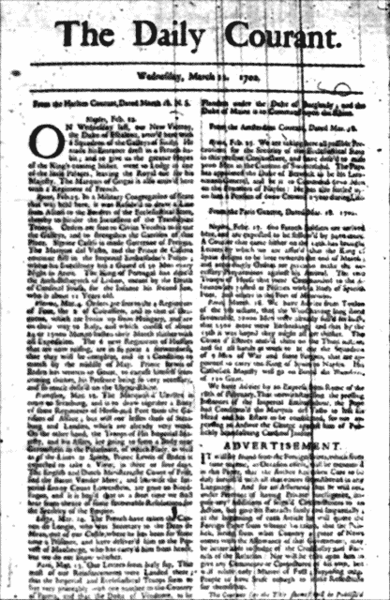
The Courant was only one page, so there were none of troublesome glossy inserts to clutter up one's home, but what it did contain was reports of the major stories of the day. When one's curiosity for current affairs was sated, one could turn over and browse advertisements on the reverse.
Mindful of the public's thirst for news from overseas and sensing that the availability of such material was sorely lacking, the paper confined itself to reporting only on stories that came from abroad. The news was curated from overseas gazetteers and translated into English, presented without any editorial or opinion to muddy the facts. Instead, Mallet considered her readers "had sense enough to make reflections for themselves", something that the news writers of today might do well to remember!
Sadly, Mallet did not receive recognition for her endeavours as, well aware that a female name on the byline might not endear her newspaper to the public, she published the Courant under the gender-neutral name E Mallet. In 1703 she sold the paper to Samuel Buckley and then faded from the annals of history until 1706, when reference can be found to her posthumous estate. Buckley, of course, went from strength to strength and became a famed name in the industry, eventually securing his place in news history as the printer of The Spectator, a title that exists on newsstands to this day.
Like most groundbreaking endeavours, the Courant was not without its controversies, and on 7th April 1712, the paper fell foul of government when it printed an account of business in the House of Commons translated from a Dutch source. Publishing the private business of parliament was a serious matter, and Buckley was punished with a hefty fine for his wrongdoing. Naturally, the case did no harm to sales of his newspaper!
The Courant continued for 34 years under Buckley's stewardship, and in 1735 it merged with the Daily Gazetteer. Buckley himself passed away five years later, his place in the history of printing assured.
References
Dunton, John, The Life and Errors of John Dunton, Citizen of London. J. Nichols, 1818.
Leach, Henry Leach. Fleet Street from Within. J.W. Arrowsmith, 1905.
Wheatley, Henry Benjamin and Cunningham, Peter. London Past and Present: Its History, Associations, and Traditions. Cambridge University Press, 2011.
Williams, Kevin, Read All About It!: A History of the British Newspaper. Routledge, 2009.
Reading through newspapers of the Georgian era has always been a source of delight to me; long hours can be lost to browsing the dailies, and if we think our news today is scandalous and prurient, we have nothing on the 18th century. One of the first I encountered was The Daily Courant, a newspaper owned by a most estimable lady named Elizabeth Mallet.
Mallet launched the Courant from her premises besides the Kings Arms on Fleet Bridge, London, on 11th March 1702; her adders was given as the wonderfully evocative against the Ditch at Fleet Bridge, which puts it somewhere in the vicinity of the building occupied by The Times two centuries later. As the first daily English language newspaper to be published in Britain, it was a remarkable endeavour undertaken by a remarkable woman, yet by our standards, the newspaper resembled a newsletter rather than the supplement and advertisement-stuffed behemoths that plop through our letterboxes today.
The Courant was only one page, so there were none of troublesome glossy inserts to clutter up one's home, but what it did contain was reports of the major stories of the day. When one's curiosity for current affairs was sated, one could turn over and browse advertisements on the reverse.
Mindful of the public's thirst for news from overseas and sensing that the availability of such material was sorely lacking, the paper confined itself to reporting only on stories that came from abroad. The news was curated from overseas gazetteers and translated into English, presented without any editorial or opinion to muddy the facts. Instead, Mallet considered her readers "had sense enough to make reflections for themselves", something that the news writers of today might do well to remember!
Sadly, Mallet did not receive recognition for her endeavours as, well aware that a female name on the byline might not endear her newspaper to the public, she published the Courant under the gender-neutral name E Mallet. In 1703 she sold the paper to Samuel Buckley and then faded from the annals of history until 1706, when reference can be found to her posthumous estate. Buckley, of course, went from strength to strength and became a famed name in the industry, eventually securing his place in news history as the printer of The Spectator, a title that exists on newsstands to this day.
Like most groundbreaking endeavours, the Courant was not without its controversies, and on 7th April 1712, the paper fell foul of government when it printed an account of business in the House of Commons translated from a Dutch source. Publishing the private business of parliament was a serious matter, and Buckley was punished with a hefty fine for his wrongdoing. Naturally, the case did no harm to sales of his newspaper!
The Courant continued for 34 years under Buckley's stewardship, and in 1735 it merged with the Daily Gazetteer. Buckley himself passed away five years later, his place in the history of printing assured.
References
Dunton, John, The Life and Errors of John Dunton, Citizen of London. J. Nichols, 1818.
Leach, Henry Leach. Fleet Street from Within. J.W. Arrowsmith, 1905.
Wheatley, Henry Benjamin and Cunningham, Peter. London Past and Present: Its History, Associations, and Traditions. Cambridge University Press, 2011.
Williams, Kevin, Read All About It!: A History of the British Newspaper. Routledge, 2009.
~~~~~~~~~~~~~
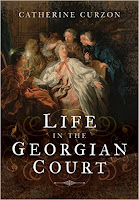

Glorious Georgian ginbag, gossip and gadabout Catherine Curzon, aka Madame Gilflurt, is the author of A Covent Garden Gilflurt’s Guide to Life. When not setting quill to paper, she can usually be found gadding about the tea shops and gaming rooms of the capital or hosting intimate gatherings at her tottering abode. In addition to her blog and Facebook, Madame G is also quite the charmer on Twitter. Her first book, Life in the Georgian Court, is available now, and she is also working on An Evening with Jane Austen, starring Adrian Lukis and Caroline Langrishe.