Showing posts with label Regency England. Show all posts

Thursday, April 28, 2022

A Visit to the Seaside: Worthing


by Lauren Gilbert

Located on the coast in West Sussex, Worthing is between 50-60 miles south of London, and 10-12 miles west of Brighton and Hove (depending on routes taken). It has a long and fascinating history.

Stone Age people were in the area approximately 60,000 years ago. By the New Stone Age or Neolithic era (between about 4000 BCE to about 2000BCE), Worthing was the centre of flint mining; Romans also settled the area. The Iron Age (about 750 BCE-about 43 AD) hillfort Cissbury Ring is the largest hill fort in Sussex, and the 2nd largest in England. It contains one of the Neolithic flint mines found in the area.
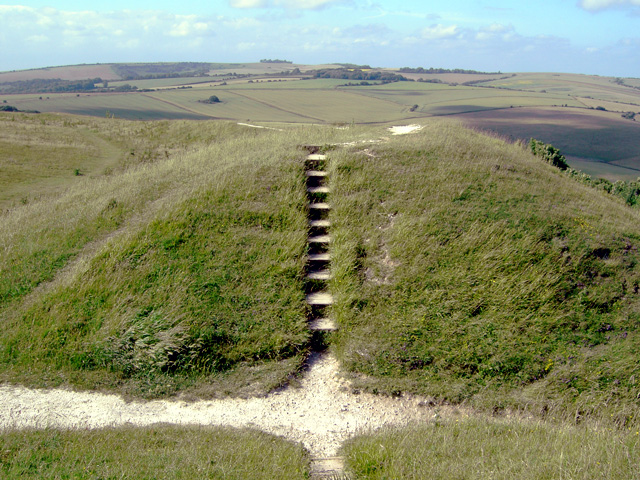


Easternmost Part of Cissbury Ring by Slbs June 29, 2008 Creative Commons

At the Norman Conquest, the Manor of Worthing included the Ordinges and Mordinges estates. William de Braose received the Manor. The estates were joined, and Bramber Castle was built. The Manor was then leased to Robert Le Sauvage. Worthing was included in the Domesday Book.
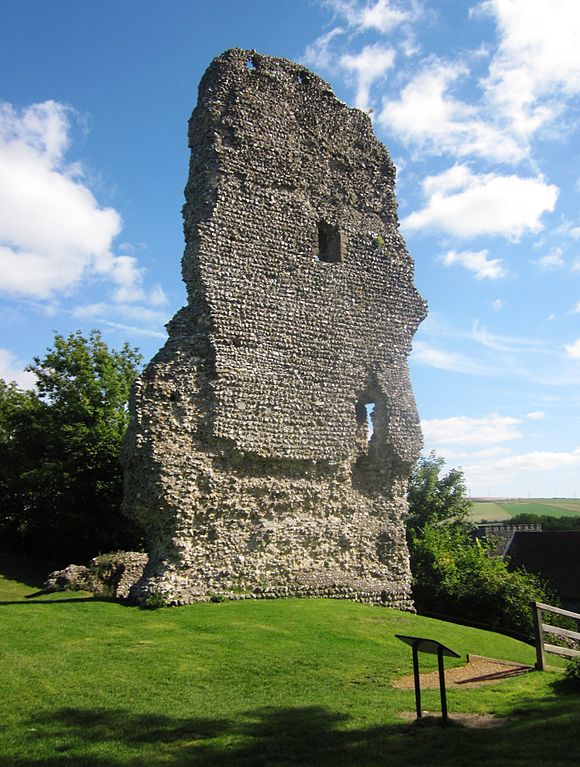

Remains of the Norman keep of Old Bramber Castle by Margaret Anne Clarke Sept. 20, 2013, Creative Commons


During Georgian Era, Worthing saw great change. For decades, Worthing was a fishing village, with mackerel as the prime catch, until the temperate climate and seaside started attracting visitors in the 1750s. It was also a stronghold of smugglers throughout the 19th century.

As other watering places such as Brighton became more congested, less crowded places, such as Worthing, became more attractive. As physicians extolled the benefits of sea bathing for health, more visitors came. George III (who had popularized Weymouth as a seaside destination, visiting numerous times in 1789-1805) thought it might improve Princess Amelia’s health and brought her to Worthing in 1798.

By 1803, streets had been built, along with some hotels and fine homes. The early visitors were wealthy fashionables, who expected comfortable accommodations and entertainment. The medical benefits of sea bathing attracted some. Others confined themselves to travel within the United Kingdom due to the difficulties of foreign travel resulting from the Napoleonic Wars. In 1803, Parliament passed an Act, establishing Worthing as the Town of Worthing, and establishing a group of commissioners to manage cleaning, lighting, improving streets and roads, and to establish a police force.

There is also a Jane Austen connection-she stayed at Stanford’s Cottage in Worthing, with her mother, her sister Cassandra and her friend Martha Lloyd for several weeks in late 1805. Worthing is considered the likely inspiration for SANDITON. Edward Ogle (a prominent businessman) and Warwick House, which he purchased in 1801, may have been models for Mr. Parker and Trafalgar House.(1) Now known as Stanford Cottage now has a blue plaque declaring that Jane Austen stayed there.

In 1813, John Feltham described Worthing and said, “In a short space of time, a few miserable fishing huts and smugglers’ dens have been exchanged for buildings sufficiently extensive and elegant to accommodate the first families in the kingdom. The establishment of two respectable libraries (Spooner’s and Stafford’s) at each of which the newspapers are regularly received, and the erection of commodious warm baths (Wickes’s) within a few years; sufficiently prove how far it has risen in public estimation.” (2)

In 1821, The Esplanade was built to create a suitable place for people to promenade. After 1825, Worthing was no longer considered a fashionable resort, and drew a much smaller crowd of visitors, which resulted in financial difficulties for the town in the 1830s. It became a suitable resort for families and those seeking health.

During the Victorian Era, as its status declined, Worthing again experienced financial difficulties in the 1850s. In 1862, the Pier was built, and in 1865, the Esplanade was expanded and renamed the Marine Parade. By 1889, a pavilion had been built on the southern end of the Pier. Paddle steamers, providing popular day trips along the coast, moored there to pick up and drop off passengers. Oscar Wilde is known to have spent time there in 1893, and liked it well enough to spend the summer and autumn of 1894 in Worthing, writing THE IMPORTANCE OF BEING EARNEST. In 1897, a bandstand was built west of the pier. Band concerts became a crowd-pleasing feature.


The Pier, Worthing, England-print-1890-1900, Library of Congress, public domain

The Pier was badly damaged during a storm on March 24, 1913 (Easter Monday). Repairs were begun promptly, and the pier reopened in 1914. In September 1933, fire destroyed the South Pavilion. This was repaired, and the pavilion subsequently reopened.

On October 9, 1934, there were clashes between Oswald Mosley’s British Union of Fascists and anti-fascist protestors, an event which became known as the Battle of South Street. During World War II, Worthing was a prime defensive place in the event of an enemy landing along the coast. In 1942, it became a popular recreation area for the troops. Worthing also served as the embarkation site for the D-Day invasion on June 6, 1944.

After World War II, the town was repaired and refurbished. The population has grown steadily. In the 1960s, Worthing was a popular music venue. It evolved to a retirement haven in the 1970s and 1980s. From the 1990s to present, major corporations have located there, attracting younger workers with families. In 1998, 1999 and 2000, Worthing was voted the most profitable town in Britain by Experian. In the 21st century, Worthing continues to grow and thrive as the seaside location continues to attract visitors and residents.

NOTES:

(1) Edmonds, Antony. JANE AUSTEN’S WORTHING The Real Sanditon. Pp. 9-11, pp. 14-30.

(2) Feltham, John. A GUIDE TO ALL THE WATERING AND SEA-BATHING PLACES FOR 1813. Vol. 2, p. 463.

Sources include:

Edmonds, Antony. JANE AUSTEN’S WORTHING The Real Sanditon. 2015: Amberley Publishing, Stroud, Gloucestershire.

Evans, John. PICTURE OF WORTHING To Which Is Added An Account of Arundel and Shoreham, with Other Parts of the Surrounding Country. 1805: printed by C. Stower, London. Reprint published by Sagwan Press, imprint of Creative Media Partners. Scholar Select.

Feltham, John. A GUIDE TO ALL THE WATERING AND SEA-BATHING PLACES FOR 1813. With a description of The Lakes; A Sketch of A Tour in Wales and Itineraries. Vol. 2 1813: Longman, Hurst, Rees, Orme and Brown, London. Reprint published by Franklin Classics, an imprint of Creative Media Partners. Scholar Select.

Visitworthing.co “History of Worthing.” (No author or post date shown.) HERE

En.wikipedia.org “Worthing,” last edited April 20, 2022. (No author shown.) HERE

All images from Wikimedia Commons.


Lauren Gilbert was introduced to English authors early in life. An avid reader, she pursued a Bachelor of Arts degree in English, with a minor in Art History. She is a contributing writer to both volumes of CASTLES, CUSTOMS AND KINGS: True Tales by English Historical Fiction Authors. She has two novels, HEYERWOOD A Novel and A RATIONAL ATTACHMENT, currently in print and is working on a new nonfiction work. A long-time member of JASNA, she has presented programs for the JASNA Palm Beaches Region, the JASNA annual general meeting in 2011, and the Jane Austen Fest in Mount Dora in 2022. She lives in Florida with her husband. Visit her website here.


Tuesday, December 29, 2020

An Amiable Wife

 By Lauren Gilbert

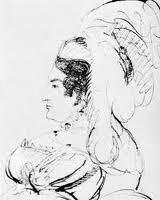
Portrait of Anne Law, nee' Towry, 1st Lady Ellenborough by John Linnell


As a female, I cannot help being interested in the lives of women of earlier times. Finding information about some is easy, thanks to published letters and memoirs, newspaper archives, and (because of their own personal status or accomplishments or notoriety) even biographies. With others, it is a challenge, and we may find ourselves finding that little data is available, and that as side details provided in the information related to a father, husband or other male relative. One such lady is Anne Law, Lady Ellenborough. The November/December issue of JANE AUSTEN’S WORLD magazine included a reference to her in “What Made The News in November & December 1812” that caught my attention.

Anne was born about 1769, and possibly christened in St. Pancras Church in London. Her father was George Phillips Towry and his wife Elizabeth More. Mr. Towry served in the Royal Navy, commissioned a lieutenant in 1757. He inherited an estate from his uncle in 1762, and subsequently married the well-to-d0 and well-connected Miss More (possibly descended from Sir Thomas More) in June 1766 at St. Martin’s in the Fields. She had two brothers George Henry and Charles George. Elizabeth died, and her father remarried on April 3, 1770 to Susannah Haywood. In November of 1770, Mr. Towry won 20,000 pounds in a lottery. He became a Commissioner of the Naval Victualling in 1784, rising to Deputy Chairman of the Victualling Board November 4, 1803. He was considered an able administrator.

I found no information about Anne’s youth or education or her introduction to society. She was considered a great beauty, with regular features, rosy complexion, and a good figure. She was painted by Sir Joshua Reynolds in March of 1789, but that portrait was lost at sea. She had numerous admirers, among them a successful lawyer named Edward Law.


Mr. Law was the son of the Bishop of Carlisle, had attended school at the Charterhouse, and went on to Cambridge, obtaining a B.A. and an M.A. He decided to pursue law and was admitted to Lincoln’s Inn as a student in 1769. In 1771, he studied in London with George Wood (a special pleader (a lawyer who specialised in drafting statements of cases, give opinions, and prepare papers for various court proceedings) who was knighted, taught many students, and became famous). In 1775, Mr. Law became a special pleader himself, and was called to the bar in 1780. He built a successful practice and was elected to the Inner Temple in 1782. He gained a level of fame as leading counsel for Warren Hastings, a long-drawn-out trial that began in February of 1788. Although he was not handsome and was apparently socially awkward, he had acquired the reputation as something of a rake (and kept a mistress), prior to meeting Anne Towry. He pursued her fixedly, and asked her father for her hand. Being of good family and successful in his work, her father gave his consent to Mr. Law’s courtship.

Regardless of her father’s approval, Anne Towry refused his hand as she had already refused other suitors. In fact, she refused him three times. Each time, Mr. Law continued to court her despite her determined refusal. Finally, Anne consented to marry him the fourth time of asking. There is a suggestion that, at this point, members of her family pressured her to reconsider because he was such a promising suitor. According to THE LIVES OF THE CHIEF JUSTICES OF ENGLAND From the Norman Conquest Till the Death of Lord Tenterden, “…her aversion was softened, and she became tenderly attached to him.” (1) They were married by special license at her father’s home in Great Ormand Street on October 17, 1789.

On all counts, the marriage was successful. The couple had their first child, a son named Edward, about September of 1790. He was the first of thirteen children. Mr. Law’s career continued successfully-he became quite wealthy, he was involved with numerous high-profile cases and was instrumental in the ultimate acquittal of Mr. Hastings in 1795. He became Attorney General February 1801, and was knighted February 20, 1801 by George III. Shortly after being knighted, Mr. Law was returned as member for the borough of Newtown, Isle of Wight, to the House of Commons. His career in the House was short-lived, as he was appointed Lord Chief Justice April 11, 1802. On April 19, 1802, Mr. Law was created Baron Ellenborough in the county of Ellenborough, sworn a member of the privy council on April 21, and took his seat in the House of Lords on April 26th.

What little data is available indicates that Anne was busy with home and children, acting as her husband’s hostess. After their marriage, she was known to have retained her beauty, causing her to be pursued by followers at social events, and strangers gathering to watch her tend her flowers at their home. Their marriage was considered an affectionate and harmonious one. (2) She was painted by Sir Thomas Lawrence in 1811 and again in 1813, and by other artists. In addition to residence in London, the couple also had for some years a principal residence at Waldershare in Kent near Dover. This property was owned by the Earl of Guildford, and apparently leased by Lord Ellenborough.

The reference to Anne as Lady Ellenborough in JANE AUSTEN’S WORLD occurred in December of 1812: because of her generosity, one hundred poor women and girls were completely clothed, taken to church and then back to the mansion where they were provided with soup to take home and a shilling each. (There were 12 pennies in a shilling; in 1812, a pound of cheese cost about 9 pence.) This action was mentioned in the SUN (London) of Wednesday, September 16, 1812, in which Lady Ellenborough was described as “the amiable hostess of Waldershare-house”. While similar acts of charity were not uncommon, one of the things that struck me about this was the specific focus being on women and girls.

In early 1816, Lord Ellenborough began experiencing health problems but continued working. Anne’s father died March 12, 1817. His obituary describes him as “Commissioner of the Victualling-office, father of Lady Ellenborough.” Lord Ellenborough went abroad in the fall of 1817 in an attempt to improve his health, and returned to the bench on his return. He was very upset about the acquittals resulting in the winter of 1817, and his health deteriorated to the point that he was periodically absent from court. In September of l1818, he gave notice of his intent to resign, and executed his deed of resignation on November 6, 1818. He died December 13, 1818 at home in St. James’s Square. He was buried in the chapel of the Charterhouse, and a monument was raised there in his honour. At the time of his passing, he was survived by nine of his children with Anne, including their son Edward (now married) ranging to their youngest a daughter named Frances Henrietta born in 1812. (It appears he was also survived by some children born out of wedlock.) Anne was left a very wealthy widow.

The house at Waldershare was no longer in their possession, as it appears to have been occupied by the Earl of Guildford at the time of Lord Ellenborough’s death. Anne was seldom mentioned in print, other than at attendance at weddings. She outlived her husband by almost 25 years and never remarried. She apparently suffered ill health before her death at her home in Stratford-place in London. She died August 16, 1843. She left a rather detailed will, in which she left specific requests of jewelry to her daughters with other provisions, which was proved September 13, 1843. 


FOOTNOTES:

1. Campbell, John Lord, LLD, FRSE, THE LIVES OF THE CHIEF JUSTICES OF ENGLAND FROM THE NORMAN CONQUEST TILL THE DEATH OF LORD TENTERDEN. P. 164

2. Ibid.


Sources include:

JANE AUSTEN’S REGENCY WORLD. November/December 2020, Issue 108. “WHAT MADE THE NEWS IN NOVEMBR & DECEMBER 1812”, compiled by Judy Boyd from the British Newspaper Archives.

Britishnewspaperarchive.com.uk  Numerous articles including the Hereford Journal for Wednesday, October 28, 1789; the Derby Mercury for Friday, December 7, 1770; the Leeds Mercury for Saturday, December 19, 1818; the Kerry Evening Post for Saturday, October 23, 1841; the Lincolnshire Chronicle for Friday, August 25, 1843; the home page is HERE

Thegazette.co.uk  THE LONDON GAZETTE for Tuesday February 17 to Saturday February 21, 1801. P. 202. https://www.thegazette.co.uk/London/issue/15338/page/202 ; THE LONDON GAZETTE FOR TUESDAY APRIL 13 to SATURDAY April 17, 1802. P. 386. HERE

Books.google.com FRAGMENTIA GENEALOGICA, Volume 10. Great Britain: Private Press of Frederick Arthur Crisp, 1904. P. 43 HERE ;  The Annual Register or A View of the History and Politics of the Year 1843. London: F. & J. Rivington, 1844. P. 286.HERE ; THE UNIVERSAL MAGAZINE, NEW SERIES. VOL. XVIII. July to December, Inclusive. 1812. London: Sherwood, Neely, and Jones. P. 521 HERE; THE ROYAL KALENDAR AND COURT AND CITY REGISTER FOR ENGLAND, SCOTLAND, IRELAND, AND THE COLONIES FOR THE YEAR 1820. London: William Stockdale. P. 31. HERE

Minnesotalegalhistoryproject.org Campbell, John Lord, LL.D, FRSE. THE LIVES OF THE CHIEF JUSTICES OF ENGLAND FROM THE NORMAN CONQUEST TILL THE DEATH OF LORD TENDERDEN. Third Edition. In Four Volumes-Vol. IV. London: John Murray, 1874. Pp. 163-164. (PDF) HERE

Wikisource.org THE DICTIONARY OF NATIONAL BIOGRAPHY 1885-1900, Vol.32. “Law, Edward (1750-1818)” by George Russell Barker. HERE

Images:

Anne Law, nee’ Towry, 1st Lady Ellenborough by John Linnell. Wikimedia Commons. Photo by Wmpearl, May 21, 2012. HERE
Edward Law, 1st Lord Ellenborough by Sir Thomas Lawrence. Wikimedia Commons. Photo by Donan.raven, November 20, 2012. HERE

~~~~~~~~~~

Lauren Gilbert lives in Florida with her husband. She earned a B.A. degree in liberal arts English, minoring in Art History. She has presented programs for the South Florida region of JASNA. Her first book, HEYERWOOD A Novel, is still in print, and her second novel,  A RATIONAL ATTACHMENT, is out now. She has articles in both volumes of CASTLES, CUSTOMS AND KINGS: True Tales by English Historical Fiction Authors. She is also working on a non-fiction book about seven powerful women.  Please visit her website for more information. 


Monday, July 20, 2020

Black Britons in Georgian England

by Maria Grace

Although they they were a small minority population, Black Britons were definitely present in Georgian England.

The Earliest Black Britons


Evidence of Black Britons exists all the way back to Roman Britain. Archeological analysis of twenty-two sets of remains from Southwark, Roman London revealed at least one of them had African ancestry. Analysis of the ‘Ivory Bangle Lady’ burial in York suggests a mixed white/Back ancestry. Remains found in 1953 of Beachy Head Lady (dating to 245 AD) in East Sussex, and in 2013 in Fairford, Gloucestershire (dating between 900 and 1000AD) both appear to be of sub-Saharan African ancestry. Written evidence suggests the presence of residents in Roman Britain from Romanized North Africa (a section of the coast of modern Algeria, Libya and Tunisia).

During the Renaissance


As early as the beginning of the fifteen hundreds, Black entertainers could be found in Scotland and the royal courts. “They quickly became not only popular but fashionably essential in England as well.” (Gerzina,1995) Most historians though, suggest the 1555 arrival of five Africans in England to study English and facilitate trade as the start of a continuous Black presence in Britain.

During Queen Elizabeth I's reign, the Black population of London was mostly made of free individuals many of whom intermarried with native English people. Parish records suggest that many of the Black Londoners were servants, but some worked in local business establishments (Wood, 2012).

In Early Modern and Georgian England 


The Black population in Britain swelled exponentially during the 17th and 18th centuries, fed by the so-called Triangular Trade. Trade ships with goods from Britain exchanged goods for slaves on the coasts of West Africa. Slaves would be transported and sold for labor in plantations. Products of slave labor including sugar and rum would then return to Britain for sale.

Black communities began to develop and flourish in the port cities most associated with the slave trade, like Liverpool and Bristol. Early Black settlers in these cities included sailors in the merchant navy, soldiers and sailors in Britain's military, the mixed-race children of traders sent to be educated in England, servants, and freed slaves. During the American Revolution, slaves fleeing captivity often joined the British armed forces with the promise of freedom in Britain.

By the mid-18th century, Blacks accounted for somewhere between one and three per cent of the London populace. In 1768, some estimated the number of Black servants in London at 20,000, out of a total London population of 676,250. Others, depending upon the year and the source, put the figure somewhere between 10,000 and 30,000, although the accurate figure is probably closer to 15,000 (Gerzina 1995). Consequently, by mid-century Black men and women were a relatively familiar sight on the streets of London.

Slavery in Georgian England


Technically, the Cartwright decision of 1569 established that slavery was not legal in England. The 1706 ruling by Lord Chief Justice Holt supported the decision. However, these rulings were routinely ignored and slaves continued to be bought and sold throughout the 1700s.

Finally, the case of James Somersett a fugitive Black slave from Virginia in 1772 legally contested English slavery. Lord Chief Justice William Murray, 1st Earl of Mansfield, ruled that a master could not force a slave to leave the kingdom against his will. Mansfield was clear that his ruling did not abolish slavery per se, and it was vague enough to allow Blacks to continue to be hunted and kidnapped in cities like London, Liverpool and Bristol then sold elsewhere.

Still, the decision helped foster the decline of slavery. The Slave Trade Act of 1807 finally abolished the slave trade, but not the practice of slavery which would wait until the Slavery Abolition Act of 1833 to be finally eliminated.

The Black Community of Georgian Britain


Even against this backdrop of slavery, particularly in London, a thriving Black community developed, one that evidenced concern for joint action and solidarity (Gerzina 1995).

“The word 'Black' itself was a loose term; those men and women in Britain hailed from many different tribes and regions of Africa. And they spoke several different kinds of English: some, brought up by their aristocrat owners, used refined language; others, educated at sea, used Jack Tar lingo, a stew of Cockney, Creole, Irish, Spanish and low-grade American. All this created great differences in their way of life, and social class played at least as important a role as color in their way of dealing with day-to-day vicissitudes.” (Sandhu, 2011).

These class differences played out in the Black community much as they did in the rest of England. There were those who managed to attain a comfortable, and even prosperous standard of living in the free Black community. Cesar Picton and George Africanus are just two examples of successful Black businessmen. There is evidence of alehouses with a predominantly Black clientele, and of the existence of Black social events. It is also clear that Blacks participated fully in the working-class culture of London.

Despite the existence of community, barely 20% of the Black population was female (Sandhu, 2011). In part because of these gender imbalances and in part because of its social and geographical diffusion, many Black men married local women (Emsley, et al, version 8.0). In general, mixed-race marriages were not viewed as problematic, mainly because they occurred among the lower working classes. This attitude “is visually clear in the prints and engravings of Hogarth and Rowlandson, among numerous others, as well as in novels and plays, and that race was secondary, to the working class at least.” (Gerzina 1995).

This working class made up the bulk of English society, and an even larger percentage of Black society. But where did working-class Black people find employment?

For some Black men, a life at sea offered more opportunities than one on land. Although most never advanced far in rank, Black petty officers were not unusual in late 18th-century Britain. These sailors were the exception rather than the rule. For most, domestic service and urban occupations like porters, watermen, basket women, hawkers, and chairmen were the main employments for lower working-class Black Londoners (Emsley, et al, version 8.0). But even for those who found such employment, the specter of poverty was never far away.

The Problem of Poverty


In 1731 the Lord Mayor of London ruled that "no Negroes shall be bound apprentices to any Tradesman or Artificer of this City". Due to this ruling, most were forced into working as servants (Sandhu, 2011).

During this same period, many former American slave soldiers, who had fought on the side of the British in the American Revolutionary War, were resettled as free men in London. Left without pensions or access to the system of poor relief established by the Old Poor Law, and often without skills, many of them became poverty-stricken and were reduced to begging on the streets. Thus the "Black poor" became a much-discussed social phenomenon in the final quarter of the eighteenth century (Gerzina 1995). In truth though, the itinerant of any race had little hope of steady employment and a way out of their situations.

Some poor Blacks found shelter in the areas of St Giles or Seven Dials, St Paul’s, Ratcliff and Limehouse, and along the Wapping riverside. Black people forced to live in such areas shared these unsanitary conditions with poor whites who made up the majority of the population. These were not ghettoes defined by race, but by situation, inhabited by those whose only recourse to starvation and death was often theft, prostitution and beggary. (Gerzina 1995)

Conclusion


Though the poor were often out of sight and out of mind of the upper classes, this did not mean that Black people were invisible. Even if one lived away from the active Black communities of Georgian England, audiences, both literary and theatrical, were accustomed to seeing Black people in the theatre as both subject and spectators. They also knew them as musicians and performers at fairs. Black Britons were an active part of British society during the Georgian and Regency eras.

This post only scratches the surface, just highlighting a few points in a broad and important topic. Some of the references below might be helpful in gaining deeper understandings.

References

“Black Lives in England.” Historic England. 2020. Accessed July 10, 2020. https://historicengland.org.uk/research/inclusive-heritage/the-slave-trade-and-abolition/sites-of-memory/Black-lives-in-england/

“Black people in late 18th-century Britain.” English Heritage. Accessed July 12, 2020. https://www.english-heritage.org.uk/visit/places/portchester-castle/history-and-stories/Black-people-in-late-18th-century-britain/

Alliance for Workers’ Liberty. “A Short History of Black people in Britain.” Worker’s Liberty. March, 23, 2006. Accessed July 9, 2020. https://www.workersliberty.org/story/2017-07-26/short-history-Black-people-britain

Edwards, Paul. “The History of Black People in Britain.” History Today. September 9, 1981. Accessed 7/1/2020. https://www.historytoday.com/archive/history-Black-people-britain

Emsley, Clive; Tim Hitchcock and Robert Shoemaker, "Community Histories; Black Communities", Old Bailey Proceedings Online (www.oldbaileyonline.org, version 8.0, July 12, 2020). https://www.oldbaileyonline.org/static/Black.jsp

Gerzina, Gretchen, Black London: Life Before Emancipation, Rutgers University Press, New Brunswick, New Jersey, 1995.

Glover, Dominic. “The First Black Briton? 1000 Year Old Skeleton of African Woman Discovered by Schoolboys in Gloucestershire River.” International Business Times. October 2, 2013. Accessed June 30, 2020. https://www.ibtimes.co.uk/fairford-sub-sahara-africa-skeleton-gloucestershire-507102

Martin, S.I.. “African writers and Black thought in 18th-century Britain.” Discovering Literature: Restoration & 18th Century. June 21, 2018. Accessed June 30, 2020. https://www.bl.uk/restoration-18th-century-literature/articles/african-writers-and-Black-thought-in-18th-century-britain

Rebecca C Redfern, Michael Marshall, Katherine Eaton, Hendrik Poinar. "'Written in Bone': New discoveries about the Lives and Burials of Four Roman Londoners". Britannia 48 (2017), 253-277, doi:10.1017/S0068113X17000216. Accessed July 12, 2020. https://www.cambridge.org/core/journals/britannia/article/written-in-bone-new-discoveries-about-the-lives-and-burials-of-four-roman-londoners/F464D9E93FCE96341DDD7774C4C8CA10/core-reader

Sandhu, Sukhdev. “The First Black Britons.” BBC History. February, 17, 2011. Accessed 7/3/2020.http://www.bbc.co.uk/history/british/empire_seapower/black_britons_01.shtml

Seaman, Jo. "The mystery of Beachy Head Lady: A Roman African from Eastbourne.” Museum Crush. May 4, 2018. Accessed July 12, 2020. https://museumcrush.org/the-mystery-of-beachy-head-lady-a-roman-african-from-eastbourne/

Wood, Michael. “Britain's first Black community in Elizabethan London” BBC News. 20 July 2012. Accessed July 5, 2020. https://www.bbc.com/news/magazine-18903391

~~~~~~~~~~

Six time BRAG Medallion Honoree, #1 Best-selling Historical Fantasy author Maria Grace has her PhD in Educational Psychology and is a 16-year veteran of the university classroom where she taught courses in human growth and development, learning, test development and counseling. None of which have anything to do with her undergraduate studies in economics/sociology/managerial studies/behavior sciences. She pretends to be a mild-mannered writer/cat-lady, but most of her vacations require helmets and waivers or historical costumes, usually not at the same time. She writes gaslamp fantasy, historical romance and non-fiction to help justify her research addiction. 

Click here to find her books on Amazon.

For more on her writing and other Random Bits of Fascination, visit her website. You can also like her on Facebook, or follow on Twitter.


Friday, March 13, 2020

Austen's England: Peaceful as all that? I don't think so

by M.M. Bennetts


Today, for your edification and delight, I am going to rant about a thing very dear to my heart but which causes me no end of frustration and, even, dare I admit it, shuddering rage.

It is this--this often firmly held conviction (in defiance of the facts) that the Regency England about which Jane Austen wrote was this idyllic, peaceful, sheep-may-safely-graze land, nothing more than a jammy backdrop for aristos to chase young women in flimsy muslin gowns, wholly untouched by the war which just across the Channel was ravaging every Continental land, destroying societies and lives from a spreading cancer of French military tyranny and conquest.

So, some of those facts.  In the myriad country towns during the period, the places where most of the population still dwelled, what might have made up the fabric of their daily existence?  Jane Austen's or anyone's, really?


Well, let's start with what they heard.  Daily.  Writing in 1806, the British satirist, George Cruikshank noted, "Every town was...a sort of garrison--in one place you might hear the 'tattoo' of some youth learning to beat the drum, at another place some march or national air being practiced upon the fife, and every morning five o'clock the bugle horn was sounded through the streets, to call the volunteers to a two hours' drill...and then you heard the pop, pop, pop, of the single musket, or the heavy sound of the volley, or distant thunder of the artillery..." 

So much for waking to the gentle bleating of spring lambs and baby blackbirds learning to sing as melodiously as their parents, then.  The place was a sea-to-sea military base with all the serenity of a WW2 siren call.

And what about the sceptred isle landscape, the rolling beauty of the hills and Downland, the endless fields, pieced, ploughed, sown and fallow?  The landscape beyond every village and town, all of covered by farms and estates?  This perfect setting for a breath-taking ride with one's Mr Wickham in a high-perch phaeton?  Right?

Well, it may surprise and amaze you to know that from well before 1802, the great fear in Britain was that of invasion by the French.  It was a national obsession and the preparations to repel such an invasion wherever it came from and whenever were all-consuming.  And it wasn't for another decade, until Napoleon and his Grand Armee were well and truly whooped in Russia, that the national fever of defensive building works started to calm down.

They weren't exactly paranoid about nothing either in their fears. There had been the unsuccessful attempt to invade the British Isles in 1797 by the French--a huge storm, gales, blizzard and all that had blown the estimated 40,000 troops off course and had saved the day...but you can't count on that sort of divine intervention every day, can you?

So, hoppity poppity into the new Napoleonic era of the new century.  The short Corsican tyrant is in prime position in France.  He loves nothing better than a good conquest with himself as the new ruler.  Britain is allegedly at peace with France during the period known as the Peace of Amiens, which, just like later dictators have done, Napoleon is using to get his military machine in gear and ready to roll.

What's happening on the ground?  Once the peace of Amiens was officially over, well, across those counties thought to be most at risk--the southern coastal counties--everyplace became immersed in the preparations for war and invasion.

By August 1803, it was being reported that in fifteen counties, from Devon in the west across to the Isle of Wight, including the Cinque Ports along the coast, and all the way up in Northumberland and Fife, that over 50% of the male population, those aged between seventeen and fifty-five, were in uniform, wearing regular, yeomanry or volunteer uniform.

That's a lot of fellows in uniform if you think about it.  The counties of Kent and Sussex had 49% and 45% of their men in uniform respectively.  That's half the male population.  Imagine.

Another snippet you might like...they weren't all wearing red coats which shone brightly in the sunshine as we see in the old portraits.  Yes, originally, the uniforms were meant to be red.

But for the uniforms of the men, the government didn't have the money for the well-dyed red wool--that was for officers who could afford their own.  The enlisted or volunteer uniform was provided by the government, so obviously they were getting all they could on the cheap.  And the dye used in those job lots was madder, which after a year in the sun and perpetual rain of this country fades to a kind of rusty, blotchy sienna brown...Good for camouflage in autumn, I dare say.  

By 1804 then, a consensus had been reached on coastal defenses and across the face of the south coast, an intense programme of building ensued for the next several years, so that by 1808, 73 Martello towers and two 11-gun circular forts had been built.  Another 29 towers had been constructed along the Wash--the coasts of Suffolk and Essex. (Eventually the number of Martello towers constructed reached 168, extending all along the coast all the way to Orkney.)

These were quite impressive defensive towers they were building too.  Not cheap.  The walls were of varying thickness, but generally from between six to thirteen feet thick, with the heaviest walls facing seaward.  The bricks were bedded in hot lime mortar (imagine the smell as they were constructed) calculated to withstand bombardment from the sea.  The roofs were flat, supported from underneath by a central column, and carried on top a 24-pounder cannon which would have been mounted on a sliding traverse carriage which enabled it to fire round 360 degrees...

Anyone for a Regency stroll by the seaside?  Bring those parasols...

Finally, food.  The years of the early 19th century had seen a number of harsh winters and bad late harvests--courtesy of a mini-Ice Age--which had left the English feeling vulnerable on this point, and the government took this quite seriously.  Bread riots or any food shortages can too easily cause panic.  Hence, with the threat of invasion and the assumption that the French would head for London first--probably via Kent--great plans were laid to stockpile foodstuffs for the capital, so that it might hold out under siege.

Thus plans were made to create emergency stores near the capital, including rice, flour and salted provisions as well as 250 tons of biscuit meal, all stockpiled in depots around and in the capital at locations such as Fulham, Brentford and Staines...


Also, there were huge stockpiling needs across the South Coast to feed those thousands of militia, gathered to repel and defend the land--in 1804, more than 18,000 regular troops were stationed in Sussex, with another 20,000 more stationed nearby to be deployed at short notice.  There were thousands more stationed in Kent, particularly ready to defend Dover, where it was assumed the 'big assault' would happen.

And, within these troop numbers and within their training too, it's important to note that within each year, these troops would march hundreds of miles across counties, going where they were sent, training, marching, recruiting...England in the early 19th century was a country at war.  Fully and wholly at war.

There was not a day not an hour of any day, which did not include some element of the Napoleonic conflict.  And they knew it.

The plethora of English World War Two dramas and films will give one the true picture of the state of things--just change the uniforms to 200 years back and add sideburns.  Then you'll have it.

War everywhere, bulwarks, vast defensive buildings like Martello tower, drums, artillery practice, the post office going through all foreign post (probably Austen's letters to and from her sister-in-law were opened and read), the food shortages, the militia on every street corner of every village and town, the recruiting officers in the public houses, the thousands of marching, marching, marching men...And the drums at Portsmouth beating out Hearts of Oak at dawn, or the fife thinly whistling a new recruits poor-boy's version of Rule Britannia...

This then, 200 years ago was "This royal throne of kings, this sceptred isle, This earth of majesty, this seat of Mars, This other Eden, demi-paradise, This fortress built by Nature for herself Against infection and the hand of war...This precious stone set in a silver sea...This blessed plot, this earth, this realm, this England."

This post from the #EHFA Archives was originally published on March 2, 2014.
~~~~~~~~~~~~~~~~~
M.M. Bennetts, co-founder of English Historical Fiction Authors, passed away in August, 2014. She was a specialist in early 19th century British and European history and the Napoleonic wars and penned two novels, May 1812 and Of Honest Fame set during the period. A third novel, Or Fear of Peace, was to have been published in 2014.

For further information, please visit the website and historical blog at https://mmbennetts.wordpress.com/

Saturday, March 11, 2017

Ape Leaders and Vermin of the State: The Unmarried of the Regency Era

by Maria Grace


Regency society organized itself around marriage and family. Adults were identified by their place, or lack thereof, in a married, family unit. Married women were ranked higher and more respected than the unmarried. Married men were perceived as having come into their own and given the esteem and authority that went with such an accomplishment.

The plight of the regency spinster is fairly well understood. The local tax or judicial records says it all. Women were typically identified in tax or judicial records by their marital status (spinsters, wives and widows) whereas men were always identified by their occupation or social status. (Shoemaker, 1998) A woman’s identity (and legal existence) was determined by her marital status.

Spinsterhood was considered ‘unnatural’ for a woman, even though nearly one in four upper class girls remained unmarried (Day, 2006). They were called ‘ape-leaders’ (for that was what they would be doing in hell as punishment for the unnatural lifestyle. Enough said on that point….) and ridiculed for their failure in the most basic requirements of femininity.

However, if a single woman possessed independent means—a fortune of her own sufficient for her to live on, it was possible she could maintain her own household and carry on an independent life. Female investors were not unknown and their capital supported the joint stock companies behind municipal utilities and railways. Wise investments could provide a steady income without administrative worries. (Davidoff & Hall, 2002)

Not all women were so fortunate as to have independent means, and even if they were, male relatives might make it difficult or impossible for her to access her own fortune. (Naturally the men in her life knew better how to manage her affairs than she.) In those cases, a spinster would have two choices, find a job to support herself or live in the house of a relative.

Upper class ladies had limited job prospects, given their desire to remain respectable—and their more or less complete lack of marketable skills. Genteel options were limited to being a lady’s companion or a governess.

Being a governess required an education that not all ladies had and was not necessarily an enviable position. Within the households they served, the existed in a nether realm, not equal to the family but above the servants. Often, a governess would associate with neither, virtually shut away from all society. She would also be vulnerable, as all female servants were, to (unwanted) advances from the males of the household.

Unmarried women unable to become governesses were expected to make themselves useful to whichever relative might take them in. They might keep house for bachelor (or widowed) brothers or uncles, tend children, cover for married sisters while they were indisposed or during lying-in, nurse the sick, cook, clean and mend. Ironically, despite these functions, they were still often considered spungers and a burden to the household.

Today, most believe that bachelors of the era enjoyed the same social position as married men, free from the prejudice spinsters experienced. However, they too were touched by the societal bias toward the married.

This is not to say, though, that they were in any way as put upon as spinsters. The scarcity value of men in the era gave eligible bachelors the power to act as connoisseurs, holding off until the ‘right’ situation came along. (Jones, 2009) For younger sons of gentlemen, whom primogeniture denied substantial inheritance, marriage was likely to make him significantly less well off, unless of course he could find himself an heiress or woman with an excellent dowry. So, these men typically waited for marriage, often until their early thirties. But this time, they would have worked long enough to have established themselves in their profession and have the means to support a family (or attract a woman with money, which would always be an attractive alternative.)

Nonetheless, like upper-class women, one out of four younger sons remained lifelong bachelors. (Jones, 2009) While bachelorhood was seen as a natural (and possibly necessary for wealth-gathering) phase of life, the lifelong bachelor was a different creature altogether. Though not subject to the vicious ridicule heaped on spinsters, bachelors were subject to degradation as well.

In marriage, a young man took up the burdens (and the dividends—don’t forget those) of patriarchy, and became a fully realized man. In a very real sense, a man achieved political adulthood when he could support his dependents and represent their interests in the public forum. Failure to marry was often seen as being unrealized in masculinity, at the mercy of impulses and negligent in the duties to society.
“Perpetual bachelors were the ‘vermin of the state’ pronounced The Women’s Advocate … ‘They enjoy the benefits of Society, but Contribute not to its Charge and spunge upon the publick, without making the least return.’” (Vickery, 2009).
The strength of this sentiment led to punitive taxes being placed upon bachelor households.

In 1785, employers of one or two male servants paid an annual £1, 5 shillings for each of them. All bachelors over 21 (the age of majority) had to pay an extra £1, 5 shillings for every male servant they employed. Female servants were taxed at a lower rate, but bachelors had to pay double the amount. (Horn, 2004) And of course, as taxes go, the rates only increased as time went on.

Unless they were able to set up housekeeping with an unmarried female relation, sister, niece, aunt, etc. (Not a cousin mind you as they were considered marriageable and living with them unmarried would have been unacceptable), a bachelor would have also had to pay for services usually rendered by female labor. The top four occupations for women in London 1200-1850 were washing, charring (cleaning) nursing and the making/mending of clothes, reflecting the needs of bachelors. Few women noted prostitution as their occupation, but that was a thriving trade as well. So, not only did bachelors pay for their choice not to settle down and make legitimate babies in loss of social status, and taxes, but basic domestic comforts cost them dearly as well.

So, unmarried men may not have been leading apes in hell, according to regency standards, but being considered selfish social vermin was hardly desirable either. The attitude was hardly surprising though when the fundamental unit of society was the male-headed, conjugal household.

References
Baird, Rosemary. Mistress of the House: Great Ladies and Grand Houses, 1670-1830. London: Phoenix, 2004.
Collins, Irene. Jane Austen, the Parson's Daughter. London: Hambledon Press, 1998.
Davidoff, Leonore, and Catherine Hall. Family Fortunes: Men and Women of the English Middle Class, 1780-1850. Chicago: University of Chicago Press, 1987.
Day, Malcom. Voices from the World of Jane Austen. David&Charles, 2006.
Jones, Hazel. Jane Austen and Marriage. London: Continuum, 2009.
Horn, Pamela. Flunkeys and scullions: life below stairs in Georgian England. Stroud: Sutton, 2004.
Laudermilk, Sharon H., and Teresa L. Hamlin. The Regency Companion. New York: Garland, 1989.
Martin, Joanna. Wives and Daughters: Women and Children in the Georgian Country House. London: Hambledon and London, 2004.
Shoemaker, Robert Brink. Gender in English Society, 1650-1850: The Emergence of Separate Spheres? London: Longman, 1998. Pearson Education Limited
The Woman's advocate or The baudy batchelor out in his calculation: Being the genuine answer paragraph by paragraph, to the batchelor's estimate plainly proving that marriage is to a man of sense and oeconomy, both a happiner and less chargeablo state, than a single life. Written for the honour of the good wives, and pretty girls of old England. London: Printed for A. Moore, near St. Paul's, 1729.
Vickery, Amanda. Behind Closed Doors: At Home in Georgian England. New Haven, Conn.: Yale University Press, 2009.
Vickery, Amanda. The Gentleman's Daughter: Women's Lives in Georgian England. New Haven, Conn.: Yale University Press, 1998.

~~~~~~~~~~

Though Maria Grace has been writing fiction since she was ten years old, those early efforts happily reside in a file drawer and are unlikely to see the light of day again, for which many are grateful. 

After penning five file-drawer novels in high school, she took a break from writing to pursue college and earn her doctorate. After 16 years of university teaching, she returned to her first love, fiction writing.

Click here to find her books on Amazon. For more on her writing and other Random Bits of Fascination, visit her website. You can also like her on Facebook, or follow on Twitter.

Thursday, November 24, 2016

Regency Holiday Lights

by Maria Grace

Twinkling lights are an iconic emblem of the holiday season. Even before the Christmas tree was widely in vogue, the Regency Christmastide season had its own array of holiday lights.

Yule Log 
The Yule log is perhaps the best known of the traditional holiday lights.

  Chambers Yule LogThe Yule Log, an enormous log of freshly cut wood, would be gathered by teams of farmhands, and hauled to the house with great ceremony and merriment. Once on the hearth, the log might be anointed with oil, salt and wine, with suitable prayers made.

The log was lit on Christmas Eve, with splinters saved from the log from the previous year. The fire was to last until the end of Christmas Day at least and was kept smoldering until Twelfth Night. The Yule Log was believed to bring prosperity and protection from evil. Families kept a remnant of the log all the year long so protection would remain across the seasons. Even the ashes were believed to hold power. They would be scattered over fields to promote fertility

Christmas or Yule Candle

At the end of the 18th century, it became the custom for chandlers and other merchants to present regular customers with the gift of a large candle at Christmas. This large candle would be lit at sunset on Christmas Eve and burn until Christmas service (or dawn) the next day.

Traditional superstitions said that dire consequences, ill fortune or even the death of a family member, would ensue if the candle should burn out too soon. Typically the Yule Candle would be place at the dining table and lit a sunset by the head of the household who would also be the one to extinguish it, should that be necessary. Once lit, it was not to be moved nor any other candle lit from its flame.

Christmas Eve supper was served in the light of the Yule Candle. To prevent bad luck, an even number of people had to sit down to the meal and all leave at the same time after the meal ended. Servants might be pressed to join the family at the table to ensure the desirable even number of diners.

The light of the Yule Candle was thought to convey special blessings to anyone touched by it. Holiday breads were stacked around it, so they would be kept fresh by its light. Precious possessions might also be placed within its glow so that they might be protected from harm. 

The stub of the Yule Candle and any drippings were also though to offer protection and healing. The wax might be used on cuts and sores or to mark the backs of farm animals to ensure their health and productivity in the coming year.

Plum Pudding
Christmas Pudding Flames (8307898057)
A flaming Christmas Pudding

The Sunday before advent was known as Stir Up Sunday, the day for plum puddings to be made. The day became known as “Stir Up Sunday,” not because of the great deal of stirring done, but because of This is because the opening words of the main prayer in the Book of Common Prayer of 1549 for that day are: ‘Stir up, we beseech thee, O Lord, the wills of thy faithful people...’

Christmas pudding is prepared with 13 ingredients to represent Christ and the 12 apostles then it is "stirred up". All family members must take a hand in the stirring, using a special wooden spoon (in honor of Christ's crib and stable). The stirring must be done clockwise, from east to west to honor the journey of the Magi, with eyes shut, while making a secret wish.


After the family stirred the pudding, tiny charms might be added to the pudding to reveal their finders’ fortune. The trinkets often included a thimble (for spinsterhood or thrift), a ring (for marriage), a coin (for wealth), a miniature horseshoe or a tiny wishbone for good luck, and an anchor for safe harbor. The pudding was then steamed in a cloth bag and hung up to age until Christmas Day.

When the pudding was served, a sprig of holly was placed on the top of the pudding as a reminder of Jesus' Crown of Thorns. It was then doused with brandy and lit. A portion of the pudding was saved for New Years to assure good luck.

Snapdragon

SnapDragon
Dragon playing snapdragon
Snapdragon is a parlor game. Raisins were piled in a bowl, topped with brandy and lit on fire. Players would try to snatch raisins out of the blue brandy-flames and eat them without getting burned—or lighting anything else aflame. The winner is the one with the most raisins (and I imagine least burns) and will be blessed with good luck in the following year.

While brandy burns with a relatively cool flame, I’m not sure I would suggest this for the next family Christmas party. Though not nearly so dramatic, charades is probably much safer!


References
Ayto, John. An A-Z of Food & Drink. Oxford University Press:Oxford. 2002
Broomfield, Andrea. Food and Cooking in Victorian England: A History. Praeger:Westport CT. 2007
Davidson,Alan . Oxford Companion to Food, Oxford University Press:Oxford. 2000
Glasse, Hannah .The Art of Cookery made plain and easy, 1784.
Godey's Lady's Book, Dec. 1860
Griffen ,Robert H. and Ann H. Shurgin editors. The Folklore of World Holidays,Second Edition. Gale:Detroit.1998
Knightly, Charles. The Customs and Ceremonies of Britain. London:Thames and Hudson. 1986
Revel ,Rachel. Winter Evening Pastimes or The Merry Maker’s Companion. 1825
  Yule Log
  Yule Log
  Yule Log
  The Yule Candle in the Regency

[This is an Editors' choice archive post, originally published on 14th December, 2013]

~~~~~~~~~~~~

 Maria Grace is the author of Darcy's Decision,  The Future Mrs. Darcy and All the Appearance of Goodness.  The Trouble to Check Her was released in February 2016 Click here to find her books on Amazon. For more on her writing and other Random Bits of Fascination, visit her website. You can also like her on Facebook, follow on Twitter or email her.

Most recently, Pemberley: Mr. Darcy's Dragon was released in October 2016

Monday, October 24, 2016

The Jilting Princess...

by M.M. Bennetts

Yes, she was a princess.  And yes, she had to marry for reasons of state rather than solely based on her personal fancy, but Princess Charlotte (1796-1817), daughter of the Prince Regent and Caroline of Brunswick was no pawn--kind of more the opposite...

Bearing in mind that at the time when ministers of state, and latterly her parents, were scanning the horizon for suitable royal consorts for her, the Napoleonic wars were heading towards, they hoped, a close.  Whilst at the same time, the remaining heads of state--those which had survived--were wondering how best to restore order to Europe and reinstate legitimate government (read monarchies) to those countries which Napoleon had annexed to France.  So the task of choosing a royal mate was a little more complex than usual.

Nevertheless, in 1812, the government hit upon a plan.  Wouldn't it be perfect if Princess Charlotte were to marry William of Orange?  He was of an age with Charlotte, not too old nor too young, he'd seen active service in the Peninsula, so he was a dashing military hero and he was a Protestant (a necessity). What could be better? 

William of Orange had been raised in exile in England (so he spoke English!), he'd spent two years at Oxford,and from 1811, he served in the Peninsula under Wellington by whom he was known as 'Slender Billy'.

Perhaps he wasn't great looking, but he was known to be amiable, there had been another hugely successful marriage between a Prince of Orange and an English princess...And, bliss of blisses, someday he would rule the Netherlands--so through him and any children they might have, Britain would regain a toehold on the Continent, moreover a toehold that was right across the North Sea, thus securing the sea lanes to the Baltic.  It was ideal!

There was only one problem:  Princess Charlotte.

Because you see, in the autumn of 1812, she had conceived a rather violent passion for a Captain Charles Hesse of the 18th Hussars, and whilst at Windsor had gone out riding with him every day.

And after that, she'd been meeting with him secretly at her mother's home in Kensington, where her mother, helpfully, would "let him into her own apartment by a door that opens onto Kensington Gardens...[then] leave them together in her own bedroom, [with the words] 'A present, je vous laisse, amusez vous'."  [For the moment I'm leaving you, amuse yourselves...]

As may you appreciate, when the Prince Regent discovered, he was incandescent with rage.

And Charlotte was pretty much locked away with a new governess and with very little company.  As the Prince said with some feeling (and almost in echo of Austen's Mr. Bennet):  "I know all that passed in Windsor Park; and if it were not for my clemency I would have shut you up for life.  Depend upon it, as long as I live you shall never have an establishment, unless you marry."  

Hence, when the proposed match with William was put to Princess Charlotte in February 1813, she was not keen.  As she said of him, "I think him so ugly, that I am sometimes obliged to turn my head away in disgust when he is speaking to me."  (Ouch!)  But the idea did eventually take hold--marriage would allow her her own establishment and financial independence.  And the princess was already in debt to the tune of £22,000.  (Over a million pounds in today's money.)

The Prince Regent was delighted and held a dinner at his home at Carlton House so that the two might meet on 11 December, and Charlotte was enjoined to give her father her "fair and undisguised opinion".  After the usual fits and starts, by the end of the evening, Charlotte told her father, "I like his manner very well, as much as I ever have seen of it."

The Prince Regent was rapturous.  Charlotte would later speak of the whole thing as "a dream".

Then, in early April, having been fought to a standstill in France, Napoleon abdicated.  Then followed another remarkable bit of news:  for the first time in centuries European royalty were to visit England!  Caught up in the euphoria of the moment, in early May, the government announced the intended marriage between Charlotte and William, the Hereditary Prince of Orange (who suddenly had a throne again!)...

William himself had already arrived in Britain, ahead of the other European princes--Tsar Alexander and Kaiser Wilhelm and their entourages.  But then, a spoke appeared in the marital-diplomatic wheel--the Grand Duchess Catherine, the Tsar's confidante and sister, who allegedly had designs on William herself--or rather Russia also wanted a toehold in western Europe.

The visit of the crowned heads that June offered an opportunity for endless rounds of parties, balls, dinners and diplomacy, but Princess Charlotte was not invited.  Instead, she remained cooped up in her residence at Warwick House, next door to Carlton House, sequestered away from the fun, even as Grand Duchess Catherine worked on her, visiting, taking tea, souring whatever remained of Charlotte's affection for Slender Billy--especially by recounting just what her fiance was getting up to.

While Charlotte was locked away, William was repeatedly getting drunk, attending all the social events, having a whale of a time...when he'd gone to the Ascot Races, he'd returned to London hanging off the outside of a stage coach.

And there was one other looming problem.  Where would the young couple live?  Charlotte feared that if she  left the country and her father obtained a divorce as he wished to do, her father might remarry and produce a new heir.  And where would that leave Charlotte?  So the demand made in the proposed marriage settlement that she should spend some time with her husband in the Netherlands, as she put it, "living in Holland amongst the fogs and dykes", each year proved the final straw.

(Though it's also said that she'd been secretly seeing the Prussian king's nephew, Prince Frederick, who was said to be very handsome and she was much enamoured...)

Charlotte therefore requested that William pay her a visit on 16 June.  Their consultation together ended with Charlotte's "positive declaration that she will not leave England now..."  And later that evening, Charlotte wrote to William informing him that she was jilting him, that their engagement was "to be totally and for ever at an end".

It was a public humiliation for William...and initially, it didn't work out so well for Charlotte either...though later, she did marry the rather spiffing Prince Leopold of Saxe-Coburg and he was her choice.

This is an Editor's Choice post, originally published April 23 2013

~~~~~~~~~~~~

M.M. Bennetts was one of the driving forces behind teh EHFA blog and contributed many wonderful posts before her early demise some years ago. She was a specialist in early 19th century European history and the Napoleonic wars, and the author of two novels, May 1812 and Of Honest Fame set during the period.