
by Maria Grace

The Earliest Black Britons
Evidence of Black Britons exists all the way back to Roman Britain. Archeological analysis of twenty-two sets of remains from Southwark, Roman London revealed at least one of them had African ancestry. Analysis of the ‘Ivory Bangle Lady’ burial in York suggests a mixed white/Back ancestry. Remains found in 1953 of Beachy Head Lady (dating to 245 AD) in East Sussex, and in 2013 in Fairford, Gloucestershire (dating between 900 and 1000AD) both appear to be of sub-Saharan African ancestry. Written evidence suggests the presence of residents in Roman Britain from Romanized North Africa (a section of the coast of modern Algeria, Libya and Tunisia).
During the Renaissance
As early as the beginning of the fifteen hundreds, Black entertainers could be found in Scotland and the royal courts. “They quickly became not only popular but fashionably essential in England as well.” (Gerzina,1995) Most historians though, suggest the 1555 arrival of five Africans in England to study English and facilitate trade as the start of a continuous Black presence in Britain.
During Queen Elizabeth I's reign, the Black population of London was mostly made of free individuals many of whom intermarried with native English people. Parish records suggest that many of the Black Londoners were servants, but some worked in local business establishments (Wood, 2012).
In Early Modern and Georgian England

The Black population in Britain swelled exponentially during the 17th and 18th centuries, fed by the so-called Triangular Trade. Trade ships with goods from Britain exchanged goods for slaves on the coasts of West Africa. Slaves would be transported and sold for labor in plantations. Products of slave labor including sugar and rum would then return to Britain for sale.
Black communities began to develop and flourish in the port cities most associated with the slave trade, like Liverpool and Bristol. Early Black settlers in these cities included sailors in the merchant navy, soldiers and sailors in Britain's military, the mixed-race children of traders sent to be educated in England, servants, and freed slaves. During the American Revolution, slaves fleeing captivity often joined the British armed forces with the promise of freedom in Britain.
By the mid-18th century, Blacks accounted for somewhere between one and three per cent of the London populace. In 1768, some estimated the number of Black servants in London at 20,000, out of a total London population of 676,250. Others, depending upon the year and the source, put the figure somewhere between 10,000 and 30,000, although the accurate figure is probably closer to 15,000 (Gerzina 1995). Consequently, by mid-century Black men and women were a relatively familiar sight on the streets of London.
Technically, the Cartwright decision of 1569 established that slavery was not legal in England. The 1706 ruling by Lord Chief Justice Holt supported the decision. However, these rulings were routinely ignored and slaves continued to be bought and sold throughout the 1700s.
Finally, the case of James Somersett a fugitive Black slave from Virginia in 1772 legally contested English slavery. Lord Chief Justice William Murray, 1st Earl of Mansfield, ruled that a master could not force a slave to leave the kingdom against his will. Mansfield was clear that his ruling did not abolish slavery per se, and it was vague enough to allow Blacks to continue to be hunted and kidnapped in cities like London, Liverpool and Bristol then sold elsewhere.
Still, the decision helped foster the decline of slavery. The Slave Trade Act of 1807 finally abolished the slave trade, but not the practice of slavery which would wait until the Slavery Abolition Act of 1833 to be finally eliminated.
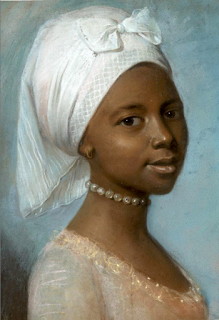
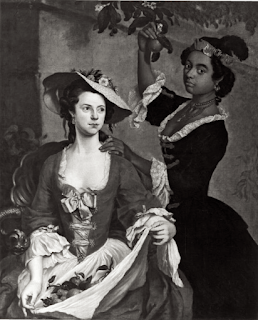
Black communities began to develop and flourish in the port cities most associated with the slave trade, like Liverpool and Bristol. Early Black settlers in these cities included sailors in the merchant navy, soldiers and sailors in Britain's military, the mixed-race children of traders sent to be educated in England, servants, and freed slaves. During the American Revolution, slaves fleeing captivity often joined the British armed forces with the promise of freedom in Britain.
By the mid-18th century, Blacks accounted for somewhere between one and three per cent of the London populace. In 1768, some estimated the number of Black servants in London at 20,000, out of a total London population of 676,250. Others, depending upon the year and the source, put the figure somewhere between 10,000 and 30,000, although the accurate figure is probably closer to 15,000 (Gerzina 1995). Consequently, by mid-century Black men and women were a relatively familiar sight on the streets of London.
Slavery in Georgian England
Technically, the Cartwright decision of 1569 established that slavery was not legal in England. The 1706 ruling by Lord Chief Justice Holt supported the decision. However, these rulings were routinely ignored and slaves continued to be bought and sold throughout the 1700s.
Finally, the case of James Somersett a fugitive Black slave from Virginia in 1772 legally contested English slavery. Lord Chief Justice William Murray, 1st Earl of Mansfield, ruled that a master could not force a slave to leave the kingdom against his will. Mansfield was clear that his ruling did not abolish slavery per se, and it was vague enough to allow Blacks to continue to be hunted and kidnapped in cities like London, Liverpool and Bristol then sold elsewhere.
Still, the decision helped foster the decline of slavery. The Slave Trade Act of 1807 finally abolished the slave trade, but not the practice of slavery which would wait until the Slavery Abolition Act of 1833 to be finally eliminated.
The Black Community of Georgian Britain

Even against this backdrop of slavery, particularly in London, a thriving Black community developed, one that evidenced concern for joint action and solidarity (Gerzina 1995).
“The word 'Black' itself was a loose term; those men and women in Britain hailed from many different tribes and regions of Africa. And they spoke several different kinds of English: some, brought up by their aristocrat owners, used refined language; others, educated at sea, used Jack Tar lingo, a stew of Cockney, Creole, Irish, Spanish and low-grade American. All this created great differences in their way of life, and social class played at least as important a role as color in their way of dealing with day-to-day vicissitudes.” (Sandhu, 2011).
These class differences played out in the Black community much as they did in the rest of England. There were those who managed to attain a comfortable, and even prosperous standard of living in the free Black community. Cesar Picton and George Africanus are just two examples of successful Black businessmen. There is evidence of alehouses with a predominantly Black clientele, and of the existence of Black social events. It is also clear that Blacks participated fully in the working-class culture of London.
“The word 'Black' itself was a loose term; those men and women in Britain hailed from many different tribes and regions of Africa. And they spoke several different kinds of English: some, brought up by their aristocrat owners, used refined language; others, educated at sea, used Jack Tar lingo, a stew of Cockney, Creole, Irish, Spanish and low-grade American. All this created great differences in their way of life, and social class played at least as important a role as color in their way of dealing with day-to-day vicissitudes.” (Sandhu, 2011).
These class differences played out in the Black community much as they did in the rest of England. There were those who managed to attain a comfortable, and even prosperous standard of living in the free Black community. Cesar Picton and George Africanus are just two examples of successful Black businessmen. There is evidence of alehouses with a predominantly Black clientele, and of the existence of Black social events. It is also clear that Blacks participated fully in the working-class culture of London.

Despite the existence of community, barely 20% of the Black population was female (Sandhu, 2011). In part because of these gender imbalances and in part because of its social and geographical diffusion, many Black men married local women (Emsley, et al, version 8.0). In general, mixed-race marriages were not viewed as problematic, mainly because they occurred among the lower working classes. This attitude “is visually clear in the prints and engravings of Hogarth and Rowlandson, among numerous others, as well as in novels and plays, and that race was secondary, to the working class at least.” (Gerzina 1995).
This working class made up the bulk of English society, and an even larger percentage of Black society. But where did working-class Black people find employment?
For some Black men, a life at sea offered more opportunities than one on land. Although most never advanced far in rank, Black petty officers were not unusual in late 18th-century Britain. These sailors were the exception rather than the rule. For most, domestic service and urban occupations like porters, watermen, basket women, hawkers, and chairmen were the main employments for lower working-class Black Londoners (Emsley, et al, version 8.0). But even for those who found such employment, the specter of poverty was never far away.
This working class made up the bulk of English society, and an even larger percentage of Black society. But where did working-class Black people find employment?
For some Black men, a life at sea offered more opportunities than one on land. Although most never advanced far in rank, Black petty officers were not unusual in late 18th-century Britain. These sailors were the exception rather than the rule. For most, domestic service and urban occupations like porters, watermen, basket women, hawkers, and chairmen were the main employments for lower working-class Black Londoners (Emsley, et al, version 8.0). But even for those who found such employment, the specter of poverty was never far away.
The Problem of Poverty

In 1731 the Lord Mayor of London ruled that "no Negroes shall be bound apprentices to any Tradesman or Artificer of this City". Due to this ruling, most were forced into working as servants (Sandhu, 2011).
During this same period, many former American slave soldiers, who had fought on the side of the British in the American Revolutionary War, were resettled as free men in London. Left without pensions or access to the system of poor relief established by the Old Poor Law, and often without skills, many of them became poverty-stricken and were reduced to begging on the streets. Thus the "Black poor" became a much-discussed social phenomenon in the final quarter of the eighteenth century (Gerzina 1995). In truth though, the itinerant of any race had little hope of steady employment and a way out of their situations.
Some poor Blacks found shelter in the areas of St Giles or Seven Dials, St Paul’s, Ratcliff and Limehouse, and along the Wapping riverside. Black people forced to live in such areas shared these unsanitary conditions with poor whites who made up the majority of the population. These were not ghettoes defined by race, but by situation, inhabited by those whose only recourse to starvation and death was often theft, prostitution and beggary. (Gerzina 1995)
During this same period, many former American slave soldiers, who had fought on the side of the British in the American Revolutionary War, were resettled as free men in London. Left without pensions or access to the system of poor relief established by the Old Poor Law, and often without skills, many of them became poverty-stricken and were reduced to begging on the streets. Thus the "Black poor" became a much-discussed social phenomenon in the final quarter of the eighteenth century (Gerzina 1995). In truth though, the itinerant of any race had little hope of steady employment and a way out of their situations.
Some poor Blacks found shelter in the areas of St Giles or Seven Dials, St Paul’s, Ratcliff and Limehouse, and along the Wapping riverside. Black people forced to live in such areas shared these unsanitary conditions with poor whites who made up the majority of the population. These were not ghettoes defined by race, but by situation, inhabited by those whose only recourse to starvation and death was often theft, prostitution and beggary. (Gerzina 1995)
Conclusion

Though the poor were often out of sight and out of mind of the upper classes, this did not mean that Black people were invisible. Even if one lived away from the active Black communities of Georgian England, audiences, both literary and theatrical, were accustomed to seeing Black people in the theatre as both subject and spectators. They also knew them as musicians and performers at fairs. Black Britons were an active part of British society during the Georgian and Regency eras.
This post only scratches the surface, just highlighting a few points in a broad and important topic. Some of the references below might be helpful in gaining deeper understandings.
“Black people in late 18th-century Britain.” English Heritage. Accessed July 12, 2020. https://www.english-heritage.org.uk/visit/places/portchester-castle/history-and-stories/Black-people-in-late-18th-century-britain/
Alliance for Workers’ Liberty. “A Short History of Black people in Britain.” Worker’s Liberty. March, 23, 2006. Accessed July 9, 2020. https://www.workersliberty.org/story/2017-07-26/short-history-Black-people-britain
Edwards, Paul. “The History of Black People in Britain.” History Today. September 9, 1981. Accessed 7/1/2020. https://www.historytoday.com/archive/history-Black-people-britain
Emsley, Clive; Tim Hitchcock and Robert Shoemaker, "Community Histories; Black Communities", Old Bailey Proceedings Online (www.oldbaileyonline.org, version 8.0, July 12, 2020). https://www.oldbaileyonline.org/static/Black.jsp
Gerzina, Gretchen, Black London: Life Before Emancipation, Rutgers University Press, New Brunswick, New Jersey, 1995.
Glover, Dominic. “The First Black Briton? 1000 Year Old Skeleton of African Woman Discovered by Schoolboys in Gloucestershire River.” International Business Times. October 2, 2013. Accessed June 30, 2020. https://www.ibtimes.co.uk/fairford-sub-sahara-africa-skeleton-gloucestershire-507102
Martin, S.I.. “African writers and Black thought in 18th-century Britain.” Discovering Literature: Restoration & 18th Century. June 21, 2018. Accessed June 30, 2020. https://www.bl.uk/restoration-18th-century-literature/articles/african-writers-and-Black-thought-in-18th-century-britain
Rebecca C Redfern, Michael Marshall, Katherine Eaton, Hendrik Poinar. "'Written in Bone': New discoveries about the Lives and Burials of Four Roman Londoners". Britannia 48 (2017), 253-277, doi:10.1017/S0068113X17000216. Accessed July 12, 2020. https://www.cambridge.org/core/journals/britannia/article/written-in-bone-new-discoveries-about-the-lives-and-burials-of-four-roman-londoners/F464D9E93FCE96341DDD7774C4C8CA10/core-reader
Sandhu, Sukhdev. “The First Black Britons.” BBC History. February, 17, 2011. Accessed 7/3/2020.http://www.bbc.co.uk/history/british/empire_seapower/black_britons_01.shtml
Seaman, Jo. "The mystery of Beachy Head Lady: A Roman African from Eastbourne.” Museum Crush. May 4, 2018. Accessed July 12, 2020. https://museumcrush.org/the-mystery-of-beachy-head-lady-a-roman-african-from-eastbourne/
Wood, Michael. “Britain's first Black community in Elizabethan London” BBC News. 20 July 2012. Accessed July 5, 2020. https://www.bbc.com/news/magazine-18903391
~~~~~~~~~~
This post only scratches the surface, just highlighting a few points in a broad and important topic. Some of the references below might be helpful in gaining deeper understandings.
References
“Black Lives in England.” Historic England. 2020. Accessed July 10, 2020. https://historicengland.org.uk/research/inclusive-heritage/the-slave-trade-and-abolition/sites-of-memory/Black-lives-in-england/“Black people in late 18th-century Britain.” English Heritage. Accessed July 12, 2020. https://www.english-heritage.org.uk/visit/places/portchester-castle/history-and-stories/Black-people-in-late-18th-century-britain/
Alliance for Workers’ Liberty. “A Short History of Black people in Britain.” Worker’s Liberty. March, 23, 2006. Accessed July 9, 2020. https://www.workersliberty.org/story/2017-07-26/short-history-Black-people-britain
Edwards, Paul. “The History of Black People in Britain.” History Today. September 9, 1981. Accessed 7/1/2020. https://www.historytoday.com/archive/history-Black-people-britain
Emsley, Clive; Tim Hitchcock and Robert Shoemaker, "Community Histories; Black Communities", Old Bailey Proceedings Online (www.oldbaileyonline.org, version 8.0, July 12, 2020). https://www.oldbaileyonline.org/static/Black.jsp
Gerzina, Gretchen, Black London: Life Before Emancipation, Rutgers University Press, New Brunswick, New Jersey, 1995.
Glover, Dominic. “The First Black Briton? 1000 Year Old Skeleton of African Woman Discovered by Schoolboys in Gloucestershire River.” International Business Times. October 2, 2013. Accessed June 30, 2020. https://www.ibtimes.co.uk/fairford-sub-sahara-africa-skeleton-gloucestershire-507102
Martin, S.I.. “African writers and Black thought in 18th-century Britain.” Discovering Literature: Restoration & 18th Century. June 21, 2018. Accessed June 30, 2020. https://www.bl.uk/restoration-18th-century-literature/articles/african-writers-and-Black-thought-in-18th-century-britain
Rebecca C Redfern, Michael Marshall, Katherine Eaton, Hendrik Poinar. "'Written in Bone': New discoveries about the Lives and Burials of Four Roman Londoners". Britannia 48 (2017), 253-277, doi:10.1017/S0068113X17000216. Accessed July 12, 2020. https://www.cambridge.org/core/journals/britannia/article/written-in-bone-new-discoveries-about-the-lives-and-burials-of-four-roman-londoners/F464D9E93FCE96341DDD7774C4C8CA10/core-reader
Sandhu, Sukhdev. “The First Black Britons.” BBC History. February, 17, 2011. Accessed 7/3/2020.http://www.bbc.co.uk/history/british/empire_seapower/black_britons_01.shtml
Seaman, Jo. "The mystery of Beachy Head Lady: A Roman African from Eastbourne.” Museum Crush. May 4, 2018. Accessed July 12, 2020. https://museumcrush.org/the-mystery-of-beachy-head-lady-a-roman-african-from-eastbourne/
Wood, Michael. “Britain's first Black community in Elizabethan London” BBC News. 20 July 2012. Accessed July 5, 2020. https://www.bbc.com/news/magazine-18903391
~~~~~~~~~~

Six time BRAG Medallion Honoree, #1 Best-selling Historical Fantasy author Maria Grace has her PhD in Educational Psychology and is a 16-year veteran of the university classroom where she taught courses in human growth and development, learning, test development and counseling. None of which have anything to do with her undergraduate studies in economics/sociology/managerial studies/behavior sciences. She pretends to be a mild-mannered writer/cat-lady, but most of her vacations require helmets and waivers or historical costumes, usually not at the same time. She writes gaslamp fantasy, historical romance and non-fiction to help justify her research addiction.
Click here to find her books on Amazon.
For more on her writing and other Random Bits of Fascination, visit her website. You can also like her on Facebook, or follow on Twitter.


