Showing posts with label Duke of Somerset. Show all posts

Wednesday, November 9, 2016

Top and Bottom - or - Whose History is it Anyway?

by Derek Wilson

As I see it there are two major problems about our approach to the study of history today. The first is that we look at it backwards. That may seem so glaringly obvious as to be not worth saying but we should remind ourselves of it if we want to understand how people in past ages felt about the events through which they lived. They didn’t know what the outcome of these events would be. We do. And its that knowledge that tends to colour how we record the past and assess the past.

The second problem is our obsession with ‘top people’. Biographers, novelists and popular historians seem to be as starry-eyed about, for example, Richard III, Anne Boleyn or Mary Stuart as today’s teenage fans are about pop music celebs. Glamorising the lives of our favourite heroes and heroines is nothing less than a distortion of our common cultural heritage. Surely, the 19th century historian, Lord Macaulay was right when he wrote,

‘The history of the government and the history of the people [should] be exhibited in that mode in which alone they can be exhibited justly – in inseparable conjunction and intermixture.’

How have we got into this mess? I’m sure a fundamental answer to that question is the way history has been taught in schools for generations. For example, I recall as an ‘A’ level student grappling with the Dissolution of the Monasteries and the Pilgrimage of Grace. I and fellow sufferers were expected to memorise all the relevant Acts of Parliament and to be able to wax eloquent about the motivation of Henry VIII. I simply could not engage with the subject. Fortunately, I came across H.F.M. Prescott’s wonderfully moving book The Man on a Donkey and, through reading that, I became aware of what these ‘historic events’ actually meant. Yes, it was a novel (though Hilda Prescott was an academic historian with an excellent grasp of facts) and that illustrates another reason why the stories of ‘little people’ get squeezed out of the narrative by the endless repetition of the actions of kings and queens, in their sumptuous surroundings: the folk lower down the social scale leave fewer records of their experiences. To write about them demands a greater commitment to original research.

To sharpen the focus on what I am trying to say let us consider Kett’s Rebellion of 1549. For fifty days in that hot summer, Norwich, the second city in the land, was besieged, captured and held against the government by 16,000 angry Englishmen. We know that this popular rising failed, that 3,500 rebels were slain in the bloody showdown and that the body of the ringleader, Robert Kett, was hanged on a gibbet at Norwich Castle where it slowly rotted away in the plain sight of all the citizens. Because nothing came of this popular protest it tends to be glossed over by writers more interested in what was happening in the corridors of power where the Duke of Somerset fought a losing battle to hang onto his position as Protector of the Realm. Yet for the victims of unrest, who saw their houses burned down or their sons and brothers killed in the fighting, Kett’s Rebellion was the biggest life-changing event of their lives and certainly worthy of being recorded.

Kett's Oak, beside the B1172, near Hethersett, Norfolk

The Dissolution of the Monasteries (the biggest land grab in English history) created a territorial free-for-all as hundreds of thousands of acres of confiscated land were sold by the Crown. It was a property speculator’s paradise. Most new estate builders were primarily interested in extracting as much profit as possible from their holdings with the result that traditional tenants’ rights and customs often went by the board. The rural backlash soon grew nasty. Mobs of outraged yeomen and peasants over a wide area began tearing down fences and uprooting hedges. Feelings rose particularly high in Norfolk where, on 8 July, local landowner, Robert Kett, turned an undisciplined rabble into an organized protest march and advanced on the county town of Norwich. His army encamped on nearby heathland from where Kett issued his demands to the government. The situation was complicated by the fact that the Duke of Somerset declared his sympathy for the common people, which encouraged Kett to believe that he was only carrying out government policy when he commandeered food for his army from the citizens and local farmers. Needless to say, the leaders of Norfolk society did not see things this way and demanded the immediate suppression of the rebellion.

Robert Kett and his followers under the Oak
of Reformation on Mousehold Heath

Somerset dithered. On 21 July Kett temporarily occupied Norwich and dismantled part of the wall. A week later Somerset sent an inadequate force led by the inexperienced Marquess of Northampton to restore royal authority. This prompted Kett to make a night assault. One eye-witness described the scene as the rebels rampaged through the streets:

‘nothing was seen or heard but lamentation and weeping … the clashing of weapons, the flames of the burning, the ruin and fall of houses, and many other fearful things which … struck with incredible sorrow the hearts and ears of all that heard it’. 

Northampton was driven out and returned, humiliated, to London.

The capital now fell into a state of panic, expecting that Kett would march south, gathering an ever-increasing army for an assault on the capital. A curfew was imposed, the guard was doubled on all the gates and loyal troops were brought in to defend the capital. Still Somerset took no firm action. Only on 7 August did he authorize a larger military expedition, including 1,000 German mercenaries, led by the Earl of Warwick to retake Norwich. Kett was sent a demand to surrender and assured of lenient treatment. His refusal led to the Battle of Dussindale at which rebels, most of whom wielded makeshift weapons, were massacred by Warwick’s professional troops.

John Dudley, Earl of Warwick

On his return to the capital the earl was welcomed as a hero. For him and his conciliar colleagues Dussindale was the last straw. They plotted the overthrow of the Protector and seized control of the Tower of London (6 October). A week later Somerset surrendered. He was placed in the Tower while members of the Council plotted and intrigued in a process from which Warwick emerged as the de facto ruler of England.

There could scarcely be a better example of the ‘history of government’ and the ‘history of the people’ intermixing to decide the fate of the nation. That is certainly one reason why I decided to set my latest novel, The Devil’s Chalice, against the background of these events taking place in the capital and in the provinces, affecting men and women at all levels of society. In a preface to The Man on a Donkey, Hilda Prescott explained that she was attempting

To introduce the reader into a world, rather than at first to present him with a narrative. In that world he must for a while move like a stranger, as in real life picking up, from seemingly trifling episodes, understanding of those about him, and learning to know them without knowing that he learns.

I would like to think that my book has the same effect on readers. If you have not yet encountered The Man on a Donkey I hope you will seek out a copy.

[all above images in the public domain, via Wikiepedia]

~~~~~~~~~~

Derek Wilson has been writing historical fiction and non-fiction since the mid 1970s and is the author of 70+ books, as well as work for radio and television and innumerable newspaper and magazine articles. After graduating from Cambridge in History and Theology, he spent some years teaching and travelling abroad before settling to a freelance writing career. He specializes in the Reformation but his large output includes studies of the Rothschild family, the Plantagenets, Peter the Great, Charlemagne and the history of circumnavigation. He lives in Devon and is the patriarch of a family of three children and six grandchildren. His most recent release is ‘The Devil’s Chalice’, published by MadeGlobal.

Giveaway of The Devil's Chalice HERE

Monday, April 7, 2014

The Admiral’s Tale: Thomas Seymour

by Judith Arnopp

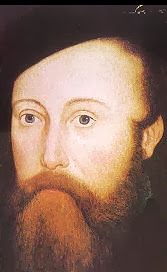
Thomas Seymour; Baron Sudeley
A new narrator popped into my work in progress the other day; a voice that wants to be heard, and who am I to deny him?

Thomas Seymour is often portrayed in historical novels as a brash adventurer, a power hungry molester of young girls but, when writing history, it is important to stay true to the time in which the events take place.

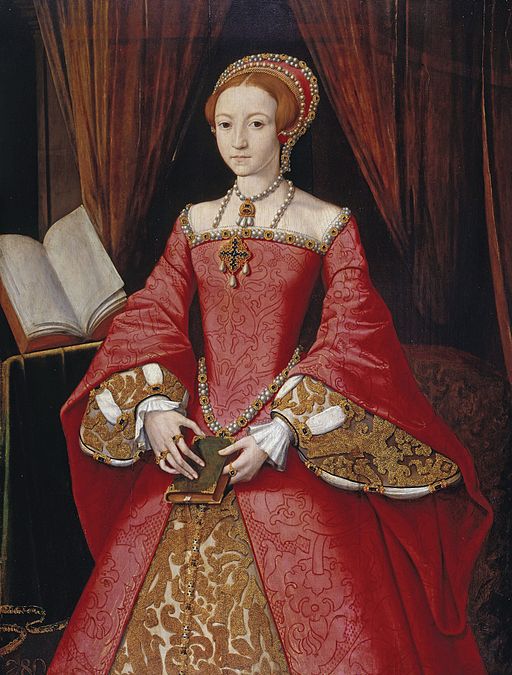
Elizabeth Tudor was fourteen at the time Seymour married Katherine Parr and, although to us the alleged relationship between him and his step daughter is shocking due to her age, at the time, fourteen was regarded as ‘marriageable.’ There was no undue public outrage and he was not labelled as an abuser. What was shocking to the 16th century mind-set was Elizabeth’s status. Mistresses were perfectly acceptable, royal princesses were definitely not.

Even when added to his other alleged ‘crimes’ Seymour still doesn’t emerge as a ‘monster’. He was misguided perhaps, driven by his baser instincts, very human in fact.

Thomas and Katherine Parr were on the brink of marriage when she was spotted by the king as a potential wife but Thomas gallantly gave way to his monarch. But, after Henry VIII’s death Seymour lost no time in marrying his former sweetheart.

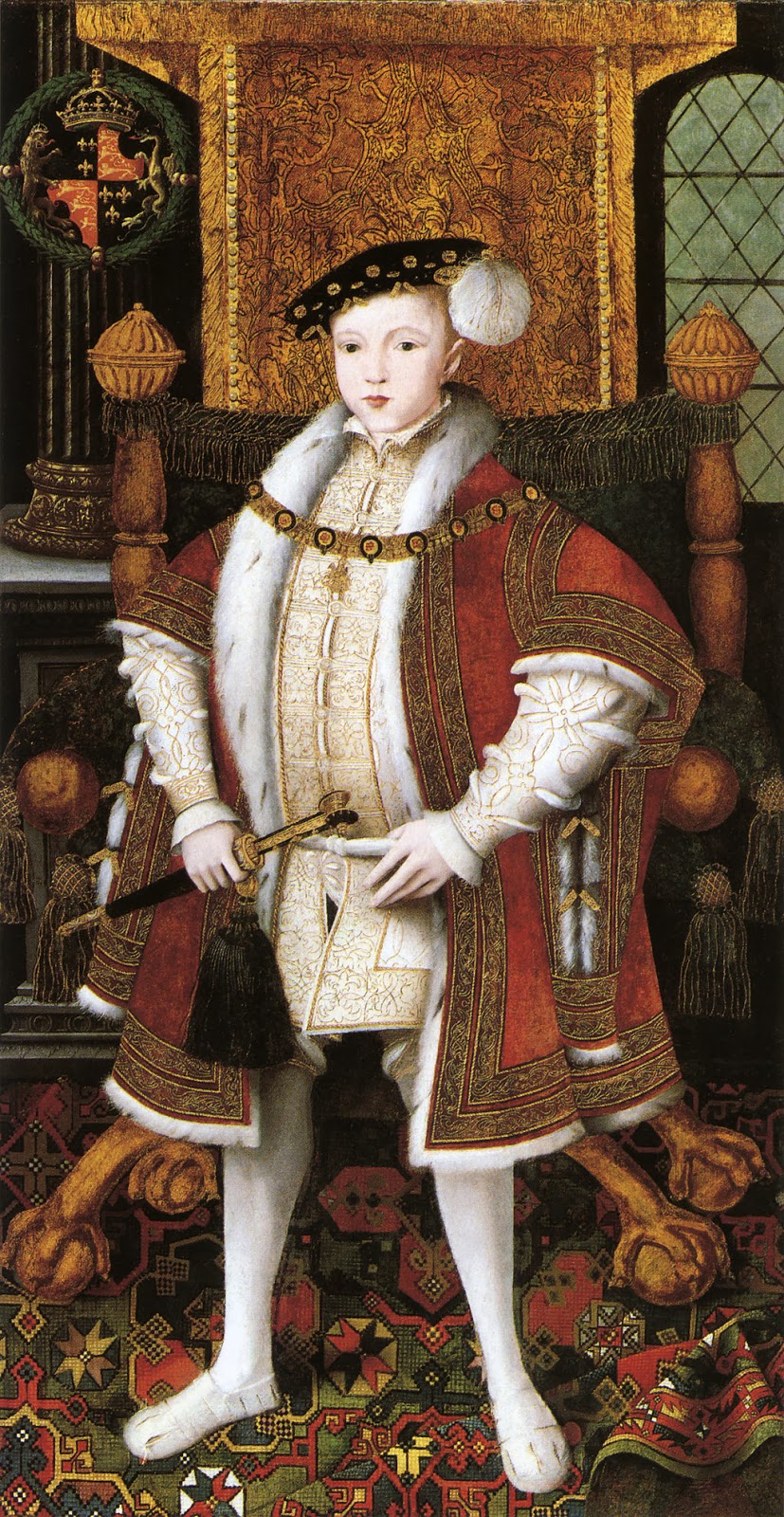
Seymour was the uncle of the young king Edward VI, but it was his elder brother, Somerset, who had control of the king's leading strings. Although Thomas was made Lord High Admiral and 1st Baron of Sudeley, it was his brother who became Lord High Protector and held all the power that Thomas craved.

Feelings between the siblings were not sweet. After the death of Henry VIII the Lord Protector seized the crown jewels from Katherine, including some personal pieces of her own, not belonging to the crown. This infuriated Thomas and he spent the rest of his wife’s life trying to regain her rightful possessions. This fury was ignited further by the continual snubbing of Katherine by Edward’s wife, Anne Stanhope.

Amid this family unrest Elizabeth Tudor, second in line to the throne, took up residence with her step-mother and her new husband, Seymour, at Katherine’s home in Chelsea, later moving to Seymour’s holding at Sudeley Castle. Katherine and Elizabeth were close, sharing a love of learning and religion but during this time rumours emerged involving Seymour and the fourteen year old Elizabeth.

Elizabeth Tudor
There were reports of him entering the girl’s bedchamber early in the morning to tickle and slap her. In some instances Katherine joined him, whether to protect her step daughter’s virtue or to aid and abet him is unclear. One has to look to the other aspects of Katherine’s character to judge her possible motive.

These unusual events have been variously depicted as innocent horseplay and sinister abuse. Whatever the truth of the matter is, there are no reports of undue outrage at the time. Ultimately, Elizabeth was sent away but her relationship with her step-mother remained strong and they corresponded regularly.  Katherine and Thomas remained at Sudeley, awaiting the birth of their first child. Katherine gave birth to a daughter, Mary, but died a short time later; sadly the records of her long-awaited daughter’s life fade out after just two years.

It is after the death of Katherine that Thomas seems to have become more ungovernable. He began an alleged campaign against his brother, trying to usurp the influence Somerset had over the boy king. He started to provide his nephew with pocket money, trying to win his favour by playing the popular fun loving uncle. At the same time he abused his position as Lord High Admiral by encouraging piracy, criticising his brother’s policies and, most outrageous of all, bribing the Vice treasurer of the Bristol Mint to finance an alleged coup against the Protectorship.

In 1548 he was called to appear before the Privy Council to explain his actions. To Thomas, it must have seemed that the world was against him. All he wanted was an audience with the king, to explain his behaviour and point out the error of Somerset’s ways. He wanted, once and for all, to put an end to his brother’s Protectorship. Thomas was convinced he would do a much better job. In the end he went so far as to hatch a desperate plot to gain access to Edward VI.

Edward VI
On the 16th January 1549 Seymour, by way of the privy garden, broke into the royal apartments at Hampton Court. The story goes that as he crept into Edward’s bedchamber his favourite spaniel woke up and began to bark. Seymour, without thinking, silenced the yapping, snarling dog by drawing his pistol and shooting it dead. It was against all royal etiquette to draw one’s pistol in the presence of a king and the act, together with the death of the royal pet, sealed Thomas’ fate.

Thomas Seymour was sent to the Tower, accused of attempting to kidnap the king, and plotting to marry the King’s half-sister, Elizabeth and put her on the throne in Edward’s place. In all, thirty three separate counts of treason were brought against him and, with the murder of his pet probably uppermost in his mind, Edward had no hesitation in signing his Uncle Thomas’ death warrant.

He was executed on 20th March 1549, dying bravely on the scaffold, leaving as his legacy a poem, which hint that his motives may have been more honourable than his actions.

“Forgetting God to love a king
Hath been my rod or else nothing:
In this frail life being a blast
of care and strife till in be past.
Yet God did call me in my pride
lest I should fall and from him slide
for whom loves he and not correct
that they may be of his elect.
The death haste thee thou shalt me gain
Immortally with him to reign
Who send the king like years as noye
In governing his realm in joy
And after this frail life such grace
As in his bliss he may have place.”

(Taken from Skidmore: Edward VI))

For all his faults and intemperate actions Seymour was popular with many of his contemporaries. There was unrest at his sentencing and Somerset was proclaimed ‘a bloodsucker and a ravening wolf.’ (Skidmore) Measures were taken to calm the situation, the most effective method proved to be the blackening of the Admiral’s character.

The council accused him as an atheist, a traitor, a lecher, and circulated rumours that he had encouraged rebellion, writing to Elizabeth and Mary urging them to rise up against the Protectorship. On the order of the council Hugh Latimer emphasised that Seymour was ‘a wicked man, and the realm is well rid of him.’

Katherine Parr
The ordinary people, however, seemed to hold a different view. Seymour was loved by many people, particularly the women. His love for Katherine Parr seems genuine; bowing out of the relationship to make way for King Henry and not hesitating to rekindle it once she was widowed. The stories about Elizabeth are the only stain against him, and then we are judging by 21st rather than 16th century standards. Better men than Thomas Seymour took mistresses and better men than him have been led astray by the charms of a young girl.

And as for Elizabeth? Maybe her love for Thomas was genuine. Perhaps it was her experience with Seymour and his subsequent death (that was so akin to her mother’s) that made her shun sexual relationships from that day on. David Starkey points out that ‘almost all of the men she subsequently loved, or pretended to love, resembled Seymour.’

Most of the detrimental stories of Thomas Seymour date from after his death. Like so many others executed in this period, his name has been blackened by those who survived him. Brother of a queen, uncle of a king, husband of a dowager queen, Seymour may have craved power in his own right but that is not a monstrous crime.

He was man who believed he could serve England better than his brother; a headstrong man who made unwise decisions; a man who dallied with a royal princess; a man who shot the king’s dog.

If Thomas had a flaw it was that he was driven by human failings. In the words of Sir Nicolas Throckmorton Thomas Seymour was, ‘… fierce in courage, courtly in fashion, in personage stately, in voice magnificent, but somewhat empty of matter.’

Not the most becoming epitaph but in my forthcoming novel, Intractable Heart, Thomas Seymour has a section of the narrative to himself; a chance to redress the balance and provide his own version of his extraordinary life.

Further reading

Susan James, Catherine Parr
Linda Porter, Katherine the Queen
Elizabeth Norton, Catherine Parr
David Starkey, Elizabeth
Anne Somerset, Elizabeth I
Alison Plowden, The Young Elizabeth
Chris Skidmore, Edward VI

For more information about me and my novels please visit my website.

Photographs from Wikimedia Commons.


The Kiss of the Concubine UK link

US link


The Winchester Goose UK link

US link


The Forest Dwellers UK Link

US link