Showing posts with label #amwriting. Show all posts

Saturday, May 28, 2016

WILD FOODS - Historical Fiction Research

By Elaine Moxon

One of the things you swiftly learn, as a historical fiction author, is that you must become well read in a myriad of subjects. Many of these topics, to external eyes, may seem entirely disconnected with writing a novel. Little do they know, this knowledge is invaluable. Creating a historic and accurate landscape within which your characters can travel and interact is hard work.

I thought I’d share some research I’ve been doing for some travelling characters that may not always be able to pop into the local town for supplies. Living in the 5th Century AD as they do, and also wary of bumping into enemies, they have only what they brought with them for the journey, and what they find along the way.

From Saxon settlement, along ancient roadways, across rivers towards the coast, this is what they might discover.
DANDELION, publicdomainpictures.net

Woodland, Hedgerow, Roadside, Heath & Moorland

In scrubby woodland you’ll find young Elder buds for salads, and hazelnuts rich in protein, fats and minerals. The best dandelions are found on hedge banks and roadsides, and their young leaves are good in salads. Eat them in moderation, however. As suggested by their French name ‘pis-le-lit’ (or more politely, wet-the-bed) they are a diuretic and can have you running for the nearest facilities!

Blackberries ripen in August and are at their sweetest then. Also known as the ‘blessed bramble’ it was so called for the joy its fruit brought to areas where fruit was rare. Its leaves soothe burns and bruises, and a rich dye can be made from the berries, as can also be made from sloes. Sloe berries also make delicious wine, though I doubt my travelling companions have time for that.

Columbines love limestone woods and flower May-July. While most of the plant is poisonous, the 17th Century herbalist Nicholas Culpeper observed that ‘the seed taken in wine causeth a speedy delivery of women in childbirth’. Handy if any of your travelling party are in the later stages of child labour!

Pollen from the Common Mallow has been found in Roman remains in Britain, suggesting it was imported for medicinal purposes. Pliny the Elder declared a daily ‘spoonful of the mallows’ to be preventative of illnesses. A decoction of boiled leaves is said to calm fevers and a lotion of the same alleviates swellings. Mucilage of the roots of the variety known as ‘Marsh Mallow’ once provided a chewy filling to chocolate coated biscuits. Today it is somewhat rare and used only in toiletries and cosmetics.

Another ancient acquaintance is the Crocus, harvested since medieval times for the spice ‘saffron’. Although this doesn’t necessarily constitute a ready food source, I felt it worth a mention as an ingredient. Also within this realm is Lady’s Bedstraw or ‘Galium verum’, once used as a rennet in cheese-making. Thyme can flavour soups, stews, sauces and stuffing and is thought to prevent bad dreams. Ideal for travelling nobility with heavy weights on their minds.


Galium verum
Photo credit: bastus917 via VisualHunt / CC BY-SA 


Coastal

The obvious one here is seaweed, of which two types can be cooked as a spring vegetable - laver and caragon. You can also cook ‘Fat Hen’ and nettle leaves as you would spinach (but wear gloves when picking the latter!). Nettle leaves also make a refreshing drink. Molluscs such as cockles, mussels, and if in Cornwall, pilchards, all make tasty additions to a meal. At the end of summer, enjoy sweet chestnuts, eaten raw or even better roasted. Then in autumn, berries, nuts and fungi can be found, mostly in woodland, but field mushrooms are common in pastures and meadows (particularly where horses graze). Pick early in the morning and fry or add to soups.

By streams, fields and riverbanks you can find water-loving mint, watercress and wild garlic – all great for making soups. Wild garlic, also known as Ramsons, gives its name to several settlements in Britain known for the pervasive smell of this pretty flower, including Ramshope, Ramsbottom, Ramsey and Ramsholt. The name derives not from male sheep, but the Old English word ‘hrmsa’ meaning ‘wild garlic’!

Bogbean can be found in wet soil, mud and water – its bitter trifoliate leaves were used as infusions to alleviate scurvy and rheumatism. Laplanders used the powdered roots to bulk up the meal in their bread, though it leaves a bitter taste. Another lover of moist ground is Common Comfrey. All parts of the plant have a reputation for healing cuts and fractures and reducing swelling. Often going by the name ‘knitbone’, an infusion of the leaves in warm water gives relief to sprained wrists and ankles. My heroine in WULFSUNA uses a comfrey poultice beside a stream to alleviate swollen ankles.

Mentioned by the Greeks as early as the 1st Century AD, ‘seseli’ or as we know it Sweet Cicely, can be added to salads. Its fresh, sweet leaves counteract any bitterness or remove tartness when boiling fruit. With an aniseed flavour, it was used as an aphrodisiac in the 16th Century to ‘increaseth...lust and strength’ (John Gerard’s ‘Herball’).

Photo credit: col&tasha via Visualhunt.com / CC BY

Wild Animals

Some wild animals are predators to be cautious of, others may be sacred and some will be food sources. Wolves, foxes and badgers are main predators. Boar, while a ferocious beast particularly when breeding, makes a large meal, as do deer. Hares were considered sacred by some pagans and eating them was forbidden if not all of the time, then at least during certain symbolic festivals especially around springtime. Others believed them to be witches in animal form and were so avoided. Their later cousins, rabbits, are low in fat and good in a stew, though not widely available. Introduced by the Romans, they died out post-Empire and were not reintroduced until later centuries. Snakes and certain birds were also pagan symbols and so may have had a bearing on whether they were eaten. Poisonous snakes would be avoided for obvious reasons.

With an abundant array of salad leaves and stewing vegetables, my characters’ wild food table will be replete with tasty dishes to serve alongside freshly caught fish, berries and nuts, and maybe even a boar if they’re lucky. However, I must stress it is not suggested nor advised that you go munching on anything you find growing along the roadside. Some plants are highly poisonous. As Ben Law says, if you can’t identify them, ‘don’t eat them!’.

~ ~ ~ 

BIBLIOGRAPHY

Farmhouse Cookery, Readers’ Digest

Wild flowers, Graham Murphy

The Woodland Way, Ben Law


Blood, betrayal and brotherhood.
An ancient saga is weaving their destiny.
A treacherous rival threatens their fate.
A Seer's magic may be all that can save them.
WULFSUNA


Elaine Moxon writes historical fiction as ‘E S Moxon’. Her debut Wulfsuna was published January 21st, 2015 and is the first in her Wolf Spear Saga series of Saxon adventures, where a Seer and one named ‘Wolf Spear’ are destined to meet. 

She is currently writing her second novel, set once again in the Dark Ages of 5th Century Britain. You can find out more about Book 2 from Elaine’s website where she has a video diary charting her writing progress. She also runs a blog. Elaine lives in the Midlands with her family and their chocolate Labrador.


Tuesday, November 17, 2015

Winter Crone Legends

by Elaine Moxon

"She who hardens the ground with the frost and ice, which quickens the dormant seeds in the earth's womb."
'VISIONS OF THE CAILLEACH' - Sonia d'Este & David Rankine

'The Cailleach' by Michael Hickey

Winter is almost upon us, the solstice looming as the nights lengthen and daylight becomes a rare and precious thing. To our ancient ancestors we are in 'Geimredh', the dark half of the year. The sun takes his leave of us for more and more hours, our lives increasingly illuminated by the moon. Writing Dark Ages historical fiction, it is important that I know what this time means to my characters, both Britonic and Saxon. Both cultures contain legends of the Crone or Winter Hag, a goddess of good or evil who shapes the land and controls the very forces of nature. She has many guises and names, including:-
  • Death Goddess
  • Wise Woman
  • Frau Holle/Hel
  • Valkyrie
  • Cailleach
  • Lady of the Beasts
  • Hag of the Mist
  • Harsh Spirit of Winter
  • Hag of the Mill-Dust
Geimredh begins at 'Samhuinn' (1st November), which for the Celts marked the beginning of a new year, a beginning shrouded in darkness, where they believed the veil between the living and dead was at its thinnest, thus allowing ease of communion between the worlds. Incidentally, burial chambers and stone circles are often oriented to the midwinter solstice, aligning those buried and the winter rituals performed within them to the Otherworld. It is also the time of the last harvest where the pagan Lord dies with the cutting of the last sheaf and begins his journey through the underworld, laid to rest in the womb of the Great Mother. It is therefore fitting that his matrimonial partner, the Lady or Goddess, takes the helm to guide her people until he is re-born in the spring. Then she will be the virgin maiden, awaiting her lover. If the harvest was good, this final sheaf was fashioned into a 'kern maiden', referencing the fruitful spring goddess. However, if the harvest was poor, it was fashioned into the guise of the Crone and no, one farmer would wish to keep it long in his house for it brought bad luck. Such was the fear of the Crone's power.

Even before man cultivated grains and modelled kern maidens, the Crone was still venerated and was a symbol of death. The elder tree is sacred to the autumn equinoxe for pagans to this day, but as far back as the Megalithic period it was present. Known as the 'tree of death', representations of elder leaves have been found carved onto funerary flints at Megalithic burial sites. There is also evidence of Welsh and Manx Celts planting elders on new graves. Winter continues to be a harsh time for many in our modern world. Death is never far away. The old or infirm, people or animals, can perish. For our ancestors, living so close to the land, tied by their dependency upon it, this was moreso. As in death, the world around them was bereft of light. Devoid of life, it must have seemed as though the Otherworld had taken over; the world of the Crone. In winter, fodder is scarce and our ancestors slaughtered weaker animals to save feed for the stronger beasts, and to feed themselves through the winter.

In such a barren landscape, any fruits borne during this time were considered sacred. Apples, a symbol of the sun and immortality, would be stored as long as possible. These remain in our modern psyche when we bob for apples at Hallowe'en, chew toffee apples or wassail our apple trees. When cut crossways an apple forms a 5-pointed star or 'pentacle' and this referred to the 5 sacred roles of the Lady or Goddess: birth, initiation, consummation, repose and death. Blackberries, with their growing cycle of green-red-black as the fruits turn, signifies the 3 stages of the goddess as maid-mother-crone and was sacred to the Celts. They also revered the hazelnut tree, as in autumn it produces flowers for beauty and fruit (nuts) for wisdom. Eating the nuts was said to impart knowledge and wisdom to those who ate them. Its association with water (the entrance to the Otherworld) made it a popular offering and has been found in lakes, wells and springs - once again the domain of female deities. This is further confirmed by 'Coll', the bardic number nine - hazel trees fruit after 9 years of growth. Nine is sacred to the aspect of the triple goddess (3 x 3 = 9). Finally, elder berries, indeed any berries remaining through winter, were deemed by the Druids to be a gift from the 'Earth Mother' or Crone and would be gathered to make ceremonial wines. In other rituals, married Celtic women would paint their naked bodies in woad to honour 'the veiled one'. Again, this is a reverence of the Winter Crone, She who controls the veil to the Otherworld, She who folds the elderly and 'tired children into her cloak of death to await another dawn'.

'White Wolf' courtesy of wallpapercave.com

The Crone can be found throughout many cultures in both a benevolent and malevolent form. You may recognise some of them!

"It is written that before the Norman invasion of England, Gyrth had a dream that a great witch stood on the island, opposing the King's fleet with a fork and trough. Tord dreamed that before the army of the people of the country was riding a huge witch-wife upon a wolf, and she tossed the invading soldiers into its mouth."
FROM BRANSTON'S DESCRIPTION OF A FAILED INVASION ATTEMPT BY HAROLD HARDRADA IN 1066 IN 'THE LAST GODS OF ENGLAND'.

Here we see resemblance to the Norse Valkyrie, Frau Holle or Hel - goddesses associated with death.


She rides through the sky on the back of a wolf, striking down signs of growth with her wand, spreading winter across the land. If she sees you, she will keep her mantle of snow over the land, so you must remain still.

"The man held the Druid wand first over his head and then over hers, at which she dropped down as if dead. He then mourned for her, dancing about her body to the changing music. Then he raised her left hand, touched it with the wand, and the hand came alive, and began to move up and down. The man became overjoyed and danced about. Next he would bring her other arm and her legs to life. Then he knelt over her, breathed into her mouth and touched her heart with the wand. She leapt up fully alive, and both danced joyously."
THE 'CAILLEACH AN DUDAIN' DANCE OR 'HAG OF THE MILL-DUST', APPROPRIATELY DANCED AT THE AUTUMN EQUINOXE, FROM THE ORDER OF BARDS, OVATES AND DRUIDS FOR 'ALBAN ELUED'.

Here we see 'the death of the fertile Mother of Life in the barren months that were to come and the promise of her resurrection in springtime'.

Other familiar representations of the Winter Crone are the Hag witches in Disney's 'Snow White' and 'Sleeping Beauty', where the aforementioned princesses are the spring-like maidens and the evil Crones their nemeses. We can also find similarities between the 'Snow Queen' in C. S. Lewis' 'The Lion, the Witch and the Wardrobe', who is reminiscent of Hans Christian Andersen's 'The Snow Queen'. Meanwhile, Queen Elsa of Disney's 'Frozen' provides us with a more benevolent Winter Witch. She holds swathe over the land that is plunged into an eternal winter, building a palace of ice and a giant, boulder-like creature. As Beowulf hunts Grendel's mother in her watery cave (another Crone legend), so Elsa is hunted. It takes her sister Anna, another representation of the spring goddess, to persuade Arundel's population their Snow Queen has a good heart and can, if she wants to, remove winter from the land.

'The Snow Queen' by Elena Ringo

In conclusion, we are never far from these legends. Despite the many years separating us from our Megalithic or Dark Age ancestors, the legends persist and continue to permeate our so-called 'modern' lives. In reality, we are closer to our forebears than we imagine!

BIBLIOGRAPHY:
'Pagan Feasts' - Anna Franklin & Sue Phillips
'Visions of the Cailleach' - Sonita d'Este & David Rankine
'Alban Elued' - Order of Bards, Ovates & Druids

~

Elaine has always loved writing and history. When she decided to combine the two, she wrote her Dark Ages debut 'WULFSUNA', which was published in January 2015 through SilverWood Books. She enjoys baking, knitting and gardening and lives in the Midlands with her family and their mad Labrador. She is currently writing the second book in her ‘Wolf Spear Saga’ series.


Saturday, August 8, 2015

'Sacred Fire'

by E S Moxon

After publishing Wulfsuna, the first in my Wolf Spear Saga series, in January 2015 I took a break for a few months before embarking on the planning for my next book. Writing often sparks the necessity for research when we happen upon a circumstance and need more detail. However at other times research can spark ideas for writing. For this reason I enjoy researching for my novels, hoping to find something unusual that provides inspiration for part of the current work in progress. My research comes from many places: books on my shelves, libraries, reenactors and the World Wide Web. My gem of a find this time was an article entitled ‘St Anthony’s Fire’ courtesy of Pearson College, CA and a website called ‘iamshaman’ both from 2004.

Known as ‘Sacred Fire’ and ‘Invisible Fire’ the claviceps purpura fungus, or ‘ergot’, germinates on rye in warm, damp conditions but is dormant in severe cold. Growth is therefore more prevalent in a wet summer following a harsh winter. The fungus is poisonous and manifests in several ghastly forms:
  • -          Gangrenous
  • -          Convulsive
  • -          Hallucinogenic

Each of these has particularly vulgar symptoms. For instance the gangrenous strain produces areas of the body that become numb to touch or pain, known in medieval times as ‘witch spots’. Vein and artery walls contract, stemming blood flow and limbs literally break off at the joints! If the central nervous system becomes infected the body is thrown into violent convulsive fits and twitches (the convulsive form) and the ergot component lycergic acid (also in LSD) gives the sufferer hallucinations.

As you can imagine, in medieval times the causes of these symptoms would have been beyond the comprehension of most and assumptions of witchcraft were attributed. Both the afflicted and those attempting to heal (family members or healers) were accused. The sick were either seen as witches themselves who were being punished by god for spell casting, or as the victims at the hands of others’ dark deeds. Other factors that did little to assuage these accusations were the illness of cattle and other animals (falling ill as a result of grazing on infected rye) and that ground infected rye turns red, blood being a further sign that witchcraft was involved.

Consequently, witch trials increased during outbreaks of ergot poisoning and many met their deaths unjustifiably, as a cause of the ergot fungus. As a writer of historical fiction, with elements of magic and fantasy running through my sagas, I could not help but be intrigued by this phenomenon that can exist today where humid, wet summers and poor grain storage create the right conditions. Unable to resist using this newly acquired information, it is now part of a plotline in my next novel!

~~~~~~~~~~~~~

Elaine (E S Moxon) is currently writing Book 2 in her Wolf Spear Saga series. Her debut novel Wulfsuna is published by SilverWood Books and is also available from most retail outlets. You can find out more about E S Moxon and her novels from her website here

Tuesday, June 2, 2015

Spit and Grease - Food and the Hearth

by Deborah Swift

When we lived outdoors, the fire was essential for warmth and for cooking, and the earliest 'oven' was in fact a cauldron, covered in a lid, which itself was covered in burning embers, and then was suspended above the fire.

Norwegian early cauldron

Once we built houses and moved indoors, the focal point of any room, up until the invention of electricity, remained the hearth. This was the natural gathering place and should be in any historical novel. Because of this, I pay close attention to the correct type of hearth, mantelpiece, and fire tools when I'm planning my novels. For example, poorer houses might not light a fire every day but would send food out to the baker to be cooked in his big ovens for a fee. These characters would be colder and probably a lot less cheerful than their wealthier counterparts who would have many servants managing the whole paraphernalia of fire and cookery!

Up until the invention of matches, keeping the fire going was a priority because striking a light with a tinder and flint was very much a hit and miss affair. (For more information on Tinderboxes check Wikipedia ) Nobody wanted to wake to the chore of lighting a fire, so in the evenings the fire was banked up to keep it in, and smothered by a couvrefeu (fire cover) to stop it burning too hot. (I discuss these more in this article) So characters before they retire for bed, would ensure this task was done.

Tudor fireplace with firebasket and bread oven

Here is a Tudor fireplace where you can see wooden pegs on the mantel for hanging an upright spit, or for drying cloth or herbs, and also the essential  bread oven next to the main fire. Bread was a staple food, so most houses had a bread oven if they could afford it. Fireplaces were built to be wide and deep to enable cooking to take place there. When the fireplace moved to the wall of the room in medieval times, the back of the fire was lined with a metal fire-back. The fire was raised on bricks or sometimes on a fire-basket or brazier to provide for an up-draught under the fire.

18th/19thC firebasket with 17thC back plate

Bread and Meat

Bread ovens were built into the walls next to the fire to take advantage of the heat. In addition brushwood which burns fast and hot would be burnt inside with the door closed. The ashes would be raked out and then the bread put into the still hot oven to cook. Bread was inserted and removed on a peel - a long paddle. It had to be carefully watched in case it burned. No shoving it in and then coming back a few hours later!

Woman using a peel from a painting by Millet

This method was used right up until the 20th century in the countryside in England. (see this BBC link) Meat was cooked by rotating the joint on a spit before the fire, which had to be burning bright. Until the 18th century, a horizontal spit rested on hooks or notches in front of the blaze. For smaller joints, such as fowl, fish or rabbit, a cradle spit or basket spit, in which the joint was enclosed in a cage, were used. Fenders were devised in the 17th century to stop stray embers rolling out into the room. In books set before that, your characters would be likely to have to kick the embers back in using their boot.


The spit was turned by hand, using a cog and pulley system, or by dog power. (See the 17th century engraving below!) But by the 18th century an ingenious mechanical jack that ran by clockwork had been invented. At this time too, burnished metal hasteners (mirrors to reflect the heat) were clipped to the mantelpiece.


Medical use of Fat

Fat was collected in a 'dripping tray' and the dripping served many uses - in the 17th century it was used for candles, soap, and to waterproof shoes, as well as to grease cart axles and mill gears. Fat was also used in medicine mixed with herbs to make salves, but the type of fat was important, because the fat conveyed the quality of the animal to the person. For example the fat from a lively and lithe hare was used as an ointment for rheumatism.


Obviously in smaller households, the cooking would be done over the same fire that was used to heat the living space, whereas in wealthier households the cooking would be kept away from the owners of the house in a specially designated kitchen.

When I am researching my books I always investigate how the characters were fed - who did the preparing and cooking, and where it happened in the house. Each particular period has its new invention for the preparation of food, particularly the cooking of meat on the fire. By paying attention to these I can get to know intimate details of my characters' lives.

Links:
I  recommend 'Food in England - Dorothy Hartley'
Cooking with Fire
Roasting Christmas Beef
Tudor fireplace

~~~~~~~~~~~~~

Deborah Swift ~ Word addict, book addict. Nature, art and poetry fan, and writer of thought-provoking historical fiction, published by Macmillan/St Martin's Press/Endeavour Press. Creative writing tutor and writing mentor.
www.deborahswift.com 

@swiftstory
Amazon

Wednesday, January 22, 2014

Celebrating Teen and Young Adult Historical Fiction

by Deborah Swift

I have recently been working on a teen novel  so thought I would share with you some of the challenges of writing for younger readers. Most of my adult novels are set in the seventeenth century, and they tend to be long. My last one was 500 pages, though I hope it did not feel that long to the reader!

Of course adults' and teenagers' reading habits cannot be confined to a box - as a teenager I read all sorts of adult fiction, and adults are often tempted by books marketed as 'teen' titles - I know I am.

I am reliably informed by internet articles (which are of course always right) that teenagers and young adults favour shorter fiction, so that was the first challenge - to condense a story into a much shorter space. But how to do that without losing the vital historical detail that brings the period to life - well, there's a question. I suppose my answer was in the vein of  'don't tell me about the moon, but show me it glinting on snow' or in my case, on the moving wheels of a 17thC carriage. I had to sneak information into the text by adding a single word here, an evocative verb there. The initial draft of my teen novel came in at 60,000 words, less than half the length of my adult books.

And then there is 'voice.' A typical dialogue of a teenager today might be, 'OMG No! He's a total loser!' In seventeenth century speak, that might be, 'By my troth, nay! He's an arrant beggar and a knave!' (or something similar) But somehow this does not end up sounding like a teenager, but just like a very stilted and badly-written pastiche. The key elements here are the tendency to exaggeration and semi-shocked delight, so these are qualities I could aim for in my dialogue. Teenagers tend to act first, think later, so this impetuosity could be a way in to a teenage character too.


In historical fiction this is a lot easier in lower class characters, who actually have more freedom to move about (within their milieu) than royalty or the upper classes. A good example of this is The Quietness by Alison Rattle. This gripping novel is set in the Victorian underworld - think 'Sweeney Todd' or 'Oliver', and contrasts an upper class girl with her working class counterpart. This is a beautifully handled book, full of murky depths and insight.

Somehow it is easier to get away with exclamations with a maid than with a genteel member of the upper strata of society. Alison Rattle conveys Ellen's more privileged life by concentrating on her dreams of a different less rigidly-enforced existence. As teenagers, we often want to inhabit the realm where anything seems possible, where we can be exactly who we wish to be as a grown-up.

I hope the Anglophiles amongst you will forgive me for my excursion to France. Thirteenth century France is the setting for Troubadour by Mary Hoffman, which manages to both educate and entertain with her tale of Cathars, Crusades and courtly love. A book dense with information and history, Hoffman keeps the action flowing by breaking up the narrative into quite short chunks, often less than a double page long. Each section is separated by an illustration which makes the pages seem less daunting. This book tells the story of Elinor who is in love with a troubadour, Bertram in dangerous times. A glossary is provided at the back to help with the terminology. (Another good idea).

YOUNG ADULT ROMANTIC NOVEL OF THE YEAR 2013
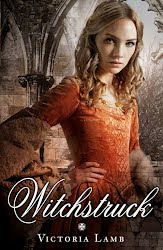
If you can't tear yourself away from the Tudors, try Witchstruck by Victoria Lamb. The young witch, Meg Lytton, gets teenage attention through the fascination for all things 'yuk' by starting the book with a gruesome spell, and the author keeps the narrative fast-paced and in the first person. This is a great tip, to tap into the genuinely gruesome details that are absent from today's more sanitised existence. Keeping a close narrative distance is something recommended as one of the eight highly effective habits of teen authors in this article, and something that Victoria Lamb does extremely well.


For an examination of the teenage psyche and how it has changed over time, you can't do better than this article by Eliza Graham on Historical Fiction Connection.

Her new indie novel, Blitz Kid, set in World War II is the first of a series. Teen readers love to read series because they come to know the characters, and it's a bit like getting to know your own private gang, acting out scenes in your head. This novel deals with the black market and espionage, and coming of age romance.

For more recommendations of books for Young Adults/Teen readers, try Books Back in Time

For many excellent articles on writing teen fiction try
http://writingteennovels.com/

More about my adult books and my blogs can be found on my website
www.deborahswift.com